ESPN has long been the jewel of the cable TV bundle. As cord-cutting escalates, however, the company is putting its considerable resources behind a direct-to-consumer streaming app that could change the way tens of millions of sports fans watch games and shows.
—Eric Fisher, Colin Salao, and David Rumsey
ESPN has finalized its plans for its highly anticipated, direct-to-consumer streaming service, simply calling it “ESPN,” while the Disney-owned company says the project will “redefine our business.”
After considering a variety of other names for the long-planned offering that previously carried a working title of “Flagship,” ESPN chairman Jimmy Pitaro said, “There’s real power in our four letters.” The service will involve a rebuilt ESPN app, with users then able to buy into the broader video packages.
An unlimited package, carrying all of ESPN’s networks, will cost $29.99 per month on an unbundled basis, and $35.99 per month when bundled with ad-based versions of sister properties Disney+ and Hulu. An initial promotion, however, will bring that latter cost down to $29.99 per month for the first 12 months. With the new service, ESPN is leaning in to a mantra of “all of ESPN, all in one place” and touting a live portfolio with more than 47,000 annual events.
“This is going to redefine our business, and it’s going to reflect the innovation that’s been a hallmark of ESPN since its earliest days,” Pitaro said in a press event Tuesday morning.
A specific debut date is still being developed and will be disclosed this summer, but it will be around the start of the 2025 pro and college football seasons.
The DTC effort, a major priority across ESPN’s corporate parent Disney, is happening as the company is looking to fight an industry-wide decline in linear television subscribers as cord-cutting and cord-nevering accelerate.
“We’re really looking at the 60 million–plus households [in the U.S.] that are on the sidelines,” Pitaro said, referring to those consumers without any sort of tie to ESPN. “We are platform-agnostic.”
The ESPN streaming service will include a range of enhanced features, including integration with ESPN Bet, personalization with favorite teams, customized versions of SportsCenter, merchandise sales, and live statistics.
Streaming Matters
ESPN, meanwhile, will continue to market and sell ESPN+ as a separate offering with that name, in part due to contractual rights commitments with several leagues, both domestically and internationally. The content there will be very similar to what will be available in a select version of the ESPN DTC service costing $11.99 per month.
Going forward, however, the two levels of the new DTC service will be the “priority” for ESPN. To that end, existing ESPN+ subscribers will automatically become subscribers to the more limited version of the new service. Traditional linear subscribers of ESPN will also be able to access all the DTC features through authentication.
“We are ultimately going to judge ourselves based on the totality of people subscribing to ESPN,” Pitaro said. “We are not going to look at one specific platform. We want to be available across platforms, across price points.”
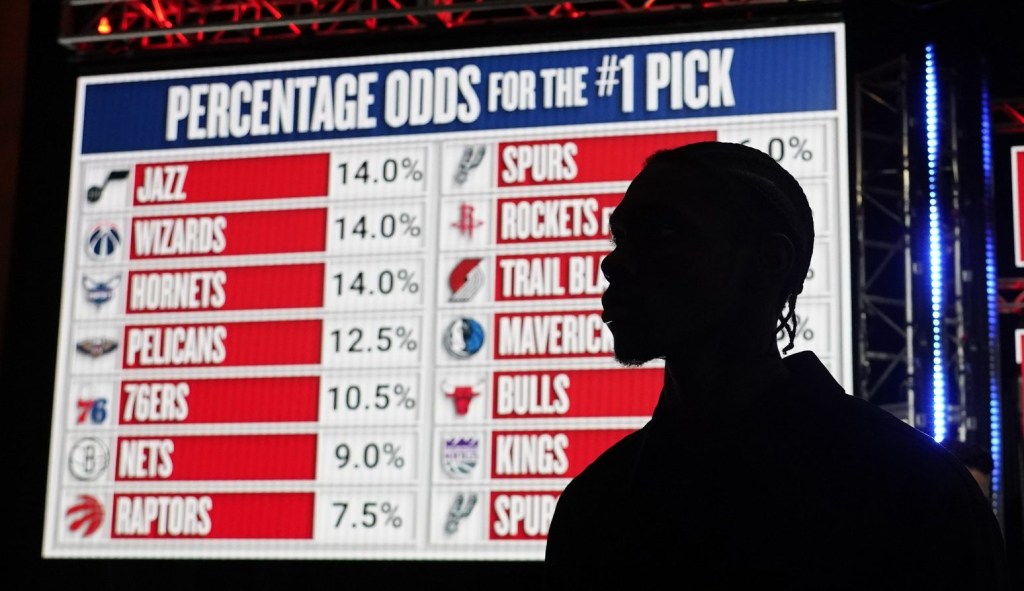
In the aftermath of the Mavericks’ draft lottery win Monday, the NBA world called foul.
Dallas, coming off months of turmoil from February’s stunning Luka Dončić trade, wound up with the right to select Cooper Flagg, its new franchise cornerstone, despite just a 1.8% chance at the No. 1 pick.
This is on top of several examples of coincidental lottery winners in the past, including the Pelicans in 2012, soon after they were briefly owned by the league, then again in 2019 after Anthony Davis asked for a trade. (Davis was traded to the Lakers after New Orleans won the lottery.)
The idea that the NBA draft lottery can be rigged would involve enough trickery, subterfuge, and complicity to be implausible, considering how transparent the league has been with its selection process. Several outlets have chronicled the league’s selection setup, which involves cameras and media members in the room when the Ping-Pong balls shoot out of the lottery machine.
Assessing the Rules
Assuming fair play, Monday’s results still highlight a lottery rules issue.
In 2019, the league instituted “flattened” lottery odds, which lowered the likelihood for teams with the worst records to secure the top picks. Previously, the odds for the three worst teams to win the lottery were 25%, 19.9%, and 15.6%, respectively. The current rules have all three tied at 14%.
Before the change, the team with the worst record had won four straight lotteries. That has not happened since. (Teams tied for the best odds have won the lottery between 2020 and 2023, while the Hawks won last year with 3% odds.)
However, the objective of the rule change was to discourage teams from tanking or deliberately losing to get better draft odds. Teams have continued to tank, particularly during seasons with blue-chip prospects at the top of the class.
The change also extended how far teams could fall down the order. Because the top four are determined by lottery odds, the team with the worst record still has a 47.9% chance to fall to fifth, exactly what’s happened for three straight years.
This creates a nightmare scenario for several franchises stuck in the cellar, forced to wait another year to luck out for a young franchise savior. This will likely be the case again for the Hornets, Jazz, Wizards, and Nets—and maybe even Raptors and Pelicans—who all fell in Monday’s lottery.
Defending the Rules
The counterargument is this may be exactly what the league intended. Teams may need to feel the inconsistency of betting on the lottery and instead look for another avenue toward contention.
The Pistons are the example for this counterpoint. They fell out of the top four for three consecutive drafts despite finishing with a bottom-two record every season. This year, the team ditched tanking, bet on its young core, added veterans, and made the playoffs for the first time since 2019.
“This rebuild that we’re on, we’re still in the beginning phases of it. There will be more and more rewards at the end of the tunnel, but six is the reward for where we’re at right now,” Wizards GM Will Dawkins said Monday.
CHARLOTTE — The leaders of the PGA Championship are content with LIV Golf’s unsettled place in the professional game, which has forced organizers of the four major championships to pivot from their traditional operations.
LIV, in its fourth season, still does not award Official World Golf Ranking points at its events, leading to formerly top-ranked players and some young rising stars losing their easiest pathways into the majors.
While the U.S. Open and Open Championship (also known as the British Open) created special exemption categories for a LIV member to qualify, The Masters and PGA Championship have relied on special invites. Four LIV members who did not qualify for the PGA Championship received those this week: Dustin Johnson, Joaquin Niemann, Tom McKibbin, and David Puig. There are 16 LIV players in the field. Last year, seven LIV players received special invites.
“We look at every tour that’s playing worldwide golf and try and identify the best players from those respective tours,” PGA of America chief championship officer Kerry Haigh said Tuesday at Quail Hollow Club.
There are 99 out of the top 100 players in the world at the PGA Championship. “It’s a worldwide field,” Haigh said. “That’s why we feel it’s the strongest field.”
PGA of America CEO Derek Sprague, who is one of seven members of the OWGR board, said he has spoken briefly with LIV CEO Scott O’Neil, but didn’t have an update on the league’s efforts to gain world ranking points.
“He’s encouraged to submit an application for the board to review,” Sprague said. “Other than that, I have nothing else to report.”
The Mavericks won the NBA draft lottery with a 1.8% chance of doing so, launching a sea of conspiracy accusations against the league office. Nic Barlage, CEO of the four-time lottery-winning Cavaliers, says Cooper Flagg to Dallas is a lucky draw, not a setup. He also unpacks Cleveland’s best regular season since 2009, despite facing a 3–1 playoff deficit to the Pacers.
Plus, Jayson Tatum’s injury could end this era of Celtics basketball as the team sale is completed, pricing details of ESPN’s flagship streaming service emerge, and the Connecticut Sun are seeking new ownership.
Watch the full episode here.
Alex Morgan⬆ The women’s soccer legend has taken a minority ownership stake in the San Diego Wave, Front Office Sports reporter Annie Costabile confirmed. Morgan played her final three seasons in the NWSL with the Wave before announcing her retirement in September.
Novak Djokovic and Andy Murray ⬇ The player-coach partnership between the two tennis legends lasted for just half a year, Djokovic announced Tuesday. “Thank you, coach Andy, for all the hard work, fun & support over last six months on & off the court, really enjoyed deepening our friendship together,” Djokovic, the 24-time Grand Slam winner, wrote on Instagram.
Southern Hills Country Club ⬆ The Tulsa, Okla., course will host the 2032 PGA Championship, the PGA of America announced Tuesday. It will be a record sixth time hosting the golf major for Southern Hills, which most recently welcomed the PGA Championship in 2022.
U.S. Ski & Snowboard ⬆ The national governing body has signed an eight-year renewal of its sponsorship deal with Stifel Financial Corp., which is the largest agreement in the organization’s history. Pegged by Front Office Sports sources at nearly $100 million, the deal will maintain Stifel’s position as the title sponsor of the U.S. ski team, among other elements. The term running through April 2034 will include the upcoming Winter Olympics earlier that year in Salt Lake City. U.S. Ski & Snowboard president and CEO Sophie Goldschmidt called the pact a “generational investment” in the teams.
Angel Reese and Magic Johnson have launched Wealth Playbook, a financial literacy program for high school seniors in Baltimore.
A woman chronicled her experience sitting next to Travis Hunter on a flight from Denver. She didn’t know him until he was approached by fans, and described him as “humble” and “down-to-earth.” Check it out.
The Savannah Bananas sold out the 70,000-seat Nissan Stadium, home of the NFL’s Titans. Take a look.
The NFL’s 2025 global games will span five countries across two continents.
The annual events once focused on scripted shows, but are now all about sports.
Mechanical keyboard 2026models integrate ultra-fast switches that achieve 0.1ms actuation with under 1mm travel, allowing competitive gamers to press keys 20% faster in FPS and MOBA titles. RGB keyboards now feature 16.8 million per-key zones, enabling dynamic lighting that reacts to game events, killstreaks, or ability cooldowns. Hall-effect magnetic switches dominate the premium segment, offering adjustable actuation points from 0.1mm to 4.0mm while lasting 100 million keypresses with no physical wear. Together, these innovations deliver both tactile precision and immersive customization, making mechanical keyboards a vital tool for high-level competitive play.
Mechanical keyboard 2026 designs also focus on durability, ergonomics, and modularity. Hot-swappable switches allow players to fine-tune the feel without soldering. Aluminum chassis and gasket-mounted plates reduce finger fatigue while maintaining solid stability for marathon gaming sessions. Modern firmware supports thousands of macros, rapid polling rates, and dual-PC setups, ensuring that esports players experience consistent input across multiple platforms.
Fast Switches and Key Feel
Fast switches like Gateron KS-20 reduce actuation force to 35g at just 0.2mm depth, while optical variants eliminate debounce delays, registering inputs at 8,000Hz natively. Mechanical keyboard 2026 boards include hot-swappable sockets, allowing players to swap magnetic, linear, or tactile stems without soldering. PBT double-shot keycaps resist shine after five years of heavy use, and gasket-mounted designs reduce bottom-out impact, lowering finger fatigue by up to 30% during marathon sessions. Combined, these features enhance responsiveness, durability, and ergonomic comfort for both competitive and casual gamers.
Other innovations include per-key actuation calibration via onboard OLED displays, letting players fine-tune each switch’s sensitivity individually. Fast switches allow remapping for advanced trigger modes, such as assigning jump or crouch to rapid keypresses, boosting movement efficiency in FPS titles. Firmware support like VIA and QMK provides up to 1,000 macro layers, ensuring fluid execution of complex combos. NKRO (N-Key Rollover) maintains accurate detection of 100 simultaneous inputs, preventing ghosting during intense gameplay.
RGB Keyboards and Lighting Customization
RGB Gaming keyboards in 2026 employ addressable LEDs beneath every key, responding instantly to in-game actions, music beats, or voice chat activity. Fast switches synchronize with lighting effects to create visual feedback for ability activation or kill confirmations. VIA and QMK support advanced lighting macros across 16.8 million colors, letting players design immersive themes and reactive effects. RGB keyboards also integrate USB passthrough hubs, enabling controller charging or peripheral connections without latency interruptions.
Premium gaming screens emphasize both aesthetic and functional benefits. Aluminum chassis with acoustic foam layers tune sound profiles from soft, creamy thocks to sharp, clicky clacks, complementing per-key lighting for sensory immersion. RGB keyboards combined with modular keycaps allow instant visual recognition of critical keys, enhancing reaction times in high-pressure matches. Firmware updates maintain compatibility with new software and games, ensuring that RGB functionality evolves alongside gaming trends.
Build Quality and Advanced Features
Mechanical keyboard 2026 models focus on robust materials and ergonomic design to support competitive play. Aluminum top plates weigh around 1.2kg, stabilizing 60% or full-size layouts, while foam and gasket mounting reduce vibration and noise. Fast switches with Hall-effect sensors allow precise calibration and onboard memory, storing personalized actuation and lighting settings.
Other features include multi-device support, 8,000Hz polling across dual-PC setups, and modular layouts for hybrid gaming and productivity. High-end models provide long-term durability, with switches rated for 100 million keypresses and chassis built to withstand sustained pressure. These designs ensure that both casual players and esports professionals can maintain peak performance over years of intense use.
Key Features:
Aluminum top plates provide stability and long-lasting structural integrity.
Foam and gasket-mounted designs reduce vibration, noise, and finger fatigue.
Hall-effect fast switches allow precise per-key calibration and storage.
Modular layouts and multi-device support enhance versatility for gaming and work.
8,000Hz polling ensures sub-ms latency across dual-PC or multi-system setups.
Switches rated for 100 million keypresses guarantee long-term durability.
Conclusion
Mechanical keyboard 2026 models with fast switches and RGB keyboards redefine both competitive precision and immersive gameplay experiences. Adjustable actuation, ultra-fast response times, and reactive per-key lighting provide measurable advantages in esports, allowing players to execute rapid combos and maintain visual awareness under intense pressure. Durable materials, modular layouts, and advanced firmware ensure 10+ years of relevance, keeping performance consistent even as switch technology evolves. Combined, these innovations set a new benchmark for gaming keyboards, making them an indispensable tool for casual enthusiasts and professional gamers alike.
Frequently Asked Questions
1. What makes mechanical keyboard 2026 switches faster than older models?
Mechanical keyboard 2026 switches achieve 0.1ms actuation with minimal travel, reducing input delay. Optical switches eliminate debounce entirely. Hot-swappable designs allow users to optimize each switch type. Together, they improve reaction times in competitive gaming.
2. How do RGB keyboards enhance gaming performance?
RGB keyboards provide per-key lighting for instant visual cues on ability cooldowns, killstreaks, or critical keys. Reactive effects improve reaction speed in high-pressure scenarios. Custom macros allow lighting to indicate complex input sequences. This combination merges aesthetics with functional gameplay advantages.
3. Are fast switches durable enough for long-term use?
Yes, Hall-effect and magnetic switches are rated for 100 million keypresses. Gasket-mounted designs reduce mechanical wear and finger fatigue. PBT double-shot keycaps resist shine and degradation. Long-term durability ensures consistent performance for years.
4. Can mechanical keyboard 2026 models support multi-device setups?
Many models integrate USB passthrough hubs for peripherals and dual-PC support. 8,000Hz polling ensures sub-ms latency across connected devices. Firmware allows separate profiles per device. This setup guarantees smooth operation for both gaming and productivity tasks.
The world of esports has rapidly shifted from a niche form of entertainment to a central component of competitive gaming education. As 2026 approaches, academic institutions across the globe are embracing the opportunities that digital competition presents.
From high school classrooms to university campuses, structured gaming programs in schools are transforming how students learn, collaborate, and prepare for the digital economy.
The Explosive Rise of Esports in Education
Esports, once dismissed as mere gaming, now attracts millions of players and spectators around the world. Educational institutions have taken notice. The steady growth in digital engagement, streaming culture, and student interest has pushed schools to formally integrate esports into their extracurricular and academic offerings.
By 2026, experts project that school-based esports participation will surpass that of traditional high school sports in some regions. The digitization of competitive gaming aligns with broader trends in modern education, where technology, inclusivity, and creativity intersect to form new learning pathways.
What Is Esports and Why Is It So Popular Among Students?
Esports refers to organized, competitive video gaming, often involving professional players and teams. Unlike casual gaming, esports involves structured tournaments, ranked leagues, and strategy-based team play across popular titles such as League of Legends, Valorant, and Rocket League.
For students, esports blends entertainment with purpose. It enables individuals who may not participate in traditional athletics to compete, build communities, and express creativity. The widespread availability of gaming hardware, streaming tools, and online platforms has lowered the entry barrier, making esports more accessible than ever.
Moreover, the social component is powerful. Online tournaments and school leagues foster connection across diverse backgrounds, helping students develop coordination, leadership, and interpersonal skills, traits that are increasingly valuable in both academic and corporate environments.
How Are Schools Launching Esports Programs?
Many schools have already launched formal esports programs, driven by student demand and institutional recognition of esports’ educational potential. Universities in the United States, South Korea, and the Philippines are establishing dedicated esports departments that oversee teams, manage scholarships, and organize intercollegiate competitions.
High schools are following suit. Some districts are converting computer labs into esports arenas equipped with high-performance PCs, ergonomic setups, and broadcast equipment. Others collaborate with gaming companies to create mentorship and training initiatives, blending classroom theory with real-world competition.
These gaming programs in schools go beyond playing. They involve curriculum design, technical training, and content creation workshops that align esports with the broader educational framework. Students learn not only how to compete but also how to analyze performance data, manage teams, and produce digital media.
What Do Students Learn from Competitive Gaming Education?
The rise of competitive gaming education is reshaping the skillsets associated with modern learning. Students gain more than just gaming proficiency, they develop critical thinking, multitasking, and collaboration abilities. These programs emphasize transferrable skills such as problem-solving, adaptability, and emotional regulation under pressure.
Esports also complements existing curricular areas. Game strategy mirrors elements of mathematics and physics, while coding and hardware management connect directly to STEM learning. Instructors use esports to teach topics such as network infrastructure, software development, and game design.
Beyond academics, competitive gaming encourages inclusivity. Students of all genders, backgrounds, and physical abilities can participate on equal footing, fostering school pride and teamwork in digital spaces.
How Big Will Esports Be by 2026?
Industry analysts predict that esports in 2026 will be valued at over $2 billion globally, with an audience exceeding 800 million. This rapid growth is fueled by live-streaming platforms, increasing sponsorship deals, and more educational integration.
Esports’ reach continues to expand beyond traditional entertainment. Virtual reality and augmented reality are enhancing gameplay engagement, while blockchain-based tournament systems are adding transparency to competition and prize distribution.
The integration of AI analytics is also reshaping coaching methods. Educators and team managers are using data-driven insights to assess player performance, optimize team composition, and develop customized training regimens. As schools adopt these same analytical tools, competitive gaming education enters a new era, where digital literacy and innovation drive progress.
What Challenges Do Schools Face in Running Esports Programs?
Despite the enthusiasm surrounding esports, schools still face practical and ethical challenges. One major concern is balancing academics with gaming commitments. Without structured supervision, students may risk excessive screen time or burnout.
Institutions are addressing this by introducing strict schedules, physical activity requirements, and mental health counseling. Another challenge involves funding. Setting up professional-grade arenas and securing reliable hardware demand significant investment. Public schools in particular rely on sponsors or partnerships with tech firms to maintain program sustainability.
Finally, schools must train or hire qualified esports coaches who understand both the educational context and the competitive scene. This dual expertise ensures that gaming remains an avenue for learning, not just recreation.
Success Stories: Schools Leading the Way in Esports Education
Several schools around the world have already demonstrated how esports can enhance education. In the United States, the High School Esports League (HSEL) connects thousands of students nationwide, fostering academic engagement and teamwork. Schools such as Miami University and the University of Utah became early adopters of varsity esports teams, setting benchmarks for collegiate competition.
In Asia, South Korea remains a trailblazer. Its government has integrated esports into youth programs, emphasizing both technical training and player well-being. Meanwhile, in the Philippines, some universities have begun offering esports courses as part of information technology programs, mirroring global trends toward curriculum innovation.
These examples prove that when implemented responsibly, esports programs can increase student enrollment, improve school visibility, and create bridges between education and industry.
The Future of Competitive Gaming Education Beyond 2026
Beyond esports 2026, the intersection of competitive gaming and education will likely deepen. Analysts foresee a future where esports becomes as normalized as traditional athletics, with intramurals, leagues, and international tournaments structured at school and university levels.
The global shift toward online learning has also paved the way for hybrid esports education models, combining remote play with in-person coaching. Additionally, certifications in health and psychology related to esports are expected to emerge, helping educators manage player wellness and team dynamics effectively.
Cross-border collaborations may soon unite students from different regions in global esports competitions, promoting cultural exchange and digital diplomacy through gameplay.
Frequently Asked Questions
1. Can esports help improve students’ academic performance?
Yes. Organized esports can boost focus, strategic thinking, and time management. Students in competitive gaming education often show stronger problem-solving and teamwork skills that support academic success.
2. What are the career opportunities for students who study esports?
Students can pursue careers in event management, broadcasting, analytics, marketing, and game design. Many esports 2026 programs also prepare graduates for tech and media-related fields.
3. How do schools choose which games to include in their esports programs?
Schools select games that promote teamwork, critical thinking, and inclusivity. Titles like Rocket League and League of Legends are common in gaming programs in schools due to their balance of strategy and accessibility.
4. Do esports programs promote diversity and inclusion in education?
Yes. Esports welcomes students from all backgrounds, offering equal opportunities regardless of physical ability or gender. Many schools use competitive gaming education to foster inclusivity and community.
Bettor Capital leads the round as Xpoint accelerates product development and global deployment.
Xpoint, a leading geolocation and compliance technology partner to the online real‑money gaming industry, today announced a fresh investment round led by existing investor Bettor Capital.
The capital will fast‑track Xpoint’s R&D roadmap and expand its product and engineering teams, accelerating delivery of next‑generation capabilities to operators worldwide.
Built for gaming from the ground up, Xpoint’s adaptable platform combines fast, accurate precision geofencing with advanced fraud detection to stop spoofing, block unauthorised wagers and surface suspicious activity in real time, helping operators launch and scale confidently in online real-money gaming markets.
With flexible integration and rapid deployment tailored to sportsbook, iCasino, lottery, DFS and sweepstakes use cases, Xpoint provides audit ready compliance automation across multi-state and international markets. The platform also offers unique, patent-pending algorithms at jurisdictional borders to protect revenues and reduce player friction and drop off.
Xpoint’s recent momentum includes successful active and pending deployments with leading brands such as Bet365 and PrizePicks in North America, with more to be announced soon. Xpoint is also live with clients in Brazil and the UAE, including the UAE Lottery and Play971, the first regulated online gaming and sports betting entity in the region.
“This new funding lands at the perfect time for our growth,” said Manu Gambhir, CEO of Xpoint. “We’re scaling up our teams to ship a wave of new capabilities that help operators defeat location spoofing, streamline compliance and convert more good users – without compromising on precision, scale, or speed.”
“We are delighted to significantly increase our commitment to Xpoint to accelerate product development and deployment”, added David Van Egmond, founder and managing Partner at Bettor Capital. “In this industry, robust regulatory and compliance technology is absolutely essential and Xpoint has proven to consistently deliver substantial value to a growing roster of real-money online gaming operators.”
New Jersey–based Bettor Capital is a venture capital firm specialising in early‑stage investments in technology companies within the real‑money online gaming ecosystem. Bettor Capital was among Xpoint’s first institutional backers and has increased its investment over time.
ASUS today announced that it has claimed the No. 1 position in global OLED monitor market share, following a surge in sales throughout 2025. According to independent market research firm TrendForce, ASUS now holds an estimated 21.9% share, surpassing competitors and cementing its leadership in this fast-growing market.
This milestone underscores the company’s commitment to delivering more than just monitors – it reflects a user-first strategy focused on elevating the overall display experience. By expanding its OLED portfolio across both QD-OLED and WOLED technologies for gaming, professional, and creator segments, ASUS ensures solutions are tailored to diverse user needs. Unique innovations such as OLED Care Pro, Neo Proximity Sensor, TrueBlack Glossy, and DisplayWidget Center go beyond performance, enhancing usability, longevity, and visual immersion. This consumer-centric approach transforms OLED monitors into a complete experience, driving user preference for ASUS products and solidifying the company’s position as the No. 1 OLED market leader.
Driving growth through innovation and diversity
ASUS is accelerating its OLED momentum through a broad, innovation-driven portfolio that spans gaming, creator, and professional segments – leveraging advanced panel technologies, robust burn-in protection, and rapid product launches to meet the needs of a diverse and growing user base.
Broad product lineup: ASUS launched a wide array of OLED monitors in 2025, targeting everything from competitive esports to high-fidelity content creation.
Advanced OLED technologies: New models, such as the ROG Swift OLED PG27AQWP-W and ROG Strix OLED XG27AQWMG, integrate Tandem OLED technology and TrueBlack Glossy coating, delivering higher peak brightness, wider color volume and enhanced panel longevity.
Burn-in protection: Proprietary ASUS OLED Care Pro suite – including the Neo Proximity Sensor – helps safeguard panel lifespan by switching the display to a black screen when no user is detected.
Rapid product cadence: In early 2025, ASUS introduced the 27-inch QD-OLED ROG Swift PG27UCDM (4K @ 240 Hz) and the blazing-fast ROG Strix XG27AQDPG (1440p QD-OLED @ 500 Hz).
Market momentum and strategic vision
TrendForce data reveals that OLED monitor shipments are growing at a breakneck pace – surging by 65% year over year in Q3 2025, with global shipments reaching 644,000 units. The increasing popularity of OLED displays for gaming has been a major, but not the only factor in this growth. As OLED panel technology continues to gain traction among gamers, the strategic investment and execution by ASUS have allowed it to rise swiftly in market share, overtaking long-time rivals.
Beyond gaming, ASUS ProArt OLED monitors are a favorite among content creators who need to pair next-level contrast and color performance with professional-grade accuracy, multiple HDR format support, wide-ranging connectivity, and intelligent calibration tools. ASUS ZenScreen OLED monitors give PC users of all kinds the superior color performance of OLED panels in a portable form factor.
Vincent Chiou, ASUS Global Vice President and General Manager of the Display Business Unit, observed: “ASUS has long been dedicated to innovation in display technology and impeccable quality. In addition to receiving high praise from gamers, the industry-leading ROG gaming monitors and the ProArt series designed for content creators have also made significant inroads into portable and medical fields, earning widespread recognition and favor. Moving forward, ASUS will continue to prioritize user needs at its core, delivering an unparalleled visual experience to consumers.”
The ASUS commitment to innovation
PC users of all kinds can expect to see ASUS to continue to innovate in this space with new OLED monitors that debut new panel technologies into diverse form factors, deliver enhanced reliability and performance in a variety of usage scenarios, and push the envelope with even higher-performance designs.
The new funding announced will support schemes including $350,000 in sponsorship of the Coca Cola All Stars Golden Ticket contest, Formula STEM Esports Cup and the Player League Madden NFL tournament.
Brightspeed will also act as a primary sponsor for two Bright Future Tech Labs in Triton High School and Orange High School, with funding worth more than $200,000.
The company will also spend $15,000 on scholarships, equipment, and esports program travel for Wesleyan University and $10,000 on a grant supporting the Rocky Mount High School Gryphon Elite esports team.
Brightspeed has also announced sponsorship for the Wake Forest Parks, Recreation and Cultural Resources Department’s four-part esports tournament, called the Battle in the Forest.
“Investing in technology education and esports is a natural extension of our commitment to North Carolina,” explains Sabrina Anderson, Local Marketing Manager at Brightspeed.
“As we build a world-class fiber network across our home state, we’re equally focused on expanding opportunities for the students who will power our communities tomorrow. These initiatives give young people hands-on access to the tools, skills and experiences that prepare them for the digital future.”
“This scholarship will help ease the financial burden my parents carry in supporting my academic journey,” adds Shafiq Nuijts, a Wesleyan University student and recipient of Brightspeed funded scholarship. “It will also allow me to focus more deeply on my education and my internship this upcoming summer. As an international student, my experience has always involved balancing the challenges of maintaining my F-1 status, keeping a high GPA and reassuring my parents that their investment in me is being put to meaningful use. This scholarship affirms that commitment and motivates me to continue striving for excellence.”
Pune, India – Exactitude Consultancy – The global Gaming Computers Market is expected to witness strong growth over the forecast period, driven by the rising popularity of esports, increasing demand for high-performance computing, and continuous advancements in graphics and processor technologies. The market, valued at approximately USD 44 billion in 2024, is projected to reach nearly USD 95 billion by 2034, expanding at a compound annual growth rate (CAGR) of about 7.9%.
Gaming computers, including desktops and laptops, are designed to deliver superior performance, high-resolution graphics, and fast processing speeds to support immersive gaming experiences. Growing online gaming communities and professional gaming platforms are further accelerating market growth.
• Rapid Growth of Esports and Online Gaming: Competitive gaming tournaments and streaming platforms are boosting demand for high-performance gaming systems.
• Advancements in Hardware Technology: Continuous improvements in GPUs, CPUs, cooling systems, and memory are enhancing gaming performance.
• Rising Disposable Income: Increasing consumer spending on premium electronics is supporting adoption of gaming computers.
• Expansion of Virtual and Augmented Reality Gaming: Demand for powerful computing systems to support VR and AR applications is increasing.
Market Segmentation Insights
By product type, gaming desktops hold a significant share due to superior customization and performance, while gaming laptops continue to gain popularity for portability.
By price range, mid-range and high-end systems dominate the market, driven by demand from professional and enthusiast gamers.
By end user, individual consumers account for the largest share, followed by gaming cafes and esports organizations.
Asia-Pacific represents the largest and fastest-growing regional market, supported by a large gamer population, strong esports culture, and expanding gaming infrastructure in countries such as China, South Korea, Japan, and India.
North America shows strong growth driven by high adoption of advanced gaming hardware and a mature esports ecosystem.
Europe continues to expand steadily due to rising gaming participation and technological innovation.
Latin America and the Middle East & Africa are emerging regions, supported by increasing internet penetration and growing gaming communities.
The gaming computers market is highly competitive, with major players focusing on performance optimization, innovative designs, and brand partnerships. Companies are investing in advanced cooling technologies, RGB customization, and AI-enabled performance tuning to differentiate their offerings.
Market Outlook
With the gaming industry continuing to evolve rapidly, the Gaming Computers Market is expected to experience sustained growth through 2034. Increasing esports adoption, next-generation gaming technologies, and expanding digital entertainment consumption will remain key drivers of market expansion.
This report is also available in the following languages : Japanese (ゲーミングコンピュータ市場), Korean (게이밍 컴퓨터 시장), Chinese (游戏电脑市场), French (Marché des ordinateurs de jeu), German (Markt für Gaming-Computer), and Italian (Mercato dei computer da gioco), etc.
Request for a sample of this research report at (Use Corporate Mail ID for Quick Response) @
Exactitude Consultancy is a market research & consulting services firm which helps its client to address their most pressing strategic and business challenges. Our market research helps clients to address critical business challenges and also helps make optimized business decisions with our fact-based research insights, market intelligence, and accurate data.