
Sports
Everett Forges Ahead with Downtown Stadium for Minor League Sports

Is Everett’s plan to move the AquaSox from aging Funko Stadium to a brand new downtown stadium an economic jolt or a costly gamble?
Since 1947, Everett’s Funko Stadium has held everything from AquaSox games to grade school baseball games – but times are changing. The AquaSox are the High-A minor league affiliate of the Seattle Mariners and due to pressure from Major League Baseball to upgrade minor league facilities, AquaSox ownership says now it’s time for a stadium revamp. The league’s new amenity requirements include larger locker rooms, umpire accommodations, more parking, and enhanced seating. The 3,682-seat Funko Field does not meet these standards.
The city had three options: renovate, build a new stadium, or do nothing.
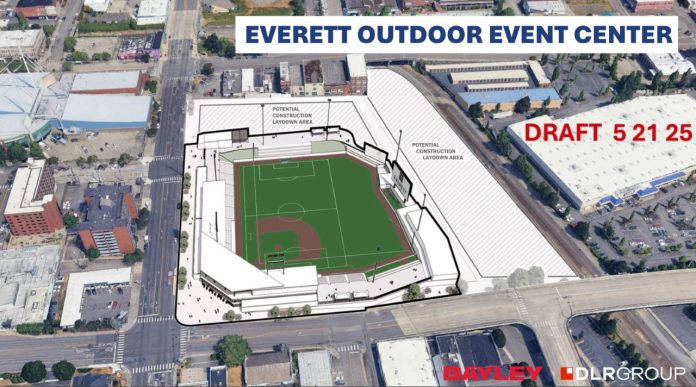
Everett chose the second option. On the eve of the new year, December 2024, the Everett City Council unanimously chose a site east of Angel of the Winds Arena — at the corner of Broadway and Pacific, right next to the Sounder rail line.
As of June 2025, the project is in full swing and hoping to break ground in early 2026. The city is planning to tap Bayley Construction to build the new stadium.
“The Outdoor Event Center is a key piece of our plan to grow Everett the right way – with more housing, better access to transit and a more vibrant, walkable downtown. It’s about bringing people together, creating new opportunities and growing our local economy to support the quality of life and robust public services our residents deserve,” Everett Mayor Cassie Franklin said.
The City plans on spending $4.8 million to advance the (OEC) Outdoor Event Center stadium project to the shovel-ready stage. The City forecasts contributing a total of about $8 million toward construction and has budgeted an additional $20 million to acquire 15 properties needed to clear room for the facility. It’s likely some business relocation assistance and possible eminent domain will be needed, the City said.
</p>
<p>” data-medium-file=”https://www.theurbanist.org/wp-content/uploads/2025/07/Everett-stadium-proposal-2025-07-1.jpg” data-large-file=”https://www.theurbanist.org/wp-content/uploads/2025/07/Everett-stadium-proposal-2025-07-1-1024×565.jpg” src=”https://www.theurbanist.org/wp-content/uploads/2025/07/Everett-stadium-proposal-2025-07-1-1024×565.jpg” alt class=”wp-image-198599″ srcset=”https://www.theurbanist.org/wp-content/uploads/2025/07/Everett-stadium-proposal-2025-07-1-1024×565.jpg 1024w, https://www.theurbanist.org/wp-content/uploads/2025/07/Everett-stadium-proposal-2025-07-1-768×424.jpg 768w, https://www.theurbanist.org/wp-content/uploads/2025/07/Everett-stadium-proposal-2025-07-1-761×420.jpg 761w, https://www.theurbanist.org/wp-content/uploads/2025/07/Everett-stadium-proposal-2025-07-1-696×385.jpg 696w, https://www.theurbanist.org/wp-content/uploads/2025/07/Everett-stadium-proposal-2025-07-1.jpg 1280w” sizes=”(max-width: 1024px) 100vw, 1024px”><figcaption class=) Everett’s transit center is already just southeast of the stadium site, and Everett Link would add a light rail station just to the south. (City of Everett)
Everett’s transit center is already just southeast of the stadium site, and Everett Link would add a light rail station just to the south. (City of Everett)Some opponents of the new stadium are using a “No Frogs Downtown” slogan, referring to the AquaSox mascot. Legend says iconic mascot Weebly is a cross between a Pacific Tree Frog and a Central American red eyed tree frog. In a port town that can be soggy and gray, the logo is a nod to Everett’s amphibious identity.
Proponents argue the city risks losing the AquaSox team to another city with a newer stadium if they do not build the new stadium. And the transit-rich location helps Mariners fans from across the region see prospects play before they reach the big leagues. Fans can also see the franchise’s more advanced minor leaguers at Triple A team Tacoma Rainiers, the last stop before the majors.
With a price tag projected at $82 million or more, will the benefits of a brand new stadium outweigh the costs and how does the public feel about the project? And is it the best use of the land chosen, among the most transit rich areas of downtown Everett?
City promises revitalization and year-round activation
The Franklin Administration is all in on the stadium.
“At its core, this is an economic development project. Losing the AquaSox would have a negative economic impact on our community. A new facility downtown that can host baseball, soccer, concerts and other events, plus include a public park, has significant positive benefits – not just economically but also for the quality of life of our residents.” said Simone Tarver, spokesperson for the City of Everett.
For the city of Everett, this is more than a passion project; it’s been their mission for the last several years. “It’s what we think about when we wake up,” said Dan Eernissee, economic development director at the City of Everett.
To its backers, the proposed ballpark would be an investment in the future, contributing to downtown revitalization. The City is also hoping to use the new stadium to attract a minor-level pro soccer team, potentially both men’s and women’s. “The United Soccer League already is intending to be a big part of the project,” Tarver said.
Everett council envisions over 100 days of annual use, including concerts, soccer matches, and festivals.
“106 outdoor events will dovetail well year-round,” Eernissee said. He added that the stadium will serve as a public park and community space, potentially including a dog park on the edge of the property. “tThe OEC will most definitely have a park element” Tarver says, “As density increases so do people with dogs.”
“Do you know how many people in Everett have dogs?” Eernissee said. “50% of people in multifamily housing developments have a dog these days!”
For businesses near the proposed site — between Hewitt and Pacific Avenues — the stadium means potential foot traffic, tourism, and a new wave of investment.
“It’s going to make Everett an all seasonal destination,” Eernissee said. “Now these businesses can provide pizza all year round, like Broadway Pizza could even start seasonal specials.”
But where is the money coming from to fund such a venture?
Questions about cost, transparency, and displacement
The stadium’s projected cost — budgeted at $82 million — has raised eyebrows. Everett’s Stadium Fiscal Advisory Committee released a report that said the downtown site would be the “most fiscally beneficial option” in the long-run, despite greater upfront costs, pegged between $102 million to $133 million.
The funding for the new Everett stadium is set to come from a mix of public and private sources and use a public-private partnership model. The plan suggests transferring project delivery to a third-party non-profit facilitator and recommends using Public Facilities Group as that facilitator.
The City’s “target budget” projects a $82 million, but they admit that a full picture of costs will not emerge until the design is finalized. The higher earlier estimate could indicate costs will rise.
- $42 million for hard construction costs.
- $20 million for soft costs (e.g., design, permits, taxes, fees, and contingency).
- $20 million for property acquisition.
The City of Everett is committing around $7 million, potentially from capital improvement and park impact fees, while state and county support may include a $7.4 million infrastructure grant from Washington State and a $5 million contribution from Snohomish County. The AquaSox have pledged $10 million to the new stadium, and the City is hoping to secure $10 million from the United Soccer League.
“Until design is closer to complete, we won’t have the final cost. The most recent approvals from Council provided funding to get design to 60% at which point we will have a more complete picture of the costs to share with the Council as well as our community,” Tarver said.
To cover the majority of construction costs, it’s likely that the City will issue revenue-backed bonds, with repayment tied to stadium-generated income such as leases and ticket surcharges.
Eernissee says that the stadium is part of a larger marketing strategy for the future, while also trying to get ahead of the real estate bubble itself.
“This is likely an area where there will be a lot of market pressure to develop,” Eernissee said. “Before the market rates get too high we’re trying to get a high enough facility that it’s appropriate for an urban center.”
Transit complement or impediment?
The City contends that the new stadium aligns with Everett’s overall strategy of increasing public transport and development within the downtown area.
“Sound Transit will work hand in hand with the project team,” Tarver said. “We anticipate this area will be close to a light rail station in the future.”
And while the Everett Link extension isn’t expected until 2037 at the earliest (or 2041 if Sound Transit cost control and realignment efforts don’t go well), the city is already taking steps to prepare for it.
</p>
<p>” data-medium-file=”https://www.theurbanist.org/wp-content/uploads/2021/11/Representative-Project.png” data-large-file=”https://www.theurbanist.org/wp-content/uploads/2021/11/Representative-Project-888×1024.png” src=”https://www.theurbanist.org/wp-content/uploads/2021/11/Representative-Project-888×1024.png” alt class=”wp-image-124788″ srcset=”https://www.theurbanist.org/wp-content/uploads/2021/11/Representative-Project-888×1024.png 888w, https://www.theurbanist.org/wp-content/uploads/2021/11/Representative-Project-768×885.png 768w, https://www.theurbanist.org/wp-content/uploads/2021/11/Representative-Project-364×420.png 364w, https://www.theurbanist.org/wp-content/uploads/2021/11/Representative-Project-696×802.png 696w, https://www.theurbanist.org/wp-content/uploads/2021/11/Representative-Project.png 1298w” sizes=”(max-width: 888px) 100vw, 888px”><figcaption class=) Overall Representative Project alignment and stations for Everett Link, including future lines. (Sound Transit)
Overall Representative Project alignment and stations for Everett Link, including future lines. (Sound Transit)“We’re still in the planning phase, so those specific decisions haven’t been made yet. Right now we are in the middle of Everett Transit’s Long Range Plan online open house to solicit input from the community on how transit services should evolve between now and 2044. Public input is such an important part of that,” Tarver said.
Downtown Everett’s future light rail station is expected to be sited near the existing Sounder station, which would put the light rail stop in close proximity to the proposed stadium. Sound Transit’s preferred option is just west of the existing transit center, but Alternative D would overlap with the stadium site. If light rail is ever extended farther north, having two stadiums bookending Broadway could prove to be an obstacle for siting a path for the extension.
</p>
<p>” data-medium-file=”https://www.theurbanist.org/wp-content/uploads/2025/07/07_Everett-Station-1-Sound-Transit-1.jpg” data-large-file=”https://www.theurbanist.org/wp-content/uploads/2025/07/07_Everett-Station-1-Sound-Transit-1.jpg” src=”https://www.theurbanist.org/wp-content/uploads/2025/07/07_Everett-Station-1-Sound-Transit-1.jpg” alt class=”wp-image-198601″ srcset=”https://www.theurbanist.org/wp-content/uploads/2025/07/07_Everett-Station-1-Sound-Transit-1.jpg 920w, https://www.theurbanist.org/wp-content/uploads/2025/07/07_Everett-Station-1-Sound-Transit-1-768×455.jpg 768w, https://www.theurbanist.org/wp-content/uploads/2025/07/07_Everett-Station-1-Sound-Transit-1-709×420.jpg 709w, https://www.theurbanist.org/wp-content/uploads/2025/07/07_Everett-Station-1-Sound-Transit-1-696×412.jpg 696w” sizes=”(max-width: 920px) 100vw, 920px”><figcaption class=) The preferred alignment for Everett Link would put the downtown station west of the existing transit center. Alternative D would overlap with the proposed stadium site. (Sound Transit)
The preferred alignment for Everett Link would put the downtown station west of the existing transit center. Alternative D would overlap with the proposed stadium site. (Sound Transit)Transit boosters have argued that high-density housing should be the top priority within a short walk of light rail, given the huge investment the region is making and the incredible transit access those areas will have.
Everett upzoned its downtown core in 2018, allowing 25-story towers in some areas — though highrises have yet to materialize and Everett’s population has grown slowly compared to its peer cities in the region. The proposed stadium site is in that 25-story highrise zone with a buildable square footage of 3 million.
While the stadium would negate the site’s housing capacity, the City seems to be banking on the project being a catalyst to spur redevelopment elsewhere in the downtown core.
Property acquisition and displacement
The land the stadium is set to build upon is currently the site of some retail businesses, but most of the site is made up of older auto repair shops and specialty businesses.
Of the local businesses still operating there, most owners are actually in support of the plan, even if it means possible displacement.
“Stadiums are always good,” said John, a cashier at Chevron. He was made aware of the city’s plans when they did a survey, and he said his coworkers are in support.
Eernissee says they plan to offer all of the businesses displaced leases elsewhere in Downtown Everett.
“There’s a process to follow here. We are doing our part in following that prescribed process,.” said Eernissee.
This process typically includes feasibility studies, environmental reviews, public meetings, and formal approvals from city and state agencies. It also involves finalizing funding agreements — such as bonds, grants, and private investments — alongside competitive bidding for design and construction.
Criticism of stadium subsidies
As a publicly funded economic development tool, stadiums have drawn criticism for often falling short of their economic promises. In 1997, two Brooking Institute researchers — Andrew Zimbalist and Roger G. Noll — wrote a book raising the alarm that publicly funded stadiums were a bad investment and failed to live up to their rosy projections, but the practice has persisted relatively unabated.
“A new sports facility has an extremely small (perhaps even negative) effect on overall economic activity and employment,” they wrote. “No recent facility appears to have earned anything approaching a reasonable return on investment. No recent facility has been self-financing in terms of its impact on net tax revenues. Regardless of whether the unit of analysis is a local neighborhood, a city, or an entire metropolitan area, the economic benefits of sports facilities are de minimus.”
Even when stadiums spur significant redevelopment, they have drawn criticism for furthering displacement and siphoning money away from social infrastructure. For example, Nationals Park in Washington, D.C., was a publicly funded MLB stadium that ultimately cost $693 million by the time it was completed in 2008. Built to anchor redevelopment in the Navy Yard, it did spur real estate investment and boost tourism, but it also drew criticism for relying heavily on public money and failing to address housing affordability or racial equity concerns.
Located in a retail and warehouse area, Everett’s stadium will not directly displace residents. “The good thing about this project is that there’s no residents affected,” Eernissee said.
The City has pledged to uplift existing communities and support local businesses, promising it could be a massive boon for the city.
As a minor league stadium, the scale of investment is smaller than big league parks, but similar risks exist.If the stadium and associated redevelopment only results in benefits for sports team and rich investors or if it becomes a long-time liability sapping City resources, it may go down in history as a boondoggle.
What community members are saying
Residents have raised a few different arguments against the new stadium build, the most prominent being relocation of small businesses.
“I’m incredibly annoyed that the stadium isn’t being entirely privately funded. Who asked for this? It’s fine where it is. Meanwhile we don’t have any park rangers in the city and our library services have been cut,” an Everett resident complained on Reddit.
But Tarver says that these are misconceptions.
“There are some major misconceptions about this project, like what funding the City would be using, the idea that this funding could bring back park rangers (it couldn’t), that this adds to the structural deficit (it doesn’t), and why Funko Field isn’t a viable option,” said Tarver.
Some Everett residents shared the fear the new stadium could ramp up displacement pressure and change the neighborhood.
“The proposed site is in the middle of a historic district.” said Louley, an Everett local, when asked in an online poll about the community’s idea of the new project. “In the past 20 years, this neighborhood has completely turned itself around. We are a tight-knit community that looks out for each other, as well as the large unhoused population that travel through on a daily basis.”
“Putting a sports stadium in the middle of our neighborhood is going to undo EVERYTHING. North Everett has really been leading the positive changes in the city, but because historically this was a ‘slum,’” Louley added. “The entire county wants to raze us to the ground.”
On the other hand, some Everett residents back the project and favor out with the old, in with the new. Sverre is one such Everett resident.
“I think long term it will be great for the city,” Sverre said. “The current facility is owned by the school district, and its priority is for student use. Players have to cross the football then up the hill to even get to the locker room or trainers offices, which are the EHS football team locker rooms. They haven’t been updated in 50 years, and are massively outdated, even for high school sports use, let alone professional athletes. It would cost way too much to upgrade Funko field to meet new MLB standards, and it still wouldn’t be owned by the team or city.”
Beyond improving the stadium experience, Sverre sees the project as furthering the revitalization of downtown: “This new stadium is going to connect downtown Everett’s core, with the east side of Broadway, which has fallen in disrepair and is mainly older manufacture type buildings and old warehouses. It will bring a large amount of new urban housing and commercial spaces that will link up with the Everett Transit Center. This is also where the downtown light rail station will be built. I know future development will follow.”
Looking forward
As Everett pushes forward with its vision for a modern, multipurpose stadium, the project stands at a crossroads between transformation and tension. For some, it represents long-overdue progress—an investment in economic development, public amenities, and city pride. For others, it raises concerns about displacement, equity, and whether the return will truly match the cost.
At the end of the day, one thing is clear: this isn’t just about baseball. It’s about identity and the kind of future Everett wants to build. With construction slated to begin in 2026 and a completion date eyed for 2027, the stadium is beginning to look like a done deal, but it will be a test of the city’s planning prowess and commitment to inclusivity, transparency, and thoughtful urban growth to ensure it’s a success.
Article Author

Nova Berger
Nova Berger is a human evolutionary biology student and curiosity enthusiast dedicated to breaking the “Seattle freeze.” Guided by Alice in Wonderland’s philosophy — “you can do six impossible things before breakfast” — Nova embraces the unique opportunities Seattle offers. With a perspective that views the world as a cabinet of curiosities, Nova is passionate about sharing stories and helping fellow Seattleites discover their own distinctive “nooks” along the way.

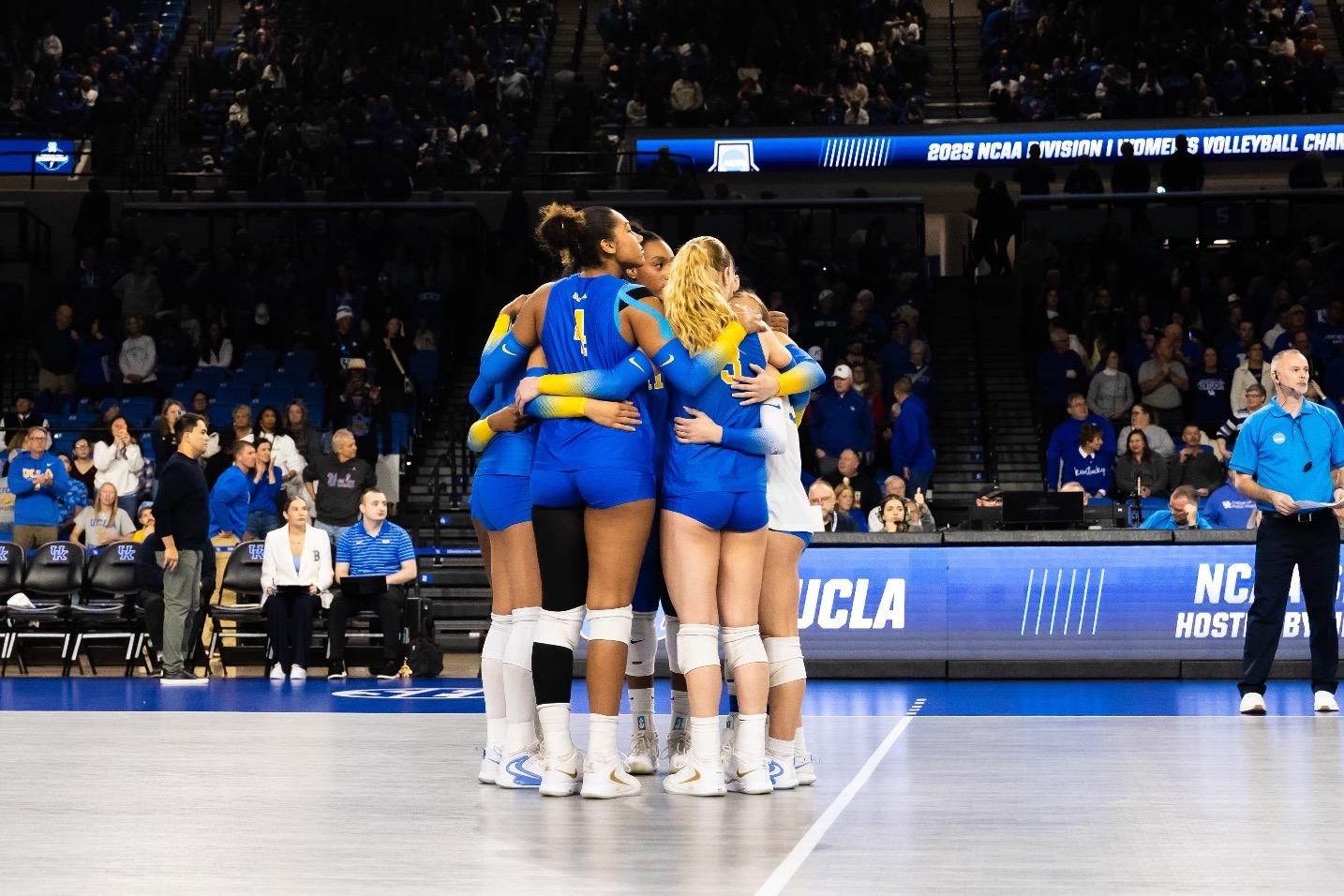
Set scores were 28-30, 16-25, 30-28, 17-25.
In a hotly contested matchup featuring two extended deuce sets, UCLA (19-13) was unable to withstand the offensive firepower of Kentucky (27-2). The Wildcats hit an impressive .400 as a team, powered by standout performances from Brooklyn Deleye (30 kills) and Eva Hudson (27 kills).
In her final appearance in the Blue and Gold, Cheridyn Leverette rose to the occasion with a team-high 22 kills at a .294 clip. She closes her Bruin career ranked 24th on UCLA’s all-time kills list, cementing her legacy as one of the program’s most consistent offensive threats.
Marianna Singletary added 15 kills and two blocks, while Eliana Urzua chipped in 11 kills to give UCLA three attackers in double figures. Setter Kate Duffey orchestrated the offense with 50 assists, her fourth straight match reaching that mark, falling just one dig shy of a double-double.
At libero, Lola Schumacher anchored the defense with 20 digs, her fourth consecutive 20-dig effort.
After the teams battled to 14-14 in the third frame, neither side led by more than two points as the teams traded blows. Singletary hammered a from the middle before Leverette found some seams on the pin, but Kentucky would nudge ahead 23-21, forcing a UCLA timeout. However, the Bruins regrouped and fought off two set points with clutch swings from Leverette and Urzua.
The drama escalated into deuce territory. UCLA earned its first set point at 26-25 after a Singletary kill, only to see Kentucky erase it with a quick side-out. The Bruins pressed again, forcing another set point at 28-27, but the Wildcats answered once more. Finally, Leverette delivered the decisive blow, her 16th kill of the night, slamming down the ball to seal a 30-28 victory.
In the opening set, UCLA jumped out to a 5-1 lead behind Leverette’s serving run, but Kentucky quickly answered with consecutive scoring bursts to seize momentum. The Bruins rallied late, forcing three set points at 23-22, 26-25, and 28-27, but the Wildcats closed on a decisive 3-0 run to take the opener, 30-28. Singletary tallied seven kills in the frame, with Leverette adding six.
UCLA briefly held a 5-4 edge in the second frame, but Kentucky’s 6-1 surge swung control. Leverette reached double-digit kills by the media timeout, yet a seven-point run pushed the Wildcats ahead 21-12 en route to a 25-16 win.
Singletary’s back-to-back aces helped UCLA tie the score at 5-5, but Kentucky’s balanced attack proved too much. The Wildcats pulled away 25-17 to clinch the match and advance to the round of 16.

Floyd Whitaker kicked off the meet with a personal-best jump of 16.40m (53’9.75″) to win the event title and mark No. 6 in the OU history books.
In the men’s weight throw, Brendon See tossed a personal-best 21.05m (69’0.75″), claiming the event title and moving his name up to No. 2 in OU history.
During her debut with the Sooners, Jacelyn Neighbors secured the women’s pole vault title, clearing 19.15m (62’10”).
In her first collegiate track meet, former OU volleyball player Hannah Pfiffner put up a stellar performance, clearing 1.79m (5’6.5″) in the women’s high jump, good for a personal best and tied for No. 7 in OU history.
Kennedy Clarke found success in the women’s weight throw with her mark of 19.15m (62’10”).
Breaking into OU’s top-ten performance list at No. 5, newcomer Kennedy Stringfellow marked 7.77m (25’6″) for the men’s long jump title.
OU’s Tucker Smith claimed the men’s shot put title with his toss of 18.65m (61’2.25″).
Sophomore Samuel Toili finished first in the men’s 60m dash with his personal-best time of 6.81. Newcomer Morgan Little stood out in her first performance for the Sooners, claiming the women’s 60m dash title and staking her name at No. 4 in the OU history books.
In her collegiate debut, freshman Kassidi Watkins claimed the women’s long jump title, marking 6.18m (20’3.5″).
Redshirt-freshman Tyley Dotson nailed a 15.20m (49’10.5″) in the women’s shot put, earning the event title.
Closing out the night, Trey Bartholomew cleared 6.18m (20’3.5″) in men’s high jump, earning himself the event title and moving his name up to No. 3 in the OU record book. Junior Tyson Ritz also etched himself into the history book at No. 9 with his clearance of 2.18m (7’1.75″).
The Sooners collected 26 more personal bests for a total of 34 on the day.
Following the completion of the Sharon Colyear-Danville Season Opener on Dec. 6, Oklahoma returns to action on January 16 at home, hosting the Owen Hewett Invitational.
For more information on Oklahoma Track & Field, follow the Sooners on Twitter and Instagram (@OU_Track) and like Oklahoma Sooners Track & Field and Cross Country on Facebook.

PITTSBURGH – The Pitt volleyball team (27-4, 18-2 ACC) swept UMBC (13-12, 7-3 Big East) 25-10, 25-17, 25-13 on Friday night at the Petersen Events Center. The Panthers set a program NCAA Tournament record with a .518 hitting percentage, and Olivia Babcock broke the single-season program kills record with her 546th of the year, surpassing Wendy Hatlestad’s mark from 2003. With the sweep, Pitt advanced to its 10th straight NCAA Tournament Round of 32.
Pitt opened the first set by building a 15-8 lead heading into the media timeout. UMBC used both timeouts during the next four-point run, sparked by kills from Abbey Emch, Marina Pezelj and Blaire Bayless. Babcock then delivered a 4-0 service run to secure the 25-10 win.
The second set followed a similar script, as the Panthers once again held a 15-8 advantage at the media timeout. UMBC called a timeout at 18-9 after kills from Bre Kelley and Bayless, but Pitt maintained control and closed out the frame, 25-17, on a Retriever hitting error.
The third set was tied 5-5 before Pitt surged ahead with a 7-2 run behind Brooke Mosher’s efficient, balanced distribution. UMBC called timeout at 17-9 in an effort to slow the momentum, but the Panthers continued to roll, taking the set 25-13 and completing the sweep.
Pitt returns tomorrow to face Michigan (22-10, 11-9 Big Ten) in the NCAA Tournament Round of 32 at 7 p.m. The match will stream on ESPN+.

ALLENDALE, Mich. – The Kalamazoo College men’s and women’s track and field teams opened indoor season Friday at the GVSU Holiday Open. The competition marked the Hornets’ first track and field meet of any kind since 1980 for men’s, 1981 for women’s, and the first indoor competition since 1939 (men only).
Drew Abbott was the first competitor for Kalamazoo, finishing No. 10 overall and as the top Division III runner in the men’s one-mile run open field at 4:26.08.
In the men’s 400-meter dash, Bram Derksen posted a 53.87-second time, and Elliott Anderson ran his 400m in 55.33.
Allison Mayer became the Hornets’ first official women’s indoor track competitor by running a 10:54.84 3000m. Maya Alkema ran the 5000m in 18:37.56.
On the men’s side in the 5000m, Jack Schneider ran at a time of 15:56.47 and John Lonsway finished at 16:49.87.
Kalamazoo men’s and women’s indoor track and field will travel to Trine for the Sean Brady Invitational after the holiday break on Jan. 17, 2026.
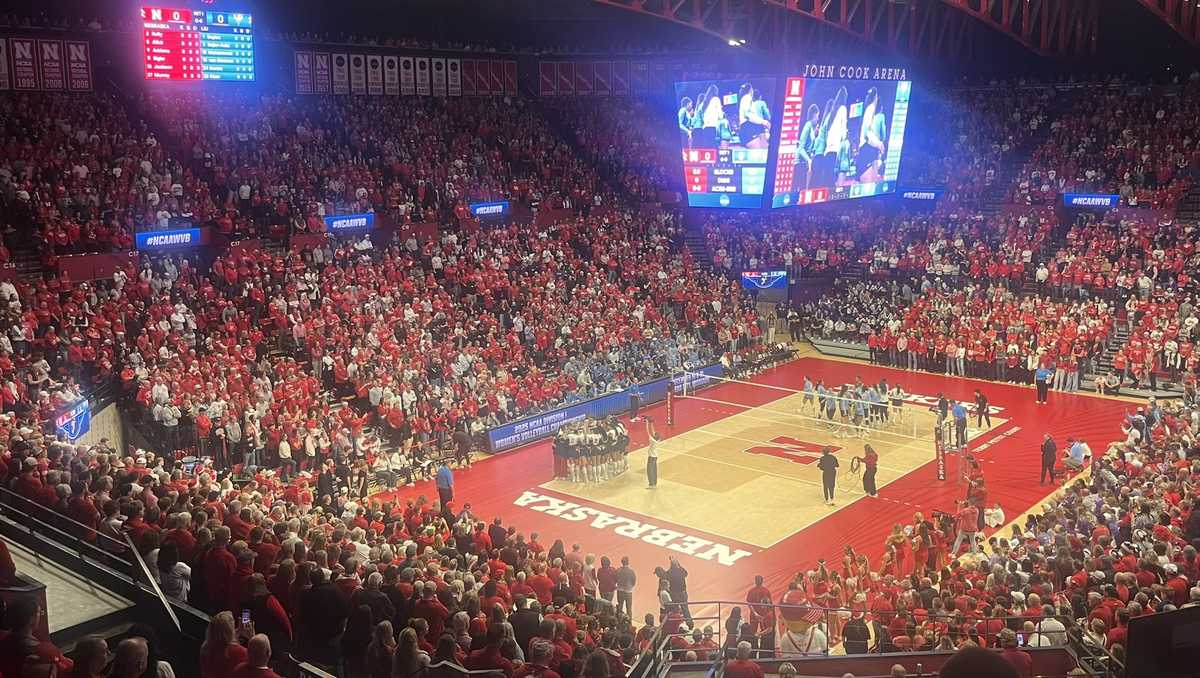
Related coverage in the video aboveNebraska volleyball hosted LIU in the first round of the NCAA Tournament.Bergen Reilly to Andi Jackson and Nebraska was up 6-2.Jackson would later bump Nebraska’s lead to 15-9.A kill from Taylor Landfair ended set 1, giving Nebraska the 25-11 set victory.Rebekah Allick on the block, and it’s 3-0 Huskers in set 2.Allick and Jackson were leading the Huskers by the end of set 2. Nebraska defeated LIU 25-15 in the second set.A 4-0 run for the Huskers kicked things off in set 3.Nebraska was dominating LIU in set 3.Allick claimed match point for Nebraska.The Huskers got the 25-17 set win and the sweep over LIU.The Huskers will face Kansas State in the second round of the tournament on Saturday at 7 p.m.Make sure you can always see the latest news, weather, sports and more from KETV NewsWatch 7 on Google search.NAVIGATE: Home | Weather | Local News | National | Sports | Newscasts on demand |
Related coverage in the video above
Nebraska volleyball hosted LIU in the first round of the NCAA Tournament.
This content is imported from Twitter.
You may be able to find the same content in another format, or you may be able to find more information, at their web site.
Bergen Reilly to Andi Jackson and Nebraska was up 6-2.
This content is imported from Twitter.
You may be able to find the same content in another format, or you may be able to find more information, at their web site.
Jackson would later bump Nebraska’s lead to 15-9.
This content is imported from Twitter.
You may be able to find the same content in another format, or you may be able to find more information, at their web site.
A kill from Taylor Landfair ended set 1, giving Nebraska the 25-11 set victory.
This content is imported from Twitter.
You may be able to find the same content in another format, or you may be able to find more information, at their web site.
Rebekah Allick on the block, and it’s 3-0 Huskers in set 2.
This content is imported from Twitter.
You may be able to find the same content in another format, or you may be able to find more information, at their web site.
This content is imported from Twitter.
You may be able to find the same content in another format, or you may be able to find more information, at their web site.
Allick and Jackson were leading the Huskers by the end of set 2. Nebraska defeated LIU 25-15 in the second set.
This content is imported from Twitter.
You may be able to find the same content in another format, or you may be able to find more information, at their web site.
This content is imported from Twitter.
You may be able to find the same content in another format, or you may be able to find more information, at their web site.
A 4-0 run for the Huskers kicked things off in set 3.
This content is imported from Twitter.
You may be able to find the same content in another format, or you may be able to find more information, at their web site.
Nebraska was dominating LIU in set 3.
This content is imported from Twitter.
You may be able to find the same content in another format, or you may be able to find more information, at their web site.
Allick claimed match point for Nebraska.
The Huskers got the 25-17 set win and the sweep over LIU.
This content is imported from Twitter.
You may be able to find the same content in another format, or you may be able to find more information, at their web site.
The Huskers will face Kansas State in the second round of the tournament on Saturday at 7 p.m.
Make sure you can always see the latest news, weather, sports and more from KETV NewsWatch 7 on Google search.
NAVIGATE: Home | Weather | Local News | National | Sports | Newscasts on demand |
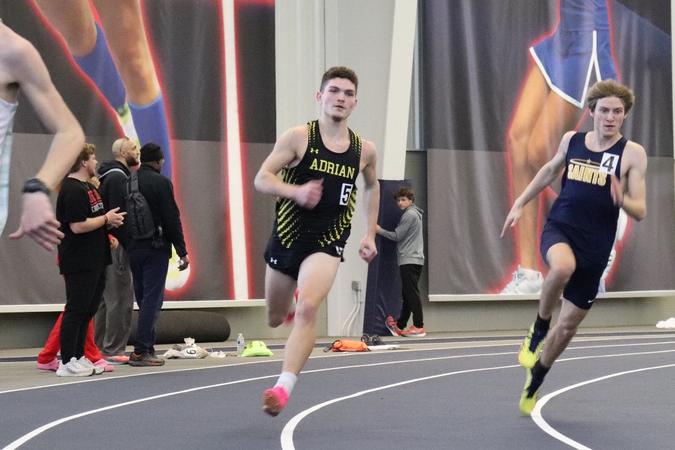
UNIVERSITY CENTER, Mich. – The Adrian College track and field team traveled to Saginaw Valley State University for the Holiday Invite, showcasing strong performances across the board.
On the men’s side, Joseph Sheridan set a personal best in the 400m dash with a time of 51.06, earning 23rd place. In the mile, both Jessie Strickland and Nick Doerr set personal records, with Strickland crossing the finish line in 5:06.00 for 21st place and Doerr finishing 22nd in 5:07.95. Brandon Berry soared to a fifth-place finish in the high jump, clearing 1.94m and cementing his place in the program’s top-10. In the long jump, Ian Chavis claimed 10th with a leap of 6.15m (20-2.25), while Forrest Schroeder posted a solid 12th-place mark at 6.09m (19-11.75).
The women’s team also had notable performances. Abigail Raftis ran the 400m dash in 1:06.36 for 26th place, and Alayna Paeth set a personal best in the 800m with a time of 2:38.94, earning 22nd place. In the high jump, Alysia Townsend cleared 1.57m (5-1.75) to finish sixth. The long jump saw Piper Pierce take 23rd with a mark of 4.63m (15-2.5) and Emily Peterson finish 26th at 4.30m (14-1.25).
Up Next: The Bulldogs are back in action on Saturday, January 17th where they will head back to Saginaw Valley State University. The meet is scheduled to kick-off at 10:00 AM.

St. Mary’s Recreation And Parks Board Closes 2025 With Volunteer Honors, New Tech Rollout And Energy Grant

Bruins Fall to No. 1-Seed Kentucky in NCAA Second Round

Michael Annett, who made 436 combined starts in NASCAR’s 3 national touring series, dies at 39

The Weirdest NASCAR Truck Series Season Nobody Talks About

Woodbridge notches shutout over San Fernando, earns trip to CIF State final –

Jonesboro City Stars Board Issues Statement

Track and Field Wraps Season Opener

Pitt Sweeps UMBC to Advance to 10th Straight NCAA Round of 32 Match

NASCAR, JR Motorsports release statements following death of Michael Annett

Former NASCAR Driver Michael Annett Dead at 39

Youth Football: Texas Mambas go undefeated in inaugural season

National title contender lands college football’s No. 1 WR recruit

Men’s and Women’s Indoor Track and Field Open Season at GVSU Holiday Open

Nebraska volleyball begins national title chase with win over LIU

NASCAR veteran Michael Annett dies at 39

First Tee Winter Registration is open

Fargo girl, 13, dies after collapsing during school basketball game – Grand Forks Herald

CPG Brands Like Allegra Are Betting on F1 for the First Time

Volleyball Recaps – November 18

F1 Las Vegas: Verstappen win, Norris and Piastri DQ tighten 2025 title fight

Two Pro Volleyball Leagues Serve Up Plans for Minnesota Teams

Utah State Announces 2025-26 Indoor Track & Field Schedule

Sycamores unveil 2026 track and field schedule

Redemption Means First Pro Stock World Championship for Dallas Glenn

Bowl Projections: ESPN predicts 12-team College Football Playoff bracket, full bowl slate after Week 14

Texas volleyball vs Kentucky game score: Live SEC tournament updates

Indiana’s rapid ascent and its impact across college football

Pohlman admits ‘there might be some spats’ as he pushes to get Kyle Busch winning again

How this startup (and a KC sports icon) turned young players into card-carrying legends overnight

Troy Football Need to Know; Gameday at The Vet — Georgia State Game

 Why a rising mid-major power with an NCAA Tournament team opted out of revenue-sharing — and advertised it
 NBA Legend Michael Jordan to Join NBC Sports as Special Contributor
 Falcons mailbag
 Portal Update – Basketball and Gymnastics Take Hits
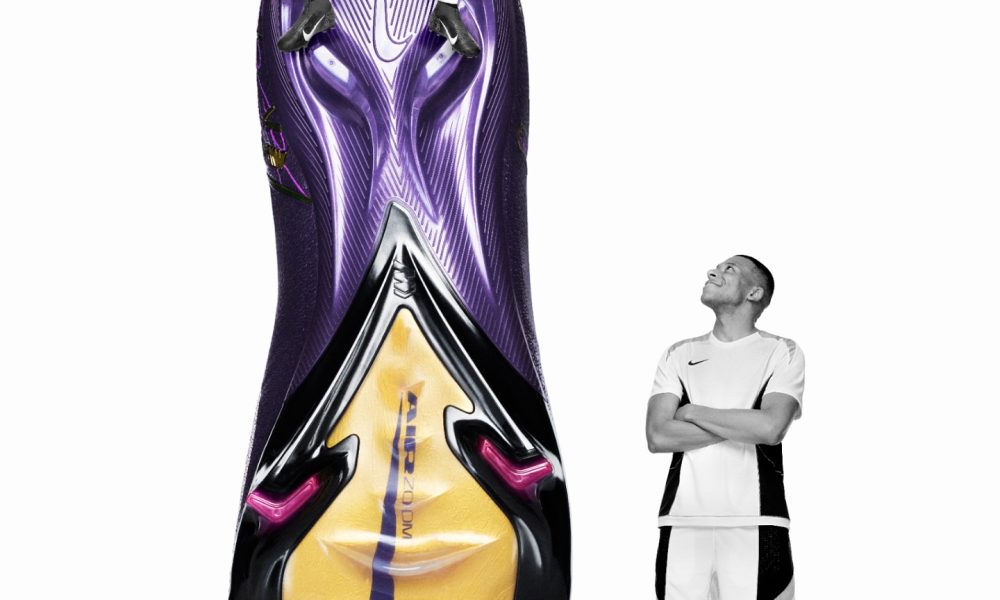 has always dreamed in Mercurial. Now his initials are on the boots.
The new Kyl…
has always dreamed in Mercurial. Now his initials are on the boots.
The new Kyl…
-
 Rec Sports2 weeks ago
First Tee Winter Registration is open
-
 Rec Sports1 week ago
Fargo girl, 13, dies after collapsing during school basketball game – Grand Forks Herald
-
 Motorsports2 weeks ago
CPG Brands Like Allegra Are Betting on F1 for the First Time
-
 Sports2 weeks ago
Volleyball Recaps – November 18
-
 Motorsports2 weeks ago
F1 Las Vegas: Verstappen win, Norris and Piastri DQ tighten 2025 title fight
-
 Sports2 weeks ago
Two Pro Volleyball Leagues Serve Up Plans for Minnesota Teams
-
 Sports2 weeks ago
Utah State Announces 2025-26 Indoor Track & Field Schedule
-
 Sports2 weeks ago
Sycamores unveil 2026 track and field schedule
-
 Motorsports1 week ago
Redemption Means First Pro Stock World Championship for Dallas Glenn
-
 NIL6 days ago
Bowl Projections: ESPN predicts 12-team College Football Playoff bracket, full bowl slate after Week 14