Connect with us
https://yoursportsnation.com/wp-content/uploads/2025/07/call-to-1.png

Rec Sports

Ex-MLB star Ryan Klesko has advice to maximize kids’ sports potential

Published

on


Seeking success in high school and college with Ryan Klesko, a former World Series champion who now helps kids reach baseball’s elite amateur levels

play

This is Part 2 of a three-part summer series visiting with three former major league All-Stars turned sports dads. They offer sports and life advice about how to make our kids better players, but also how to get the most out of athletic experiences with them. Read Part I:‘You’re not getting scouted at 12’: Youth sports tips from a LLWS hero

You may remember Ryan Klesko as a solid contributor to the Atlanta Braves’ run of division titles in the 1990s. But have you ever looked closer at his numbers?

He was remarkably consistent, hitting .279 with a .500 slugging percentage over 1,736 games. His sustained success, he says today, was not a result of a singular approach.

“Pull up hitting on TikTok and you’re gonna see 50 clowns,” says Klesko, 54, who now coaches his son, Hunter, at the 16U level in the Atlanta area. “There’s a lot of good information, but there’s a lot of disinformation out there. I call them clowns because these guys are trying to break down the swing, and they have all these weird drills and it worked for one guy. Listen, everybody trains a certain way. I don’t train all my kids to be like Ryan Klesko.”

Klesko carried a collection of physical tools and intellectual and emotional insight he collected from coaches and teammates (and from his mom, Lorene) from the time he was a kid in Southern California

Today, as he directs high school-aged kids, he seeks out snippets of knowledge, whether they come from Hall of Fame teammates Jones, Greg Maddux, John Smoltz and Tom Glavine, or something he finds online that might help a particular player. Everyone is different.

“I’ve had some bad major league hitting coaches, and they’re friends of mine,” Klesko told USA TODAY Sports. “One of the guys, very successful player, he wasn’t there long. He was trying to teach everybody to hit like he hit. And that was the only way. Chipper Jones doesn’t hit like Fred McGriff.”

Klesko works as a special assistant to the ownership group of Perfect Game, a youth baseball and softball scouting service that runs showcases and tournaments. As he travels around his region and the country with his teams, he looks for partnerships and ways to maximize players’ potential through clinics and instruction.

He offered strategies for athletes and their parents:

Find your comfort zone. There’s not one right answer for everybody

Lorene Klesko was a single mom who worked two jobs to support Ryan and his two sisters, who played softball. She had healthy, home-cooked food on the table and paid for every resource she could to ensure they were always around their favorite sports.

She also caught their fastballs, including Ryan’s, which reached 85 mph when he was a high school freshman.

He went to 10 years of hitting and pitching lessons, where he gained counsel and watched pros stop by the small warehouse behind Anaheim Stadium where he trained.

“I think it’s important for kids to get good structure,” Ryan Klesko says. “Find someone that’s had experience under somebody that’s reputable. They don’t have to go to hitting/pitching schools, but you gotta find someone that can help them through mechanics. Just like any other sport. If you’re going to be a gymnast, you can’t just go jump on the bars. You gotta have instructions, like baseball or anything else.”

As a youth coach, he has learned at least a half-dozen ways to correct flaws in swings, and to approach each hitter with an open mind.

“Barry Bonds, he was thinking swing down on the ball,” Klesko says. “Mike Trout, swing down on the ball. Big Papi, swing down on the ball. Josh Donaldson, he thinks he’s got to swing up on the ball.

“Well, guess what? They’re all good hitters. So I’m trying to find something that associates with that kid in his customized swing to make him better.”

‘Don’t beat yourself up’: Find confidence through failure

Klesko was drafted by the Braves in the fifth round in 1989 as a pitcher. He transitioned in their system to first base and outfield.

He continued to develop his hitting and rode through the minor leagues. He finished third in National League Rookie of the Year voting in 1994. He hit 17 homers in 92 games.

But following a strike that canceled the ’94 season early and delayed the start of 1995, Klesko was batting under .200 with no home runs through the first 18 games.

“One of the pitchers had more homers than me,” he says.

He heard media speculation he would be sent to the minors. “It really hurt me. I think if the coaches came up to me and said, ‘Hey, you’re gonna be fine. We trusted you, don’t listen to all this stuff,’ it would have helped me a little bit more.”

Then he got a push from a teammate, who told him to stop worrying about negativity and do what he could in his next at-bat. Klesko went 4-for-5 and began to break out of his slump. He wound up hitting .310 with 23 homers in 107 games for a World-Series-winning team.

High school hitters don’t have spring training like major leaguers, and they can quickly fall into early-season slumps. It happened to a few of the best players in Klesko’s organization, the Braves scout team, this year.

Klesko took that small step his teammate once did.

“Hey guys,” he wrote to them in a note this past spring. “Just keep grinding. It’s early. Don’t beat yourself up. … Just remember your training. Go with what works for you. Stay confident that your next at-bat or your next inning pitched is gonna be great. Put in the work, trust the process, stay strong mentally and kick some butt.”

‘Let me handle it’: Kids can’t advance when you distract them during games

If you’re a baseball parent, you know the anguish of a kid’s slump. It can paralyze both of you.

“I have several kids that if they start the tournament really good, they’re going to tear up the tournament,” Klesko says. “Teenagers (have) so much stuff going through the head, so that’s why we got our guys in the dugout trying to help them.

“You’ve got a lot of kids, their batting practice looks great, their cage work looks great, their bullpens look great. And when that game starts, they’re a mess. And that’s just working on the mental part. And if they start off by making an error, they’re probably gonna be horrible the whole tournament. We’re trying to get past all that stuff.”

Now imagine how your kid feels when they’re pressing, and we shout instructions during the heat of the game.

“Parents are yelling, ‘You’re dipping this, you’re dipping that,’” Klesko says. “I don’t want my parents yelling anything to ’em. Let me handle it. I want one positive swing thought, and then we’ll work on all the mechanical stuff in the batting cage. We don’t want a bunch of stuff running through their mind.”

Coach Steve: Think you’re helping your kid excel at sports? Think again

‘Release the energy’: Find power in your hitting and pitching

Klesko was an equally good hitter with the San Diego Padres in his 30s. He had an .872 OPS, two points above his career average, over 828 games.

He spent time revamping his swing with his mentor, former major league manager Jim LeFebvre, who helped turn Sammy Sosa, Richie Sexson and Charles Johnson into All-Stars.

While we want our own style, we can look for patterns of success. 

“We started watching videos of all the best players, looking at swings and seeing a lot of the same consistencies in all the major league hitters,” Klesko says. “So that’s what we teach now. We teach a lot of the basics of getting in a launch position.”

That is, being in the most powerful spot to be able to move your body efficiently and drive through the ball. Think of it as defending someone in basketball: Your feet are spread out, your backside is down and your legs are in a balanced position that allows you to explode at your point of aggression.

“A lot of the younger guys, when the ball’s coming, they’re already out of their good launch position,” Klesko says. “All these different major leaguers, some start with their hands high, some start with their hands low. All I care about is once the pitch is coming, and when that front foot lands, they can rotate and move to the baseball in the most powerful position.”

When kids are 18 or older, he says, you can teach them how to adjust with their body movements.

“So Ronald Acuña has super fast hands,” Klesko says. “And then other guys like to hit with their lower half, their core, then you start kind of fine-tuning what their specialty is. Do you have fast hands or do they need to create more power from their legs?”

Find a weightlifting program, Klesko says, to move weight quickly to work your fast-twitch muscles. If you’re a pitcher – and this is advice from Maddox, Smoltz and Glavine – look for training programs that value power and strength in your legs over having a whippy arm.

“The analogy is, you’ve got a Ferrari engine, and you’ve got a Toyota break system,” Klesko says. “Something’s gonna break. That’s gonna be the elbow or the shoulder. You have to learn to pitch with your core and your legs, like Tim Lincecum, Nolan Ryan. They’re coming down off that mound so hard, you’ve gotta train the muscles to be able to protect the arm after they release the ball.

“You can teach the arm, but you’ve got to be able to release the energy.”

Don’t be D1 or bust: Go to a college team where you will play

When you find a travel coach or a team where your kid is comfortable, Klesko says, stick with them. Don’t jump to another just because you think it might be a little more competitive.

Sometimes, what you get out of the experience is worth more.

“Is it working for your kid?” Klesko says. “Find somebody that helps your kid get better.”

A number of players from the Braves scout team have committed to Division 1 programs. However, in the era of NIL and the transfer portal, college baseball coaches are leaning on older players.  The average age of an NCAA baseball player is just under 22.

If you aspire for college baseball, Klesko suggests to also aim for junior college, Division II or Division III, where you have a better chance to play.

It’s a route Tom Wisnauckas, a reader of my column from Worthington, Massachusetts, has advocated to me over the years. His daughter, Zyna, played lacrosse at Division III Smith College.

“Most parents want their kid to get a D1 athletic scholarship but there are plenty of very good academic D3 schools that give a lot of aid,” Tom Wisnaukas says. “So academics in high school (are) pretty important. Also for the most part, D3 kids, if they choose, are not married to their sport and can take part and enjoy other experiences in college. And most coaches understand the value of academics.

“So let parents know not to poo-poo D3. Also remind them that playing a sport in college is very time consuming and students will need to get good at time management in a hurry.”

Meanwhile, if players are struggling at baseball in high school and reach out through Perfect Game for advice, Klesko tries to respond to them.

He wants kids, on his team and elsewhere, to have the all-inclusive sports experience he once had.

“If it wasn’t for the help from the Little League coach or my high school coach, or the neighbor down the street giving my mom some money for gas to go to a tournament, we would never be able to do all that,” he says. “I’ve seen that, and if it wasn’t for the whole village around me, I would have never made it. So I’m trying to do that exact same thing for the kids.”

Coming next: Fulfilling professional dreams while enjoying the ride as fathers and sons to try and reach them.

Steve Borelli, aka Coach Steve, has been an editor and writer with USA TODAY since 1999. He spent 10 years coaching his two sons’ baseball and basketball teams. He and his wife, Colleen, are now sports parents for two high schoolers. His column is posted weekly. For his past columns, click here.

Got a question for Coach Steve you want answered in a column? Email him at sborelli@usatoday.com



Link

Continue Reading
Click to comment

Leave a Reply

Your email address will not be published. Required fields are marked *

Rec Sports

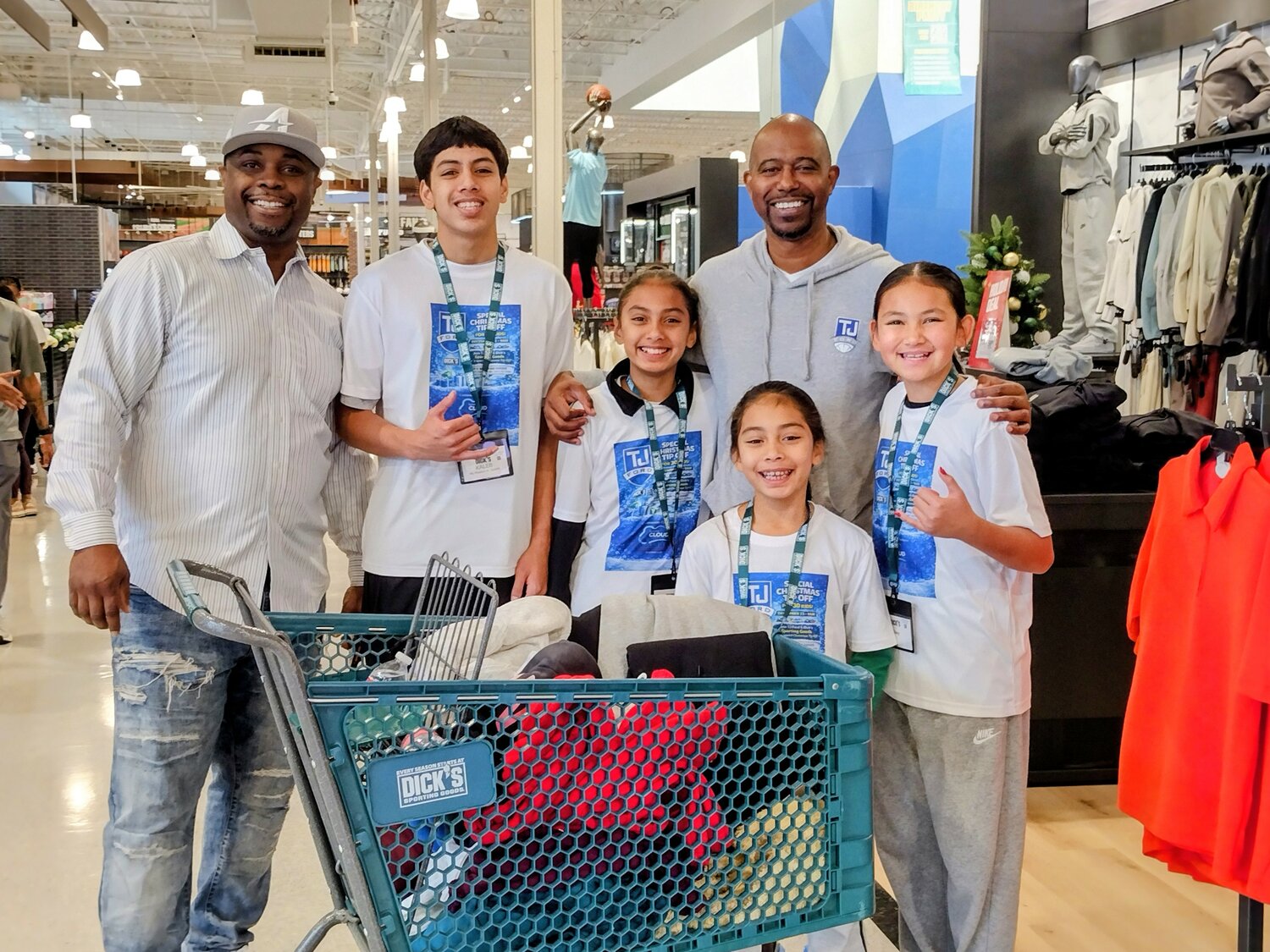
Former Longhorns host shopping spree at DICK’S House of Sport in Katy

Published

on


Posted


Link

Continue Reading

Rec Sports

Indoor sports complex construction proceeding | Owensboro Messenger Inquirer

Published

on


On Tuesday afternoon, the City of Owensboro plans to unveil the name of the indoor sports facility being built downtown.

The city official overseeing the project said Friday that construction is on schedule for it to be completed this summer.

The $18 million sports complex is taking shape downtown along Third Street, west of Frederica Street.

The massive building was approved by city commissioners as a way to attract large traveling sports teams and tournaments.

“Construction is moving pretty well, to be honest,” Assistant City Manager Lelan Hancock said Friday.

Contractors are roofing the structure, putting masonry on the exterior walls and will begin work inside once the roof is completed, Hancock said.

“The roof is going to be the biggest thing this time of year, so you can get it closed off and start working inside,” Hancock said. 

The work is expected to be complete by July. 

“They are moving pretty quickly now” on construction, Hancock said.

The concept is still for the facility to be used to attract large sports tournaments to downtown on weekends and for the facility to be available for local sports teams to rent it for practices and games during the week, Hancock said.

“It’s a tournament facility, but there will be opportunities for local groups to rent the facility for practice,” he said. “It’s a revenue facility. The goal of the facility is tournaments. I know OVG (360) is working with tournament people to get things scheduled and have tournaments the day we open up.”

OGV 360 handles scheduling for the Owensboro Convention Center and Sportscenter, as well as the indoor sports complex. 

Hancok said OVG officials are having “quite a few” talks with tournament officials who could bring their events to Owensboro. Youth sports leagues that sponsor traveling tournaments are big business, Hancock said.

“I think it’s growing,” he said. “It’s amazing the amount of money families … spend on sports.”

The indoor sports team industry has grown from traditional events like basketball to include archery and dance.

“Now, just about every sport that can be played indoors has become a travel industry,” Hancock said.

Tournaments bring in revenue as families of team members spend money on hotel and food during tournaments.

“It’s very much a growing industry,” Hancock said.


Link

Continue Reading

Rec Sports

Kent Youth and Family Services sets up children and families for success

Published

on


Asia Butler, 33, has been determined to provide stability for her five children by furthering her career. After finishing a dental assisting program last year, the Kent, Washington, resident decided to take the next step and complete her prerequisites for dental hygiene.

But years of commitment to her education journey have brought another massive responsibility: figuring out child care for her young kids.

Butler lost her husband in 2022, two years after their family relocated from New Orleans to the Seattle area, where she found few options for full-time day care in Kent. In 2023, she learned about the nonprofit Kent Youth and Family Services through a preschool.

The organization specializes in counseling, education and other support for adolescents and their loved ones. Among its initiatives are early learning and after-school programs, as well as mental health services.

Since Butler and her family became clients of KYFS, the nonprofit has provided them with much more than child care. It has improved her children’s development and built a support system, setting them up for success.

“Each of my kids that have been in the program have needed support in different ways,” Butler said in a phone interview. “They were able to meet them where they were and make sure that they adjusted. Now, it’s like they’re doing great in school. They love it.”

The social service agency is one of the 13 nonprofits supported by reader donations to the Seattle Times Fund for Those in Need. This year, the Times’ annual holiday fundraiser aims to collect $3 million in donations.

‘Our goal is to never turn anybody away’

For 56 years, KYFS has endured as a community pillar.

The organization was founded in 1970 by local residents and parents in the Kent School District, who sought to create more resources, said Ashley Gregory, community engagement and marketing director.

She estimates that, today, the nonprofit – made up of about 120 employees – serves around 2,200 kids annually.

“Our mission is to help people reach their goals for a better future,” Gregory said. “A lot of the ways we’re doing that is by kind of helping with some of these immediate needs, so that kids can focus on learning, focus on their mental well-being and really move into healthier spaces.”

The nonprofit provides mental health care, with counseling available for participants up to 25 years old and their family members in South King County and nearby areas. It is mostly funded through Medicaid, though KYFS uses subsidies, grants and partnerships to ensure people in need can receive those services.

“Our goal is to never turn anybody away,” Gregory said in a phone interview.

The Infant & Early Childhood Mental Health Program targets parents and children through 5 years old, while the Perinatal Mental Health Program is for expecting and new parents.

Support groups include the LGBTQ+ youth group, a free drop-in group held weekly. It is the organization’s longest-running group and has needed more support as of late, Gregory said.

An initial area of focus for the organization’s counselors and therapists was serving youths seeking substance abuse disorder treatment, which was then offered at Kent School District schools. It remains one of the largest programs at KYFS, Gregory said.

Now, it includes 26 counselors and 10 interns, with in-school services expanded to Renton and Sumner-Bonney Lake school districts, Executive Director Trista Helvey said. More than 1,100 clients were served over the first three quarters of 2025 through the behavioral health program.

The nonprofit’s substance use disorder counseling is available for youth ages 11 to 24. Clients with mental health and substance use challenges can turn to co-occurring disorders counseling.

Separately, Gregory highlighted the early learning program as the largest initiative at KYFS in terms of staff and the number of children regularly served on a weekly basis. It spans 21 classrooms and six sites.

The initiative incorporates preschool learning for low-income children ages 3 to 5 in the Kent School District, along with family support, such as job placement and rent resources.

But the early learning program is not immune to ongoing macroeconomic squeezes.

While the Head Start Program is federally funded, the Early Childhood Education and Assistance Program is state funded. Due to state budget cuts, KYFS was forced to eliminate 40 spots from its early learning program this school year, Gregory said.

Still, “we’re helping fill voids and create just safer communities – for not just the kids that we’re serving but the families,” Gregory said. “Community support has been how we’ve gotten this far in being able to have the kind of impact we’ve had.”

Building connections with students

Every Monday through Thursday, Melissa Pravalpott has a plan in place for her students, ages 3 to 5, at KYFS.

At the start of each day, Pravalpott, who is the lead teacher for the nonprofit’s Head Start and Early Childhood Education and Assistance Programs, commutes from her home in Lynnwood to her workplace in Kent.

Before her students arrive, she sets the tables and prepares the classroom. Then, Pravalpott welcomes her morning group. As part of the program’s focus on oral health and nutrition education, the kids eat breakfast and brush their teeth together.

After they play outside, it’s back indoors for music and movement. The students gather in small groups for individual teaching time before breaking for lunch.

Once the first set of children heads home, Pravalpott repeats the agenda with her afternoon class.

Pravalpott, who has worked at KYFS for over a decade, was drawn to the nonprofit’s mission and values when she first applied.

“It just really gives me an opportunity to really, truly connect with families on a more personal level,” she said in a phone interview.

Her goal as a teacher: to lay down positive foundations for education before her students age out of the program.

“There’s a lot of people who do have negative experiences with education, so we try to build that bridge and build that relationship,” she said.

Some of her students are trying to better understand their disabilities.

Each child goes through screenings and assessments at the beginning of the program, with instructors observing them throughout the year to gauge their progress. If a student experiences any developmental lags, Pravalpott quickly consults their parents and partners with referral services to secure the proper support.

For Butler, that’s been a game changer. Pravalpott has taught the two youngest of Butler’s five children.

Butler explained that her daughter suffered severe anxiety in the classroom, and the first six months took some adjusting. Butler and Pravalpott worked together to put her at ease.

Butler also noticed some delays with her son. She said Pravalpott took her concerns seriously, and they’re moving forward with relevant evaluations.

At KYFS, some students are learning English as a second language. Pravalpott instructs a multicultural classroom, with children hailing from all corners of the globe – Afghanistan, Vietnam, Mexico and Russia among them.

In a phone call, Pravalpott reflected on one child, a Punjabi-speaking boy. As she remembers it, his mother relayed her fears that he might not make friends because he didn’t understand English.

But recently, when they met for a parent-teacher conference, that mom had good news to share: She’d since noticed her son’s grasp of English was improving substantially – and he was exhibiting more caring and nurturing qualities, too.

For Pravalpott, those moments mean the world. Teaching can sometimes leave her feeling burned out, and she’s caught herself wondering if she’s making a difference.

Interactions like that prove to her that she is.

“Every day, every little victory, every hug, every smile, every laugh,” Pravalpott said, “it builds that connection.


Link

Continue Reading

Rec Sports

Utah Valley Calendar: Things to do – Jan. 3 | News, Sports, Jobs

Published

on


Sign up for choirs — Timpanogos Singers and Youth Choirs are now enrolling for January. Join the group for Celtic Crossroads and Broadway Favorites concerts. For Timpanogos Singers, visit https://americanforkarts.com/timpsingers. For youth choirs, visit https://americanforkarts.com/timpanogos-youth-choirs.

“Disney’s Camp Rock: The Musical” — Timpanogos Youth Theater will present “Disney’s Camp Rock: The Musical” from Thursday, Jan. 15, to Saturday, Jan. 17, at the Valentine Theater. The musical is a high-energy, family-friendly show with unforgettable music, friendship and discovering your true voice. For more information and to purchase tickets, visit https://timpanogosarts.org/timpanogos-youth-theater.

CEDAR HILLS

Christmas tree recycling — Drop-off for live Christmas trees will be from Friday, Dec. 26, to Monday, Jan. 5, in the marked areas at Mesquite Soccer Park, Heritage Park and Harvey Park. Attachments, including stands, must be removed from the trees. Neither artificial nor flocked trees will be accepted.

Youth theater — Cedar Hills Youth Theater will be performing “The Lightning Thief: The Percy Jackson Musical” from March 12-14. Registration opened Dec. 1 and the first class will begin Jan. 1. For more information, visit https://cedarhillsrec.activityreg.com/selectActivity.

Karate — One-hour multi-level classes for people age 6 and older, including adults, will be held Mondays and Wednesdays. The next 10-week session begins Jan. 12. For more information, visit https://cedarhillsrec.activityreg.com/selectActivity.

Ski and Snowboard Club — A self-drive option is open for the Ski and Snowboard Club at Brighton for ages 10 and up. All levels are welcome. Classes are based on skill level and the number of participants Four Saturday classes are included, beginning Feb. 21 and concluding March 14. Each class includes transportation, a two-hour lesson and a night lift pass. For more information, visit https://cedarhillsrec.activityreg.com/selectActivity.

LINDON

Senior bus — The Lindon Senior Center has a bus and is able to offer rides to and from the center on Mondays, Wednesdays and Fridays. This is available for Lindon resident seniors. Pick-ups are between 10 and 11 a.m. Drop-offs are between 1 and 2 p.m. Reservations must be made at least one day in advance. Contact the Senior Center front desk at (801) 769-8625.

PAYSON

Volunteer at the library — Friends of the Payson Library notes that residents can volunteer for an hour or less each month to help the library meet the needs of children and patrons. Volunteers are asked to offer ideas and support the group’s yearly book sale. People interested in volunteering may contact library director Dona Gay, Brittany Johnson at (801) 609-4078, Ann Humpherys at (801) 465-0941, or Steve Southwick at (801) 822-1705.

PROVO

Provo Police historical snapshots discussion — The Utah Valley Historical Society will present Provo Police Chief Troy Beebe and his presentation on “The Provo Police Department: Historical Snapshots of Interest” at 7 p.m. on Tuesday, Jan. 13, in Room 201 at Provo City Library. Beebe will share stories from the privately published collection of police officers’ memoirs held by the Police Department. This event is free and open to the public.

SARATOGA SPRINGS

Community Orchestra — The Saratoga Springs Community Orchestra holds practices on the first and third Thursdays of each month from 7 to 9 p.m. at the city offices, 1307 N. Commerce Drive. The orchestra will be preparing for Saratoga Splash Days and the December holiday concerts.

UTAH COUNTY

Volunteers sought to help at warming centers — Community Action Services is seeking volunteers ages 18 and older to support warming center for the homeless each night. Volunteers will help with set-up and clean up, safety and security, and provide friendship and fellowship under the supervision of trained staff. Shifts run from 7:30 p.m. to 1 a.m.; 12:30 a.m. to 5 a.m.; and 4:30 a.m. to 8:30 a.m. Volunteers must sign up for one or more shifts and complete online and in-person training modules. For more information and to sign-up, visit https://app.vomo.org/opportunity/warming-center.

Mental health support groups and classes — NAMI Utah County offers free in-person and online support groups and classes for adults and teens living with mental health conditions and for family members of loved ones living with mental health conditions. For more information, contact Angela Peterson at (801) 400-3516.

Volunteers to help Kids On The Move — Each Friday and Saturday, Kids On The Move offers Respite Care, providing a free break to parents with special needs children. Families drop their children off at locations in Orem, Lehi and Springville where they are paired one-on-one with a volunteer to play for the evening. A nurse or behavior technician is also present to help oversee. The group is seeking 10 volunteers 16 years and older from 5:45 to 9:30 p.m. every Friday and Saturday to help make this happen. For more information or to sign up, visit https://kotm.org/volunteer-portal. Coronavirus measures are being taken, including requiring masks, taking temperatures and frequent hand sanitizing.

Foster grandparents sought — Utah County is seeking senior volunteers to serve as foster grandparents. Volunteers must be limited-income individuals at least 55 years old and able to serve 15 or more hours per week. Volunteers serve as mentors, tutors and caregivers for children and youth at schools, hospitals, youth centers and similar organizations. Volunteers receive a non-taxable stipend, paid personal leave, transportation reimbursement, ongoing training and more. For more information or if you or someone you know would like to participate, call (801) 851-7784.

Utah County Home Visit Programs in need of donations — Utah County Health Department home visit programs are running low on donated resources such as baby blankets and diapers. The health department is asking Utah County community members to consider donating items or organizing service projects to assist in providing donations. The items most needed are new receiving blankets or small quilts and diapers. Other welcomed items include: infant “onesies,” knit hats and infant-appropriate board books. Items should be in new condition. Donations may be dropped off Monday to Friday (8 a.m. to 4:30 p.m.) at the following health department locations: Provo — 151 S. University Ave., Suite 1610, American Fork — 599 S. 500 East. Questions about the home visit programs should be directed to Bonnie Hardy at (801) 851-7026.

To submit notices or events from your city, email rolson@heraldextra.com.

Copyright © 2026 Ogden Newspapers of Utah, LLC | www.heraldextra.com | 1200 Towne Centre Blvd. STE 1058, Provo, UT 84601


Link

Continue Reading

Rec Sports

N.J. coach claimed to be a cop, took photos of girls inside Starbucks, police say

Published

on


A New Jersey youth sports coach who co-owns a trampoline and tumbling school was charged Thursday with impersonating a police officer at a Starbucks in Denville, authorities said.

Roger H. Walker, 57, used his cellphone to take pictures of girls inside the Main Street business at 10:40 a.m. on Nov. 30, Denville police said Friday.

Walker, of Rockaway Township, also displayed what appeared to be a badge and told several people in the Morris County coffee shop that he was a police officer, authorities said.

After an investigation, Walker was charged with impersonating a law enforcement officer and harassment. He was issued a summons and released.

Walker is listed as managing partner and head coach at CAVU Trampoline & Tumbling, a gym in Mountain Lakes, according to the business’ website.

In a phone interview with NJ Advance Media, Walker said the allegations are “wildly untrue.”

Walker, who said he is a regular at the Starbucks, said he was seated in the shop with his iPad open and his phone in his hand when another customer approached him.

“A woman who I’ve seen before and I had a run in with previously said to these girls, ‘I think that man is taking pictures of you.’ I said, ‘Please don’t say that, that’s not true, that just isn’t true.’”

Walker said he is one of the few African-American business owners in the Mountain Lakes area and was targeted with false allegations.

“There are people who have seen me coming (to Starbucks) for years and now my name is being smeared. I’ve been given a very hard time. I think this is an unfortunate situation,” he said.

Walker’s attorney was not listed in court records on Friday. He declined to provide the name of his lawyer and said he has not been given a date for a court appearance.


Link

Continue Reading

Rec Sports

Better than before? Rowland helping lead dominant Colorado Mesa squad post-ACL tear

Published

on


Former Durango star averaging nearly 18 points per game

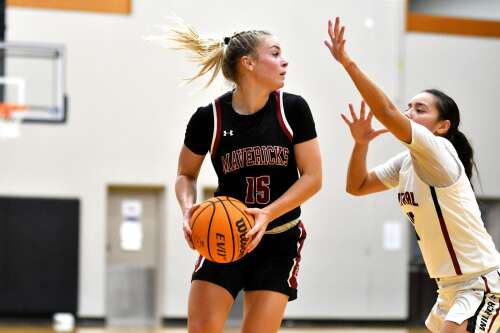
Colorado Mesa University women’s basketball player and Durango native Mason Rowland looks to make a play against Central Washington on Nov. 3, 2023, during her freshman year. (Courtesy of CMU athletics)

A lot of players return from an ACL tear as a diminished version of their former self, but Durango’s Mason Rowland is not one of them.

The former Durango High School girls basketball star tore her ACL on Nov. 15, 2024, while playing for the Colorado Mesa University women’s basketball team and missed the rest of her sophomore season after winning Rocky Mountain Athletic Conference Freshman of the Year in 2023-2024.

Now a redshirt sophomore, unknowing bystanders would be hard-pressed to know she was coming off a torn ACL. Rowland is averaging 17.8 points per game, as of Friday evening, for a 13-1 Colorado Mesa squad that is dominating its opponents.

“We’ve had a great start to the year and are just looking to build off that coming out of Christmas break,” Rowland said. “We were a new group starting with so I think just trying to find the pieces and making sure everyone gelled with each other. But once we found that, we are going to be pretty tough to beat. So it’ll be exciting.”

Rowland averaged 14.6 PPG as a freshman and averaged 15.7 PPG in three games as a sophomore before getting hurt. It was a long recovery process for Rowland, as it is for all athletes who tear their ACL, and she returned to action in the summer.

The Mavericks tipped off the 2025-2026 season with the D2CCA Tip-Off Classic in British Columbia on Oct. 31. It’s a tournament Rowland enjoyed as a freshman, and it was a successful trip for the Mavericks with three wins. Rowland had a great experience getting on the court, getting through those games and realizing she can still play. Those first three games were building blocks for Rowland and the rest of the team.

Rowland said it took her about five games to not be hesitant to drive with her repaired ACL like she would in the past. Even with that hesitation, Rowland averaged 16.6 points per game in the first five games.

The Durangoan is the third-leading scorer in the RMAC with her 17.8 PPG. She’s continued to be an elite rebounding guard with 5.9 rebounds per game. Her name pops up in a lot of the RMAC individual statistical categories, including being fourth in the conference with 3.6 assists per game; she’s eighth in the RMAC with a 1.1 assist to turnover ratio; Rowland is ninth in the conference with a 43.1 field goal percentage and third in the conference with an 81.5 free-throw percentage.

“Since her injury last year, she’s been determined, and she did her rehab as best as she could and was in the gym all the time,” Colorado Mesa head coach Taylor Wagner said. “She’s one of those kids who has put her heart and soul into everything, and that’s what’s helped her bounce back a little bit quicker than maybe some of the other kids that we’ve had that have had ACL injuries.”

One area that Rowland has really improved in is her 3-point shooting. Known as an elite driver coming out of Durango High School, Rowland shot 33% from 3-point range as a freshman and 25% on limited attempts before her injury as a sophomore.

This season, Rowland is shooting 41% from 3-point range. She’s turned into one of the top 3-point shooters in the conference, ranking second in 3-point field goal percentage and third in 3-point field goals per game. Through 14 games, Rowland already has more 3-point attempts and makes than in her entire 32-game freshman year.

Rowland and Wagner both said the time Rowland had off due to injury helped her improve her shooting. It took a while for Rowland to compete against others, but she could work on her shooting a lot sooner. Wagner said the coaching staff didn’t do anything to her shot; the improvement has been because of the time she put in.

The improvement in Rowland’s game has certainly helped the Mavericks get off to such a great start. Since Colorado Mesa’s lone loss to West Texas A&M on Nov. 14, the Mavericks have had one close win, a 57-49 win, the next game on Nov. 16. Other than that, Colorado Mesa has won eight of its last nine games by at least 25 points. The Mavericks are 11th in the WBCA NCAA Division II Top 25 women’s basketball coaches’ poll.

Besides Rowland, the Mavericks have arguably the best player in the conference in back-to-back RMAC Player of the Year, Olivia Reed Thyne. The senior forward is averaging 18.6 PPG and 10.6 RPG to create a dynamic duo for the Mavericks.

“Mason’s taken a lot of pressure off Olivia scoring-wise,” Wagner said. “Last year, Olivia seemed like she always had to be the girl the go-to girl. With Mason’s ability to get a bucket, that one-two punch has been really good this year. They’re starting to feed off each other a little bit better and playing off each other. So they’ve evolved.”

Durango fans won’t get to see Rowland and the Mavericks this season in Durango, as the Fort Lewis College vs. Colorado Mesa game will be in Grand Junction. However, after going 50-13 the last two seasons with two NCAA tournament appearances, the Mavericks will likely have plenty of big games remaining this season.

“The sky’s the limit for us right now,” Rowland said. “We are definitely a team that focuses on one game at a time, but we want to win the RMAC regular season championship, host the RMAC tournament, win the RMAC tournament, hosts regionals and win regionals all the way up to a national championship.”

bkelly@durangoherald.com


Link

Continue Reading

Most Viewed Posts

Trending