
NIL
Experts worry about a lack of addiction treatments as legalized sports betting grows



BEN YEW: He gambled away every last penny.JOE MALONEY: There is a vast, predatory and pervasive illegal market sitting there as a digital storefront, right next door to legal operators.CAIT HUBLE: There’s no federal funding for gambling addiction.RIDDLE: The federal government puts billions of dollars into treatment for alcohol, tobacco and substance use disorders. Many states do already funnel some money into treatment and intervention for gambling, but funding varies a lot, and experts say it’s not enough to offer resources for people when they have already devastated their lives and their bank accounts. Michelle Malkin is director of the Gambling Research & Policy Initiative at East Carolina University.YEW: I no longer had a need for the offshore sites.RIDDLE: On the question of exactly how much responsibility the legal gambling industry should bear for lives ruined, he says that’s for states to figure out on their own.HUBLE: Gambling is several decades behind in terms of public opinion and recognition of it as a mental health condition.(SOUNDBITE OF BILLY HAMMER’S “BEST PART (INSTRUMENTAL)”) Transcript provided by NPR, Copyright NPR.YEW: My moral center and any values that I have or had at that time, or any time I was active addiction, they are completely, completely eschewed and just completely ignored, and they sink to the deepest, darkest depths of your soul.MALKIN: When it comes to, like, inpatient, which people need for gambling, just like drugs and alcohol, there is less than five places in the whole country that specialize truly in gambling.RIDDLE: Yew picked up his own gambling habit when he was a young kid. It ruled his life for years. He says gambling robbed him of many things – his first marriage, his relationship with his daughters.RIDDLE: Yew is 42. In 2018, he had already been gambling for years. That’s the year a major Supreme Court case legalized sports gambling. Yew says he remembers the impact taking hold.RIDDLE: Representatives from the gambling industry argue that it’s critical to keep gambling legal. Joe Maloney is with the American Gaming Association, the primary industry group for online and legal gambling.MICHELLE MALKIN: We don’t just need resources for the people who have gambling disorder. We need to be doing the outreach and education early.RIDDLE: Malkin warns that gambling is a growing problem on college campuses. Starting young can set people up for a lifetime of struggle. She says there also needs to be more specialized treatment available.Katia Riddle, NPR News.RIDDLE: They have been advocating for legislation that would allocate millions for treatment and intervention in federal funds directly from the profits of the gambling industry. They estimate the cost to society of problem gambling – things like incarceration and legal fees – to be at least billion annually.MALONEY: And does not invest in problem gambling treatment and services, does not invest in responsible gaming measures.KATIA RIDDLE, BYLINE: Looking back on his life, Ben Yew says gambling was in his blood. There’s a famous story about his parents’ honeymoon and what happened there with his dad.RIDDLE: Offshore sites – that’s one of the ways he had been gambling before it was legal in the U.S. Illegal sites are still part of the gambling ecosystem, but now people can also gamble legally in 38 states. Last year, the industry reported total annual profits of more than billion. Experts who study this problem say not enough of this profit is going to mitigate the devastation gambling causes to people’s lives. Cait Huble is with the group the National Council on Problem Gambling.RIDDLE: Maloney points out that disincentivizing legal gambling could drive people to these illegal platforms.NPR transcripts are created on a rush deadline by an NPR contractor. This text may not be in its final form and may be updated or revised in the future. Accuracy and availability may vary. The authoritative record of NPR’s programming is the audio record.Americans will legally wager billion in the NCAA’s March Madness this year. That’s according to an industry group’s estimate, and it’s just one example of how much the gambling biz has grown. As NPR’s Katia Riddle reports, some warn that help for problem gamblers isn’t keeping pace.SARAH MCCAMMON, HOST:










-

Max Olson
ARLINGTON, Texas — Texas Tech’s all-in bet just paid off.
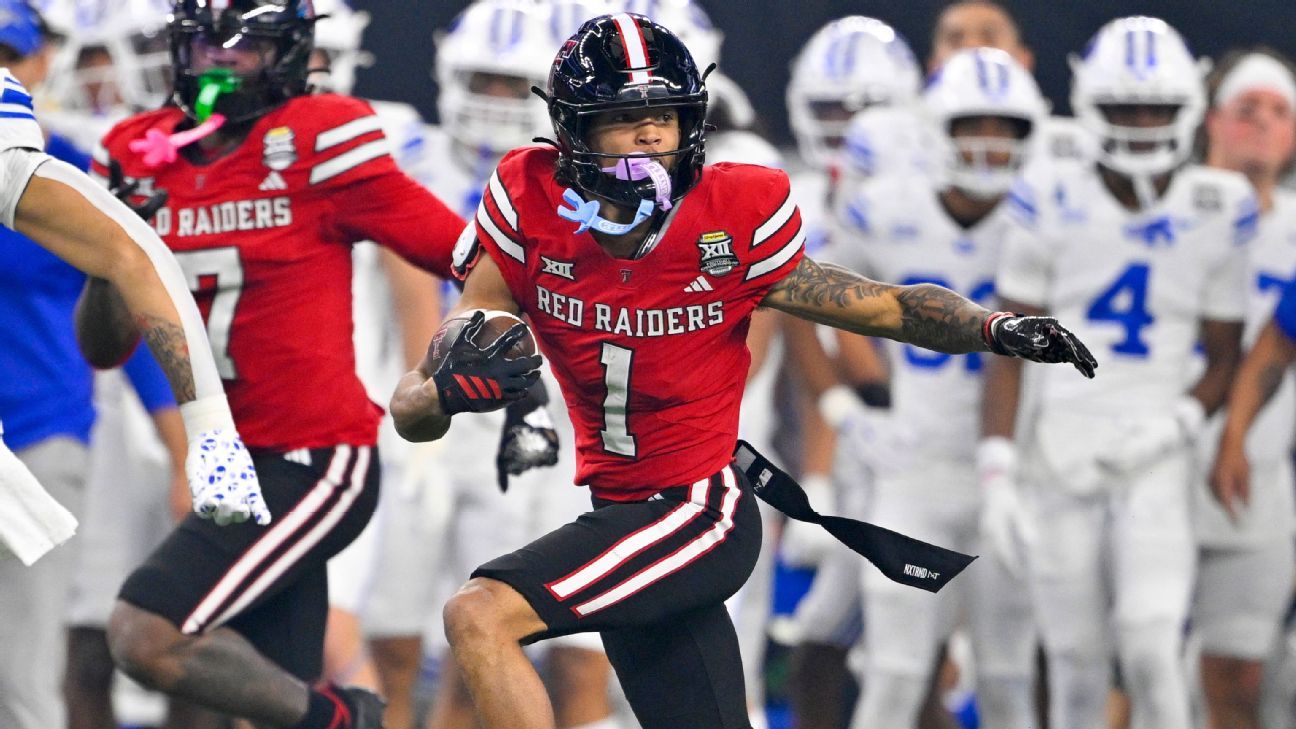
After an offseason of big dreams and bigger spending, the No. 4 Red Raiders secured their first Big 12 championship in program history Saturday with a 34-7 rout of No. 11 BYU.
It was another dominant display from a 12-1 squad, unlike any seen in Lubbock, one that fuels even more confidence about a deep College Football Playoff run.
After the confetti fell inside AT&T Stadium and coach Joey McGuire hoisted a trophy he had been chasing for four years, he fought back tears as he embraced billionaire board chair Cody Campbell, general manager James Blanchard, athletic director Kirby Hocutt and the many stakeholders who helped set up this program for a historic season.
Together, they ended decades of frustration for a Texas Tech football program that hadn’t won an outright conference title since 1955. When the Red Raiders built their trophy room as part of their $242 million new training facility, they reserved a space for a Big 12 trophy.
In place of hardware, a small block rested on the trophy stand with one word printed on it: “BELIEVE.”
For McGuire, the tears started in the final minutes against BYU, but he said they’ll be flowing again when he returns to Texas Tech’s football building Saturday night and walks past that block.
“That’s when it’s really going to hit me,” McGuire said. “And then, we’ll move it to another space so we can go get another trophy.”
Texas Tech assembled what can now be called one of the greatest transfer portal classes of this evolving era of NIL and transfers in college football, a group of 22 incoming transfers that yielded 11 players who started in the Big 12 title game, four first-team All-Big 12 performers and a projected first-round draft pick in pass rusher David Bailey.
Blanchard believed from the beginning that the Big 12 was not equipped to compete with what the Red Raiders had assembled. The results of that ambitious roster-building experiment: Every Texas Tech victory has been by more than 21 points.
“Mission accomplished,” Blanchard told ESPN. “It’s proof of concept. We’ve got an opportunity to go win a national championship, and I like our chances.”
Texas Tech’s more than $25 million investment for its 2025 roster, blending proven returning starters with high-profile newcomers, created boom-or-bust stakes and a seasonlong narrative — that the Red Raiders were desperately trying to buy their way to the top.
Even after defeating BYU on Saturday, Texas Tech players were asked to respond to the perception that they had built “the best team money could buy.” Linebacker Jacob Rodriguez, a returning senior and the Big 12’s Defensive Player of the Year, was happy to answer that one.
“If we are going to buy a team,” Rodriguez replied, “why not be the best?”
Campbell offered no apologies as he watched Red Raiders coaches and players celebrate Saturday.
“I’m just so proud,” Campbell told ESPN. “The credit goes to the guys who are actually in the arena. These men love each other. They played so hard, so tough. I’m just so proud of this staff, I’m so proud of the university and the alignment we have, all the support we’ve gotten from so many people. It’s been a team effort, the whole effort, the whole way.
“We all came together and had a singular mission, a singular focus, and we got it done. This is something we’ve been waiting on a long time at Texas Tech.”
They got it done with a Red Raiders defense that, as it has this season, made BYU’s offense fight for every yard.
The Cougars opened the game with a well-scripted, 14-play, 90-yard touchdown drive that took nearly seven minutes. They mustered just 110 yards on 45 plays the rest of the day and turned it over four times in the second half, including two interceptions by Tech linebacker Ben Roberts.
“I think we can play with anybody in the country,” Campbell said.
The championship victory should guarantee a top-four seed for Texas Tech and a first-round bye in the College Football Playoff. McGuire said the three-week break ahead will be much needed for his team to recover and prepare for its first playoff run.
“We’re football banged-up,” McGuire said. “If you let us get healthy, I really believe we’ve got another gear.”
Quarterback Behren Morton has been playing with a hairline fracture in his fibula that forced him to miss two games, including the Red Raiders’ lone loss to Arizona State. Morton told ESPN he’s feeling “about 70 percent” healthy and is looking forward to more recovery time.
The quarterback and his coach privately agreed in June that they would win a Big 12 championship this year. And when they did, they planned to walk off the field at AT&T Stadium together.
Before Morton grabbed the game ball, threw his arm around his coach and headed to a locker room filled with celebration and cigar smoke, the senior offered a prideful grin.
“There were a lot of people saying preseason that Texas Tech better do it,” Morton said. “Well, guess what? We did it.”
NEWYou can now listen to Fox News articles!
The University of Georgia Athletic Association is taking legal action against one of the football team’s former star pass rushers.
Georgia is asking for damages totaling $390,000 after defensive end Damon Wilson II elected to transfer to Missouri after the 2024 season.
The department cited an NIL buyout clause in Wilson’s contract and requested that a judge compel the defensive end to enter arbitration to reach a settlement. The clause in Wilson’s former agreement effectively acts as a buyout fee for terminating early.

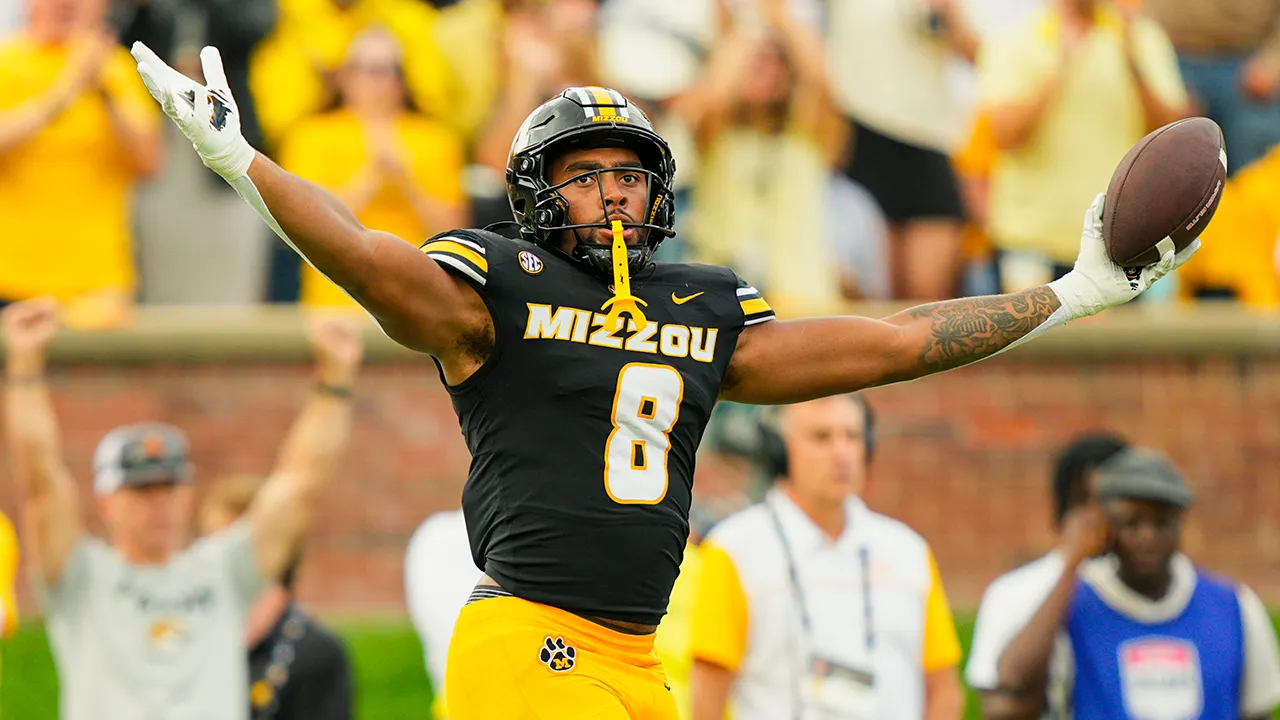
Missouri Tigers defensive end Damon Wilson II celebrates after recovering a fumble during the second half against the Alabama Crimson Tide at Faurot Field at Memorial Stadium Oct. 11, 2025, in Columbia, Mo. (Jay Biggerstaff/Imagn Images)
Wilson was recently served a court summons, legal records show.
CLICK HERE FOR MORE SPORTS COVERAGE ON FOXNEWS.COM
After recording 3.5 sacks during his freshman and sophomore seasons at UGA, Wilson inked a new deal with Georgia’s Classic City Collective. In January, just two weeks after landing the new contract, Wilson made the switch to Missouri.
Wilson had nine sacks in his first regular season with the Tigers.
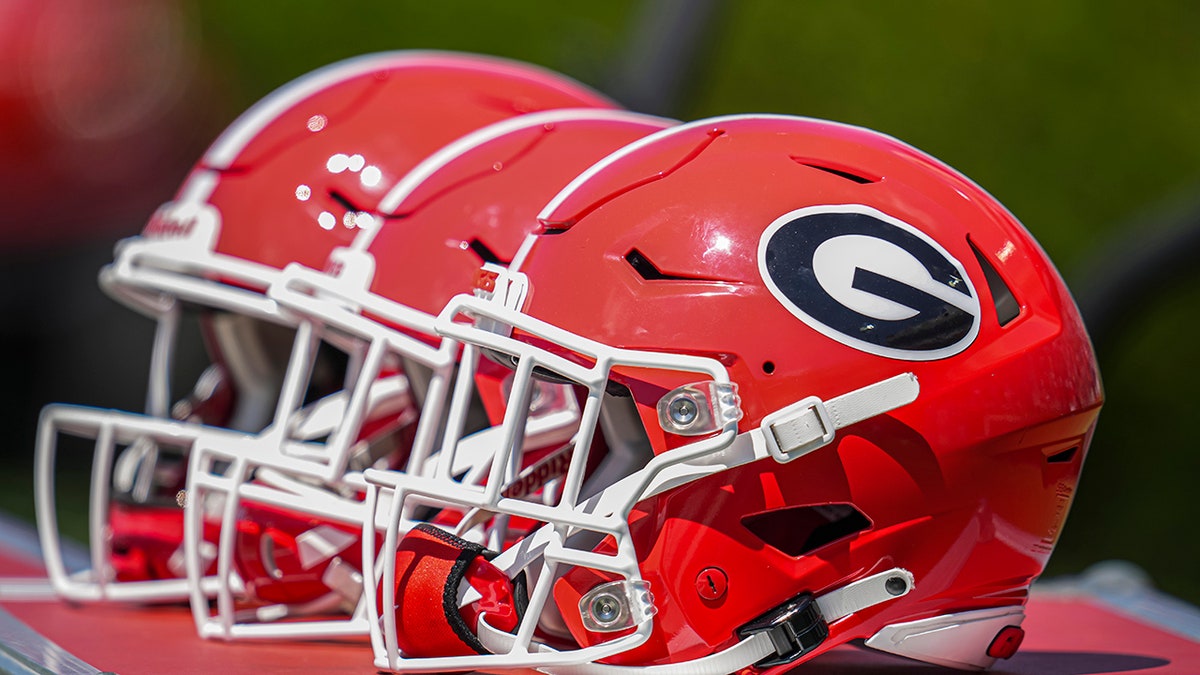
Georgia Bulldogs helmets on the bench during the Georgia spring game at Sanford Stadium in Athens, Ga., April 12, 2025. (Dale Zanine/Imagn Images)
The formation of collectives has become more common at schools across the nation. Many collectives include liquidated damages clauses in their agreements with players to try to protect financial investments in athletes and discourage transfers.
Wilson reportedly received payouts totaling $30,000 under the terms of his latest deal with Georgia before he left Athens, Georgia. The athletic association argues Wilson owed the $390,000 sum within 30 days of his departure.
CONFERENCE CHAMPIONSHIP GAME PICKS, PREVIEW: WHAT TO EXPECT IN INDIANA-OSU, MORE
“When the University of Georgia Athletic Association enters binding agreements with student-athletes, we honor our commitments and expect student-athletes to do the same,” Georgia spokesperson Steven Drummond said in a statement to ESPN.
Wilson could not be reached directly for comment. Missouri-based attorneys Bogdan Susan and Jeff Jensen are representing Wilson. Susan argued that Wilson’s career decisions were never motivated by money.
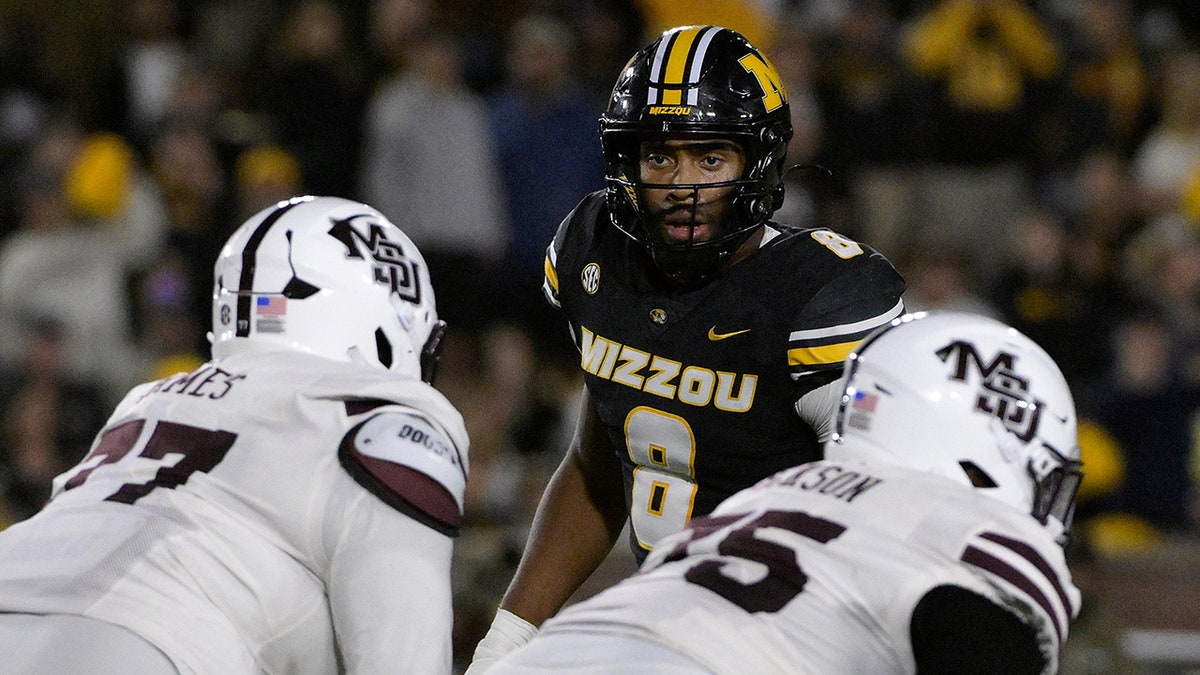
Damon Wilson II (8) of the Missouri Tigers against the Mississippi State Bulldogs at Faurot Field at Memorial Stadium in Columbia, Mo., Nov. 15, 2025. (Jeff Le/Getty Images)
“After all the facts come out, people will be shocked at how the University of Georgia treated a student-athlete,” Susan said in a statement. “It has never been about the money for Damon. He just wants to play the game he loves and pursue his dream of playing in the NFL.”
CLICK HERE TO GET THE FOX NEWS APP
Georgia’s move marks one of the first times a school has publicly sought NIL damages from a former athlete over an alleged breach of contract. The dispute sets the table for potentially setting a precedent on whether liquidated damages clauses will act as an effective, defensible replacement for more traditional buyout fees.
However, it should be noted that Arkansas’ NIL collective did retain the services of an attorney to try to enforce a buyout clause in quarterback Madden Iamaleava’s deal. Iamaleava spent his freshman season with UCLA. Wide receiver Dazmin James also left Arkansas, prompting his former school to file a complaint.
Follow Fox News Digital’s sports coverage on X, and subscribe to the Fox News Sports Huddle newsletter.

-

Dave Wilson
Baylor is finalizing the hire of Doug McNamee as its new athletic director, sources told ESPN’s Pete Thamel on Saturday, confirming a report.
McNamee, the president of Field and Stream, worked at Baylor from 2012 to 2018, ultimately as the Baylor senior associate AD, before departing to be the president at Magnolia, the Waco lifestyle brand run by Baylor alums Joanna and Chip Gaines. He joined Field and Stream in 2022.
McNamee replaces Mack Rhoades, who had been athletic director at Baylor since 2016 but stepped down for personal reasons.
Baylor president Linda Livingstone told ESPN recently that a new AD’s task would be to tackle the pressures of funding NIL and revenue sharing in college athletics.
“We have to really work with our donors to step up. We have to work with sponsorships, we have to work on companies that will walk beside us for NIL sponsorships,” Livingstone said. “That’s going to be a really big focus for a new athletic director. … That’s what many, many institutions are looking at right now. How do we supplement and grow financial support for athletics in a way that’s different than we’ve done it in the past that doesn’t put as much burden on our institutions?”
One of McNamee’s first jobs will be to help right the ship in football under coach Dave Aranda, whom Livingstone retained despite Baylor fans’ growing dissatisfaction.
In 2021, Baylor went 12-2 and won a Big 12 championship, but since then, the Bears have gone 22-28 over four seasons.
News of Baylor’s decision was first reported by SicEm365.
Updated Dec. 6, 2025, 12:47 p.m. ET
Georgia Athletics is taking Missouri football defensive end Damon Wilson II to court in a novel, nearly first-of-its-kind case over an NIL contract dispute, the Columbia Daily Tribune confirmed through a university source and court documents filed in Georgia by the Bulldogs.
UGA is attempting to take Wilson into arbitration and is seeking $390,000 in liquidated damages from the star edge rusher, who transferred to the Tigers in January 2025, over what the university views as an unfulfilled contract in Athens. The lawsuit is not against the University of Missouri, only Wilson.
According to an ESPN report, Georgia is arguing Wilson signed a contract — a common practice in the NIL era — with what was then UGA’s main NIL and marketing arm, Classic City Collective, in December 2024.
That collective has since shut down, as UGA has partnered with Learfield to negotiate and facilitate NIL deals in the revenue-sharing era.

The report, citing documents attached to UGA’s legal filings, show Wilson signed a 14-month deal worth $500,000 with the Bulldogs. He was set to earn monthly payments of $30,000 through the end of the contract, as well as two $40,000 bonus payments.
Before announcing his intention to transfer in January, he reportedly was paid $30,000.
The contract states if Wilson left the team or transferred, which he ended up doing by transferring to Missouri, then he would owe the collective issuing the payments a lump sum equal to the amount remaining on his deal.
The bonus payments seemingly were not included, which brings that total to the $390,000 Georgia is now seeking in court.
Wilson, per the report, was only paid a fraction of that sum, but the university is arguing he owes the full amount in damages. It’s unclear why Georgia is arguing it is owed the full amount in liquidated damages.
The Tribune has reached out to a Georgia Athletics spokesperson for comment. At the time of publishing, UGA had not responded to the request for a statement.
According to documents viewed by the Tribune through the Georgia courts records system, UGA filed an “application to compel arbitration” on Oct. 17 in the Clarke County Superior Court, which includes Athens and the University of Georgia. Wilson was served with a summons to appear in court, according to documents, on Nov. 19, three days before the Tigers faced Oklahoma.
A similar case occurred at Arkansas last spring, when quarterback Madden Iamaleava transferred out of Fayetteville after spring camp. It’s unclear whether or not that case has been resolved.
Wilson spent his freshman and sophomore seasons at Georgia. He transferred to Mizzou ahead of spring camp in 2025 and has emerged as one of the top pass rushers in the SEC.
Per Pro Football Focus, Wilson generated 49 pressures on opposing quarterbacks this season, which was the second-most in the SEC behind only Colin Simmons at Texas. He’s listed at 6-4, 250 pounds and could declare for the 2026 NFL Draft, where he would likely be a Day 1 or 2 pick.
The lawsuit raises a contentious point.
By suing Wilson for allegedly not fulfilling the terms of his contract, the school could be treading close to arguing Wilson was paid to play. That’s not how NIL deals currently work. The deals and their payments are typically for an athletes’ likeness for brand deals and marketing. Think of it as advertising money, not salaries.
There’s a reason that’s the case. By paying players for play, there’s an argument they are university employees. University and athletic department leaders are widely against making that distinction, because it would disrupt the amateurism model in place for college athletics.
Wilson’s contract likely includes “liquidated damages” language, which are intended to stop players from transferring.
Missouri currently has multiple players on two-year contracts. Part of that is in the hope that they do not move on after one season.
If Georgia’s arbitration case against Wilson is successful, that would be a groundbreaking ruling in college athletics that could give more weight to liquidated damages clauses in athlete contracts.
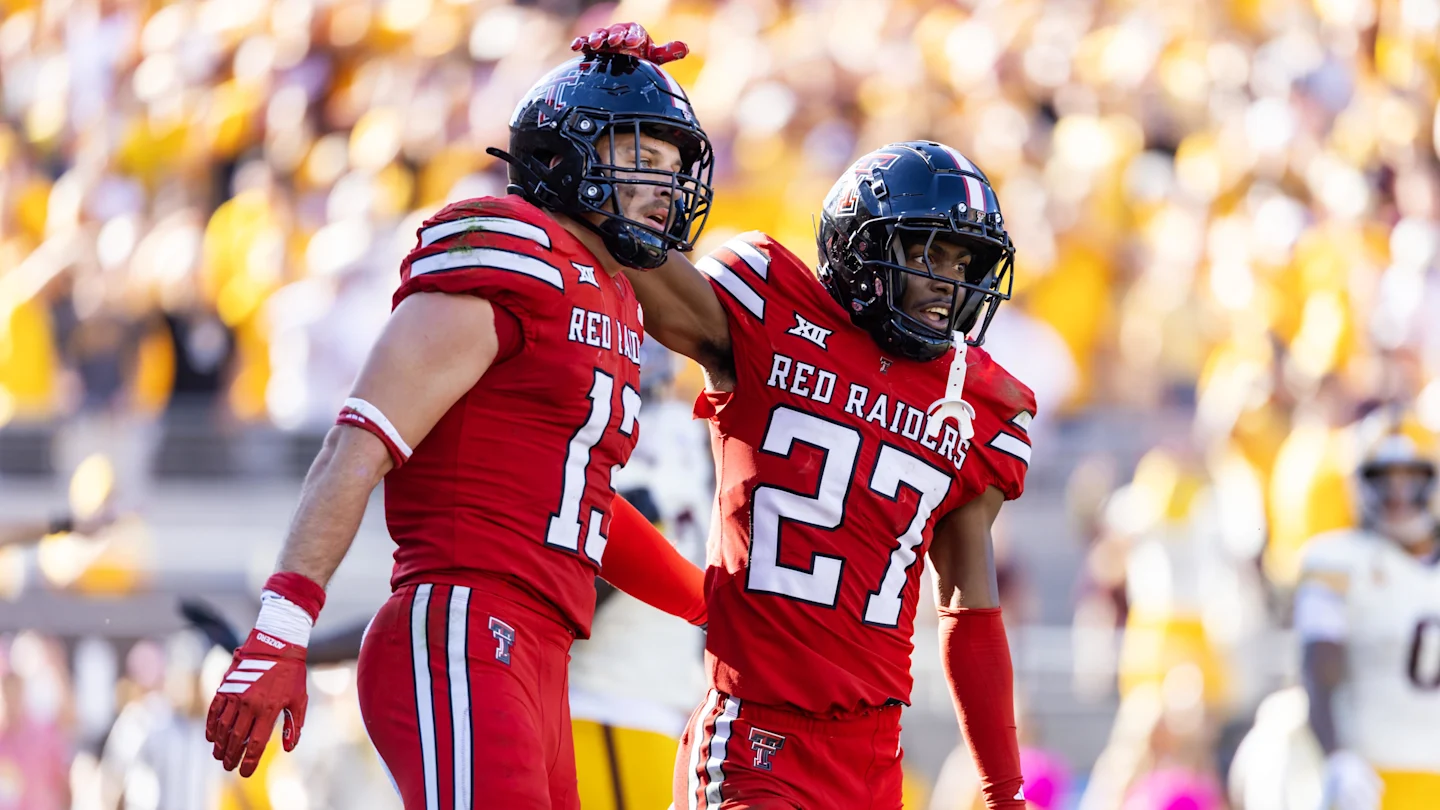
Defense wins championships, they say. That was true of Texas Tech, whose dominant unit overwhelmed BYU behind two key takeaways to win the Big 12 Championship Game and book the Red Raiders a first-round bye in the College Football Playoff.
Ben Roberts intercepted Bear Bachmeier twice, and the Texas Tech offense turned both into points to finally pull away from BYU and win its first-ever conference championship.
With the win, they’ll present a decisive case to the selection committee to stay within the top-four, especially given one of either No. 1 Ohio State or No. 2 Indiana will have to lose the Big Ten championship later today.
Where do things stand in the latest bracket projection? Let’s project what 12 teams will make the College Football Playoff, as of Texas Tech’s big win on Saturday.
Predicting the College Football Playoff bracket

Subject to change pending other Championship Week results
1. Ohio State. We project the Buckeyes will stay perfect by narrowly defeating Indiana to win the Big Ten championship and secure the top overall seed in the playoff.
2. Georgia. Our current expectation is that the Bulldogs will avenge their regular season loss to Alabama and win their second-straight SEC championship.
3. Texas Tech. One of college football’s best defenses left no doubt as to its reputation after swarming BYU to win the Big 12 championship, securing a first-round bye.
4. Indiana. Although we think the Hoosiers will lose the Big Ten title game, it won’t be by much, and they have the overall resume to stay within the top four.
5. Oregon. The one-loss Ducks will stay in the top-five, parked behind the Indiana squad that gave them that defeat earlier this season.
6. Ole Miss. The committee signaled that Lane Kiffin’s exit hasn’t affected the Rebels so far, so it’s likely they’ll stay at 6 when the final bracket is unveiled.
7. Texas A&M. That loss to Texas in the finale deprived the Aggies of a shot at the SEC championship, but the rest of their combined achievements should ensure they won’t have fallen far enough to not host a game in the first round.
8. Oklahoma. One of the nation’s toughest defenses put the Sooners back in playoff contention with a late-season push, but we’ll see how well John Mateer and this offense is able to navigate once the postseason starts.
9. Notre Dame. We expect Alabama loses the SEC championship, allowing the Irish room to move up by one spot.
10. Alabama. Here is where we could see some controversy. There’s a chance the committee keeps the Tide in the bracket if they lose close against Georgia, especially after the selectors jumped Bama over the Irish in the last poll, signaling real confidence in them, win or lose.
But watch for Miami, which will move up in the rankings after BYU’s loss, and there’s a very good case that the Hurricanes deserve it more. Miami would have one fewer loss than Alabama, and that head-to-head win over Notre Dame, too. What do we think? If Georgia beats Alabama, Miami deserves it. The committee may think otherwise, using whatever argument they pick that day.
11. Virginia. James Madison fans are rooting against the Hoos in the ACC championship, because if Virginia loses to Duke, that could pave the way for the selectors to add a second Group of Five team, with JMU ready to take advantage. We still think Virginia beats Duke, though.
12. Tulane. A dominant defensive performance allowed the Green Wave to take out North Texas and win the American championship, and likely entrench their position as the highest-ranked Group of Five team.
What the College Football Playoff bracket would look like
12 Tulane at 5 Oregon
Winner plays 4 Indiana
11 Virginia at 6 Ole Miss
Winner plays 3 Texas Tech
10 Alabama at 7 Texas A&M
Winner plays 2 Georgia
9 Notre Dame at 8 Oklahoma
Winner plays 1 Ohio State
More college football from SI: Top 25 Rankings | Schedule | Teams
Follow College Football HQ: Bookmark | Rankings | Picks
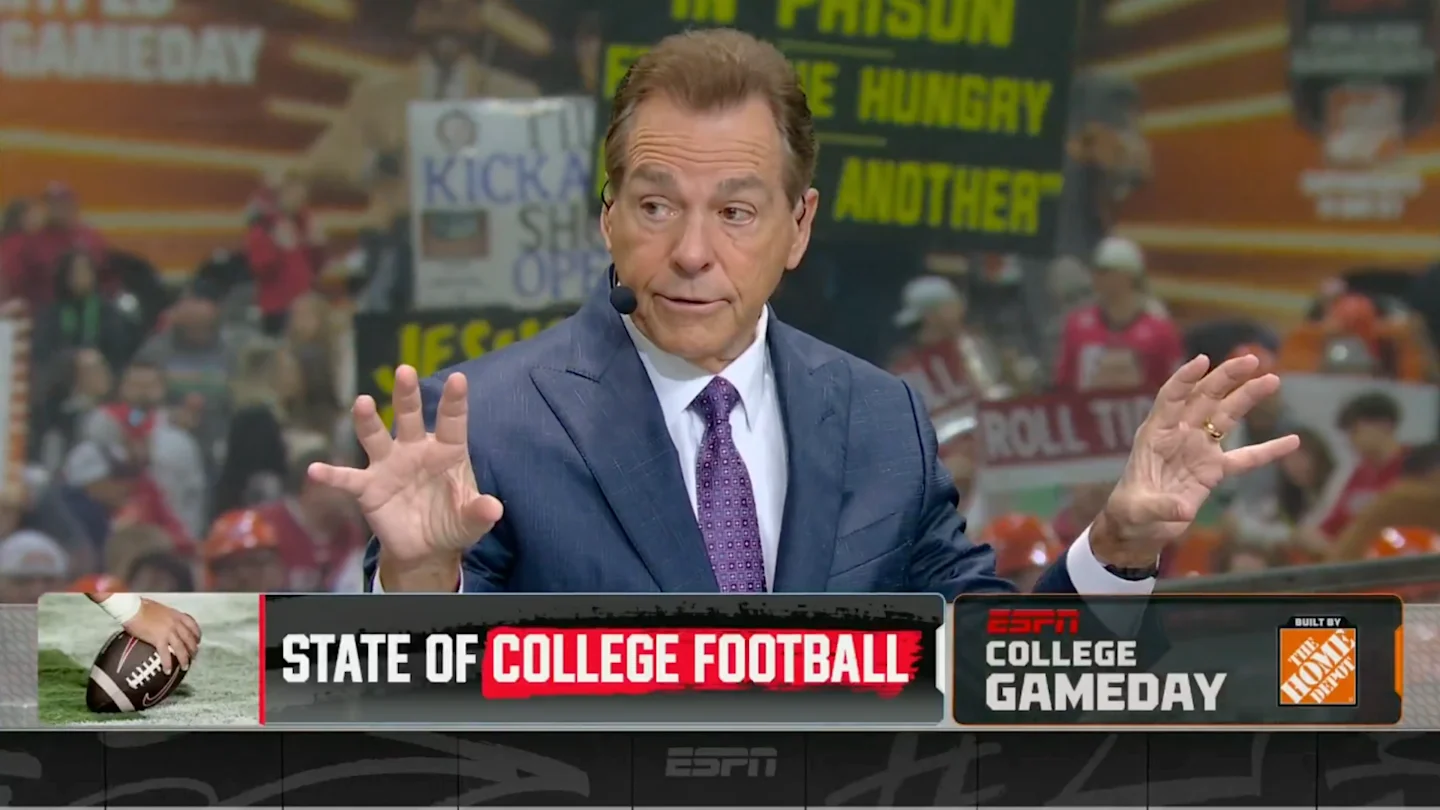
Nick Saban might no longer be the coach of the most dominant program in college football, but his presence still looms large on the sport as a whole. In his new role with ESPN’s College GameDay over the past two years, Saban has branded himself as a voice of reason of sorts in the Wild West era of NIL, the playoffs, and this year, a wild coaching carousel.
On conference championship Saturday, Saban once again pitched that the sport needs some established leadership in a more formal role: a commissioner.
“I think that we need to have a commissioner who’s kind of over all the conferences, as well as a competition committee who sort of defines the rules of how we’re going to play the game. Because that’s what we don’t have right now,” Saban said.
“We used to have contracts, for coaches and for players, that defined what’s your academic responsibilities, when can you transfer, what’s your obligation to the school. We don’t have that now. And if you really don’t support that, you’re kind of supporting a little bit of anarchy, which we have right now. So I think having a commissioner, national commissioner, having a governing body, certainly would enhance [the game]. Because I do think that the College Football Playoff has kind of camouflaged some of these issues, because there’s so much interest in college football because of the playoff.”
Nick Saban wants to see a commissioner for college football ✍️ pic.twitter.com/WtHgBcdHca
— College GameDay (@CollegeGameDay) December 6, 2025
The pitch for a college football commissioner is not exactly a new one, but the value of such a central figure for the sport has been highlighted by an overactive coaching carousel and an extremely tight race for the College Football Playoff.
FREE. SI College Football Newsletter. Get SI’s College Football Newsletter. dark
The college football schedule has come under scrutiny with multiple coaches set to take their team to the playoff but jump ship to a new team next year. Some of those coaches are getting the chance to coach out their run with their current schools, but Lane Kiffin, who left Ole Miss for LSU, is not.
A commissioner, along with in Saban’s pitch a central governing body, could establish a schedule that prevents schools from poaching coaches until the end of the current season. They could also potentially provide more direct guidance to schools as the NIL era continues to take shape before our eyes.
Somewhat ironically, Saban has been floated by many as the perfect man to take on the role of commissioner. Saban doesn’t seem interested, or at least isn’t currently advocating for the gig, but would be a pretty easy choice for any newly established central hub of leadership in the sport.
Penn State head coach James Franklin talks about NIL, the transfer portal, and why Nick Saban should be the commissioner of college football.
“If every decision we make is based on money, then we’re heading in the wrong direction.”
1/2 pic.twitter.com/uSS1QHz1Wh
— Colton Pool (@CPoolReporter) December 29, 2024
That said, one of the reasons a “commissioner” keeps getting floated as a potential solution to the current problems in college football is that the role is undefined enough to sound like it could make a difference.
While it’s easier to think that the issues of the calendar and the coaching carousel and NIL just came up out of the blue and their negative impacts on the sport are the result of a lack of a controlling body, they are actually the result of decisions, made by people who currently have power over said decisions, largely driven by dollars. Unless the hypothetical commissioner was given an inordinate amount of power, those problems won’t just disappear overnight.
That said, some might think that an inordinate amount of power in the hands of one benevolent figure who loves the sport may be preferable to that power being spread across varied hands with even more varied interests. For now, the idea of a commissioner of college football remains an interesting thought experiment, but if Saban wants to start campaigning for the gig, he’d certainly have a strong base of support.
More College Football from Sports Illustrated
Listen to SI’s new college sports podcast, Others Receiving Votes, below or on Apple and Spotify. Watch the show on SI’s YouTube channel.

Nebraska volleyball vs Kansas State recap, stats and highlights

Texas Tech beats BYU for Big 12 title, likely CFP 1st-round bye

PRIMER: NCAA Volleyball Championship Second Round

Former NASCAR driver Michael Annett dies at 39
2025 NCAA volleyball live updates: Bracket, schedule, highlights

Michael Annett, former NASCAR driver, dies at 39

Michael Jordan, Heather Gibbs headline Friday in NASCAR trial

Georgia targets $390K from Damon Wilson II in landmark NIL dispute

Emma Reaves Breaks Own School Record in Tri-Meet with URI, Stonehill

Black Mountain parade heralds season’s tidings on State Street — The Valley Echo

Saturday Eliminations Results – 2025 Snowbird Outlaw Nationals

ACU Heads to College Station for First Meet of the Indoor Season

Petitjean, Weber Set Personal Bests In Boston

Mountaineers Set New 4×400-Meter Relay Meet Record at Indoor Season Opener

Sources: Baylor finalizing hire of Doug McNamee as new AD

First Tee Winter Registration is open

Fargo girl, 13, dies after collapsing during school basketball game – Grand Forks Herald

CPG Brands Like Allegra Are Betting on F1 for the First Time

Volleyball Recaps – November 18

F1 Las Vegas: Verstappen win, Norris and Piastri DQ tighten 2025 title fight

Two Pro Volleyball Leagues Serve Up Plans for Minnesota Teams

Utah State Announces 2025-26 Indoor Track & Field Schedule

Sycamores unveil 2026 track and field schedule

Redemption Means First Pro Stock World Championship for Dallas Glenn

Bowl Projections: ESPN predicts 12-team College Football Playoff bracket, full bowl slate after Week 14

Texas volleyball vs Kentucky game score: Live SEC tournament updates

Indiana’s rapid ascent and its impact across college football

Pohlman admits ‘there might be some spats’ as he pushes to get Kyle Busch winning again

How this startup (and a KC sports icon) turned young players into card-carrying legends overnight

Troy Football Need to Know; Gameday at The Vet — Georgia State Game

 Why a rising mid-major power with an NCAA Tournament team opted out of revenue-sharing — and advertised it
 NBA Legend Michael Jordan to Join NBC Sports as Special Contributor
 Falcons mailbag
 Portal Update – Basketball and Gymnastics Take Hits
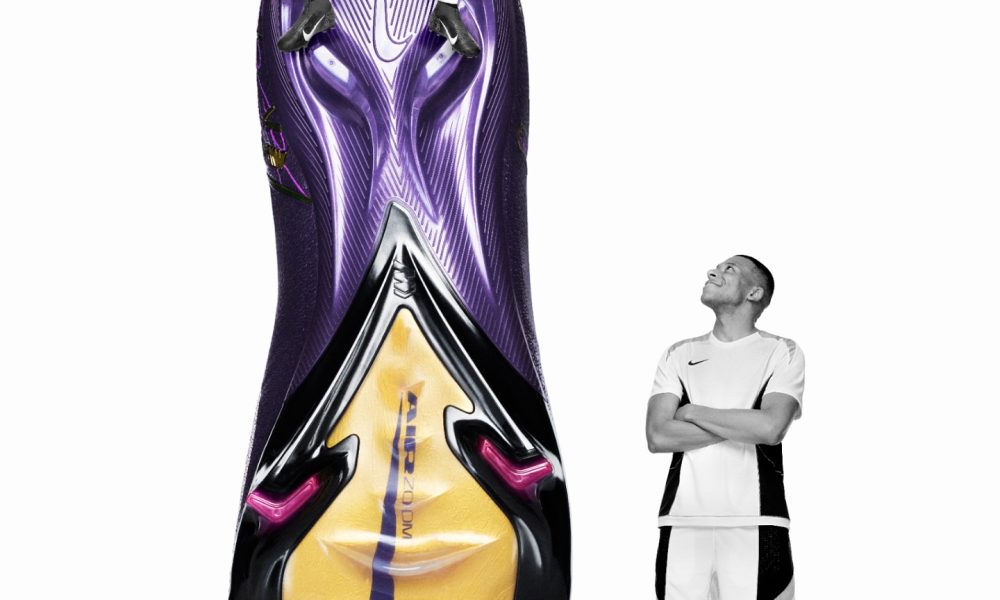 has always dreamed in Mercurial. Now his initials are on the boots.
The new Kyl…
has always dreamed in Mercurial. Now his initials are on the boots.
The new Kyl…
-
 Rec Sports2 weeks ago
First Tee Winter Registration is open
-
 Rec Sports1 week ago
Fargo girl, 13, dies after collapsing during school basketball game – Grand Forks Herald
-
 Motorsports2 weeks ago
CPG Brands Like Allegra Are Betting on F1 for the First Time
-
 Sports2 weeks ago
Volleyball Recaps – November 18
-
 Motorsports2 weeks ago
F1 Las Vegas: Verstappen win, Norris and Piastri DQ tighten 2025 title fight
-
 Sports2 weeks ago
Two Pro Volleyball Leagues Serve Up Plans for Minnesota Teams
-
 Sports2 weeks ago
Utah State Announces 2025-26 Indoor Track & Field Schedule
-
 Sports2 weeks ago
Sycamores unveil 2026 track and field schedule
-
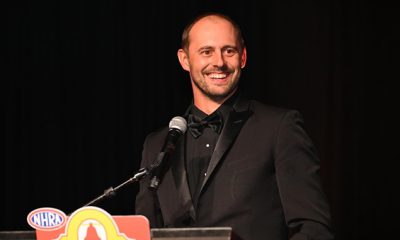 Motorsports1 week ago
Redemption Means First Pro Stock World Championship for Dallas Glenn
-
 NIL6 days ago
Bowl Projections: ESPN predicts 12-team College Football Playoff bracket, full bowl slate after Week 14