
HARTFORD — A federal grand jury probe is spotlighting vague budget earmarks that have directed nearly $50 million in the last 12 years to support nonprofit youth programs intended to reduce violence and involvement in the juvenile justice system that members of the legislature’s Black and Puerto Rican Caucus select.
Rec Sports
Federal probe casts light on CT budget earmarks for youth programs



The Connecticut State Capitol, in Hartford, Conn. Jan 24, 2023.

Without much public scrutiny, a series of Democrat-controlled legislatures and two Democratic governors have been processing these handpicked selections for Youth Services Prevention grants from Black and Latino legislators.
Article continues below this ad
The $48 million distributed through these budget earmarks since the 2014 fiscal year represents a fraction of the nearly $260 billion in overall state spending in that time. The grant amounts, ranging from four to six figures, go to youth sports leagues, religious institutions, theater groups, community and recreation centers, and civic organizations, among others.
But this small amount of earmark spending is under examination because of how the funding pool is reserved for members of the caucus, the opaque process for making the appropriations, and the lack of general oversight.
Legislators in the recently established Asian American and Pacific Islander Issues Caucus are also now able to submit earmarks for Youth Services Prevention grants.
Article continues below this ad
Members of the Black and Puerto Rican Caucus are each granted $150,000 for budget earmarks to nonprofit and community groups within their districts. The practice traces back to the deadly mass shooting at Sandy Hook Elementary School in Newtown in December 2012 and the juvenile justice reform movement of the early 2000s.
There are no funding bills with the names of legislators sponsoring the Youth Services Prevention grants, no hearings and no application process. The governor and the Appropriations Committee recommend only the grant program’s bottom line in spending plans. The specific earmarks are spelled out later in the final budget bill, but only the names of the recipients and grant amounts are listed, with no details about a nonprofit program’s purpose or how the funds will be spent.
Once a state budget is enacted, the administration and oversight of this state funding is left to the state’s Judicial Branch through its Court Support Services Division.
But a federal grand jury investigation examining the role of state Sen. Douglas McCrory, D-Bloomfield, a member of the Black and Puerto Rican Caucus, in the distribution of millions of government funds sent to Hartford-based nonprofits and companies has turned a spotlight on these budget earmarks. McCrory has denied any wrongdoing.
Article continues below this ad
Reform debate
House and Senate Republicans have seized on the grand jury probe to demand the Democratic majority make budgeting changes to increase transparency and oversight.
The proposed GOP reforms include identifying legislators making a funding request, giving a clear description of its public purpose, holding a hearing on each grant application, completing audits to verify funds are used as intended and adding more detailed reporting requirements.
Gov. Ned Lamont has signaled he is open to earmark reform. His administration has also made use of budget earmarks over its two terms.
Article continues below this ad
“I don’t think we track them enough,” Lamont said. “A lot of this comes late in the day from the legislature. We’re not going to let this continue.”
Senate President Martin M. Looney, D-New Haven, said Democratic leaders are also willing to discuss a process for providing more review of all budget earmarks, not just the ones for Youth Services Prevention and Youth Violence Initiative grants.
“From my point of view, I think the most important part of that would be making sure grantees are not in a position to donate money or give out money to subgrantees who have not been properly vetted,” he said.
One focus of the grand jury probe is the awarding of subgrants. Records show nonprofits and companies run by Sonserae Cicero-Hamlin, a businesswoman and nonprofit leader who has relationship with McCrory, regularly secured funding for associated nonprofits and companies through subgrants. That includes through the reportedly defunct Blue Hills Civic Association that offered youth employment and other programs.
Article continues below this ad
The Blue Hills Civic Association received $106,880 in Youth Service Prevention grants since 2015. It is unclear whether the grand jury investigation involves any of this funding. Federal investigators have subpoenaed records related to economic development and education grants.
Grant spending
Overall, $48 million in Youth Services Prevention grants have been distributed as designated by members of the Black and Puerto Rican Caucus since the 2014 fiscal year, according to the state comptroller’s office.
The two-year $55.8 billion state budget that took effect July 1 appropriates another $7.3 million per year for Youth Services Prevention grants. The two-year budget for the 2020 and 2021 fiscal years allocated $3.3 million per year.
Article continues below this ad
In addition, members of the Black and Puerto Rican Caucus have separately directed another $29.6 million in Youth Violence Intervention grants to cities and nonprofit organizations through budget earmarks since the 2013 fiscal year, according to the comptroller’s office.
The current two-year budget sets aside nearly $5.5 million a year for these grants aimed at decreasing urban youth violence. Five years ago, the 2021 and 2022 budget allocated $2 million a year.
The Youth Violence Intervention grants are appropriated and distributed in the same way as Youth Services Prevention grants.
The Youth Violence Intervention grants were limited to Bridgeport, Hartford and New Haven in 2013. Five years later, Danbury, Meriden, Waterbury and West Haven were added, and eligibility was subsequently expanded again. The legislature approved grants for more than 80 communities and organizations for the 2026 and 2027 fiscal years. The Court Support Services Division also administers this grant program.
Article continues below this ad
The 2026 and 2027 budget for the first time includes some earmarks for Youth Services Prevention and Youth Violence Initiative grants from members of the Asian American and Pacific Islander Issues Caucus that was established in 2024.
Spending scrutiny
The funding requests for Youth Services Prevention and Youth Violence Initiative grants receive greater scrutiny compared to other earmarks, said Sen. Catherine Osten, D-Sprague, and Rep. Toni E. Walker, D-New Haven, co-chairwomen of the Appropriations Committee.
They questioned why the earmarks from the Black and Puerto Rican Caucus and the Asian American and Pacific Islander Issues Caucus should be subject to more stringent review and oversight than other budget earmarks that are regularly inserted into spending, revenue and other bills from both Democrats and Republicans.
Article continues below this ad
“I have no problem with having deliverables on any earmarks that we have. There were a lot of earmarks that we had in the budget that were small, but we also have earmarks that were large,” Osten said.
Walker, a member of the Black and Puerto Rican Caucus, questioned why Republicans singled out the Youth Services Prevention and Youth Violence Initiative grants. She said other significantly larger state grant and contract awards do not receive a level of scrutiny approaching what the House and Senate GOP proposed for the two youth-related grant programs.
“That’s what bothers me is that they took this one group. Why? That’s what I want to know,” Walker said. “Why are you scrutinizing this small amount of money compared to what we’re doing every year.”
Sen. Robert C. Sampson, R-Wolcott, said Republicans are focused on these two grant programs because they are appropriated largely behind the scenes. But they are not the only earmarks that Republicans are scrutinizing.
Article continues below this ad
“It is the process,” said Sampson, the ranking Senate Republican on the Government Administration and Elections and Government Oversight committees. “It is that these grants are awarded without any open process at all and that the ultimate contract is drafted in secret after the money is already awarded.”
Once House or Senate Democratic leadership accepts a Youth Services Prevention or Youth Violence Initiative earmark, the funding is essentially secured, he said.
“That is it. Then, the Judicial Branch is left to figure out who the grant actually goes to and puts something on paper,” Sampson said. “It is just amazing to me.”
Once Youth Services Program and Youth Violence Initiative grants are authorized, judicial officials gather contact information and verify the accuracy of the names, confirm they are registered with the secretary of the state’s office, and corroborate the amount, said Rhonda Hebert, a spokeswoman for the Judicial Department.
Article continues below this ad
Once a grant agreement is executed, the funds are issued on a quarterly basis, depending on how quickly a recipient provides documentation, she said.
Recipients are required to provide a description of services, a budget narrative, fiscal expenditure reports twice a year, and an annual program report, Hebert said.
Budget narratives that align with the description of services are accepted, she said. The fiscal expenditure reports are also reviewed for alignment with the description of services and the budget narrative, she said
Article continues below this ad
Audits are not required, and the judicial branch does not submit any reports to the Appropriations Committee, Hebert said.

Continue Reading

In 2003, Christy Keswick (B’97) drove a U-Haul from western Massachusetts to Boston. In the back of the box truck were 500 Spalding basketballs.
A week prior, Keswick had trekked to Spalding’s then headquarters armed with just a PowerPoint presentation. She left with her first donation pledge. The only thing left was to pick up and store a truckload of basketballs, all within a week.
Keswick is the co-founder and president of Good Sports. The nonprofit organization collects and donates new sports equipment for underprivileged youth around the U.S.
More than two decades since that cross-state drive, Good Sports has donated to more than 10 million children across the country.
“Good Sports is trying to break down barriers to access for kids to play youth sports and to get involved in physical activity,” Keswick said. “We know that sports have an impact on social, emotional, physical, mental and academic [well-being]. We can’t start saying certain kids have access to something like that while certain kids don’t. That is what drives us as an organization.”
The Roots of Good Sports
Keswick grew up in a small town in Connecticut and loved sports from an early age. When she was a little girl, she joined her town’s new youth soccer league. She was the only girl on her team and felt out of place, but her father kept encouraging her.
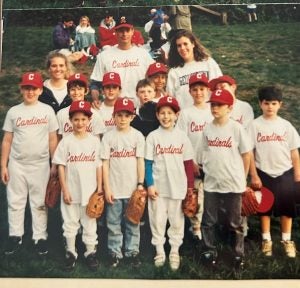
“Soccer ended up being a sport that I gravitated toward. It was always a safe place to be,” she said. “Sports was something I did every day, spent a lot of time on courts and fields. I learned a ton from sports in terms of teamwork and just life skills.”
She took her love for sports with her to the Hilltop.
Keswick cheered on her friends playing for Georgetown’s basketball, soccer and football teams. She also coached a Little League team with her best friend and stayed active by running around the hilly streets of the Georgetown neighborhood.
In the classroom, Keswick valued her liberal arts education. She took to heart the Jesuit value of cura personalis and the importance of developing every part of herself.
“It’s not one thing that makes you successful. It’s many things and experiences over time that make you successful,” she said.
Keswick studied finance and marketing in the McDonough School of Business, where she developed the business acumen she would later use as a nonprofit founder. During her junior year, she interned with Ernst & Young and its Entrepreneur of the Year program. She learned about what it takes to build a start-up company, lessons she would use several years later as the co-founder of Good Sports.
Launching a Nonprofit Start-Up
After graduating from Georgetown, Keswick worked in management consulting in Boston. On her first day of work, Keswick met her colleague Melissa Harper, who would become a good friend and the co-founder and CEO of Good Sports.

Keswick loved to research, create strategies and solve problems for her clients. But she also wanted to implement the strategies she was creating and build something herself, not hop between projects every few months. She wanted to do something more meaningful, she said.
During a scuba diving trip with Harper in Key West, Florida, the two friends dreamed about building a business together. It was the first play in what would eventually become a game plan for Good Sports.
Keswick and Harper wanted to channel their love for sports into a business in the Boston area. Through research, they recognized that participation in youth sports had been declining, and many children were being priced out of sports.
The two also realized that Massachusetts was a hub for sports equipment companies and manufacturing, including firms such as New Balance, Reebok, Puma and, at the time, Spalding.
“If we could build a model where these companies could provide their excess equipment they weren’t selling, maybe we could redistribute it to organizations that need it and help solve this problem,” Keswick.
In 2003, Keswick and Harper founded Good Sports and put their business model to the test. Back then, entrepreneurship was not as common a path as it is today, Keswick said. Quitting their consulting jobs was a huge risk.
“You can’t build a business on the side, but you quickly learn that no one wants to give you any money to do it until you prove the business model,” Keswick said. “As scary as it was, it felt so energizing to be able to think about building something on your own.
“If you’re going to build a nonprofit, you’ve got to be passionate about the mission. We just felt really good about what we might be able to build together if we could get this right. That kept us going.”
Making Sports Available for All Kids
Today, Good Sports has donated almost $130 million worth of sports equipment to high-need communities in the U.S.
When Good Sports received its first donation, Keswick and Harper had no idea where to store 500 basketballs. They stuffed their cars, apartments, friends’ homes, anywhere they could find until they could identify communities that need sports equipment.
Now, the nonprofit operates a 45,000-square-foot warehouse to sort donations. The organization has also grown to 30 full-time employees.
As president, Keswick leads the organization’s strategy, business development and marketing. Over the last two decades, Keswick has formed partnerships with prominent brands like Gatorade, Under Armour and Dick’s Sporting Goods. Good Sports also regularly collaborates with professional athletes such as Steph Curry and Paige Bueckers.
In November, the Georgetown Entrepreneurship Alliance awarded Keswick with the 2025 GEA Entrepreneurial Excellence Award for Best of Social Impact. Keswick said she was proud to be awarded by her alma mater and to see Georgetown recognizing social impact entrepreneurship.

“I think recognizing that there are people who are doing this for a different kind of return and a different kind of impact, that made me proud as a Georgetown alum that they’re thinking in that way,” she said. “It was a pretty incredible experience.”
In looking ahead, Keswick is focused on positioning Good Sports to thrive well into the future, beyond her leadership.
“We have built the foundation of a company that is going to thrive beyond the founders. That is something that we care deeply about and that we are focused on as an organization,” she said. “There’s more to do here, and the work we are doing is critically important.”
For Hoyas looking to get into entrepreneurship, Keswick recommends leaning on others, especially Georgetown alumni, and having patience while building a strong business foundation.
“There has to be some unmet demand, some unmet need that makes this make sense. Or, you need to figure out how to be a disruptor around something you can do better,” she said. “If you can identify that, then you can be creative about how to approach it. Just know that you’re never going to be able to do this alone. Building a business is definitely a team sport.”
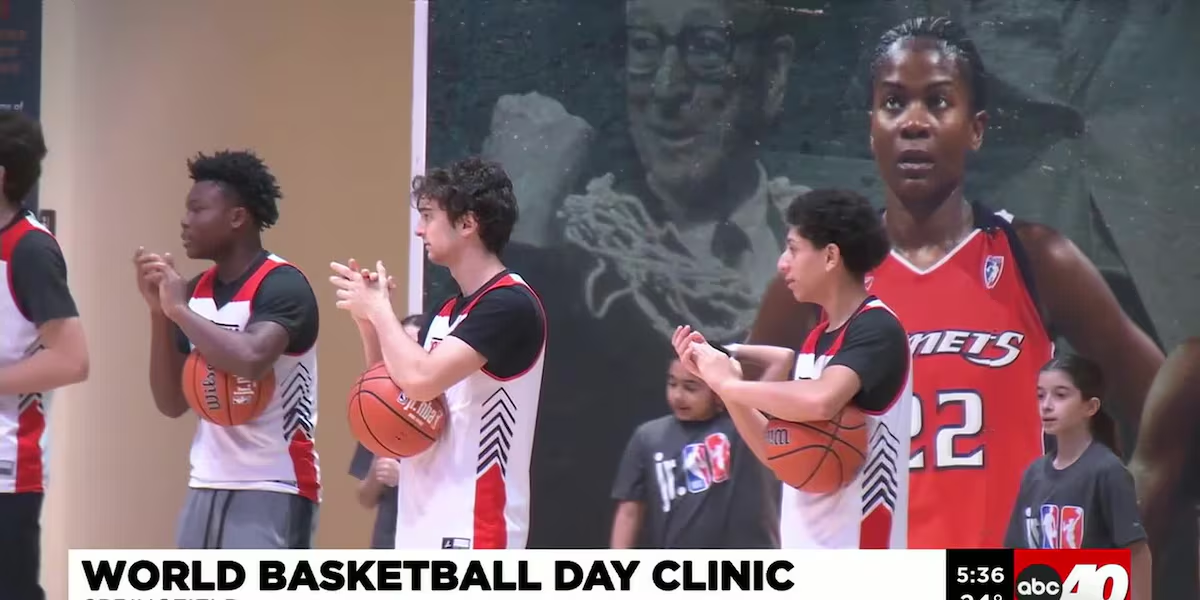
SPRINGFIELD, Mass. (WGGB/WSHM) — In honor of “World Basketball Day’ on Sunday, the Basketball Hall of Fame held a special youth basketball clinic in collaboration with the YMCA of Greater Springfield.
The event welcomed local students to participate in training drills and learn the fundamentals of basketball.
The Marketing and PR Manager of the Hall of Fame, Kiana Lowe, says, “The clinic is mostly sponsored by the NBA. So, we are focusing on young kids from sixth grade and under…Just learning the fundamentals of basketball. What basketball is about. What it takes to be a basketball player…The commitment, determination, and also the camaraderie that comes with basketball… Basketball is a team sport for a reason. And we really wanted to highlight that today.”
The event also had an appearance from special guest former NBA Rookie of the Year, Michael Carter-Williams who had some words of advice for kids who dream of a future in basketball.
Carter-Williams says, “Yeah, I mean, just, you know, work hard. Be a good person, right? Try to be the healthiest person you could possibly be… And just chase your dreams, right? Never let anyone deter that… If you want to do something, you know, practice it every day and don’t let anyone tell you differently.”
This year’s World Basketball Day celebration also coincided with the 175th anniversary of the YMCA, the organization where the game of basketball was originally introduced in 1891.
Copyright 2025. Western Mass News (WGGB/WSHM). All rights reserved.
Rec Sports
Monday Morning Maui Sports: Oregon State’s Maui Classic is about more than basketball : Maui Now
In a game with youngsters at Kalama Intermediate School before the games at the Maui Classic women’s basketball tournament, University of Hawai‘i junior guard Jovi Lefotu couldn’t stop her competitive side from coming out.
Lefotu, the only player from Hawai‘i on the Rainbow Wahine roster, was thrilled to play in the Maui Classic on Friday and Saturday at the Erdman Athletic Center on the Seabury Hall campus, but she might have been more excited to interact with Maui youngsters.
UH beat Liberty 67-58 on Friday when Lefotu scored 9 points and dished out 3 assists, but the Rainbow Wahine lost on Saturday to Montana State 72-56 when Lefotu was limited to 2 points, 1 assist and committed 5 turnovers.
HJI Weekly Newsletter
Get more stories like these delivered straight to your inbox. Sign up for the Hawai‘i Journalism Initiative’s weekly newsletter:
ADDING YOU TO THE LIST…
Lefotu, an ‘Iolani School graduate from Kaneohe, O‘ahu, played a game called “land, sea, air” with Kalama students and teammates that involves jumping from spot to spot or into the air at the right time. Lefotu beat UH teammate Bailey Flavell in the championship match of the friendly competition.
“They’re so cute,” Lefotu said of the students that the Rainbow Wahine interacted with Friday morning, playing games, holding a question and answer “talk story” session and doing about 30 minutes of basketball drills and interaction. “They had a lot of energy and we played games. We talked with them and it made our day just to be with them and spend time with them and get to know them — they asked us a lot of questions.”
Lefotu added, “I hope we impacted them as much as they impacted us.”
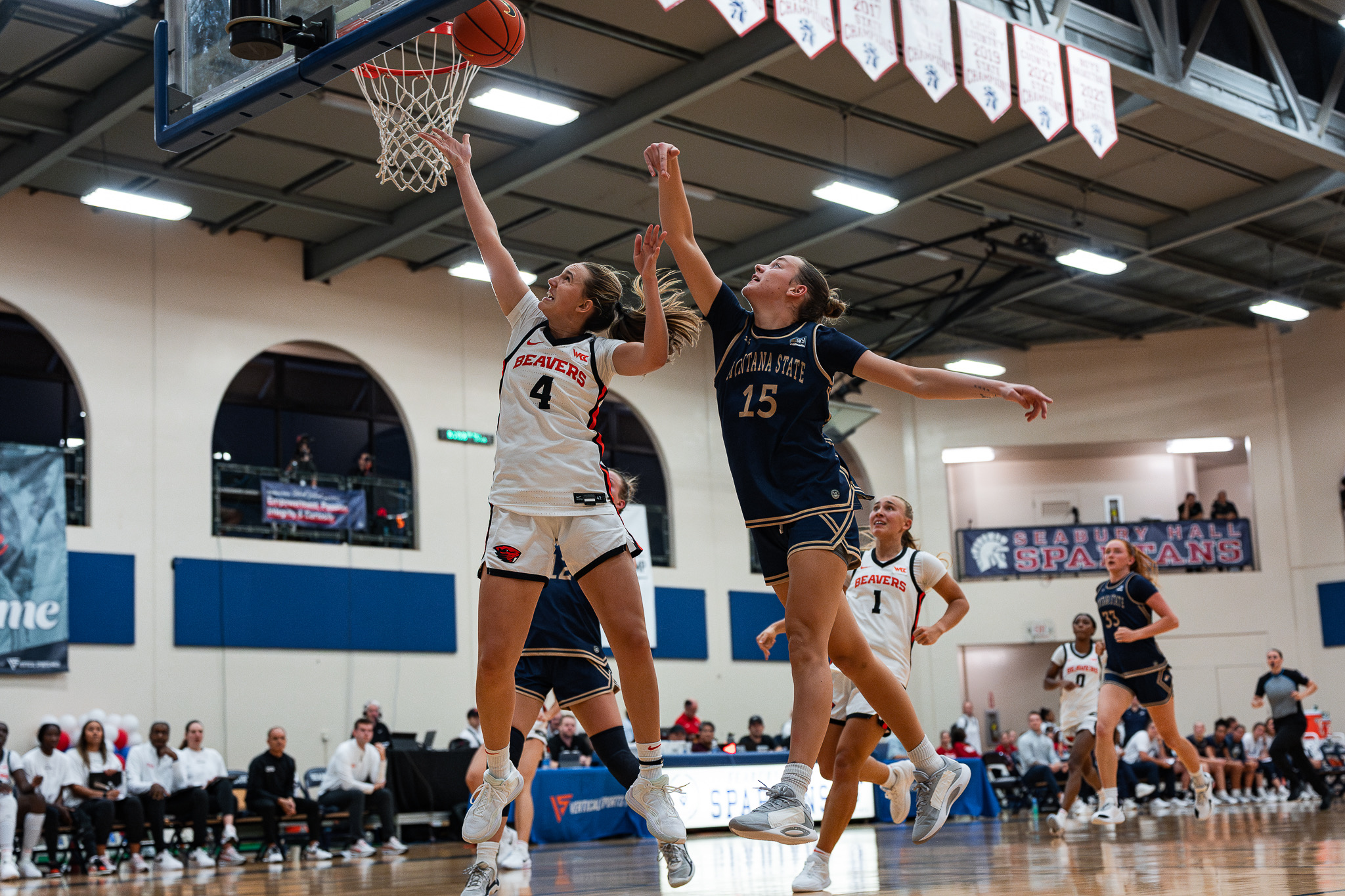
Oregon State University started the tournament, involving four teams, in 2016 and it has been played every year since with the exception of 2020 when it was cancelled due to the COVID-19 pandemic.
Oregon State improved to 15-3 in the event with a 53-51 win over Montana State on Friday and a 64-57 win over Liberty on Saturday. The Beavers go home to Corvallis, Ore., with an 8-5 record, while UH is now 6-6.
Hawai‘i beat Chaminade 73-31 in an exhibition game last season at Ka‘ulaheanuiokamoku Gym at Kamehameha Schools Maui, but the games this weekend were the first games that counted that the Rainbow Wahine have ever played on Maui.
“Anytime we can come to a Neighbor Island, it’s fabulous,” Hawai‘i coach Laura Beeman said. “I wish we could play several times a year on every Neighbor Island, not just O‘ahu. Unfortunately, our schedule doesn’t allow it and we sometimes need that home court advantage. But I’m so appreciative of the fans that came out tonight that supported us. We felt the aloha, which was great. … We absolutely love coming to Maui. It’s just, it’s such a special place.”
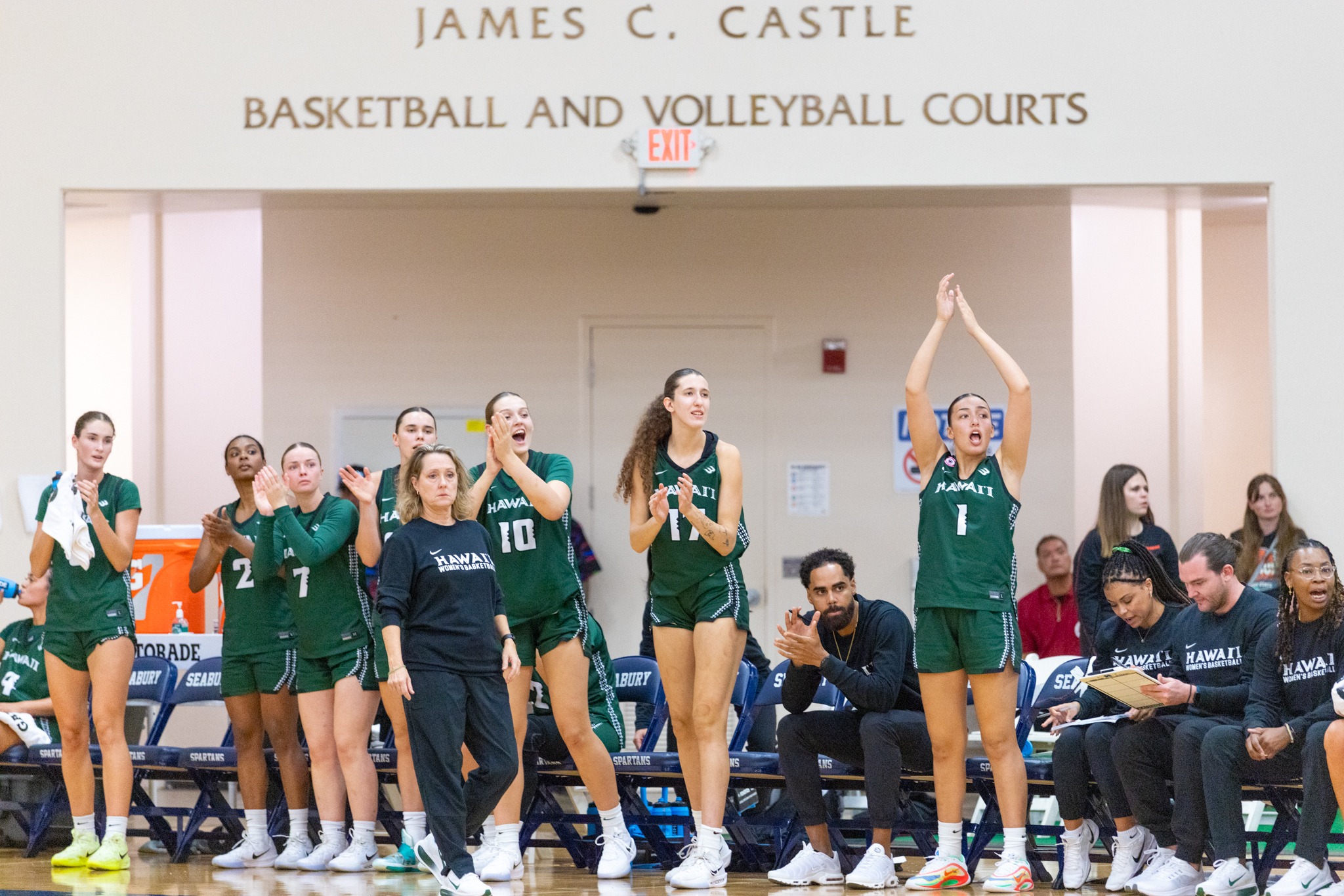
Beeman said the trip to Maui can be a recruiting tool.
“Anytime that you can come here, not only for us to watch kids, but for kids to watch us and say, ‘hey, I want to be a part of that coaching staff, that program, that culture, that ‘ohana,’ ” Beeman said. “We want local kids to want to play for us.”
Oregon State head coach Scott Rueck and Ben Prangnell, the founder of nonprofit organization Vertical Sports Maui, the tournament organizer, met 15 years ago when they were both part of a youth basketball clinic on Maui. Rueck became the head coach at OSU soon after and he stayed in touch with Prangnell and the Maui Classic developed from an idea to reality in 2016.
The Maui Classic started being played at War Memorial Gym in Wailuku and has also been played at the Lahaina Civic Center and South Maui Gym, but has now been held for the last three years at the Erdman Athletic Center on the Seabury Hall campus.
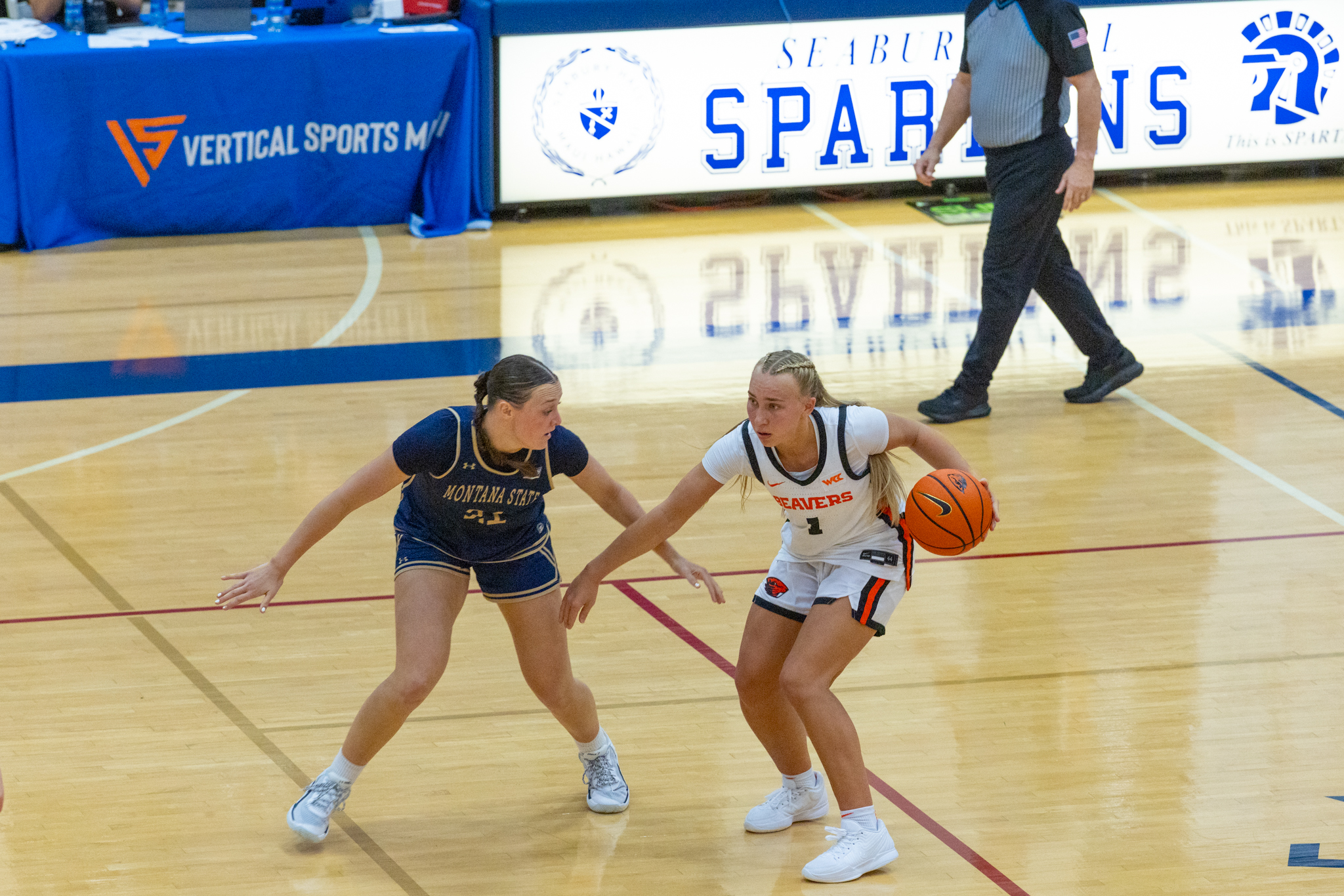
It has become a center point of the Beavers’ annual schedule.
“This trip is so meaningful for so many reasons,” Rueck said. “A, to look forward to. It’s always nice to have something like that. Certainly recruiting, it helps. But the real payoff is once we’re here, and not only to attempt to impact, but to feel the impact that we’re having on the community.”
Rueck added, “And then it’s also amazing to feel the reward for showing up and being supported and loved so well by a place that really has become our second home over the years. And so, this is a beautiful event. We’re so grateful for Vertical Sports, the people in Maui for supporting us so well. And it’s certainly a highlight of the year.”
“This trip was a blessing for us,” Oregon State junior guard Kennedie Shuler said after scoring 9 points, grabbing 5 rebounds and dishing out 7 assists on Friday. “This is my third year here, so I’m so glad for all my new teammates that this is their first time just to come see Maui.”
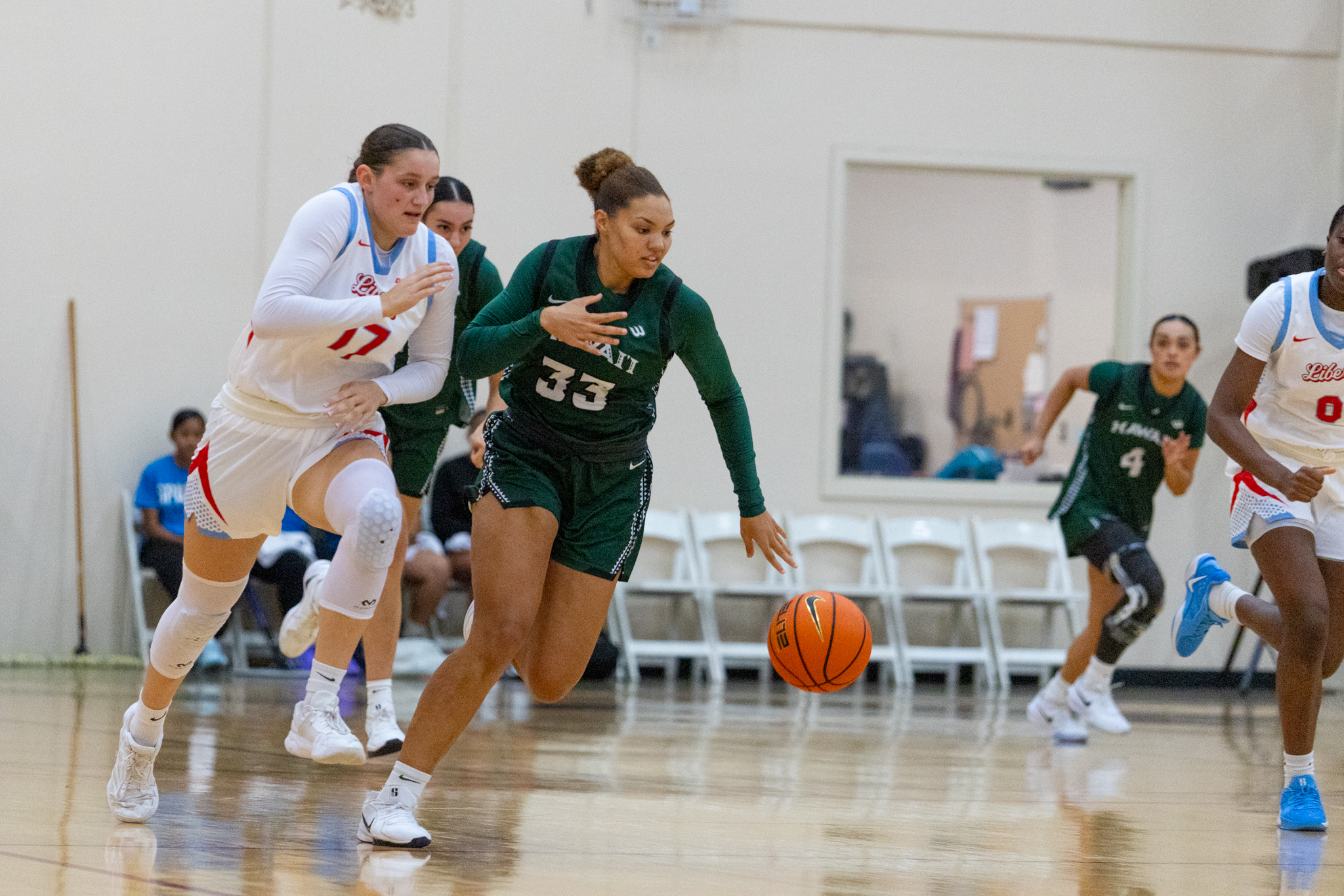
Shuler added that the team was able to put in some community service time with Seabury Hall.
“It’s a beautiful place to play basketball, but even better than that, it’s an amazing time for us to give back to the community,” Shuler said.
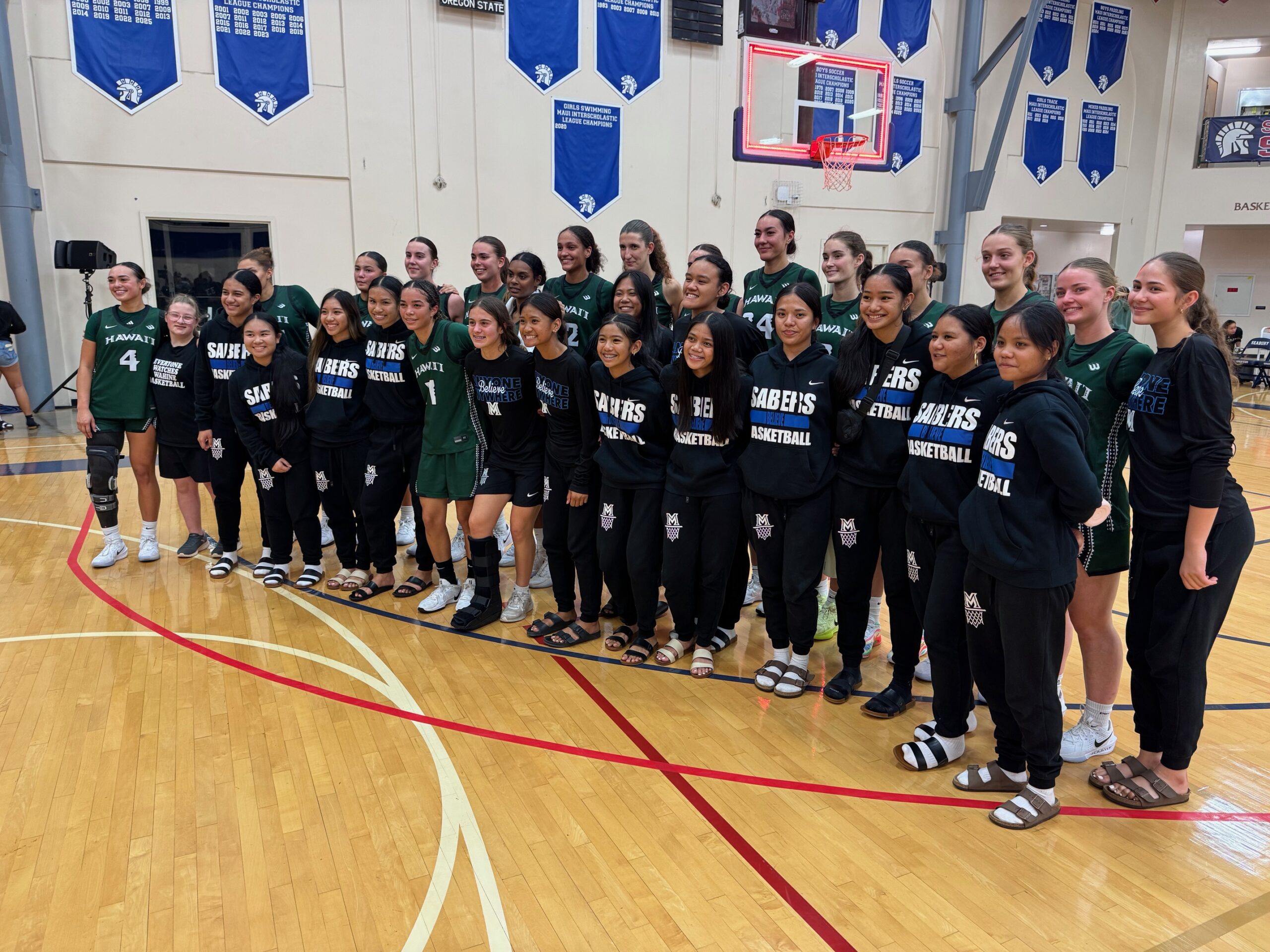
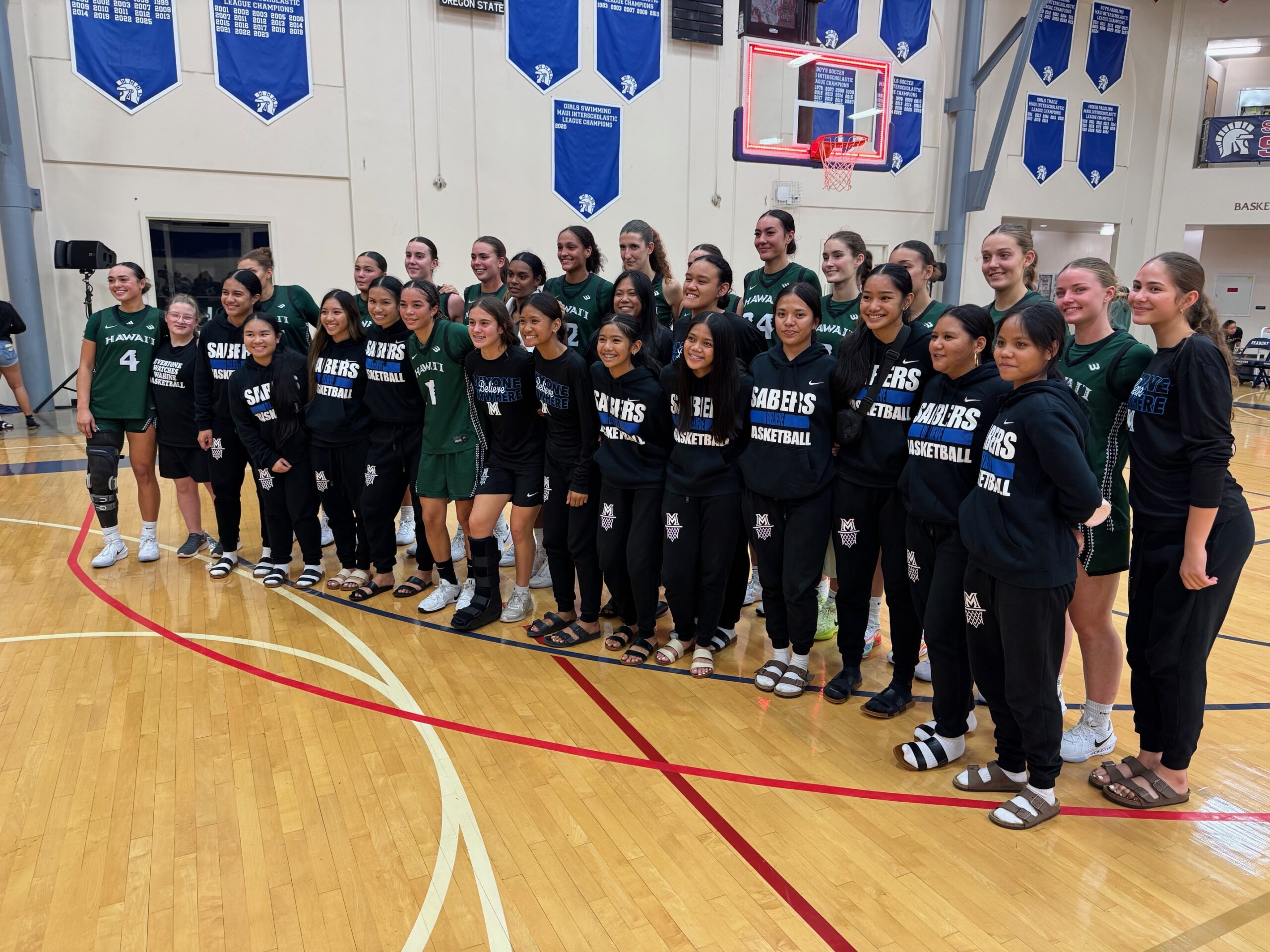
The Hawai‘i team lined up for a post-game group photo with the Maui High School girls team. The Sabers are the defending Maui Interscholastic League champions.
“I’m glad to see high school girls from Maui watch us come out and play,” Lefotu said. “Just being an inspiration for Hawai‘i girls and to show them if you’re from Hawai‘i, you still can make it big. You just gotta work hard. … It’s always fun to play in front of your home state.”
Maui High’s Naiara Bal, the only senior on the Maui High team, said: “It was such a good experience and fun to watch. It’s very cool to see (UH) come here, finally, so we can watch. I love the way they play.”
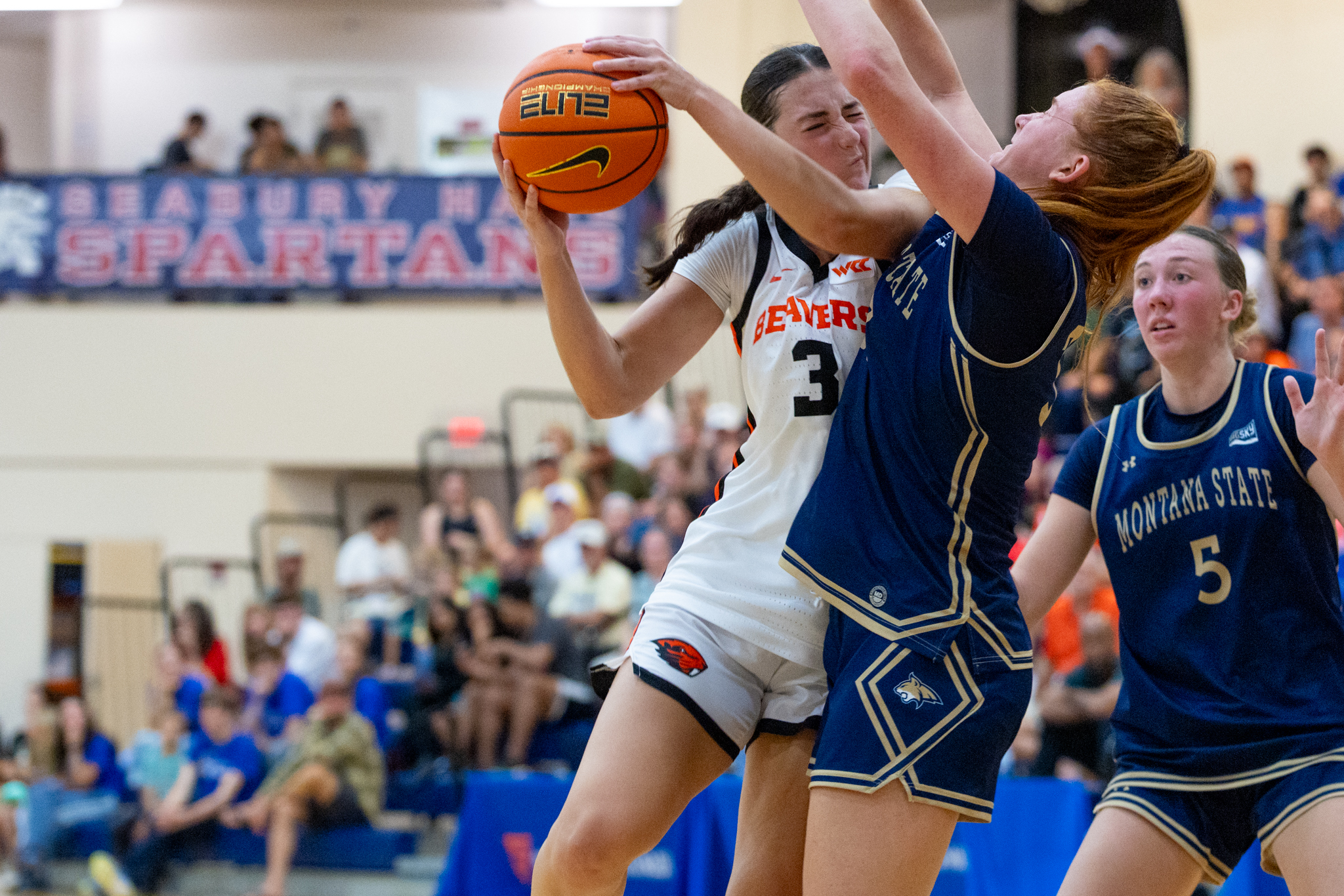
Montana State went home to Bozeman, Mont., with a 7-4 record after going 1-1 here. The Bobcats visited Lokelani Intermediate School in Kīhei on Wednesday. It is the third time Montana State has been part of the Maui Classic.
“Well, it’s a great trip, number one,” MSU coach Tricia Binford said. “Oregon State does a great job of investing in the community here, so it’s a win in a beautiful area to get two really great games. All four teams here won their conferences last year, but more importantly, we get to give a little bit back to this great community. So, I love that we get to serve some people while we’re here and show some great role models.”
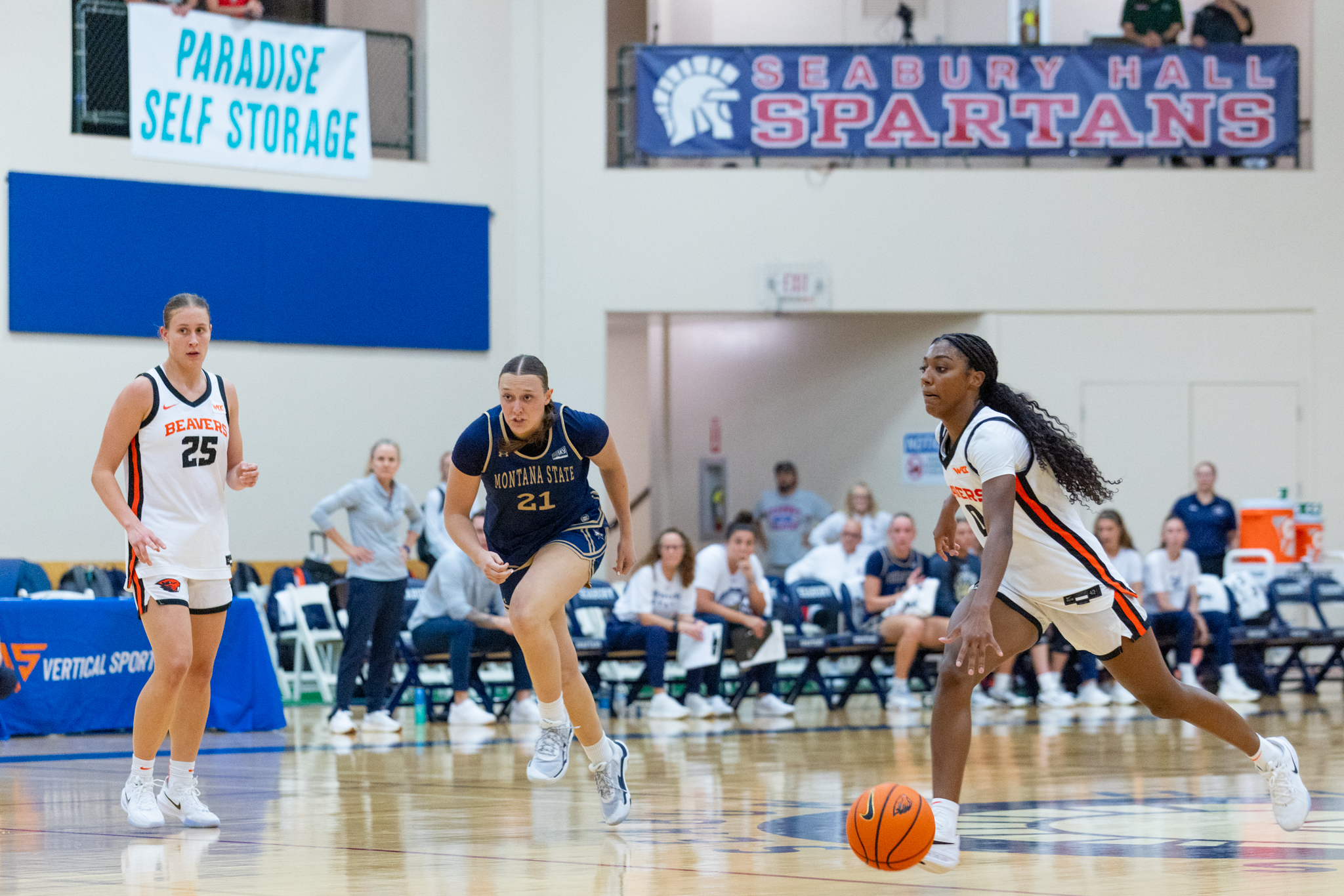
Liberty traveled 16 hours to get here Tuesday from their campus in Lynchburg, Va. The Flames (6-5) visited Kīhei Charter School for their interaction with Maui students, as is the tradition for every team that plays on the Maui Classic.
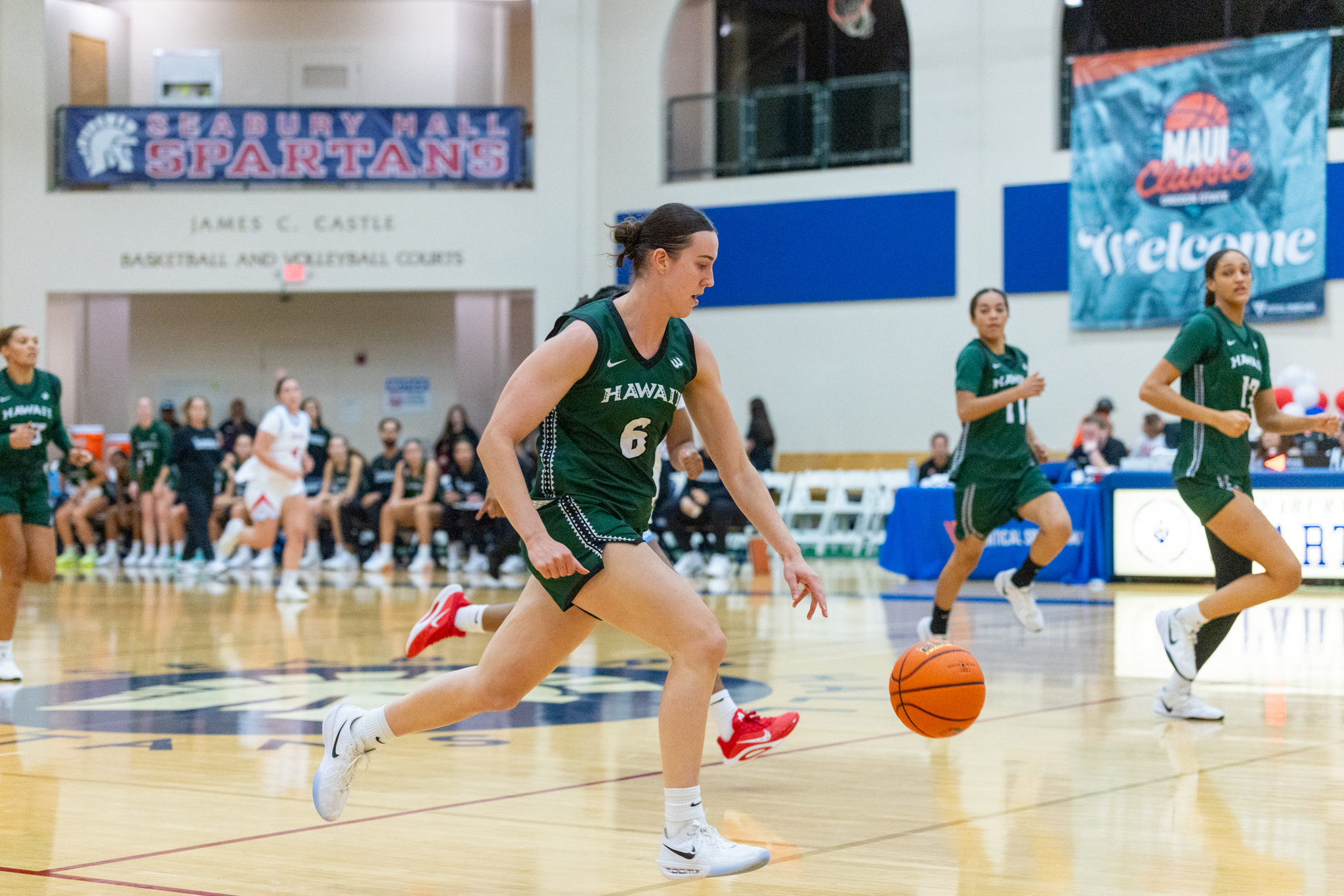
“It’s amazing. I mean, this event is bigger than basketball,” Liberty coach Alexis Sherard said. “Just to have an opportunity to go into the community, to give back to the community, just for our team to have the experience of going to the middle school and pour into those middle school kids’ hearts and give them hope and let them know, ‘hey, you can be a champion.’ … All of our players, they were in middle school as well, and look where they are now.“
Sherard concluded, “I think they really enjoyed our team. Our team enjoyed them. So hopefully we were able to touch at least one student’s heart.”

“Monday Morning Maui Sports” columns appear weekly on Monday mornings with updates on local sports in the Maui Interscholastic League and elsewhere around Maui County. Please send column ideas — anything having to do with sports in Maui County — as well as results and photos to rob@hjinow.org.

West Fargo United won its game at Starion Sports Complex Cadillac Rink against the Mandan Braves on Saturday, Dec. 20, 2025, ending 5-2.
The Braves took the lead early in the first period, with a goal from Brenna Bauman. Emline Brincks and Hannah Berreth assisted.
The second period ended with a 3-2 lead for the Packers.
The Packers increased the lead to 4-2 early in the third period when Emma Hassler netted one again, assisted by Payton Stocker and Kaylee Augdahl.
Emma Hassler made it 5-2 with a goal late in the third, assisted by Ava Josephsen and Stella Gimberline.
The teams play each other again on January 30th.
Coming up:
The Braves will go up against the Devils Lake Firebirds at Burdick Arena on Friday, Jan. 02, 2026, while the Packers will battle Fargo Davies on Tuesday, Dec. 23, 2025.
Read more prep coverage
north dakota girls hockey
Scoring:
North Dakota, Starion Sports Complex Cadillac Rink
6th December 2025
West Fargo United at Mandan Braves
2-5
1st period:
Mandan Braves, 0–1 (6:41) Brenna Bauman
2nd period:
1–1 (24:59) Kaylee Augdahl, 1–2 (27:10) Afton Leingang, 2–2 (30:12) Stella Gimberline, 3–2 (36:17) Emma Hassler
3rd period:
4–2 (43:59) Emma Hassler, 5–2 (54:06) Emma Hassler

Automated articles produced by United Robots on behalf of The Rink Live.
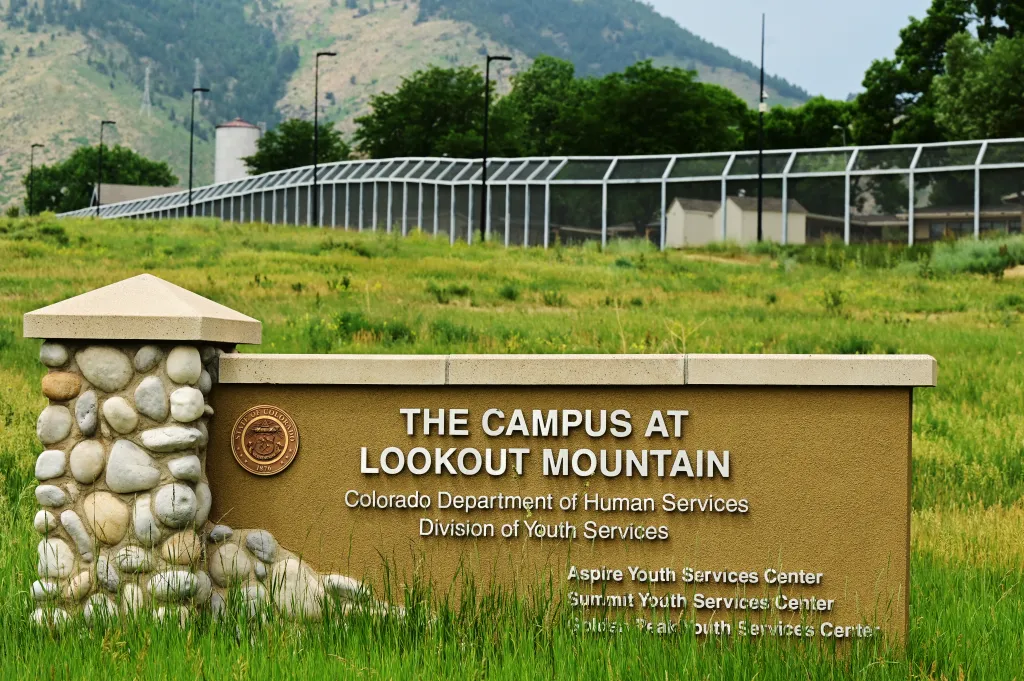
Carissa Wallace started working at the Lookout Mountain Youth Services Center in Golden two years ago because she felt strongly about helping rehabilitate young people convicted of crimes.
She loved the teens and loved the work.
But staffing shortages began to take a toll. Management routinely mandated employees pull 16-hour shifts multiple days a week because they were so short-staffed. Fewer workers meant there was nobody to respond to crises or adequately monitor the young people in their care, she said. Safety concerns mounted.
Wallace said she came home every day and cried. She went to the doctor for medication to help deal with all the anxiety the job brought.
“After two years, I was mentally broken from that place,” she said in an interview. “When I had to think about my safety every second of the day, I could no longer make a difference. I could no longer help the kids.”
Colorado’s youth detention centers are facing a staffing crisis, leading to serious safety concerns for employees and youth and low worker morale, current and former staffers told The Denver Post. The Division of Youth Services, which oversees the state’s 12 detention and commitment facilities, employs more than 1,000 employees, according to state data. Nearly 500 additional jobs remain vacant.
Some facilities, such as the Mount View Youth Services Center in Lakewood, reported a 57% staff vacancy rate, according to June figures compiled by the state. At the Spring Creek Youth Services Center in Colorado Springs, nearly 10% of its staff at one point in November were out due to injuries sustained on the job.
Current and former staff say leadership deserves a large chunk of the blame. Employees say they don’t feel management supports them or listens to their concerns. Higher-ups aren’t on the floor dealing with riots, they say, or leading programs. When situations do get out of control, staff say the brass simply looks for someone to blame.
“The administration says they care,” said Kim Espinoza, a former Lookout Mountain staffer, “but their actions say otherwise.”
Alex Stojsavljevic, the Division of Youth Services’ new director, acknowledged in an interview that working in youth detention is difficult. Retaining staff is a big priority with ample opportunities for improvement, he said. The division plans to be intentional about the people it hires into these roles, making sure that candidates know what they’re signing up for.
He hopes to sell a vision that one can make youth corrections a long, fulfilling career.
“Change is afoot in our department,” said Stojsavljevic, who took the mantle in October. “Just because we’ve done something for 20 or 30 years doesn’t mean we have to continue to do it that way.”
Critical staffing levels
Staffing shortages at Colorado prisons and youth centers have remained a persistent problem in recent years, though vacancy rates at the DYS facilities far outpace those at the state’s adult prisons.
A lack of adequate employees means adult inmates can’t access essential services like medical, dental and mental health care, according to a 2024 report from the Colorado Criminal Justice Reform Coalition. Education, employment and treatment programs lag.
“Simply put, because of the staff shortage, the (Department of Corrections) is not able to fulfill its organizational mission, responsibilities and constitutional mandates,” the report’s authors wrote.
Studies point to a litany of physical and mental health issues facing corrections workers.
Custody staff have a post-traumatic stress disorder rate of 34%, 10 times higher than the national average, according to One Voice United, a national organization of corrections officers. The average life expectancy for a corrections worker is 60, compared to 75 for the general population. Divorce and substance abuse rates are higher than in any other public safety profession, the organization noted, while suicide rates are double that of police officers.
The Colorado Department of Corrections has a 12.6% overall department vacancy rate, according to state figures. Correctional officer vacancies sit at 11%, while clinical and medical staff openings are nearly 20%.
Meanwhile, nearly one in three DYS positions is vacant.
The most common open positions are for the lowest level correctional workers, called youth services specialists. The Betty. K. Marler Youth Services Center in Lakewood currently has 23 vacant positions for this classification of employee out of 63 total slots. The facility is also short 10 teachers. Platte Valley Youth Services Center in Greeley has 21 open positions for the lowest-tier youth services specialist role out of 71 total jobs.
The same candidates who might work at DYS are also being recruited by adult corrections, public safety departments and behavioral health employers, Stojsavljevic said, leading to fierce competition for these applicants.
Current and former DYS workers say the staffing issues serve as a vicious cycle: The fewer employees there are, the more mandated overtime and extra shifts that the current staff are forced to take on. Those people, then, quickly burn out from the long hours and dangerous working conditions, they say.
Wallace, the former Lookout Mountain worker, said almost every day for the past year, leadership mandated staff stay late or work double shifts. This routinely meant working 16-hour days.
“It got to the point where people weren’t answering their phones,” she said. “People were calling out sick because they were overworked and exhausted.”
Wallace estimated that 80% of the time, the facility operated at critical staffing levels or below. State law requires juvenile detention facilities to have one staff member for every eight teens, but workers say that wasn’t always the case.
Many days, staffers said, there weren’t enough employees to respond to emergencies. In some cases, that meant the young men themselves assisted staff in breaking up fights with their peers.
One night, some of the teens set off the fire alarm at Lookout Mountain, which unlocked the doors and allowed the young people to run around campus, climb on buildings and break windows, workers said. Without enough staff to rein in the chaos, employees wanted to call 911.
But they said they were told they would be fired if they did. Leadership, they learned, didn’t want it covered by the press.
“Our jobs, our lives were threatened because they didn’t want media coverage,” Espinoza said.
Stojsavljevic said the department is “acutely aware” of the mandated work problem, though he admitted that in 24-hour facilities, staff will occasionally be told to work certain shifts.
The division has implemented a volunteer sign-up list, where staff can earn additional incentives for working these extra shifts.
Since he’s been in the job, the state’s juvenile facilities have never dropped below minimum staffing standards, Stojsavljevic said.
Routine violence in DYS facilities
Staff say violence is an almost daily occurrence inside DYS facilities, which contributes to poor staff retention.
The division, since Jan. 1, recorded 35 fights and 94 assaults at the Lookout Mountain complex, The Post reported in September. Since March 1, police officers have responded 77 times to the Golden campus for a variety of calls, including assaults on youth and staff, sexual assault, riots, criminal mischief and contraband, Golden Police Department records show.
Twenty of these cases concerned assaults on staff by youth in their care.
Multiple employees suffered concussions after being punched repeatedly in the head, the reports detailed. Others were spit on, bitten, placed in headlocks and verbally threatened with violence.
Chaz Chapman, a former Lookout Mountain worker, previously told The Post that he reported three or four assaults to police during his tenure, adding, “I was expecting to get jumped every day.”
“We were basically never able to handle situations physically, and the kids knew that; they were stronger than 90% of their staff,” Chapman told The Post in September. “The ones who stood in their way would get assaulted, such as myself.”
Staff said leadership still expected them to show up to work, even while injured.
Espinoza said she injured her knee during a restraint, requiring crutches. DYS continued to put her on the schedule, she said. So the staffer hobbled around the large Golden campus through the snow and ice.
One supervisor had his head cracked open at work this year, Espinoza said. He went to the hospital and returned to Lookout. Wallace said she’s been to the doctor 20 times since she started the job due to injuries sustained at work. She said she still has long-lasting shoulder pain.
“If they’re gonna keep hiring women who can’t restrain teenage boys, people are going to get hurt,” she said. “That was an everyday thing.”
In November, 28 DYS employees were out of work on injury leave, according to data provided by the state. Spring Creek Youth Services Center in Colorado Springs had nine workers injured out of 91 total staff. The state did not divulge how these people were hurt.
Stojsavljevic said safety is the division’s No. 1 focus area. If staff are injured on the job, he said, it’s important that they’re supported.
“Staff have to be both physically healthy and emotionally healthy to do this work,” the director said.
Division policies allow injured employees to take leave if they need it. Depending on the level of injury, some staff can return to work without having youth contact, Stojsavljevic said.
‘That place takes your soul’
But workers interviewed by The Post overwhelmingly blamed management for the division’s poor staffing levels.
As staff worked 16-hour days and were mandated to come in on their days off, they said administrators wouldn’t pitch in.
“A lot of people felt it’s unfair,” Wallace said. “The people making a good amount of money weren’t truly being leaders. They were forcing us to pick up the slack, but they didn’t want to deal with youth. They wanted to sit at a desk, collect their check, and go home for the day.”
New recruits were thrown into the deep end with barely any training or support, employees said. Those new staffers quickly saw the grueling hours and how tired their coworkers were all the time. Many left within weeks of starting the gig.
“I could see their souls were literally gone,” Wallace said. “That place takes your soul.”
After safety, Stojsavljevic said the department is prioritizing quality and innovation. Leadership wants to make sure that programs and policies are actually getting better results.
The director, meanwhile, said he wants to hear directly from staff for new ideas.
“We’re more than willing to try things out,” he said. “We can’t just continue operations the way they have been just because that’s the way we’ve always done it.”
Wallace said her experience at Lookout Mountain traumatized her. The job prompted her to go to therapy and to start taking medication for anxiety.
When state officials emptied Lookout Mountain due to deteriorating safety conditions in August, Wallace was sent to work at Platte Valley. Leadership promised to retrain staff so they could eventually reopen the Golden campus.
But when Wallace showed up on her first day of work at Platte Valley, security never checked her for contraband, she said. Staff were being mandated to work overtime shifts. Within 20 minutes of starting, she was put alone with a young person she didn’t know.
The following day, Wallace called her boss. She couldn’t work for DYS anymore.
At the end of the day, Wallace said, it’s the young people who suffer.
“I hope they make some changes because these boys deserve so much better than what they’re getting,” she said.
Sign up to get crime news sent straight to your inbox each day.


According to numerous news sources, after a five-day search the father-in-law of Olympic gymnast Dominique Dawes was found dead on Saturday outside Roanoke, Virginia. The body of 79-year-old Leonard Hugh Thompson was discovered near Route 81. His car was nearby with a flat tire and missing car keys.
Dawes had issued a plea to help locate him earlier on Saturday, Dec. 20. She worried about his wellbeing.
“He has had a health episode and is disoriented and confused,” Dawes said in a video posted to social media.
A Silver Spring native, Dawes is a three-time Olympic gold medalist. Today she operates two training academies for aspiring gymnasts in Rockville and Columbia.
A mother of four, Dawes and her husband, Jeff Thompson, posted a picture on Instagram on Saturday night with the caption, “Rest in Peace, Papa T.”

Rec Sports2 minutes ago
How This Alumna Built the Nonprofit Good Sports

NIL4 minutes ago
65-year-old college football coach surges as candidate to replace Sherrone Moore at Michigan

Sports7 minutes ago
Georgia Adds Marin Collins from Penn State

Motorsports9 minutes ago
Mobil 1, Autodromo Again Partner on Limited-Edition, Auto-Inspired Watch

Sports23 minutes ago
Volleyball places four on academic all-district team

Motorsports25 minutes ago
Bigrock Motorsports Crowned Indian Supercross Racing League Season 2 Champions

Sports39 minutes ago
Volleyball signs standout Auguste | Wisconsin Badgers

Motorsports41 minutes ago
Nissan plans to double NISMO lineup by 2028

Sports55 minutes ago
William & Mary Hires Head Volleyball Coach

NIL56 minutes ago
Bob Chesney’s Immediate To-Do List at UCLA

Motorsports57 minutes ago
The Inside Lane | Ep. 109: Matt Kaulig & Chris Rice

Rec Sports1 hour ago
Basketball Hall of Fame hosts ‘World Basketball Day’ youth clinic

Motorsports1 hour ago
Lindblad to drive Red Bull F1 car on Delhi streets in 2026 showrun

Sports1 hour ago
Pacific Joins ECAC for Outdoor Track & Field

Motorsports1 hour ago
Roush Automotive Collection Is an Automotive Treasure Trove You Can Tour for Free

Rec Sports4 weeks ago
First Tee Winter Registration is open

Rec Sports4 weeks ago
Fargo girl, 13, dies after collapsing during school basketball game – Grand Forks Herald

Motorsports4 weeks ago
CPG Brands Like Allegra Are Betting on F1 for the First Time

Motorsports4 weeks ago
F1 Las Vegas: Verstappen win, Norris and Piastri DQ tighten 2025 title fight

Sports4 weeks ago
Sycamores unveil 2026 track and field schedule

Sports4 weeks ago
Utah State Announces 2025-26 Indoor Track & Field Schedule

Sports4 weeks ago
Two Pro Volleyball Leagues Serve Up Plans for Minnesota Teams

Motorsports2 weeks ago
SoundGear Named Entitlement Sponsor of Spears CARS Tour Southwest Opener

Motorsports3 weeks ago
Jo Shimoda Undergoes Back Surgery

NIL3 weeks ago
Bowl Projections: ESPN predicts 12-team College Football Playoff bracket, full bowl slate after Week 14

Motorsports4 weeks ago
Redemption Means First Pro Stock World Championship for Dallas Glenn

Sports4 weeks ago
Texas volleyball vs Kentucky game score: Live SEC tournament updates

Rec Sports3 weeks ago
Robert “Bobby” Lewis Hardin, 56

Rec Sports3 weeks ago
How this startup (and a KC sports icon) turned young players into card-carrying legends overnight

NIL4 weeks ago
Indiana’s rapid ascent and its impact across college football






-
 Motorsports2 weeks ago
SoundGear Named Entitlement Sponsor of Spears CARS Tour Southwest Opener
-

 Rec Sports3 weeks ago
Black Bear Revises Recording Policies After Rulebook Language Surfaces via Lever
-

 Motorsports2 weeks ago
Donny Schatz finds new home for 2026, inks full-time deal with CJB Motorsports – InForum
-

 Rec Sports2 weeks ago
How Donald Trump became FIFA’s ‘soccer president’ long before World Cup draw
-
 Rec Sports2 weeks ago
David Blitzer, Harris Blitzer Sports & Entertainment
-

 Motorsports2 weeks ago
JR Motorsports Confirms Death Of NASCAR Veteran Michael Annett At Age 39
-
Sports2 weeks ago
Elliot and Thuotte Highlight Men’s Indoor Track and Field Season Opener
-

 Motorsports2 weeks ago
Rick Ware Racing switching to Chevrolet for 2026
-
Sports2 weeks ago
West Fargo volleyball coach Kelsey Titus resigns after four seasons – InForum
-

 Sports2 weeks ago
Women’s track and field athletes win three events at Utica Holiday Classic