
Motorsports
From Bootleggers to Broadcasts: NASCAR’s Journey to American Icon – Speedway Digest


NASCAR’s rise to become perhaps the most popular auto racing series in the United States is a fascinating story, a mixture of grassroots culture, smart promotion, and deep connection to American identity. It didn’t start as a global or glamorous sport but rather from humble roots, which gave it broad appeal and authenticity. Some fans even balance their racing passion with modern digital pastimes, using platforms like casino sans vérification to unwind between race weekends. Over decades, NASCAR grew into a national institution, drawing millions of fans to both the track and their living rooms.
The origins: Moonshine, Bootlegging, and Bill France Sr.
The origins of NASCAR are deeply tied to the Prohibition era in the American South. During the 1920s and 1930s, “bootleggers” running illegal liquor needed fast, reliable cars to evade law enforcement. These drivers modified ordinary vehicles, making them quicker and more powerful, sowing the seeds for organized stock car racing. Bill France Sr., a mechanic and gas-station owner, recognized this culture’s potential for legitimate sport and in 1947 convened a meeting at Daytona Beach to form a governing body. That meeting led to the founding of NASCAR in early 1948.
By hosting a series of meetings at the Streamline Hotel in Daytona Beach, France and other founders established the first rules, national point system, and organizational structure. His vision was not just regional racing but a nationally respected sport, and he was willing to build infrastructure, like superspeedways to make that happen.
Building the spectacle: tracks, television & star power
In the early years, NASCAR relied on dirt tracks and small speedways. But it quickly transitioned to large paved ovals, culminating in the construction of the Daytona International Speedway in 1959. The first Daytona 500 later that year became a marquee event, drawing huge interest and helping elevate NASCAR’s profile.
Part of NASCAR’s rise was the emergence of iconic drivers like Richard Petty, Dale Earnhardt, and other larger-than-life personalities. Their stories, rivalries, and personalities captured the public’s imagination and brought fans to the grandstands. Around the 1970s and 1980s, corporate sponsors and television deals exploded, turning NASCAR into a commercially powerful sport. The 1979 Daytona 500, broadcast live from start to finish, is often cited as a turning point in mainstream popularity.
The culture factor: why NASCAR resonated
One reason NASCAR soared in popularity is its strong cultural ties to everyday American life. Unlike formula or open-wheel racing, stock cars resembled the vehicles people drove daily. That connection made the sport more relatable. The drivers themselves often came from humble beginnings, reinforcing the idea that success on the track was accessible to anyone with skill and determination.
The southern roots of NASCAR helped build a passionate regional fan base, with loyal communities gathering at tracks and tailgating on race weekends. These traditions evolved into massive spectator events. NASCAR’s business model also prioritized safety, spectacle, and competition, helping sustain fan loyalty as the sport matured.
What fueled NASCAR’s peak popularity
At its height in the late 1990s and early 2000s, NASCAR reached extraordinary popularity. It was recognized as a major national sport, with strong television viewership, packed grandstands, and sponsorship deals from major corporations. Many tracks routinely had attendance estimates of 100,000 or more. Investments in bigger, faster tracks, improved car safety, and competitive formats made races must-see events.
Fan culture expanded rapidly during this period. Merchandise sales, driver endorsements, and growing media coverage made NASCAR a mainstream entertainment product. Meanwhile, the organization’s leaders maintained a tight structure that allowed the sport to evolve without losing its identity.
Decline, resurgence, and modern challenges
Despite its earlier growth, NASCAR has faced significant challenges. Attendance at tracks has declined from historic highs, with estimates now ranging between 2 million and 3.6 million annual spectators. Rising ticket prices, changing consumer habits, and the growth of digital entertainment have all played a role in shrinking live audiences.
Critics point to the sport’s attempts to modernize, such as removing seats or altering its race formats as possible contributors to fan dissatisfaction. Others argue that NASCAR began to lose some of its regional identity when it expanded too quickly into new markets. Regardless, the sport continues to adjust its strategy by introducing new race formats, urban street races, and marketing aimed at younger audiences. Some events in recent seasons have reported renewed attendance, suggesting signs of recovery.
Why NASCAR became the most popular among auto racing fans
- Accessible cars and relatable drivers
Stock cars provided an immediate connection to everyday life. The vehicles looked familiar, and many drivers came from modest backgrounds, making fans feel represented. - Strong leadership and strategic promotion
Bill France Sr.’s organizational structure, investment in infrastructure, and consistent leadership built NASCAR into a national brand. Corporate sponsorships and major broadcast deals later helped the sport reach millions of households. - Cultural roots and community traditions
NASCAR’s origins in southern culture fostered a loyal fan base. Race weekends became community gatherings with camping, tailgating, and family traditions that extended beyond the track. - Exciting spectacle and close competition
From high-speed drafting to photo finishes, NASCAR’s racing style delivered constant excitement. Events like the Daytona 500 became cultural benchmarks. - Effective media exposure
Televised races dramatically expanded NASCAR’s reach. The sport benefited from narrative storytelling around its star drivers, rivalries, and dramatic races.
Recent popularity trends and NASCAR’s position today
NASCAR still commands a significant and passionate fan base. While live attendance is lower than at its peak, televised races, streaming access, and digital content help maintain the sport’s cultural relevance. The emergence of new race formats and the effort to enter major metropolitan markets have brought fresh attention to NASCAR. The sport now focuses heavily on blending tradition with innovation to stay competitive in a crowded entertainment landscape.
Why some fans turn to digital entertainment alongside racing
While NASCAR’s core appeal remains strong, modern fans often incorporate digital entertainment into their weekend routines. Some enjoy online gaming, streaming platforms, or browsing informational sites to stay entertained between races. This shift reflects broader cultural changes, where digital platforms coexist with traditional sports. For example, some fans might visit CasinoOnlineCA when they are not watching live events, showing how diverse entertainment forms now complement sports fandom.
NASCAR’s rise from bootlegging roots to becoming the most popular form of auto racing in America is a testament to its authenticity, strategic growth, and cultural resonance. What began as rural, informal competitions evolved into a professional sport with millions of fans and a nationwide presence. Despite challenges in recent years, NASCAR remains a deeply rooted tradition that continues to adapt to changing times.
Its popularity comes from many factors: relatable cars, charismatic drivers, compelling races, strong leadership, and unwavering fan traditions. As NASCAR evolves, its connection to community and heritage remains at the heart of its identity. Whether at the track, on television, or through digital communities, NASCAR continues to capture the imagination of millions and remains a defining part of American motorsport culture.

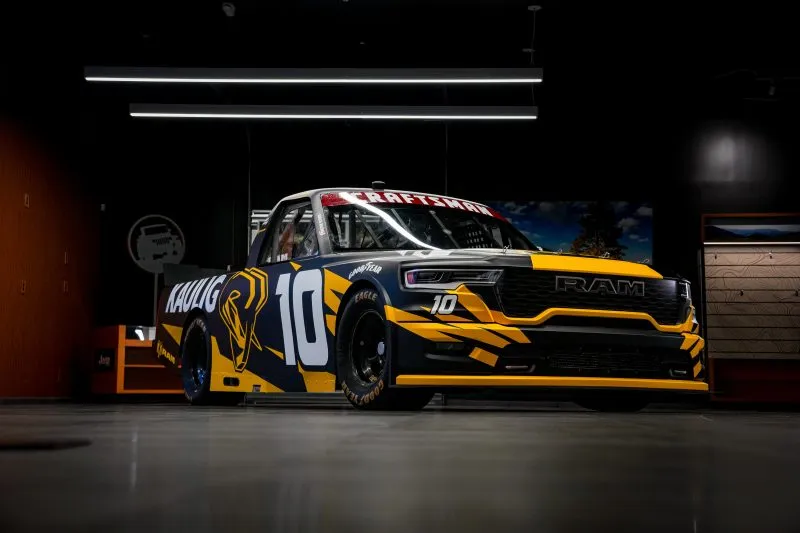
(TestMiles) – I’ve covered racing long enough to know that most people don’t actually understand how drivers get to NASCAR. The mythology says talent rises, sponsors appear, and everything works out. Reality is messier, quieter, and usually dictated by access. That’s why this caught my attention.
Ram isn’t just returning to NASCAR. It’s using entertainment as a scouting tool, a marketing platform, and a filter for something far harder to measure than lap times. Heart. Grit. Composure under pressure. Race For The Seat isn’t about discovering a driver who already made it. It’s about watching someone become one in real time.
That’s worth your time, even if you’ve never watched a full NASCAR Truck Series race.

Why does this matter right now?
Motorsports is at an inflection point. Costs are high, sponsorships are concentrated, and traditional ladders are narrowing. At the same time, audiences are fragmenting. Younger fans don’t discover racing through Sunday broadcasts alone anymore. They find it through clips, personalities, behind-the-scenes access, and stories that feel human rather than institutional.
Ram understands this moment. Instead of simply fielding trucks and hoping fans notice, it’s turning the return to NASCAR into a narrative event. Race For The Seat makes the process visible. Fifteen drivers. One opportunity. Eight episodes. No illusion that the path is easy or fair.
This matters to fans because it restores context. Racing stops being abstract and starts looking like work again. It matters to aspiring drivers because it reframes access. And it matters to brands because it shows how motorsports relevance can be rebuilt without pretending it’s still 1997.

How does it compare to rivals or alternatives?
Other manufacturers return to racing quietly. Press releases, paint schemes, sponsor decks. All necessary. All familiar. What Ram is doing here is different.
Instead of talking about heritage alone, it’s manufacturing relevance through participation. Ford and Chevrolet dominate the Truck Series through continuity. Ram is re-entering by disruption. Not technical disruption on the track, but cultural disruption around it.
Reality competition isn’t new. Racing documentaries aren’t new. What’s unusual is tying an actual factory-backed seat to an open competition and broadcasting the process before the season even begins. This isn’t simulated. The outcome matters. Someone wins. Someone doesn’t.
That’s a sharper hook than most traditional motorsports marketing, and it acknowledges that modern audiences want to see the work, not just the trophy.

Who is this for and who should skip it?
This series isn’t just for diehard NASCAR fans. It’s for people who like competition, pressure, and watching individuals tested in unfamiliar environments. If you enjoy sports documentaries, talent competitions, or behind-the-scenes business storytelling, this fits.
It’s also clearly for Ram’s core audience. Truck owners value toughness, endurance, and function over polish. Race For The Seat leans into that mindset. No glamour shots. No shortcuts. Just people being evaluated under stress.
Who should skip it? Anyone expecting scripted drama or manufactured conflict. This isn’t that. The tension comes from reality. From knowing that only one person walks away with a career-altering opportunity.
What is the long-term significance?
Zooming out, this signals a broader shift in how brands and motorsports may intersect going forward. Access, transparency, and storytelling are becoming as important as outright performance metrics. Not instead of them. Alongside them.
Ram’s return to NASCAR isn’t framed as nostalgia. It’s framed as relevance. By the time the winning driver lines up in Daytona in 2026, fans won’t just recognize the truck. They’ll recognize the person inside it.
That’s powerful. And it suggests a future where motorsports doesn’t just crown champions, but introduces them.

In the high-octane world of stock car racing, where fortunes are made and lost at 200 mph, a bombshell rumor is revving up the engines of speculation: the France family, the iron-fisted stewards of NASCAR since its dusty beginnings in 1948, might finally be eyeing the exit ramp.
–by Mark Cipolloni–
Valued at a staggering $5 billion by Goldman Sachs back in 2023, the empire that Bill France Sr. built from beachside bootlegger races could be up for grabs—just weeks after a bruising legal defeat and settlement that exposed cracks in the family’s once-unassailable control.
The spark? A landmark antitrust lawsuit filed by Michael Jordan’s 23XI Racing and Front Row Motorsports, which accused NASCAR of monopolistic practices and unfair charter agreements. The case, settled in December 2025 for undisclosed terms, didn’t just cost the France family millions—it peeled back the curtain on internal frustrations, with leaked texts revealing NASCAR execs like Steve Phelps dismissing team demands as “insanity” and threatening to revoke charters. Adding fuel to the fire, Phelps announced his resignation as commissioner on January 6, 2026, leaving the sport’s leadership in limbo and fans howling for change.
Insiders whisper that the fallout has pushed the Frances—led by 81-year-old Jim France and his niece Lesa France Kennedy—to consider outside investors or even a full sale. Puck News reported on January 9 that media giants and private equity sharks are circling, with names like Liberty Media (owners of Formula 1), TKO (UFC and WWE), Ares, Arctos, and Sixth Street in the mix. This isn’t the first pit stop for sale rumors; back in 2018, the family flirted with Goldman Sachs on a potential deal but backed off. Now, with team valuations skyrocketing and revenues from a new $7.7 billion media deal on the horizon, the timing feels ripe—or desperate, depending on who you ask.
Picture this: It’s a crisp January morning in Daytona, the spiritual heart of NASCAR, where the ghosts of legends like Dale Earnhardt still echo in the grandstands. Jim France, the reclusive patriarch who’s rarely seen without his signature sunglasses, huddles with advisors in a sleek boardroom overlooking the tri-oval. The lawsuit’s sting lingers—teams like 23XI demanded equity stakes, and while the settlement included evergreen charters and revenue tweaks, it didn’t heal the divide. “The France family’s commitment to keeping NASCAR private is being tested after these turbulent months,” noted Sports Business Journal, highlighting fan backlash, declining attendance, and a sense that the sport’s golden era is fading.
On social media, the rumor mill is overheating. Fans and insiders alike are buzzing: “Merry Christmas to everyone who wanted the France family to sell,” quipped a Reddit thread, while X users like @DavidfromMd2 demanded, “When does the France Family announce the sale of NASCAR?” Even team owners are intrigued; Race Team Alliance’s Jonathan Marshall hinted during the lawsuit that squads might bid for equity, turning NASCAR into a more collaborative beast. But not everyone’s cheering—some fear a corporate takeover could dilute the sport’s gritty, American roots, with one X poster warning, “Screw Red Bull, at least these owners are American.”
Dig deeper, and the plot thickens. NASCAR’s CFO testified in court about $400 million in distributions to the France family from 2021-2024, mostly for taxes under their S-Corp setup. Critics call it “wetting their beak” like a mafia cut, with one fan labeling it “pure mafia right there.” And Jim France’s own salary? A cool $3.5 million annually, per his testimony. With charters now fetching nine figures and international expansion lagging, could private equity inject the cash needed for a global push—or just strip-mine the sport for profits?
Yardbarker speculates the Frances might seek “strategic partners” like real estate firms to develop tracks, avoiding a full handover. But The Express reports Jim France is pondering a historic move post-settlement, potentially selling stakes to ease the pressure. Phelps himself floated equity sales in February 2025, signaling the family might bend for the first time.
As the 2026 season looms, with the Clash at the Coliseum just weeks away, the question hangs like exhaust smoke: Will the France dynasty hold the wheel, or hand over the keys to a new era? One thing’s certain—in NASCAR, rumors travel faster than the cars. Stay tuned; this story’s got more laps to run.

In the heart of NASCAR’s off-season buzz, Richard Childress Racing (RCR) has locked in one of its most consistent performers for another year. On January 9, 2026, the Welcome, North Carolina-based team announced that Austin Hill (pictured) will return to pilot the No. 21 Chevrolet in the NASCAR O’Reilly Auto Parts Series (Xfinity Series) for his fifth consecutive season.
–by Mark Cipolloni–
The news came wrapped in a multi-year partnership extension with Bennett Family of Companies, the anchor primary sponsor that’s been with Hill since his rookie campaign with RCR in 2022. Bennett Transportation & Logistics will once again deck out the No. 21 car in its signature livery, continuing a collaboration that’s proven mutually beneficial both on the track and in the boardroom.
Hill, the Winston, Georgia native, has built an impressive resume during his time at RCR. He’s captured the 2023 regular season championship, qualified for the Playoffs in every one of his four seasons with the team, and racked up 14 wins since 2022—including a standout performance in 2025 that saw him secure four victories and lock the No. 21 into the Championship 4 via owner points after his Talladega triumph.
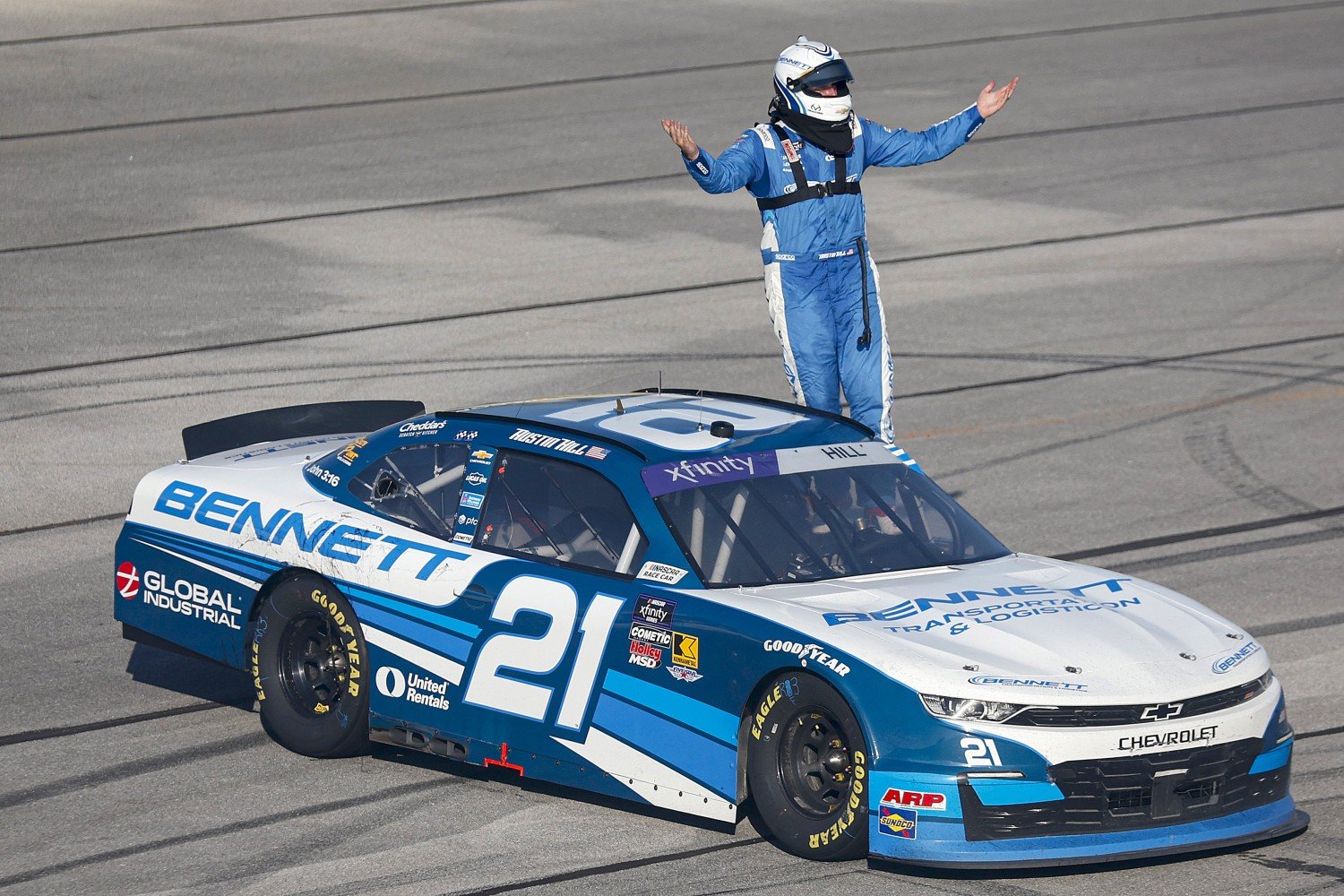
His dominance on drafting-style tracks has even eclipsed records once held by NASCAR Hall of Famers Dale Earnhardt and Tony Stewart.
“We’ve built something special both on and off the track with Bennett Transportation and Logistics,” Hill said in the announcement. “Thank you to Marcia, Lynette and everyone at Bennett Family of Companies for their partnership and friendship over the years. It means a lot to have their support, as well as the support of Richard Childress, Danny Lawrence and everyone at Richard Childress Racing and ECR Engines as I continue to grow in my career.”
The partnership with Bennett isn’t just about paint schemes—it’s a strategic alliance. The Georgia-headquartered, woman-owned company (WBENC-certified) has leveraged its NASCAR involvement to boost customer relationships, promote safety culture, recruit drivers, and spark new business growth in trucking, specialized logistics, and more. With over 4,625 drivers/owner-operators and a nationwide network, Bennett sees the No. 21 program as a rolling showcase of teamwork and performance.
Lynette Mathis, vice president of Bennett Family of Companies, echoed the enthusiasm:
“We are proud to continue our partnership with Richard Childress Racing and Austin Hill in 2026. Bennett customers, drivers, agents and employees continue to find value in the relationship. We love watching the No. 21 Bennett Transportation & Logistics Chevrolet on the track and seeing the sense of community it creates within our company. Our partnership with RCR and Austin Hill continues to reflect the teamwork, performance and professionalism that define success in both racing and transportation and complex logistics.”
RCR president Mike Verlander highlighted the shared values driving the long-term commitment:
“The Bennett Family of Companies’ long-standing partnership with Richard Childress Racing is a testament to our shared core values and we are thrilled to welcome them back to the No. 21 team for their fifth consecutive year of partnership. Bennett has done an exceptional job integrating our racing program into their broader business strategy. We look forward to continuing the momentum we have built over the last four years.”
With Hill confirmed alongside defending series champion Jesse Love in the No. 2 Chevrolet, RCR’s O’Reilly Auto Parts Series lineup remains unchanged heading into 2026—no driver swaps needed after a strong showing last season. In the Cup Series, veterans Austin Dillon (No. 3) and Kyle Busch (No. 8) round out a stable team ready to chase more checkered flags.
The green flag for the 2026 season drops soon: The United Rentals 300 at Daytona International Speedway kicks things off on Saturday, February 14, airing live on The CW Network at 5 p.m. ET. For Hill and the No. 21 squad, it’s another shot at turning strong momentum into that elusive series championship—backed by a sponsor and team that believe in the driver and the dream. Stay tuned; the road to Victory Lane looks promising.
Motorsports
ARCA Menards Series at Daytona International Speedway: Austin Green Leads Day Two of Daytona Pre-Race Practice – Speedway Digest

Former ARCA Menards Series winner Austin Green (No. 82 PRG Chevrolet) led the way on the second and final day of the ARCA Menards Series annual pre-race practice at Daytona International Speedway. Green timed in at 49.202 seconds/182.919 miles per hour.
Green’s lap was just 0.002 seconds quicker than reigning ASA STARS National Tour super late model champion Cole Butcher (No. 30 Rette Jones Racing Ford). Butcher’s lap of 49.204 seconds/182.912 miles per hour was just in front of the Kitzmiller duo, reigning ARCA Menards Series East champion Isaac (No. 79 A.L.L. Construction / Carter CAT Chevrolet), and his father Jason (No. 97 A.L.L. Construction / Carter CAT Chevrolet). Isaac timed in at 49.217 seconds/182.864 miles per hour in his first-ever laps in the draft, while Jason was just behind at 49.230 seconds/182.815 miles per hour.
NASCAR Craftsman Truck Series regular Gio Ruggiero (No. 18 JBL Toyota) was fifth quickest on Saturday at 49.261 seconds/182.700 miles per hour.
Mini Tyrell (No. 17 Cook Racing Technologies Chevrolet), Taylor Reimer (No. 77 Spire Motorsports Chevrolet), Carson Brown (No. 82B PRG Chevrolet), Nolan Wilson (No. 69 Kimmel Racing Ford) and his teammate Alli Owens (No. 69 Kimmel Racing Ford) rounded out Saturday’s top ten.
Gus Dean (No. 25 Nitro Motorsports Toyota) set the fastest lap of the weekend on Friday, running in a tight six-car draft with his teammates at the end of the day. Dean’s lap at 48.744 seconds/184.638 miles per hour was nearly a half-second quicker than the lap Green turned on Saturday. The top seven speeds of the weekend were set on Friday, with the remainder of the weekend’s top ten speeds turned on Saturday.
Saturday’s activities were only slowed for track inspections and debris, but Friday’s action was stopped twice for accidents on the racetrack. The first was for Amber Balcaen (No. 24 Sigma Performance Services Ford), who spun exiting the tri-oval after debris punctured her left rear tire. Balcaen’s car had heavy nose damage and was done for the weekend, although she did return to the track in the backup car. The second incident on Friday happened exiting turn two when Bob Martin (No. 52 Martin Racing Toyota) lost control and made slight contact with the outside wall, damaging the left rear of the car. Martin was also uninjured in the crash.
The 2026 ARCA Menards Series season revs into action on Saturday, February 14 with the 64th annual Daytona ARCA 200 at Daytona International Speedway. The race will be televised live on FOX starting at noon ET; the race will also be broadcast live on SiriusXM NASCAR Radio Channel 90 and on select MRN Radio affiliates nationwide.
For live Timing & Scoring data for all on-track activity, please visit ARCARacing.com; follow @ARCA_Racing on X (formerly Twitter) for up-to-the-minute updates.
ARCA PR

With just over a month to go until the NASCAR O’Reilly’s Auto Parts Series gets underway in Florida with the United Rentals 300 at Daytona International Speedway, Richard Childress Racing has confirmed that 2023 regular season champion Austin Hill is back.
The 31-year-old will return behind the wheel of the No. 21 Chevrolet for a fifth season in a row in search of the team’s seventh championship, while he’ll also be looking to add to his 14 series wins to date.
Furthermore, the team’s announcement also added that Bennett Transportation & Logistics would be returning as a part of its multi-year partnership to serve as Hill’s anchor primary sponsor.
“We’ve built something special both on and off the track with Bennett Transportation and Logistics,” Hill said. “Thank you to Marcia, Lynette and everyone at Bennett Family of Companies for their partnership and friendship over the years.
“It means a lot to have their support, as well as the support of Richard Childress, Danny Lawrence and everyone at Richard Childress Racing and ECR Engines as I continue to grow in my career.”
Sign up to our NASCAR newsletter here.
RCR president Mike Verlander also released a statement, saying, “The Bennett Family of Companies’ long-standing partnership with Richard Childress Racing is a testament to our shared core values and we are thrilled to welcome them back to the No. 21 team for their fifth consecutive year of partnership.
“Bennett has done an exceptional job integrating our racing program into their broader business strategy. We look forward to continuing the momentum we have built over the last four years.”
Hill will be hoping to continue his impressive winning streak in 2026, having recorded at least two victories in each of his last four seasons, never finishing lower than sixth in the driver standings after going full-time.
A championship, however, continues to elude him, having come closest in 2024 when he finished fourth, while JR Motorsports’ Justin Allgaier took the silverware.
Last season, despite Hill’s four wins, including two at Talladega Superspeedway, he failed to make the final four, where teammate Jesse Love pulled off a shocking upset to beat JRM’s Connor Zilisch to the title. This came after Zilisch had won 10 races in what was just his first full-time season, while Love was credited with two wins, including the finale at Phoenix Raceway.
With both Love and Hill now confirmed as RCR’s representatives in the O’Reilly’s Series for 2026, it means that, along with Austin Dillon and Kyle Busch in the Cup Series, the team has not made any driver swaps this offseason.
The latter two are set to return behind the wheel sooner than their RCR compatriots, with the non-points scoring Cook Out Clash at Bowman Gray Stadium set to kick off the Cup Series season on February 1. Barring any as yet unconfirmed changes, Zilisch will make his Trackhouse Racing debut at “The Madhouse” as he makes the move to full-time Cup Series racing.

A marvel of modern drivetrain engineering, TREMEC’s TR-9070 DCT pairs with the 760-horsepower Predator engine in the 2020-2022 Shelby GT500 to deliver an incredible driving experience. Blindingly fast shifts and ample torque capacity make the TR-9070 a standout, but the factory transmission cooler hard lines and seals don’t always hold up their end of the bargain. Leaks, sealing issues, and cracked factory lines can rain on your performance parade.
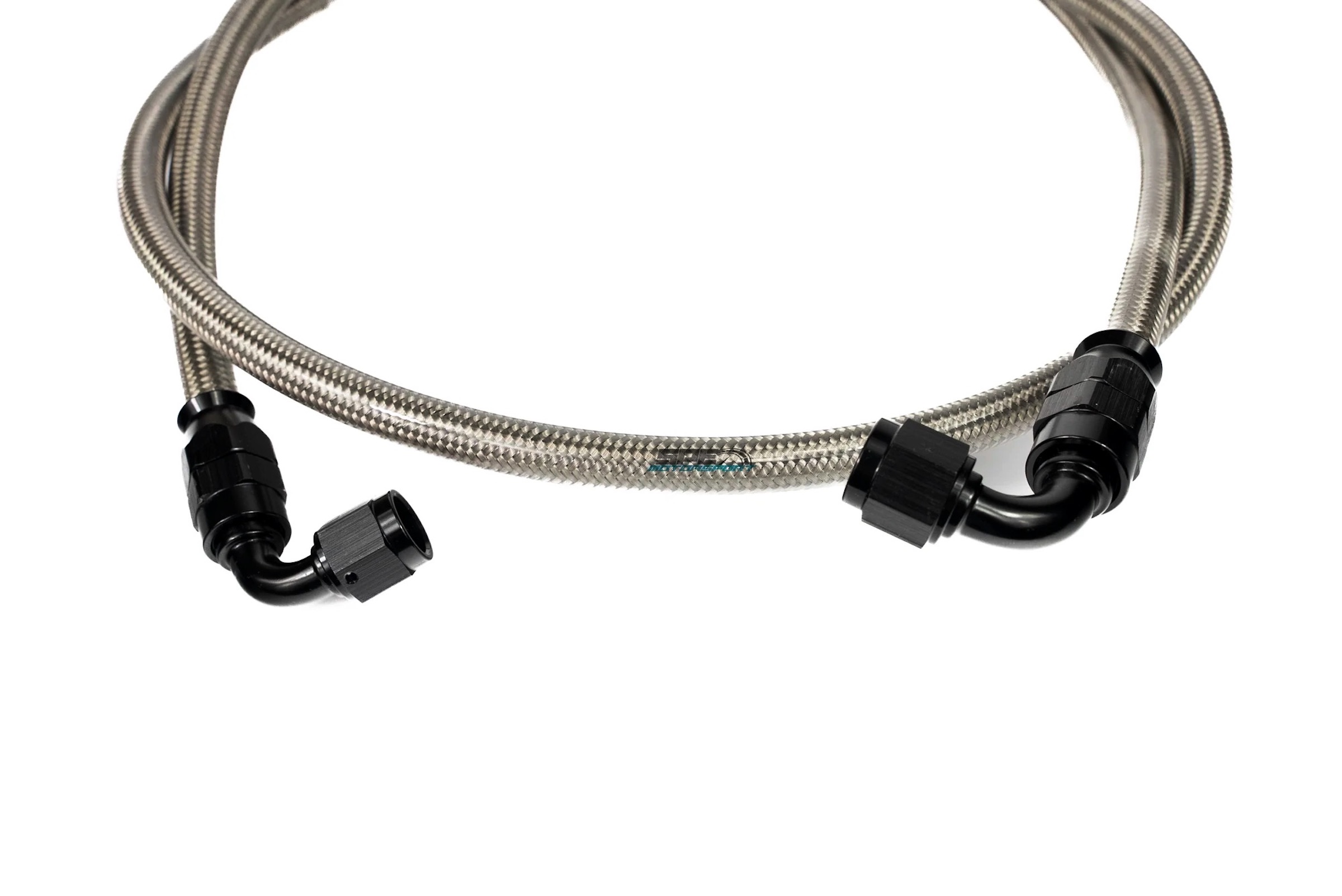
To ensure that you can enjoy all the performance that the Blue Oval intended, SPE Motorsport developed a complete replacement that eliminates the factory problem areas. The company’s 2020+ GT500 DCT Cooler Line Kit (P/N SPE-P100136; $399.99) is a true end-to-end solution, replacing the OEM hard lines with a direct-replacement upgrade that installs without cutting, adapting, or relying on compression fittings.
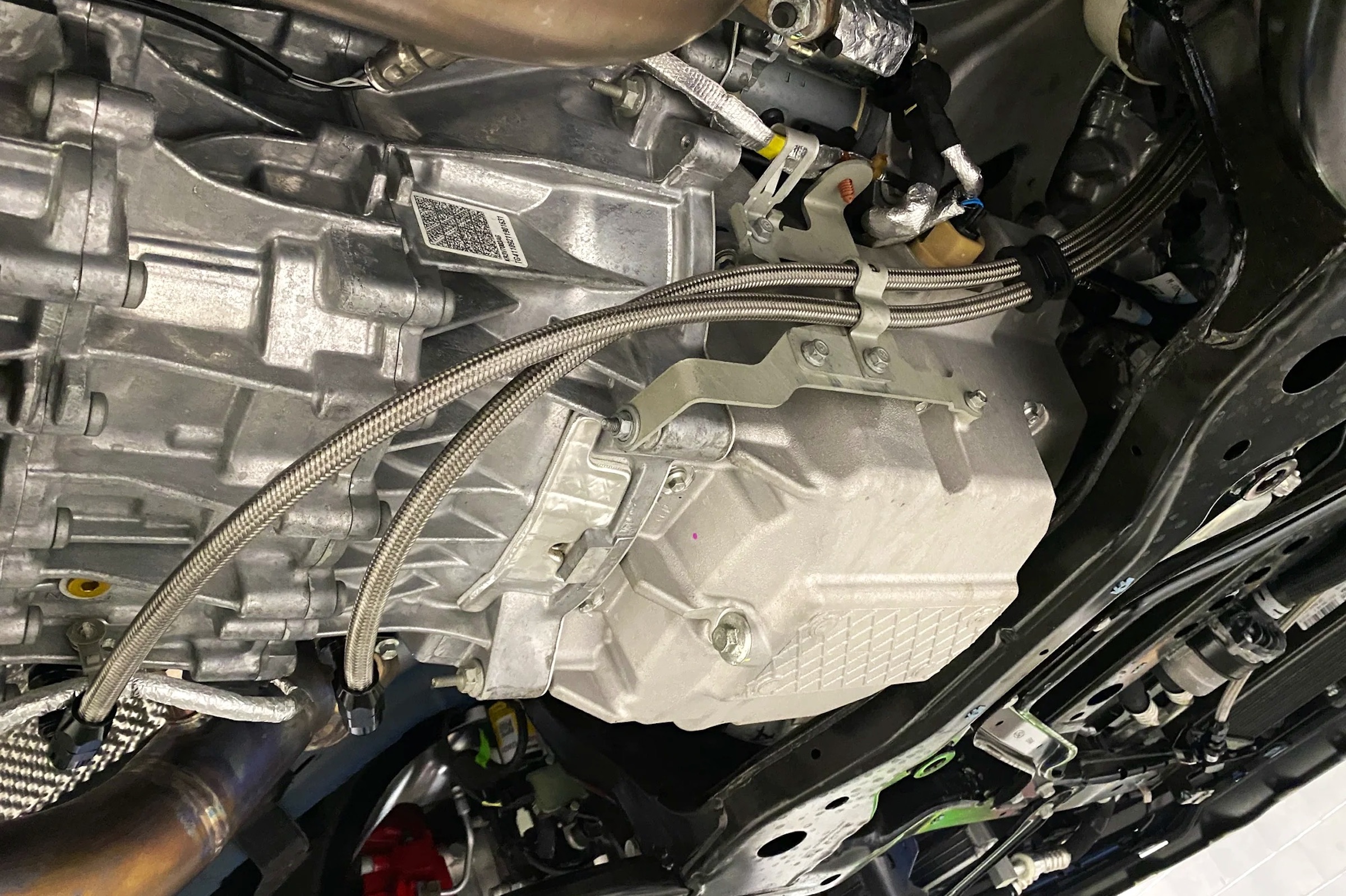
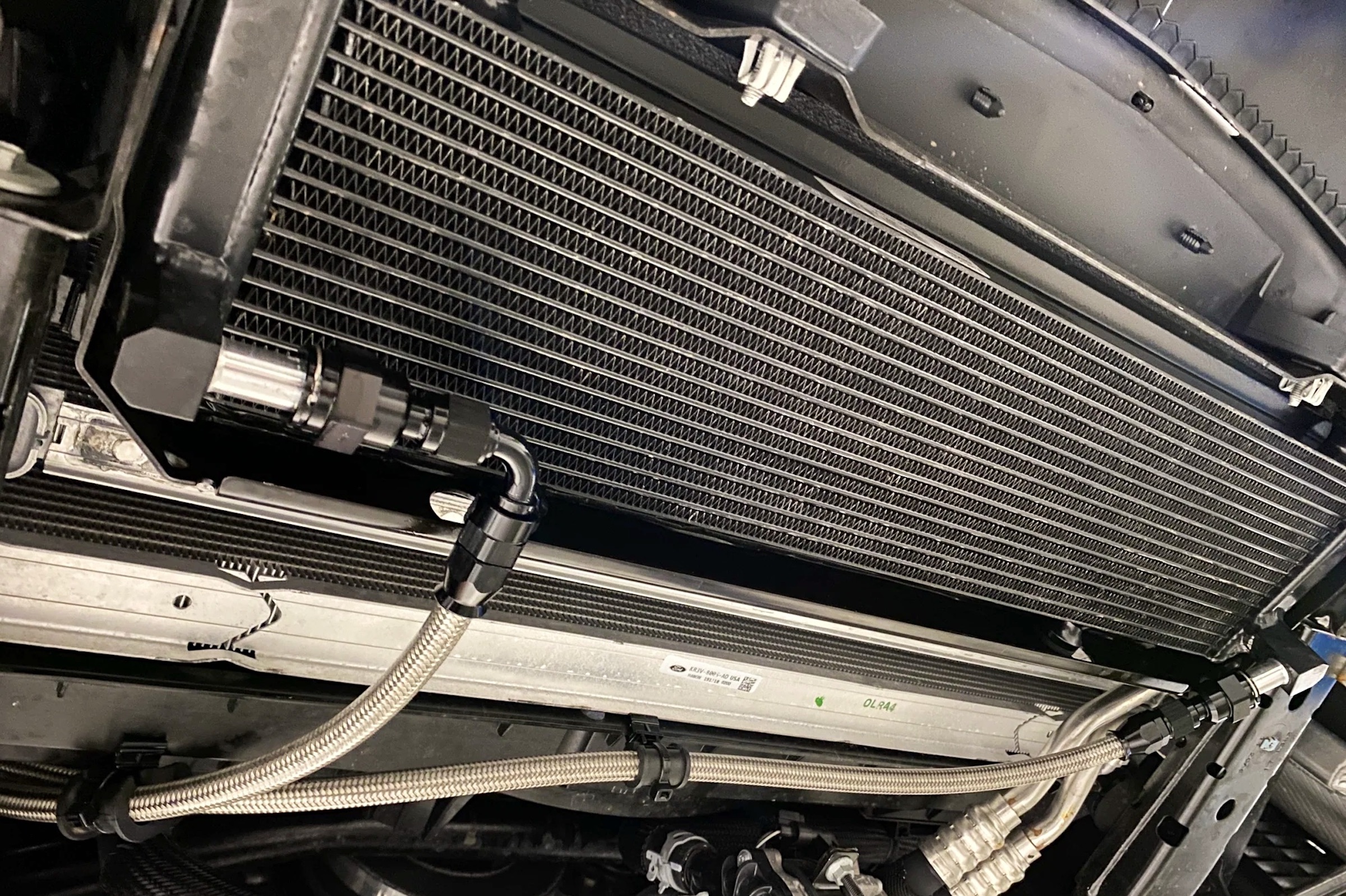
Billet T6 aluminum adapter fittings with O-ringed quick disconnects provide a precise seal without cutting or modifying factory components. The 100-percent bolt-on design eliminates compression fittings, delivering a complete fix for the factory GT500 DCT cooler lines that are prone to failure. (Photo Credit: SPE Motorsport)
The kit utilizes T6 billet aluminum, anodized adapter fittings that are paired with O-ringed quick-disconnects to deliver a precise, repeatable seal. Stainless braided lines with a clear PVC jacket improve durability and remain flexible for clean, straightforward routing. Each hose is pre-made to the correct length with fittings already installed, which makes installation easy.
By retaining compatibility with factory-style seals while addressing the known weaknesses of the OEM line design, the SPE kit resolves the full range of cooler line failures in a single upgrade. Whether the car is driven hard or just hard parked, the result is improved reliability and peace of mind.

No. 1 transfer portal defender set to visit fourth college football program

Intramurals | Calvin University

Mark Cuban reveals message to Indiana after donating to football program

Building their future, one brick at a time | News, Sports, Jobs

Men’s Volleyball vs UBCO on 1/9/2026 – Box Score

HS ROUNDUP: Schimelfenig leads West past Scranton in City Rivalry game | Football

Eagles fall short against Pioneers on “Bubba’s Youth Day” | Sports

Commodore Success Continues Saturday – Vanderbilt University Athletics – Official Athletics Website

Penn State Men’s Volleyball Beats Mount Olive 3-1 In Season Opener

Bobcats boys basketball bags 2026 opener by 17

South Carolina Dominates in Home Opener – University of South Carolina Athletics

Weird and funky: No. 8 BYU men’s volleyball sweeps Saint Francis to open season | News, Sports, Jobs

Former 5-star prospect linked to four major college football programs

ZAJDEL EARNS 1ST PLACE AS MEN’S AND WOMEN’S INDOOR TRACK & FIELD CONCLUDE SOUTHERN TIER INVITE

Men’s Volleyball Sweeps Vanguard For First Win Of The 2026 Season

#11 Volleyball Practices, Then Meets Media Prior to #2 Kentucky Match

Stempien to seek opening for Branch County Circuit Court Judge | WTVB | 1590 AM · 95.5 FM

Ross Brawn to receive Autosport Gold Medal Award at 2026 Autosport Awards, Honouring a Lifetime Shaping Modern F1

Maine wraps up Fall Semester with a win in Black Bear Invitational

Nascar legal saga ends as 23XI, Front Row secure settlement

Princeton Area Community Foundation awards more than $1.3 million to 40 local nonprofits ⋆ Princeton, NJ local news %

Downtown Athletic Club of Hawaiʻi gives $300K to Boost the ’Bows NIL fund

Sunoco to sponsor No. 8 Ganassi Honda IndyCar in multi-year deal

WNBA’s Caitlin Clark, Angel Reese and Paige Bueckers in NC, making debut for national team at USA camp at Duke

Badgers news: Wisconsin lands 2nd commitment from transfer portal

Nike Signs 10 LSU Athletes to NIL deals

Five Youth Sports Trends We’re Watching in 2026

Three Clarkson Volleyball Players Named to CSC Academic All-District List

Beach Volleyball Unveils 2026 Spring Schedule – University of South Carolina Athletics

Kentucky AD explains NIL, JMI partnership and cap rules





-
 Sports3 weeks ago
Badgers news: Wisconsin lands 2nd commitment from transfer portal
-
 Rec Sports1 week ago
Five Youth Sports Trends We’re Watching in 2026
-
 Sports2 weeks ago
Kentucky VB adds an All-American honorable mention, loses Brooke Bultema to portal
-
 Motorsports3 weeks ago
Dr. Patrick Staropoli Lands Full-Time O’Reilly Ride with Big Machine Racing
-

 Rec Sports3 weeks ago
NBA, Global Basketball Community Unite for World Basketball Day Celebration
-
 Sports2 weeks ago
2025 Volleyball Player of the Year: Witherow makes big impact on Central program | Nvdaily
-
 Motorsports2 weeks ago
BangShift.com IHRA Acquires Historic Memphis Motorsports Park In Millington Tennessee. Big Race Weekend’s Planned For 2026!
-
 Sports2 weeks ago
Colorado volleyball poised to repeat success
-
 Motorsports3 weeks ago
NJ Motorsports Park Announces 2026 Event Schedule
-

 NIL3 weeks ago
Insider Reveals Biggest Reason Behind Colorado’s Transfer Portal Mass Exodus