
Motorsports
From Winner to Champion, Part 3: Championship Metal

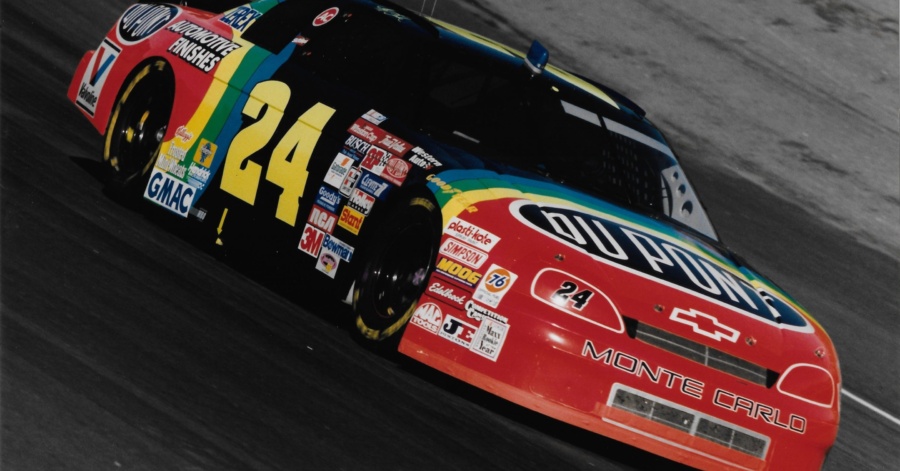
Editor’s note: This is the third installment in a seven-part series celebrating the 30th anniversary of Jeff Gordon’s first NASCAR Cup Series championship and the first for Hendrick Motorsports in 1995. Join us each Thursday as we relive all the moments and talk to many of the players involved in one of the organization’s and the sport’s most unforgettable and important seasons.
For Jon.
CONCORD, N.C. – Throughout the fall and winter of 1994 and into the early parts of 1995, Chad Knaus spent much of his time in Detroit … living like a vampire.
And he was far from alone.
It was all part of an intensive, collaborative effort that brought Chevrolet teams in NASCAR as well as engineers and professionals from General Motors together for a common cause. Knaus, then a fabricator and tire changer on Jeff Gordon’s No. 24 Hendrick Motorsports team, was very hands on in the development of what would turn out to be one of the most successful race cars in the sport’s history: the Generation 4 Chevy Monte Carlo, which would replace the Lumina after the 1994 season.
“I can remember testing, going to the wind tunnel so many times that offseason that I didn’t think the sun ever came up in Detroit,” Knaus said. “Every time I went to Detroit it was cold and snowy and gray and then we would go in and have a 12-hour shift in the wind tunnel, we would arrive when it was dark and leave when it was dark. It was something else. A tremendous amount of work was put into that program that year.”
In the mid-1990s, wind tunnels were fewer and far between than present day. And though GM housed one, research and development for its passenger cars took priority over the racing side, relegating work on racing to any and all time slots that were left over.
Affectionately coined, ‘the zero shift,’ often those hours were from midnight until 8 a.m. Sometimes, there were 16-hour shifts. If there was a waking moment to be had, the group took it.
“One of the most important things to ask in the wind tunnel was, ‘What does everyone like on their pizza?'” recalled Dwight Woodbridge, aerodynamics manager at GM at the time.

Don Taylor, group manager for Chevrolet Racing at the time, also recalled the logistical challenges facing teams that made the journey to Michigan.
“The production car people would commandeer it for the daytime, and we would get the nightshift. Those guys would pile in the truck and come up and get here at nine or 10 at night, so, it was already dark in Detroit and there’d be snow on the ground and they had light jackets if anything,” Taylor said. “I remember they had these little, thin-sole leather shoes, which didn’t do too well in six inches of snow. They thought it would be warmer in the wind tunnel. It wasn’t.”
Cold and tired, yes. But determined, to be sure. And what’s a little adversity in the face of discovery?
The 1995 Chevy Monte Carlo was so many things all at once. Perhaps the pinnacle of manufacture and race team cooperation, the car also signaled the beginning of an end of an era in car building as well. In the years and generations that would follow, cars would become more and more uniform with NASCAR regulations growing ever stricter.
Perhaps part of the reason for those reductions in gray area from stock car racing’s governing body in the years that followed was the success the Gen 4 Monte Carlo would accumulate almost right away.
Undoubtedly, Gordon and the No. 24 team with Ray Evernham atop the pit box was at the forefront of the coming Chevy onslaught.
“That was one of the finest stock cars ever built,” Evernham summarized. “It was the last stock car to ever fit the templates properly and the Hendrick group go out ahead of it. We felt like we were ready to go head-to-head with the best.”
FROM WINNER TO CHAMPION, PART 1: ‘One Hot Night’
Meetings of the minds
In part two of this series, drivers, crew chiefs and others long involved in NASCAR commented on the hesitance of individual race teams to conform to the constructs of team racing.
And if teammates under a shared organizational umbrella had trouble cooperating, cars connected only by a manufacturer’s emblem on the grill were near mortal enemies.
Yet, like it or not, the development of the Chevy Monte Carlo was one catalyst that began to turn the tide of teamwork as team representatives were thrust together inside boardrooms for long periods of time. It was a process, however, that wasn’t without its own growing pains.
“The teams were all operating independently and so, we would pull them together in one room and they’d look at each other like, ‘This is not my friend here,’” Taylor recalled.
“It was another jumping off point for a lot of teams because none of the teams really shared much with each other,” echoed Andy Petree, crew chief for the No. 3 Richard Childress Racing Chevrolet driven by Dale Earnhardt. “Even though they were a Chevy team, they were the enemy. But we had to start doing some developing together. We’d go to the wind tunnel and invite other teams and we’d all take some knowledge from that wind tunnel session.”
Petree and all involved realized there was a bigger picture to keep focused on, one worth setting competitive squabbles and on-track incidents aside. At least for a while.
FROM WINNER TO CHAMPION, PART 2: Championship Material

The objective was clear: build the fastest, best race car possible through a collaborative effort among all the Chevrolet race teams and the best and brightest engineers at GM.
Seems simple enough.
Luckily, the teams were given quite a head start as the production Monte Carlo was a much closer resemblance to a race car than its predecessor, the Lumina.
“The Lumina was never intended to be a race car, it was all we had,” said Herb Fishel, executive director of GM racing at the time. “If you just sit and look at the Lumina vs. the Monte Carlo, the Monte Carlo is a pretty sporty looking car. The idea of racing a car and having something in the show room that resembled it, that idea had germinated with our design staff years before it ever became a car in 1995.”
Yet, there were plenty of challenges facing the group as it looked to take an albeit, “sporty” production Monte Carlo and create a Cup Series winning race car from it, specifically harnessing the latest advances in aerodynamics. The biggest of which being the idea of just how married to the showroom vehicle stock cars still had to be.
The landscape was changing and the team sensed it.
“It was probably the end of an era,” Fishel said. “Everything that came after that was highly modified. By then, the legitimacy of the term, ‘stock car’ had been diminishing for years and I think the story really ended as far as that terminology goes with the ’95 Monte Carlo. It was the last variation of a believable stock car from what you bought in the show room versus what you saw on the race track.
“We were just a good team. We had a lot of smart guys. Racing at that time was becoming a collaborative thing and we were good at that.”
RELATED: Driver averages for Nashville Superspeedway
‘Renegades and bottom feeders’
By the time 1994 rolled around, Terry Laise had been with GM for over two decades and played an integral part in bringing several iterations of Chevrolet race cars to life including the Monte Carlo SS in the early 1980s.
Responsible for aerodynamics on the ’95 Monte Carlo, Laise had a pretty simple view of what teams were looking for out of a new race car.
“We wanted the best lift/drag ratio you could come up with, meaning that it would be fast and still go around the corners,” Laise explained. “We wanted to have the ability to maximize the downforce at the expense of drag, in some instances.”
With the production car set and clear goals in mind for the race car, the real work began.
“On a race car, time is a lot shorter than on production cars. You’ve got a year maybe at most but back in Detroit, it’s a little longer because you know what you’re coming out with whether it’s a new Monte Carlo, new Lumina, whatever,” Woodbridge explained. “We would get clay molds going before teams had seen anything. We had a couple of guys that were magicians in terms of working with clay and getting shapes right. Once you’ve got that process figured out, you take it to the teams and say, ‘OK, we need to start doing this.'”
According to Petree, that’s where RCR came in.
| 1995 Chevrolet Monte Carlo specs | |
|---|---|
| Wheelbase: | 110 inches |
| Length: | 205 inches |
| Width: | 64 inches |
| Height: | 51 inches |
| Track: | 60 inches |
| Ground clearance: | 3.5 inches |
| Weight: | 3,400 lbs |
| Distribution: | 52% front, 48% rear |
| Braces and cage: | Round tube |
| Front suspension: | Independent A-arm |
| Rear suspension: | Full floating axle and hub |
| Steering: | Power heavy-duty worm and pinion |
| Brakes: | Four-wheel disc |
| Wheels: | 9.5×15 inches |
| Tires: | 12×15 inches |
| Engine type: | Chevrolet V-8 |
| Displacement: | 358 cubic inches |
| Compression: | 14:1 |
| Carburetion: | 750 cfm 4-barrel Holley |
| Horsepower: | 700 @ 8,000 rpm |
| Torque: | 520 lbs @ 6,200 rpm |
| Transmission type: | 4-speed GM manual |
| Fuel capacity: | 22 gallons |
| Oil system: | 16 quarts |
| Cooling system: | 14 quarts |
RELATED: Highlights from Hendrick Motorsports Fan Fest
“At RCR we were tapped by GM to build the first one,” Petree recalled. “The way that process went, the streetcar version of a Monte Carlo, we were able to get full-size print of the profiles of the car and cut accurate templates off of them. We got all the body panels and started putting it together.
“Basically, on the bumpers, we fabricated a valance on it. They’d make the fenders and the deck lid stock, but the rear bumper had to be shaped with taillights. We got the whole thing finished and rolled it out there and took it from there to be scanned in Detroit. Then a scale, wind tunnel model was made from that scan. That wind tunnel model is still in my shop.”
Long before the ensuing hours, days, weeks and months spent in Detroit, the group had a clear vision on certain features of the car in order optimize it aerodynamically. And in conjunction with the cooperation fostered throughout the process, even the production side made concessions along the way, according to Taylor.
“We got together with the styling group early in the development of this car and we said, ‘One of the features we’d like was this squared-off, rear edge of the bumper – a vertical square edge,’ and they actually put it into production,” Taylor said. “And there were some changes on the roof, so they contributed directly to the success of the car.”
“The production car we started with was good aerodynamically. So, it was easy to do the thing you had to do that we knew from previous cars,” Laise expanded. “We learned a lot of the things we needed to know from the earlier Monte Carlo and the Lumina. They understood what was needed from the very beginning.”
RELATED: NASCAR Cup Series points standings after Charlotte

From there, the grind commenced, sleepless nights in the wind tunnel with every sheet metal curvature, hard corner and indentation under the magnifying glass.
Adjustments would be made, tested in the wind tunnel, tweaked again, tested again and eventually, taken to the GM Proving Grounds facility in Mesa, Arizona to be put to the test in real conditions.
“The policy at that time was that none of that was supposed to be happening,” Fishel said. “GM operated under secrecy and those sessions were clandestine because of policy. Overall, at the company, the priority was production work and production cars. The racing group, we were kind of renegades and bottom feeders in a sense. Whenever the time window came up, it didn’t matter whether it was in Mesa or the GM wind tunnel, we took the spot. If it was two in the morning, that’s when the team would show up with the car and that’s when we used it.”
Hours and days ran together, but the labor was bearing fruit. Knaus recalled a test session at Texas World Speedway, a now-defunct 2-mile oval in College Station, Texas, that served as a key catalyst toward the build of future-race-winning Monte Carlos in the No. 24 stable.
“We tested there and it was really fast,” Knaus said. “We went to that test and that car had skull and crossbones on the hood, which was really cool. And yeah, we ended up building some really good cars.”
One of those is the famed Hendrick Motorsports chassis No. 2411, affectionately known as, “Blacker”. The car would become the most successful Chevy to ever run under the Hendrick Motorsports banner with Gordon driving it to victory lane 12 times from 1995-1999. It’s now on display in the NASCAR Hall of Fame.

“That car was an aerodynamic step change for us,” Knaus said. “We needed something new from the Lumina and we were pushing further forward and were able to get it.”
Yet, the process wasn’t without its hiccups.
“I can’t remember which team, but we had the full-length template for the car and we fired up the wind tunnel and the template went flying down the tunnel and it just made a mess,” Woodbridge laughed. “It’s kind of one of those things you always remember. It was, ‘Oh my god, we just broke the wind tunnel.’ It was a $20,000 mistake.”
At times, the process was slow and laborious. Crew chiefs and teams would provide feedback from test sessions and GM engineers would go back to the drawing board, making minor modifications and then call a meeting of the minds in Detroit to consider feedback and offer updates.
And near the forefront of it all was Evernham, a crew chief who would reach rarified air over the back half of the decade, largely with outside-the-box thinking and methodology as well a relentless pursuit of perfection.
Obviously, the days weren’t always fun. Some were long, others seemed never ending. But the aura of teamwork guided the group through, and small gestures went a long way to ensure that spirit remained.
“I will say, Ray is a very particular guy, but the thing that’s so cool about Ray, is sometime later you’d get a piece of mail, and it was a, ‘Thank You’ card from him for doing some test and that always meant a ton,” Woodbridge said. “When I got one, when anybody else got them, the guys would always remember that.”
RELATED: Highlights of Coca-Cola 600 weekend
Rick Hendrick makes his pitch
Between General Motors and the personnel involved from Chevrolet NASCAR teams, there was no shortage of engineering knowledge and technical acumen when it came to building the 1995 Chevrolet Monte Carlo.
But all of that research and building would have been for naught if NASCAR had not signed off on it. One of the things those interviewed for this story romanticized about the most was the relative freedom, or wiggle room, there was within the rules at that time. There was some creativity allowed.
“That was an era when divisions were allowed to develop cars, so, NASCAR was not so involved in stipulating everything, designing everything, engineering everything and there was freedom for Ford, Chevy, Dodge and others,” Fishel said. “It was up to the engineers and ingenuity to build the best car and bring it to the track.”
Yet, Bill France Jr., NASCAR chief executive officer at the time, as well as Gary Nelson, director of the then-Winston-Cup Series and newly hired chief operating officer, Mike Helton, were still determined to keep as level of a playing field as possible in the interest of competition. Anything the GM group came up with had to stay within the rules, passing the sniff test of NASCAR’s brass.
RELATED: No. 5 team drops in on Kyle Larson during Carb Day at Indianapolis

“You had to look at the rules and put together a car that met the rules and you had to work in between the rules,” Laise said. “Back in those days, there was a lot more working in between the rules than there is today.
“My recollection is, we selected Hendrick Motorsports as the team to build our submission car. We built a car and we would submit it to NASCAR and say, ‘This is what we want,’ and they’d make the judgment on whether or not they were willing to accept it.”
“There were a lot of discussions with NASCAR,” Woodbridge added. “You’d say, ‘OK, this is what we want to do. What are the procedures to get this thing through the wind tunnel without upsetting them too much?’ There is no question that would happen. You would just try to pick your battles.”
All remembered a particular battle, one that involved the Monte Carlo’s rear fascia.
“The rear bumper, the fascia, that was improved on the car, and it was something we knew from the wind tunnel that the wider and squarer it was, even departing from production, the better off we would be,” Taylor said.
There was no doubt to the team that the rear fascia, one that performed supremely in terms of aerodynamics, was a sticking point. It was nonnegotiable.
But when it came time to convince NASCAR, well, that’s when one of the world’s best businessmen stepped up with an idea that quickly came to the minds of all that were there. Even if a few of the details may vary.
RELATED: Check out all of Hendrick Motorsports’ Pit Crew Week content!
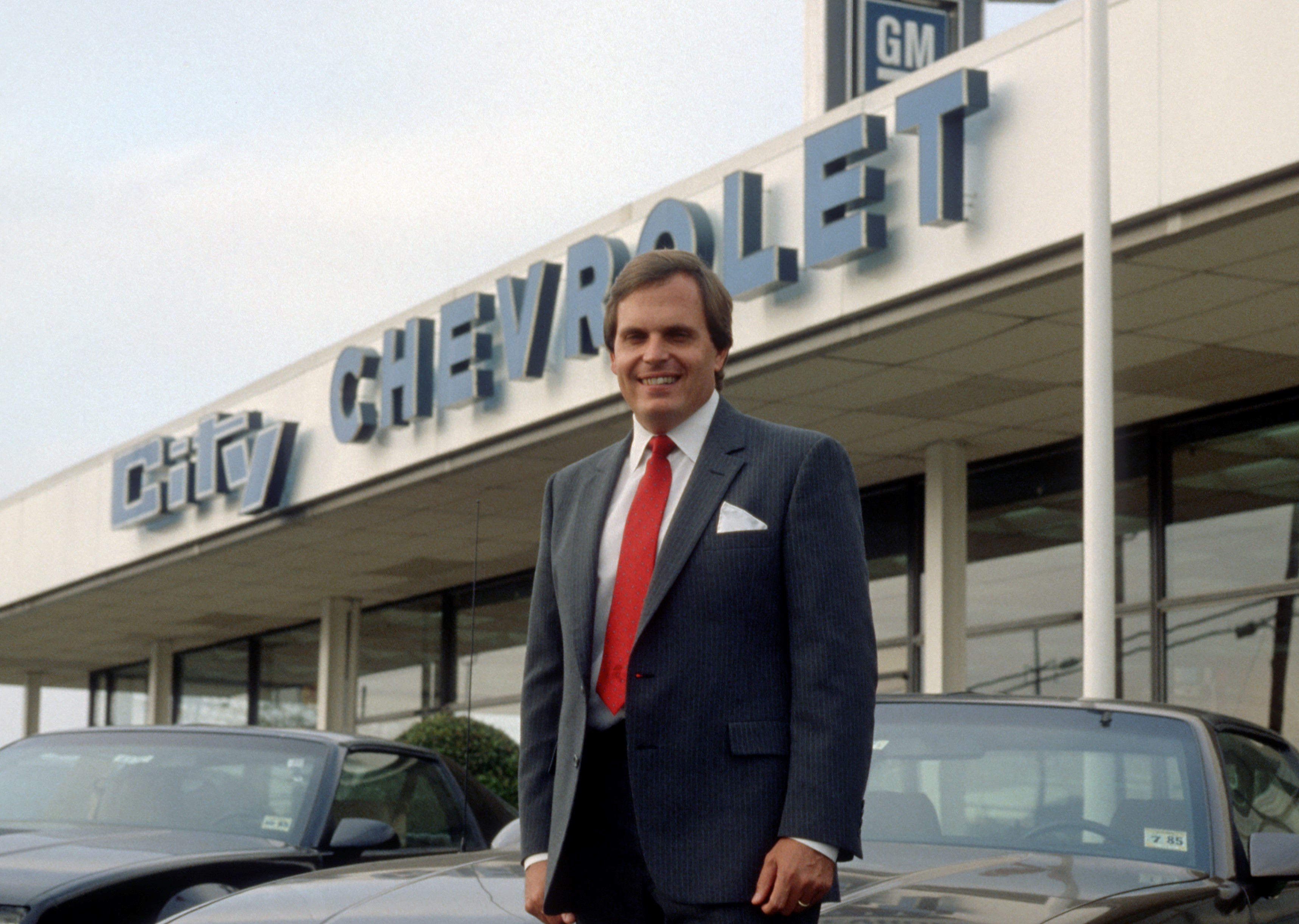
“And so, we had NASCAR come here to one of the Hendrick garages, I believe,” Taylor said. “So, Bill France Jr. came in there and Mike Helton and Gary Nelson, they came in there and we had the car, and we had two different rear ends molded up to fit on the car. We had a less aggressive one and a really aggressive one and it was the less aggressive one that we really wanted.
“So, Rick Hendrick said, ‘Put the real aggressive one on there. Show that to NASCAR.’ Of course, NASCAR sees it and says, ‘Woah, that’s too much.’ And he said, ‘Well, I guess we could do with this other one over here,’ which is obviously the one we really wanted. And they agreed as a ‘compromise.’ Rick being the salesman he is, sold them on the rear bumper fascia that we wanted all along.”
While his salesmanship was a key piece to the puzzle, and the overall success of that race car would finally help lead Hendrick Motorsports to a championship breakthrough after 11 years in NASCAR, its development still wasn’t the most important thing to him. The most meaningful thing to Hendrick was the group of people involved.
Those who sacrificed time and dedicated themselves to the creation of a car that would change the sport forever.
“The car was part of it, but it always came down to the people,” Hendrick said. “Our group poured themselves into learning that car. There wasn’t a magic trick. It was just a relentless effort from everyone to get better. That mindset is what made the difference, not just the sheet metal.”
‘Hit the track running’: 1995 and beyond
Thirty years later, the Chevrolet Monte Carlo developed ahead of the 1995 season stands as a testament of human collaboration, ingenuity and drive. Its success was immediate and overwhelming.
The car looked incredible. It drove even better.
“Overall, that was the most excellent car we did,” Laise said. “Just everything came out right.”
Counting the Clash and both Daytona Duels, a Chevrolet went to victory lane in each of the first 10 races of 1995. It would go on to win 21 of 31 races that season and from 1995-1998, the Monte Carlo won 66 of 128 Cup Series events and all four championships, three for Gordon, one for Labonte (1996).
Unsurprisingly, the car was met with rave reviews by Chevy drivers.

“I remember that was one of the best cars that I think we’d ever had or that Chevy ever had,” Labonte said. “I can remember week after week the Ford guys crying about this and crying about that. I know NASCAR had to make some concessions for Ford.”
Indeed, France Jr. still had a sport to run and facilitating competition only improved the product. And obviously, the going wasn’t nearly as easy or as fun on the Ford side of things in the early part of that year.
“Sure, we were out there, campaigning for our camp but it was clearly a great race car,” said Mark Martin, driver of the No. 6 Ford at the time. “It was frustrating for us because we felt like Chevrolet did that car to be a race car. That’s how we felt and that’s what it looked like. Ford was not engaged enough in motorsports to do something like that. To shape the Thunderbird into being a better race car. You had to give props to GM and Chevrolet for doing that but also had to remember that they had pretty incredible teams with Gordon and Ray coming of age and of course with Earnhardt and Childress.”
Laise shared a story of a particular such meeting with France as concessions were gradually made.
“At Atlanta that year, on Saturday evening, I was watching final practice on top of Richard Childress’ trailer,” Laise said. “Gary Nelson came to the bottom of the trailer and said, ‘Mr. France asked me to drive you to the hotel, he wants to talk to you.’ And that was unheard of.
“But he explained to me that the sport couldn’t withstand Ford not being competitive and he was approving changes for the Ford. And it kind of went that way – (Ford) won their share of races the rest of the year and so did (Chevrolet). It was a big change but, whatever. My attitude was always, ‘What is, is,’ and you’ve got to deal with what is.”
To Martin’s point, and what is the overarching theme when it comes to the 1995 season, it was a confluence of factors coming together at the right time to make the year so special and successful for Gordon, Hendrick Motorsports, Chevrolet and the sport itself.
RELATED: Hendrick Motorsports honors fallen soldiers during Coke 600

Three of the first six races of the season went to Gordon, serving as an early and loud warning shot to the rest of the field that just maybe, the No. 24 team had arrived as a championship threat a little before most thought it was ready. Pairing Gordon’s great and rapidly developing talent and Evernham’s cunning, inventiveness and tenacity with a brand new, aerodynamically groundbreaking hot rod was a combination that would rule the sport with an iron fist until the arrival of the new millennium.
“The timing was great for Jeff and this car was just an amazing car at the time,” Fishel said. “If you look at the debut of that particular car versus all the cars after it, particularly the new generation cars, that car hit the track running and had little difficulty … other than NASCAR’s challenge to slow it down.”
Gordon, of course, wasn’t the only beneficiary and with the car surging during an era in which NASCAR was peaking in terms of popularity, the 1995 Monte Carlo has long been imprinted on the minds of fans who’ve been around the sport since.
“Those were classic cars, visually,” Taylor said. “They looked good, they had that smooth front end and smooth surface headlights and they became iconic because teams back then had the same sponsor. The No. 24 rainbow car, the No. 3 car, the No. 5 car with Kellogg’s on the hood, those are iconic.”
The Gen 4 Monte Carlo ushered in an era of change, and the sport has continued its evolution since, with rules packages and regulations becoming stricter and cars across manufacturer lines becoming more and more similar.

And in fairness, there were reasons for that. Safety, especially in the wake of Earnhardt’s fatal crash in the 2001 DAYTONA 500, became the unquestioned priority in car building. Of course, as the years have gone, manufacturers, teams and NASCAR have also become more financially efficient.
“We spent a ton of money doing wind tunnel work and testing using high-tech equipment – we’re to blame for the fact that the sport got so expensive,” Woodbridge said. “We’re to blame for NASCAR coming down and saying, ‘You can’t do this, you can’t do that.’ We were always trying something.
“The lesson is, don’t give a bunch of creative guys free reign to do something.”
RELATED: Jon Edwards honored by FOX with “Byrnsie Award”
But the ’95 Monte Carlo will always serve as a testament to what that kind of creativity and free reign can produce. Woodbridge hopes it will forever be a reminder that the science behind the sport far exceeds any kind of unfair reputation from the outside world.
“There are so many cool memories. I would say that on a per-hour income level, I barely made more than a floor sweeper,” Woodbridge concluded. “But from a pride standpoint and just having a rewarding career in that era and realizing in that era that you’re participating in the fastest growing sport on the planet was just amazing.
“It’s interesting. Some people would say, ‘In NASCAR all they do is go around in circles.’ I don’t think they quite grasp the concept that in the garage, there are more PhDs at one time than anywhere else in the world. There’s a bunch of brilliant people working really hard in that garage to make that show go on.”

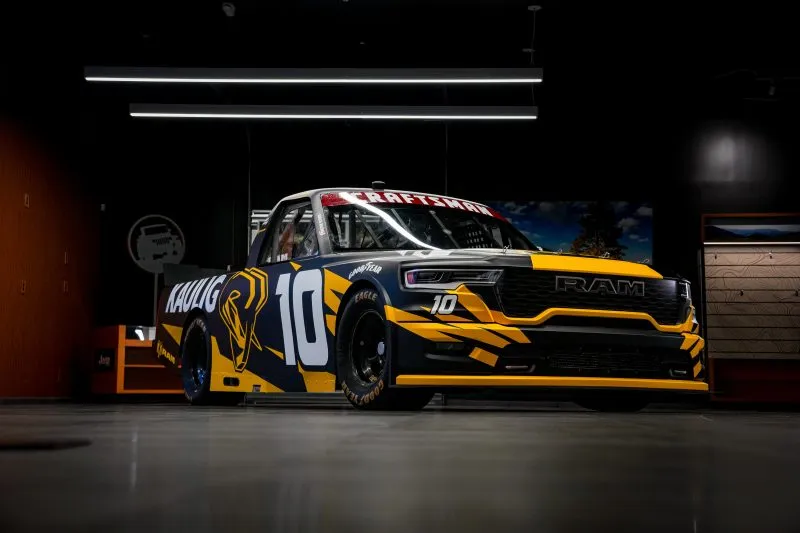
(TestMiles) – I’ve covered racing long enough to know that most people don’t actually understand how drivers get to NASCAR. The mythology says talent rises, sponsors appear, and everything works out. Reality is messier, quieter, and usually dictated by access. That’s why this caught my attention.
Ram isn’t just returning to NASCAR. It’s using entertainment as a scouting tool, a marketing platform, and a filter for something far harder to measure than lap times. Heart. Grit. Composure under pressure. Race For The Seat isn’t about discovering a driver who already made it. It’s about watching someone become one in real time.
That’s worth your time, even if you’ve never watched a full NASCAR Truck Series race.

Why does this matter right now?
Motorsports is at an inflection point. Costs are high, sponsorships are concentrated, and traditional ladders are narrowing. At the same time, audiences are fragmenting. Younger fans don’t discover racing through Sunday broadcasts alone anymore. They find it through clips, personalities, behind-the-scenes access, and stories that feel human rather than institutional.
Ram understands this moment. Instead of simply fielding trucks and hoping fans notice, it’s turning the return to NASCAR into a narrative event. Race For The Seat makes the process visible. Fifteen drivers. One opportunity. Eight episodes. No illusion that the path is easy or fair.
This matters to fans because it restores context. Racing stops being abstract and starts looking like work again. It matters to aspiring drivers because it reframes access. And it matters to brands because it shows how motorsports relevance can be rebuilt without pretending it’s still 1997.

How does it compare to rivals or alternatives?
Other manufacturers return to racing quietly. Press releases, paint schemes, sponsor decks. All necessary. All familiar. What Ram is doing here is different.
Instead of talking about heritage alone, it’s manufacturing relevance through participation. Ford and Chevrolet dominate the Truck Series through continuity. Ram is re-entering by disruption. Not technical disruption on the track, but cultural disruption around it.
Reality competition isn’t new. Racing documentaries aren’t new. What’s unusual is tying an actual factory-backed seat to an open competition and broadcasting the process before the season even begins. This isn’t simulated. The outcome matters. Someone wins. Someone doesn’t.
That’s a sharper hook than most traditional motorsports marketing, and it acknowledges that modern audiences want to see the work, not just the trophy.

Who is this for and who should skip it?
This series isn’t just for diehard NASCAR fans. It’s for people who like competition, pressure, and watching individuals tested in unfamiliar environments. If you enjoy sports documentaries, talent competitions, or behind-the-scenes business storytelling, this fits.
It’s also clearly for Ram’s core audience. Truck owners value toughness, endurance, and function over polish. Race For The Seat leans into that mindset. No glamour shots. No shortcuts. Just people being evaluated under stress.
Who should skip it? Anyone expecting scripted drama or manufactured conflict. This isn’t that. The tension comes from reality. From knowing that only one person walks away with a career-altering opportunity.
What is the long-term significance?
Zooming out, this signals a broader shift in how brands and motorsports may intersect going forward. Access, transparency, and storytelling are becoming as important as outright performance metrics. Not instead of them. Alongside them.
Ram’s return to NASCAR isn’t framed as nostalgia. It’s framed as relevance. By the time the winning driver lines up in Daytona in 2026, fans won’t just recognize the truck. They’ll recognize the person inside it.
That’s powerful. And it suggests a future where motorsports doesn’t just crown champions, but introduces them.

In the high-octane world of stock car racing, where fortunes are made and lost at 200 mph, a bombshell rumor is revving up the engines of speculation: the France family, the iron-fisted stewards of NASCAR since its dusty beginnings in 1948, might finally be eyeing the exit ramp.
–by Mark Cipolloni–
Valued at a staggering $5 billion by Goldman Sachs back in 2023, the empire that Bill France Sr. built from beachside bootlegger races could be up for grabs—just weeks after a bruising legal defeat and settlement that exposed cracks in the family’s once-unassailable control.
The spark? A landmark antitrust lawsuit filed by Michael Jordan’s 23XI Racing and Front Row Motorsports, which accused NASCAR of monopolistic practices and unfair charter agreements. The case, settled in December 2025 for undisclosed terms, didn’t just cost the France family millions—it peeled back the curtain on internal frustrations, with leaked texts revealing NASCAR execs like Steve Phelps dismissing team demands as “insanity” and threatening to revoke charters. Adding fuel to the fire, Phelps announced his resignation as commissioner on January 6, 2026, leaving the sport’s leadership in limbo and fans howling for change.
Insiders whisper that the fallout has pushed the Frances—led by 81-year-old Jim France and his niece Lesa France Kennedy—to consider outside investors or even a full sale. Puck News reported on January 9 that media giants and private equity sharks are circling, with names like Liberty Media (owners of Formula 1), TKO (UFC and WWE), Ares, Arctos, and Sixth Street in the mix. This isn’t the first pit stop for sale rumors; back in 2018, the family flirted with Goldman Sachs on a potential deal but backed off. Now, with team valuations skyrocketing and revenues from a new $7.7 billion media deal on the horizon, the timing feels ripe—or desperate, depending on who you ask.
Picture this: It’s a crisp January morning in Daytona, the spiritual heart of NASCAR, where the ghosts of legends like Dale Earnhardt still echo in the grandstands. Jim France, the reclusive patriarch who’s rarely seen without his signature sunglasses, huddles with advisors in a sleek boardroom overlooking the tri-oval. The lawsuit’s sting lingers—teams like 23XI demanded equity stakes, and while the settlement included evergreen charters and revenue tweaks, it didn’t heal the divide. “The France family’s commitment to keeping NASCAR private is being tested after these turbulent months,” noted Sports Business Journal, highlighting fan backlash, declining attendance, and a sense that the sport’s golden era is fading.
On social media, the rumor mill is overheating. Fans and insiders alike are buzzing: “Merry Christmas to everyone who wanted the France family to sell,” quipped a Reddit thread, while X users like @DavidfromMd2 demanded, “When does the France Family announce the sale of NASCAR?” Even team owners are intrigued; Race Team Alliance’s Jonathan Marshall hinted during the lawsuit that squads might bid for equity, turning NASCAR into a more collaborative beast. But not everyone’s cheering—some fear a corporate takeover could dilute the sport’s gritty, American roots, with one X poster warning, “Screw Red Bull, at least these owners are American.”
Dig deeper, and the plot thickens. NASCAR’s CFO testified in court about $400 million in distributions to the France family from 2021-2024, mostly for taxes under their S-Corp setup. Critics call it “wetting their beak” like a mafia cut, with one fan labeling it “pure mafia right there.” And Jim France’s own salary? A cool $3.5 million annually, per his testimony. With charters now fetching nine figures and international expansion lagging, could private equity inject the cash needed for a global push—or just strip-mine the sport for profits?
Yardbarker speculates the Frances might seek “strategic partners” like real estate firms to develop tracks, avoiding a full handover. But The Express reports Jim France is pondering a historic move post-settlement, potentially selling stakes to ease the pressure. Phelps himself floated equity sales in February 2025, signaling the family might bend for the first time.
As the 2026 season looms, with the Clash at the Coliseum just weeks away, the question hangs like exhaust smoke: Will the France dynasty hold the wheel, or hand over the keys to a new era? One thing’s certain—in NASCAR, rumors travel faster than the cars. Stay tuned; this story’s got more laps to run.

In the heart of NASCAR’s off-season buzz, Richard Childress Racing (RCR) has locked in one of its most consistent performers for another year. On January 9, 2026, the Welcome, North Carolina-based team announced that Austin Hill (pictured) will return to pilot the No. 21 Chevrolet in the NASCAR O’Reilly Auto Parts Series (Xfinity Series) for his fifth consecutive season.
–by Mark Cipolloni–
The news came wrapped in a multi-year partnership extension with Bennett Family of Companies, the anchor primary sponsor that’s been with Hill since his rookie campaign with RCR in 2022. Bennett Transportation & Logistics will once again deck out the No. 21 car in its signature livery, continuing a collaboration that’s proven mutually beneficial both on the track and in the boardroom.
Hill, the Winston, Georgia native, has built an impressive resume during his time at RCR. He’s captured the 2023 regular season championship, qualified for the Playoffs in every one of his four seasons with the team, and racked up 14 wins since 2022—including a standout performance in 2025 that saw him secure four victories and lock the No. 21 into the Championship 4 via owner points after his Talladega triumph.
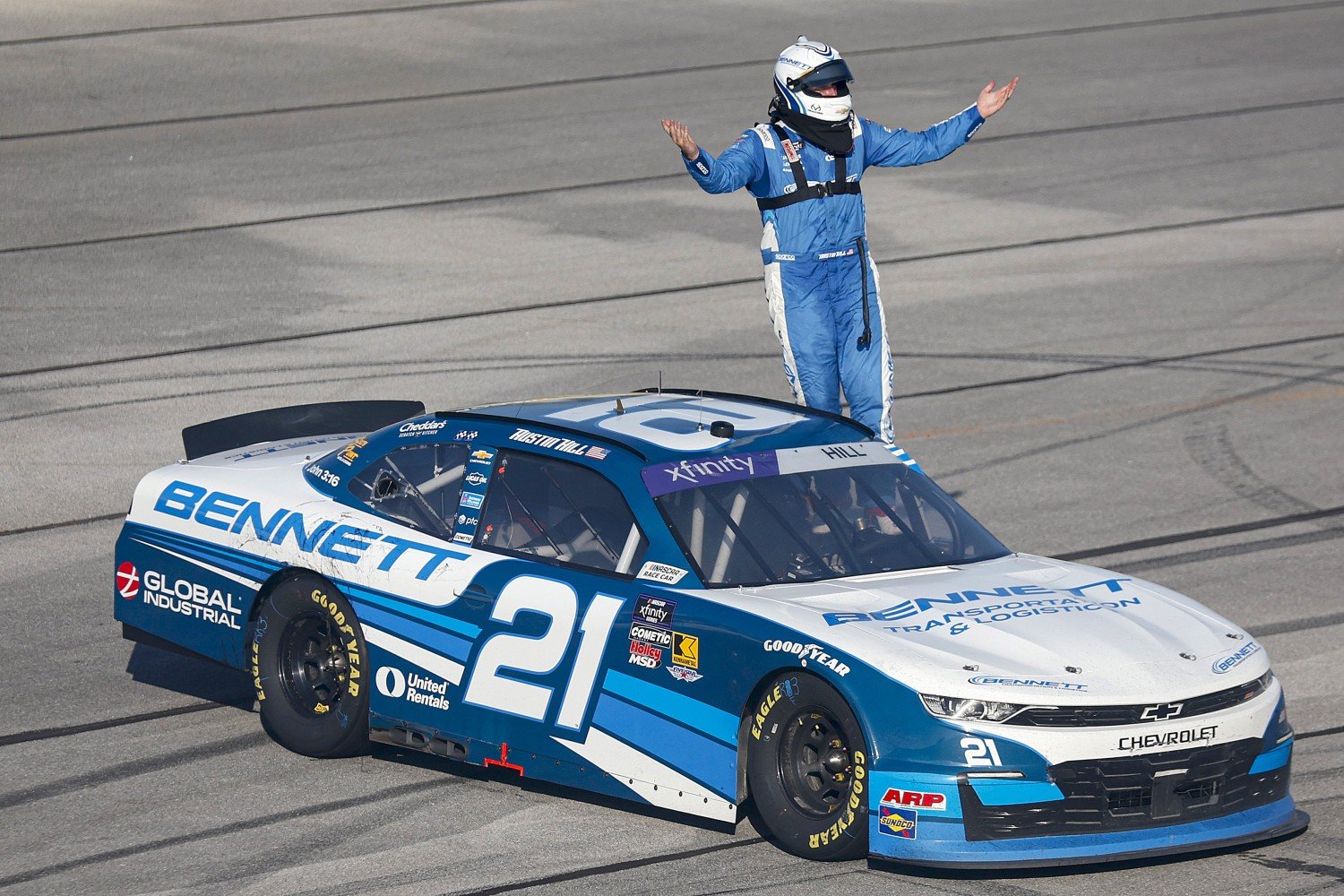
His dominance on drafting-style tracks has even eclipsed records once held by NASCAR Hall of Famers Dale Earnhardt and Tony Stewart.
“We’ve built something special both on and off the track with Bennett Transportation and Logistics,” Hill said in the announcement. “Thank you to Marcia, Lynette and everyone at Bennett Family of Companies for their partnership and friendship over the years. It means a lot to have their support, as well as the support of Richard Childress, Danny Lawrence and everyone at Richard Childress Racing and ECR Engines as I continue to grow in my career.”
The partnership with Bennett isn’t just about paint schemes—it’s a strategic alliance. The Georgia-headquartered, woman-owned company (WBENC-certified) has leveraged its NASCAR involvement to boost customer relationships, promote safety culture, recruit drivers, and spark new business growth in trucking, specialized logistics, and more. With over 4,625 drivers/owner-operators and a nationwide network, Bennett sees the No. 21 program as a rolling showcase of teamwork and performance.
Lynette Mathis, vice president of Bennett Family of Companies, echoed the enthusiasm:
“We are proud to continue our partnership with Richard Childress Racing and Austin Hill in 2026. Bennett customers, drivers, agents and employees continue to find value in the relationship. We love watching the No. 21 Bennett Transportation & Logistics Chevrolet on the track and seeing the sense of community it creates within our company. Our partnership with RCR and Austin Hill continues to reflect the teamwork, performance and professionalism that define success in both racing and transportation and complex logistics.”
RCR president Mike Verlander highlighted the shared values driving the long-term commitment:
“The Bennett Family of Companies’ long-standing partnership with Richard Childress Racing is a testament to our shared core values and we are thrilled to welcome them back to the No. 21 team for their fifth consecutive year of partnership. Bennett has done an exceptional job integrating our racing program into their broader business strategy. We look forward to continuing the momentum we have built over the last four years.”
With Hill confirmed alongside defending series champion Jesse Love in the No. 2 Chevrolet, RCR’s O’Reilly Auto Parts Series lineup remains unchanged heading into 2026—no driver swaps needed after a strong showing last season. In the Cup Series, veterans Austin Dillon (No. 3) and Kyle Busch (No. 8) round out a stable team ready to chase more checkered flags.
The green flag for the 2026 season drops soon: The United Rentals 300 at Daytona International Speedway kicks things off on Saturday, February 14, airing live on The CW Network at 5 p.m. ET. For Hill and the No. 21 squad, it’s another shot at turning strong momentum into that elusive series championship—backed by a sponsor and team that believe in the driver and the dream. Stay tuned; the road to Victory Lane looks promising.
Motorsports
ARCA Menards Series at Daytona International Speedway: Austin Green Leads Day Two of Daytona Pre-Race Practice – Speedway Digest

Former ARCA Menards Series winner Austin Green (No. 82 PRG Chevrolet) led the way on the second and final day of the ARCA Menards Series annual pre-race practice at Daytona International Speedway. Green timed in at 49.202 seconds/182.919 miles per hour.
Green’s lap was just 0.002 seconds quicker than reigning ASA STARS National Tour super late model champion Cole Butcher (No. 30 Rette Jones Racing Ford). Butcher’s lap of 49.204 seconds/182.912 miles per hour was just in front of the Kitzmiller duo, reigning ARCA Menards Series East champion Isaac (No. 79 A.L.L. Construction / Carter CAT Chevrolet), and his father Jason (No. 97 A.L.L. Construction / Carter CAT Chevrolet). Isaac timed in at 49.217 seconds/182.864 miles per hour in his first-ever laps in the draft, while Jason was just behind at 49.230 seconds/182.815 miles per hour.
NASCAR Craftsman Truck Series regular Gio Ruggiero (No. 18 JBL Toyota) was fifth quickest on Saturday at 49.261 seconds/182.700 miles per hour.
Mini Tyrell (No. 17 Cook Racing Technologies Chevrolet), Taylor Reimer (No. 77 Spire Motorsports Chevrolet), Carson Brown (No. 82B PRG Chevrolet), Nolan Wilson (No. 69 Kimmel Racing Ford) and his teammate Alli Owens (No. 69 Kimmel Racing Ford) rounded out Saturday’s top ten.
Gus Dean (No. 25 Nitro Motorsports Toyota) set the fastest lap of the weekend on Friday, running in a tight six-car draft with his teammates at the end of the day. Dean’s lap at 48.744 seconds/184.638 miles per hour was nearly a half-second quicker than the lap Green turned on Saturday. The top seven speeds of the weekend were set on Friday, with the remainder of the weekend’s top ten speeds turned on Saturday.
Saturday’s activities were only slowed for track inspections and debris, but Friday’s action was stopped twice for accidents on the racetrack. The first was for Amber Balcaen (No. 24 Sigma Performance Services Ford), who spun exiting the tri-oval after debris punctured her left rear tire. Balcaen’s car had heavy nose damage and was done for the weekend, although she did return to the track in the backup car. The second incident on Friday happened exiting turn two when Bob Martin (No. 52 Martin Racing Toyota) lost control and made slight contact with the outside wall, damaging the left rear of the car. Martin was also uninjured in the crash.
The 2026 ARCA Menards Series season revs into action on Saturday, February 14 with the 64th annual Daytona ARCA 200 at Daytona International Speedway. The race will be televised live on FOX starting at noon ET; the race will also be broadcast live on SiriusXM NASCAR Radio Channel 90 and on select MRN Radio affiliates nationwide.
For live Timing & Scoring data for all on-track activity, please visit ARCARacing.com; follow @ARCA_Racing on X (formerly Twitter) for up-to-the-minute updates.
ARCA PR

With just over a month to go until the NASCAR O’Reilly’s Auto Parts Series gets underway in Florida with the United Rentals 300 at Daytona International Speedway, Richard Childress Racing has confirmed that 2023 regular season champion Austin Hill is back.
The 31-year-old will return behind the wheel of the No. 21 Chevrolet for a fifth season in a row in search of the team’s seventh championship, while he’ll also be looking to add to his 14 series wins to date.
Furthermore, the team’s announcement also added that Bennett Transportation & Logistics would be returning as a part of its multi-year partnership to serve as Hill’s anchor primary sponsor.
“We’ve built something special both on and off the track with Bennett Transportation and Logistics,” Hill said. “Thank you to Marcia, Lynette and everyone at Bennett Family of Companies for their partnership and friendship over the years.
“It means a lot to have their support, as well as the support of Richard Childress, Danny Lawrence and everyone at Richard Childress Racing and ECR Engines as I continue to grow in my career.”
Sign up to our NASCAR newsletter here.
RCR president Mike Verlander also released a statement, saying, “The Bennett Family of Companies’ long-standing partnership with Richard Childress Racing is a testament to our shared core values and we are thrilled to welcome them back to the No. 21 team for their fifth consecutive year of partnership.
“Bennett has done an exceptional job integrating our racing program into their broader business strategy. We look forward to continuing the momentum we have built over the last four years.”
Hill will be hoping to continue his impressive winning streak in 2026, having recorded at least two victories in each of his last four seasons, never finishing lower than sixth in the driver standings after going full-time.
A championship, however, continues to elude him, having come closest in 2024 when he finished fourth, while JR Motorsports’ Justin Allgaier took the silverware.
Last season, despite Hill’s four wins, including two at Talladega Superspeedway, he failed to make the final four, where teammate Jesse Love pulled off a shocking upset to beat JRM’s Connor Zilisch to the title. This came after Zilisch had won 10 races in what was just his first full-time season, while Love was credited with two wins, including the finale at Phoenix Raceway.
With both Love and Hill now confirmed as RCR’s representatives in the O’Reilly’s Series for 2026, it means that, along with Austin Dillon and Kyle Busch in the Cup Series, the team has not made any driver swaps this offseason.
The latter two are set to return behind the wheel sooner than their RCR compatriots, with the non-points scoring Cook Out Clash at Bowman Gray Stadium set to kick off the Cup Series season on February 1. Barring any as yet unconfirmed changes, Zilisch will make his Trackhouse Racing debut at “The Madhouse” as he makes the move to full-time Cup Series racing.

A marvel of modern drivetrain engineering, TREMEC’s TR-9070 DCT pairs with the 760-horsepower Predator engine in the 2020-2022 Shelby GT500 to deliver an incredible driving experience. Blindingly fast shifts and ample torque capacity make the TR-9070 a standout, but the factory transmission cooler hard lines and seals don’t always hold up their end of the bargain. Leaks, sealing issues, and cracked factory lines can rain on your performance parade.
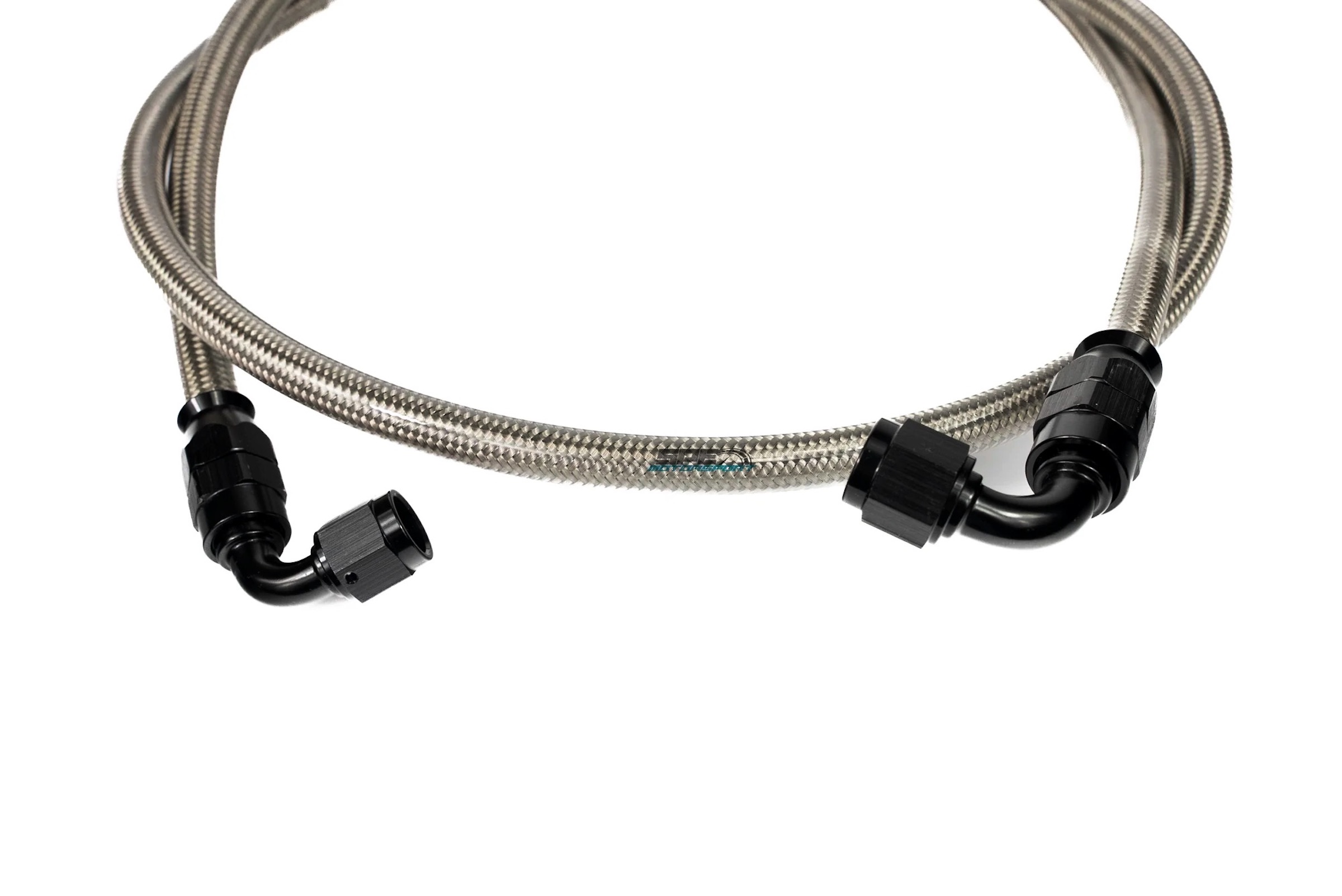
To ensure that you can enjoy all the performance that the Blue Oval intended, SPE Motorsport developed a complete replacement that eliminates the factory problem areas. The company’s 2020+ GT500 DCT Cooler Line Kit (P/N SPE-P100136; $399.99) is a true end-to-end solution, replacing the OEM hard lines with a direct-replacement upgrade that installs without cutting, adapting, or relying on compression fittings.
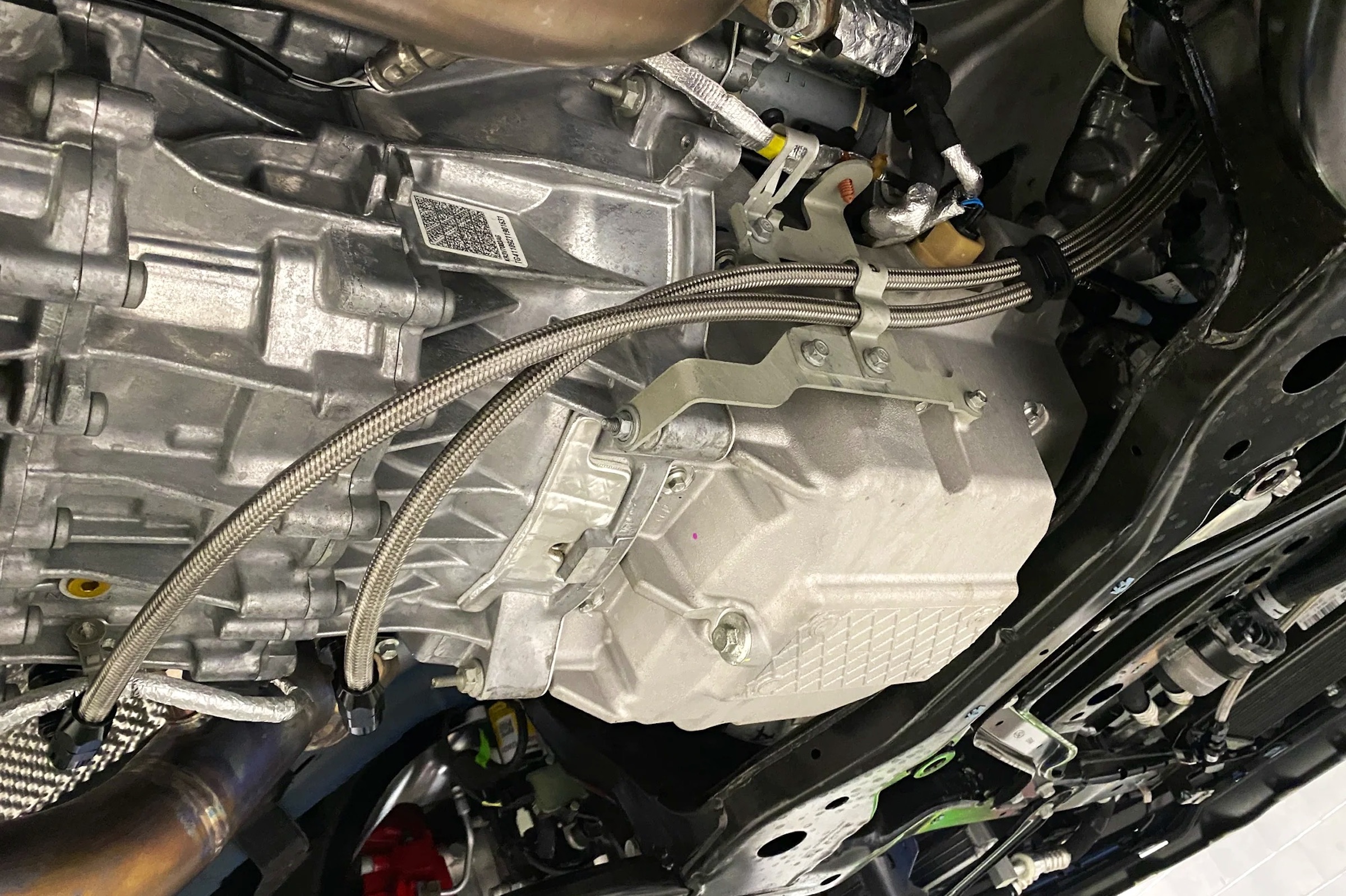
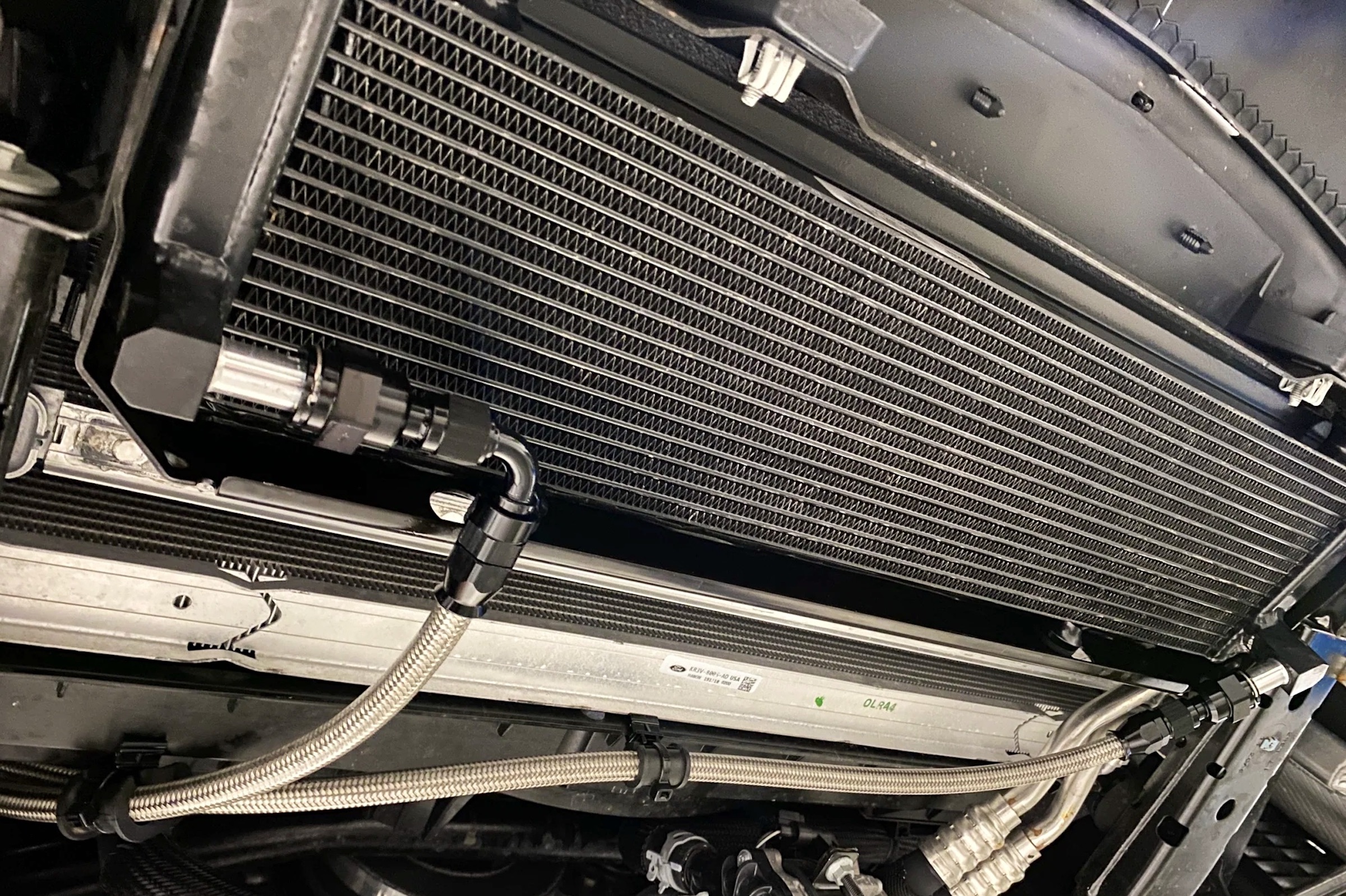
Billet T6 aluminum adapter fittings with O-ringed quick disconnects provide a precise seal without cutting or modifying factory components. The 100-percent bolt-on design eliminates compression fittings, delivering a complete fix for the factory GT500 DCT cooler lines that are prone to failure. (Photo Credit: SPE Motorsport)
The kit utilizes T6 billet aluminum, anodized adapter fittings that are paired with O-ringed quick-disconnects to deliver a precise, repeatable seal. Stainless braided lines with a clear PVC jacket improve durability and remain flexible for clean, straightforward routing. Each hose is pre-made to the correct length with fittings already installed, which makes installation easy.
By retaining compatibility with factory-style seals while addressing the known weaknesses of the OEM line design, the SPE kit resolves the full range of cooler line failures in a single upgrade. Whether the car is driven hard or just hard parked, the result is improved reliability and peace of mind.

HS ROUNDUP: Schimelfenig leads West past Scranton in City Rivalry game | Football

Eagles fall short against Pioneers on “Bubba’s Youth Day” | Sports

Commodore Success Continues Saturday – Vanderbilt University Athletics – Official Athletics Website

Penn State Men’s Volleyball Beats Mount Olive 3-1 In Season Opener

Bobcats boys basketball bags 2026 opener by 17

South Carolina Dominates in Home Opener – University of South Carolina Athletics

Weird and funky: No. 8 BYU men’s volleyball sweeps Saint Francis to open season | News, Sports, Jobs

Former 5-star prospect linked to four major college football programs

ZAJDEL EARNS 1ST PLACE AS MEN’S AND WOMEN’S INDOOR TRACK & FIELD CONCLUDE SOUTHERN TIER INVITE

Men’s Volleyball Sweeps Vanguard For First Win Of The 2026 Season

Spartans Capture a Pair of Event Titles at Wolverine Invitational

Men’s Track & Field Opens Indoor Slate With Snowflake Invitational

Hoosiers Finish Strong in Final Day of Rod McCravy

No. 3 transfer portal player delivers bad news to major college football programs

Track and Field Competes at Dartmouth to Open up 2026

#11 Volleyball Practices, Then Meets Media Prior to #2 Kentucky Match

Stempien to seek opening for Branch County Circuit Court Judge | WTVB | 1590 AM · 95.5 FM

Maine wraps up Fall Semester with a win in Black Bear Invitational

Ross Brawn to receive Autosport Gold Medal Award at 2026 Autosport Awards, Honouring a Lifetime Shaping Modern F1

Nascar legal saga ends as 23XI, Front Row secure settlement

Princeton Area Community Foundation awards more than $1.3 million to 40 local nonprofits ⋆ Princeton, NJ local news %

Downtown Athletic Club of Hawaiʻi gives $300K to Boost the ’Bows NIL fund

Sunoco to sponsor No. 8 Ganassi Honda IndyCar in multi-year deal

WNBA’s Caitlin Clark, Angel Reese and Paige Bueckers in NC, making debut for national team at USA camp at Duke

Badgers news: Wisconsin lands 2nd commitment from transfer portal

Nike Signs 10 LSU Athletes to NIL deals

Five Youth Sports Trends We’re Watching in 2026

Three Clarkson Volleyball Players Named to CSC Academic All-District List

Beach Volleyball Unveils 2026 Spring Schedule – University of South Carolina Athletics

Kentucky AD explains NIL, JMI partnership and cap rules





-
 Sports3 weeks ago
Badgers news: Wisconsin lands 2nd commitment from transfer portal
-
 Rec Sports1 week ago
Five Youth Sports Trends We’re Watching in 2026
-
 Sports2 weeks ago
Kentucky VB adds an All-American honorable mention, loses Brooke Bultema to portal
-
 Motorsports3 weeks ago
Dr. Patrick Staropoli Lands Full-Time O’Reilly Ride with Big Machine Racing
-

 Rec Sports3 weeks ago
NBA, Global Basketball Community Unite for World Basketball Day Celebration
-
 Sports2 weeks ago
2025 Volleyball Player of the Year: Witherow makes big impact on Central program | Nvdaily
-
 Motorsports2 weeks ago
BangShift.com IHRA Acquires Historic Memphis Motorsports Park In Millington Tennessee. Big Race Weekend’s Planned For 2026!
-
 Sports2 weeks ago
Colorado volleyball poised to repeat success
-

 NIL3 weeks ago
Insider Reveals Biggest Reason Behind Colorado’s Transfer Portal Mass Exodus
-
NIL2 weeks ago
Fifty years after IU’s undefeated champs … a Rose Bowl