
Sports
Gatorade Marketing Strategy (2025)



Gatorade Marketing Strategy is built on performance-driven branding, emotional storytelling, and science-backed messaging that positions the brand as essential for athletic excellence. By emphasizing hydration and energy restoration, Gatorade has cemented itself as a staple in sports culture and the beverage industry.
Originally developed in 1965 to help University of Florida athletes stay hydrated, Gatorade revolutionized sports nutrition and has since evolved into a billion-dollar brand under PepsiCo. It dominates the sports drink market by blending scientific credibility with emotional narratives, often featuring elite athletes and high-stakes moments.
The brand’s marketing continually reinforces the idea that Gatorade is not just a drink—it’s fuel for greatness, echoing the performance narrative seen in the Apple Marketing Strategy that links product utility with personal ambition..
What sets Gatorade apart is its ability to transcend utility. It’s not just about quenching thirst—it’s about pushing limits. Whether it’s through dynamic commercials, partnerships with professional sports leagues, or expansion into workout apps and hydration tracking, Gatorade touches every aspect of athletic life.
In an era where consumers are increasingly health-conscious and digitally connected, Gatorade taps into both physical and emotional dimensions of performance. It resonates with those chasing goals, sweating for results, or striving for victory—on the field or in everyday life. This duality of science and soul keeps Gatorade relevant and revered, making its marketing strategy a powerful blueprint for branding success.
Gatorade Goals and Objectives
Gatorade’s core marketing objectives are anchored in strengthening its brand equity, driving sales through innovation, and sustaining its leadership in the sports hydration category. Each goal aligns with its mission to enhance athletic performance and stay culturally relevant in an evolving wellness landscape.
Reinforce Performance-Centric Brand Identity
Gatorade consistently positions itself as the go-to solution for hydration and recovery. Through athlete endorsements and scientific validation, the brand reaffirms its commitment to performance enhancement rather than just refreshment.
Expand Product Portfolio
To reach broader segments, Gatorade introduces new formulations—like Gatorade Zero and Gx pods—that cater to various fitness levels and dietary preferences. These offerings reflect a shift toward personalization and health-conscious consumption.
Target Emerging Markets and Demographics
Gatorade aims to grow in regions with rising interest in sports and fitness, particularly in Asia and Latin America. This includes localized marketing and culturally attuned product variants.
Strengthen Digital Integration
With apps like Gx and data-driven coaching, Gatorade integrates digital tools into its ecosystem. This helps the brand evolve from just a beverage to a full-scale performance platform, enhancing user engagement and loyalty.
Foster Emotional Connection Through Storytelling
Campaigns like “The Secret to Victory” use personal athlete journeys to connect on a deeper emotional level. This storytelling humanizes the brand and builds cultural resonance beyond the field.
Drive Sustainability Initiatives
As environmental concerns rise, Gatorade has started pushing eco-friendly packaging and reducing plastic use, aligning with modern consumers’ values.
Innovate Retail and Sampling Strategies
Through in-gym partnerships and virtual try-before-you-buy tools, Gatorade seeks to meet consumers where they work out, not just where they shop.
These strategic goals ensure Gatorade remains a top choice for both elite athletes and fitness enthusiasts, adapting its messaging and products to meet contemporary performance and wellness demands.
Who is Gatorade’s Target Audience?
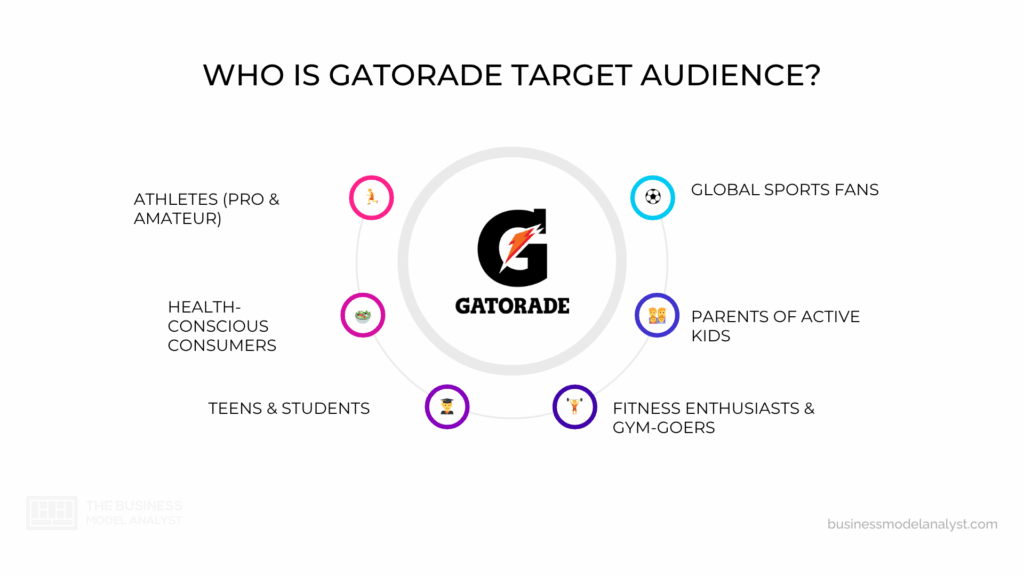
Gatorade’s marketing success lies in its deep understanding of its core consumers and how it tailors experiences across several audience segments. It combines data and emotion to appeal to athletes, fitness enthusiasts, and health-minded individuals worldwide.
Gatorade Demographics
Primarily, Gatorade targets males aged 16–35, particularly athletes, students, and young adults engaged in physical activity. However, the brand has diversified over time to include women, older adults, and even teens, expanding its appeal across gender and age. Most consumers fall into middle to upper-middle income brackets, with enough disposable income to spend on health-oriented beverages.
Gatorade Psychographics
The typical Gatorade user is driven, health-conscious, and goal-oriented. They are often competitive, whether in organized sports or personal fitness goals. These individuals value performance, endurance, and tangible progress. Gatorade also connects with casual consumers who see hydration and nutrition as lifestyle components. These psychographics extend to people who might not play sports but want to feel energized and aligned with a performance mindset.
Gatorade Geography
Gatorade enjoys a strong presence in North America but is expanding in Latin America, Europe, and Asia. In each region, the brand adjusts flavors, language, and campaigns to resonate locally. For example, cricket and soccer-themed promotions are used in India and Brazil, respectively, compared to football and basketball-focused messaging in the U.S.
Gatorade Behavior
Gatorade consumers exhibit both loyal and impulse buying habits. Athletes and regular gym-goers purchase repeatedly due to their reliance on hydration. Meanwhile, casual buyers might choose Gatorade during hot weather or after a workout for quick energy. The brand also targets parents who purchase for active children or teens involved in school sports.
Gatorade engages these segments through sponsorships, school programs, mobile apps like Gx, and influencer marketing. Limited-time flavors, personalization (like bottle labels with names), and science-based messaging cater to both emotional and rational buying triggers. Whether via an elite athlete or a weekend jogger, Gatorade’s audience connects with its core promise: to fuel performance and recovery when it matters most.
Marketing Mix of Gatorade
Gatorade Product
Gatorade’s product range goes beyond its original hydration formula. It now includes Gatorade Zero (sugar-free), G2 (lower-calorie), Gx pods (customized mixes), energy chews, and protein bars. These innovations cater to a spectrum of users—from elite athletes to everyday fitness fans. For instance, Gatorade Endurance targets marathoners, while Gatorlyte supports rapid rehydration. This extensive portfolio keeps the brand relevant across activity levels and evolving consumer needs.
Gatorade Price
Gatorade follows a competitive pricing model that balances accessibility with perceived performance value. Standard bottles are priced affordably for mass consumption, while premium lines like Gx and protein powders are priced higher to reflect their specialized function. Gatorade uses value packs and promotional pricing in grocery chains and fitness outlets to increase trial and drive volume. This layered strategy enables it to appeal to both price-conscious and value-seeking consumers.
Gatorade Place
Gatorade is widely available through supermarkets, convenience stores, vending machines, gyms, and online retailers. It leverages PepsiCo’s vast distribution network to ensure global presence. In addition to traditional retail, Gatorade targets specific locations like sports stadiums, fitness clubs, and school campuses to reinforce its athletic positioning. Its presence in college and pro sports locker rooms also functions as high-visibility placement, equating the product with serious performance.
Gatorade Promotion
Gatorade’s promotions are anchored in athlete endorsements, sports partnerships, and emotionally charged advertising. The brand collaborates with top names like Serena Williams, Lionel Messi, and J.J. Watt. Campaigns such as “Is It in You?” and “Sweat It to Get It” blend motivational storytelling with science-backed performance benefits. Gatorade also harnesses digital platforms, including interactive training apps, hydration tracking, and personalized ads. Seasonal campaigns and limited-edition flavors generate buzz and prompt impulse purchases.
By aligning each element of the marketing mix—product variety, strategic pricing, broad placement, and compelling promotion—Gatorade ensures comprehensive market penetration. This integration reinforces its reputation not just as a beverage, but as a performance system trusted by professionals and everyday athletes alike.
What are Gatorade’s Strategies?
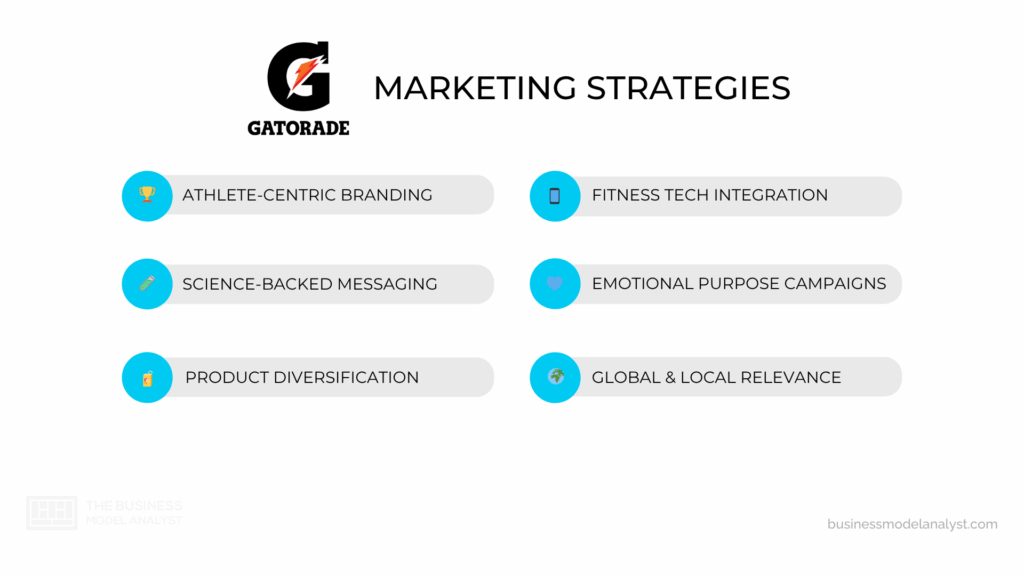
Athlete-Centric Branding
Gatorade heavily associates itself with elite athletes, showcasing their training, setbacks, and comebacks. This strategy humanizes performance, as seen in campaigns like “The Secret to Victory,” featuring Serena Williams and Michael Jordan. It builds credibility and emotional connection by showing how even champions rely on Gatorade to push limits.
Science-Backed Storytelling
Unlike many beverages, Gatorade promotes its research roots. Developed by scientists for athletes, this origin story is a central part of its branding. Through its Gatorade Sports Science Institute (GSSI), the brand shares findings on hydration and performance. This scientific narrative reassures consumers that Gatorade isn’t just a drink—it’s engineered for results.
Product Diversification
Recognizing the shift toward health-conscious lifestyles, Gatorade introduced Gatorade Zero, G2, Bolt24, and Gx. These innovations let it tap into sub-segments such as keto dieters, casual exercisers, and pro athletes. By expanding its lineup, Gatorade keeps pace with changing consumer preferences without diluting its core identity.
Digital Fitness Integration
Gatorade has invested in fitness tech, including the Gx app, which provides hydration plans based on workout intensity and body data. This transforms the product into a performance system. By aligning with wearables and mobile apps, Gatorade meets digital-first consumers where they train, offering both value and insight.
Strategic Sponsorships
From NFL and NBA teams to youth sports leagues, Gatorade secures long-term sponsorships that boost brand visibility. It’s not just a logo on a bottle—it’s on benches, towels, and in post-game rituals. This omnipresence solidifies its role as the default sports drink in the minds of players and fans alike.
Emotional and Purpose-Driven Campaigns
Campaigns like “Fuel Tomorrow” focus on empowering underserved youth through access to sports, blending purpose with promotion. This positions Gatorade as not just a performance enhancer, but a societal contributor, strengthening emotional loyalty.
Localization and Global Growth
In emerging markets, Gatorade adapts its flavor profiles, marketing language, and cultural cues. For example, in Latin America, football stars lead campaigns, while in Asia, cricket and badminton figures drive outreach. This localized relevance helps deepen global penetration.
These multi-layered strategies reinforce Gatorade’s dominance while keeping it agile in a health-conscious, tech-savvy, and emotionally engaged marketplace.
Gatorade Channels
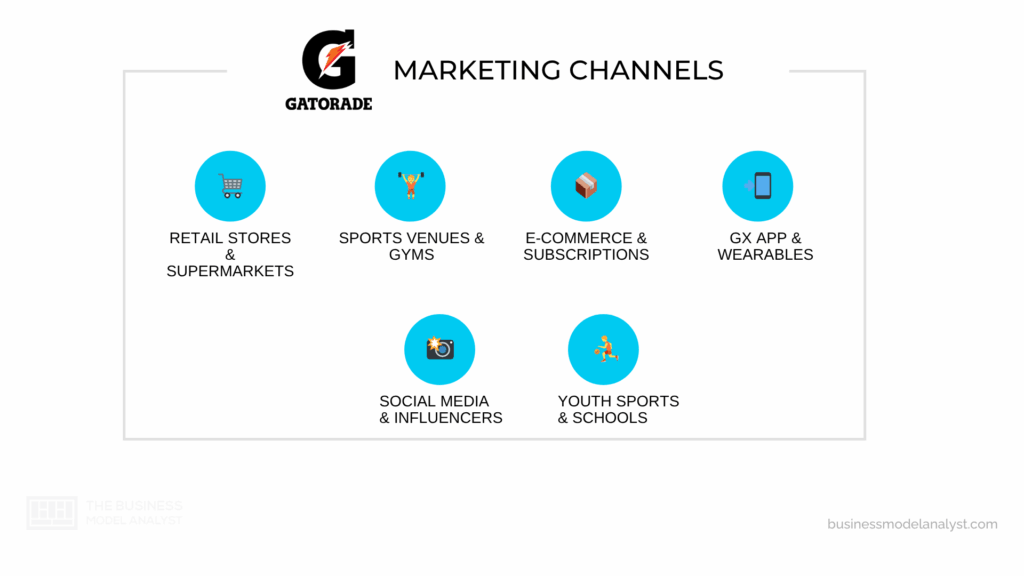
Gatorade uses a diverse mix of channels to connect with its audience, ensuring visibility and convenience across physical and digital touchpoints. Each channel serves a unique role in delivering brand experience, fostering loyalty, or driving sales.
Retail Outlets
Gatorade’s primary distribution happens through grocery stores, convenience shops, and big-box retailers like Walmart and Target. These locations provide high-volume sales opportunities and allow consumers to buy Gatorade during routine shopping trips.
Sports Venues and Fitness Centers
Gatorade has a strong presence in professional stadiums, school athletic programs, and fitness clubs. Being the official sports drink of the NFL, NBA, and many collegiate teams gives the brand unmatched credibility and constant product placement during televised events.
E-Commerce Platforms
Gatorade products are sold via Amazon, Walmart’s online store, and the official Gatorade website. Subscription services and bundle deals on these platforms help drive repeat purchases and allow Gatorade to offer exclusive online products, such as Gx systems and accessories.
Mobile Apps and Wearables
Through its Gx app, Gatorade integrates hydration tracking and personalized recommendations based on workout intensity and biometrics. This turns the product from a static beverage into a responsive fitness companion.
Social Media and Digital Content
Platforms like Instagram, YouTube, and TikTok are used for storytelling, influencer collaborations, and real-time engagement. Gatorade uses these platforms not only for advertising but also for community building and educational content.
School and Youth Sports Programs
Gatorade invests in youth sports sponsorships and hydration education. This builds early brand loyalty and creates lifetime consumers by reaching them at the beginning of their athletic journeys.
By leveraging a broad and strategic channel network, Gatorade maximizes both reach and relevance, staying embedded in every stage of the consumer’s fitness lifestyle.
How to Apply Gatorade Strategies to Your Business
Gatorade’s success offers powerful lessons for brands aiming to build loyalty, expand market share, or elevate their product’s purpose—as seen in the brand-building strategies used by Sephora to blend experience, education, and emotional appeal. Here are seven strategies you can adapt to energize your own business:
Position with Purpose
Gatorade doesn’t sell beverages—it sells performance. Define what your product enables, not just what it is. For example, if you run a fitness apparel brand, promote how your gear empowers confidence, not just comfort. This emotional hook builds deeper connections.
Leverage Science or Credibility
Back your claims with data, research, or expert endorsements. Gatorade benefits from its roots in sports science. A skincare company might cite dermatologists; a productivity app could show user-based performance metrics. Credibility converts interest into trust.
Broaden Your Product Ecosystem
Expand offerings to suit different use cases or consumer needs. Gatorade created Gatorade Zero, Gx, and protein bars. A coffee shop, for example, could introduce energy teas or healthy snacks. This not only grows revenue—it deepens brand engagement.
Invest in Your Digital Layer
Gatorade turned a drink into a digital coaching tool with Gx. Think of how your business can embed technology: A clothing brand could offer virtual try-ons, or a tutoring platform might add AI-based performance tracking. Digital features enhance user experience and retention.
Embrace Influencers and Everyday Champions
Use ambassadors who reflect your audience. Gatorade partners with global stars and high school athletes. Similarly, a home decor brand could showcase celebrity designers and real customers’ renovations to appeal across aspirational and relatable levels.
Align with Values That Matter
Gatorade’s “Fuel Tomorrow” supports youth sports. Identify a cause your brand can authentically champion—be it sustainability, education, or wellness. Integrating social responsibility boosts emotional appeal and public trust.
Go Where Your Audience Trains or Shops
Just as Gatorade appears in gyms, sports fields, and vending machines, your brand should be present where your audience naturally goes. Partner with complementary businesses or appear at relevant events. A tech startup might co-host webinars with industry experts; a local bakery could partner with nearby coffee shops.
By adapting these strategies, you can transform your product from a commodity into a movement. Gatorade’s model shows that success lies in selling not just function, but impact, identity, and inspiration.
Conclusion
Gatorade’s marketing strategy stands as a benchmark for brands looking to lead with both purpose and performance. By intertwining scientific credibility with emotional storytelling, the brand has evolved from a sports drink to a global symbol of endurance and ambition—similar to how the Amazon Marketing Strategy blends trust and innovation to win global loyalty.
From elite athletes to weekend warriors, Gatorade engages its audience across every touchpoint—retail shelves, mobile apps, and even locker rooms—while continually expanding its product offerings to meet modern health and fitness trends. Its strategies, rooted in authenticity and innovation, demonstrate that relevance is earned through adaptation and alignment with consumer needs.
What makes Gatorade truly remarkable is its ability to connect function with identity. It doesn’t just hydrate—it inspires. Businesses looking to grow can draw from this approach: focus on value beyond the product, build emotional resonance, and remain agile in the face of evolving market expectations.
As the wellness movement continues to shape consumer behavior, Gatorade’s strategy provides a clear roadmap for staying relevant, building loyalty, and leading through purpose. It’s not just about selling—it’s about fueling something greater.


Lancaster, PA (December 6, 2025) – The DeSales University men’s track & field team opened the 2025-26 indoor T&F season competing at the Diplomat Open at Franklin & Marshall College on Friday.
The Bulldogs posted 10 MAC qualfying times/marks in the meet.
Among the qualifying times were junior Bryce Guthier taking second in the 400-meters with a time of 52.08. It is the fifth fastest time in indoor history. Senior Davis Trump also qualified in the 5K with a time of 16:20.32.
In the field events, DSU posted eight qualfying marks. Junior Weston Simak qualified for the MAC Championships in both the long jump (6.52m) and triple jump (13.72m). His triple jump mark was the second best in team history. First-year Luke Heimann also qualfied in the triple jump (11.86m).
Junior Jonathan Castronovo took home first place in the long jump with a mark of 6.58m, the second best long jump in team history.
First-year John Amoretti qualified in the shot put (12.33m), seniors Jonathan Eudja and Giovanni Wellington qualified in the weight throw with marks of 14.85m and 14.23m. First-year Ryan Rodriguez also quallified in the weight throw (11.89m).
The Bulldogs won’t return to action till the New Year at the Blue and Grey Invitational on Jan. 17th.

RESULTS
ITHACA, N.Y. –
The Ithaca College women’s track & field team opened its 2025-26 season over the weekend as the Bombers made the short trip across town to compete in the Greg Page Relays hosted by Cornell University on December 5-6.
Lola Gitlin posted a time of 10:25.57 in the 3000-meter run to finish third overall.
Rachel Larson was a fourth place finisher with a time of 8.58 seconds in the 60-meter hurdles. That time is currently No. 1 in Division III after the opening weekend of the season.
Aynisha McQuillar took fifth in the 200-meter dash in a time of 26.61 seconds. McQuillar also ran in the 60-meter dash and posted the 11th fastest time in DIII during the prelim with a performance of 7.78 seconds.
Lyla Powers was fifth in the 500-meter dash with a time of 1:21.75.
Lily Seyfert claimed fifth in the shot put with a heave of 12.78 meters, which is currently ninth in the nation.
Bree Boyle and Erin Eastwood each cleared 3.54 meters in the pole vault, which is tied for 11th on the Division III performance list.
Alexis Brown turned in a leap of 11.02 meters in the triple jump for the 17th best mark in the country.
Ithaca is off for the remainder of 2025 and will return to Cornell on January 10 for the Southern Tier Invitational.
RESULTS
ITHACA, N.Y. –
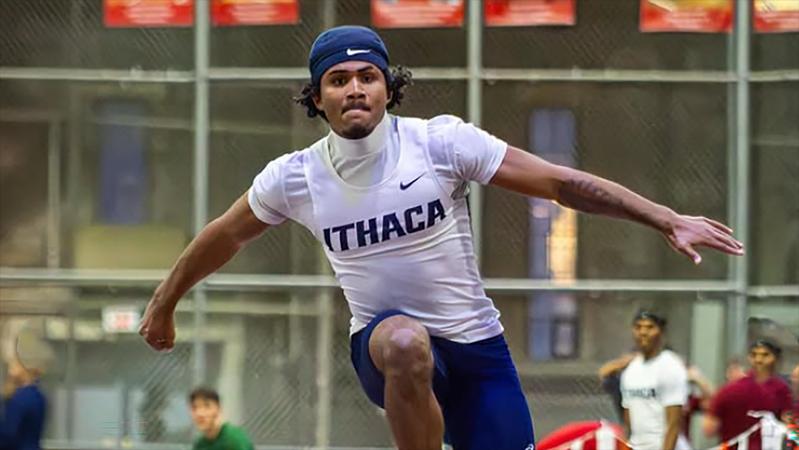
The Ithaca College men’s track & field team opened its 2025-26 season over the weekend as the Bombers made the short trip across town to compete in the Greg Page Relays hosted by Cornell University on December 5-6.
Anik Vossschulte claimed third in the 200-meter dash in a time of 23.32 seconds, while Jacob Antilety was seventh at 23.71 seconds.
Matt Lokshin posted a time of 8.65 seconds in the 60-meter hurdles to place third in the event. Aidan Irwin took fourth in the high jump with a mark of 1.70 meters.
Quinten Lewis posted a mark of 13.73 meters in the triple jump to place fourth and Sebastien-Oliver Lacrete was sixth at 12.68 meters, while Evan Cherry secured fifth in the long jump with a leap of 6.84 meters.
IC’s 4×400-meter relay team of Damian Simmonds, Griffin Lupes, Noah McKibben and George Nilson placed sixth in 3:34.49.
Luke Ellor finished sixth in the shot put with a mark of 14.40 meters.
Three Bombers finished within the top eight in the 500-meter dash as Brad Kellogg was sixth in 1:09.73, Peter Tysiak followed in seventh with 1:10.74 and Matthew DeJulio was next at 1:11.59.
Kaiden Chandler and Luke Ferrer posted times of 4:41.29 and 4:53.44 in the mile to finish in seventh and eighth.
Raf Campanile was seventh in the pole vault with a clearance of 4.25 meters.
Ithaca is off for the remainder of 2025 and will return to Cornell on January 10 for the Southern Tier Invitational.

UTICA, N.Y. – The Hamilton College Continentals competed against 13 teams at the non-team scoring 2025 Utica University Track & Field Holiday Classic inside the Todd & Jenn Hutton Sports and Recreation Center on Saturday, Dec. 6.
The meet was the first of the 2025-26 season for the Hamilton women, who will be back at Utica for the Pioneers’ Winter Opener on Friday, Jan. 16 after taking a break for finals and the winter holiday.
The Continentals qualified for the 2026 All-Atlantic Region Track & Field Conference Indoor Championships in four different events and finished first in three events.
Emily Pogozelski ’26 won the 3,000-meter run by over 20 seconds with a regional-qualifying time of 10:27.93. Mackenzie Loudon ’29, who was competing in her first collegiate meet, took first place and qualified for regionals in the triple jump.
Loudon was also part of Hamilton’s winning 4×200-meter relay with Tatiana McCray ’28, Ava Chiappinelli ’29 and Marley Meyers ’28. Their performance was more than five seconds faster than the regional-qualifying time.
McCray ran a regional-qualifying 7.96 seconds and finished in second place in the 60-meter dash final. Chiappinelli also qualified for regionals in her first collegiate meet and finished right behind McCray with a time of 7.99 seconds.
TOP PERFORMANCES
300-Meter Dash (17 Runners)
4. Marley Meyers ’28, 43.08
7. Hannah Turner ’26, 43.91
60-Meter Dash (35 Runners)
2. Tatiana McCray ’28, 7.96 (PR, AARTFC)
3. Ava Chiappinelli ’29, 7.99 (AARTFC)
600-Meter Dash (16 Runners)
5. Aisha Kandji ’29, 1:47.31
4×200 Meter Relay (9 Teams)
1. McCray ’28, Mackenzie Loudon ’29, Chiappinelli ’29, Meyers ’28 (1:46.42, AARTFC)
3000-Meter Run (19 Runners)
1. Emily Pogozelski ’26, 10:27.93 (PR, AARTFC)
Triple Jump (15 Athletes)
1. Loudon, 11.29 meters (37 feet, 0.5 inches; AARTFC)
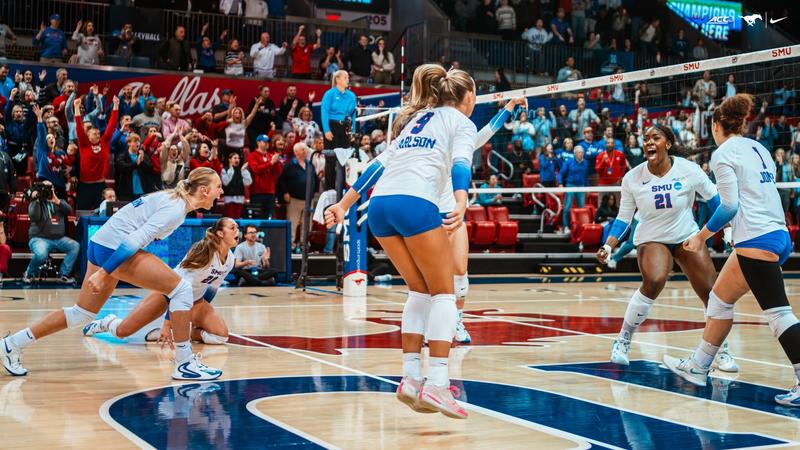
DALLAS (SMU) – For the first time in program history, SMU volleyball is headed to the Sweet Sixteen after sweeping Florida (16-12) in the Round of 32 on Saturday with set scores of 25-11, 25-21, 26-24.
With the win, SMU won its 27th match of the season, tying the program record for single-season wins. It also gave coach Sam Erger her 100th victory at SMU and in her Division I head coaching career.
Averi Carlson dished out 38 assists, the most in a three-setter for the senior setter this season. Carlson led the Mustangs to a .370 hitting percentage in the win. Kennedi Rogers went for 14 kills, hitting .440, with four digs and three blocks. Malaya Jones closely trailed Rogers with 13 kills, eight digs and seven blocks, tying her career high.
SMU out-blocked the Gators 15-4, spearheaded by a career-high nine blocks from freshman Maggie Croft. The Mustangs’ blocking efforts helped hold the Gators to a .156 hitting percentage for the match.
MATCH NOTES
- With 13 kills against Florida, Jones (503) is now the second player in SMU Volleyball history to reach 500 kills in a season. She joins Rachel Giubilato, who notched 568 kills in 2006.
- Averi Carlson (1,341) moved to third in the rally scoring era and sixth all-time for single-season assists at SMU.
- Jones reached the double-digit kill mark for the 26th time this season and for the ninth straight match.
- Rogers recorded double-digit kills for the sixth time this season.
- It marked Schilling’s 22nd time in double-figures this season and her fifth straight.
- With six blocks against the Gators, Anyanwu draws within 14 of breaking the program record for most blocks in a season. (188 by Janelle Giordano in 2015)
- SMU had double-digit blocks (15) for the 17th time this season and for the second straight match.
- SMU has won 20 of its last 21 matches and its 12th straight.
- The Mustangs end the 2025 season with 15 wins at Moody Coliseum, tying the program record for most in a season.
- The win marks the Mustangs’ 15th sweep, 11th at home this season.
HOW IT HAPPENED:
SMU controlled the first set from start to finish in all phases of the game. SMU hit .483 with no errors on 29 swings in the first, while holding Florida to a .000 hitting percentage. Rogers put in five kills to lead the Mustangs, who got point production from six different players to help propel them to a 25-11 set one victory. SMU commanded the net with a 5-0 advantage in blocks.
Down four (16-12) in the second frame, SMU responded with five straight points on a run that included two aces from Madison Scheer. After trading points, SMU went on a 4-0 run to pull away in the frame. The Mustangs went on to win the frame 25-21.
Tied 20-20 entering the red zone of the third set, SMU got the first two points on an ace from Carlson and a block from the freshman tandem of Rogers and Croft. Despite a 3-1 run by Florida that put the Gators at set point first, the Mustangs responded with three straight to close the match, ending the frame with their sixth block of the set to win 26-24.
SMU LEADERS:
SMU Kills Leader: Kennedi Rogers (14)
SMU Assists Leader: Averi Carlson (38)
SMU Digs Leader: Jordyn Schilling (11)
SMU Blocks Leader: Maggie Croft (9)
SMU Ace Leader: Madison Scheer (2)
SMU Points Leader: Malaya Jones (17.5)
Up Next: SMU will get a rematch with No. 3 seed Purdue in the NCAA Regional Semifinal on Thursday evening in Pittsburgh, Pa.
Sports
Trans volleyball player Blaire Fleming hits back at claim about female teammate’s eating disorder

Transgender college volleyball player Blaire Fleming has hit back at claims that she triggered her teammate’s eating disorder due to emotional distress — and said that she doesn’t “feel bad for her.”
Fleming, 23, was at the center of a scandal last year involving Brooke Slusser, who filed multiple lawsuits against her San Jose State University (SJSU) teammate after discovering that she was transgender.
Slusser alleged that the panic and stress from that period of her life led her to develop an eating disorder, leading to anorexia so severe that her menstrual cycle stopped for nine months.
The pair had previously shared hotel rooms and changing spaces for a whole season in 2023 before Slusser said she found out that Fleming, who is biologically male but reportedly started medically transitioning at 14, was trans.
“From the stress and how anxious I was every single day, I just wasn’t eating really at all,” Slusser told Fox News Digital last week.
“I went from around 160 to 128 [lbs] in that one semester. It definitely isn’t healthy for someone of my size to be that weight, and I ended up losing my menstrual cycle for nine months. So it was definitely severe,” she said.
Slusser later dropped her classes in the final semester this past spring, citing constant in-person harassment by students who opposed her stance.
Fleming has since responded, claiming that Slusser’s eating disorder dated back for as long as she knew her, prior to her learning that she was trans.
“She’s been anorexic and struggled with food since I’ve known her aka since 2023. She literally would weigh herself 2-3x a day and keep track of it on her whiteboard in her room,” Fleming told Fox News Digital on Sunday.
“So I really don’t care or feel bad for her. And she didn’t drop her classes, she failed out, hope that helps!” Fleming said.
Slusser has now come back and disputed Fleming’s allegations.
“These statements are just not true. I have always lived a very healthy lifestyle. Before these events took place I was very disciplined in fueling myself for athletics and [kept] track to make sure I was where I need to be to be the best athlete,” Slusser told Fox News Digital.
“It wasn’t until all the craziness started that my healthy lifestyle turned very unhealthy into not eating the amount I should,” Slusser said.
“As for school, I decided to stay home after fall 2024 to better myself and heal. So no, I did not return to San Jose and enroll myself in more courses at an institution that didn’t have my best interest,” she added.
Slusser alleged that she was never told Fleming’s birth sex and said the two regularly shared hotel rooms on away trips, according to her lawsuits filed against the NCAA and Mountain West Conference.
Fleming allegedly requested to be roomed with Slusser, a request she said was granted by team leadership, according to lawsuits.
Slusser said that the 6ft1 Fleming confessed to being transgender during a conversation over ice cream with another teammate in April 2024.
In September 2024, Slusser joined swimmer Riley Gaines’ lawsuit against the NCAA.
At the same time, SJSU’s volleyball team saw a series of forfeits by opposing teams, with police protection regularly assigned.
The US Department of Education is currently investigating SJSU for potential Title IX violations.

Mill Creek Activity Center to increase gymnastics space to help meet demand

New Mexico and Minnesota Selected to Play in 2025 Rate Bowl on December 26 at 2:30 p.m.

UGA suing former Bulldog, Missouri DE for transfer damages

IU football is No. 1 seed in College Football Playoff, headed to the Rose Bowl – The Daily Hoosier

Men’s T&F Opens Season at Diplomat Open

Max Verstappen’s wife has child with F1 driver he replaced – Motorsport – Sports

Miami Selected to College Football Playoff – University of Miami Athletics

Women’s Track & Field Turns in Multiple High Marks to Begin Season at Cornell

Brad Keselowski glad Michael Annett ‘no longer suffering’ after death – Motorsport – Sports

Men’s Track & Field Opens Indoor Season at Cornell Greg Page Relays

Verstappen expected to win race, Norris title

Alonso hints at ‘favorites’ as Max hunts allies

Revised plan for Good Life District Aquatics Center appears to meet city’s needs

Forget Kiffin — NIL is the real villain here

BangShift.com Pro 10.5 Racing Action From The DI Winter Series Snowbird Nationals At Bradenton Motorsports Park In Florida

First Tee Winter Registration is open

Fargo girl, 13, dies after collapsing during school basketball game – Grand Forks Herald

CPG Brands Like Allegra Are Betting on F1 for the First Time

Volleyball Recaps – November 18

F1 Las Vegas: Verstappen win, Norris and Piastri DQ tighten 2025 title fight

Two Pro Volleyball Leagues Serve Up Plans for Minnesota Teams

Utah State Announces 2025-26 Indoor Track & Field Schedule

Sycamores unveil 2026 track and field schedule

Redemption Means First Pro Stock World Championship for Dallas Glenn

Bowl Projections: ESPN predicts 12-team College Football Playoff bracket, full bowl slate after Week 14

Texas volleyball vs Kentucky game score: Live SEC tournament updates

Indiana’s rapid ascent and its impact across college football

How this startup (and a KC sports icon) turned young players into card-carrying legends overnight

Pohlman admits ‘there might be some spats’ as he pushes to get Kyle Busch winning again
Wisconsin volleyball sweeps Minnesota with ease in ranked rivalry win

 Why a rising mid-major power with an NCAA Tournament team opted out of revenue-sharing — and advertised it
 NBA Legend Michael Jordan to Join NBC Sports as Special Contributor
 Falcons mailbag
 Portal Update – Basketball and Gymnastics Take Hits
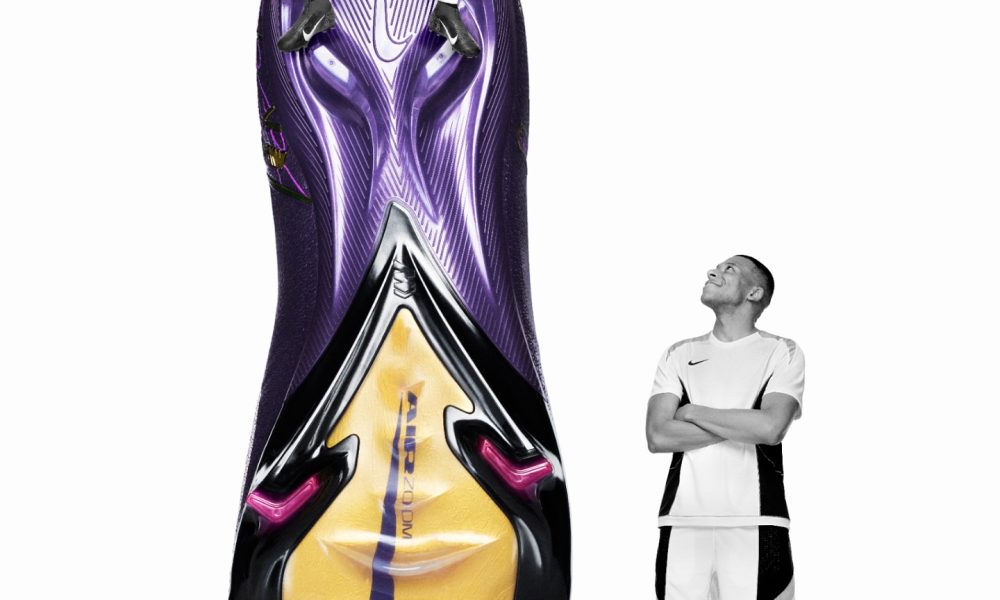 has always dreamed in Mercurial. Now his initials are on the boots.
The new Kyl…
has always dreamed in Mercurial. Now his initials are on the boots.
The new Kyl…
-
 Rec Sports2 weeks ago
First Tee Winter Registration is open
-
 Rec Sports2 weeks ago
Fargo girl, 13, dies after collapsing during school basketball game – Grand Forks Herald
-
 Motorsports2 weeks ago
CPG Brands Like Allegra Are Betting on F1 for the First Time
-
 Sports3 weeks ago
Volleyball Recaps – November 18
-
 Motorsports2 weeks ago
F1 Las Vegas: Verstappen win, Norris and Piastri DQ tighten 2025 title fight
-
 Sports2 weeks ago
Two Pro Volleyball Leagues Serve Up Plans for Minnesota Teams
-
 Sports2 weeks ago
Utah State Announces 2025-26 Indoor Track & Field Schedule
-
 Sports2 weeks ago
Sycamores unveil 2026 track and field schedule
-
 Motorsports1 week ago
Redemption Means First Pro Stock World Championship for Dallas Glenn
-
 NIL1 week ago
Bowl Projections: ESPN predicts 12-team College Football Playoff bracket, full bowl slate after Week 14