
NIL
Harvard athletes face uncertainty over Trump's attempt to block international students


The Trump administration’s move to bar international students from attending Harvard could have wide-ranging implications for the university’s eclectic athletics program.
While a federal judge Friday issued a temporary restraining order that blocked the Department of Homeland Security’s edict regarding international students at Harvard, the school’s athletes may not have much time to decide their next steps, depending on their sport.
Advertisement
Harvard’s athletic department includes 42 Division I sports teams, the highest number in the nation. A review of the university’s online rosters for the 2024-25 season found 182 athletes across all sports listed international hometowns.
Athletes who have earned a degree can enter the NCAA’s transfer portal at any time and be immediately eligible after transferring. At Ivy League schools, which do not allow athletes to participate beyond four years, it is fairly common for athletes who still have NCAA eligibility remaining to go to non-Ivy schools as graduate transfers.
NCAA rules allow undergraduate athletes to transfer and be immediately eligible to compete at a new school if they enter their names in the transfer portal during sport-specific periods.
Transfer windows have come and gone for sports that have concluded their seasons. For example, the basketball portal period was March 24 to April 22 for men and March 25 to April 23 for women. Hockey’s transfer window was March 30 to May 13 for men and March 16 to April 29 for women.
Harvard officials did not respond to requests for comment.
The NCAA declined to comment on the situation, but it could be facing questions about what to do if the school’s international athletes want to transfer because of the ongoing dispute between the university and the Trump administration.
A spokesperson from the Ivy League Athletic Conference also declined to comment.
Harvard’s men’s basketball roster lists two undergraduates with hometowns from outside the United States. The women’s basketball roster also lists two players with foreign hometowns. The leading scorer on Harvard’s men’s hockey team is Mick Thompson, a first-year player and one of several Canadians listed on the roster.
For many sports still in progress, such as baseball, softball and lacrosse, NCAA transfer windows will remain open for several weeks.
Advertisement
NCAA policy allows it to waive transfer windows under certain circumstances to address events outside an athlete’s control. For example, the NCAA has historically granted waivers for immediate eligibility to athletes competing at schools where their sports programs have shut down. But it is unclear if a similar standard would apply if Harvard’s international students had to leave the school, or wanted to, because of the ongoing dispute.
Though the policy change is on hold due to the temporary restraining order, the Trump administration’s latest tactics have some former Harvard athletes concerned about the future.
In a letter to Harvard on Thursday, Secretary of Homeland Security Kristi Noem said that her department was revoking the university’s Student and Exchange Visitor Program (SEVP) certification.
Noem said the decision was a result of Harvard’s “refusal to comply with multiple requests to provide the Department of Homeland Security pertinent information while perpetuating an unsafe campus environment that is hostile to Jewish students, promotes pro-Hamas sympathies, and employs racist ‘diversity, equity, and inclusion’ policies.”
British rower David Ambler graduated from Harvard in 2020. Four years later, he helped Great Britain win bronze in rowing at the 2024 Olympics in Paris. Ambler, 27, said attending Harvard was a life-changing experience, something he’d wish all international students could have an opportunity to do. The fear that the Trump administration’s efforts could negate that is genuine.
“From my side, I’m disappointed for future students and future student athletes that there is a possibility that they wouldn’t have the same opportunity that I did,” Ambler said Friday. “I’ve seen the value it’s provided me, and, looking forward, it’s one thing I would like other people to have.”
Advertisement
Ambler said Harvard’s worldwide draw allowed him to meet many different people with varying perspectives on life, a strength of the nation’s oldest university.
“The ability to bring people together from everywhere creates a learning environment that creates, frankly, one that is unparalleled,” he said. “Harvard, sporting-wise, is an excellent university and has a range of sports where it’s routinely competing in the top of the country or it’s sending multiple athletes to the Olympics.”
Former tennis player James Blake spent his freshman and sophomore years at Harvard in 1998 and 1999 before turning professional. Blake, who rose to become No. 4 in the world during his career, said he’s spoken to several other former Harvard athletes this week about the Trump administration taking aim at the university.
“It seems pretty obvious it’s trying to do damage to Harvard because of a petty fight from the Trump administration,” Blake said Friday. “There’s supposed to be a Republican mantra of ‘less government,’ and they’re imposing government on a private institution that’s been around since 1636, which has been one of the absolute bastions of higher education. It’s sad it even has a chance of going through, and if it does, it severely hinders the opportunities of international students and student athletes to get the best education possible.”
During his years at Harvard, Blake said the Crimson men’s tennis team finished ranked No. 17 and No. 19 in the country. He had four international teammates on those teams. Without them, Blake said, Harvard wouldn’t have been as successful.
Now, the reality that international students may not be able to compete at Harvard has galvanized former alumni like Blake.
“In today’s political landscape, a lot of people maybe bite their tongue or try not to get into it because it’s so polarized,” he said. “This is the thing that was like the straw that broke the camel’s back. Now’s the time to stop biting my tongue. This is way, way over the line. You’re using basically what is a really petty fight to try and harm a lot of people.”
Advertisement
Caryn Davies, a two-time Olympic gold medalist rower and Harvard athletics Hall of Famer, is part of a WhatsApp thread with over 300 alumni in it. Davies said she usually doesn’t open the chat, but in the wake of Friday’s news, she did. As she scrolled through, she saw back-and-forths between so many active members of the group discussing the potential fallout of the situation.
Davies, 43, said being able to compete with or against international talent made her a better rower, student and person.
“Most college athletes don’t get the chance to compete internationally. Most people won’t be going to world championships and making friends from other countries there,” she said. “University is the place they’re going to be doing that, for the first time for many people. It just makes me sad to think that the incoming freshman class might not get that opportunity to have that kind of experience.”
(Photo: Adam Glanzman / Getty Images)

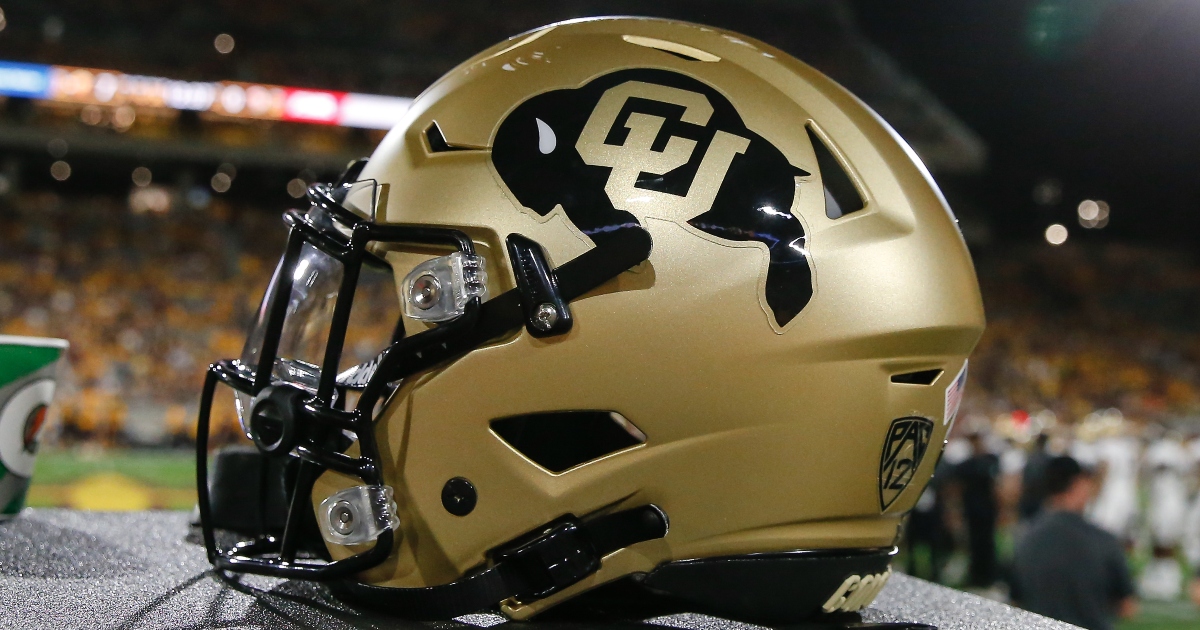
Tennessee safety Boo Carter has committed to Colorado out of the NCAA transfer portal, On3 has learned. Carter had a bit of a rocky relationship with the Volunteers, ultimately departing the program before the 2025 campaign had finished.
In two seasons at Tennessee, Carter recorded 63 tackles. He also notched two sacks, three forced fumbles, an interception and three passes defended.
Carter earned numerous SEC-related honors stemming from the 2024 season. He was a 2024 SEC All-Freshman team selection. He was also a 2025 preseason All-SEC third-team selection by the league’s coaches.
Boo Carter was arguably his most productive in terms of getting his hands on the ball in 2025. He logged 25 tackles, a sack, three forced fumbles and three passes defended this season.
But Carter didn’t stick around for the full season at Tennessee. He did not play in the team’s 42-9 win over New Mexico State in November. That absence was conspicuous.
Coach Josh Heupel expressed some disappointment in Boo Carter after the game. He shed a little light on the situation.
“At the end of the day, there’s a standard you’ve gotta meet to be in that locker room,” Heupel said. “So he was not out on the field with us. That will be my last response to anything related to that for right now.”
Boo Carter also missed several days with the team in July and went into call camp with questions about his availability. But he was able to work his way back into the good graces of the staff.
Ultimately, things didn’t end up working out at Tennessee. Shortly after that New Mexico State game, it was reported that Carter was splitting with the program.
“No, not regretful,” Heupel said. “At the end of the day, it’s our job as coaches to try to mold these guys, and that’s a part of the commitment that you make, you know, in the recruiting process and when they decide to come. You know, sometimes it works, sometimes it doesn’t. And, you know, at the end of the day, we’re moving forward.”
Prior to enrolling at Tennessee, Boo Carter was ranked as a four-star prospect and the No. 111 overall recruit in the nation, according to the Rivals Industry Rankings. He also checked in as the No. 3 athlete in the class and the No. 3 overall player from the state of Tennessee, hailing from Chattanooga (TN) Bradley Central.
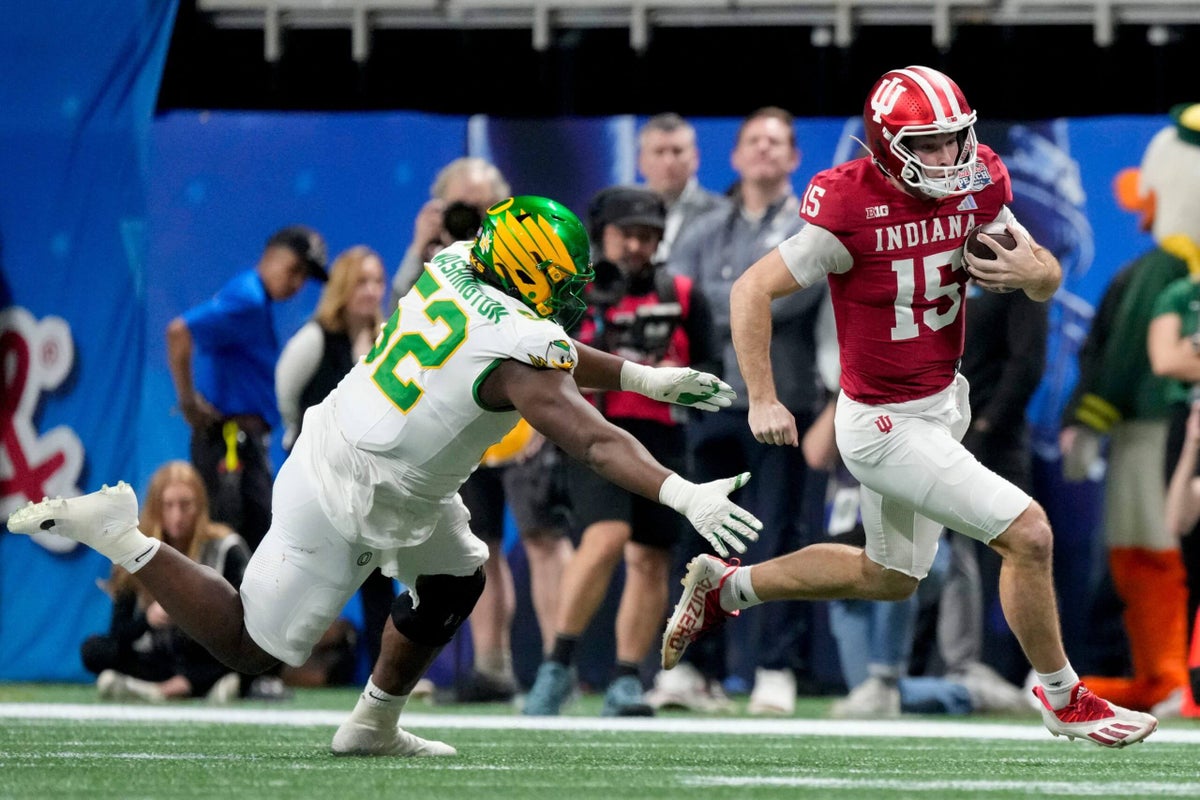
Indiana football is everything right now, representing at once the enhancement of the college football product on the field and the unsustainable reality off it.
No, Indiana didn’t do anything wrong — that we know of, anyway, though I’m sure other coaches would like to investigate Curt Cignetti and his players for spyware or cyborg blood or something. But as we wrap up a week that had the absolute best and worst of the sport clawing at each other for top billing, the Hoosiers should know they’ve made it so much harder for so many people.
Not that they should care. Go destroy Miami after people spend the week talking themselves back into why you can’t really be this good, then celebrate a national championship that would represent one of the most unforeseen, inexplicable, glorious stories in American sports history.
Indiana, even while making Friday night more boring than we wanted with a 56-22 semifinal thrashing of Oregon, is the prevailing example of why college football is in a great place as a product.
Transfer portal. Contracts. No loyalty. Whatever. Inject this stuff into MY VEINS!!!!!
— Dari Nowkhah (@ESPNDari) January 9, 2026
Never has there been more hope for so many. Membership in the exclusive club of heritage and built-in advantages is no longer required. A tallying of the recruiting stars next to names on a roster no longer produces a long and accurate list of programs with no shot of winning it all.
The landscape is always changing, never boring. Vanderbilt, Texas Tech, Ole Miss and Arizona State are among Indiana’s party-crashing undercards. The College Football Playoff is compelling. The games aren’t all thrillers, but enough of them are.
I would, though, like us to get through one of those good games without half of college sports media crowing on some app: “OH THAT’S WEIRD, I THOUGHT COLLEGE FOOTBALL WAS BROKEN.”
Because we all know darn well that, in ways, it is. Or maybe fractured sounds less dramatic. Chaotic. Problematic? Whatever makes you feel less bad. In the same week we’re enjoying the CFP semifinals, including an Ole Miss-Miami classic, we’ve got the former coach of Ole Miss keeping assistant coaches from attending the ball like he’s Cinderella’s stepmother.
We’ve got that same coach, LSU’s Lane Kiffin, courting one quarterback (Arizona State transfer Sam Leavitt) at a basketball game while another (Washington’s Demond Williams Jr.) announces he’s in the portal, apparently with the idea of joining Kiffin, except he had already signed to stay on with Washington. Except we have contracts in college sports that seek to sort of bind, while being careful not to make the person being paid sound as if he or she is being paid to play. Even though that’s exactly what’s happening.
So it’s the latest but far from the last “contract dispute,” this one finishing with Williams deciding to return to Washington. And hey, look, here comes the College Sports Commission promising to start cracking down on these predictable workarounds to pay enough to land top players in a market that is rising.
Which, at best, means an example made of a program or two, and in no way means any chance for the CSC to get its arms around things. Men and women with gavels and long, black robes will continue seeing to that. Lawmakers aren’t changing it.
Collective bargaining, in some form, is the only answer, and more and more people in the industry are coming around on that. The painful, inevitable journey continues. Hopefully, the past week serves as a bit of a jolt. I talked to an administrator who has been in that camp for a while and believes the athletic director and president levels are getting there.
But that will have unintended consequences, too. Go back and read what a lot of us were writing about name, image and likeness rights 10 or 15 years ago. I don’t recall anyone coming close to predicting all that has come with it.
And I must wonder how, with a cap of some sort in place while athletes get a bigger chunk of the revenue overall, the boosters at Ohio State, Alabama and Georgia are going to feel about officially being like everyone else, about parity as league design — about the caddies getting full-time access to the pool and golf course.
Which brings us to the thing I hear the most from folks in college sports in terms of long-term concerns. And this is where Indiana re-enters the discussion, in three words: return on investment. Indiana AD Scott Dolson has made what must be considered, two years later, one of the great hires in modern college football history. As hyperbolic as that may sound.
And for as much as this should be seen as an outlier that will spawn books and documentaries, it only serves to intensify the pressure elsewhere. All your resources, all that time, and you couldn’t figure this out, Penn State? Steve Sarkisian and Arch Manning can’t match this James Madison dude and Fernando Mendoza? Wasn’t USC the program with the great quarterback developer and offensive designer?
Those programs are at least having some success. All of them are begging the millionaires and billionaires who have helped build a facility or throw some nice cars at recruits of the past to sustain competitive payrolls. The TV money is good, but check the expenses. Colleague Seth Emerson wrote about “donor fatigue” in 2024 and, spoiler alert: No one has gotten any rest.
The wealthy folks who pay NFL players are called owners, and their investments are being multiplied many times over. The wealthy folks who pay college players get names on buildings, seats on the team plane and games of catch between the star quarterback and their grandkids. NFL owners lose, fire people, draft high and continue to profit; college boosters increasingly feel like they’re setting large piles of money on fire.
Which is why private equity looks as inevitable as collective bargaining. This is more than just a slight hairline fracture that will heal on its own.
I hope you can enjoy the college football right now. The product is soaring. Also, I hope anyone who cares about it understands that it can plummet without improved leadership that values common sense, the greater good of the industry and all of its employees.
If you’re an Indiana fan, soak in these experiences that are Cignetti-driven but still possible only because of NIL and the transfer portal. And plan to stay for a while. Cignetti never looks like he’s satisfied, and Mark Cuban is looking awfully happy right now.
I for sure have been concerned about all the players abandoning the ship, but what if they were talked to about not doing their jobs. What if they were given the option of either putting in the work or finding a new home. Could we have been wrong in some cases thinking the player was looking for more $ rather than putting the work in. Some players, as you know, don’t live up to their billing. OSU is one of the premier colleges for education and sports. I think when the players were recruited out of HS, they jumped at the chance to be a Buckeye. Now, the players see how difficult it is to live up to the expectations that is required to be a Buckeye. This is just a different take on what we have witnessed so far with the transfer portal. I what to find out how 11W members feel about this.

OK, time’s up. After 30 or so years, it’s time to end the Idiots’ Picnic, time to go home, time to remove the rehearsed-then-parroted nonsense from sports telecasts.
First one that must go is transfer portal. That’s a crock. Those are, in fact, mostly NIL price-tagged signings of college athletes without academic credentials. They are free agents, too many without the ability to read or write functional English.
In 2012, Ohio State QB Cardale Jones presaged the NIL scene when he tweeted, “Why should we have to go to class if we came here to play FOOTBALL, we ain’t come to play SCHOOL, classes are POINTLESS.”
That sad, shameful and nationally ridiculed message is now the daily reality!

And then there were two. The 2026 college football season has led to this: No. 1 Indiana and No. 10 Miami will meet in the College Football Playoff National Championship Game to decide the best team in the country.
In most years, the Hurricanes would be seen as an overwhelming favorite against Indiana. But Miami has gone on an underdog run of its own after making the playoff as the last at-large team.
Indiana, meanwhile, has bowled over opposing teams en route to a 15-0 record. The Hoosiers are 2025’s hegemon and it appears as if they aren’t going away anytime soon.
They handled their semifinal game against Oregon with ease, downing the Ducks 56-22. Miami, meanwhile, triumphed over Ole Miss in a 31-27 thriller that ranks as one of the best postseason games of the CFP era.
Those semifinal games, of course, provided plenty of material to overreact to as the 2025 season nears its conclusion.
Indiana is the best team of the CFP era
Yes, better than 2019 LSU. The Hoosiers may not have as much elite NFL talent — though quarterback Fernando Mendoza is a shoe-in to go first overall in the 2026 draft — and the offense isn’t quite as explosive, but they are a more complete team.
Indiana’s +473 point differential ranks first among schools in the playoff era (hat tip to my CBS Sports colleague Tom Fornelli). The Hoosiers have bludgeoned opposing teams by an average of 31.5 points per contest. Their last three wins against blue bloods Ohio State and Alabama and new blood Oregon have come by a combined score of 107-35.
Curt Cignetti’s squad has won all but one of its games against ranked opponents by at least 10 points. And Indiana is doing this in the Big Ten, one of the nation’s premier conferences.
The Hoosiers are also on the precipice of becoming the first college football program to ever go 16-0. Of course, they have the benefit of playing in the expanded playoff years, but an undefeated season in the modern era of college football, when parity is at an all-time high thanks to NIL, seems like an accomplishment that won’t be easily repeated.
After all, only four NFL teams have ever completed undefeated seasons and it only happened once after the league went to a 16-game schedule.
Indiana vs. Miami: Early preview, odds, picks as Hoosiers will meet Hurricanes in CFP National Championship
Chip Patterson

Miami’s discipline issues will doom it against Indiana
Miami was, somehow, able to overcome itself in the Fiesta Bowl against Ole Miss. The Hurricanes committed 10 penalties for a total of 74 yards, including a targeting foul that resulted in the ejection of cornerback Xavier Lucas. They dropped four potential interceptions.
Those fouls allowed Ole Miss to hang around and even take the lead at certain points. Ultimately, the Rebels made a few crucial mistakes of their own — and were pitiful on third down — which allowed the Hurricanes to outlast Ole Miss.
That won’t do against the well-oiled Indiana machine. The Hoosiers rank third nationally with just 3.57 penalties per game. They’re smart, they’re disciplined and — as was seen with D’Angelo Ponds’ pick six to open Indiana’s semifinal win over Oregon — they will pounce all over any mistakes the opponent makes.
Ultimately, discipline will make the difference in a battle between two teams that stack up fairly well otherwise.
Oregon is in trouble
You’ve certainly heard of a clutch gene if you’re a fan of sports. Oregon coach Dan Lanning has the opposite.
In their last three playoff games against Power Four opponents, the Ducks have been outscored 97-66. That includes a 23-0 romp against Big 12 champion Texas Tech this season.
Talent isn’t the issue with Oregon. The Phil Knight money certainly helps, but the Ducks have always recruited at a high clip. Coach Dan Lanning has done a good job at the high school level and in the portal.
But there’s plenty of reason to be concerned about the path that Oregon is walking with Lanning, especially given the recent postseason results. This will be a big offseason for him.
The Ducks are set to lose both of their bright young coordinators. Will Stein is headed to coach Kentucky while Tosh Lupoi will lead former Pac-12 foe California.
It is a good sign for a program’s health when assistants get head coaching jobs, and it’s a testament to what Lanning has built at the young age of 39. The next few months will be a huge test of his ability to keep the ship steady.
Ole Miss is bigger than Lane Kiffin
It was time to stop talking about Kiffin’s move to LSU once the playoff began, but the two will always be intrinsically linked given the time that Kiffin had in Oxford and the messy nature in which he departed. While Kiffin deserves his flowers for elevating the standard at Ole Miss, it’s clear that the Rebels have outgrown the need for him.
His departure didn’t do the program any favors or anything like that. Pete Golding has shown, in short order, that he can at least maintain the level of success that Kiffin established — if not exceed it. Golding, after all, has more playoff wins than Kiffin at this point, and he’s only been a head coach for three games.
Kiffin was certainly hoping that he’d be able to drag some of Ole Miss’ top stars with him, but his decision instead galvanized the Rebels. Top running back Kewan Lacy, top linebacker Suntarine Perkins and edge rusher Princewill Umanmielen, along with a bevy of other key players, have already committed to returning.
On top of that, Ole Miss is off to an incredible start in the transfer portal. The Rebels currently sit seventh in 247Sports’ Team Transfer Rankings. They’re one of just two schools in the top 10 with less than 10 commits thus far and their average prospect grade of 89.22 is first among top-15 transfer classes.
Four of Ole Miss’ nine transfer additions hold at least a four-star ranking. That includes LSU transfer Carius Curne, the No. 1 offensive tackle in the transfer portal, who spurned Kiffin for the Rebels.

Tickets for the Indiana-Miami College Football Playoff national championship game are available, but they come with a hefty price tag. After Indiana’s win over…
MIAMI GARDENS, Fla.(AP) — The good news: There are tickets out there for the Indiana-Miami matchup in the College Football Playoff national championship game.
The bad news: They’ll cost you. A lot. A whole lot.
In the moments after Indiana finished rolling past Oregon on Friday to win the Peach Bowl 56-22, clinching a spot in the CFP title game on Jan. 19 against Miami — on Miami’s home field, no less — ticket prices for the matchup soared.
The cheapest tickets available entering Friday on the secondary markets were around $2,800. After Friday’s game, those in-the-door prices soared to around $3,800 — and that was for seats in the final rows of the upper deck of Hard Rock Stadium.
By Saturday afternoon, TicketData — which tracks activity across a number of sites — said the lowest get-in price was just under $3,600 per ticket, including fees.
Some seats available on sites like StubHub, TickPick and Ticketmaster were offered for more than $10,000 on Saturday. Numbers like those will fluctuate considerably in the coming days, but it’s already clear that this matchup will be a pricey one. It’s a perfect formula for wild demand: Miami playing a home game and seeking its sixth national title (albeit as the “visiting” team, technically) against an Indiana team on this stage for the first time.
“To see Miami galvanizing like it is right now, it’s awesome,” Hurricanes coach Mario Cristobal said Friday after he and his team arrived home from Thursday night’s win in the Fiesta Bowl over Mississippi. “And we need everybody in that stadium going absolutely bananas.”
Miami sold more than 500,000 tickets this season for its eight home regular-season games, the most in program history. And Indiana fans showed once again in the Peach Bowl that they’ll travel to support their Hoosiers; the stadium in Atlanta was overwhelmingly crimson, swallowing up whatever Oregon green was in the crowd.
“There’s nothing like having a home semifinal game,” Indiana coach Curt Cignetti said in the on-field celebration on Friday night. “There are no fans like Indiana Hoosier fans.”
Not everyone at the game will have to pay the big, big, big prices. Indiana and Miami both receive an allotment of tickets that they can sell — at face value — to season-ticket holders, donors, students and others.
And it appeared Saturday, based on what was showing online, that most of the early sales were for tickets on the “visitor” sideline — because that’s where Miami will be for the game. The CFP predetermined that the Fiesta Bowl winner would be the road team and the Peach Bowl winner would be the home team, meaning Indiana will be on the sideline that the Hurricanes typically occupy.
Get poll alerts and updates on the AP Top 25 throughout the season. Sign up here. AP college football: https://apnews.com/hub/ap-top-25-college-football-poll and https://apnews.com/hub/college-football

Tennessee safety Boo Carter commits to Colorado out of NCAA transfer portal

Long Beach State vs. McKendree, Men’s Volleyball – The562.org

Is college football broken, or the best it’s ever been? Yes

No. 3 Long Beach State Sweeps McKendree to Close Opening Weekend – The562.org

Beach Earn Back-to-Back Home Wins with Sweep of McKendree

CSUN Concludes Asics Invitational With 3-0 Sweep Over Kentucky State

What if Not NIL but Hit the Road Jack
Bailey Sinish named Gatorade Player of the Year
Pride Men’s Track and Field Takes on Wesleyan Winter Invitational
2025 Providence Journall All-State Girls Volleyball Team
Track and Field Opens 2026 Calendar year at Wesleyan Winter Invitational

Nowak Paces Jaspers; Men’s Volleyball Opens Program at Penn State

Hadziahmetovic, Hale and Marshall Among Ball State Leaders at Badgers Midwest Invite

Sports broadcasting’s parroting problem is bordering on the shameful

Damis, Bolaske Post Top 40 Division III Marks as Indoor Track Gets Back in Action

Stempien to seek opening for Branch County Circuit Court Judge | WTVB | 1590 AM · 95.5 FM

#11 Volleyball Practices, Then Meets Media Prior to #2 Kentucky Match

Ross Brawn to receive Autosport Gold Medal Award at 2026 Autosport Awards, Honouring a Lifetime Shaping Modern F1

Maine wraps up Fall Semester with a win in Black Bear Invitational

Princeton Area Community Foundation awards more than $1.3 million to 40 local nonprofits ⋆ Princeton, NJ local news %

Nascar legal saga ends as 23XI, Front Row secure settlement

Downtown Athletic Club of Hawaiʻi gives $300K to Boost the ’Bows NIL fund

Sunoco to sponsor No. 8 Ganassi Honda IndyCar in multi-year deal

WNBA’s Caitlin Clark, Angel Reese and Paige Bueckers in NC, making debut for national team at USA camp at Duke

Badgers news: Wisconsin lands 2nd commitment from transfer portal

Nike Signs 10 LSU Athletes to NIL deals

Five Youth Sports Trends We’re Watching in 2026

Three Clarkson Volleyball Players Named to CSC Academic All-District List

Beach Volleyball Unveils 2026 Spring Schedule – University of South Carolina Athletics

Kentucky AD explains NIL, JMI partnership and cap rules





-
 Sports3 weeks ago
Badgers news: Wisconsin lands 2nd commitment from transfer portal
-
 Rec Sports1 week ago
Five Youth Sports Trends We’re Watching in 2026
-
 Sports2 weeks ago
Kentucky VB adds an All-American honorable mention, loses Brooke Bultema to portal
-

 Motorsports3 weeks ago
Dr. Patrick Staropoli Lands Full-Time O’Reilly Ride with Big Machine Racing
-

 Motorsports2 weeks ago
BangShift.com IHRA Acquires Historic Memphis Motorsports Park In Millington Tennessee. Big Race Weekend’s Planned For 2026!
-
NIL2 weeks ago
Fifty years after IU’s undefeated champs … a Rose Bowl
-
 Sports2 weeks ago
2025 Volleyball Player of the Year: Witherow makes big impact on Central program | Nvdaily
-
 Sports2 weeks ago
H.S. INDOOR TRACK & FIELD: GLOW region athletes face off at Nazareth University | Sports
-
 Sports2 weeks ago
Colorado volleyball poised to repeat success
-

 Sports2 weeks ago
Texas A&M volleyball’s sweep of Kentucky attracts record viewership