American sports come with implied narratives. The story of baseball is fundamentally nostalgic, connecting us to childhood and to the country’s pastoral beginnings. Football tells a story of manly grit, with echoes of the battlefield. Basketball is the city game, as the sportswriter Pete Axthelm called it half a century ago, and its chief narrative, for decades, was about escaping the ghetto. Religious metaphors run hotter in basketball than in other sports: when Spike Lee set out to make an ode to New York City hoops, he named his protagonist Jesus Shuttlesworth, for the N.B.A. Hall of Famer Earl (Jesus) Monroe; LeBron James appeared on the cover of Sports Illustrated at the age of seventeen as “The Chosen One.” Every tall and prodigiously skilled teen-ager feels like an act of God. And no sport, perhaps other than soccer, with its pibes and craques—the impoverished dribbling and juggling machines who hope to become the next Maradona or Pelé—so deeply mythologizes the search for talent. The savior of your N.B.A. franchise might be getting left off his high-school team in Wilmington, North Carolina, or he might be selling sunglasses on the streets of Athens, Greece, to help his Nigerian immigrant parents make ends meet, or he might be living with his mother in a one-bedroom apartment in Akron, Ohio. You just have to find him.
At least, that was the story. On a recent episode of “Mind the Game,” the podcast that LeBron James hosts with the coach and former point guard Steve Nash, James spoke with the young N.B.A. superstar Luka Dončić about how different James’s hoops upbringing had been from that of kids today. On the playgrounds of Akron, James said, he would play 21, in which the person with the ball tries to score against everyone else. Such games taught him how to improvise, how to get around multiple defenders and create scoring opportunities out of nothing. James is a father of two sons, who mostly learned how to play basketball “indoors,” in a “programmed” environment, he said. They were taught the game by a fleet of coaches and other professionals. “I didn’t have a basketball trainer until second, third, maybe fourth year in the N.B.A.,” James went on. “My basketball training was just being on the court.” Last year, Dončić founded a nonprofit that focusses on youth basketball; in December, the organization published a report arguing that, as youth sports have professionalized, they have become more exclusive, sucking the “joy” out of the game.
A video clip of the podcast was posted on TikTok, and the top comment beneath it reads, “Lebron will be one of the last superstars that’s from the ghetto, basketballs like golf now it’s a tutelage sport.” That might not be entirely true; if a seven-foot-two teen-age Kareem Abdul-Jabbar were walking around any neighborhood in New York today, he wouldn’t get far without a wannabe agent stopping him in the street. But, putting aside such once-in-a-generation talents, the landscape of the league has subtly changed. James and his older son, LeBron (Bronny) James, Jr., made N.B.A. history last year by suiting up as teammates, for the Los Angeles Lakers. And, while that was a first, being a second-generation N.B.A. player is becoming almost unremarkable. In 2009, ten players in the league had fathers who’d played for N.B.A. teams; this past season, there were thirty-five. The future promises even more hoop legacies. The likely No. 2 pick in the upcoming draft is Dylan Harper, whose father, Ron, played with Michael Jordan on the Chicago Bulls. Lists of top high-school recruits include the names Anthony, as in Carmelo, and Arenas, as in Gilbert. James’s younger son, Bryce, has committed to play for the University of Arizona and could also reach the N.B.A. soon.
Genetics is the most obvious explanation: if your dad is six feet eight and your mom is six feet two, you stand a better chance of guarding Kevin Durant—or Durant’s kids—than my children will ever have. But the N.B.A. has been around for almost eighty years, and the number of roster spots in the league has barely changed since the mid-nineties. If all that mattered were good genes, the influx of second-generation players would have shown up thirty years ago. Why the spike now?
To answer that question, one N.B.A. executive told me, you probably have to look at the economy of basketball development. The children of pros are generally wealthy and well connected; they have access to “better training, coaching, and the right people who can put them on the right lists,” the executive said. “Those early edges accumulate.” Increasingly, players are made as much as they are born, and making those players costs money. A star prospect requires a set of physical gifts that might as well be divine in origin. But, to compete now, he will also likely need the kinds of resources that you have to buy, and a small industry has arisen to sell them.
“It’s getting too expensive for some kids to even play, and the pressure to be perfect takes away the love for the game,” Dončić told me. “I think about my daughter and wonder what sports will feel like for her one day.” Jay Williams, a basketball analyst at ESPN who was the second pick in the 2002 N.B.A. draft, said to me, “When I came into the league in the early two-thousands, player development was mostly raw talent, repetition, and survival.” Now, he said, “development starts younger, it’s more specialized, and it’s driven by business.” Jermaine O’Neal, a six-time N.B.A. All-Star who recently founded a basketball-centered prep school, told me, “The cost of everything has changed.” O’Neal, like James, grew up with a single mother in a working-class area of a small city. Sports in general, O’Neal said, are “pricing out a percentage of athletes raised in communities like mine.”
The professionalization of youth sports has changed not only who reaches the N.B.A. but how the game is played when they get there. Watching the post-season this year, I found the level of play to be possibly higher than ever. But I felt little emotional connection to the game. Like many fans, I complain about the number of three-point shots that teams are taking, which turns so many games into an almost cynical exercise in playing the odds. Today’s style is also more rehearsed, more optimized. This, I believe, can be traced to the way that the players are learning the game from an early age—to the difference between a childhood spent outdoors with your friends, competing against grown men, and one spent as a customer, with a cadre of coaches who push you only in the ways that you or, in most cases, your parents approve of.
“What used to be driven by someone’s hunger to improve, to figure it out and work to get better, becomes a job for a lot of these kids so early,” Steve Nash told me. This, he added, meant “essentially trading their enjoyment and motivation for a calculated approach that may be more suitable to young adults than young kids.”
“You know that stupid thing that you said at a party when you were in your twenties that you thought made everybody hate you and it kept you up at night for years after? You were right to be concerned.”
Cartoon by Ivan Ehlers
Does this shift also help explain why the N.B.A. has struggled to find its next superstars, successors to James, Steph Curry, and others of their generation? Perhaps. It’s true that a number of today’s best players—Dončić, Nikola Jokić, Giannis Antetokounmpo—are from other countries, and many Americans crave homegrown heroes. But the leading players in this year’s finals, Shai Gilgeous-Alexander, of the Oklahoma City Thunder, and Tyrese Haliburton, of the Indiana Pacers, are North American. (Gilgeous-Alexander is from Canada.) The former plays a throwback game that involves a lot of slithering through tight spaces; the latter makes surprising, lightning-quick passes and fires his jump shots with an awkward motion that resembles an old man pushing his grandchild on a swing. Yet neither player has caught the public imagination in the manner of a James or a Curry or a Durant. When fans argue about the next face of the league, they usually bring up Anthony Edwards, the charismatic guard on the Minnesota Timberwolves, or Ja Morant, of the Memphis Grizzlies, who floats through the air like his bones are hollow before exploding into some of the most violent dunks the league has ever seen. They are the basketball equivalents of James Brown: undeniably virtuosic, always on point, but with so much confidence and brio that they feel unpredictable and capable of anything. The new N.B.A. archetype, in contrast, feels more like an “American Idol” singing machine—technically flawless and with unlimited range, but ultimately forgettable for everyone except the vocal coaches on YouTube.
What happened? Once, a serious basketball prospect might simply play on his local high-school team and then head off to college. Nowadays, he will likely attend multiple schools, seeking exposure, playing time, and competition. The trend began slowly, in the nineteen-eighties, when secondary schools with big-time basketball programs—notably, Oak Hill Academy, in rural Virginia, the alma mater of Rod Strickland, Anthony, and Durant—began recruiting the country’s best players. Soon, explicitly sports-centered schools emerged. The talent agency IMG purchased the Nick Bollettieri Tennis Academy, in Florida, and expanded it to include other sports, adding basketball in 2001. Five years later, Cliff Findlay, a Las Vegas businessman who had made his money in car dealerships, opened Findlay Prep, which was, arguably, just a basketball team—a dozen or so boys from all over the world who played games around the country and took classes at a private school a few minutes away from the gym where they practiced. Findlay Prep won three national high-school titles in four years and produced eighteen N.B.A. players. It closed down, in 2019, when the nearby private school ended the partnership. Suddenly, Findlay’s students had nowhere to go to class.
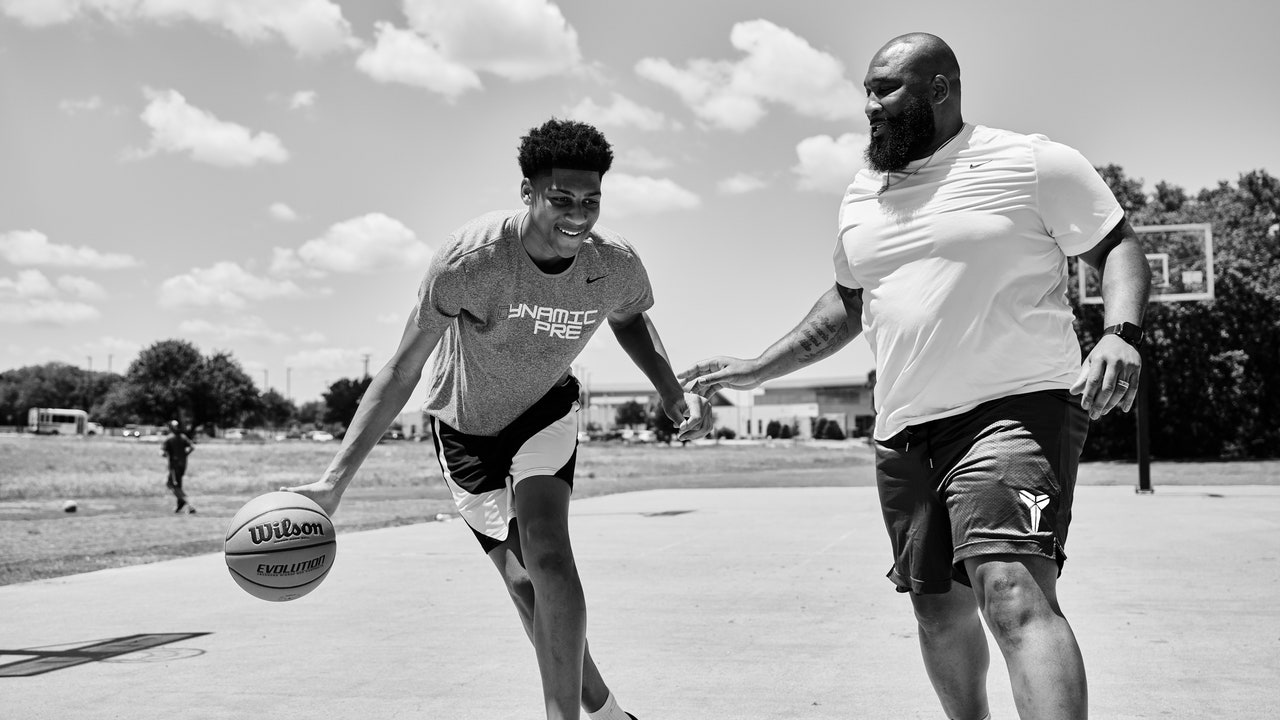
This spring, I flew to Dallas to visit Dynamic Prep, the school that Jermaine O’Neal founded in 2022. It has eleven students, all of them Division I basketball prospects. Monday through Friday, the students gather at a twenty-four-thousand-square-foot training facility just north of the city. In the morning, they sit in a classroom and take an N.C.A.A.-approved curriculum of online courses. Then they head to the gym for strength training and conditioning, before basketball practice in the afternoon.
When I arrived, Dynamic’s student body was on the court. The team had recently been ranked tenth in the country by ESPN, helping it qualify as a late addition to the Chipotle Nationals, an annual tournament that unofficially crowns the country’s high-school champions. But Dynamic would face long odds against more established programs, including IMG Academy and Montverde Academy, another Florida school that consistently produces N.B.A. draft picks. And practice wasn’t going well. O’Neal, who is the head coach of the team in addition to being the school’s founder, stood on the sidelines, his arms crossed. He is nearly seven feet tall, with a high forehead and a dimpled chin; he still appears to be more or less in playing shape. The team had been running half-court sets for nearly thirty minutes, but nobody was where he was supposed to be—not even Jermaine O’Neal, Jr., the team’s small forward. O’Neal, Sr., had spent the first half of practice quietly simmering; then one player missed a defensive rotation and asked his flummoxed coach what was wrong. “Your demeanor!” O’Neal yelled, before ordering the player off the court. Another kid replaced him, and the ball was passed back to the top of the key. The drill began again.
O’Neal grew up in Columbia, South Carolina, and counts thirty-two siblings among his relatives. His mother taught him almost everything; he didn’t meet his father until he was thirty years old. At seventeen, just a few years after growing about nine inches in three months, he became one of the youngest players ever to reach the N.B.A. when he was drafted in the first round by the Portland Trail Blazers. He was part of a generation who skipped college entirely; the sports media was largely skeptical of kids who turned down college scholarships in favor of N.B.A. dollars, and these teen-agers often found themselves competing for playing time against men more than a decade older. O’Neal rode the bench for four years. But veterans on the team made sure that he understood his place on the roster and how to act like a professional. When he was traded to the Indiana Pacers, after his fourth season, he flourished.
O’Neal credits the playgrounds of his childhood with giving him instincts on the court and helping instill the resilience to endure what felt like an ignoble start to his career. He knows that the kids he coaches aren’t getting that kind of real-world instruction, and so he looks for ways to simulate it. “I’m taking a little bit of the hardship mind-set of how I grew up, and I’m bringing it to this new-school mind-set and mixing it,” he told me. The team’s intense practices and his focus on defense are partly meant to create an experience of adversity. He believes that his job is not only to prepare his players for what comes after Dynamic in college or in the pros but also to protect them from it. “Your coaches won’t love you—you’re just getting them closer to another win,” he yelled at one point during practice. “Once you get on campus, your parents will never be able to help you.”
NORTH OLMSTED — As a kid, Cavaliers small forward Max Strus used to be taken by his uncle to community events for the Chicago Bears, often involving bowling. He had such fond memories of those days that he hoped to be able to organize similar events as his career progressed.
And so the Max Strus Family Foundation Bowl the Land event was created in 2024. The second annual event was held Dec. 7 at RollHouse in North Olmsted, and it featured the entire Cavaliers team and coach Kenny Atkinson, who all showed up in support.
“When I was I younger, I grew up going to events, and it was called Bowl with the Bears. My uncle was with Blue Cross Blue Shield and he’d buy a lane and bring us,” Strus said. “So to do that, have a bunch of kids here, hopefully they’ll remember this for the rest of their lives as well.”
Proceeds from the event will benefit local programs supporting education, youth sports, health care, cancer research and mental health resources. Families and organizations who want to be a part of the experience are teamed up with a Cavaliers player for a round of bowling.
“We have a pedestal that we’re put on when you’re in this environment,” Strus said. “How you use your platform is special to me, and this is how I want to do it, how I was raised to do it. So having this platform to be able to speak out, be a light in the community and create a sense of community for all is all I’m trying to do.”
Strus has yet to make his season debut with the Cavs after offseason foot surgery, which also prevented him from bowling during his family foundation’s event, but he was able to meet everyone who came. Teammates took on the responsibility of bowling on his behalf.
“It just shows you about our team. We’re all in it for the right reasons,” Strus said. “We’re all doing it the right way and trying to help each other out with our endeavors.”
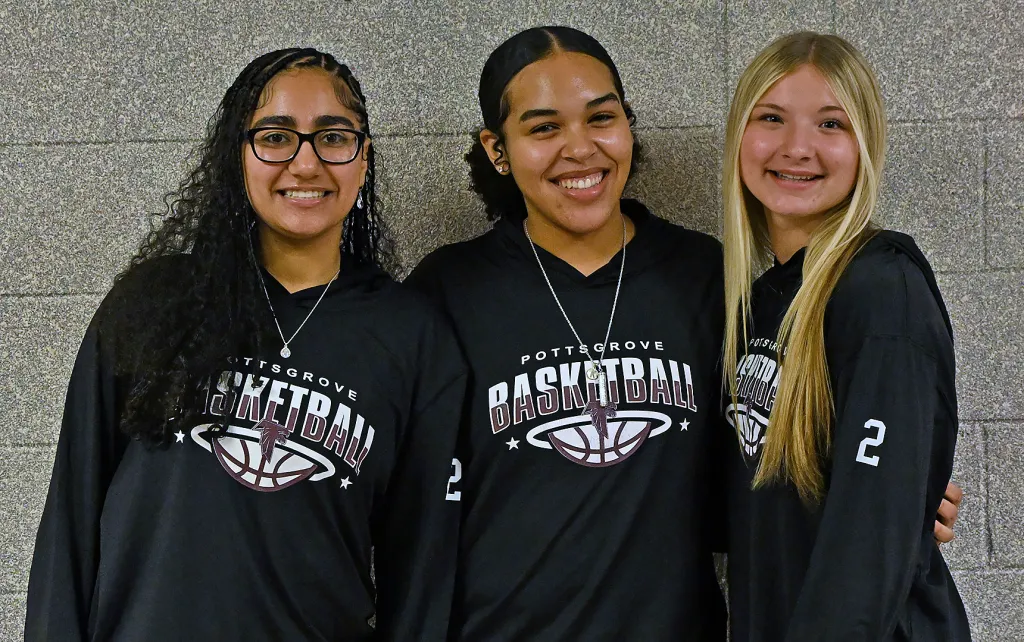
Note: In the week ahead, the Mercury will finish its preview of all 12 Pioneer Athletic Conference girls basketball programs now that the 2025-26 season has arrived. Next up is Pottsgrove, which won nine games last year with the youngest roster in the league.
While Pottsgrove came up just short in its quest for a postseason berth last winter, the Falcons arguably overachieved more than any other program in the PAC.
The team led the league in minutes played for underclassmen, with 12 of its 15 players either freshmen or sophomores. The Falcons did have a pair of senior captains in Ava Leaman and Aleah Rockmore to lead the youth movement, but virtually everyone else was tossed into the deep end without a life preserver and told to sink or swim.
The Falcons mostly kicked their way to the surface, finishing the season with a 9-13 overall record, including a 7-3 mark against PAC Frontier opponents. Pottsgrove was a win or two away from making it to the league playoffs and finished the season as the 14th-ranked team in Class 5A, with the top 12 teams earning invites to the district tournament.
Now, with everybody back in the fold but Leaman and Rockmore, this iteration of the Falcons is optimistic the lessons learned from a year ago will translate into the program’s first winning season since the 2020-21 campaign.
“Last year they were very young but learned quickly,” head coach Matt Morton said. “This year having a year under our belt at the varsity level, I think they are that much more prepared to take on the teams in the PAC and around the district. It’s exciting to get them all back together to build upon what we started last year.”
The Falcons are off to a 1-2 start to the 2025-26 season, losing their opener at Marple Newtown before splitting a pair of games in last weekend’s Pottsgrove Tip-Off Tournament, beating Brandywine Heights by 22 and dropping a tight 2-point championship game to Upper Darby. Against Brandywine Heights, the Falcons grabbed 40-plus rebounds and forced 24 turnovers, so when things are firing on all cylinders, the team can score, play defense and box out.
The rotation includes a trio of talented forwards in 5-10 junior Vivian Kyler, 5-10 sophomore Kendra Ivory and 5-9 sophomore Layla Jelbaoui. Kyler produced a 12-point, 10-rebound effort against Brandywine Heights and Ivory grabbed double-digit boards twice in the season’s first three games.
In the backcourt, sophomore point guard Thelia Dellaquilla and sophomore shooting guard Nyla’h Stubbs have already proven to be capable two-way players, and freshman guard Joz’lyn Cillio scored eight points in the team’s lone win on Friday. Junior 5-8 wing Malak Ahmed and 5-9 freshman Emily Hendrzak have also received minutes in the season’s early going.
It’s an intriguing mix in a seemingly wide-open PAC, and with only one senior and four juniors on the current roster, this group has more time than most to build and continue on its upward trajectory.
“It was definitely a wake-up call,” Ivory said of being thrown into the fire a year ago. “It was not easy getting put out there against juniors and seniors who know the game and have played a lot more games, but I think we picked it up quickly. We had to step up, and I was very proud of my team and myself.”
“We stepped up and made the freshmen feel more comfortable so that they would play better,” added Kyler, a virtual elder statesman as a sophomore last season. “This year we want to focus on working hard, getting serious and making it to districts.”
Pope John Paul II and Upper Merion each finished ahead of Pottsgrove in the Frontier Division last season and both programs bring back multiple key pieces, while Pottstown and Upper Perkiomen are off to strong starts and both look much improved out of the gate. So, while emerging at the top of the pile will be anything but easy, Pottsgrove does have the pieces in place to claim a seat at the postseason table if the youthful roster continues developing at an ahead-of-schedule pace.
“Last year was mentally tough, but you just have to get through it,” Ahmed said. “Our experience was pretty good – we built culture, became closer, became a family. I hope to do that again with the rest of our younger girls and keep developing a good work ethic even when the days are hard.”
Morton thinks two of Pottsgrove’s biggest attributes are the team’s versatility and ability to play together. The Falcons have a good mix of size, shooting, ball handling, with the group’s individual strengths bringing out the best in the collective as a whole.
“They’re all very complementary players,” Morton said. “We work well together. When Kendra is playing well inside it makes it a little easier for the guards to get the ball up the court and easier to get our shooters going. When Viv is in there playing great defense, banging rebounds and putting the ball back in (the hoop), it tightens up the inside and opens up the outside.
“One of our strong suits is that we are very unselfish – sometimes too unselfish. We need to be a little more selfish in taking the ball and taking the shot.”
Even after a nine-win season that exceeded expectations a year ago, the Falcons still don’t feel as if the rest of the league takes them seriously enough. Who knows, maybe that means this group can sneak up on the rest of the PAC once more, this time with league and district playoff berths as the ultimate prize?
“Me and the team are very locked in and ready for the season,” Ivory said. “We are definitely still very young, so maybe a lot of people look down on Pottsgrove. One of our goals is to put the work in and prove everyone wrong. This year, I think we’re ready for that.”
Partnership with World Athletics includes construction of 11 running tracks in 11 countries around the world
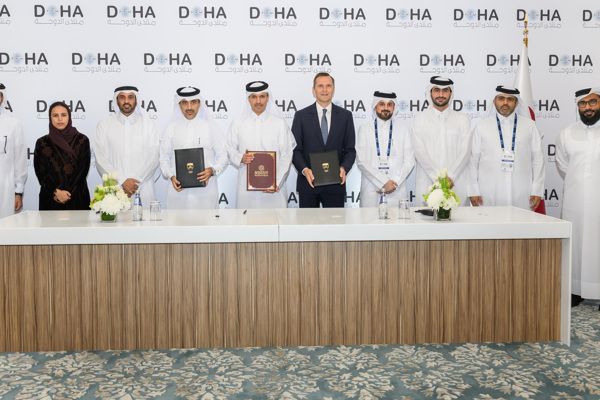
The Qatar Olympic Committee (QOC), in partnership with World Athletics and the Qatar Fund for Development (QFFD), has launched ‘Aim Beyond’ – a project that aims to empower youth and underserved communities through the transformative power of sport.
As part of the project, 11 state-of-the-art, eco-friendly and inclusive running tracks will be constructed across 11 countries around the world, in Anguilla, Burundi, Cook Islands, Dominica, Kyrgyzstan, Moldova, Palestine, Panama, Tajikistan, Tanzania and Ukraine.
The project reflects Qatar’s deep belief in the power of sport to promote sustainable development, peace and social cohesion. It also underscores the country’s determination to transform sporting legacy into a tangible tool for positive change in the lives of youth and communities.
The tracks to be built are distinguished by their inclusivity, accommodating the needs of athletes with disabilities, and by their sustainability, using eco-friendly materials. The new tracks will also serve as community hubs that promote the values of sporting excellence and strengthen young athletes’ sense of belonging to their communities.
“In many communities around the world, athletic talent is abundant, but facilities are not – and that’s where Aim Beyond makes its mark,” said World Athletics CEO Jon Ridgeon, who attended the signing ceremony for the project in Doha on Monday (8). “Partnerships drive our mission to make athletics accessible and inspiring for all, and the collaboration between World Athletics, QOC and QFFD is exactly the kind of strategic, human-centred teamwork our sport needs.
“Together, we are strengthening infrastructure for our Member Federations, opening doors that many young athletes have never been able to walk through, and ensuring the legacy of the Doha 2019 World Athletics Championships continues to reach well beyond Qatar.
“My sincere thank you to His Excellency Sheikh Joaan bin Hamad Al Thani, whose vision and commitment to athletics are helping to shape the future of our sport. Our sport owes you an enormous debt of gratitude.”
The announcement of the project came pursuant to the agreement signed by the QOC Secretary General H.E. Jassim bin Rashid Al Buenain and the QFFD Director General Fahad Hamad Al-Sulaiti on the sidelines of the Doha Forum, held from 6-8 December under the theme ‘Diplomacy, Dialogue and Diversity’.
H.E. Jassim bin Rashid Al Buenain said: “Aim Beyond is an ambitious project to create a world where every aspiring athlete has access to facilities to aim beyond their limits. Just as Doha 2019 allowed Qatar to aim beyond its limits in pursuit of its ultimate dream, so too will this project create opportunities for young athletes to reach their full potential.
“We are proud that through this ambitious project, the legacy of the Doha 2019 World Athletics Championships will continue to shape the future of athletics – transcending borders and serving as a symbol of commitment, hope and opportunity.”
Fahad Hamad Al-Sulaiti said: “At Qatar Fund for Development, we firmly believe that sport is a transformative catalyst for human development and social progress and our partnership today with the Qatar Olympic Committee project reflects this commitment.
“By establishing inclusive and sustainable athletics tracks in underserved communities, we are creating pathways for young people to develop their talents, strengthen their capabilities, and realise their full potential. This initiative is not merely about constructing facilities, it is about laying the foundations for brighter, more prosperous futures.”
The signing ceremony during the Doha Forum – a premier global platform for dialogue and diplomacy – highlights how sport can drive sustainable development, peace and human development. The forum brings together global leaders, policymakers and innovators to discuss critical challenges and shape action-driven solutions.
{KXLG – Watertown, SD} The Elks Hoop Shoot is a nationwide free throw contest sponsored annually by the Benevolent and Protective Order of Elks. It’s one of the largest and longest-running youth sports programs in the country, giving kids ages 8 to 13 the chance to compete in a fun, skill-based event that emphasizes hard work, sportsmanship, and perseverance.
More than 1 million youth across the U.S. participate each year, starting at the local lodge level. Winners advance through local, state, regional, and national competitions, with the national finals held each spring at Chicago’s Wintrust Arena. Six national champions are crowned, and their names are engraved in the Naismith Memorial Basketball Hall of Fame.
The program is designed to develop hard work and confidence. The Elks highlight that success in the Hoop Shoot often comes down to practice and consistency which are qualities they hope kids carry beyond the basketball court.
Watertown Elks Lodge #838 welcomed 61 young athletes for this year’s local event, with first-place finishers earning a spot at the state competition and a chance to continue their run toward the national stage.
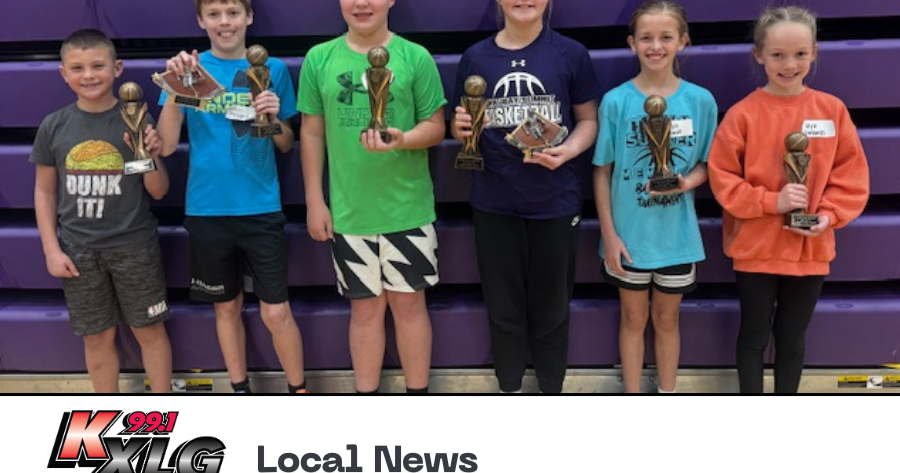
Winners of the Watertown Elks Hoop Shoot were: Odin Ebsen 8/9 boys from Summit, Kellen Haugen 10/11 boy from Watertown, Nate Roe, 12/13 boy from Florence, Brynlee Amdahl 12/13 girl Summit, Ashlyn Schmidt 10/11 girl Florence, Mya Gaikowski 8/9 girl Waubay.
The state competition will be held on February 7th in Pierre at St. Joseph’s School Gym.
Cal Petersen held onto a simple childhood dream: He wanted to play for the Waterloo Black Hawks.
He grew up in eastern Iowa, and he gravitated toward hockey – a sport often trumped by more popular sports in the state, like baseball, basketball, football and wrestling – because of his family’s history.
And while most young players dreamed of making it to the National Hockey League, Petersen set his sights on the local USHL – the top junior hockey league in the United States – team.