
Rec Sports
Heir Ball: How the Cost of Youth Sports Is Changing the N.B.A.

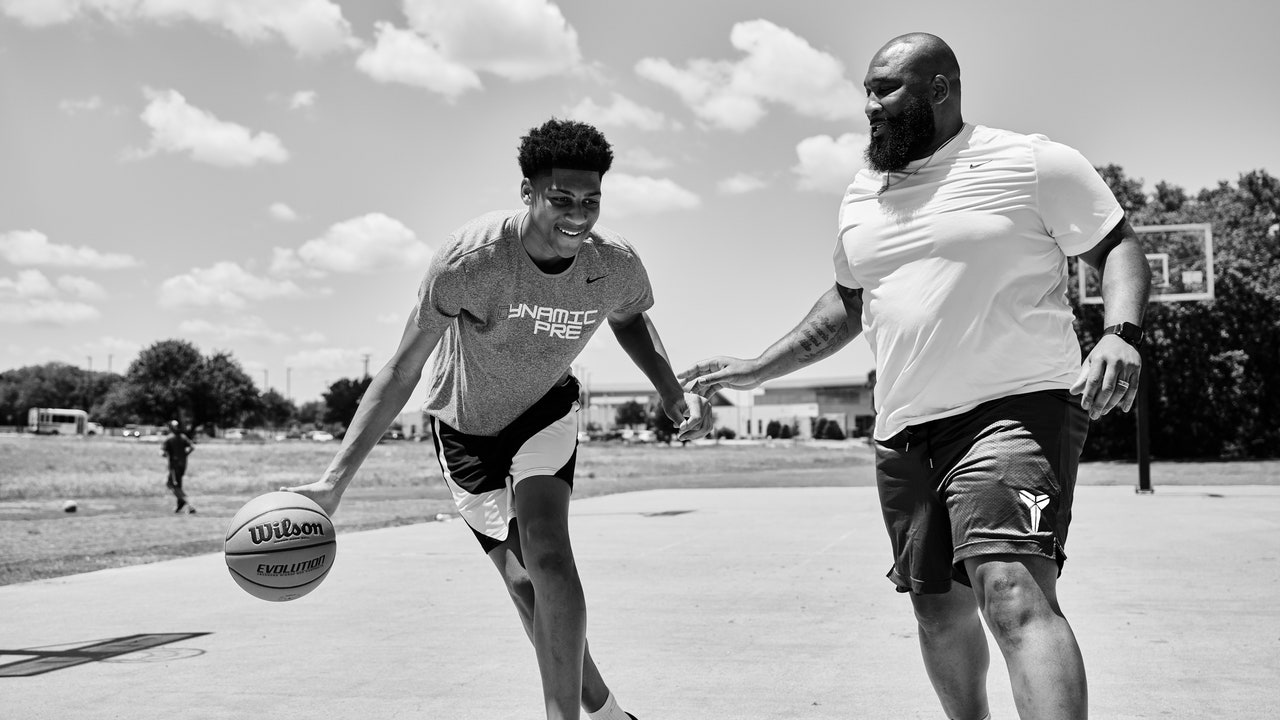
American sports come with implied narratives. The story of baseball is fundamentally nostalgic, connecting us to childhood and to the country’s pastoral beginnings. Football tells a story of manly grit, with echoes of the battlefield. Basketball is the city game, as the sportswriter Pete Axthelm called it half a century ago, and its chief narrative, for decades, was about escaping the ghetto. Religious metaphors run hotter in basketball than in other sports: when Spike Lee set out to make an ode to New York City hoops, he named his protagonist Jesus Shuttlesworth, for the N.B.A. Hall of Famer Earl (Jesus) Monroe; LeBron James appeared on the cover of Sports Illustrated at the age of seventeen as “The Chosen One.” Every tall and prodigiously skilled teen-ager feels like an act of God. And no sport, perhaps other than soccer, with its pibes and craques—the impoverished dribbling and juggling machines who hope to become the next Maradona or Pelé—so deeply mythologizes the search for talent. The savior of your N.B.A. franchise might be getting left off his high-school team in Wilmington, North Carolina, or he might be selling sunglasses on the streets of Athens, Greece, to help his Nigerian immigrant parents make ends meet, or he might be living with his mother in a one-bedroom apartment in Akron, Ohio. You just have to find him.
At least, that was the story. On a recent episode of “Mind the Game,” the podcast that LeBron James hosts with the coach and former point guard Steve Nash, James spoke with the young N.B.A. superstar Luka Dončić about how different James’s hoops upbringing had been from that of kids today. On the playgrounds of Akron, James said, he would play 21, in which the person with the ball tries to score against everyone else. Such games taught him how to improvise, how to get around multiple defenders and create scoring opportunities out of nothing. James is a father of two sons, who mostly learned how to play basketball “indoors,” in a “programmed” environment, he said. They were taught the game by a fleet of coaches and other professionals. “I didn’t have a basketball trainer until second, third, maybe fourth year in the N.B.A.,” James went on. “My basketball training was just being on the court.” Last year, Dončić founded a nonprofit that focusses on youth basketball; in December, the organization published a report arguing that, as youth sports have professionalized, they have become more exclusive, sucking the “joy” out of the game.
A video clip of the podcast was posted on TikTok, and the top comment beneath it reads, “Lebron will be one of the last superstars that’s from the ghetto, basketballs like golf now it’s a tutelage sport.” That might not be entirely true; if a seven-foot-two teen-age Kareem Abdul-Jabbar were walking around any neighborhood in New York today, he wouldn’t get far without a wannabe agent stopping him in the street. But, putting aside such once-in-a-generation talents, the landscape of the league has subtly changed. James and his older son, LeBron (Bronny) James, Jr., made N.B.A. history last year by suiting up as teammates, for the Los Angeles Lakers. And, while that was a first, being a second-generation N.B.A. player is becoming almost unremarkable. In 2009, ten players in the league had fathers who’d played for N.B.A. teams; this past season, there were thirty-five. The future promises even more hoop legacies. The likely No. 2 pick in the upcoming draft is Dylan Harper, whose father, Ron, played with Michael Jordan on the Chicago Bulls. Lists of top high-school recruits include the names Anthony, as in Carmelo, and Arenas, as in Gilbert. James’s younger son, Bryce, has committed to play for the University of Arizona and could also reach the N.B.A. soon.
Genetics is the most obvious explanation: if your dad is six feet eight and your mom is six feet two, you stand a better chance of guarding Kevin Durant—or Durant’s kids—than my children will ever have. But the N.B.A. has been around for almost eighty years, and the number of roster spots in the league has barely changed since the mid-nineties. If all that mattered were good genes, the influx of second-generation players would have shown up thirty years ago. Why the spike now?
To answer that question, one N.B.A. executive told me, you probably have to look at the economy of basketball development. The children of pros are generally wealthy and well connected; they have access to “better training, coaching, and the right people who can put them on the right lists,” the executive said. “Those early edges accumulate.” Increasingly, players are made as much as they are born, and making those players costs money. A star prospect requires a set of physical gifts that might as well be divine in origin. But, to compete now, he will also likely need the kinds of resources that you have to buy, and a small industry has arisen to sell them.
“It’s getting too expensive for some kids to even play, and the pressure to be perfect takes away the love for the game,” Dončić told me. “I think about my daughter and wonder what sports will feel like for her one day.” Jay Williams, a basketball analyst at ESPN who was the second pick in the 2002 N.B.A. draft, said to me, “When I came into the league in the early two-thousands, player development was mostly raw talent, repetition, and survival.” Now, he said, “development starts younger, it’s more specialized, and it’s driven by business.” Jermaine O’Neal, a six-time N.B.A. All-Star who recently founded a basketball-centered prep school, told me, “The cost of everything has changed.” O’Neal, like James, grew up with a single mother in a working-class area of a small city. Sports in general, O’Neal said, are “pricing out a percentage of athletes raised in communities like mine.”
The professionalization of youth sports has changed not only who reaches the N.B.A. but how the game is played when they get there. Watching the post-season this year, I found the level of play to be possibly higher than ever. But I felt little emotional connection to the game. Like many fans, I complain about the number of three-point shots that teams are taking, which turns so many games into an almost cynical exercise in playing the odds. Today’s style is also more rehearsed, more optimized. This, I believe, can be traced to the way that the players are learning the game from an early age—to the difference between a childhood spent outdoors with your friends, competing against grown men, and one spent as a customer, with a cadre of coaches who push you only in the ways that you or, in most cases, your parents approve of.
“What used to be driven by someone’s hunger to improve, to figure it out and work to get better, becomes a job for a lot of these kids so early,” Steve Nash told me. This, he added, meant “essentially trading their enjoyment and motivation for a calculated approach that may be more suitable to young adults than young kids.”

“You know that stupid thing that you said at a party when you were in your twenties that you thought made everybody hate you and it kept you up at night for years after? You were right to be concerned.”
Cartoon by Ivan Ehlers
Does this shift also help explain why the N.B.A. has struggled to find its next superstars, successors to James, Steph Curry, and others of their generation? Perhaps. It’s true that a number of today’s best players—Dončić, Nikola Jokić, Giannis Antetokounmpo—are from other countries, and many Americans crave homegrown heroes. But the leading players in this year’s finals, Shai Gilgeous-Alexander, of the Oklahoma City Thunder, and Tyrese Haliburton, of the Indiana Pacers, are North American. (Gilgeous-Alexander is from Canada.) The former plays a throwback game that involves a lot of slithering through tight spaces; the latter makes surprising, lightning-quick passes and fires his jump shots with an awkward motion that resembles an old man pushing his grandchild on a swing. Yet neither player has caught the public imagination in the manner of a James or a Curry or a Durant. When fans argue about the next face of the league, they usually bring up Anthony Edwards, the charismatic guard on the Minnesota Timberwolves, or Ja Morant, of the Memphis Grizzlies, who floats through the air like his bones are hollow before exploding into some of the most violent dunks the league has ever seen. They are the basketball equivalents of James Brown: undeniably virtuosic, always on point, but with so much confidence and brio that they feel unpredictable and capable of anything. The new N.B.A. archetype, in contrast, feels more like an “American Idol” singing machine—technically flawless and with unlimited range, but ultimately forgettable for everyone except the vocal coaches on YouTube.
What happened? Once, a serious basketball prospect might simply play on his local high-school team and then head off to college. Nowadays, he will likely attend multiple schools, seeking exposure, playing time, and competition. The trend began slowly, in the nineteen-eighties, when secondary schools with big-time basketball programs—notably, Oak Hill Academy, in rural Virginia, the alma mater of Rod Strickland, Anthony, and Durant—began recruiting the country’s best players. Soon, explicitly sports-centered schools emerged. The talent agency IMG purchased the Nick Bollettieri Tennis Academy, in Florida, and expanded it to include other sports, adding basketball in 2001. Five years later, Cliff Findlay, a Las Vegas businessman who had made his money in car dealerships, opened Findlay Prep, which was, arguably, just a basketball team—a dozen or so boys from all over the world who played games around the country and took classes at a private school a few minutes away from the gym where they practiced. Findlay Prep won three national high-school titles in four years and produced eighteen N.B.A. players. It closed down, in 2019, when the nearby private school ended the partnership. Suddenly, Findlay’s students had nowhere to go to class.
This spring, I flew to Dallas to visit Dynamic Prep, the school that Jermaine O’Neal founded in 2022. It has eleven students, all of them Division I basketball prospects. Monday through Friday, the students gather at a twenty-four-thousand-square-foot training facility just north of the city. In the morning, they sit in a classroom and take an N.C.A.A.-approved curriculum of online courses. Then they head to the gym for strength training and conditioning, before basketball practice in the afternoon.
When I arrived, Dynamic’s student body was on the court. The team had recently been ranked tenth in the country by ESPN, helping it qualify as a late addition to the Chipotle Nationals, an annual tournament that unofficially crowns the country’s high-school champions. But Dynamic would face long odds against more established programs, including IMG Academy and Montverde Academy, another Florida school that consistently produces N.B.A. draft picks. And practice wasn’t going well. O’Neal, who is the head coach of the team in addition to being the school’s founder, stood on the sidelines, his arms crossed. He is nearly seven feet tall, with a high forehead and a dimpled chin; he still appears to be more or less in playing shape. The team had been running half-court sets for nearly thirty minutes, but nobody was where he was supposed to be—not even Jermaine O’Neal, Jr., the team’s small forward. O’Neal, Sr., had spent the first half of practice quietly simmering; then one player missed a defensive rotation and asked his flummoxed coach what was wrong. “Your demeanor!” O’Neal yelled, before ordering the player off the court. Another kid replaced him, and the ball was passed back to the top of the key. The drill began again.
O’Neal grew up in Columbia, South Carolina, and counts thirty-two siblings among his relatives. His mother taught him almost everything; he didn’t meet his father until he was thirty years old. At seventeen, just a few years after growing about nine inches in three months, he became one of the youngest players ever to reach the N.B.A. when he was drafted in the first round by the Portland Trail Blazers. He was part of a generation who skipped college entirely; the sports media was largely skeptical of kids who turned down college scholarships in favor of N.B.A. dollars, and these teen-agers often found themselves competing for playing time against men more than a decade older. O’Neal rode the bench for four years. But veterans on the team made sure that he understood his place on the roster and how to act like a professional. When he was traded to the Indiana Pacers, after his fourth season, he flourished.
O’Neal credits the playgrounds of his childhood with giving him instincts on the court and helping instill the resilience to endure what felt like an ignoble start to his career. He knows that the kids he coaches aren’t getting that kind of real-world instruction, and so he looks for ways to simulate it. “I’m taking a little bit of the hardship mind-set of how I grew up, and I’m bringing it to this new-school mind-set and mixing it,” he told me. The team’s intense practices and his focus on defense are partly meant to create an experience of adversity. He believes that his job is not only to prepare his players for what comes after Dynamic in college or in the pros but also to protect them from it. “Your coaches won’t love you—you’re just getting them closer to another win,” he yelled at one point during practice. “Once you get on campus, your parents will never be able to help you.”

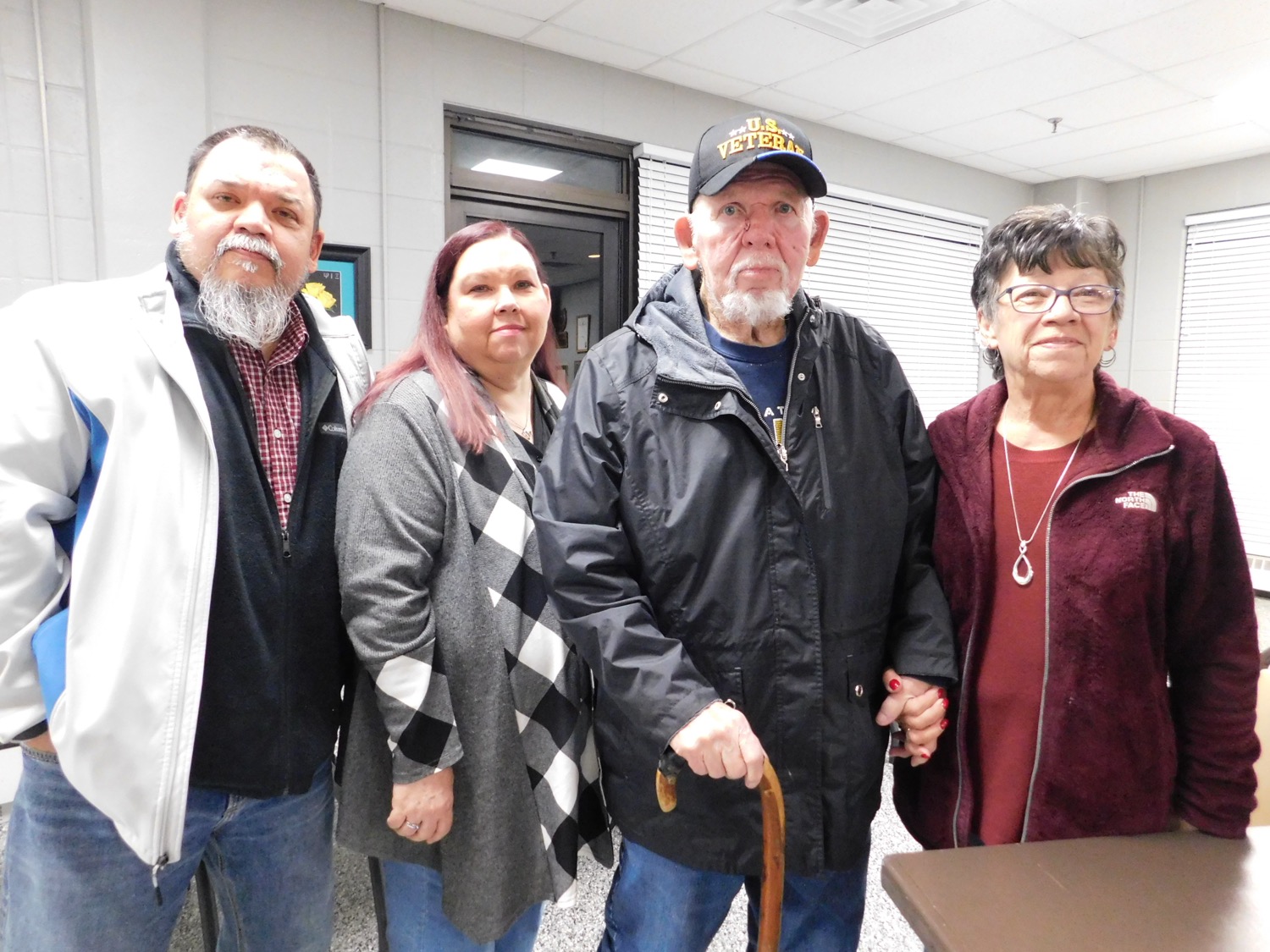
Bill Tyler thought he’d been invited to a dinner honoring Jimmy Bogue for Bogue’s contributions to youth sports.
However, Tyler was surprised to learn the honor was really for one of Bogue’s mentors: Tyler himself.
The December surprise was extra appropriate for the Cambridge City resident who portrayed Santa Claus for 40 years at community and private events and at stores that included Richmond’s mall.
The recognition took place during the annual Citizen of the Year dinner on Tuesday, Dec. 9, at Golay Community Center in Cambridge City.
New Day Kiwanis President Nathan Ulerick, a 2019 winner, and 2024 winner Brad Bowman presented a plaque and gift basket to Tyler. The last seven Citizen of the Year recipients currently living in the community select the honoree.
Cambridge City Evening Kiwanis started the award in 1961 to recognize a western Wayne County resident who makes a long-range impact on the community.
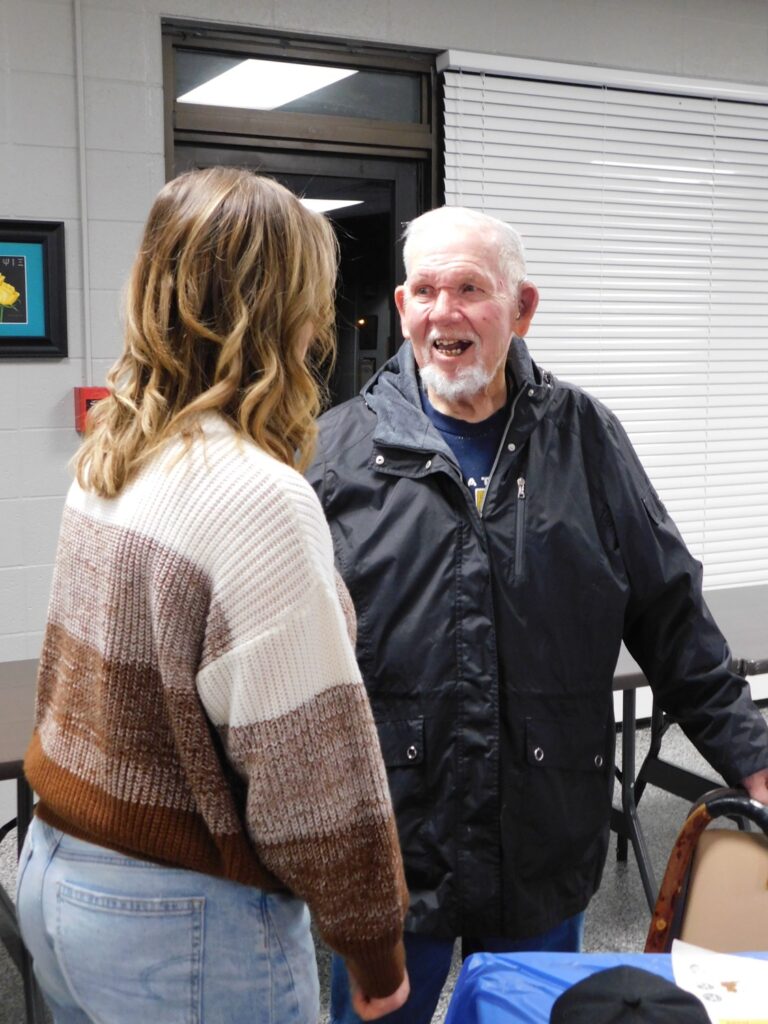
Tyler’s influence can be felt locally, statewide and nationally. His military service was followed by 31 years as a disabled veterans specialist with Indiana Department of Workforce Development. He served hundreds, possibly thousands, of veterans across the state at offices in communities including Richmond, Connersville, Winchester, Muncie and Portland.
Tyler then worked a few years as a substitute teacher for Western Wayne Schools before fully retiring, but he has influenced countless youth as a coach.
Several of Tyler’s former athletes attended the dinner, sharing the impact that he made on their lives during his decades of developing young players.
“I appreciate the community and all the support over the years,” Tyler said.
Tyler, a Michigan native, lived in Cambridge City in the 1950s as well as Wayne and Dearborn, Michigan, during his youth. After high school, he enlisted in the U.S. Army before returning to civilian life in Dearborn, but enlisted in the Navy in 1966 and became a Seabee.
When he and his family moved to Milton in October 1974 after his honorable discharge from the Navy, Tyler brought a great deal of athletics experience. He was a standout four-sport high school athlete and traveled the world as a softball pitcher during his eight years in the Navy.
Tyler’s Navy career included three tours in Vietnam during the war as well as time in Morocco, Maryland, Guam and Rhode Island.
In 1975, Tyler responded to a knock on the door from a Milton group asking him to coach. That led to coaching football, basketball, wrestling and softball for junior high and high school students at Lincoln, Hagerstown, Tri, Richmond and Northeastern.
Tyler helped develop what became Western Wayne Girls Softball League. He served as league president and coached hundreds of young ladies in league play as well as travel ball, teaching life lessons in winning, sportsmanship and grit. Tyler and friends also helped bring fast-pitch softball to Lincoln.
He also served as a pitching coach at Earlham College for several seasons. He’s currently a coaching volunteer at Tri, where he helped the Titans win regional and semi-state championships and a trip to the state finals.
Angie Siggers said she’s known Tyler since childhood, remembering him as Santa as well as a great person who’s always willing to help.
“He’s always been a part of our family,” Siggers said. “He’s a very special part of our lives … You couldn’t find a better man than him.”
Former softball player Trina Fultz said Tyler has remained a supportive friend, and he was one of the first people to visit her and her new baby when they came home from the hospital.
“He always wants to know what’s going on in your life,” Fultz said.
In retirement, Tyler enjoys spending time with his wife, Diane, their children Cheryl and Kevin, granddaughter, Kinsey, and great-grandson, Grayson.
Tyler’s contributions also were recognized in 2023 when he was named grand marshal of Cambridge City’s Canal Days parade. He was Milton’s 2017 Citizen of the Year.
A version of this article
will appear in the December 10 2025 print edition of the Western Wayne News.
Read More
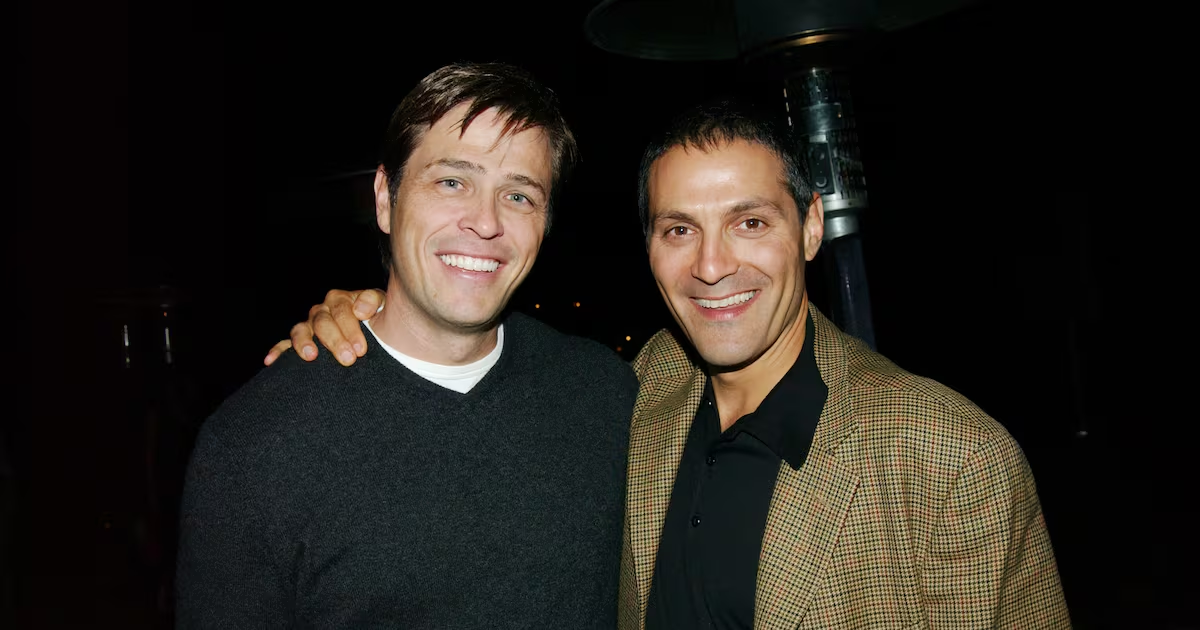
Influence 125 highlights the most influential sports business figures of the past quarter-century. See the list.
The 2014 acquisition of IMG Worldwide for $2.4 billion enabled Hollywood super agents Ari Emanuel and Patrick Whitesell to form WME-IMG and, ultimately, turn it into the wide-reaching and influential Endeavor empire. Their acquisition of UFC for $4 billion is one of the industry’s greatest success stories, and at its height, Endeavor had tendrils in everything from athlete representation and event management to youth sports and professional bull riding. Today, Emanuel is executive chair of a leaner WME Group, and at TKO he sits atop the $39 billion parent of UFC and WWE. A newly independent Whitesell acquired WME Football to form player representation agency WIN Sports Group, and he’s separately backed the red-hot Omaha Productions through a new Silver Lake-funded venture.
More from the SBJ archives
Rec Sports
New Balance Commits $9.2M to Boost Youth Sports, Nutrition, and Education in Massachusetts
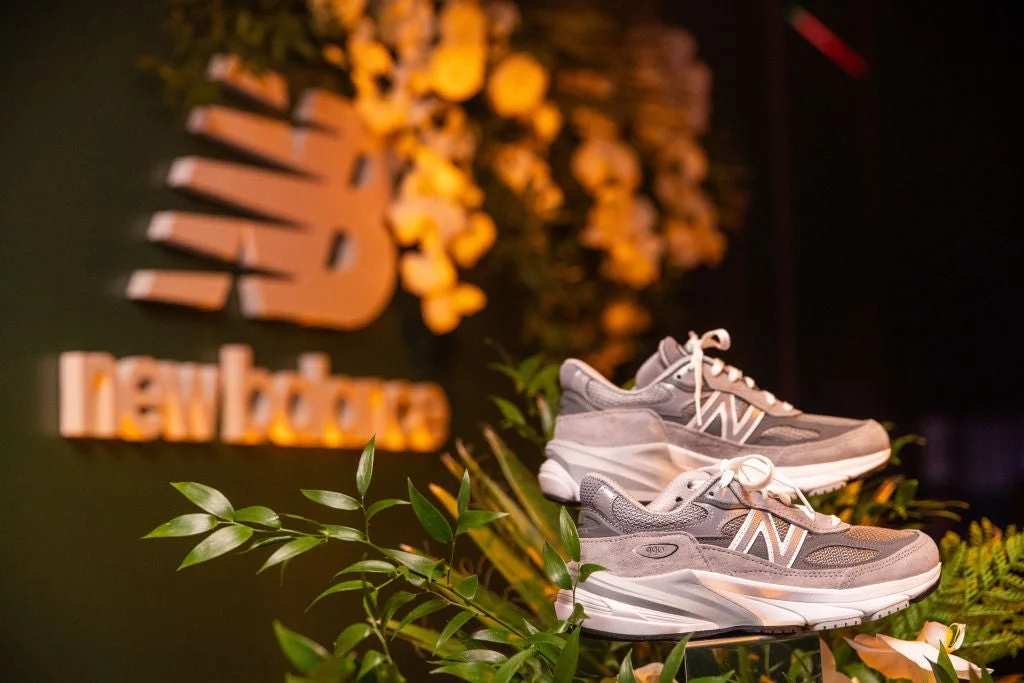
New Balance’s philanthropic arm has pledged $9.2 million in grants for the 2025-2026 cycle to support youth development through sports, nutrition and food security, and education.
Grants from the global athletic shoe manufacturer, which maintains facilities in Lawrence and Methuen, will benefit local nonprofits.
“In line with our mission, we’re dedicated to supporting the communities our associates call home,” said Anne Davis, managing trustee of the New Balance Foundation (NBF), in a statement shared with The Eagle-Tribune. “The children and families in these communities are in our backyard, and we’re proud to invest in organizations and initiatives that play a critical role in shaping the lives of young people across the state. This is a true testament to the values on which NBF was founded.”
Some of the nonprofits receiving support include the following:
- Beyond Soccer
- Boys & Girls Club of Lawrence
- Change the Game Coalition
- Community Rowing
- Cradles to Crayons
- Essex Art Center
- Lazarus House Ministries
- Play Ball Foundation
- Special Olympics Massachusetts
- SquashBusters (Boston and Lawrence)
According to The Eagle-Tribune, since 1981, NBF has invested more than $90 million in nonprofits serving Metro Boston, Lawrence, and Methuen.
NBF has also contributed to community projects through its Enduring Gifts Pillar. Contributions have supported the renovation of Lawrence’s O’Connell South Common Park and the development of Esperanza Academy’s new K–8 school for girls in Lawrence.

By Rick Assad
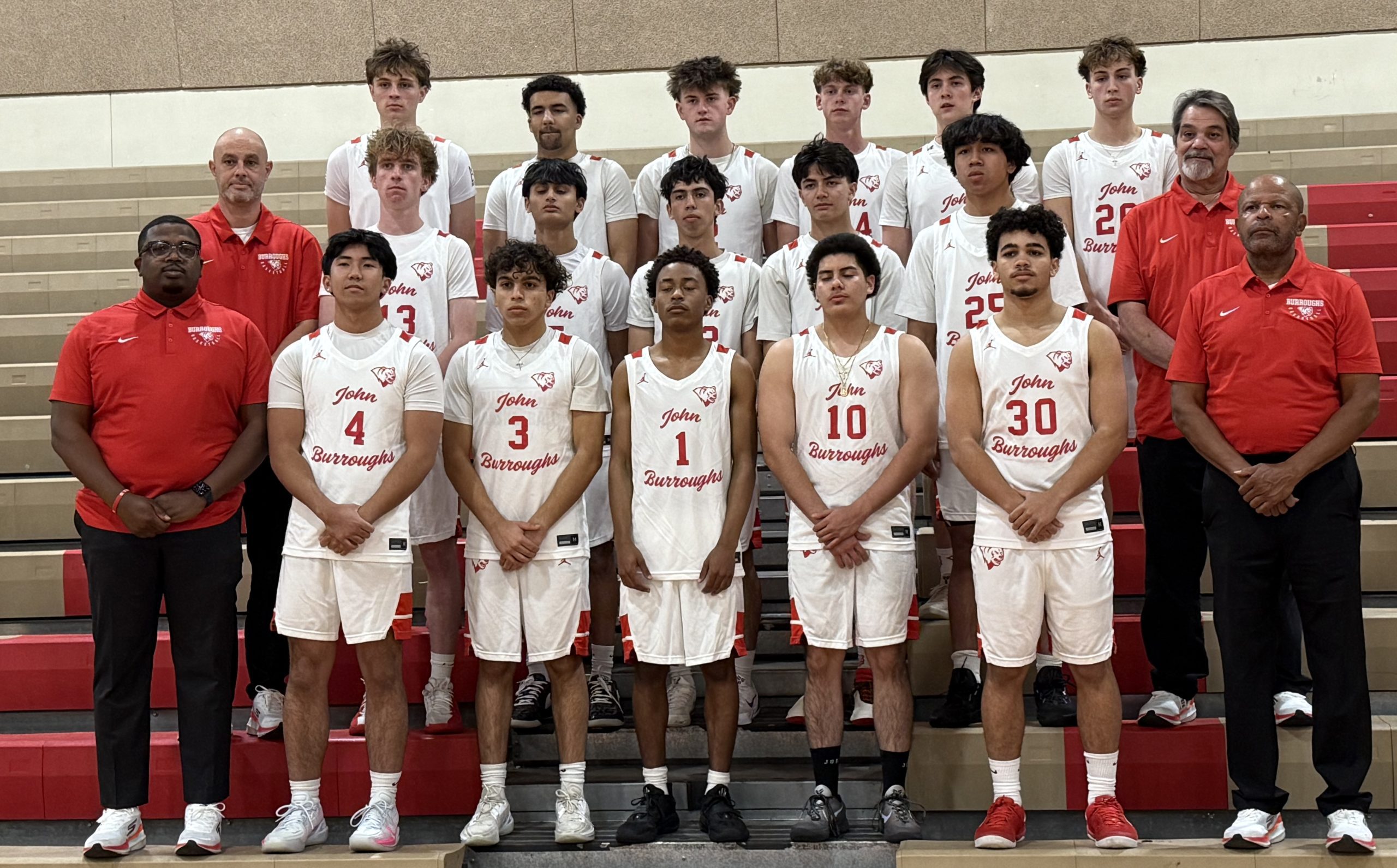
In what is expected to be a strong showing from the three local boys’ basketball teams this season based on talent and experience, Burroughs High, Burbank and Providence are ready to make its mark.
Pasadena, which is coming off a 19-8 overall mark and 8-1 for second place in the Pacific League, advanced to the second round of the CIF Southern Section Division II and is led by senior Joshua Irving, a 6-10 center who will play for Texas A&M.
The Bears have a new head coach, Jason Weatherall, and he has the team primed after a disappointing season a year ago in which the team went 5-22 and 0-8 in Pacific league play.
Burroughs has nine seniors, and they are wing Elliot Lawrence, wing Ethan Cooper, wing Ethan Lanier, wing Kane Le-Cabico, point guard Teagan Bradford, guard Cedric Valdez, guard Justin Herrera, guard Nico Meza, forward Weston Davis and point guard Nathan Rodriguez.
There are four juniors, and they include guard Chace Greene, wing Will Rowan, forward Lucas Lungu and forward Will Anderson.
There is one sophomore, shooting guard Rehaan Parikh and one freshman guard Colin Campion.
“Our expectations are to build on the experiences of last year and work to make our program something that the players, coaches, families, campus and community are proud of,” Weatherall said. “In the league, we know we are going to be battling three or four teams for third through eighth place given the fact we lost every game last season.”
Weatherall is confident this season will be much better.

“We expect to battle for any of those spots,” he said. “With the senior cast that we have returning, we should be poised for a better league finish than last year.”
Weatherall feels the leadership is there and that this is something to build upon.
“We will be led by our combo Elliot Lawrence, our sharpshooting wing Ethan Cooper, combo wing Evan Lanier, and our impact transfer point guard Justin Herrera,” he said. “Each player brings a unique skill set to the table that is essential for winning games.”
Burbank had a solid campaign a year ago after carving out a 21-8 record and 4-4 in league action for fifth place.
The Bulldogs qualified for the playoffs and fell in the opening round to host Hemet 90-69.
The team consists of seven seniors and they are shooting guard/small Anthony Jawiche, small forward Blake Finnigan, forward Giordan Lewis, shooting guard Nick Niazi, point guard Cris Ong, point guard Jon Isip and point guard Arthur Khachatryan.
There are six juniors and they are power forward Imani Young-Smith, point guard Jon Ong, point guard Jason Campos, shooting guard/small forward Alec Knight, shooting guard Kaleb Walker and point guard Avo Papikyan.
There is one sophomore, and he is shooting guard Lucas Gordzholadze and one freshman, point guard Niko Kimenyen.
Steve Eshleman is Burbank’s head coach and knows the season is going to be exciting and also believes it’s also going to be productive.
“The league itself is really strong and balanced this season,” he said. “We’ve got an extremely aggressive nonleague schedule so it will be interesting to see how that plays out.”
Eshleman will count on several leaders to show the way.
“Anthony Jawiche, Jon and Cris Ong are our returning starters but we are looking for a wide variety of players who have improved their skills during the offseason to step up and contribute,” he noted. “It should be an interesting season for sure.”
Providence, which went 14-13 and 6-1 in the Prep League for second place has left that league and will now compete in the Independence League.
The Pioneers went to the Division III quarterfinals are beating host Whitney 64-41 and host La Salle 53-51 before losing to visiting San Dimas 65-64.
The Pioneers boast seven seniors, and they are Riley Murphy, Griffin Berschneider, J.P. Birotte, Josh Coen, Leonardo Eliasian, Eze Kiel and Zeven Haskins.
Three juniors and they are Madden Velasco, Stephan Abrahamyan and Isaiah Kim and one sophomore, Bishop Thompkins.
Anthony Cosby is Providence’s head coach and looks forward to his team taking the floor.
“I’m excited and welcome the new challenge of this basketball season. I really like my team,” he said. “We’re battle tested, have great winning attitudes and expect success.”
Cosby knows his team is going to give great effort and hopes the results are good.
“I think our consistent hard work and preparation has put us in a good position to compete for a league title,” he stated. “We’re a mature team full of experienced talent that’s battle tested and has playoff experience. I pray we stay healthy, united and focused.”
Cosby added: “The new league is full of great talent and fantastic competitive coaches that I greatly admire and respect,” he said. “I wish everyone great success and health.”
LOS ANGELES (Dec. 8, 2025) – The six-time MLS Cup Champion LA Galaxy was today honored with the 2025 Marisa Colaiano Community Impact Club of the Year award by Major League Soccer for its commitment to the Los Angeles community. The award was voted on by all 30 MLS clubs, with the finalists then reviewed by a panel of judges at the league to identify the winner based on their contributions to their communities. The honor was announced today as part of Major League Soccer’s 2025 Mark Abbott MLS Club Business Awards Winners.
“The LA Galaxy is proud to be deeply rooted in Los Angeles, and winning MLS’s Community Impact Club of the Year means so much to us,” said Tom Braun, President and Chief Operating Officer, LA Galaxy. “Our community and foundation efforts are driven by our values, and this recognition reinforces our commitment to creating lasting impact in our city and the larger Southern California community.”
Here is a snapshot of the Club’s impact, with more details to be shared in the release of the 2025 annual report, expected in January 2026:
- 800+ hours volunteered by LA Galaxy players, staff, and alumni
- $2 million in monetary and in-kind donations to the Los Angeles community in support of programs for inclusion, health and education
- 4,000+ pounds of recyclables redeemed through California Redemption Value for new equipment for youth
- 56 organizations amplified and supported through collaborative efforts
- Over 5,000 youth served through youth development programming
The LA Galaxy’s goal in the community is to create safe spaces for people of all ages and backgrounds to enjoy and have access to the game of soccer. The award recognizes the Club’s ongoing wildfire relief efforts, as well as its successful programs including the LA Galaxy Special Olympics Unified Team, its Protect the Pitch initiative, the Kick Childhood Cancer campaign, Rising Stars, and more. Some of these initiatives are highlighted below.
In January 2025, Southern California was hit with a series of destructive wildfires that devastated many Galaxy fans and impacted much of the Los Angeles community. LA Galaxy, through its LA Galaxy Foundation, acted immediately in support of its community, focusing relief efforts through financial support, a supply drive, localized community service, and continued recovery efforts throughout the year.
The LA Galaxy Special Olympics Unified Team
The LA Galaxy Special Olympics Unified Team, presented by Herbalife, finished its 2025 season with an unbeaten record. The program brings athletes and partners together to participate in signing day, media day, nutrition training, compete in a series of matches throughout the year, and an end-of-season banquet. This year’s team traveled to Miami to play against the Special Olympics Unified team at Inter Miami’s first team practice facility.
Ongoing Community Programming and Support
For years, the Galaxy has honored the rich backgrounds, cultures, and experiences of its fans, staff, and players. Rooted in one of the most diverse cities in the world, the club draws strength from honoring Central American Heritage Night, Mexican American Heritage Night, Armenian Heritage Night and many more.
This year, a long-standing community partner, Central American Resource Center (CARECEN), expressed a need to support the families they serve. LA Galaxy proudly supported CARECEN and continues to honor and highlight their work at our annual Central American Heritage Night match.
The Community Partner of the Match program provides financial support and recognition to at least 17 nonprofits per season, and this year, the Club activated its relationships with partners like Herbalife, Dignity Health, City National Bank, Yaamava, and many more, to continue wildfire relief efforts, build mini pitches to expand opportunities for youth, and so much more.
The LA Galaxy community relations and foundation have three main pillars that serve as the core of the clubs granting and programming efforts:
- Youth Sports: LA Galaxy is dedicated to growing the game of soccer through programming, events and resources that provide opportunities for youth to learn, play, and be exposed to the beautiful game.
- Health & Wellness: The club uses soccer as an engagement tool to increase access to health and wellness resources and to ensure youth stay physically active while developing healthy minds.
- Inclusion: LA Galaxy leverages soccer to unite people from all over the world and provide opportunities for the community to participate in the sport through inclusive programming and chances to watch the best in the game on the pitch.
2025 Marisa Colaiano Community Impact Club of the Year award by Major League Soccer

Freshmen getting it done for Central Bucks South | Sports

Joel Klatt names college football powerhouse making a ‘big mistake’

Baylock, Rychkov Garner NJAC Weekly Honors

Honor surprises coach, Santa, veteran, mentor

Volleyball’s Loryn Helgesen Named America First Credit Union Utah State Student-Athlete of the Week

Judge frustrated as NASCAR antitrust trial drags on with no end in sight | Sports

NC State kicks off indoor track season with strong distance performances – Technician

Ari Emanuel and Patrick Whitesell, WME-IMG/Endeavor

NCAA Women’s Div I Volleyball Tournament Glance

Rick Ware Racing Switches to Chevrolet Ahead of 2026 – Speedway Digest

New Balance Commits $9.2M to Boost Youth Sports, Nutrition, and Education in Massachusetts

Colby Sweeps Team Titles at Home Elm City Classic

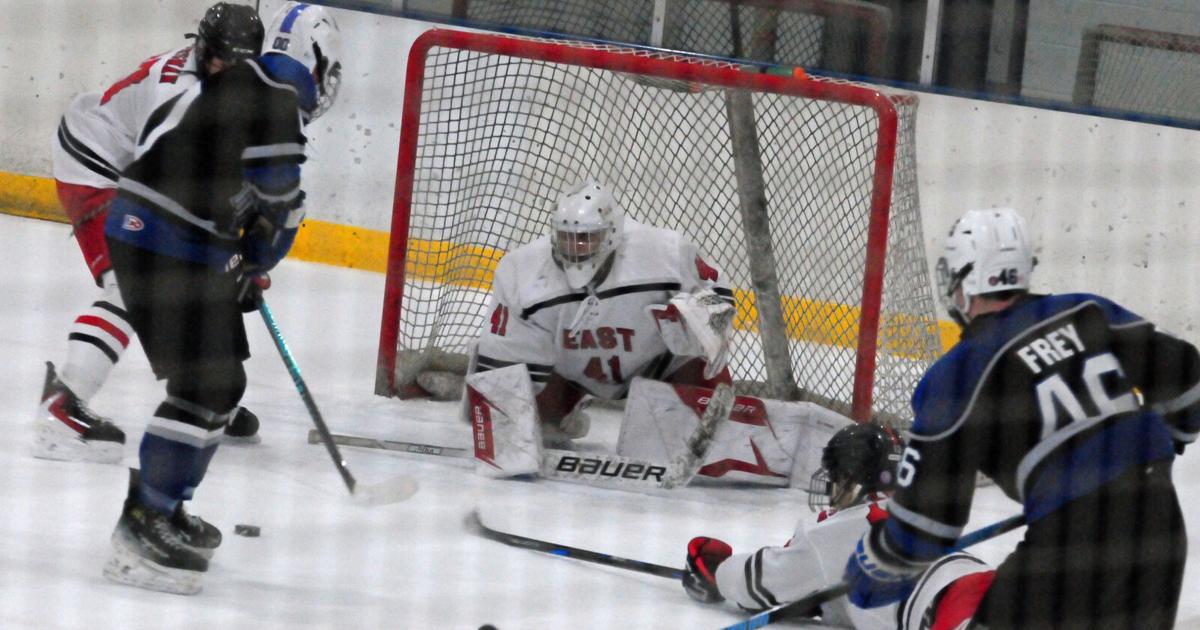
Boys Basketball Preview: Burroughs, Burbank, Providence Aiming High

Gunderson Tabbed NSIC Wrestler of the Week

Kasey Coler Appointed as USAC’s New President/CEO – Speedway Digest

First Tee Winter Registration is open

Fargo girl, 13, dies after collapsing during school basketball game – Grand Forks Herald

CPG Brands Like Allegra Are Betting on F1 for the First Time

Volleyball Recaps – November 18

F1 Las Vegas: Verstappen win, Norris and Piastri DQ tighten 2025 title fight

Two Pro Volleyball Leagues Serve Up Plans for Minnesota Teams

Utah State Announces 2025-26 Indoor Track & Field Schedule

Sycamores unveil 2026 track and field schedule

Redemption Means First Pro Stock World Championship for Dallas Glenn

Bowl Projections: ESPN predicts 12-team College Football Playoff bracket, full bowl slate after Week 14

Texas volleyball vs Kentucky game score: Live SEC tournament updates

Indiana’s rapid ascent and its impact across college football

How this startup (and a KC sports icon) turned young players into card-carrying legends overnight

Pohlman admits ‘there might be some spats’ as he pushes to get Kyle Busch winning again

Robert “Bobby” Lewis Hardin, 56

 Why a rising mid-major power with an NCAA Tournament team opted out of revenue-sharing — and advertised it
 NBA Legend Michael Jordan to Join NBC Sports as Special Contributor
 Falcons mailbag
 Portal Update – Basketball and Gymnastics Take Hits
 has always dreamed in Mercurial. Now his initials are on the boots.
The new Kyl…
has always dreamed in Mercurial. Now his initials are on the boots.
The new Kyl…
-
 Rec Sports2 weeks ago
First Tee Winter Registration is open
-
 Rec Sports2 weeks ago
Fargo girl, 13, dies after collapsing during school basketball game – Grand Forks Herald
-
 Motorsports2 weeks ago
CPG Brands Like Allegra Are Betting on F1 for the First Time
-
 Sports3 weeks ago
Volleyball Recaps – November 18
-
 Motorsports2 weeks ago
F1 Las Vegas: Verstappen win, Norris and Piastri DQ tighten 2025 title fight
-
 Sports2 weeks ago
Two Pro Volleyball Leagues Serve Up Plans for Minnesota Teams
-
 Sports2 weeks ago
Utah State Announces 2025-26 Indoor Track & Field Schedule
-
 Sports2 weeks ago
Sycamores unveil 2026 track and field schedule
-
 Motorsports2 weeks ago
Redemption Means First Pro Stock World Championship for Dallas Glenn
-
 Sports2 weeks ago
Texas volleyball vs Kentucky game score: Live SEC tournament updates