
NIL
Here's what GM software actually looks like


Good morning, and thanks for spending part of your day with Extra Points.

It’s good to ask questions about the soft skills or day to day work for somebody working as a GM. But whether you’re at a big school or small school, football or basketball…eventually, somebody with the GM job title is going to have to sit down at a computer and…do the work.
But what does that actually mean?
Sure, part of the job is usually going to involve some level of talent evaluation. That means looking at game film, highlight film, and various player statistics. But the job may also involve processing player payments, handling contracts, constructing various roster management scenarios, chasing down brand-based NIL deals, and a ton of, uh, other duties as assigned.
Teamworks is trying to be the technology platform to handle all of that stuff, not just roster management.
Most D-I schools, and lots and lots of D-II programs, use Teamworks for at least something. The software company has one of the most popular solutions for athletic department Operations. That includes the software that handles camp management, athletic department physical inventory, travel logistics and academic progress monitoring.
It’s also a very common software tool for athletic department performance. If you walk into a weight room and see a strength coach holding a tablet somewhere, there’s a good chance that tablet is queued up to Teamworks software for individual athlete nutrition plans, strength training, load testing, and injury recovery.
The bet that Teamworks is making is that athletic departments will want a holistic tool for GM operations that can also talk to the other software tools already in use across the department. Because player personnel and roster management don’t just live in one silo, after all. Everything in college sports is interconnected on some level.

So what does that mean, actually, when we’re talking about roster management?
Let’s pretend we’re a P4 football program without infinite resources. Our hypothetical GM needs to be able to understand where their “payroll”, or revenue share, budget is being distributed…and how various recruiting scenarios could impact how they want to distribute those resources.
The Teamworks GM Suite allows users to do this, so coaches and staffers can understand how their budgets may change, depending on who hits the portal, or how other negotiations may go. If a team misses on targets 1, 2 and 3 at RB, maybe it makes sense to reinvest resources at other position groups, rather than overpaying for a reach of a candidate? The software lets everybody evaluate different possibilities.
It also makes it easier for everybody involved to understand where the money comes from. Moving forward, athletes are likely to be compensated in three major ways: From direct institutional payments, via their scholarships/Alston payments, and via outside deals (brand NIL, collectives, etc.).

Not every sport is likely to give full scholarships for every single athlete on the roster. So for say, a baseball player, getting apples to apples comparisons on what money is coming from what bucket, can be critical in evaluating different potential offers. It’s also very useful for coaches and staffers to understand what resources are available for each individual athlete.
This is where a unified software platform could be extra helpful.
If a coaching staff is trying to plan out position group budgets or backup plans, they may want to be able to look at player performance data, to help project what players may be able to put on more weight or develop on and off the field. They’ll want to understand where they could have academic eligibility concerns. They’ll want to make sure they are accurately projecting what their Two Deep looks like if certain players substantially over or underperform relative to their expectations.
Being able to plug everything together could help.
The other big potential benefit of a unified system? Getting everybody paid on time.
I’m going to let you guys in on a little college sports business serious professional secret. Getting paid by public institutions can be a hee-uge pain in the butt. Sometimes you have to jump through the paperwork hoops to become an approved university vendor, you might have to get paid by a completely different party…it can be a mess.
That doesn’t mean that we don’t like selling to universities. We do! But the unsexy business of payroll and vendor management can be a real problem.

It could also potentially be a problem for athletic departments. Using the Teamworks Wallet too, schools will be able to have their player contracts, payment processing, tax reporting and paperwork all in one central place. GM hits a button, players get paid, nobody has to get stuck with expensive credit card or bank processing fees. Bleep bloop.
That Wallet is also often the same tool that athletes can use for their brand-based NIL activity or other athletic related income, as well as the paperwork they need to file for compliance. We understand college students enough to know that every new app that needs to be downloaded or new account that needs to be set up only increases the chances that critical disclosures won’t be made. If everybody can simply use the stuff they’re already using, it’s more likely stuff gets done.
That saves money for players and schools, and lets staffers get back to focusing on the rest of their job, instead of payroll or invoicing.
But what if the world changes again?
I’m writing this newsletter operating on the assumption that the House settlement is eventually approved, and schools will share revenue largely as they expected a few months ago.
But will that be the case in a year or two? Will the “salary cap” system remain in place, or get thrown out completely? How involved will outside parties, like donor-driven collectives, actually be allowed to be? What if there’s a completely new revenue stream that gets established?
I can’t predict the future, and you know what? Neither can Teamworks. But the team is trying to future-proof their technology as much as possible by making their GM product and services as customizable and modular as they can. If coaches need to create new labels for revenue streams or to sort transfer targets, depending on how the regulatory environment changes? That’s possible in the Teamworks GM suite. Need to change the total possible budget, or add a new source of payroll data? That’s possible.
The hope is that by using a software tool that already plugs into everything else an athletic department is doing, and doesn’t require a complete software rebuild if and when the rules change again, GMs and everybody else touching front office software can get their work done a little bit faster and a little cleaner.

Everyone loves an underdog. That is, except everyone involved with college football.
As soon as two Group of Five schools qualified for the 2025 College Football Playoff, every college football talking head started falling all over themselves to explain why they didn’t deserve to be there, didn’t belong, and shouldn’t be allowed to compete there in the future.
The TV ratings for the first round of the CFP seemed to give pundits further ammunition, especially since most of their arguments had more to do with driving TV audiences than rewarding winners.
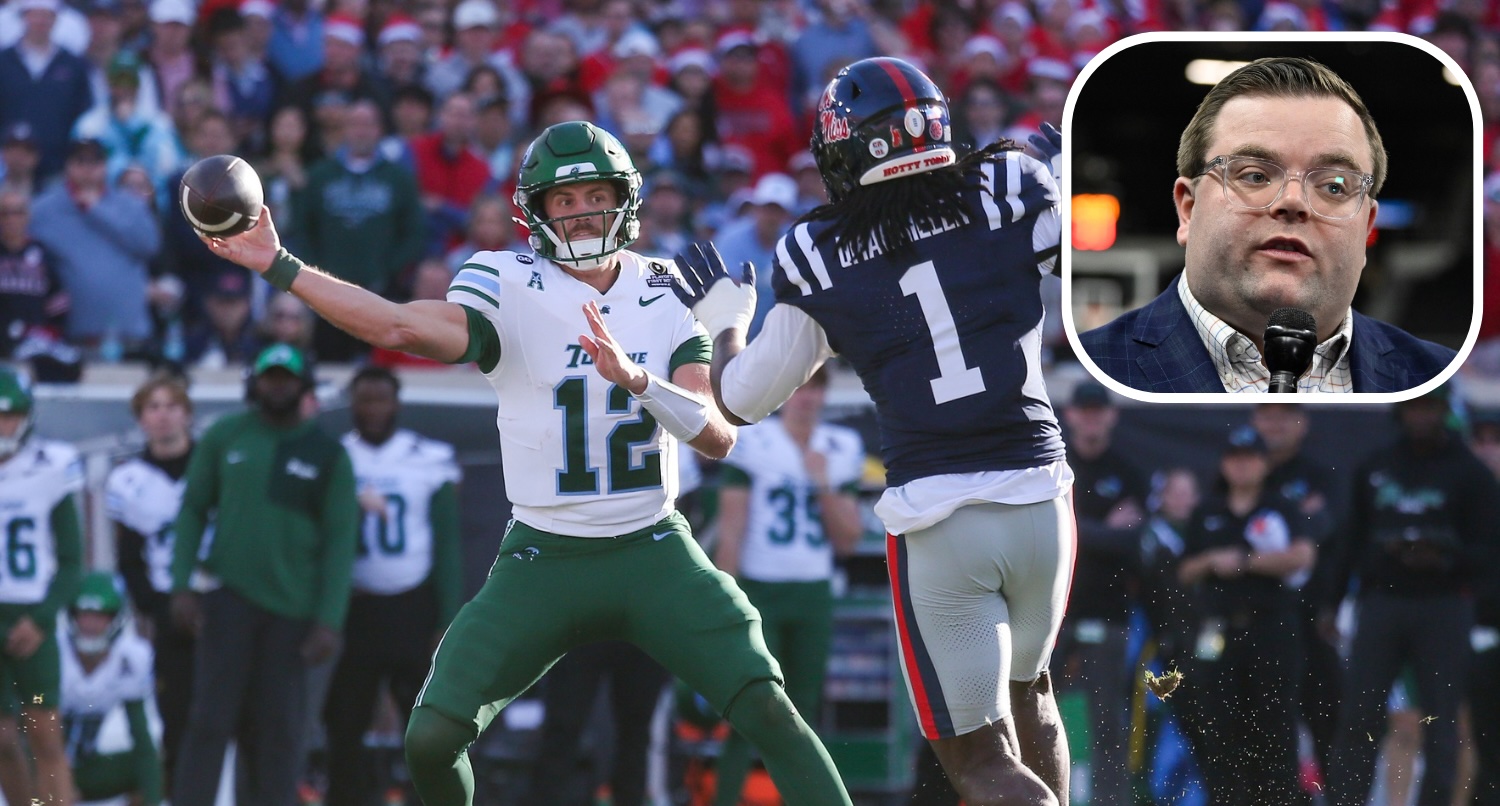
The war against college football Cinderellas has been intense, and you can add a somewhat surprising voice to the mix: NBC Sports college basketball announcer John Fanta.
As part of a wide-ranging interview with the New York Post’s Steve Serby, Fanta shared that while he enjoys seeing Cinderella teams compete in college basketball’s March Madness, it doesn’t work the same for college football.
“I would not have two Group of 5 teams in the Playoff,” said Fanta. “I am all for Cinderella. But Cinderella exists in college basketball.
“The opening weekend of the College Football Playoff was a dud. It’s not about picking Miami over Notre Dame. Miami beat Notre Dame. What doesn’t make any sense is the committee for weeks had Miami below Notre Dame, and then put Miami in over Notre Dame. So the committee has no rhyme or reason to what they are doing. That’s my issue with the Playoff. I think the Playoff is gonna deliver great games.”
Fanta’s argument is somewhat moot, as future editions of the CFP are highly unlikely to unfold as this year’s did, thanks in large part to Notre Dame’s revised MOU and likely changes to the ACC’s selection criteria.
Also, while the Tulane and JMU games were largely uncompetitive, plenty of Power 4 schools (and Notre Dame) have laid far worse eggs in CFP games.
If there’s a villain in this year’s CFP draw, it’s the Power 4 programs that didn’t do enough to justify their inclusion, rather than the G5 schools that earned the right under the current criteria.
NIL
Ed Orgeron on SEC paying players before NIL: ‘We used to walk through the back door with the cash’ – Tar Heel Times
Posted Dec 28, 2025
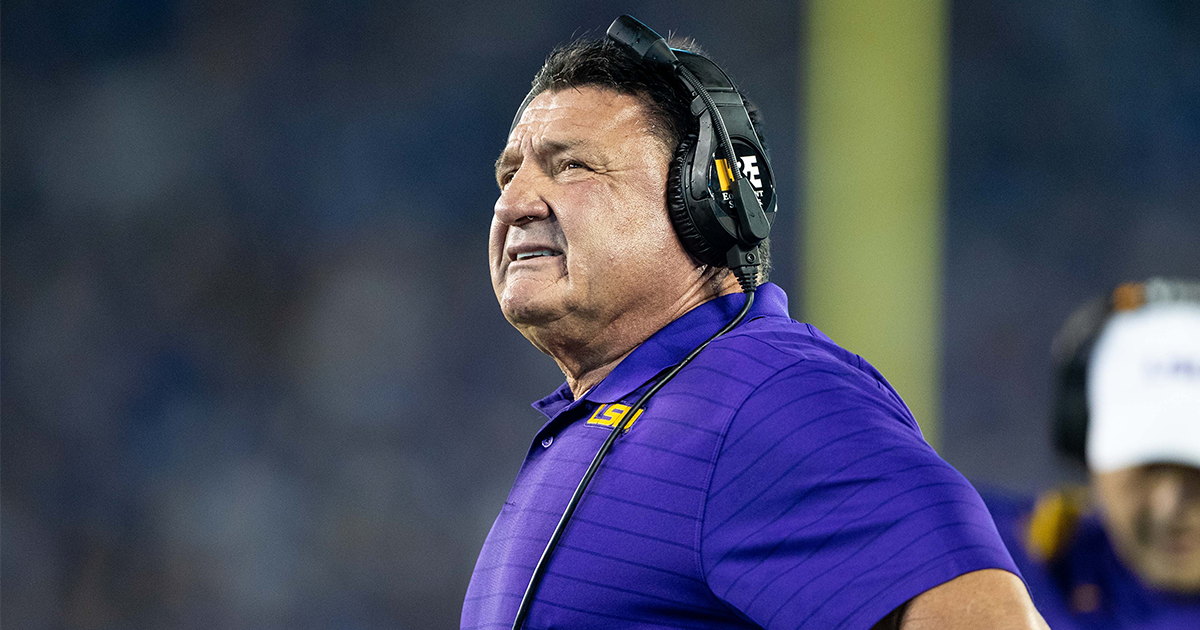
Few recruiters in college football worked harder than Ed Orgeron. Orgeron did a great job bringing in some great talent. However, most of his work came in the pre-NIL era, meaning he could not, technically, use money in the process. So when talking about how he would adapt with NIL now legal, Orgeron hilariously said there would just be a slight difference.
(On3.com)
Related: Other News
Wetzel: Beware, college sports, private equity has arrived
Even as revenue goes up and up from richer media deals, expanded playoffs and modernized operations, costs continue to soar. Spending has to be addressed…
Sun Dec 28, 2025
Remembering Rodney Rogers, gone at 54 but impossible to forget
Rodney Rogers, a Sun from 1999 to 2002 and a one-of-one presence in franchise history, has passed away. He wore number 54 like nobody else,…
Sun Dec 28, 2025
The ACC aimed to restore its men’s basketball reputation. So far, it’s working
Four ACC basketball teams made the NCAA tournament in 2025. Five teams made it in each of the three years before that. The ACC has…
Sat Dec 27, 2025
Caleb Williams and Ben Johnson: The Quarterback–Coach Partnership Transforming the Bears
If you want to understand why the Chicago Bears feel different today, why their offense has matured week by week, why the franchise finally looks…
Sat Dec 27, 2025

While transfer portal details are rare and hard to verify, the overall trend is that defensive standouts might be the bargain play over a top offense. Quarterbacks have already made deals like Darrian Mensah’s $4 million reported payday a year ago, with some speculating the market might drive over $5 million now.
But when On3sports provided a recent peak behind the curtain at the values and costs of recruiting portal talent, it was clear that defense remains the value play. On3 provided a few fascinating details.
Defensive linemen can be relatively high priced. For instance, On3 cited the reported deal of David Bailey (which some have valued at over $3 million) as the potential high side of defensive paydays. Elite pass-rushers aren’t cheap, and the $1.5 million high end value quoted by On3 is clearly contemplating that possibility.
Penn State edge Chaz Coleman is one of the players already indicated to be entering the portal who might command the type of value On3 notes. With three years of eligibility, the 6’4″, nearly 250 pound Coleman is an elite prospect. Another name nearly on that level is Oklahoma State transfer Wendell Gregory.
But defensive tackles, despite the relative scarcity of players with the physical attributes to provide lane-clogging snaps, tend to lag a bit lower than pass rushers on the college football food chain. If pass-rushing ends are still a bargain compared to quarterbacks, then defensive tackies will generally land cheaper still, with few likely to break the $1 million barrier by On3’s projection. One name that could be in that company, though, is Wake Forest transfer Mateen Ibirogba.
The massive value of the entire recruiting world, as documented by On3, lies in the secondary. Ranking defensive backs lowest of all the position groups profiled, On3 noted that vast number of defensive backs who join the portal. On3 indicates that an elite safety is probably a slightly higher value than a cornerback.
At the moment, Iowa State’s Jontez Williams is a top corner transfer, while Tennessee’s Boo Carter leads a slightly underwhelming safety class.
But at a projected value of $300,000-$850,000, a school could afford an entire secondary cheaper than an elite quarterback, at least according to the valuation reported by On3. Whatever path to the Playoff the next portal-playing team chooses, defense is clearly the economic option.
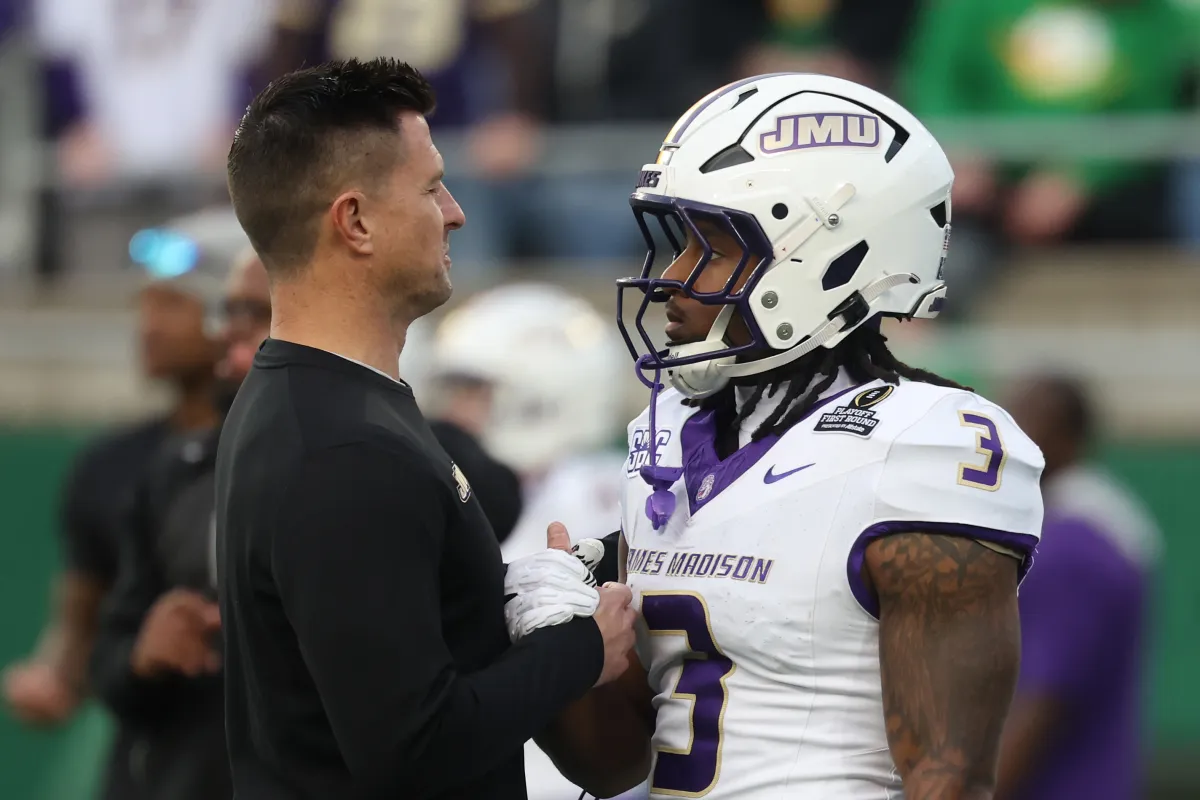
The transfer portal has radically challenged the college football landscape.
What was once a way for a few players to plead their case for a chance to switch schools has now become one of the most active free agency periods in all of sports.
Instead of needing to recruit high school students and hope the development turns them into future stars, programs can now change their entire outlook in one offseason by signing already-developed talent in the transfer portal.
For many teams like the Indianas and Vanderbilts of the world, backed by strong NIL foundations and donors, it’s been a godsend.
For the James Madison Dukes, the loveable, scrappy underdog story of the 2025 season, making it all the way to the College Football Playoff, the transfer portal is a monster that they can’t fight off.
A week after their loss to the Oregon Ducks on the road in the first round of the CFP, their fearless leader, Bob Chesney, is already drinking mimosas in Los Angeles in his new job at UCLA.
More news: Transfer Portal Prediction: CFP Team Lands 8,000-Yard QB Brendan Sorsby
More news: Transfer Portal Prediction: 5-Star Florida QB DJ Lagway Lands at SEC Rival
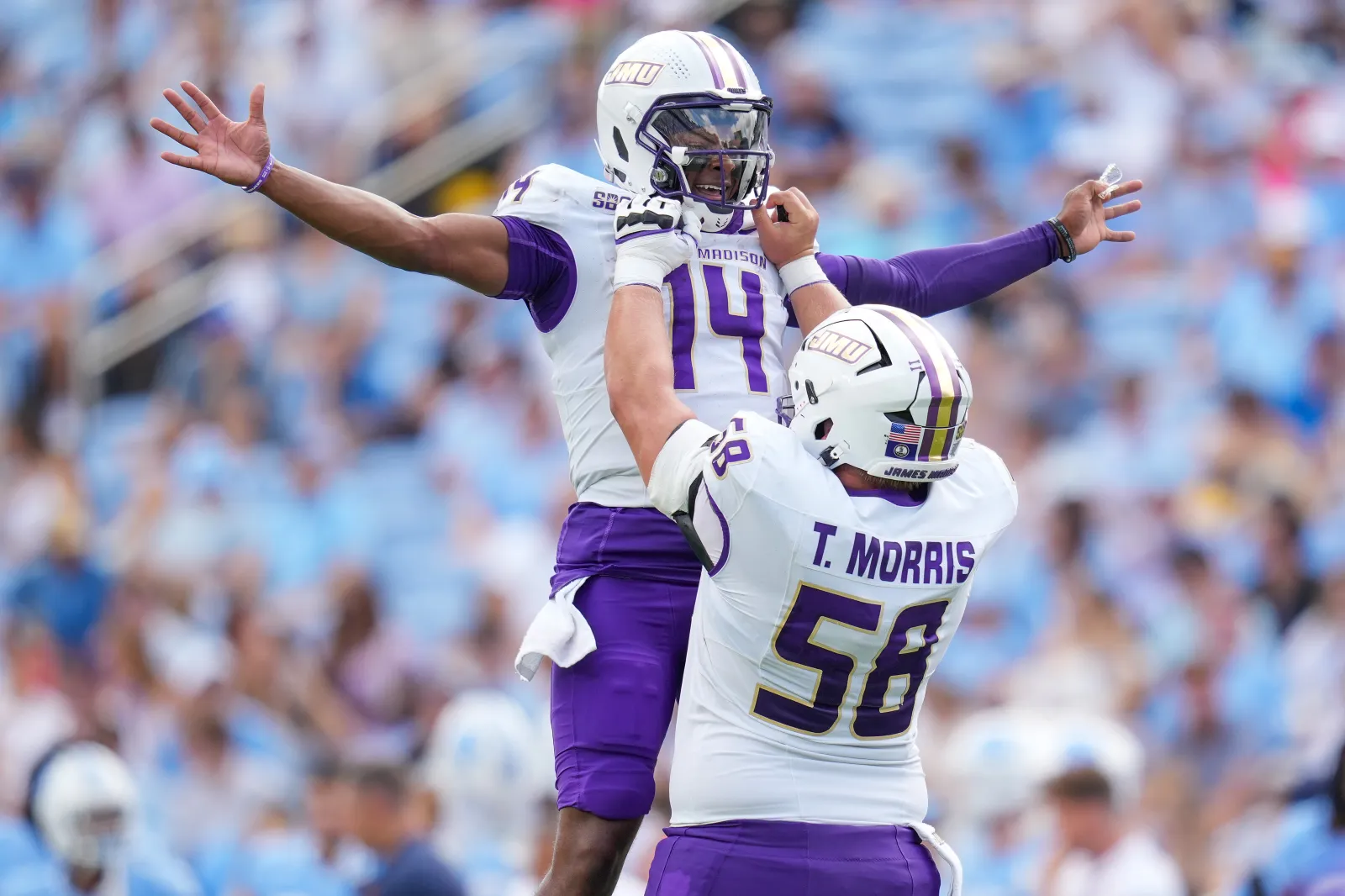
Beyond that, their quarterback and on-field captain, Alonza Barnett III, is transferring to join a bigger, more well-funded program in the new year.
He isn’t the only offensive player to leave the Dukes. In fact, all 11 of their starters from the College Football Playoff are either graduating or have entered the transfer portal, leaving James Madison barren.
Overall, it’s expected that over 80% of the players they would have hoped to make some sort of impact with the team in 2026 will be gone in a few short weeks as they try to get a deal to move up the college football hierarchy.
There are rumors that James Madison has built an NIL backend that would put them in good standing alongside other schools of their stature, but what can they do when Barnett III might receive an offer greater than their entire team fund?
The Dukes will do the best they can to rebuild as the new era continues roaring on in college football, and we’ll see where these former underdogs call home amongst the Power Four schools.
The transfer portal officially opens on Jan. 2, 2026.
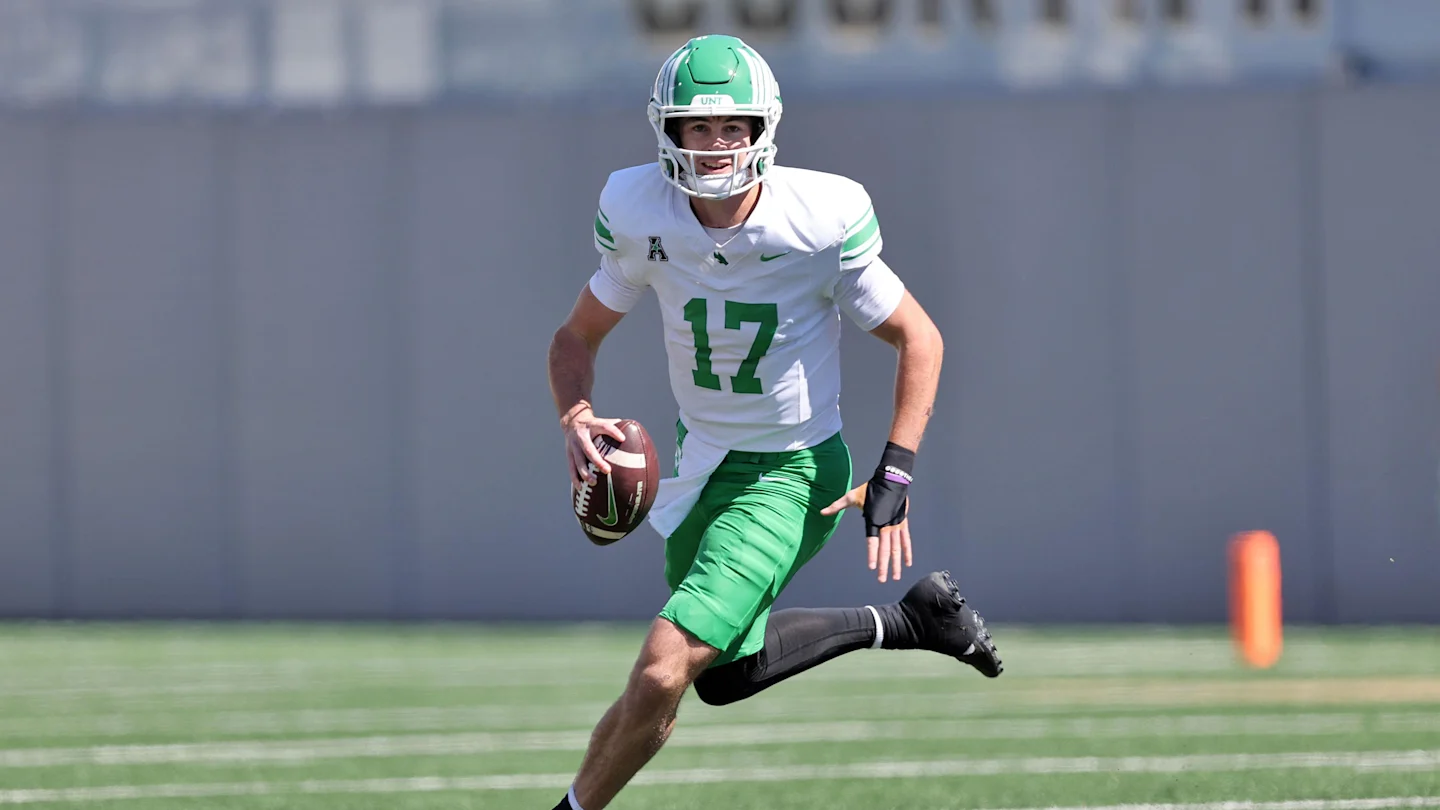
North Texas finished 11–2 (7–1 AAC) and reached the American Athletic Conference title game before falling 34–21 to Tulane, which clinched its first-ever College Football Playoff berth.
Even so, the Mean Green closed the regular season as one of college football’s highest-scoring offenses and earned a New Mexico Bowl berth.
The team’s starting quarterback, Drew Mestemaker, led the FBS in passing yards in 2025 with 4,129 yards, throwing 31 touchdowns against seven interceptions while completing 70.2% of his passes and recording multiple 300-yard performances, including a 608-yard school and AAC single-game record against Charlotte.
With the January transfer window approaching, Mestemaker is expected to enter the portal, a move that would remove North Texas’ most productive player from its roster.
With Mestemaker set to test the transfer market after a breakout year, several potential landing spots have quickly emerged. Here are the top three:
1. Oklahoma State
Eric Morris, who coached Mestemaker at North Texas in 2025, was hired by Oklahoma State on November 25; that continuity, system fit, and Morris’s direct knowledge make OSU the most natural landing spot.
2. Indiana
Media reports and portal analysts indicate Indiana has shown “significant interest,” with the Hoosiers’ offensive profile, recent success with transfer quarterbacks, and need for a proven starter aligning as Fernando Mendoza prepares to move on to the NFL.
3. Texas Tech
A Texas product who thrives in high-volume, high-tempo passing schemes similar to what Texas Tech runs, Mestemaker feels like a logical fit. With senior Behren Morton set to move on after the CFP, Mestemaker could step in as an immediate starter for the Red Raiders.

An Austin, Texas, native and program walk-on, Mestemaker did not have a conventional high-school QB resume, but developed rapidly under the North Texas staff.
His breakout redshirt-freshman season brought national recognition, including The American Offensive Player of the Year award, First Team All-American honors, and the Burlsworth Trophy, which is given annually to the nation’s top former walk-on.
For competing college football programs, Mestemaker offers a low-risk, high-reward option at quarterback, while for Mestemaker, the decision centers on staying within a familiar system or pursuing a bigger stage.
Read More at College Football HQ
- $2.4 million QB emerges as transfer portal candidate for SEC program
- Major college football program ‘expected to hire’ 66-year-old head coach
- College Football Playoff team loses player to transfer portal
- College Football Playoff team loses starting QB to transfer portal
NIL
Germie Bernard responds to Alabama being cheered against in College Football Playoff: ‘Nobody wants to see Bama win’
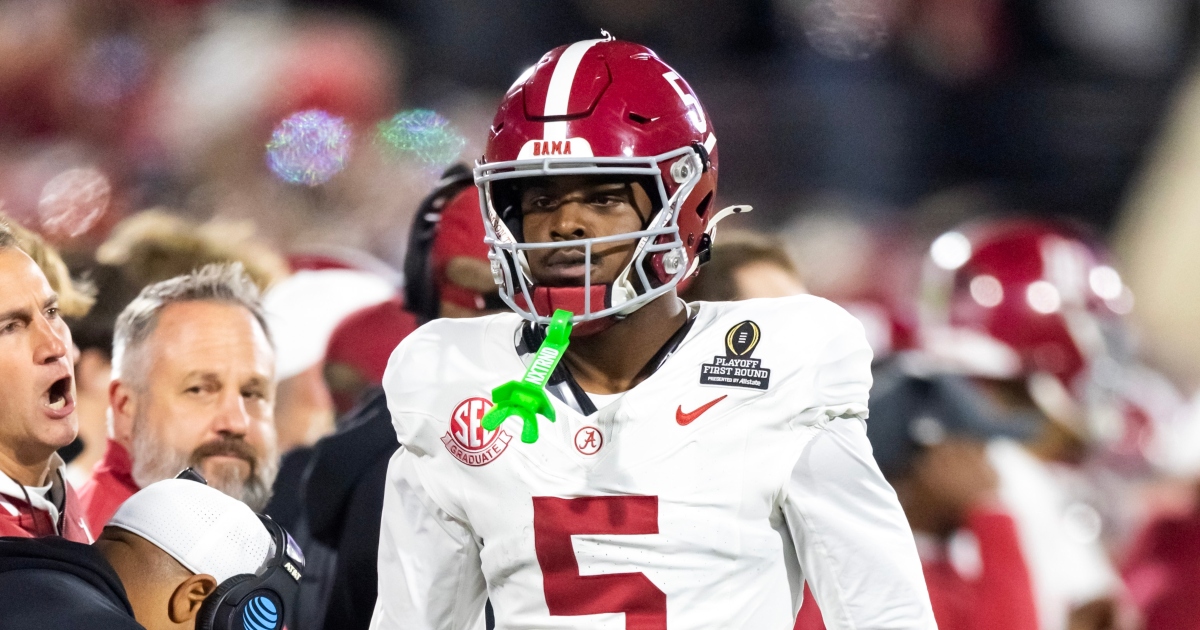
The Rose Bowl will feature the top-seeded Indiana Hoosiers taking on the Alabama Crimson Tide. Still, the consensus seems to be that Indiana is the darling of many fans going into the game, with underdog Alabama still seen as the traditional power.
It goes beyond that, however, for many within the Alabama program. After all, there was some debate nationally on whether this team even belonged in the College Football Playoff field. For Alabama wide receiver Germie Bernard, that doubt may not be the focus, but it does motivate the Crimson Tide.
“Not necessarily,” Germie Bernard said. “We’re always just focused on us and playing our best game, but obviously, it adds an extra fuel to our fire knowing that everybody is doubting us. Nobody wants to see Bama win. We put that on our shoulder, and we just work harder.”
The narrative surrounding Alabama had been that they finished the season struggling, with a notable loss in the SEC Championship Game. The Crimson Tide even found itself in a debate with Notre Dame and Miami for the last two at-large bids. In the end, Alabama made the field but there were still questions and doubts following the team.
A win over Oklahoma in the opening round of the CFP silenced some doubt about Alabama. In particular, the way Alabama won, coming back from down 17-0. With rumors swirling around head coach Kalen DeBoer at the time, there was a growing narrative surrounding the Crimson Tide that something was wrong. So, finding a way to come from behind and win, which included a Bernard catch for the ages, helped solidify that the Crimson Tide belonged there.
Kalen DeBoer knows he now needs to get the best he possibly can out of his team. So, in a recent appearance on The Triple Option, he broke down how to get the best out of his team in the College Football Playoff.
“Well, yeah, and, again, we started out slow, but I thought, really, the last two and a half to three quarters, we really played well, we really played team football. And that’s where it starts. I think that’s one thing we have, is we have a real team. And, you know, again, the SEC Championship was something that, you know, really was frustrating for our guys. (We) know we didn’t play our best, but, you keep working back, there’s just been these moments where the team just always rises to the top and guys are playing for each other. And, I think our guys truly believe that, you know, when you play great competition, there are going to be plays, there are going to be times and moments where it doesn’t go perfect,” DeBoer said.
“But, the other side of the ball, the other phase of the game is going to figure it out. They’re going to make an adjustment. They’re going to get back on a roll. Once we really settled in, I thought both coordinators made some good adjustments. I thought our coordinators, and our players, did as good of a job in this game as we have all season long of just staying the course but also adjusting to the moment.”
Alabama will meet Indiana in the Rose Bowl on New Year’s Day. Kickoff is scheduled for 4:00 p.m. EST.

‘Cinderella exists in college basketball’ but not college football

NASCAR star was pardoned by president after months in prison – Motorsport – Sports

Ed Orgeron on SEC paying players before NIL: ‘We used to walk through the back door with the cash’ – Tar Heel Times

What is the projected NIL value of a top DB & DL?

Purdue Volleyball Adds ACC All-Freshman Outside Hitter to 2026 Roster

How does a Q-Collar work?

JMU Loses All 11 Starters From College Football Playoff Season

Top 3 transfer portal landing spots for 4,000-yard quarterback Drew Mestemaker

Germie Bernard responds to Alabama being cheered against in College Football Playoff: ‘Nobody wants to see Bama win’

Wink Martindale discusses Michigan vs Texas, state of college football in Citrus Bowl press conference

NIL Agents Laid Out In No Uncertain Terms The Handcuffs Shackling Petrino from UA to UNC

Texarkana’s Wacha family builds something bigger than a camp

Petaluma Police Arrest Suspect For Hate Crime Targeting Former Globetrotter and Youth Coach

Eckols Funeral Home » Jewel Annette Devall RodgersEckols Funeral Home

Parks and Rec to offer youth swim lessons at Bemidji State

SoundGear Named Entitlement Sponsor of Spears CARS Tour Southwest Opener

Donny Schatz finds new home for 2026, inks full-time deal with CJB Motorsports – InForum

Jo Shimoda Undergoes Back Surgery

Black Bear Revises Recording Policies After Rulebook Language Surfaces via Lever

Bowl Projections: ESPN predicts 12-team College Football Playoff bracket, full bowl slate after Week 14

Robert “Bobby” Lewis Hardin, 56

Men’s and Women’s Track and Field Release 2026 Indoor Schedule with Opener Slated for December 6 at Home

David Blitzer, Harris Blitzer Sports & Entertainment

How Donald Trump became FIFA’s ‘soccer president’ long before World Cup draw

Michael Jordan’s fight against NASCAR heads to court, could shake up motorsports
Wisconsin volleyball sweeps Minnesota with ease in ranked rivalry win

JR Motorsports Confirms Death Of NASCAR Veteran Michael Annett At Age 39

Increased Purses, 19 Different Tracks Highlight 2026 Great Lakes Super Sprints Schedule – Speedway Digest

Rick Ware Racing switching to Chevrolet for 2026

DeSantis Talks College Football, Calls for Reforms to NIL and Transfer Portal · The Floridian





-
 Motorsports3 weeks ago
SoundGear Named Entitlement Sponsor of Spears CARS Tour Southwest Opener
-
 NIL3 weeks ago
DeSantis Talks College Football, Calls for Reforms to NIL and Transfer Portal · The Floridian
-
 Sports2 weeks ago
#11 Volleyball Practices, Then Meets Media Prior to #2 Kentucky Match
-

 Motorsports2 weeks ago
Sunoco to sponsor No. 8 Ganassi Honda IndyCar in multi-year deal
-
 Motorsports2 weeks ago
Nascar legal saga ends as 23XI, Front Row secure settlement
-
 Motorsports3 weeks ago
North Florida Motorsports Park led by Indy 500 Champion and motorsports legend Bobby Rahal Nassau County, FL
-

 Motorsports3 weeks ago
Accelerating Inclusion: Breaking Barriers in Motorsport
-
 Rec Sports2 weeks ago
WNBA’s Caitlin Clark, Angel Reese and Paige Bueckers in NC, making debut for national team at USA camp at Duke
-
 Sports2 weeks ago
Maine wraps up Fall Semester with a win in Black Bear Invitational
-

 Sports2 weeks ago
Pinterest predicts the biggest Gen Z trends of 2026 | News