Five-star quarterbacks typically receive between $750,000 and $1 million annually under new revenue-sharing contracts, while baseline Power 4 QB signees start between $100,000 and $300,000
Elite offensive linemen can command $700,000 or more, with Miami’s top-ranked tackle commit Jackson Cantwell expected to receive over $2 million in 2026
Most Power 4 football roster budgets range from $13 million to $15 million, while Group of 5 programs operate between $1 million and $10 million, with the majority below $5 million
Only an estimated 5 percent of high school recruits sign multi-year deals, with quarterbacks and offensive linemen receiving them most frequently
Some Power 4 recruits still sign for scholarship-only compensation, with programs terming these players as coming “free” to maximize budget flexibility
via: The Athletic | By Sam Khan Jr. and Antonio Morales
When the early signing period opens Wednesday for Class of 2026 recruits, most high school players will sign two documents instead of one. The first is a financial aid agreement that formalizes their scholarship commitment. The second, increasingly common among Power 4 recruits, is a revenue-sharing contract that details how much their school will pay them directly.
This marks a fundamental shift in college athletics compensation. Following the House v. NCAA settlement, schools can now pay players directly through revenue-sharing agreements, separate from the third-party name, image and likeness (NIL) deals that have been the primary compensation method since 2021.
To understand what recruits actually earn, The Athletic surveyed general managers, personnel staffers and agents across college football, all granted anonymity for candor. The findings reveal a complex market where recruiting rankings, position, physical readiness and institutional resources create dramatic variations in compensation.
What Elite Quarterbacks and Linemen Command
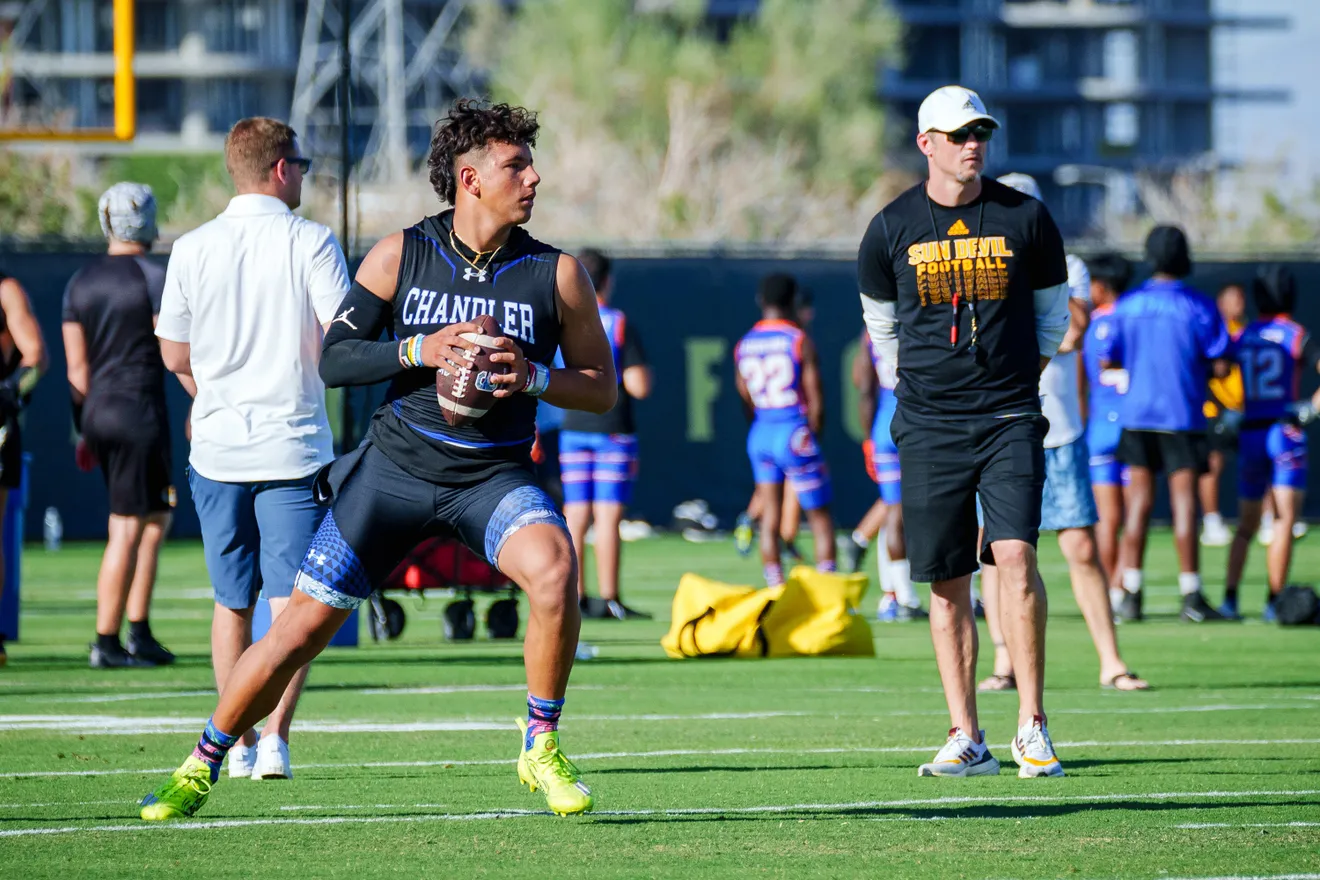
Power 4 quarterback recruits lead compensation tiers, mirroring the premium placed on the position at higher levels of football. Five-star quarterbacks typically secure between $750,000 and $1 million annually, according to three industry sources interviewed by The Athletic.
The baseline for Power 4 quarterback signees starts between roughly $100,000 and $300,000, with rankings driving the range upward. One agent noted that a top-150 quarterback in the 2026 class is receiving between $300,000 and $400,000 in his first year because he’s not expected to start immediately at his committed school.
Michigan freshman Bryce Underwood, the top recruit in the 2025 class, represents an extreme outlier with a multi-year deal worth upwards of $10 million. Sources described this as exceptional, driven by Underwood’s status as a consensus No. 1 recruit widely expected to start immediately.
Offensive and defensive linemen attract similarly substantial offers, though compensation depends heavily on physical development. “If you’re talking about a developmental player it could be $100,000 to $400,000-$500,000 (for offensive linemen),” a Power 4 personnel staffer told The Athletic. Defensive linemen fall into similar ranges, though edge rushers typically receive slightly less than interior linemen.
Upper six-figure and seven-figure offers aren’t unusual for five-star linemen. “Seven-hundred (thousand), that’s the number for a premium tackle,” a Power 4 personnel director said, adding that keen evaluators can still find quality prospects for half that amount.
Texas Tech’s commitment from Felix Ojo, the No. 2 offensive tackle nationally, came with a three-year deal paying $775,000 annually, a school source confirmed to The Athletic.
Position Value Reflects Playing Time Projections
Receivers occupy the next compensation tier because they can contribute immediately. “We have receivers as freshmen who are making $300,000 to $400,000 because you can play right away at a much higher clip than offensive linemen,” one agent explained. “You’re paid closer to the starting market at receiver because teams are more confident that they can play you right away.”
Receivers who aren’t immediate contributors typically fall into the high five-figure or low six-figure range. Cornerbacks follow similar compensation scales, with pay tied directly to college readiness upon arrival.
Running backs, tight ends and safeties comprise a third tier, with compensation starting in the mid-to-high five figures and reaching around $200,000. Elite players at the top of their position can exceed these ranges significantly. USC tight end commit Mark Bowman, ranked No. 3 at his position, is believed to be receiving a multi-year deal worth above seven figures annually, according to On3.
One Power 4 general manager operates by a simple formula: whatever a top-tier starter receives in the transfer portal, the high school equivalent should cost roughly half as much.
Multi-year contracts remain relatively rare for high school prospects. An agent estimated just 5 percent of high school recruits sign multi-year deals, with quarterbacks and offensive linemen most likely to receive them. “We see more two-year deals for O-linemen because it’s understood that you’re going to have to develop physically in Year 1,” the agent said.
The “Free” Player Strategy and Budget Realities
Despite the compensation trend, some recruits still sign for scholarship-only deals. Industry insiders term these “free” players, meaning they receive no additional NIL or revenue-sharing money beyond their scholarship.
One Power 4 general manager with a roster budget exceeding $20 million said three scholarship recruits joined his program for free this summer. A second personnel director confirmed his incoming class also includes several free players.
This approach is more common at non-blue-blood Power 4 programs with tighter resources. “Everyone knows everyone else is getting paid so they want a little piece,” a Power 4 personnel director said. “Now not everyone’s six figures, but everyone’s getting something.”
One Power 4 assistant coach questioned whether every high school recruit warrants extra compensation beyond scholarship. Projecting teenager development remains unpredictable, making it difficult to hit on more than half of any recruiting class.
Most Power 4 athletic departments operate at or near the revenue-sharing cap of $20.5 million, with 65 to 75 percent allocated to football rosters. Power 4 football roster budgets typically range from $13 million to $15 million, with top spenders exceeding $25 million.
Group of 5 Programs Take Different Approach
The Group of 5 landscape looks dramatically different. No G5 programs operate near the revenue-sharing cap. Most G5 roster budgets in 2025 ranged between $1 million and $10 million, though the majority stayed below $5 million.
This resource gap means G5 recruits typically receive annual compensation in the five-figure range, if they’re paid at all. Top G5 recruits might reach upper five figures. One agent noted that $3,000 monthly for a G5 recruit isn’t uncommon.
With limited budgets, these schools prioritize retaining current players and portal additions over high school recruiting investment. “Unless you’re a QB or special kid, I don’t think you’re gonna give kids six figures (out of high school),” a Group of 5 general manager said. “It’s such a gamble with high school kids. There’s just so many things you can’t account for when they make the transition to college. We’ll pay you more if you come in and earn it.”
Strategic Value of High School Recruiting Investment
Portal spending attracts more attention because proven players command higher prices. “You’re paying for snaps,” the Power 4 general manager explained.
However, industry sources unanimously agree that landing quality high school recruits remains essential for program building, even at increased cost. “You feel better paying a college kid who you’ve seen play and has snaps and starts and all that stuff than you do a high school kid,” a second Power 4 personnel director said. “But the high school kid you almost have to pay a recruitment fee because there’s all these other schools bidding on them.”
The tension emerges when new recruits sometimes earn more than established players on the two-deep roster. Yet hitting on high school recruits costs less long-term than building primarily through the portal. Homegrown recruits often remain more comfortable at their school, having bought into coaches and schemes, sometimes accepting less compensation to stay.
“It’s like the NFL Draft,” one personnel director said. “No one wants to live in free agency. You want to live in the draft, build your core there and supplement it with positions that are needs (in the portal).”
When bidding wars occur, market dynamics take over. “The market is what the highest person is willing to pay,” the director noted.
What This Means for College Football’s Future
The revenue-sharing era has created transparent compensation structures that vary dramatically by position, recruiting ranking, physical readiness and institutional resources. The disparity between Power 4 and Group of 5 programs will likely widen as top talent follows larger budgets.
Programs must now balance paying for proven portal talent against investing in high school development. Those that successfully identify undervalued high school prospects while strategically supplementing through the portal will likely find competitive advantages.
The market remains fluid as programs, agents and recruits navigate these new dynamics. As one agent summarized: “The reality is any school is gonna pay any amount of money that they deem worth it. If a school deems a guard worth $750K, they’ll pay it.”
This analysis is based on reporting by Sam Khan Jr. and Antonio Morales for The Athletic, published December 2, 2025.
Photo: USA TODAY
YSBR provides this content on an “as is” basis without any warranties, express or implied. We do not assume responsibility for the accuracy, completeness, legality, reliability, or use of the information, including any images, videos, or licenses associated with this article. For any concerns, including copyright issues or complaints, please contact YSBR directly.
About Youth Sports Business Report
Youth Sports Business Report is the largest and most trusted source for youth sports industry news, insights, and analysis covering the $54 billion youth sports market. Trusted by over 50,000 followers including industry executives, investors, youth sports parents and sports business professionals, we are the premier destination for comprehensive youth sports business intelligence.
Our core mission: Make Youth Sports Better. As the leading authority in youth sports business reporting, we deliver unparalleled coverage of sports business trends, youth athletics, and emerging opportunities across the youth sports ecosystem.
Our expert editorial team provides authoritative, in-depth reporting on key youth sports industry verticals including:
Sports sponsorship and institutional capital (Private Equity, Venture Capital)
Youth Sports events and tournament management
NIL (Name, Image, Likeness) developments and compliance
Youth sports coaching and sports recruitment strategies
Sports technology and data analytics innovation
Youth sports facilities development and management
Sports content creation and digital media monetization
Whether you’re a sports industry executive, institutional investor, youth sports parent, coach, or sports business enthusiast, Youth Sports Business Report is your most reliable source for the actionable sports business insights you need to stay ahead of youth athletics trends and make informed decisions in the rapidly evolving youth sports landscape.
Join our growing community of 50,000+ industry leaders who depend on our trusted youth sports business analysis to drive success in the youth sports industry.
Stay connected with the pulse of the youth sports business – where industry expertise meets actionable intelligence.
Sign up for the biggest newsletter in Youth Sports – Youth Sports HQ – The best youth sports newsletter in the industry
Follow us on LinkedIn
Follow Youth Sports Business Report Founder Cameron Korab on LinkedIn
Are you a brand looking to tap into the world’s most passionate fanbase… youth sports?
Introducing Play Up Partners, a leading youth sports marketing agency connecting brands with the power of youth sports. We specialize in youth sports sponsorships, partnerships, and activations that drive measurable results.
About Play Up Partners
Play Up Partners is a leading youth sports marketing agency connecting brands with the power of youth sports. We specialize in youth sports sponsorships, partnerships, and activations that drive measurable results.
Why Sponsor Youth Sports?
Youth sports represents one of the most engaged and passionate audiences in sports marketing. With over 70 million young athletes and their families participating annually, the youth sports industry offers brands unparalleled access to motivated communities with strong purchasing power and loyalty.
What Does Play Up Partners Do?
We’ve done the heavy lifting to untangle the complex youth sports landscape so our brand partners can engage with clarity, confidence, and impact. Our vetted network of accredited youth sports organizations (from local leagues to national tournaments and operators) allows us to create flexible, scalable programs that evolve with the market.
Our Approach
Every partnership we build is rooted in authenticity and value creation. We don’t just broker deals. We craft youth sports marketing strategies that:
Deliver measurable ROI for brand partners
Create meaningful experiences for athletes and families
Elevate the youth sports ecosystem
Our Vision
We’re positioning youth sports as the most desirable and effective platform in sports marketing. Our mission is simple: MAKE YOUTH SPORTS BETTER for athletes, families, organizations, and brand partners.
Common Questions About Youth Sports Marketing
Where can I sponsor youth sports?How do I activate in youth sports?What is the ROI of youth sports marketing?How much does youth sports sponsorship cost?
We have answers. Reach out to info@playuppartners.com to learn how Play Up Partners can help your brand navigate the youth sports landscape.
Youth sports organizations: Interested in partnership opportunities? Reach out to learn about our accreditation process.
Few recruiters in college football worked harder than Ed Orgeron. No matter which school he was representing, Orgeron did a great job bringing in some great talent. However, most of his work came in the pre-NIL era, meaning he could not, technically, use money in the process.
So when talking about how he would adapt with NIL now legal, Orgeron hilariously said there would just be a slight difference. He does not have to be subtle about the aspect of giving certain recruits a bag to help gain a commitment.
SUBSCRIBE to the On3 NIL and Sports Business Newsletter
“You know what?” Orgeron began on Bussin’ With The Boys. “They say, ‘Hey, coach. You know, you’ve been out of coaching for a while. How are you going to adjust to NIL?’ I said, ‘Well, it’s a minor adjustment.’ They said, ‘What do you mean?’ I said, ‘Back then, we used to walk through the back door with the cash. Now, we just got to walk through the front door with the cash.’”
The question began by specifically mentioning SEC programs. Orgeron has worked for four of those throughout his career, one of which likely involved zero recruiting. His first job within the SEC came at Arkansas as the assistant strength coach. But as Orgeron climbed up the ladder in his career, prominent roles became available.
None more memorable than being LSU‘s head coach from 2016 through 2021. Everyone remembers the famous national championship in 2019, led by Joe Burrow, and backed by one of the best rosters college football has ever seen. Orgeron was also in charge at Ole Miss beginning in 2005, lasting three seasons.
Lane Kiffin employed Orgeron as the assistant head coach, defensive line coach, and recruiting coordinator at Tennessee in 2009. Everyone knows how that ended, infamously leaving for USC, only for Orgeron to follow him.
Getting back to the present — reports indicate Orgeron might be interested in getting back into the coaching world. He has not held a position since getting fired by LSU, making it four seasons now. One even suggested Orgeron might be a candidate to link back up with Kiffin in Baton Rouge.
If something does come to fruition, a great recruiter will be joining the program. Orgeron is one of the best, even when paying players was not totally legal. But now, his job is a whole lot easier with a direct parth through the front door.
SMU has launched Mustang Partners, a new revenue-generating division focused on pursuing revenue and brand opportunities to benefit both athletes and the athletic department.
With the full-service revenue, NIL and brand unit, SMU becomes the latest school to launch such a program in recent months — joining Clemson, Kentucky and Michigan State — as athletic departments look to expand revenue streams.
Mustang Partners’ portfolio will include sponsorships in collaboration with media and technology company Learfield, philanthropy, exclusive gameday experiences and ticket sales, and it will add commercial NIL, special events and trademark and licensing.
“Mustang Partners is a bold new chapter in the story of SMU athletics,” SMU Athletic Director Damon Evans said in a statement. “Today’s rapidly evolving collegiate athletics marketplace demands programs to be more innovative, more adaptable and more resolute in pursuing new opportunities and ideas. This new venture will position SMU at the forefront of the next era of collegiate athletics.”
Business Briefing
Become a business insider with the latest news.
By signing up, you agree to our Terms of Service and Privacy Policy.
SMU closed the 2025 fiscal year with “historic momentum,” according to its news release, led by a record-breaking year for the Mustang Club. The club raised $65,058,040 in cash gifts from 6,158 donors, the highest single-year cash total in SMU history.
The Mustangs also sold a record number of football season tickets in 2024, doubling 2023’s total and increasing revenue 157%. SMU also saw substantial increases in concessions (108%), parking (98%) and licensing revenue (120%).
Mustang NIL is a strategy to drive financial and branding opportunities for SMU athletes.
The division will focus on the development of new premium amenities within Gerald J. Ford Stadium, Moody Coliseum and other athletic venues. The school completed a market study to evaluate new premium areas within Ford Stadium this fall.
Mustang Partners expands on trademark and licensing activities, including the addition of the university’s first full-time director of trademarks and licensing.
The division will also focus on booking special events and concerts into SMU venues, as well as rentals of premium hospitality areas for corporate retreats, meetings and private events.
Brian Ullmann, executive director of athletics, will lead Mustang Partners’ staff of 60. The senior leadership team will include Alex Gary, deputy athletic director of external relations; Lauren Adee, deputy athletic director/chief marketing officer/chief revenue officer; and Sean Penix, senior associate athletic director/commercial strategy.
Did Jerry Jones, Mark Cuban crack the list of the 125 most influential sports biz leaders?
New Sports Business Journal list highlights several influential sports business figures with D-FW ties.
Tom Hicks: From teen DJ to Dallas titan who remade the soft-drink industry in his image
The wealthy businessman used the alchemy of leveraged buyouts to spin the soft-drink market into gold. “He had vision,” said Ross Perot Jr.
College football is rapidly changing, especially when it comes to player compensation. Ed Orgeron, though, doesn’t think he would have trouble adjusting to the NIL era.
Orgeron recently appeared on the Bussin’ With the Boys podcast. Host Taylor Lewan joked that “the SEC was NIL before NIL.” Orgeron did not push back and explained that coaching with legal ways to compensate players would only take a minor adjustement for him.
“Back then, we used to walk through the back door with the cash. Now, we just got to walk through the front door with the cash,” Oregon said, laughing along with Lewan and Will Compton.
Everyone knows the SEC was paying players before paying players was legal
Orgeron, 64, has made it known that he is interested in a return to the sidelines. At this stage in the coaching carousel, Orgeron would likely be looking at an opportunity as an assistant position.
The former LSU head coach spoke with Jacksonville, Florida radio station 1010XL/92.5 FM last week. Orgeron revealed that he is living in Baton Rouge again because he did not want to sign another lease in Miami if he were to land a new coaching job.
In his radio interview, Orgeron spoke highly of new LSU head coach Lane Kiffin. The two worked together at USC and Tennessee, and Orgeron expressed interest in working alongside Kiffin again. Orgeron also said he’d be interested in joining his stepson, Tyler Spotts-Orgeron, who served under new Florida head coach Jon Sumrall at Tulane.
SEC fans everywhere are watching closely to see Coach O returns to the conference.
Andrew writes about sports to fund his love of live music and collection of concert posters. He strongly endorses the Hall of Fame campaigns of Fred Taylor and Andruw Jones.
The 2025 season has come and gone, with all that remains crowing a champion following the College Football Playoff. But it’s not to early to label the biggest disappointments from the season. In fact, that’s exactly what college football analyst Josh Pate did on a recent episode of Josh Pate’s College Football Show.
He named the three most disappointing teams in the country. He did not pull punches.
All three came from Power Four conferences. The expectations differed for each of the three, but all three had at least some playoff hopes going into the year. Let’s dig in.
Clemson went into the year with a returning starter at quarterback in Cade Klubnik. He was a guy many thought could contend for the Heisman Trophy if all went well.
The defensive line, meanwhile, was loaded with elite talent that had some serious experience going into the year. There was talent at every level. Then it all went wrong. Pate explained.
Josh Pate: “Not everyone agreed with this, but I had the opinion that this was sort of maybe a last dance situation. Because I viewed 2026 and beyond as the edge of a cliff. From a roster certainty standpoint, I didn’t have a lot of confidence. So I looked at 2025 as the year they had to get it done.
“And not only did they not get it done, they imploded. They lost to LSU and they squeaked by Troy, then lost to Georgia Tech, then lost to Syracuse. When they lost to Syracuse that one was done. That was Steve Angeli Syracuse, that was before the quarterback got injured and ended the season. Syracuse housed them at home. And so they started the season 1-3 and it was just a bad, bad time. So that had to be my most disappointing team, but not my only disappointing team.”
Florida ended the 2024 season on a strong note, winning four straight games to reach eight wins under coach Billy Napier. Quarterback DJ Lagway was electric during that stretch.
So expectations were high for the program headed into 2025. The season never got off the ground, eventually resulting in the firing of Napier. Pate admitted he swung and missed on Florida with his preseason predictions.
Josh Pate: “I got a little taste of Florida at the end of last year and they convinced me to buy them, and I didn’t check the expiration date. I don’t know what else to say. Very, very poor shopping on my part. And they end up 4-8.
“And the worst part is DJ Lagway just never even remotely came close to what I thought he was. One of the things that will live in infamy was me doing my SEC quarterback preseason power ratings, which we may never do again, because I had Lagway No. 1 and he finished — I can’t believe that’s real — he finished with a 16-to-14 touchdown to INT ratio.”
Penn State was coming off a deep playoff run the year before and had a returning starting quarterback in Drew Allar. It also had a loaded backfield and had seemingly made strides to shore up a weakness at receiver with a nice transfer portal haul.
But the pressure seemed to get to Penn State early. And once it cranked up, it really cranked up. James Franklin was fired midseason and the season went off the rails. It was hard to see coming.
Josh Pate: “Think about what they were last year. They were in the semifinal. They were one play or so away going the other way of being in the national championship game and most of those pieces return and you’ve got a two-headed, 1,000-yard per tailback caliber backfield. Quarterback’s back again. We’ve got really good transfer portal talent infusion at wide receiver, which was one of the last remaining hurdles for this team. And then defense we just casually went and added Jim Knowles. All the signs were there.
“To the point where everyone said, ‘I don’t know how Penn State doesn’t make the playoff.’ Remember once upon a time for Penn State was they lose the Oregon game and the Ohio State game, they’re 10-2. That’s worst case. Finished just a few games short of worst case.”
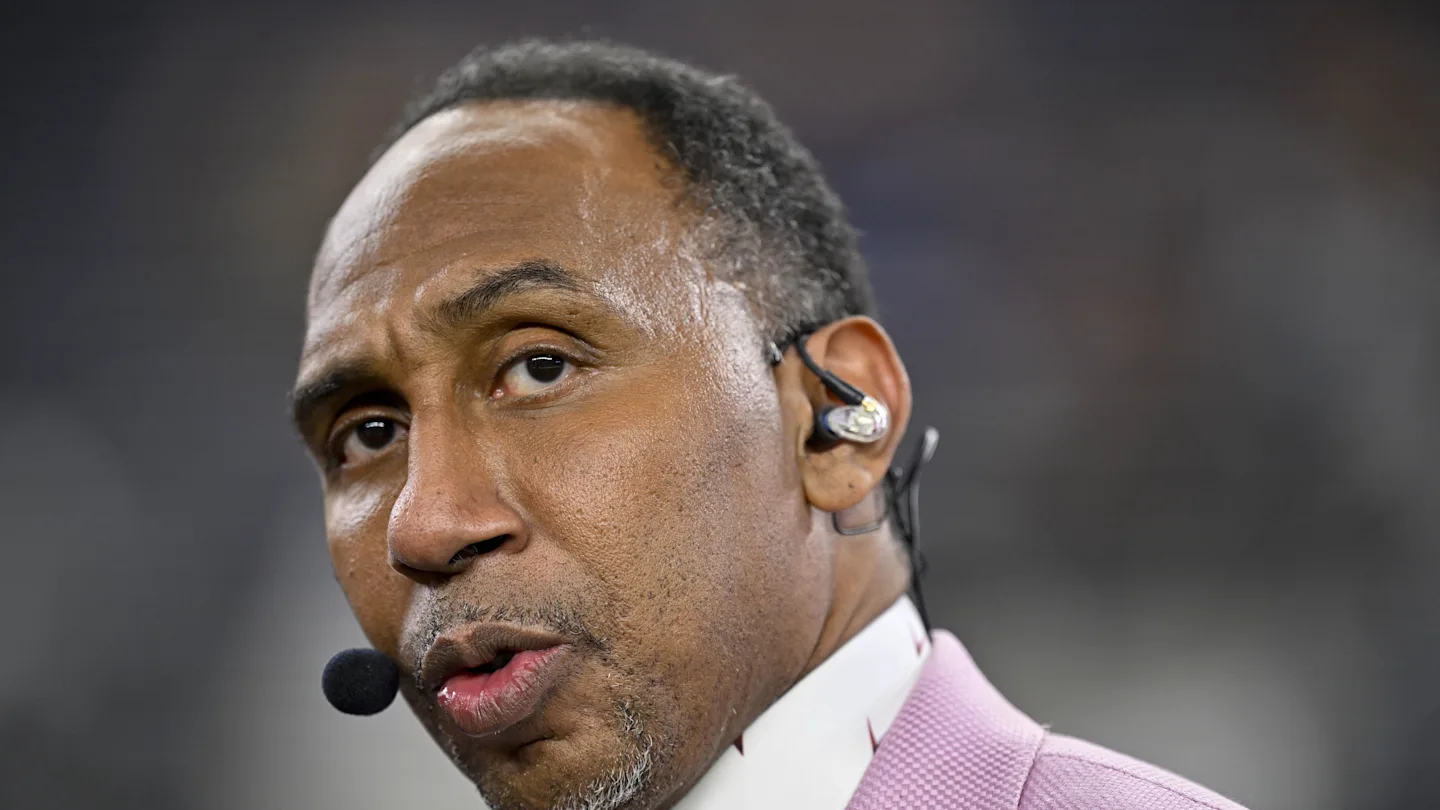
ESPN personality Stephen A. Smith is the man of a million opinions. But the events of the past week of college football had Smith digging deep to share his disdain. Not many years ago, bowl games were regarded as major prizes to be sought and enjoyed by fan bases. But in the era of an expanding College Football Playoff, the non-Playoff bowls are certainly taking a prestige hit.
No less than 10 teams turned down bowl berths in the events of last weekend. Yes, the majority of those teams declining spots were 5-7 teams that had already begun offseason preparations without consideration of a bowl appearance. But across the sport, bowl appearances were devalued by teams– whatever the reason– turning down bowls.
Stephen A. Drags Notre Dame
Notre Dame, after being knocked out of the CFP by a single slot, was by far the most significant team to decline bowl offerings. The Irish clearly felt they had earned a CFP spot and the program’s own social media release made clear that Notre Dame wasn’t interested in anything less. Stephen A. Smith was not impressed by that stance, and he shared his thoughts for the Irish on ESPN’s First Take.
Put on your big boy pants. Grow up and accept accountability for the role you played… here you are with your selfish asses, out there being an Independent… the one thing you can’t control, you want to whine and moan about it because your team lost head-up to Miami to open the season.
Stephen A. Smith
Independent Issues
The lack of a conference alignment certainly didn’t do Notre Dame any favors in the CFP donnybrook. While the school is a member of the ACC for most sports, Notre Dame has chosen to avoid conference alignment, presumably in regard to their own television deal with NBC Sports. Not having a conference left the Irish without the chance to improve their stock in the first weekend of December, as many other teams did.
Notre Dame’s Competition
That said, the Miami team that jumped Notre Dame in the CFP rankings also didn’t play over the weekend. Miami fell out of the ACC title picture and watched 8-5 Duke claim the league’s honors. Alabama did play, but with a 28-7 loss to Georgia, probably wished to have been anywhere else. Still, Alabama and Miami are in the CFP and Notre Dame remains out.
Many have agreed with Smith’s sentiments, claiming that Notre Dame’s stance in turning down a bowl bid was somewhere between silly and genuinely unfair to its own players. While others have been vociferous in their objection to Notre Dame’s CFP treatment, a large number have agreed with Smith’s sentiment about the need for some blue and gold “big boy pants.”
Notre Dame and coach Marcus Freeman drew Stephen A. Smith’s ire by skipping bowl games after being snubbed for the College Football Playoff. | Stan Szeto-Imagn Images
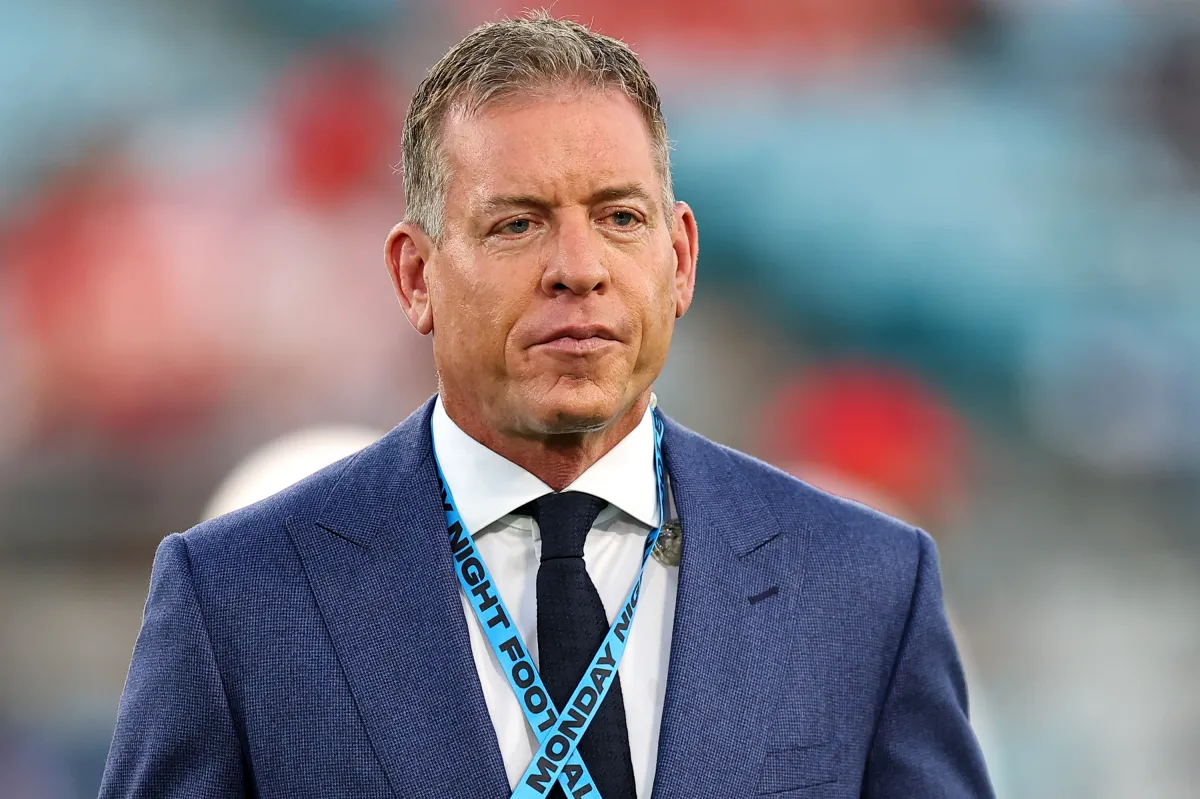
On Monday’s episode of the Sports Media Podcast with Richard Deitsch, Hall of Famer Troy Aikman explained why he’s “done with NIL.”
Aikman transferred from Oklahoma to UCLA for the 1987 and 1988 seasons, where he led the Bruins to back-to-back 10-win campaigns and set passing records before being selected No. 1 overall in the 1989 NFL Draft.
He went on to spend 12 seasons with the Dallas Cowboys, winning three Super Bowls (XXVII, XXVIII, XXX) and throwing for 32,942 yards and 165 touchdowns, before becoming a longtime TV analyst with FOX and later ESPN’s Monday Night Football.
Yet as one of UCLA’s most recognizable alumni, his involvement with the program may now be in question.
“I gave money to a kid, I won’t mention who. I’ve done it one time at UCLA, never met the young man. He was there a year, he left after the year. I wrote a sizable check, and he went to another school. I didn’t even get so much as a thank-you note. So, it’s one of those deals, to where I’m done with NIL. I want to see UCLA be successful, but I’m done with it,” Aikman said.
While Aikman did not name the player, many have already speculated that he’s referring to Dante Moore, who transferred from UCLA to Oregon in late 2023.
A generational high-school prospect, Moore arrived at UCLA as a 2023 freshman.
He completed 114-of-213 passes (53.5%) for 1,610 yards, 11 TDs, and nine INTs at UCLA before entering the transfer portal and landing at Oregon in December 2023.
After moving to Eugene, he emerged as Oregon’s starter and completed 227-of-313 passes for 2,733 yards, 24 TDs, and six INTs in the 2025 college football season.
Those numbers have made Moore a top NFL prospect and a marquee NIL asset.
Read More: Ole Miss Hires Former Lane Kiffin Assistant After LSU Fallout
Moore’s market value rose quickly after the transfer and playing uptick.
Industry trackers list Moore among the higher NIL valuations for quarterbacks in 2025, with a reported value of $2.3 million, which ranks 13th among all college athletes.
This situation highlights the tension between modern donor influence, transfer portal mobility, and NIL commercialization, all of which are reshaping alumni expectations and making donor relationships more transactional.