
NIL
How Kalani Sitake navigates NCAA landscape – Deseret News

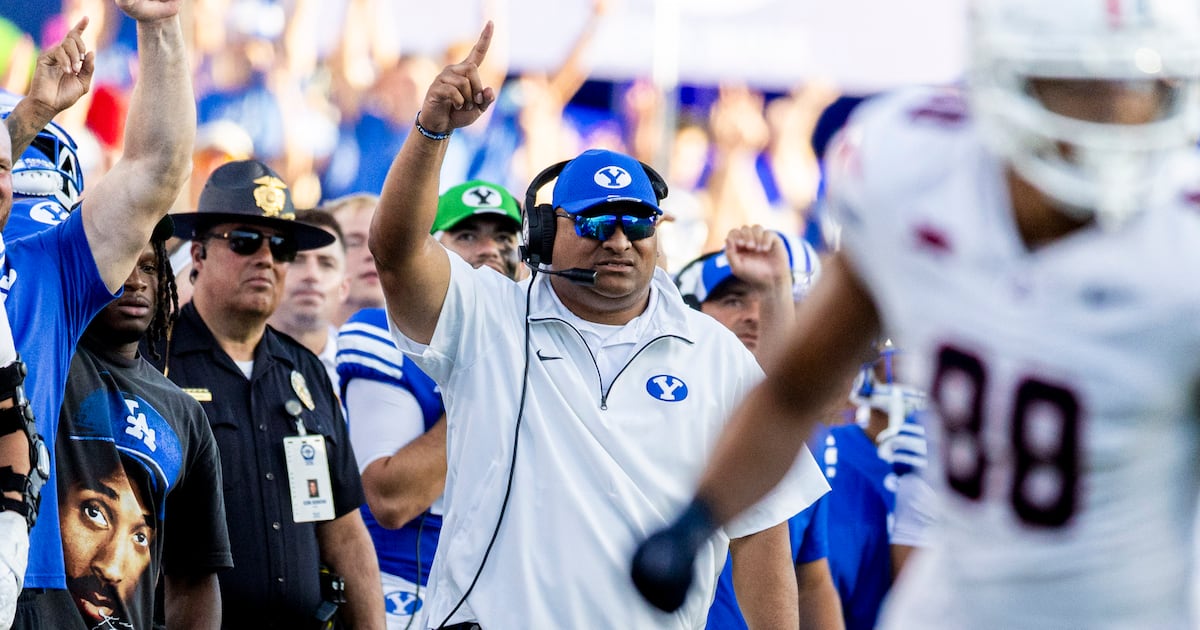
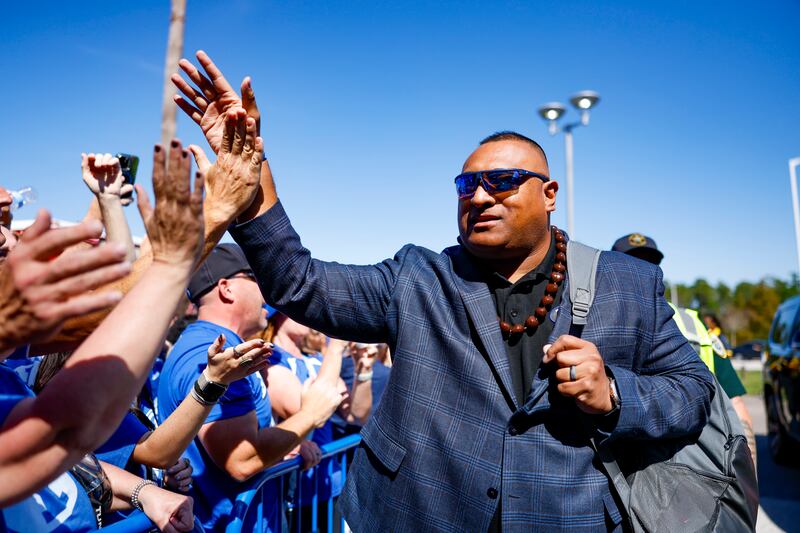
Kalani Sitake has a voice he’s going to use. His tone is one of common sense and humility.
College football is like a three-ring circus these days and from Sitake’s perch as a member of the board of directors for the American Football Coaches Association, BYU’s head coach would like common sense to rule.
Conference commissioners, TV executives, university presidents and athletic directors, and our American court system have loud voices, but Sitake told Waco, Texas, SicEm 365 podcast last week he hoped the voices of coaches would find an audience too.

Special Collector’s Issue: “1984: The Year BYU was Second to None”
Get an inclusive look inside BYU Football’s 1984 National Championship season.
“The key for me was just making sure that the coaches are heard in our profession. Our job is to care about the student-athlete first. And I know we all get paid to win games and do those things, but when you talk to coaches, we got into this business because we care about young people, specifically about young men that play football,” Sitake told host David Smoak.
Sitake said college coaches have many conversations about pitfalls and worries in what could be a Pandora’s box with the transfer portal and NIL. “I think we’re getting a better handle on it,” he said.
“Coaches are committed to making it work and making it better and I’m happy to be part of that group.”
This past week Sitake had two starters, All-American kickoff returner Keelan Marion and middle linebacker Harrison Taggart, enter their names in the transfer portal. There are also nearly a dozen other BYU players who have entered the portal.
Sitake’s approach to his players leaving for the transfer portal is more like being a favorite uncle than a coach who is mired in recruiting warfare.
“It’s such an individual-by-individual case,” said Sitake on the podcast.
“I think the first thing I do as a head coach is thank them for what they’ve done for our program and appreciate them, and show them love that they deserve. I’m always going to cheer for them. I want them to do what’s best for them.
“I feel like we do have all the resources here for one to be their best, and if it doesn’t match with what they’re expecting, that’s OK,” he continued. “That’s part of college football nowadays. I can work with guys who want to be here. I always want what’s best for them, and I’ll cheer for them when they play somewhere else, except when we play them. But I do want them to know the energy and effort they put in here is appreciated, and I love them.”
Most transfers are for playing time
Sitake said in his experience, there are different reasons for players to enter the portal, but in most conversations he has, the athlete just wants to be on the field more.
“I can understand that,” Sitake said. “I think the key is we just talk about it, and if we feel like it’s the best thing, then I encourage them to do it.”
Sitake said at the end of the season, position coaches and coordinators have interviews with players, and when it’s an exit interview, most players say, “Hey, coach, I’m just looking for other opportunities to play.”
Sitake said the key is to just face it, not hide from it.
“If they want to get in the portal, then so be it. I mean, that’s just the game. I do know that sometimes when people think the grass is greener on the other side, it usually doesn’t mean it works out that way. I want to be able to help them come to what they want. I want to know the reasons they leave.”
The hosts asked Sitake if he believed it was important to be approachable with an open door kind of relationship with players and staff.
“I’m open to feedback myself,” he said. “I want to know how I can do a better job and what I can do to improve. And so I don’t have a problem with being upfront with people and being direct, and I would want them to do the same.
“I know one thing I’m not good at, and that’s guessing how you’re feeling and what you’re thinking. If I were a mentalist, I would be doing something else. But I’m not. So I’m pretty simple,” he continued. “If you want something, and if you’re frustrated with something, I want to know about it, and if you’re willing to talk to me about it, then we can come to a conclusion of what’s best for all parties.
“But I think it’s important for me to give young men an opportunity to just hear them out and what they’re thinking. I think a lot of times feedback is a gift. It definitely is.”
Sitake said as a coach leads players there is nowhere it says you have to be mean to get your way.
“I believe in Christ as our Savior, and I’m trying to follow his example. I think you do that by being sincere and trying to understand where they are coming from, their point of view and differences,” he said. “I didn’t have a transfer portal when I played. I didn’t have all the things they have now, but I want to understand. It’s a learning process for me, too.”
BYU trying to navigate NIL
How has NIL impacted the way he recruits and has managed players and rosters over the past few years? Well, Sitake said he’s learning just like everyone else. He just wants to educate himself and it’s been a process he’s still adapting to.
In recent weeks, Sitake has received commitments from several highly sought-after high school recruits in the class of 2026, including Pine View tight end Brock Harris and Lone Peak lineman Bott Mulitalo, who flipped from Oregon. According to 247Sports, BYU has climbed to No. 33 in recruiting rankings for that class with just seven commitments, the latest one Lehi receiver Legend Glasker.
Managing NIL monster
Sitake said when NIL began, he didn’t panic but tried hard to understand how it worked and how it could fit into the culture and what he wanted to accomplish as a team. This brought on a team-wide approach with Built Brands and included resources for walk-ons — which made national headlines.
Now, with roster reductions and the House Settlement looming, the entire NIL horizon is evolving with revenue sharing — P4 schools mandated to pay athletes to the tune of $21 million per year per school.
Sitake said he saw the benefit of players earning money that would change their college lives, but he saw it as an opportunity to make those changes impact a lifetime.
“I wanted to still focus on education and to learn how money could really be beneficial in the future and that, right now, the purchases they wanted to make may not be the wisest,” he said. “They needed to think about themselves when they are older and have a family.
“I mean, imagine what it would mean if all of us could have started a retirement fund when we were 18? That’s a huge benefit for these young men. They need to learn how finances work and talk about taxes, because these guys don’t know anything about that.”
Sitake said proper counseling, financial information, guidance and expert advice for athletes became part of his approach.
“So, it’s opening a whole new world to them of different things, how to be responsible, that instant gratification now in spending may not be the wisest thing,” he said. “A lot of it is creating a budget and living within their means. I don’t know if you really need a second video game console. That’s up to them, but if they do, maybe they aren’t watching (game) film or focusing on academics.”
According to a 2009 Sports Illustrated article, 78% of NFL players are either bankrupt or under financial stress within two years of retirement. Professional athletes face financial ruin at an alarming rate.
Sitake said the biggest issue these days is understanding rules, regulations, what NIL truly is. Is it name, image and likeness or pay for play? With revenue sharing, all athletes are going to receive a salary.
“I’m excited that student-athletes get to be paid. I’m not one of these guys that say because I didn’t have it, you can’t have it. I mean that’s technology and that’s grown and progressed. So, we’re in a really good spot. Our focus in getting into high school and college is education, and we should be educating them now in NIL and finances.”
Sitake’s sincerity is good for the AFCA and his voice should carry some weight.
But back in the 1970s and ’80s, who would have thought college sports would bend so heavily under the burden of so much controversy?
From lawsuits to a feeble grasp on regulating the sport the NCAA once reigned over with a phone-book-thick set of guidelines, it’s a very different world.

Continue Reading
NIL
College Sports Commission distributes reminder about third-party NIL deals amid transfer portal movement

One week into the college football transfer portal window, the College Sports Commission issued a reminder about its rules regarding third-party NIL deals. Specifically, the guidance mentioned deals with MMR and apparel partners.
The CSC said it received word of schools offering deals that go against terms of the House settlement through the first week of the transfer window. The organization expressed “serious concerns” about some terms of the deals in question and reiterated third-party NIL deals are subject to the NIL Go clearinghouse if they’re worth more than $600.
Advertisement
SUBSCRIBE to the On3 NIL and Sports Business Newsletter
Additionally, the CSC said investigations are progressing with regard to unreported third-party NIL deals. Some schools “should expect to hear from the CSC next week”, the commission said.
Such deals must be reported within five days of execution. Enrolling high school athletes and incoming D-I transfers have up to 14 days in some cases.
“Without prejudging any particular deal, the CSC has serious concerns about some of the deal terms being contemplated and the consequences of those deals for the parties involved,” the guidance reads. “Making promises of third-party NIL money now and figuring out how to honor those promises later leaves student-athletes vulnerable to deals not being cleared, promises not being able to be kept, and eligibility being placed at risk.”
Advertisement
CSC says MMR deals must be reported
Friday’s guidance comes after Yahoo! Sports’ Ross Dellenger reported a $3.5 million offer that LSU made Cincinnati transfer quarterback Brendan Sorsby this week. Sorsby later committed to Texas Tech, where he’s set to receive a deal in the $5 million range, On3’s Pete Nakos reported.
The offer to Sorsby included a third-party marketing deal through LSU’s MMR partner, Playfly Sports Properties, Dellenger reported. LSU also planned to compensate Sorsby through rev-share, which would help make total compensation competitive to Texas Tech’s investment.
The College Sports Commission said deals in place with an MMR partner must be reported, even if the partner intends to find other sponsors to help activate the deal. In addition, deals with an MMR or other partner “must include direct activation of the student-athlete’s NIL rights,” the guidance read.
Advertisement
“The label on the contract (e.g., ‘agency agreement,’ ‘services agreement’) does not change the analysis; if an entity is agreeing to pay a student-athlete for their NIL, the agreement must be reported to NIL Go within the reporting deadline,” the guidance reads.
Third-party NIL deals are viewed as the next “arms race” in college sports in the post-House settlement landscape. Tennessee and Penn State are both set have NIL components in their upcoming apparel deals with adidas, On3 previously reported. LSU was also the first school featured in Nike’s new Blue Ribbon Elite program, and that announcement came at the same time the Tigers announced an extension with The Swoosh.

The Athletic has live coverage of Oregon vs. Indiana in the 2025 College Football Playoff semifinals.
When David Pollack played linebacker at the University of Georgia from 2001-04, he was considered one of the best defenders in the country: a two-time consensus All-American and a two-time SEC Defensive Player of the Year.
But when he played the game in college, NIL (name, image and likeness) deals didn’t exist, and active players were not named in athletic video games. In the EA Sports College Football series, Pollack knew he was No. 47 for Georgia.
Pollack now sees the video game as more than entertainment or a fun way to pass the time. The game can also be a tool of instruction for coaches at all levels, particularly those coaching young children and adolescents. In addition to being a recognized college football analyst, Pollack is a defensive line coach at North Oconee High in Bogart, Ga.
Also on his resume: He’s one of the voices of EA Sports College Football 26 as an analyst.
Teaching players about schemes and how to react on the field has become reality for him as a coach with the help of video games such as EA Sports College Football 26 and Madden NFL 26. He’s a believer of the method and has seen the return on investment.
“I can’t tell you how many of my kids that I’ve coached (using video games) over these years,” Pollack said, “and they were really little, too — 8, 9, 10, 11, 12 years old.”
EA Sports College Football 26 includes more than 2,800 new plays and 45 new formations. Madden NFL 26 features a playbook expansion of more than 1,000 plays. Football video games have come a long way from the days of Tecmo Bowl, a 1980s-released game featuring only 12 pro teams and four offensive plays per team on the Nintendo 8-bit console.
Because of technology becoming so advanced, studying plays by way of video games can resemble studying in real life to football players of all ages. Coaches can talk football jargon with younger players who are familiar with it from the video games. Players are understanding what offensive schemes work best against certain defenses. Conversely, they are learning multiple defenses and what might be the best option to contain an offense.
“With Madden, with College Football, these kids learn what Cover 2 is, what Cover 3 is, what Cover 4 is,” Pollack said. “The games have gotten to be so detailed that it’s correct.”

David Pollack, now an assistant coach at North Oconee High in Georgia, was a star linebacker for the Georgia Bulldogs. On video games, he knew he was No. 47 for the Bulldogs. (Joshua L. Jones / USA Today)
Statistically, EA Sports College Football 26, released in July, is again among the best-selling games, ranking fifth and trailing only NBA 2K26 among sports games, according to GameStop. College football was brought back to video game consoles in July 2024 with EA Sports College Football 25, the first such game since 2013. EA Sports College Football 25 was the second-highest selling game of 2024, according to GameStop. There were 2.2 million unique players during early access in July 2024, per EA Sports.
Pollack said many young football players he’s worked with who have gravitated toward video games as an entry point to the sport show up with a deeper understanding of the game. And with the College Football Playoff now in full swing, there is a sample size of a fan base that learned about the significance of the tournament through gaming, despite having no connection to any of the 12 teams originally selected for competition. (Miami beat Ole Miss on Thursday to advance to the CFP Championship. The Hurricanes will face the winner of Friday’s semifinal between Indiana and Oregon.)
Young fans as gamers, however, are looking for realism down to the smallest detail. EA Sports creative director Scott O’Gallagher said a lot of the feedback the company receives from gamers goes beyond gameplay. With football video games, there are gamers who want to see players in the right helmet style, the right style of shoe, even the correct number of wristbands. That detail, O’Gallagher said, resonates particularly when young gamers are playing with the team that features certain athletes they admire.
Before becoming immersed in video games as a career, O’Gallagher was an NAIA basketball All-American at Warner Pacific University in Portland, Ore. He played professionally overseas in Europe and Australia. He learned as a professional athlete in Europe that passionate fans care about every aspect of their favorite team.
The details that go into making football video games as real as possible include keeping the playbook updated. EA Sports works throughout the season to add any wrinkles to the playbook that can be added to its games. A young player can follow a team they like and not only understand what plays are used, but also see the changes over the course of the season.
“We’re a live service, so if things are happening during the year, we’re definitely going out there and trying to add them,” O’Gallagher said. “I can talk to one of our playbook guys about what USC was doing and say, ‘Hey, did we get this? It’s a new wrinkle that Lincoln Riley’s put in. Let’s make sure we have it.’”
A more intricate game doesn’t just help Pollack’s young players, but also gives more for Pollack to discuss in his role as an in-game analyst. When recording for the game, it’s no longer about simply saying “first down.” Announcers will record game analysis in studios with tons of energy but without seeing an actual play. They will spend hours preparing to record for several scenarios.
“The technology’s getting so much better that we’re able to do so much more now and give layered concepts,” Pollack said. “It’s crazy how much they can learn about the game and are ahead of the curve on playing the real game.”
Football education by way of video games isn’t limited to a specific squad, either. Evan Dexter, EA Sports vice president of brand and marketing, said data shows football games make a strong connection with young fans who don’t have allegiance to a particular team.
“If you were to pull the analytics of (College Football) 25 and 26, I’m sure Colorado is being used far more than what you might think, based on the population of alumni or people geographically around the school,” Dexter said, referring to the popularity of Heisman Trophy winner Travis Hunter and quarterback Shedeur Sanders, who led Colorado during the 2024 season.
“It’s certainly true that younger sports fans will abandon allegiance in favor of some form of hero worship, some form of individual superstar,” Dexter said. “As the sport becomes a little more superstar driven, the Travis Hunters move through it, and the Arch Mannings (of Texas) and those narratives start to transcend the old-school rivalries.”
Whether rivalries are traditional or budding, the evolution of football video games will continue to be an introduction to the sport for young gamers who ultimately want to become football players. They’ll now have a lot more than four plays to choose from to learn the game.
“It’s definitely raising the football intelligence of kids all around the world by playing the game and understanding what’s going on,” Pollack said.

SEATTLE — In this edition of Inside the Arena, Niko is back from the Seahawks’ huge win in Santa Clara and sounding off on the sudden departure of UW QB Demond Williams and what it means for the future of NIL.
Plus, Chris introduces us to the RailSpur development in Pioneer Square, which has been boosted by bonus Mariners and now Seahawks games in advance of the 2026 World Cup.
RELATED | Seahawks secure No. 1 seed in NFC and division title with dominant 13-3 win over 49ers
The Seahawks will play the lowest remaining seed in the NFC Divisional Round on either Jan. 17 or 18.
You can also watch previous episodes of Inside the Arena on the KOMO News YouTube page.
BE THE FIRST TO COMMENT
Inside the Arena is presented by Snoqualmie Casino and Hotel.
Jan. 9, 2026, 1:23 p.m. ET
- Chris Wash has resigned from his position as UCF basketball’s general manager.
- The resignation is effective immediately and was made to prioritize pressing family health matters.
- Wash joined the UCF staff in June 2025 after working as a talent evaluator and NIL agent.
Chris Wash has resigned from his role as UCF basketball’s general manager and special assistant to head coach Johnny Dawkins, effective immediately, according to a press release from OG6 Sports Management.
Wash, who joined the staff in June 2025, made the decision prior to the team’s Jan. 6 game at Oklahoma State in order to “prioritize pressing family matters, including a recent health diagnosis within his immediate family that requires his time, focus and presence.”
Per the statement, Wash is “grateful for the opportunity to have been part of the UCF basketball program and appreciates the understanding and professionalism shown throughout this process. He looks forward to returning to the sport in the future when circumstances allow.”
A former national talent evaluator, Wash previously served as an NIL agent for college football and basketball athletes. He worked for more than a decade as a loan officer prior to entering the college athletics space.
UCF, currently ranked No. 25 in the AP poll, has a 12-2 record on the season and will host Cincinnati at 5 p.m. Sunday, Jan. 11.
Jan. 9, 2026, 3:31 p.m. ET
GLENDALE, AZ — There was some strange symmetry to it all, a torch passing no one saw coming.
Miami, everyone, is built and playing like an SEC team.
The SEC, meanwhile, just polished off a postseason where it lost a conference-record eight games against other conferences.
“We line up, and we want to punish you on offense and defense,” said Miami defensive end Akheem Mesidor. “You’re going to have to play your absolute best game to beat us.”
Well, well. Now who does that sound like?
Here’s a hint: the bully on the block that has fallen, and can’t seem to figure out why or how to get back up.

From dominating college football with 14 national titles since 2003, to the fateful irony of the SEC brought back to the pack by its own greed.
The SEC wanted Texas and Oklahoma, wanted to drastically change the conference footprint of the sport, and then sat and watched while the Big Ten panicked and did the same, while the Pac-12 was eaten and eliminated (it ain’t the same now, people), and while the Big 12 and ACC were relegated to second citizens.
The SEC, along with the Big Ten, then grabbed control of the postseason and threatened to take their ball and go home unless everyone fell in line. They want more access to the postseason, and they’ll surely receive the lion’s share of revenue from what could be a near $2 billion annually expanded College Football Playoff. Like it or not.
They wanted unregulated NIL and free player movement, or at the very least, did next to nothing to stop it. They, along with every other FBS university, knew for 16 months that states of California and Florida had passed bills that would become law in June of 2021 — and did nothing about it.
They punted, and begged Congress for help. Imagine that, two self-interested and wildly dysfunctional entities trying to figure out a massively complex financial and structural problem.
What could go wrong?
The bigger question is, what did they think the rest of college football would do? Certainly not sit and take it.
There are millionaires and billionaires who love their universities and are obsessive about winning. Throw open the doors to NIL and free player movement — and legalized big booster involvement — and watch how quickly the SEC looks like the ACC.
Watch how quickly Alabama comes back to the pack, and Georgia can’t get out of the quarterfinals in the CFP. How quickly LSU and Florida and Texas A&M spend hundreds of millions of dollars to fire coaches and start over.
More to the point, watch how quickly the deep-pocket Cody Campbells of the world begin to simply play by the rules laid out by the SEC and Big Ten ― and build teams that look and play like SEC teams of the past.
Want to know why Texas Tech won the Big 12 for the first time in school history, and won a school-record 12 games? It had one of the best defensive lines in the nation, and a Top 5 scoring defense.
Want to know how Miami has finally found itself again after more than two decades of stumbling around like NC State? The Canes have the best defensive line in the nation, with two edge rushers who will be Top 15 NFL Draft picks.
Remember all of those nasty and dominating defensive lines at Alabama and Georgia, all of those NFL draft picks? Nothing defined SEC dominance, SEC national titles, quite like physical, game-changing defensive linemen.
Now they’re leaving high school and/or the transfer portal for the highest bidder. The idea of playing for the SEC, while certainly tempting, is quickly trumped by another zero at the end of a paycheck.
“More options for players, that’s the big thing,” said Miami safety Keionte Scott. “If it’s not working for whatever reason at another place, there are options.”
It wasn’t working for Scott at Auburn, which hasn’t found an answer since firing Gus Malzahn after the 2020 season. So Scott became one of six transfer starters on Miami’s defense — including the entire secondary — and is now a game away from a national championship.
Meanwhile, the SEC hasn’t looked further away from winning it all ― having gone three straight seasons without playing in the national championship game for the first time since 2000-2002.
Go ahead and expand the CFP to 16 or 20 or 24 teams. Go ahead and continue to declare players don’t want to be employees, and avoid the one thing that could deliver some semblance of control to a player procurement process with no guardrails — just because you don’t want to share more money when collectively bargaining.
And Indiana, with the largest alumni base in college football, will continue to spend its way out of the NCAA cellar. Will beat Georgia to sign Heisman Trophy-winning quarterback Fernando Mendoza.
Miami, with its deep pocket boosters begging for a return to glory, will do the same.
So will Texas Tech and Utah and BYU and SMU and … see where this is headed?
Right to the end of SEC dominance.
Matt Hayes is the senior national college football writer for USA TODAY Sports Network. Follow him on X at @MattHayesCFB.
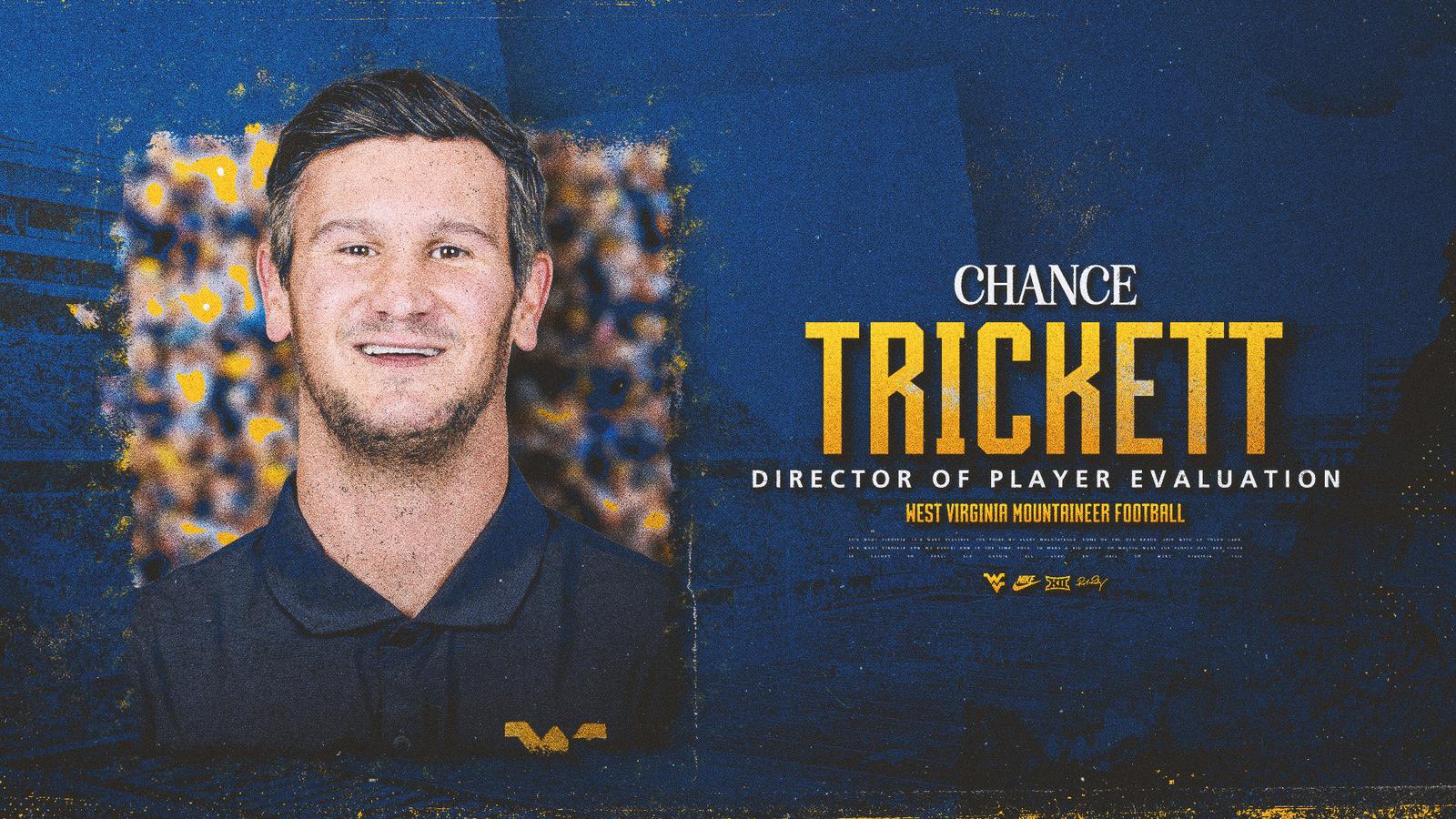
MORGANTOWN, W.Va. – West Virginia University football coach Rich Rodriguez announced that Chance Trickett has been hired as the director of player evaluation on the Mountaineer coaching staff.
“Chance has built an outstanding resume of scouting, evaluating and recruiting experience at the FBS, Power Four and NFL levels,” Rodriguez said “His wide-spread experience and knowledge in these areas, along with being a West Virginia football legacy, will make an immediate impact in our program.”
Throughout his career, Trickett has experience leading player evaluation, roster construction and long-term talent strategy at the college and NFL levels. He has proven his ability to build multi-year roster plans, aligning evaluation with financial strategy, integrating and leveraging analytics and networks to identify top prospects and cultural long-term fits. He has a strong network across high school, college, financial and agency circles with a track record of identifying undervalued talent and maximizing roster efficiency.
Trickett joins the WVU football staff after spending almost 10 years as a college area scout in the Los Angeles Rams organization. He served one year as the director of football recruiting at Louisiana Tech and was at Florida State for two years as a recruiting assistant.
While with the Rams, he led comprehensive player evaluations integrating film, analytics, verified measurables and psychological/cognitive components to support draft board construction and roster strategy decisions. He also produced in-depth positional value assessments and roster impact reports for multi-year draft planning and contract strategy. He developed internal valuation reports and roster strategy that models and mirrors current NIL/college market structures. He also integrated advanced scouting technology to enhance accuracy in player projection and long-term roster planning.
Trickett was awarded the BART List Award for scouting excellence in 2025 and given the “inside the league” scout/agent organization’s Best Draft Award in 2024.
A native of Morgantown, he earned his bachelor’s degree from Florida State in 2011.
Trickett, and his wife, Ashley, have two children, Tristan and Matthew.

NIL52 minutes ago
College Sports Commission distributes reminder about third-party NIL deals amid transfer portal movement

Sports1 hour ago
Cal State Bakersfield Names Brandon Row Associate Head Coach of Volleyball

Motorsports1 hour ago
Front Row Motorsports announce changes after NASCAR lawsuit – Motorsport – Sports

Sports2 hours ago
Garcia-Beltran Claims Program Record in Debut at Lions Indoor Invitational

Sports2 hours ago
How A&M volleyball aims to sustain success – The Battalion

Motorsports2 hours ago
Dean Leads Nitro Motorsports Sweep on Opening Day at Daytona – Speedway Digest

NIL2 hours ago
Learning football from video games now a legit teaching method for coaches, athletes

Sports2 hours ago
Rychkov Claims Another Program Record at Lions Indoor Invitational

Rec Sports2 hours ago
Join Us at Girls in Sports Night on Tuesday, January 20!

Rec Sports2 hours ago
Khloe Ison is the future of Baltimore basketball

Rec Sports2 hours ago
$50 to try out, $3,000 to play – The News Herald

NIL3 hours ago
Niko sounds off on UW’s Demond and NIL, plus Seahawks boosting Seattle businesses

Motorsports3 hours ago
Tibbetts Lumber Backing Spire, McDowell for Truck Race at Daytona

Sports3 hours ago
Ryan Windisch promoted associate head coach Arizona Wildcats volleyball

Motorsports3 hours ago
Michael McDowell Running Daytona Truck Race for Spire

NIL4 weeks ago
DeSantis Talks College Football, Calls for Reforms to NIL and Transfer Portal · The Floridian

Sports4 weeks ago
#11 Volleyball Practices, Then Meets Media Prior to #2 Kentucky Match

Rec Sports4 weeks ago
Stempien to seek opening for Branch County Circuit Court Judge | WTVB | 1590 AM · 95.5 FM

Motorsports3 weeks ago
Ross Brawn to receive Autosport Gold Medal Award at 2026 Autosport Awards, Honouring a Lifetime Shaping Modern F1

Sports4 weeks ago
Maine wraps up Fall Semester with a win in Black Bear Invitational

Motorsports4 weeks ago
Nascar legal saga ends as 23XI, Front Row secure settlement

Rec Sports3 weeks ago
Princeton Area Community Foundation awards more than $1.3 million to 40 local nonprofits ⋆ Princeton, NJ local news %

NIL3 weeks ago
Downtown Athletic Club of Hawaiʻi gives $300K to Boost the ’Bows NIL fund

Motorsports4 weeks ago
Sunoco to sponsor No. 8 Ganassi Honda IndyCar in multi-year deal
Motorsports4 weeks ago
NASCAR, 23XI Racing, Front Row Motorsports announce settlement of US monopoly suit | MLex

Rec Sports4 weeks ago
WNBA’s Caitlin Clark, Angel Reese and Paige Bueckers in NC, making debut for national team at USA camp at Duke

Sports4 weeks ago
Hope College Tops MIAA Commissioner’s Cup Fall Update

NIL4 weeks ago
Nike Signs 10 LSU Athletes to NIL deals

Sports2 weeks ago
Badgers news: Wisconsin lands 2nd commitment from transfer portal

Sports4 weeks ago
Rock sending small group to Akron Friday night





-
 Sports2 weeks ago
Badgers news: Wisconsin lands 2nd commitment from transfer portal
-

 Rec Sports1 week ago
Five Youth Sports Trends We’re Watching in 2026
-

 Sports3 weeks ago
Is women’s volleyball the SEC’s next big sport? How Kentucky, Texas A&M broke through
-
 Sports2 weeks ago
Kentucky VB adds an All-American honorable mention, loses Brooke Bultema to portal
-

 Rec Sports3 weeks ago
NBA, Global Basketball Community Unite for World Basketball Day Celebration
-

 Motorsports2 weeks ago
Dr. Patrick Staropoli Lands Full-Time O’Reilly Ride with Big Machine Racing
-

 Motorsports3 weeks ago
NASCAR, IndyCar, and F1 Share These Race Days in 2026
-

 Sports2 weeks ago
Texas A&M volleyball’s sweep of Kentucky attracts record viewership
-

 Motorsports2 weeks ago
Kyle Larson opens door to 24 Hours of Daytona comeback – Motorsport – Sports
-

 Motorsports3 weeks ago
BigRock Motorsports Retains Its Championship Title At ISRL Season 2 Grand Finale In Calicut