
Motorsports
How NASCAR’s top teams work around the rules using brake pads


Mixing up brake pads on a race car can seem counterintuitive at first glance but NASCAR Cup teams often do it on purpose in order to work around the rules and anyone wanting to be competitive at Phoenix this weekend will be trying it.
The NASCAR Next Gen car is mostly assembled with single source parts so teams can’t build custom suspension or brake components but brake pad compounds are not limited so teams have figured out how to alter the handling of the car by mixing friction compounds and installing different types of brake pads on each corner of the car.
This practice is known as splitting brake pads and it can be very effective at making a race car faster or more stable into a turn but can also be dangerous as the imbalance of friction from side to side can overheat the brakes and cause a rotor to shatter as we saw with the No. 20 of Christopher Bell at the 2023 NASCAR championship race at Phoenix.
How brake pad splitting works

Crew working inside wheel wells of Austin Cindric’s Team Penske Ford
Photo by: David Buono – Icon Sportswire – Getty Images
In the simplest terms, brake pad splitting means that you have a split compound either side to side or front to rear where the brake pads across any angle are not matched but instead have different friction compounds. In an environment where teams cannot build custom suspension or brake components in order to improve the handling of the car they chase whatever part is open and having higher friction pads on the right side of the car can help a car be more stable entering a corner.
We checked in with Joey Cohen who is currently president of GMS Race Cars and has worked in a wide range of technical positions in NASCAR and other series ranging from engineer to executive to learn more about brake splitting and why Cup teams split brake pads.
“This is done in an effort to tune for balance based on how braking torques are applied,” Cohen explained. “This can help how a car loads a certain corner under braking along with weight transition and also the temperature range the brake can operate at. Some common configurations could be front v. rear, left v. right, or even isolated to one corner of the vehicle to prevent lock-ups when a wheel becomes light on load.”
Why brake pad splitting is important at Phoenix
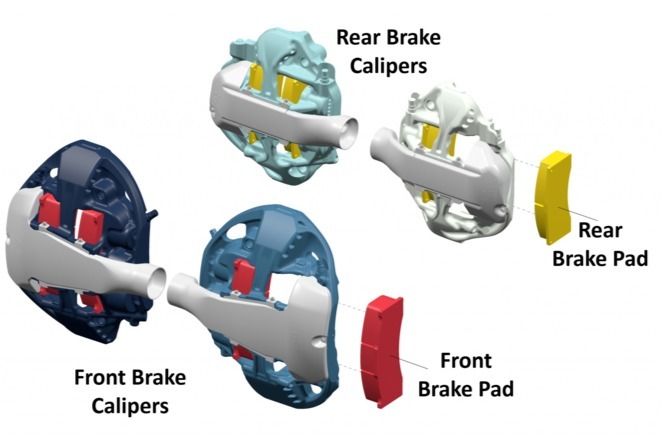
As Cohen shares, the brake pads end up being used to force the car to turn a certain way with specifically chosen corners of the car being grabbier than others and it becomes significantly important at a track like Phoenix Raceway because of its unique layout. Phoenix is an asymmetric track so braking and handling of every corner is unique and setting up the car is always a compromise but splitting the pads can mitigate some of that. Entry into turn 1 at Phoenix compared to turn 3 is quite different due to the layout of the track and Cohen shares that “Into turn 1, your entry is coming off the dogleg front straightaway while the entry into turn 3 is more completed in a straight line off the back stretch.”
The split brake pads act almost like a customized suspension in order to allow handling to be equalized across unique corners in conjunction with the brake bias adjustment that the drivers have in the car which allows them to shift brake pressure from front to rear on the fly.
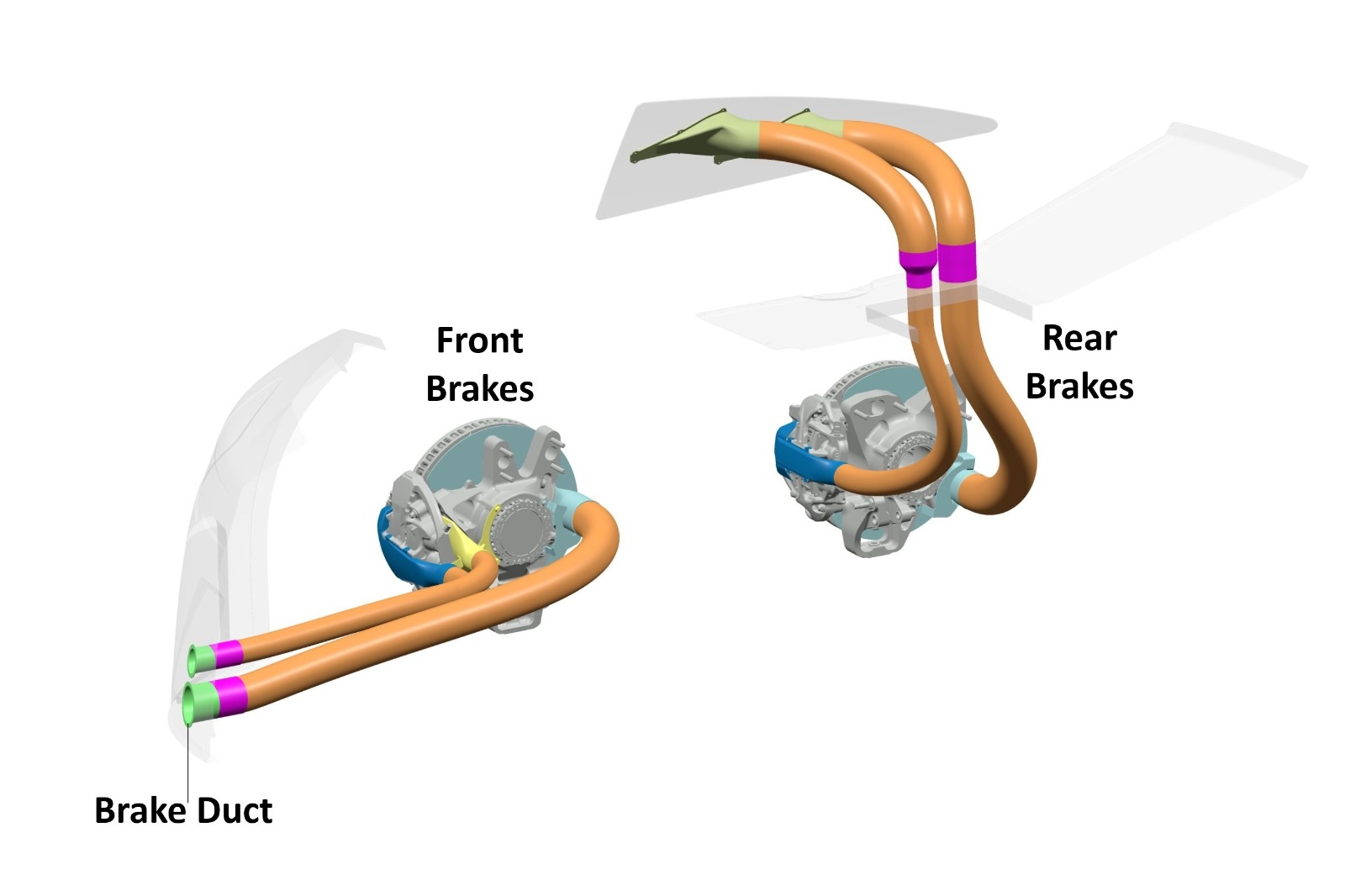
Another one of the unique aspects of Phoenix that isn’t present at other short tracks is the fact that it has pretty long straightaways which means that the brakes can see large temperature swings if the brake ducts are wide open. In certain cases, teams will adjust the friction compound of a certain corner of the car in order to minimize those temperature swings if they expect the corner to be overcooled on the straights.
Aero also plays a much larger role at Phoenix than at other short tracks and Cohen mentions that splitting brake pads can also mitigate certain aero effects: “Braking can create large variations in platform of the vehicle (pitch movement forward). This will affect the overall and front/rear downforce profile of the race car transitioning from entry to center of the corner. A brake pad of varying friction configuration can eliminate or smooth out the platform variations.”
Why teams use brake pad splitting

A detailed view of the NASCAR Next Gen wheel
Photo by: James Gilbert / Getty Images
In past generations of the NASCAR Cup car, teams could build custom suspension components and select very specific brake components for the car based on track and even mix and match things like brake calipers or suspension arms from corner to corner. The Next Gen model eliminated all of those choices so teams now must use spec parts from specific suppliers when building cars and the same brake calipers and suspension arms must be used across a variety of different tracks.
In addition to having the ability to build custom brake and suspension components in past generations, teams could also install shut off or delay valves or route brake lines in specific configurations in order to affect the bias to any specific corner of the brakes. Cooling was also up to the teams so they could match specific corners with custom cooling for the friction profile of the brakes or for specific aero that they might be chasing. With all of these options off the table, teams now try to do all of those changes solely by customizing the friction compounds of the brake pads.
How brake pad Splitting can be dangerous
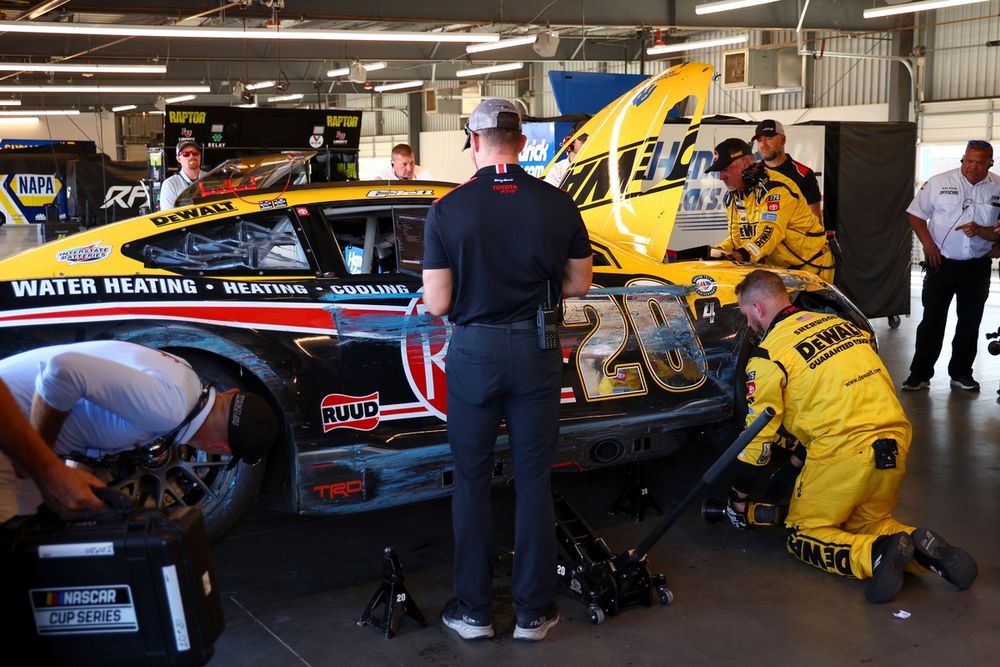
Christopher Bell, Joe Gibbs Racing Toyota
Photo by: Jared C. Tilton/Getty Images
We saw the championship hopes for Bell end quickly during that 2023 finale at Phoenix as his right front rotor shattered and took the right front wheel and tire. This is where the dangers of brake pad splitting come in and why it’s always a delicate balance when teams chase performance in unorthodox ways. The likely scenario in that situation is that they were chasing stability while entering a corner by having higher friction pads on the right side of the car versus the left. It worked for a while but they went too far as the heat generated by the friction on the right front was too much for the available cooling.
Once the rotor gets too hot it can grow to such an extent that it can contact the brake caliper and then once the car gets on a straightaway it will be suddenly cooled off which can cause it to shatter from the large temperature difference. Cohen notes that there are a variety of other disadvantages of splitting pads especially over a long run in a race.
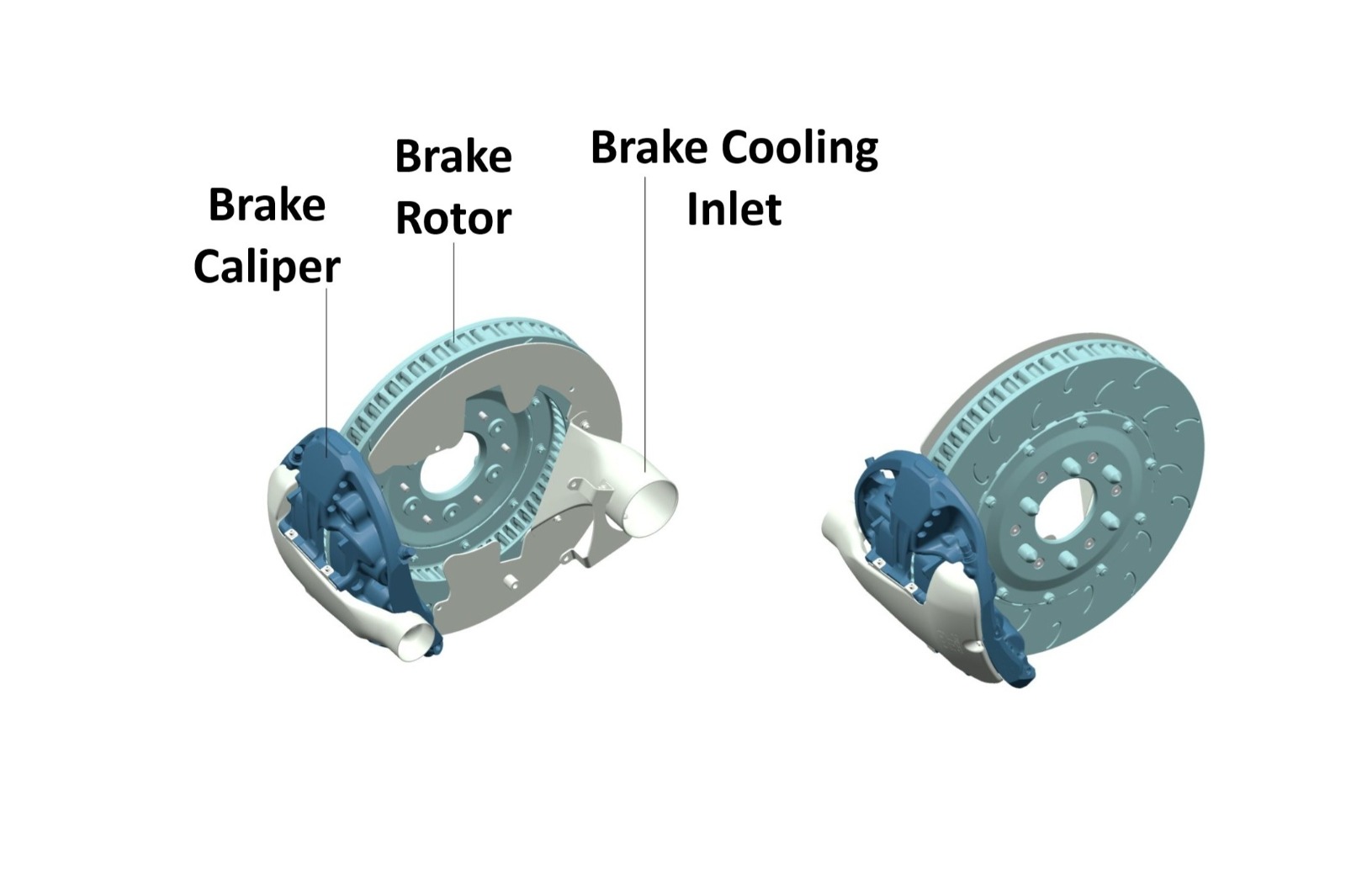
“High temperature pad compounds can hold residual heat that could cause rotor cracking, glazing of the rotor surface (less available friction), and failure in caliper seals and components which would lead to total corner failures of the braking system,” said Cohen. “Uneven rotor wear and tapering of an individual corner can create vibrations and wheel shake for the driver under braking, and inconsistency in the response of the brake pedal.”
Teams will have some tough choices to make once practice wraps up at Phoenix as they decide which brake pads they want to take into the race and how big of a risk they want to take with championship hopes on the lines.
We want your opinion!
What would you like to see on Motorsport.com?
Take our 5 minute survey.
– The Motorsport.com Team


MILLINGTON, Tenn. (WMC) – The dilapidated Memphis International Raceway will see tires on the track again.
This week, the International Hot Rod Association (IHRA) closed on the property at 5500 Victory Lane, which is also known as the Memphis Motorsports Park.
It’s been closed since 2022 and currently sits empty.
Located in the neighboring City of Millington, the Memphis International Raceway has played a significant role in the national motorsports scene since its opening in the late 1980s.
“This is a special place in American motorsports,” said Darryl Cuttell, CEO of IHRA. “This facility has a deep history in drag racing and stock car competition, and our goal is to honor that legacy while building a strong, sustainable future. We are committed to bringing meaningful racing back to this property while expanding its role as a destination for a wide range of events that serve racers, fans, and the surrounding community.”
Under its new ownership, the track will operate as a multi-use destination for drag racing, car competitions, and more.
“Memphis Motorsports Park has long contributed to tourism and economic activity in Millington and Shelby County, and IHRA’s acquisition represents a positive step forward for the facility and the community. This investment supports the continued use of the track as a regional destination while creating opportunities for local businesses and future growth. The Millington Area Chamber of Commerce looks forward to working with IHRA as this next chapter takes shape,” said Chris Thomas, executive director of the Millington Area Chamber of Commerce.
IHRA officials say facility improvements and operational preparations will begin in the coming days.
An event schedule has yet to be released.
Click here to sign up for our newsletter!
Click here to report a spelling or grammar error. Please include the headline.
Copyright 2025 WMC. All rights reserved.


Photo credit: Porsche
Porsche Motorsport North America is adding an indoor-karting pipeline to its driver development ladder through a new multi-year partnership with K1 Speed, the companies announced. The agreement is aimed at turning K1’s points-based monthly racing structure into a more direct on-ramp for standout drivers to reach Porsche Sprint Challenge North America or Porsche Sprint Challenge USA West.
The arrangement has a public-facing branding component and a competitive incentive. Porsche Motorsport branding will be displayed across all 72 K1 Speed karting centers in the United States, while K1 Speed decals will appear on the front bumper of cars competing in Porsche Carrera Cup North America, Porsche Sprint Challenge North America, Porsche Sprint Challenge USA West, and Porsche Endurance Challenge North America.
At the sporting level, the companies plan to select two drivers from among the top racers who reach K1 Speed’s national competition, one from the teen class and one from the adult class. For those two drivers, the entry fee for a future season in Porsche Sprint Challenge North America or USA West will be waived, according to the announcement.
‟K1 Speed hosts thousands of motorsports enthusiasts each year and all of us at PMNA look forward to connecting with them,” Volker Holzmeyer, President and CEO of Porsche Motorsport North America, said. ‟Whether they are casual fans of motorsport or are searching for a path into professional racing, we are excited to introduce them all to the Porsche Motorsport Pyramid and the opportunities that it offers.”
K1 Speed said its arrive-and-drive model and monthly race series create an accessible starting point, with points earned locally and top finishers advancing to state and then national-level competition. ‟It’s an immense honor for K1 to partner with Porsche Motorsport North America to provide up-and-coming American racers with an extraordinary opportunity,” said David Danglard, CEO and Founder of K1 Speed and K1 Circuit. ‟We built K1 on the belief that future champions start here, and this partnership with Porsche creates a pathway to take them from our indoor tracks to the country’s greatest circuits.”
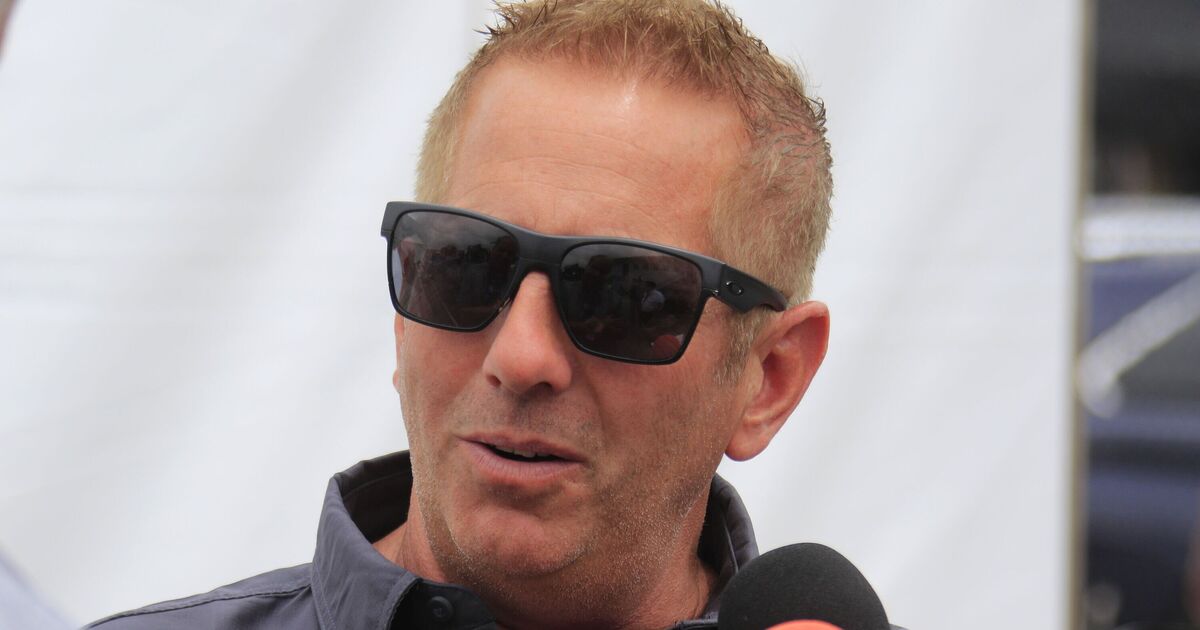
In honor of NASCAR legend Greg Biffle, who, along with his wife Cristina, daughter Emma, and son Ryder, died in a plane crash on December 18, KOHR Motorsports has announced that it will be paying tribute to the 55-year-old with a special livery at Daytona.
Biffle and his family died alongside fellow passengers Craig Wadsworth, and Dennis and Jack Dutton in the 19-time Cup Series race winner’s Cessna 550 Citation at Statesville Regional Airport in North Carolina.
Exactly who was flying the aircraft at the time, as three of those on board had licenses, was unclear as of a National Transportation Safety Board press conference on Friday.
NTSB Investigator-In-Charge Dan Baker explained that having taken off from Statesville at around 10:05 am, the plane took a left turn, flying for around five minutes before turning back toward its origin.
Spotted flying low, Baker said, “The initial point of impact was a runway light stanchion located about 1,800 feet from the runway threshold.
Sign up to our NASCAR newsletter here.
“The airplane subsequently impacted trees, two other runway light stanchions, and the airport perimeter fence short of the runway threshold before coming to rest near the runway threshold. The airplane also came to rest oriented on an easterly heading.
“Post-impact fire consumed the majority of the fuselage and the inboard wing sections. All four corners of the airplane and flight control surfaces have been identified in the wreckage and the debris field. Both engines were present with the main wreckage.”
Brutal footage showing the plane landing at Statesville, leaving behind a trail of flames and dense black smoke, has since made its way onto social media.
The NASCAR community was quick to rally, honoring the memories of those lost in the tragic accident with the likes of Richard Petty, Denny Hamlin, and Kevin Harvick among those to share moving tributes.
KOHR is now doing its part to pay tribute to Biffle, sharing renderings of its special livery for an upcoming race, along with the caption, “In light of last week’s tragedy involving one of Nascar’s 75 Greatest Drivers and off track Humanitarian, Greg Biffle [including his family & friends].
“KOHR Motorsports will be running a tribute 2002 @nascar Busch Championship No.60 Ford livery on our IMPC No.60 @fordracing Mustang GT4 during the upcoming IMSA Roar Before The 24 and 4 Hour BMW M Endurance Michelin Pilot Challenge.
“The race begins 1:45PM ET on Friday, January 23rd at Daytona International Speedway ahead of 64th annual Rolex 24.”
The black, white, grey, and red sweeping design imitates that of Biffle’s title-winning Ford Taurus. That 2002 season saw Biffle win four races in the No. 60 Roush Racing Ford, finishing in the top five a further 16 times and the top 10 another five.
The following year, he took to the wheel of the No. 16 Roush Racing Ford in the Cup Series for what was his first full-time season in the series. He won one race in his rookie season, continuing to race full-time in the Cup Series through 2016.
Biffle briefly returned in 2022 to make four appearances in the No. 44 NY Racing Team Chevrolet, marking the final chapter in his NASCAR career.
Motorsports
12-year-old off-road racing champion Kroi Ryan prepares for AMA 2026 WORCS season and life challenges

As only a sixth-grader, Kroi Ryan has already made waves in Pahrump’s off-road racing scene, earning dual WORCS ATV championships in the 90cc class.
But while his trophies are impressive, it is his mindset and approach to life that set him apart.
As WORCS Racing joins forces with the American Motorcyclist Association to form the AMA 2026 West Regional Grand Prix, Kroi is gearing up for a full year of racing, mountain biking — and he’s eager to inspire other kids to face their fears and pursue their goals.
A new era for WORCS Racing and Kroi’s goals
Starting in 2026, WORCS will expand its schedule to 10 rounds across six states and merge with the AMA, introducing updated rules and age limits.
Kroi is excited to tackle at least four WORCS races next year, riding his APEX 90 ATV and Yamaha TTR 125 dirt bike.
He also plans to try some MRANN races, which are exclusive to dirt bikes, and is branching into mountain biking tournaments, as well as basketball, baseball, and soccer with Trojans basketball and AYSO 808 soccer.
“Even though we won’t be chasing a WORCS championship next year, our life will not be slowing down by any means. Nor will we be leaving the world of off-road racing,” Kroi’s mother Nicole said.
He’s also currently completing his hunter’s safety course, hoping to start hunting in 2026 — another challenge he’s excited to take on with the same mindset he applies to racing.
Fear, focus, and the joys of racing
For Kroi, racing isn’t just about speed or podiums — it’s about confronting fear and pushing personal limits.
“I am excited and afraid on the track. When I’m racing against someone as good or better than me, I feel a full-on ‘let’s do this’ competitive mindset. But when I’m done, I feel pride in myself for conquering my fears and finishing my goals. I love making it on the podium!”
He describes the thrill of racing as a pure rush of joy, whether going faster, jumping higher, or navigating tricky corners. At the same time, he’s aware of the risks: crashing, overshooting jumps, or hitting corners too hard. Safety gear helps, but it doesn’t eliminate the challenge — which is part of what makes the sport exciting for him.
“Fear is normal, just like failing. But if you let that stop you, that’s how you become a failure,” Kroi said. “Never let something control you. If you face your fears and your failures, you will always be in control.”
Inspiration beyond racing
Kroi knows his story inspires other kids with apraxia — he’s recognized in town and the racing community by strangers who read about his achievements in articles.
That directly motivates him to share his mindset and push others to overcome their own adversities.
“Life is hard. Something hard is a challenge. Overcoming a challenge is an adventure, with small achievements. Like a plaque on a WORCS podium,” Kroi says. “But the more achievements you make come true, the more you achieve your ultimate reward: your dreams.”
Kroi believes most in competing with yourself, improving every day, and celebrating personal victories.
His goal isn’t just to win races but to show that facing fear, staying persistent, and embracing challenges can lead to success in any part of life.
Contact Jacob Powers at jpowers@pvtimes.com. Follow @jaypowers__ on X.

It’s the most wonderful time of the year in Tulsa, Oklahoma. Two action packed weeks of racing in The Sooner State kicks off with the 2026 Tulsa Shootout, which begins December 29 and concludes January 3 inside the SageNet Center.
With a record-breaking number of entries (1,939 and counting), event officials recently released a tentative daily schedule for the six days of racing in Tulsa.
This year’s schedule has been adjusted to include a full day of practice on Monday, December 29 prior to the start of heat racing on Tuesday, December 30. Adjustments to the schedule have also allowed on-track action for the Junior Sprint division to be held earlier in the day.
“Those poor kids last year, when we had a couple days run long, it was forcing parents to wake their kids up to race, and as a parent, that really bothered me and knew that was something we needed to fix, so with the way were able to move things, I feel like this will be better not just for those teams, but everyone as a whole,” stated Tulsa Expo Raceway Chief of Operations, Matt Ward.
The tentative daily schedule for this year’s Tulsa Shootout can be viewed below. All six days of the 2026 Tulsa Shootout will be streamed live on FloRacing.
2026 Tulsa Shootout Daily Schedule
SATURDAY, DECEMBER 27
Parking: 8:00am
Sign-in: 12:00pm – 7:00pm
SUNDAY, DECEMBER 28
Parking: 8:00am
Sign-in: 12:00pm – 7:00pm
Tech for Restricted: 3:00pm
MONDAY, DECEMBER 29
SageNet Center Opens: 7:00am
Engine Heat: 8:15am – 8:20am
Practice: 9:00am (One round per class)
Joe’s Racing Products Stock Non-Wing
Hyper Racing Non-Wing Outlaw
K&B Motorsports Restricted
Sawyer Chassis Winged Outlaw
Flying A Motorsports Junior Sprints
JST Motorsports A-Class
TUESDAY, DECEMBER 30
SageNet Center Opens: 7:00am
Engine Heat: 8:15am – 8:20am
Racing: 9:00am
Joe’s Racing Products Stock Non-Wing FuelTech Heats
Flying A Motorsports Junior Sprints FuelTech Heats
JST Motorsports A-Class FuelTech Heats
WEDNESDAY, DECEMBER 31
SageNet Center Opens: 7:00am
Engine Heat: 8:15am – 8:20am
Racing: 9:00am
Hyper Racing Non-Wing Outlaw FuelTech Heats
K&B Motorsports Restricted FuelTech Heats
Sawyer Chassis Winged Outlaw FuelTech Heats
THURSDAY, JANUARY 1
SageNet Center Opens: 7:00am
Engine Heat: 8:15am – 8:20am
Racing: 9:00am
Joe’s Racing Products Stock Non-Wing E-Mains
Joe’s Racing Products Stock Non-Wing D-Mains
Joe’s Racing Products Stock Non-Wing C-Mains
Joe’s Racing Products Stock Non-Wing Qualifiers
Flying A Motorsports Junior Sprints Qualifiers
Hyper Racing Non-Wing Outlaw Qualifiers
K&B Motorsports Restricted Qualifiers
Sawyer Chassis Winged Outlaw Qualifiers
JST Motorsports A-Class Qualifiers
Sawyer Chassis Winged Outlaw D-Mains
Sawyer Chassis Winged Outlaw C-Mains
FRIDAY, JANUARY 2
SageNet Center Opens: 7:00am
Engine Heat: 8:15am – 8:20am
Racing: 9:00am
Hyper Racing Non-Wing Outlaw E-Mains
Hyper Racing Non-Wing Outlaw D-Mains
Hyper Racing Non-Wing Outlaw C-Mains
Flying A Motorsports Junior Sprints C-Mains
Flying A Motorsports Junior Sprints B-Mains
K&B Motorsports Restricted C-Mains
K&B Motorsports Restricted B-Mains
JST Motorsports A-Class E-Mains
JST Motorsports A-Class D-Mains
JST Motorsports A-Class C-Mains
SATURDAY, JANUARY 3
SageNet Center Opens: 7:00am
Racer’s For Christ Service: 7:30am
Engine Heat: 8:15am – 8:20am
Racing: 9:00am
Joe’s Racing Products Stock Non-Wing B-Mains
Hyper Racing Non-Wing Outlaw B-Mains
Sawyer Chassis Winged Outlaw B-Mains
JST Motorsports A-Class B-Mains
OPENING CEREMONIES, PARADE OF STATES
Joe’s Racing Products Stock Non-Wing LCQ
Hyper Racing Non-Wing Outlaw LCQ
K&B Motorsports Restricted LCQ
JST Motorsports A-Class LCQ
Sawyer Chassis Winged Outlaw LCQ
Joe’s Racing Products Stock Non-Wing A-Feature
Flying A Motorsports Junior Sprints A-Feature
Sawyer Chassis Winged Outlaw A-Feature
K&B Motorsports Restricted A-Feature
JST Motorsports A-Class A-Feature
Hyper Racing Non-Wing Outlaw A-Feature
**Schedule is subject to change without notice. Any updates will be posted to http://www.tulsashootout.com.

The International Hot Rod Association (IHRA) today announced the launch of the IHRA Pro Watercraft Racing Series, a new professional personal watercraft racing championship set to debut in 2026.
Featuring both stand up and runabout competition, the series is designed to usher in a new era of professional watercraft racing by delivering elevated competition, increased visibility, and meaningful opportunities for racers.
The IHRA Pro Watercraft Racing Series will be integrated into select IHRA Offshore Powerboat Racing Series events, creating action packed race weekends and a premium on water experience for fans, racers, and partners alike.
Backed by strong industry interest, experienced leadership, and a $250,000 prize pool, the series is being built with a racer first mindset and a long-term commitment to growth and sustainability.
“Personal watercraft racing has reached a point where it is ready for something new,” said Thomas Covington, who oversees overall strategy and commercial operations for the series. “Racers are looking for a clear vision and a professional platform they can believe in. By aligning this series with major offshore events, increasing exposure, and putting real prize money on the line, we are creating a foundation that can elevate the sport and open the door for future expansion.”
The series is being developed by a leadership team with deep roots in motorsports and firsthand experience in professional racing, operations, and athlete development. Legendary racer Dustin Farthing will serve as Managing Director, bringing credibility, insight, and a racer driven perspective to the championship.
“This series is being built by racers, for racers,” said Farthing. “We are focused on raising the standard across the board, from competition format and event execution to prize money and visibility. This is about giving athletes a series they can be proud to compete in and helping push the sport forward.”
IHRA leadership emphasized that this announcement marks the first step in a broader, long-term investment in professional watercraft racing.
“IHRA has always been committed to growing motorsports and creating new opportunities for racers,” said Darryl Cuttell, Owner of IHRA. “Personal watercraft racing has tremendous potential, and this series represents our commitment to investing in the sport, building a stronger platform, and delivering first class competition and fan experiences.”
While specific event details will be announced in the future, planning and outreach efforts are already underway with racers, promoters, sponsors, and international partners. The IHRA Offshore Powerboat Racing Series schedule will be announced in the very near future, with the Pro Watercraft Racing Series integrated into select offshore events as part of that rollout. The IHRA Pro Watercraft Racing Series will also feature comprehensive live streaming and digital coverage to ensure global access for fans and stakeholders.
The IHRA Pro Watercraft Racing Series represents a significant step forward for professional personal watercraft racing and signals a clear vision for the future of the sport.

South Carolina EDGE Taeshawn Alston plans to enter NCAA Transfer Portal

ALL-STATE VOLLEYBALL: Storro named honorable mention

Regional Youth Assessment Center corporal hopes to provide familiarity, positivity during Christmas shift – Grand Forks Herald
Newark Catholic honors state champion volleyball at boys basketball

West Virginia First Foundation announces grant recipients | News, Sports, Jobs

Tomlin says he supports Metcalf | News, Sports, Jobs

Why Jaela Auguste transferred to Wisconsin volleyball

Acquisition deal breathes new life into Memphis International Raceway

VIDEO: Cantwell goes one-on-one to talk navigating football & NIL

Kristen Wright – Head Coach – Staff Directory

The News-Gazette’s 44th All-State volleyball team | Sports

K1 Speed champions get new route into Porsche series

Coveted dual-threat quarterback entering college football transfer portal

BYU women’s volleyball has a new head coach — and a key return from portal

FDU deputy AD says new UND coach David Nguyen is ‘an incredible volleyball mind’ – Grand Forks Herald

Fargo girl, 13, dies after collapsing during school basketball game – Grand Forks Herald

CPG Brands Like Allegra Are Betting on F1 for the First Time

Sycamores unveil 2026 track and field schedule

Two Pro Volleyball Leagues Serve Up Plans for Minnesota Teams

Utah State Announces 2025-26 Indoor Track & Field Schedule

SoundGear Named Entitlement Sponsor of Spears CARS Tour Southwest Opener

Jo Shimoda Undergoes Back Surgery

Redemption Means First Pro Stock World Championship for Dallas Glenn

Texas volleyball vs Kentucky game score: Live SEC tournament updates

Bowl Projections: ESPN predicts 12-team College Football Playoff bracket, full bowl slate after Week 14

Black Bear Revises Recording Policies After Rulebook Language Surfaces via Lever

Robert “Bobby” Lewis Hardin, 56

How this startup (and a KC sports icon) turned young players into card-carrying legends overnight

Donny Schatz finds new home for 2026, inks full-time deal with CJB Motorsports – InForum

How Donald Trump became FIFA’s ‘soccer president’ long before World Cup draw






-
 Motorsports2 weeks ago
SoundGear Named Entitlement Sponsor of Spears CARS Tour Southwest Opener
-
 Motorsports2 weeks ago
Donny Schatz finds new home for 2026, inks full-time deal with CJB Motorsports – InForum
-
 Rec Sports3 weeks ago
How Donald Trump became FIFA’s ‘soccer president’ long before World Cup draw
-

 Rec Sports2 weeks ago
David Blitzer, Harris Blitzer Sports & Entertainment
-
 Motorsports3 weeks ago
JR Motorsports Confirms Death Of NASCAR Veteran Michael Annett At Age 39
-
Sports3 weeks ago
Elliot and Thuotte Highlight Men’s Indoor Track and Field Season Opener
-
Sports3 weeks ago
West Fargo volleyball coach Kelsey Titus resigns after four seasons – InForum
-

 Motorsports2 weeks ago
Rick Ware Racing switching to Chevrolet for 2026
-
 Sports3 weeks ago
Temple Begins Indoor Track & Field Season at UPenn This Weekend
-
 Sports2 weeks ago
#11 Volleyball Practices, Then Meets Media Prior to #2 Kentucky Match