
NIL
How NIL has changed college basketball: Numbers deep dive reveals surprising trends, recipe for success


Many of the same teams and coaches who consistently won in college basketball before the Name, Image and Likeness (NIL) era — which began July 1, 2021 — have unsurprisingly continued to thrive in the NIL era. Think Mark Few at Gonzaga or Bill Self at Kansas. A handful of coaches have shown their ability to recruit and run elite programs regardless of circumstance.
But not all of them.
The contrast in success between eras has been starker for some than for others. The NIL era has blunted some programs’ success or, in some cases, significantly diminished it. On the flip side, other coaches and programs have surged thanks to improved access to resources and a more level playing field.
Take the following data as an example. Gonzaga, Kansas and Duke — each of which posted a winning percentage of 80% or higher from the 2000-01 season through 2020-21 — stood apart from the rest of the sport during that stretch.
The chart below, sorted by winning percentage, shows that over a 20-year span, only four teams won 75% or more of their games. (Data courtesy of Stathead.)
| 1 | Gonzaga | 720 | 604 | 116 | 83.9 |
| 2 | Kansas | 748 | 611 | 137 | 81.7 |
| 3 | Duke | 741 | 599 | 142 | 80.8 |
| 4 | Kentucky | 736 | 556 | 180 | 75.5 |
| 5 | North Carolina | 744 | 538 | 206 | 72.3 |
| 6 | Memphis | 722 | 522 | 200 | 72.3 |
| 7 | Arizona | 713 | 512 | 201 | 71.8 |
| 8 | Michigan State | 729 | 523 | 206 | 71.7 |
| 9 | Villanova | 710 | 508 | 202 | 71.5 |
| 10 | Louisville | 711 | 507 | 204 | 71.3 |
| 11 | Florida | 724 | 512 | 212 | 70.7 |
| 12 | Syracuse | 727 | 512 | 215 | 70.4 |
| 13 | Wisconsin | 712 | 501 | 211 | 70.4 |
| 14 | BYU | 697 | 487 | 210 | 69.9 |
| 15 | VCU | 696 | 486 | 210 | 69.8 |
| 16 | Ohio State | 716 | 499 | 217 | 69.7 |
| 17 | Xavier | 697 | 485 | 212 | 69.6 |
| 18 | Utah State | 690 | 480 | 210 | 69.6 |
| 19 | Murray State | 663 | 456 | 207 | 68.8 |
| 20 | San Diego State, Belmont | 694, 670 | 477, 460 | 217, 210 | 68.7 |
That tide has turned in the NIL era. While we only have four seasons worth of data, 11 teams — nearly triple the rate of the pre-NIL era for the preceding two decades — have won 75% or more of their games during that time. Of those 11, four — Gonzaga, Drake, Saint Mary’s and Grand Canyon — hail from outside the major conference structure.
Teams like Vermont, North Texas, VCU Charleston and UAB have all posted winning percentages above 70%.
| 1 | Houston | 152 | 132 | 20 | 86.8 |
| 2 | Duke | 150 | 121 | 29 | 80.7 |
| 3 | Gonzaga | 139 | 112 | 27 | 80.6 |
| 4 | Purdue | 147 | 116 | 31 | 78.9 |
| 5 | Drake | 141 | 111 | 30 | 78.7 |
| 6 | Saint Mary’s | 138 | 108 | 30 | 78.3 |
| 7 | UConn | 147 | 115 | 32 | 78.2 |
| 8 | Arizona | 145 | 112 | 33 | 77.2 |
| 9 | Auburn | 141 | 108 | 33 | 76.6 |
| 10 | Grand Canyon | 136 | 103 | 33 | 75.7 |
| 11 | Tennessee | 145 | 109 | 36 | 75.2 |
| 12 | Kansas | 144 | 106 | 38 | 73.6 |
| 13 | Vermont | 136 | 100 | 36 | 73.5 |
| 14 | San Diego State | 139 | 102 | 37 | 73.4 |
| 15 | North Texas | 140 | 102 | 38 | 72.9 |
| 16 | VCU | 140 | 101 | 39 | 72.1 |
| 17 | Alabama | 144 | 103 | 41 | 71.5 |
| 18 | Memphis, Charleston | 139 | 99 | 36 | 71.2 |
| 19 | UAB | 146 | 103 | 43 | 70.5 |
| 20 | North Carolina | 146 | 101 | 45 | 69.2 |
The sample is small and the landscape is continuously shifting, so it’s hard to draw sweeping conclusions about the NIL era and its impact on the sport. But it’s not so hard to at least glean a few things from the data above, and speculate about what it means in the present and what it portends for the future of college basketball.
Here are my takeaways.
1. Cinderella is not dead
Everyone was ready to sound the alarm bells in March when — for the first time since the NCAA Tournament expanded to 32 teams in 1975 — every team in the Sweet 16 field was represented by a major conference. But reports of the death of Cinderella are far too premature.
From 2000-21, 20 of of the 50 winningest Division I teams hailed from non-major conferences. (That includes Gonzaga and BYU, neither of which I would have nor do count as mid-majors.) Since then, that number is up to 29.
2. Disparity arising at mid-major level
At one point, there was notable parity between mid-major and high-major programs — and perhaps there still is to a degree — but the gap in winning percentages between the two groups has narrowed considerably. Increasingly, however, the disparity among mid-majors lies between programs with resources and those without.
Drake, for instance, owns the fifth-highest winning percentage in the NIL era among all Division I teams. That success has been anchored by strong coaching hires — first Darian DeVries, and more recently Ben McCollum — and marks a sharp upward trend for a program that, before the NIL era, ranked in the bottom third of the Missouri Valley Conference in winning percentage. (Creighton left the MVC after the 2012-13 season, and Wichita State departed following 2016-17.)
Drake’s winning percentage since 2021 is more than 10 percentage points higher than the third-most successful program in the conference and nearly 50 percentage points better than Evansville — which has the most losses in the league over that span. Compared to the pre-NIL era, the gap between the top and bottom of the MVC has only grown.
Highest win % among MVC teams pre-NIL/post-NIL
| 1 | Creighton | 70.6% | Drake | 78.7% |
| 2 | Wichita State | 68.4% | Loyola Chicago | 75.8% |
| 3 | Loyola Chicago | 61.9% | Bradley | 67.4% |
| 4 | Northern Iowa | 59.1% | Belmont | 64.3% |
| 5 | Southern Illinois | 56.8% | Indiana State | 58.0% |
| 6 | Missouri State | 54.0% | Northern Iowa | 56.2% |
| 7 | Illinois State | 53.5% | Southern Illinois | 55.8% |
| 8 | Drake | 48.5% | Missouri State | 50.4% |
| 9 | Bradley | 47.1% | Murray State | 46.4% |
| 10 | Indiana State | 46.8% | Illinois State | 45.9% |
| 11 | Valparaiso | 46.1% | Illinois-Chicago | 42.7% |
| 12 | Evansville | 44.2% | Valparaiso | 36.2% |
| 13 | — | Evansville | 30.2% |
This is not just a cherry-picked sample from one league. Here’s the Mountain West below. (Note: Boise State joined in 2011-12; Fresno State and Nevada joined in 2012-13; San Jose State and Utah State joined in 2013-14. Utah and BYU left after 2010-11 and TCU left after 2011-12.)
SDSU, Boise State and Utah State have won more than 71% of their games during the NIL era. Not even the most winningest MWC team in the preceding two decades met that mark. That has come at the expense of rapidly declining success among teams like Air Force and Fresno State, both of which dropped off by at least 15%.
Highest win % among Mountain West teams pre-NIL/post-NIL
| Rank | Pre-NIL (2000-2020 seasons) | Win % | Post-NIL | Win % |
| 1 | BYU | 70.8% | San Diego State | 73.4% |
| 2 | San Diego State | 68.7% | Boise State | 71.2% |
| 3 | UNLV | 61.9% | Utah State | 71.0% |
| 4 | Nevada | 61.4% | Colorado State | 66.9% |
| 5 | Boise State | 61.1% | New Mexico | 64.2% |
| 6 | Utah State | 61.1% | Nevada | 59.5% |
| 7 | New Mexico | 60.8% | UNLV | 58.0% |
| 8 | Utah State | 60.6% | Wyoming | 47.3% |
| 9 | Fresno State | 55.4% | San Jose State | 39.8% |
| 10 | Colorado State | 52.5% | Fresno State | 39.4% |
| 11 | Wyoming | 51.5% | Air Force | 30.6% |
| 12 | Air Force | 46.3% | — | |
| 13 | TCU | 40.5% | — | |
| 14 | San Jose State | 22.1% | — |
And just for giggles here’s the CAA. Pre-NIL, only two teams from 2000-01 through 2020-21 had winning percentages below 40%. Since 2021-22, that number has more than tripled — with Stony Brook, Northeastern, Monmouth, Elon, Hampton, William & Mary and North Carolina A&T all below win percentages of 40%. This league is a particularly interesting case study in the impact of NIL because of how big a leap Towson, James Madison, Delaware and UNC-Wilmington have made in the league’s hierarchy.
Highest win % among CAA teams pre-NIL/post-NIL
| Rank | Pre-NIL (2000-2020 seasons) | Win % | Post-NIL | Win % |
| 1 | Richmond | 75.9% | Charleston | 73.3% |
| 2 | VCU | 69.9% | UNC-Wilmington | 72.8% |
| 3 | George Mason | 64.6% | Towson | 65.7% |
| 4 | Old Dominion | 60.4% | Hofstra | 60.9% |
| 5 | Charleston | 56.9% | Drexel | 55.6% |
| 6 | Hofstra | 54.7% | Delaware | 54.0% |
| 7 | Northeastern | 53.7% | James Madison | 51.7% |
| 8 | Drexel | 50.0% | Campbell | 45.3% |
| 9 | UNC-Wilmington | 49.3% | Stony Brook | 39.0% |
| 10 | William & Mary | 45.7% | Northeastern | 38.4% |
| 11 | Elon | 45.3% | Monmouth | 38.4% |
| 12 | Delaware | 44.2% | Elon | 37.2% |
| 13 | James Madison | 42.1% | Hampton | 34.7% |
| 14 | Georgia State | 40.0% | William & Mary | 34.6% |
| 15 | Towson | 39.4% | North Carolina A&T | 28.1% |
| 16 | American | 25.9% | — |
3. The recipe to success in NIL era
Great college coaches can transcend situation and find ways to win — and win big — and that seems to be the throughline for many programs regardless of era. Of the 10 winningest teams from the 2000-21 seasons, six had coaches who raked in top-10 salaries per USA Today data collected in 2020.
A seventh, Gonzaga-led Mark Few, is among the most successful coaches in college basketball history. An eighth school, Memphis, was led previously by one of those coaches who landed elsewhere (John Calipari). A ninth school, Arizona, was led by one of the highest-paid coaches (Sean Miller) before scandal late in his tenure. A tenth school, Louisville, was also led by one of the highest-paid coaches who was also wrought with scandal before his ouster in 2021.
Compare that to the current NIL landscape and the ratio of high level success and high level coaching is nearly 1:1. Of the twelve winningest schools in the NIL era, at least five are coached by those with salaries in the top 10 in the sport.
One gigantic takeaway here: Kelvin Sampson is far and away the most underpaid and underappreciated coach in all of college athletics and it is not all that close.
Wins since 2021
| School | Win % | Coach salary rank |
| Houston | 86.8 | 16 |
| Duke | 80.7 | Private school |
| Gonzaga | 80.6 | Private school |
| Purdue | 78.9 | 13 |
| Drake | 78.7 | Private school |
| Saint Mary’s | 78.3 | 70 |
| UConn | 78.2 | 3 |
| Arizona | 77.2 | 9 |
| Auburn | 76.6 | 6 |
| Grand Canyon | 75.7 | 68 |
| Tennessee | 75.2 | 7 |
| Kansas | 73.6 | 1 |

NIL
Fernando Mendoza NIL deals, explained: How much money Indiana star makes from adidas, other sponsors
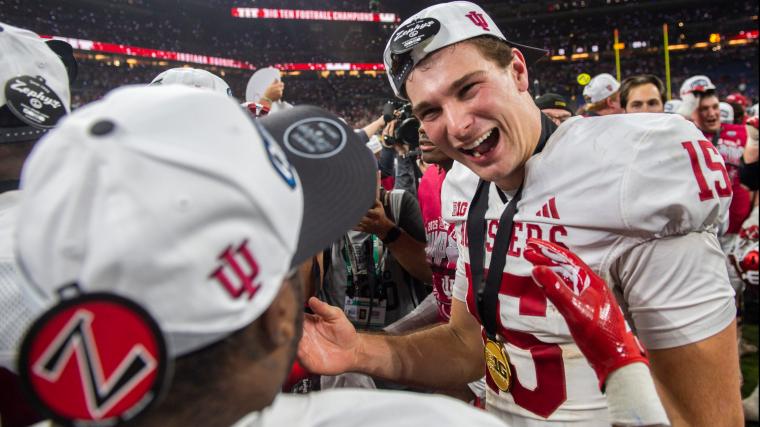
Fernando Mendoza NIL deals, explained: How much money Indiana star makes from adidas, other sponsors originally appeared on The Sporting News. Add The Sporting News as a Preferred Source by clicking here.
Fernando Mendoza has had a magical 2025 season, leading the Indiana Hoosiers to an undefeated 13-0 regular season and the program’s first outright Big Ten title since 1945. Along with breaking program records as a team, Mendoza has produced a historic season of his own.
Advertisement
The redshirt junior quarterback, a transfer from California, shattered Indiana’s single-season passing marks by completing 71.5% of his passes for 2,980 yards and a nation-leading 33 touchdown passes against just six interceptions. He also proved to be a threat with his legs, adding 240 rushing yards and six rushing touchdowns, putting him second nationally in total touchdowns accounted for (39). His remarkable campaign earned him Big Ten Offensive Player of the Year and Quarterback of the Year honors, along with the Walter Camp Player of the Year award. He also became just the second player in program history to be named a finalist for the Heisman Trophy.
As one of the top players in the nation, Mendoza’s rapid rise has made him a face of the collegiate game’s new financial era. His personal brand — which includes a recent high-profile endorsement deal with Adidas and his exclusive “Mendoza Mania” merchandise line — has soared throughout the season.
Here’s a breakdown of how much the Indiana star has brought in.
MORE: Indiana 2025 College Football Playoff tickets guide
Advertisement
Fernando Mendoza NIL money
According to the latest industry valuations, the Indiana star’s Name, Image, and Likeness (N.I.L.) portfolio is valued at an estimated $2.6 million, positioning him among the top five highest-valued college football players in the country.
On3 has the quarterback ranked fifth in college football and seventh in its N.I.L 100. He is listed below only four FBS players:
-
Arch Manning, Texas ($5.3 million)
-
Jeremiah Smith, Ohio State ($4.2 million)
-
Carson Beck, Miami ($3.1 million)
-
Bryce Underwood, Michigan ($3 million)
His valuation spiked from an estimated $1.6 million earlier in the year to $2.6 million after the Hoosiers’ perfect regular season.
MORE: Who will Indiana play next?
Fernando Mendoza NIL deals
Mendoza has two main NIL partnerships.
Advertisement
Adidas
Ahead of Indiana’s 13-10 Big Ten Championship win over No. 2 Ohio State, Mendoza inked a deal with Adidas.
“Excited to share that I’ve accepted an opportunity to join adidas!” said on LinkedIn. “I’m very grateful for everyone who has supported me along the way and excited to bring my passion for sport, leadership, and work ethic to the Three Stripes. Let’s get to work.”
He joins a star-studded adidas lineup that includes Ohio State’s Jeremiah Smith, Nebraska’s Dylan Raiola and Arizona State’s Sam Leavitt and Jordyn Tyson.
MORE: How Curt Cignetti turned Indiana into a college football powerhouse
Advertisement
Mendoza Mania
In collaboration with his brother Alberto, who is Indiana’s backup signal-caller, Mendoza launched a brand-new “Mendoza Mania” Collection on the Indiana NIL Store.
The initiative carries a deeply personal meaning for Mendoza: a portion of all proceeds from the collection will benefit the National MS Society, honoring his mother who continues her courageous fight against Multiple Sclerosis.
This compassionate focus transforms the quarterback’s commercial venture into a vehicle for impact, lending deeper purpose to every piece of “Mendoza Mania” merchandise sold.
By leveraging his national spotlight, Mendoza is driving crucial funds and awareness for the National MS Society’s mission to cure the disease and empower those affected to live their best lives.
Advertisement
MORE: Curt Cignetti’s best quotes at Indiana
Fernando Mendoza net worth 2025
Mendoza’s net worth is not publicly available. Though, sources report that his net worth is in the hundred thousands, reaching up to $1 million.
This will continue to rise as Mendoza leads Indiana through the College Football Playoff, and down the road, becomes a first round pick in the NFL Draft.
MORE: Fernando Mendoza, Curt Cignetti react to Indiana’s rise
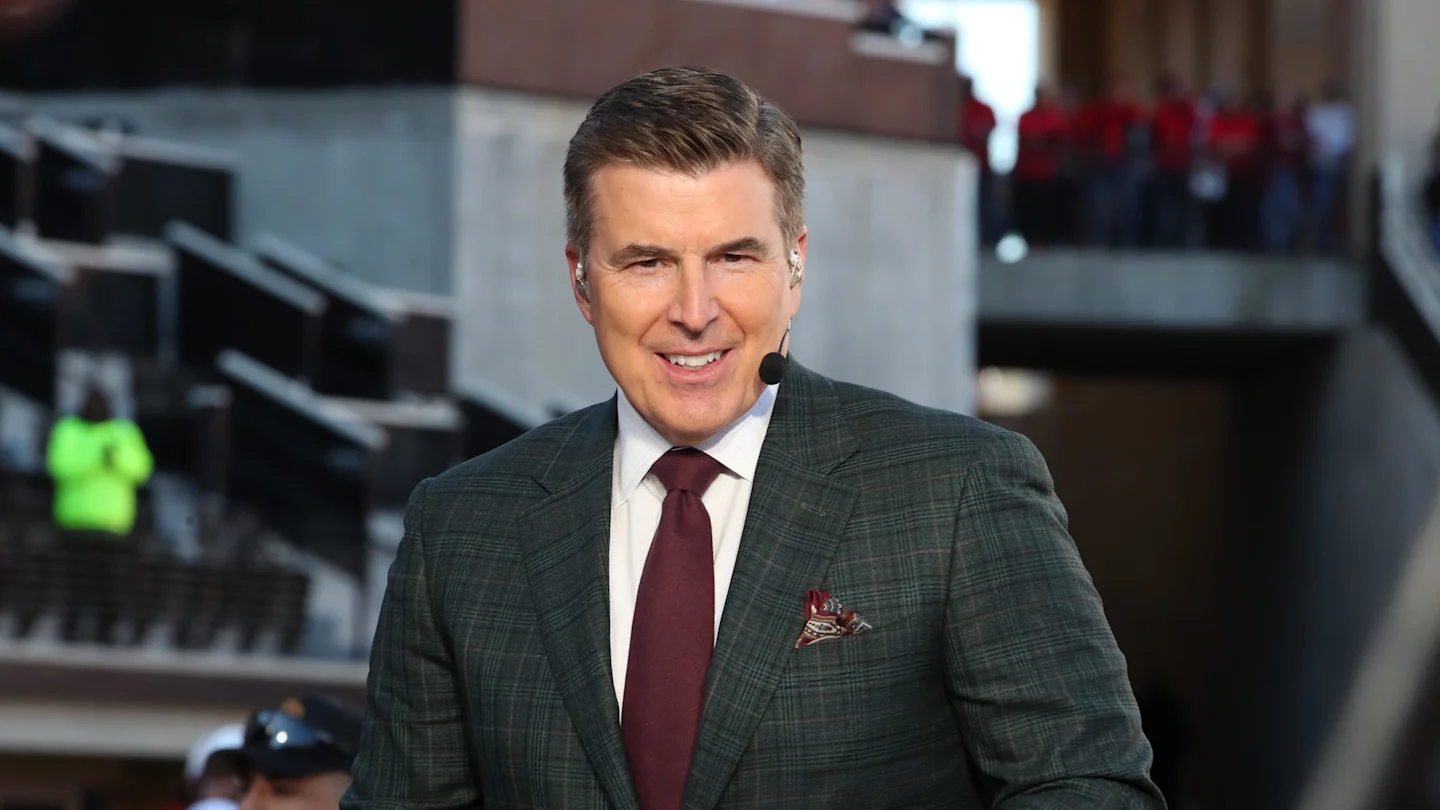
Almost every list of potential head coach candidates for Michigan has had some combination of the same names, like Kalen DeBoer, John Harbaugh, Jesse Minter, Kenny Dillingham, etc.
But ESPN’s Rece Davis had an interesting suggestion that hasn’t been mentioned much at all since the stunning development that led to Michigan firing head coach Sherrone Moore on Wednesday for having an inappropriate relationship with a staff member, and Moore was arrested and charged with stalking and home invasion.
Davis, the host of “College GameDay” and a prominent voice on college football matters, suggested that former Stanford coach David Shaw should not only be on Michigan’s list of candidates but “given the circumstances, likely atop the list,” he posted on social media.
If I were in Warde Manuel and Michigan’s position, I’d have David Shaw very high on my list. Given the circumstances, likely atop the list.
— Rece Davis (@ReceDavis) December 12, 2025
Shaw is in his first season as the Detroit Lions’ passing game coordinator and has not coached in college football since he resigned as Stanford’s head coach at the end of the 2022 season.
Shaw was 96-54 in 12 seasons at Stanford, including five seasons with double-digit wins. His 2015 Cardinal team went 12-2, won the Rose Bowl and finished No. 3 in the final AP top 25 poll. His 2011 and 2012 teams both finished No. 7 in the AP rankings, going 11-2 and 12-2, respectively.
Shaw’s Stanford tenure had two very distinct chapters, though. Through his first eight seasons, he was 82-26, winning at least eight games in every season, collecting three Pac-12 championships, four Pac-12 Coach of the Year awards and the Bobby Dodd national coach of the year award in 2017. Over his final four years, he went 14-28 with three losing seasons.
Shaw’s style would fit seamlessly at Michigan, as his best Stanford teams were known for dominant, physical rushing attacks.

Davis’ suggestion that Shaw should be atop Michigan’s list was beyond just his coaching resume, though.
The Wolverines program is in turmoil with one black eye after another now, from the NCAA investigation into and substantial penalties from the Connor Stalions sign-stealing scandal and now the ugly ending to Moore’s two-year tenure as head coach.
Shaw has his own connections to former Michigan coach Jim Harbaugh, serving as Harbaugh’s offensive coordinator at Stanford before succeeding him as head coach there, but he has a pristine reputation and record free of scandal and was among the most respected coaches in college football during his time with the Cardinal.
It’s not a crazy idea, though Michigan fans will surely prefer a splashier hire and a coach who has excelled in this new NIL/transfer portal era of college football.
NIL
Cignetti, Mendoza, Smith, Ponds earn awards, recognition during ESPN’s college football awards show – The Daily Hoosier
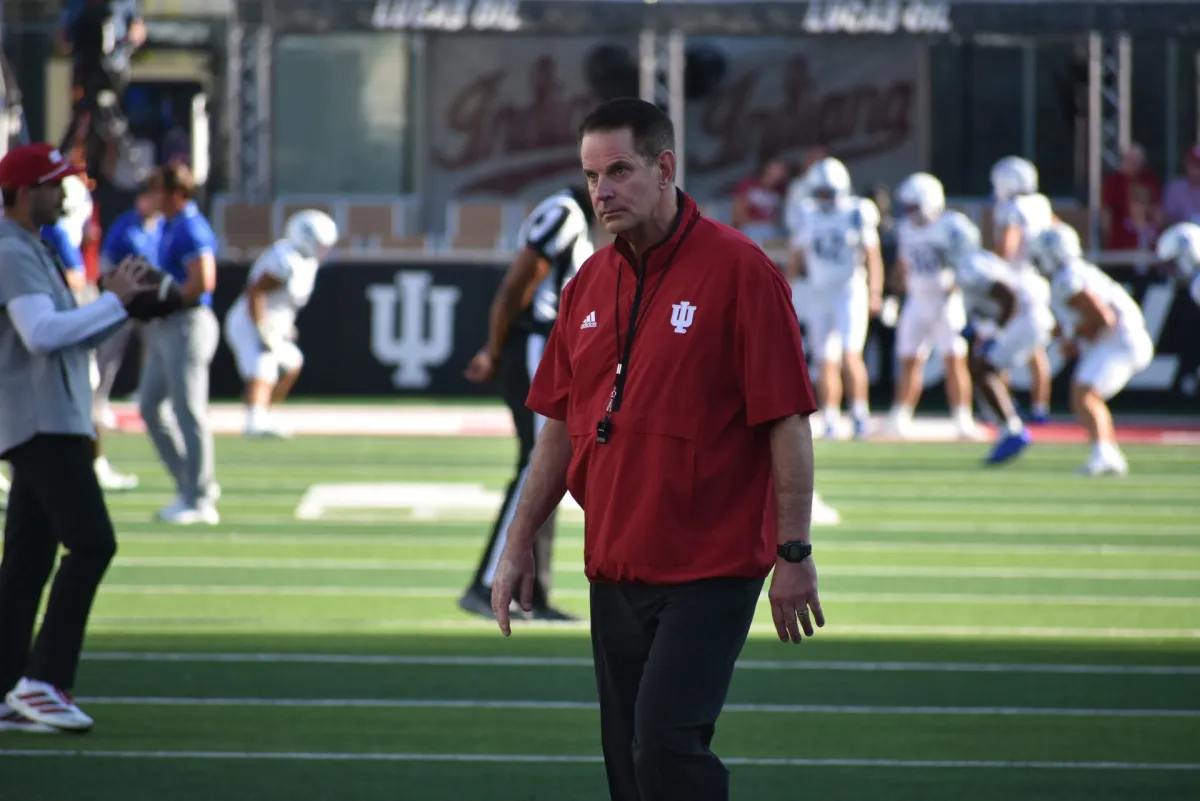
Indiana head football coach Curt Cignetti and quarterback Fernando Mendoza each earned accolades during ESPN’s 35th annual The Home Depot College Football Awards, while a trio of Hoosiers were selected for All-America honors during the telecast.
Cignetti earns his second national coach of the year award this season in the form of the Home Depot Coach of the Year honor. He previously won the Walter Camp National Coach of the Year award. He earned each award in back-to-back seasons. He the first coach to win the Home Depot Coach of the Year award in back-to-back seasons.
Mendoza was named winner of the Davey O’Brien Award and Maxwell Award to go along with his Walter Camp Award earlier in the week. He then joined teammates Carter Smith (OL, First Team) and D’Angelo Ponds (DB, Second Team) on the Walter Camp Football Foundation All-America Team.
Cignetti helped the Hoosiers to its first unblemished regular season in program history, a program-record 13 wins through its first Big Ten Championship Game victory and the No. 1 seed in the upcoming College Football Playoff. On Wednesday, he became the first coach to win consecutive Walter Camp National Coach of the Year honors in the awards 59-year history.
Mendoza is the second Hoosier to win the prestigious Maxwell Award, joining running back Anthony Thompson in 1989. He is the first Big Ten student-athlete to win the award since Penn State running back Larry Johnson in 2002 and the first Big Ten quarterback to win the award since Drew Brees in 2000.
Mendoza currently leads the nation in passing touchdowns (33) and is the Power 4 leader in touchdowns responsible for (39). He is the third Big Ten quarterback since 2000 with three-straight games of at least four passing touchdowns and zero interceptions – C.J. Stroud (Ohio State; 2021) and Kyle Orton (Purdue; 2004, four straight). The Miami, Florida, native is the only FBS quarterback since at least 1996 with multiple games of at least 90 percent completion and four touchdown passes versus Power 4 opponents.
In 2025, Mendoza is the lone FBS quarterback with five games of 4-plus touchdown passes and zero interceptions and entered Championship Week as the FBS leader in percentage of passes that result in a touchdown at 10.9%, over one point higher than the next closest passer (Sayin, Ohio State; 9.2%).
He has thrown a touchdown pass in 12-straight games entering the College Football Playoff and has five games with both a passing and rushing touchdown in 2025. He has thrown 33 touchdowns to just six interceptions, is tied for No. 2 on the team with six rushing touchdowns and has 240 yards rushing on the season.
The Hoosiers earned the No. 1 spot in the College Football Playoff and will play the winner of Alabama/Oklahoma in the Rose Bowl Game on Jan. 1, 2026. The game from Rose Bowl Stadium will kick at 4 p.m. ET
Related

On the cusp of the 45th anniversary of their defeat of the Soviet Union in the 1980 Lake Placid Winter Olympics, the United States’ “Miracle on Ice” Olympic men’s hockey team was honored at the White House on Friday, Dec. 12 with Congressional Gold Medals.
It led into a brief discussion on the current state of Name, Image and Likeness (NIL) in college sports when Team USA captain Mike Eruzione was asked about the topic by a reporter. Following a brief response from Eruzione, President Donald Trump joined the conversation and made a statement.
Advertisement
“Something ought to be done, and I’m willing to put the federal government behind it,” Trump said of overhauling NIL in college sports during a bill signing ceremony in the Oval Office. “And if it’s not done fast, you’re going to wipe out colleges.”
REQUIRED READING: ‘Miracle on Ice’ team honored with Congressional Gold Medals by President Trump
This is not the first time that Trump has spoken on the state of college athletics in a time where NIL and the transfer portal have taken over. He made similar remarks on “The Pat McAfee Show” during a phone call interview on Veterans Day.
Republicans in the U.S. House of Representatives recently pulled the scheduled final vote for the Republican-backed SCORE Act that would have allowed the NCAA and its recently formed College Sports Commission to create and enforce national rules that have been under legal dispute in recent years.
Advertisement
The SCORE Act (Student Compensation And Opportunity Through Rights and Endorsements) had sought to provide more regulation and calm the chaotic environment created by the introduction of NIL compensation, revenue sharing and the transfer portal to college sports.
The USA TODAY app gets you to the heart of the news — fast. Download for award-winning coverage, crosswords, audio storytelling, the eNewspaper and more.
This article originally appeared on USA TODAY: Trump says ‘something ought to be done’ about NIL in college sports
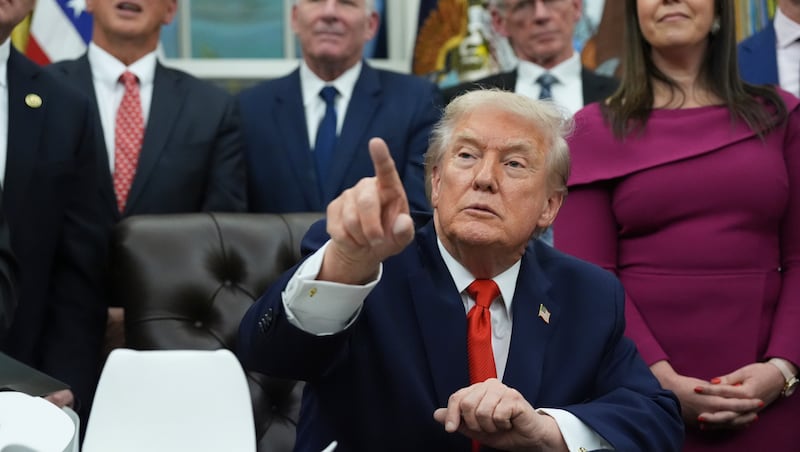
President Donald Trump isn’t a big fan of college athletes being paid for the use of their name, image and likeness.
In fact, he trashed NIL in response to a question about it Friday.
During a ceremony at the White House to honor the gold-medal winning 1980 U.S. Olympic hockey team, a reporter asked about NIL deals and the transfer portal, noting the “Miracle on Ice” players were amateurs who didn’t get paid.
Advertisement
Team captain Mike Eruzione said he didn’t like it, but that’s the state of college sports today and “we have no control over that.”
Trump, though, said maybe there is something to do about it.
“I think the NIL is a disaster for sports. It’s horrible for the Olympics, and I think it’s actually horrible for the players,” he said.
Trump said colleges are cutting “lesser” sports, those that don’t bring in revenue but help train athletes for the Olympics.
“Those sports don’t exist because they’re putting all their money into football, and by the way, they’re putting too much money into football,” Trump said.
As NIL and now revenue sharing has entered college sports, many schools across the country are having to make tough decisions about whether to maintain Olympic or nonrevenue sports.
Advertisement
The House v. NCAA settlement allows universities to pay their athletes up to $20.5 million per year, which works out to about 22% of the average athletic department revenue at Power Four schools. The vast majority of the money goes to football and men’s basketball players, the two most revenue-generating sports at most universities.
“You can’t pay a quarterback $14 million to come out of high school. They don’t even know if he’s going to be a very good player,” Trump said. “Colleges cannot afford to pay the kind of salaries you’re hearing out there.”
The highest reported NIL payments for football players have been in the $6 million to $8 million range. But Trump said schools won’t be able to stop paying more and more to get the player they believe will win them a national championship.
“You’re going to have these colleges wipe themselves out. And something ought to be done and I’m willing to put the federal government behind it. But if it’s not done fast, you’re going to wipe out colleges. They’re going to get wiped out, including ones that do well in football,” Trump said.
Advertisement
The president didn’t specify what he thinks the federal government should do. Several bills regulating NIL have been filed in Congress, but none have gained traction.
“Colleges cannot afford to play this game, and it’s a very bad thing that’s happening,” he said.

President Donald Trump answers media questions after a bill signing ceremony with members of the 1980 U.S. Men’s Olympic Hockey team, Friday, Dec. 12, 2025, in the Oval Office of the White House in Washington. | Jacquelyn Martin, Associated Press
Private equity enters college sports
Trump comments come as the University of Utah became the first school in the country to announce a deal with a private equity firm to infuse cash into its athletics program.
University administrators said the program has operated efficiently and generated a modest surplus over the years with the support of donors and student fees. But the decision to share revenues with athletes under the House settlement and the emergence of the transfer portal have added significant costs to the school.
Advertisement
The cost of supporting a nationally competitive athletics program has risen dramatically and far outpaces revenue growth, they said.
Utah intends to create a for-profit company called Utah Brands & Entertainment through its university foundation. It will partner with Otro Capital to run the commercial side of its sports program.
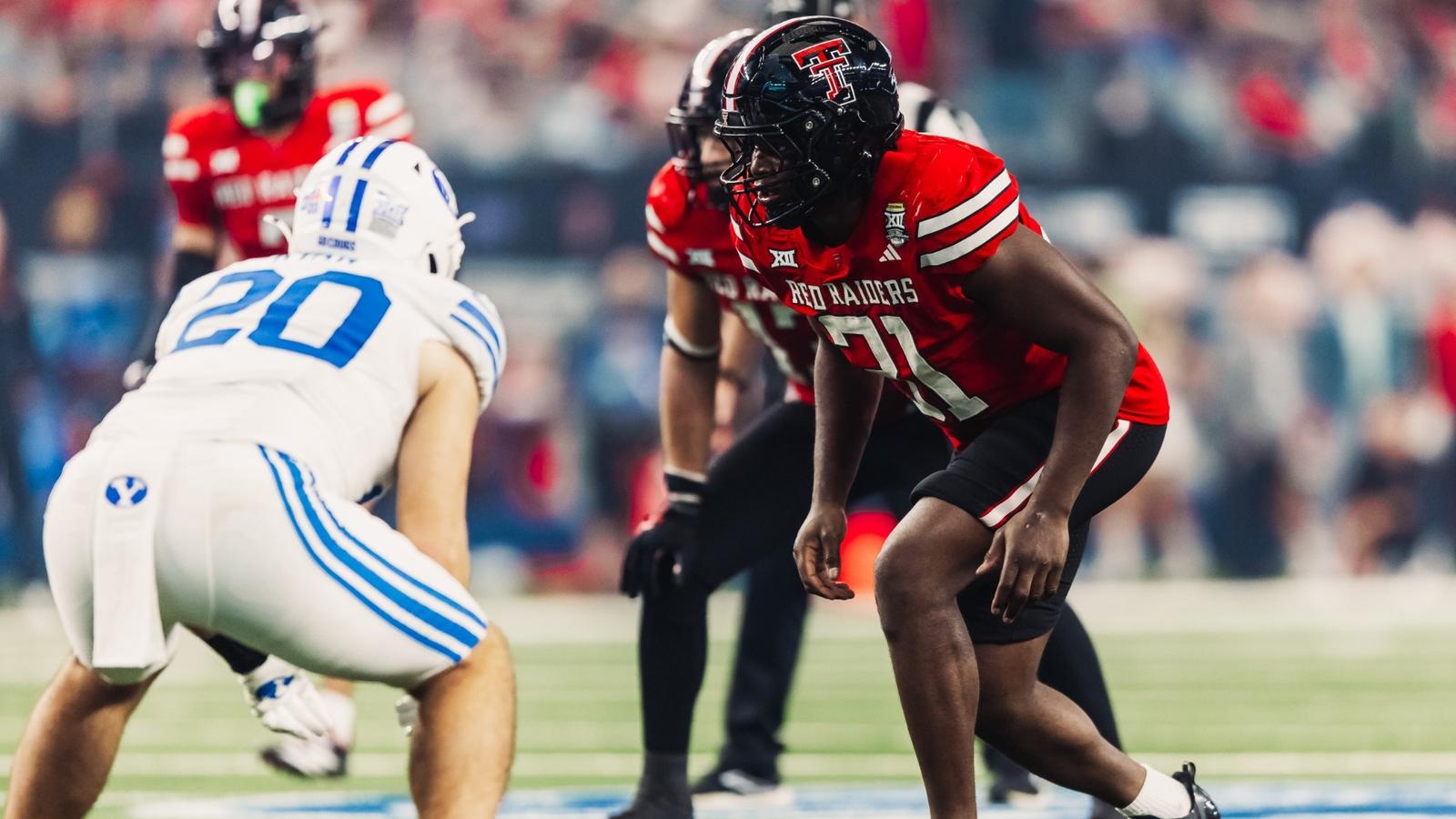
LUBBOCK, Texas – Texas Tech senior outside linebacker David Bailey and senior linebacker Jacob Rodriguez were both named first team All-Americans by the Walter Camp Foundation on Friday evening during the Home Depot College Football Awards Show on ESPN.
This is the first career All-America honor for both Bailey and Rodriguez, who became only the third set of Red Raider teammates to collect first team All-America honors in school history. Texas Tech had both linebacker Zach Thomas and defensive back Marcus Coleman represented on an NCAA-recognized All-America team in 1995, while the quartet of wide receiver Michael Crabtree, quarterback Graham Harrell and offensive linemen Rylan Reed and Brandon Carter were all recognized in 2008.
The Walter Camp All-America teams kick off the list of NCAA-recognized organizations that determine the NCAA’s annual consensus and unanimous All-America teams. The Associated Press All-America team will be unveiled Monday followed by the American Football Coaches Association (AFCA) on Tuesday, the Sporting News on Wednesday and the Football Writers Association of America (FWAA) on Thursday.
Now in its 136th year as the nation’s oldest All-America team, the Walter Camp Foundation had not previously recognized a Red Raider since tight end Jace Amaro was a unanimous selection to the first team in 2013. Rodriguez joins Thomas (1994-95) and Thomas Howard (1976) as the only linebackers in program history to receive first team All-America honors. Bailey, meanwhile, became the third Red Raider defensive end or outside linebacker to be recognized on the first team, joining two other greats in Montae Reagor (1998) and Tyree Wilson (2022).
The All-America honor only adds to a memorable week for Rodriguez, who was also named the winner of the Bednark Award Friday evening during the ESPN broadcast. Rodriguez has collected the Butkus Award (nation’s top linebacker), the Bronko Nagurski Trophy (nation’s top defensive player), the Lombardi Award (nation’s top lineman or linebacker) and the Pony Express Award (nation’s top duo with Bailey) in the past week alone.
Rodriguez has been the most-disruptive player in college football this season as he enters the College Football Playoff Quarterfinal at the Capital One Orange Bowl as the FBS leader with seven forced fumbles and ranks among the top-15 players nationally with 117 tackles. He is the first FBS player since 2005 to record at least five forced fumbles, two fumble recoveries and four interceptions all in the same season.
His impact has bolstered a Texas Tech defense that leads the nation with 31 takeaways and ranks third nationally in scoring defense at 10.9 points per game. Rodriguez was responsible for nine takeaways himself — all in Big 12 play – thanks to his ability to punch the ball out and also read the quarterback in coverage. Rodriguez is currently the highest-rated player in all of college football, according to Pro Football Focus, grading out at 93.3 overall so far this season.
Bailey, meanwhile, leads possibly the best defensive line in college football this season with 13.5 sacks, which leads all power conference players and ranks second overall nationally entering bowl season. Bailey, who is also third in the FBS with 17.5 tackles for loss, is in the midst of his most-productive collegiate season after arriving from Stanford this offseason with 14.5 sacks for his career at the time, one more than his total this season under head coach Joey McGuire and outside linebackers coach C.J. Ah You. He is 1.5 sacks shy of the Texas Tech single-season sacks record of 15.0 that was set by Brandon Sharpe in 2009.
Pro Football Focus has credited Bailey with 74 pressures this season, easily the most in college football as Adam Trick of Miami (Ohio) ranks second with 66. Louisville’s Clev Lubin is the next-closest power conference player to Bailey with 61 pressures of his own. Bailey’s ability to get to the quarterback has also caused three forced fumbles, a pass breakup and a fumble recovery.
As a team, Texas Tech is the only team in the country to rank in the top five nationally for not only scoring defense and total defense but also total offense and total offense. The result has pushed Texas Tech to its first Big 12 Conference title and a 12-1 record, marking the most wins in a season in school history.
The Red Raiders await the winner of the College Football Playoff opening round game between No. 5 Oregon and No. 12 seed James Madision in the Capital One Orange Bowl. Kickoff on New Year’s Day is set for 11 a.m. CT with coverage provided on ESPN and the Texas Tech Sports Network.

Dunne leads the way on the final day of post-season F2 testing

Vinnie Meskelis From Dallas Confirmed for 2026 NASCAR Euro Series – Speedway Digest

Fernando Mendoza NIL deals, explained: How much money Indiana star makes from adidas, other sponsors

U.S. 131 Motorsports Park Set to Join NHRA’s North Central Division

Lando Norris gets his FIA F1 Driver Champion award
When does Wisconsin volleyball play again? NCAA tournament next match

Rece Davis names former Pac-12 coach who should be top candidate for Michigan head coaching job

Cignetti, Mendoza, Smith, Ponds earn awards, recognition during ESPN’s college football awards show – The Daily Hoosier

Trump ‘willing to put the federal government behind’ changes to NIL

UAA signs trio of Alaska prep stars

UGOLINI NAMED TO ALL-ECAC SECOND TEAM

Here’s what Trump has to say about NIL in college sports

No. 1 seed Texas hosts No. 4 seed Indiana in the Sweet 16

Nebraska Volleyball sweeps Kansas; advances to NCAA Regional Final

Husker Volleyball dominates Kansas, advances to Elite 8

First Tee Winter Registration is open

Fargo girl, 13, dies after collapsing during school basketball game – Grand Forks Herald

CPG Brands Like Allegra Are Betting on F1 for the First Time

Volleyball Recaps – November 18

F1 Las Vegas: Verstappen win, Norris and Piastri DQ tighten 2025 title fight

Two Pro Volleyball Leagues Serve Up Plans for Minnesota Teams

Sycamores unveil 2026 track and field schedule

Utah State Announces 2025-26 Indoor Track & Field Schedule

Redemption Means First Pro Stock World Championship for Dallas Glenn

Jo Shimoda Undergoes Back Surgery

Robert “Bobby” Lewis Hardin, 56

How this startup (and a KC sports icon) turned young players into card-carrying legends overnight

Texas volleyball vs Kentucky game score: Live SEC tournament updates

Bowl Projections: ESPN predicts 12-team College Football Playoff bracket, full bowl slate after Week 14
Wisconsin volleyball sweeps Minnesota with ease in ranked rivalry win

 NBA Legend Michael Jordan to Join NBC Sports as Special Contributor
 Why a rising mid-major power with an NCAA Tournament team opted out of revenue-sharing — and advertised it
 Falcons mailbag
 Portal Update – Basketball and Gymnastics Take Hits
 has always dreamed in Mercurial. Now his initials are on the boots.
The new Kyl…
has always dreamed in Mercurial. Now his initials are on the boots.
The new Kyl…
-
 Rec Sports3 weeks ago
First Tee Winter Registration is open
-
 Rec Sports2 weeks ago
Fargo girl, 13, dies after collapsing during school basketball game – Grand Forks Herald
-
 Motorsports3 weeks ago
CPG Brands Like Allegra Are Betting on F1 for the First Time
-
 Motorsports3 weeks ago
F1 Las Vegas: Verstappen win, Norris and Piastri DQ tighten 2025 title fight
-
 Sports3 weeks ago
Two Pro Volleyball Leagues Serve Up Plans for Minnesota Teams
-
 Sports3 weeks ago
Sycamores unveil 2026 track and field schedule
-
 Sports3 weeks ago
Utah State Announces 2025-26 Indoor Track & Field Schedule
-
 Motorsports2 weeks ago
Redemption Means First Pro Stock World Championship for Dallas Glenn
-
 Motorsports2 weeks ago
Jo Shimoda Undergoes Back Surgery
-
 Rec Sports2 weeks ago
Robert “Bobby” Lewis Hardin, 56