
NIL
How shoe companies and MMR firms will, or won't, drive new revenue


Good morning, and thanks for spending part of your day with Extra Points.
A few quick housekeeping notes before we get started.
First, I’d like to welcome a new addition to the Extra Points team. We’ve added KC Smurthwaite to the Extra Points family. KC is a former athletic department staffer at Utah State and Southern Utah, and currently a consultant in the college sports space. KC will occasionally write newsletters for Extra Points and NIL Wire, but will focus most of his time in helping sell Extra Points Library and sports management curriculum support materials.
Speaking of NIL-Wire, I’m excited to announce that we’ve also made our hire to run that newsletter. I believe she’ll be introducing herself to everybody on Monday, so make sure you’re subscribed. We’ll have a lot more news about NIL Wire in the very near future.
In non-hiring news, if you have a second, I’d LOVE if you could fill out this very quick survey about Extra Points. We’re working on our budgets and plans for the rest of this year (and early Q1 of next year), and we want to make an Extra Points subscription as useful as possible for you. Knowing what you actually like and don’t like…helps an awful lot! I’ll close the survey on Monday.
Finally, I’d like to share a quick message from one of today’s sponsors, Swipe Less, Live More
Nearly 9 out of every 10 student-athletes are overwhelmed

“Student-athletes have more on their plate than ever before, and when they graduate, they’ll face real issues. Implementing the SLLM challenge helped us equip them with self-awareness and resilience.”
–Garrison. Student-Athlete Development, California State University-Sacramento
Swipe Less, Live More helps athletes sleep better, stress less, and sharpen focus. The program combines micro-lessons, small daily challenges, and a custom progress tracker, creating measurable results. A done-for-you strategy your athletic department can replicate without more staffing.
One of the frustrating things about writing four Extra Points newsletter a week is that I seldom get time to really go back to a topic and provide additional context. There’s just too much dang stuff happening all the time! But often, after I publish a newsletter, folks in and outside the industry will reach out, share additional context, ask thoughtful questions…and make me wish I could go back and take another swing.
I’d like to do that a bit today.
What the Tennessee/adidas deal means, and doesn’t mean:
That Tennessee was going to flip from Nike to adidas was one of the worst kept secrets in the college sports industry. I wrote about this last month, as I think this deal will be part of a very active apparel market free agency period. There are a lot of big name programs whose contracts are set to expire around 2026.
A few of those schools are now off the board. Kentucky, for example, recently announced an extension with Nike. Industry sources have also told me that LSU is expected to remain a Nike program for the foreseeable future. But other big names, like USC, Penn State, Ohio State, South Carolina, Georgia Tech, Wisconsin, West Virginia and Iowa, have contracts that are scheduled to expire. My educated guess is from that list, at least South Carolina and Georgia Tech will change partners.
I’ve said this several times, including in my previously linked story, but it’s important to reiterate for our non-industry friends. The big number you see in the headline about an apparel contract is not cash. These contracts provide a bunch of stuff, like athletic apparel and equipment, which has a cash valuation. If schools are lucky (and if they’re a huge brand, like Tennessee), then they also get cash. But most programs don’t.
I think it’s quite clear that Tennessee is very important to adidas. The three stripes have a portfolio of many major college sports brands, like Kansas, Louisville, Washington and Nebraska, but I think it’s easy to argue that the Volunteers are now the most well-rounded and prominent across all sports. When the musical chairs stop, Tennessee may very well still be the biggest athletic department under the adidas banner. There will unquestionably be a healthy cash check coming to the UT athletic department every year.
I am a little more skeptical about the value of the cash going directly to athletes…or at least, in the competitive advantage of that cash. Adidas is going to allocate sports marketing dollars to directly compensate Tennessee athletes above the House Cap in multiple sports. But as Chris McGuire, the adidas vice president of sports marketing, North America, admits to Yahoo! Sports here, “This is the first one.”
If that works, there’s no reason adidas won’t do the same thing for Miami, Nebraska, Kansas or their other university partners. Nike, Under Armour, and hell, New Balance, will almost assuredly do the same. And shoot, if adidas thinks they need to offer a better deal to USC or Ohio State to get them to flip, they won’t hesitate to do so, no matter what they promised (or didn’t promise) to Tennessee.
I don’t have a strong opinion about what athletic apparel brands are “best”, and none of them are currently sponsoring Extra Points at the moment (you can change that, of course, by emailing [email protected]). My gut is that athletic apparel companies will try to compete on NIL deals, but will find that factors beyond pure cash will ultimately hold the most sway for most of their negotiations. I won’t be shocked to see a major program let athletes wear whatever shoes they want, brand deal be damned, in the near future.
Speaking of third parties and above-the-cap revenue generation, let’s talk MMR again
As Learfield CEO Cole Gahagan told Yahoo, driving deals for athletes is a major area of focus for the company.
“Now that salary caps have been in place, there is increased pressure to find more opportunities to create more events for athletes,” Gahagan said. “When we have dedicated resources on the ground on campus — sales people dedicated to NIL, NIL activation coordinator and NIL content producer — we see the greatest and most NIL deal-making output at our properties.”
Dedicated resources on the ground was a major theme of my conversations with company executives. Learfield has personnel on campus to help get to know the actual athletes, help produce and shoot the content, and to pair it with the best possible brand partners. That process isn’t heavily automated or done programmatically….it takes lots of people.
Solly Fulp, Learfield’s Executive Vice President, NIL Growth & Development, mentioned a campaign to me earlier this week that has stuck with me. Learfield was working with the University of Texas and the St. David’s Medical Center, a hospital in Austin. Everybody wanted to find sponsorship activations that could include athletes, but it also needed to make business sense.
The solution was a video series full of testimonials from Longhorn athletes who were born at St. David’s. Not only would that video series be particularly impactful, but the school could run those videos as in-game programming on scoreboards over the course of the season, creating additional sponsorship assets.
I don’t think it is reasonable to expect any MMR company, be that Learfield, JMI, Playfly or anybody else, to simply cut checks directly to athletes without care or thought. Not only do athlete NIL deals still (for now, I guess) have to pass muster with the CSC clearinghouse, but MMR companies aren’t booster clubs. They work with brands who want a meaningful ROI on their marketing spend, and if they don’t get one, they won’t renew.
So the question becomes how do those companies bring new types of deals or brands to the table (perhaps beyond industries that already regularly advertise in college sports, like financial services, health care, insurance and automotive), how they incorporate athlete intellectual property with university IP, and how they make enough of a buck doing it to keep the operation going.
I legitimately believe there’s untapped potential in revenue generation, both for athletic departments and athletes, on the MMR side. Fulp told me he sees potential in MMR firms getting better about the type of sponsorship assets being sold (perhaps moving more away from static images and more towards storytelling or deeper campaigns), as well as getting better in partnering with the right athletes. I’m sure the folks at the other major companies (and schools) have good ideas too. It’s a space I want to continue to monitor.
And now, a quick sponsor message about shorts:
The Shorts You Didn’t Know You Needed
It’s time you meet the Jetsetter Shorts by Jack Archer—your ultimate travel companion. Crafted from luxurious Japanese Rebound fabric, they offer exceptional stretch for unrestricted movement, resist wrinkles so you stay crisp off the plane, control odors to keep you fresh all day, and repel stains to handle spills with ease.

The biggest advantage is the fit—it’s tailored without ever feeling tight. You get extra room where you need it and a trim silhouette everywhere else, plus a diamond-shaped gusset for smooth movement and a curved waistband that always sits just right.
But don’t just take our word for it—grab yourself a pair and try them risk-free for 30 days. If you don’t love them, get a full refund, no questions asked.
A quick note on context and budgets
These are useful figures, I think, for showing trends, or relative spending among peers. But the data isn’t completely standardized, and can lack context. A few ADs and coaches reached out to me after the last story, not to critique what I had written, but to share some info about why some figures showed up the way they did.
If a sport spending number looks much higher, or lower, than you’d expect, a few things worth considering could be,
-
Does the school own the arena or facility it uses for home games, or does it need to pay rent?
-
Does this program need to pay guarantees to get home games, due to difficult geography or RPI rating?
-
Does this school need to pay higher staff salaries due to the local cost of living?
-
Did this school have to buy out a coach contract that fiscal year?
-
How much of the sport’s reported revenue came from student fees or institutional support that year?
I wish I could go over all of that in depth for every school and every sport, but this is an email newsletter, and my CMS starts screaming AWOOGA AWOOGA once my emails hit 1,750 words. For those school and industry personnel who are really interested in the nitty-gritty of this data, I’d encourage you to grab an Extra Points Library account (or pay me to run reports for you). Otherwise, I’ll share the raw numbers with as much context as I can squeeze into an email.
Thanks for reading. I’ve got some big news to share next week, and some original reporting in the hopper. Tell your pals to read Extra Points, and I’ll see you on the internet.

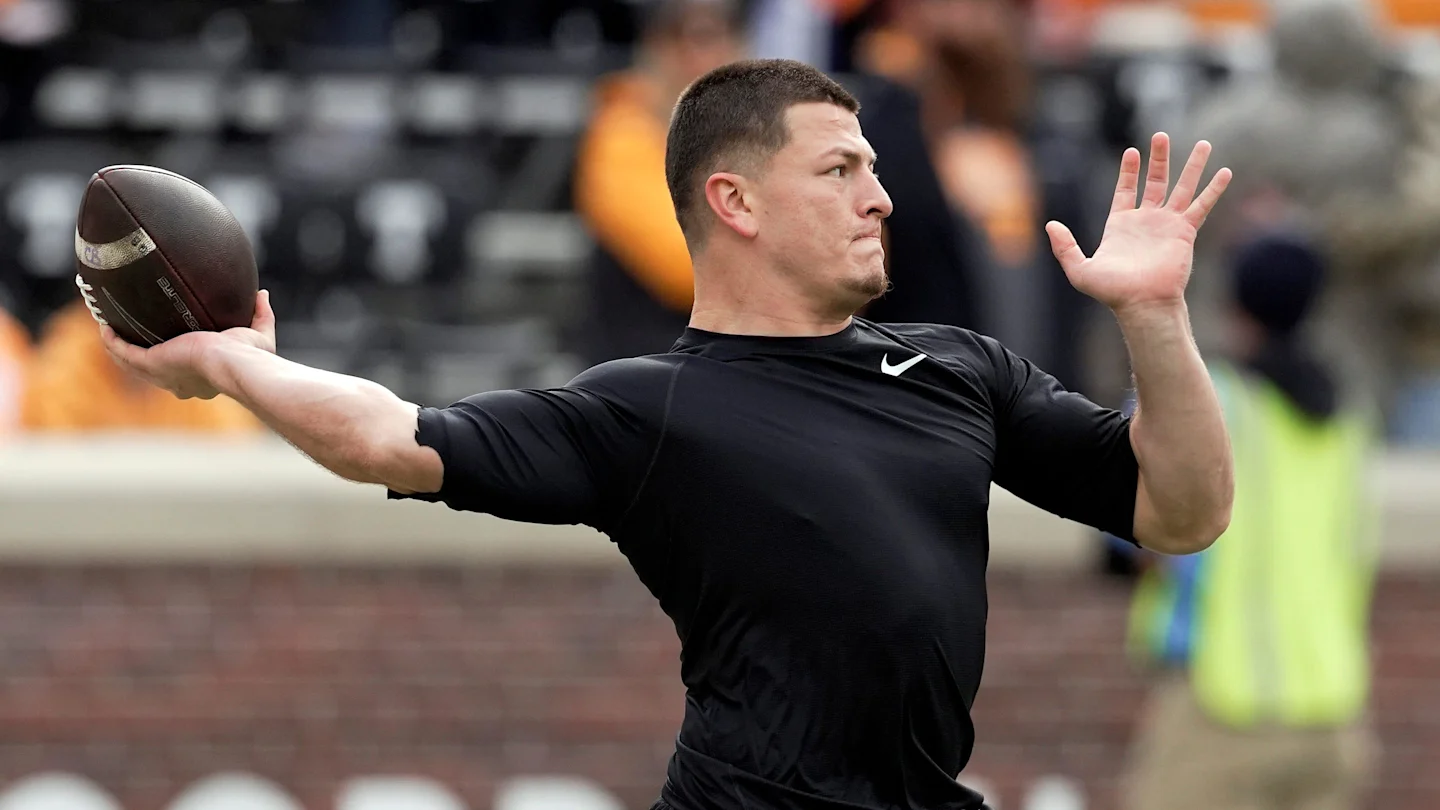
In this day and age, college football programs are generally inclined to accept massive donors from virtually any stripe of life. After all, it wasn’t that long ago that a story bounced around about a South American cartel funding NIL for one school. That story wasn’t true, but a recent story could make for bedfellows nearly as strange as that one.
The G5 Playoff Teams
Tulane and James Madison have dealt with a period of massive disbelief following each school earning a College Football Playoff berth. While one Group of Five team is all but certain to gain a CFP spot, a second team was a surprise. Because 8-5 Duke snuck into the ACC title, James Madison jumped the Blue Devils in the CFP pecking order and claimed a second G5 spot. Many have argued that neither Tulane nor James Madison belong in the Playoff.
Pavia’s wager
But Vanderbilt QB Diego Pavia took his dig and turned it in an interesting direction. The Vanderbilt passer, who has an NIL valuation of $2.5 million per On3, made a particularly bold offer. Pavia’s team at 10-2 finished just outside the CFP picture, had a different reaction to the CFP selection controversy. Specifically, Pavia offered to put his money where his mouth is.
It’s a 12-team Playoff. Put every team that is good… This G5 team, if a G5 team wins it, I would donate whatever I got in NIL back to that team. I would do that if a G5 team ever wins it.
Diego Pavia
A tough road for Tulane and James Madison
Admittedly, Pavia’s cash is probably safe. Tulane is currently a 17.5 point underdog to Ole Miss in its first round game, and James Madison is a 21.5 point underdog against Oregon. ESPN’s FPI gives the Green Wave about a 1 in 6 shot to win their game and the Dukes a just under 1 in 8 shot to win. Even then, a winning G5 team would have to plow through two more games, with the first coming against a top four foe– Texas Tech in the case of James Madison and Georgia in the case of Tulane.
Differing Vanderbilt Messages
Pavia’s consternation runs contrary to his own coach’s comments. In a refreshing recent turn, Clark Lea told reporters that Vandy missing the Playoff was “no one’s fault except our own.” It’s safe to say that Pavia felt a bit differently, and in fact made his multi-million dollar wager against the relevance of the Group of Five teams. Considering that Pavia himself came from a Group of Five team at New Mexico State, he of all people should have realized that in the new era of college football, anything can (and probably will) happen.
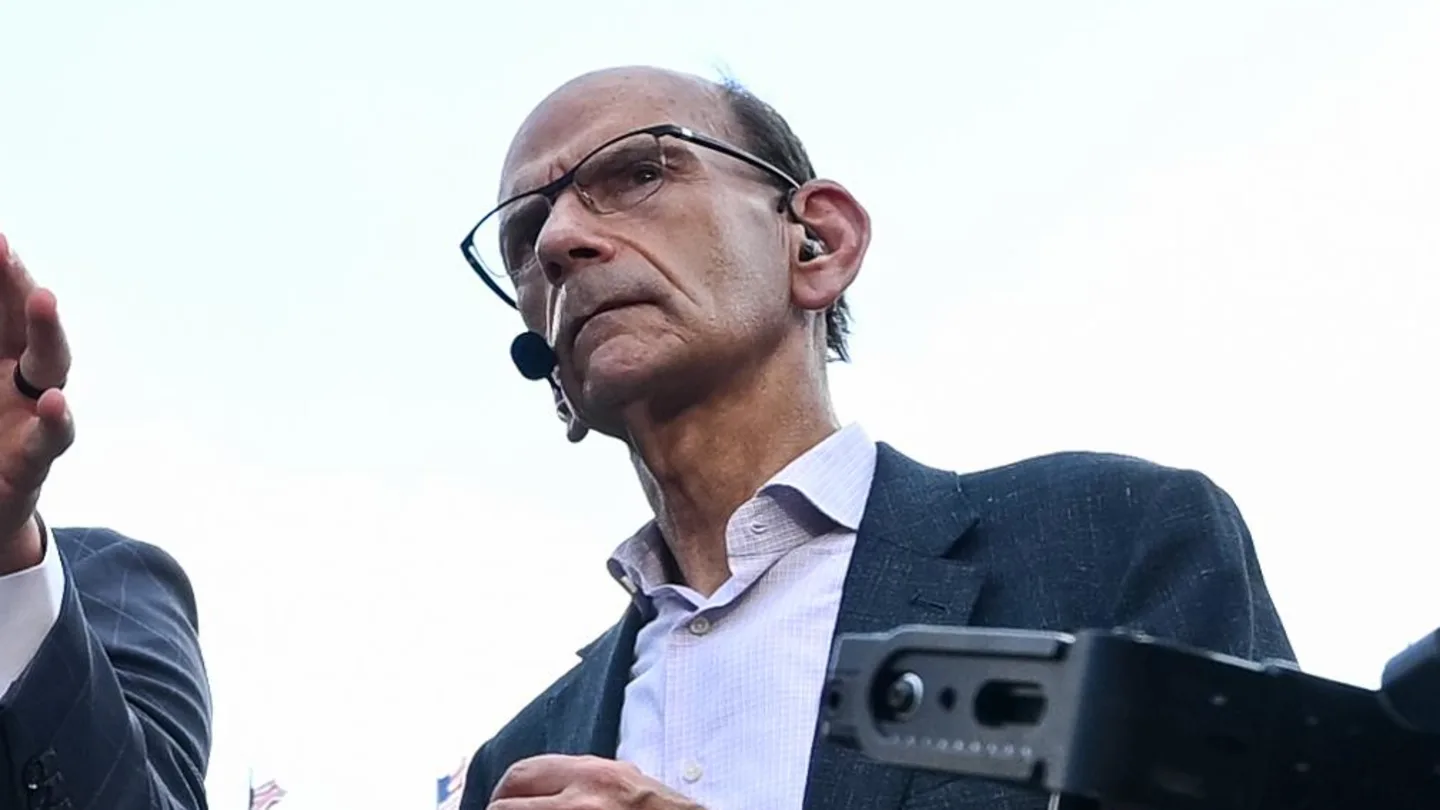
Following the release of the 2025 College Football Playoff bracket along with the end of the sport’s regular season, it’s now the month for debate. In the aftermath of a more controversial CFP field than the first 12-team version a year ago, athletic directors, head coaches, conference commissioners and Paul Finebaum are all lobbing grenades at one another.
The drama has focused in South Bend ever since the relase of Sunday’s Playoff bracket, which had Miami, not Notre Dame, sneaking in as the final at-large bid. Of course, the Hurricanes ultimately made the last-second leapfrog of ND thanks to a second bad BYU loss to Texas Tech in the Big 12 title game while Miami’s head-to-head win was the final difference-maker.
To say the Irish are upset would be describing the situation with extreme grace. Shortly after the field was set, Notre Dame athletic director Pete Bevacqua dressed his wagon and made quite the media tour, stopping by Dan Patrick to take shots at the ACC while, overall, sharing several messages to the public about how poor and unfair he felt Notre Dame was treated during this year’s selection process.
While watching some of those clips and discussing the Notre Dame fallout from their missed CFP bid on Wednesday morning’s episode of First Take, ESPN college football analyst and SEC Network host Paul Finebaum dumped criticism on the way Bevacqua and Notre Dame have handled this saga.
“Pete Bevacqua has said a lot of things; he hasn’t backed up anything,” Finebaum said. “I mean, he just threw a bunch of rocks at the street. But he didn’t touch anything. If he wanted to make a statement, say, ‘Hey, we’re getting out of the ACC, whatever it costs, whatever the legalities.’ But he didn’t do that. He just made a bunch of empty threats.”

Finebaum makes the point that if Bevacqua is going to attack the ACC and the CFP committee and its chair, who’s an SEC athletic director — all these various important parties in college football — then he better have a reason. For now, though, he sees all this uproar from Bevacqua as pretty much shouting into the wind if it isn’t followed up by any serious action.
“And I think, as a result, Notre Dame has lost all credibility in this matter,” Finebaum added of the Irish. Sure, did Notre Dame have legit complaints about the whiplash nature of their ranking vs. Miami over the final weeks? Perhaps. But ultimately, the Fighting Irish lost to both of the CFP opponents who they played, and beat only one team in the final top-25 rankings.
As Finebaum and others would say, Notre Dame had their chances. A path to the national title game isn’t some birthright. Even with an expanded field, the Irish should have to earn their way in if they aren’t going to win a conference, and in 2025, they unfortunately came up just short.
More on College Football HQ
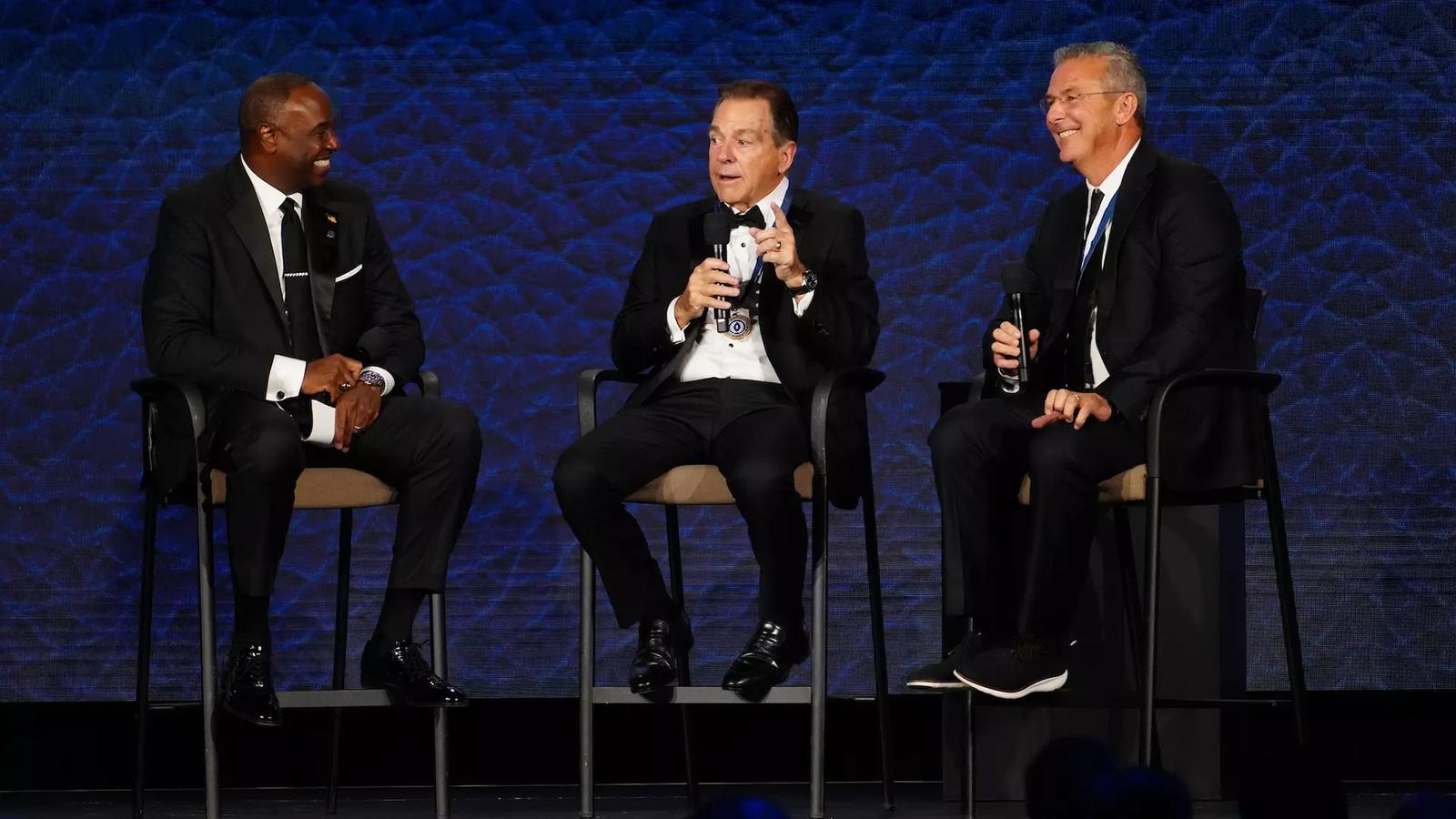
COLUMBUS, Ohio – The Bellagio Resort & Casino played host to an all-star cast of history’s greatest football legends and the sport’s most promising student-athletes during Tuesday night’s 67th National Football Foundation (NFF) Annual Awards Dinner Presented by Las Vegas.
More than 1,800 people attended, and countless more watched on ESPN+ as the star-studded 2025 NFF College Football Hall of Fame Class received college football’s ultimate honor. The NFF also honored 16 of the game’s top student-athletes, who collected postgraduate scholarships as members of the 2025 NFF National Scholar-Athlete Class Presented by Fidelity Investments. More than 50 previous NFF Hall of Fame inductees returned, and 125 colleges and universities sent representatives to attend the fabled affair.
Urban Meyer, the third-winningest coach in Division I history who led Ohio State to a national championship, three Big Ten Conference titles and seven wins over Michigan during a seven-year tenure as head coach, was among the class of 22 inductees: 18 first-team All-America players and four standout coaches.
Meyer coached the final game of a coaching career that places him alongside legends on Jan. 1, 2019 at the Rose Bowl in Pasadena, Calif. His Buckeyes defeated Pac 12 champion Washington, 28-23, to cap a 13-1 campaign.
Meyer’s Ohio State Buckeyes were, for seven seasons, on top of the college football world. The team won the inaugural College Football Playoff national championship in 2014 and won Big Ten Conference titles in 2014, 2017 and 2018. His teams never finished worse than first in the Big Ten’s divisional standings, and his Buckeyes were dominant in Big Ten games with a best-ever 7-0 record vs. Michigan and a 54-4 overall record in Big Ten games, including an NCAA record 30 consecutive conference victories.
His Buckeye teams were 83-9 overall, including the sixth unbeaten/untied season in school history in 2012 (12-0), a record-tying 14 wins in 2014 and the two longest win streaks in school history: 24 and 23 games.
Meyer’s 17 seasons as a head coach featured a record of 187-32 that positions him with the third-highest winning percentage in college football history at .853, trailing only Hall of Fame coaches Knute Rockne and Frank Leahy.
Off the field, Meyer’s development of players included “Real Life Wednesdays,” a series of speakers – CEOs, money managers, pro athletes, etc. – who addressed the team in life experiences and pursuits to ensure they were prepared for life after football.
Beyond football, Meyer has made a lasting impact through civic service, serving on the boards of the Veterans Golfers Association, Folds of Honor, and the Tim Tebow Foundation. He and his wife established the Urban and Shelley Meyer Fund for Cancer Research at Ohio State’s Comprehensive Cancer Center.
Meyer earned a bachelor’s degree in psychology from the University of Cincinnati (1986), lettering one season (1984) with the Bearcats as a defensive back. While launching his coaching career as a graduate assistant with the Buckeyes, he earned his master’s degree in sports administration from Ohio State in 1988. Meyer’s coaching career also includes assistant positions at Illinois State, Colorado State and Notre Dame. He was the head coach of the Jacksonville Jaguars in 2021.
He is a member of the Utah Athletics Crimson Club Hall of Fame, the Greater Cleveland Sports Hall of Fame, and the Ashtabula County Football Hall of Fame. He currently serves as a host and analyst on FOX’s Big Noon Kickoff.
Ohio State Head Coaches in the College Football Hall of Fame (8)
Name – Years at Ohio State Inducted
Urban Meyer – 2012-18 2025
Jim Tressel – 2001-10 2015
John Cooper – 1988-2000 2008
Earle Bruce – 1979-87 2002
Woody Hayes – 1951-78 1983
Francis Schmidt – 1934-40 1971
John Wilce – 1913-28 1954
Howard Jones – 1910 1951

Notre Dame has seen its College Football Playoff hopes dismantled, has declined its bowl game, and watched its relationship with the ACC deteriorate, all in the last few days.
And now, the man in charge of Notre Dame athletics has revealed he had a conversation with the commissioner of the SEC.
“The only commissioner I’ve spoken to, and I’ve had a couple of great conversations with him, is Greg Sankey,” Bevacqua said of the SEC commissioner.
He added: “Greg and I talk all the time. I can’t tell you how much I admire Greg and his leadership.”
What Notre Dame is interested in
Before you start thinking that Notre Dame is about to join a conference, think again.
Bevacqua said his conversation with Sankey had nothing to do with the Irish finally forsaking its independence, but about the structure and format of the College Football Playoff in the years to come.
Being left out of the playoff tends to inspire teams to re-think what the playoff should look like.
“Gave him my viewpoint on the process. He shared some thoughts that he had with me that, obviously, are between Greg and me,” Bevacqua said.
“Format? Greg knows. They all know how I feel about the format. Put the process aside. The format, being, you know, four teams, twelve teams, fourteen teams, sixteen teams, a thousand teams?”
What should the playoff look like
Okay, maybe not a thousand. How about sixteen? That seems to be the new sweet spot from Notre Dame’s perspective. And it could be for others, too.
“It should be sixteen teams, in my opinion, with five automatic qualifiers and eleven at-larges,” he said.
“Think about this year. If we had four teams, it would have been perfect. I don’t think anybody would argue that those aren’t the right four teams that are one through four, right, the way they’re playing. Texas Tech, Ohio State, Indiana, and Georgia… Sixteen would have been perfect. Notre Dame, Texas, Vanderbilt, you know, who else is in there.”
Expansion would cover all the problems
Bevacqua said that the particular metrics the playoff selectors use will necessarily change as each season brings its own unique situations.
The answer to compensating for those year-by-year situations is to simply expand the format and allow for more teams to have a chance.
“You know, year by year, you’re never going to have the same data points each year. It’s never going to work out perfectly, whether you have four teams, twelve, fourteen, or sixteen,” he said.
“What I like about sixteen is it does create more opportunity, it does create more narratives around more schools and yet preserves the integrity and importance of the regular season, and I think that’s one of the greatest things college football has going for it.”
What about the regular season?
Notre Dame’s head man doesn’t think expanding the playoff will have a negative impact on the regular season.
“The regular season is more important in college football than it is in any other sport by a mile…College football? I mean, hey we see it,” he said.
“We saw it last year. We saw it this year. We knew last year, when we lost to NIU? We had no wiggle room. Every game was a bowl game. Every game was a CFP game. This year, after we lost in the last second to A&M? Zero room for error.
“Turns out, we didn’t even have zero room for error. But, I think sixteen teams, with that five and eleven breakdown, is the way to go. And I think a vast, vast majority of people in the CFP management room feel the same way.”
Read more from College Football HQ
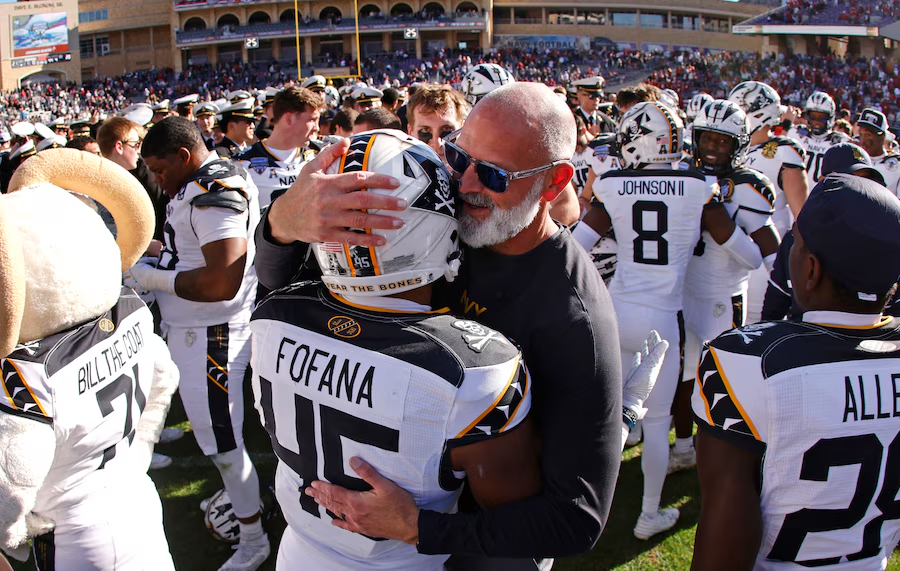
A month after Brian Newberry arrived at the Naval Academy in 2019 to begin his tenure as defensive coordinator, his wife, Kate, gave birth to their first child. A second one followed. The Newberry family has grown in Annapolis, and Newberry’s career has grown with it.
Newberry, in his third year at the helm of Navy, is on the verge of becoming the first coach to lead the Midshipmen to consecutive 10-win seasons in their history.
“That says it all in terms of his leadership and the culture he’s developed,” Navy athletic director Michael Kelly said.
Newberry and Kelly emphasized that the eyes of America will be on the players on the field for the 126th Army-Navy game Saturday at M&T Bank Stadium. But there may be a few athletic departments looking toward the sideline at the 51-year-old head coach who has orchestrated Navy’s return to prominence.
Not that Newberry plans to go anywhere.
Annapolis, Newberry said, feels like home, even though it’s far from his native Oklahoma. And, given the shifting nature of the sport, the sure-footedness offered at Navy — a program intent on developing leaders internally, without the free-for-all transfers that have gripped other schools — makes it an ideal spot for Newberry.
Where else would he rather be?
“It’s a special place and it’s one of the best jobs in the country, because of the kind of young men we have, because it still is, truly, a developmental program,” Newberry said. “Annapolis is a great place to live. You feel like you’re somewhere important. And you get into coaching to make an impact and a difference.
“Understanding that you’re impacting young men who are going to be officers and go serve our country, that gives you a little more meaning and responsibility as a coach. It really is important to me.”
There are few places that can offer Newberry such an existence.
As change buffets college football, Army, Air Force and Navy stand in the eye of the storm, untouched by the gales of the new world. There are no name, image and likeness sponsorships for service academy athletes.

While many programs rely on the transfer portal to inject talent into the roster — adding as many “free agents” as they lose each offseason — Navy builds from the ground up.
“We’re unicorns in college football today,” Newberry said.
Added Army coach Jeff Monken: “We just are who we are. Nothing’s really changed for us. It’s business as usual.”
This is part of the allure for Newberry at Navy. He has coached across the college football landscape, from Division III Washington & Lee to Division I minnow Kennesaw State. Now he leads Navy, a position he has held since Ken Niumatalolo was fired at the end of the 2022 season, and there’s no reason in his mind to move.
Newberry has friends at Power 4 schools. They have the supposed benefits of large NIL coffers and the transfer portal. And yet “there’s a great sense of frustration that has come” at those programs for coaches, Newberry said.
“It should be transformational, right? It’s become a lot more transactional at that level,” Newberry said. “We don’t have that at the Naval Academy.”

The players aren’t the only ones to participate in the merry-go-round of college football, of course. They’re just the newest to benefit from it. Coaches have jumped between programs for decades, going back to when advertising the size of a weight room was the primary recruiting tool for players rather than which school had the most money to offer. The coaching sagas are ongoing, as seen by LSU’s high-stakes pursuit of Lane Kiffin.
Newberry says he is not eying such a move, even though his considerable success at Navy could draw suitors and a significant raise; according to USA Today he made $1.8 million last season, ranking in the middle of the American Athletic Conference but lower than any Power 4 coach.
“I’ve never been a guy who chases jobs, necessarily,” Newberry said. “I’ve always tried to be where my feet are and make the best of a situation and enjoy the people I work with and enjoy the young men I get to coach and build relationships and all those things. That’s what’s important to me. And I’ve been beyond fortunate to be at the Naval Academy.”
Newberry’s first year, replacing the winningest coach in program history in Niumatalolo, was middling. The Midshipmen finished 2023 with a 5-7 record, their fourth straight losing season. That, some came to expect, was as good as things would be in the new world order following the NCAA’s 2021 decision to change its rules to allow athletes to make NIL money.
With it came questions regarding how the service academies might keep up.
The answer: Newberry led Navy to a 10-2 record in 2024, capped by a win over Oklahoma in the Armed Forces Bowl. Entering the Army-Navy game, Navy holds a 9-2 mark. Army has prospered, as well; the Black Knights posted a 12-2 record last year and are 6-5 in 2025.
Kelly believes Army and Navy are thriving because they are outliers.
“But for us it’s not so much the benefit aspect of it; it’s the player stability and lack of player movement, the fact we can be a true player development program, build year to year to year, and build that sort of team unity,” he said. “I can’t believe it’s coincidence that both Navy and West Point have had such great success these last few years.”
Blake Horvath, who has established himself as one of the greatest quarterbacks in Navy history, knows the recruiting rankings won’t flash high grades for players who sign with the service academies. The difference, however, is the longevity — the culture built with players who are there for the long haul.
“I think the biggest thing is, when this was all coming around, the first few years it was like, ‘Oh, it’s passed the academies by. The academies will never be good again because of this,’” Horvath said. “And I think we’ve all proven that wrong, just because, if anything, it makes us stronger. We develop, we have better bonds, we know each other better, we have a culture that is continuous and doesn’t get lost in different transfer portals and other things.”
Newberry thinks, in a sense, the transfer portal is helping Navy’s recruiting. There are schools that seek out the experience of transfer players to maintain a high level of performance, but that focus limits opportunities for high school players on the fringes of big-time college consideration.
“What that’s allowed us to do is recruit a little higher-caliber player than we have in the past,” Newberry said. “We can be a little bit more selective. It’s still difficult to recruit at the Naval Academy. We’re still competing against Army and Air Force for the majority of our recruits. I think that pull is stronger now than it ever has been, and we’re starting to look a little different.”
A few years ago, becoming the head coach of a program was far from Newberry’s mind. He enjoyed calling defensive plays at Navy, and as he watched all that was required of Niumatalolo, he wondered if he even wanted the added responsibility.
He had two young kids; did he really want 100 more under his direct purview?
“I didn’t know if I wanted the responsibility of it all,” Newberry said. “If I could manage juggling a family with being a head coach and all that entails, and work-life balance.”
But watching Niumatalolo and Brian Bohannon before him at Kennesaw State showed Newberry he could have that and “still do things the right way.”
And he feels that Navy, too, does things the right way.
“This institution really speaks for itself in a lot of ways,” Horvath said. “And I think he’s in the perfect place for him and what he tries to do for our team. And the bigger thing is building a staff that really preaches a program that he wants to build, it’s the same thing. So I think what he’s been able to do and what we’ve been able to do for our program is immeasurable.”
Except, perhaps, it’s measured most heavily on one game per year. The eyes of the country will be on Army and Navy. And they’ll be on a head coach who “never in my wildest dreams” thought he’d be here.
NIL
Diego Pavia promises to donate all his NIL money to a G5 team if it wins the national championship

Vanderbilt quarterback Diego Pavia has never lacked confidence or conviction. He proved it again this week with one of the boldest statements of the college football season.
Appearing on The Pivot Podcast, Pavia argued that the College Football Playoff should truly consist of the 12 best teams in America. He doesn’t believe this year’s Group of Five participants, Tulane and James Madison, have any real shot at winning it all. Then, he took it a step further.
SUBSCRIBE to the On3 NIL and Sports Business Newsletter
“It’s a 12-team Playoff. Put every team that’s good,” Pavia said. “If a G5 team wins it, I would donate whatever I got in NIL back to that team. I would do that, if a G5 team ever wins it.”
Alas, Pavia’s frustration is rooted in Vanderbilt’s narrow miss of the postseason despite a historic 10–2 season. The Commodores finished at No. 13, falling outside the field of 12 and behind programs like Notre Dame, BYU and Texas.
The irony is that those teams would’ve kept Vanderbilt out, even automatic bids did not exist. Still, for a program that just delivered its first-ever 10-win regular season, being left out stings. And Pavia, one of the nation’s most electric players, has not been shy about voicing that disappointment.
His appearance on The Pivot was part of a whirlwind week as the elder quarterback continues his media tour ahead of Saturday’s Heisman Trophy ceremony. Pavia was named one of four 2025 finalists, joining Indiana’s Fernando Mendoza, Ohio State’s Julian Sayin and Notre Dame running back Jeremiyah Love in New York City.
No national title, but can Diego Pavia win the Heisman?
During the interview, Pavia also opened up about what the Heisman moment means to him. It’s something he has dreamed about since childhood.
“I still remember Johnny winning it,” he said, recalling Johnny Manziel’s iconic Heisman victory. “I used to watch Johnny’s tape. … I want that to be me one day. Now, it’s coming full circle.”
All told, Pavia’s rise has been nothing short of remarkable. He led the SEC in total offense with 4,018 yards and accounted for 36 touchdowns while carrying Vanderbilt to the brink of the Playoff.
He also became just the fourth SEC player in the last 30 years to top 250 passing yards and 150 rushing yards in a single game. That put him in a group headlined by Manziel, Jayden Daniels and Tim Tebow.
Whether Pavia wins the Heisman or not, he has already cemented his place as one of the most compelling characters in college football. He’s fiery, fearless and unapologetically competitive, and now he’s willing to put his NIL on the line to prove a point.
— On3’s Alex Byington contributed to this article.

Viking track and field in Fargo on Thursday.

2025 Big 12 Volleyball National Honors

$2.5 million SEC QB pledges to donate entire NIL money if a G5 team wins National Championship

Volleyball Returns to National Stage, Faces Concordia-St. Paul in NCAA Quarterfinal

Isabella Robusto returns to ARCA Menards Series with Nitro Motorsports

NFL Teams Approve $32 Million Investment in Professional Flag Football League

Brendan Sorsby from Cincy would be interesting

Historic Pairing: Bickley, Sears Collect AVCA All-America Recognition

Tony Kanaan praises FIA for revising IndyCar superlicense points

Jeremiah Harris and Collin Bui-Hayes Earn First Big South Weekly Honors of the Season – University of South Carolina

VB: Tayler Gray named Volleyball Head Coach

Paul Finebaum says historic college football program has ‘lost all credibility’

NASCAR CEO France takes the stand as plaintiffs’ final witness in antitrust case

Dillard Claims MEAC Weekly Award

NCAA women’s volleyball regionals: Live updates, scores, schedule, highlights

First Tee Winter Registration is open

Fargo girl, 13, dies after collapsing during school basketball game – Grand Forks Herald

CPG Brands Like Allegra Are Betting on F1 for the First Time

Volleyball Recaps – November 18

F1 Las Vegas: Verstappen win, Norris and Piastri DQ tighten 2025 title fight

Two Pro Volleyball Leagues Serve Up Plans for Minnesota Teams

Utah State Announces 2025-26 Indoor Track & Field Schedule

Sycamores unveil 2026 track and field schedule

Redemption Means First Pro Stock World Championship for Dallas Glenn

Texas volleyball vs Kentucky game score: Live SEC tournament updates

Bowl Projections: ESPN predicts 12-team College Football Playoff bracket, full bowl slate after Week 14

How this startup (and a KC sports icon) turned young players into card-carrying legends overnight

Robert “Bobby” Lewis Hardin, 56

Jo Shimoda Undergoes Back Surgery

Indiana’s rapid ascent and its impact across college football

 Why a rising mid-major power with an NCAA Tournament team opted out of revenue-sharing — and advertised it
 NBA Legend Michael Jordan to Join NBC Sports as Special Contributor
 Falcons mailbag
 Portal Update – Basketball and Gymnastics Take Hits
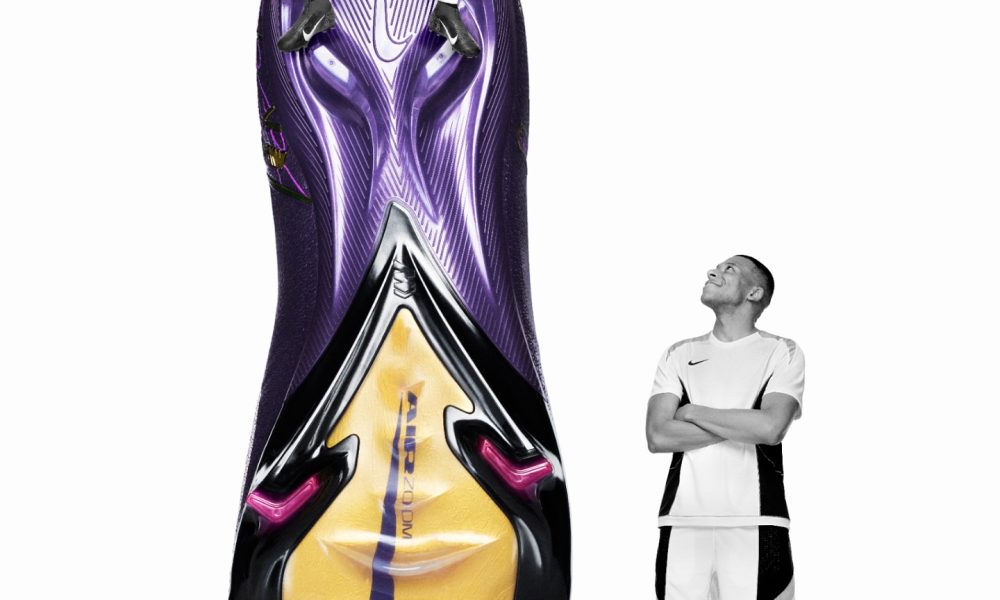 has always dreamed in Mercurial. Now his initials are on the boots.
The new Kyl…
has always dreamed in Mercurial. Now his initials are on the boots.
The new Kyl…
-
 Rec Sports2 weeks ago
First Tee Winter Registration is open
-
 Rec Sports2 weeks ago
Fargo girl, 13, dies after collapsing during school basketball game – Grand Forks Herald
-
 Motorsports2 weeks ago
CPG Brands Like Allegra Are Betting on F1 for the First Time
-
 Motorsports2 weeks ago
F1 Las Vegas: Verstappen win, Norris and Piastri DQ tighten 2025 title fight
-
 Sports2 weeks ago
Two Pro Volleyball Leagues Serve Up Plans for Minnesota Teams
-
 Sports2 weeks ago
Sycamores unveil 2026 track and field schedule
-
 Sports2 weeks ago
Utah State Announces 2025-26 Indoor Track & Field Schedule
-
 Motorsports2 weeks ago
Redemption Means First Pro Stock World Championship for Dallas Glenn
-
 Sports2 weeks ago
Texas volleyball vs Kentucky game score: Live SEC tournament updates
-
 NIL1 week ago
Bowl Projections: ESPN predicts 12-team College Football Playoff bracket, full bowl slate after Week 14