
Rec Sports
How sports betting lures teenagers into risky arenas


Evva Starr has heard thousands of pitches from student journalists over the years as the faculty adviser to Common Sense, Thomas S. Wootton High School’s newspaper.
“I get excited whenever there’s something new,” Starr, the Rockville school’s English department resource teacher, says with a laugh. She remembers how her ears perked up last school year when Nathan Zweig, a junior in her newspaper class, proposed an article about Fliff, an app that bills itself as a free play-for-fun sportsbook. Underage use of sports betting apps in the halls of local high schools is widespread, students and school faculty say. Recent legalization, word-of-mouth, promotions on social media, and ease of access have contributed.
“That was the first time I’d ever heard of Fliff. I thought, ‘Cool. Great. Something different,’ ” recalls Starr, 52, of Potomac. “Then Nathan explained Fliff to me. Now that I understand it, I think it’s terrible.”
Fliff is one of many sports betting apps and is considered among the most popular for underage betting. This app uses virtual currency and follows a sweepstakes model, which means no purchase is needed to play. That distinction separates Fliff from more traditional online gambling sites. Signing up is easy on the colorful, flashy app. Tiny print says players must be 18, but no age verification is required. In other states, the minimum age may be older. Players can quickly earn badges and loyalty rewards, and climb leaderboards betting on an array of daily sporting events across the country and around the globe from college football to professional tennis, English Premier League soccer, NBA games and mixed martial arts.
Unlike underage drinking or substance misuse, online gambling can be almost invisible without the telltale red flags, such as garbage cans filled with beer bottles and hard seltzer cans or the acrid smell of marijuana.
“Fliff is all around me. Every day, kids at lunch are on their phones, talking about what bets are going to hit,” says Zweig, 17, of Potomac. “I have friends who don’t follow sports, but they still bet. They say it’s not real gambling, but eventually some kids will go to apps like BetMGM or DraftKings. It’s hooking people.”
Some Wootton students, however, including senior Justin Heller, 17, of Rockville, disagree.
“Well, people see it different ways. I think it’s helpful because it shows you in the end that everyone ends up losing money. It gives you free money to learn with, play with,” Heller says. “It’s taught me something definitely—to be smart with my own money and not bet it away.”
Starr green-lighted Zweig’s pitch, and soon after he published an opinion column highlighting the many risks and few rewards of underage sports betting.
In 2022, about one in seven Montgomery County high school students had gambled on something in the previous 12 months, according to the Maryland Department of Health’s Youth Risk Behavior Survey, conducted every other year. The actual numbers may be higher now, based on comments from more than 25 students, educators and parents interviewed by Bethesda Magazine.
“Most parents have no idea how widespread it is,” says Joe Cassidy, head baseball coach at Walt Whitman High School in Bethesda since 2003. “Parents think their kids are just sports crazy or athletes or psyched about a game. But are they really excited about the Braves playing the Pirates when they can’t name a single player on either team?”
Gambling is prohibited in Montgomery County Public Schools (MCPS). It is banned at school-sponsored events and on school property. MCPS did not respond to multiple requests for comments for this story.
“There don’t seem to be any real protections to prevent children from using the platform. Self-reporting age is a nonfactor,” says Starr, an MCPS teacher for 25 years. “My perspective is this could be onboarding them to a lifetime of addictive behaviors, not just gambling.”
In simple terms, according to the National Institutes of Health, addiction sets in when a substance, such as alcohol, “ … hijack[s] the pleasure/reward circuits in your brain and hook[s] you into wanting more and more.”
As with substance-use disorders, people with gambling disorder may also exhibit withdrawal, depression and anxiety, according to the Mayo Clinic and the Cleveland Clinic. The Cleveland Clinic reports that “gambling at a young age is … a risk factor for developing gambling disorder” later in life.
“There is a lot of crossover with video games. The easy access and fast pace keep triggering the brain. Kids don’t think about video games and loot boxes as gambling, but they are by definition,” says Heather Eshleman, prevention manager at The Maryland Center of Excellence on Problem Gambling within the University of Maryland School of Medicine in Baltimore. “I’ve seen a definite increase in the number of high schools reaching out to us since sports betting was legalized.”
Boys are far more likely than girls to engage in sports betting, says Stanley Tamale, a licensed professional counselor who practices in Montgomery County. Many of Tamale’s clients are young adult males between the ages of 19 and 24 who started gambling when they were in high school.
“Online sports betting is like a fishing rod. People have figured out the psychology of how to reach teens. Teens, especially boys, are risk-takers. They seek peer approval and acceptance,” says Tamale, 46. “But their brains are not fully developed until they are 25. The 16-, 17-, 18-year-old brain is so vulnerable.”
Tamale and other counselors encourage their clients to resist peer pressure and to be savvy consumers, skeptical of any free stuff, such as virtual currencies. “I tell my clients to think of those pop-ups as scam calls. Don’t be duped. You’re smarter than that. Don’t fall for the advertising. If it’s too good to be true, then it is.”
However, a confluence of factors—including illegal offshore betting sites, payment apps and slick mobile betting platforms—make that a lot easier said than done for adolescents eager to get some fast cash.
“Social media is a big factor in it: who will win, by how many points, how many total bases? Every day, TikTok videos promote the best parlays,” Zweig says. “If you get lucky and combine a bunch of games, then you can win. I have a friend who bet a dollar and picked seven games for a parlay [on Fliff]. He won 130 bucks.”
A parlay links together bets on a sequence of athletic events across teams and athletes, potentially earning a much larger payout than an individual wager. Picture this: the Ravens win, then the Commanders win by a touchdown and, finally, Nikola Jokić scores 25 points for a Nuggets victory.
Some students believe apps such as Fliff could offer valuable lessons to teenagers who gamble.
“I think for some people it’s teaching kids to gamble. Like any other video game, you can spend a lot of time on it. It depends on the person for sure,” says Vikram Mishra, 17, of Rockville, who’s also a senior at Wootton. “It’s not necessarily a bad thing, but you have to make sure you have control over yourself when you’re using it.”
Coach Cassidy, 54, of Clarksburg, chats regularly with his players about the downfalls of gambling.
“I tell my players their system won’t work. I say they may give you a free dollar, but it’s Monopoly money. They’ve got your real money. Now, with AI and all these algorithms, they run millions of simulations. The odds against you are even higher,” he says with a sigh. “ ‘Guys,’ I tell them, ‘It’s stacked against you. You’re going to lose.’ ”
Sports betting exploded after the U.S. Supreme Courtallowed states to legalize it in 2018. Last year, according to the American Gaming Association, sports gambling raked in $13.71 billion in revenue, an increase of more than 25% over 2023. It marked the fourth consecutive year of eye-popping growth. The association estimates $3 billion was wagered on March Madness games alone.
Maryland legalized sports betting in 2021. Players must be 21, have a Social Security number, and be physically present in the state when betting online. The apps track the user’s location in real time.
In D.C., players only need to be 18 to bet on Daily Fantasy Sports sites such as PrizePicks and Underdog. These sites allow individuals to use real money to place bets on specific athletes, not teams, and how they will perform in a game. These platforms offer set payouts and promotions in dollars. Given the lower age requirement, they are especially popular with young men in high school. But unlike Fliff, these sites deal in dollars, not virtual currencies.
“It’s an unfair playing field, especially for boys,” says state Sen. Bryan Simonaire (R-Dist. 31) of Anne Arundel County. “Most people can gamble responsibly, but you might be part of the small percentage who get addicted. We just don’t know who they are. I want to target them and help them.”
For Simonaire, it’s personal. His father, he says, became addicted to gambling after casinos were built near his house in Arizona. He lost $1 million, says Simonaire. “The casino was 10 minutes away. He got into the habit of going. It became an addiction as opposed to entertainment,” he says. “Now we have internet gambling with instantaneous access and nonstop advertising. The ads draw kids into it.”
In 2020, Simonaire introduced a bill related to schools teaching about the risks of gambling, but it stalled during the pandemic. Earlier this year, Simonaire worked with a coalition of individuals and organizations, including The Maryland Center of Excellence on Problem Gambling, to introduce a bill in the Maryland General Assembly to revise the state’s Youth Suicide Prevention School Program and make students aware of the link between gambling and suicide. It passed unanimously.
Simonaire says it’s up to local school districts to determine how to implement the bill. He hopes students will see gambling included in the list of risk factors, along with substances such as alcohol, opioids and marijuana, by the spring. “We have a responsibility to fund education, and we’re doing it a lot through gambling,” he says. “We also have a responsibility to help students not get addicted to gambling.”
Fifteen percent of the state’s gambling revenue goes toward the Blueprint for Maryland’s Future, which promises to increase the education budget by $3.8 billion annually for 10 years, starting in 2021. Between July 2024 and January 2025, nearly $59 million from sports betting was directed to public education.
“I am not an alarmist,” says Steve Goodman, 50, a professor in Georgetown University’s Sports Industry Management graduate program and a sports industry veteran. “For parents, I think the first step is to be aware it’s out there. Then, understand the potential mental health piece and the money piece. Are kids betting money they don’t have?”
Goodman, who lives in Bethesda and has two sons who graduated from Whitman, adds, “Sports betting is so fast and so easily done. It’s easy to hide. Even if parents do check phones, kids can bury their apps.”
The Maryland Center of Excellence on Problem Gambling highlights two main characteristics of problem gambling. The first is the inability to control the amount of time or money spent on betting. The second is the resulting negative consequences, including emotional, financial, personal and legal problems.
“To parents, I would say, ‘Keep an eye on your teens.’ There is often a difference between someone spending more time on their phone versus hiding their phone,” Tamale says. “People hide their behavior when they have a problem. It will be the same with teens and gambling. They will hide it, and parents might not find out until a young man is in trouble financially.”
Talking is often a first step toward treating potential gambling problems.
“Teenagers are good at hiding stuff, but they’re also good at telling you stuff, if you pay attention,” Cassidy says. “Online betting is the same as a drug. It’s the rush of winning, chasing the loss, chasing the high. I equate this to smoking in the ’60s. They sort of knew it was bad, but they kept that to themselves. I don’t know how you put this genie back in the bottle. It’s just going to get worse.”
Meg Drennan is a freelance journalist who has written for Education Week, The Chronicle of Higher Education and NPR. She focuses on health and wellness stories and has a Master of Public Health degree from Johns Hopkins. She lives in Bethesda with her family.
The Maryland Center of Excellence on Problem Gambling offers an online self-evaluation tool to help individuals determine if they have an issue. The center also offers resources for counseling and peer groups, and a help line. The Montgomery County Department of Health and Human Services does not have any programs designed specifically to address gambling disorder.
If you or someone you know needs help with gambling, call 800-GAMBLER (800-426-2537) or visit 1800gamblerchat.org for free, confidential support 24/7.
This appears in the November/December 2025 issue of Bethesda Magazine.


Eleven-year-old Amy was about half way through her haircut Monday afternoon but paying little attention to what stylist Amanda Lee was doing with her blond locks. She was too busy working on a piece of yellow putty in her hand.
At one point she shaped it into a heart. Later, it was something else. But when Lee was finished cutting and unbuttoned the smock pinned at her client’s neck, Amy had molded her putty into a miniature hand. With it, she grinned and high fived Lee in thanks for her new look.
Across the hall, stylist OmarAntonio had just finished cutting and styling a teen’s long, black hair. Moments later, she came back smiling and interrupted a conversation to tell him she loved it.
“There is something very important about our responsibility as hairdressers to really read the client, to really see them,” he said. “I want to reintroduce my clients to themselves, so a good haircut is so important.”
These seemingly small moments — a smile into a hand held mirror, a flip of the ‘do, a handshake — were happening Monday across the donated space at Church Unstoppable. For three hours, about 60 stylists and barbers volunteered their time and skill to give free cuts and styles to an almost equal number of children and young adults from 10 to 25, all of whom have been touched by foster care or social service programs.
There were three DJs on stage. There were two live singers. Along one wall were tables lined up and loaded with brand new backpacks for the taking. At the entrance to the hall were hand-painted trucker hats created by Dom Chi Designs in Sebastopol, also for the taking. In yet another room was free food and drink. Throughout the three-hour event raffle prizes were given out: Apple headphones, Beats headphones, a JBL speaker, tickets to a Santa Rosa Growlers hockey game, Amazon gift cards, restaurant gift cards and jewelry.
It was all the brain child of KT Maggio, a barber at Daredevils & Queens Salon and Barbershop in Santa Rosa. And it was born of a seemingly simple ask.
It started with an annual holiday giving event held by nonprofit Our Village Closet, a group that runs a full-scale, foster care support operation out of thousands of square feet of space at St. Lutheran’s Church on Mendocino Avenue in Santa Rosa. Under the direction of executive director and co-founder Amanda Kitchens, foster care providers can pick up, for free, necessities for kids and young adults in their care, everything from strollers to socks to bathing suits and winter coats.
There are 1,000 individual kids or young adults registered with OVC, but the number of people who access their free services typically hovers around 5,000, Kitchens said.
Our Village Closet for the past five years has held a holiday giving program that has grown from 167 youth in 2021 to 769 kids this year. It was for that event that someone at OVC reached out to Maggio and asked if she could provide gift certificates for hair cuts.
Maggio said she would do one better. One a lot better.
She put out the call to the wider stylist and barber community in Sonoma County and asked for folks to show up for three hours on Monday, donate their time and skills, and send young adults back into the world looking sharp and feeling good.
“I didn’t even say much,” Maggio said of the invitation to her peers. “They just said ‘We’re in, we’re in, we’re in.’”
To say people rallied for the event would be underselling what unfolded Monday.
The top shelf cuts, the next level raffle prizes, the DJs, the food — it was a full-scale experience.
“I wanted them to feel special today,” Maggio said.

Barber Jesus “Chuy” Dominguez helped with perhaps the most obvious transformation Monday when a young man with sandy hair falling down to his shoulders sat down in Dominguez’s chair and said he wanted it all off.
“He asked for a five guard on top which is less than half an inch and then he wanted a rat tail in the back,” Dominguez said. “I always triple check when it’s a transformation that big but he was on it and I was like, ‘Alright, bro.’”
“He knew exactly what he wanted,” he said. “It was cool.”
And it was. After Dominquez tapped a stylist to braid the rat tail in the back, the young man cracked a small smile into the mirror.
“Things like this just fill my heart,” Maggio said, noting that Daredevils & Queens regularly supports haircuts for the homeless events and community outreach efforts. “I just wanted to come together and make these kids feel like number one.”

Christopher Chung / The Press Democrat
Nicolai Lisiukoff, right, thanks Daredevils & Queens barber KT Maggio for the haircut and shave at the homeless shelter run by West County Navigation Center in the Guerneville Veterans Memorial Building in Guerneville Monday, Dec. 16, 2024. (Christopher Chung / The Press Democrat)
In addition to her colleagues at Daredevils & Queens, she tapped friends at Chuck’s Barbershop in Santa Rosa and Oak and Ivy Salon in Rohnert Park, who brought folks on Monday. She also tapped longtime friend Jose “JayTee” Tapia who, in addition to his 293,000 Instagram followers, runs the 15-chair Visionz Barbershop in Santa Rosa and, to Maggio’s way of thinking, is a star in the barbering world.
That would explain the small crowd of fellow barbers that gathered around Tapia when he pulled out his scissors and began to ply his craft on the dark locks of a young teenaged boy Monday.
“For men, for boys, it’s like our make up,” Tapia said of a haircut. “For me, being able to build confidence in a kid, there is nothing like it. People come to us before a first date, before a wedding, before any special day because a haircut alone can make anyone feel that much more special and that much more confident.”
That is what moved OVC’s Kitchens on Monday — the gift of confidence, the gift of being seen.
“It’s the fact that this many stylists and barbers showed up and showed up with heart,” she said. “It’s ‘You matter.’ Not necessarily you matter because of what happened to you but you matter just because of who you are…A haircut for so many of us, especially in this age group, it’s about how we show up in society. To be able to show up like everybody else and blend in is such a gift.”
To find out more
To find out more about the services provided by Our Village Closet and for ways to support the work, go to www.ourvillagecloset.org.
Alexandra Montoya feels this.
Montoya is raising her 12-year-old granddaughter, Irie. Irie is bi-racial, her hair looks different from her grandmother’s, and that has made finding a stylist tricky. On Monday, Montoya was emotional about seeing her granddaughter pampered.
“Somebody needs to know her hair,” she said. “The truth is, I don’t.”
But the people who volunteered Monday did.

“This is wonderful, this makes a difference,” Montoya said. “It’s the mix of people. The cutters, the stylists, they volunteered their time. We understand what that means. They put heart into it.”
As stylist Natalie Dixon finished cutting Irie’s hair, they had a brief conversation. Irie decided she wanted her hair straightened on this day. Dixon got to work. Nearby, Montoya watched, deeply moved.
“All of these kids have lost someone, in one way or another,” she said. “That’s what makes what they are doing here a thing of beauty.”
You can reach Staff Columnist Kerry Benefield at 707-526-8671 or kerry.benefield@pressdemocrat.com. On Instagram @kerry.benefield.
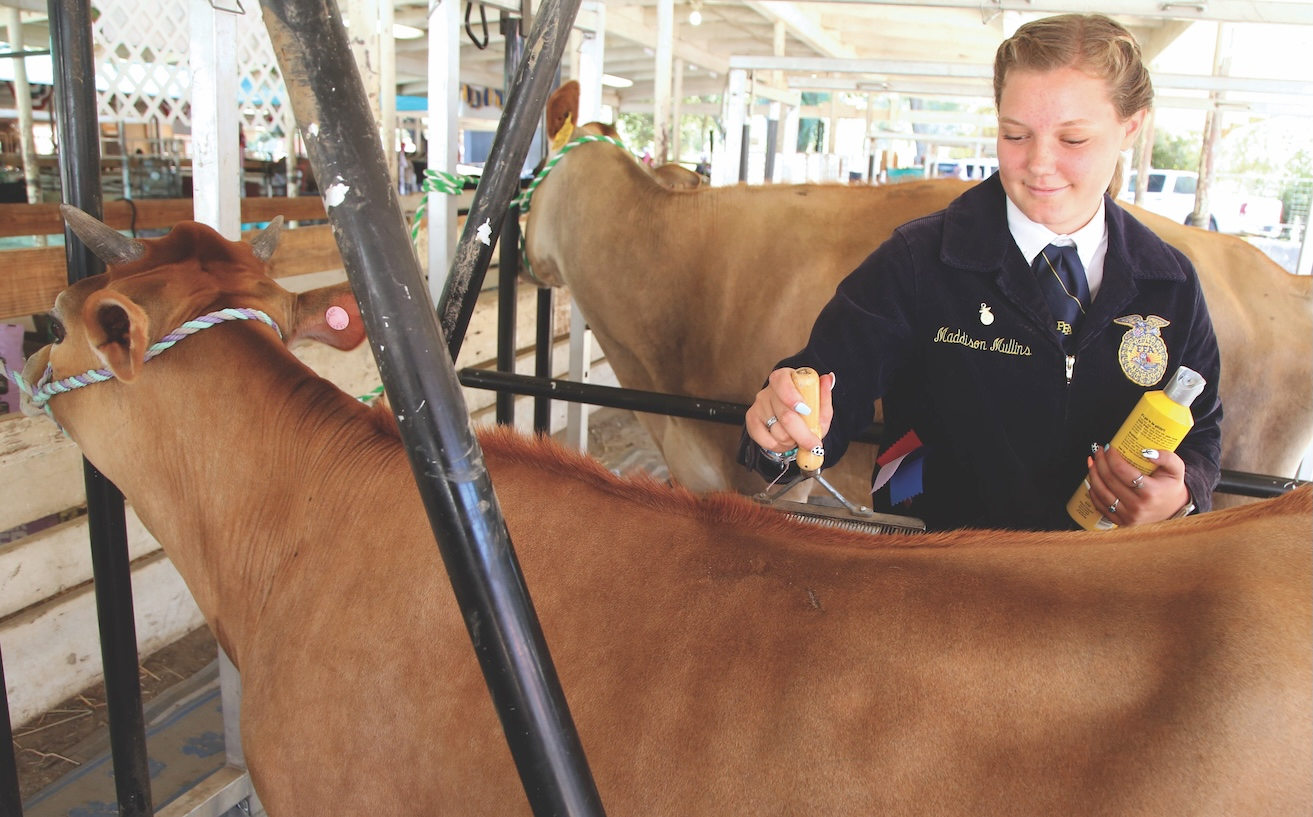
Organizers at the Santa Cruz County Fair are asking the public for ideas for a theme for the 2026 County Fair.
Anyone who has a “phrase that pops” or a “rhyme that shines” is invited to submit it.
“Imagine your words splashed across every poster and sign,” The Fair Board stated in an announcement. “If you’ve got a clever saying or catchy theme, now’s the time to share it in the Santa Cruz County Fair Annual Fair Theme Contest.”
Anyone with a creative theme— “with a little red, white, and blue sparkle” in honor of the United States’ 250th birthday,” is invited to send in their ideas.
The winning theme will be featured throughout the fair, and earn four free fair tickets plus a free parking pass.
The deadline is Jan. 13 at 5pm.
To submit your theme, email in**@*****************ir.com, send mail to Santa Cruz County Fair, Theme Contest, 2601 East Lake Avenue, Watsonville, CA 95076 or visit visit bit.ly/4bkX2RS

Funding available to activate Youth Week events on Redlands Coast – Redland Bayside News
NOT-FOR-PROFIT organisations are being encouraged to apply for funding to deliver free or low-cost events on Redlands Coast as part of Queensland Youth Week 2026. Redland City Mayor Jos Mitchell said funding was available through Council’s Activate Redlands Coast Youth Week Program for events and …
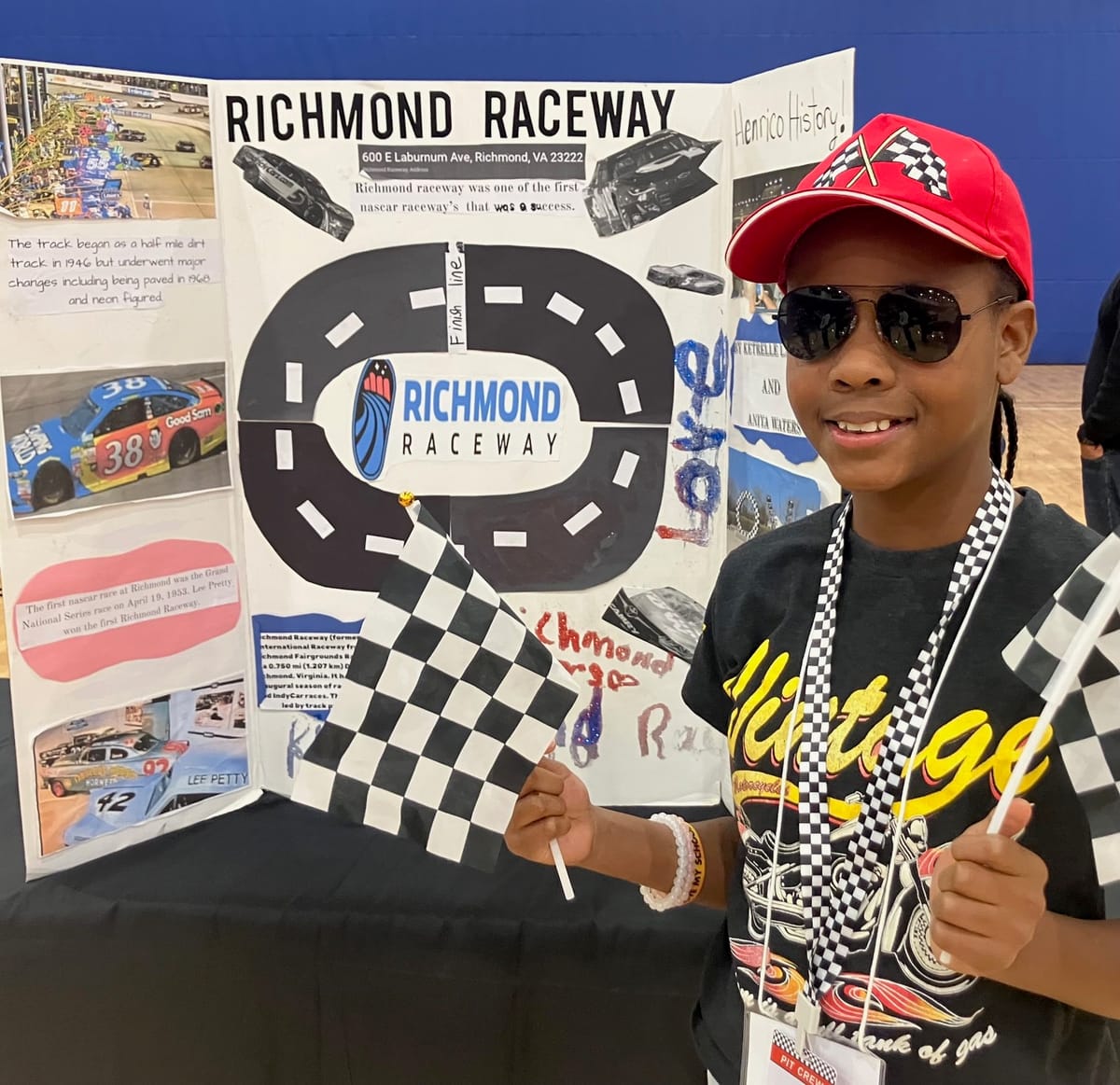
As on most evenings, the Henrico Sports and Events Center echoed Dec. 1 with the sounds of youth sports: running feet, basketballs drumming on floors, and shouts of triumph or dismay as volleyballs were slammed home.
But on one basketball court, the clamor of squeaking sneakers and balls thudding against backboards was just distant background noise. In this arena, dozens of fifth-grade students were showing off their history projects – while educating their parents and teachers about significant Henrico events, places and persons.
At one display, students stood beside a screen highlighting photos and facts about the Henrico Theatre. The old-fashioned spelling of “theater,” they explained, is still used because that was the custom when the Theatre opened in 1938. A few years later, when World War II broke out, the site was even designated as a bomb shelter.
Today, the restored movie house is used for a variety of arts programming, films, community events and celebrations, and is distinguished not only by listings on national and state historic registers, but by its designation as the only example of art deco architecture in the county.
At another station, Quintus Tian and Corbyn Constanzer of Shady Grove E.S. had constructed a Henrico map large enough to cover a tabletop, and were eager to explain the sites of historical interest sketched throughout the county. Asked why they had created a traditional map – using paper instead of a digital display, as many of their peers had done – the boys were emphatic.
“Too small!” said one, pointing out the hand-drawn illustrations that bordered the map, and indicating that the expanse of paper was superior to a screen for depicting scale and enhancing impact.
Among other projects on display were several featuring famous figures with Henrico ties, such as Pocahontas, Virginia Randolph, and Arthur Ashe, Jr. Depictions of historic sites ranged from the Theatre and Dabbs House to Echo Lake Park and Richmond International Airport, while displays featuring events centered around such struggles as the Seven Days Battles and Gabriel’s Rebellion.
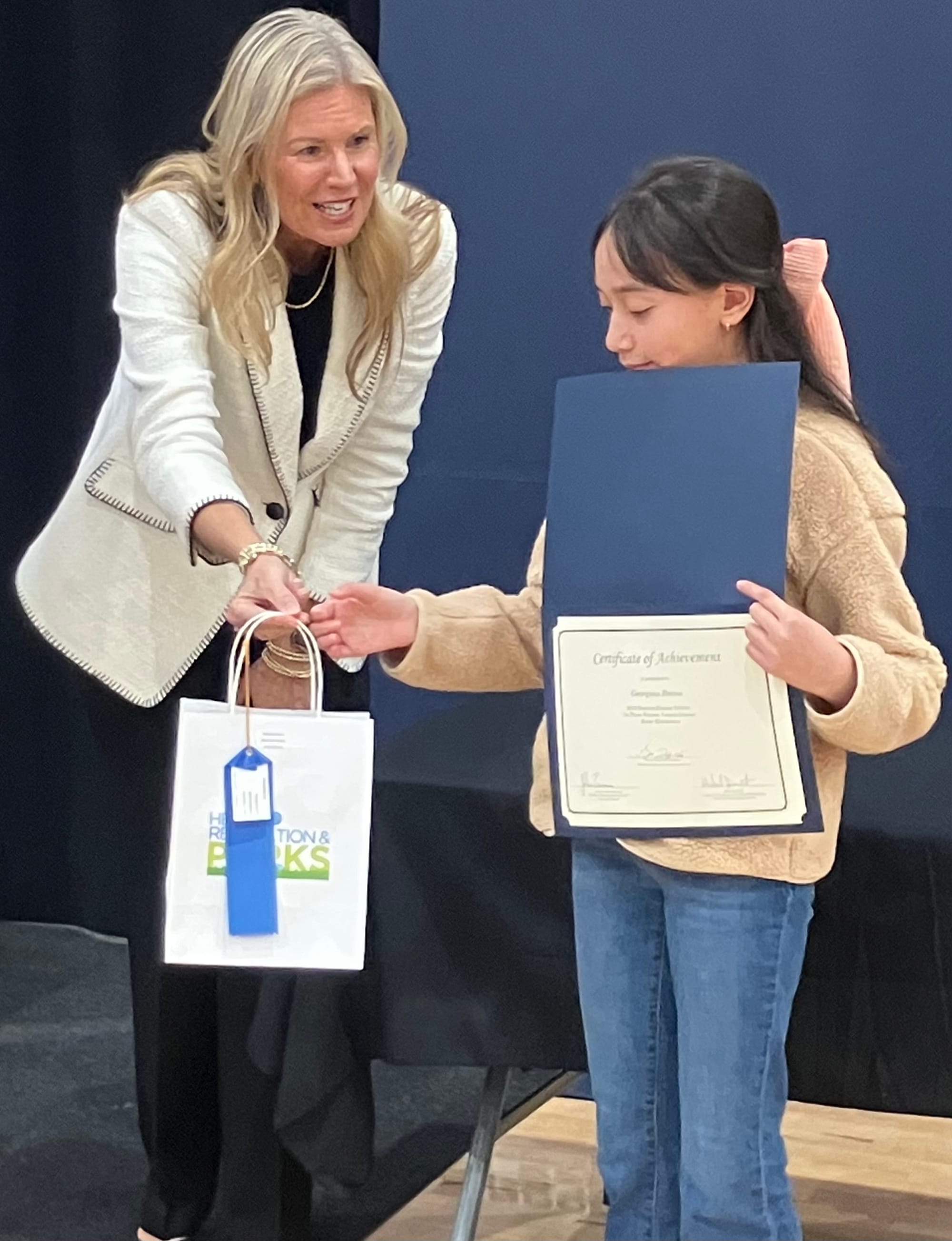
A few students from each magisterial district took home top honors for their projects (see list below) – but the celebrations were not limited to the big winners. Parents lingered after the awards ceremony taking family photos, while students continued to share stories of how they chose their topics and created their projects.
Corbyn and Quintus were among the students who clearly enjoyed revealing “tricks of the trade” they had used in crafting their project. Asked what modern-day techniques had produced such an authentic-looking map – complete with browned edges and yellow tints to give it the look of a centuries-old relic – they grinned knowingly and announced, “We used shoe polish!”
Henrico History Project award-winners
Formerly known as the Henrico Historical Awareness Project, the Henrico History Project is a partnership of Henrico County Public Schools and the Henrico Preservation Advisory Committee. The following students in each magisterial district took top honors for their projects this year:
Brookland District
First place – Emma Salang and Aryaa Adivarekar; Springfield Park E.S.
Second place – Luke Baum; Greenwood E.S.
Third place – Skye Robbins, Erum Jebran and Sara Faqirzada; Dumbarton E.S.
Fairfield District
First place – Jurnee Clarke, Dionne Hawkins and Aziyah Hill; Harvie E.S.
Second place – Samara Giles and Kaylan Huynh; Longdale E.S.
Third place – Avery Umbarger, Ruben Caballero, & Monroe Redding; Chamberlayne E.S.
Three Chopt District
First place – Luke Jualayba; Colonial Trail E.S.
Second place – Audrey Kim, Brody Miller and Sienna Harter; Kaechele E.S.
Third place – Charles Cobb; Rivers Edge
Tuckahoe District
First place – Bodie Bluford; Gayton E.S.
Second place – Yassine Dahri, Magnus Sorensen and Oliver Hall; Three Chopt E.S.
Third place – Kate Groth & Winnie Young; Maybeury E.S.
Varina District
First place – Georgina Bueno; Baker E.S.
Second place – Kayden Howard and D’Zaria Mines; Highland Springs E.S.
Third place – Lauren Crawley; Ward E.S.
Rec Sports
Sydney Roberts wins 17th Carolinas Young Amateur Championship – Clemson Tigers Official Athletics Site

Final Results
CLEMSON, S.C. – Senior Sydney Roberts won the 17th Carolinas Young Amateur Championship on Tuesday with an even-par 142 (69-73) on the two-day event. The tournament was held at the Mid South Club in Southern Pines, N.C.
Roberts was the only player in the 24-player field to finish at par, clearing the second-place finisher by three strokes and her 69 on the first day tied for the low round in the field. She played a bogey-free round on Monday and finished with a pair of birdies, and held on to win over Jillian Fatkin, who plays collegiate golf at Kansas.
The win was Roberts’ second Carolinas Young Amateur title in three years.
Roberts and the Clemson Women’s Golf opens its spring season Feb. 2-4 in Boca Raton, Fla. at the Paradise Invitational.

CHERRYVILLE, N.C. — Dr. Bud Black is retiring after 60 years of coaching basketball, marking the conclusion of a highly influential career at the age of 82.
Known as “Mr. Basketball” since 1961, Dr. Black has dedicated his life to the sport, prioritizing the positive impact he has made on countless players over mere win-loss records.
Dr. Black improved the Gardner-Webb Ladies team’s record from five wins to fifteen wins in just one season, showcasing his exceptional coaching abilities and commitment to developing young athletes.
He is also highly educated, holding two earned doctorates and several master’s degrees, which reflect his pursuit of knowledge and dedication to personal growth.
Reflecting on his coaching philosophy, Dr. Black stated, “I never went into coaching with a burning desire to always win, although I do that.”
He emphasized the importance of seeing his players succeed in life beyond the court, saying, “That’s more important than anything. The wins and losses, to see these young people succeed.”
As he transitions from coaching, Dr. Black will continue his work as a remote instructor at Thomas Edison State University in New Jersey.
He explained his perspective on measurement of success: “Some people count the number of wins, that’s something I have never done.”
In a poignant reflection, one former player credited Dr. Black for his success, stating, “You are single-handedly responsible for my success. You always made sure there was a place for me.”
This sentiment encapsulates the real legacy he leaves behind—his unwavering support for each player he coached.
Dr. Black will be honored during a special ceremony at Cherryville High School’s home game, a fitting tribute to his remarkable career and impact on the community.
He indicated, “I never thought I’d retire,” hinting at his enduring passion for coaching and mentorship.
VIDEO: Former North Meck basketball standout hosts basketball camp in Concord

©2026 Cox Media Group

2026 Men’s Track & Field Season Preview

Multiple athletes earn all state volleyball honors
Auburn lands its QB as USF star Byrum Brown commits via transfer portal

Dozens of stylists, barbers turn up for Sonoma County teens at Santa Rosa event

2026 Santa Cruz County Fair theme contest underway | The Pajaronian

How NIL is playing role in Tennessee’s swim and dive program – The Daily Beacon

NIL and portal changes were needed, but college football needs balance

Detroit Auto Show announces interactive features with Visit Detroit

Nascar commissioner Phelps resigns after message scandal

Cedar Rapids wrestler chases her dream, from a volleyball player to a young star in the sport

Cummins to sponsor Brenden “Butterbean” Queen NASCAR Truck

💰🎉 Funding up for grabs to power…

Men’s Volleyball vs Jessup on 1/6/2026 – Box Score

Henrico history students shine at annual awards night

Former CU volleyball star Sis Tebrake glad to be back in Omaha

SoundGear Named Entitlement Sponsor of Spears CARS Tour Southwest Opener

Donny Schatz finds new home for 2026, inks full-time deal with CJB Motorsports – InForum

David Blitzer, Harris Blitzer Sports & Entertainment

DeSantis Talks College Football, Calls for Reforms to NIL and Transfer Portal · The Floridian

#11 Volleyball Practices, Then Meets Media Prior to #2 Kentucky Match

Rick Ware Racing switching to Chevrolet for 2026

Maine wraps up Fall Semester with a win in Black Bear Invitational

Ross Brawn to receive Autosport Gold Medal Award at 2026 Autosport Awards, Honouring a Lifetime Shaping Modern F1

Nascar legal saga ends as 23XI, Front Row secure settlement

Stempien to seek opening for Branch County Circuit Court Judge | WTVB | 1590 AM · 95.5 FM

Sunoco to sponsor No. 8 Ganassi Honda IndyCar in multi-year deal

Downtown Athletic Club of Hawaiʻi gives $300K to Boost the ’Bows NIL fund

Princeton Area Community Foundation awards more than $1.3 million to 40 local nonprofits ⋆ Princeton, NJ local news %

WNBA’s Caitlin Clark, Angel Reese and Paige Bueckers in NC, making debut for national team at USA camp at Duke

North Florida Motorsports Park led by Indy 500 Champion and motorsports legend Bobby Rahal Nassau County, FL





-
 Rec Sports3 weeks ago
Princeton Area Community Foundation awards more than $1.3 million to 40 local nonprofits ⋆ Princeton, NJ local news %
-

 Sports3 weeks ago
Beach Volleyball Unveils 2026 Spring Schedule – University of South Carolina Athletics
-

 Sports2 weeks ago
Badgers news: Wisconsin lands 2nd commitment from transfer portal
-

 Sports3 weeks ago
Badgers news: Final Four Game Thread vs. No. 1 Kentucky Wildcats
-

 Rec Sports5 days ago
Five Youth Sports Trends We’re Watching in 2026
-

 Sports2 weeks ago
Is women’s volleyball the SEC’s next big sport? How Kentucky, Texas A&M broke through
-
 Sports3 weeks ago
Four From Women’s Volleyball Named to College Sports Communicators Academic All-District Team
-

 Rec Sports3 weeks ago
Refugee-Focused Youth Sport Initiatives : Moving for Change
-

 Rec Sports3 weeks ago
Youth Sports Business in 2025: The Year the Industry Grew Up
-
Rec Sports3 weeks ago
Inside the NWSL’s first combine: Can the league create a more robust pathway for American talent development?