
Technology
HRX Activewear Innovations: A Leader in Fitness Apparel Revolution


Imagine slipping into workout gear that moves with you like a second skin, wicks sweat before you feel it, and looks so sharp you’d wear it straight from the gym to brunch. This isn’t futuristic fantasy; it’s the reality crafted by HRX Activewear Innovations, a brand that has fundamentally reshaped how athletes and fitness enthusiasts experience performance wear. Born from the vision of Bollywood icon Hrithik Roshan and Exceed Entertainment in 2013, HRX quickly transcended celebrity endorsement to become a genuine powerhouse in athletic apparel. Its commitment to relentless innovation, uncompromising quality, and deep understanding of the athlete’s psyche has earned HRX Activewear Innovations an unshakeable position as a leader in the global fitness apparel revolution. Consumers worldwide trust HRX to deliver garments that enhance performance, boost confidence, and endure the toughest workouts, making it synonymous with cutting-edge activewear.
HRX Activewear Innovations: Brand Overview and Market Position
HRX Activewear Innovations isn’t just another sportswear label; it’s a benchmark for performance, style, and technological advancement in the fitness apparel industry. Strategically positioned as a premium yet accessible brand, HRX targets the performance-driven individual who refuses to compromise on quality or aesthetics. Its HRX Activewear market position is built on a powerful trifecta: innovation that pushes material science boundaries, quality that withstands rigorous testing, and consumer trust cultivated through consistent delivery on promises. From its inception, the brand leveraged Hrithik Roshan’s personal fitness journey and meticulous attention to detail, resonating deeply with a growing Indian fitness community hungry for world-class gear. This authenticity fueled rapid growth, establishing HRX Activewear global recognition beyond India, particularly across Southeast Asia and the Middle East. Unlike fast fashion entrants, HRX focuses intensely on technical fabrics and ergonomic designs developed through athlete feedback and rigorous R&D. This dedication has positioned HRX as a go-to brand for serious fitness practitioners and style-conscious consumers alike, competing fiercely with established international giants by offering superior value and localized understanding. The brand’s reputation is further solidified by its association with major sporting events and its omnichannel presence, seamlessly blending online accessibility with flagship store experiences. For insights into how digital fitness trends are shaping consumer choices, explore our analysis on the rise of home workout culture.

The Evolution of HRX Activewear: From Inception to Global Leader
The HRX Activewear history is a compelling narrative of ambition meeting opportunity. Conceived in Mumbai, India, in 2013, HRX was born from a collaboration between Hrithik Roshan – whose own disciplined fitness regimen was widely admired – and Exceed Entertainment (a subsidiary of Myntra, India’s leading fashion e-commerce platform). This unique genesis provided HRX with immediate brand recall and crucial e-commerce expertise. The early years focused on establishing core product lines – performance tees, training shorts, sports bras, and running shoes – designed with input from Roshan himself, ensuring they met the demands of intense training. A pivotal HRX Activewear milestone came in 2015 when the brand expanded beyond Myntra exclusivity, launching standalone websites and entering multi-brand retail outlets, dramatically increasing its reach. The HRX Activewear evolution accelerated with strategic investments in material technology. Key developments included the introduction of proprietary fabrics like:
- Dry-EX Technology: Engineered for rapid moisture wicking and ultra-quick drying, keeping athletes cool and dry.
- Storm-X Fabric: Providing lightweight water and wind resistance for outdoor training.
- Compression Technology: Offering targeted muscle support and enhanced blood flow during high-intensity workouts.
By 2018, HRX had become one of India’s largest homegrown activewear brands. Expansion into international markets like the UAE and Singapore marked its global ambitions, supported by localized marketing campaigns and partnerships. The brand’s growth wasn’t just quantitative; it deepened its connection with the fitness community through initiatives like the HRX Challenges, fostering a sense of belonging. Understanding this evolution helps appreciate the strategic shifts in Indian retail, as detailed in our feature on evolving e-commerce strategies.
Game-Changing Products: How HRX Activewear is Shaping the Industry
The true measure of HRX Activewear Innovations lies in its transformative HRX Activewear product offerings. The brand’s catalog isn’t just extensive; it’s filled with items that have genuinely shifted consumer expectations and set new industry standards. Among its HRX Activewear best-selling products are innovations that address specific athletic needs with remarkable precision:
- HRX COMRADE Running Shoes: More than just sneakers, the COMRADE series exemplifies biomechanical engineering. Featuring responsive cushioning systems, adaptive knit uppers for a sock-like fit, and durable outsoles designed for varied terrains, these shoes became an instant hit among amateur and serious runners in India, challenging established international running shoe brands with superior value and localized design insights.
- Storm-X Active Jackets: Revolutionizing training in unpredictable weather, these jackets utilized HRX’s proprietary Storm-X membrane. Ultra-lightweight, packable, and offering genuine protection from rain and wind without sacrificing breathability, they made year-round outdoor training feasible and comfortable, a significant leap forward in the market.
- High-Impact Sports Bras with Motion Control: Addressing a critical gap for women athletes, HRX developed sports bras featuring advanced encapsulation and compression techniques, using high-tenacity elastic blends. These bras provided exceptional support and minimized bounce during high-impact activities like running and HIIT, earning rave HRX Activewear reviews for combining security with comfort and style.
- Men’s COACH Training T-Shirts (Dry-EX): These became iconic staples. Utilizing Dry-EX technology, the tees offered superior sweat management, odor resistance, and exceptional durability. Their tailored yet unrestrictive fit and modern aesthetics blurred the line between gym wear and casual wear, influencing the widespread adoption of “athleisure.”
These HRX Activewear services extend beyond physical products. The brand fosters a holistic ecosystem, including workout guides, training apps (integrated with wearables), and personalized online consultation, creating a 360-degree fitness support system. The impact is clear: HRX products have demonstrably shaped consumer behavior, driving demand for technically advanced fabrics and versatile, performance-driven apparel that transitions seamlessly into daily life. They’ve set industry trends by proving that high-performance activewear could be both accessible and aspirational within the price-sensitive yet quality-conscious Indian market and beyond.
Innovation and Technology: The Engine Behind HRX Activewear
HRX Activewear innovation isn’t a buzzword; it’s the core DNA driving the brand forward. HRX distinguishes itself through a relentless pursuit of technological advancement, viewing fabric and construction as critical tools for enhancing athletic performance. The brand operates a dedicated R&D hub focused on material science, collaborating with global textile innovators and testing laboratories. This commitment has yielded significant HRX Activewear patents, particularly around its proprietary fabric treatments and construction methodologies. Key technological pillars include:
- Advanced Moisture Management: Beyond basic wicking, HRX fabrics like Dry-EX are engineered with capillary action channels and hydrophilic polymers that actively pull moisture away from the skin to the fabric’s outer surface for rapid evaporation. This technology is rigorously tested for durability over repeated washes.
- Thermoregulation: Incorporating phase-change materials (PCMs) in select lines, HRX garments can absorb, store, and release heat to help maintain an optimal microclimate close to the skin during fluctuating workout intensities.
- Seamless and Bonded Construction: Minimizing chafing and maximizing freedom of movement, HRX utilizes advanced flatlock stitching and ultrasonic welding techniques. This reduces bulk and creates smoother, more durable seams critical for high-mobility activities.
- Sustainable Tech: Recognizing environmental responsibility as innovation (discussed further in the CSR section), HRX invests in recycled polyester (rPET) technologies, waterless dyeing processes, and biodegradable fabric blends.
This HRX Activewear technology focus extends to product testing. Garments undergo simulated extreme conditions – repeated stretching, abrasion, UV exposure, and wash cycles – in state-of-the-art labs to ensure they meet the brand’s stringent performance and longevity standards before reaching consumers. Partnerships with fitness institutions and elite athletes provide real-world feedback loops, ensuring innovations solve genuine performance challenges. This dedication positions HRX not just as a clothing manufacturer, but as a genuine sportswear technology company, constantly pushing the boundaries of what athletic apparel can achieve. For a deeper look at global textile advancements, resources like the Advanced Functional Fabrics of America (AFFOA) consortium provide context.
Global Influence and Strategic Market Expansion
From its Mumbai roots, HRX Activewear Innovations has executed a calculated strategy to build a formidable HRX Activewear worldwide presence. Its initial dominance in the Indian market, fueled by e-commerce and a deep cultural connection, provided a solid springboard. Recognizing the universal appeal of performance and style, HRX embarked on HRX Activewear market expansion into key international territories:
- Southeast Asia (Singapore, Malaysia, UAE): Leveraging cultural similarities and a booming fitness culture, HRX entered these markets through dedicated e-commerce platforms and strategic partnerships with major multi-brand sportswear retailers like Sun & Sand Sports. Localized marketing, featuring regional fitness influencers, helped build relevance.
- Middle East (UAE, Saudi Arabia, Kuwait): The Gulf region, with its high disposable income and growing health consciousness, presented a significant opportunity. HRX established a strong foothold via exclusive brand shops within large malls and partnerships with leading regional e-commerce players like Namshi.
- Exploring Western Markets: While still focused on consolidating Asia and the Middle East, HRX has begun testing waters in select Western markets through limited online drops and pop-up experiences, gauging consumer response to its unique value proposition against entrenched competitors.
This HRX Activewear international influence is underpinned by more than just geography. HRX actively participates in global fitness expos and collaborates with international designers and athletes, infusing global trends into its collections while maintaining its distinct identity. The brand’s strategic expansion avoids reckless growth; instead, it focuses on deep penetration in chosen markets, building brand loyalty through consistent product quality and community engagement before moving to the next frontier. This measured approach has solidified HRX as not just an Indian success story, but a recognized player in the global activewear arena, demonstrating the potential of emerging market brands to compete internationally.
Building Consumer Loyalty and Brand Trust
In the competitive world of activewear, HRX Activewear customer loyalty is remarkably strong, a testament to the brand’s holistic approach to trust-building. This loyalty stems from consistently exceeding expectations across multiple touchpoints:
- Product Excellence: The foundation is unwavering quality and performance. Consumers trust that HRX gear will withstand intense workouts, maintain its shape and function after countless washes, and genuinely enhance their training. Positive HRX Activewear reviews consistently highlight durability, comfort, and effective moisture management as key reasons for repeat purchases.
- Authentic Brand Voice: HRX leverages Hrithik Roshan’s authentic fitness journey not just for marketing, but to embody the brand’s core values of discipline, perseverance, and self-improvement. This resonates deeply, creating an emotional connection beyond transactional relationships. Campaigns focus on real progress and inclusivity, featuring diverse body types and fitness levels.
- Community Engagement: HRX actively fosters a sense of belonging through initiatives like the “HRX Warriors” community, online challenges, training workshops, and events. This transforms customers into brand advocates who feel part of a shared mission.
- Customer Experience: From intuitive online shopping and hassle-free returns to responsive customer service, HRX prioritizes a smooth post-purchase journey. Positive experiences reinforce HRX Activewear brand reputation and encourage word-of-mouth promotion.
- Recognition & Awards: Consistent accolades, such as “Most Trusted Activewear Brand” awards in consumer surveys and recognition for design innovation, provide third-party validation of the brand’s promises, further cementing trust.
This multi-pronged strategy results in high customer retention rates and powerful organic advocacy. HRX customers don’t just buy products; they buy into an ethos of performance and self-betterment, making the brand a trusted partner in their fitness journeys.
Sustainability and Corporate Social Responsibility (CSR)
HRX Activewear Innovations recognizes that leadership extends beyond performance; it encompasses responsibility. The brand is actively integrating HRX Activewear sustainability principles into its core operations, reflecting a growing consumer demand for ethical practices. Key HRX Activewear eco-initiatives include:
- Material Shift: Increasing the use of recycled materials, particularly Recycled Polyester (rPET) derived from post-consumer plastic bottles, in key product lines like tees, tights, and jackets. This significantly reduces reliance on virgin petroleum-based materials and diverts plastic waste.
- Sustainable Manufacturing: Partnering with manufacturers certified for ethical labor practices (like SA8000) and environmental management systems (ISO 14001). Efforts include reducing water consumption through waterless dyeing technologies and optimizing energy use in production facilities.
- Eco-Conscious Packaging: Transitioning to recycled and recyclable packaging materials, eliminating unnecessary plastics, and minimizing packaging size.
- Product Longevity: Designing for durability is a core sustainability tenet. By creating garments that last longer, HRX inherently reduces the frequency of replacement and associated environmental impact.
Beyond environmental HRX Activewear CSR, the brand engages in community initiatives. These include fitness programs for underprivileged youth, partnerships with NGOs promoting sports education, and disaster relief support. While transparency in reporting its full environmental footprint is an ongoing area for development, HRX’s public commitment to integrating sustainable materials and processes signals a genuine step towards reducing its ecological impact and building a more responsible activewear future.
iBall Computing Solutions:Leading Affordable Tech Innovations in India
Future Prospects: What’s Next for HRX Activewear?
The HRX Activewear future looks focused on deepening its technological edge, expanding its global footprint responsibly, and further embedding sustainability. The brand’s innovation roadmap is expected to explore:
- Smart Apparel Integration: Development of garments with integrated biometric sensors (heart rate, muscle activity, hydration levels) seamlessly woven into fabrics, providing real-time performance feedback without bulky external devices. Partnerships with tech firms specializing in wearable electronics are likely.
- Hyper-Personalization: Leveraging AI and customer data to offer more personalized product recommendations, customized fits (beyond standard sizing), and potentially bespoke design elements, enhancing the individual consumer experience.
- Advanced Sustainable Materials: Accelerated research and adoption of next-gen eco-materials like biodegradable synthetics, plant-based performance fabrics (e.g., algae or mushroom leather alternatives for accessories), and closed-loop recycling systems for their own products.
- Strategic Global Expansion: Continued, measured HRX Activewear market expansion into new territories in Europe and North America, potentially through targeted online campaigns, select retail partnerships, and localized influencer collaborations. Strengthening presence in existing international markets remains key.
- Enhanced Digital Ecosystem: Further development of its app and online platform to offer immersive experiences – virtual training with elite athletes, AI-powered workout planning, and integrated community features – creating a sticky digital fitness hub centered around the brand.
To maintain its leadership, HRX will need to navigate challenges like increasing global competition, fluctuating raw material costs, and evolving consumer sustainability demands. However, its proven agility, commitment to R&D, and strong brand identity position HRX Activewear Innovations well to not just adapt, but continue driving the fitness apparel revolution forward. Expect upcoming collections to showcase bolder technological leaps and refined sustainable practices.
HRX Activewear Innovations has undeniably carved its place as a transformative force in the athletic apparel landscape. From its foundation built on authentic performance needs to its relentless drive for technological advancement and growing commitment to sustainability, HRX consistently delivers gear that empowers athletes and sets industry benchmarks. Its journey from an Indian powerhouse to a recognized global player showcases the brand’s strategic vision and adaptability. As fitness evolves, HRX Activewear Innovations is poised to remain at the forefront, pushing the boundaries of what performance wear can achieve while building a more responsible future for the industry.
Frequently Asked Questions (FAQs)
1. What makes HRX Activewear Innovations different from other sportswear brands?
HRX stands out through its intense focus on performance-driven innovation, leveraging proprietary fabric technologies like Dry-EX and Storm-X developed in-house. Founded with direct athlete input (Hrithik Roshan), it prioritizes genuine functional benefits – superior moisture management, muscle support, and durability – combined with contemporary design. Its strong connection to the fitness community and growing commitment to sustainability further differentiate it.
2. Where is HRX Activewear available for purchase internationally?
HRX Activewear has expanded beyond India into key international markets. You can find it primarily in Southeast Asia (Singapore, Malaysia) and the Middle East (UAE, Saudi Arabia, Kuwait) through dedicated sections on major regional e-commerce platforms like Namshi and via select multi-brand sportswear retailers. They also ship internationally from their official website.
3. How does HRX Activewear incorporate sustainability?
HRX is actively integrating eco-friendly practices. This includes increasing the use of recycled polyester (rPET) from plastic bottles in products, exploring water-saving dyeing techniques, transitioning to recycled/recyclable packaging, and designing garments for longevity to reduce waste. They also partner with ethically certified manufacturers.
4. What are some of HRX Activewear’s most popular products?
Consistently top-selling items include the COMRADE Running Shoes known for comfort and support, Dry-EX COACH Training T-Shirts for unbeatable sweat management, Storm-X Active Jackets for weather protection, and their high-impact Sports Bras featuring advanced motion control technology. Their training tights and shorts are also highly rated.
5. Does HRX Activewear offer products for all types of training?
Yes, HRX designs specialized apparel for various activities. Their collections cater specifically to running, gym training (weights, HIIT, functional fitness), yoga, and outdoor sports. Each line incorporates features tailored to the demands of that activity, such as enhanced flexibility for yoga or weather resistance for outdoor runs.
6. What is HRX Activewear’s approach to innovation?
Innovation is core to HRX. They operate dedicated R&D facilities focused on material science, developing patented fabric technologies. They collaborate with textile experts, test rigorously in labs simulating extreme conditions, and gather real-world feedback from athletes and consumers. This focus drives continuous improvement in performance, comfort, and sustainability.

Technology
ASUS Republic of Gamers presents next-gen gaming innovations, commemorates 20 years of gaming excellence at CES 2026

ROG Zephyrus laptops: immersive, AI-powered, and ultraportable
Designed for those who need performance on the go, the Zephyrus line-up delivers all-day power and stunning visuals in a sleek, ultraportable chassis. With smart AI features and efficient cooling, it keeps creators and gamers productive and immersed wherever they are.
ROG Zephyrus G14 and G16
This generation’s ROG Zephyrus G14 (GU405/GA403) and ROG Zephyrus G16 (GU606) redefine what compact performance can deliver, featuring next-gen processing power and a new HDR-class display that delivers higher brightness and visual depth for gamers who want more capabilities in the same sleek footprint.
The Zephyrus G14 (GU405) and G16 (GU606) feature Intel Core Ultra Series 3 processors, delivering flexible performance and up to 50 TOPS of NPU power for local AI tasks and in-game AI workflows. The G14 GU405 supports up to an NVIDIA GeForce RTX 5080 Laptop GPU, and the G16 GU606 up to GeForce RTX 5090, with NVIDIA Blackwell architecture, DLSS 4, and Frame Generation. Max GPU TGP has been increased by up to 23% in manual mode, from 120W to 130W on the G14 and 130W to 160W on the G16. The G14 (GA403) is also available with a next-gen AMD Ryzen AI processor, offering Copilot+ certification and local AI execution.
With 50 TOPS of NPU performance and Copilot+, these laptops bring AI-powered acceleration directly to the device for gaming, creating, and multitasking — without relying on the cloud. ROG Intelligent Cooling keeps both models quiet and efficient under load, with a redesigned bottom panel, optimised exhaust vents, and liquid metal on the CPU.
In terms of display, they now feature a new 1100-nit Nebula HDR display with Nebula HDR engine tuning, delivering richer highlights, deeper contrast, and more lifelike HDR visuals, while providing 100 per cent DCI-P3 coverage and Delta E < 1 color accuracy for cinema-grade quality. Extended battery life ensures productivity throughout the day. The laptop also adds a full-size SD card reader for easy media transfer. Powerful as it is, the G14 features a CNC-milled aluminum chassis with a redesigned Slash lighting and glass-mirror finish, combining performance, portability, and style.
ROG Zephyrus Duo 16
The dual-screen ROG Zephyrus Duo 16 (GX651) takes versatility to the next level. Its dual 3K ROG Nebula HDR OLED touchscreens run at 120Hz with a 0.2ms response time, providing smooth, tear-free visuals while supporting multitasking for gaming, streaming, or creative workflows, and the main panel supports NVIDIA G-SYNC. Powered by the latest Intel processor and up to an NVIDIA GeForce RTX 5090 Laptop GPU, it handles demanding games, content creation, and AI workloads with ease. ROG Zephyrus Duo enable five operating modes to suit any scenario, while ROG Intelligent Cooling — featuring a vapour chamber, dual fans, and a dedicated graphite sheet — all combine together to provide the best possible performance, providing ultimate flexibility for work, play, and creation.
ROG x Kojima Productions: a visionary gaming collaboration
ROG has partnered with Kojima Productions to merge high-performance gaming technology with visionary storytelling and artistry. The collaboration celebrates creativity, exploration, and immersive experiences, bringing gamers, creators, and dreamers a collection of devices and peripherals that are as functional as they are collectible.
The ROG Flow Z13-KJP stands at the center of this collaboration, merging two decades of ROG’s gaming innovation with Kojima Productions’ visionary storytelling. Designed to reflect and reimagine the studio’s core values, the device draws deep inspiration from its iconic mascot, Ludens. It is a flexible 2-in-1 powerhouse that transforms into a gaming console, a creator tablet, a workstation, or an ultraportable laptop. Powered by the AMD Ryzen AI Max+ 395 processor with Radeon 8060S graphics and a 50 TOPS NPU, it delivers desktop-class performance and on-device AI acceleration in a tablet-sized form factor. Its 13.4-inch 2.5K Nebula HDR touchscreen with a 180Hz refresh rate and a 100 per cent DCI-P3 color gamut offers cinematic visuals and ultra-responsive motion, while the detachable keyboard and slim chassis make play and creation possible anywhere. Designed by Yoji Shinkawa, the chassis blends art and engineering into a collectible piece, enhanced with exclusive Kojima Productions packaging, custom Armoury Crate themes, and Ludens-inspired wallpapers.
ROG G1000: a gaming desktop with holographic innovation
The ROG G1000 redefines what a gaming desktop can be, combining extreme performance with show-stopping innovation. At its core, the built-in AniMe Holo fan is the world’s first holographic fan system in a prebuilt gaming PC that can project customizable holographic visuals, transforming the environment into a medium of personal expression. The AniMe Holo module is housed in an independent chamber that incorporates the hinge-door design, ensuring airflow does not interfere with the main components’ thermal path and helping reduce overall system noise by limiting vibration from the Holo system. The ROG Thermal Atrium, dedicated for CPU cooling, channels fresh air through 420 mm AIO liquid cooler with three fans and isolated airflow paths, ensuring critical components remain cool and stable during extended gaming sessions. Equipped with ROG Astral GeForce RTX 5090 / 5080, ROG Strix GeForce RTX 5070 Ti, or AMD Radeon 9070XT GPUs, up to 128GB DDR5 memory, and up to a 4TB PCIe 5.0 SSD, the G1000 is tuned and ready for peak performance from day one. The 104L ATX ultra tower chassis enhances airflow, accommodates larger cooling hardware, and supports easy maintenance, while the Fan Key provides instant one-touch thermal boost. Customization is extensive with Armoury Crate and Aura Sync, letting users control RGB lighting across GPU, cooling fans, water-cooling blocks, and the AniMe Holo, delivering a system that is as visually striking as it is powerful. With every unit validated for stability and backed by comprehensive ROG service, the G1000 gives gamers and creators the confidence to push limits without compromise.
Strengthening the ROG Community in the UAE
Beyond hardware innovation, ROG continues to invest in its regional gaming community through initiatives such as the ROG Elite Program, which rewards loyal gamers with exclusive benefits, early access opportunities, community events, and competitive experiences across the UAE.
With its latest CES laptop lineup and ongoing community engagement, ROG reinforces its commitment to empowering gamers and creators in the UAE — delivering not just powerful devices, but a connected ecosystem built around performance, creativity, and passion for gaming.
Technology
Gaming brand ROG unveils a range of next-generation gaming innovative products at CES 2026! Wi-Fi 8 router that presents new value, innovative 240Hz AR glasses, and more!

ASUS, the Republic of Gamers (ROG) gaming brand, announced its next generation gaming innovations at the CES 2026 ROG – Dare to Innovate virtual launch event on Tuesday, January 6, 2026 at CES 2026. Innovate “, a virtual launch event at CES 2026 on Tuesday, January 6, 2012! The products included the ROG NeoCore Wi-Fi 8-concept router, AR gaming glasses that will transform the gaming experience, and the ROG Falchion Ace 75 HE keyboard with ultra-fast and highly accurate keystrokes.
ASUS announces the next generation of gaming innovations from ROG! New Experiences with the Latest Technology
ASUS announced a range of innovative new products from ROG at the CES 2026 ROG – Dare to Innovate virtual launch event on Tuesday, January 6, 2026 at CES 2026. The new product line was unveiled at the “CES 2026 ROG – Dare to Innovate” virtual launch event. The following products were presented at the event
- ROG NeoCore” Wi-Fi 8 concept router and Wi-Fi 8 real-world throughput testing
- ROG XREAL R1, a 240Hz micro OLED FHD (1920 x 1080) AR gaming glasses
- ROG Kithara” headset with high-quality audio
- ROG Falchion Ace 75 HE” layout gaming keyboard with ultra-fast and precise keystrokes
The products introduced at the event consisted of products for the global market and concept products in development, including products that are not yet available in Japan. For further information and details, please visit the official X (@ASUSROGJP ).
ROG NeoCore” Wi-Fi 8 Concept Router Dawns the Technology Era!

ROG
The ROG NeoCore Wi-Fi 8 router not only delivers a significant improvement in throughput compared to Wi-Fi 7, but also up to twice the medium-range throughput, twice the IoT coverage, and up to one-sixth the P99 latency. This virtually eliminates latency, making it ideal for cloud streaming, real-time voice communication, multi-device team play, and a wide range of other situations. With the launch of ROG NeoCore and the world’s first Wi-Fi 8 real-world throughput tests, we are once again demonstrating our leadership in next-generation Wi-Fi innovation. The first Wi-Fi 8 home router will be available globally in 2026, and will not be available in Japan until further notice.
ROG XREAL R1″ AR gaming glasses for an immersive and realistic gaming experience

ROG XREAL

ROG
Developed in partnership with XREAL, the award-winning AR Smart Glasses for the general public, the XREAL R1 features a 240Hz micro OLED FHD (1920 x 1080) display and is compatible with PCs and other consoles via the ROG Control Dock. The ROG Control Dock provides high connectivity and compatibility with PCs and other consoles. Designed to be optimized for ROG’s portable gaming console, ROG Ally, the headset features a wide 57° viewing angle, native 3-DOFs with 3-axis head movement detection, electrochromic dimming technology, and premium sound audio by Bose. Wear them wherever you go and enjoy the high performance and stunning visual experience that only ROG can deliver.
ROG and HIFIMAN have collaborated to develop the “ROG Kithara” headset for gamers.
ROG and the high-end audio brand HIFIMAN have jointly developed the ” ROG Kithara ” headset for gamers! The headset features an open-back acoustic design and ROG’s customized HIFIMAN 100mm planar field drivers for crisp, realistic, and lifelike sound. A balanced headphone cable with interchangeable plugs and a USB-C adapter are included to ensure high compatibility with a wide range of devices and uncompromised sound quality. The headset is also equipped with a full-band MEMS boom microphone optimized for competitive situations and designed for gamers who demand true hi-fi sound for accurate and clear in-game communication.
ROG Falchion Ace 75 HE 75% Layout Gaming Keyboard with Rapid Trigger

ROG Falchion


PR TIMES


PR TIMES
The ” ROG Falchion Ace 75 HE ” builds on the technology of its predecessor, the “ROG Falchion Ace HFX”. It features a more spacious 75% layout than all models, upgraded ROG HFX V2 magnetic switches, and the newly developed ROG Hall sensor. In addition, a new sensitivity adjustment wheel has been introduced for easy adjustment on the unit, and the multi-function buttons, interactive touch panel, and popular Rapid Trigger toggle continue to be included. In addition, an ultra-fast polling rate of 8000 Hz provides ultra-fast and highly accurate key input. A convenient carrying case is also included, making it easy to take the device outside! The product will be available in Japan around February 2026.
Technology
Gaming brand ROG unveils a range of next-generation gaming innovative products at CES 2026! Wi-Fi 8 router that presents new value, innovative 240Hz AR glasses, and more!
ASUS, the Republic of Gamers (ROG) gaming brand, announced its next generation gaming innovations at the CES 2026 ROG – Dare to Innovate virtual launch event on Tuesday, January 6, 2026 at CES 2026. Innovate “, a virtual launch event at CES 2026 on Tuesday, January 6, 2012! The products included the ROG NeoCore Wi-Fi 8-concept router, AR gaming glasses that will transform the gaming experience, and the ROG Falchion Ace 75 HE keyboard with ultra-fast and highly accurate keystrokes.
ASUS announces the next generation of gaming innovations from ROG! New Experiences with the Latest Technology
ASUS announced a range of innovative new products from ROG at the CES 2026 ROG – Dare to Innovate virtual launch event on Tuesday, January 6, 2026 at CES 2026. The new product line was unveiled at the “CES 2026 ROG – Dare to Innovate” virtual launch event. The following products were presented at the event
- ROG NeoCore” Wi-Fi 8 concept router and Wi-Fi 8 real-world throughput testing
- ROG XREAL R1, a 240Hz micro OLED FHD (1920 x 1080) AR gaming glasses
- ROG Kithara” headset with high-quality audio
- ROG Falchion Ace 75 HE” layout gaming keyboard with ultra-fast and precise keystrokes
The products introduced at the event consisted of products for the global market and concept products in development, including products that are not yet available in Japan. For further information and details, please visit the official X (@ASUSROGJP ).
ROG NeoCore” Wi-Fi 8 Concept Router Dawns the Technology Era!
ROG
The ROG NeoCore Wi-Fi 8 router not only delivers a significant improvement in throughput compared to Wi-Fi 7, but also up to twice the medium-range throughput, twice the IoT coverage, and up to one-sixth the P99 latency. This virtually eliminates latency, making it ideal for cloud streaming, real-time voice communication, multi-device team play, and a wide range of other situations. With the launch of ROG NeoCore and the world’s first Wi-Fi 8 real-world throughput tests, we are once again demonstrating our leadership in next-generation Wi-Fi innovation. The first Wi-Fi 8 home router will be available globally in 2026, and will not be available in Japan until further notice.
ROG XREAL R1″ AR gaming glasses for an immersive and realistic gaming experience
ROG XREAL
ROG
Developed in partnership with XREAL, the award-winning AR Smart Glasses for the general public, the XREAL R1 features a 240Hz micro OLED FHD (1920 x 1080) display and is compatible with PCs and other consoles via the ROG Control Dock. The ROG Control Dock provides high connectivity and compatibility with PCs and other consoles. Designed to be optimized for ROG’s portable gaming console, ROG Ally, the headset features a wide 57° viewing angle, native 3-DOFs with 3-axis head movement detection, electrochromic dimming technology, and premium sound audio by Bose. Wear them wherever you go and enjoy the high performance and stunning visual experience that only ROG can deliver.
ROG and HIFIMAN have collaborated to develop the “ROG Kithara” headset for gamers.
ROG and the high-end audio brand HIFIMAN have jointly developed the ” ROG Kithara ” headset for gamers! The headset features an open-back acoustic design and ROG’s customized HIFIMAN 100mm planar field drivers for crisp, realistic, and lifelike sound. A balanced headphone cable with interchangeable plugs and a USB-C adapter are included to ensure high compatibility with a wide range of devices and uncompromised sound quality. The headset is also equipped with a full-band MEMS boom microphone optimized for competitive situations and designed for gamers who demand true hi-fi sound for accurate and clear in-game communication.
ROG Falchion Ace 75 HE 75% Layout Gaming Keyboard with Rapid Trigger
ROG Falchion
PR TIMES
PR TIMES
The ” ROG Falchion Ace 75 HE ” builds on the technology of its predecessor, the “ROG Falchion Ace HFX”. It features a more spacious 75% layout than all models, upgraded ROG HFX V2 magnetic switches, and the newly developed ROG Hall sensor. In addition, a new sensitivity adjustment wheel has been introduced for easy adjustment on the unit, and the multi-function buttons, interactive touch panel, and popular Rapid Trigger toggle continue to be included. In addition, an ultra-fast polling rate of 8000 Hz provides ultra-fast and highly accurate key input. A convenient carrying case is also included, making it easy to take the device outside! The product will be available in Japan around February 2026.
Technology
🎮Gaming brand ROG unveils a range of next-generation gaming innovative products at CES 2026! Wi-Fi 8 router that presents new value, innovative 240Hz AR glasses, and more!
ASUS, the Republic of Gamers (ROG) gaming brand, announced its next generation gaming innovations at the CES 2026 ROG – Dare to Innovate virtual launch event on Tuesday, January 6, 2026 at CES 2026. Innovate “, a virtual launch event at CES 2026 on Tuesday, January 6, 2012! The products included the ROG NeoCore Wi-Fi 8-concept router, AR gaming glasses that will transform the gaming experience, and the ROG Falchion Ace 75 HE keyboard with ultra-fast and highly accurate keystrokes.
ASUS announces the next generation of gaming innovations from ROG! New Experiences with the Latest Technology
ASUS announced a range of innovative new products from ROG at the CES 2026 ROG – Dare to Innovate virtual launch event on Tuesday, January 6, 2026 at CES 2026. The new product line was unveiled at the “CES 2026 ROG – Dare to Innovate” virtual launch event. The following products were presented at the event
- ROG NeoCore” Wi-Fi 8 concept router and Wi-Fi 8 real-world throughput testing
- ROG XREAL R1, a 240Hz micro OLED FHD (1920 x 1080) AR gaming glasses
- ROG Kithara” headset with high-quality audio
- ROG Falchion Ace 75 HE” layout gaming keyboard with ultra-fast and precise keystrokes
The products introduced at the event consisted of products for the global market and concept products in development, including products that are not yet available in Japan. For further information and details, please visit the official X (@ASUSROGJP ).
ROG NeoCore” Wi-Fi 8 Concept Router Dawns the Technology Era!


ROG
The ROG NeoCore Wi-Fi 8 router not only delivers a significant improvement in throughput compared to Wi-Fi 7, but also up to twice the medium-range throughput, twice the IoT coverage, and up to one-sixth the P99 latency. This virtually eliminates latency, making it ideal for cloud streaming, real-time voice communication, multi-device team play, and a wide range of other situations. With the launch of ROG NeoCore and the world’s first Wi-Fi 8 real-world throughput tests, we are once again demonstrating our leadership in next-generation Wi-Fi innovation. The first Wi-Fi 8 home router will be available globally in 2026, and will not be available in Japan until further notice.
ROG XREAL R1″ AR gaming glasses for an immersive and realistic gaming experience


ROG XREAL


ROG
Developed in partnership with XREAL, the award-winning AR Smart Glasses for the general public, the XREAL R1 features a 240Hz micro OLED FHD (1920 x 1080) display and is compatible with PCs and other consoles via the ROG Control Dock. The ROG Control Dock provides high connectivity and compatibility with PCs and other consoles. Designed to be optimized for ROG’s portable gaming console, ROG Ally, the headset features a wide 57° viewing angle, native 3-DOFs with 3-axis head movement detection, electrochromic dimming technology, and premium sound audio by Bose. Wear them wherever you go and enjoy the high performance and stunning visual experience that only ROG can deliver.
ROG and HIFIMAN have collaborated to develop the “ROG Kithara” headset for gamers.
ROG and the high-end audio brand HIFIMAN have jointly developed the ” ROG Kithara ” headset for gamers! The headset features an open-back acoustic design and ROG’s customized HIFIMAN 100mm planar field drivers for crisp, realistic, and lifelike sound. A balanced headphone cable with interchangeable plugs and a USB-C adapter are included to ensure high compatibility with a wide range of devices and uncompromised sound quality. The headset is also equipped with a full-band MEMS boom microphone optimized for competitive situations and designed for gamers who demand true hi-fi sound for accurate and clear in-game communication.
ROG Falchion Ace 75 HE 75% Layout Gaming Keyboard with Rapid Trigger


ROG Falchion
PR TIMES PR TIMES
The ” ROG Falchion Ace 75 HE ” builds on the technology of its predecessor, the “ROG Falchion Ace HFX”. It features a more spacious 75% layout than all models, upgraded ROG HFX V2 magnetic switches, and the newly developed ROG Hall sensor. In addition, a new sensitivity adjustment wheel has been introduced for easy adjustment on the unit, and the multi-function buttons, interactive touch panel, and popular Rapid Trigger toggle continue to be included. In addition, an ultra-fast polling rate of 8000 Hz provides ultra-fast and highly accurate key input. A convenient carrying case is also included, making it easy to take the device outside! The product will be available in Japan around February 2026.
©ASUSTeK Computer Inc. All rights reserved.

Revolutionary Gaming Innovation
Arcade Arena represents a paradigm shift in immersive entertainment, pioneering a concept where the venue itself functions as a living gaming console. Step into a revolutionary entertainment venue where cutting-edge technology transforms video games into immersive, real-world experiences. Just as a gaming console comes to life with each new cartridge, the Arcade Arena morphs to host different interactive attractions that put you at the heart of the action.
Game On! – Cutting-Edge Technology & Competitive Socialising
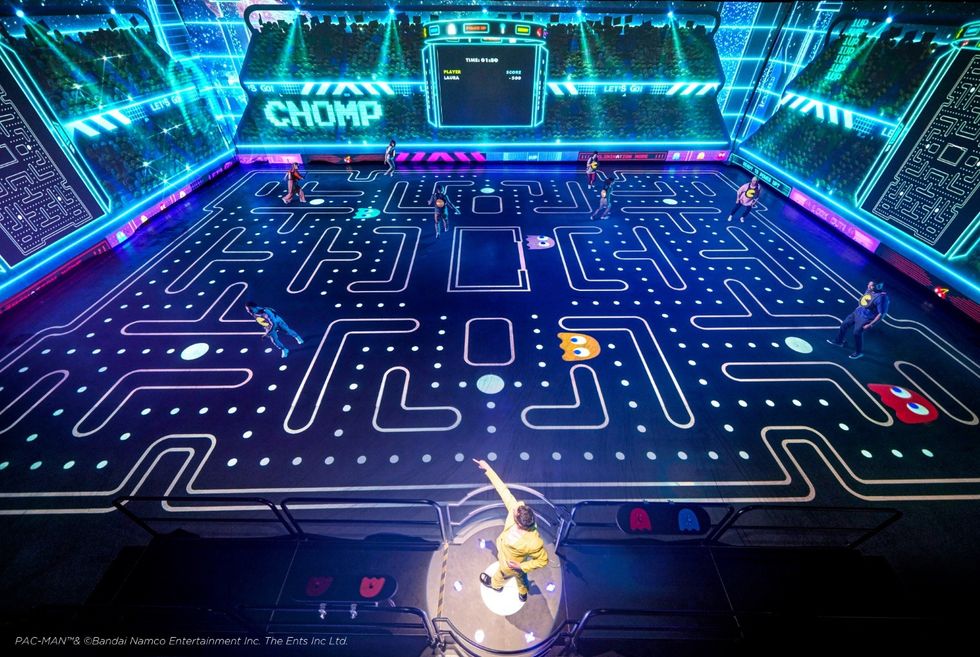
The PAC-MAN LIVE EXPERIENCE showcases the latest innovations in immersive gaming technology, powered by proprietary, in-house systems developed through rapid prototyping. Players wear high-tech PAC-Vests equipped with advanced tracking technology that transforms them into the iconic yellow Chomper in this live gaming experience. This groundbreaking attraction invites participants to step into a life-sized, interactive PAC-MAN Maze, blending physical activity with augmented reality for a fun, multi-sensory adventure.
The technical innovation extends beyond wearable tech. Custom-built tracking systems monitor each player’s position in real-time, while display technology projects two massive PAC-MAN Mazes onto the floor. Live graphics dynamically respond to gameplay, displaying player names, scores, and game states while stunning visuals engulf the walls, instantly transporting participants into the heart of the arcade world. Haptic feedback and spatial audio create a fully immersive sensory experience, with players feeling and hearing every pellet collected and Ghost encounter.
This represents a breakthrough in competitive socialising – moving beyond traditional VR headsets to create shared, physical gaming spaces where teams compete in real-time within the game world itself. Unlike isolated VR experiences, this technology enables true collaborative gameplay. PAC-MAN LIVE EXPERIENCE is the ultimate team activity, offering an unforgettable experience that brings friends, families and colleagues together like never before. The advanced projection mapping and tracking systems create a seamless blend of digital and physical interaction that redefines competitive gaming.
Brand Realisation – Bringing Iconic IP to Life
PAC-MAN LIVE EXPERIENCE represents the gold standard in IP transformation, taking one of gaming’s most recognisable brands and reimagining it for the physical world. Step into gaming history as you become the legendary yellow Chomper in this groundbreaking immersive attraction. It’s the arcade classic you know and love, reimagined at human scale with the player at the centre of the action.
This isn’t merely themed decoration – it’s authentic brand realisation that combines digital innovation with theatrical storytelling. Players embark on a performative journey guided by live actors who bring the PAC-MAN universe to life through theatrical reveals and interactive storytelling. The physical set design transforms the space into an immersive PAC-MAN world, while performers enhance the experience with dynamic interactions that bridge the digital and physical realms.
Every element of the original PAC-MAN experience has been thoughtfully translated: the Maze navigation, Ghost-dodging tension, Pellet-collecting strategy, and competitive scoring. With thrilling mazes, sneaky Ghosts, and state-of-the-art projection technology, PAC-MAN LIVE EXPERIENCE recreates the game’s core mechanics while adding new dimensions of physical movement and team collaboration. Brand new bonus rounds, exclusive to the live experience, have been designed to enhance gameplay.
The innovation lies in respecting the source material while expanding its possibilities. Players don’t just watch PAC-MAN or control him remotely – they become him, experiencing the game from within its world through this theatrical immersive journey. This represents a revolutionary approach to IP adaptation that maintains brand authenticity while creating entirely new engagement opportunities.
The Future of Entertainment
Manchester’s Arcade Arena is pioneering in the world of Live Video-Game attractions, operated by Little Lion Entertainment, the UK’s premier immersive attractions company. The venue’s transformative nature – demonstrated by how it shifts from hosting racing experiences to becoming the PAC-MAN universe – establishes a new category of entertainment where beloved digital worlds become tangible, social adventures that honour their origins while pushing the boundaries of what’s possible.
Partners
- Bandai Namco Entertainment Inc. – IP Partner
- Make Reel – Immersive technology content partner
Technology
Razer AI Gaming Investment: Company Invests $600 Million in Artificial Intelligence Gaming Innovation

Razer AI Gaming Investment: Strategy and Scope
Although Razer is best known for its gaming mouse, keyboards, and laptops, its expansion into artificial intelligence represents a significant strategic shift. The Razer $600 million investment will be implemented across devices, developer tools, and ecosystem infrastructure. Additionally, it will also enable the company to engage approximately 150 AI scientists over the next few years to develop solutions that combine artificial intelligence and core gaming experiences, thus putting it at the forefront of the evolving AI gaming scene.
Reportedly, this step is part of Razer’s bigger AI gaming investment strategy, which aims to redefine how players interact with games and technology. Its key priorities will include AI-native hardware with breakthroughs such as Project Motoko. Powered by Qualcomm Snapdragon technology, the device, Project Motoko, is an AI-enabled wearable headset that provides real-time visual and audio processing, with the goal of redefining immersive gaming and interactive experiences.

PERFECT GAME AND FIRST COMMUNITY CREDIT UNION ANNOUNCE CHESTERFIELD ATHLETIC COMPLEX
Lexi Shondell wins J&C Big Schools Volleyball Player of the Year

FORECAST 2026: 407Basketball built the training hub for young athletes
ASUS Republic of Gamers presents next-gen gaming innovations, commemorates 20 years of gaming excellence at CES 2026

The Good Game connects young athletes with on-demand sports experts

SEM Senior Taryn Arbuthnot commits to UNK for Volleyball

NIL a factor in Arch Manning losing Texas roommate, WR Parker Livingstone to rival Oklahoma in transfer portal
Steve Phelps exit no NASCAR shocker. Also, CFP semifinal picks

NASCAR insider reveals seven expected cars vying for remaining Daytona 500 open spots

Mark Cuban makes donation to Indiana for 2026 transfer portal cycle, claims Hoosiers are ‘happier this year’

ESPN predicts outcomes of both College Football Playoff Semifinal games

NHL Winter Classic 2027 game will be held in Utah at Rice-Eccles Stadium

Capital University to upgrade its fieldhouse for fall
Is NIL and the transfer portal good for college football?

Calallen’s Aubrey Navarro signs to run D1 track at SFA

SoundGear Named Entitlement Sponsor of Spears CARS Tour Southwest Opener

DeSantis Talks College Football, Calls for Reforms to NIL and Transfer Portal · The Floridian

#11 Volleyball Practices, Then Meets Media Prior to #2 Kentucky Match

Stempien to seek opening for Branch County Circuit Court Judge | WTVB | 1590 AM · 95.5 FM

Maine wraps up Fall Semester with a win in Black Bear Invitational

Nascar legal saga ends as 23XI, Front Row secure settlement

Ross Brawn to receive Autosport Gold Medal Award at 2026 Autosport Awards, Honouring a Lifetime Shaping Modern F1

Princeton Area Community Foundation awards more than $1.3 million to 40 local nonprofits ⋆ Princeton, NJ local news %

Downtown Athletic Club of Hawaiʻi gives $300K to Boost the ’Bows NIL fund

Sunoco to sponsor No. 8 Ganassi Honda IndyCar in multi-year deal

WNBA’s Caitlin Clark, Angel Reese and Paige Bueckers in NC, making debut for national team at USA camp at Duke

North Florida Motorsports Park led by Indy 500 Champion and motorsports legend Bobby Rahal Nassau County, FL
NASCAR, 23XI Racing, Front Row Motorsports announce settlement of US monopoly suit | MLex

Hope College Tops MIAA Commissioner’s Cup Fall Update

Nike Signs 10 LSU Athletes to NIL deals





-
 Rec Sports3 weeks ago
Princeton Area Community Foundation awards more than $1.3 million to 40 local nonprofits ⋆ Princeton, NJ local news %
-

 Sports2 weeks ago
Badgers news: Wisconsin lands 2nd commitment from transfer portal
-

 Rec Sports6 days ago
Five Youth Sports Trends We’re Watching in 2026
-

 Sports3 weeks ago
Is women’s volleyball the SEC’s next big sport? How Kentucky, Texas A&M broke through
-

 Rec Sports2 weeks ago
NBA, Global Basketball Community Unite for World Basketball Day Celebration
-

 Rec Sports3 weeks ago
Youth Sports Business in 2025: The Year the Industry Grew Up
-
Rec Sports3 weeks ago
Inside the NWSL’s first combine: Can the league create a more robust pathway for American talent development?
-
 Sports2 weeks ago
Kentucky VB adds an All-American honorable mention, loses Brooke Bultema to portal
-

 NIL3 weeks ago
$2.1 million transfer portal QB predicted to join College Football Playoff team
-

 Motorsports2 weeks ago
Dr. Patrick Staropoli Lands Full-Time O’Reilly Ride with Big Machine Racing