
Rec Sports
Improving on-field decision making using video-based training – A pilot study with young volleyball players

Abstract
Decision making is a crucial skill in several sports, which researchers and practitioners have for a long time sought to improve. Recent studies have focused on the potential of video-based training, but most examined adult athletes and did not typically measure transfer to on-field performance. Therefore, we investigated the effect of a 4-week video-based training on youth volleyball players’ on-field decision making. Twenty female volleyball players between 13 and 15 years old were initially assigned to either an experimental or control group, of whom 16 (eight per group) completed the entire study. Decision making skill was assessed on a video-based task, as well as an on-field task. The results of our pilot study demonstrated that only the experimental group significantly improved their decision making skills on both the video-based assessment and on-field test (motor decision) between baseline and retention. This pilot study indicates that video-based training can be an effective way to improve young players’ on-field decision making skills, although improvements in motor execution may require intermittent physical practice.
Citation: De Waelle S, Bennett SJ, Scott MA, Lenoir M, Deconinck FJA (2025) Improving on-field decision making using video-based training – A pilot study with young volleyball players. PLoS One 20(12):
e0338523.
https://doi.org/10.1371/journal.pone.0338523
Editor: Gustavo De Conti Teixeira Costa, Universidade Federal de Goias, BRAZIL
Received: April 4, 2025; Accepted: November 24, 2025; Published: December 9, 2025
Copyright: © 2025 De Waelle et al. This is an open access article distributed under the terms of the Creative Commons Attribution License, which permits unrestricted use, distribution, and reproduction in any medium, provided the original author and source are credited.
Data Availability: All relevant data are within the manuscript and its Supporting information files.
Funding: The author(s) received no specific funding for this work.
Competing interests: The authors have declared that no competing interests exist.
Introduction
To make appropriate decisions in team sports such as soccer, volleyball or basketball, it is necessary to process and monitor multiple sources of information from opponents, teammates and the ball [1]. Expert athletes in these sports exhibit superior decision making skills than sub-elite athletes or novices [2,3]. This expert advantage is even present in young athletes (i.e., during adolescence), with high-level soccer players outperforming lower-level athletes on decision making skills [4]. The implication is that decision making is already an important aspect of expertise in young athletes, and that its development at this crucial period for talent identification warrants consideration [5,6].
On-field decision making in team sports can be trained by manipulating task constraints that influence the number or nature of decisions to be made [7,8]. This is often done by means of small-sided games, which usually involve fewer opponents and a smaller pitch size in order to reduce the number of decision making options. Despite the success of this on-field training method, it is not simple and/or efficient to implement, and is not individualized. Therefore, researchers have considered how to improve decision making through off-field training [9], such as watching sport-specific videos outside of their regular practice sessions. Typically, this would involve watching an unfolding sequence of play, with the video being stopped at a key point of interest (e.g., ball-foot contact in soccer), after which the participant is required to select the best possible decision (e.g., where to pass the ball) by means of a button press, verbal report or the appropriate sport-specific movement [10].
In sports such as softball [11], cricket [12] and basketball [13], most studies have shown task-specific improvements in adult participants decision making after sports-specific video-based training. However, the extent to which the positive effects of off-field, video-based training transfer to on-field performance remains unclear [14], in part because transfer is rarely measured [15,16]. Of the few studies that did examine transfer, the evidence is equivocal [12,13,17,18]. For example, Gorman and Farrow [18] found that a four-week, video-based training intervention in basketball improved decision making of all groups of adult participants (including the control and placebo group) on the video-based test, but not in on-field, match situations. Conversely, Pagé and colleagues [13] reported transfer of video-based training effects to on-field decision making in basketball, but only when the on-field situations matched those presented during the training (near transfer). Moreover, when practice occurred in virtual reality using a head mounted display instead of 2D videos displayed on a computer monitor, the training effect was extended to untrained situations (far transfer).
With youth athletes there are a similarly small number of studies that have investigated the effect of video-based training on decision making skills [17]. As with the adult studies, findings are mixed and little consideration is given to on-field transfer. Nimmerichter and colleagues [14] reported that 6 weeks of video-based training improved the video-based decision making skills of 14-year-old soccer players, but transfer to on-field performance was not measured. Panchuk and colleagues [18] found that 17-year-old female basketball players (n = 6) significantly improved their decision making following 3-weeks of immersive training on a video-based decision making test, but only to a similar extent as the control group (n = 3) (15). The male counterparts showed no improvements in video-based decision making irrespective of whether they took part in the intervention (n = 5) or control protocol (n = 4). No significant improvements were found in on-field performance for either group. More positive effects initially seem apparent in a recent meta-analysis on the effectiveness of decision making training in volleyball players [19]. However, closer inspection of the six original articles that studied youth players indicates that only four used off-field video-based training, and that of those only one found a 20% positive transfer to on-field performance [20].
At present, therefore, despite there being some evidence that video-based training can be a useful tool for the improvement of video-based decision making abilities, the extent of transfer to on-field performance remains unclear, particularly in youth athletes. The current pilot study aims to explore the effects of a four-week, video-based decision making intervention on on-field performance in youth female volleyball players. As commented above, decision making in volleyball requires the athlete to process and monitor multiple sources of information from opponents, teammates and the ball. The constant movement of the ball (i.e., it is not allowed to be caught and held) and the speed at which it travels (e.g., in excess of 100 km/h), combined with the dynamic player positioning, means that quick, accurate decisions on where and how to spike the ball are essential to capitalize on scoring opportunities. Simple and efficient training methods that improve decision making of youth athletes could have meaningful impact on their enjoyment and progression, as well as match outcome. To assess learning and transfer in these athletes, baseline and retention tests on video-based and on-field decision making tasks in volleyball were performed either side of the training phase. To permit a comprehensive analysis of on-field decision making [21], three measures were included: verbal decision, motor decision and motor execution. The general hypothesis was that the experimental group would improve their decision making performance on both the video-based task and on-field decision making task, while we expected no improvements in the control group on either task.
Materials and methods
Participants
Assuming an effect size of Cohen’s f = 0.25 (ηp² = 0.059), a power of 0.8 and a correlation between repeated measurements of 0.25, it was determined that a total sample of N = 50 would be required for the interaction effect of our mixed design ANOVA (G*Power 3.1). Despite only being able to recruit 20 participants, it was decided to proceed with this sample on the basis that the initial effect size estimation could have been too conservative compared to previous similar work [12,13,18], and that any findings could still contribute to subsequent meta-analysis.
The recruitment period started on 03/08/2020 and ended on 25/09/2020. Participants of the under 15 age category were recruited from four different teams within three Flemish youth volleyball clubs and were either assigned to the control group that would be receiving the placebo training (n = 9), or the experimental group that would be receiving the decision making training (n = 11). To limit baseline difference between groups, the selected volleyball teams were all playing at the same competition level. Participants were unaware of the fact that there were two different groups, and were randomly assigned to the experimental or control group per team. Prior to the study, participants and their parents provided written informed consent and were made aware of the fact that they could withdraw from the study at any time without consequences. The study was conducted in accordance with the ethical standards of the Helsinki Declaration and approved by the Ghent University Hospital ethics committee (registration number: B670201836811).
Procedure
Participants completed baseline assessments of video-based and on-field decision making skill, followed by a 4-week intervention involving different types of video-based training. The initial study design included measurements of both the video-based and on-field tests immediately following the intervention. However, it was only possible to administer the video-based test at the participant’s home without the supervision of a trained researcher (NB. These data are not reported). Between 28 and 31 days after the intervention ended, participants completed retention assessments of both the video-based and the on-field tests. Neither of the groups took part in any on-field practice during the study.
Measurements
Video-based test.
The video-based decision making task was based on the decision making task developed by De Waelle and colleagues [4] and validated for use in youth volleyball players. In this task, players viewed a series of 38 video clips of a progressing offensive sequence that was occluded 66ms before ball contact by the spiker. Participants were asked to imagine themselves as the spiker, and to decide on the most optimal zone to play the ball (i.e., with the highest chance of scoring a point). They then indicated their decision by pressing the corresponding key on a keyboard as fast as possible. To ensure face validity of the task, the video scenarios were developed in close collaboration with three certified volleyball coaches. The test included four different viewing conditions with 2, 3, 4 and 6 opponents, thereby reflecting realistic volleyball training and match situations. For the first two conditions, with 2 and 3 opponents, participants could choose between 6 zones, while for the last two conditions (with 4 and 6 opponents), there were 9 zones to choose from. The inclusion of more players resulted in progressively more complex conditions requiring a larger field size and more zones. This also ensured that zone size was similar across all conditions. The number of opponents, the size of the field, the number of zones and the number of clips per condition are displayed in Table 1. Each video clip lasted about 5 seconds, after which participants had 5 seconds to execute their response. However, participants did not have to wait until the screen was occluded to make their decision. A screenshot of exemplar video clips is presented in Fig 1, and a schematic of the test setting is shown in Fig 2.
The test took place in a separate and quiet room, with only the participant and the experimenter present. The video clips were projected on a 1.07m (w) x 0.6m (l) projection screen using an LED HD video projector (LG PH550G, Seoul, South Korea) that was placed on a table 1.50m from the screen. Subjects were instructed to stand behind this table at 2.00m from the screen. Video clips were displayed with OpenSesame software [22], which was also used to record the responses using a regular USB-connected keyboard.
At the start of the decision making test, participants received detailed instruction, as well as an example and two practice trials. All participants completed the different viewing conditions in the same order, and within each condition trials were randomized for each participant separately. For each new viewing condition, a familiarization clip was shown, as the number of players and size of the court would change. The decision making test lasted about 10 minutes.
On-field test.
A series of simulated offensive sequences using actual players that represented the video-based test was used for the on-field decision making test, but only with six opponents as this relates closely to the actual game setting. Eight experienced volleyball players were recruited as ‘actors’ to play the roles of the six defenders on the defensive side, as well as the libero (who plays the ball towards the setter) and setter (who passes the ball to the participant) on the side of the participant. This did not reproduce exactly the video-based test but it did ensure that the participants received high-quality passes that provided them with optimal scoring conditions in terms of time and space. Before the test, the six defenders were given explanations and time to practice the different defence patterns they would have to execute. These defence patterns were the same as in the video-based test, and prior to each trial, one of the researchers would indicate through a sign which defence pattern was to be executed. The defence patterns were presented in a random order that was the same for all participants. The field of the defenders was divided in 9 zones using orange tape and zones were marked with colours to facilitate the participant’s verbal response. The net was a regulation height of 2.24m and the ball was a Mikasa V020W size 5. A schematic is provided in Fig 3.
Prior to the test the participant was given time 15 minutes to warm-up, including light jogging, dynamic stretches and volleyball-specific passing and attacking drills. Each trial of the test started with a free ball tossed to the libero on the participant’s side. The libero would then play the ball to the setter, who would pass the ball to the participant acting as the spiker. The participant was instructed to play the ball where they were most likely to score on the opposing side of the field, using any technique. They were also asked to call out the zone where they intended to play the ball (i.e., verbal reports). This was done because participants between 13 and 15 years old are not always technically skilled enough to play the ball where they actually intend to play, and thus verbal reports provide information on intended behaviour. If the defenders were able to defend the ball, they played a free-ball back to the libero on the participant’s side to start a new trial. If the ball was not defended, a new trial was started by a free-ball toss to the libero. Verbal reports were noted on paper by one of the researchers at the time of testing, and two cameras (see Fig 3) recorded the test from different angles to allow for analyses of (1) each decision, based on the landing location of the ball as well as the execution of the action, and (2) the correctness of the actors’ defence positions. Participants completed 20 trials as the left wing spiker and 20 trials as the right wing spiker. Rest periods between trials were not included, other than the time it took to prepare for the next trial, which reflects an actual game situation. The entire on-field test lasted 15–20 minutes, and there were no obvious signs or reports of fatigue from the participants. While a participant was actively performing the on-field task, no other participant were present.
Intervention
Both groups received 4 weeks of video-based training, with 4 sessions of 15 minutes per week, resulting in a total of 16 training sessions. The training sessions were conducted at home using the OpenSesame software, and commenced during the first week of the 2020–2021 season. Participants received a detailed manual before the study and were contacted by one of the research team to check that the software had been correctly installed and that they understood when and how to use it. Participants were instructed to spread out their training sessions over the week, and to not perform two sessions during the same day. This was checked in the log-files created by the OpenSesame software, which the participant sent by email to the research team after each training session. The log-files contained information about the participants’ responses and response times during training, as well as when they executed each session. While it is feasible that someone other than the participant could have completed the training, it is highly unlikely given that they would need access to the participants computer and email.
Experimental group.
The experimental group received training sessions that were highly similar to the video-based test, with the same instructions and manner of response. However, training sessions became gradually more difficult, starting with 2 opponents in the first week, 3 and 4 opponents in the second week, and ending with 6 opponents during the last two weeks. At the beginning of each training session, detailed instruction was given about which areas of the display players should pay attention to in order to make optimal decisions. Different topics were addressed within each of the difficulty levels. For example, it was explained that the role of the setter is to pass the ball to the left wing or the right wing spiker to ensure they have the time and space to score a point, and that the defending team will try to block the ball played by the spiker, usually with two players at the net in a position relative to each other that limits the zones available to the spiker that are not covered by remaining four defenders. It was also clarified what to do when receiving a pass that is difficult for the spiker to reach, or does not provide optimal scoring conditions. In this way, the intervention aimed to improve the participants’ decision making in standard, but also in non-standard situations (e.g., when you get a bad pass, or when the block has not formed correctly). Per training session, each participant completed 20 trials, i.e., 20 different video clips of 20 different volleyball scenarios. They were provided with feedback after each trial about the outcome of their response.
Control group.
The structure of the placebo training was similar to the experimental group, as they too completed 16 sessions (4 weeks x 4 sessions/week) that included detailed instructions followed by video clips to which they had to respond using the keyboard. The clips and responses were designed such that participants engaged in game settings. In the first two weeks, participants had to judge the quality of the first ball reception as quickly as possible, and in the third week, they had to judge the quality of the pass given by the setter. In the last week, they had to predict the direction of set-up. Accordingly, these tasks required participants to focus on the ball’s flight path, and not the positioning of blockers and defenders, which is considered critical for offensive decision making. As the control group did not receive feedback between trials, they completed 30 trials each training session to ensure they spent a similar amount of time performing the training task.
Dependent variables
Video-based decision making.
Prior to the study, a panel of three expert coaches viewed the video clips for the decision making test and selected the most optimal zone (i.e., the zone with the highest scoring probability, based on the position of the block and the defenders). Only the clips for which all three experts agreed were included in the test. Each participant’s performance on the video-based decision making task was assessed using the percentage accuracy of the 6×6 condition (i.e., percentage of times the optimal zone was selected). The 6×6 condition was chosen because this relates most closely to the on-field test and to the actual game that is played by this age group.
On-field performance.
This was assessed using 3 separate measures. First, the on-field verbal decision, i.e., where participants said they were going to play, was registered. Second, the on-field motor decision was recorded, i.e., where participants intended to play the ball, regardless of the quality of their execution and final ball landing location [21]. To this end, two experienced volleyball coaches analysed the direction in which the ball was played, in combination with the technique used, to decide on the player’s intended action. Interrater reliability of this judgement was examined by having 2 coaches evaluate all trials (n = 40) from 4 participants (2 from each group). This analysis indicated excellent agreement (Cohen’s unweighted kappa = 0.814). Finally, the on-field motor execution, i.e. what participants ended up doing, for which actual ball landing location was analysed from the video footage from the on-field test. For each of the three measurements, percentage accuracy was calculated per participant for the baseline and retention test.
Data analysis
Of the initial 20 participants, three from the experimental group dropped out during the study as they found it too time-consuming. In addition, one participant from the control group was unable to complete the retention test. Therefore, for both the video-based tests and on-field tests, we had complete data sets (baseline and retention) for 8 participants in each group (see Table 2).
To assess whether the intervention influenced learning of the video-based decision making task, the percentage accuracy scores were submitted to a mixed ANOVA, with group as the between-subjects factor and phase as the within-subjects factor (baseline, retention). To assess learning of the on-field task, the three dependent measures (verbal decision, motor decision and motor execution) were submitted to a mixed MANOVA, followed by mixed ANOVA, with group as the between-subjects factor and phase (baseline, retention) as the within-subjects factor. Assumptions of normality and homogeneity of variances were confirmed using QQ plots and Levene’s test. Significant interaction effects were further analysed using pairwise comparisons of estimated marginal means with Bonferroni correction. The alpha level was set to 0.05 and partial eta square effect sizes are reported. Statistical tests were conducted using IBM SPSS Statistics for Windows, Version 28.0.
Results
Video-based decision making task
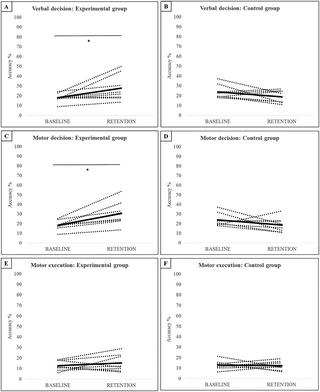
Mixed ANOVA indicated a main effect for phase, F(1,14) = 10.93, p = 0.005, ηp² = 0.44, as well as a significant phase x group interaction, F(1, 14) = 9.43, p = 0.008, ηp² = 0.40. There was no significant main effect of group, F(1, 14) = 0.69, p = 0.42, ηp² = 0.05. While performance of the control group did not differ between baseline and retention (Fig 4B), there was a significant improvement (p = 0.003) exhibited by the experimental group (Fig 4A). Importantly, no between-group differences were apparent at baseline.
Fig 4. Accuracy scores for the video-based decision making (6×6 condition).
Dotted lines represent individual results, the black line represents the group mean. *significant difference in the group mean, p < 0.05.
https://doi.org/10.1371/journal.pone.0338523.g004
On-field task
Mixed MANOVA revealed no significant multivariate main effect for phase, F(3, 12) = 1.29, p = 0.332, ηp² = 0.22, or group, F(3, 12) = 1.89, p = 0.185, ηp² = 0.32, but there was a significant multivariate phase x group interaction, F(3, 12) = 4.65, p = 0.022, ηp² = 0.54. Univariate tests also indicated no significant main effect for phase or group for any of the dependent variables. However, there was a significant phase x group interaction for verbal decision, F(1, 14) = 9.19, p = 0.009, ηp² = 0.40, and motor decision, F(1, 14) = 13.39, p = 0.003, ηp² = 0.49, but not for motor execution, F(1, 14) = 0.631, p = 0.44, ηp² = 0.04. There was no difference between the groups at baseline or retention for any of the dependent measures. However, the experimental group did significantly improve their motor decisions (Fig 5C, p = 0.017), but not their verbal (Fig 5A, p = 0.085) and motor execution (Fig 5E p = 1.00), between baseline and retention. The control group did not show any improvement in their verbal decision (Fig 5B), motor decision (Fig 5D), or motor execution (Fig 5F), with negative group mean differences between baseline and retention for each measure.
Fig 5. Accuracy scores for the on-field decision making variables.
Dotted lines represent individual results, the black line represents the group mean. *significant difference in the group mean, p < 0.05.
https://doi.org/10.1371/journal.pone.0338523.g005
Discussion
This pilot study investigated the effect of a 4-week video-based training intervention on the decision making skills of youth volleyball players. Consistent with the general hypothesis, only the experimental group exhibited improved decision making in the video-based task, as well as the controlled and representative on-field task (motor decision only). This latter finding is in line with some previous studies [13], and suggests that video-based training can indeed be useful to improve decision making skills in youth team sports athletes. Contrasting effects have been reported [18,23] but there are notable differences in the methodologies. For example, the aforementioned studies measured on-field decision making in small-sided games or actual match performance (far transfer), whereas both the current study and Pagé et al. [13] used a controlled, on-field test designed specifically to replicate the situations of the video-based test (near transfer). In addition, we found evidence for improved on-field decision making skills when video-based training employed a first-person perspective and provided feedback after each trial (see also [13]), implying that these may be crucial elements for a successful video-based training intervention.
Although there was a significant interaction for verbal decision making in the on-field task, there was no improvement by the experimental group after Bonferroni correction for multiple pairwise comparisons. Verbalizing a motor plan is a common approach in perceptual-cognitive research, but is a somewhat artificial task that is rarely practiced in an on-field setting. This could have posed an additional challenge for the youth volleyball players in the current study, thereby limiting their improvement. Observation of the individual data (Fig 5A) shows that while none of the participants in the experimental group exhibited a decrease in verbal decision making accuracy from baseline to retention, 2 participants exhibited less than 1% change. The lack of improvement by the experimental group in on-field motor execution was more robust, with no significant main or interaction effects. Observation of the individual data (Fig 5E) shows that 3 of 8 participants in the experimental group exhibited a decrease between baseline and retention. This finding is partly consistent with a recent systematic review that showed programs designed to train decision making usually only benefit perceptual-cognitive measures, and not perceptual-motor measures [17]. This could simply be due to the fact that perception and action are uncoupled in video-based training, with no or a non-representative motor execution required when responding to the video clips. However, the lack of perception-action coupling in the current study did not prevent participants from improving on the motor decision task, indicating that they were better able to correctly identify where and how to respond following the intervention. An alternative interpretation could be that not having the opportunity to physically practice the motor task, such as during 2 months of the current intervention, prevented participants from applying what they learned during the video-based training. Similar effects are found in work on voluntary imitation, with observational practice alone being less beneficial to subsequent motor execution compared to observational practice interspersed with physical practice [24,25]. As is the case for observational practice [26], it is possible that video-based training enables participants to perceive and represent relevant information, but it does not engage feedforward and feedback processes that are critical for skilled motor execution. The implication for future studies on decision making in sport is that video-based training should be combined with physical training, although the frequency and volume of each type of training remains to be determined. That said, if an individual is unable to take part in on-field practice sessions, video-based training can provide a valuable alternative by which decision making skills, and in particular motor decision making, can still be improved. Indeed, when looking at the individual data (Fig 5C and 5D), it can be seen that the majority of participants in the control group showed a decline or no change in performance, whereas all participants in the experimental group showed an increase in performance. This implies that video-based training might also be important in avoiding performance decline when athletes cannot physically train, for example when they are injured [27].
While this pilot study provides valuable insights into the use of individualized video-based training, it is important to acknowledge that there are some limitations. As noted in the methods, we initially planned to recruit 50 participants, but were only able to recruit 20 participants, of whom 4 did not complete the retention test, leaving us with 8 participants per group. Although this meant a reduction in power to detect smaller and moderate effects, a post-hoc sensitivity analysis indicated that this sample size was sufficient to detect an effect size of at least ηp² = 0.175 with a power of 80%. Notably, the effect size of ηp² = 0.04 found for motor execution was lower than both the a-priori and post-hoc critical thresholds, thus indicating that the finding of no significant improvement in this dependent measure by the experimental group was not due to insufficient power. As with some previous studies [20,28], the small sample size not only highlights the difficulty recruiting participants for training studies involving several sessions over several weeks (16 in total) followed by a delayed-retention, in which there are measures of off-field and on-field performance, but also raises a question about generalizability of the findings and the need for a replication study with a larger sample. Ideally, this would include a longer term follow-up to determine if there is any consolidation of the learning effects having resumed typical practice procedures. It could also be interesting to include more sequences of offensive play to better reflect the dynamic complexity of real competitions, and to determine transfer to the field in actual volleyball matches. Indeed, our use of simulated 6×6 offensive sequences with actual players in the on-field test was intended to closely reproduce the video-based test, and as such did not allow us to determine transfer to novel attacking sequences. Conducting such a study would benefit from collaboration with coaches of larger teams, allowing decision-making training to be integrated into regular practice activities, while also reducing the risk of participant drop-out.
In conclusion, this pilot study provides preliminary support for the effectiveness of video-based training for improving and retaining on-field motor decision making in youth volleyball players. Although the quality of motor execution did not improve, we suggest that this could be overcome by providing intermittent on-field training. Video-based training is easily accessible and low cost compared to virtual reality training, and could thus be an effective tool to maintain or improve the decision making abilities of youth players from grassroots to club level.
References
- 1.
Davids K, Savelsbergh GJP, Bennett SJ, Va der Kamp J. Interceptive actions in sport: information and movement. London: Routledge; 2002. - 2.
Bar-Eli M, Plessner H, Raab M. Judgement, decision-making and success in sport. Hoboken, New Jersey, US: John Wiley and Sons; 2011. - 3.
Williams AM, Jackson RC. Anticipation in sport: fifty years on, what have we learned and what research still needs to be undertaken? Psychol Sport Exerc. 2019;42:16–24. - 4.
De Waelle S, Warlop G, Lenoir M, Bennett SJ, Deconinck FJA, Waelle SD. The development of perceptual-cognitive skills in youth volleyball players. J Sports Sci. 2021:1–15. https://doi.org/10.1080/02640414.2021.1907903 - 5.
Bennett KJM, Novak AR, Pluss MA, Coutts AJ, Fransen J. Assessing the validity of a video-based decision-making assessment for talent identification in youth soccer. J Sci Med Sport. 2019;22(6):729–34. pmid:30587435 - 6.
de Joode T, Tebbes DJJ, Savelsbergh GJP. Game insight skills as a predictor of talent for youth soccer players. Front Sports Act Living. 2021;2:609112. pmid:33521633 - 7.
Timmerman EA, Savelsbergh GJP, Farrow D. Creating appropriate training environments to improve technical, decision-making, and physical skills in field hockey. Res Q Exerc Sport. 2019;90(2):180–9. pmid:30794115 - 8.
Turner AP, Martinek TJ. An investigation into teaching games for understanding: effects on skill, knowledge, and game play. Res Q Exerc Sport. 1999;70(3):286–96. pmid:10522286 - 9.
Larkin P, Mesagno C, Berry J, Spittle M, Harvey J. Video-based training to improve perceptual-cognitive decision-making performance of Australian football umpires. J Sports Sci. 2018;36(3):239–46. pmid:28282740 - 10.
Piggott B, Müller S, Chivers P, Cripps A, Hoyne G. Small-sided games can discriminate perceptual-cognitive-motor capability and predict disposal efficiency in match performance of skilled Australian footballers. J Sports Sci. 2019;37(10):1139–45. pmid:30424715 - 11.
Gabbett T, Rubinoff M, Thorburn L, Farrow D. Testing and training anticipation skills in softball fielders. Int J Sport Sci Coach. 2007;2(1):12–7. https://doi.org/10.1260/174795407780367159 - 12.
Hopwood MJ, Mann DL, Farrow D, Nielsen T. Does visual-perceptual training augment the fielding performance of skilled cricketers? Int J Sport Sci Coach. 2011;6(4):523–36. https://doi.org/10.1260/1747-9541.6.4.523 - 13.
Pagé C, Bernier P-M, Trempe M. Using video simulations and virtual reality to improve decision-making skills in basketball. J Sports Sci. 2019;37(21):2403–10. pmid:31280685 - 14.
Nimmerichter A, Weber N, Wirth K, Haller A. Effects of video-based visual training on decision-making and reactive agility in adolescent football players. Sports. 2016;4(1):1–9. https://doi.org/10.3390/sports4010001 - 15.
Green CS, Strobach T, Schubert T. On methodological standards in training and transfer experiments. Psychol Res. 2014;78(6):756–72. pmid:24346424 - 16.
Alsharji KE, Wade MG. Perceptual training effects on anticipation of direct and deceptive 7-m throws in handball. J Sports Sci. 2016;34(2):155–62. pmid:25917061 - 17.
Silva AF, Ramirez-Campillo R, Sarmento H, Afonso J, Clemente FM. Effects of training programs on decision-making in youth team sports players: a systematic review and meta-analysis. Front Psychol. 2021;12:663867. pmid:34135822 - 18.
Panchuk D, Klusemann MJ, Hadlow SM. Exploring the effectiveness of immersive video for training decision-making capability in elite, youth basketball players. Front Psychol. 2018;9:2315. pmid:30538652 - 19.
Conejero Suárez M, Prado Serenini AL, Fernández-Echeverría C, Collado-Mateo D, Moreno Arroyo MP. The effect of decision training, from a cognitive perspective, on decision-making in volleyball: a systematic review and meta-analysis. Int J Environ Res Public Health. 2020;17(10):3628. pmid:32455852 - 20.
Gil-Arias A, Moreno MP, García-Mas A, Moreno A, García-González L, Del Villar F. Reasoning and action: implementation of a decision-making program in sport. Span J Psychol. 2016;19:E60. pmid:27644584 - 21.
Bruce L, Farrow D, Raynor A, Mann D. But I can’t pass that far! The influence of motor skill on decision making. Psychol Sport Exerc. 2012;13(2):152–61. - 22.
Mathôt S, Schreij D, Theeuwes J. OpenSesame: an open-source, graphical experiment builder for the social sciences. Behav Res Methods. 2012;44(2):314–24. pmid:22083660 - 23.
Gorman AD, Farrow D. Perceptual training using explicit and implicit instructional techniques: does it benefit skilled performers? Int J Sport Sci Coach. 2009;4(2):193–208. https://doi.org/10.1260/174795409788549526 - 24.
Hayes SJ, Elliott D, Andrew M, Roberts JW, Bennett SJ. Dissociable contributions of motor-execution and action-observation to intramanual transfer. Exp Brain Res. 2012;221(4):459–66. pmid:22821082 - 25.
Maslovat D, Hodges NJ, Krigolson OE, Handy TC. Observational practice benefits are limited to perceptual improvements in the acquisition of a novel coordination skill. Exp Brain Res. 2010;204(1):119–30. pmid:20496059 - 26.
Foster NC, Bennett SJ, Pullar K, Causer J, Becchio C, Clowes DP, et al. Observational learning of atypical biological kinematics in autism. Autism Res. 2023;16(9):1799–810. pmid:37534381 - 27.
Van Pelt KL, Lapointe AP, Galdys MC, Dougherty LA, Buckley TA, Broglio SP. Evaluating performance of National Hockey League players after a concussion versus lower body injury. J Athl Train. 2019;54(5):534–40. pmid:31084502 - 28.
Gil-Arias A, Garcia-Gonzalez L, Del Villar Alvarez F, Iglesias Gallego D. Developing sport expertise in youth sport: a decision training program in basketball. PeerJ. 2019;7:e7392. pmid:31423354

Rec Sports
Vinton Today – JAKES Day: Local group invites youth to learn variety of outdoor sports skills

The Blue Creek Blue Creek Springtime Monarchs (an affiliate of the National Wild Turkey Foundation) is inviting all area youth to its annual JAKES (Juniors Acquiring Knowledge, Ethics and Sportsmanship) Day at the Izaak Walton League facility north of Vinton.
Children age 17 and under are invited to this free event on Saturday, Aug. 13, to enjoy and learn about many activities including hunter’s safety, archery, .22 rifle target practice, trap shooting, and game calling. Lunch and drinks are provided. The first 60 children to register will receive a free Jakes Day t-shirt.
For more information, call Mike Salow at (319) 350-4187 or Randy Scheel at 319-477-3150.
See the event Facebook page HERE.

Our world is awash in plastic. From single-use water bottles and food packaging to synthetic clothes, shoes, and even nail polish, our overreliance on plastic is spreading a toxic, chemical-laden material all over the planet — including in our own bodies.
Most Americans are sick of plastic use, but manufacturers continue to push the product on us. This holiday season, is it possible to have a plastic-free celebration?
There’s no substitute for systemic policy change to regulate plastic use, but individual actions on a mass scale can have an impact. They can also be a dinner table conversation, potentially spurring cultural shifts and inspiring local activism.
“None of us voted for more plastic,” says Judith Enck, founder and president of Beyond Plastics. Enck, who served as regional administrator at the Environmental Protection Agency in 2009, adds that “the reason we have so much plastic is because there is a glut of fracked gas on the market.”
Enck says it’s entirely possible to have a plastic-free holiday season. She suggests forgoing disposable dinnerware for your Christmas, Hannukah, or Kwanzaa meal. “You can rent glassware and plates and beautiful reusable tablecloths and napkins from local vendors,” she says.
The food at your holiday dinner table needn’t come packaged in plastic either. Challenge yourself to purchase ingredients from your local farmers market using cotton tote bags. Produce that is locally grown is generally seasonal, tastier, has a lower carbon footprint, and is often pesticide-free or organic.
Purchase drinks for your holiday dinner in glass bottles. Most wine is already sold in glass, but even for teetotalers, it’s entirely possible to purchase drinks packaged in glass bottles or cardboard boxes.
According to Enck, “materials like paper, cardboard, metal, and glass… can be made of recycled material and actually does get recycled when you put it in your recycling bin” — unlike plastic. Most plastic is never recycled, no matter how diligent you are about cleaning and disposing of it in your recycling bins.
Gift-giving is particularly fraught with plastic. Mass-produced toys, clothes, and gadgets are either made from plastic or wrapped in it. Enck’s organization offers a handy online guide for plastic-free gifting, like giving memberships in a Community Supported Agriculture (CSA) program. Most local communities, including cities, have local farmers who offer such memberships.
“Consider giving experiences rather than material products,” she adds, like “taking little kids to a matinee movie, giving your aunts and uncles tickets to a concert or a play, or giving busy parents a couple coupons that you’ll go and babysit their kids on a Saturday night.”
Memberships to museums, botanical gardens, and zoos are also excellent alternatives to plastic products. A gift certificate for a massage or yoga class for a busy working parent is likely to be received with far more gratitude than yet another trinket they don’t need.
If you feel compelled to buy a product, there are sustainable alternatives. Consider shopping at a thrift store to give an old product new life and save it from the landfill. (Vintage items are always fashionable!) Find your local “Buy Nothing” groups and post a request for lightly used items as gifts.
If you must purchase new gifts, consider plastic-free options. Clothing in particular can be sustainable if it’s made with natural fibers such as cotton, wool, or silk. Avoid clothes with labels marked polyester, poly-blend, nylon, acrylic, or microfiber. Synthetic clothes are notorious for shedding microplastics that end up in our blood stream and oceans.
Remember to use recyclable gift wrap, wrapping paper alternatives like tea towels or old cookie tins, or simply reuse last year’s wrapping.
Most importantly, make your plastic-free (or plastic-light) holiday a talking point at the dinner table and when exchanging gifts. These conversations can lead to real change: Regulations such as California’s new plastic bag ban and Georgia’s plastic food packaging ban are set to take effect next year, and are the result of dedicated public activism.
Make a New Year’s resolution to commit to political action against plastic in 2026.
Sonali Kolhatkar is host and executive producer of Rising Up With Sonali, an independent, subscriber-based syndicated TV and radio show.
NOTE: Comments posted to this blog page are for information only. The opinions of the author are not necessarily the opinions of this newspaper, its staff or its advertisers.
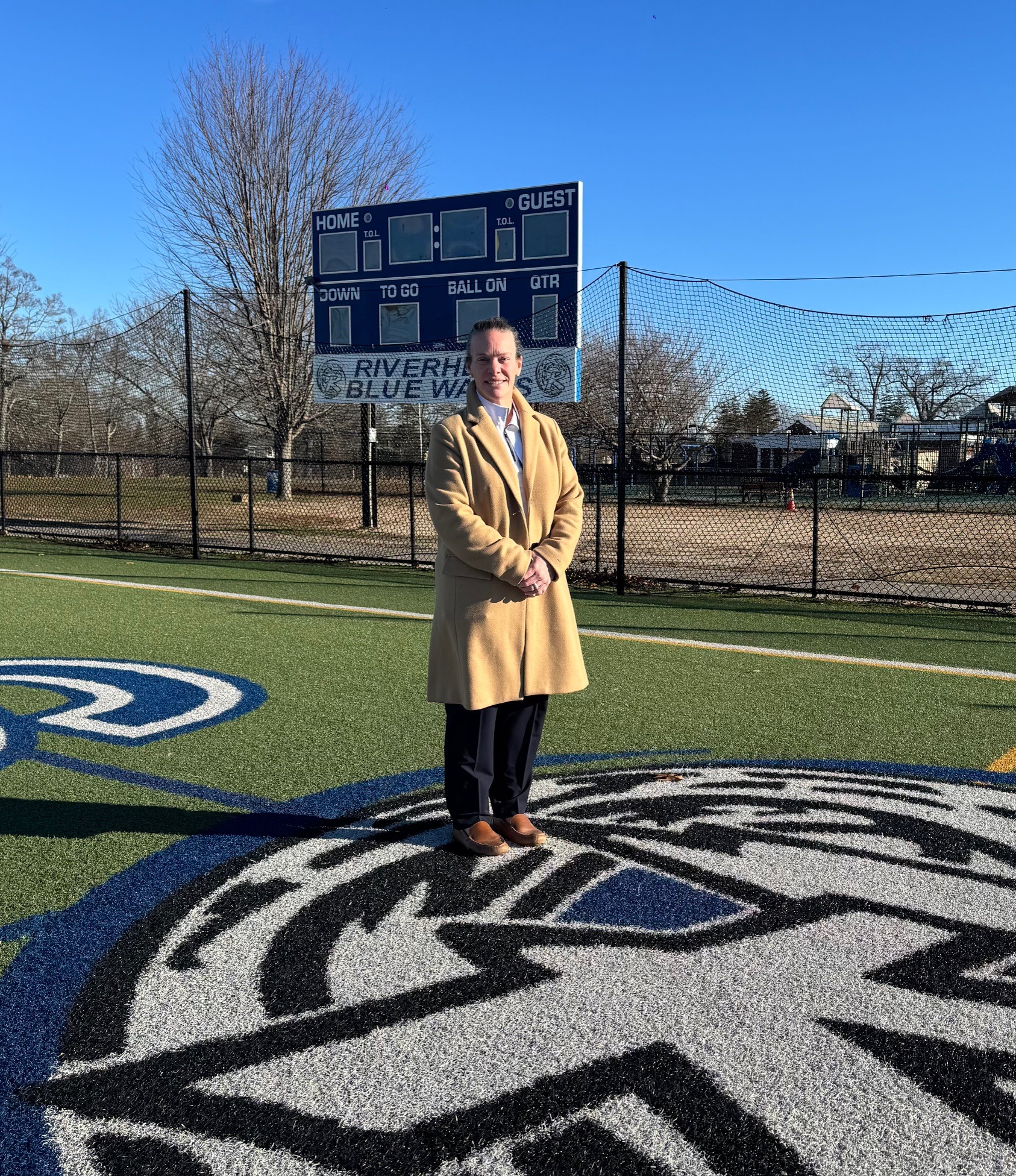

When Melissa Edwards was a student at Riverhead High School, she dreamed of this exact moment. Being a standout athlete for the Blue Waves, excelling at softball and field hockey, she was always around the athletic department. She envied William Groth, Riverhead’s athletic director at the time, and thought about how amazing it would be to have that job one day.
Flash forward 24 years later and, effective Dec. 1, Ms. Edwards was officially named director of health, physical education and athletics at Riverhead Central Schools.
“When I saw the position open up, I knew I had to throw my hat in the ring,” Ms. Edwards said. “When you love athletics and you love education and you love being around kids, there’s no job better. It’s my dream job. And most importantly, Riverhead is home.”
After a lengthy interview process in the spring with Bob Hagen, Riverhead’s new superintendent of schools, and the board of education, seeing her phone ring with his name plastered on the screen this summer instantly brought mixed feelings.
“He started talking about how much of a great candidate I was and saying all these nice things about me,” Ms. Edwards said. “Listening to all this, I was waiting for the ‘but.’ I had already programmed myself to accept not getting the position that I didn’t realize, there was no ‘but.’ He just offered me the job.”
After graduating from Riverhead in 2001, Ms. Edwards starred for Springfield College in softball, playing catcher. She smacked 26 home runs in her collegiate career, which set a school record at the time. Following her playing career, she coached at the college level in the Boston area before coming back to Long Island.
“My whole family is here,” Ms. Edwards said. “Family always pulls you back, and that’s exactly what keeps me here today.”
Ms. Edwards accepted a position to coach Pierson in softball and field hockey. During her time there, the field hockey team won a New York State Championship for the first time in school history, and the softball team made it to the state championships three years in a row.
“It was a crazy time because once we started getting success in softball and field hockey, other teams started following suit,” she said. “Baseball started getting good, soccer, every sport wanted that taste of success. At that point, winning becomes the expectation, which is exactly the mentality I want to bring to Riverhead.”
In 2013, Ms. Edwards got an opportunity to head into the administrative field, accepting the assistant athletic director position at McGann-Mercy, a private school in Riverhead. That assistant tag didn’t last long as she fully took over the program shortly after. She held the position until the school closed its doors in 2018.
“While I was at Mercy, I realized this is the job I was meant to do,” Ms. Edwards said. “The opportunity to make an impact on kids across the board and give them a true chance at success was so fulfilling. I wanted nothing more than to do it again.”
She decided to go back to school and received her master’s degree in physical education from Adelphi University. Edwards then accepted a teaching job at Wantagh while being the assistant softball coach for a few years before most recently heading to East Hampton High School to coach their softball team.
“No matter where I went, I always wanted to come back home,” Ms. Edwards said. “I live in Riverhead. I was born in Riverhead. This was always my end goal.”
When Hans Wiederkehr, Riverhead’s interim athletic director, first heard of the hiring and met Ms. Edwards, he knew instantly she was the right person for the job.
“Energy,” Mr. Wiederkehr said. “If you don’t have energy in this position, you’re done. And if it’s not positive energy, it’s even worse. She has the energy, and she legitimately wants the best for Riverhead athletics. It’s not just talk. Nobody wants this more than her.”
Mr. Wiederkehr will stay on board to help with the transition and to build off of what’s been done already. The main focus has been on youth sports. In partnership with the booster clubs, youth sporting opportunities have skyrocketed in Riverhead.
There’s football, soccer, basketball, lacrosse — anything youth-related, it’s been started. Most recently, there’s been an emphasis on kid wrestling taking root again.
“Our buildings are full with kids’ sports every day of the week,” Mr. Wiederkehr said, showing off a detailed sheet on his desk. “Parents have stepped up. There’s many volunteers that are committed to turning things around, and both of us are committed to helping do that.”
Another thing Ms. Edwards plans on tackling is the playing fields.
“We want to make this place pristine and top-notch like our athletes deserve here,” she said. “We’re working hard with the grounds crew to clean this place up. Every day, we have a new project.”
To Ms. Edwards, the budget cuts excuse is gone. There are no more excuses. Riverhead will succeed.
“The fact of the matter is I care,” she said. “This is my home. I know all these long-time Riverhead families. I want the best for this town, and I believe in this town. Riverhead athletics is changing. We’re already seeing major progress. All I want to do is foster that success and make it an expectation.”

ST. PAUL, Minn. – The Macalester College women’s basketball team played a hard-fought MIAC game against Carleton College, with the Knights edging the Scots, 49-47 Wednesday night in the Leonard Center. Macalester is now 1-8 overall and 0-3 in conference play, while Carleton improves to 4-4, 1-2 MIAC.
Macalester opened with an 11-4 run that saw senior forward Ellie Corbett (Austin, Texas/James Bowie) score four points and junior guard Acacia Edmond (Houston, Texas/Shadow Creek) drain a three-pointer. Carleton responded with eight straight points to take a 12-11 edge before sophomore guard Emma Karlin (Rockville, Md./Richard Montgomery) restored the lead for the Scots with a basket with less than a minute left in the quarter. After a Knights’ free throw tied the score, junior guard Mary Daley (Cumberland, R.I./Bishop Feehan) scored at the end of the quarter for a 15-13 Macalester lead.
Carleton scored first in the second quarter to tie the score, but two Daley free throws and an 18-foot jumper by senior forward Brooke Boroughs (Monroe, Wash./Monroe) put the Scots on top, 19-15. After the Knights tied the score at 19-19, sophomore forward Cady Davis (Minneapolis, Minn./Roosevelt) made two free throws for a 21-19 Macalester lead heading into the halftime break. The Scots compensated for poor shooting from the field by making all six of their free throws compared to 1-of-4 for Carleton in the first half.
Both offenses came alive in the third quarter. Taylor Dente opened the period with a three to give the Knights the lead, but an 8-0 run sparked by four points from junior guard Sydnee Smith (Gainesville, Va./Patriot) put Macalester back on top, 29-22. After a Knights’ free throw, first year guard Megan Matthews (Boulder, Colo./Boulder) and Dente exchanged threes to make the score 32-26. Carleton outscored the Scots, 7-2 over the remainder of the quarter to reduce the lead to one, 34-33 heading into the fourth.
Davis opened the final period with a basket, but the Knights tallied the next four points to take a 37-36 edge with 6:05 to play. Sophomore forward Samantha Smith (Piedmont, Calif./Piedmont) broke the scoring drought for Macalester with a three for a 39-37 advantage. Davis, who grabbed an offensive rebound before Samantha Smith’s three, made a basket of her own to make the score 41-37. Liesl McCallum answered for Carleton at the four-minute mark to cut the lead to 41-39. A minute later, two Knights’ free throws tied the score again, 41-41, then another free throw and a basket by McCallum put Carleton up, 44-41.
With under two minutes to play, first year guard Faith Accardo (Thousand Oaks, Calif./Oaks Christian) heated up, draining two three-pointers around a basket by Addy Huss for a 47-46 advantage. A foul was called on Macalester with 8.1 seconds remaining, and McCallum made both free throws to give the lead back to Carleton, 48-47. With 4.7 seconds left, it appeared that Samantha Smith made a three-pointer from the corner, but the official ruled that she stepped out of bounds before the shot. Huss made 1-of-2 from the line after being fouled, but a desperation three at the buzzer was off the mark.
Davis led Macalester with eight points to go with seven rebounds, as all 10 players who played scored for the Scots. Matthews had seven points and five rebounds, while Daley finished with six points, eight rebounds and three assists. Corbett registered four blocks to go with four points and four rebounds. Huss, who entered the game with a MIAC-best scoring average of 22.4 points per game, and McCollum each scored 17 points.
Macalester returns to action in 2026 with a home MIAC game against Saint Mary’s University on Saturday, Jan. 3. The game starts at 1:00 p.m. in the Leonard Center.
box score
Two year ago Nebraska basketball lost just one game in Pinnacle Bank Arena and was a perfect 10-0 in league play.
The latter is the tallest of tasks and a rather amazing accomplishment from a Nebraska squad that even beat No. 1 Purdue. One of those wins was also a dramatic second-half comeback over the same Wisconsin program the Huskers will see tonight.
Husker Connor Essegian, rehabbing from injury, was on that Wisconsin team two years ago and recalled with fondness the PBA atmosphere when he committed to Nebraska.
“PBA’s atmosphere in general is just elite to me,” he said. “I felt like it was the loudest gym I played in this past year. The fans were on us the entire game. I’ve only played in a sold-out PBA so the atmosphere I’ve seen there is amazing. I want to be able to make every game like that and keep the trend of the program going.”
The winning dominance at PBA disappeared last year as Nebraska finished just 10-6 at home.
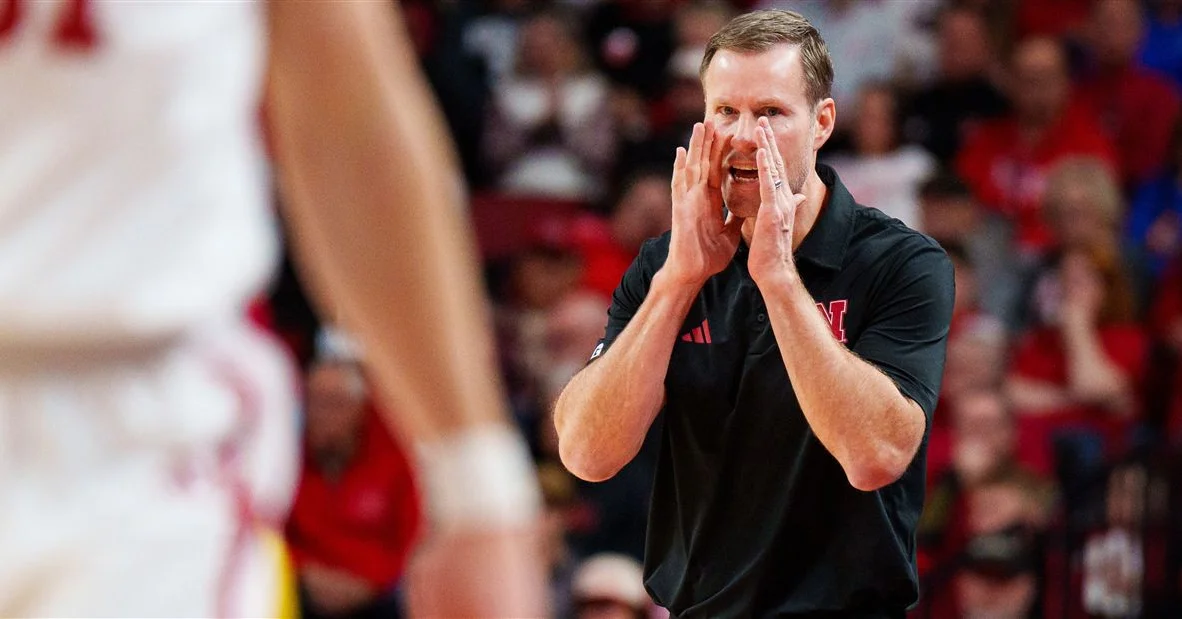
One of the major focuses this squad is to return that dynamic homecourt advantage this year. Sunday was a good start in reinforcing what is wanted with a 71-50 win over Creighton. Now comes what Fred Hoiberg said is the toughest test of the year for his 9-0 squad against Wisconsin at 8 p.m.
“We did not do a good enough job on our homecourt last year in league. We actually won more road games a year ago than we did the previous year but we didn’t do a good enough job protecting homecourt,” Hoiberg said. “With the energy we have in our building we should expect to win every time that we’re on that floor … So we need to establish that. We need to get our crowd into it early. We need to sustain it. This is the best team we’ve played, there’s no doubt about it.
“And we’re going to have to be on point for 40 minutes.”
About the Badgers: Wisconsin (7-2) returned two starters and six letterwinners from a team that won 27 games and reached the second round of the NCAA Tournament last season. UW is averaging 87.9 ppg on 45 percent shooting while averaging 11.3 3-pointers per game. Wisconsin is coming off a dominating 20-point win over Marquette and handled Northwestern with ease before that in the Badgers’ Big Ten opener.
The Badgers are out-rebounding teams by more than five per game and committing just 10.3 turnovers per game. Wisconsin features one of the top scoring duos in the Big Ten in John Blackwell (21.0 ppg) and San Diego State transfer Nick Boyd (20.2 ppg).
How to watch/listen: The game tips at 8 p.m. and is televised on BTN.
It is available on the Huskers Radio Network with Kent Pavelka and Jeff Smith on the call, including KLIN (1400 AM) in Lincoln, KCRO (660AM) and KIBM (1490 AM) in Omaha and KRVN (880 AM) in Lexington. The pregame show begins an hour before
The line: Nebraska is favored by 1 1/2.
What a win would mean: The No. 23-ranked Huskers will look to match their best start in school history, as NU opened the 1977-78 season with 10 straight wins. In addition, counting last year’s four wins to end the year at the College Basketball Crown, NU can also tie the school mark for the longest win streak in school history with a win on Wednesday. The mark is held by the 1990-91 Huskers who won a school-record 14 games on their way to a school-record 26-win season.
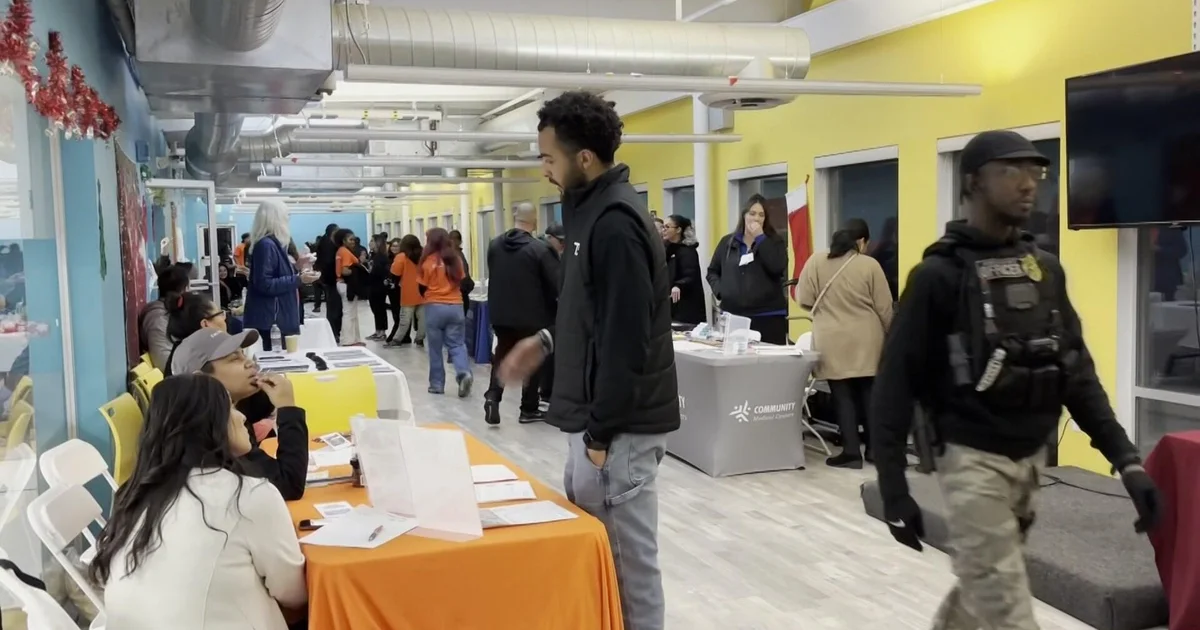
Community members gathered in Stockton Wednesday evening to support one another, loving their neighbor.
It was called Heal Stockton, where Stockton residents and nonprofits met to grieve, heal, and process the tragedy that struck families in the city they love.
“All these people are concerned and came out on their own dime, their own time,” Armster Hampton, Community Partnership for Families Youth case manager, said. “And they love Stockton like I love Stockton. And I feel good about that.”
A common theme throughout the night was hugs, healing, and having safe spaces to talk through the trauma.
“Heal Stockton is important because what we’re trying to do is bring a level of peace and solace and hope to the community,” Fortier-Brigham said. “And also discuss different ways to work through trauma and stress, especially in times like this, what we’ve just experienced in our city. People need to know that there’s hope.”
It was hosted by Victory in Praise Church at their community development center. Lillana Fortier-Brigham is a middle school teacher and the church’s drama director.
“As long as humankind has been on this earth, there have always been horrible things that have happened,” Fortier-Brigham said. “We have treated each other horribly and I believe that it takes a relationship with, the most powerful, all-powerful God for anybody to really be able to reconcile with such, it seems like it’s too much for one person to handle, so, you need a church family to kind of surround you and events like this help us to see that there is help out there. There’s help for you.”
There were members of the medical community, suicide prevention, counseling groups, therapy dogs, Stockton’s Office of Violence Prevention, and a Stockton youth sports program, Turlock Sports Park.
“I’m feeling devastated but just leaning on God in this time,” David McCants, Turlock Sports Park site supervisor, said. “Just trying to make a positive impact to the youth and just continue to shine my light and bring positive energy to the community each and every day.”
Cleveland Remembers volunteers were giving away gun locks and helping community members craft ‘soul boxes’, origami boxes made in memory of people killed by gun violence, including the three precious children killed in their city.
“I feel terrible,” Sharon Jarvis, Cleveland School Remembers volunteer, said. “I made one of the soul boxes myself today, for one of the little 8-year-olds who was killed and when I looked at her name and the paper. Her sister was describing her, it just, well, I’m getting emotional now, I mean, I didn’t even know this child but it’s just horrendous that this still is happening in our society and it’s still happening in California, even though we have some of the best gun violence prevention laws in the nation. We need our national laws to outlaw some of these things and Congress is doing nothing about it.”
Jarvis said Cleveland School Remembers is pushing for a local law that would not allow police to buy guns from dealers who have a bad record of selling to people who shouldn’t have guns.
Hampton, who works with 16 to 24-year-old men, helping them get important documents like their California ID card, birth certificate, and social security card, said he is saddened and disheartened. He is the father of six children and grandfather to 11 grandchildren.
“As a community, I’d like to think this is our George Floyd moment where we like put our foot down,” Hampton said. “We’ve had enough. And I’d like to see some changes come from the tragedy. My heart goes out to the family of the kids and I just pray it never happens again.”
With the information that it could take months for law enforcement to solve the shooting case, Stockton residents believe people know what happened and are encouraging their neighbors to say something.
“My thoughts on that are that people are not coming forward with information that some of them have,” Jarvis said. “And I think that they are terrified that they will become a victim of gun violence if they speak up and give information to the sheriff. It’s a very difficult position that law enforcement is in, trying to solve this and I hope with having the FBI involved and the Stockton Police Department helping the county sheriff that they’ll be able to resolve this but it’s obviously not going to happen quickly.”
Hampton is also urging his community to be more vigilant and speak up.
“We shouldn’t be scared to come out of our houses and have birthday parties for our children,” Hampton said. “A few people shouldn’t spoil that for us. I believe, as a community, we have to be more vigilant. If you know something, say something. Don’t be afraid.”
Fortier-Brigham said she believes that people know who was involved in the community. She is also calling on the local Stockton leaders to stop arguing and make changes for the young people in the community.
“What I think is true is that the courage that it takes for the people who know to step forward and to say what happened is what is needed. You can be a part of that justice,” Fortier-Brigham said. “If you know what happened and you know where this came from and you know how it occurred, step forward. And speak the truth. And free yourself from holding that secret. And that way, all of those families’ lives can be impacted for the better because they want to know what happened to their babies. They want to know what happened to the young people that just came for a birthday party.”
The church also provides a prayer room, where people from the community can come and process their emotions of what took place in their city, to find healing and peace amidst the pain.
If you have any information regarding the mass shooting that occurred in the 1900 block of Lucille Avenue in the city of Stockton on Saturday, Nov. 29, 2025, the San Joaquin County Sheriff’s Office is asking you to please share it with them.
- Send an anonymous tip by texting the word “SJSOTIP” then your message to 847411, or
- Submit a tip online by visiting our TIP411 page by clicking here, or
- Call us at (209) 468-5087, or
- Call Stockton Crime Stoppers at (209) 946-0600.

Why Jimmie Johnson Thinks San Diego ‘Is the Perfect Location’ for a NASCAR Cup Race

Daniel Suárez Hailed as the Best NASCAR Driver to Represent Longtime Sponsor in 2026

Here’s the reason Troy Aikman didn’t get thanked by that UCLA football player

Four new players make up Wisconsin volleyball class of 2026 roster

Daniel Suárez Hailed as the Best NASCAR Driver to Represent Longtime Sponsor in 2026

Track and Field Competes in Opening Meet, Swimming Takes on Rowan

Troy Aikman not thanked by UCLA QB for NIL donation due to school protocol

Jeffrey Kessler Puts On a Clinic in Day 8 of NASCAR Antitrust Trial

Top NASCAR Sponsor Calls Out Commissioner Steve Phelps and His “Lieutenants” in Response to Childress Comments

College football star QB sends strong message on $91 million coaching move

How Sweet It Is: No. 3 Badgers take on NCAA Regionals

Vinton Today – JAKES Day: Local group invites youth to learn variety of outdoor sports skills

How To Have a Plastic-Free Holiday Season

Why Troy Aikman didn’t get thanked by that UCLA football player

#11 Volleyball Meets Media, Makes Final Prep For Sweet 16 Match

First Tee Winter Registration is open

Fargo girl, 13, dies after collapsing during school basketball game – Grand Forks Herald

CPG Brands Like Allegra Are Betting on F1 for the First Time

Volleyball Recaps – November 18

F1 Las Vegas: Verstappen win, Norris and Piastri DQ tighten 2025 title fight

Two Pro Volleyball Leagues Serve Up Plans for Minnesota Teams

Utah State Announces 2025-26 Indoor Track & Field Schedule

Sycamores unveil 2026 track and field schedule

Redemption Means First Pro Stock World Championship for Dallas Glenn

Texas volleyball vs Kentucky game score: Live SEC tournament updates

Jo Shimoda Undergoes Back Surgery

Robert “Bobby” Lewis Hardin, 56

Bowl Projections: ESPN predicts 12-team College Football Playoff bracket, full bowl slate after Week 14

How this startup (and a KC sports icon) turned young players into card-carrying legends overnight

Indiana’s rapid ascent and its impact across college football

 Why a rising mid-major power with an NCAA Tournament team opted out of revenue-sharing — and advertised it
 NBA Legend Michael Jordan to Join NBC Sports as Special Contributor
 Falcons mailbag
 Portal Update – Basketball and Gymnastics Take Hits
 has always dreamed in Mercurial. Now his initials are on the boots.
The new Kyl…
has always dreamed in Mercurial. Now his initials are on the boots.
The new Kyl…
-
 Rec Sports2 weeks ago
First Tee Winter Registration is open
-
 Rec Sports2 weeks ago
Fargo girl, 13, dies after collapsing during school basketball game – Grand Forks Herald
-
 Motorsports2 weeks ago
CPG Brands Like Allegra Are Betting on F1 for the First Time
-
 Motorsports2 weeks ago
F1 Las Vegas: Verstappen win, Norris and Piastri DQ tighten 2025 title fight
-
 Sports2 weeks ago
Two Pro Volleyball Leagues Serve Up Plans for Minnesota Teams
-
 Sports2 weeks ago
Utah State Announces 2025-26 Indoor Track & Field Schedule
-
 Sports2 weeks ago
Sycamores unveil 2026 track and field schedule
-
 Motorsports2 weeks ago
Redemption Means First Pro Stock World Championship for Dallas Glenn
-
 Sports2 weeks ago
Texas volleyball vs Kentucky game score: Live SEC tournament updates
-
 Motorsports2 weeks ago
Jo Shimoda Undergoes Back Surgery