Connect with us
https://yoursportsnation.com/wp-content/uploads/2025/07/call-to-1.png

Rec Sports

Injury and illness: an analysis of team USA athletes at the 2024 winter youth olympic games | Injury Epidemiology

Published

on


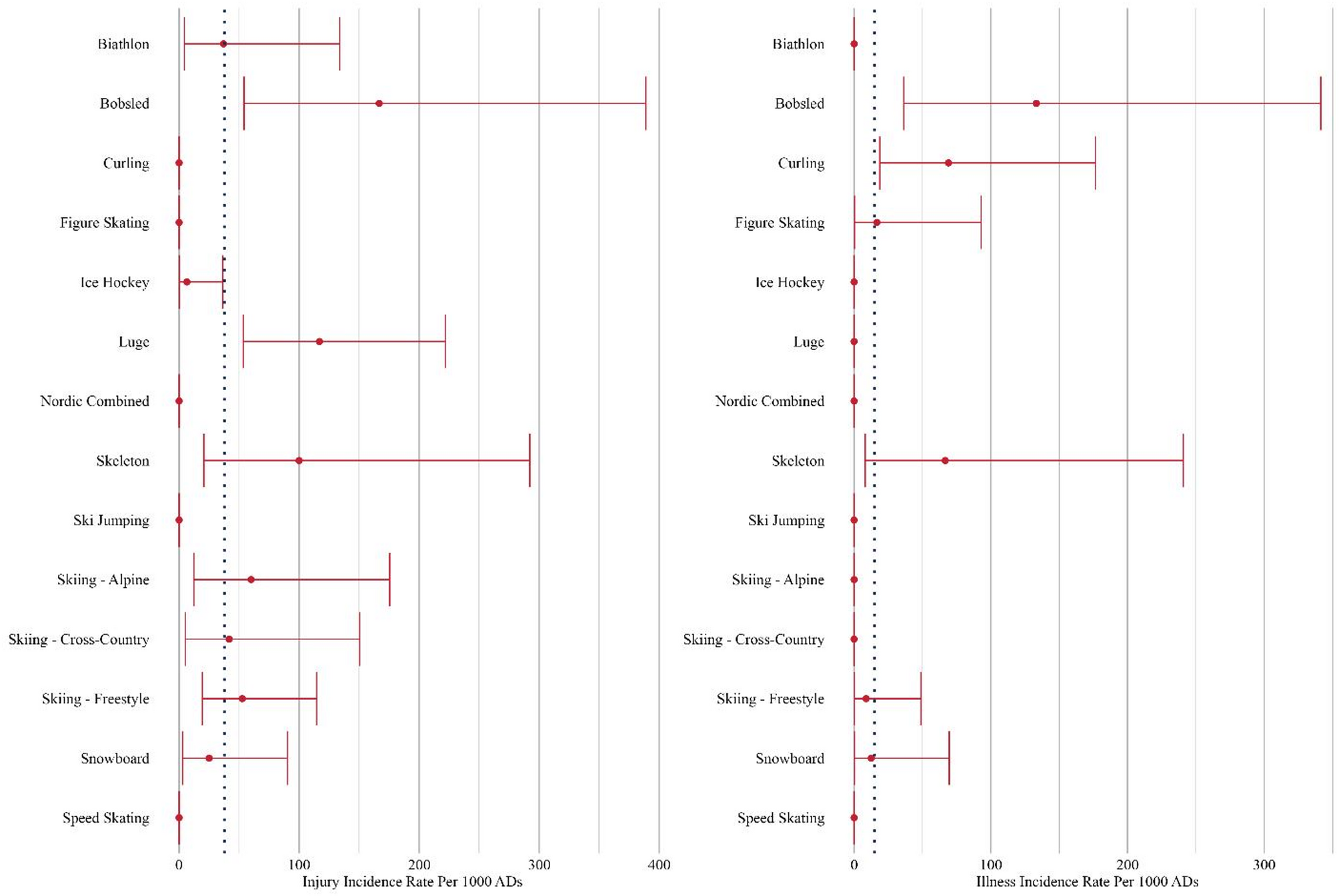
This is the first known study to describe the characteristics and incidence rates of injuries and illnesses sustained by a single nation’s athlete delegation competing in a Winter Youth Olympic Games. The main findings from this study were (1) injury and illness IRs were greatest among sliding sport athletes (i.e., bobsled, skeleton, and luge), (2) overuse injuries and respiratory illnesses were most common, and (3) while there were no differences in injury or illness IRs between male and female athletes, female athletes sustained all time-loss injuries.

Compared to previous Team USA data from a Summer YOG (426 injuries and 213 illnesses per 1000 athletes) [15], fewer injuries and illnesses were reported at the 2024 Winter YOG (327 injuries and 129 illnesses per 1000 athletes) on a per athlete basis. Higher injury rates from the Summer 2014 YOG were likely due to inclusion of rugby sevens (the only contact team sport) for the first time at a YOG. Rugby sevens was a key driver of injury IRs among Team USA youth athletes at the 2014 YOG, with the rugby team having the largest roster size and contributing to five out of the six time-loss injuries [15].

In the current study, an injury IR of 38 injuries per 1,000 AD was observed, which was higher than previously reported injuries for Team USA youth athletes participating at the Tokyo 2020 Summer Olympic Games (15.7 injuries per 1,000 AD) [22] and Beijing 2022 Winter Olympic Games (14.8 injuries per 1,000 AD) [22]. Athletes at the Winter 2024 YOG also reported higher injury rates than Team USA athletes from the Winter Olympic Games in Beijing 2022 (16.5 injuries per 1,000 AD) [23] and PyeongChang 2018 (2.3 injuries per 1,000 AD) [24]. A potential explanation for the higher injury IRs at the 2024 Winter YOG could be attributed the implementation of the USOPC’s IIS in 2023, which has facilitated an improvement in the accuracy of data reported by clinicians during a Games period [16]. It is possible that the athletes competing for Team USA at the YOG are truly at higher risk for injury compared to other Team USA athletes competing at the Olympic games, but future research is needed using the USOPC’s IIS to better compare rates across various Games periods and athlete populations.

Injury incidence among Team USA athletes at the 2024 Winter YOG was highest among the sliding sports, with bobsled (167 injuries per 1,000 AD), followed by luge (117 injuries per 1,000 AD) and skeleton (100 injuries per 1,000 AD). This is not surprising as sliding sport athletes have been among the most frequently injured athletes at previous Winter Olympic Games [25], including Team USA athletes competing at the Beijing 2022 Olympics (bobsled/skeleton, 17.7 injuries per 1,000 AD; luge, 51.5 injuries per 1,000 AD) [23]. However, these results are in contrast to the sliding sport data from the 2012 Innsbruck Winter YOG, where this sport category ranked among the lowest injury IRs with only 6% of athletes sustaining injuries [12]. Winter sports are unique due to their environment (i.e. competing on ice or snow) and requirement of high-velocity movements using specialized equipment on that terrain. Events such as collisions with the sliding track wall and overturns or ejection from the sled can lead to serious injury [26], including death, as was the case with a luge athlete who was ejected from the track during training at the Vancouver 2010 Winter Olympics [26]. Youth athletes are likely less experienced than their older adult counterparts participating at the senior Olympic Games, which may also contribute to the higher injury IRs observed in these athletes. This may be particularly true for sports using specialized equipment, like bobsled, as they navigate a difficult sliding track.

Respiratory illness was the most common illness reported by Team USA youth athletes during the Winter YOG. This finding is consistent with illness surveillance data from studies of previous Games periods, which has found respiratory illness to consistently be the most common illness type reported by athletes [12,13,14,15, 24]. The percentage of illnesses overall in this study (9.9%) and the percentage of athletes who contracted a respiratory illness (5.9%) was higher than the Beijing 2022 Winter Olympic Games (overall illness, 4%, respiratory illness, 1.4%) [27]. This is likely, in part, due to the mandatory countermeasures (vaccination, masking, contact tracing, etc.) that were in place by the organizing committee, and the concerted effort by staff and athletes to prevent the spread of COVID-19 in Beijing that reduced respiratory illnesses overall [27]. Large-scale sporting events such as the YOG host thousands of athletes and staff from across the world, creating opportunity for the spread of viruses amongst athletes in close contact, such as those within the same delegation or sport. Winter Games also have a higher risk of respiratory agitation with athletes typically training in cold air environments [28]. Travel away from home across five or more time zones has also been shown to increase the risk of illness by 2 to 3 times [29], which certainly could have been a factor for athletes traveling from the USA to South Korea.

Overuse was the most common injury mechanism (17 injuries per 1,000 AD) experienced by athletes, followed closely by direct contact with an object (15 injuries per 1,000 AD). Overuse injuries occur due to repeated submaximal loading of the musculoskeletal system when adequate rest is not available to allow for structural adaptation to take place [1]. Focusing on appropriate load management for elite youth athletes is important as it is a significant risk factor for injury [30]. In 2016, the IOC released a consensus statement summarizing the evidence linking load and injury risk. It includes practical guidelines for managing load in sport, including guidelines for management and prescription of physiological and psychological load during training and competition to promote athlete well-being and mitigate injury risk [31]. Another note for consideration is that youth athletes are still developing both psychologically and physically. Recognizing that elite youth athletes may be undergoing rapid growth and are at various stages of biological maturity in combination with excessive training loads and sport specialization may put them at a greater risk of injury. Training load is a modifiable risk factor; therefore, strategies need to be put in place for load management to ensure balance between load and tissue capacity [31].

In the present analysis, over one quarter (27.3%) of all injuries resulted in time-loss from sport (median 17 days), which is a greater proportion among Team USA youth athletes than previously reported [15]. Interestingly, although there were no differences in injury IRs between male and female athletes, all of the time-loss injuries were reported by female athletes. It is possible that these female athletes sustained more severe injuries, or that they were more likely to report symptoms to healthcare providers due to their injury. Some evidence exists that suggests females are more likely to seek medical attention and utilize health care services than males [32, 33] which may explain why there are more medical encounters noted among female athletes than males [24]. There is also evidence suggesting female athletes at the high school [34] and collegiate level [35, 36] have significantly longer time-loss from sport; therefore, it is not surprising that the female youth athletes in this sample experienced greater time-loss than male athletes.

Strengths and limitations

The present analysis is the first time that Team USA data from a Winter YOG has been presented. The data collection methods utilized by Team USA clinical staff reporting into the newly developed USOPC IIS [16] allowed for the collection of detailed injury and illness information, including type, injury mechanism and onset, anatomical location, and body system affected. Measures of injury and illness severity were also collected by tracking return to sport dates to determine time-loss, rather than relying on an estimation, as in previous data sets published prior to updated IOC recommendations in 2020 [9, 19]. Although collecting actual return to play dates is more difficult, the improved accuracy of the data is valuable for quantifying severity and post-injury and illness return to play timelines in this population.

While this study provided an analysis of surveillance data from Team USA youth athletes, some limitations must be acknowledged. This study included data from a single, large NOC; while this information may be generalizable for other similar size nations, it may not be representative of smaller delegations with less access to resources. Single-delegation analyses can provide a more detailed account of injury and illness rates that are valuable to that specific nation because each country has a diverse set of athletes, resources, and infrastructure. However, interpreting reports from single-nation delegations can also introduce a challenge when comparing to previous studies, as a reduced sample size can be more greatly affected by small changes in the frequency of injuries and illnesses reported. The differences in reporting protocols, particularly surrounding exposure variables (athlete days vs. number of athletes) also makes comparisons between nations and across different Games periods more challenging. As previously noted, single-nation incidence tends to be greater than multi-nation incidence reported during a Games period, due to the challenges inherent to collecting accurate data across multiple nations [37]. While we used our new injury and illness surveillance system to capture data, we are not immune to the limitations of data entry by clinicians, therefore an underreporting of injuries and illnesses is possible. Access to additional information about potential risk factors such as event environmental conditions and athlete training or health and injury history was not available. We also assumed that all athletes were injury- and illness-free when arriving in Gangwon; however, it is possible that some athletes arrived with an existing injury or illness that was obtained prior to the games and carried over into the games period. Lastly, information regarding mental health was reported separately in the electronic medical record out of concern for athlete privacy and therefore, was not included in this analysis. Monitoring mental health conditions is a vital component of providing holistic healthcare and understanding the incidence and interactions of mental health conditions should be included in future investigations.

Clinical implications

Findings from this investigation provide important injury and illness information for medical staff and committees organizing large-scale international youth winter sport competitions. Understanding the risk profiles of high-risk winter sports such as bobsled, luge, and skeleton can help ensure that adequate and appropriate medical personnel are onsite to manage suspected injuries and illnesses, and medical staff are adequately prepared and equipped to respond to medical needs as they arise. It was also identified that there is a continued need for illness prevention strategies and prevention of overuse injuries at future YOG. Effective strategies including hygiene education (hand washing, wearing masks, avoiding crowds, etc.), lifestyle management (travel, nutrition, sleep, etc.), and physical training and psychological load management when preparing for future YOG and other major sporting competitions should be considered and implemented [30]. Lastly, sport governing bodies at the national and international level should utilize surveillance data to better understand the relative risks of sports participation to develop effective strategies for overall optimization of youth athlete health, wellness, and performance.


Link

Continue Reading
Click to comment

Leave a Reply

Your email address will not be published. Required fields are marked *

Rec Sports

Hurlock gets first ever Salvation Army red kettle | Latest News

Published

on


HURLOCK, Md – The town of Hurlock now has a Salvation Army red kettle to help raise funds for families in need this holiday season. The kettle is set up at Hurlock Gas and Deli on South Main Street, thanks to the efforts of an employee at the store.

T.J. Higgins, who works at Hurlock Gas and Deli, says the idea started when he approached Hurlock’s mayor, Earl Murphy, about bringing a kettle to the town. 

“I reached out to our newly elected mayor,” Higgins said. “He said that he was open to any and all ideas. I knew the holiday season was coming up, and I just said to him, you know, what about the Salvation Army? They don’t have a presence here. You see them in Cambridge. We see them in other areas. What about here in Hurlock?”

From there, coordination with the Salvation Army helped bring the iconic red kettle to town just in time for the holidays. Higgins added that the kettle is meant to encourage everyone to chip in, no matter the size of the donation.

“Everybody sees the red kettle,” Higgins said. “They know what it looks like. They hear that bell. Sometimes it goes to the wayside in the background. But basically, it’s just about giving. It gives the community and strangers, citizens the opportunity to chip in whatever they can to help those that really need it the most.”

Troy Paul of the Salvation Army says the kettle gives the community a chance to directly support local families.

“Every dollar that’s donated here stays local,” Paul said. “So if you donate to a red kettle or donate to the Salvation Army, everything stays right here in Hurlock.”

Darrell Hurston of Elite Youth Sports, whose group volunteered at the kettle, says it’s also a chance to teach kids about giving back. 

“One thing we try to teach our kids is, integrity and discipline and, and community service,” Hurston told WBOC. “Right? So this is part of that. You can’t get any more community service than the Salvation Army.”

The Salvation Army red kettle in Hurlock will remain in place through Christmas Eve. Volunteers are still needed to help ring the bell and collect donations, offering neighbors one more opportunity to support their community during the holiday season.


Link

Continue Reading

Rec Sports

How sports betting lures teenagers into risky arenas

Published

on


Evva Starr has heard thousands of pitches from student journalists over the years as the faculty adviser to Common Sense, Thomas S. Wootton High School’s newspaper. 

“I get excited whenever there’s something new,” Starr, the Rockville school’s English department resource teacher, says with a laugh. She remembers how her ears perked up last school year when Nathan Zweig, a junior in her newspaper class, proposed an article about Fliff, an app that bills itself as a free play-for-fun sportsbook. Underage use of sports betting apps in the halls of local high schools is widespread, students and school faculty say. Recent legalization, word-of-mouth, promotions on social media, and ease of access have contributed.

“That was the first time I’d ever heard of Fliff. I thought, ‘Cool. Great. Something different,’ ” recalls Starr, 52, of Potomac. “Then Nathan explained Fliff to me. Now that I understand it, I think it’s terrible.” 

Fliff is one of many sports betting apps and is considered among the most popular for underage betting. This app uses virtual currency and follows a sweepstakes model, which means no purchase is needed to play. That distinction separates Fliff from more traditional online gambling sites. Signing up is easy on the colorful, flashy app. Tiny print says players must be 18, but no age verification is required. In other states, the minimum age may be older. Players can quickly earn badges and loyalty rewards, and climb leaderboards betting on an array of daily sporting events across the country and around the globe from college football to professional tennis, English Premier League soccer, NBA games and mixed martial arts.

Unlike underage drinking or substance misuse, online gambling can be almost invisible without the telltale red flags, such as garbage cans filled with beer bottles and hard seltzer cans or the acrid smell of marijuana.  

“Fliff is all around me. Every day, kids at lunch are on their phones, talking about what bets are going to hit,” says Zweig, 17, of Potomac. “I have friends who don’t follow sports, but they still bet. They say it’s not real gambling, but eventually some kids will go to apps like BetMGM or DraftKings. It’s hooking people.”  

Some Wootton students, however, including senior Justin Heller, 17, of Rockville, disagree.

“Well, people see it different ways. I think it’s helpful because it shows you in the end that everyone ends up losing money. It gives you free money to learn with, play with,” Heller says. “It’s taught me something definitely—to be smart with my own money and not bet it away.” 

Starr green-lighted Zweig’s pitch, and soon after he published an opinion column highlighting the many risks and few rewards of underage sports betting.

In 2022, about one in seven Montgomery County high school students had gambled on something in the previous 12 months, according to the Maryland Department of Health’s Youth Risk Behavior Survey, conducted every other year. The actual numbers may be higher now, based on comments from more than 25 students, educators and parents interviewed by Bethesda Magazine

“Most parents have no idea how widespread it is,” says Joe Cassidy, head baseball coach at Walt Whitman High School in Bethesda since 2003. “Parents think their kids are just sports crazy or athletes or psyched about a game. But are they really excited about the Braves playing the Pirates when they can’t name a single player on either team?” 

Gambling is prohibited in Montgomery County Public Schools (MCPS). It is banned at school-sponsored events and on school property. MCPS did not respond to multiple requests for comments for this story. 

“There don’t seem to be any real protections to prevent children from using the platform. Self-reporting age is a nonfactor,” says Starr, an MCPS teacher for 25 years. “My perspective is this could be onboarding them to a lifetime of addictive behaviors, not just gambling.” 

In simple terms, according to the National Institutes of Health, addiction sets in when a substance, such as alcohol, “ … hijack[s] the pleasure/reward circuits in your brain and hook[s] you into wanting more and more.”  

As with substance-use disorders, people with gambling disorder may also exhibit withdrawal, depression and anxiety, according to the Mayo Clinic and the Cleveland Clinic. The Cleveland Clinic reports that “gambling at a young age is … a risk factor for developing gambling disorder” later in life. 

“There is a lot of crossover with video games. The easy access and fast pace keep triggering the brain. Kids don’t think about video games and loot boxes as gambling, but they are by definition,” says Heather Eshleman, prevention manager at The Maryland Center of Excellence on Problem Gambling within the University of Maryland School of Medicine in Baltimore. “I’ve seen a definite increase in the number of high schools reaching out to us since sports betting was legalized.”  

Boys are far more likely than girls to engage in sports betting, says Stanley Tamale, a licensed professional counselor who practices in Montgomery County. Many of Tamale’s clients are young adult males between the ages of 19 and 24 who started gambling when they were in high school.

“Online sports betting is like a fishing rod. People have figured out the psychology of how to reach teens. Teens, especially boys, are risk-takers. They seek peer approval and acceptance,” says Tamale, 46. “But their brains are not fully developed until they are 25. The 16-, 17-, 18-year-old brain is so vulnerable.”

Tamale and other counselors encourage their clients to resist peer pressure and to be savvy consumers, skeptical of any free stuff, such as virtual currencies. “I tell my clients to think of those pop-ups as scam calls. Don’t be duped. You’re smarter than that. Don’t fall for the advertising. If it’s too good to be true, then it is.”

However, a confluence of factors—including illegal offshore betting sites, payment apps and slick mobile betting platforms—make that a lot easier said than done for adolescents eager to get some fast cash.   

“Social media is a big factor in it: who will win, by how many points, how many total bases? Every day, TikTok videos promote the best parlays,” Zweig says. “If you get lucky and combine a bunch of games, then you can win. I have a friend who bet a dollar and picked seven games for a parlay [on Fliff]. He won 130 bucks.”  

A parlay links together bets on a sequence of athletic events across teams and athletes, potentially earning a much larger payout than an individual wager. Picture this: the Ravens win, then the Commanders win by a touchdown and, finally, Nikola Jokić scores 25 points for a Nuggets victory. 

Some students believe apps such as Fliff could offer valuable lessons to teenagers who gamble.

“I think for some people it’s teaching kids to gamble. Like any other video game, you can spend a lot of time on it. It depends on the person for sure,” says Vikram Mishra, 17, of Rockville, who’s also a senior at Wootton. “It’s not necessarily a bad thing, but you have to make sure you have control over yourself when you’re using it.” 

Coach Cassidy, 54, of Clarksburg, chats regularly with his players about the downfalls of gambling.   

“I tell my players their system won’t work. I say they may give you a free dollar, but it’s Monopoly money. They’ve got your real money. Now, with AI and all these algorithms, they run millions of simulations. The odds against you are even higher,” he says with a sigh. “ ‘Guys,’ I tell them, ‘It’s stacked against you. You’re going to lose.’ ” 

Sports betting exploded after the U.S. Supreme Courtallowed states to legalize it in 2018. Last year, according to the American Gaming Association, sports gambling raked in $13.71 billion in revenue, an increase of more than 25% over 2023. It marked the fourth consecutive year of eye-popping growth. The association estimates $3 billion was wagered on March Madness games alone.   

Maryland legalized sports betting in 2021. Players must be 21, have a Social Security number, and be physically present in the state when betting online. The apps track the user’s location in real time.

In D.C., players only need to be 18 to bet on Daily Fantasy Sports sites such as PrizePicks and Underdog. These sites allow individuals to use real money to place bets on specific athletes, not teams, and how they will perform in a game. These platforms offer set payouts and promotions in dollars. Given the lower age requirement, they are especially popular with young men in high school. But unlike Fliff, these sites deal in dollars, not virtual currencies. 

“It’s an unfair playing field, especially for boys,” says state Sen. Bryan Simonaire (R-Dist. 31) of Anne Arundel County. “Most people can gamble responsibly, but you might be part of the small percentage who get addicted. We just don’t know who they are. I want to target them and help them.”  

For Simonaire, it’s personal. His father, he says, became addicted to gambling after casinos were built near his house in Arizona. He lost $1 million, says Simonaire. “The casino was 10 minutes away. He got into the habit of going. It became an addiction as opposed to entertainment,” he says. “Now we have internet gambling with instantaneous access and nonstop advertising. The ads draw kids into it.”   

 In 2020, Simonaire introduced a bill related to schools teaching about the risks of gambling, but it stalled during the pandemic. Earlier this year, Simonaire worked with a coalition of individuals and organizations, including The Maryland Center of Excellence on Problem Gambling, to introduce a bill in the Maryland General Assembly to revise the state’s Youth Suicide Prevention School Program and make students aware of the link between gambling and suicide. It passed unanimously.

Simonaire says it’s up to local school districts to determine how to implement the bill. He hopes students will see gambling included in the list of risk factors, along with substances such as alcohol, opioids and marijuana, by the spring. “We have a responsibility to fund education, and we’re doing it a lot through gambling,” he says. “We also have a responsibility to help students not get addicted to gambling.” 

Fifteen percent of the state’s gambling revenue goes toward the Blueprint for Maryland’s Future, which promises to increase the education budget by $3.8 billion annually for 10 years, starting in 2021. Between July 2024 and January 2025, nearly $59 million from sports betting was directed to public education. 

“I am not an alarmist,” says Steve Goodman, 50, a professor in Georgetown University’s Sports Industry Management graduate program and a sports industry veteran. “For parents, I think the first step is to be aware it’s out there. Then, understand the potential mental health piece and the money piece. Are kids betting money they don’t have?”

Goodman, who lives in Bethesda and has two sons who graduated from Whitman, adds, “Sports betting is so fast and so easily done. It’s easy to hide. Even if parents do check phones, kids can bury their apps.”

The Maryland Center of Excellence on Problem Gambling highlights two main characteristics of problem gambling. The first is the inability to control the amount of time or money spent on betting. The second is the resulting negative consequences, including emotional, financial, personal and legal problems.  

“To parents, I would say, ‘Keep an eye on your teens.’ There is often a difference between someone spending more time on their phone versus hiding their phone,” Tamale says. “People hide their behavior when they have a problem. It will be the same with teens and gambling. They will hide it, and parents might not find out until a young man is in trouble financially.” 

Talking is often a first step toward treating potential gambling problems.  

“Teenagers are good at hiding stuff, but they’re also good at telling you stuff, if you pay attention,” Cassidy says. “Online betting is the same as a drug. It’s the rush of winning, chasing the loss, chasing the high. I equate this to smoking in the ’60s. They sort of knew it was bad, but they kept that to themselves. I don’t know how you put this genie back in the bottle. It’s just going to get worse.” 

Meg Drennan is a freelance journalist who has written for Education Week, The Chronicle of Higher Education and NPR. She focuses on health and wellness stories and has a Master of Public Health degree from Johns Hopkins. She lives in Bethesda with her family.  

The Maryland Center of Excellence on Problem Gambling offers an online self-evaluation tool to help individuals determine if they have an issue. The center also offers resources for counseling and peer groups, and a help line. The Montgomery County Department of Health and Human Services does not have any programs designed specifically to address gambling disorder. 

If you or someone you know needs help with gambling, call 800-GAMBLER (800-426-2537) or visit 1800gamblerchat.org for free, confidential support 24/7.  

This appears in the November/December 2025 issue of Bethesda Magazine.



Link

Continue Reading

Rec Sports

Steelers Coach Mike Tomlin Supports DK Metcalf After Fan Incident, Suspension

Published

on


Pittsburgh Steelers coach Mike Tomlin doesn’t condone the actions that led to wide receiver DK Metcalf’s two-game suspension by the NFL following an in-game altercation with a fan, but added Metcalf has his full support during the appeals process.

The league punished the two-time Pro Bowler by forcing him to sit out the first-place Steelers’ final two games and fining him for taking a swipe at Detroit Lions fan Ryan Kennedy in the second quarter of what became Pittsburgh’s 29-24 victory.

Tomlin said Metcalf shared his side of the story with him, but declined to get into specifics. “He did explain to me why he did what he did, and I certainly don’t condone the behavior, but I support DK,” Tomlin said.

“I won’t discuss what he and I discussed,” Tomlin added. “I think I’ve been pretty clear there.”

Former NFL wide receiver Chad Johnson said on a podcast late Sunday night that Metcalf told him Kennedy used a racial slur and verbally disparaged Metcalf’s mother, an allegation that Kennedy denied through his attorneys on Monday.

Tomlin cited Metcalf’s appeal hearing and what he described as “legal ramifications,” though he did not define what those might be. An email to the attorneys representing Kennedy by The Associated Press was not immediately returned.

Metcalf remained in the game and finished with four receptions for 42 yards. Kennedy left his seat to meet with stadium security at Ford Field but was allowed to return.

Asked if the Steelers have any in-game protocols in place to try and mitigate interactions such as the one between Metcalf and Kennedy, Tomlin said, “We certainly may, but I might not be privy to it because my eyes and attention is (on) what’s going on on the field” and made it a point to credit the team’s “top notch security group.”

Tomlin would not elaborate on what his reaction was to seeing the video of the confrontation, though he acknowledged what he called the rise in “volatile rhetoric” in sports at all levels.

“Not only (in) our business, (but) college, youth sport parents,” he said. “I think it’s just a component of sport that’s developed and developed in a big way in recent years, and it’s unfortunate.”

There were reports that when Metcalf played for Seattle, he reported Kennedy to team personnel when the Seahawks visited Detroit. Tomlin did not speculate when asked if there’s anything more teams can do to protect players in those situations.

“Me speaking on it and speaking on it in detail and particularly expressing my opinion regarding things doesn’t help the circumstance in any way,” he said.

Metcalf’s suspension means Pittsburgh (9-6) will be without its top pass catcher as it tries to lock up the AFC North title on Sunday in Cleveland. His absence means Roman Wilson, who has been a healthy scratch the past two weeks as the Steelers have opted to go with experienced veterans Marquez Valdes-Scantling and Adam Thielen, will likely get an opportunity to return to the lineup.

Tomlin did not rule out the return of star outside linebacker T.J. Watt, who has missed each of the past two games while recovering from surgery to repair a partially collapsed lung sustained during a dry needling treatment. Tomlin said Watt has been in the team facility lately and is “hopeful” Watt will be cleared to practice.

The Steelers need to win one of their final two games or have Baltimore lose one of its final two games to win a division title for the first time since 2020. The longtime rivals are scheduled to meet in Pittsburgh in Week 18.

Reporting by The Associated Press.

Want great stories delivered right to your inbox? Create or log in to your FOX Sports account, and follow leagues, teams and players to receive a personalized newsletter daily!

FOLLOW Follow your favorites to personalize your FOX Sports experience


Link

Continue Reading

Rec Sports

Coming off its first 5A league title, the new look Eagle Valley girls basketball team is gelling quickly in 2025-26

Published

on


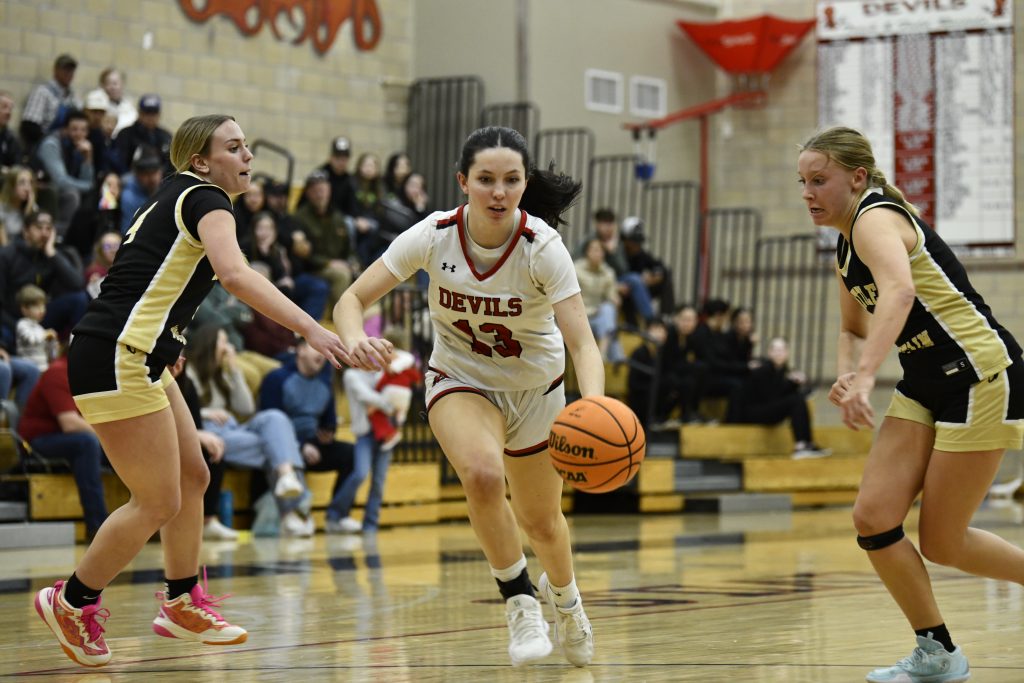
Eagle Valley senior Lily Brueck is one of two returners who logged significant minutes on last year’s league championship squad.
Juan Pena/Courtesy photo

After saying goodbye to the eight seniors who led Eagle Valley to one of its best seasons ever, head girls basketball coach Vinny Cisneros said one of the main storylines this winter will be how quickly the new bunch builds chemistry and capitalizes on meaningful experience.

“Our group is young and has very little varsity experience,” Cisneros stated in contrasting the 2025-26 squad to last year’s group, which captured the program’s first 5A Western Slope League title and won a game in the first round of the state tournament. “Last year’s championship team spent three years playing together at the varsity level. This team needs to build on-floor chemistry and learn how to compete at the varsity level.”

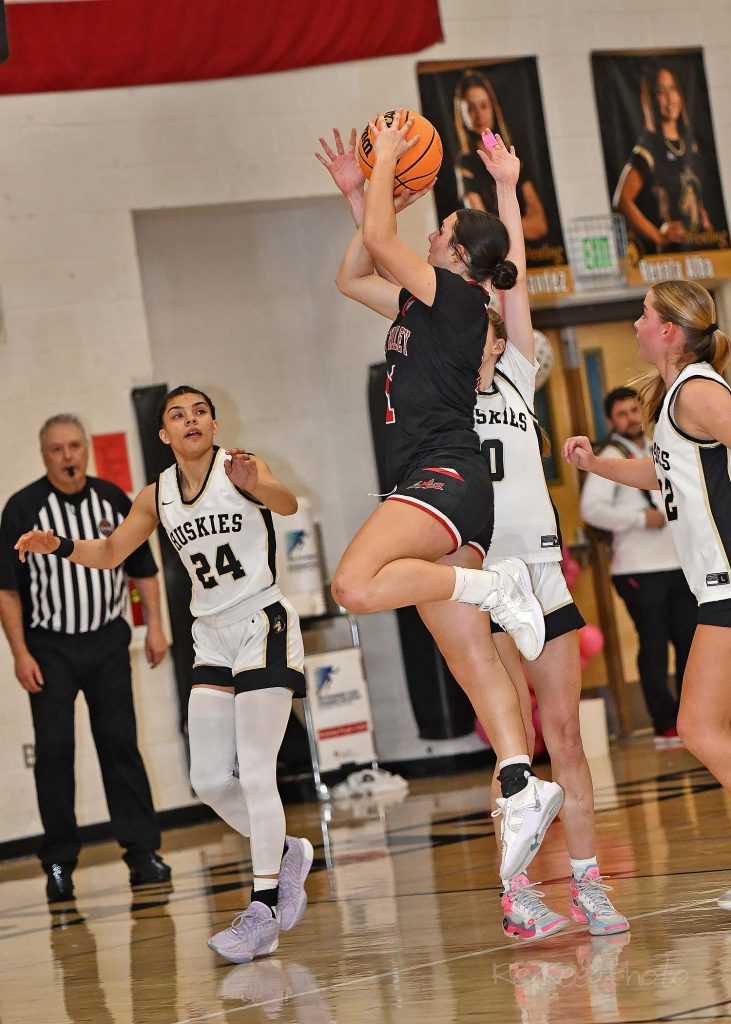
Eagle Valley graduated Western Slope player of the year Addison Mandeville from a squad that captured the school’s first league title and advanced to the state tournament. The Devils are currently off to a 4-4 start to the 2025-26 season.
Rex Keep/Courtesy photo

Eagle Valley closed last year’s regular season on a five-game win streak, ultimately finishing 13-12 overall and 5-1 in conference play; the lone blemish being a one-point loss to Summit. The team graduated its top-3 leading scorers and rebounders. Addison Mandeville — who now plays soccer for Metro State University in Denver — averaged nearly 10 points and 3.4 steals a game en route to earning league player of the year honors. They also lost center Abby Talbot’s 9.6 points and 7.3 boards a contest and Zakia Shreeve’s length and speed on both ends of the court. Current seniors Ella Webster and Lily Brueck were the only returners who logged significant minutes last winter. Over the off-season, Cisneros said the squad ran its usual gamut of summer team camps, including one at Western University and the Gold Crown Foundation camp in Lakewood.


After starting the year 1-4, Eagle Valley has found its groove in the final weeks before Christmas. The Devils won three in a row, including 20-point victories over Steamboat Springs and Grand Junction Central and a 49-16 win over Moffat County before falling to Grand Junction 56-44 on Saturday. Freshman Hannah Miano and senior Ella Webster have led the way offensively, with both players averaging double digit points through the first eight contests. Miano has also been pulling down 6.6 rebounds per game as well.

Against the Tigers, Miano drilled three triples for a 15-point outing. Cisneros said Terra Hasley and Brueck have anchored the defense all year. Hasley had nine points and nine boards to go along with two blocks and two steals on Saturday and Brueck dished out five assists and a pair of blocks as well.

Support Local Journalism


“Despite the loss, we finished December playing our best basketball of the young season,” Cisneros remarked. “We’re a young team trying as quickly as we can to develop chemistry and varsity experience. Our defense is the cornerstone of our identity and we are starting to find our offensive rhythm.”

Eagle Valley opens up league play on Jan. 26 against Summit before traveling to Edwards to face Battle Mountain on Jan. 29.

“Every league game is huge. Our league is only four teams, and every game means a lot towards winning a league title,” said Cisneros, whose expectations remain high going into 2026. “Despite our sub-500 start, I expect us to continue to improve (through) the early parts of January leading up to league play, where we intend to defend our league championship.”


Link

Continue Reading

Rec Sports

Alabama WBB freshman Ace Austin on her adjustment to the college game

Published

on


Dec. 23, 2025, 4:04 a.m. CT

Two-time Alabama Miss Basketball and former Spring Garden standout Ace Austin is starting to look like the player that dazzled high school basketball fans across the state.

Now with Alabama and finding a stride after a training camp injury kept her out of the season’s first game, Austin is averaging 7.3 points per game for the Crimson Tide (14-0) as a key rotational piece in the program’s best start ever.


Link

Continue Reading

Rec Sports

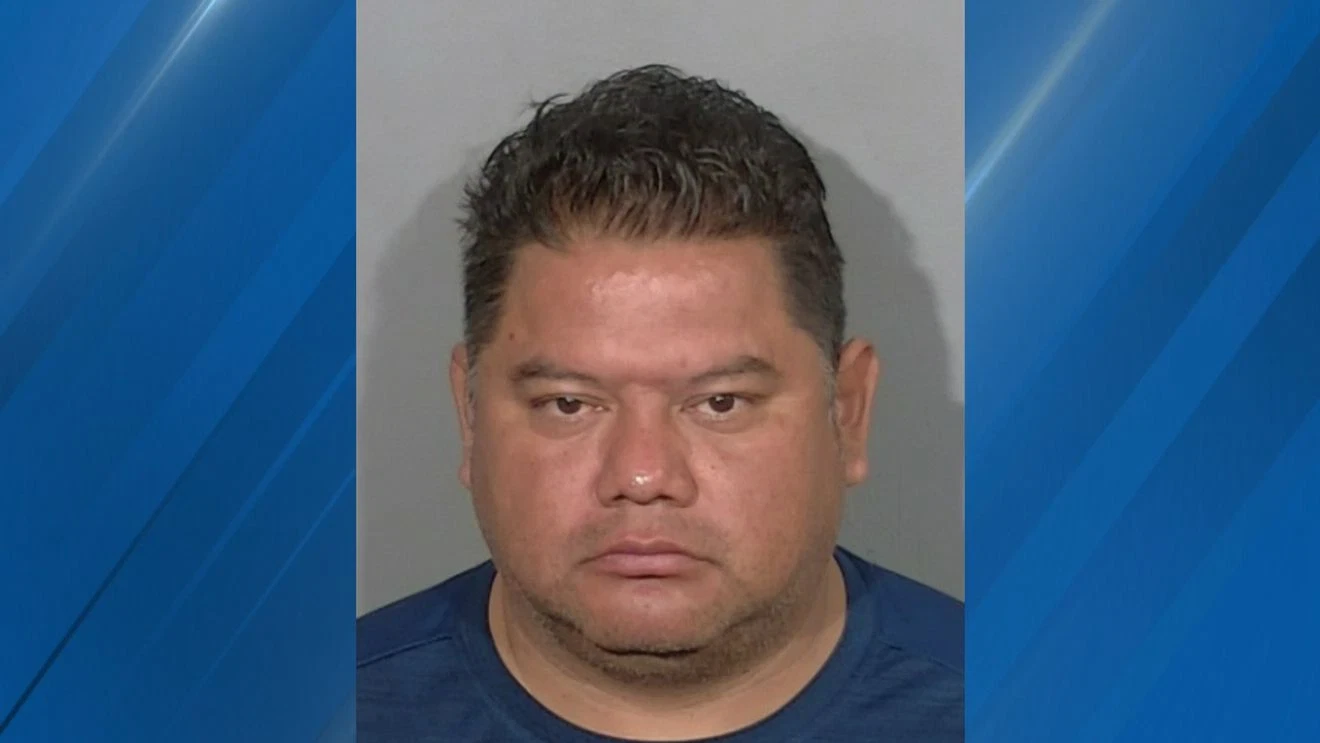
Las Vegas youth soccer coach accused of sexually assaulting teenager

Published

on


NOTE: This report contains details related to alleged sexual assault of a minor. Discretion is advised.

LAS VEGAS (KSNV) — A teenage girl accused a Las Vegas youth soccer coach of sexually assaulting her after he offered to give her a ride home, according to an arrest report.

Las Vegas Metropolitan Police said Sergio Reyes Rojas, 44, was taken into custody on suspicion of sexual assault against a child under 16.

He had served as the director and coach of Las Vegas Diversity FC. The organization said in a statement that the allegations did not involve any current or former members of the club or the youth sports community.

News 3 has reached out to Reyes Rojas’ attorney for comment.

An arrest report states that a 14-year-old girl told detectives that a man driving a truck approached her on a November night as she was walking home and asked if she needed a ride. She got into the truck, and the man drove them to a gas station, where he bought some cocktail mixes.

She said the man then parked the truck in a lot and gave her one of the drinks. She said she started to feel tired and went to sleep, and when she woke up, the man was sexually assaulting her, the report states.

The man then told her the truck wouldn’t start and she would have to walk home. She said she wandered around the Strip, then took a bus and walked the rest of the way.

Authorities collected a sex assault kit, and a DNA test matched Reyes Rojas, the report alleges.

Detectives also retraced the girl’s steps and and got surveillance video from the gas station, which showed a man buying six cocktails. Police got a license plate from his truck and matched the vehicle to one registered to Reyes Rojas. They also found video of the truck driving into a custom detailing shop and the girl walking through the property.

LVMPD’s sex offender apprehension program located Reyes Rojas and took him into custody earlier this month.

He declined to answer a question about what kind of vehicles he owned and later said he would not answer questions without an attorney, according to the report. Police got warrants to collect his clothing and truck for forensic processing.

Court records show Reyes Rojas is facing eight felony counts, including two counts of sex assault against a child. A preliminary is scheduled for Wednesday, Jan. 6.


Link

Continue Reading

Most Viewed Posts

Trending