
Sports
Inside the world of sporting directors

Players are the focus of any football transfer storyline.
Managers, agents and club owners add to the intrigue, of course, but it’s a relatively new role which has been garnering increased attention with every transfer window — the sporting director.
Fundamentally, the remit of the sporting director is to be be a link between the coaching staff and the club’s hierarchy, providing continuity, sustainability and a stable strategy in the club’s football operations.
Advertisement
“The sporting director is the safeguard of the culture of the club,” says Damien Comolli, Juventus’ general manager and previously sporting or football director at Fenerbahce, Liverpool, Saint-Etienne and Tottenham. “We need to make sure that short term, medium term and long term are looked at with the same level of interest.”
While sporting directors were scarce in the Premier League at the start of the 21st century, they have become the norm at top-level clubs, with many known among fans by name.
Last October, Txiki Begiristain announced that he is leaving Manchester City this summer after 12 years at the club, with Hugo Viana replacing him. On the other side of the city, controversy ran high when Dan Ashworth left his role as Manchester United sporting director after just five months in the role.

Hugo Viana is Manchester City’s new sporting director (Gualter Fatia/Getty Images)
Former Atletico Madrid sporting director Andrea Berta was confirmed as Arsenal’s new sporting director in March, replacing Edu after the Brazilian’s shock resignation in November to join Evangelos Marinakis’ multi-club group.
Meanwhile, Richard Hughes arrived as Liverpool’s sporting director last summer with a daunting in-tray that included crucial contract negotiations for star trio Virgil van Dijk, Mohamed Salah and Trent Alexander-Arnold.
The lens on the sporting director has never been sharper, yet what they do is still often misunderstood.
To gain a better understanding, The Athletic interviewed several sporting directors and collaborated with analytics company Traits Insights who collected data — including sporting background and experience — on over 300 sporting directors (or equivalents) across 15 major European competitions.
Crucially, what makes a successful one?
How a sporting director fits into a club’s structure
For all the attention it has garnered, there is still ambiguity about the role itself between different clubs. The title of ‘director of football’, ‘sporting director’, ‘general manager’, ‘chief football officer’ and ‘technical director’ are ultimately synonyms for the same job, though what clubs expect from that job does vary.
Advertisement
While the role of a head coach or manager is clearly defined, a sporting director does not have a one-size-fits-all approach. Depending on the level of the club or league, the infrastructure built around the role can vary hugely. For some clubs, there will be a single director who sits at the centre of the system; for others, there will be shared responsibilities spanning multiple roles.
“In Germany, you might have a sporting director, a ‘kaderplaner’ (head of recruitment), a technical director, and then an executive only responsible for sport,” says Jonas Boldt, former sporting director at Hamburg and Bayer Leverkusen.
“When you also think about the coach too, this can have issues at times, because it is difficult to know who has the power or responsibility, and where to share those roles out clearly.”
The fact that football is developing so rapidly, not just the Premier League, has added to the uncertainty over exactly what the sporting director is responsible for. As Comolli says, “The structure of clubs is changing.”

Comolli at the Club World Cup with Juventus (Charly Triballeau/AFP/Getty Images)
“These roles have existed for much longer in Germany, Italy and Spain than it has in England,” he continues, “but I would not distinguish from country to country — I would say the industry is changing as a whole.
“In the last five years, I’ve seen the role evolve. For example, Manchester City were very successful with Txiki (Begiristain), and then they brought Simon Timson in as a performance director (in 2020), who gets involved in a lot of areas.
“Ten years ago, I would have told you that they are taking work from each other, but actually they complement each other really well — the job of one becomes two, and the industry is now going in that direction.”
Brentford is a good example of two roles dovetailing together in the Premier League.
Director of football, Phil Giles, is responsible for squad management, squad planning and contract renewals at the club while technical director, Lee Dykes is in charge of Brentford’s recruitment department.
Advertisement
The two work in tandem towards a shared goal of ensuring the best possible talent ends up on the pitch — or as Giles puts it, “Mine and Lee’s job is to do the nuts and bolts of the transfer.”
When looking through the number of sporting director (or equivalent) roles across Europe’s major leagues, the contrast in structure starts to become clearer.
As Comolli said, sporting director roles have long been established in Italy, Germany and Spain, as well as in the Netherlands, with a minimum of one position filled within each club across each of those respective leagues. Ligue 1 had the lowest share of sporting directors within the league, with 15 of 18 clubs having a position filled.
With the Premier League catching up in recent years, 19 of the 20 clubs had at least one sporting director (or equivalent) in place last season — up from 13 out of 20 in 2016-17. Of the 20 clubs, eight (40 per cent) split the structure across two roles, akin to Giles and Dykes.

The pathway to being a sporting director
Previous experience among sporting directors can vary significantly.
Returning to Giles and Dykes as an example, the former gained a PhD in statistics before working his way up to head of quantitative research at Smartodds, which is owned by Brentford majority owner Matthew Benham.
Meanwhile, Dykes joined Brentford as head of recruitment after being sporting director at Bury FC — with a background in coaching having previously been assistant manager at Carlisle United.
Analysis by Traits outlined four ‘archetypes’ that best describe the most common pathways sporting directors follow prior to landing the role. They are:
- The Manager, who is responsible for the club’s overarching strategy across departments, such as first-team staff, recruitment, loans, academy, medical, and sports science.
- The Recruiter, who leads scouting and transfer strategy, identifying players that fit within the club’s game model. This often includes individuals with a data and analytics background.
- The (ex-)Player, who transfers their industry knowledge and experience on the pitch to matters off the pitch. In the Premier League, Richard Hughes (Liverpool), Mark Noble (West Ham United), and (the now departed) Dougie Freedman (Crystal Palace) are examples of sporting directors who were players.
- The Executive, who leads on the club’s football business, for example, co-ordinating player deals, contract negotiations, and staff turnover.
Crucially, these archetypes are not mutually exclusive. Rather than pigeon-holing specific sporting directors to specific categories, it is better to think of the diverse pathways as a Venn diagram with plenty of crossover in the skills that are acquired from the respective backgrounds.

“I would add one other pathway, which is the academy pathway,” says Comolli. “Dan Ashworth comes from an academy background, for example. Sassuolo have won promotion back to Serie A this season, and their sporting director, Francesco Palmieri, was the club’s academy manager for nine years before he got this role. Incidentally, he was also a former player himself.”
Advertisement
It is a sentiment shared by others across the industry, with a club’s academy acting as an ideal breeding ground for a role within the senior set-up.
“I think working as an academy manager can be a useful step to prepare (to be a sporting director),” says Johannes Spors, sporting director at Southampton and formerly of multi-club 777 Partners, Genoa, and Vitesse Arnhem.
“You basically make the same decisions, just with less financial impact. At times, academy directors manage more staff members than I do, but the decisions simply become more impactful the higher you get.”
It is common for appointed sporting directors to arrive into their roles having had experience elsewhere within football clubs. For example, Norwich City’s sporting director Ben Knapper was the loan and pathway manager at Arsenal before making the move to the Championship side.
However, Traits’ analysis showed that 17 per cent came from non-technical roles or roles outside of football altogether. A notable example would be Tottenham Hotspur’s recently departed chief football officer Scott Munn, who held roles in commercial operations of the National Rugby League and Australian Football League before later working as a CEO at Melbourne City and later City Football Group.
His role at Spurs as chief football officer saw him focus more on football strategy, with the role created after an external review of the club’s footballing activities.
The core management skills and business acumen required to fulfil the role are often separate from the football industry itself. There can often be a cyclical criticism between “people who know the game” and “those who know how to run a successful business” when discussing those within the boardroom, but the evidence shows that having a background within football is not always a precursor to working within the industry.

As a further example, Aston Villa’s director of football operations, Damian Vidagany, worked as a journalist in his early career before taking a role as Valencia’s chief media officer and later becoming chief executive of DV7, a media agency founded by former Spain international David Villa.
Working alongside Monchi, the renowned sporting director who is now Villa’s president of football operations, Vidagany is regarded as one of Unai Emery’s most trusted colleagues as the club aims to re-establish itself among Europe’s elite.
“My role allows Monchi to be focused on the sporting and scouting side of football, creating and developing a strong network of scouts,” Vidagany said in 2023. “We work as Batman and Robin because the structure of Villa needs to grow very fast.”

(Neville Williams/Aston Villa FC via Getty Images)
In his current role at Southampton, Spors is keen to highlight that a large part of being a good sporting director is about appointing the right people and developing the club’s structure.
“I think it’s getting more and more important that you are simply a good leader for the organisation,” says Spors. “This is the most important thing. There is such a diversity of clubs and how they see their identity, but diversity is always the best — it is important to have people from every background.
Advertisement
“For example, data is obviously becoming more important in this space — especially with the rise of American ownership. When I arrived at Southampton, the first thing I did was to hire my assistant (Elliott Stapley), who was the former head of data and analytics at 777, and the second thing I did was to change the whole recruitment structure to make sure the data and analytics team were reporting to me.”
Judging a sporting director’s success
Much like the role itself, measuring success depends on the context of the club. Silverware might be the ultimate physical representation of success, but victories can be just as important off the pitch as on it.
“This is a very technical job, so I need to innovate each department to make sure that we have a communication structure and a leadership structure with accountability in every department,” says Spors. “The better we get there, the more we can increase the chance of on-pitch success.”
For Boldt, who was sporting director at Hamburg from 2019 to 2024, the club’s finances impacted much of his tenure. The 2021-22 financial year was the first time the club posted a positive annual profit in 12 years.
“My job was to make the club more stable, to recreate the identity, to develop young players and to help the coaches to do their job,” Boldt said. “I’m not there anymore, but it’s the same team, and this project together was four years in the making — and we can now see the output from their efforts.”

Jonas Boldt was sporting director at Hamburg (Cathrin Mueller/Getty Images)
Now, the structure of the club is in a far stronger position after securing a return to the Bundesliga this season following six seasons out of the top flight. Last year saw the club record a financial profit for the third year in a row, with its Volksparkstadion stadium debts paid off two years ahead of schedule.
While Boldt was not the one holding the purse strings, Hamburg’s financial landscape meant he had to be skilful in ensuring the club operated within its means when buying and selling players.
Advertisement
“To have success, you have to be one step ahead. Sometimes, you need to let young players go to another club and give them space to develop (elsewhere) — but in football, nobody sees this as success because you’re often linked to how many titles you won,” he says.
“For a sporting director or executive, we are responsible for the strategy and the vision of the club. I understand that you need results, but Hamburg is more stable than ever before, with less debt than ever before. If we had been promoted immediately (back to the Bundesliga), it would have likely been a disaster because the club was unstable, but now the base is so much stronger than the years before. That is success for me.”
Stability should be synonymous with the role. It might sound obvious, but a sporting director needs to be in the position for the long term to implement such stability, which has not always been the case among some Premier League sides.
Ashworth left Newcastle United before his short-lived stint at Manchester United, with his replacement Paul Mitchell announced that he was also parting company with Newcastle last month after less than a year in the role — leaving the club with the task of appointing their third sporting director in rapid succession.
Liverpool’s appointment of Hughes brought stability to the club last summer after a disruptive 18 months that saw Jorg Schmadtke hired on a short-term contract following the departure of previous sporting director Julian Ward — who had only replaced Michael Edwards a year before. Had a long-term sporting director been in place, the public contract sagas involving Van Dijk, Salah and Alexander-Arnold might have been handled differently.
The common thread is that nothing is ever guaranteed on the pitch, but the good sporting directors will find a way to control the controllable and give the club long-term improvement, regardless of short-term ups and downs.
“All I can do is try and increase the chance of success,” says Spors. “As a sporting director, we can do much more than just sign players or a coach. We can build the culture. We can make sure every department is on the best level and is pushing to the next level.”
“Getting three points on a Saturday is just the result of all the work that sits behind it.”
(Top image illustration: Demetrius Robinson / The Athletic; istock)


OMAHA, Neb. (WOWT) – Creighton volleyball is on a heater in the NCAA transfer portal, which opened Dec. 7 and closes Jan. 5.
Texas middle blocker transfer Ayden Ames committed to the Bluejays Friday.
A former Nebraska commit before flipping to Texas in 2023, Ames averaged 1.52 kills and 1.11 blocks per set with a .368 hitting percentage as a sophomore this season. She has two years of eligibility remaining.
Ames is the second transfer commitment this offseason, joining former Kansas setter Katie Dalton, who pledged to Creighton for her final season on Dec. 17.
Dalton helped lead the Jayhawks to a NCAA regional semifinal appearance, where they lost to Nebraska. She averaged 8.76 assists and 2.27 digs per set and earned All-Big 12 Second-Team honors.
Bluejays’ coach Brian Rosen has two AVCA Second-Team All-Americans to replace in outside hitter Ava Martin and middle blocker Kiara Reinhardt. They also lose Third-Team All-American setter Annalea Maeder.
Yet, the program still made an NCAA regional final this season despite losing seven seniors and two All-Americans from the 2024 roster.
Copyright 2025 WOWT. All rights reserved.
Sports
No. 1 seed Kentucky volleyball advances to National Championship after beating No. 3 seed Wisconsin in 5-set thriller – Kentucky Kernel
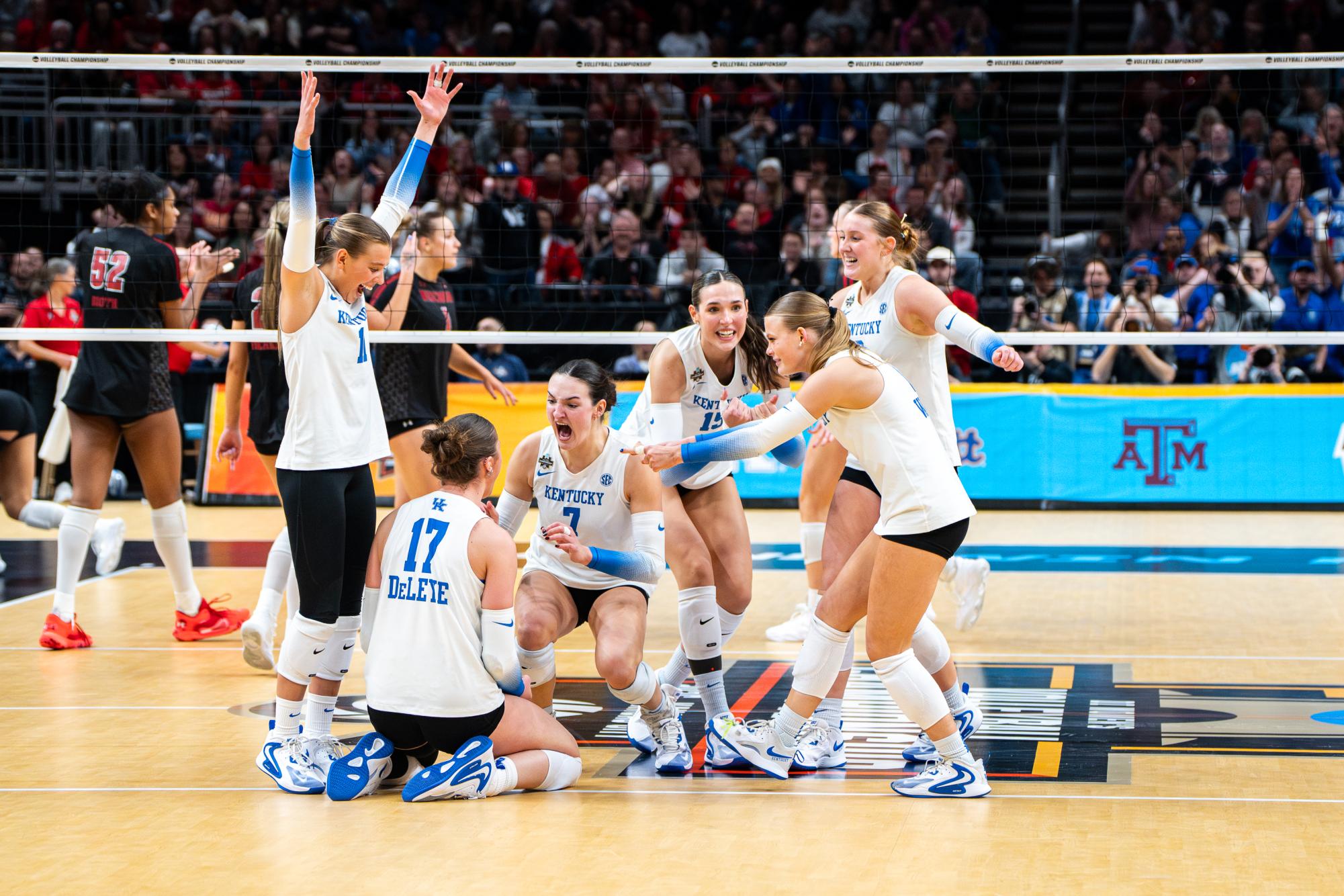
No. 1 seed Kentucky volleyball (30-2, 15-0 SEC) advances to the 2025 National Championship with a 3-2 win over No. 3 seed Wisconsin (28-5, 17-3 Big Ten) in the Final Four.
This will be Kentucky’s second National Championship appearance in program history, with the first coming in the 2020-21 season when Kentucky took home the title.

Wisconsin dominated the first set from start to finish, taking a 1-0 match lead with a 25-12 win in set one. Kentucky used a 6-0 run late in set two to pull ahead and even the match with a 25-22 set two victory. The Badgers attack simply overpowered Kentucky again in set three, allowing Wisconsin to win the set 25-21 and take a 2-1 lead in the match. Kentucky fended off a late comeback attempt by Wisconsin in set four, taking the set 26-24 to even the match at 2-2 and force set five. Kentucky got out to a 8-2 lead early in set five before taking the set 15-13, winning the match.
AVCA All-American First Team member Mimi Colyer was the driving force behind a Badger attack that kept the pressure on all night. She led the match with 32 kills and had a .348% hitting percentage.
Behind Colyer, Wisconsin totaled 77 kills and hit .375% in the match.
The Wildcats powerful outside hitter duo of Eva Hudson and Brooklyn DeLeye were the engine of Kentucky’s attack. Hudson had a team leading 29 kills for a new season high and hit .455%. DeLeye added 15 kills of her own and led the team in blocks with five and digs with 14.
The Wildcats totaled 65 kills with a .254% hitting percentage.
Set One
Wisconsin began the match with a 3-0 run, with back-to-back kills from Colyer.
The Badgers extended this lead to 8-2 with a 3-0 run, this forced Kentucky to take its first timeout early in the first set.
Wisconsin had seven kills with a perfect 1.000% hitting percentage at this point, the Badgers were overwhelming the Cats defense early.
The Badgers perfect hitting continued through 10 attempts, pushing Wisconsin ahead 15-6. This forced Kentucky to take its second timeout of the set.
The Wildcats defense has been a strength this season, but Wisconsin’s attack tore it up in the first half of set one.
Wisconsin continued to extend its lead following UK’s timeout, pulling ahead 21-9 with a 5-1 run.
The Badgers dominated set one, taking a 1-0 lead with a 25-12 set win.
Wisconsin recorded 15 kills in the first set with a .682% hitting percentage, the Badgers made zero attack errors.
Kentucky recorded just nine kills with a .056% hitting percentage, thanks largely to seven attack errors.
Wisconsin’s Colyer and Carter Booth both recorded seven kills in set one.
The Wildcats seemed to lack any answers for Wisconsin’s attack in the set, and couldn’t get their own going.
Set Two
Kentucky pulled out to a 3-1 in the second set, thanks to a kill and block assist from DeLeye.
This lead was extended to 6-3 after a 3-1 run by Kentucky.
Wisconsin mounted 6-2 run to take a 10-9 lead.
Wisconsin took a 15-14 lead into the media timeout after the set was tied at 10-10, 11-11, 12-12, 13-13 and 14-14.
a 3-0 Wildcat run allowed Kentucky to pull ahead 21-20, forcing Wisconsin to take its second timeout of the set.
Kentucky continued its run through the timeout, with another 3-0 run to force set point at 24-20.
Wisconsin stayed alive with a 2-0 run that shortened Kentucky’s lead to two points. Kentucky called its first timeout of the set as a result.
Hudson recorded her sixth kill of the set after the timeout, allowing Kentucky to win set two 25-22 and even the match at 1-1.
The Badgers attack cooled off in the second set, while Kentucky’s began to find its rhythm.
Wisconsin had 14 kills in set two with a hitting percentage of .229%. The Badgers had six attack errors after having none in the first set. The Badgers also recorded six service errors.
Kentucky had 13 kills with a .258% hitting percentage.
Hudson not only led UK in kills in the set, she also recorded two blocks and four digs.
Booth had five kills in the set, bringing her total to 12 kills at a .786% hitting percentage through two sets.
Set Three
Colyer recorded four straight kills as Wisconsin got out to a 4-2 lead in set two.
Another 4-2 run by the Badgers gave them a 8-5 lead, with Colyer accounting for five of those points.
An injury forced Wisconsin to call its first timeout of the set with an early lead.
Wisconsin mounted a 4-1 run after its timeout to pull ahead 12-7, this forced Kentucky’s first timeout of the set.
The Wildcats mounted a 4-1 run that shortened the Badgers lead to 15-13.
A 3-0 run by Kentucky allowed the Wildcats to pull within one, Wisconsin called its second timeout of the set with a 21-20 lead.
Wisconsin forced set point at 24-21, leading to the Wildcats second timeout of the set.
The Badgers won the first rally out of the timeout to win set three 25-21, taking a 2-1 match lead.
Colyer had 12 kills in set three, leading the Badgers oppressive attack. Wisconsin had 21 kills total and hit .386% in the set.
The Wildcats had their best attacking set of the match with 16 kills and a .326% hitting percentage, but they were unable to keep up with Wisconsin.
DeLeye and Hudson each had five kills in the set.
Kassie O’Brien assisted on 15 of the Cats 16 kills in the set, nearly doubling her match total.
Set Four
Kentucky got out to a 3-1 lead in set four, Wisconsin responded with a 4-1 run that put the Badgers ahead 6-4.
The Wildcats mounted a 3-0 run, taking a 7-6 lead with a service ace from Molly Tuozzo.
Wisconsin responded with a 3-0 run of its own to pull ahead 9-7.
Kentucky went into the media timeout on a 5-1 run, allowing the Cats to hold a 15-13 lead. Hudson was responsible for 3 of these points, with two kills and a service ace.
A 3-1 Wildcat run allowed Kentucky to extend its lead to 19-16.
Wisconsin took a timeout after Kentucky pulled ahead 20-17.
The Badgers pulled within one point twice but called another timeout when UK pulled ahead 23-21.
The Wildcats forced set point at 24-21, but the Badgers pulled back to within one and forced a Kentucky timeout.
Wisconsin evened the set at 24-24, but Kentucky scored on two consecutive rallies to win the set 26-24. This evened the match at 2-2, forcing a shortened fifth set.
Set Five
A service ace by Trinity Ward gave UK a 2-1 lead in set five, a solo block by Lizzie Carr brought the lead to 3-1. Hudson’s kill turned this into a 4-0 run that forced a Wisconsin timeout.
The Wildcats continued through the timeout, an error by Wisconsin and kill from DeLeye put UK ahead 6-1.
O’Brien recorded a kill then assisted Hudson to put Kentucky ahead 8-2 at the side switch.
Wisconsin came out of the side switch with a 4-1 run to shrink UK’s lead to 9-6.
DeLeye’s third kill of the set put Kentucky ahead 11-7, forcing Wisconsin to call a timeout.
Wisconsin mounted a 2-0 run out of the timeout, coming within two points.
A kill by Hudson forced match point at 14-11, but Wisconsin responded with a 2-0 run to cut the Wildcats lead to 14-13. This forced a timeout from Kentucky.
Kentucky came out of the timeout and forced a block error to win the match with a 15-13 victory in set five.
The Wildcats will take on No. 3 seed Texas A&M in the 2025 National Championship at the T-Mobile Center in Kansas City, Missouri, on Sunday, Dec. 21, at 5 p.m. ET.
It will be the first time in NCAA history that two SEC teams will face off in the National Championship. The Wildcats are the only team to win the National Championship as a member of the SEC.
The Wildcats went on the road to defeat Texas A&M in four sets on Oct. 8, 2025, en route to Kentucky’s undefeated SEC run and ninth consecutive SEC regular season title.
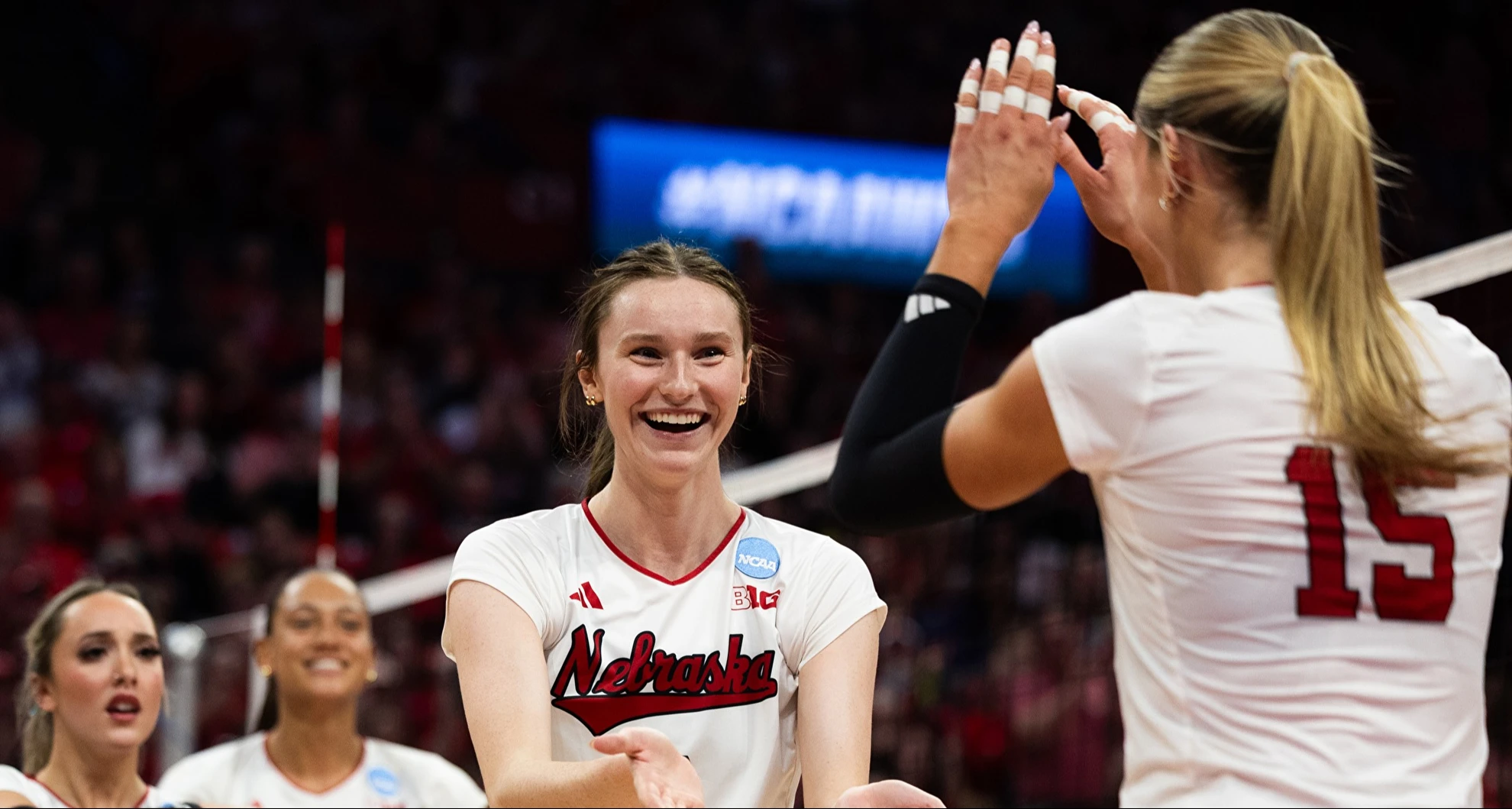
Nebraska volleyball’s Andi Jackson and Bergen Reilly received top positional awards at the AVCA Awards Banquet at the Kansas City Convention Center on Friday.
Jackson was named the Middle Blocker of the Year, while Reilly was named the Setter of the Year. The AVCA positional awards are new this season.
Pitt junior Olivia Babock was named the AVCA Player of the Year for the second straight season, as well as Opposite of the Year. Wisconsin’s Mimi Colyer took home Outside Hitter of the Year, and Iowa State libero Rachel Van Gorp was Libero of the Year.
Reilly set the Huskers to a school-record .351 hitting percentage, as the Big Red concluded their season with a 33-1 overall record and 20-0 mark in Big Ten play en route to a third straight conference title. Reilly averaged 10.47 assists per set and 2.70 digs per set. She also totaled 73 kills, 67 blocks and 19 aces.
Reilly was named a first-team AVCA All-American, Big Ten Player of the Year, Big Ten Setter of the Year, AVCA Region Player of the Year and All-Big Ten First Team. NU’s .351 hitting percentage ranks first nationally and is the best hitting percentage by a Big Ten team since 2009 Penn State.
A junior from Sioux Falls, S.D., Reilly set Nebraska to a .400 or better hitting percentage nine times this season, a school record in the rally-scoring era. Reilly had double-doubles in all six of the Husker matches that went longer than three sets, and she had four double-doubles in sweeps.
A three-time AVCA All-American and one of four finalists for AVCA Player of the Year, Reilly ranks No. 3 in school history in career assists in the rally-scoring era with 3,723. Her career assists per set average of 10.70 ranks No. 4 among active Division I players and No. 2 in school history in the rally-scoring era.
Jackson was chosen to the AVCA All-America First Team for the second straight year, as well as the All-Big Ten First Team. She was also an AVCA Player of the Year Semifinalist and AVCA All-Region Team for the third straight year.
The junior middle blocker from Brighton, Colo., averaged 2.74 kills per set on .467 hitting with 1.12 blocks per set and 16 aces. Her .467 hitting percentage led the nation and was the No. 3 hitting percentage in school history for a single season.
In conference-only matches, Jackson hit .559 to break the Big Ten record for hitting percentage in conference-only matches in a season, which was .541 by Arielle Wilson from Penn State in 2008. Jackson ended her junior season with a career hitting percentage of .437, which is the No. 1 mark in school history and the No. 1 mark among active Division I players.
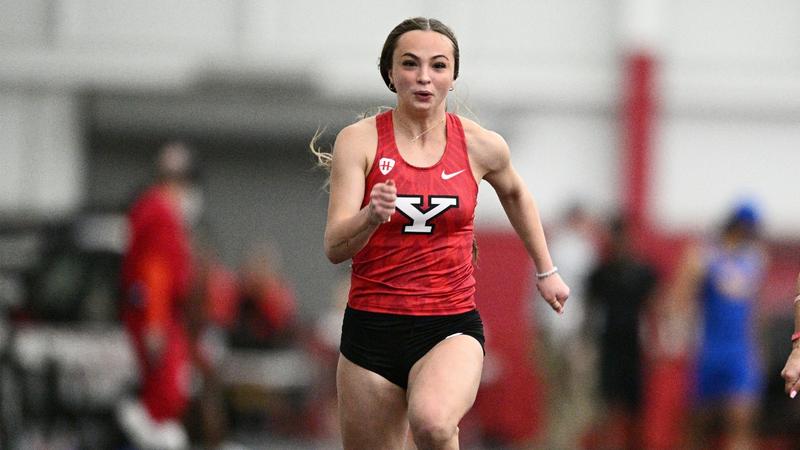
2026 Youngstown State University Indoor Track & Field 14th Annual Collegiate Invitational Meet Presented by Southwoods Health will start at 1 pm | Friday, Jan. 16
Entry Registration Opens up on Direct Athletics :
Friday, December 19 at 5pm
Time Schedule of Events
Running Events start at 1pm
All Field Events start at 1pm
Running Events — Rolling Schedule Women first, Men to Follow
1pm Women 5000M
Men’s 60M Hurdles Qualifying Round
Women’s 60M Hurdles Qualifying Round
Women’s 60M Dash Qualifying Round
Men’s 60M Dash Qualifying Round
Men’s 5000M
Men’s 60M Hurdles PRELIMS
Women’s 60M Hurdles PRELIMS
Women’s 60M Dash PRELIMS
Men’s 60M Dash PRELIMS
Women’s Mile Run
Men’s Mile Run
Women’s 400M
Men’s 400M
Women’s 60M Hurdles FINALS
Men’s 60M Hurdles FINALS
Women’s 60M Dash FINALS
Men’s 60M Dash FINALS
Women’s 500M Dash FINALS
Men’s 500M Dash FINALS
Women’s 800m
Men’s 800m
Women’s 200M Dash
Men’s 200M Dash
Women’s 3000M Run
Men’s 3000M Run
Women’s 1600M Relay
Men’s 1600M Relay
Field Events Start at 12noon
Seeded Women’s Pole Vault
Seeded Men’s Pole Vault
Unseeded Women’s Pole Vault
Unseeded Men’s Pole Vault
Women’s High Jump–Men’s High Jump to follow
Women’s Weight Throw–Men’s Weight Throw to follow
Men’s Shot Put–Women’s Shot Put to follow
Men (West Pit) and Women (East Pit)
Long Jump–Triple Jump follow 20 minutes upon completion of Long Jump
**Finals in field events will consist of the top Nine marks from the qualifying rounds.**
Meet : Open NCAA sanctioned Indoor Track & Field Competition.
Timing: Fully automatic FinishLynx system
Location: The Watson and Tressel Training Site (WATTS) on the YSU campus. The WATTS features a full-length Shaw Sportexe Power Blade HP+ synthetic turf system football field, a 300-meter state-of-the-art mondo track surface, two long-jump pits, a high-jump pit, four batting cages, protective netting, training room and locker rooms.
GPS address: 651 Elm St. | Youngstown, OH 44555
Entries: Entries are due by Tuesday, January 13 by 7pm on Direct Athletics, consisting of event entries with best marks from the previous year or realistic projected marks. All entries will be done on-line at www.directathletics.com.
Please visit the Direct Athletics website at your earliest convenience in order to familiarize yourself with how the entry process works.
Also, please limit FIVE athletes per event. If you have an event with more than five quality athletes, please text Brian Gorby at (330) 519-7591 and we’ll help to get more entry’s added, if needed.
We always try to help accommodate additional team /individual additional Entry’s.
**Note: Please check YSUsports.com after the entry deadline for changes or adjustments to the meet time schedule!
Internet Entry Lists: Final entry lists will be posted on our website, YSUsports.com on Thursday, January 15. Please check to make sure your athletes are entered correctly. If there are mistakes or scratches, please email bdgorby@ysu.edu & ysutrackmeets@gmail.com .
Entry Fees: $ 500 per each team, men & women genders are separate, consisting of 10 or more individuals in unlimited events are paid online, when you complete Entry’s on Direct Athletics or $ 25 per individual event entry & paid online at Direct Athletics.
ENTRY FEES
$ 25 per ENTRY (i.e. 2 events entered would be $ 50 ) Entry fees must be paid in advance online when you enter on DirectAthletics (all major credit and debit cards accepted).
Relay only Entry’s $ 7 per runner for a total of $ 28 per relay team.
REFUND POLICY
Outside of meet cancellation, there is a strict NO REFUND policy on entry fees.
Absolutely no refunds will be processed due to scratches, change of plans, inability to travel, illness, injuries, etc.
Spikes: ONLY 1/4 inch or shorter pyramid spikes will be allowed and all spikes will be checked prior to events. NO pin or needle spikes, spike elements, or any other type of spike will be allowed.
High Jump: All high jump competitions will be conducted on the Mondo surface.
Sections/Heats/Flights: Flights will be seeded by distance with best marks in the latest sections/flights.
Finals in field events will consist of the top nine marks from the qualifying rounds.
There will be prelims and finals in the 60 and 60h. All other races will be run as sections against time with the fastest heats being run first.
Implement Weigh-In: 30 minutes prior to event at the Throws area.
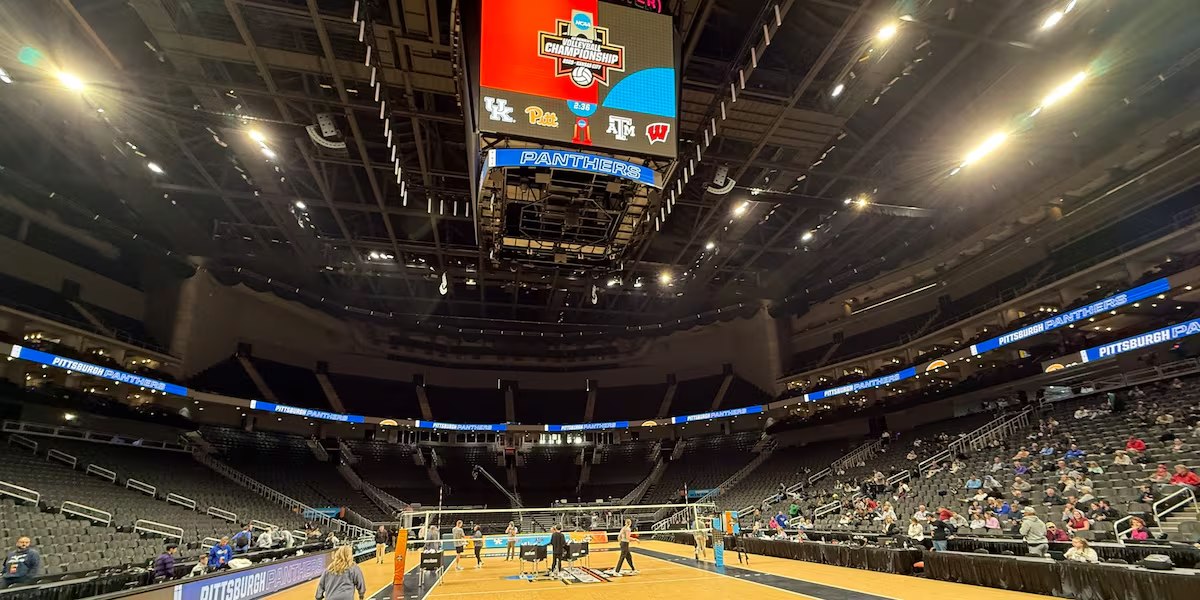
KANSAS CITY, Mo. (KBTX) – Texas A&M head coach Jamie Morrison and his squad have fought through the postseason for the ability to practice together one more time, he said.
This edition of Aggies will get the maximum number of practices a team can hold.
Thursday, third-seeded A&M swept No. 1 seed Pitt (29-27, 25-21, 25-20) to punch its first-ever ticket to the NCAA Tournament national title game inside Kansas City’s T-Mobile Center.
The Aggies will face Southeastern Conference-mate Kentucky Sunday at 2:30 p.m. for a shot to hoist a national championship trophy.
“This is crazy,” middle blocker Ifenna Cos-Okpalla said. “This is an absolute crazy experience. We have had faith in ourselves all year, from the first game of the season. We knew that we were capable of this, but now living it, like, ‘Wow.’ This is insane. It’s really cool.”
Outside hitter Kyndal Stowers paced the Aggies with 16 kills, followed by Logan Lednicky’s 14. Pitt’s Olivia Babcock was the match’s leading attacker with 22 kills.
A&M dominated the service line through the match, which included six service aces.
The Aggies went hit-for-hit with Pitt through an opening set that saw 17 ties and eight lead changes. Pitt weathered four Aggie set points, and had two of their own, before A&M finally put Set 1 away with a kill from Stowers.
Pitt put together an 8-0 run through the middle of the second set to take a 15-11 lead, but the Aggies immediately countered with their own 9-2 run to pull the match back in their favor. A 4-0 run ultimately put the set on ice, giving the Aggies a 2-0 lead.
A&M has built upon the experiences of the season and this set is was no different. In the Aggies’ Elite Eight win over Nebraska, the Cornhuskers put together an 8-1 run through the middle of the marathon fourth set that the Aggies ultimately dropped. Thursday, they cut off the skid before it cost them a set.
“We were like, ‘Hey, we’re not doing that again,’” Stowers said. “’They’re going on a run right now. We’re going to recognize that, props to them for what they’re doing, but we are going to go respond and we’re not going to let that keep happening.”
A&M closed out the third set on a 5-1 run to claim the match.
The Aggies hit .382 to Pitt’s .344 in the match.
“I’m proud of our team just because we talk a lot about staying present and enjoying moments and I thought, in all of those moments, we enjoyed every single second of it,” Morrison said. “Every single time we were pushed, we talked a lot about responses, and we had a response and that’s all you can ask for in these moments.”
The Aggies will be out for revenge Sunday, as Kentucky is the only squad that downed the Aggies in SEC play this season in a 3-1 Wildcat win in Reed Arena. It will be the first time in the history of the tournament two SEC teams will face each other in the championship game.
“Y’all keep hearing, ‘Why not us?’” Lednicky said. “Like, literally, ‘Why not us?’ I think we are considered the underdog in a lot of moments, just because we haven’t been here before. But we know we have all the right pieces so, ‘Why not us?’”
KBTX reporter Dylan Chryst Watkiss contributed to this report from Kansas City, Mo.
Copyright 2025 KBTX. All rights reserved.

WINSTON-SALEM, N.C. – The 2025-26 Academic All-District® Women’s Volleyball Teams, selected by College Sports Communicators, recognize the nation’s top student-athletes for their combined performances on the court and in the classroom. The CSC Academic All-America® program separately recognizes honorees in four divisions — NCAA Division I, NCAA Division II, NCAA Division III and NAIA.
The CSC Academic All-District® teams include the student-athletes listed at the links above.
Academic All-District® honorees were considered for advancement to the CSC Academic All-America® ballot.
For WSSU, Aria Caldwell and Zoe Chesson were named to the team.
Student-athletes selected as CSC Academic All-America® finalists are denoted with an asterisk and will advance to the national ballot to be voted on by CSC members. First-, second- and third-team Academic All-America® honorees will be announced Jan. 13, 2026.
The Division II and III CSC Academic All-America® programs are partially financially supported by the NCAA Division II and III national governance structures to assist CSC with handling the awards fulfillment aspects for the 2025-26 Divisions II and III Academic All-America® programs. The NAIA CSC Academic All-America® program is partially financially supported through the NAIA governance structure.

Creighton volleyball adds second high-major transfer commitment in Ayden Ames

Miami WR Malachi Toney inks NIL deal with Hellstar

No. 1 seed Kentucky volleyball advances to National Championship after beating No. 3 seed Wisconsin in 5-set thriller – Kentucky Kernel

Complete 2026 NASCAR Regional Schedule – Speedway Digest

NASCAR Team Ownership With Michael Jordan Has Led to Denny Hamlin Giving Up On His Precious Golf Time

Arch Manning taking pay cut after first Texas season didn’t go as planned

Carsen Ryan savoring opportunity to represent BYU – Deseret News
Tracking Texas Tech football’s 2026 transfer portal activity

One driver in, one driver out, and one driver changing teams for 2026

Record-Breaking PRI Show Sets The Pace For Motorsports Innovation

Jackson, Reilly Take Home AVCA Positional Awards – University of Nebraska

8 Great Reads: Must-Have Motorsports Books

$1.6 million WR makes NIL announcement before College Football Playoff

‘He was an everyman’: NASCAR driver Greg Biffle honored for humility, community service

YSU Collegiate Invitational Presented by Southwoods Health Meet Information

First Tee Winter Registration is open

Fargo girl, 13, dies after collapsing during school basketball game – Grand Forks Herald

CPG Brands Like Allegra Are Betting on F1 for the First Time

F1 Las Vegas: Verstappen win, Norris and Piastri DQ tighten 2025 title fight

Sycamores unveil 2026 track and field schedule

Two Pro Volleyball Leagues Serve Up Plans for Minnesota Teams

Utah State Announces 2025-26 Indoor Track & Field Schedule

SoundGear Named Entitlement Sponsor of Spears CARS Tour Southwest Opener

Redemption Means First Pro Stock World Championship for Dallas Glenn

Jo Shimoda Undergoes Back Surgery

Texas volleyball vs Kentucky game score: Live SEC tournament updates

Bowl Projections: ESPN predicts 12-team College Football Playoff bracket, full bowl slate after Week 14

Robert “Bobby” Lewis Hardin, 56

How this startup (and a KC sports icon) turned young players into card-carrying legends overnight
Wisconsin volleyball sweeps Minnesota with ease in ranked rivalry win





-
 Motorsports1 week ago
SoundGear Named Entitlement Sponsor of Spears CARS Tour Southwest Opener
-
 NIL3 weeks ago
Bowl Projections: ESPN predicts 12-team College Football Playoff bracket, full bowl slate after Week 14
-
 Rec Sports3 weeks ago
Robert “Bobby” Lewis Hardin, 56
-
Sports3 weeks ago
Wisconsin volleyball sweeps Minnesota with ease in ranked rivalry win
-

 Motorsports2 weeks ago
Donny Schatz finds new home for 2026, inks full-time deal with CJB Motorsports – InForum
-

 Rec Sports2 weeks ago
How Donald Trump became FIFA’s ‘soccer president’ long before World Cup draw
-
 Sports3 weeks ago
Men’s and Women’s Track and Field Release 2026 Indoor Schedule with Opener Slated for December 6 at Home
-

 Rec Sports2 weeks ago
Black Bear Revises Recording Policies After Rulebook Language Surfaces via Lever
-

 Motorsports3 weeks ago
Michael Jordan’s fight against NASCAR heads to court, could shake up motorsports
-
 Rec Sports2 weeks ago
David Blitzer, Harris Blitzer Sports & Entertainment