The second quarter of 2025 brought a diverse set of studies in sports psychiatry, spanning concussion recovery in collegiate athletes, the mental health impact of anti-doping systems in elite tennis, the protective role of competitive sports against youth suicidality, and even the emerging contributions of physiotherapists in suicide prevention. Together, they highlight the wide spectrum of factors influencing athlete mental health today.
1. Association of Premorbid Anxiety and Depression Symptoms in Concussion Recovery in Collegiate Student-Athletes
Study: Sawlani SP, Goldman JT, Babikian T, et al; CARE Consortium. Association of premorbid anxiety and depression symptoms in concussion recovery in collegiate student-athletes. Sports Health. 2025;17(3):497-503.
Summary: This NCAA–DoD CARE Consortium study analyzed 1329 athletes with 1352 concussions. Using the Brief Symptom Inventory, they categorized athletes into groups with elevated baseline anxiety, depression, both, or neither. Results: there was no difference in recovery time to asymptomatic status or return-to-play between groups. Importantly, none of the athletes reported a premorbid psychiatric diagnosis, so findings applied to self-reported symptoms, not clinical diagnoses. The authors conclude that mild premorbid symptoms should not be equated with diagnosed conditions when predicting recovery.
Why It Matters: Distinguishing between mild baseline symptoms and formal diagnoses helps clinicians provide accurate counseling on prognosis without over-pathologizing normal emotional variability.
Clinical Pearl: When counseling concussed athletes, clarify that mild self-reported mood or anxiety symptoms are not predictive of prolonged recovery unless associated with a clinical diagnosis.
2. Coercive Compliance? Anti-Doping Systems in Tennis and Athlete Mental Health
Study: Colangelo J, Smith A, Claussen MC, et al. Coercive compliance? Anti-doping systems in tennis and athlete mental health. Front Sports Act Living. 2025;7:1636161.
Summary: This perspective discusses ongoing litigation by professional tennis players regarding anti-doping enforcement. Players described procedures as “invasive” and “humiliating,” citing concerns over the stress of being tested with little privacy and under tight timelines. Specific grievances included the financial consequences of prolonged investigations, with athletes reporting that ongoing cases had led to the loss of endorsement deals, diminished sponsorship opportunities, and reduced income. In addition to financial strain, athletes highlighted mental health concerns including heightened anxiety, depressive symptoms, and sleep disturbances attributed to the stress of constant surveillance and uncertainty. The article highlights that while the integrity of anti-doping systems is essential, there must also be consideration of the psychological and financial toll such processes impose.The authors advocate for transparent communication, procedural fairness, and mental health support measures to mitigate these harms.
Why It Matters: This article underscores that anti-doping enforcement, while crucial, must also protect athlete dignity and mental health. Ensuring fairness and psychological support during investigations is key to maintaining both athlete well-being and trust in regulatory systems.
Clinical Pearl: When supporting athletes involved in anti-doping investigations, address the psychological impact of procedural stress, including anxiety, depression, and sleep disruption, along with financial uncertainty, while reinforcing the legitimacy and importance of anti-doping integrity.
3. The Protective Role of Competitive Sports in Reducing Suicidality Amongst Youth Athletes
Study: Sparagana PR, Clark VC, Herge W, et al. The protective role of competitive sports in reducing suicidality amongst youth athletes. Front Psychol. 2025;16:1591178.
Summary: This retrospective review examined 8599 youth athletes aged 10-18 who presented for care at sports medicine clinics affiliated with a large Midwestern US pediatric health system and its regional partner sites. The study focused on the 11 most common sports in these clinics, which included basketball, soccer, football, baseball/softball, track and field, swimming, wrestling, gymnastics, volleyball, tennis, and lacrosse. Results showed that higher competition levels correlated with lower rates of suicidality (P = 0.0162). Specifically, soccer and basketball were among the sports with the lowest suicidality rates, while wrestling and gymnastics reported relatively higher rates within the athlete population. Female sex predicted higher suicidality overall but not within the athlete subgroup. Notably, the authors acknowledge that other studies have found opposite trends, with higher levels of competitiveness linked to increased suicidality, highlighting the complexity of the relationship between sport participation and mental health.
Why It Matters: This study provides evidence that, in this setting, competitive sport may serve as a protective factor against suicidality in youth. It also underscores the importance of contextual and sport-specific differences and reminds clinicians that the protective effect is not universal and may vary by competitive level, sex, and sport type.
Clinical Pearl: Ask about competition level in youth athletes during mental health screenings. While it is essential to remain aware that some studies show risks at higher competition levels, this study supports that the benefits of participating in competitive sports generally outweigh the risks—particularly in fostering psychosocial factors such as belonging, structured activity, mentorship, and resilience.
Honorable Mention: The Untapped Role of Physiotherapists in Suicide Prevention
Study: Vancampfort D, McGrath RL, Stubbs B. The untapped role of physiotherapists in suicide prevention. J Physiother. 2025;71(2):143-145.
Summary: This editorial highlights physiotherapists’ unique role in suicide prevention. Many report disclosures of suicidal ideation during treatment but lack formal training. The authors emphasize the importance of physiotherapists receiving mental health and suicide prevention training so they can serve as the first line of protection by promptly notifying a mental health professional when an athlete is at risk. Concrete recommendations include: establishing referral pathways, integrating suicide prevention content into physiotherapy curricula, and encouraging collaboration with psychiatrists to ensure timely intervention.
Why It Matters: Broadening the suicide prevention workforce to include physiotherapists creates more entry points for identifying and supporting at-risk individuals and strengthens multidisciplinary athlete care.
Clinical Pearl: Psychiatrists and mental health professionals should actively engage physiotherapists as frontline partnersby offering training, creating clear referral protocols, and fostering team-based approaches to athlete wellness. In US-based sports settings, this can include codeveloping emergency response plans, embedding physiotherapists in mental health workshops, and ensuring open communication channels between mental health and rehabilitation staff.
Closing Reflection
Across these studies, a clear theme emerges: athlete mental health is shaped not only by symptoms but also by systemic, cultural, and contextual factors. From concussion recovery and regulatory pressures to the protective role of competitive sports and the contributions of physiotherapists, proactive and culturally competent approaches remain essential. Tools that help athletes recognize their personal stress and resilience patterns will be increasingly valuable—setting the stage for more personalized, performance-supportive care moving forward.
As a sports psychiatrist and an advocate for equity, these findings highlight the dimension of social justice in our work. Access to care, fair treatment within regulatory systems, and culturally responsive approaches are not just clinical issues—they are equity issues.
In the concussion study, the authors cautioned: “Our results highlight the need to distinguish between clinically diagnosed psychiatric conditions and elevated symptom reporting, to avoid over-pathologizing normal emotional experiences in athletes.” Thus, we are warned against labeling athletes unfairly, which can increase stigma and reduce access to fair treatment.
In the anti-doping article, players described procedures as “invasive and humiliating” and reported that investigations caused “loss of endorsement deals, diminished sponsorship opportunities, and reduced income.” This perspective highlights the disproportionate impact these financial and reputational harms can have on athletes from less privileged backgrounds, for whom losing a sponsorship may end a career.
The youth sport suicidality study noted: “Other studies have reported higher levels of competitiveness to be associated with increased suicidality, underscoring the complexity of contextual and sport-specific influences.” While competitive sport participation is on the whole a positive experience, athletes in resource-poor schools or communities may lack access. Even when sports are technically available, youth from disadvantaged backgrounds often shoulder additional responsibilities such as caregiving, employment, or household support, which limit or prevent participation. The literal cost to play is an additional barrier. A national survey underscores the scope of the problem:
Half of US adults who played youth sports or had children in youth sports reported struggling to afford participation costs.
The burden was especially high among Latino/a families (66%), adults ages 35-49 (62%), those with high school educations (58%), lower-income adults (57%), and renters (56%). Additionally, over 4 in 5 Americans surveyed believe sports should be more accessible to underserved communities and athletes with physical disabilities.1
The physiotherapists’ editorial emphasized: “Physiotherapists are in a unique position to serve as the first line of protection by recognizing suicidality and promptly referring to mental health professionals… Suicide prevention content should be integrated into physiotherapy curricula.” In many low-income school districts, access to sports physiotherapists is severely limited, leaving a gap in the athlete safety net. A 2021 study found significant socioeconomic disparities in athletic trainer access: schools with full-time athletic trainers (ATs) had higher median household incomes ($56,026) compared with those with part-time ($52,719) or no ATs ($49,584). Similarly, the proportion of students eligible for free or reduced-price lunch was lowest at schools with full-time ATs (41.1%) and highest at schools with no ATs (52.9%).2
Whether it is ensuring that underserved youth or marginalized communities benefit from sport programs, safeguarding athletes from financial and psychological harm in compliance systems, or empowering physiotherapists to act as allies in suicide prevention, these studies remind us that the culture of sport and the culture of care must advance together.
Stay tuned each quarter for the latest insights shaping the future of sports psychiatry!
Dr Wilsa Charles Malveaux, MD, MA, FAPA,is a sports psychiatrist in Los Angeles, California, and the CEO & Founder of WCM Sports Psych. She is an advocate and educator on the intersection of mental health, sports, and racial and social justice. Dr Charles Malveaux lends her expertise as a psychiatric consultant to multiple national sport-related agencies, professional sports teams, and organizations. She served for over 4 years as the Western Regional Trustee (region 4) on the Board of Black Psychiatrists of America. Dr. Wilsa Charles Malveaux currently serves on the Board of Directors for the American Board of Sports and Performance Psychiatry (ABSPP), as well as on advisory boards for organizations serving the community.
References
1. Aspen Institute. State of play 2023: trends and developments in youth sports. Project Play. 2023. Accessed August 6, 2025. https://projectplay.org/state-of-play-2023/costs-to-play-trends
2. Barter EW, Rivera MJ, Post EG, et al. Differences in access to athletic trainers in public secondary schools based on socioeconomic status. J Athl Train. 2021;58(2):91-96.
Coach Ringo Bossenmeyer leading the Tillers in a game last season. (PHOTO: Tim Burt, OC Sports Zone).
The long-running Tustin Boys Basketball Classic has a new name.
It’s been renamed in honor of former Tiller coach Ringo Bossenmeyer, according to new Tustin Coach Jonathan Antolin. Bossenmeyer resigned at the end of last season after 25 seasons leading the Tillers. He joined the staff of the Chapman University men’s basketball team.
The Ringo Bossenmeyer Tustin Holiday Classic begins on Friday at Tustin High School and has pool play games through Monday. The championship is Tuesday at 4:30 p.m. at Tustin.
Tustin, Servite, Hawaii Baptist and Huntington Park are in Pool A. St. Anthony, Tesoro, Mercer Island and Beckman are in Pool B.
Pool play schedule:
Friday, Dec. 26:
St. Anthony vs. Beckman, 3 p.m.; Servite vs. Huntington Park, 4:30 p.m.; Tesoro vs. Mercer Island, 6 p.m.; Tustin vs. Hawaii Baptist, 7:30 p.m.
Saturday, Dec. 27:
Mercer Island vs. Beckman, 3 p.m.; Tesoro vs. St. Anthony, 4:30 p.m.; Hawaii Baptist vs. Huntington Park, 6 p.m.; Servite vs. Tustin, 7:30 p.m.
Monday, Dec. 29:
Servite vs. Hawaii Baptist, noon; Tesoro vs. Beckman, 1:30 p.m.; St. Anthony vs. Mercer Island, 3 p.m.; Tustin vs. Huntington Park. 4:30 p.m.
Lely’s 3-0 shutout of Estero on Friday, December 19, could best be described as workmanlike. Trojans coach Robbie Schank, in year 32 at the helm, has coached—and won—a lot of games over that span.
Schank got after his young team at halftime, even though they were sitting on a 2-0 lead.
“Yeah,” Schank said. “Sometimes we’ve got to do that.”
But that doesn’t mean the coach isn’t pleased with his talented but inexperienced squad.
“I thought it was good,” he said, “we scored early. We controlled it. We got the clean sheet.”
A clean sheet in soccer is a shutout.
“We didn’t get scored on,” Schank said, “so that’s always a good thing. We didn’t have to go too crazy because we had the comfortable lead in the first half. And then we just tried to limit it. We just controlled it, slowed it down. If we have the ball, they can’t score. That’s always a blessing when we’re on our attacking side.”
Senior Ty Collins, who leads the team with 18 goals, started the scoring with a close-in goal just three minutes into the game. Eight minutes later, freshman Daniel Otero nailed a goal from 30 yards out. Collins finished the scoring by advancing the ball from midfield, then scoring in front of the Estero goalie with two minutes left in the game.
Schank has just three seniors on his squad. He sees his team’s overall youth as a good thing and a challenge.
“The strength of our team is youth,” he said. “It’s a very freshman, sophomore underclassmen-laden team. Our weakness is just the lack of experience. We don’t have that senior leadership because we don’t have the experience. So, I’ll have to use my experience to guide them through that.”
Fortunately, Schank has a couple of outstanding seniors.
Ty Collins executes a header in front of the goal as teammate Carson Kimbler looks on.
Scott Shook
“We’ve got Ty up top,” he said. “He’s always a threat, and he’s rusty. He got beat up in football. So, he’s still nursing a couple little injuries. So, we don’t have him at 100 percent. But he’s always a threat. If he gets the ball, you’d better be on your A game. And we’ve got another senior, Stive Argueta. He’s been commanding the middle for us with his hustle and his tenacity.”
Another leader for Schrank is an underclassman.
“In the back, we’ve got Landon Harmon,” Schrank said. “He’s a sophomore on the left side. He’s our setup man in the back. He’s been really putting the ball up through and creating the attack from the back.”
With his team sitting at 8-3-4 heading into Winter Break, Schrank has an interesting plan for his squad.
“We have a bunch of alumni teams being set up that we’re going to be playing here in the evenings,” he said. “They all want to challenge this team.”
So how does Schrank see this team stacking up against some of his better Lely teams over the years?
“This one’s right up there with them,” he said with a smile. “And the postseason will show you that. We still have some key components out with injuries right now. When those guys arrive, we will be alive.”
Lely travels to Palmetto Ridge on January 6, then returns home against Cape Coral on January 13. Both games are at 7:00 PM.
Registration for Patterson Little League’s 2026 season is now underway!
Registration for both Patterson Little League’s baseball and softball programs are currently running until January 9, 2026.
For baseball, young athletes can start their baseball journey as early as four years old and registration is available for players up to the age of 15. As for softball, registration begins at the age of seven and, like baseball, is available until 15 years of age.
The season will begin in March, and registration is currently available at PattersonLittleLeague.org.
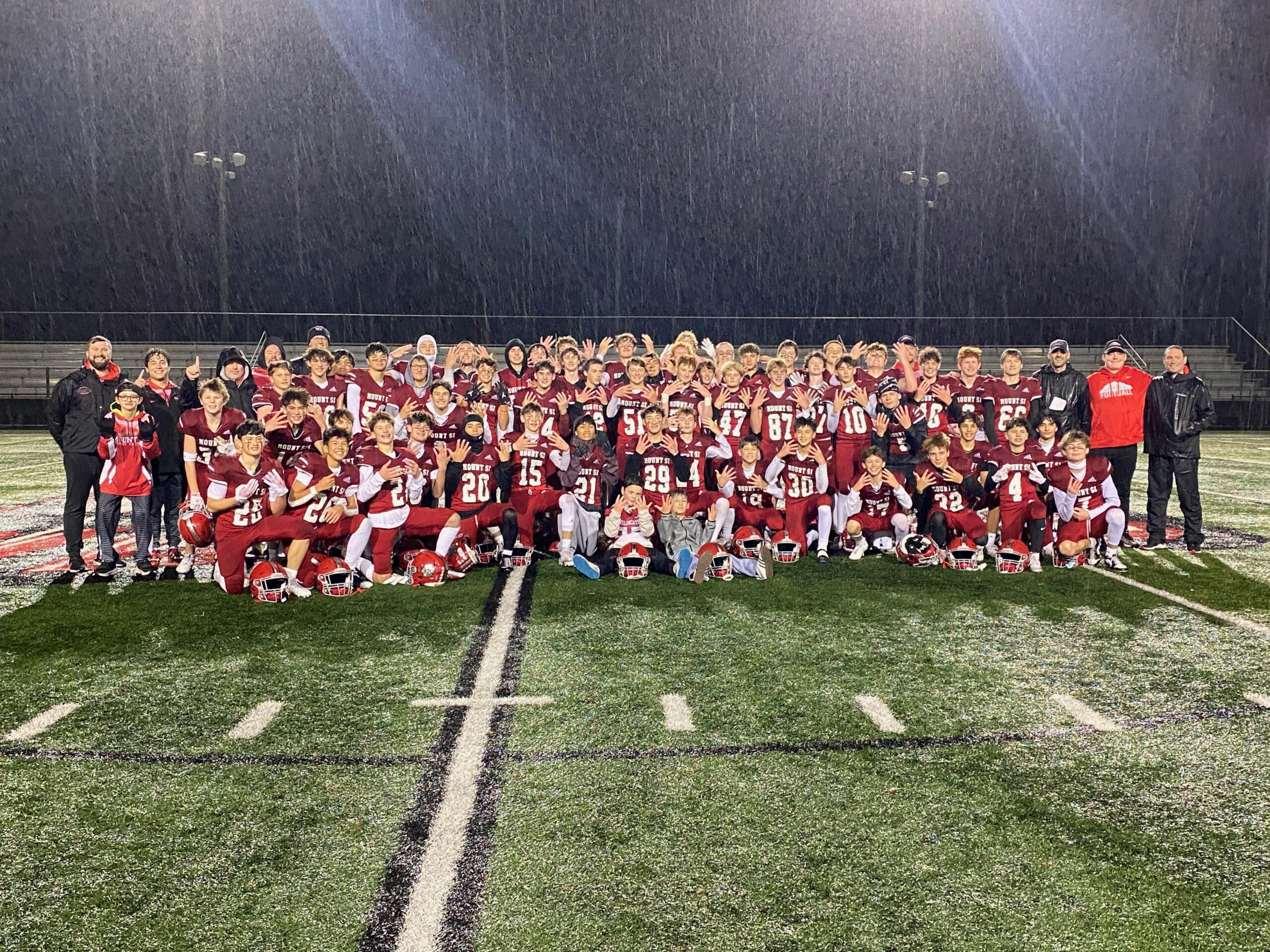
This season, the Mount Si freshman football team played for more than wins. They played in honor of David Heyting, a Snoqualmie Valley native and longtime youth football coach who died in May after a 14-year battle with brain cancer.
Heyting coached many of the players during their junior football years, helping shape not only their skills on the field, but their confidence, character, and love of the game. He never had the chance to see them take the field as high school athletes.
That legacy followed them anyway. This year’s freshman head coach was Brian Tawney, Heyting’s brother-in-law, a Mount Si leadership teacher and longtime community mentor. What unfolded became a season defined by purpose, family, and connection.
The team finished undefeated, but the measure of the season was never the scoreboard. From helmet stickers and wrist tape marked “DH” to moments of reflection that carried through every practice and game, the players chose to honor the coach who had once guided them, carrying his influence forward together.
Top pic: Jake DeSpain, Cooper Frederick, Coach Tawney Bottom pic: Cooper Frederick, David Heyting, Eli Wilmot, Jake DeSpain
For Brian Tawney, coaching the Mount Si freshman team carried a weight that went far beyond a typical season. These were the last players David Heyting had coached during their junior football years, a fact that stayed close for Tawney as he stepped into the role. Before David became sick, the two had even talked about coaching freshmen together one day. In that sense, Tawney said the season felt like a continuation of David’s work and his legacy in the Valley, with the same group of kids David had believed in now taking the field at the high school level.
From the start, Tawney made it clear that football was a vehicle, not the destination. His focus was on teaching life skills the players could carry with them long after the season ended. “We often talk about using football as a vehicle to build great young men of character,” he said. Practices and games became opportunities to learn how to handle discomfort, accountability, and pressure. Tawney noted that the moments when the team struggled were often the most valuable, because that was where the most growth happened, both individually and as a group.
David’s influence on Tawney’s approach was constant, shaped by years of conversations about coaching philosophy and leadership. Tawney recalled watching former players seek David out at games, checking in on him and showing genuine care, something he saw as a reflection of the kind of coach David had been. “After seeing him with the kids and those talks I knew that a lot of our coaching points matched up,” Tawney said. That alignment gave him confidence, and it reinforced his belief in leaning into difficult conversations and leading with intention and purpose throughout the season.
Throughout the season, the players found their own ways to honor David. Many wrote “DH” on their arms or wrist tape before games, while others added helmet stickers made in his memory. Coach Tawney said the tribute was introduced briefly at the beginning of the year, and participation was optional. Some players chose additional personal markings on their pads, but the focus was never forced. The intention, Tawney explained, was to help the team learn how to play for others, without allowing the season to become centered solely on loss.
That purpose showed up week after week. Tawney described seeing players hold each other accountable, encourage one another, and care deeply about their teammates throughout the season. One mother described the connection simply, saying, “David had his hands on these boys every single game.” For the players, honoring their former coach became a quiet constant, woven into practices, games, and the way they showed up as teammates, carrying his influence forward together as the season unfolded.
Jason Wilmot, who coached Junior Wildcat Football alongside David Heyting for four years and coached alongside Brian Tawney this year, said the connection between those early teams and this season was impossible to miss. The team went undefeated their 8th grade year. “Our 8th grade championship was played in brutal conditions-sideways rain and wind. David came in a wheelchair that night to support the kids he coached for years. It would have been so easy for him to stay home. But he was there because those boys mattered more to him than his own comfort. This year, when 40 of those same kids went undefeated as freshmen, we saw David in every play. As an offensive line coach, David taught them that football is won in the trenches with teamwork, sacrifice and effort. David taught them that life is always won with teamwork, sacrifice and effort!”
David’s sister Keri said her brother was giving and selfless, someone who constantly showed up for the people and the community he loved. A three-sport athlete in high school, David remained deeply involved in youth sports long after his own playing days, coaching flag football and junior football, serving as a baseball umpire, and managing a Little League umpire program. As his own children grew older, he continued coaching with Wildcat Junior Football alongside his oldest son, Colby. “I think kids responded so well to David because he was steady and approachable,” she said. “He led with a calm, focused presence, and he was the kind of person you never wanted to let down because your respect for him ran so deep.”
David’s son, Colby Heyting, a Mount Si grad now at Montana State who helped him coach Junior Wildcat football, said his father’s connection with young athletes came from the way he showed up for them. “I believe the connection he had with the youth was so impactful simply because he proved what love does. He was there for every kid and knew what it took to make every kid feel loved and seen. He did more than just talk, he proved it by the way he lived his life and loved on kids so well. He was the first guy to shout out the kid that was struggling or having a bad day. He made every kid feel important and that’s why he has such a big impact on the youth.”
Colby also described what it meant to see the team honor his dad throughout the season. “It was such a blessing seeing the boys he coached honor him through their season. Seeing the impact he left on that team that they would do that for him was so awesome. They are such an incredible group of boys who made the whole community feel their love for him”
Watching the Mount Si freshman team choose to honor David throughout the season carried deep meaning for the family. His sister said one of the hardest parts of losing someone is the fear that their memory will fade, a fear eased by seeing the boys intentionally carry him with them.
She recalled bringing David to watch the team play when he was deep into his cancer battle and losing mobility and being struck by how the players checked in on him with kindness and maturity. “Having the Mount Si Freshman team honor David this season meant the world,” she said. “The boys truly wanted to honor David’s memory and embraced a larger purpose for the season, one rooted in heart, not just athletic ability.”
The Mount Si freshman football team finished the season undefeated. As the final whistle sounded, the moment carried significance beyond the record. It was the season David Heyting never had the chance to see, but one that reflected the values he had passed on to the players long before they reached the high school field.
After the final game, Coach Brian Tawney gathered the team and spoke to them about what the season had meant. He told the boys how every practice, every game, and every moment of grit had been played in honor of David. He spoke about their heart, their resilience, and the way they showed up for one another throughout the season. As he spoke, Tawney was visibly overwhelmed.
He then looked into the stands for his wife, David’s sister, and for Sue Heyting, David’s mother. Tawney walked to them and wrapped them in an embrace. The tears that followed reflected both the weight of loss and the pride felt by a family and a community at the close of a season shaped by connection, care, and purpose.
The Moorhead Spuds won when they faced the Sartell Sabres at Moorhead Sports Center on Tuesday, Dec. 23, 2025.
The final score was 10-3.
The Spuds took the lead in the first period, with a goal from John Gramer. Max Cullen and Evan Wanner assisted.
The Spuds’ Will Cullen made it 2-0 in the middle of the first period, assisted by George Arnold and Brandon Mickelson.
The Spuds’ Zac Zimmerman increased the lead to 3-0 halfway through the first, assisted by Brandon Mickelson.
The Spuds made it 4-0 with a goal from George Arnold late in the first, assisted by Drew Kortan and Will Cullen.
The second period ended with a 7-2 lead for the Spuds.
Brandon Mickelson increased the lead to 8-2 with a goal in the third period, assisted by Max Cullen.
Seamus Campbell also made it 9-2 with a goal two minutes later, assisted by Will Cullen.
Preston Deragisch narrowed the gap to 9-3 with a goal less than a minute later.
Drew Kortan then increased the lead to 3-10 with a goal four minutes later, assisted by Gage Kallhoff and Noah Petersen.
Next games:
The Spuds will face against the Cretin-Derham Hall Raiders on Thursday, Jan. 01, 2026, at Dakotah! Ice Center, with the Sabres set to challenge Blake on Monday, Dec. 29, 2025, at St. Louis Park Rec Center.
Read more prep coverage
Scoring:
Minnesota, Moorhead Sports Center
2nd December 2025
Sartell Sabres at Moorhead Spuds
10-3
1st period:
Moorhead Spuds, 0–1 (8:26) John Gramer
Moorhead Spuds, 0–2 (10:56) Will Cullen
Moorhead Spuds, 0–3 (11:29) Zac Zimmerman
Moorhead Spuds, 0–4 (13:50) George Arnold
2nd period:
0–5 (24:15) John Gramer, 0–6 (24:54) Brandon Mickelson, 1–6 (27:15) Lane Larson, 2–6 (29:43) Preston Deragisch, 2–7 (33:39) Will Cullen
Belt, Lillian Fenburg, Baker finished in top three for Durango teams
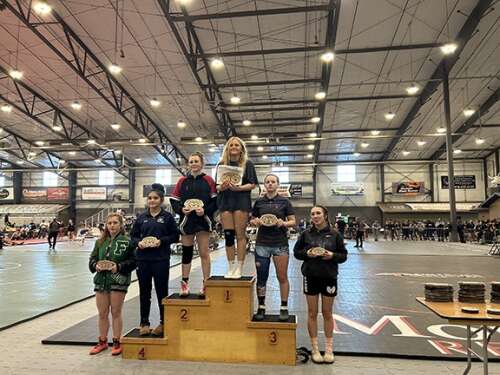
Durango High School girls wrestling’s Aleia Fenburg stands on the top of the podium after winning the 125-pound bracket at the Western Slope Showdown in Montrose on Dec. 13. Fenburg also finished first at the Warrior Classic in Grand Junction on Saturday. (Courtesy Ryan McGrath)
Durango High School boys wrestling star Ryan Dugan left a big void in the Durango wrestling program when he graduated in the spring, and it looks like Durango girls wrestling junior Aleia Fenburg could be the next star Durango wrestler.
After winning at the Western Slope Showdown on Dec. 13, Aleia continued her winning ways at the Warrior Classic in Grand Junction on Saturday by winning the 125-pound bracket. She led a successful Durango girls wrestling team that had four wrestlers place.
“It’s midseason, so what we’re looking for on the competition side right now is, where are we,” Durango girls wrestling head coach Ryan McGrath said. “We’re far enough along that our conditioning, technique and match strategy should be lining up if the goal is to place at state. The Warrior is an excellent place to mix it up with like competition … what you see are your weaknesses and holes.”
Aleia was ranked third in the 125-pound bracket and had a 3-0 win in her first match before a tough 7-5 victory against Lyniah Richardson from Douglas County in the quarterfinals. She then won 8-4 in the semifinals against Chrissa Hawkes from Bear River. It was a Western Slope Showdown rematch in the final, with Aleia facing Ignacio’s Lainee Bradley. Aleia got the job done again, beating Bradley 7-0.
McGrath complimented Aleia on her skills and technique, being on point along, with adjusting during and after matches. McGrath said she’s been very coachable.
“An opponent you’ve beaten is always dangerous,” McGrath said. “They’ve already wrestled with you; they know where you’re strong and where you’re not. That match was close because Lainee is so good. It was an opportunity for Aleia to be a lot more strategic and patient.”
Aleia’s twin sister, Lillian, also had a good tournament and finished third at 140 pounds. She won her first match, 3-0 and then beat Ignacio’s Krysten Neil 8-3 in the quarterfinals. Lillian’s run ended in the semifinals with a 9-0 loss to Grand Junction Central’s Rya Burke. Lillian rebounded to beat Eagle Valley’s Julia Borejszo in the third-place match.
Durango girls wrestling’s Marie Baker also finished third. The five-seed in the 120-pound bracket, Baker won her first two matches by a combined score of 23-2 before losing to the top-seeded wrestler, Harleigh Prater from Grand Junction Central, 3-1 in the semifinals. Baker then won against Falcon’s Zoe Greer in the third-place match.
McGrath knows neither Lillian nor Baker likes to lose, but there can be something gained from the loss at the first practice after the tournaments. They just need to look back at certain situations and learn from them. McGrath thinks Lillian might drop down a weight class.
“It’s a lot more about tuning the skillsets,” McGrath said about Lillian and Baker. “Every year there are a couple of people who rise to the top; we’ve seen that in Lillian and Marie’s (Baker) weight classes. There are girls there who are just really pushing everybody … I’m really pleased with where we’re at.”
Sydney McAllister had one of her best tournaments as a Demon and finished sixth at 105 pounds. McAllister had a tough freshman season last year, and McGrath is proud of her resolve and how much she’s improved this season.
There were plenty of other successful wrestlers from Bayfield High School, Durango High School and Ignacio High School at the Warrior Classic.
The Durango boys had one wrestler place, with Jacob Belt finishing third at 175 pounds.
“We’re in a transition year with a bunch of new kids and a bunch of new kids on varsity,” Durango boys varsity head coach Jason Silva said. “All I keep telling them is focus on scoring points, having fun and being in a good position … and they did it.”
Belt was behind in a lot of his matches, and Silva was proud to see his no-quit attitude paid off. He won his first match 11-3. Belt was down 7-3 when he pinned Andy Weipert from Green River. Belt dominated Mason Fresquez from Grand Junction 18-1 in the quarterfinals before losing to Canon City’s Elias Koonce 18-3.
After losing, Belt didn’t give up and made it to the third-place match, coming from behind once again to beat Palisade’s Eric Snodgrass via pin when Belt was down 9-4.
“The bigger guys do have a different style,” Silva said. “There are a lot more of those power-type throws and moves to where they don’t typically get underneath the guy because they’re bigger … the type of offense we create for Jake (Belt) is a lot different from what we’re doing for Ryder (Martyn) and Cash (Silva).”
Martyn had an off day for the Demons and didn’t place. Silva knew it was important to remind him that success is not a vertical line; it ebbs and flows. Martyn needs to be ready to come back to the drawing board and get better.
Ignacio’s girls wrestling program had three second-place finishers with Bradley, Larissa Espinosa and Madison Egger in their respective weight classes.
Before Bradley lost to Aleia in the finals, she won her opening round matchup, 13-3 and beat Edi Linascum from Grand Junction Central in the quarterfinals in a close matchup. Bradley then beat Green River’s Raygen Bauers 17-1 in the semifinals.
Espinosa won 19-4 in her quarterfinal matchup before winning 3-0 against Dawn Tahy-Sloan from Farmington. Caylee Miller from Bloomfield beat Espinosa in the 235-pound final, 5-0.
Egger finished second in the 100-pound bracket beating her first two opponents by a combined score of 23-3, before pinning Addi Whaley from Soroco. Egger lost 19-3 in the final to Fort Lupton’s Yaida Rodriguez.
On the boys side, for Ignacio, top local wrestlers Aven Bourriague and Lincoln deKay both placed, with Bourriague finishing fifth at 120 pounds and deKay sixth at 165 pounds.
Bourriague lost in the semifinals, but bounced back to win his fifth-place match. deKay was the top seed at 165 pounds and made it to the semifinals before losing a close 5-4 match to Aztec’s Cory Douglas. deKay then lost his fifth-place match.
Bayfield High School girls wrestling’s Violet Christner finished fifth at 100 pounds.