
NIL
James Madison University – Official Athletics Site

Among the many changes to college athletics in the evolving landscape with the settlement of the NCAA vs. House case, institutions can now provide direct financial benefits to student-athletes as part of Name, Image and Likeness (NIL) activities. Previously NIL opportunities were only available through third-party arrangements.
In order to enhance the value of athletics participation at the university, James Madison Athletics and the Duke Club are proud to announce the launch of the Student-Athlete Enhancement Fund, a groundbreaking initiative that empowers fans, alumni and donors to elevate the value of JMU student-athlete participation through NIL opportunities.
The fund positions JMU to provide direct financial benefits to student-athletes with a focus on recruiting and retaining elite talent who maximize their opportunities at the university. The Student-Athlete Enhancement Fund is a strategic investment in the future of JMU Athletics. By focusing on recruiting and retaining top-tier student-athletes, the department and its constituents will work collectively to ensure that JMU remains competitive on a national level.
“At JMU, our mission has always been to elevate the student-athlete experience — academically, athletically, and in personal and leadership development,” JMU Director of Athletics Matt Roan said. “The Student-Athlete Enhancement Fund represents our commitment to providing meaningful opportunities in this new era of college sports. We will be able to attract the very best student-athletes who match the culture and pursuit of excellence that we expect at JMU, while also providing resources to retain them to continue their careers in Harrisonburg while pursuing a degree.”
The fund will serve as a vehicle for donors and fans of JMU Athletics to contribute directly to initiatives that impact student-athletes, including revenue sharing models and NIL support structures. By doing so, the Duke Club and JMU Athletics continue to lead with innovation and integrity while reinforcing a culture of excellence.
The Student-Athlete Enhancement Fund provides an additional channel for donor giving, but it does not replace the Duke Club Annual Fund. The Annual Fund will continue to serve as the key vehicle to fund student-athlete scholarships, along with the overall department operating budget. As noted in the June 17 communication, JMU Athletics anticipates adding 15 scholarships in 2025-26 with more to come beyond that. The growth of the Annual Fund will be critical to continue addressing the rising scholarship cost for the department.
Supporters interested in contributing to the Student-Athlete Enhancement Fund or learning more about its impact can visit JMUDukeClub.com. Potential donors are also encouraged to call the Duke Club to discuss how a gift can best address their areas of interest and the department’s greatest needs.

ESPN’s Paul Finebaum called the current layout of college football bowl games “a serious problem” these days. There are plenty of bowl games, so it’s hard to miss them.
But the problem, as Finebaum described, is that the postseason is pretty much all about the College Football Playoff. So even the bigger bowl games are reduced, while the smaller ones that come around once a year to smaller communities are diminished.
“Well, I think the playoff decision will be made quickly, and I think there is momentum to expand it for next year,” Finebaum said on McElroy and Cubelic. “The bowl situation is really a serious problem. Cole, you’ve done some games … and will do some more. And I mean, I flipped on the TV early this morning, and this is not a shot at Birmingham, but I mean, I wasn’t really that aware that the game was going on, because things are different.
“Way before you guys were even around, you knew about that bowl game six weeks out, because it was, it was such a sense of pride in the community, whether in Birmingham or Shreveport or Nashville or wherever. And because of the complexities of college football, that has gone away when a lot of people, you walk into a mall today, they couldn’t tell you who was playing downtown.”
So if you caught a bowl game over the last couple of days, that’s normal. The buzz is simply different these days.
“And it’s hard, because these are essentially television events,” Finebaum said. “They’re great television events Saturday, if you didn’t have anything to do and wanted to watch about eight or nine football games on multiple screens. You could see it, but they’re just not important anymore. The community influence is gone and they’re essentially something to put on between the end of football or at the end of the regular season and the championship game, and they fill in the gaps at weird times of the day, weird matchups that make very little sense.
“And it’s not completely going away. But every time the playoff expands, what used to be a good or great or average bowl game becomes even less important.”
If you’re looking at the bowl schedule for New Year’s Eve, it’s highlighted by Miami and Ohio State in the CFP quarterfinals at the Cotton Bowl. But there are some good games! That includes Iowa–Vanderbilt and Michigan–Texas.
What do they mean in the grand scheme of things? Perhaps less and less as time rolls on.

Getty
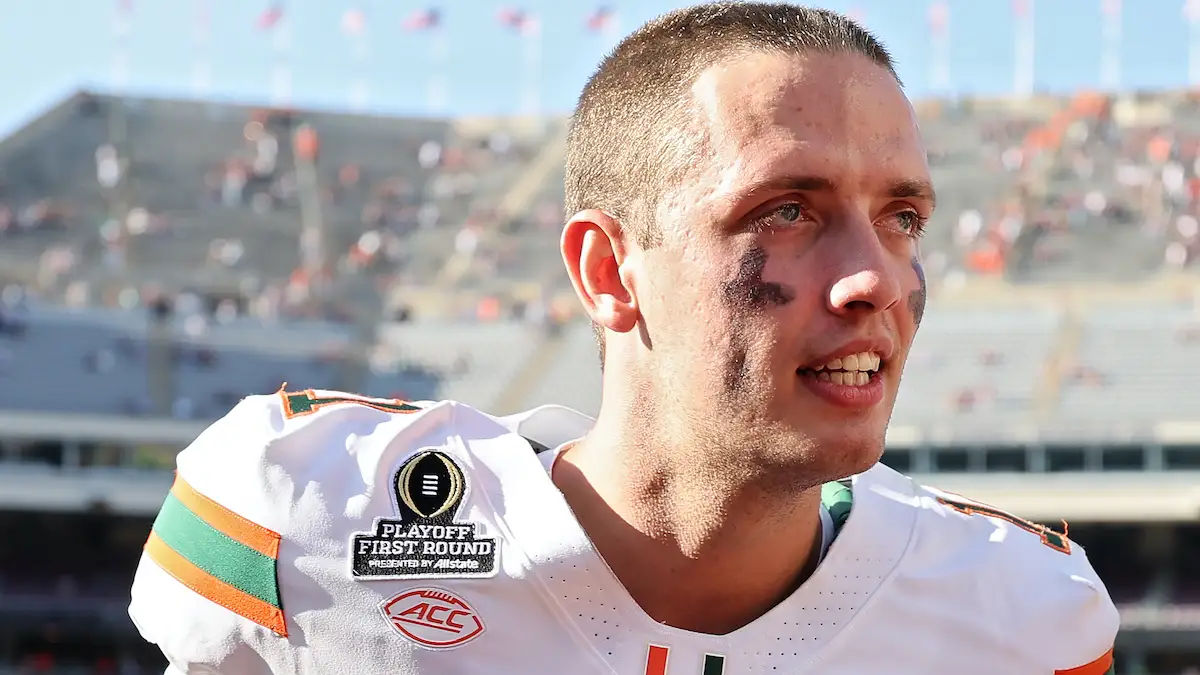
Carson Beck of the Miami Hurricanes.
Miami Hurricanes quarterback Carson Beck faces what will likely be the most significant challenge of his six-year college football career on New Year’s Eve, when his team faces the defending national champion Ohio State Buckeyes in the Goodyear Cotton Bowl Classic at AT&T Stadium in Arlington, Texas.
The game is a quarterfinal matchup in the College Football Playoffs, so by getting to this point Miami can say it got its money’s worth when it induced Beck to transfer from Georgia, where he spent the first five years of his college career. But how much money does Beck receive?

What is NIL Money?
Until 2021, college football players, like all undergraduate athletes, were supposed to be amateurs. Taking money in any way related to their status as athletes was strictly forbidden under NCAA rules. But a United States Supreme Court decision that June ruled that those restrictions violated federal antitrust laws — opening the door to college athletes receiving monetary compensation for their efforts on the field.
The resulting system allows athletes to be paid for use of their “Name, Image and Likeness,” or NIL. By supposedly limiting pay to an athlete’s personal business activities, the NCAA allowed itself to pretend that its athletes were still “amateurs.”
And Beck is one of the highest-paid “amateurs” in all of collegiate sports.

Miami QB Estimated as 3rd-Highest Paid
According to Pro Football Network’s college quarterback statistical rankings, Beck ranks an unimpressive 36th in the nation in the impact he has made on his team’s ability to win.
But according to the sports financial site On3, as of December 31 Beck owned the third-highest NIL valuation in college football, with a package estimated at $3.1 million.
At No. 1, according to the site, is Texas Longhorns quarterback Arch Manning, whose NIL deal is estimated at $5.3 million. Behind Manning, in the second slot, is the Buckeyes’ sophomore wide receiver Jeremiah Smith, who raked in $4.2 million this season.
In all of college sports, according to the On3 NIL 100 rankings, Beck’s $3.1 million NIL package places him fourth. The 18-year-old Brigham Young University freshman forward AJ Dybantsa, the No. 1 high school basketball recruit in this year’s class, places second, ahead of both Beck and Smith, with an estimated $4.4 million in NIL cash.

Beck Rumored to Receive Much More
Beck’s current $3.1 million estimate, however, is considerably lower than various rumors had him receiving earlier this year, when he transferred from Georgia for his final year of college eligibility. Those initial reports put his NIL compensation in the $4 million range, with some estimates ranging as high as $6 million due to various incentives.
But even back in January those rumors seemed inflated, and reporters Bruce Feldman and Manny Navarro of The Athletic revealed a more realistic figure of “a little over $3 million,” which of course fits with the $3.1 million the 23-year-old is estimated to receive by On3.
According to the Athletic reporting team, however, Beck’s deal was still nearly double the reported $1.6 million received by Beck’s predecessor at Miami, Cam Ward.
Ward became the No. 1 overall NFL draft pick this year. Beck is currently projected by the NFL Mock Draft Database to be selected in the fourth round in 2026.

Jonathan Vankin JONATHAN VANKIN is an award-winning journalist and writer who now covers baseball and other sports for Heavy.com. He twice won New England Press Association awards for sports feature writing. He was a sports editor and writer at The Daily Yomiuri in Tokyo, Japan, covering Japan Pro Baseball, boxing, sumo and other sports. More about Jonathan Vankin
More Heavy on Miami
Loading more stories
Transfer portal season is underway, although FCS and FBS players have yet to “officially” enter the portal. The portal window for official entrances begins on Jan. 2 and lasts two weeks. Starting on Friday, JMU can officially try to bring in FCS and FBS guys via the portal.
The Dukes have currently offered a host of standout D2 players. Several of them plan on visiting the Dukes in January, including these players:
JT Hooten — A standout LB from West Alabama (6’2 and 215 lbs) with three years of eligibility remaining, Hooten had 69 tackles in nine games in 2025. He has a ton of potential, and he’ll visit JMU this coming weekend, he tells us. He’s received a lot of G5 interest and would be a major addition.
Courage Osawe Jr. — A JUCO DT from Butte College, Osawe is just 19 years old with two years of eligibility left. He posted 20 tackles and two sacks in 2025. The 6’4 and 295-pound prospect also received notable offers from North Texas and UTSA. He’ll visit JMU on Jan. 9 and 10th, he tells us.
Trevell Jones — A LB from Barton College, the 6’3 and 220-pound prospect had 111 tackles in 2025. He’ll visit JMU on Jan. 9, he says. App State, Troy, and Delaware also offered Jones. He’s a stud with one year of eligibility left.
Parker Knutson — 247Sports is reporting that Knutson has visits set with both JMU and Minnesota. He’s a standout CB from Southwest Minnesota State, posting 13 interceptions over the past two seasons. The defensive back would be a massive pickup, although the Minnesota native will be hard to keep away from the Golden Gophers. He has two years of eligibility left.
Other notes
– We’ve heard from a few sources that JMU worked hard to retain current players. Those who plan to enter the portal could still potentially return as they test the portal waters and look for lucrative NIL deals. If the offers don’t meet their expectations, JMU’s increasing NIL budget could sway some guys to return.
– Florida has at least 20 guys expected to enter the portal, according to On3. Some of them saw minimal playing time for the Gators or they had inconsistent performance. It’s possible the Dukes bring in a few former Gators who enjoyed playing for Napier.
– The portal officially opens on Jan. 2 for FCS and FBS players. Players from those levels will start posting official offers, visits, and commitments soon after the portal opens.
– JMU needs help at every position, but quarterback has promise. Quarterbacks Camden Coleman and JC Evans have not announced plans to leave. Keeping those two would be significant.
– Possible returning players likely to step into larger roles in 2026 include Coleman, DB KJ Flowe, DB Chase Regan, LB Trashon Dye, WR Michael Scott, and OL Deacon Rawls, among others. The Dukes have significant returning talent that saw minimal action in 2025.
Photo courtesy of JMU Athletics Communications
Today’s Observer newsletter is from a new contributor: The artist known as AUNerd, who some of you may remember from his blogging days at College & Magnolia. Nerd is excellent at breaking down Auburn football, especially recruiting, roster management and Xs and Os.
I (Justin) am in a group chat with Nerd, and I saw him starting to put together an incredibly detailed big board of potential targets for Auburn football in what will be a massive transfer portal window for new head coach Alex Golesh and his staff. I loved the idea so much that I wanted Nerd to publish it on The Observer.

Christmas has passed, but the real gift-opening season in college football is just getting started. Every year, the transfer portal seems to operate on a new set of timelines, and this cycle is no different.
This year features a single portal window, running from Friday, January 2 through Friday, January 16. Players on active College Football Playoff teams receive an additional five-day window (January 20–24), while players on teams that hire a new head coach after January 2 are granted a separate 15-day window.
Gone are the old fall and spring cycles. By the end of January, we’ll have a much clearer picture of what 2026 college football rosters will look like.
It’s also worth noting that players don’t have to commit during this window — it’s simply the only period in which they can enter the portal. That said, spring semester enrollment deadlines at most universities mean many of these decisions will happen quickly.
For Auburn, this portal cycle is critical.
When John Cohen hired Alex Golesh, he emphasized roster retention. Wanting to retain players and actually retaining them, however, are two very different things.
Auburn currently leads the SEC in players entering the portal, with more expected in the coming days. All told, the Tigers may need to add 35-40 new players over the next two weeks.
That number is staggering, but it’s also the reality of modern college football.
What follows is an attempt to identify potential offensive-side portal targets for Auburn. This list is built from a mix of reported intel from Auburn On3 and Auburn247 insiders, along with educated guesswork rooted in prior staff relationships. In today’s portal era, those connections matter more than ever. We saw that last season with Xavier Atkins, who followed a strong relationship with DJ Durkin to the Plains.
One quick note on methodology: you’ll see frequent references to Pro Football Focus (PFF) grades below. PFF is far from a perfect evaluation tool, but without the time — or expertise — to grind full tape on every portal entrant, it serves as a useful proxy for understanding where a player generally stacks up. This is especially true along the offensive line.
Finally, a disclaimer: parts of this list will almost certainly be wrong. A lot will change in a very short window. Think of this as a starting point, both for who Auburn might target and the types of players this staff is likely prioritizing at each position. Everything is subject to change the moment the portal officially opens.
Let’s dive in.


The NCAA transfer portal officially opens for all college football players on Friday. It will remain open for the two weeks that follow.
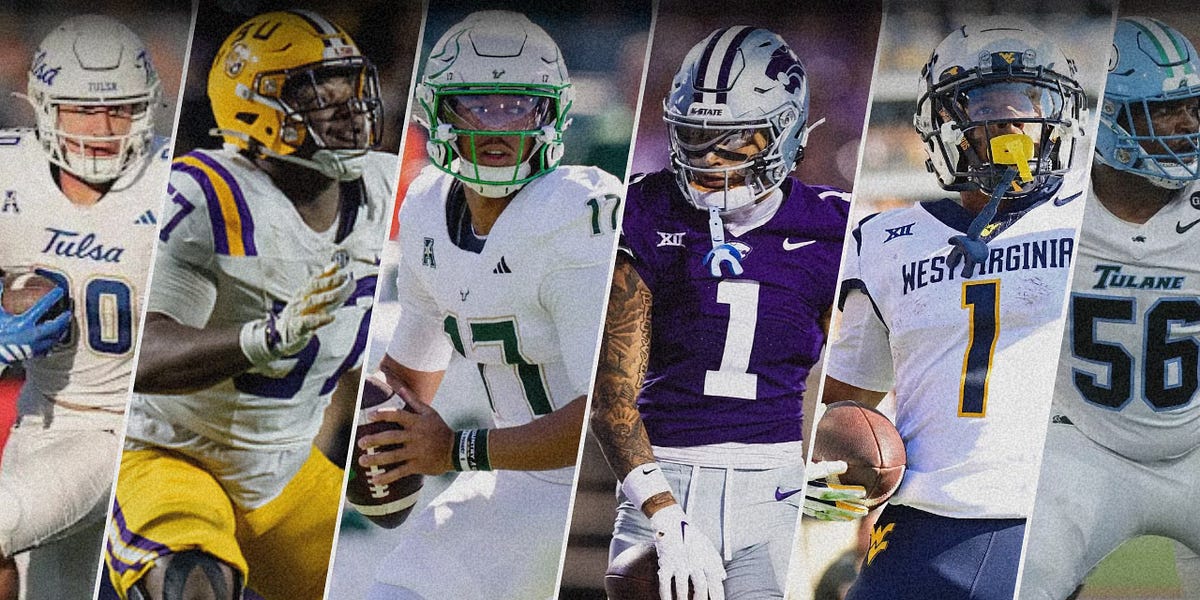
Thousands of players across all levels of college football have decided to enter the transfer portal in the weeks following the end of the regular season. Quarterbacks are receiving the most attention of the portal entries, but there are other significant names to watch in the portal.
One of those significant names in the portal is former Auburn wide receiver Cam Coleman. He enters the portal with two seasons of eligibility remaining at his second school.
Hugh Freeze recruited him out of high school as a five-star prospect from Theodore, Alabama. He currently ranks as the No. 1 overall prospect in the NCAA transfer portal.
Coleman appeared in 10 of Auburn’s 12 games in 2024. He grabbed 37 receptions for 598 yards and eight touchdowns in his freshman season.
The Tigers depended heavily on Coleman to facilitate their passing game in 2025. He was their leading receiver with 56 catches, 708 yards and five touchdown receptions.

The schools in the mix for Coleman are prepared to pay significant amounts of money. Pete Nakos of On3 reported that Coleman is expected to command around $2 million in NIL compensation from his next school.
For reference, many quarterbacks across college football are going for around $2 million out of the portal.
With Coleman held in such high regard upon entering the transfer portal, the number of possibilities for where he may land is vast.
Outside of the SEC, Oregon, Miami, and Texas Tech figure to be in the race for Coleman. All three programs have made significant acquisitions in the portal due to their high NIL budgets, particularly the former two at quarterback.
In the SEC, Texas A&M is a program to watch as a potential landing spot for Coleman. He was committed to the Aggies for five months before flipping to the Tigers on Early Signing Day.
An additional reason the Aggies may find themselves in the mix is their success with wide receivers acquired from the portal in the 2025 offseason. KC Concepcion and Mario Craver were acquired from NC State and Mississippi State and both proceeded finish with over 900 receiving yards for the Aggies in 2025.
Texas and Alabama have both been floated as additional candidates for Coleman in the SEC. Both programs have had a successful track record with wide receivers under their current head coaches.
In 2025, college sports underwent another major transformation as revenue-sharing arrived. But that was just one of the top storylines in the NIL and sports business space.
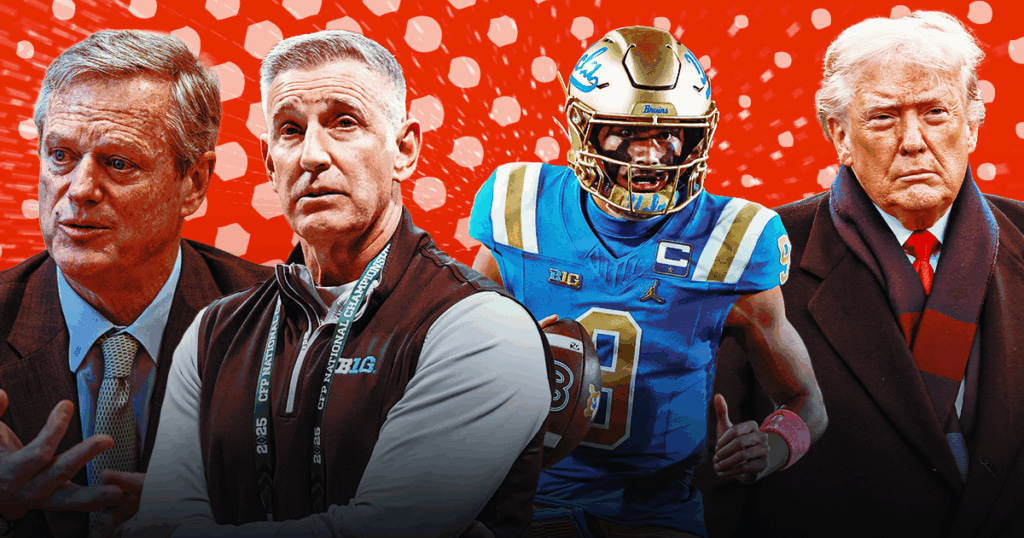
The House v. NCAA settlement became the top story from this calendar year, but private equity is also sure to be part of the conversation into 2026. Those talks took place throughout 2025, with the Big Ten and Big 12 at the forefront.
Advertisement
SUBSCRIBE to the On3 NIL and Sports Business Newsletter
Of course, there was also a high-profile NIL dispute and a major step in the NCAA’s quest for federal legislation to help settle the landscape. Here is On3’s 2025 year in review, breaking down the Top 10 storylines in NIL and sports business.
House settlement ushers in rev-share era
After receiving preliminary approval in 2024, the quest for final approval of the House settlement ended in June 2025. That’s when Judge Claudia Wilken approved the landmark agreement, paving the way for schools to directly share up to $20.5 million with athletes. It also brought about the College Sports Commission as a new enforcement entity, led by CEO Bryan Seeley.
Advertisement
The CSC launched to enforce key terms of the 10-year settlement, including the NIL Go clearinghouse, which received a slew of criticism after its initial debut. NIL Go has cleared $87.5 million in deals as of the last update Nov. 6. However, the CSC’s participation agreements are also generating skepticism as 2025 winds down.
Private equity, capital talks swirl
As schools prepared for rev-share, the idea of private equity and private capital came about in college sports, with the Big Ten and Big 12 front-and-center. The Big Ten has explored a more than $2 billion private capital deal, but it generated pushback from some member schools.
Additionally, Ross Dellenger reported the Big 12 is nearing a private capital deal of its own which would infuse millions to member schools. A Big 12 school also announced a first-of-its-kind equity deal in December. Utah announced a deal with Otro Capital, which would infuse up to nine figures in cash and create a for-profit entity, Utah Brands and Entertainment.
Advertisement
Nico Iamaleava transfers amid NIL dispute
Late in the spring college football transfer portal window in 2025, On3’s Pete Nakos reported Tennessee and quarterback Nico Iamaleava were in active negotiations about a new deal. However, the situation took multiple turns, and Iamaleava later entered the portal.
Iamaleava missed a practice before the Vols’ spring game, Volquest reported, and Tennessee ultimately decided to move on from him. He later committed to UCLA, but the reaction poured in from across the college football world after the NIL dispute. At Big Ten Media Days, Iamaleava told reporters his departure was not due to NIL, but rather a desire to play closer to family.
College football coaches’ buyouts skyrocket
One of the biggest storylines of the 2025 college football season was the amount of money schools paid in coaching buyouts. Multiple high-profile firings led to more than $228 million in buyout money handed out, flying past the previous record of $132 set in 2023 – fueled by Jimbo Fisher’s $77 million figure.
Advertisement
LSU coach Brian Kelly received the highest buyout of the cycle at $53 million, and James Franklin’s $49 million buyout at Penn State dropped to $9 million after he took the Virginia Tech job and triggered his duty to mitigate clause. Kelly’s buyout is the second-largest in history behind Fisher’s, and Billy Napier received the third-largest from Florida at $21 million.
Wisconsin sues Miami after Xavier Lucas transfer
One of the biggest transfer stories of 2025 didn’t involve the portal at all. Wisconsin DB Xavier Lucas withdrew from the university and enrolled at Miami. The University of Wisconsin then sued the University of Miami and its NIL collective for alleged tortious interference.
The suit marked an unprecedented moment in college athletics as one university sued another over financial damages. Miami later filed a motion to dismiss the suit, On3’s Pete Nakos and Brett McMurphy reported, which is still being worked through.
Advertisement
ACC settles lawsuit with Florida State, Clemson
One of the ACC’s top priorities in 2025 was to settle lawsuits brought by Florida State and Clemson, challenging the conference’s grant of rights. Both boards approved settlement terms in March, ending the legal battles on all fronts.
As part of the agreement, the ACC will have a new exit fee structure and revenue distribution model. It will now be based on a five-year rolling average of TV ratings, with a majority share of the base media rights placed into a viewership pool for distribution.
Former NBA Draftee James Nnaji deemed eligible
Amid multiple eligibility questions the NCAA faced in 2025, one of the biggest decisions came in December. James Nnaji, a former NBA Draft pick, signed with Baylor after receiving four years of eligibility. That decision brought plenty of reaction across college basketball.
Advertisement
Though the Detroit Pistons drafted Nnaji – and his draft rights were part of the Karl-Anthony Towns trade to the New York Knicks – he never played in an NBA or NBA G-League game. Instead, he played professionally in Europe. The NCAA granted Nnaji four years of immediate eligibility, meaning he can join Baylor for the rest of the 2025-26 season.
NCAA’s quest for federal legislation stalls
Since the NIL era began, the NCAA has been searching for federal legislation to help settle the landscape. Those efforts ramped up in 2025, and the SCORE Act was on track for a vote on the floor of the U.S. House of Representatives at one point. However, the vote was removed from the schedule that day, and Senate Democrats criticized the legislation.
The SCORE Act was one of a handful of college sports-focused bills announced. The COACH Act was introduced in October to cap college football coaches’ salaries and buyouts, and the “Restore College Sports Act” was introduced in March. That bill would create an entity to replace the NCAA.
Advertisement
President Donald Trump wants to get involved
Amid the NCAA’s pursuit of a federal bill, President Donald J. Trump also made it clear he was willing to step in to help settle things down. He took multiple steps toward that goal, notably signing an executive order in July to crack down on pay-for-play, third-party NIL deals.
Trump was also putting together a presidential commission with Texas Tech booster Cody Campbell and former Alabama head coach Nick Saban as co-chairs. Plans for the commission were paused, but Trump remained vocal about NIL in college athletics.
College football TV ratings surge
Throughout the 2025 college football season, TV ratings surged. Regular-season viewership increased by 9% from a year ago, and ABC emerged as the biggest winner.
Advertisement
ABC aired 17 of the Top 20 most-watched games of the year, led by Texas vs. Texas A&M in their Week 14 rivalry game. FOX, however, had the top two games of the season: Ohio State’s Week 14 win over Michigan (18.4 million) and the Buckeyes’ Week 1 victory over Texas (16.6 million) led the way.
College athletics saw plenty of changes throughout 2025 as the NIL and rev-share eras are officially underway. Heading into 2026, though, there are still plenty more storylines to track in the ever-changing space.

Paul Finebaum calls college football bowl game status ‘a serious problem’

Hyper Racing Tulsa Shootout Underway With 112 Heat Races Contested – Speedway Digest

Volleyball: Oakwood rolls to league co-championship, 20-6 season | Morgan Hill Times

Rockingham Speedway sold to IHRA

Proposed Wisconsin Complex Would Bring 155,000 Square Feet of Indoor Turf to Big Bend

PV girls’ basketball hosts first annual toy drive event on campus

ESPN earns most-watched NCAA Women’s Volleyball Tournament ever

Rockingham Speedway has a new owner as IHRA purchases historic track

How Much NIL Money Did Miami Pay?

Nebraska volleyball recruits to compete in 2026 Under Armour All-America Match

MHS names new track and softball head coaches

‘I’ve Got to Try’: Rick Hendrick Tried to Recruit Dale Earnhardt In the Initial Days of Hendrick Motorsports

NASCAR legend and Biffle’s friend shares theory on crash – Motorsport – Sports

No. 1 Long Beach State Men’s Volleyball Wins NCAA National Championship – The562.org

USAC MRA Sprint Cars Set for Inaugural Season in 2026 – Speedway Digest

SoundGear Named Entitlement Sponsor of Spears CARS Tour Southwest Opener

Donny Schatz finds new home for 2026, inks full-time deal with CJB Motorsports – InForum

Black Bear Revises Recording Policies After Rulebook Language Surfaces via Lever

David Blitzer, Harris Blitzer Sports & Entertainment

How Donald Trump became FIFA’s ‘soccer president’ long before World Cup draw

DeSantis Talks College Football, Calls for Reforms to NIL and Transfer Portal · The Floridian
Elliot and Thuotte Highlight Men’s Indoor Track and Field Season Opener

JR Motorsports Confirms Death Of NASCAR Veteran Michael Annett At Age 39

Rick Ware Racing switching to Chevrolet for 2026

#11 Volleyball Practices, Then Meets Media Prior to #2 Kentucky Match

Colleges ponying up in support of football coaches, programs

23 عاما من الفضائح السياسية والجنسية منذ انقلاب حمد بن خليفة.. استغلال الفتيات الصغيرات في الدعارة.. ضبط ابنة رئيس وزراء قطر خلال ممارستها لجنس الجماعي.. ملامح الحكم تتخبط بين المنفي وتدخلات النساء
West Fargo volleyball coach Kelsey Titus resigns after four seasons – InForum

Nascar legal saga ends as 23XI, Front Row secure settlement

23 عاما من الفضائح السياسية والجنسية منذ انقلاب حمد بن خليفة.. استغلال الفتيات الصغيرات في الدعارة.. ضبط ابنة رئيس وزراء قطر خلال ممارستها لجنس الجماعي.. ملامح الحكم تتخبط بين المنفي وتدخلات النساء






-
 Sports3 weeks ago
#11 Volleyball Practices, Then Meets Media Prior to #2 Kentucky Match
-
 Motorsports3 weeks ago
Nascar legal saga ends as 23XI, Front Row secure settlement
-
 Motorsports3 weeks ago
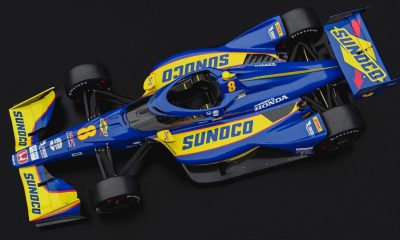
Sunoco to sponsor No. 8 Ganassi Honda IndyCar in multi-year deal
-
 Sports3 weeks ago
Maine wraps up Fall Semester with a win in Black Bear Invitational
-

 Motorsports2 weeks ago
Ross Brawn to receive Autosport Gold Medal Award at 2026 Autosport Awards, Honouring a Lifetime Shaping Modern F1
-
 Rec Sports3 weeks ago
WNBA’s Caitlin Clark, Angel Reese and Paige Bueckers in NC, making debut for national team at USA camp at Duke
-
Motorsports3 weeks ago
NASCAR, 23XI Racing, Front Row Motorsports announce settlement of US monopoly suit | MLex
-

 Motorsports3 weeks ago
Rick Hendrick comments after the NASCAR lawsuit settlement
-
 Sports3 weeks ago
Creating a Legacy: Maddie Scheier
-

 NIL3 weeks ago
Nike Signs 10 LSU Athletes to NIL deals