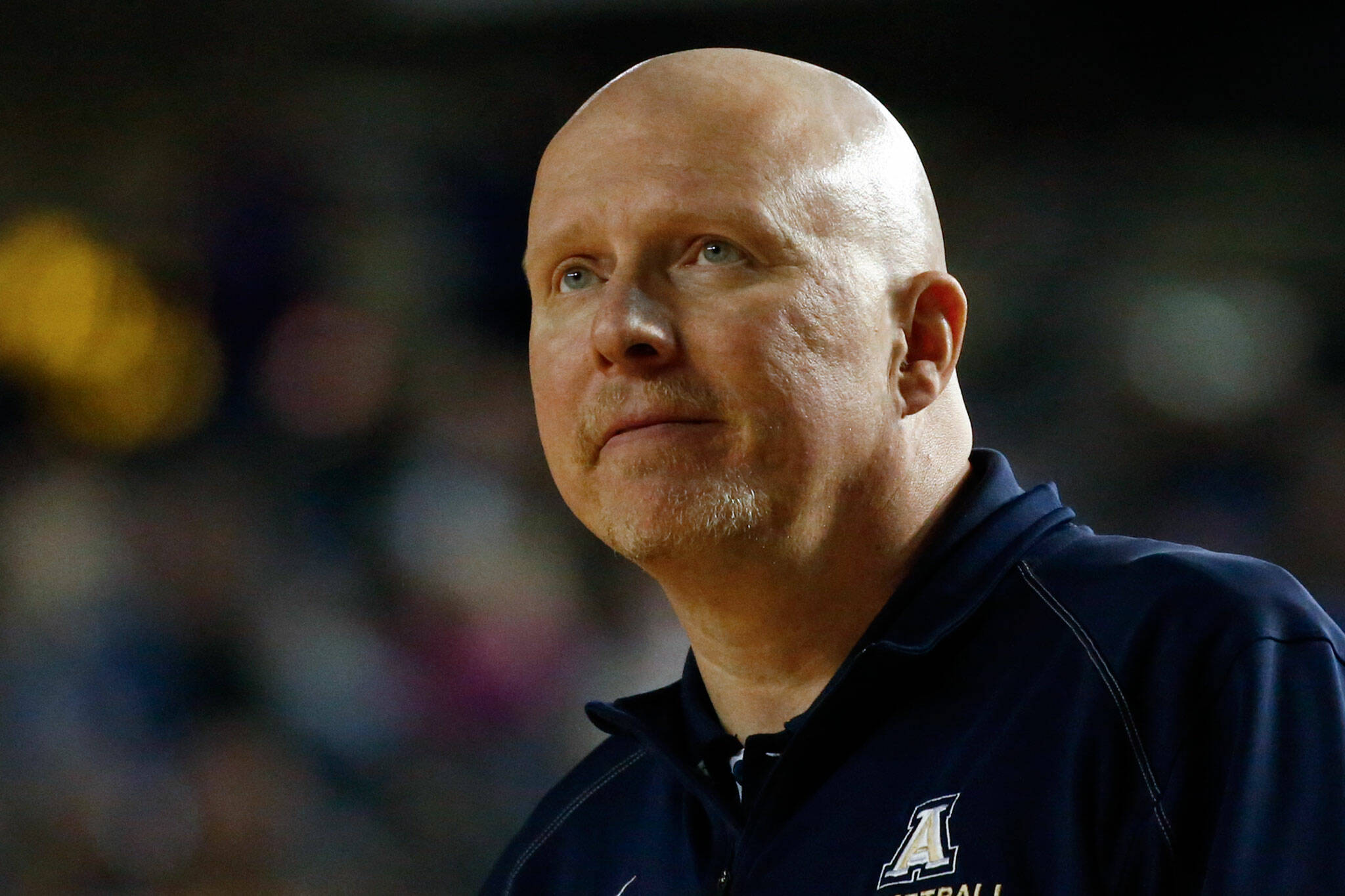
ARLINGTON — For a moment, Arlington High School girls basketball coach Joe Marsh seethed.
At the suggestion of his assistant, the second-year head coach ignored his instinct to foul up by three points in the waning moments of a 2013 Class 4A state semifinal, and watched as Lake Stevens star Brooke Pahukoa hit a 3 to send the game into overtime.
The hearts of all Eagles in the Tacoma Dome sank.
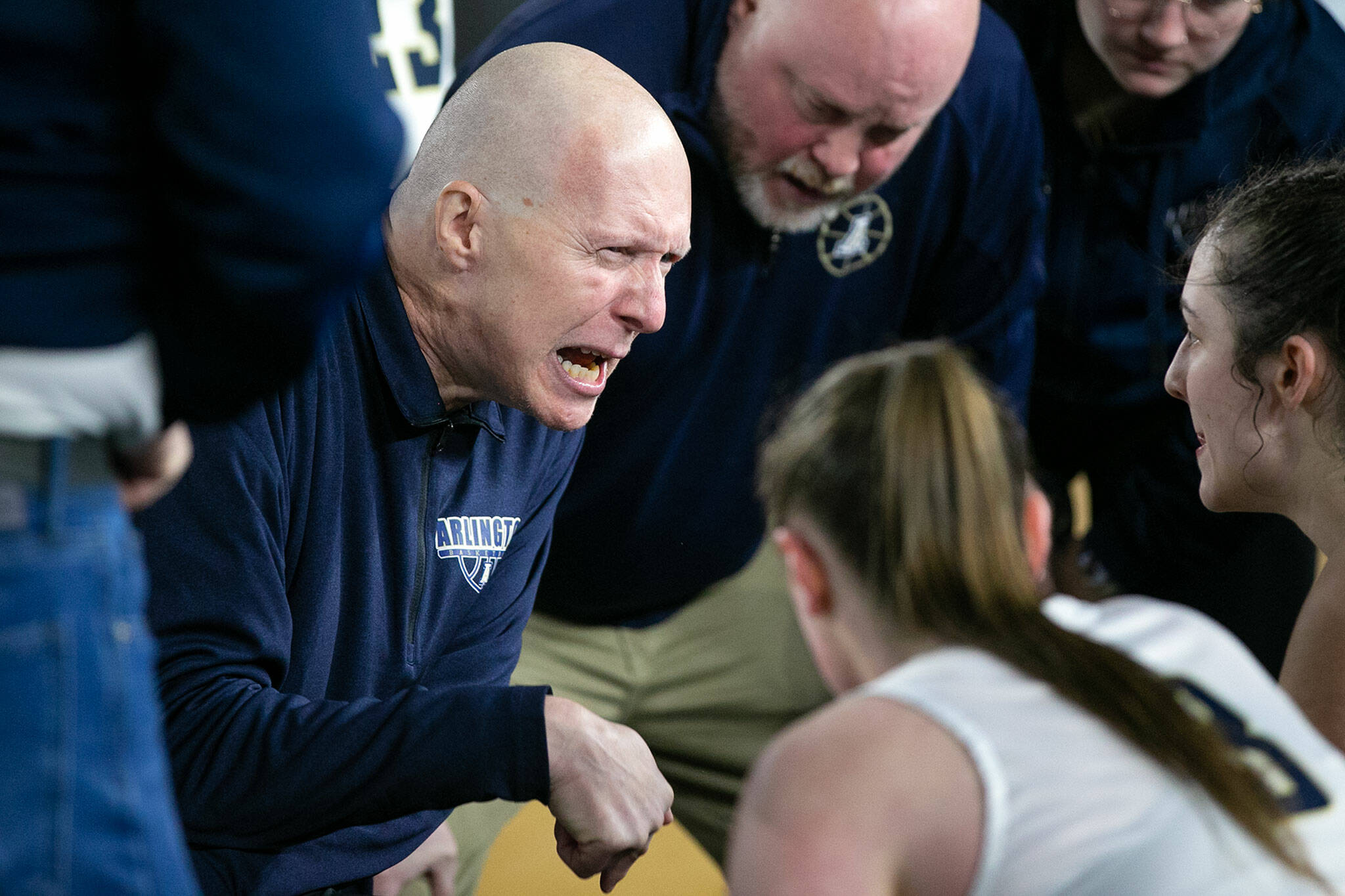
For a moment, he expressed his displeasure. The next, he slid on his knees into the huddle as the team prepared to regroup from the gut punch and recapture the lost momentum as overtime loomed.
Arlington head coach Joe Marsh talks with his team during a timeout against Lake Washington in a 3A semifinal on Friday, March 3, 2023, at the Tacoma Dome in Tacoma, Washington. (Ryan Berry / The Herald)
“We are NOT losing this game,” he bellowed, looking each player in the eyes as his face reddened. “We are NOT losing this game. We did not come here to lose this game.”
His belief, which had quickly shifted from disbelief, bled into the players in a matter of seconds, and a basketball program that had missed the state tournament for 11 seasons suddenly found its way into the championship game.
“He was amazing in that moment,” said Central Washington University women’s head basketball coach Randi Richardson, who was the Arlington assistant coach that day in 2013. “He knew exactly where his team was at (mentally) in that moment, and he gave them exactly what they needed to come out and be successful as competitors and pull out that win.”
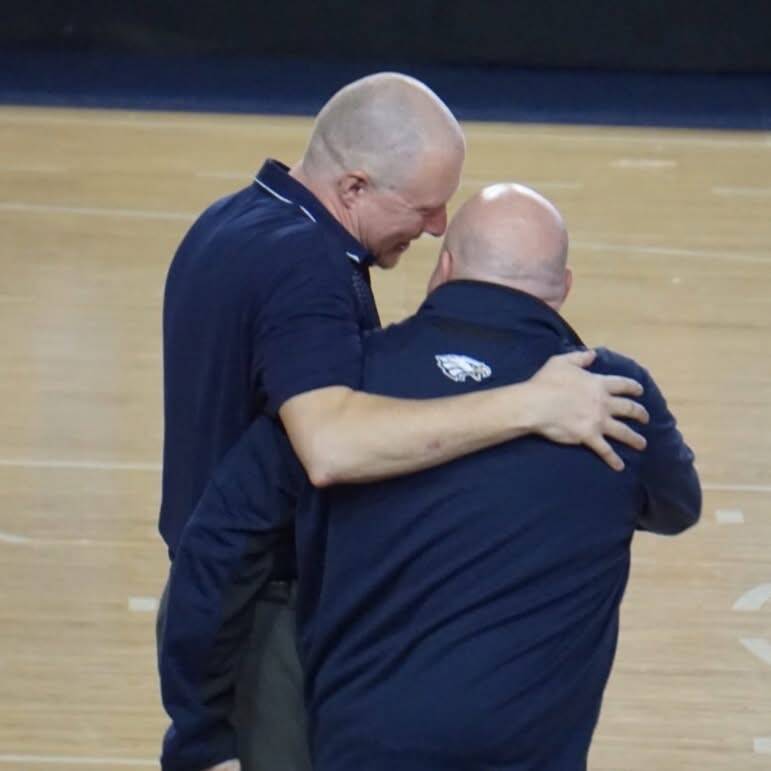
Giving people what they needed was the essence of Marsh. Though he’s in the Washington Girls Basketball Coaches Association Hall of Fame because of nine state appearances in 13 full seasons, it’s times off the court that many people will remember most.
The Arlington community lost a teacher, a father figure and a friend in addition to one of the state’s all-time great high school basketball coaches on Wednesday when Marsh, 57, lost a four-year battle with stage 4 prostate cancer. He died peacefully in his home, surrounded by family and close friends.
He is survived by his wife Sharon O’Brien, daughters Keira and Fiona Marsh, hundreds of basketball players and thousands of students he served as a history teacher at Arlington.
Sean Marsh, who coached alongside his brother for years before filling in as head coach when Joe was hospitalized for a month early in the 2024-25 season, was struck by his brother’s legacy at — of all places — the dump. He pulled up to the booth to pay, and the attendant said, “You’re Joe Marsh’s brother, aren’t you?”
“He was probably about 27, and he said, ‘He was my favorite teacher of all time,’” Sean Marsh said. “And the girl in the booth across from me said, ‘Are you talking about Joe Marsh? He was my favorite teacher of all time.’”
“A lot of people tell me this. I go into grocery stores, a lot of places … that’s just the kind of impact he had. It wasn’t just as a basketball coach. It was as a teacher, a mentor, a father, a community leader. He just really did it all.”
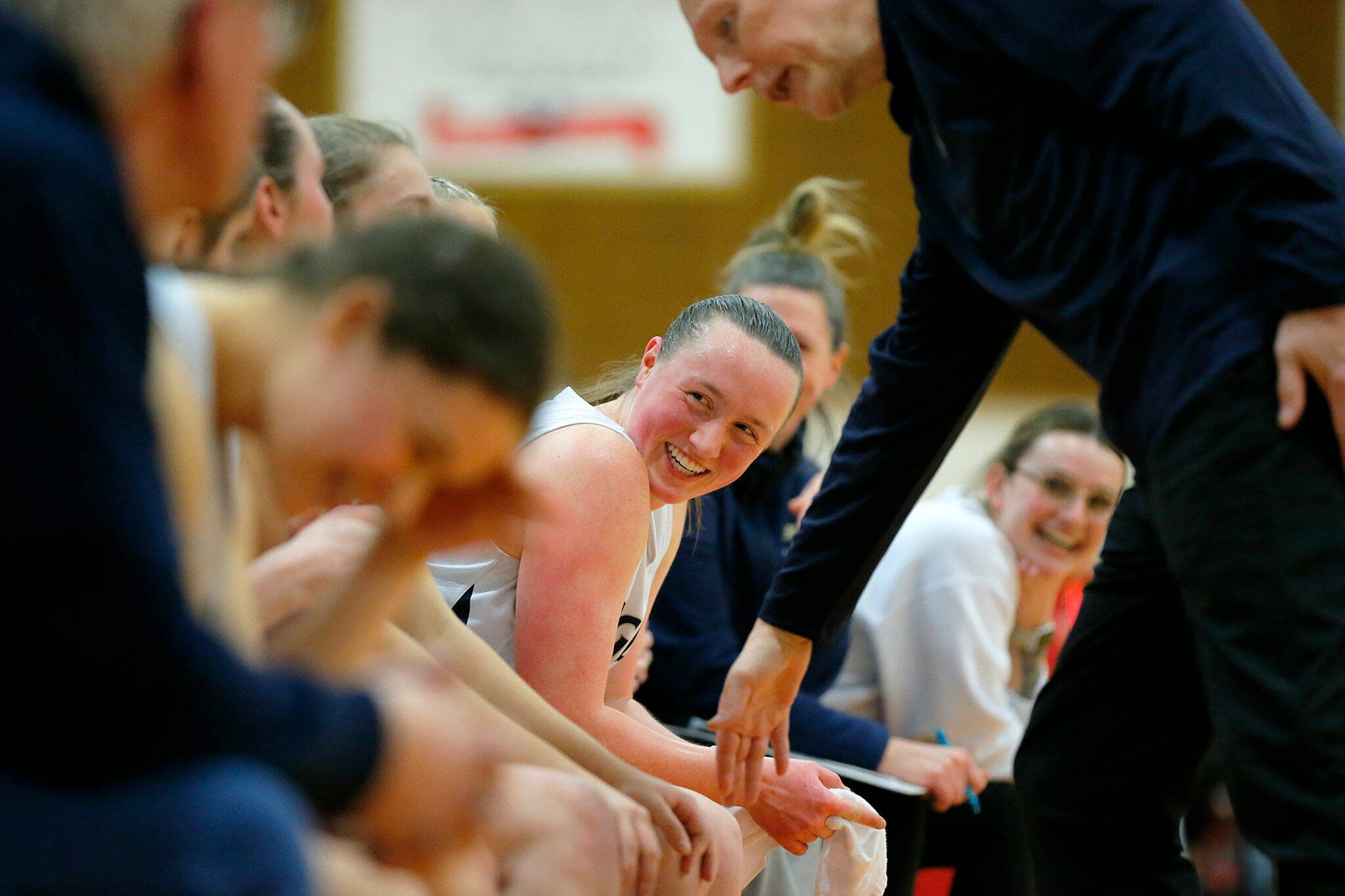
The Arlington bench all laugh as head coach Joe Marsh chooses five substitutes for his starters in the final minute of a win against Lynnwood on Tuesday, Feb. 14, 2023, at Marysville Pilchuck High School in Marysville, Washington. (Ryan Berry / The Herald)
Diagnosed in 2021, the cancer continued to grow. In 2022, he was told he had 6-9 months to live. Much like the belief he instilled in his players, Joe refused to give up. He beat the odds and continued to coach until he was rendered unable to walk in January due to a spinal tumor that led to surgery and a 33-day hospital stay. He fought and coached basketball for longer than could have been expected.
“He gave every ounce of his life to his family and to his program that he built, and that he was so proud of,” Sean Marsh said.
That stubbornness required to never give up comes in part from Joe’s East Coast roots. Joe Marsh, the oldest of six siblings — five of whom have coached basketball — grew up in South Jersey just outside of Philadelphia. The family of eight moved to Arlington to run a business. As a 16-year-old senior who had skipped a grade, Joe lost his father to a heart attack. He played on the University of Washington junior varsity basketball team in the mid-1980s before the family moved back to New Jersey. Joe Marsh, though, returned west because he missed O’Brien. The couple eventually married, and Joe began teaching at Arlington in 2004.
He was an assistant with the Arlington boys basketball program before another coaching position piqued his interest in 2011: Arlington High School girls head basketball coach. He thought about his daughter, Keira, who was a youth basketball player, and considered the possibility of coaching her in the upcoming years.
It turned out to be a great move for many people.
He took over a program that had eight total state appearances in its history. Through the end of the 2023-24 season, Marsh went 238-76 in 13 seasons, winning eight Wesco titles. He was named Wesco Coach of the Year five times and was The Herald’s All-Area Coach of the Year twice.
His teams made nine state appearances. Though the state title he desired eluded him, Arlington went to the championship game twice and the semifinals five times — including three straight trips from 2021-2023. While he fought through the effects of chemotherapy and cancer’s advances, Arlington finished fourth in state in March of 2024 to culminate his last full season.
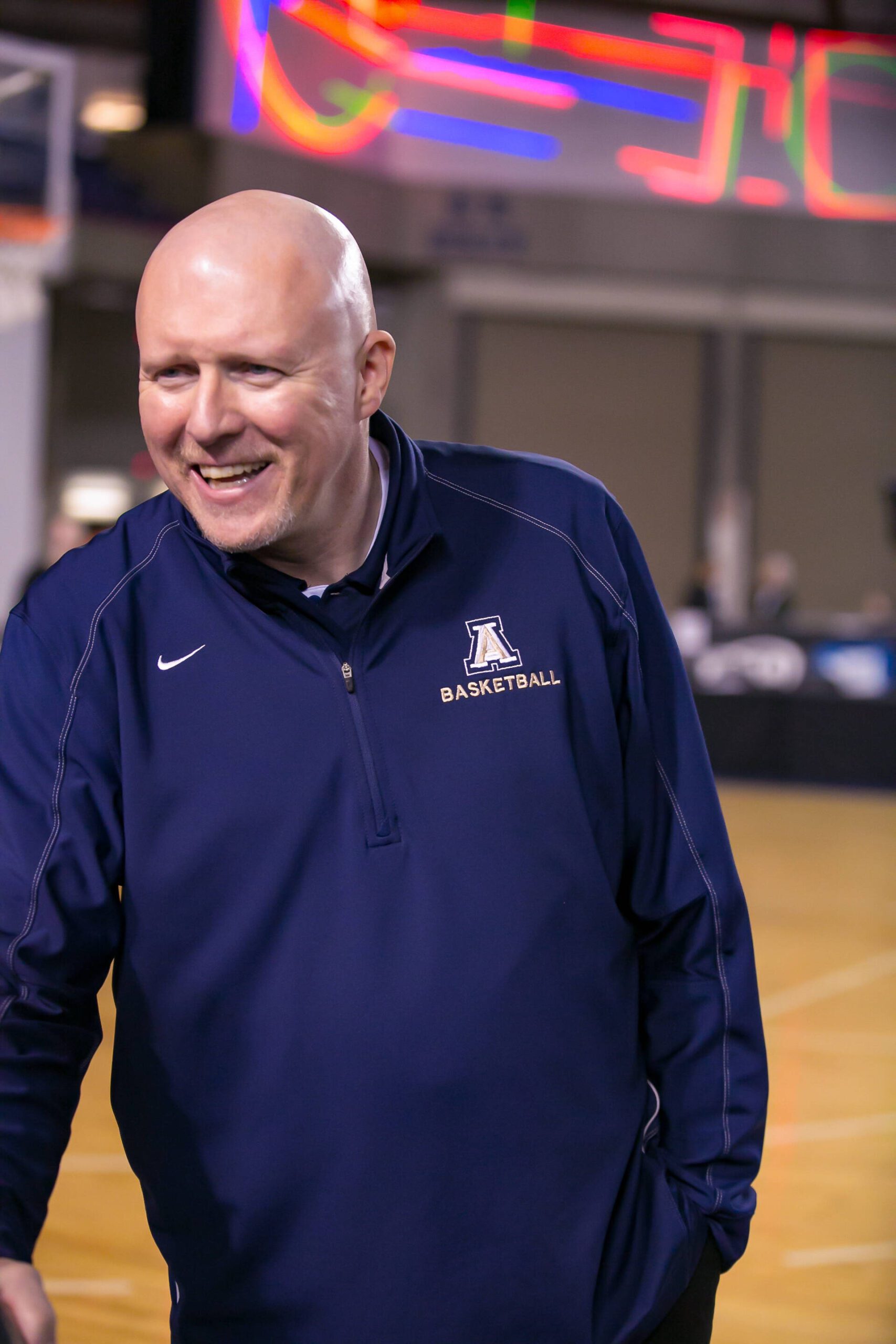
Arlington girls head basketball coach Joe Marsh greets a person during the 2020 state basketball tournament at the Tacoma Dome. (Photo courtesy of Sean Marsh)
Joe was known for winning, and his fiery side led to some technical fouls over the years. He worked the officials and fought for his players. They, in turn, fought for him. The game intensity quickly dissipated, win or lose, at the final buzzer. The referees and rival coaches immediately became his friends. His demeanor after games was the same, win or lose, when he talked with reporters, as well as coaches and players from both teams after games.
He built a youth feeder program to help grow girls basketball in Arlington. He became an advocate for Wesco basketball, often helping the very coaches who would try to beat him.
Defeating him, though, was not easy. He won 137 league games while losing just 28 — a winning clip of 83 percent. He was known for coaching his players’ hearts and mentality as much as teaching offense and defense, which led to the Eagles playing hard until the end.
“It was miserable,” quipped Glacier Peak coach Brian Hill when asked what it was like to coach against Marsh. “His teams were some of the best defensive teams throughout the league over his time at Arlington. You knew what he was going to do, it was just tough to get through it. He was going to bring hard pressure, and his kids really bought into what was going on and made things miserable.
“They were very disciplined, and they were definitely in shape. They would go the whole game and just keep putting it on you.”
After the evening of intensity, Joe quickly put games behind him and gave his attention to a family he loved dearly.
His daughter, Keira, who was an important part of two semifinal teams, now plays for Richardson at CWU. Though coaching one’s own child can be challenging, it was a great time for both of them.
“We obviously had our moments when I’d give him some daughter attitude,” Keira Marsh said. “… But it’s hard to remember any bad experiences, because I loved it so much. He made me a better player, and I think we worked pretty well together. I know with most people, it’s not that experience.”
That’s likely because the whole team was like a group of daughters to Marsh. While he demanded much of them, he built family relationships with his players that continued beyond high school. While he expected the physical fitness required to play his relentless pressure defense, his players loved him for his softer side.
On most Saturdays during the season, Marsh wasn’t running fast-paced practices to work out the kinks from Friday night’s game. He was usually handing out donuts and chocolate milk. The players sat in a circle, sometimes talking about basketball, sometimes not. Sometimes they joked around, and on other Saturdays, they talked about tough life situations that brought tears.
For Gracie Phelps (Gracie Castaneda during high school), her coach provided stability to help her overcome a difficult upbringing.
“He was probably one of the top three most influential people in my life,” said Phelps, who has followed her coach’s footsteps to become a high school teacher and coach. “I grew up in a pretty hard home, hard childhood, and I didn’t really have a father figure. Marsh became that for me in high school.
“There were times when he was scary, for sure, but it was all out of love — and we knew that. There were so many things that Marsh did for us on and off the court.”
Phelps also recognizes how difficult it is for a person to give so much as a teacher during the day and then carry that energy to practices and games in the evening.
That spark came from a passion for the game and helping the girls grow as players and people.
“It’s hard to come by a coach that can also be one of your best friends,” said Jenna Villa, The Herald’s 2022-23 All-Area Player of the Year, who will be a junior on the Oregon State University women’s team next season. “He was someone I could go to for anything.”
Villa met her former coach for coffee from time to time and learned that Marsh kept in contact with countless former players to chat about basketball and life. People knew he was proud of them, though he wasn’t afraid to give them advice.
Richardson benefited from Joe’s guidance as much as anyone.
An Arlington grad, Richardson returned home in 2011 after her senior women’s basketball season at Wyoming, feeling burned out about hoops and thinking her “relationship with basketball was done.”
Joe heard she was back in town and gave her a call. She started turning down an offer to get involved with coaching at Arlington, but Joe wanted to hear it in person.
In his room at the high school, he made it clear that he wanted her to be the junior varsity head coach. Richardson felt she would never have interest in being the head coach of anything.
“That’s nonsense,” he told her.
Now a college head coach, Richardson is thankful for Joe’s stubbornness.
“I said there was no way I was doing that,” Richardson said. “I remember him saying, ‘You’re so ready. You’re going to be great. That’s nonsense.’”
Richardson will miss her mentor’s guidance. Joe helped her identify players who would be a good fit for her team at Central and talked her through the tough moments of a coaching career.
Like most people, though, Richardson will miss her friend.
“He loves his players, and he’s passionate about the game of basketball, and about the growth of his teams,” Richardson said. “But not an ounce of who he is as a coach is self-serving, or about him. It’s all about his players, his program and the love he has for the game. He’s just such a good guy — a respected competitor.
“A great friend.”
Arlington girls head basketball coach Joe Marsh (left) walks with his brother and assistant coach Sean Marsh after a game. (Photo courtesy of Sean Marsh)
Gallery
Arlington head coach Joe Marsh talks with his team during a timeout against Lake Washington in a 3A semifinal on Friday, March 3, 2023, at the Tacoma Dome in Tacoma, Washington. (Ryan Berry / The Herald)
Joe Marsh, Arlington head coach, reacts to an intentional foul call in the final seconds against West Seattle at the Tacoma Dome on February 27, 2019. (Kevin Clark / The Herald)
The Arlington bench all laugh as head coach Joe Marsh chooses five substitutes for his starters in the final minute of a win against Lynnwood on Tuesday, Feb. 14, 2023, at Marysville Pilchuck High School in Marysville, Washington. (Ryan Berry / The Herald)
Arlington girls head basketball coach Joe Marsh greets a person during the 2020 state basketball tournament at the Tacoma Dome. (Photo courtesy of Sean Marsh)
Arlington girls head basketball coach Joe Marsh (left) walks with his brother and assistant coach Sean Marsh after a game. (Photo courtesy of Sean Marsh)
Local municipalities across the area held required annual reorganization meetings Monday evening.
In Bristol Borough, Frank Peranteau took the oath of office as mayor and was sworn in by District Judge David Chichilitti, who just took office himself.
Mayor Frank Peranteau taking the oath. Credit: Bristol Borough
Peranteau, who previously served as the borough’s police chief and district judge, vowed to remain accessible to the community.
Advertisements
“I will be there for you,” Peranteau told residents, noting he intends to hold regular conversations with the public.
The mayor’s first minutes in officer included a public disagreement with police Chief Joe Moors.
Advertisements
Peranteau criticized the chief for wearing a blue uniform shirt rather than the white shirt the mayor had requested.
Under Pennsylvania law, mayors are responsible for overseeing borough police departments.
Bristol Borough Council also seated reelected members Betty Rodriguez, of the West Ward; Lorraine Cullen, of the East Ward; Ralph DiGuiseppe, of the South Ward; and Maria Figueroa, of the North Ward.
Council President Ralph DiGuiseppe being sworn in. Credit: Bristol Borough
Tax collector Anna Bono Larrisey was also sworn in for a new term.
The council reappointed DiGuiseppe as president and Rodriguez as vice president.
Jeffrey Garton of Begley, Carlin and Mandio was reappointed to serve as solicitor and Gilmore and Associates as the borough engineer.
District Judge Kevin Wagner swore in Bristol Township Council members Craig Bowen, Cindy Murphy, Ray Blalock, and Marcia Dunlap for new terms.
File photo
The council voted for Bowen to remain president and Murphy as vice president.
Flager and Associates was reappointed as the township’s counsel, while Gilmore and Associates will continue as the township’s engineering firm.
In Falls Township, Tim Loteckie was sworn in by District Judge John Galloway.
Supervisors Tim Loteckie being sworn in. Credit: Falls Township
Loteckie, a 20-year resident and local youth sports leader, fills the seat vacated by Jeff Boraski.
“The Loteckie era begins,” said Supervisor Chairperson Jeff Dence.
Additional oaths were administered to auditor Sean Murphy and tax collector Kim Scarpiello.
Tax collector Kim Scarpiello being sworn in. Credit: Falls Township
The supervisors reappointed Dence as chairman for his seventh consecutive year and Erin Mullen as vice chairperson for her third.
The supervisors named former Supervisor Jeff Rocco as the vacancy board chairman.
Professional appointments included Michael Clarke of Clarke, Gallagher, Barbiero, Amuso & Glassman Law as solicitor and Jones Engineering Associates as township engineer.
The supervisors announced a 6 p.m. meeting schedule for the second Tuesday and fourth Monday of each month, with an adjusted single meeting on Jan. 26 and a modified May schedule due to Memorial Day.
New Middletown Township supervisors Ryan Leighton and Christian Gallardo joined the board after being sworn in by District Judge Daniel Baranoski.
Supervisor Ryan Leighton being sworn in. Credit: Middletown Township
The reorganization brought a change in leadership as Bernadette Hannah was named chairperson and Leighton was named vice chairperson. Supervisor Mike Ksiazek previously held the top post.
Supervisor Christian Gallardo taking the oath. Credit: Middletown Township
Other officials sworn in included tax collector Ray Chapman and auditor David Tilli.
The supervisors reappointed Curtin and Heefner as solicitor and Remington and Vernick Engineers as the township engineer.
Tom Sofield
Tom Sofield has covered news in Bucks County for 12 years for both newspaper and online publications. Tom’s reporting has appeared locally, nationally, and internationally across several mediums. He is proud to report on news in the county where he lives and to have created a reliable publication that the community deserves.
Children can learn coordination, team sports, water skills, and more this winter.
Image courtesy of Mylan Park
Don’t wait for cabin fever to set in—sign your kids up for winter activities at Mylan Park that will keep them moving all season long.
Little Bodies in Balance helps children walking age through 5 years old build coordination, body awareness, and social skills through fun, guided movement.
The Tot Sports program at Mylan Park gives young children experience with motor skills and sportsmanship. Tot Multi-Sport and Tot Flag Football, both on Saturdays January 10–February 14, work with kids ages 3 to 5 or 6 to develop coordination, balance, and teamwork. Tot Kickball, Saturdays February 21–March 28, covers kicking a large ball and running bases in a positive, play-based environment.
Winter is a great time to get kids ready for the summer water fun to come. The Learn to Swim program at the Aquatic Center at Mylan Park includes Pre-Swim for ages 3 to 6 and Youth for ages 6 to 12, with multiple skill levels in each group. Classes are taught by certified water safety instructors, and the winter session runs on Saturdays and Sundays from January 11 through March 7. Not ready to sign up? K-2 students with a Mon County report card can get one free swimming lesson—register here.
The beginning of the year is a great time to consider a monthly or yearlong family membership for perks like Sports Complex access, free small equipment rentals, and discounts on classes—visit the website for details.
NORTH CHARLESTON — Plans for new recreation fields in the Chicora neighborhood are in the works to provide more opportunities for young athletes in an underserved part of the city.
A lighted regulation-sized baseball field, 12-U softball field and open-air training center will be built on Carner Avenue through a partnership between the city, The Sandlot Initiative and Cal Ripken, Sr. Foundation.
The partners are in the process of fundraising the $4.5 million project. The city has committed more than $1.25 million.
While the southern end of the city has traditionally lacked investment, recent community-focused projects have bolstered the area. The fields will be located next to the North Charleston Senior Center that opened in December 2024 and the soon-to-open North Charleston Community Wellness Center, which is being built by SC Ports as a mitigation effort for the nearby Navy Base Intermodal Facility.
The fields will also be in the backyard of Military Magnet Academy. The magnet high school currently does not have baseball or softball fields.
Andy Brusman, founder of The Sandlot Initiative, said he wanted to find a location in an underserved community that was in need of baseball fields and is easily accessible to youth. This site is within walking and biking distance from several schools and close to residential streets.
The city of North Charleston unveiled plans for new baseball and softball fields in North Charleston’s Chicora neighborhood.
Provided/Cal Ripken, Sr. Foundation
One priority of The Sandlot Initiative is removing socioeconomic barriers that prevent youth from playing sports. Brusman said programming at the fields will be offered for free to youth in the community, including equipment and coaching. He plans to bring on experienced coaches so the players will have resources to pursue the sport at a high level.
“This is our way of bridging that gap,” he said.
Beyond providing a space for youth to play sports, the park plans to offer opportunities to develop the players off the fields.
Through a model created by the Cal Ripken, Sr. Foundation that has been replicated in more than 100 parks, the Youth Development Park will provide mentorship opportunities, said Scott Swinson, the director of development with the Ripken Foundation. The organization has a National Youth Mentoring Initiative that focuses on character development, teamwork and communication, he said.
“It’s not just the sports,” he said. “We’re about developing these kids from the inside out and offering them opportunities to grow with their peers.”
Brusman said this is the first Sandlot Initiative project. He hopes it offers a blueprint that can be replicated in other communities in the area.
The timeline for the project’s completion is dependent on when the money is fundraised, he said.
Brothers Bill and Cal Ripken Jr., a member of the National Baseball Hall of Fame, started the foundation named after their father in 2001. In 1987, the elder Ripken became the only father to manage two sons on the same team (Baltimore Orioles) in Major League Baseball history. The brothers also founded Ripken Baseball, a business that offers camps, tournaments and training at five locations including one inMyrtle Beach.
A longtime Maryland Stadium Authority official updated the board in early December on upcoming sports tourism events, just as he had dozens of times over the years. There were bowl games and conferences to discuss.
But it would be Terry Hasseltine’s final report. The 17-year veteran of the state’s sports tourism arm is no longer employed by the authority as of late December, said executive director Michael Frenz.
Hasseltine was the face of Maryland’s efforts to attract world cups, matches between European soccer clubs and other top-flight international sporting events, and his departure was abrupt. In that final December meeting held at the authority’s offices within the B&O Warehouse, he discussed plans to review grant applications in January.
The reason for his exit is opaque. Hasseltine directed requests for comment to the authority, as did Gov. Wes Moore’s office. Both Frenz and authority chair Craig Thompson declined to share what prompted it.
“It’s a personnel matter,” each said.
Public documents filed to the Internal Revenue Service show that events Hasseltine helped host operated at a significant financial loss. That does not explain what led to his departure, but could offer clues.
Hasseltine became the executive director of the Maryland Sports Commission in 2008 after holding a similar role in Kentucky. For nearly two decades, he spearheaded efforts to recruit college basketball tournaments and football games to Maryland, as well as award grants for youth sports. The commission even organizes a spelling bee.
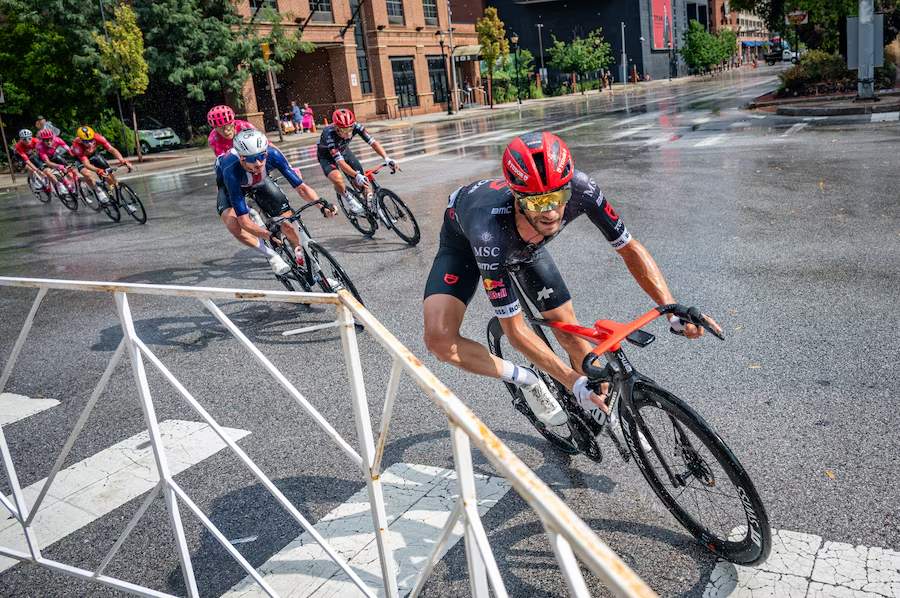
He also served as the head of the commission’s nonprofit arm, the Sport and Entertainment Corporation of Maryland, since its creation in 2019. The nonprofit has helped host multiday annual events such as the Maryland Cycling Classic in the Baltimore area and the Maryland 5 Star equestrian competition in Cecil County.
The future of that nonprofit, however, is unclear. Since the authority is separate from the nonprofit, Frenz was hesitant to provide specific information, but said the nonprofit, which formerly had six employees, now has zero.
Employees did not receive their final paychecks in late December, around Christmas.
“We’re doing what we can, within the limits of our authority, to see that they get paid,” Frenz said.
The Fair Hill Training Center track in Elkton. The 5 Star, an equestrian event, has attracted Olympic equestrian athletes to the venue in Cecil County each October since 2021. (Kylie Cooper/The Banner)
The futures of the cycling and equestrian competitions are murky. A fiscal snapshot of each event shows they struggled financially.
The 5 Star has attracted Olympic equestrian athletes to the Fair Hill venue in Cecil County each October since 2021. It is one of only seven major events in the world that features the highest level of eventing, a type of equestrian competition.
In 2023, the five-day event generated about $1.4 million in revenue — but had $7.5 million in expenses for a roughly $6 million loss, according to a Form 990 filed to the IRS and available via ProPublica.
“It’s an expensive event to put on and it was always a concern if the revenues generated were enough to cover the expenses,” said Ross Peddicord, the former executive director of the Maryland Horse Industry Board.
That same year, the Cycling Classic had $2.6 million in expenses and only $37,000 in revenue, the document shows, but the nonprofit overall broke even due to significant grants and gifts.
The Form 990 does not appear to include key revenue streams, such as corporate sponsorships, for each event. For example, the Cycling Classic received well over $1 million in sponsorships in 2023, said Steve Brunner, one of its organizers.
The most recent Form 990 for the Sport and Entertainment Corporation of Maryland is not available on the IRS website, but in 2022, the nonprofit lost about $3 million.
It was scheduled to receive $550,000 a year from Cecil County to continue hosting the 5 Star — and thoroughbred races at the same Fair Hill facility — through 2029.
But the future of the county’s annual investment could be in jeopardy.
Cecil County Executive Adam Streight said Tuesday that recent developments “have raised serious questions” and that it would be “irresponsible to commit to any course of action” until the county meets with the commission.
Streight was “taken by surprise by the sudden departures” of Hasseltine as well as Jeff Newman, the former head of the 5 Star, after learning about it via social media.
“My administration is committed to working with future leadership to ensure both events remain in Cecil County, where they belong,” Streight said in a statement.
The 5 Star received about $3 million a year from a state fund created by the General Assembly in 2022. That fund allots $10 million annually in state lottery money for sports and entertainment events.
The Banner requested a list of such events from Hasseltine in Dec. 2024, which showed that the 5 Star had received $8.7 million over the prior three years, more than any other event. That fund, controlled by the commission, also awarded money to college football and soccer games at M&T Bank Stadium, music festivals, PGA tournaments and last year’s Preakness Festival, among others.
A legislative analyst last January proposed slashing that $10 million annual fund during meetings with members of the General Assembly, as Annapolis faced a budget shortage, but Hasseltine emphasized the economic impact that such events create.
Instead, he argued, the state should “double down” on sports tourism.
The future of the Cycling Classic is unclear. Its chair, John Kelly, said Tuesday that his company, Kelly Benefits, “has been a proud supporter of the Maryland Cycling Classic and hope to be again in the future.”
Frenz said there is interest in continuing the 5 Star.
Will Phipps, an equine consultant based in southern Pennsylvania, is among those who wants to make sure the event has a future. He raised funds for the 5 Star during its early days, a half-decade ago, but worried about its financial model.
Emulating the Preakness Stakes with high-end catering and “grandiose infrastructure,” Phipps said, was not a recipe for sustainability.
In recent days, he sent a letter to the stadium authority, he said, and hopes to pitch them on a viable plan. For one, the event could be run on a budget one-half or one-third the size, he said.
“We have put together a model of success that shows how this could run in the black and not be a burden on the taxpayer and contribute heavily to the local economy,” he said.
Reporter Lee Sanderlin contributed to this article.
Craig Butler was known for far more than the bass heard in the words he spoke. He also helped many Lawrence youths find their own voices.
Thomas Afful remembers Butler substituting in several classes when he was in middle school.
Afful, a Lawrence High Class of 2014 graduate, said other teachers would call on Butler to “kind of get some of us in order.” He described Butler as a disciplinarian but said his calm and assertive approach was effective, and he made learning fun.
“He commanded his respect indeed with his deep voice,” Afful said. “But he always brought some type of a lesson to be learned in those circumstances.”
Don’t miss a beat … Click here to sign up for our email newsletters
Click here to learn more about our newsletters first
Butler, 79, died the evening of Jan. 1 at the University of Kansas hospital. The longtime Lawrence resident had battled with a brief illness related to heart issues and diabetes, according to his daughter, Julia Butler.
His final request was fried catfish, barbecue and a Bud Light. Second to the sound of Butler’s voice – and of the TV inside his home blaring MSNBC – Julia said she’ll most miss her dad’s love for food.
Contributed photo Julia and Craig Butler at a restaurant
“When he would eat something good, you would know it,” she said, laughing.
The bulk of Butler’s career was in social work, Julia said, as he previously worked for the Kansas Department of Social and Rehabilitation Services. He then pivoted to substitute teaching for Lawrence Public Schools in the early 2000s before retiring around a decade ago.
Butler launched “Can We Talk?” in 2007 with a group of fellow Black men in Lawrence, including Willie Amison, Ed Brunt and Bud Stallworth.
Initially designed as mentorship for Black boys attending Lawrence and Free State high schools, the after-school club quickly expanded its reach to more students.
Afful said when he attended “Can We Talk?” meetings, the room was often packed with both students and staff, some standing in the doorway. Participants would discuss race and culture and work through their school and home life struggles. They’d mull over their futures.
“He brought unity amongst the students, especially minority students,” Afful said.
The club remains active today, largely focused on social justice, according to a Free State Free Press article. Free State security officer Dee Kemp took over for the former staff adviser, Charles Thomas, who died in 2021.
‘That way of connecting with people’
“Can We Talk?” served as a safe space as much as Butler himself did.
Jermaine Jackson, who graduated from Lawrence High in 1991, was an eighth grader at West Middle School when he met Butler. He played on Butler’s AAU (Amateur Athletic Union) basketball team and said Butler provided the representation he needed as a kid.
“He just always took me under his wing like a son,” Jackson said. “I grew up in the South and I came up here, and, you know, he gave me the confidence. That’s the guy that looked like me, dark skin like me, and he’s doing his big thing.”
Eventually, Butler became a client of Jackson’s. A barber who operates mostly out of Watson’s Barbershop inside the South Lawrence Walmart, Jackson pivoted to in-home cuts for Butler seven or eight years ago when it started to get harder for Butler to get around.
Contributed photo Craig Butler (left) and Jermaine Jackson
“He talked to me about life, or if he saw I needed some direction or something, he would always give me advice,” Jackson said.
Kim Moore, Lawrence High Class of ‘94, said Butler was her first basketball coach. She played under his instruction through a Lawrence Parks and Recreation program when she was in fifth and sixth grades.
Moore said Butler’s coaching style influenced her now 18-year coaching career in youth baseball. Butler coached youth basketball for more than 25 years, up until around 2006.
“I don’t remember him being harsh, but very positive, very encouraging, and pushed me, but not in a harsh way,” Moore said. “It made me want to just keep trying, keep trying. Even when I messed up, he was never discouraging.”
Growing up, Julia said she felt like her dad knew everyone everywhere they went. He cheered at his own children’s activities and supported other kids at theirs, helped students with their financial aid applications, connected folks with employment, and simply conversed.
Julia said she’s not sure how he was able to maintain so many relationships, but he appeared to do it with ease, as if it was second nature.
“He just had that way of connecting with people,” Julia said. “If you wanted to better yourself, he was going to find a way to help you do that.”
Please support The Lawrence Times! Subscribe here.
Butler was born in 1946 and grew up in Chicago. He obtained his undergraduate degree in history from Bethel College in 1972 and his graduate degree in education from the University of Kansas in 1990.
Lawrence Public Schools presented the “Can We Talk?” founders with its annual Outstanding Citizen Award for 2010-11. Free State recognized Butler and Amison in 2013 with the Friends of Education Award, another annual award thanking community volunteers in the district.
No formal service is scheduled for him at this time, but his family plans to hold a celebration of his life sometime in the near future. His obituary is online at this link.
Contributed photo Craig Butler (center) with his parents, Curtis and Hettie
Contributed photo Craig Butler (center) with his grandson Noah and son Aaron
Contributed photo Craig Butler and his grandson, CadenContributed photo Craig Butler (right) and his two grandchildren, Caden (left) and Noah (center)
Contributed photo Craig Butler
Contributed photo Craig Butler
If local news matters to you, please help us keep doing this work.
Don’t miss a beat — get the latest news from the Times delivered to your inbox:
Click here to learn more about our newsletters first
Maya Hodison (she/her), equity reporter, can be reached at mhodison@lawrencekstimes.com. Read more of her work for the Times here. Check out her staff bio here.
Latest Lawrence news:
Cuyler Dunn/Lawrence Times
Share this post or save for later
Months after the building began to tease those passing by, the Olive Garden in Lawrence will finally open on Feb. 2.
Share this post or save for later
Don’t let Fritz’s regal appearance fool you. He’s demonstrated that he’ll take a pup cup over a Douglas County staff meeting any day.
byJodi Fortino, Kansas News Service
Share this post or save for later
Lawrence and Kansas City are eagerly waiting to learn where teams will set up their base camps for the 2026 World Cup. The locations would serve as a place where teams can practice and train.
Share this post or save for later
Here’s the general public comment for the Lawrence City Commission’s Tuesday meeting, as public comment is no longer being broadcast.
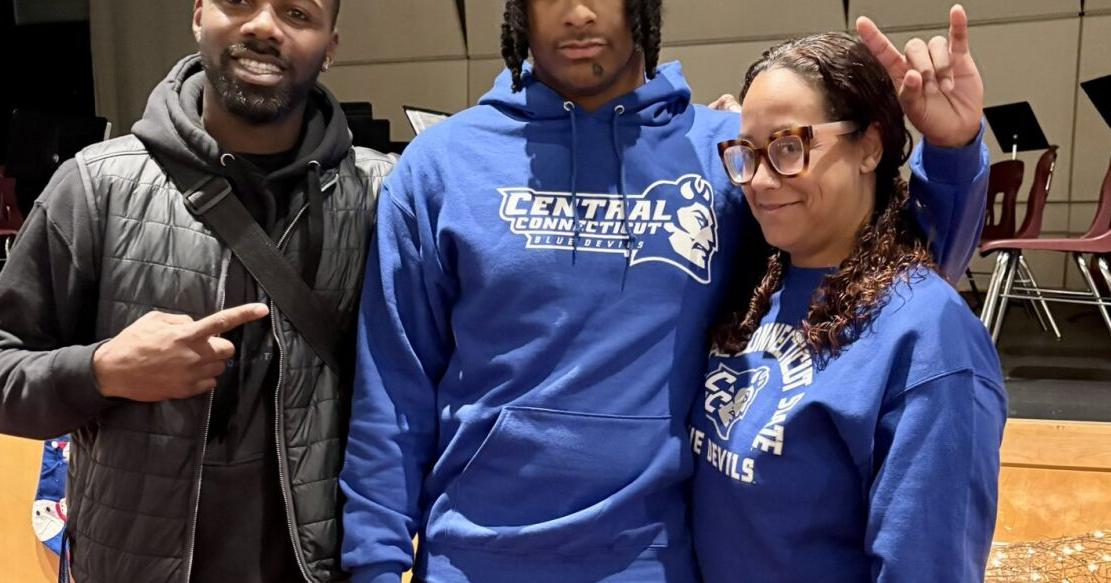
WINDSOR — Windsor High School quarterback and Central Connecticut State University football commit AJ Robinson is just as much of a leader off the field than he is on the football field.
Robinson led the Windsor Warriors to a 2025 Class MM football state title after finishing last season as runner-ups and along the way was named the Connecticut Gatorade Player of the Year. Upon being named the Gatorade Player of the Year in the state, Robinson received a $1,000 grant as part of the accomplishment.
Instead of using the money on himself and/or family and friends, Robinson chose to reinvest it into mentoring and training opportunities for younger student athletes by awarding the grant to Air Norris Sports Mentorship Inc., a Connecticut-based youth athlete development nonprofit.
Robinson, the selfless leader that he is, said there was no hesitation to donate his money back into the Air Norris Academy because of how impactful the program is to not only him, but many youth athletes in the area.
“There was absolutely no hesitation to donate my $1,000 grant to Air Norris Academy,” said Robinson. “What made me want to donate my grant to Aubrey’s program is because of the impact that he has had on not just me, but so many kids around the state. He provides a safe place for kids to come and learn the game of football and become better young men.”
Robinson, just a senior in high school, understands the importance of giving back. He thinks anyone in a position that is able to should give back to the community and help others out and that’s another reason why he wanted to donate his grant to Air Norris Academy.
“I think it is extremely important for not just athletes, but anyone, to give back to the community because it is our responsibility to help those in need,” said Robinson. “We have all been given opportunities in our lives, and it is important to pay it forward and help others achieve their goals.”
The Air Norris Sports Mentorship is run by Aubrey Norris, a former CCSU quarterback from 2005-2009 and a two-time NEC champion. Air Norris Sports is also based in Robinson’s hometown in Windsor.
The mentorship program develops on field skills, position training, football IQ, and preparation but puts just as much emphasis on life skills. That includes accountability, discipline, communication, leadership, academic responsibility, and personal growth. Norris’ goal is to have his athletes prepared for college, careers, and life beyond sports.
Robinson said Norris has helped teach him how to work hard and be dedicated. He has also taught me Robinson how to be a leader and how to handle adversity.
Having trained Robinson on and off the field for several years, Norris wasn’t surprised that Robinson donated his hard-earned money back into his community for local youth athletes.
“I’ve trained AJ for several years now, and I’ve watched him grow not just as a quarterback, but as a young man… honestly, I wasn’t surprised by the donation,” said Norris. “That’s who AJ is. From day one, he’s been selfless, coachable, and community-minded. The talent gets attention, but the character is what consistently shows up.”
Robinson set the CIAC state record for most passing touchdowns in a career with 120. He led Windsor to back-to-back state title appearances while helping the Warriors win its second state title in program history and threw for 50 touchdowns and 3,647 yards.
For his accomplishments, the 6-foot-3, 215-pound quarterback earned a scholarship to play at CCSU and will play on the field where he played his final high school football game, winning the 2025 state title on Arute Field. Robinson said he’s now shifted his focus in the weight room and on the field as he embarks his college football career.
Norris, a former CCSU football player, called it a full circle moment to see his protégé earn a scholarship to where he played football collegiately. He’s looking forward to seeing Robinson in the blue and white and continuing his football career.
“What separates AJ is his consistency and mindset,” said Norris. “He shows up every day willing to work, learn, and lead whether anyone is watching or not. Seeing him continue his football journey at CCSU is incredibly special for me. As an alumnus, it’s full circle. But more importantly, it’s a testament to his dedication, resilience, and belief in the process. He earned that opportunity.”