
NIL
Kentucky AD explains NIL, JMI partnership and cap rules

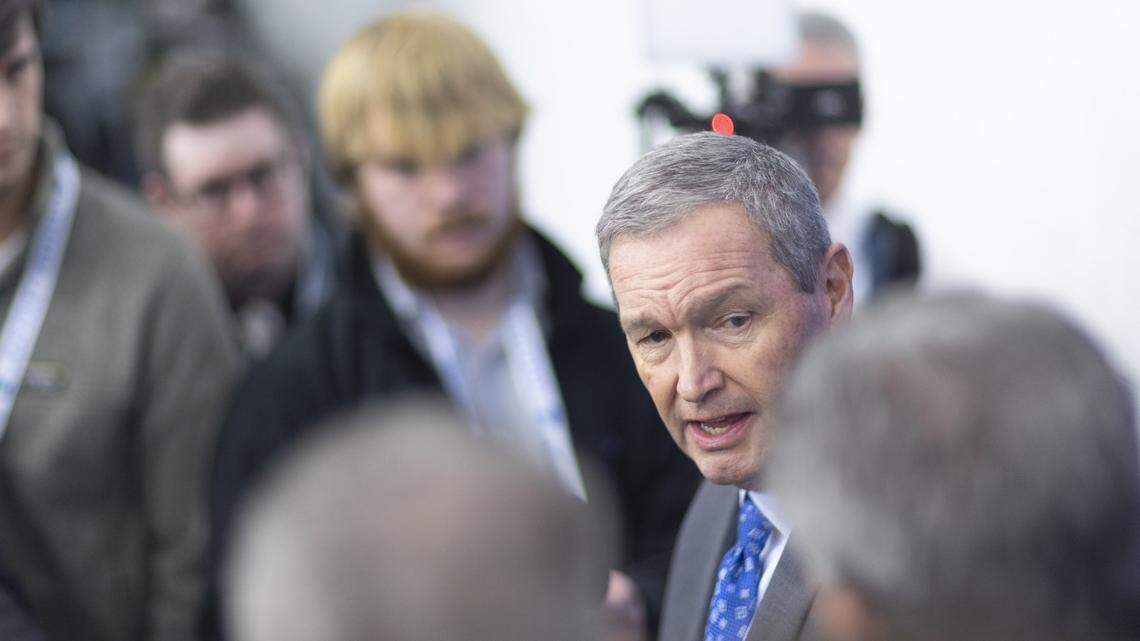
Recent claims that JMI Sports is prohibiting University of Kentucky athletes from entering into NIL deals with competitors to the school’s corporate partners are false, according to athletic director Mitch Barnhart.
Yes, as part of the agreements signed by UK athletes for revenue-sharing payments from the school, athletes are prohibited from using university logos, facilities and other trademarks in any endorsements for businesses that are not affiliated with JMI and UK. However, athletes are still permitted to sign their own endorsement deals with other companies as long as they do not wear UK gear in the advertisements, UK athletic director Mitch Barnhart told the Herald-Leader in a one-on-one interview Tuesday.
JMI’s role in UK’s NIL setup has come under fire in recent weeks, sparked in large part by a story from Kentucky Sports Radio that cited anonymous sources who attributed the men’s basketball program’s failure to sign any 2026 high school recruits so far at least in part to JMI limiting UK athletes to deals with its existing advertising partners.
UK announced in August that JMI, its multimedia marketing rights partner since 2014, was taking over NIL operations previously managed by collectives outside the athletic department in the form of a fan subscription service called BBNUnited as part of an extension to its partnership that would run through 2040.
Comparing JMI’s role to the previous function of the outside collectives is not simple due to a series of rule changes brought about by the NCAA’s House settlement, which went into effect July 1. Now, schools are allowed to distribute up to $20.5 million directly to athletes, but NIL contracts must be approved by a third-party clearinghouse called NIL Go, which ensures the deals are for legitimate business purposes and are for fair market value. Prior to the House settlement, NIL collectives across the country had essentially operated as pay-for-play entities which guaranteed top athletes massive contracts in exchange for little-to-no actual endorsement activities.
Barnhart was on the NCAA committee tasked with implementing the specifics of the House settlement and has insisted that UK will operate within those guidelines, even as other schools have pushed back against the restrictions and some pundits have speculated those restrictions will not stand up to future legal challenges without federal legislation codifying them.
Barnhart appeared on the Wildcat basketball pregame show Saturday to respond to some of the criticism of UK’s NIL setup and the JMI deal. In a 30-minute interview with the Herald-Leader three days later, he addressed JMI’s role in negotiating athlete NIL deals, the department’s secrecy about its revenue-sharing split, whether the men’s basketball program needs a general manager, rumors he is considering retiring next year and more.
You can read an excerpt from the Q&A below. Questions have been slightly edited for clarity and brevity.
HL: Not every conference has agreed to this College Sports Commission’s enforcement agreement, so it feels like people are operating by different sets of rules right now. How do you approach that in this NIL space at the moment?
Barnhart: “I think that there’s about three or four different avenues of things going on, conversations going on, which I think are confusing to people. One, you have the conversation, what was done prior to July 1. Then you have the post-July 1 and the beginning of the College Sports Commission and NIL Go and the cap space. All of those things have come together. Different schools have got more room in their cap space based upon all of those factors. And so I think that’s where the confusion lies on a lot of people’s parts. The participation agreement would ensure that everyone is agreeing to the principles of the College Sports Commission.
“I was on a call today and felt like progress has been made. I think everybody wants to get there. There’s some state laws and some legalese that has slowed that progress. There is, I would say, hope that something will happen after the first of the year, and then we’ll get to bring that all together. Until it does that, there are rules that I think everyone can agree to, and there’s a process for those rules that they have to go through the court, and they also have to go through a couple of attorney generals. And have a 30-day period that they have to go before the plaintiffs (in the House settlement) and the 30-day period before the attorney generals before all those can be implemented. Some of those have been implemented, and we could all agree on those. Others are sort of working their way through the process. The combination of the participation agreement, getting some of those rules vetted and getting them on the books has — probably the word would be clunky — made it a little bit clunky here at the beginning of everything.
“But, I think that progress is being made, and I think people care, and they’re trying to stay within guardrails to move it down the path. But again, when you hear conversations publicly about different people doing different things, it gets confusing, and for many frustrating. That’s where I think it’s hard for a fan to sit here and say, ‘Well, why they get to do that and we don’t?’ or ‘They’re doing something completely different than we’re doing it.’ And so I think we’re trying to be steady in our approach. We think that we’re within the guardrails of what they’ve given us, and we think we’ve got a good plan. We’re just going to keep working at it from that perspective.”
HL: Of the schools who have kept their NIL collectives outside the department, do you feel like there are people still operating in the pre-July 1 landscape?
Barnhart: “No, I think everybody’s trying to get to the spot where everyone’s working through the NILGo system. We’ve all agreed that that’s where we’re going to head. And I mean, deals are going through there, and all schools are putting their deals in there. We’ve had, again, several hundred deals go through, and we’re well into seven figures of deals that have been approved for our student-athletes. Other places are doing the same thing. … Obviously getting the NILGo was very difficult, to get that up and running. That was a major undertaking, and so to get to the rhythm of how that works has not been easy for everybody. I mean, that is a complete transition in how that works. And I think that people are getting into the rhythm of how that works and how they’re able now to activate sponsorships and activate deliverables for people. And is it within the range of compensation, and is there a valid business purpose to it? I think that is the thing that has made it. I would say one of the better parts: Is there valid business purpose to what is being done? And then it gives it some direction. So, I think we’re making progress there. And feel that obviously, as the College Sports Commission gets their staff up and running and they get more people involved in their staffing … that will be certainly helpful.”
HL: Are the numbers you cited at the October Champions Blue meeting ($3,000 average per NILGo-approved deal with a maximum around $50,000) still accurate for UK athletes?
Barnhart: “Yeah, I think we’re trending in the same way. I think that some of our student-athletes are certainly starting to think, ‘Hey, there’s some things that we can do, and there’s value there.’ As you’ve watched our volleyball team play, their visibility and their notoriety in our community has certainly expanded. And that’s expanded their reach, and you’ve seen that. You can call it ‘hot market,’ whatever you want to call it. I think there’s value in that, and we want to help them maximize that. I think we’ve got opportunities to do that at a really high level, and our people are excited about that. It’s pretty cool to watch it all transpire, to be honest with you. I enjoy watching our young people have success at that.”
HL: As we talk about the JMI part of this, what do you view as the advantages of this setup?
Barnhart: “First off, JMI has got over 200 partners, so we come with a ready war chest of people that are ready to access, have never had access before to have our student-athletes work with them. So, we got 200 people that are involved at JMI. They’ve got a sales force that is fully ready to go to help. They are activating dollars that are above our advertising revenues for those young people, and they’re ready to put those in place for those that have a fit. And you have to have the right fit and all of that. … So, it’s got to be right person, right company, and you put those in the right fit. But I think that the beauty of having a qualified, active sales force with 200 partners that are very, very interested in your program, and with student-athletes that have success and that are very marketable — I think the thing that people lose sight of is we’ve got a really wonderful set of student-athletes that you might want to align yourself with. And I think it’s a really cool thing.
“And so, I think that’s where JMI — they’re experts in their field. They have done everything from national deals to hot-market deals to local deals and everything in between. So they’ve shown they can do all those things. For athletes that have been here, they see that a little more clearly than people that are coming in new, especially from people outside the Kentucky market. There’s an education process. We’re working our way through all that, but, I mean, make no mistake about it, there’s no one that can come in with that kind of bandwidth from the outside. Just saying, ‘Hey, we’ve got a group of people that we’re gonna market ourselves to. Who’s gonna sell us, for us?’ (And JMI says), ‘Well, we do. We’re gonna go do that. We’re gonna make the match, and we’re gonna work at it pretty hard.’ And we’ve got, again, a very dedicated sales team, who, by the way, is doing an average of $35 to $40 million a year in revenues for their network in and of itself. So, they’re experts at doing that. It’s not like this is just, ‘Hey, we think that we’re going to try this sales thing for the first time.’ They’re experts at it.”
HL: When an athlete accepts revenue sharing money from UK, do they automatically get tied into the JMI deal, or do they opt into that separately?
Barnhart: “There’s some things that they’re opting into. OK, there’s some things they opt into, and obviously that’s a part of that process. And then there’s some things that we say, ‘Hey, does this fit you? Does this fit you? Do you want us to go out and find you (a deal)? Is there some things that make sense in a marketing piece, a partnership piece, so to speak, or a sponsorship piece?’ And if it doesn’t, you’ve got your own thing; you’re not prohibited from doing your own thing. We’ve shown that on many cases with student-athletes in our program. We’ve got student-athletes in our program that have got deals that are outside our partners, that they’ve gone and had an opportunity to go access and do those themselves. They just can’t use our IP marks in that process. Part of the ability to use the Kentucky marks, which we think is super valuable, is that relationship with JMI. So yes, that is part of that process. But to go do your own thing, you can certainly do that. That happens all the time on the pro sports scene. You see high-, high-level, elite-level professional athletes that go do an ad, and they do not use the marks of the team that they’re with in any way, shape or form. They may use the same colors, and you see that. You go, OK, I get it, the alignment. You know who it is, and the company’s saying, ‘We’re good, but we just don’t need to pay for the marks.’ OK, fine, then you can go do that, and you’re perfectly capable of doing that.”
HL: Say a company who is a competitor of one of your partnerships approaches an athlete, what is the process for them? Does JMI then go to your partner and say, ‘Here’s the deal?’
Barnhart: “The logistics, so generally the student-athlete or the representative is coming to us and saying, ‘Hey, we’ve got this deal we’d like to (do).’ OK, fine, that’s OK. We’d certainly prefer that you give our partners a chance first, and if that’s something that doesn’t work for you and you still want to go do this, then that is OK. You just can’t use the marks.”
HL: How is that different than before July 1, because the original NIL executive order from the governor said you could deny deals that were in competition with your partners? Was that an issue before?
Barnhart: “I don’t know that it was an issue beforehand. I just don’t think it was really clear. I don’t think it was really clear. The goal, clearly, is we’ve got some wonderful people that are aligned with the University of Kentucky. These people have given incredible resources to our program, and our hope — and our goal — would certainly be to align our young people with our partners. That makes all the sense in the world. Sometimes that’s not the way it works. I don’t want to lose sight of the fact that there are friendships. I can use Trent Noah as an example. Trent has got relationships from his hometown, areas that he wants to respect. Got it. Want him to be able to do those things, if that’s important to him, and it is. It’s important to him. We’ve got young people that have come with deals already from their days in high school, that they’ve come to our program with things that are already in place. OK, then we’ve made provisions for that and worked through that. It’s a conversation. JMI has been really good about working through each of those scenarios. It’s not always just super, super easy, ‘Hey, we’ll just sort of work our way through it,’ but we work our way through it and we get there. And they’ve been at the table with our coaches and with our athletic department representatives and the student-athletes and their representatives. So it’s been OK.”
HL: Have you had any athletes that were denied a deal because it was with a competitor?
Barnhart: “Not that I’m aware of.”
HL: Outside collectives were taking a percentage of the money they raised. What percentage does JMI take?
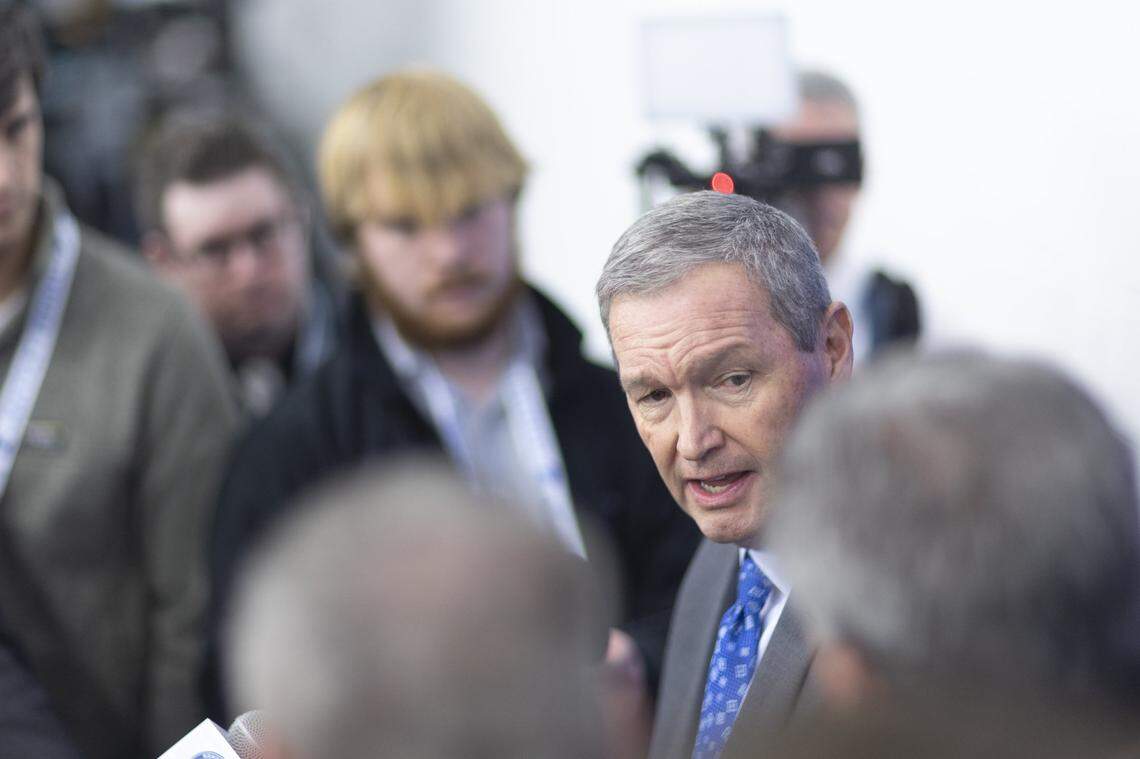
Barnhart: “JMI doesn’t take any percentage. No, there’s no fee. There’s no fee. We’re fee-free.”
HL: In the last week fans have raised concerns about relationships between your staff and the staff at JMI. Do you think those are a conflict of interest?
Barnhart: “It’s never been an issue once. We’ve had long-standing relationships at this university with a lot of people that get really, really close. Jim Host, Tom Stulz, Paul Archey — it’s a really cool family, and I think that’s what makes it special, not a conflict. If it was a conflict, I wonder how our revenues and everything that we’ve worked so hard to grow have grown at such an amazing pace? We got one of the top-five deals in the country, and to have an opportunity to work with that group in a long-standing relationship is really cool. It is really cool.
“Host was with us 30-plus years, and everyone was thankful for that, right? We’ve been with JMI 11 years now. Signed on for another six, which puts it 15 out, which gives you a 25-year deal. So, it’s been a little bit misrepresented as a 25-year deal. It’s not. It’s another 15. So, we get to that spot, we’ve got relationships and people that have got relationships from that sales staff in our community at a high, high level. That makes this thing special. The fact that I’ve got people on my staff and there’s people in this community, somewhere along the way there’s going to be connections, all right? And I do believe that we’ve kept those conversations as apart as we possibly could.
“There’s not one day that we go and say, ‘Hey, if we do this, we can connect dots.’ We haven’t done that. I feel very comfortable that the relationship we’ve got with, initially host, then IMG, then JMI, those relationships have been things that have continued because Kentucky is a special place and people want to work with us. We want to have long-term relationships with people that care about this place.”
HL: What role does JMI play in the facilities plans since they’re giving those briefings at the monthly Champions Blue meetings? Are they making those decisions?
Barnhart: “No, no. Erik Judson, in his previous days he did a lot of work with the Padres and the stadium and the multi-use district down there. He’s done that at other places all across the country. Erik’s got an expertise in that. He’s very well connected to the sports architecture world. So, using the connections that he has — and we’ve got our own, because we’ve done a lot of that with some of the very same people — making sure that we’re trying to find really cool connections and conversations to see what are the possibilities here. We got to find a way to expand our buckets of revenue. We’ve got five buckets. If you look at the five buckets, they’re really well-defined. It’s tickets, it’s fundraising, it’s major contracts. It is our concessions and souvenirs business, which is not massively big. And then our conference revenue sharing. Those are the five, and they haven’t changed for decades. It’s been the same five for decades. So what has to change going forward? We’ve got to find some new revenue streams that are bringing us some steady flows of money, that may be outside the normal of athletics. Maybe it’s an events operation that brings in more events that you might be familiar with, whether it’s another concert or two. Or maybe it’s some other things that we’re bringing to us that we have a chance to access more revenues. Maybe it’s that multi-use district where there’s money that comes off an alignment to our stadiums or to our facilities and those kind of things. There’s a lot of pieces that we’re looking to try and find new ways that doesn’t end up being on the backs of our fans. That it ends up being something that is sort of an add-on to our program. It gives us a chance to say, hey, this is how we grow a little bit without an arms race in the ticket pricing world or having to go raise more money, and those kind of things where it’s very difficult. That has become more difficult as years have gone by.”
HL: So we’ve talked a lot about the NIL part of this, but the revenue sharing is the other half of it. Obviously, you all are not alone in keeping those numbers close to the vest. What is the reason for the secrecy there, and do you think some of this speculation could be ended by just sharing the numbers?
Barnhart: “No, I think, to be honest with you, it’s not so much secrecy. It’s just flexibility. We want the flexibility to be able to work. I think there’s two pieces to it. You want to keep the rev share and the NIL conversation separate, because they are separate. I think people have confused those. ‘Hey, I’ve got a $30 million NIL.’ Really, $30 million in NIL? That’s fascinating to me, how you’re going to pick up 30 million in NIL. So, it’s probably so much in rev share and so much in NIL, because knowing what we know about the marketplace, there’s not a lot of places out there that are putting together $30 million in NIL, in straight NIL. OK, so that’s No. 1.
“No. 2, the ability to be flexible and move that back and forth and say, maybe we’re recruiting a player for a sport that is more marketable publicly, we can go to them and say, ‘Hey, we think you’re better served over (here). We’re going to guarantee this in the rev-share piece, but over here in the NIL space, we’re going to do a different kind over here. That’s going to be different. OK, we’re going to do that differently.’ Or maybe that there’s a year where basketball and football are different in terms of their needs. I’m paraphrasing; maybe you need a certain position in football that requires more assets, so you do that differently. And in basketball, you’re not in that same spot this year.
“If you’re both in the same spot, then we got a conversation we got to have, and we got to make sure that we’re aligned in all that. So to sit here and put us in a box on both sports and say, this is the box, I have both coaches going, ‘OK, I’ve got my box. How do I either get out of my box or how do I get more in my box?’ I want to make sure we’re thoughtful about that. I think it gives us the best flexibility in terms of recruiting and who we’re recruiting, how we’re recruiting, what they bring to the table. And gives us a chance to be super, super thoughtful about what we’re doing. It’s not trying to be cloak and dagger. That’s not the issue. I mean, not a lot of folks are giving their numbers out anyway, but at the end of the day, I think it does give us the best flexibility for our program. And then a little bit, it protects our student-athletes. Everybody wants the big number, what’s the number? What I don’t want to do is get it down where each kid, each of our young people, is going, ‘OK, well, they’ve pegged that person for that.’ I don’t want to do that for those young people.”
HL: So obviously, you all are in a unique situation where you have a profitable men’s basketball program and a profitable football program, which is not the case in a lot of places. But it’s also in this revenue-sharing conversation more difficult, because the perception outside at least is because basketball will get more here than at other places — because they make money here — that football will get less than at other places in the league. How do you handle that?
Barnhart: “Yeah, I think that’s the balancing act that we’ve worked really hard at. I think that prior to July 1, everyone was pleased, happy. Fascinated that we had both rosters, and everybody loved both our rosters. Going forward because of the way, pre-July 1 and post-July 1, look, it’s going to become more difficult for everyone. Not just a Kentucky. It’s going to be difficult for everyone. And if you don’t have a football program and you’ve got rev share that looks a little bit different, maybe the schools that are non-football playing schools, it looks a little different for them. And it can be different for them. So, it’s a dance, and we’re working our way through it. I’m thankful I’ve got two coaches that clearly understand. They’ve been great working with both of them, and so we’re just working our way through it. I think to the fan base, that’s the beauty of Kentucky basketball, is that the name, image, likeness, opportunities for Kentucky basketball are significant. If we’re working very closely, we use the strength of that brand to work for the betterment of our entire department. Not just football, not just basketball, but for our entire department. If we do that well, and we can get football where we want it to be, it builds the brand in total for everybody. And then baseball and women’s basketball and a volleyball program that is deserving, they all win, and we have a chance to raise the tide of all the boats, so to speak.”
HL: Because so much of the current academic year was funded pre-July 1, is this year’s revenue sharing budget mostly going towards funding the next group of transfers or incoming recruits?
Barnhart: “So, the problem you’ve got a little bit is because on one you got a fiscal-year budget, an academic-year budget, whatever you want to call it, and then you’ve got an athletic-year budget. So football sort of runs January to December, and basketball sort of runs July 1 to June 30. And so there are two different sort of years, and we’re trying to match those together. And so, we’ve got more cap space. We’re trying to fill our cap space, trying to make sure we’re maximizing our cap space really, really well. Again, it’s just being flexible and making sure that we’re being thoughtful about how we use our dollars. You’ve got to have a group of young people in football that are going out of your program on December 31, and a new group, some of them will be coming in in January, and some of them won’t come till June or July. We get that, and we have to figure out how that plays out. But a lot depends on how many people you bring in January and how many people are staying from your program, carrying over from this year’s roster. So, the retention, new freshmen, new junior college that come in January, and then that group that would come in July is football. Basketball would start again, sort of July 1 in that zone, and then play out until the next year.”
HL: Will Stein hired a general manager. There’s been a lot of talk about that in basketball. I know two weeks ago you said that we get too hung up on the titles, which I understand, but do you think the basketball program needs someone in that role, whatever you want to call it?
Barnhart: “I think that it’s really important that we’re flexible, again. I like the word flexibility. You’re gonna think ‘Mitch, you’re using that word too much.’ I’m not. I do believe that giving Mark (Pope) the flexibility of how he wants to operate is really, really important. There are both cases on both sides, where I’ve seen people that have said, ‘Hey, if I had to do it over again, I wouldn’t do it. I wouldn’t have a general manager because there’s too much separation.’ Other people want the separation. I think it depends on the personality of the coach, their ability to assess talent and their ability to have those conversations. Do they like that? Is it something comfortable for them? Uncomfortable for them? All of those pieces. Our talent assessment (in basketball) was fine until we lost a couple games, and then everybody started wondering about our talent assessment, correct, right? So that’s amazing to me, how that works.
“All of a sudden, now we win a few games — if we win a few games — the talent assessment was fine. OK, so let’s get real. So if that’s where Mark wants to be, and he thinks that’s something that fits him… it can change. Just because you’re in one spot doesn’t mean you can’t say, ‘Hey, you know what? I think maybe I could use a little help there, or maybe I’d like to change it up a little bit and do something a little bit different.’ OK, then let’s do that. We do have the ability to adjust. I think there’s a couple of really well-known coaches out there right now that are talking about how they built their programs, and they talked about adaptability and adjusting and being able to do something different.
“OK, so what was working today may not work tomorrow. What’s not working today may work tomorrow. So, we’ve got to be able to adjust. I think people get hung up that all of a sudden once you make a decision one time, you can never change again. That’s not what this is about. The beauty of sports is the ability to adapt and to adjust and to change. The one thing I think we’ve hired here are some really, really bright people, really smart people. And they do understand how to adjust to what’s going on and to change. Will (Stein) wanted a general manager when he came in, wanted to do that. I think for a young head coach, probably important too. He’s got a lot on his plate. Hiring a new staff, trying to come in and get a program up and running. Could use some help that area. Probably a pretty smart decision. Mark Pope has been a head coach a while, and how he determines what he wants to do going forward, clearly, that’s his call. I’m going to lean into him, and we’ll have those conversations. But right now, the focus is just trying to find a way to get better every day on the basketball court and win some games and represent Kentucky.”
HL: There’s been a lot of speculation too, about your own future. Obviously, there’s the date in your contract for next summer when you can transition to the ambassador role. You’re approaching the time you’d have to give notice for that. Have you made a decision on that?
Barnhart: “Two things. I love competing. You know that. You know I love this place with all my heart. We came here in 2002 and planned on saying six to eight years and stayed a lot longer. I know there’s people that get frustrated because I’ve been here a long time, and that’s OK. I sense that. An old boss of mine told me one time, every time you make a 50-50 decision, you lose 50% of your friends. He’s probably not wrong, but we love Kentucky. I get up invigorated about what we’re doing at work. I love watching our kids compete. When that day comes — and don’t know — I’ll sit down with my family, and we’ll talk and determine what’s best for our family and for me, but most importantly, what’s best for Kentucky. I’ve got a couple, two-and-a-half years left on my contract. The ambassador clause is out there. It can go anytime after December 31, and if that’s something that’s best for this university, then we’ll have that conversation. If it’s something that we want to continue to work at it, I would like to win some more things. I like winning. The volleyball run has been a blast. I’d like to win at some more things and see what we got. And I love our coaches. We’ve got good people and fun to work with.”
HL: Has navigating the last two years, with everything you’ve had to do, changed your thinking on that one way or the other?
Barnhart: “The focus certainly has changed. I can say when I first started as an AD, you spent 75% of your time worrying about competition, 25% worried about the other stuff. I would argue it’s flipped. It’s flipped. You spend a great majority of your time worrying about the enterprise of sport and how we sustain it. Maybe on percentages I’m wrong, so hear me out. I just say it has changed. So don’t hold me to the percentage, OK, but I’d say it has changed. It has changed a little bit, where you’re spending a great deal of time in the nuances of the day-to-day. One thing I used to love doing was meeting all the recruits. I love to meet the recruits and their families, and you still do that, but, boy, it’s harder. It’s harder to meet a lot of them. The personal touches have changed a little bit — some of the things you used to do — because it’s so transient. When 35%-40% of your student-athletes are brand new to your program every year, all of a sudden, just getting to know everybody has changed a little bit. So it’s changed, but I still love competing. You still get that feeling when you come out and get ready to start a game, whatever that game is. I think the day that … changes a little bit is probably the day that it’s probably time for someone else to do that.”
This story was originally published December 17, 2025 at 5:00 AM.
Jon Hale
Lexington Herald-Leader

Continue Reading
NIL
Michael Wilbon claims Kalen DeBoer will leave Alabama for Michigan with loss in College Football Playoff opener

The College Football Playoff gets underway Friday night as Alabama heads to Norman to take on Oklahoma. But to ESPN’s Michael Wilbon, there’s even more at stake for Crimson Tide coach Kalen DeBoer.
DeBoer’s name has been the subject of rumors throughout the offseason in the coaching carousel. Most recently, he received questions about the opening at Michigan following Sherrone Moore’s firing for cause, though he made it clear he intends to be at Alabama in 2026.
However, Wilbon didn’t sound as convinced. He predicted Alabama would not only lose to Oklahoma on Friday night, but DeBoer would also be on a flight to Ann Arbor to take the Michigan job afterward.
“Let me tell you about … two schools that could be in the coaching carousel after [Friday night],” Wilbon said Thursday on Pardon The Interruption. “Because when Alabama loses to Oklahoma – let me say it again, when Alabama loses to Oklahoma – the coach of Alabama, half the people in the state will want to run him out. And he’ll be on the carousel – oh, wait, that’s a G5 being flown to Ann Arbor, Mich., where he has said, ‘Oh, no. I ain’t got no interest in that.’ He’ll have interest [Friday night].
“And then, Alabama will be in the coaching carousel because they’ll be looking for a coach. … The Alabama coach is going to have a job-on-the-line situation in 24 hours and then, headed to Michigan once he loses. And then, Alabama’s looking. Then, what are you going to say?”
During a press conference this week ahead of the College Football Playoff opener, Kalen DeBoer was directly asked if he intended to be Alabama’s head coach next season. He responded, “Yes.”
Earlier in that press conference, DeBoer received a question about the rumors surrounding him. He again spoke highly of his tenure at Alabama so far and made it clear he’s happy in Tuscaloosa.
“A lot of the same things I said before, a couple weeks ago, when asked really the same question, just feel completely supported,” DeBoer said. “My family loves living here. Just all the things that we continue to build on, love the progress. Haven’t talked with anyone, no plans of talking with anyone. So just, I think that’s a lot of what I said a couple weeks ago, and continues to be the same thing.
“Feel strong about it. And our guys, if there’s been any distraction, I haven’t seen it, haven’t felt it. I’m really proud of the way they’ve handled whatever noise is out there. And again, we probably all season long, have dealt with enough noise to where it wouldn’t surprise me on how they handle this.”

Matt Rhule sounded comfortable, confident, and in control during his interview Wednesday night with the Husker Radio Network ahead of Nebraska’s bowl matchup against Utah.
At times relaxed, “Just Matt,” as he put it when the hat turned backward, Rhule covered a wide range of topics that collectively outlined where the program stands and where it’s headed over the coming months.
From his former starting quarterback and the transfer portal to staff changes and Nebraska’s evolving financial status, Rhule touched on nearly everything Husker fans want to know during an offseason filled with uncertainty.
With that in mind, here’s what Rhule said about the state of his program heading into his fourth offseason in Lincoln.
Sources: Nebraska quarterback Dylan Raiola intends to enter the NCAA transfer portal. He’s a true sophomore who has two years of eligibility remaining. He threw for 18 touchdowns, 2000 yards and completed 72.4% of his passes this year. pic.twitter.com/Frt7QgFN57
— Pete Thamel (@PeteThamel) December 15, 2025
Dylan Raiola, the portal era, and Nebraska’s quarterback outlook
Making his first public comments on the subject since the news broke on Dec. 15, Rhule didn’t shy away from addressing Dylan Raiola’s decision to enter the transfer portal. Instead, the Huskers’ head coach framed it as a reality of modern college football.
“I think all of our fans, all of our staff, we all just have to embrace it,” Rhule said. “We’re in the portal era. The portal will giveth and the portal will taketh away. It’s just the new normal.”
Raiola’s impact on the program wasn’t dismissed. As the first five-star quarterback to commit to Nebraska, Rhule said, he helped shift national perception around the program.

“He was the first five-star to come here and signal to everybody, ‘Hey, it’s cool to come to Nebraska,’” Rhule said. “And I think you’ve seen some players follow suit.”
Since then, December of 2023 to be exact, the Huskers have been able to sign two other five-star recruits. Williams Nwaneri (No. 6 overall recruit) was ranked one spot higher in the 2024 class than Raiola and eventually joined the Huskers’ roster via the transfer portal prior to the 2025 season. And on Dec. 5 of this year, Danny Odem (No. 31 overall recruit) signed his letter of intent to join the Huskers’ roster in 2026.
While acknowledging Raiola’s desire for a fresh start, Rhule also emphasized Nebraska’s preparedness moving forward.
“If he needs a fresh start, I’m going to pray that he finds the right place and has success,” Rhule said. “With that being said, there’s a lot of great quarterbacks out there and a lot of guys want to play at Nebraska.”

Following his comments on Raiola, Rhule made it a point to publicly reinforce his belief in the quarterback currently on Nebraska’s roster, TJ Lateef.
“We have a great quarterback in Lateef,” Rhule said. “I don’t think there’s a guy on our roster that doesn’t believe TJ is a starting quarterback.”
While praising Lateef’s mindset and approach, the head coach noted that his first-year player has embraced responsibility rather than shying away.
“TJ has no confidence issues and he doesn’t make excuses,” Rhule said. “He doesn’t blame other people. He knows he can be our starting quarterback, and he’s going to do a great job against Utah. He’s going to win a lot of games for us at the University of Nebraska.”
Doubling down.
Nebraska will face Utah in the 2025 @LasVegasBowl.
🎲ℹ️ https://t.co/6KjRTnx3ms pic.twitter.com/ifFIDYHnec
— Nebraska Football (@HuskerFootball) December 7, 2025
While a vote of confidence may be exactly what his new signal-caller needs, Rhule also reiterated the importance of depth at the position, particularly in today’s college football landscape.
“We’ll have great quarterbacks in that room,” Rhule said. “You need more than one. People want to play for Dana Holgorsen. They want to play for Glenn Thomas.”
If one thing over the offseason is true, Rhule isn’t interested in keeping his program at the status quo. He wants the players on his roster to have the ability to develop into the players they want to be, and he’s putting new coaches in place to do just that.

Single portal window, financial outlook, and Nebraska’s changing staff
While the transfer portal remains a major tool, Rhule emphasized that Nebraska’s approach, now and always, will be to develop players first. And amid changes to the portal window, it has allowed the coaching staff to spend more time focused on player development.
“Historically, in December you’re on the road recruiting,” Rhule said. “But now, we’re all able to be out there and we are focused. We’re focused on getting our team better.”
With a roster like Nebraska’s, currently featuring 91 scholarship players listed as underclassmen, development is exactly what his program needs. And now, with a new-and-improved recruiting schedule in his advantage, the Huskers’ head coach is using his time to help his younger guys take the next step.

Rhule also noted that much of Nebraska’s roster is made up of players the current staff recruited but have yet to be given their opportunity.
“I believe they’re good players,” Rhule said. “We were a part of recruiting them. They’re our guys. Before we start looking to the portal, we want to make sure we get a real evaluation of our guys and what role they can fill.”
As encouraging as that should be, and is, the head coach made it clear his comment doesn’t mean Nebraska will shy away from portal additions come January.
“We’re going to do both,” Rhule said. “We want guys to burst onto the scene the way Emmett Johnson did. But we also want to go out and get players in the portal that can help us.”
He finished out the topic by saying, “Our job is to put together the most competitive team full of great players. Guys can’t be afraid of that.”

Perhaps the most interesting portion of Rhule’s interview centered on Nebraska’s financial standing entering the upcoming offseason. To this point in time, the Husker fan base has been told their favorite program is competitive, but after speaking with Rhule, the Huskers Radio Network was able to discover that 2026 will be vastly improved.
“This will be the first year that we’re at the higher end of the market,” Rhule said. “We might not be where Texas and Texas A&M are, but we’re right there. We’re right below that.”
For context, both of the aforementioned schools have been able to compete at the highest level of college football in recent years. Both programs have or will compete in the College Football Playoff, and don’t appear to be handicapped financially in any way.

Rhule credited athletic director Troy Dannen for positioning Nebraska to compete financially, both in retaining talent and adding impact players.
“For every player that leaves and goes and has four or five sacks, we don’t want to lose those guys,” Rhule said. “We want to keep the players that can help us.”
But from Rhule’s perspective, it isn’t just Dannen that helps the Huskers compete for the nation’s top talent. He also highlighted Nebraska’s fan base as a unique advantage in the NIL space, particularly through local business partnerships and “true NIL” opportunities beyond revenue sharing.
“It’s a differentiator for us,” Rhule said. “It’ll help us in the portal. But make no mistake — having money does not mean you’re going to have a good team. But if you don’t have money, it’s pretty hard to have a good team.”
The head coach finished his comments bluntly, without offering an excuse. “There is no in between,” Rhule added. “Either we do this to be successful, or we don’t, and we become a Group of Four team.”

The other aspect of having a competitive team is having competent coaches on the staff. Following changes made after the regular season, Rhule described the transition as an opportunity for fresh evaluation across his roster.
“They’re getting a fresh look at these guys,” Rhule said, plainly. After additions were made, the head coach made it known how big an opportunity securing a sixth win in 2025 gave the Huskers to further assess needs moving forward.
With the dismissal of former defensive line coach Terry Bradden, Rhule himself has taken over defensive line duties, embracing a hands-on role during bowl prep. Nebraska defensive lineman Riley Van Poppel was also rewarded with a Blackshirt ahead of the matchup with Utah after playing in every contest this season and earning two starts.

Rhule praised new defensive coordinator Rob Aurich for his ability to lead and develop players. He even suggested the new leader of the defense has taught him some new tricks.
“It doesn’t matter the scheme,” Rhule said. “It matters that your players know the scheme and can adapt.” With recent comments from interim defensive coordinator Phil Snow suggesting the Huskers struggled knowing responsibilities in 2025, Rhule’s comments offered confidence that under Aurich, that won’t be the case.
On new offensive line coach Geep Wade, Rhule emphasized physicality and confidence as key traits he wants to see moving forward. Something the Huskers’ head coach saw from Wade’s former units on tape.
“I want them playing with a level of violence and physicality that only comes from confidence,” Rhule said. With just two of Nebraska’s starting offensive linemen set to return, Wade will have the ability, either by financially obtaining the players needed or by developing them, to kickstart the mindset change.

Quick Hits
- On Nebraska continuing to work on its current roster ahead of the January transfer portal window, Rhule said the focus right now is on retention. “At this time right now, we’re doing a lot of work with our current roster in terms of re-signing guys to contracts and signing guys up for next year.”
- On young running backs Mekhi Nelson and Isaiah Mozee potentially stepping into larger roles, Rhule said the belief inside the program is already there. “If you asked every guy on our team what they think about Mekhi Nelson and Isaiah Mozee, I think they’d say it’s kind of like a ticking time bomb. They’ve been waiting for their opportunity to explode.”
- On what makes new defensive coordinator Rob Aurich a good man for the job at Nebraska, Rhule said, he’s got characteristics similar to Tony White. “Because he’s had two huge defensive turnarounds as a first-year coordinator. That to me is the ultimate- It’s what Tony White did when he got here.”
- On what being more competitive financially will do for his program, Rhule said they will not be handicapped. “We spent two and a half years trying to reestablish the foundation of the program. Make no mistake, it was rocky. And I can turn my attention now more to football.”
More From Nebraska On SI
Stay up to date on all things Huskers by bookmarking Nebraska Cornhuskers On SI, subscribing to HuskerMax on YouTube, and visiting HuskerMax.com daily.
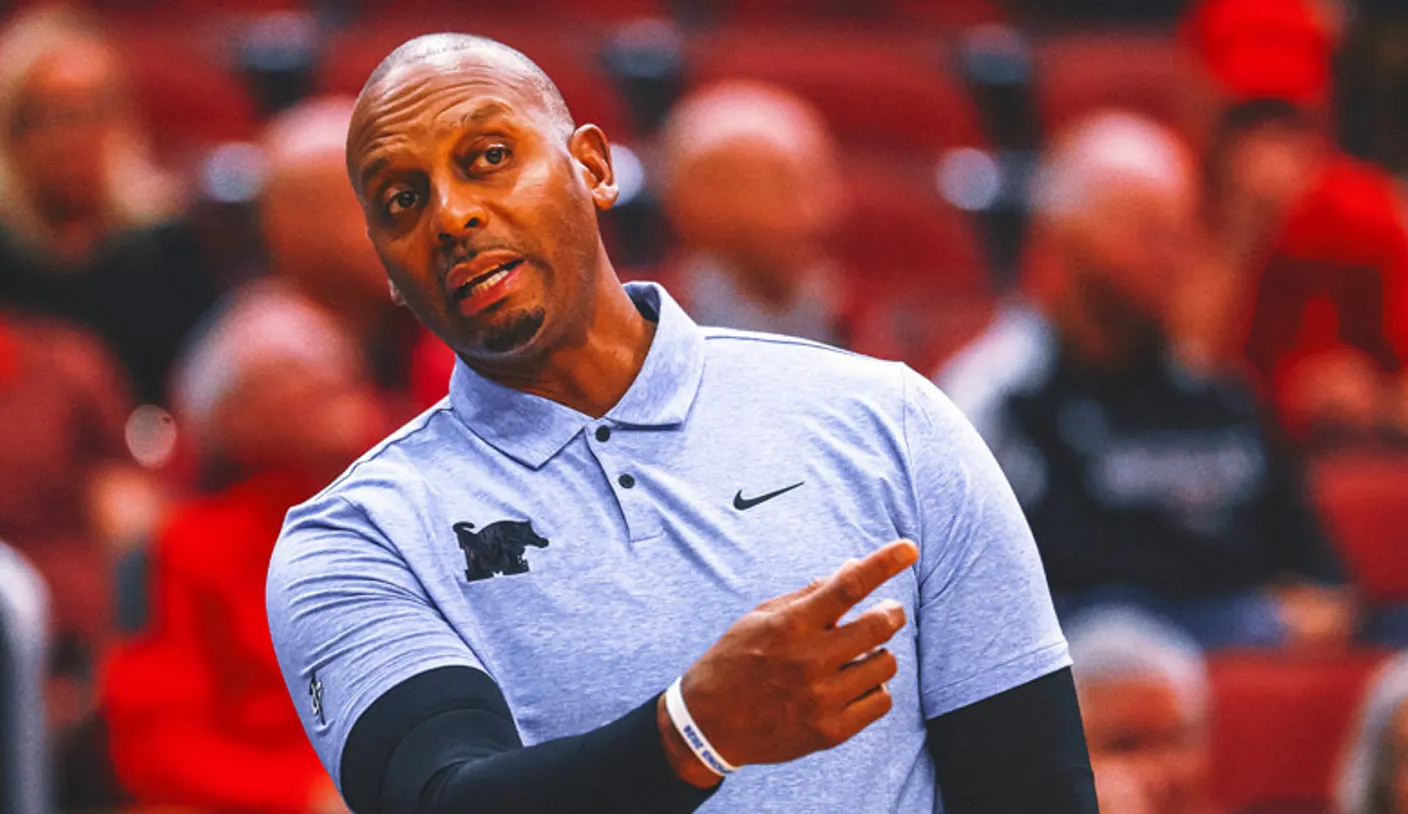
How do you get somebody’s attention? Well, one way to get a college basketball player’s attention is by taking away their NIL money, like Memphis Tigers head coach Penny Hardaway did with junior forward Aaron Bradshaw.
“Aaron Bradshaw has played for some great coaching staffs, but they haven’t figured out how to motivate him, so Penny Hardaway found a way to motivate Aaron Bradshaw. He started taking his NIL money away,” it was revealed on the broadcast of the Tigers’ Wednesday night loss to the Vanderbilt Commodores.
“He said, ‘I fined him for showing up late. I fined him for violating our dress code. Three grand here, three grand there. Guess who started to show up early? Guess who started to put the effort in?’ … He [Hardaway] takes that fine money and puts it back in the bucket and has some guys further down the roster reaping the cash benefit of those fines.”
Message received.
Memphis is the third stop for Bradshaw in his collegiate career, with the former five-star recruit spending his freshman season at Kentucky (2023-24) and sophomore season at Ohio State (2024-25). Through nine games this season, six of which he has started, Bradshaw is averaging a career-high 7.1 points and 2.9 rebounds in 15.4 minutes per game, while shooting 50.0% from the field.
Hardaway, who starred at Memphis for two seasons as a player (1991-92, 1992-93), is in his eighth season as the Tigers’ head coach, with Memphis a combined 166-74 under him since the 2018-19 season, highlighted by two American Tournament titles and three NCAA Tournament appearances. However, Memphis is off to a 4-6 start this season, with three of its six losses being against ranked opponents in Purdue, Louisville and Vanderbilt.
Maybe if Hardaway takes away the entire team’s NIL dough, Memphis will run the table in conference play?
MORE COLLEGE HOOPS: Last Night in College Basketball: No. 13 Vanderbilt Passed OT Test vs. Memphis
Want great stories delivered right to your inbox? Create or log in to your FOX Sports account, and follow leagues, teams and players to receive a personalized newsletter daily!
FOLLOW Follow your favorites to personalize your FOX Sports experience
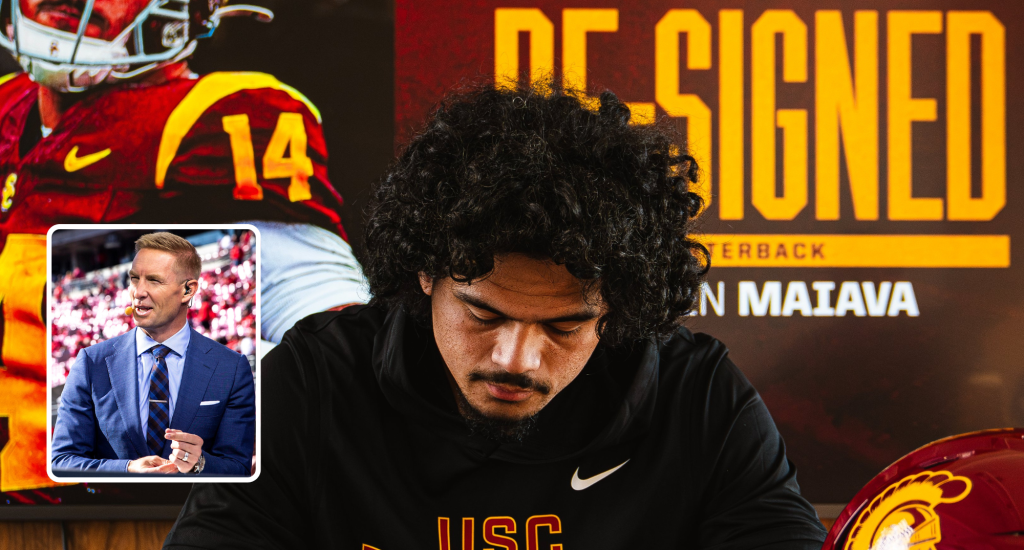
Joel Klatt has had it with college football’s latest social media phenomenon.
In the wake of USC quarterback Jayden Maiava’s re-signing announcement, racking up nearly five million impressions on X, Fox’s lead college football analyst didn’t hold back his frustration with what’s become a growing trend across the sport.
Jayden Maiava has re-signed with the USC Trojans. pic.twitter.com/jLI0S6hPKh
— USC Football ✌️ (@uscfb) December 16, 2025
“I can’t with the re-signing of players, I’m sorry,” Klatt said.
“I can’t with the re-signing of players, I’m sorry.”@joelklatt shares his thoughts on the issues in college football, specifically surrounding “re-signing” and player representation. Do you agree? pic.twitter.com/lCFw3FfMUW
— FOX College Football (@CFBONFOX) December 17, 2025
USC’s social media account posted Maiava’s re-signing announcement on Dec. 16, followed by a flurry of similar posts for other Trojans players. Tobias Raymond, Chasen Johnson, Romero Ison, Jahkeem Stewart, and Kendarius Reddick all got the graphic treatment announcing they were staying with the program.
Tobias Raymond has re-signed with the USC Trojans. pic.twitter.com/OYAWhIup4Y
— USC Football ✌️ (@uscfb) December 17, 2025
Chasen Johnson has re-signed with the USC Trojans. pic.twitter.com/J56Jb7ZpD9
— USC Football ✌️ (@uscfb) December 17, 2025
Romero Ison has re-signed with the USC Trojans. pic.twitter.com/pA11LlvOAx
— USC Football ✌️ (@uscfb) December 17, 2025
Jahkeem Stewart has re-signed with the USC Trojans. pic.twitter.com/nr76iwVxRj
— USC Football ✌️ (@uscfb) December 17, 2025
Kendarius Reddick has re-signed with the USC Trojans. pic.twitter.com/dc88qAVLsu
— USC Football ✌️ (@uscfb) December 17, 2025
But for Klatt, these announcements feel fundamentally different from how free agency works in professional sports.
“I started seeing some of these announcements on social media, guys would text me these announcements, and this is going to sound like I’m picking on guys,” Klatt said. “This is not their fault, but like Malik Washington, Waymond Jordan, LaNorris Sellers, there’s all these stories about like, ‘Oh, they’re re-signing. They’re working on a deal to stay.’ And I’m like, I don’t want to hear that. I don’t want to see it. You mean, wait, was he about to leave?”
Joel Klatt isn’t blaming the players. But in the NFL, fans know when a guy is a free agent and can walk. So when he re-signs, it makes sense. In college, a player is already on the team, already getting NIL money, and then announces he’s re-signing? It just makes fans wonder what they missed.
“This is so different than in the National Football League when your favorite team has a player that you love that you know is a free agent, and then they re-sign him, and you’re like, ‘Nice!’” Klatt contiuned. “That feels a lot different than like I’m a fan of a college team and I just think that this player who’s committed to this school, who’s at this school, who has more eligibility left, and is making a large sum of money through NIL, and then all of a sudden he’s like, ‘I’m re-signing.’ It’s like, ‘I didn’t know you thought about leaving.’”
But Klatt’s real issue isn’t the social media pageantry. It’s what’s happening behind the scenes.
“I don’t think that this is good for players, either, I really don’t. And let me tell you why: these contracts can be binding, and they can be loose, but it all depends on how they’re negotiated because there’s not a formality to the process,” Klatt explained. “So, the schools can kind of do whatever they want to do. They’re making their own rules, and then there’s some representation out there that is representing college players, and they want to play by their own rules.”
The lack of regulation in college athlete representation is a real problem. Unlike NFL players who are represented by NFLPA-certified agents, college athletes can hire essentially anyone to negotiate their NIL deals. There’s no registration requirement, no oversight, no baseline standard.
And according to Klatt, some of these representatives have no idea what they’re doing.
“And some of the representatives, by the way, are not very sophisticated. Guess why? Because they’re not representing a client that’s part of an association or a union, so they don’t have to register,” he added. “So the players can hire whomever. It can be like Uncle Eddie. We don’t know who these representatives are. That’s not to say that all of them are bad, but there are some that certainly don’t know what they’re doing. So, there are players because of that, that are signing contracts that they don’t even really know what they’re signing.”
Despite all his complaints about NIL representation and re-signing announcements, Joel Klatt still believes in college football.
“I remain very optimistic about our sport,” Klatt said. “I really do. I think college football’s in a great spot. I think that it can get better, but that doesn’t mean I’m blind to the problems.”
But his optimism won’t stop the re-signing trend. Schools will keep celebrating players who decide to stay, and fans will keep wondering if they were ever really thinking about leaving. It’s just part of college football now.
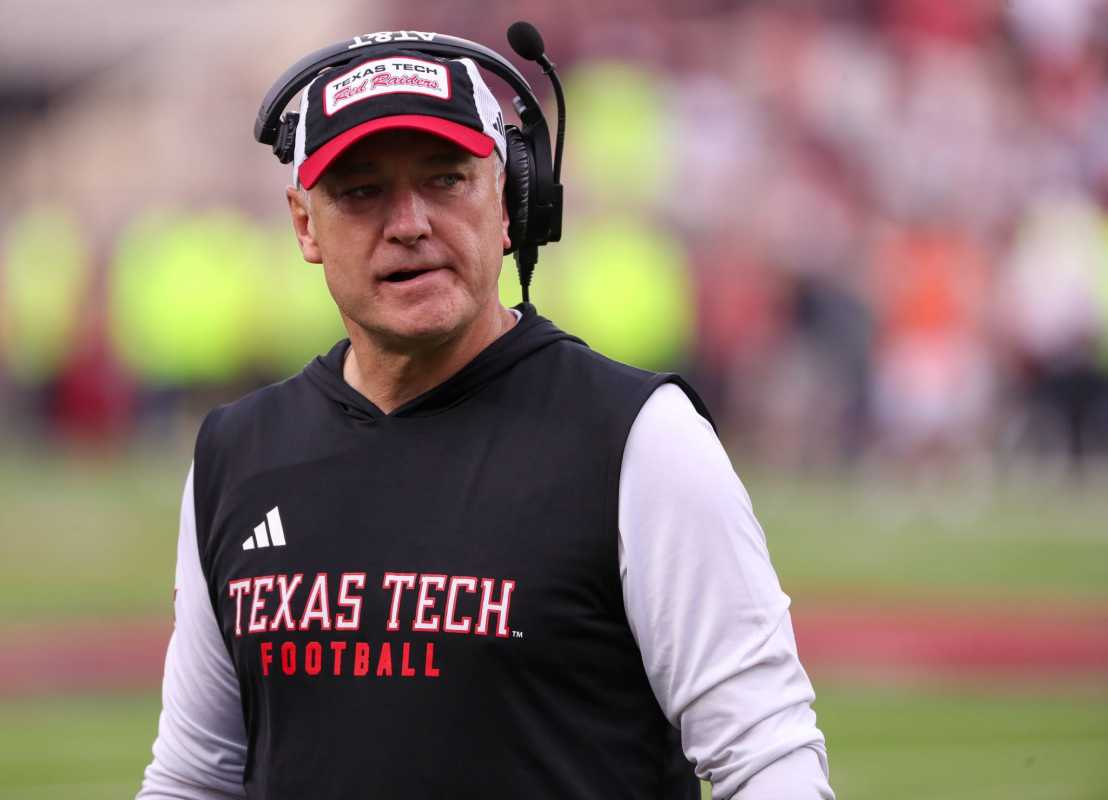
The Texas Tech Red Raiders defeated the BYU Cougars 34-7 in the Big 12 Championship Game. It secured them the No. 4 seed and a first-round bye in the College Football Playoff. They’ll play either the No. 12 seed James Madison Dukes or No. 5 seed Oregon Ducks in the Orange Bowl.
While Texas Tech strives for its first national championship in program history, it’s never too early to look into the future. The Red Raiders will face several major changes after the 2025 season, including from quarterback, Behren Morton. He’s using his final year of eligibility, while ESPN’s Matt Miller gives him a fifth-round grade in the 2026 NFL Draft.
Advertisement
The transfer portal doesn’t officially open until Jan. 2, but On3 reports that over 800 players are already set to enter. With Morton set to leave, Texas Tech could find his replacement in the portal.

Texas Tech Red Raiders head coach Joey McGuire.James Snook-Imagn Images
In an article, On3’s Pete Nakos, links the Red Raiders to Cincinnati Bearcats transfer quarterback Brendan Sorsby.
“Viewed as one of the most experienced quarterbacks in the transfer portal, Texas Tech is the school to watch early on for Brendan Sorsby,” Nakos wrote. “He’s also expected to evaluate the NFL draft, and Indiana and Tennessee are other schools to know.”
Advertisement
This season, Sorsby has completed 207 of 336 passes for 2,800 yards, 27 touchdowns, five interceptions and a 155.1 passer rating. He’s also rushed for 580 yards and nine touchdowns on 100 carries.
Sorsby is going to be highly sought after, with Rivals placing him as the third-ranked player in the transfer portal. His On3 NIL valuation of $2.4 million is tied for the 10th-highest in college football.
However, that may not be a problem for Texas Tech, which had the top-ranked transfer portal class in 2025. After bringing in 21 players, the Red Raiders had an adjusted NIL value of $7.6 million.
Advertisement
As the official transfer portal period approaches, Texas Tech’s quarterback situation will be one to watch. With Morton playing his final year of eligibility, the Red Raiders could already be exploring other options.
The Red Raiders will play in the Orange Bowl at noon ET Jan. 1 on ESPN and the ESPN app.
Related: Texas A&M QB Marcel Reed Shares NIL Update Before College Football Playoff
This story was originally published by Athlon Sports on Dec 18, 2025, where it first appeared in the College Football section. Add Athlon Sports as a Preferred Source by clicking here.
There’s always plenty of argument about who belongs and doesn’t belong in the College Football Playoff, and that was certainly the case this season, especially given the debates around that final spot coming between Notre Dame and Miami.
But looking over the 2025 bracket, it’s one of the most recognizable SEC programs that is getting the biggest criticism from those in the coaching business.
Asked to name the biggest fraud in this year’s College Football Playoff, it wasn’t one of the Group of Five teams that got the most attention, but none other than Ole Miss, which made the field on the back of a historic season.
Ole Miss, a fraud?
That’s according to one FBS coach, who doesn’t believe the Rebels have a good case.
“They’ve had so many distractions with Lane Kiffin leaving, and Oklahoma is probably their only good win this year,” an unnamed Group of Five head coach said of the Rebels heading into the College Football Playoff, according to The Athletic.
Whoever it was who said it, he apparently wasn’t alone. Far from it.
Taking a vote from more than two dozen anonymous coaches heading into the playoff, the publication found that to be, if not a consensus opinion, then something like it.
Ole Miss won out among the various playoff teams with 29 percent of respondents saying it was the most fraudulent team in the College Football Playoff this season.
A wild year for Ole Miss
Picking on the Rebels for not being playoff-worthy sounds counter-intuitive, given the unprecedentedly good season they’ve had on the field.
For the first time ever, Ole Miss completed an 11-win regular season and qualified for its first College Football Playoff berth.
Then came the drama. The head coach who brought them that success became the biggest name in what emerged as college football’s most hectic coaching carousel.
Lane Kiffin was named as the leading target for two other SEC programs and ultimately departed the Rebels for conference rival LSU after winning the Egg Bowl game.
Coach highlights Rebels’ schedule
The concern around Ole Miss’ perceived quality of schedule doesn’t seem like a concern at first glance.
It played three teams that made the College Football Playoff, beating both Oklahoma and Tulane, and losing a closely-fought matchup on the road against SEC champion Georgia.
Otherwise, the Rebels beat lesser SEC opponents like Kentucky, South Carolina, Florida, and Arkansas.
The win against then-No. 4 LSU doesn’t look as good as it did at the time, given the Tigers’ fall from grace that led to Brian Kelly’s ouster.
There was no universe in which an 11-1 Ole Miss was being left out of the College Football Playoff. Whether it truly belongs will be decided on the field, which can be said for any team in the bracket.
But the Rebels weren’t alone
Not far behind in the fraud poll were two surprising names. Big 12 champion Texas Tech and SEC runner-up Alabama were both decried as playoff frauds with 17 percent of the vote each.
Texas Tech being included is truly puzzling, given the quality of its defense, but those asked expressed concern for the offense, in particular quarterback Behren Morton.
In second place was “no answer,” as 21 percent of those asked didn’t provide any hints as to who they thought were frauds.
Group of Five selection James Madison received 8 percent of the vote as a perceived fraud, while Oregon and Oklahoma each got 4 percent.
Alabama not getting respect
One defensive coordinator from the SEC and a defensive assistant from the Big Ten took issue with the Crimson Tide being included among the dozen playoff teams this year.
“Alabama should have, like, five losses this year. They shouldn’t be there,” the SEC defensive coordinator said.
And the Big Ten coach added: “I’ve watched them. They’re not that good this year. I didn’t see enough from them to get this chance.”
(Athletic)
More college football from SI: Top 25 Rankings | Schedule | Teams
Follow College Football HQ: Bookmark | Rankings | Picks

Rec Sports5 minutes ago
Rep. Kim Hicks – Rochester DFL Legislators to Take Action on Rochester Sports Complex

Rec Sports13 minutes ago
Tree collapses onto 2 young children waiting for school bus

NIL15 minutes ago
Michael Wilbon claims Kalen DeBoer will leave Alabama for Michigan with loss in College Football Playoff opener
Sports24 minutes ago
Wisconsin volleyball vs Kentucky score today: Final Four live updates

Rec Sports25 minutes ago
Huskers year-end report shows concession sales up 75%, shares volleyball reseating data

Rec Sports33 minutes ago
Man Facing Felony Sex Charges Served as President of Independent Youth Sports League

Sports40 minutes ago
Kentucky volleyball live score updates and highlights vs Wisconsin

Rec Sports41 minutes ago
Charles Sharper Gala spotlights afterschool sports and wellness program

Motorsports42 minutes ago
Report: Greg Biffle among those killed in North Carolina plane crash

Rec Sports51 minutes ago
i9 Sports – Hello Woodlands

Sports56 minutes ago
Toledo Announces Signing of Three Transfers

Motorsports58 minutes ago
Cale Phillips Returns to Nitro Motorsports for 2026 CUBE 3 Architecture TA2 Series Pro/Am Title Run After Strong 2025 Season

Technology1 hour ago
Gaming Computers Market to Reach USD 95 Billion by 2034, Growing

NIL1 hour ago
Matt Rhule Addresses Dylan Raiola, NIL Investment and the Portal Era
Sports1 hour ago
Kentucky volleyball vs. Wisconsin live updates: Score, highlights

Rec Sports4 weeks ago
First Tee Winter Registration is open

Rec Sports3 weeks ago
Fargo girl, 13, dies after collapsing during school basketball game – Grand Forks Herald

Motorsports3 weeks ago
CPG Brands Like Allegra Are Betting on F1 for the First Time

Motorsports4 weeks ago
F1 Las Vegas: Verstappen win, Norris and Piastri DQ tighten 2025 title fight

Sports4 weeks ago
Volleyball Recaps – November 18

Sports3 weeks ago
Sycamores unveil 2026 track and field schedule

Sports3 weeks ago
Two Pro Volleyball Leagues Serve Up Plans for Minnesota Teams

Sports3 weeks ago
Utah State Announces 2025-26 Indoor Track & Field Schedule

Motorsports3 weeks ago
Redemption Means First Pro Stock World Championship for Dallas Glenn

Motorsports1 week ago
SoundGear Named Entitlement Sponsor of Spears CARS Tour Southwest Opener

Motorsports3 weeks ago
Jo Shimoda Undergoes Back Surgery

Sports3 weeks ago
Texas volleyball vs Kentucky game score: Live SEC tournament updates

NIL3 weeks ago
Bowl Projections: ESPN predicts 12-team College Football Playoff bracket, full bowl slate after Week 14

Rec Sports3 weeks ago
How this startup (and a KC sports icon) turned young players into card-carrying legends overnight

Rec Sports3 weeks ago
Robert “Bobby” Lewis Hardin, 56






-
 Motorsports1 week ago
SoundGear Named Entitlement Sponsor of Spears CARS Tour Southwest Opener
-
 Motorsports3 weeks ago
Jo Shimoda Undergoes Back Surgery
-
 NIL3 weeks ago
Bowl Projections: ESPN predicts 12-team College Football Playoff bracket, full bowl slate after Week 14
-
 Rec Sports3 weeks ago
How this startup (and a KC sports icon) turned young players into card-carrying legends overnight
-
 Rec Sports3 weeks ago
Robert “Bobby” Lewis Hardin, 56
-
Sports3 weeks ago
Wisconsin volleyball sweeps Minnesota with ease in ranked rivalry win
-

 Motorsports1 week ago
Donny Schatz finds new home for 2026, inks full-time deal with CJB Motorsports – InForum
-

 Motorsports3 weeks ago
Increased Purses, 19 Different Tracks Highlight 2026 Great Lakes Super Sprints Schedule – Speedway Digest
-

 Rec Sports2 weeks ago
How Donald Trump became FIFA’s ‘soccer president’ long before World Cup draw
-

 Motorsports3 weeks ago
Michael Jordan’s fight against NASCAR heads to court, could shake up motorsports