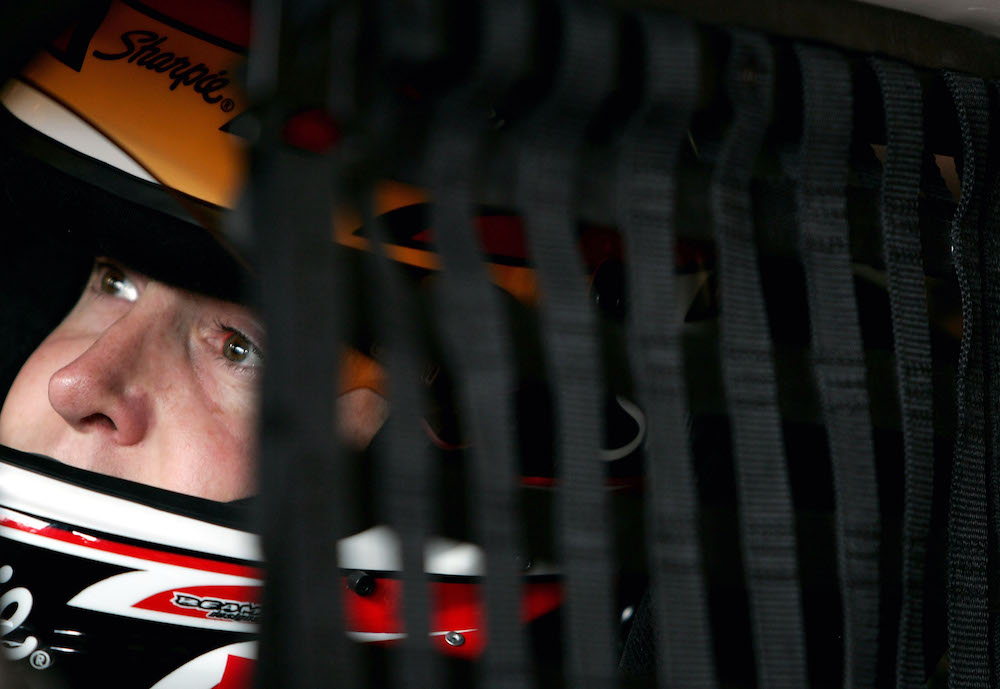
On Tuesday, May 20, 2025, Kurt Busch was elected into the NASCAR Hall of Fame Class of 2026.
He was inducted in his very first year on the ballot, putting an exclamation point at the end of a storied and mercurial career that included winning 2004 NASCAR Cup Series championship (the first under NASCAR’s playoff) system, 34 wins from 776 starts, and 10 top-10 championship finishes.
Along the way, Busch drove for the likes of Roush Racing, Team Penske, Phoenix Racing, Furniture Row Racing, Stewart-Haas Racing, Chip Ganassi Racing and in the end, 23XI Racing. Through the trajectory of his 23-year career, Busch won Cup races in 19 different seasons. Every bit a key part of NASCAR history and folklore, Busch was a spectacular talent, but also one who could be his own worst enemy at times. In the end, all of it adds up to a NASCAR Hall of Fame legend, every bit the character and spirit of those who built the sport.
“It’s an amazing honor to go in first ballot,” says Busch from his home in North Carolina. “It’s awesome to go in the NASCAR Hall of Fame and reflect back. I mean, there are so many fun stories and so many ups and downs and all around.
“(There were) the pioneers that helped build the sport and put it to where it was from the 1940s and 1950s and into the 1970s and into the TV era. Then came the youth movement with Jeff Gordon coming in and opening up doors on the West Coast. That’s where I kind of jump in . When I started winning races in 2000, it was awesome because the 1990s fans loved their favorites, but they hated the young guys coming in. I roughed it up with some of the drivers and I beat some of their drivers. It was cool, though, because that was my first generation of fans.
“Then winning a championship in 2004 and getting into the 2010s and my era, those were my core fans. Those were the guys that really rooted for me and they rooted against my rivals. Then towards the end, maybe the last five or maybe eight years, it was so cool because that was my third generation of fans. I remember an autograph session, like at Walmart, and a kid came up to me and said, ‘Man, I’ve been a fan of yours my whole life!’ I said to him, ‘How old are you, kid?’ And he said, ‘I’m eight.’’ I was like, ‘Wow. This is really cool.’ I was with three generations of fans and I think there is going to be another generation that will acknowledge the different things that have happened through my career. And with my nephew Brexton Busch coming up, he’s going to be the next hard-charger in the Busch family.
“The Hall of Fame started 15 years ago now and to be a part of the sixty-seven members that are in there, and to go in with Handsome Harry Gant and to go in with Ray Hendrick, Mr. Modified, is awesome,” continues Busch. “He had over 700 Modified wins. I mean, we talk about Richard Petty with his 200 wins in Cup, but 700 documented Modified wins? For a name that not a lot of people would recognize, that’s the true depth and the true history of our sport. It isn’t just the Cup cars that you see on Sunday. There is the foundation that was built with the moonshiners, then there was the cigarette branding coming in with Winston. There was the cell phone era with Nextel and Sprint. Then came the Monster Energy. You can see it. You can see the timeline and you can see the growth and what it has done to create each generation of drivers and how we race and how everyone interacts.”
A genuine fan of NASCAR history, Busch is very cognizant of all the NASCAR heritage he loved contributing to.
“That’s when I really get into a dinner discussion with people and talk about NASCAR and its roots,” says Busch. “I was like, ‘Yeah, it was a lot easier to make $150 on a Saturday night racing your moonshine car around versus going to jail and trying to sell off your lot of moonshine.’ When the veterans came back from the war in the late 1940s, you know that’s how moonshine and NASCAR started. Everyone tried to find their path. The guys were racing and then going back to work as a mechanic or working in the fields and then go racing again.”
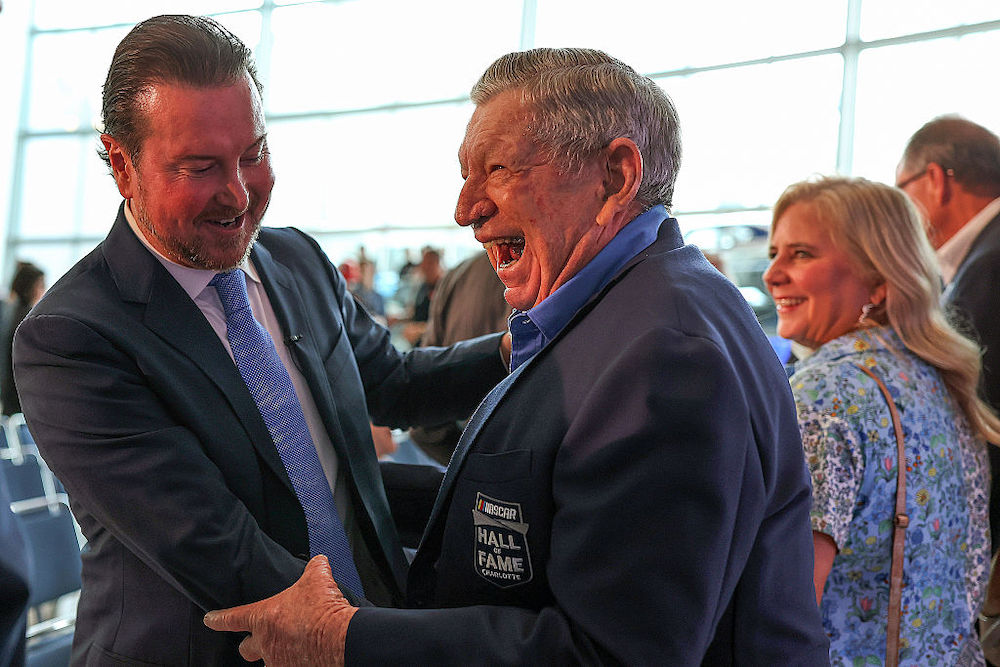
Busch, pictured with fellow Hall of Famer Donnie Allison, is a student of NASCAR history. Krisa Jasso/Getty Images
Busch dumped the clutch on his NASCAR journey by first earning national media attention through the 1997 Winter Heat Series at Tucson Speedway, where he fought fiercely with drivers such as Matt Crafton, Greg Biffle and Kevin Harvick.
“My door opened and I was a huge beneficiary of the West Coast movement,” says Busch of the early years. “Back in the 1990s there was a TV series on ESPN called Tucson Winter Heat. The whole country was really glues to their TVs in the mid-1990s because that was the hot racing in December and January. You’d get guys like Matt Kenseth to come across the country. Guys from up in the Northeast would show up to run down in Tucson as they were showcasing their skills on live TV and trying to bump into the Trucks or something like that. Guys like Ron Hornaday Junior and Kevin Harvick and Greg Biffle and Matt Crafton and myself. There was a slew of us that were recognized out there on the West Coast because of that.
“And then we brought our style of racing to Cup, and it started to change the way some people drove. It changed the etiquette. A lot of us just went hard. We didn’t really respect the other guys as much as the Southeastern drivers did. The old school guys gave a lot of room to each other. For us, we were the arms race era, if I can define that to everyone. What I mean by that is that Tony Stewart was Joe Gibbs’ top draft pick. Jimmie Johnson at Hendrick was their top draft pick. Jack Roush picked Matt Kenseth and myself. It was an arms race because the teams had the sponsors. They were just going after the top talent to go out there and race against each other. It was a really cool era all through the early 2000s.
And all along the way, Kurt Busch did it his way.
“Yeah, I did it my way,” he says. “I picked the best song to tie it in. Like Frank Sinatra, I did it my way. Again, I didn’t know what my path was going to be. My dad was just a local racer. It wasn’t like my dad was Bill Eliott and I’m Chase Elliott and this is going to be the path. Mine was, ‘What bridge do I think I can go over and leave it behind so that my brother could follow me?
“With the different race teams that I went to, I was always trying to promote my little brother. I was hoping that Kyle could get to the next level. That’s how I kind of went about it. I was definitely humble and afraid at times, but you never would see that out on the racetrack. On the racetrack, I used that as my opportunity to go for trophies and to make a name, but all along I never knew if I was going to be able to cut it and be able to stay long-term.
“When that moment happened, though, was when I won at Bristol Motor Speedway in 2002 when I moved Jimmy Spencer out of the way to win that race. When I got to victory lane and felt that moment, that was that ‘Yes! I’m going to be able to make it here. I’m a winner in the Cup Series.’ That was when everything started to sink in and that was when my attitude started to go in a different direction.”
Jack Roush would play a profound role Busch’s early career.
“That’s the craziest part and it is hard for people to digest,” Busch says. “I didn’t race go-karts. We didn’t have a lot of money as a family. It was just dad’s street stock that we had in the garage. He let me drive a dirt car one time when I was 16 years old. From 16 years old in 1994, I am in the Cup Series as a 22-year-old in Dover, Delaware in the September of 2000. So 1994 and running my first-ever dirt race and six years later I’m at Dover with Jeff Gordon in front of me and Dale Sr behind me and Dale Jarrett on my outside and it was like, ‘Whoa!’ That’s how fast it happened, and that’s why I was so brash and raw when people saw me in interviews and all that stuff. I didn’t know what to do! I came from digging ditches as a construction worker and now I’m in Cup six years later. That’s how fast it went.
“From the Trucks to Cup, I hadn’t even won in the Truck Series yet and I had only been there six months and Jack Roush goes, ‘Kurt, you want to go Cup racing?’ I said, ‘Yes sir, I’d love to go Cup racing in a couple of years. I’d love to hone my skills here in the Truck and go to the Busch Series.’ Jack goes, ‘No, we’re going to Cup in September of this year.’ I said, ‘What?! I’ll go. Yeah, we’re going to wreck a lot of stuff, but let’s go!’
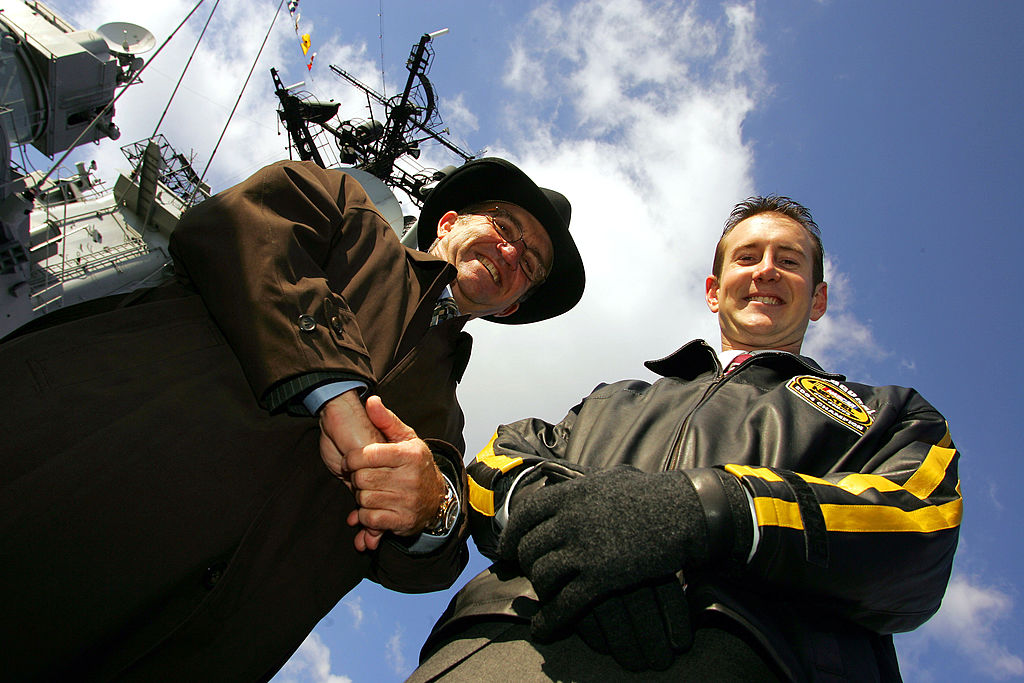
Jack Roush gave Busch his big break in the Cup Series, and was rewarded with the 2004 championship. Chris Trotman/Getty Images
“You know, I didn’t know the whole aspect and the professionalism side. All I knew was get in the car and mash on the gas. My imagery and my persona and the person that I came to be was just under a microscope. I was so nervous all the time on every move that I made because I wasn’t relaxed; I wasn’t comfortable in my own skin yet. And it was cutthroat. When I was with Roush it felt cutthroat. If I didn’t perform and win, I might not get a contract renewal. It was a really weird phase.”
In 2004, NASCAR announced the Chase for the Nextel Cup and Busch was ready to pounce.
“The way it turned out was, in 2002, I won my first race. Now I have been at all of the tracks. I know were the tunnel is, or where the parking lot is. Things got comfortable and it felt like I belonged,” he says. “And it was like we either won, finished second, or we wrecked. So the speed was there, I just had to calm myself down and focus on consistency. When the new point structure got announced in 2004, it blended perfectly with who I was and where I was at that time in my career. I had learned patience. I had learned to save my car and stand on the gas when I needed it, which was going to be during the playoffs. Our strategy in 2004 was to play possum all year and then pounce on them when they least expected it. With that first playoff race in Louden, New Hampshire in 2004, we went out, sat on pole, led laps, won the race, and we never looked back. That was our path to the championship. We played it cool early on, and then just pounced on them at the end and we took it from them.
“That 2004 race at Homestead when our wheel broke apart, and the way the team rallied and the way that the sport and the racing universe gods just shined down on us, that was so tough to replicate over the years. It was so tough to get that same synergy back. I’ll definitely say that the championship was definitely the peak of my career. The icing on the cake was the Daytona 500 win in 2017 to go along with that championship.”
An interesting segment of Busch’s career was the tine he spent at Penske Racing from 2006 through 2011.
“A lot of people don’t remember that I signed with Roger Penske, literally, the day after I won the championship with Roush,” he says. “And it was because of the weird contracts at Roush, and it was Penske I was lured to because of the professionalism and the way they are structured and the way they present their teams and the way the act. I was like, ‘Man, I need to smooth out some of my rough edges and maybe Roger Penske’s team can help me do that.’
“We had our ups and downs. We won right away at Bristol. We struggled for the rest of the year with some of the setups that we were a little behind on. In 2007, we rebounded. We won a couple races. We were as high as second in the points. Then that Car of Tomorrow, man. That was a rough catch for us at Penske Racing. That car caught everyone off guard and that’s when we really had to dig deep and get in the trenches and try to fix that car with that team. That’s when I was getting in some trouble again, because I was just so frustrated running in the back. It was a rough 2008. That led to some of my thinking like, ‘Maybe I’m not fit for the corporate, polished style. Maybe I need to just kind of find my way into not being somebody different, but to find my own self.’ That’s when the journey began in the second half of my career of just being a blue collar kid and a hard-nosed racer.
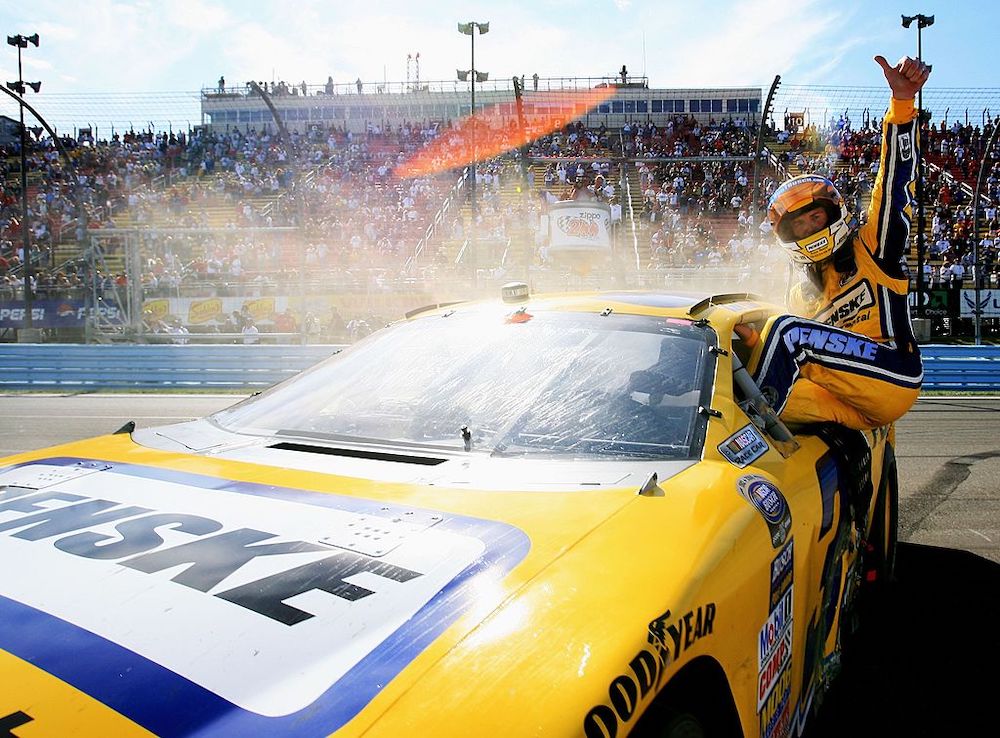
Busch and Penske achieved some highlight reel moments together, but Busch concedes he wasn’t always a natural fit for the team’s buttoned-up culture. James Squire/Getty Images
A brash and blue collar kid who managed to, in his words, “stub my toe along the way.”
“That’s part of the character that we all are on the racetrack,” he says. “There are certain guys that do it this way and certain guys that do that way. For me, I was brash. I wasn’t as apologetic as I needed to be! Yeah, there are definitely those moments where I’m out on the racetrack and you get deliberately dumped by a guy and I jump out of my car in and I’m so mad and I’m seeing red. You know those are the times where you learn, and if you don’t learn from your mistakes, that’s when it really catches up with you. Jack Roush said, and Roger Penske said, and every team owner that I raced for said, ‘You’re allowed to make a couple mistakes, but you’ve got to learn from them and you can’t make mistakes a third time.’”
An era of Busch’s career that he has good memories of was the time he spent with Phoenix Racing and Furniture Row Racing. A two-year stint, Busch saw it as character-building.
“It was and I really look back on it fondly and go, ‘That was the right decision for me.’ I went away from the big corporate teams and went to resetting and working my way up with a path and with more of a genuine and sympathetic approach,” he says. “That was a journey, for sure. And sleeping on my crew chief’s couch out in Denver, Colorado. My time there was short, but yet I wish I would have stayed longer. It was one of the journeys where you’re racing in Denver, Colorado for a team, but yet your heart is in the Carolinas with all the other NASCAR teams. That was definitely a journey that got me in the right path.”
The final stop of Busch’s racing career came in 2022 when he signed on with the nascent 23XI Racing organization.
“That’s when I met Monster Energy,” he says. “They saw my grit and my determination and my love for the sport that I was in. The athlete I am matched their persona. Having that corporate feeling of comfort with Monster Energy gave me more confidence. And that built in to a top tier team with Stewart-Haas and we went out there and started winning right away with that. We won the Daytona 500 a couple years later. That was the best portion of my career from 2013 to 2017.”
A favorite memory or performance that boils up from Busch’s extraordinary NASCAR journey?
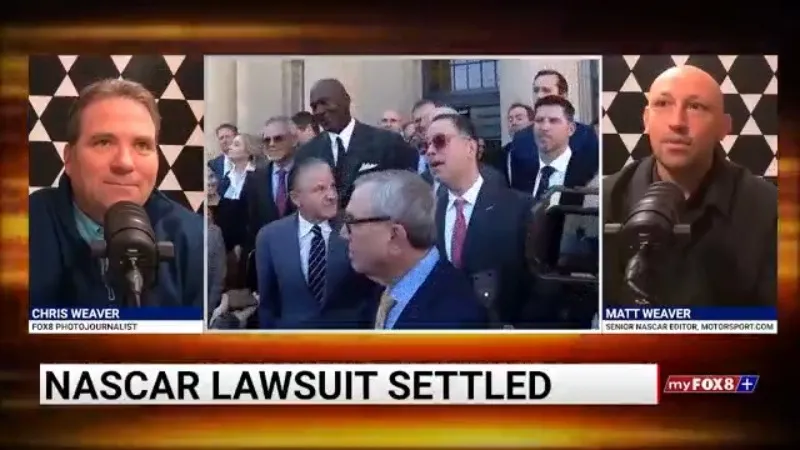
“When Michael Jordan hired me on 23XI Racing,” he says. “This is one of the coolest things that ever happened to me in my career. I walked into a boardroom and he was in there with his lawyer and me and my lawyer and Michael says, ‘Kurt, we’ve already got the contract done.’ I said, ‘Yes sir, why is that?’ And Michael Jordan said to me: ‘We want you to develop this new team because we know you race from your heart. That’s the same way I play basketball.’ I was blown away. Michael said, ‘We know you have the talent, we know you have the leadership, we know you have the grit to do it, but you have from your heart, just like I played basketball.’ I just fell in love with that and that was my shining moment and moniker on my way out.”
In recent interviews with global motor racing press, Busch has made note of comparing his time in the sport – and the radical ups and downs that came along the way – to San Francisco’s Golden Gate Bridge.
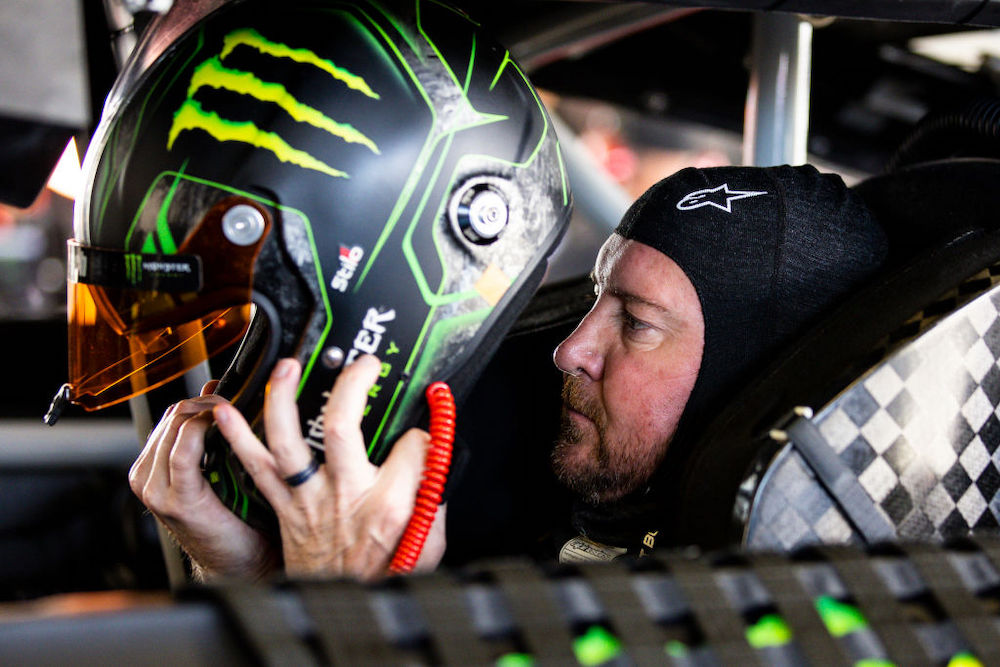
Busch closed out his driving career as the leader of 23Xi’s fledgling program. James Gilbert Getty Images
“That’s really the closest iconic visual that I can compare to my career,” he says. “With the Golden Gate Bridge, you can see the two peaks and you’ve got to work way up out of San Francisco on your way to Sausalito. Early on in my career, that first post on the bridge is my championship. And then it kind of dips and shows that I didn’t stay on top as long as I wanted. Then as time went by at Penske, it felt like the downward part of the bridge. About midway across the bridge, it was like, ‘I’ve been in this game 10 or 11 years and I’ve got that much more left in me, let’s go.’ I was trying to find my way and thought, ‘Is NASCAR my home forever?’ And at the end of the day it was. That’s when I got back to work, and then you see the uprise on the Golden Gate Bridge and you follow that cable up to pinnacle and the second point and that was the Daytona 500 win.
“And after that I felt complete. I still needed to work hard and go out on top and come down the backside of that Golden Gate Bridge over into Sausalito and head up to one of my favorite racetrack, Sonoma. Thar’s one of my favorite racetracks and so that’s kind of the closure on the imagery on the Golden Gate Bridge for my career. It was a lot of fun. I’m very blessed. It was an incredible ride to leave nice path open for my brother, who has now doubled all of my stats, which I’m so happy about. The way he is going to go into the Hall of Fame, he’s in that top five category of all-time. He’s definitely in that group. I know I’m not, but happy on the things that have happened in my career.”
And so now Kurt Busch is a part of the NASCAR Hall of Fame.
“It’s unreal,” he says. “I mean it’s almost surreal on how quick things happened with my career. From the local tracks, to the regional, to make it nationally in the Trucks, to win a Cup championship and then to develop top teams to make them better and they make me better. I mean it’s a storybook, a Hollywood script on how my career went and how it went fast. It’s amazing… 23 years at the top level in the Cup series. When I tell people that, they say, ‘Wow, how old are you?’ I’m like, ‘I’m 46.’ Then they say, ‘You don’t even look like you could be out there for 23 years!’ it has been an incredible journey. There are so many people to thank. There are so many sponsors that put up with some of my pitfalls. But then at the end of the day, there are so many trophies sitting on the shelf and there are so many memories of crew members and families and building the race teams that it all came full circle. I’m very blessed to have had this opportunity in NASCAR.
“And I didn’t make things easy on myself at all, but it was part of the rawness and just the youthfulness. They always say youth is wasted on the young. To have the experience that I have now, I wouldn’t trade it, though. I look back on it and say that everything happened for a reason. The trophy room is full. The memory bank is full of great stories. Yeah, it’s not always sunshine and rainbows. Sometimes you have to weather the storm. Sometimes I kicked off the storm, but it made me a better person at the end.”