
Rec Sports
Lafayette Parish Sheriff’s Office Hosts Annual Youth Golf Tournament


LAFAYETTE PARISH — The Lafayette Parish Sheriff’s Office is hosting its annual Youth Golf Tournament at Hebert Municipal Golf Course this week, giving local kids the chance to swing into summer with a mix of competition, mentorship, and fun.
Wednesday’s competition wrapped up with young golfers ages 6 to 11 showcasing their skills on the course. The event resumes Thursday, June 26, for players aged 12 to 17.
The tournament encourages youth participation in sports and provides a positive space for young people to connect with law enforcement officers and the community.
Events like this help build bridges between deputies and youth while promoting healthy habits and structured recreation.
Thursday’s groups will begin check-ins as early as 7:00 a.m. at the golf course, located at 1121 Mudd Avenue in Lafayette. For more information or to register, contact Amy Daigle at 337-456-6596 or amy.daigle@lafayettesheriff.com.



John Edward Ammerman, 34, of Stillwater, passed away peacefully on June 3rd, 2024, at Regions Hospital in St. Paul with his parents and a cousin, Debra Buschette at his side, from complications of cardiomyopathy.
John was born March 23rd, 1990, in Fallbrook California to Kelly and Jocelyn (Razal) Ammerman. His family moved to Minnesota in 1993, attended Stillwater and White Bear Lake schools and graduated from Stillwater Area High School in 2008.
He was preceded in death by grandparents, Guia and Jose Razal of the Republic of Philippines; Patricia Ammerman of Stillwater and Thomas Ammerman of Florida; uncles, Ronilio “Ronnie” Razal, Ariel Razal, Glendo Razal of the RP, and Michael Ammerman of Florida.
John is survived by mother, Jocelyn “Josie” Razal; father, Kelly Ammerman; brother, Thomas Jose Ammerman of Stillwater; uncle, Razalito “Boboy” (Maria) Razal of RP; uncle, Jerry Ammerman of Stillwater; cousins, Rayze Paul and Rezelyn Razal of RP.
John had a number of nicknames, ‘Johnny Tsunami, John John, JJ, JDM (Japanese Do Magic) for his love of Japanese sports cars, and Cat Whisperer ‘. He enjoyed playing sports, baseball, football, weightlifting, and especially playing youth hockey at St. Mary’s Point. John loved working on his sports cars, hanging out with his friends, and his cats, (all of which were strays until they rescued us). He also loved all types of pets, military air shows, every type of car and truck show, and watching MMA and WWE Wrestling events. He was a Cub Scout in Pack’s 113 in Bayport and 114 in Stillwater, then joined the Boy Scouts of Troop 114 of Stillwater. At the time of his passing, John was a Security Agent with Relative Intel of Minneapolis where he was known as the Rock for his reliability, judgement and flexibility to cover shifts at last moment.
John was a very proud American and very proud of his Philippine heritage. He grew up to be a fine man and always strove to do the right thing, still had many dreams to fulfill, had a great sense of humor, was very thoughtful, very respectful, very hardworking, and had a heart of gold- evidenced by taking stray cats out of harm’s way and providing a safe home with care, compassion, and companionship.
His final hours were spent with his parents, and Cousin Debra at his side, listening to Dragonforce and with his former cat, ‘Shadow’ in a heart shaped, keepsake urn in his hand. He was diagnosed with cardiomyopathy in 2019 and has battled courageously for 5 years.
In lieu of flowers, please donate to Cat Rescues such as: Davidloop65, Cats of San Bernadino, Willy Wonka Adoption, Animal Ark in Hastings MN. Honorary Pallbearers: Tom Ammerman, Enrique Torjesen, Chris Tran, Matt Nelson, LaRue ” Junior ” Palmer, Kent Marcuson, Rezelyn Razal and Rayze Razal.
Visitation 10 AM, Celebration of Life 12 PM, followed by a luncheon. Saturday July 27, 2024 Bayport American Legion 263 3rd St N Bayport, Minnesota.
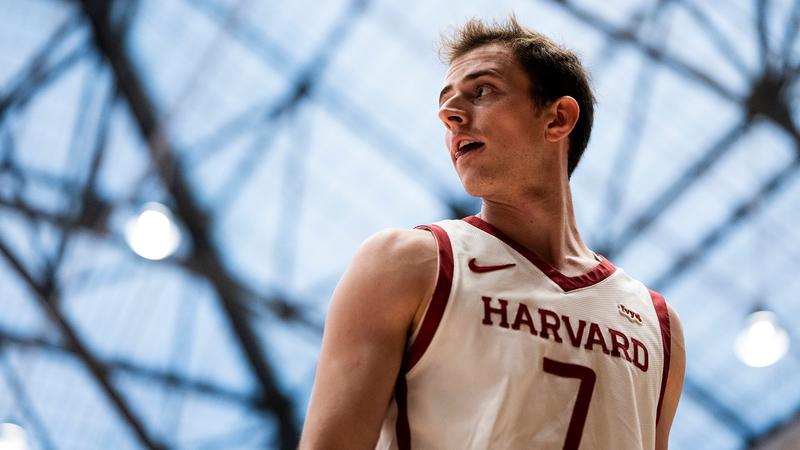
CAMBRIDGE, Mass. – Harvard Men’s Basketball hosts Holy Cross on Saturday, Dec. 20 at 2:00 p.m. (ESPN+/NESN) at Lavietes Pavilion as the Crimson returns from its finals break for its Youth Day game which will include giveaways, a Toys for Tots donation bin, and postgame autographs.
What to Know
- Harvard features four double-figure scorers on the year in a group that includes sophomore guard Robert Hinton (16.9 points per game), senior guard Chandler Piggé (13.5), junior forward Thomas Batties II (11.4), and sophomore guard Tey Barbour (11.4).
- Among the Crimson’s four double-figure scorers, three of them averaged fewer than 7.0 points per game as first-years. Senior Chandler Piggé (1.9 points per game in 2022-23; 13.5 in 2025-26), junior Thomas Batties II (6.8 points per game in 2023-24; 11.4 in 2025-26), and sophomore Tey Barbour (4.8 points per game in 2024-25; 11.4 in 2025-26) have all increased their production over their careers.
- In the Ivy League rankings, Harvard stands second in free throw percentage (78.2), third in steals per game (7.91), third in scoring defense (68.2), and fourth in field goal percentage (46.2). In the NCAA, the Crimson sits eighth in fewest fouls per game (13.8) and 15th in free throw percentage (78.2).
- Sophomore guard Robert Hinton has averaged 16.9 points, 5.2 rebounds, 2.0 assists, and 1.6 steals per game on the year, while shooting 86.0 percent on free throws. Hinton ranks third in the Ivy League in field goals (68), third in free throw percentage (86.0), third in steals per game (1.6), fourth in free throws (43), fourth in minutes per game (32.3), and sixth in points per game (16.9). On the year, he has scored in double figures eight times, netted 20 or more points four times, and eclipsed 30 points twice. He earned Ivy League Player of the Week honors on Dec. 8. Hinton – the 2024-25 Ivy League Rookie of the Year – averaged 14.6 points and 4.1 rebounds per game in 2024-25.
- Hinton dropped a career-high 35 points on 12-of-22 field goals and 11-of-12 free throws with eight rebounds at UMass (Dec. 3). Hinton poured in 34 points on 13-of-17 field goals, 4-of-5 3-pointers, and 4-of-4 free throws vs. BU (Nov. 22). He totaled 26 points, five rebounds, and five assists at Furman (Dec. 6) and scored 22 points vs. UNH (Nov. 9), and notched 16 points at Army (Nov. 15). He netted 13 points, including the go-ahead free throws with 5.1 seconds left at Marist (Nov. 16) and added 12 points and nine rebounds at BC (Nov. 26).
- Senior guard Chandler Piggé has posted 13.5 points, 3.7 assists, 3.5 rebounds, and 1.6 steals per game on the year. He ranks first in the Ivy League in minutes per game (33.6), second in assist-to-turnover ratio (2.4), third in steals per game (1.6), fourth in assists per game (3.7), sixth in field goals (57), and 11th in points per game (13.5). He has scored in double figures in eight games on the year. Piggé – an Honorable Mention All-Ivy selection and CSC Academic All-District honoree last season – notched 13.1 points, 6.7 rebounds, and 2.6 assists per game in 2024-25. He has steadily increased his production over his career, averaging 1.9 points per game in 2022-23, 8.1 points per game in 2023-24, and 13.1 points per game in 2024-25.
- Piggé totaled 23 points and six assists, while shooting 8-of-11 from the floor vs. UNH (Nov. 9). He dropped 21 points with a career-high nine assists at Penn State (Nov. 19). He registered 14 points against both Army (Nov. 15) and Marist (Nov. 16), connecting on a game-tying 3-pointer with 35.8 seconds left against the Red Foxes. He netted 15 points against both Northeastern (Nov. 11) and Bryant (Nov. 29).
- Junior forward Thomas Batties II has registered 11.4 points, 3.8 rebounds, and 2.5 assists per game on the year, while shooting 53.6 percent from the field and 58.3 percent from 3-point distance. He ranks third in the Ivy League in 3-point percentage (58.3), seventh in field goal percentage (53.6), seventh in blocks per game (0.9), and ninth in 3-pointers made (21). He has scored in double figures eight times on the year. In 2024-25, Batties II averaged 11.0 points and 5.0 rebounds per game on the year after registering 6.8 points and 4.2 rebounds per game on the 2023-24 season.
- Batties II tallied a season-high 17 points, career-high five made 3-pointers, and a career-high six assists at Penn State (Nov. 19). He scored a game-high 17 points against both MIT (Nov. 7) and Army (Nov. 15). Batties II posted 14 points and a career-high six assists vs. BU (Nov. 22) and notched 13 points at BC (Nov. 26) and vs. UMass (Dec. 3). He totaled 12 points and nine rebounds vs. Bryant (Nov. 29).
- Sophomore guard Tey Barbour has registered 11.4 points and a team-high 5.5 rebounds per game on the year, while shooting 38.8 percent from 3-point distance. Barbour ranks fifth in the Ivy League in 3-pointers made (26), fifth in 3-pointers per game (2.4), sixth in minutes per game (31.6), and 11th in rebounds per game (5.5). He has scored in double figures in eight games on the year. Barbour notched 4.8 points and 1.8 rebounds per game on the year in 2024-25.
- Barbour posted 15 points and nine rebounds at BC (Nov. 26) after scoring 15 points vs. BU (Nov. 22). He posted 14 points, six rebounds, and a career-high four made 3-pointers vs. UNH (Nov. 9) before netting 12 points on four 3-pointers vs. Northeastern (Nov. 11). He compiled 12 points and seven rebounds at Penn State (Nov. 19). Barbour netted 10 points and hit the game-winning 3-pointer vs. Bryant (Nov. 29).
- Sophomore guard Ben Eisendrath has notched 5.1 points, 2.9 assists, 2.0 rebounds, and 1.8 steals per game on the year, while shooting 51.4 percent from the field. Eisendrath ranks second in the Ivy League in steals per game (1.8) and 11th in assists per game (2.9). He scored a career-high 15 points on 6-of-7 field goals at Penn State (Nov. 19) and netted 10 points at Furman (Dec. 6). Eisendrath distributed a career-high nine assists vs. BU (Nov. 22).
- Sophomore guard Austin Hunt has tallied 5.9 points and 3.1 rebounds per game on the year. He notched 13 points, six rebounds, and three assists vs. UNH (Nov. 9) and netted 10 points at Furman (Dec. 6). Hunt averaged 7.8 points and 3.6 rebounds per game in 2024-25.
- Harvard trails Holy Cross in the all-time series, 31-46. The Crimson has taken five of the last six matchups in the series.
Next Up
Harvard plays at No. 22 St. John’s on Tuesday, Dec. 23 at 6:00 p.m. (FS1) and at Colgate on Sunday, Dec. 28 at 2:00 p.m. (ESPN+) to close non-conference play.
Rec Sports
Washington Nationals continue youth movement; set to hire Phillies’ Ani Kilambi, 31, as GM: Source

Fresh off naming three people 35 years old or younger to significant positions within the organization, the Washington Nationals continue an offseason trend of hiring young. This time, the club is set to name 31-year-old Ani Kilambi as its general manager, a league source told The Athletic’s Matt Gelb on Wednesday.
Phillies are losing assistant GM Ani Kilambi to Washington Nationals, who are hiring him as GM, as @JeffPassan reported. Kilambi oversaw club’s R&D department. He’ll be one of the youngest GMs in baseball.
— Matt Gelb (@MattGelb) December 17, 2025
Kilambi, who previously served as the Philadelphia Phillies’ assistant GM, began his career as an intern with the Tampa Bay Rays in 2015. A graduate from UC Berkeley, Kilambi spent multiple years in Tampa Bay’s R&D department before joining the Phillies in 2021 as a 27-year-old.
The Nationals, who finished the season with a 66-96 record, the third-worst mark in baseball, fired president of baseball operations Mike Rizzo and manager Dave Martinez before the All-Star break. At the time, the Nationals (37-53) were just days away from selecting the No. 1 pick in the draft, which they eventually used to select shortstop Eli Willits.
By late September, the club had hired 35-year-old Paul Toboni, an assistant GM for the Boston Red Sox, to be its top decision maker. A month later, Blake Butera was tabbed to be Washington’s manager, making the 33-year-old the youngest MLB manager in over 50 years. The youth movement didn’t stop there, as Simon Mathews, a 30-year-old former assistant pitching coach with the Cincinnati Reds, was hired to be the organization’s pitching coach.
The oldest member so far of the new-look Nationals? Bench coach Michael Johns, who is 50, but carries nearly 20 years of professional coaching experience.

CAPE GIRARDEAU, Mo. (KFVS) – Crews are laying turf on the first fields at Cape Girardeau’s new youth sports complex, marking major progress on a $4.5 million project expected to open in early 2026.
The five-field complex, located next to Shawnee Park Sports Complex, is designed for baseball and softball players ages 8 to 15.
Parks and Recreation Director Doug Gannon said the expansion meets growing demand for tournament play.
“Travel sports is really gaining popularity, and Cape Girardeau is a very popular destination for travel sports,” Gannon said. “We’re going to have the opportunity to draw much larger tournaments. We’re going to be a much more appealing destination for tournaments.”
The facility will feature artificial turf in the infields and natural grass outfields, reducing rain delays and rescheduling.
Recreation Division Manager Scott Williams said the upgrade will help guarantee games even after heavy rain.
“The artificial turf will bring the ability, if we have any rain that occurs during a tournament, as soon as it stops raining with minimal time for drainage, it will be ready to play,” Williams said.
Tournament growth is already underway, with events scheduled nearly every weekend from mid-March through October.
Some weekends could bring 80 to 90 teams to southeast Missouri.
“Good things happen when people come to town for these types of events,” Gannon said. “They stay in hotels, they eat in restaurants, they shop at convenience stores, they buy gas locally.”
The complex will boost the local economy and position Cape Girardeau as a regional sports hub.
The project is scheduled for completion in time for the spring season.
Copyright 2025 KFVS. All rights reserved.
The Central Connecticut women’s basketball team dropped a competitive Youth Day game, 69-66 o visiting New Hampshire on Wednesday morning at Kaiser Hall. The Blue Devils committed just eight turnovers and shot 40 percent from the field in their final home game of the calendar year.
Jessica Farrell led the Blue Devils in scoring for the second consecutive game, netting a career-best 19 points. Lucia Noin tallied 16 points, and Kiyah Lewis rounded out the double-digit scorers with a dozen.
Score: UNH 69, CCSU 66
Records: CCSU (0-10), UNH (4-7)
Location: Kaiser Hall | New Britain, CT
-
UNH pushed its lead to four, 17-13 with :48 ticks left in the first period before Cierra Pearson knocked down a triple on the Blue Devils final possession of the period to close within a point
-
Central shot 47.4 percent from the field in the second quarter, scoring 12 of the first 14 points to take a 27-19 advantage on a Nicora Patrick basket with 6:58 remaining before halftime and forcing a UNH timeout
-
The run continued out of the stoppage of play, and the lead expanded to 11 points on a Farrell triple with 4:28 remaining in the first half, 32-21. A Noin basket with 3:20 to play in the quarter put the lead back to double digits for the final time as UNH closed the period on an 8-2 run to climb within 36-31
-
The Wildcats opened the second half with an 11-4 run to put them in front 42-40 at the 4:27 mark. Lewis converted a conventional three-point play to give CCSU a 43-42 lead 41 seconds later, the last Blue Devil advantage of the game. UNH scored the next nine points and finished the period with 11 of 15 points to take a 53-48 lead into the final period.
-
UNH scored nine of the first 11 points in the fourth quarter, opening its largest lead of the game, 62-51 with 7:37 to play in the final period, when Eva DeChent scored in the paint
-
The Blue Devils made their next three baskets, with a triple from Lewis a layup from Noin and a layup from Kayla Henry, all in 73 seconds. That was the start of a 9-0 run that Henry closed with a basket at the 3:53 mark to close within 62-60
-
The squads traded baskets on the next two possessions, before Henry drained a pair of free throws with 2:23 to play to draw the Blue Devils event, 64-64.
-
Elizabeth Lavoie knocked down a three-pointers on the next UNH possession to put the Wildcats in front for good, despite a pair of Farrell free throws with 1:50 to play and a pair of looks in the final seconds
40.0 – The Blue Devils shooting percentage for the game, the best of the season, as they knocked down 26-65 and were good on 43.8 percent, also a season-best 7-16 from behind the arc

The Aspen Institute’s State of Play 2025 report finds that youth sports participation has recovered from the COVID pandemic, but expensive club programs have hampered recent gains.
The cost of youth sports has increased by 46 percent since 2019, according to Aspen Institute Project Play research. Relatedly, significant access gaps persist among youth from both upper- and lower-income families.
Still, overall participation rates rebounded, with 55.4 percent of youth ages 6 to 17 playing sports as of 2023, with more kids and adolescents engaged in organized play than at any time since 2019, according to the federal government figures. Even more kids played organized sports in 2024, according to data from the Sports & Fitness Industry Association (SFIA).
Aspen Institute notes in its report that there were concerns that a rebound would not happen. During the economic recession of 2009, youth sports participation rates declined and did not recover because municipal budgets were cut, local recreation programs were affected, and private sports providers flourished, favoring families who could afford to pay to play.
“The rebound in participation since the pandemic is a credit to all who have innovated to improve access to quality sports programs,” said Tom Farrey, executive director of the Sports & Society Program, in the report’s introduction. “But we’re going to need leadership to ensure that as more money flows into the space, the needs of children — all children — are prioritized in the development of policies, practices and partnerships shaping what is still a disjointed landscape.”
The participation themes in the Aspen Institute’s State of Play 2025 report include progress made on the U.S. government’s Healthy People 2030 national goal of having 63 percent of kids playing sports by 2030, continued momentum in casual sports participation, an uptick in young Latinos playing sports, robust participation gains in girls flag football and boys volleyball, and ongoing access challenges facing kids from low-income households.
Fourteen States Reached 63 Percent Youth Sports Participation Target
The federal government’s national public health goal to have youth sports participation reach 63 percent by 2030 is being championed by Project Play through 63X30 roundtable organizations. According to a government study, the National Survey of Children’s Health, 55 percent of kids played organized sports, up from 54 percent in 2022.
Fourteen states and the District of Columbia reached the 63 percent mark. They include Vermont (72 percent), South Dakota (69 percent), New Hampshire (68 percent), Massachusetts (65 percent), Iowa (65 percent), Minnesota (65 percent), Washington D.C. (65 percent), Colorado (65 percent), North Dakota (64 percent), Nebraska (64 percent), Rhode Island (63 percent), Wyoming (63 percent), Maine (63 percent), Hawaii (63 percent) and Montana (63 percent). Nevada (43 percent) had the lowest participation rate, followed by Delaware, Florida, West Virginia, and Texas. Each of those states ranked among the lowest for female participation.

Casual Forms of Organized Play Surging
In 2024, there was a six percent increase in the number of kids ages 6 to 17 who played a team sport at least once compared to 2023. No matter the age, participation in casual play among kids increased by 6 to 7 percent in both the 6 to 12 and 13 to 17 age groups. All tolled, 65 percent of kids age 6 to 17 tried a sport at least once in 2024, an increase from 59 percent in 2021 and the highest on record tracked by the SFIA dating to at least 2012.
At the same time, core sports participation (i.e., regularly playing a sport) increased for the third consecutive year among kids ages 6 to 12. And for the second straight year, regular sports participation for kids ages 6 to 12 reached its highest level since 2015. However, teens ages 13 to 17 continued to play sports regularly at lower rates, with participation dropping by 3 percent in 2024.

Participation Among Latinos Grew Faster Than All Demographics
According to data reported by the SFIA, in 2024, 65 percent of kids of Latino descent ages 6 to 17 tried sports at least once over the previous 12 months, a higher rate than Black and White kids in the same age bracket. The SFIA noted that the gains were attributed to greater representation of Latinas in college and pro sports, a trend that followed Latino youth being seen playing sports at lower rates than their peers for many years.
Sports Participation rates among Latina girls rose from 39.5 percent in 2019 to 48.4 percent in 2024, outpacing the growth of non-Latina peers, according to “Unlocking the Growing Power of Latino Fans,” a research report published by McKinsey Institute for Economic Mobility. The firm attributed those gains to the work of many organizations, including the Ella Sports Foundation, Girls on the Run, Sports 4 Life, and the Women’s Sports Foundation.
Still, there remain challenges.
According to the SFIA, Latino parents cite scheduling conflicts more often than non-Latino households as a barrier for kids to play organized sports. Also, research by the McKinsey Institute and the U.S. Soccer Federation found that kids of Latino and Black descent are three times more likely than White kids to stop playing soccer because they feel unwelcome on the playing field.

Girls Flag Football and Boys Volleyball Are Exploding
From 2019 to 2024, flag football was the only team sport tracked by the SFIA to experience growth in regular participation among kids ages 6 to 17, increasing by 14 percent over those five years. Tennis and golf increased as individual sports, according to separate data shared with the Aspen Institute. Declines were found in baseball (down 19 percent), tackle football (down 7 percent), soccer (down 3 percent), and basketball (down 2 percent).
In 2017, flag football surpassed tackle football as the most played form of football among kids 6 to 12. The gap continues to widen at that age: 4 percent played flag football in 2024 vs. 2.7 percent who played tackle. Among kids ages 13 to 17, tackle football (6.4 percent) remains more popular than flag football (2.8 percent). Nonetheless, the number of high school kids who played 11-man tackle increased in three of the past four years, a trend not seen since the mid-2000s.
Flag football’s growth is largely attributed to the NFL, which has invested more in the sport, as some parents delayed or walked away from tackle due to the risk of brain injuries and shifting U.S. demographics. Flag football is expected to gain a boost from the sport’s debut at the 2028 Los Angeles Olympics.
Meanwhile, volleyball participation is growing faster than any other high school boys’ sport, with a 13 percent increase in 2024/25, according to the National Federation of State High School Associations. Boys’ roster numbers increased by 51 percent over a six-year period, reaching 95,972 spots in 4,303 schools during the 2024/25 play season.
Volleyball is nearing the Top 10 most-played high school boys’ sports, trailing No. 10 swimming and diving by 23,000 roster spots. A decade ago, the gap between boys’ volleyball and swimming was 83,000. What has changed is the partnership between the First Point Volleyball Foundation and the American Volleyball Coaches Association to help sanction volleyball in new states. Over the past six years, nine states have added varsity boys’ volleyball to their curricula, including Oregon, Kentucky, Indiana, Utah, Colorado, Michigan, Minnesota, South Carolina, and Missouri.


Lack Of Access Among Low-Income Youth Is Limiting Growth
In 2012, 35.5 percent of kids ages 6 to 17 living at home with household incomes under $25,000 regularly played sports, compared to 49.1 percent in homes earning $100,000 or more, a difference of 13.6 percentage points.
By 2024, the gap was 20.2 percentage points, according to SFIA data. Federal data tells a similar story about disparities due to household income. In 2023, kids living in the lowest-income homes played sports at half the rate of those from the highest-income group.
The Aspen Institute’s national survey of youth sports parents found that kids from the wealthiest households play their primary sport more frequently than their peers in community-based settings, schools, travel teams, and independent training. Kids living in homes with earnings of $100,000 or more were twice as likely to play travel sports as those in homes earning under $50,000.

Trends To Watch
The study identified 10 youth sports trends to watch for 2026:
- How high can youth sport costs go?: The average U.S. sports family spent $1,016 on their child’s primary sport in 2024, a 46 percent increase since 2019, according to the Aspen Institute’s parent survey in partnership with Utah State University and Louisiana Tech University. Driving up the costs are higher spending on team registrations, travel and lodging for non-local play, and individual camps and private instructions to improve athletic skills.
- Can the Children’s Bill of Rights in Sports create shared expectations?: Adoption in 2025 by the U.S. Conference of Mayors, National League of Cities and National Recreation and Park Association lays the groundwork for using the Bill of Rights as a guiding framework to anchor the country’s youth sports ecosystem in the human rights of children. Developed by the Aspen Institute with a working group of human rights and sports policy experts, the Children’s Bill of Rights in Sports offers eight principles recognizing that all youth should have the opportunity to develop as people through sports.
- How will NIL change the incentives? While college athletes earn the most attention for name, image and likeness (NIL) deals, 44 states and Washington D.C. allow NIL agreements for high school students. potentially changing the non-scholastic sports experience for middle school ages and younger. Aspen Institute wrote in the study, “Adding the potential of NIL money in real-time brings new variables to how families view sports.”
- How will AI reshape youth sports? Using artificial intelligence-powered video analysis, wearable sensors and analytics platforms, sports providers are potentially offering families a more personalized and engaging experience. But AI also carries concerns about costs, data privacy, balancing technology with personal coaching, and time commitment for younger children.
- How will SCOTUS rule on transgender athletes? With heightened scrutiny around transgender participation in sports, the Supreme Court will be hearing two cases examining if state laws restricting participation in girls and women’s sports to those born female violate the equal protection clause of the 14th Amendment or Title IX.
- Has pickleball now captured kids? The number of children ages 6-12 who played pickleball at least once in the past year doubled over a two-year period, reaching 2.2 million in 2024. Teenagers 13-17 increased their pickleball participation by 157 percent over two years. Among casual pickleball players (defined as playing one to seven times in a year), children ages 6-17 play at a higher rate than adults ages 45-64. Older adults are still the most popular core participants (playing at least eight times a year).
- Can all these mega-facilities thrive? Increasingly, commercial real estate and local economic development officials view America’s expensive relationship with youth sports as a revenue generator. In 2025, Ocoee, Florida approved development of a 159-acre youth sports and hotel complex, called The Dynasty, valued at up to $1 billion. Youth Sports Business Report predicts that by 2030 only two distinct tiers of sports offerings will be available for families – premium destination experiences such as The Dynasty and community-based recreational programs.
- What’s the role of states in regulating youth sports? In August 2025, Illinois Gov. J.B. Pritzker signed into law the Illinois Youth Sports Commission, the nation’s first statewide commission focused on quality, access and equity in youth sports. California Gov. Gavin Newsom similarly signed legislation that could lead to the creation of a department to support and regulate youth sports in his state.
- Can the Presidential Fitness Test be revived? The standardized exercises used to measure students’ physical fitness for more than half a century until 2013 are planned to return thanks to President Donald Trump’s executive order. Administered by Health and Human Services Secretary Robert F. Kennedy, Jr., it’s not clear when the test will return or which exercises will be measured.
- How will gambling impact youth sports? While no major sportsbooks offer odds on the Little League World Series, which features children ages 10-12, the same is not true for unregulated, overseas sportsbooks. Aspen Institute describe gambling and youth sports as not a “new phenomenon, just a growing concern.” In the Aspen Institute’s 2018 State of Play Mobile County (Alabama) report, 26 percent of surveyed youth said they had played in a game where adults bet money on who won or the final score.
Image courtesy Under Armour

John Ammerman – Bakken Young Funeral Home

Eli Drinkwitz: NIL Buyouts And Tampering Are Making ‘College Football Sick’

Men’s Basketball Hosts Holy Cross Saturday for Youth Day

Bowl Season Attendance Plummets As Star Players Opt Out, Teams Decline Invites

Patrick Emerling Announces GOAT Power Bikes as First Partner for 2025 Season

Mitch Barnhart says the NIL money is there but he refuses to show the receipt
Oklahoma State athletic department forms new OSU NIL Alliance

Denny Hamlin is looking for an apology from NASCAR Channel 90 after lawsuit settlement

Liberty Scales Back Sponsorship of No. 24 for Second Straight Year

How F1-Themed Slots Appeal to Racing Fans

Sooners, Aggies, Rebels and Ducks should advance to quarterfinals :: WRALSportsFan.com

Tom Lubnau, Scott Ortiz: Like It Or Not, NIL Money Is Critical To UW’s Future

Utah State Volleyball Quartet Named to CSC Academic All-District Team

Ptacek, Zelenovic Named AVCA All-Americans

Colorado Volleyball Pin Attacker Ana Burilovic Named AVCA All-American

First Tee Winter Registration is open

Fargo girl, 13, dies after collapsing during school basketball game – Grand Forks Herald

CPG Brands Like Allegra Are Betting on F1 for the First Time

F1 Las Vegas: Verstappen win, Norris and Piastri DQ tighten 2025 title fight

Volleyball Recaps – November 18

Sycamores unveil 2026 track and field schedule

Utah State Announces 2025-26 Indoor Track & Field Schedule

Two Pro Volleyball Leagues Serve Up Plans for Minnesota Teams

Redemption Means First Pro Stock World Championship for Dallas Glenn

Jo Shimoda Undergoes Back Surgery

Texas volleyball vs Kentucky game score: Live SEC tournament updates

SoundGear Named Entitlement Sponsor of Spears CARS Tour Southwest Opener

Bowl Projections: ESPN predicts 12-team College Football Playoff bracket, full bowl slate after Week 14

How this startup (and a KC sports icon) turned young players into card-carrying legends overnight

Robert “Bobby” Lewis Hardin, 56

 NBA Legend Michael Jordan to Join NBC Sports as Special Contributor
 Why a rising mid-major power with an NCAA Tournament team opted out of revenue-sharing — and advertised it
 Falcons mailbag
 Portal Update – Basketball and Gymnastics Take Hits
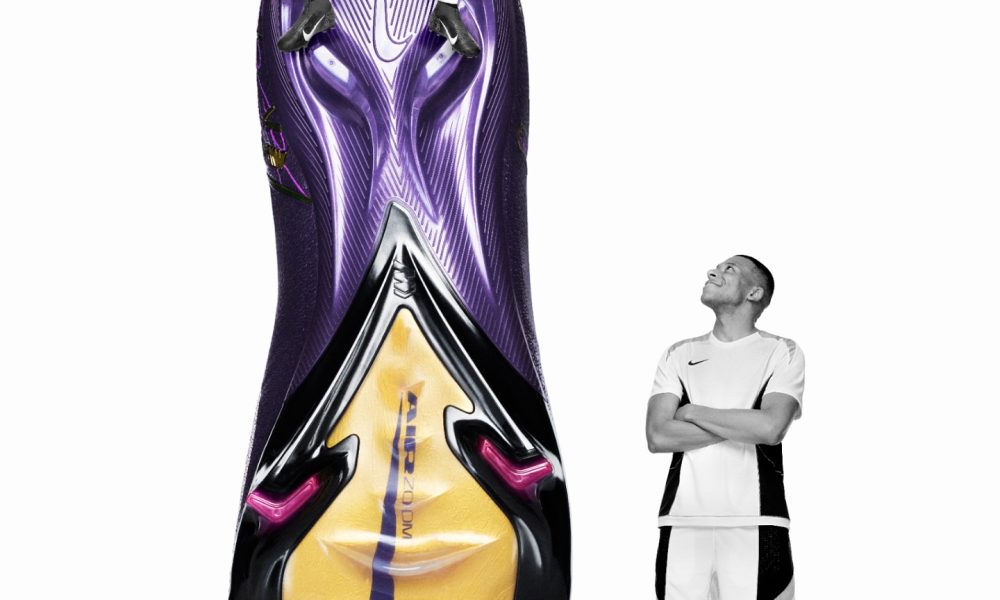 has always dreamed in Mercurial. Now his initials are on the boots.
The new Kyl…
has always dreamed in Mercurial. Now his initials are on the boots.
The new Kyl…
-
 Motorsports3 weeks ago
Jo Shimoda Undergoes Back Surgery
-
 Motorsports1 week ago
SoundGear Named Entitlement Sponsor of Spears CARS Tour Southwest Opener
-
 NIL2 weeks ago
Bowl Projections: ESPN predicts 12-team College Football Playoff bracket, full bowl slate after Week 14
-
 Rec Sports3 weeks ago
How this startup (and a KC sports icon) turned young players into card-carrying legends overnight
-
 Rec Sports3 weeks ago
Robert “Bobby” Lewis Hardin, 56
-

 Motorsports3 weeks ago
Pohlman admits ‘there might be some spats’ as he pushes to get Kyle Busch winning again
-
Sports3 weeks ago
Wisconsin volleyball sweeps Minnesota with ease in ranked rivalry win
-

 Motorsports1 week ago
Donny Schatz finds new home for 2026, inks full-time deal with CJB Motorsports – InForum
-

 Motorsports3 weeks ago
Increased Purses, 19 Different Tracks Highlight 2026 Great Lakes Super Sprints Schedule – Speedway Digest
-

 Rec Sports2 weeks ago
How Donald Trump became FIFA’s ‘soccer president’ long before World Cup draw