
NIL
Lane Kiffin couldn’t land the knockout

You might be sick of conference realignment. You might hate the transfer portal, NIL, and revenue-sharing. And you may not even like the 12-team College Football Playoff. But if you’re a college football fan, you loved Week 8.
Week 8 brought us CFP elimination games, five ranked-on-ranked matchups, and more shocking upsets. And none of that happens without realignment, the expanded playoff, and most importantly, the transfer portal, NIL, and revenue-sharing. Like it or not, college football has more meaningful and compelling games than ever, and has achieved a level of parity that seemed to be reserved for the NFL.
I won’t bore you with the numbers to prove it because CBS’s Chris Hummer already has. The margins on Saturdays are slimmer than ever, and that puts coaches and quarterbacks under the microscope, even more than they already were. More often than not, it’s the best ones who are coming out on top, and it’ll be the best ones who lead their teams to the 2025 CFP.
First Course
1. Is coaching more important than ever? (Louisville 24 No. 2 Miami 21)
The great flattening has finally come to college football. The introduction of revenue sharing, in addition to the freedom of movement the transfer portal presents, has finalized the sport’s newfound equality, and there is overwhelming evidence that the difference between the very best teams and the middle of the pack is as slim as ever. So, if you can’t overwhelm your opponents with a talent advantage, how do you separate? Much like the NFL, coaching, in terms of scheme, play-call, and game management, can have an outsized impact on the outcome of games.
So, maybe it shouldn’t be a surprise that the teams are on the wrong end of this season’s most surprising upsets; Clemson, Penn State, and now Miami are (or in Penn State’s case were) led by “program-builders.” Strong recruiters who set the culture delegate much of the game plan to their coordinators and aren’t particularly aggressive on gameday.
It’s easy to boil Miami’s loss to Louisville on Friday night down to Carson Beck’s four interceptions, and maybe it is that simple. Still, it’s hard not to recognize the discrepancy between Cristobal’s conservative approach and Jeff Brohm’s bespoke attack, especially in the first half.
Coming out of the bye week, Brohm threw the kitchen sink at Miami. Three different players took snaps on the first drive of the game with a series of jet sweeps, screens, QB keepers, a quick passing game to negate Miami’s pass-rush, and a fake field goal for a first down inside the 10-yard line. On the second drive of the game, Brohm brought three quarterbacks onto the field and split them all out while wide receiver Caullin Lacy took the direct snap. It didn’t work, but the Cardinals still needed just four plays to take a 14-0 lead.
Eventually, Brohm, who is now 4-2 against top 5 teams as a head coach, ran out of tricks, and Miami punched back. Louisville ended the game at -0.11 EPA/play, and without Beck’s four interceptions, the Cardinals would have lost, but they didn’t. Their coach, one of the best gameday coaches in the sport, gave them a chance to negate the ever-shrinking talent gap and insert themselves into the crowded CFP race in the ACC.
With the number of jobs open this offseason continuing to grow, programs need to consider whether they want the coach who gets the most talent or gets the most out of it.
Second Course
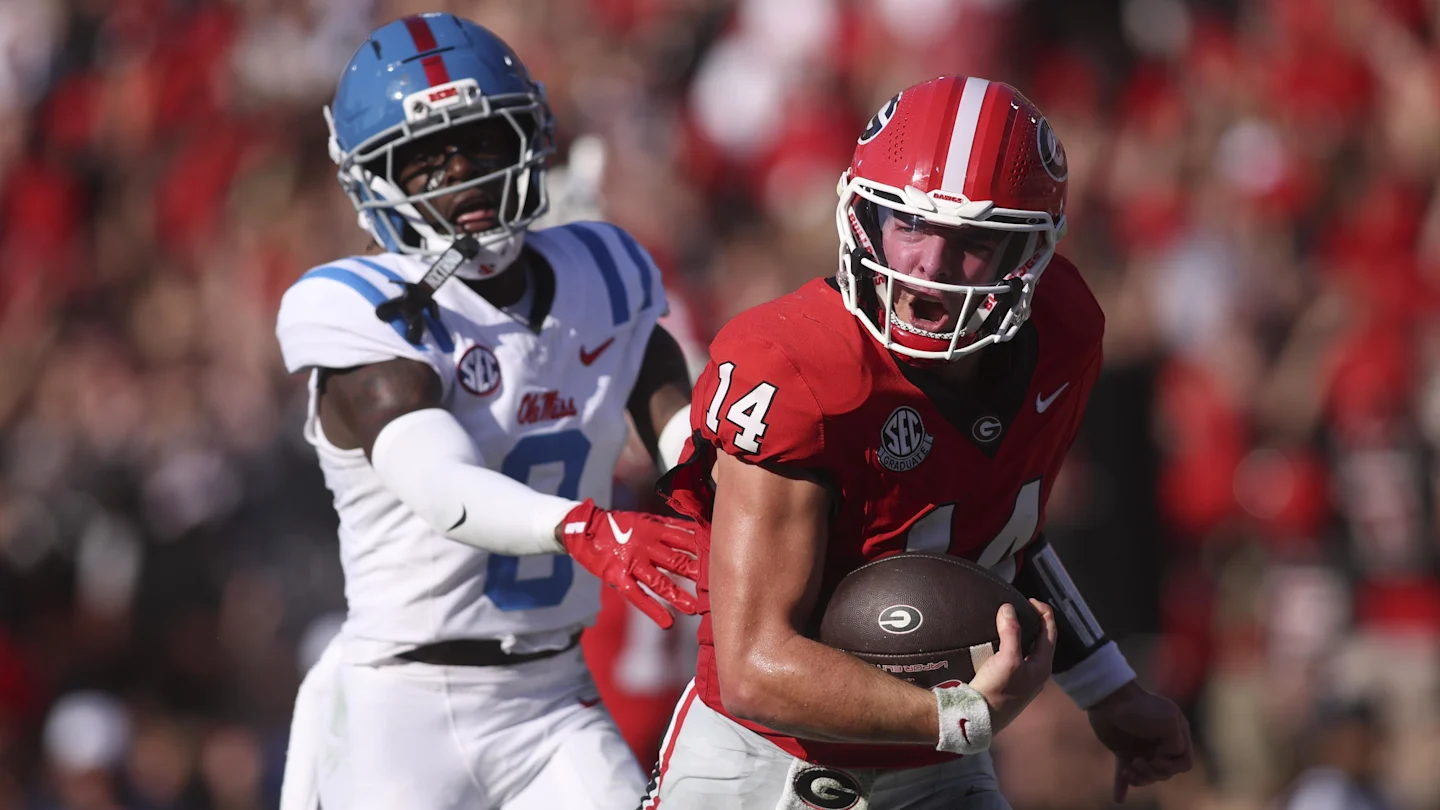
2. Kiffin’s best shot didn’t kill Kirby (No. 9 Georgia 43 No. 5 Ole Miss 35)
Lane Kiffin spent three full weeks gameplanning for Kirby Smart’s defense. A defense he’s seen since he and Smart were coordinators for Nick Saban in 2015. It’s obvious Ole Miss hadn’t prepped much, if at all, for Washington State coming out of the bye last week, but they were ready for the Bulldogs.
Kiffin’s Rebels scored a touchdown on each of their first five possessions, continuing a trend of Georgia’s defense struggling in the first half and Smart’s team trailing at halftime. Georgia has now trailed at halftime in four of its five SEC games, with Kentucky as the lone exception. Yet, in all four of those games, including the loss to Alabama, Smart’s defense has flipped the switch.
In Week 8, it took until the fourth quarter, but finally the Dawgs bit down on Ole Miss QB Trinidad Chambliss and didn’t let go. Georgia held Ole Miss to 13 total yards in the fourth quarter with two punts and a turnover on downs. The Rebels’ two scores in the third quarter will hurt Georgia’s staggering second-half defensive numbers, but it’s still the same story: Smart finds a way to fix his defense.
There are a few reasons why. Georgia tends to simplify its coverage in the second half, allowing its athletes in the secondary to play more man coverage. Though that wasn’t necessarily the salve on Saturday. The biggest difference in the fourth quarter was the pressure Georgia was able to generate.
That’s a wrap‼️#GoDawgs pic.twitter.com/nkwCuTOI6S
— Georgia Football (@GeorgiaFootball) October 18, 2025
The Dawgs don’t have a dominant pass-rusher this year. Linebackers Chris Cole and Raylen Wilson lead the team in QB pressures, and according to SharpFootballAnalysis, Georgia ranks 73rd in pressure rate this season. The defense pressured Chambliss on just 11 percent of his dropbacks and did not sack him once.
Yet, the coaching staff’s propensity to use a deep rotation along the defensive line, with 12 players coming into Week 8 with over 50 defensive line snaps this year, keeps the group fresh late in games. Fresh rushers and simplified coverages allow Smart and Glenn Schumann to crank up the blitz rate with their athletic linebackers, and it’s led to dominant late-game defense. Chambliss went 0-4 on his four pressured dropbacks and completed just five of 13 passes when blitzed. Now, Georgia needs to figure out the other 30 minutes of the game.
Third Course
3. Josh Heupel needs help (No. 6 Alabama 37 No. 11 Tennessee 20)
Josh Heupel got hired at Tennessee for his veer-and-shoot offensive system and high-scoring attack, not for his game-management skills. However, the latter continues to cost the fifth-year head coach of the Volunteers.
Let’s set the scene. Tennessee is trailing 16-7 late in the second quarter and is driving to score. With 37 seconds left and one timeout remaining with the ball at the 14-yard line, the Vols ran the ball three times after an incompletion, gaining 13 yards and draining the clock to nine seconds left before using their final timeout. Then, on second-and-goal from the one-yard line, Tennessee came out of the timeout with Joey Aguilar under center and a jumbo package.
Now remember, with no timeouts left, Tennessee can’t risk running the ball and getting stopped short. Yet, for some inexplicable reason, Aguilar play-faked to the running back before targeting tight end Miles Kitselman in the flat. Alabama cornerback Zabien Brown, of course, didn’t bite on the fake, undercut the route, and returned it 99 yards for a 16-point halftime lead.
THE DUECE IS LOOOOOOSE! ✌️@zabien_brown
📺: ABC pic.twitter.com/LHgM2IUrUC
— Alabama Football (@AlabamaFTBL) October 19, 2025
For good measure, Heupel burned his first timeout, then left his offense on the field for fourth-and-11 from the Alabama 16, down 17 with 3:09 left in the game, rather than kicking the field goal to make it a two-score game with over three minutes and all three timeouts. By that point, Alabama’s win probability was over 99 percent, but Heupel essentially made sure it went to 100 by failing to convert.
Despite losses to Georgia and Alabama, Tennessee’s CFP hopes are still alive, but it’s hard to trust the Vols in a close game until Heupel brings some game-management help on the sidelines.
Check Please!: When it’s clear there won’t be a seat for you at the CFP table, it’s time to pay your check and go
4. Is Rhule ready to roll? (Minnesota 24 No. 25 Nebraska 6)
Year 3 is always when Matt Rhule finally puts it together, and it’s also about the time when he’s ready to leave for a better job. This time, it could be his dream job at his alma mater. Rhule was with Penn State AD Pat Kraft at Temple, and it’s hard to imagine Kraft moving on from James Franklin without a clear plan in place. Rhule might be that plan, and his attention may have been elsewhere this week.
That’s the overly simplistic analysis of Nebraska’s loss, which will drop the Cornhuskers back out of the Top 25 and the CFP race. The more in-depth look brings you back to the offseason, when Rhule added Elijah Pritchett from Alabama to be his starting right tackle. It was a whiff. The type of miss that can cost a program like Nebraska, still not quite up to speed in the NIL era, its season.
Dylan Raiola was sacked nine times, four of them courtesy of Gunnar Gottula, now the starting right tackle, as Pritchett splits time on the left side. Ultimately, sacks are a quarterback stat. Raiola needs to speed up his processing in the backfield and play with more urgency as a dropback passer, because when he does, he has success. He finished 10-for-14 for 102 yards and a touchdown on dropbacks of under 2.5 seconds. Still, pressures are largely a reflection of the line in front of him, and Raiola was pressured 19 times on Friday night.
5. LSU springs another leak (No. 17 Vanderbilt 31 No. 10 LSU 24)
The coaching carousel is already spinning at full tilt, and with LSU poised to miss the College Football Playoff again, in Brian Kelly’s fourth season, it doesn’t feel like a certainty that he’ll be in Baton Rouge next fall. With this loss, Kelly is now 7-7 in true road games as the head coach of the Tigers and 11-11 away from Baton Rouge.
After two frustrating 10-win seasons to start his tenure, the directive was clear: fix the defense. It wasn’t good enough under Blake Baker last year. Then, with an influx of transfer portal talent, it finally looked like a championship unit in 2025. Until it didn’t.
The LSU offense, even with injuries along the much-maligned offensive line, was good enough to win, but Baker’s defense had no answer for Diego Pavia. Baker’s blitz-heavy, man-coverage system that relies on stunts and twists along the defensive line to generate pressure failed to contain Pavia and left wide-open rushing lanes all day.
Pavia burned LSU for 86 yards and two touchdowns on the ground, just two weeks after Ole Miss’s Trinidad Chambliss went for 71 yards on the ground. Kelly has constructed a talented roster, but every time he seemingly plugs one hole, the team springs a leak somewhere else.
6. The Trojans don’t travel (No. 13 Notre Dame 34 No. 20 USC 24)
It’s not a conference matchup, but the Trojans had to venture into Big Ten country for a de facto CFP elimination game against Notre Dame, and that part of the country has not treated Lincoln Riley well. Since joining the Big Ten, USC is now 2-6 on the road, with five of those losses coming in conference play.
The road struggles have carried over from last season and have mostly come on the defensive side of the ball. A USC team that last week in LA looked like the more physical team against Michigan, allowed 308 rushing yards to the Irish, with Jeremiyah Love accounting for 228 on just 24 carries. Meanwhile, Riley’s offense, which gashed the Wolverines for the most efficient rushing performance against their program since 2022, managed 2.3 yards per carry with a 30 percent rushing success rate.
|
USC Defense 2025 |
Home |
Road |
|---|---|---|
|
rushing ypg |
134.8 |
177 |
|
passing ypg |
227.5 |
243 |
|
yards/play |
5.59 |
6.20 |
|
yards/game |
313.5 |
433.7 |
Head of the table: The best individual performance earns the seat at the head of the table
7. Georgia QB, Gunner Stockton (No. 9 Georgia 43 No. 5 Ole Miss 35)
If you’ve been reading this column, you might know that Gunner Stockton isn’t my favorite quarterback. He doesn’t see the field well against zone coverage, and throws everything like a fastball with very little touch or ability to layer the ball over defenders. Yet, despite those limitations, Stockton carved Ole Miss between the hedges, throwing for 289 yards on 26-of-31 passing with four touchdowns and another 59 yards and a score on the ground.
Georgia fans may want to run him out of town, but offensive coordinator Mike Bobo is a massive reason why. He was constantly putting Stockton in advantageous situations, allowing Stockton to get the ball out quickly to his playmakers against man coverage and using play-action, pre-snap motion, and the threat of Stockton’s mobility to create holes in zone and simplify his progressions. The Dawgs’ offense managed 0.64 EPA/dropback, a 95th percentile performance, and an absurd 0.54 EPA/pass when you strip out explosive plays.
12 plays, 75 yards. Dawgs cut the lead to 2.
📺: ABC#GoDawgs pic.twitter.com/SQTU9erYVl
— Georgia Football (@GeorgiaFootball) October 18, 2025
Just look at that absolute beauty of a play-call by Bobo, the pre-snap motion and play-fake to hold the safety in the middle of the field, and the slant from the outside receiver to clear out the corner. Just fantastic stuff. And there’s more where that came from.
Quick strike from Gunner to Lawson 💪
📺: ABC#GoDawgs pic.twitter.com/a6fkfeD6AM
— Georgia Football (@GeorgiaFootball) October 18, 2025
Still, no matter how deep in his bag Bobo was, Stockton hit throws all day, going 12-for-12 in the second half for 135 yards and three touchdowns. And for good measure, he did it on the same weekend that his predecessor threw four interceptions and lost as a 10.5-point favorite at home. Yet, for as good as Stockton was, the Carson Beck-led offense in 2023 posted six games with a higher EPA/pass. It was Georgia’s most efficient passing performance since the 63-3 2023 Orange Bowl win over Florida State.
A seat at the bar: When all the tables are full, sometimes you can grab a seat at the bar, and maybe these emerging contenders will be seated soon
8. It’s nice to have a healthy quarterback (Arizona State 26 No. 7 Texas Tech 22)
Arizona State made the inaugural 12-team CFP as the Big 12 Champion last season, and started the year at No. 11 in the country, so to say they’re emerging as a contender may seen wrong, but with a loss to Mississippi State and a 42-10 loss to Utah without Sam Leavitt last week, Kenny Dillingham’s team all but slipped off the radar. Well, they’re back, taking down the No. 7 team in the country in Leavitt’s return to clear a path to the Big 12 Title game.
This time, however, it was Texas Tech that was without its starting QB. Redshirt freshman Will Hammond made a cameo against Utah early in the season and nearly sparked a quarterback controversy, but after Hammond’s performance in his first start, Red Raider fans will be happy to see Behren Morton get back on the field.
Still, Arizona State’s win was massive, and it was largely because of Leavitt. Last year, with Cam Skattebo as the offensive focal point, Leavitt thrived within the structure of the offense, attacking downfield off play-action while using his athleticism to limit negative plays.
This season, however, he’s had to become a playmaker. Now it hasn’t always been clean, and with four sacks and a fumble against one of the best defensive lines in the country, it wasn’t on Saturday either. But he’s shown a level of creativity that we only caught glimpses of in 2024, and that shines through in big moments, like a 10-play, 75-yard game-winning touchdown drive and a crucial fourth-down conversion.
Sam Leavitt to Jordan Tyson on 4th and 2
Huge Play pic.twitter.com/J5gzfymowk
— Grant Speaks (@GrantSpeaks1) October 18, 2025
9. Bear Bachmeier will have a water (No. 15 BYU 24 No. 23 Utah 21)
BYU debuted in the column last week with 19-year-old true freshman quarterback Bear Bachmeier’s heroics to hold off Arizona, but now it might be time to take the Cougars a bit more seriously as a Big 12 contender. Not just because of their 24-21 win over Utah in Provo on Saturday night, but because with Behren Morton injured and star defensive tackle Skyler Gill-Howard out for the year, Texas Tech might be vulnerable.
Still, Utah bested BYU by EPA/play, success rate, yards/play, explosive play rate, yards/dropback, 3rd-down success rate, and red zone success rate. Do you want to know where BYU’s biggest advantage over Utah was? Punting EPA at 7.12 to -0.10 because of a Utah muffed punt that led to a BYU field goal.
Bachmeier is a fine quarterback with enough athleticism to get by in the Big 12, but conference commissioner Brett Yormark desperately needs the Red Raiders, not the Cougars, to win the league because this team wouldn’t be a top-six team in either the SEC or the Big Ten.
Heimlich Manuever: Sometimes a CFP contender chokes on their food, but the best teams know the Heimlich
10. Missouri is Hard(l)y hanging on (No. 16 Missouri 23 Auburn 17 (2OT))
Jackson Arnold is costing Auburn over a tenth of a point every time he drops back to pass this season, and with an interception and four sacks on Saturday night at Jordan-Hare, he was even worse than that in Week 8. If he had only cost -0.10 EPA/dropback, Hugh Freeze may not have started 0-4 in SEC play for the third straight year. That’s how close Auburn was to beating Missouri.
Eli Drinkwitz’s team escaped, largely aided by back-to-back 15-yard penalties on a five-play 60-yard touchdown drive in the fourth quarter, which ultimately sent the game to overtime. Missouri preserved its CFP hopes, but that doesn’t mean Tigers fans shouldn’t be concerned, because for the second-straight week, Ahmad Hardy was held to 52 yards rushing after averaging 146 per game through the first five weeks of the season.
|
Ahmad Hardy |
Weeks 1-5 |
Weeks 7-8 |
|---|---|---|
|
yards/carry |
7.1 |
3.0 |
|
rushing yards/game |
146 |
52 |
|
EPA/rush |
0.26 |
-0.16 |
|
Success rate |
50% |
34.2% |
Hardy’s productivity is crucial for Mizzou because Beau Pribula is perfectly capable as an RPO-thrower, accurate enough to keep an offense above water with underneath throws in the quick-game, along with the threat of the QB run-game. However, when he’s forced to become a true dropback passer, he isn’t comfortable and doesn’t have the arm to make throws outside the numbers.
11. Texas’s offense is broken (No. 21 Texas 16 Kentucky 13 (OT))
Speaking of struggles as a dropback passer, did somebody say Arch Manning? It doesn’t feel healthy to litigate his play every Saturday night, often at 2:00 a.m. as I strain to finish the column while some wild ACC West Coast game unfolds. Yet, when Texas needs a goalline stand in overtime to beat Kentucky by a field goal, it’s warranted.
Ultimately, he’s not consistently accurate enough. He misses open throws, both from the pocket and on the move, and against Kentucky, he went 11-for-25 for 109 yards, and generated -0.39 EPA/dropback, with a 25 percent passing success rate. That could be the end of the story, but it’s worth mentioning that he’s also being put in a very difficult situation. Texas’s offense is broken.
The Longhorns, altogether, averaged 3.40 yards per play with a 27 percent success rate. The offensive line is a disaster; they have no semblance of a running game, and Manning is constantly under pressure. He hardly has time to Steve Sarkisian’s long-developing screens off play-action, which have long been an easy button for his quarterbacks. His accuracy tends to deteriorate over the course of games as he gets sped up by the accumulation of hits. Manning is a problem, but so is everything else, and it’s made Texas possibly the least effective passing game in the SEC.

This game against Kentucky, now 2-4 overall and 0-4 in SEC play, was Texas’s worst by offensive success rate since the 30-15 Week 8 loss to Georgia last season (27%), and was barely worse than that performance by yards per play (3.41). By yards per play, it was the worst Texas offensive performance since Week 11 in 2022, a 17-10 loss to TCU, the eventual national runner-up.
If it weren’t for that defense and a relatively easy schedule the rest of the way, Texas would’ve been paying its check after a win this week. Sarkisian’s CFP hopes are hanging by a thread.
Kid’s menu: The CFP is a 12-team reservation that needs one kid’s menu for the Group of Six team
12. American Conference Chaos (UAB 31 No. 22 Memphis 24) (Tulane 24 Army 17)
It wasn’t a good idea for UAB to hire Trent Dilfer, but that doesn’t mean all ESPN connections are off limits. UAB’s interim head coach, Alex Mortensen, son of legendary NFL reporter Chris Mortensen, led the Blazers, previously winless in American Conference play, to a 31-24 win over No. 22 Memphis as a 23.5-point home underdog.
The race for the American just got quite a bit more interesting with the Tigers’ loss, and was on the brink of descending into chaos if it weren’t for a bit of voodoo in New Orleans. After trailing Army 10-3 and 17-1- in the second half, Tulane scored the game-winning touchdown with 27 seconds left on a tipped ball thrown into double coverage.
The Wave goes on 🌊#UptownFootball pic.twitter.com/DJ7rhxLMrm
— Tulane Football (@GreenWaveFB) October 18, 2025

For over a decade, Dave Clawson built Wake Forest into one of the steadiest football programs in the Atlantic Coast Conference, crafting a developmental model that produced seven consecutive bowl appearances.
Clawson’s approach to making the Demon Deacons a fixture in North Carolina’s college football landscape was deliberate: recruit under-the-radar prospects, develop them patiently for two or three seasons, then rely on experienced upperclassmen to carry the program.
As the transfer portal and NIL opportunities reshaped college football, that model became harder to sustain. After back-to-back 4-8 seasons, Clawson resigned, citing a rapidly changing landscape and acknowledging he could no longer give the job everything it required.
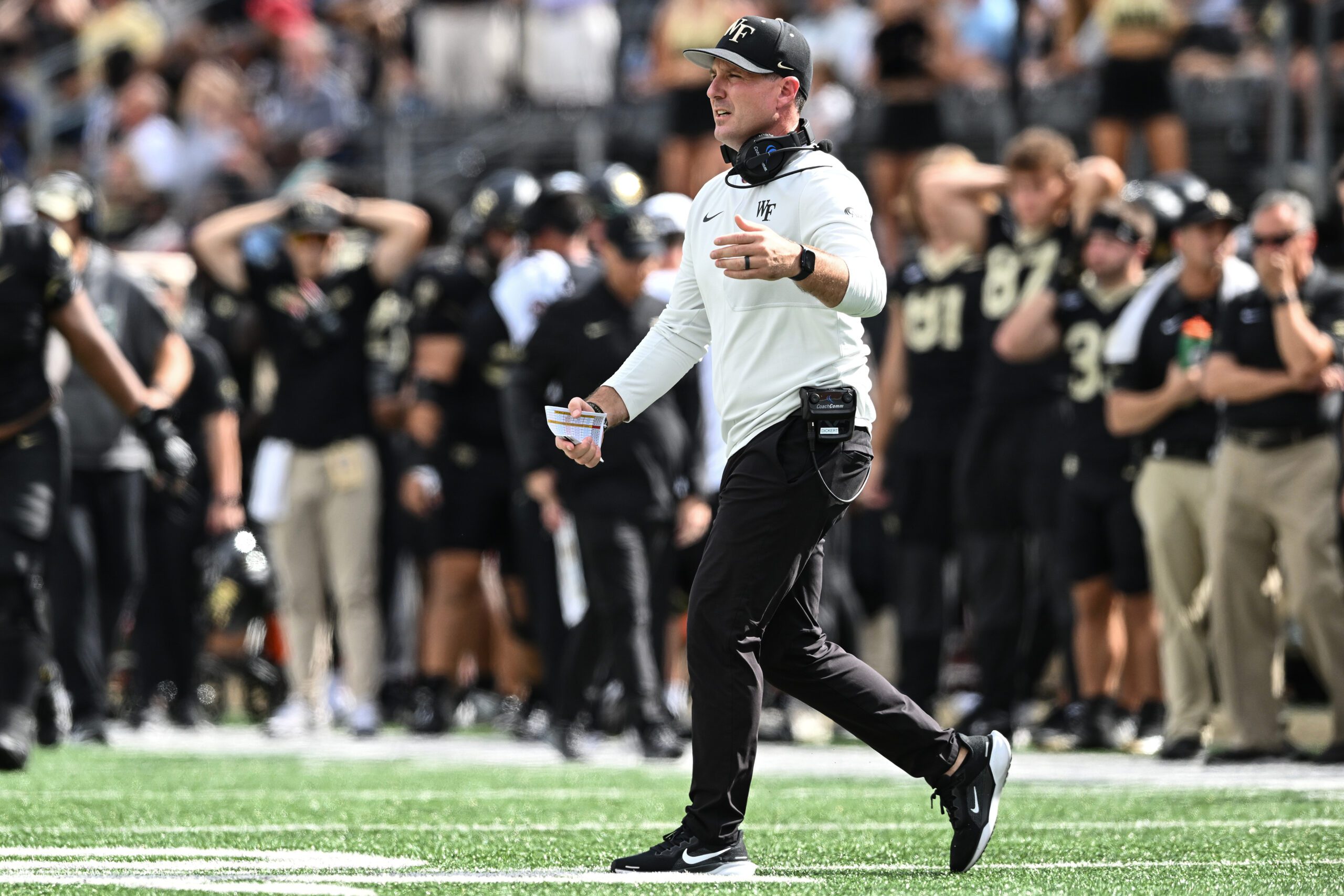
Wake Forest suddenly faced a reset as a coaching change, roster turnover and evolving expectations left the program searching for direction. When Jake Dickert, former coach at Washington State, arrived in Winston-Salem ahead of the 2025 season, optimism was cautious at best.
What followed was one of the ACC’s most striking turnarounds.
In his first season, Dickert — the North State Journal’s 2025 Coach of the Year — restored stability and belief, guiding Wake to an 8-4 record and a return to bowl eligibility.
Capping off Dickert’s debut season, the Demon Deacons (8-4) will face SEC representative Mississippi State Bulldogs (5-7) in the Duke’s Mayo Bowl on Jan. 2 at Bank of America Stadium in Charlotte.
In their 2025 campaign, the Deacs tied for the most victories among all FBS programs in the Carolinas, underscoring the program’s rapid rebound. Wake Forest defeated two teams ranked at the time, including a road victory at Virginia (the Cavaliers’ only home loss of the season) and a home win that snapped SMU’s 20-game regular-season conference winning streak.
After back-to-back losses in September, Wake responded by winning six of seven games before closing the regular season with a loss at Duke; the Deacs finished 4-4 in ACC play.
On the field, Dickert leaned on a blend of experience and toughness. Graduate transfer quarterback Robby Ashford brought leadership to an offense that had struggled for consistency in recent seasons, while senior running back Demond Claiborne anchored the ground game and emerged as a physical focal point in key moments.
Defense again proved to be the program’s backbone. The Demon Deacons ranked sixth in the ACC and 38th nationally in scoring defense, finished top five in the league in total and passing defense, and did not allow a touchdown against either Virginia or North Carolina.
Dickert’s impact extended well beyond Saturdays.
Before the season, he overhauled Wake Forest’s recruiting and scouting infrastructure, assembling a 10-person staff dedicated to identifying talent and building depth in a new era of college football. The early returns have been promising.
During the recent National Signing Day, Wake Forest announced a 30-player 2026 recruiting class — the highest-ranked in program history — currently inside the national top 50. The class includes one four-star and 29 three-star recruits, signaling a shift toward broader talent acquisition and immediate competitiveness.
Dickert’s efforts were rewarded following the regular season. On Dec. 2, Wake Forest Vice President and Athletics Director John Currie announced that Dickert had signed a long-term contract extension.
“Jake Dickert has proven himself to be one of college football’s rising head coaches and one of the truly special leaders in the ACC,” Currie said. “He has galvanized our locker room, our campus, and our community. Coach Dickert is exactly the type of leader who inspires players, and he and his family fit seamlessly into the Wake Forest and Winston-Salem community.”
Dickert echoed that sentiment, pointing to long-term investment as central to Wake Forest’s direction.
“Our family could not be more grateful to call Wake Forest and Winston-Salem home,” he said. “Over the last 11-plus months, our staff and student-athletes have embraced a new process of being ‘Built in the Dark.’ When John approached me a few weeks ago about the university’s desire to further invest in our program, I was both humbled and energized.”
“This commitment ensures that our staff has the stability, resources and support necessary to continue elevating Wake Forest football,” Dickert added. “I’m proud of this team, our staff and our seniors who built the foundation for this new era, and excited for what’s ahead. There has never been a better time to be a Demon Deacon.”
While roster turnover remains a reality, Wake Forest’s trajectory is still heading upward. With a retooled staff, a revamped recruiting approach and renewed confidence throughout the program, Dickert has revived the Demon Deacons and positioned them for sustained relevance for years to come.
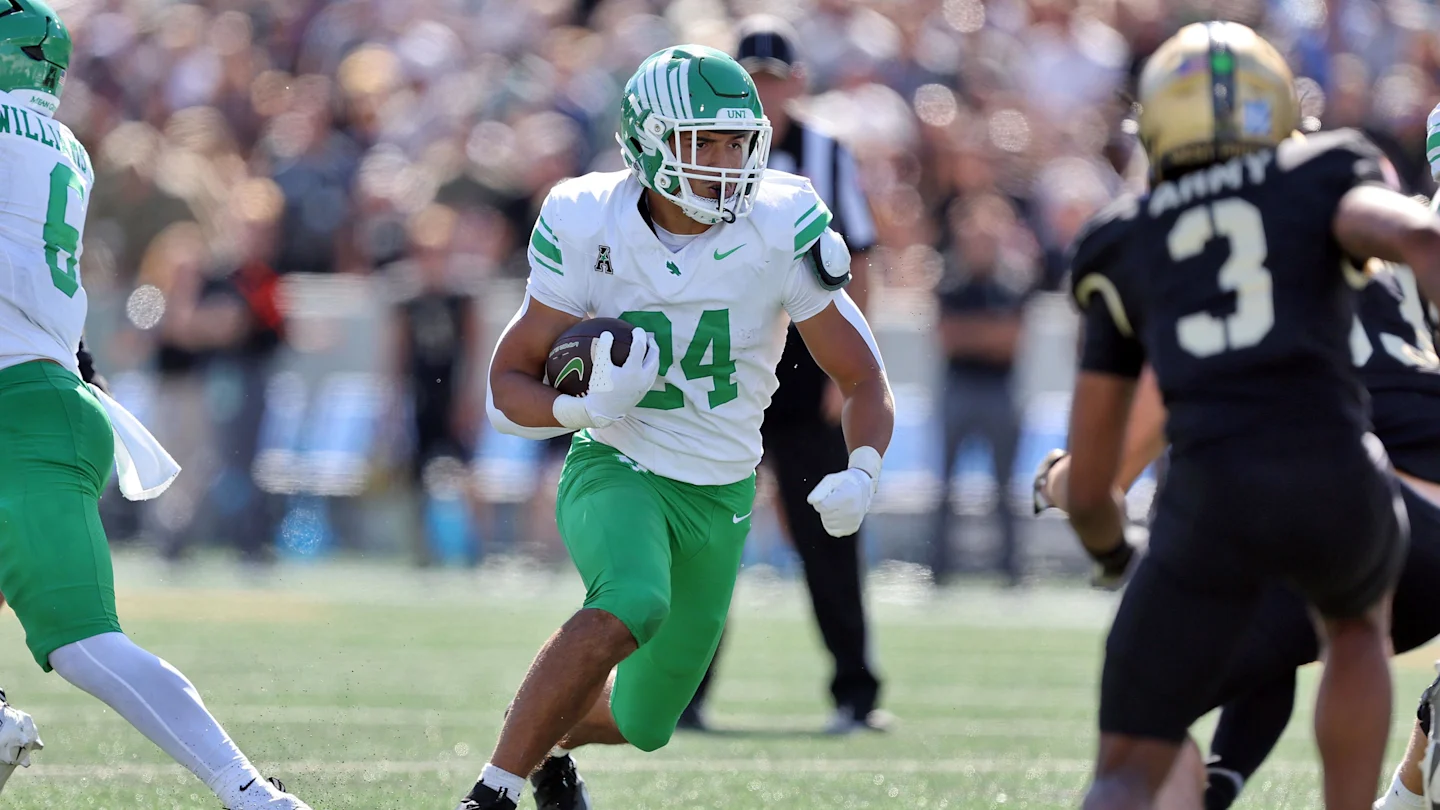
North Texas enjoyed a historic 2025 season, finishing 12–2 overall (7–1 in the American Conference) and cracking the AP Top 25.
The Mean Green posted the nation’s top offense (45.1 points per game), reached the AAC Championship Game, and capped the year with a thrilling 49–47 New Mexico Bowl win over San Diego State, the most wins in program history.
A key driver behind that success was true freshman running back Caleb Hawkins, who posted 1,434 rushing yards on 230 carries (6.2 yards per carry) with 25 rushing touchdowns, plus 32 catches for 370 receiving yards and four receiving TDs, 1,804 scrimmage yards and 29 total touchdowns.
He earned All-America and All-Conference freshman honors, national freshman awards recognition, and MVP honors in North Texas’ bowl victory.
However, shortly after, he announced his decision to enter the NCAA transfer portal, positioning himself as one of the highest-profile running backs available when the portal opens Friday.
On Monday, On3’s Pete Nakos specifically listed Hawkins among portal names being tracked and identified Texas as one of the programs showing early interest or appearing as a logical landing spot in that early intel.

Hawkins was a lightly-recruited three-star prospect out of North Rock Creek High School (Shawnee, Oklahoma) who signed with North Texas over offers from Emporia State and Central Oklahoma.
Texas finished the 2025 season ranked No. 13 in the final AP poll but failed to reach the College Football Playoff despite entering the year as the preseason No. 1 team in the AP Top 25.
Sophomore quarterback Arch Manning has publicly confirmed he will return to Texas for 2026, but the Longhorns face significant attrition at running back, with Quintrevion Wisner, Jerrick Gibson, and CJ Baxter all set to enter the transfer portal.
Texas has a clear need at running back, Hawkins’ proximity to Austin, and the program’s proven history of developing NFL-level backs, such as Bijan Robinson, Jonathan Brooks, Roschon Johnson, and Jaydon Blue, all point to Texas as a logical landing spot for Hawkins.
Read More at College Football HQ
- $2.6 million QB ranked as No. 1 transfer in college football
- 25-touchdown RB shares farewell note after entering college football transfer portal
- College Football Playoff team loses All-Conference player to transfer portal
- College football team loses three All-Americans to transfer portal

Saint Peter’s Peacocks (5-5, 2-0 MAAC) at Fairfield Stags (8-5, 0-2 MAAC)
Fairfield, Connecticut; Monday, 7 p.m. EST
BETMGM SPORTSBOOK LINE: Stags -3.5; over/under is 138.5
BOTTOM LINE: Fairfield hosts Saint Peter’s after Braden Sparks scored 26 points in Fairfield’s 121-58 win over the City Tech Beavers.
The Stags have gone 5-1 in home games. Fairfield ranks second in the MAAC with 24.6 defensive rebounds per game led by Brandon Benjamin averaging 5.7.
The Peacocks are 2-0 in MAAC play. Saint Peter’s is fourth in the MAAC with 10.6 offensive rebounds per game led by Jahki Gupton averaging 1.8.
Fairfield averages 8.6 made 3-pointers per game, 1.7 more made shots than the 6.9 per game Saint Peter’s gives up. Saint Peter’s averages 8.7 made 3-pointers per game this season, 1.6 more made shots on average than the 7.1 per game Fairfield gives up.
The Stags and Peacocks meet Monday for the first time in conference play this season.
TOP PERFORMERS: Benjamin is averaging 12.8 points, 9.7 rebounds and 1.6 blocks for the Stags. Sparks is averaging 17.7 points over the last 10 games.
Brent Bland averages 3.4 made 3-pointers per game for the Peacocks, scoring 16.0 points while shooting 40.0% from beyond the arc. TJ Robinson is averaging 12.3 points and 3.2 assists.
___
The Associated Press created this story using technology provided by Data Skrive and data from Sportradar.
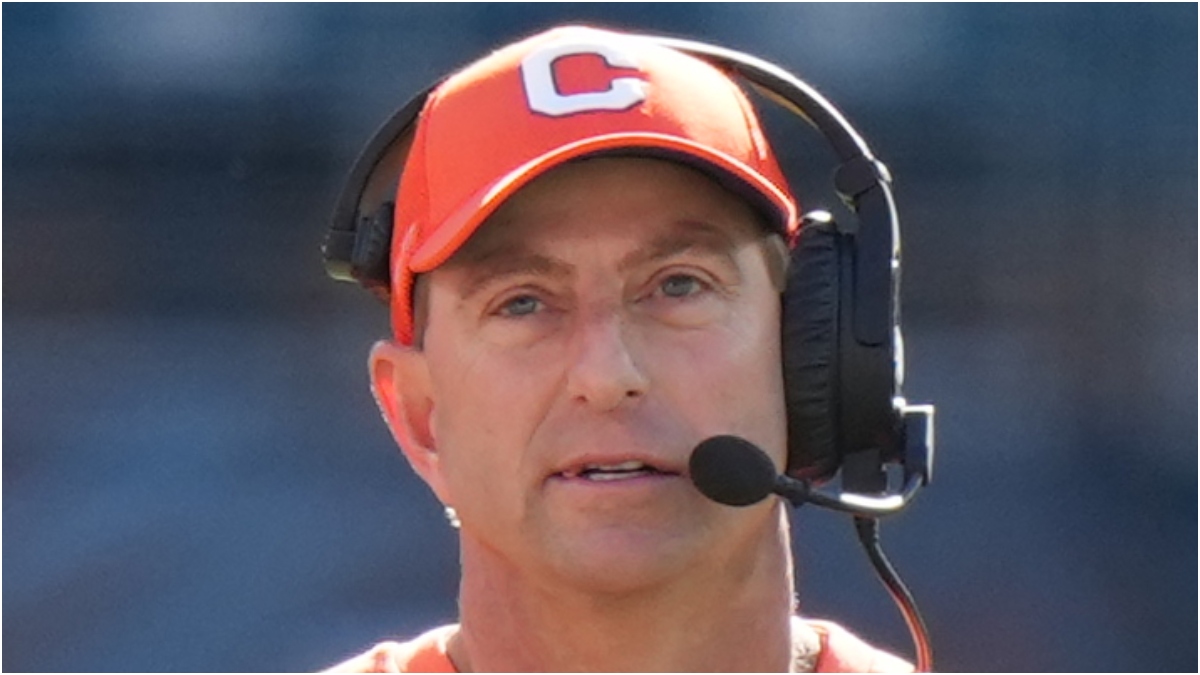
As usual, Pate is spot on here.
The landscape of college football is changing by the day, and the new mantra for any coach looking to stay in the game is “adapt or die.”
One coach that has been dragged kicking and screaming into the NIL and transfer portal era of college sports is none other than Clemson Tigers head coach Dabo Swinney.
And this weekend’s Pinstripe Bowl (aka The Disappointment Bowl) may have been the metaphorical death blow to Dabo’s reign as one of college football’s elites.
I’ve been on the “Dabo is done” train for a hot minute now, and one media personality who is with me (as he usually is) is Josh Pate.
Pate put it as bluntly as he could on the latest episode of his podcast, Josh Pate’s College Football Show.
“This was going to be the year that if the Dabo model still worked, it would be proven,” Pate explained, “and they went 7–6.”
This was about as disappointing a season for a College Football Playoff contender outside of State College, PA, but according to Pate, things could get a lot worse for Clemson before they get better.
“On paper, next year should be worse for Clemson.”
Brutal.
The “Dabo Model” Pate is referring to is the complete and utter dismissal of the transfer portal and reluctance to lean into NIL.
As I’ve said, an over reliance on the transfer portal can be just as damning as not using it at all (see Florida State), but there needs to be a healthy influx of talent from the portal if you want your program to survive in this day and age.
The truth is, even with Clemson’s relative success in the recruiting ranks, that well was starting to dry up, and there was no other source of talent being infused into the team.
Unfortunately for Tigers fans, Dabo isn’t willing to make the changes or adaptations to grow and evolve into a winning coach in 2025, a fact Pate knows all too well.
“Any sizable improvement at this point would require significant change, and I don’t expect Dabo Swinney to change.
“If you don’t adapt, you will die as a playoff contender,” Pate said, echoing my earlier sentiment.
Will Clemson force Dabo’s hand or let him ride off into the sunset as he dies on the hills of his old principles?
Time will tell, but Clemson fans have to be sick seeing the same man who built their program to such dizzying heights less than a decade ago be the very source of their downfall.
A cruel irony for a fanbase which deserves better.

“Jay Boulware brings years of successful experience as a highly respected coach and recruiter,” Rodriguez said. “His knowledge of the Big 12 Conference and ability to recruit high-level players and develop running backs make him a great addition to our program. I look forward to having him join our staff here at WVU.”
Boulware, a 29-year coaching veteran, comes to West Virginia after serving as the running backs coach and special teams coordinator at Kentucky for the past three years. He has coached running backs, tight ends and special teams at numerous Power 4 programs, has coached in 17 bowl games, including several BCS and CFP games and won a national championship. Programs that he worked for won seven conference championships, had numerous indviiduals named all-conference, All-American, national individual finalists and NFL Draft choices.
His resume includes working at Texas (2020-21, 1996-97), Oklahoma (2013-20), Auburn (2009-12), Iowa State (2007-09), Utah (2005-07), Stanford (2004-05) and Arizona (2000-04).
He also spent time assisting with the running backs with the Pittsburgh Steelers and did fellowships with the New Orleans Saints and the San Francisco 49ers. His first full-time coaching position was at Northern Illinois (1997-2000).
In 2023, Kentucky boasted a back who finished with 1,129 rushing yards and 14 touchdowns, in 2024 – two running backs had almost 600 yards each and in 2025, his top running back finished with more than 700 yards and 12 touchdowns.
This past season, the Wildcats finished No. 13 nationally in kickoff return defense. In 2024, UK was No. 6 nationally in punt return defense, No. 15 in net punting and No. 25 in kickoff return defense. In 2023, the Wildcats ranked No. 2 nationally in kickoff return yards, averaging 30.13 yards per return and scored a nation-leading three touchdowns.
At Texas, he helped the No. 19 Longhorns finish 7-3 overall and capture the Alamo Bowl title in 2020.
He spent seven years at Oklahoma as the special teams coordinator, five seasons as the running backs coach and two years with the tight ends. The Sooners’ special teams produced 10 touchdowns, a safety and three returned
two-point PATs.
Boulware guided six of his running backs at OU to 1,000-yard seasons and five of his running backs earned first or second-team All-Big 12 honors with three players drafted in the NFL.
Before Oklahoma, he spent four seasons (2009-12) at Auburn as the tight ends coach and special teams coordinator in 2008. Two seasons later, the Tigers posted a 14-0 record capped by a 22-19 win over Oregon in the BCS Championship Game.
Boulware spent two seasons (2007-08) at Iowa State coaching running backs and special teams under Gene Chizik. The Cyclones ranked No. 12 nationally in kickoff returns in 2008, set an NCAA FBS individual record with 319 kickoff return yards against Oklahoma State. ISU was also second in the Big 12 Conference in punting that year.
Prior to Iowa State, Boulware worked for two seasons as tight ends coach/co-special teams coordinator at Utah under coach Kyle Whittingham. While there, his special teams units were among the Mountain West Conference leaders, including a kickoff return unit that led the MWC in 2006.
Boulware spent three seasons at Arizona under coach John Mackovic as tight ends coach (2001), running backs coach (2002) and running backs coach/special teams coordinator (2003). During his tenure with the Wildcats, he mentored running back Mike Bell who finished his collegiate career with 3,163 rushing yards, the third-highest total in school history, and was named second-team All-Pac 10 as a sophomore.
An all-state selection at Nimitz High School in Irving, Texas, Boulware played on the offensive and defensive lines. He went on to play at Texas as an offensive lineman in 1991. After redshirting his first year and seeing action as a reserve in 1992, he was contending for a starting position before the 1993 season but was forced to end his career after being diagnosed with a health condition.
He began his coaching career at Texas, first as a student coach (1994-95) and then as a graduate assistant (1996). He helped UT win at least a share of three conference championships and made three bowl appearances in all three of his seasons working with the staff.
In 2024, he was inducted into the Irving ISD Athletic Hall of Fame.
Boulware graduated from Texas in 1996 with a degree in economics. He has one daughter, Jordin.
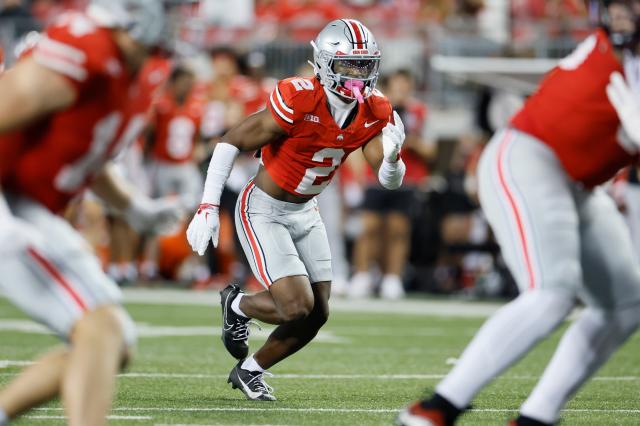
Something to watch in the College Football Playoff quarterfinals will be how sharp the teams that got first-round byes are early in their games.
No. 2 seed Ohio State will have had 24 days between games and No. 1 Indiana, No. 3 Georgia and No. 4 Texas Tech each will have had 25-day layoffs.
Last year was the first with a 12-team field, and the quarterfinals were nothing short of a disaster for the top four seeds, with extended time off the common denominator: No. 1 Oregon, No. 2 Georgia, No. 3 Boise State and No. 4 Arizona State all lost and were outscored by a total of 81-13 in the first halves. They had 14 punts, three turnovers on downs, three fumbles, two missed field goals, two field goals and two touchdowns on their first combined 26 drives.
No team struggled more than Oregon, which was unbeaten before its 41-21 loss to eventual national champion Ohio State at the Rose Bowl. The Ducks were down 34-0 in the second quarter, punting on five of their first six possessions (including four 3-and-outs) and turning the ball over on downs on the other.
The picks, with seedings and lines from BetMGM Sportsbook:
This game sets up as a showdown between two top-10 defenses at the Cotton Bowl. Ohio State scored just 10 points in its loss to Indiana in the Big Ten championship game and Miami managed just 10 in its CFP first-round win over Texas A&M.
With points at a premium, the Buckeyes will need to do a better job in the red zone. They’ve come away with touchdowns on just two of their last seven trips inside the 20-yard line. Julian Sayin also must get the ball out quickly against a front seven that sacked the Aggies’ Marcel Reed seven times. The Buckeyes’ offensive line had allowed just six sacks through 12 games before allowing five against Indiana.
Miami, which will be going against a defense allowing 213 yards and 8.2 points per game to lead the nation, needs another big game from RB Mark Fletcher and continue to find creative ways to get do-it-all freshman star Malachi Toney involved.
Pick: Ohio State 17-10.
Oregon seemed to lose interest after getting out to a 34-6 lead in a 51-34 first-round win over James Madison, and Dan Lanning and his staff were beside themselves. The Ducks should have no problem staying focused in the Orange Bowl.
Texas Tech will be their biggest challenge since Indiana went into Eugene and left with a 10-point win in October. Oregon’s Dante Moore could be the first quarterback taken in the NFL draft, and he will have ample opportunity to showcase his skills against a defense that has two AP first-team All-Americans in David Bailey and Jacob Rodriguez, a second-teamer in A.J. Holmes and a third-teamer in Lee Hunter.
The Red Raiders need to keep injury-prone QB Behren Morton upright and, like Ohio State, they need to get touchdowns instead of field goals when they get inside the red zone.
Pick: Texas Tech 27-24.
It’s the SEC vs. the Big Ten and the first Alabama-Indiana meeting ever. Old money vs. new money.
The Hoosiers’ rise under Curt Cignetti is the best storyline in college football in a long time, and the idyllic Rose Bowl setting would be just the place for it to continue with Fernando Mendoza playing his first game since winning the Heisman Trophy.
Alabama is more than capable of spoiling everything, but it can’t afford another start like it had against Oklahoma. The Crimson Tide trailed 17-0 and was out-yarded 118-12 in the first quarter before matching the largest comeback in CFP history and winning 34-24.
Indiana’s players took notice of the Tide’s perseverance and warned no lead would be safe. Cignetti will have his team playing with the pedal to the metal.
Pick: Indiana 28-17.
Mississippi beat Tulane 41-10 in the first round for Pete Golding’s initial victory as successor to Lane Kiffin, and now the competition ramps up at the Sugar Bowl.
The Bulldogs won the regular-season meeting 43-35 at home, part of their current nine-game winning streak and Mississippi’s only loss. Gunner Stockton’s two touchdown passes in the fourth quarter wiped out a 35-26 deficit; Trinidad Chambliss was just 1-of-10 passing for 1 yard over the final 15 minutes.
The Rebels will need a more even performance from Chambliss, who was terrific against Tulane, and they have to hope RB Kewan Lacy comes back after hurting a shoulder against the Green Wave.
Georgia played its best late in the season, and it will be interesting to see how much, if any, the layoff affects the Bulldogs.
Pick: Georgia 31-21.
First-round CFP games: Straight-up — 2-2; Against spread — 0-4.
Season straight up — 194-61; Against spread — 123-131-1.
____
Get poll alerts and updates on the AP Top 25 throughout the season. Sign up here. AP college football: https://apnews.com/hub/ap-top-25-college-football-poll and https://apnews.com/hub/college-football

Wake Forest’s Jake Dickert revives the Demon Deacons in debut season

Major college football program linked to 1,800 yard RB in transfer portal

Saint Peter’s visits Fairfield after Sparks’ 26-point game

Spencer McLachlin Named Head Coach at UC San Diego

Defending Big West Regular Season And National Champion Long Beach State Chosen As 2026 Preseason Coaches’ Poll Favorite

Marcus Johnson’s 40 points lead Garfield Heights win; Lutheran East avenges loss to Warrensville at NEO Youth Elite Christmas showcase

NSU adds goalkeeper transfer – Northwestern State University Athletics

DeLuca, Padroff, Collins: Recent Death Notices From Brookfield

PERFECT GAME EXPANDS PRESENCE IN PACIFIC RIM, STRENGTHENING YOUTH BASEBALL DEVELOPMENT |

University of Nevada, Las Vegas

Josh Pate: ‘The Dabo Swinney Model Doesn’t Work Anymore’

Lauren Watson Becomes First Player in USD Beach Volleyball History

MWDRS Announces Schedule Adjustment, Added Payouts at US 131

Youth Soccer Coach’s Trademark Claim Against Nike Heads to 2026 Hearing

Spencer McLachlin named new women’s volleyball head coach – The UCSD Guardian

SoundGear Named Entitlement Sponsor of Spears CARS Tour Southwest Opener

Donny Schatz finds new home for 2026, inks full-time deal with CJB Motorsports – InForum

Black Bear Revises Recording Policies After Rulebook Language Surfaces via Lever

Bowl Projections: ESPN predicts 12-team College Football Playoff bracket, full bowl slate after Week 14

Robert “Bobby” Lewis Hardin, 56

David Blitzer, Harris Blitzer Sports & Entertainment

Men’s and Women’s Track and Field Release 2026 Indoor Schedule with Opener Slated for December 6 at Home

How Donald Trump became FIFA’s ‘soccer president’ long before World Cup draw
Wisconsin volleyball sweeps Minnesota with ease in ranked rivalry win

Michael Jordan’s fight against NASCAR heads to court, could shake up motorsports

DeSantis Talks College Football, Calls for Reforms to NIL and Transfer Portal · The Floridian

Rick Ware Racing switching to Chevrolet for 2026
Elliot and Thuotte Highlight Men’s Indoor Track and Field Season Opener

JR Motorsports Confirms Death Of NASCAR Veteran Michael Annett At Age 39

#11 Volleyball Practices, Then Meets Media Prior to #2 Kentucky Match





-
 Motorsports3 weeks ago
SoundGear Named Entitlement Sponsor of Spears CARS Tour Southwest Opener
-
 NIL3 weeks ago
DeSantis Talks College Football, Calls for Reforms to NIL and Transfer Portal · The Floridian
-
 Sports2 weeks ago
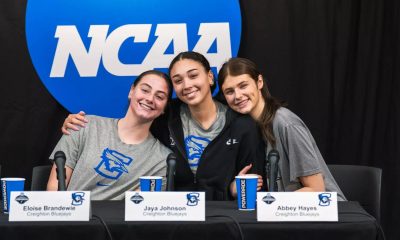
#11 Volleyball Practices, Then Meets Media Prior to #2 Kentucky Match
-
 Motorsports2 weeks ago
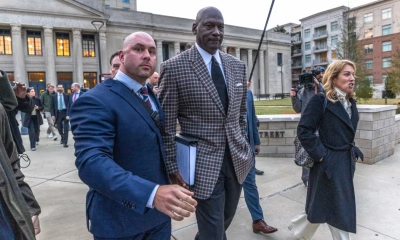
Nascar legal saga ends as 23XI, Front Row secure settlement
-
 Motorsports2 weeks ago
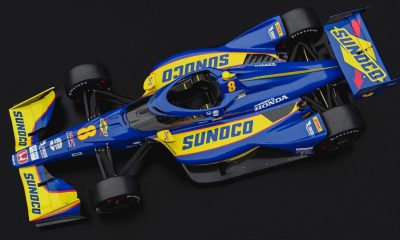
Sunoco to sponsor No. 8 Ganassi Honda IndyCar in multi-year deal
-
 Motorsports3 weeks ago
Accelerating Inclusion: Breaking Barriers in Motorsport
-
 Rec Sports2 weeks ago
WNBA’s Caitlin Clark, Angel Reese and Paige Bueckers in NC, making debut for national team at USA camp at Duke
-
 Sports2 weeks ago
Maine wraps up Fall Semester with a win in Black Bear Invitational
-
 NIL3 weeks ago
Ed Orgeron: Paying players via NIL would only require a ‘minor adjustment’
-
Motorsports3 weeks ago
NASCAR, 23XI Racing, Front Row Motorsports announce settlement of US monopoly suit | MLex