
Rec Sports
Let’s level the playing field so all kids have a shot at success

Baseball had a grass-roots start in America. By the mid-1800s, it was widely referred to as the national pastime.
The pages of our newspaper in the late 1800s carried accounts of “nines” fielded by local towns and villages facing off against one another with crowds of onlookers cheering them on.
One account, from exactly a century ago, told of a Saturday game in Preston Hollow where the second baseman, Ferris Hagadorn, was hit with a pitched ball, breaking a bone near his wrist.
“After running to first base he was relieved of further play and Dr. Sholtes, who was at the game, reduced the fracture,” The Enterprise reported on Aug. 7, 1925.
The doctor returned to being a spectator and Hagadorn remained at the game.
These players presumably had a love of the game and all that entails.
We felt that same love of the game last week as we talked to coaches, parents, and grandparents about two local youth teams who qualified for the Cal Ripken World Series.
As you read this, 14 Guilderland 12-year-olds are playing their hearts out in Brandon, Missouri and 13 Bethlehem 10-year-olds are doing the same in Vincennes, Indiana.
A photo taken by Abbie Irons when the Tri-Village team from Bethlehem became state champions showed Coach Bryan Yusko, his arms outstretched to hug his players who gathered around him in a mass huddle.
“They have the best coaches in the entire world,” said Patty Kebea, the mother of one of the players, Lucas. “They volunteer their time. They don’t get paid for this,” she went on. “And they put in the work with our kids and they love our kids, like they’re their own. … We really are like a family, which is really cool.”
Yusko said the coaches let the kids set their own goals. They met their goal for this year — getting to the World Series.
But it’s about more than just the game, said Yusko. “It’s about teaching them life, too …. Lessons like you have to work hard to accomplish things. You set goals and you work to achieve them.”
The Guilderland parents, and grandparents, too, also feel like part of something larger than themselves.
“Every parent contributes,” said Coach Sean Davidson. “Everyone is all in, whether it’s helping run a tournament at Keenholts, helping run practices, doing fields, or fundraising … This is a true team effort,” he said.
Getting to the World Series has been a goal for generations for the Guilderland team. Two of the coaches had played together in their youth on a team that didn’t make it and are thrilled their sons have.
A grandmother of twins on the team, Mason and Jacob Vanderwarker, said that Mason had been in his brother’s shadow. On the Guilderland team, she said, “They gave him a chance and he just came into his own. He just needed somebody to believe in him.”
In the qualifying game for the World Series, Mason hit the home run that brought in three players, including his brother. “Jacob was so proud of him,” said their grandmother. “It was just so wonderful to see him shine.”
While we were thrilled to report on the good that comes with these volunteer efforts to shape not just winning players but confident, capable, and caring human beings, we also looked at the larger picture — beyond Bethlehem and Guilderland — and found some troubling trends.
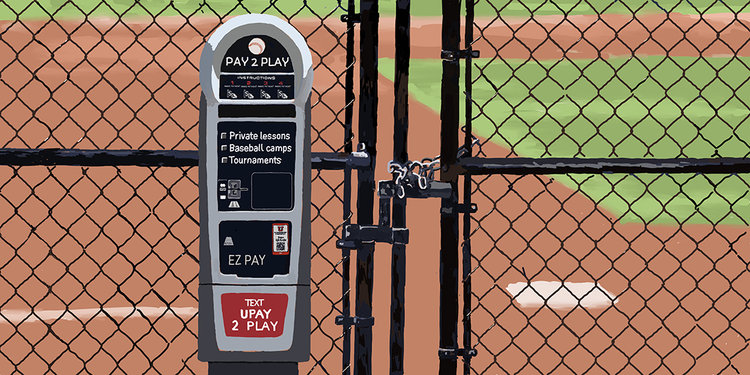
Baseball for youth, like many sports, is increasingly being privatized for profit.
Yusko explained to us that his Tri-Village team, like many teams in the area, switched from Little League to Cal Ripken.
Cal Ripken increases the field size as players age and is better for players “melding into our travel program,” Yusko said.
“A lot of teams in our area have switched over to Cal Ripken so there’s really not much to Little League anymore,” he said. The team of 10-year-olds that recently won the state Little League championship, Yusko said, did not face much competition.
The Ripken Baseball brand is owned by Josh Harris, a founder of Apollo Global Management, and David Blitzer, a senior executive at Blackstone, and is part of their Unrivaled Sports youth sports portfolio.
Harris and Blitzer own the Philadelphia 76ers, the New Jersey Devils, and the Washington Commanders.
They also own the baseball camp in Cooperstown, New York and the Ripken Experience in Aberdeen, Maryland, both of which the Guilderland team has attended.
The Ripken Experience, its website says, is focused on “treating our ballplayers like Big Leaguers. Walk-up music, player announcements, and our replica fields will have you feel like you’re playing in the Major League.”
Teams pay several thousand dollars each to enter four-day tournaments there, featuring teams from around the country. The players’ families pay for lodging and excursions.
Baseball is not alone in being monetized for kids. Youth sports in the United States is a $40 billion business. About 60 million children play sports, and the average U.S. sports family spent $1,016 on its child’s primary sport in 2024, a 46 percent increase since 2019, according to the Aspen Institute’s latest parent survey in partnership with Utah State University and Louisiana Tech University.
“That’s a far cry,” notes The New York Times, “from the days when youth sports were dominated by locally run offshoots of nonprofit organizations like the Catholic Youth Organization, Pop Warner and Little League Baseball.”
“The private baseball and softball business model relies on scaling up to as many teams as possible,” writes John W. Miller, who coached a private baseball club, typically called a travel team. “If you can get 20 teams of 12 players each paying $2,500 a season, that is $600,000 in revenue,” he notes in “How America Sold Out Little League Baseball.”
Private lessons, which cost up to $150 an hour, are another source of revenue, Miller writes.
“Parents are told these are needed year-round if their child is to play in college … The intense specialization pushed by many parents is a danger to children,” he opines and goes on, “There is so much money in private youth sports companies that former Major League professionals are now investing in clubs instead of looking for jobs in professional baseball. In 2001, Hall of Famer Cal Ripken led the way by founding Ripken Baseball, which organizes pay-to-play tournaments all over the country.”
ProPublica reports, based on 2023 tax filings, that Cal Ripken Sr. Foundation Inc. has $26.1 million in total assets and $5.69 million in total liabilities.
The Project Play report points up another troubling trend: It cites the annual survey by the Sports & Fitness Industry Association in 2021 that found that 24 percent of kids ages 6 to 12 from homes with $25,000 or less played sports on a regular basis, compared to 40 percent of kids from households with an income of $100,000 or more.
Researchers at Ohio State and Oregon State took a deep look at this trend, on the high school and college level, reported on by the Ohio State News. “We often think about sports as level playing fields that reward people who earn their success, but that’s not the whole story,” said Chris Knoester, co-author of the studies and a professor at Ohio State. “Success depends a lot on the advantages young people have when they grow up.”
While 70 percent of students from families with high socioeconomic status played a high school sport, and 27 percent of them were team captains, only 43 percent of those from families of low socioeconomic status played and only 8 percent were captains.
Wealthy parents can pay for more sports for their kids, pay for specialized training and club sports outside of school, and live in neighborhoods with better fields and courts and other resources.
But another, more subtle, advantage is what the researchers called the “intensive parenting” that goes on in families with high socioeconomic status.
It starts at the very beginning, said Kristen Hextrum, an assistant professor at Oregon State and lead author of the research, with parents introducing their young children to sports, and to specific sports. Hextrum said nearly every athlete in her study said their parents initiated their entry into sports.
“When you intensively parent, you have more resources to invest in your child’s athletic future, and that’s not just money. It is time, emotional investment and educational investment,” Hextrum said.
Of course, every parent wants what is best for their children and we salute the parents that have the means to support their children.
But the lack of meritocracy in sports does not bode well for the future of our nation as the divide between the haves and the have-nots grows ever wider and deeper. Success in sports these days is often the means to a college scholarship and a bright future.
Should baseball, or any other sport, be just for suburban kids with good support?
The State of Play survey found that half of respondents who played youth sports or who have children who have played have struggled to afford the costs to participate. Blacks and Hispanics struggled more than whites. The lower the household income, the greater the struggle to pay for youth sports.
To solve this dilemma, we found a glimmer of hope in a survey conducted by the Commission on the State of the United States Olympics and Paralympics. Eighty-one percent agreed that “sports are an important institution in the United States,” and even among those least likely to agree — women, Latinos, and those in the northeastern United States — roughly three-quarters still agreed.
Our federal government itself has outlined the importance of youth sports. “The benefits for youth who engage in regular physical activity are clear: they have improved bone health, weight status, cardiorespiratory and muscular fitness, cardiometabolic health, and cognitive function and a reduced risk of depression,” says the National Youth Sports Strategy report from the Office of the Assistant Secretary for Health.
The report, issued during President Donald Trump’s first term, goes on, “Playing sports can provide additional benefts, including developing competence, confidence, and self-esteem; reducing risk of suicide and suicidal thoughts and tendencies; and improving life skills, such as goal setting, time management, and work ethic.”
However, the government report notes, “With all of these benefits, it is striking that only 20 percent of adolescents meet the Physical Activity Guidelines for Americans (getting at least 60 minutes of moderate-to-vigorous physical activity each day)” and sets a goal of increasing youth-sports participation to 63 percent by 2030.
The commission’s survey found that 69 percent support this goal of increasing youth-sports participation and 52 percent say public funding of sports would have the most impact at the level of youth and school sports. This is far more support than for public funding of college sports (6 percent) or professional leagues (5 percent) or even Olympic sports (14 percent).
We support our state’s initiatives through the Office of Children and Family Services, which provides funding to municipal youth bureaus, who then distribute it to local organizations for youth sports programs. And we commend Albany County for its partnership with the Amateur Athletic Union that offers low-cost sports programs to families who might otherwise not afford it.
We also commend the towns we cover that provide parks and playing fields — like Guilderland’s Keenholts Park where the 12-year-olds won the game on July 21 that qualified them for the World Series — open to all.
However, we need to do more, each of us, in garnering support that will level the playing field as it were, so more kids will have a chance to experience the same kinds of challenges and joys as the Guilderland and Tri-Village players.
Every team cannot rise to the top as these two teams have through the support of their coaches and families and communities and through their own individual and committed efforts.
But every kid should have that chance.

Updated Dec. 23, 2025, 10:19 a.m. ET
BARRINGTON — Championship. That’s what’s on the mind of the Barrington boys basketball team.
And if the Eagles can play like they did in the second half on Monday, that’s definitely within reach.
The talent is there. The chemistry is unquestioned. Barrington is built to win a title this season and showed as much in the last two quarters against East Providence, turning a tied game into an 81-60 victory that shows exactly what this team is capable of.
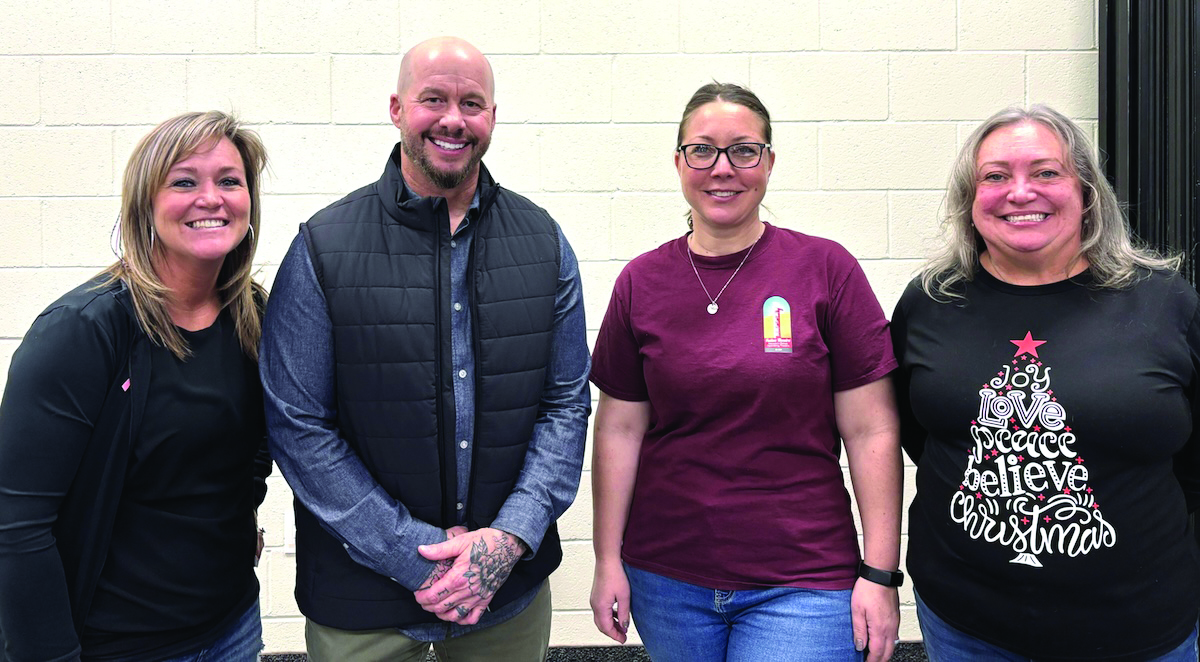
The Churchill Community Coalition on Dec. 17 named Daylene Starr, left, Andy Lenon, Star Olsen and Dawn Blundell as 2025 Community Champions.
The Churchill Community Coalition recognized Dec. 17 Dawn Blundell, Sarah Lavy, Star Olsen, Andy Lenon and Daylene Starr as 2025 Community Champions for their contributions to building a better community.
Blundell serves as the senior pastor at Epworth United Methodist Church and the Wolf Center Community Services. During the recent disruption in the Supplemental Nutrition Assistance Program she stepped up to organize meals, volunteers and food bank resources for affected families. She also facilitates a group for LGBTQ+ individuals called “The Rainbow Connection.”
Lavy also played a vital role in managing resources during the SNAP shutdown. She coordinates an annual coat and clothing drive, prepares Thanksgiving boxes and connects sponsors with struggling families for assistance at Christmas.
Olsen, co-owner of Bighorn ATV, currently serves as a board member and volunteer with the Fallon Theatre. She has also given her time to groups such as the Churchill County High School Grad Nite committee, local schools, Girl Scouts, kid ministry and youth athletic programs.
Oasis Academy Vice Principal Lenon was recognized for his dedication in connecting students with resources they need to succeed personally and academically. He is known as someone who the students and staff can depend on to have their best interests at heart.
Starr runs an in-home daycare while volunteering as the secretary of the Fallon Youth Football Board, ensures the snack bar is always fully stocked and performs administrative responsibilities.
The devoted sports mom also serves on the Professional Rodeo Cowboys Association Board with a key role in supporting the annual Battle Born Broncs Rodeo.
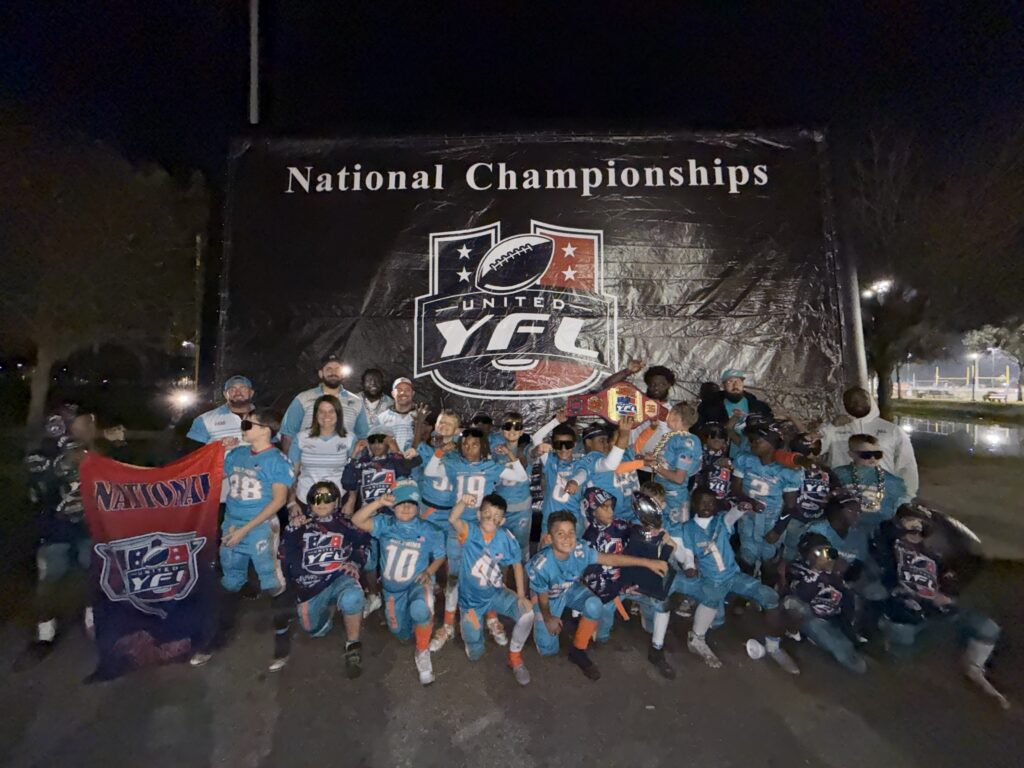

Undefeated 8 and under team has a 21-0 record.
Steve Marshall served in the Army for 14 years, including deployments to the Horn of Africa and Syria, then left in 2024. He is currently a Fire Medic with Hillsborough County Fire Rescue.
When he returned from Syria, he began coaching to share the experience of football with his six-year-old son. In May 2025, he heard that a head coach position had opened up for the Plant City Dolphins. He had never been a head coach, but he applied and got the role. Marshall’s goal for the boys: “I want them to push themselves through adversity, play as a family, protect each other, and have fun loving the game of football.”


The season started in June. The Dolphins won two preseason jamboree games, then went 10-0 during their season, winning the Tri-County Division Championship by beating the Dover Patriots in Dover. In the subsequent playoffs, they won both games, then won the Tri-County Superbowl. The team also won two games to emerge victorious in the Strawberry Jam Tournament. This made the team 17-0.
As a result of this success, the Plant City Dolphins were allowed to put together an invitation-only team to compete in the United Youth Football League National Championship. There, the team won all four games, ending the season 21-0. In the championship, the Dolphins defeated a team from Cleveland by scoring in the last minute, and holding the line on a 4th-and-1. “Their execution was fantastic, so they didn’t look like little seven-year-olds and eight-year-olds,” Marshall said. “They looked like little men, the way they played football. Our quarterback is the best 8U player in the country. He can throw a football 50 yards.”


During the season, the boys on the team scored 529 points while allowing only 25 points, and had 18 shutouts. “I know this season put a lot of core memories in these kids forever,” Marshall commented. “They’ll never forget it.”
This success didn’t come without hard work. The team practiced twice a week. Including games and watching film, the coaches put in at least 14 hours a week, and some spent even more time watching film. Marshall gave enormous credit to his coaching staff, praising his phenomenal offensive, defensive, and assistant coaches. “You never know you can do something until you finally do it,” Marshall said. “I never thought that after seven months of coaching, that I would find myself winning a National Championship. You always think you have a championship team, but to be gifted one like I was, and have the coaching staff I did…some of them would drive eight hours on practice days. To have the group we had, the parents we had, the kids we had. It was a perfect storm to make this happen. It takes a village to make this happen, and we had the perfect village. These kids got these rings and these trophies, and it is a beautiful thing.”
Related Stories

To the editor: As a member of this island community and a supporter of Nantucket’s young people, I want to speak from both the heart and the facts about our proposed synthetic turf field.
Much of the recent conversation has focused on fear — fear of PFAS, fear of microplastics, and fear of change. Those concerns deserve to be heard and addressed. But they also deserve to be balanced by current science and an understanding of what this project truly means for our kids, our schools, and the fabric of our island community – not backdoor lobbying and fear mongering.
What the Science Shows: Earlier generations of turf fields did contain PFAS additives used to strengthen plastic fibers. However, today’s technology has changed dramatically. In March 2025, FieldTurf released independent testing results showing no detectable PFAS in new turf products using natural infills such as cork and sand — verified through EPA’s most advanced testing protocol FieldTurf, 2025. Similarly, AstroTurf announced in 2023 that all U.S. fields are now manufactured without intentionally added PFAS AstroTurf, 2023. These shifts show an industry moving toward safer, more sustainable materials.
Yes, we must remain vigilant and ensure ongoing testing. But painting all synthetic fields as environmental hazards ignores this progress and prevents honest discussion of what our students truly need.
What Our Students Need: Over 70% of Nantucket High School students participate in athletics — nearly twice the national average. That’s not just a statistic; it’s a lifeline. Organized sports are linked to lower rates of substance use and improved mental health among teens, particularly in small or geographically isolated communities like ours CDC Youth Risk Behavior Data, 2023.
Our island faces one of the lowest ages of initiation for drugs and alcohol in the country. The more opportunities we provide for safe, structured, year-round activity, the better our chances of keeping kids engaged, connected, and healthy.
A turf complex does more than withstand weather. It gives teams consistent practice time, reduces cancellations, and allows for shared spaces that promote inclusion and camaraderie. When athletes feel pride in their facilities, it spills over into school culture: better attendance, improved grades, and fewer students feeling the need to leave the island for boarding schools to pursue athletics.
The evolution of artificial turf technology has led to products that offer enhanced safety, playability, and durability, addressing many historical concerns associated with earlier generations Gosnell et al., 2022; Russo et al., 2022. These advancements include improvements in infill materials and shock pad designs, which collectively contribute to reduced impact forces and improved biomechanical responses during athletic activities Gosnell et al., 2022. This allows for more consistent playing surfaces, reducing the risk of injuries compared to natural grass fields that can degrade over time due to weather and overuse. Furthermore, artificial turf fields have demonstrated the potential to significantly increase participation opportunities in sports by providing reliable playing surfaces year-round, which is particularly beneficial in regions with challenging climates or high facility demand May & Parnell, 2018. This expanded access to sports facilities can lead to numerous positive outcomes, including improved physical health, enhanced mental well-being, and greater social cohesion within communities Logan et al., 2023. The increased usage of these surfaces can also lead to economic benefits through enhanced revenue generation from rentals and event hosting, while simultaneously reducing maintenance costs associated with natural grass fields Barnes & Watkins, 2022; May & Parnell, 2018. Beyond these tangible benefits, participation in high school athletics has been linked to improved academic performance, increased accountability, and enhanced communication skills, translating directly from the field to classroom success Selber & Selber, 2021. These comprehensive benefits underscore the strategic value of investing in high-quality athletic infrastructure to foster holistic student development and community engagement Popek, 2024. Specifically, the overall injury rates on modern artificial turf are often comparable to, and in some cases lower than, those on natural grass, particularly as design and maintenance protocols have become more standardized Gosnell et al., 2022; Jastifer et al., 2018. For instance, third-generation artificial turf has significantly improved shock absorption and player-surface interaction characteristics, addressing concerns such as injury occurrence, physiological fatigue, and biomechanics during activities like cutting, turning, and kicking Strutzenberger et al., 2020.
A Healthier Island Spirit: Athletics are community-building. Friday night lights, youth clinics, and shared victories bring us together in a way few things can. They give our young people — and all of us — something to rally around. That unity matters on Nantucket, especially at a time when our community often feels divided.
This project isn’t just about turf. It’s about belonging, opportunity, and hope. By investing in a modern, responsibly designed athletic complex, we are choosing to believe that our island’s future will be stronger when our youth are supported, active, and proud to call Nantucket home.
Sincerely,
J. Brent Tartamella
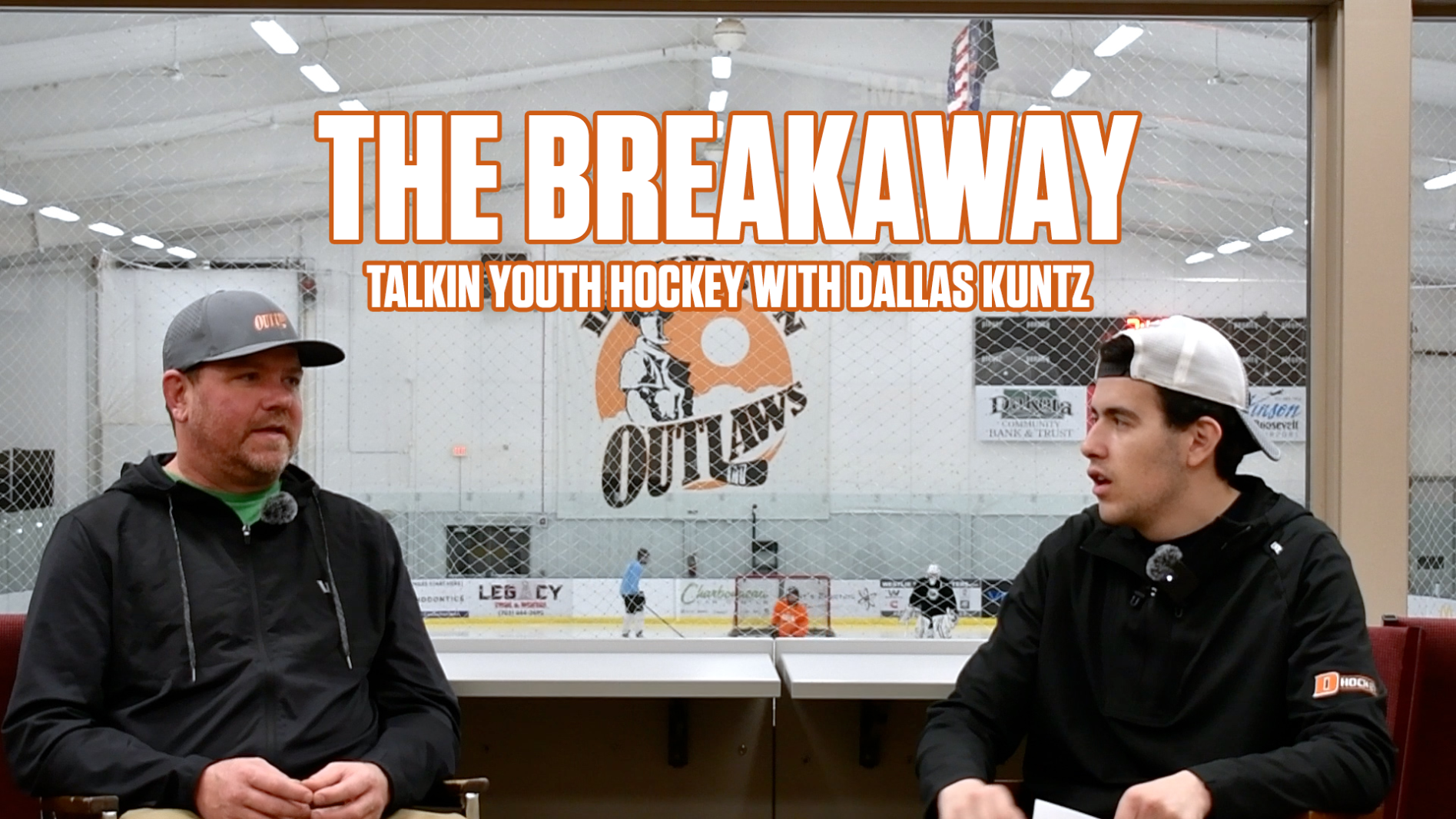
DICKINSON — Hockey in Dickinson is continuing to grow and evolve since it was established back in 1985. The sport expanded four years later with Dickinson High getting a boys and girls team. Over the past 11 years, enrollment in youth and high school programs has tripled — increasing from about 200 participants to nearly 600.
“As Dickinson has grown with the oil boom, it’s created another opportunity for kids. One thing that I think we do really well at hockey that other sports can’t compete in is we’re able to get them in the door at 3, 4, 5-years-old,” Dickinson hockey coordinator Dallas Kuntz said. “You never know if they’re going to be stellar athletes, but I feel we’re getting more of those athletes coming out and playing hockey because we’re able to target that age range to get them hooked on the game.”
The Dickinson Hockey Club, known as the Dickinson Outlaws, expanded further heading into the 2025-26 season. They added an additional bantam B team, for kids aged 13-14, to go along with its four peewee teams and five squirt teams.

Jacob Cheris / The Dickinson Press
“I think hockey, more than any other sport or activity, teaches life lessons. It’s a sport very similar to golf in the aspect that till the day you quit playing, you will not attain perfection — skating, puck skills, all that kind of stuff,” Kuntz said. “It’s a sport that you’re not going to get better at unless you truly dedicate yourself to it. I also think that it’s the best team sport.”
One program that continues to grow exponentially is the girls hockey clubs. Dickinson now fields separate 10U and 12U teams instead of one group composed of players aged 9-14.
Most players that go through these youth programs at an early age tend to have more success when they arrive at the high school level. Meanwhile, there have been a small number of individuals who are still playing hockey past high school. While the pipeline is small, Kuntz expects that pipeline to grow.
“We have a lot of kids in our youth program that we’re gonna be seeing in the next year or two. I’m really excited to see what our high school programs are gonna look like and that’s a credit to the kids that are coming up,” Kuntz said. “We have more kids today that are on the ice 12 months a year, or they’re putting the work in away from the rink. We started our summer program here three to four years ago. We got over 200 kids that are on the ice in the summer, Monday through Thursday from 8 a.m. to 3 p.m.”

Jacob Cheris / The Dickinson Press
Two of the most notable figures that are still playing are Michael McChesney, who is in his third season in the Southern Professional Hockey League with the Peoria Rivermen, and Sierra Raatz, who is in her third season of ACHA club hockey at Adrian College.
One of the foundations of the success of the Dickinson Hockey club is its Learn to Play program. This is the grassroots of young players in the area to get their feet wet and hold a stick and shoot a puck for the first time. The high school players also hop out on the ice to provide instruction and guidance.
“It’s giving those kids that introductory balance. We just want these kids buzzing around on the ice. We can teach them proper knee band, proper stride, but we just want the balance and we want them to be super aggressive,” Kuntz said. “The best hockey players that I’ve seen come through are the ones that, when you put them on the ice and they don’t know how to skate, they literally run three feet and then just wipe out.”

Jacob Cheris / The Dickinson Press
The community support is what drives the programs to build for the future. A big goal for the club is to build a third sheet of ice so more kids can have more access and reduce competition for ice time. That has been one of the biggest challenges that the Dickinson hockey community has had to face for the past few years.
“I know a lot of people don’t think it’s a top priority for us but the hockey community here in Dickinson is very strong and very big. More ice time is going to be big for us,” Kuntz said. “We want kids to keep coming out and playing. It’s challenging because they only have a half-ice for their practice. So there’s a lot of challenges but we’re ready to tackle them and just kind of adapt and overcome as we can.”

Jacob Cheris covers a variety of high school and college sports. A graduate of Penn State University’s class of 2023, with a degree in broadcast journalism, he covered Penn State Men’s Hockey for three years. Jacob also covers Big Ten Hockey for College Hockey News.
Dec. 23, 2025, 4:04 a.m. ET
- Plymouth Youth Baseball and Softball is launching a new adaptive co-ed Challenger division in April.
- The league is for children aged 7 to 12 with physical or intellectual challenges from across the South Shore.
- There is no registration fee for the league, which aims to provide an inclusive and accessible baseball experience.
There’s a new brand of baseball coming to Plymouth Youth Baseball and Softball this spring thanks in major part to the efforts of West Plymouth resident John Devito.
The PYBS will open an adaptive co-ed Challenger baseball division in April for children aged 7 to 12 with physical or intellectual challenges. Players in the league will practice once each week with a field day planned for the end of the season. The league promises to provide an inclusive and accessible baseball experience for everyone involved.

Sports are a huge part of the DNA of the DeVito family. John’s grandfather is a member of New York Coaching Hall of Fame and his brother Mike Devito played nine years in the NFL with the New York Jets and the Kansas City Chiefs before retiring in 2016.
The idea behind the Challenger baseball experience hits close to the heart of DeVito and his family.
“My wife Autumn and I are big believers in promoting athletics for children. Our sons, Vincent and Dominic, are involved in different sports in town, but our youngest son Johnny was diagnosed with autism, so he doesn’t have the same opportunities to play sports as his brothers,” explained DeVito. “I brought the idea of opening a Challenger league to town and the PYBS board was all for it. They’ve been incredible about getting this idea off the ground. We couldn’t have done this without them.”
DeVito said Steve Nearman, owner of The Great Blizzards special needs youth hockey program, was also a huge help in pointing organizers in the right direction to getting the new program off the ground in Plymouth.

A unique part of the program is that there is no registration fee. It is also open to players from all over the South Shore.
“We’ll be open to anyone who would like to be involved. It’s a very inclusive environment and we won’t turn anyone away,” said DeVito, who serves as the league’s director. “When we announced we were looking to start a Challenger program earlier this month, the response on social media was tremendous.”
Founded by the Little League organization in 1989, there are more than 35 Challenger baseball leagues operating in the state of Massachusetts at the moment. The closest leagues are in Hanover, Middleboro, and Braintree.
Coaches from the PYBS will run the weekly practices at the Nook Road baseball field. DeVito hopes to get the Plymouth North and Plymouth South baseball teams to be a part of the program, as well.
“We just did about $30,000 worth of renovations at Nook Road and the facility is looking great,” said DeVito.
For more information of the program, contact DeVito via email at challenger@Plymouthybs.org.

Top 5 Setters from the 2025 AU Pro Volleyball Championship
Score from East Providence at Barrington boys basketball on Dec. 22

Badgers news: Wisconsin starting outside hitter enters transfer portal

Report: Notre Dame agreement with College Football Playoff led to USC not continuing rivalry

Coalition celebrates Community Champions | Carson City’s Trusted News Source Since 1865

PLANT CITY DOLPHINS WIN NATIONAL CHAMPIONSHIP

Jenkins Signs Two Power Four Transfers to 2026 Class

Dr. Patrick Staropoli Lands Full-Time O’Reilly Ride with Big Machine Racing

Penn State Women’s Volleyball Falls Out Of AVCA Polls

MEAC Announces Burgin as Bowler of the Week For Nov. 2-9

More than the game: How NIL is reshaping opportunity for Hawaiʻi athletes | Hawai’i Hustle

Volleyball Announces Addition of Reese Dunkle to Roster

Nantucket Current | Turf, Truth, And The Health of Our Island

The Breakaway: Youth hockey talk with Dallas Kuntz – The Dickinson Press

NASCAR champion Kyle Larson open to Rolex 24 return

First Tee Winter Registration is open

Fargo girl, 13, dies after collapsing during school basketball game – Grand Forks Herald

CPG Brands Like Allegra Are Betting on F1 for the First Time

F1 Las Vegas: Verstappen win, Norris and Piastri DQ tighten 2025 title fight

Sycamores unveil 2026 track and field schedule

Two Pro Volleyball Leagues Serve Up Plans for Minnesota Teams

Utah State Announces 2025-26 Indoor Track & Field Schedule

SoundGear Named Entitlement Sponsor of Spears CARS Tour Southwest Opener

Jo Shimoda Undergoes Back Surgery

Redemption Means First Pro Stock World Championship for Dallas Glenn

Texas volleyball vs Kentucky game score: Live SEC tournament updates

Bowl Projections: ESPN predicts 12-team College Football Playoff bracket, full bowl slate after Week 14

Black Bear Revises Recording Policies After Rulebook Language Surfaces via Lever

How this startup (and a KC sports icon) turned young players into card-carrying legends overnight

Robert “Bobby” Lewis Hardin, 56





-
 Motorsports2 weeks ago
SoundGear Named Entitlement Sponsor of Spears CARS Tour Southwest Opener
-
 Rec Sports3 weeks ago
Black Bear Revises Recording Policies After Rulebook Language Surfaces via Lever
-
 Motorsports2 weeks ago
Donny Schatz finds new home for 2026, inks full-time deal with CJB Motorsports – InForum
-

 Rec Sports3 weeks ago
How Donald Trump became FIFA’s ‘soccer president’ long before World Cup draw
-
 Rec Sports2 weeks ago
David Blitzer, Harris Blitzer Sports & Entertainment
-
 Motorsports2 weeks ago
JR Motorsports Confirms Death Of NASCAR Veteran Michael Annett At Age 39
-
Sports2 weeks ago
Elliot and Thuotte Highlight Men’s Indoor Track and Field Season Opener
-
 Motorsports2 weeks ago
Rick Ware Racing switching to Chevrolet for 2026
-
Sports2 weeks ago
West Fargo volleyball coach Kelsey Titus resigns after four seasons – InForum
-
 Sports2 weeks ago
#11 Volleyball Practices, Then Meets Media Prior to #2 Kentucky Match