
NIL
Looking for the world’s biggest stadiums? Why American college football has most of them

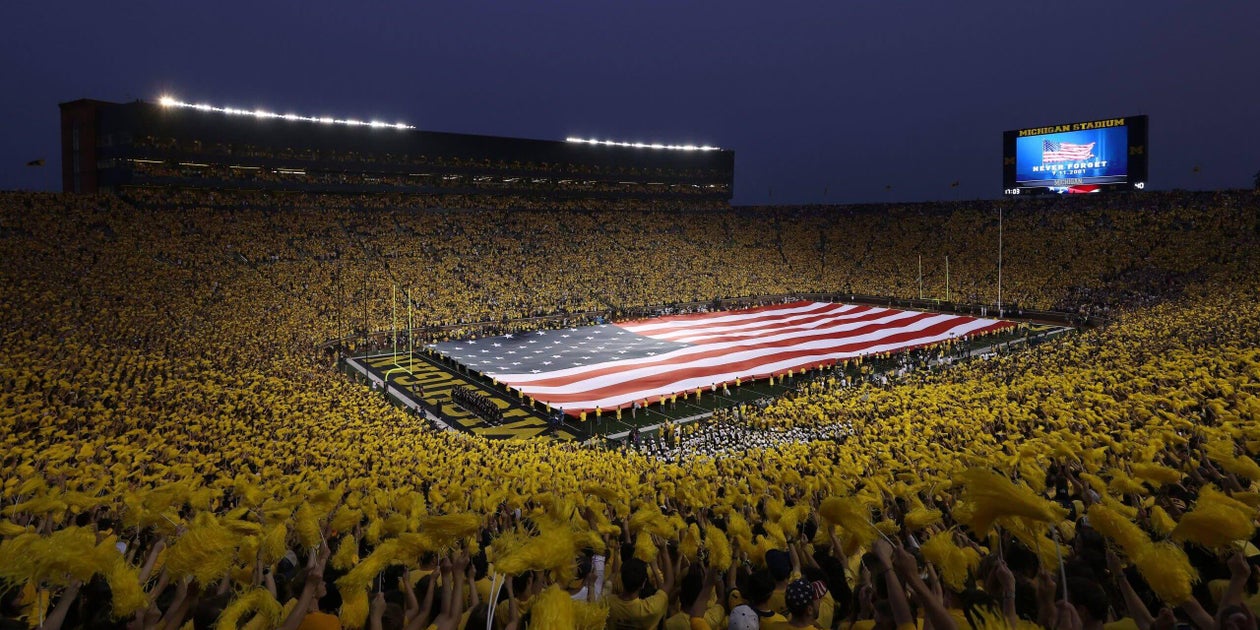
Editor’s note: This article is part of our College Football Stadium Rankings series, highlighting the most interesting venues across the country.
Georgia punter Brett Thorson grew up on a dairy farm in Australia, about two hours from Melbourne. When he goes home, occasionally someone will ask what American college football is like, which leads to this back-and-forth:
“Oh, is the stadium big, or do you play in front of big crowds?”
“Oh yeah, our stadiums are pretty big.”
“How many?”
“Ninety-three thousand.”
Then there’s silence.
“It’s almost like they get hit with a bucket of water. They’re like, ‘Wait, 93,000?’”Thorson said, smiling. “It is crazy, because it’s so hard to comprehend that you have these NFL stadiums, baseball stadiums, but the biggest stadiums are for technically semi-professional students, 18- to 22-year-olds.”
Stephen Fry, the English actor, had the same reaction when he visited Auburn for the Iron Bowl in 2011. A video of his experience summed it up well:
“It’s an indication of the size of the U.S. economy, and their passion for sport, that this is the stadium for Auburn, no more than a medium-sized college, and this is their annual game against another college within the same state, the University of Alabama, based in Tuscaloosa only a few hours drive away. This fixture has the scale, intensity and hoopla of a grand national final, but in reality is nothing more a local derby between amateur students.
“Only in America.”
The European mind truly can’t comprehend. Fry wasn’t even in the biggest American college football stadium. Not even close. And Georgia’s 93,000-seat stadium that awes Thorson’s compatriots in Australia? Not the biggest on Georgia’s schedule.
100,000-seat stadiums
| Rank | Stadium | Location | Capacity |
|---|---|---|---|
|
1 |
Narendra Modi Stadium |
Ahmedabad, India |
132,000 |
|
2 |
Rungrado 1st of May Stadium |
Pyongyang, North Korea |
114,000 |
|
3 |
Michigan Stadium |
Ann Arbor, Mich. |
107,601 |
|
4 |
Beaver Stadium |
State College, Pa. |
106,572 |
|
5 |
Ohio Stadium |
Columbus, Ohio |
102,780 |
|
6 |
Kyle Field |
College Station, Texas |
102,733 |
|
7 |
Tiger Stadium |
Baton Rouge, La. |
102,321 |
|
8 |
Neyland Stadium |
Knoxville, Tenn. |
101,915 |
|
9 |
Darrell K Royal-Texas Memorial Stadium |
Austin, Texas |
100,119 |
|
10 |
Bryant-Denny Stadium |
Tuscaloosa, Ala. |
100,077 |
|
11 |
Melbourne Cricket Ground |
Melbourne, Australia |
100,024 |
By seating capacity, college football stadiums are eight of the 10 biggest in the world — and 14 of the top 25. The stadium for the college football team in Athens, Ga., holds 11,000 more people than the stadium in Athens, Greece, that hosted the 2004 Olympics.
College football stadiums in locales such as Lincoln, Neb., Clemson, S.C. and Norman, Okla., rank in the top 50 of the world. Others in Iowa City, Fayetteville, Ark., and Columbia, S.C., rank in the top 100.
All for a sport played by college students. How and why did this happen? There’s simple geography. There’s arithmetic. And, of course, there’s money.
But also a healthy dose of competition.
The first stadium boom
Franklin Field in Philadelphia, built in 1895 to house Penn’s football team, is credited as the first stadium built primarily for college football. But it was quickly deemed too small for big games and replaced eight years later. That set the tone.
Football was becoming popular, and there were no NFL teams yet.
The powerful college teams played in the Northeast, where the stadium boom began: Harvard built a 40,000-seater in 1903, Syracuse followed with a similar stadium in 1908 and six years later Princeton built one seating 45,000-plus. Then Yale blew past that with the Yale Bowl, seating 64,025, with temporary seats that could take it above 70,000.
Things really got rolling after World War I. More people had cars, and the highway system improved, making it easier to get to games. Student enrollment grew, too. And there was a general economic boom in the roaring ’20s, so schools poured money into their football stadiums.
“After the war, the country’s enthusiasm for having a good time and casting off the last vestiges of its restrictive Victorian principles would be one of the driving forces in the escalation of college football’s popularity during the 1920s,” Raymond Schmidt wrote in his 2007 book: “Shaping College Football: The Transformation of an American Sport, 1919-1930.” “In a nation still on a high from its performance in the war, football provided an opportunity to peacefully continue experiencing the excitement.”
Stanford opened its 65,000-seat stadium in 1921, largely as an answer to rival California having a successful team. In the century before NIL, you couldn’t (legally) buy a better team, but you could build a much bigger stadium. So Cal answered just two years later by expanding to 73,000.
Meanwhile, Ohio Stadium went to 63,000 and Memorial Stadium at Illinois went to 67,000. The Rose Bowl (57,000 then 76,000 by 1928) and Los Angeles Coliseum (75,000) were built to try to lure the Olympics.
Chicago built Soldier Field in 1924, with a capacity of 75,000-plus that could expand to 100,000. But while it eventually became the NFL’s home, it was originally built as a multiuse facility, including college games.

Army-Navy drew more than 100,000 to Soldier Field in 1926. (Getty Images)
Even with capacities going up, people still couldn’t get in. The New York Times wrote: “Each year finds the interest in football growing more widespread, and greater numbers being turned away from the classic games of the season … As large as they build the stadiums, they are never large enough to meet the growing need.”
There was then — and still is — a fundamental economic motivation: There are few college football games per year. To maximize revenue, you need to maximize seats.
Notre Dame under Knute Rockne still had a small field — Cartier Field seated only 27,000 in 1927 — and that made it hard to convince good teams to play there. Rockne threatened to resign if he didn’t get a bigger stadium. Notre Dame Stadium opened in 1930, shortly before his death.
The big one was Michigan Stadium, built in 1927 with a capacity of 75,000. But Fielding Yost wanted as many as 140,000, which is why the footings in the stadium allowed it to be expanded to at least 100,000. Michigan’s administration backed him up, with a report calling for the stadium to be built with “the utmost simplicity. No attempt should be made to give it the form of a monument or memorial.”
In other words, focus on capacity.
Michigan got crowds of more than 84,000 for Ohio State and Minnesota (homecoming) and 83,000-plus for Navy. Two expansions took capacity to 100,001 for the 1956 season — athletic director Fritz Crisler added the one, meant to be a mystery.
When the Great Depression hit, gate receipts did go down. But the stadiums were already built. It simply stopped other schools from building large stadiums or expanding them — for a while, at least.
The South catches up
There were economic and political tensions in college sports after World War II: The Big Ten, northern and western schools wielded the most clout in the NCAA and tried to push through a “Sanity Code” that hinged on outlawing athletic scholarships. Southern schools chafed at it, alleging Big Ten schools were working around it with job plans for athletes.
“The Big Ten and its allies greedily wanted to resume their prewar domination of big-time college sports and its revenues; the upstart Southern, Southeastern and Southwest conferences wanted to expand their athletic programs, acquiring a larger piece of the economic pie,” Murray Sperber wrote in his 1998 book, “Onward to Victory.”
This wasn’t about stadium building, but it did symbolize what was to be the rise of the southern schools, which acquired more money to pour into their programs, especially the stadiums, in the days before players — or even coaches — were getting that money.
Tennessee, for instance, had a 17,860-seat stadium as of 1930. It gradually added seats, but by 1948 was still at only 46,290. As the sport gained in popularity and money grew after WWII, Tennessee kept building: 64,000-plus by 1968, 80,000-plus by 1976, then about 10,000 more seats in expansions in 1980 and 1996.
Enrollment was going up across the South, making it a factor: Not only were more students on campus, but more alumni felt an attachment to the school. When Georgia expanded Sanford Stadium yet again in 1966, athletic director Joel Eaves called it a “necessity” and said “we have regretted being unable to take care of all the ticket requests of alumni and Bulldog fans.”
As more southern stadiums expanded, the same competitive motivation from the 1920s kicked in. Georgia coach and athletic director Vince Dooley, when arguing for expansion from 59,000 to 77,000 in the early 1980s, mentioned keeping up with stadium expansions at Florida, Tennessee and Auburn. And in an answer to criticism that it would end a campus tradition — fans watching games from train tracks — Dooley answered: “We don’t want to change that tradition, but when it comes down to talking about a lot of money, it becomes an important factor — a deciding factor.”

Georgia’s Sanford Stadium seats 93,033, making it merely the sixth-largest in the SEC. (Todd Kirkland / Getty Images)
That leads to another seeming question: What about NFL stadiums?
For one thing, college football had a big head start. Pro football didn’t become very popular — and lucrative — until the television era. Even as the NFL became the richest league in the country and glitzy stadiums sprang up for teams like the Cowboys and Rams, the capacities generally didn’t approach the college level: MetLife Stadium in New Jersey, which serves two teams in the largest metropolitan area in the country, seats 25,000 fewer people than the one four hours away at Penn State in the middle of nowhere in Central Pennsylvania.
The NFL has more games per year and less need to maximize every home game. There’s less competition to one-up your rivals, which drove much of the college football race. Many NFL stadiums are historically funded by taxpayers, so there were slightly more financial limitations. And even in the new era of luxury stadiums, the emphasis has been on making money via suites and other amenities rather than pure attendance. In contrast, many college stadiums were built with bleacher seating, with the aim of packing in more students and alumni.
College football, in fact, is often compared to another sport: European soccer, especially when it comes to passion, history and charm. But when it comes to stadium sizes, there’s still no comparison.
European soccer vs. American football
Professional soccer began its rise in Europe just before college football began in the U.S., and soccer stadiums cropped up first in Britain and elsewhere on the continent. The sport only grew, with the Premier League becoming the biggest destination for the most popular sport in the world after its formation in 1992. So why are its stadiums still eclipsed by college football?
Part of it is simple geography: There isn’t as much room in Europe, which often has multiple clubs in the same city or close by. Plus, American universities almost always own their stadium and the land around it. If they want to expand, they just do it. Or in the case of Penn State, just move the stadium, as it did with Beaver Field in 1960, when it was moved to the outskirts of campus and became Beaver Stadium, with extra space used for several rounds of expansions that took it over 100,000 seats by 2001.
European clubs have a harder time. When Arsenal, one of the top clubs in Europe, wanted to expand its London-area stadium in the late 1990s, it was denied permission by the town council, partly because it would have required demolishing 25 neighborhood houses. So the club found a spot at an industrial and waste disposal estate, bought it and built a stadium that now seats 60,704.
“A lot of it was restricted in the plot of land they had, and the cost,” said George Somerville, a Glasgow-based sportswriter who writes about college football. “Because until the money really came into the Premier League, it was going to be difficult to redevelop a football stadium. And I think that’s the difference.”
And, of course, international soccer teams are made up of pros. They have to acquire players through the transfer system and pour the money into that. College football programs didn’t have to do that until recently.
When clubs did spend on their stadium, it tended to be maintenance: Somerville said fans tend to complain more about the quality of the facilities.

Manchester United’s Old Trafford is the Premier League’s largest stadium at 74,197, with plans to expand. (Carl Recine / Getty Images)
The Hillsborough tragedy in 1988 had a huge impact, including legislatively, on getting rid of standing enclosures and making them all seated. The bathrooms, the concessions, sitting on concrete. These are old stadiums, many built in the late 19th century.
Somerville also pointed to the European soccer relegation system: Teams fluctuate between divisions based on performance, so revenues are dictated by what league they’re in. It’s more volatile, so there isn’t assurance of revenue.
Still, there is recent movement on bigger stadiums: Manchester United announced in March it intends to build a 100,000-seat stadium, and Barcelona is in the process of expanding Camp Nou past 100,000. But that’s on the higher end.
Tottenham Hotspur, building on the site of its original stadium (1909) in London, opened a new facility six years ago with a capacity of 62,027. That made it the third-largest stadium in England.
In the SEC, it would rank 12th.
Shock and awe
Somerville’s first college football game was at Alabama nine years ago. He called that an eye-opener. Then, last month, he went to The Athletic’s No. 1 college football stadium — LSU’s Tiger Stadium — for the first time.
“For all the sporting experiences I’ve had over the years, that was, ‘Wow, this is something else,’” he said. “This is a different planet.”
It’s not just the actual number of fans, Somerville added. It’s what they’re doing in that stadium.
“I think it’s the noise of college football stadiums that brings it home,” Somerville said.
Thorson echoed that. He had already been to Melbourne’s Cricket Grounds, the 11th-largest stadium in the world, when he went to Georgia. But the Melbourne stadium doesn’t always fill up, Thorson said, like stadiums do in college football.
“They’re loud for four hours,” Thorson said. “When we got housed at Tennessee a few years ago (giving up a touchdown), to hear that sound, it was almost deafening. It was almost like there’s a dream going on.”
That’s how Fry sounded that night at Auburn, a town with a population of 76,143, less than the number who crowd inside Jordan-Hare Stadium with its capacity of 88,043. Fry shook hands with the student section, touched the eagle mascot, looked around and marveled.
“I don’t know if anything sums up America better: It’s simultaneously preposterous, incredibly laughable, impressive, charming, ridiculous, expensive, over-populated, wonderful … America.”
The College Football Stadium Rankings series is part of a partnership with StubHub. The Athletic maintains full editorial independence. Partners have no control over or input into the reporting or editing process and do not review stories before publication.

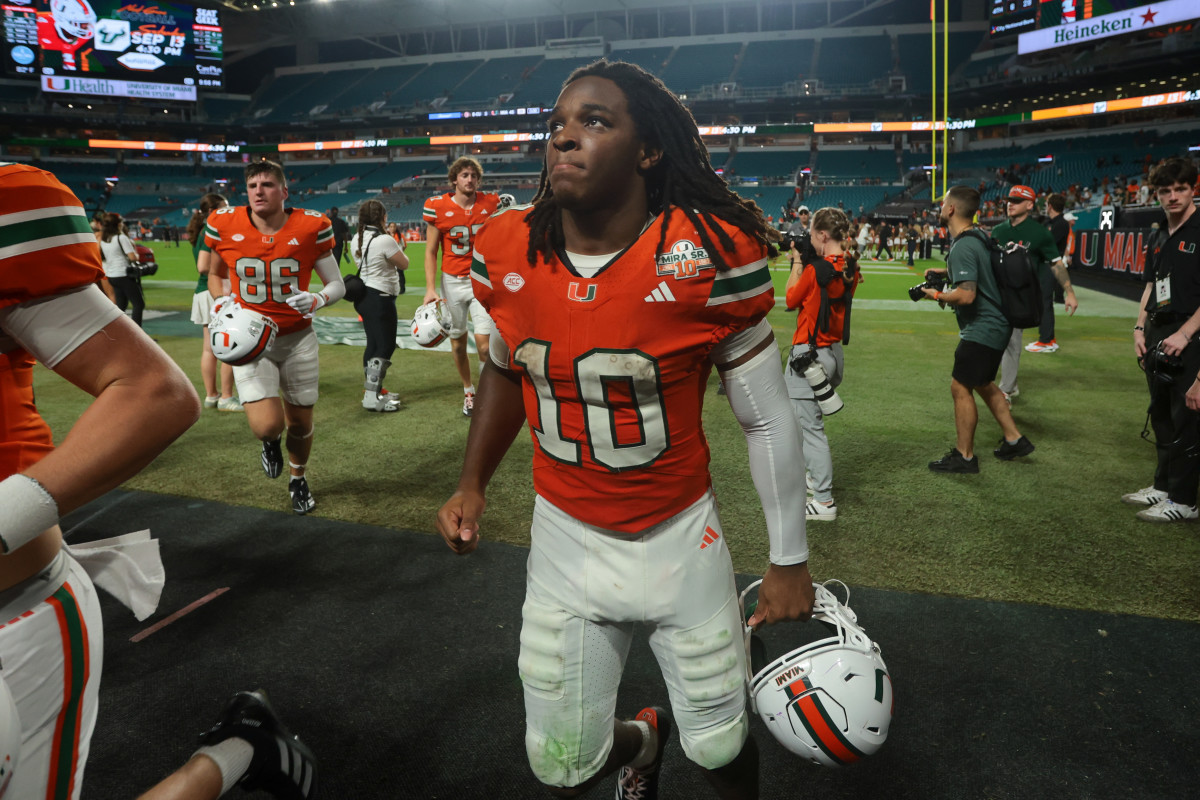
The No. 10 seed Miami Hurricanes defeated the No. 7 Texas A&M Aggies 10-3 in the first round of the College Football Playoff. It was a defensive battle, ultimately decided by a late fourth-quarter score and red-zone interception by Miami.
With the score tied at 3 and 1 minute, 44 seconds left in the game, Hurricanes wide receiver Malachi Toney scored on an 11-yard touchdown pass thrown by quarterback Carson Beck.
Advertisement
Up next for the Hurricanes is a Goodyear Cotton Bowl Classic matchup against the No. 2 Ohio State Buckeyes. It’s an uphill battle, as ESPN’s matchup predictor gives the Hurricanes a 29.5% chance of winning.

Miami Hurricanes wide receiver Malachi Toney (10).© Robert Myers-Imagn Images
Before his heroic performance, though, the wide receiver revealed an exciting Name, Image and Likeness (NIL) update. In a joint Instagram post, Toney revealed a new NIL partnership with Hellstar, a popular clothing brand that has a sports training component.
Advertisement
“We are so proud to announce our first Hellstar Sports College Athlete NIL signing – Malachi Toney🌟.,” the post caption read. “We had the privilege to coach @malitoney10 while he was apart of our high school 7 on 7 program, so now seeing him shine on the collegiate level we couldn’t be more proud.”
Toney’s On3 NIL valuation of $878,000 is the 12th-highest among college football wide receivers. Among players on Miami, it’s the fourth-highest, behind quarterback Carson Beck ($3.1 million), EDGE Rueben Bain Jr. ($1.2 million) and offensive tackle Francis Mauigoa ($1.1 million).
Advertisement
Through 14 games, Toney has been a major contributor to Miami’s success. He leads the team in receptions (89), yards (992) and touchdowns (eight).
With an exciting NIL opportunity under his belt, he and Miami look to stay hot against Ohio State. Kickoff is Dec. 31 at 7:30 p.m. ET at AT&T Stadium, airing on ESPN and streaming on the ESPN app.
Related: Texas Receives Clear Message From Nation’s No. 2 WR Amid Intense Recruiting Battle
This story was originally published by Athlon Sports on Dec 21, 2025, where it first appeared in the College Football section. Add Athlon Sports as a Preferred Source by clicking here.
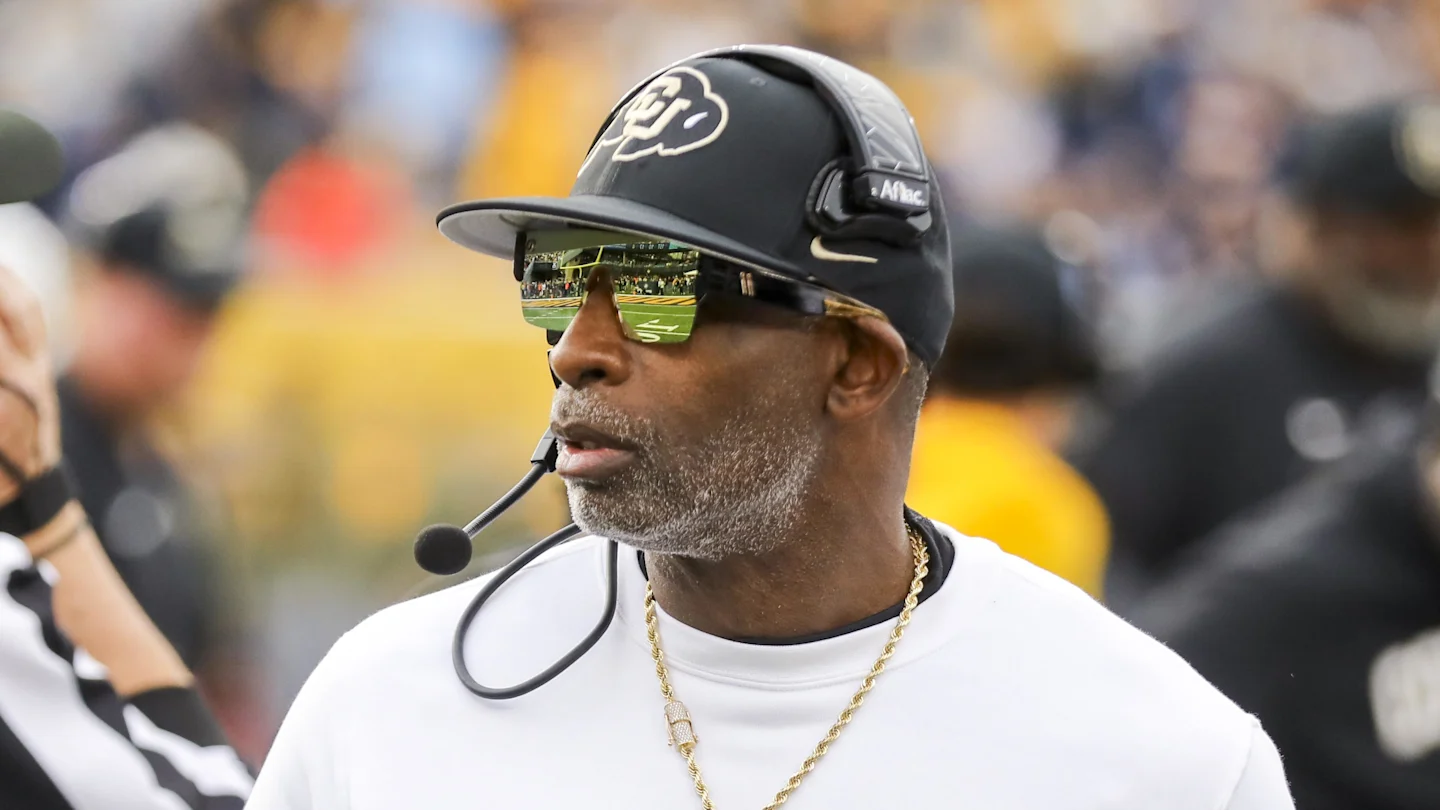
In the growing landscape of college athletics, Name, Image, and Likeness (NIL) deals play a vital role in sports. Some programs are set up better than others based on a program’s valuation. Programs with higher valuations can help some of the top-performing teams stay successful.
CNBC released its valuation rankings for the country’s athletic departments, showing their growth from the 2024 fiscal year. The Colorado Buffaloes are ranked No. 47 in the nation, a rise from No. 55 in 2024.

Breaking Down Colorado Buffaloes’ Valuation Ranking
Colorado’s 2025 valuation is $574 million, with a year-over-year value change of 22 percent. The program’s 2024 revenue is set at $147 million, with a 16 percent year-over-year revenue change.
A program’s valuation determines its monetary worth, and it is important to look at the growth, which shows that Colorado is trending in the right direction. It is also important to note that the valuation rankings are based on all of the athletics, not just the football program.
Where Colorado Ranks In The Big 12

When focusing on the Big 12 conference, several of the programs are in the same vicinity with their valuation ranking.
- No. 39 Kansas: $620M
- No. 41 Oklahoma State: $600M
- No. 42 Baylor: $585M
- No. 46 Iowa State: $575M
- No. 47 Colorado: $574M
- No. 49 Texas Tech: $570M
- No. 50 TCU: $568M
- No. 55 Arizona: $529M
- No. 57 BYU: $500M
- No. 58 West Virginia: $481M
- No. 60 Utah: $451M
- No. 62 Kansas State: $435M
- No. 63 Arizona State: $430M
- No. 68 Cincinnati: $280M
- No. 70 UCF: $262M
- No. 73 Houston: $222M
MORE: Colorado Gets Hit With Biggest Transfer Portal Loss Yet
MORE: Michael Irvin Gets Real On Blame Surrounding Shedeur Sanders
MORE: Deion Sanders Faces Recruiting Problem After Omarion Miller Transfer News
SIGN UP FOR OUR NEWSLETTER HERE
While from the top valuation of Kansas to the bottom, which is Houston is a significant difference in the Big 12, the conference teams are still in a similar vicinity overall. With it having to do with all athletics, the programs that have consistently strong teams, such as Kansas’ basketball team, make sense to have a higher valuation.

Looking at the Big 12 as a whole shows that the Colorado Buffaloes are in the top five for their valuation and trending upward.
Calling Back To Deion Sanders’ Comments On Fairness
While valuation is not the same as revenue, seeing the difference in the conferences does call back to Colorado coach Deion Sanders’ comments on the fairness between programs. The schools in the top five for their valuation are either in the Big Ten or the SEC, and all are in the billions.
“You talk about equality,” Sanders said during the Big 12 media day. “All you have to do is look at the playoffs and see what those teams spent, and you understand darn near why they’re in the playoffs. It’s kind of hard to compete with somebody who’s giving $25, $30 million to a darn freshman class.”

Although the valuation is on the programs’ overall athletics, Sanders has been outspoken about money when it comes to building the football program. With the Buffaloes facing a mass exodus through the transfer portal, Sanders has highlighted that several players are leaving because of money.
The positive side is that the Buffaloes’ valuation is growing with a 22 percent increase. This shows that the school’s athletics overall are being valued higher, and will help lead to more money poured into the program. With more money, the Buffaloes can put more of an emphasis on NIL as they look to build their roster and compete in the Big 12.
RECOMMENDED ARTICLES
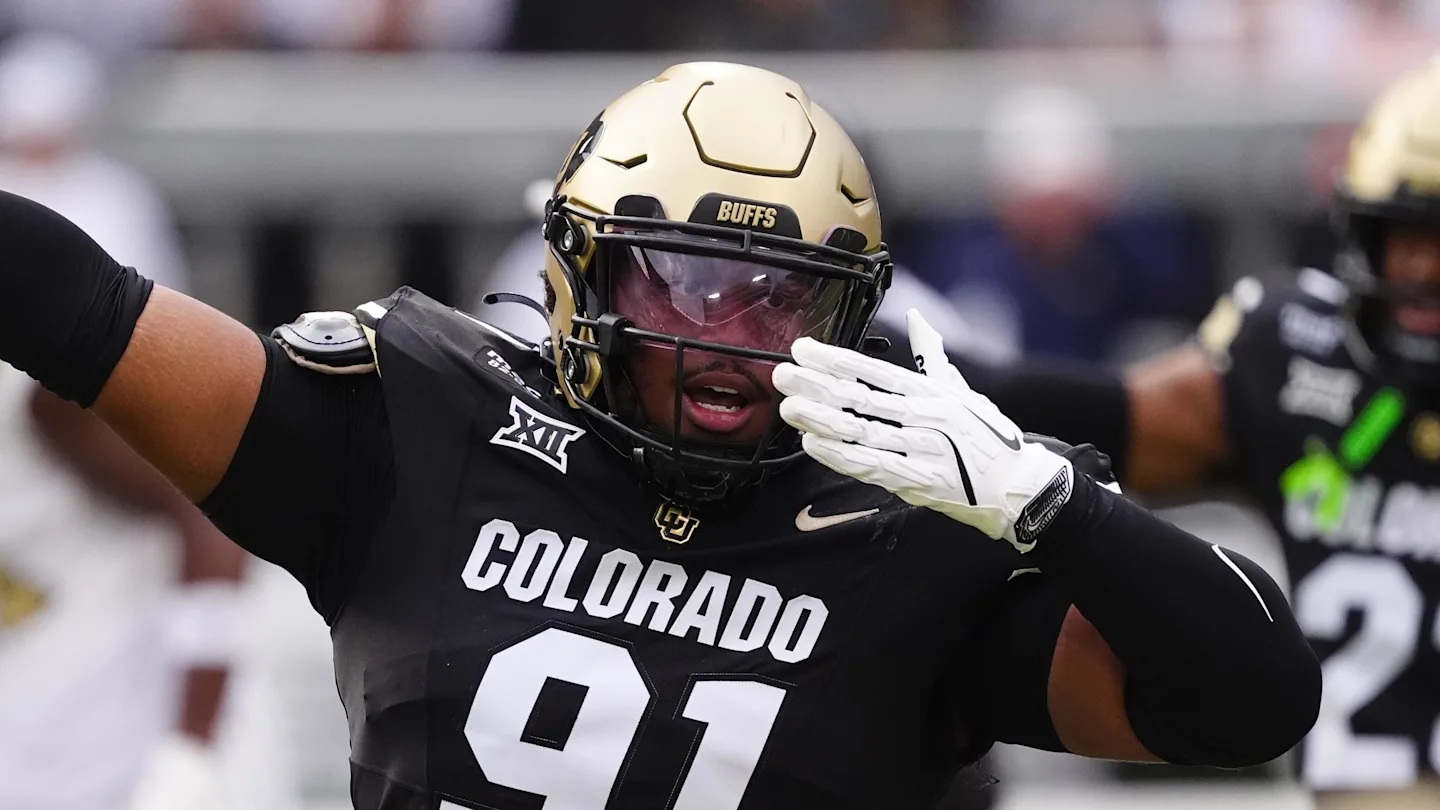
From a player retention standpoint, the first few weeks of the offseason haven’t been kind to the Colorado Buffaloes.
Several key Buffs have announced their intentions to enter the college football transfer portal when it opens next month, including wide receiver Omarion Miller, safety Tawfiq Byard and freshman defensive end Alexander McPherson. While every situation is unique, one Colorado insider believes money has been a common denominator among players’ reasons for leaving Boulder.

“The super majority of those people, I’m talking 95 percent, are going to be leaving for a bigger bag,” Thee Pregame Show’s Uncle Neely said on his YouTube channel. “This ain’t transferring in 1990. This ain’t transferring in the year 2000. This is 2025. This is business now. This isn’t, ‘Oh, I don’t like the coach. Oh, I don’t want to be treated the way they treat me.’
“This doesn’t mean something is wrong. These are business decisions now. But what we like to do is run with the narrative that woe is me, something must be wrong, something must be going on. How are all these people leaving?”

The NIL (name, image and likeness) era has rocked college football, and the depressing truth is that schools with more money will ultimately land the best players. In the Big 12, no school better exemplifies that trend than new conference champion Texas Tech.
Who’s Leaving Colorado?

As of Sunday, 16 Colorado players will enter the transfer portal next month. That group includes 12 defensive players, six members of the Buffs’ 2025 high school signing class and a few other Buffs who spent only one season in Boulder.
Below is an updated list of Colorado players who plan on entering the transfer portal:
- Safety TJ Branch
- Defensive lineman Jehiem Oatis
- Cornerback Noah King
- Cornerback Teon Parks
- Linebacker Mantrez Walker
- Safety Terrance Love
- Safety Tawfiq Byard
- Wide receiver Omarion Miller
- Defensive tackle Brandon Davis-Swain
- Offensive lineman Carde Smith
- Defensive end Alexander McPherson
- Offensive lineman Tyler Brown
- Defensive tackle Gavriel Lightfoot
- Defensive tackle Christian Hudson
- Defensive tackle Tawfiq Thomas
- Wide receiver Dre’lon Miller

Uncle Neely shared his take that Colorado’s losses should be replaceable via the transfer portal.
“Have you ever stopped to say, what am I actually losing by those people leaving?” Uncle Neely said. “Have you ever looked at the numbers production-wise of who has announced that they’re getting up out of here and what you’re actually losing by them leaving?… Is it replaceable via the portal? And in this business in college football, is it replaceable cheaper? I would wager to say the answer is yes in all regards.”
MORE: Colorado Gets Hit With Biggest Transfer Portal Loss Yet
MORE: Michael Irvin Gets Real On Blame Surrounding Shedeur Sanders
MORE: Deion Sanders Faces Recruiting Problem After Omarion Miller Transfer News
SIGN UP FOR OUR NEWSLETTER HERE

The college football transfer portal will open on Jan. 2 and close Jan. 16. Colorado coach Deion Sanders and his staff can begin adding players from the portal at the start of that period.
NIL
Report: LSU finalizes deal to hire Ole Miss’ Kevin Smith, puts him among highest paid RBs coaches
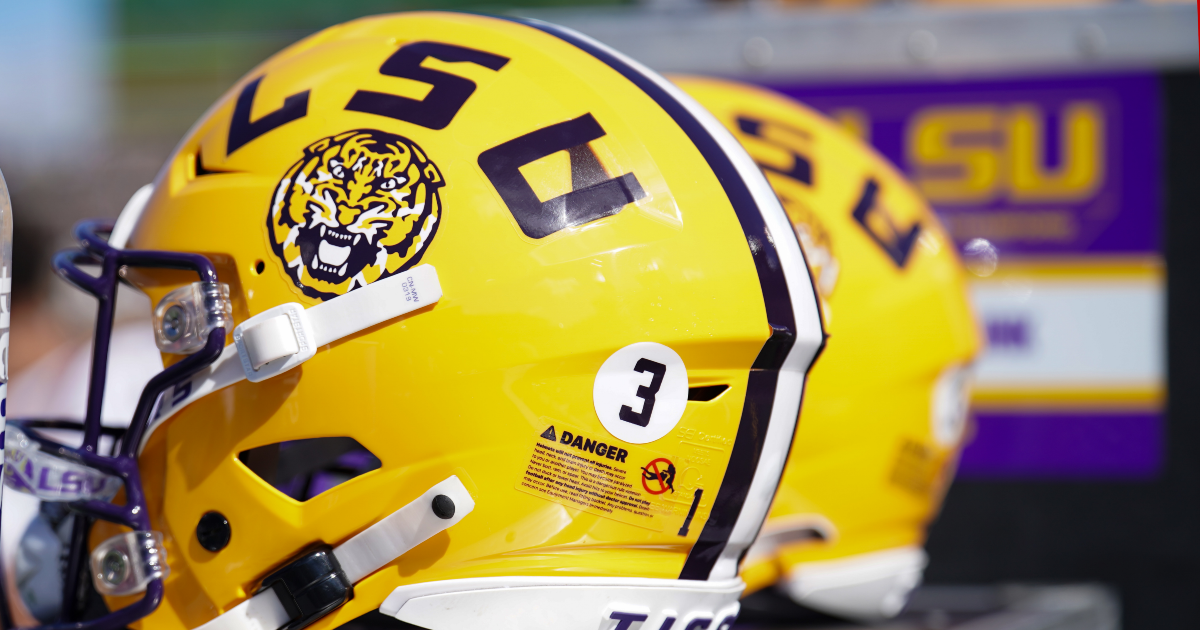
Lane Kiffin is bringing another Ole Miss assistant with him to LSU. According to Matt Zenitz of CBS Sports, the Tigers have finalized a deal to hire Rebels running backs coach Kevin Smith for the same role.
Smith is reported to have a salary of close to $1 million, which would make him one of the highest-paid running backs coaches in the country. He is the sixth Ole Miss assistant to follow Kiffin to Baton Rouge.
The other coaches joining Kiffin at LSU are offensive coordinator Charlie Weis Jr., tight ends coach Joe Cox, receivers coach Joe McDonald, inside receivers coach Sawyer Jordan and quarterbacks coach Dane Stevens. So far no defensive assistants from the Rebels have made the jump to Baton Rouge.
Smith worked with Kiffin as a running backs coach at Florida Atlantic form 2017-19 and joined his very first staff at Ole Miss in 2020. He stayed for the next two seasons in Oxford before leaving to take the running backs coach position at Miami in 2022.
Smith’s stint with the Hurricanes was a short-lived one as he returned to Ole Miss in 2023 and stayed through this season. Now he’ll look to continue the success he has enjoyed with Kiffin while building up the running backs room at LSU.
Smith helped to develop running backs such as Quinshon Judkins and Kewan Lacy during his time in Oxford. This past season, Ole Miss ranked fifth in the SEC with 185.6 rushing yards per game as Lacy led the conference with 21 rushing touchdowns and ranked second with 1,366 yards.
Ole Miss had its best season in program history this year to reach the College Football Playoff for the first time. However, Kiffin was not granted permission from the school to finish out the season with the Rebels after he accepted the LSU job.
Other assistants, including offensive coordinator Charlie Weis Jr., were allowed to complete the playoff run with Ole Miss. The Rebels defeated Tulane in the first round and will face No. 3 Georgia, which they lost to earlier this season, in the quarterfinals.
As of right now, it looks like most of the Ole Miss offensive staff will follow Kiffin to Baton Rouge. The defensive side keep defensive coordinator Blake Baker, who has been on staff at LSU since 2024.
The quarterback market is expected to be extremely competitive this offseason.
A ton of experienced signal-callers have announced their decisions to enter the NCAA Transfer Portal, including Arizona State’s Sam Leavitt, North Texas’ Drew Mestemaker, Cincinnati’s Brendan Sorsby, and TCU’s Josh Hoover, among countless others.
The right move can benefit young quarterbacks, as players such as USC’s Jayden Maiava and Oregon’s Dante Moore benefited from transferring early in their careers.
An offseason coaching change has led one former blue-chip recruit to explore his options in the portal.
Former Four-Star Quarterback Expected To Enter Portal
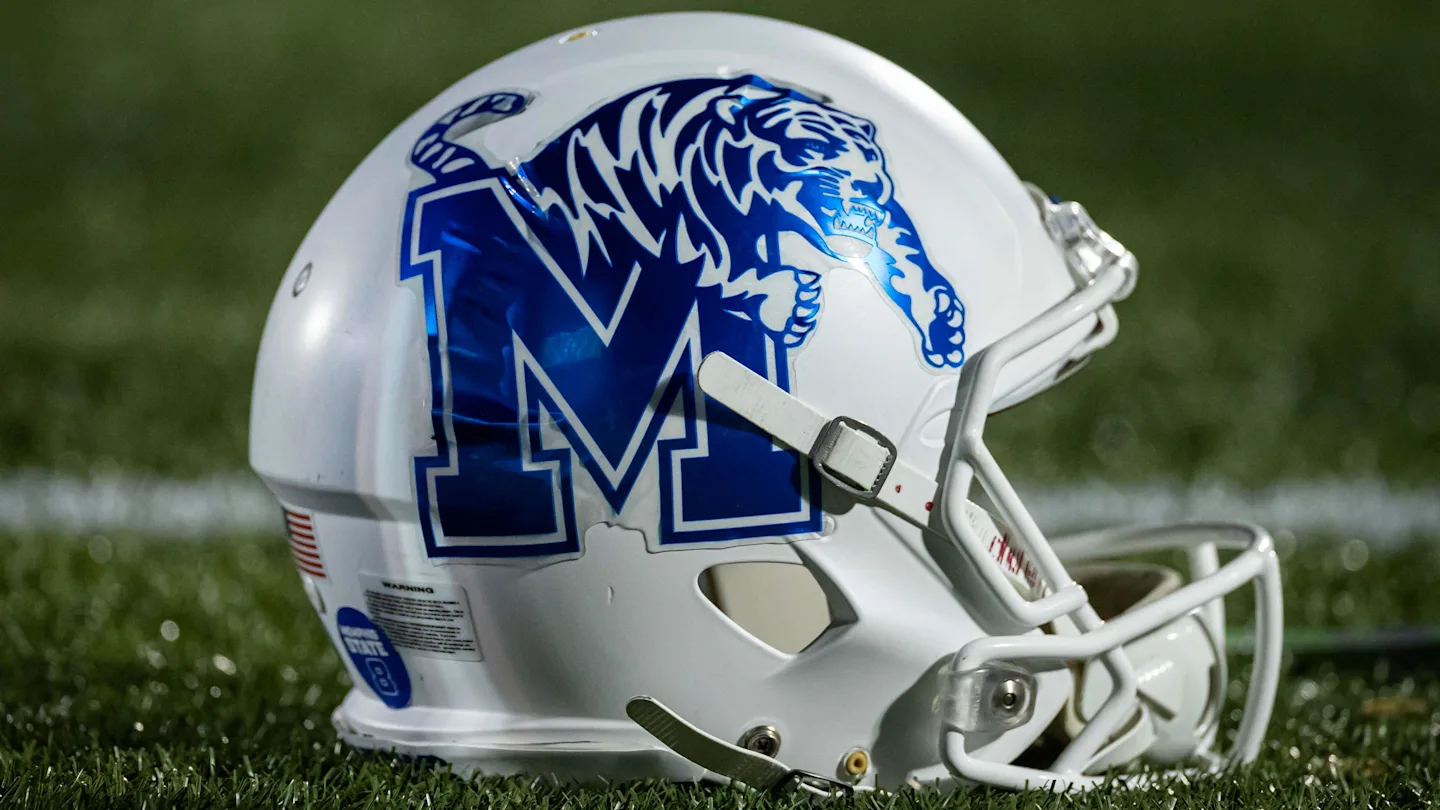
On Sunday, Memphis true freshman quarterback Antwann “AJ” Hill announced his plans to leave the program after one season, per On3.
Hill appeared in two games in 2025, earning a redshirt. His most extensive action came in a 31-24 loss to UAB on October 18. Hill entered the contest after starting quarterback Brendon Lewis went down with an injury. In roughly two quarters of action, he completed 13/25 passes for 176 yards with 1 touchdown and 1 interception.
On the season, Hill connected on 19/32 passes for 223 yards with 1 touchdown to 1 interception.
Hill is transferring after Memphis head coach Ryan Silverfield was hired away by Arkansas. The Razorbacks don’t have a ton of depth at quarterback. Redshirt freshman KJ Jackson holds the most experience on the roster with five appearances and one start last season.
It wouldn’t be a surprise if Arkansas is involved in Hill’s transfer recruitment.
Hill was one of the highest-ranked prospects in program history to sign with Memphis. He was regarded as the No. 15 QB and a top-200 recruit in the 2025 class. Hill chose the Tigers over Florida following official visits to both schools.
During his prep career at Houston County High School, Hill compiled over 11,000 passing yards and led his team to at least one playoff victory in all three seasons as a starter.
Overall, Hill completed 800-of-1239 passes for 11,020 yards with 123 touchdowns to 20 interceptions. He added six more scores on the ground.
The 6-foot-4, 215-pound quarterback is expected to have four seasons of eligibility remaining.
Read more on College Football HQ
• $45 million college football head coach reportedly offers Lane Kiffin unexpected role
• Paul Finebaum believes one SEC school is sticking by an ‘average’ head coach
• SEC football coach predicts major change after missing College Football Playoff
• Predicting landing spots for the Top 5 college football transfers (Dec. 17)

Former South Carolina wide receiver Matrick Belton is reportedly going to get a real shot on the main roster in the WWE. Belton, who goes by Trick Williams in the top professional wrestling and sports entertainment company, joined WWE in 2021 in the NXT brand. Now, he’s going to move up to either the Raw or Smackdown roster.
NXT is basically the developmental arm of WWE while Raw and Smackdown – shows on Mondays and Fridays, respectively – are considered the main roster. According to this report from PWInsider.com, Belton will make an appearance on the upcoming Smackdown, which was pre-taped.
Whether Belton moves to Raw or Smackdown is to be determined. Here’s the reporting from PWInsider:
Former WWE NXT and TNA Champion Trick Williams will debut on Smackdown on 12/26 with the storyline being he’s a free agent looking to sign with the brand. We are told Williams has not been officially listed internally on a brand yet, so he could appear on Raw in the upcoming weeks as well, but he’ll be moving to the main roster in 2026.
Belton is a two-time NXT champion and also held the TNA World Championship for 140 days earlier this year. Belton, a former SEC football player who was in the Philadelphia Eagles’ minicamp in 2018, recently got engaged to another former SEC athlete – women’s basketball player Anriel Howard, who played for three years at Texas A&M and her final year at Mississippi State.
Belton, a Columbia native who played for Keenan High School, joined the program in 2014 after spending his first two years out of high school at Hampton University. After sitting out due to NCAA transfer rules, Belton played in every game for South Carolina in 2015 and made five starts. He caught 11 passes for 121 yards his first season on the field.
As a senior in 2016, he played primarily on special teams, appearing in nine games. He played in 21 games over the course of his two-year career with the Gamecocks and made five starts.
Belton also spent time in training camp with Philadelphia Eagles. However, he decided to take a chance on pro wrestling and started training at the Combat Zone Wrestling Academy in New Jersey.
Houma-Terrebonne Housing Authority gets help with Bayou Towers
Meet 10 new coaches for the winter season

Effects of learning, exercise, and game curriculum model on the physical fitness of preschool children aged 3–6: a cluster-randomized controlled trial

DTR Youth Cheerleaders Host First Annual Sports Banquet

Crenshaw Coffee Cart gives back to youth in South LA

Here’s how to help with Yakima’s parks and recreation cuts | Government

Poolesville High School Dedicates Gymnasium in Honor of Legendary Coach Fred Swick

President Trump Announces New ‘Patriot Games’ Showcasing Top High School Athletes From All 50 States

Annual Holiday Huddle connects Denver youth with professional sports teams – and toys

Miami WR Malachi Toney Announces Career News Amid College Football Season

What Colorado’s Athletic Department Valuation Says About Buffaloes’ Growth

Insider Reveals Biggest Reason Behind Colorado’s Transfer Portal Mass Exodus

Report: LSU finalizes deal to hire Ole Miss’ Kevin Smith, puts him among highest paid RBs coaches

Texas A&M tops Kentucky for first NCAA volleyball championship: ‘We sent a warning shot out to the world’

Kentucky vs. Texas A&M NCAA Volleyball Championship: How to watch, preview

First Tee Winter Registration is open

Fargo girl, 13, dies after collapsing during school basketball game – Grand Forks Herald

CPG Brands Like Allegra Are Betting on F1 for the First Time

F1 Las Vegas: Verstappen win, Norris and Piastri DQ tighten 2025 title fight

Sycamores unveil 2026 track and field schedule

Utah State Announces 2025-26 Indoor Track & Field Schedule

Two Pro Volleyball Leagues Serve Up Plans for Minnesota Teams

SoundGear Named Entitlement Sponsor of Spears CARS Tour Southwest Opener

Jo Shimoda Undergoes Back Surgery

Bowl Projections: ESPN predicts 12-team College Football Playoff bracket, full bowl slate after Week 14

Redemption Means First Pro Stock World Championship for Dallas Glenn

Texas volleyball vs Kentucky game score: Live SEC tournament updates

Robert “Bobby” Lewis Hardin, 56

How this startup (and a KC sports icon) turned young players into card-carrying legends overnight

Indiana’s rapid ascent and its impact across college football





-
 Motorsports2 weeks ago
SoundGear Named Entitlement Sponsor of Spears CARS Tour Southwest Opener
-

 Rec Sports3 weeks ago
Black Bear Revises Recording Policies After Rulebook Language Surfaces via Lever
-

 Motorsports2 weeks ago
Donny Schatz finds new home for 2026, inks full-time deal with CJB Motorsports – InForum
-

 Rec Sports2 weeks ago
How Donald Trump became FIFA’s ‘soccer president’ long before World Cup draw
-
 Rec Sports2 weeks ago
David Blitzer, Harris Blitzer Sports & Entertainment
-

 Motorsports2 weeks ago
JR Motorsports Confirms Death Of NASCAR Veteran Michael Annett At Age 39
-
Sports2 weeks ago
Elliot and Thuotte Highlight Men’s Indoor Track and Field Season Opener
-
 Motorsports2 weeks ago
Rick Ware Racing switching to Chevrolet for 2026
-
Sports2 weeks ago
West Fargo volleyball coach Kelsey Titus resigns after four seasons – InForum
-
 Sports1 week ago
#11 Volleyball Practices, Then Meets Media Prior to #2 Kentucky Match