Connect with us
https://yoursportsnation.com/wp-content/uploads/2025/07/call-to-1.png

Rec Sports

MHSA announces newest members of Montana Officials’ Association Hall of Fame

Published

on


HELENA — Four longtime members of the Montana Officials’ Association will be inducted into the MOA Hall of Fame.

Brian Michelotti, the executive director of the Montana High School Association, announced Wednesday that Miles City’s Bruce Shipp, Missoula’s Bryan Porch, Butte’s James “Ned” Ellingwood and Bozeman’s Steve Johnson are the newest members of the MOA hall.

Combined, the four inductees have more than 160 years of officiating experience in Montana. The individual regions or pools the official belongs to will do a recognition for their respective official.

Below are the capsules on each inductee provided by the MHSA:

Bruce Shipp, Miles City

Bruce Shipp served as an official with the Montana Officials Association from 1989 to 2023. Over his 34-year career, he officiated basketball and, for 24 of those years, also officiated football. His dedication to the craft extended beyond the MOA, with five years working Frontier Conference football and 15 years officiating both men’s and women’s NJCAA basketball. Throughout his officiating career, Shipp attended numerous referee camps and “Train the Trainer” clinics. He came to see officiating not simply as a role, but as a responsibility. To him, every whistle carried weight. Every decision influenced the rhythm of the game. He approached each call with seriousness and respect. Shipp officiated in 10 state boys basketball tournaments and two state girls basketball tournaments. He was selected to officiate five state boys championship games — four in Class C (1998, 2004, 2008, 2011) and one in Class A (2005). He also officiated 50 district and divisional tournaments in Classes A, B and C for both boys and girls. In football, Shipp was selected for two state Class B championship games (2003, 2013) and officiated more than 35 playoff games across Class A, B, 8-Man and 6-Man divisions. He also officiated several all-star football games and MonDak competitions. Shipp’s excellence was recognized when he was named Montana’s Boys Basketball Official of the Year in 2006 and Football Official of the Year in 2018. From 2009 to 2021, Shipp served as the Regional Director for Miles City, helping educate, mentor and support officials in his area. In that role, he found a new kind of pride — shaping the next generation of referees and passing on the values he held dear. What remains with Shipp are the quiet moments of respect: the handshake from a coach, a young official seeking advice, the nod from a player who knew the call was right. Along the way, he built lifelong friendships with fellow officials, administrators, coaches, players and spectators alike. Shipp’s career was shared with his wife, Jan, for all 34 years. She stood beside him through every road trip and post-game debrief. A proud parent to Riley and grateful for the support and partnership of son-in-law Kamrin, Shipp finds great joy in being a grandparent to Rori.

Bryan “Porchy” Porch, Missoula

Bryan Porch, affectionately known as “Porchy,” was born in Missoula and graduated from Florence-Carlton High School in 1981. With a passion for basketball and a deep commitment to the sport, Porch dedicated over 40 years to officiating boys and girls basketball across Montana. He began his officiating career in the Bozeman Pool before moving back to Missoula, where he joined the Missoula Pool. Over the years, Porchy became an integral part of the officiating community. He served as an assignor for more than a decade in girls basketball and continued in that role for both boys and girls basketball for 20 years when the seasons were combined. Beyond his on-court contributions, he played a vital role in supporting his fellow officials — serving as treasurer, study club accountant and trainer at weekly meetings. Porch’s officiating résumé is impressive. He worked 34 state tournaments, 23 divisional tournaments and 13 district tournaments. Known for his calm demeanor and commitment to excellence, Porch became a respected mentor to new officials, always ready to guide and educate the next generation. At the collegiate level, Porch officiated for 25 years in the Frontier Conference, working both men’s and women’s games. His talent and consistency earned him selections to one men’s conference championship and more than six women’s conference championship games. He also officiated at the NAIA national tournament in Jackson, Tenn., for four years, culminating in an assignment to the championship game in his final year. Additionally, he spent two years officiating in the Big Sky Conference. Off the court, Porch is married to Angie and is the proud father of two children, Aydan and Caitlyn. He currently works as an insurance sales executive with Stockman Insurance. Porch’s legacy as an official, mentor and leader as a Montana basketball official is a testament to his dedication, integrity and love for the game.

James E “Ned” Ellingwood, Butte

Ned Ellingwood began his officiating career in 1973 at just 17 years old in his hometown of Butte. His early assignments included umpiring for the Butte City Recreation Softball Leagues and American Legion baseball. His more than 20-year involvement in both leagues was capped by his selection to umpire at the 1991 Men’s Slow-Pitch National Tournament in Decatur, Ala. At age 20, Ellingwood joined the MOA and expanded his officiating to include high school football and basketball. While he concluded his basketball officiating career in 1991, he continued officiating football and added girls high school fast-pitch softball in the early 1980s. His MOA career spanned an exceptional 45 years (1976– 2020). In addition to officiating, Ellingwood served in several leadership roles as the director of the Butte Football Pool for 10 years, director of the Butte Softball Pool for 35 years and a district delegate for the MOA for two years. Ellingwood earned widespread respect as both a football official and fast-pitch softball umpire. Known for his integrity, deep rules knowledge and willingness to mentor new officials, he left a lasting impact on players, coaches and fellow officials across the state. Officiating wasn’t just a role for Ellingwood — it was his calling. In football, Ellingwood proudly served as the head referee (“White Hat”) in nine state championship games, covering each class: three in Class AA, three in Class A and three in Class C. He also officiated numerous playoff games and was selected to referee in three Montana East-West Shrine Games and one Bob Cleverley 8-Man All-Star Football Game. As a softball umpire, Ellingwood’s leadership was equally distinguished. He was named umpire-in-chief for 34 state championship tournaments — two at the AA level and 32 at the A level. His annual schedule included divisional and playoff contests, as well as the LaVerne Combo Softball Tournament. Ellingwood officially retired from the MOA in the fall of 2020, concluding a legacy built on service, mentorship and unwavering dedication to youth athletics in Montana.

Steve Johnson, Bozeman

Steve Johnson, born and raised in Glasgow, graduated from Montana State University with a bachelor’s degree in accounting and retired in December 2020 as the Assistant Superintendent for Business and Operations for Bozeman Public Schools. A dedicated official, Johnson was a member of the MOA for 43 years as a football official. Over the course of his officiating career, he worked 46 playoff games, including nine state championship football games, at least one at every level except 6-Man. Johnson has a long history of professional and community service. He is a member and past president of the Montana Association of School Business Officials and a member, past treasurer and past president of the Bozeman Lions Club. In recognition of his humanitarian service, Johnson received the Melvin Jones Fellowship, the highest honor awarded by Lions Club International. His leadership roles have included serving as a past member and treasurer of the Downtown Bozeman Improvement District Board from its inception in 1995 until 2005 and as past chair of the Board of Bozeman Deaconess Hospital. He is a graduate of Leadership Bozeman III, a past president of the Bozeman Area Chamber of Commerce, a recipient of the Chamber’s Guy Sperry Award — its highest recognition for service to the community and excellence in business — and currently serves as President of the Gallatin Foundation and a Green Coat Ambassador for the Bozeman Area Chamber of Commerce. Johnson and his wife, Dana, have been married for 50 years. They have four children — Craig, Dena, Danelle and Shaye — and are proud grandparents to 14 grandchildren, all of whom live in Bozeman.


Link

Continue Reading
Click to comment

Leave a Reply

Your email address will not be published. Required fields are marked *

Rec Sports

Harlingen working to revive lake at local park

Published

on


Harlingen working to revive lake at local park

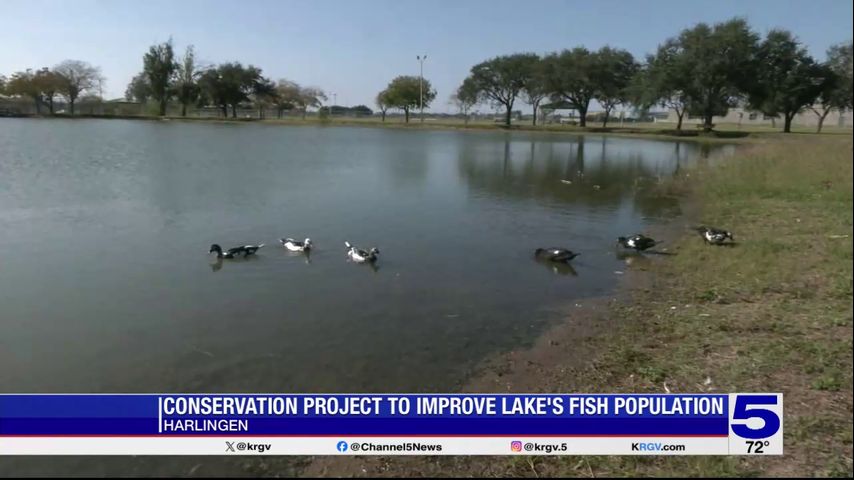
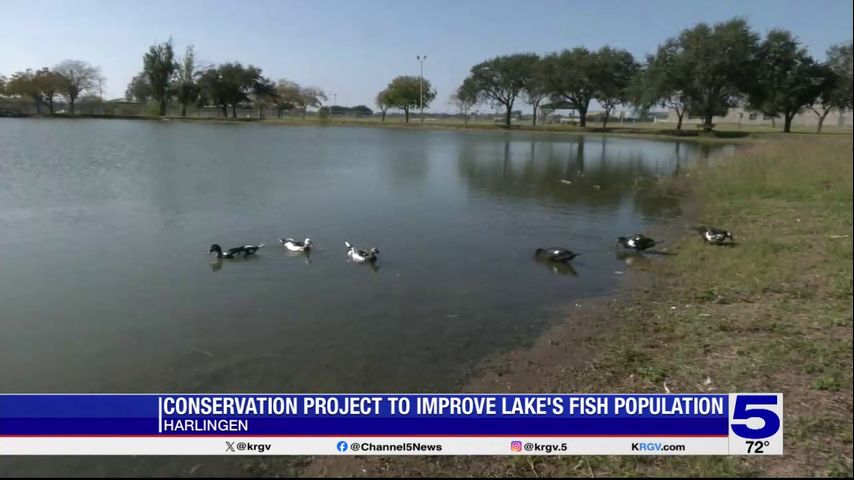
For some Harlingen residents, the lake at the Tom Wilson Youth Sports Complex has not been the same in over a year.

The lake, located at 3139 Wilson Road, has been receding due to evaporation and a lack of a natural water source. The decreasing water levels have left fish unable to thrive.

To address the problem, the city’s parks and recreation department began pumping water from a newly tapped well into the lake last month.

It’s part of a conservation project fully funded by a state grant. 

Crews also installed catfish spawning boxes and structures throughout the lake to give fish a place to hide and grow.

More fish will also be added as part of the project.

The lake is open for anyone to come fish. City officials said fishermen are only allowed to take home five fish of any species. 

Those wanting to participate must have a valid fishing license, and city crews and game wardens will be at the lake enforcing the rule.

Watch the video above for the full story. 


Link

Continue Reading

Rec Sports

Legacy of Portland youth basketball coach lives on

Published

on


Jodi Darling Peterson didn’t know all the details of her brother’s work coaching youth basketball with the Boys & Girls Club in Portland. But when she watched Joe Voisine’s teams play, when she watched him on the sidelines, she recognized the most important thing.

“Those kids did not want to let him down,” she said.

That feeling was mutual.

Joe Voisine died on Dec. 8 after an illness. He was just 48.

His legacy echoes in the lives of all the players Voisine coached with the Yellowjackets and Blue Wave, the club teams he coached over the years.

Demitrius Covington, left, played for Joe Voisine, right, at the Boys & Girls Club of Southern Maine. Voisine, who coached the Boys & Girls Club and club teams in Portland for a number of years, died on Dec. 8 after an illness. (Photo courtesy Demitrius Covington)

“He was the guy, man. He was the guy,” Demitrius Covington said of Voisine.

A 2012 graduate of Portland High, Covington was the first captain of the Yellowjackets. He recalled the intense Saturday morning practices where Voisine taught the Yellowjackets to be a brotherhood. To look out for each other. For the guys from Portland’s lower income communities, who went home to places like Sagamore Village, Riverton Park or Kennedy Park, Voisine provided the opportunity to belong to something bigger than themselves that was hard to find.

“He helped so many kids find their way,” said Covington, who served eight years in the Navy. “He was our father figure. Look out for your brother. That’s what he taught us.”

If a player needed a ride, Voisine was the chauffer, Peterson said. If a player couldn’t afford basketball sneakers, Voisine bought them. He grew up a gym rat at the South Portland Boys & Girls Club, going often with his uncle, Peter Darling. Basketball was a passion for Voisine, and he wanted to share it, instill that passion in others.

“Without Joe, I don’t think I’d be the player I am today,” said Terion Moss, who was Mr. Maine Basketball as a Portland High senior in 2018.

When Moss was playing for Voisine at the Boys & Girls Club in middle school, Voisine had him playing with high schoolers, pushing the youngster to appreciate his talent. At the University of Maine at Farmington, Moss became North Atlantic Conference Player of the Year and an All-Region selection by d3hoops.com. He even played a little pro ball in Ireland.

When Moss and Lewis Gaddas didn’t handle a tough loss well, Voisine sat them down and had them talk to Covington about winning and losing with grace.

“That was a big deal for me, to hear that from somebody I looked up to,” Gaddas said.

Voisine took his teams to out-of-state tournaments. For many players, that was their first time outside Maine, Gaddas said. He treated everyone with so much respect. He taught every kid how to play the game, no matter their experience or talent level. If you wanted to play basketball, Voisine wanted you to love it as much as he did.

They had fun, Gaddas said. They gave each other good-natured jabs when Gaddas’ Portland High team played Voisine’s beloved South Portland in back-to-back Class AA state finals in 2016 and 2017.

Now an equipment coordinator for the Boston Celtics, Gaddas was working for the Maine Celtics a few years ago when the team made a run to the G League finals. Voisine reached out to Gaddas with messages of good luck and congratulations.

“He made me fall in love with basketball. He’s a big reason I’m where I am now,” Gaddas said.

You hear that, or similar sentiments, from many of Voisine’s players. He set them on a path of success.

“His biggest lesson was, just try,” Covington said. “The moment we started playing, he gave us confidence.”

Moss is now the gym coordinator at the same Boys & Girls Club in which he played for Voisine. Passing the game on to the next generation. Living Voisine’s legacy.


Link

Continue Reading

Rec Sports

Fargo students use their swimming experience to help teach youth – InForum

Published

on


FARGO — Learning to swim often brings a mix of excitement and fear, from awkward doggy paddling and struggling to float to finally feeling comfortable in the water. Many can recall the early days of clinging to the pool’s edge or feeling overwhelmed without the help of a pair of arm floaties.

But on Sundays at the Hulbert Aquatic Center, traditional whistles and drills are replaced with laughter, patience and encouragement — thanks to AquaFun.

AquaFun is a free, weekly swim program designed to make swimming enjoyable and less intimidating for kids. It is a volunteer-run, youth-led initiative founded by Davies High School senior Justin Jiang, with fellow Davies swimmer Helen Wu serving as a head coach, alongside assistant coaches and sisters Sunisha and Nashatawn Tangpong.

As Jiang puts it, the goal is simple: “to make the water fun.”

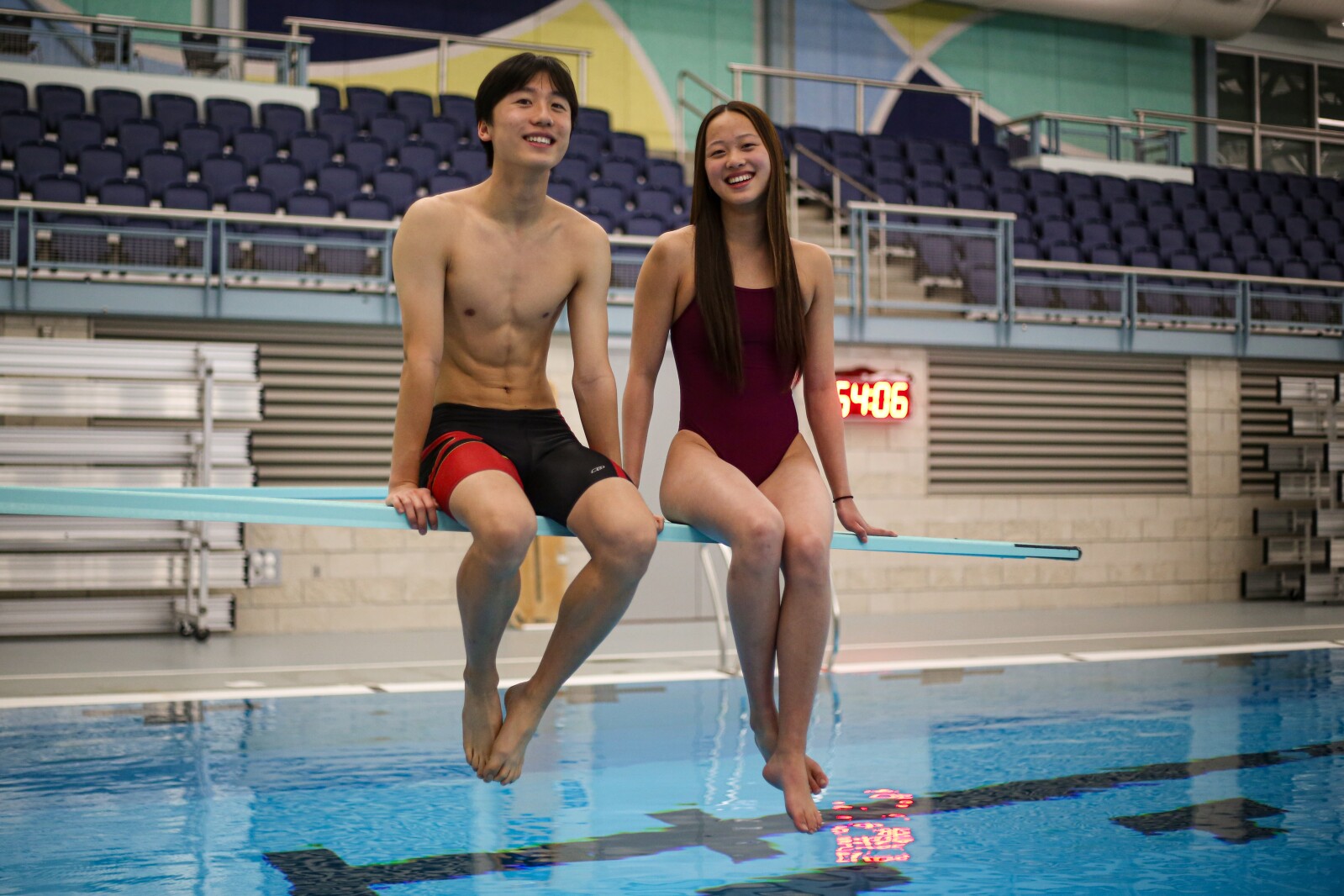
Justin Jiang and Helen Wu, pictured on Thursday, Dec. 4, 2025, at the Hulbert Aquatic Center in West Fargo, are swimmers at Fargo Davies and instructors with AquaFun, a youth-led non-profit organization that teaches youth essential swimming skills.

Justin Jiang and Helen Wu, pictured on Thursday, Dec. 4, 2025, at the Hulbert Aquatic Center in West Fargo, are swimmers at Fargo Davies and instructors with AquaFun, a youth-led non-profit organization that teaches youth essential swimming skills.

Chris Flynn / The Forum

Inspired by their own memories of learning to swim, both Jiang and Wu are committed to encouraging kids of all skill levels to give swimming a try — especially those who are “scared to even put their feet in.”

Jiang has been swimming since he was 8 years old, participating in club swimming and now swimming competitively in high school. He started AquaFun about three and a half years ago after a family friend asked him to teach their children how to swim.

Word spread quickly, and what began as lessons for two kids soon grew into a community program helping dozens of children.

Using their years of experience in the pool, Jiang and Wu’s aim to create a welcoming experience — enjoyable for all newcomers and swimmers developing new skills.

Helen Wu and Justin Jiang, pictured on Thursday, Dec. 4, 2025, are swimmers at Fargo Davies and instructors with AquaFun, a youth-led non-profit organization that teaches youth essential swimming skills.

Helen Wu and Justin Jiang, pictured on Thursday, Dec. 4, 2025, are swimmers at Fargo Davies and instructors with AquaFun, a youth-led non-profit organization that teaches youth essential swimming skills.

Chris Flynn / The Forum

AquaFun typically works with up to 15 kids at a time, ranging from about 6 or 7 years old to 11 or 12, and split into groups by age and skill level with Jiang teaching the more advanced swimmers and Wu and the sisters assisting the younger or less experienced children.

“We take all levels,” Wu said, noting Jiang’s observation that “some kids show up and they don’t want to get in.”

Unlike traditional swim lessons, AquaFun instructors embrace a more relaxed atmosphere, focusing on the fundamentals like floating, kicking and comfort underwater before progressing to strokes and harder skills like flip turns and diving techniques.

‘There’s no like yelling or drills,” Jiang said.

“I don’t like yelling,” Wu added with a laugh.

Lessons typically begin with a name game to help the kids feel comfortable with their instructors and fellow swimmers, followed by a group demonstration and skill practice — and always a snack break provided by the coaching crew.

The two are quite the pair — the type of teenagers that are seemingly chill in nature and just looking to have a fun time — and both say that teaching their lessons has made them better swimmers themselves.

“Teaching the little kids like reminds me to do stuff that I don’t do, don’t usually do,” Jiang said.

“Yeah,” Wu agreed. “You think about it more and then you’re like ‘Oh wait, I should work on this too.’”

The program operates entirely on volunteer time and grant funding. Jiang has raised thousands of dollars through science competitions and company grants which cover the lane rentals and snacks and allow AquaFun to remain completely free for families.

Alongside their happiness to volunteer, the pair say the most rewarding part is seeing the swimmers grow and become more confident.

“I remember this one student … at the start she couldn’t like put her head in the water,” Jiang mentioned, “But now, she just went off the high wall.”

“I was so proud of her,” Wu added. “She started when we first started teaching.”

Helen Wu, a state champion swimmer at Fargo Davies, discusses being a teacher on Thursday, Dec. 4, 2025, with AquaFun, a youth-led non-profit organization that teaches youth essential swimming skills.

Helen Wu, a state champion swimmer at Fargo Davies, discusses being a teacher on Thursday, Dec. 4, 2025, with AquaFun, a youth-led non-profit organization that teaches youth essential swimming skills.

Chris Flynn / The Forum

Parents are encouraged to watch, especially if their children are new, but many grow comfortable enough to sit back — or run errands — as their kids gain confidence. Over time, the coaches often see swimmers “graduate” from AquaFun and move on to club teams.

“Most stick around for a while,” Jiang said. “Some of them, after taking AquaFun for a while, they try out a club, and that’s when the intensive training starts.”

The youth swimmers typically transition to club programs around ages 11 or 12, with Fargo-Moorhead being home to several clubs, including the F-M Gators Swim Team at the YMCA, West Fargo Flyers, Moorhead Marlins USS Swim Club and Red Dragon Swimming.

Wu,15, has been swimming since she was 7 years old. She swam in club and has been swimming competitively for the Davies High School girls team since seventh grade. A sophomore, she recently concluded her swimming season in November by claiming the individual 50-yard freestyle state title, as well as claiming third in the 100-yard freestyle.

Jiang, 17, has been swimming since he was 8 years old. He started competitively swimming in high school and has been a captain on the Davies boys swim team since his junior year. His senior season started at the beginning of December, but last season, he qualified for state in the 100-yard breaststroke and the 200-yard individual medley.

Sunisha and Nashatawn Tangpong, both swimmers at Fargo Shanley High School, joined AquaFun through their connections with Jiang and Wu in club swimming and now serve as assistant coaches.

Justin Jiang, a swimmer at Fargo Davies, discusses being a teacher on Thursday, Dec. 4, 2025, with AquaFun, a youth-led non-profit organization that teaches youth essential swimming skills.

Justin Jiang, a swimmer at Fargo Davies, discusses being a teacher on Thursday, Dec. 4, 2025, with AquaFun, a youth-led non-profit organization that teaches youth essential swimming skills.

Chris Flynn / The Forum

With Jiang preparing for college next year — and hoping to attend someplace warmer than North Dakota — leadership of the program will largely transition to Wu, with Jiang returning to help during the summer.

“I am excited, but a little scared,” Wu said. “I haven’t done it by myself, but I feel like it’ll be good.”

Both coaches hope AquaFun continues to grow and welcome new volunteers. For both Jiang and Wu, fun is at the heart of the program.

“If you’re curious, just try it,” Jiang said. “It doesn’t cost anything. You can show up and see how it feels.”

To learn more about AquaFun, visit

aquafuns.org.


Link

Continue Reading

Rec Sports

How Dallas Converts Sporting Events Into Long-Term Economic Growth

Published

on


Dallas–Fort Worth is entering its biggest global sports moment in decades. FIFA has confirmed the region will host nine matches at AT&T Stadium (branded as “Dallas Stadium” during the tournament) as part of the expanded 48-team, 104-match 2026 FIFA World Cup. With the group-stage draw now public and local planning accelerating—from stadium upgrades to fan-festival logistics—this is the window when cities either turn momentum into legacy, or get overwhelmed by it. That urgency is amplified by the economics of modern sports tourism. A 2024 industry report pegged spectator sports tourism at $47.1B in direct spending and $114.4B in total economic impact in the U.S., supporting hundreds of thousands of jobs—exactly the kind of “heads in beds” impact a sports commission is built to chase.

So what does it actually take to land the world’s biggest sporting event—and how did Dallas become the place rights-holders trust to deliver?

That’s the core question explored in this episode of The DLC Drop Podcast, hosted by John Davidson, featuring Monica Paul, Executive Director of the Dallas Sports Commission. Together, they unpack how the Sports Commission recruits events that drive economic impact, why Dallas has been recognized as the No. 1 sports business city in the U.S., and what locals and businesses should expect as World Cup planning shifts from bid-mode to execution.

Key takeaways from the conversation…

  • What a sports commission really does: Monica explains the “recruit-and-deliver” model—bidding for youth, collegiate, pro, and international events that fill hotels, restaurants, and attractions, while also building community programs and career pathways.

  • Why Dallas wins bids: The region’s airport access, venue depth, hotel inventory, corporate base, volunteer culture, and a “can-do” host mindset create confidence for rights-holders—plus a track record of executing major events at scale.

  • World Cup realities for locals and businesses: Expect a massive fan-festival footprint, international visitors (including many without match tickets), and a wave of activations—plus specific rules around public watch parties and FIFA-controlled branding.

Monica Paul is a senior sports industry executive with more than two decades of experience leading event strategy, bidding, and large-scale sports operations at the local, national, and international levels. As Executive Director of the Dallas Sports Commission, she has driven successful bids and organizing efforts for globally recognized events, including the FIFA World Cup, NBA All-Star, NCAA Final Fours, College Football Playoff Championship, and WWE WrestleMania. Her background spans leadership roles with Visit Dallas, USA Volleyball, USA Taekwondo, and Olympic delegations, complemented by board service, academic instruction in sports management, and deep expertise in sports marketing, event operations, and stakeholder engagement.

Article written by MarketScale.


Link

Continue Reading

Rec Sports

Grizzly Youth Academy graduates largest-ever class of cadets

Published

on


The Grizzly Youth Academy on Friday celebrated the graduation of its largest class since the program began in 1998.

The ceremony was held at the Madonna Inn Expo Center in San Luis Obispo, where nearly a thousand families gathered to honor the graduates of the National Guard’s Youth Challenge Program.

After completing the intensive five-and-a-half-month program, we caught up with two graduates who reflected on the changes they’ve made and their plans for the future.

“A lot of us came here because we were making mistakes back home,” explained graduate Howard Truong. “We weren’t very proud of ourselves, proud of the decisions we made, so we came here to make a change, and it’s been a long five-and-a-half months for everyone, and I’m sure everyone has put a lot of effort into changing themselves, and it’s going to be really nice to see our families again.”

“I personally plan to go to college after this. I plan to go to independent studies as a 16-year-old. I will graduate in March, and after, I will go to Cuesta College, get my master’s degree, and hopefully become an elementary school teacher,” said graduate Jahleeyah Amos.

The Grizzly Youth Academy is designed to provide military-style structure and support to 16-18-year-olds who have struggled in school due to academic and social problems.

It’s one of only three such academies in California.

RELATED: Grizzly Youth Academy donates over 400 pounds of food to SLO Food Bank

Grizzly Youth Academy donates over 400 pounds of food to SLO Food Bank


Link

Continue Reading

Rec Sports

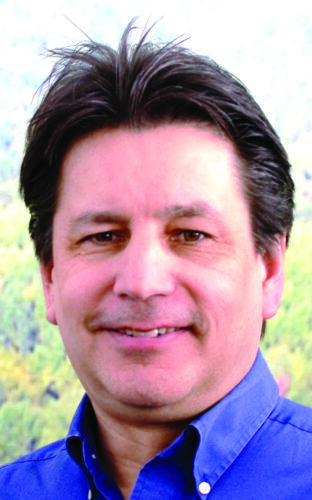
Outdoors North: John Pepin | News, Sports, Jobs

Published

on


“Holly’s in the window, home is where the wind blows, can’t walk for runnin’ Christmas time’s a-comin’,” – Tex Logan

Past the dimmed and cracked corners of the memories in my mind’s eye, I can see those week-before-Christmas days of my very young boyhood.

Even in those early times, we were being indoctrinated and transformed from innocent and curious toddlers into ravenous post-war American consumers.

We were being raised up on Saturday morning cartoon television and big department store holiday catalogs. We were far too simple then to understand Madison Avenue concepts like cross promotion, product placement and motivational research.

Those now-classic Christmas television shows, like A Charlie Brown Christmas, which originally aired with Coca-Cola advertising included, and “How the Grinch Stole Christmas,” with embedded plugs from The Foundation for Full Service Banks, the presentation sponsor, were making their debuts.

Even though both these kids’ television programs showcased the virtues of Christmases based on kindness and love, rather than Christmas presents, abundance and commercialism, the crucial confluence of kids, advertising and Christmas gift-getting had already been galvanized. It was as though television producers and advertising slicks had been there since the beginning with us kids – in the crib and maybe even before that.

To kids, the idea of Santa Claus, in all his storied toy-giving altruism, was as vibrant and alive as a big, hard snowball smacking you right against the side of the head. In this, he was unlike the far-less convincing Easter Bunny. We were familiar with rabbits. We were used to seeing them almost daily in our backyards or on our walks to school. Supposedly, the Easter Bunny was hopping around outside, bringing us candy eggs, on beds of green, plastic grass inside woven baskets. There was no explanation as to how he got into and out of our homes, while we were asleep.

Santa Claus was a god-like figure. He was omniscient and omnipresent – even when it wasn’t Christmastime. He was also watching and keeping track of all the times we crossed against our parents. There were even songs that spelled it all out. “He sees you when you’re sleeping, he knows when you’re awake. He knows if you’ve been bad or good, so be good for goodness’ sake.”

Yeesh. If we wanted toys – and we most certainly did – kids had but to conform, straighten up and fly right.

We had questions, as we rightfully should have, but mostly, we swallowed the idea hook, line and sinker – probably because the bait looked so tempting. I can still hear kids my age arguing about Santa.

“Oh yeah, he’s real. He’s gonna bring me everything I want.”

“Oh yeah, what’s he gonna bring you?”

“Stuff. Why would I tell you? You don’t even believe in him.”

“As if.”

“As if what?”

“As if he will.”

“As if he won’t.”

Kids with older siblings usually tended to be the ones most likely to cast doubt.

It was usually about this time that any parent overhearing the conversation would chime in with something like, “Now, let’s not ruin anyone’s Christmas.”

“Thanks, mom.”

Our Christmas wish lists could be long, but best prioritized.

We could ask, wish and hope for anything we might possibly want – things we’d seen in those 2-inch-thick catalogs from Sears, J.C. Penney and Montgomery Wards or the latest gadgets and toys advertised on TV. I remember that sometimes we just wrote down catalog page numbers where we had circled things we wanted.

We only needed to send a letter to Santa at the North Pole, that our parents could help us write, and on Christmas Eve before bed, leave out a few Christmas cookies our mom baked with a glass of milk for Santa and his reindeer. When we awoke on Christmas Day, all would be revealed.

Parents and kids would all tumble down the stairs from bed to the living room to see what Santa brought. The thrill and happiness we felt separating, opening and receiving the gifts we got from Santa and parents and relatives almost always overshadowed any disappointments we might have had – especially since we got extra things we hadn’t even asked for.

Occasionally, there would be one kid who felt they were “ripped off” if they hadn’t got the doll or car or toy they wanted – even if cost about as much as a king’s ransom. Regarding Santa Claus, we all would have been shocked, doubters included, if we had any idea how complicit our own parents had been in perpetrating that fantastic fiction.

When they eventually pulled out the hook we had swallowed, it really hurt.

Still aghast at the idea that this all could have been some sort of lavish betrayal, it wasn’t long before we would hear something like, “Oh yeah, and about the Easter Bunny…”

Reactions on that disclosure were mixed in our house, ranging from “No, not the Easter Bunny too?” to “Well, I figured that. Now what?”

But before all those revelations, in those halcyon snow-globe wonderland days of youth, during the week or so before Christmas – the days I mentioned earlier – we would be so full of excitement and anticipation we could pop.

We were like Mexican jumping beans, probably fidgeting wildly and constantly bugging my mom with questions like “How many more days?” “Is he coming tonight?” and “When are you going to make the cookies for Santa?”

This is probably why my parents would send us outside to play.

They could get some peace and quiet while we could roll down snowbanks, run and jump in the snow, throw snowballs or walk around sucking on a freshly picked icicle.

There were also flying saucers to pull each other on and ride down hills and snowbanks with.

Looking back, one of my favorite activities was doing almost nothing.

When we kids got tired, we would just fall back into the snow and lay there silently in our winter snow suits, boots and knitted mittens, huffing and puffing – just looking up at the sky.

I enjoyed the intermittent silences as much as I did the conversations.

After a minute or so, one kid would say something, and another would chime in.

“Do you think Spiderman could beat up Superman?”

“I doubt it.”

“Why?”

“He just has those webs.”

“So? I think he could.”

“You don’t know.”

“YOU don’t know.”

“Hey, look at the moon.”

“Whoa, that’s cool.”

“When we were at my grandpa’s camp, we saw a meteor with a big, long tail.”

“That’s boss. When we went fishing, out by the basin, we saw a bear run across the road.”

“No way. How big was he?”

“Bigger than my grandma’s davenport.”

These conversations might continue for as long as a half hour or so, until one of us got cold from laying in the snow for that long.

“I’m going in.”

“See you tomorrow.”

“Yeah.”

Then, even all alone, a kid might very well stay outside and continue to play.

I remember doing that.

It was often just doing things like trying to knock down house icicles with snowballs or digging paths with a shovel or maybe starting to try to build a fort.

I might also go inside the house, strip off all the winter clothing, some of which might now be wet, and put it on the floor by the furnace register to dry.

Then, after a snack and a chance to warm up, I remember trying to convince a previously reluctant sibling to go outside and play in the snow.

Many times, they would – especially if they had just been bored in the house doing nothing while my mom was in the kitchen and my dad was watching football or reading the newspaper.

Anyone allowed to stay in the house would have had to have mustered up a pretty good excuse. It was usually a strict order to get outside and play.

I wasn’t the kind of kid you had to tell twice to do that – everything else maybe, but not that. I was usually the first one out the front door.

Those December outings focused conversation on the upcoming excitement of Christmastime.

I liken it to the banter of bank robbers on the evening before the big heist.

“What are you gonna do with your share of the loot?”

“I don’t know, maybe go out west, where it’s warm. You know?”

“Yeah, I know. You got some big dreams, cowboy.”

Even once we had come into the house and got ready for bed, the anticipation and excitement often kept us from falling into restful sleep.

We just couldn’t stop thinking about Christmas. We told ourselves that if we fell asleep, we’d wake up and it would be one day closer to Christmas, but even that strategy couldn’t often dampen my holiday exuberance.

Life is so odd. Nowadays, I don’t really care if I get a single Christmas gift – a far cry from those kid days.

Instead, I most appreciate the quiet and wintry nights relaxing in a room lit only by Christmas tree lights – maybe enjoying a mug of eggnog and biting the head off a sugar cookie Santa or two.

Outdoors North is a weekly column produced by the Michigan Department of Natural Resources on a wide range of topics important to those who enjoy and appreciate Michigan’s world-class natural resources of the Upper Peninsula.




Link

Continue Reading

Most Viewed Posts

Trending