


NIL
Michigan State basketball's Tom Izzo calls for 'guardrails' in transfer portal


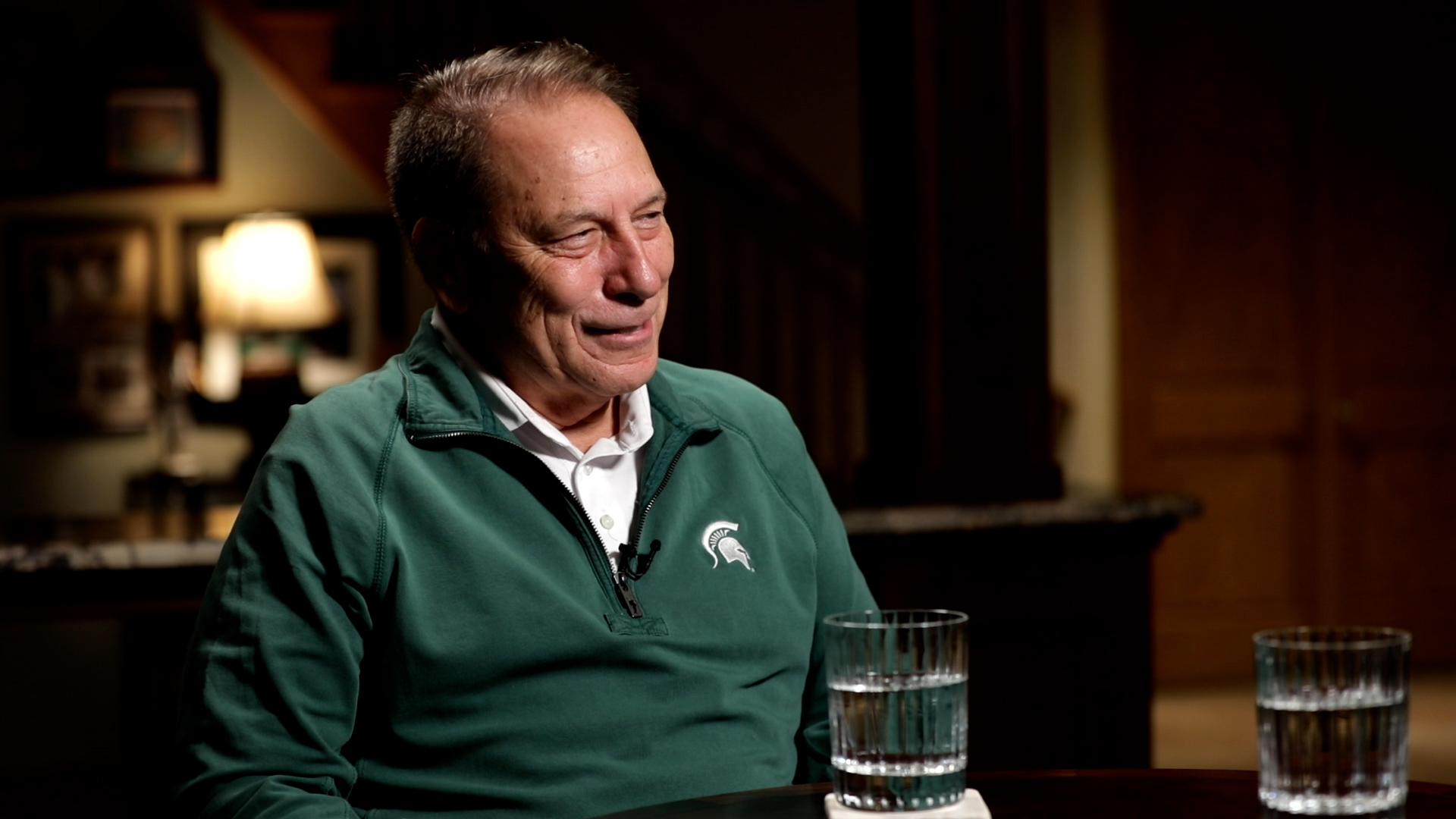
Michigan State basketball coach Tom Izzo is no stranger to NIL and the transfer portal, but that doesn’t mean he is a fan. Izzo is advocating for more regulations and rules regarding college basketball transfer rules.
“We’ve lost a lot of control now. Don’t kid yourself. I think a lot of people are afraid to say it because they’re in the middle of their careers, but I’m not,” Izzo said, per On3. “But I’m not afraid to say it because I don’t think it’s benefiting the kids in the long [run]. We’ve got more guys at four different schools than two different schools right now. How can that benefit anybody? So, I think the portal — they should get paid some money. There’s got to be guardrails about it. I mean, how can players in college that aren’t even pros be making as much money or more money? So, there’s got to be guardrails. It’s gotten a little crazy.”
Izzo has coached at Michigan State for more than 30 years. He has won a national championship, as well as several Big Ten Conference titles. The veteran coach says the portal though has forced him to adapt.
“Yeah, it really has,” Izzo added. “I think we’re used to having either guys leaving early or leaving when they graduate. Leaving early because they went pro. Very few guys transferred. It’s just a different era. I’ve adjusted, but I don’t want to change what I had either. Culture, relationships are still very important to me. The day they’re not, you won’t be interviewing me.”
Last season, Michigan State basketball went to the NCAA tournament under Izzo. The Spartans lost in the Elite Eight to Auburn.
Michigan State’s Tom Izzo would love other changes in college basketball
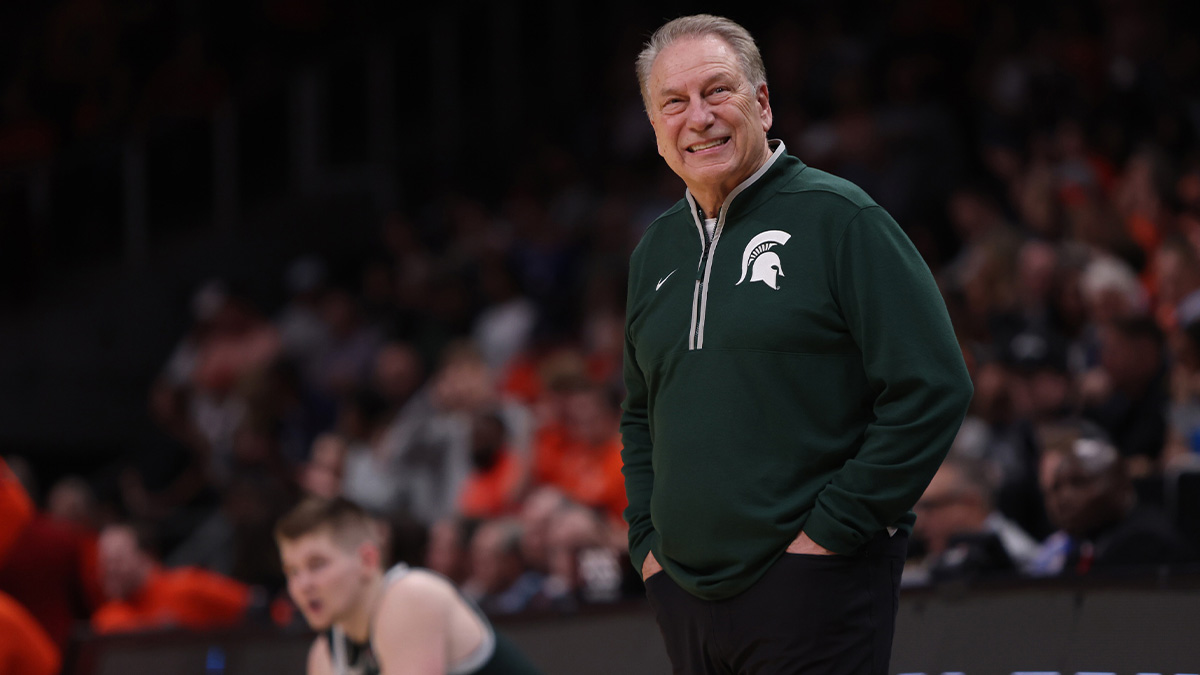
Izzo is also calling for an expansion of the NCAA tournament. There is a lot of discussion about possibly allowing more at-large teams to enter the event, from smaller conferences. Izzo likes the idea.
“There’s a lot more Division I teams, No. 1,” Izzo said in a YouTube interview with Rick Pizzo on the Big Ten men’s basketball channel. “And there’s a lot more people that put money into basketball, No. 2. And we see that football went from four to 12, now they’re talking 16 or 18.”
The Michigan State coach says more research should be done on how many additional teams can go in March Madness, without hurting the quality of the event.
“I think you can water down a tournament,” Izzo added. “I don’t think we should be going to 100. I don’t know what the right number would be, but if you look at it, how many better teams are there today than there were 20 years ago? There’s a lot better teams and there’s a lot more of them. There’s what, 363 or something? So I think that should play some of the part in it.”
Michigan State starts their season in the fall.
Continue Reading

A dream season that propelled a Southeastern Conference football program into the national title conversation has been marred by a chaotic coaching exit, leaving an elite roster in limbo. The sudden departure of the program’s architect to a fierce conference rival during the most critical stretch of the postseason has created an unprecedented conflict of interest for the remaining staff.
These assistant coaches are currently attempting to balance their loyalty to a group of championship-bound athletes with the demands of their new employers who are already focused on the next recruiting cycle.
The tension reached a boiling point after an unexpected victory against a top-ranked opponent extended the season and complicated the logistics for everyone involved in the building. ESPN analyst Paul Finebaum recently weighed in on the situation, noting that the optics of this exit have shifted from a standard career move to a damaging public image crisis.
While the departing head coach claims there is a transparent plan for his assistants to support both programs, the reality on the ground suggests otherwise: restricted access and divided loyalties.
The decision to prioritize the transfer portal over a chance at a national title has sparked a national debate about professional integrity and the responsibility a coach has to the players who helped build a winning culture.
Finebaum suggests that one specific individual is responsible for the ongoing friction and has failed to take the necessary steps to protect the program he built from unnecessary distractions. The fallout has created a significant hurdle for a team preparing for a semifinal matchup that represents the pinnacle of their school history.
Paul Finebaum says Lane Kiffin is poorly handling LSU transition
Appearing on the McElroy and Cubelic in the Morning podcast on Monday, Finebaum offered a scathing review of how LSU Tigers head coach Lane Kiffin has handled his exit from Oxford. The veteran broadcaster did not hold back when discussing the optics of the situation as the Rebels prepare for a historic playoff game without total clarity regarding their coaching staff.
Finebaum pointed directly at the new Tigers leader as the primary source of the friction that has dominated the national conversation.

“I think it’s incredibly sad,” Paul Finebaum said during the broadcast. “There’s one person who can make all this easier and that’s Lane Kiffin. Lane Kiffin is badly losing the PR battle. I know he’s working hard. I’d love to look at Kiffin’s phone right now, guys, you can probably attest to this. To see how many media members he has texted, trying to spin them on how much he cares about the Ole Miss program. But it’s pretty obvious that he doesn’t.”
The analyst argued that the coach’s focus has clearly shifted to his new surroundings at the expense of his former players. “He cares about where he is now, which is understandable but it also negates a lot of what he said leading into his departure that he really wanted to stay there,” Finebaum noted.
“I think it turns out that Keith Carter and a lot of the administration at Ole Miss made a real good decision because I don’t think Ole Miss would’ve beaten Georgia if Kiffin had been going back and forth between Baton Rouge and Oxford.”

As the postseason reaches its peak, the veteran journalist lamented the lack of resolution for the remaining staff and athletes. “I’m not going to try to sound like I’m a peacekeeper for the UN,” Finebaum added.
“I think it’s really tragic that more hasn’t been done by all parties, but mainly Lane Kiffin, to make this transition for Ole Miss easier as they get ready to go to the Fiesta Bowl.”
The Ole Miss Rebels will play the Miami Hurricanes in the Fiesta Bowl on Thursday at 7:30 p.m. ET on ESPN.
Read more on College Football HQ
Updated Jan. 5, 2026, 6:01 p.m. ET
- Florida State football leadership will meet with the media to discuss the program’s future.
- Topics will include a front office restructure, NIL, and revenue sharing.
- The program is undergoing a “comprehensive review” after a 7-17 record over the last two seasons.
- FSU is actively recruiting from the transfer portal, including former Florida quarterback DJ Lagway.
Florida State football head coach Mike Norvell, Athletic Director Michael Alford and new Deputy AD and General Manager of Player Personnel John Garrett will meet with local media on Monday, Jan. 5.
The trio is expected to talk about the Seminoles’ front office restructure, Name, Image and Likeness (NIL) and revenue sharing, among other topics related to the FSU football program.
The Seminoles are hosting multiple transfer portal visitors, including former Florida quarterback DJ Lagway on campus as the program looks to restructure its roster following two dismal seasons that ended with a combined 7-17 record.
Norvell, whose job was under pressure during the season, will be back for a seventh season in charge of the program, and he promised a “comprehensive review” of the program that would change how the Seminoles operated. One of those changes is the hire of Garrett and Taylor Edwards as director of football and player acquisition.
Alford hired an outside consultant, Jake Rosenberg, to give a review of the program and help the Seminoles position themselves to best compete in the modern era of college athletics.
The Tallahassee Democrat will provide live updates from the discussion.
Live updates from Michael Alford, John Garrett and Mike Norvell press conference
Decision-making, leadership key to FSU’s next quarterback
Garrett said that what FSU wants in a quarterback goes beyond the intangibles they have, and they need to be mentally tough, make tough decisions and be a leader.
He said the “fun part” of recruitment is getting to know a player and finding out their fit within the program beyond their physical skill set.
Garrett said being an “accurate thrower of the ball” is the key physical trait that any quarterback needs to have.
Garrett describes new player recruitment structure
Garrett said there is constant evaluation going on with staff members assigned to certain regions of the country. Staffers will watch tape, communicate with high school coaches and talk with recruiting liaisons on a weekly basis to help evaluate and find the “best” fit for the Seminoles.
On the portal, Garrett called it a “mad dash” and something a program has to get ahead of when doing evaluations of players and who to bring in. He said the recruitment process is similar to prep evaluations, but done in a quicker timeline.
Alford describes the timeline for “review” and making changes to the FSU front office
Alford said that the decision to make these changes to the personnel staff has been something that has been discussed for a long time, and that after further analysis on what Norvell’s responsibilities were and how much he had to do, they felt it was right to make the changes now.
He said for an accurate “review,” the program had to wait for the season to end, because it’s where a “fair review” can take place.
Norvell, Garrett praise collaboration, ‘checks and balances’ critical to FSU’s success
“Everyone’s enthused,” Garrett promises that the Seminoles have the right “team” in place to build the right roster for FSU football.
Garrett said the staff is here to help Norvell make the most informed decision on the program. He said Norvell allows everyone to have a say on what is being discussed. Garrett said that collaboration allows all the different perspectives within the staff to have a say on what the program does.
Norvell said “checks and balances” is “critical” in modern-day college football.
Norvell said there won’t be a player brought into the program that everyone doesn’t agree upon.
On negotiations, Norvell said he doesn’t want to be the one negotiating with the players. He said his job is to coach and develop the players.
Norvell praised the work of Garrett and Edwards when discussing negotiations and helping bring players together.
Norvell labels college football as being in a “unique” position
On the transfer portal, Norvell said that working alongside Garrett and Edwards has been good through the first few days of the transfer portal.
He said there has been constant collaboration and that the staff has been very receptive to evaluations and decisions about who to target and what needs the program has.
Norvell called the state of college football “unique.” He said the program is going to find the “right people” to push FSU forward. He said he’s got a lot of confidence in what he and Garrett can do together when building FSU’s future.
Norvell says the new personnel department was a “necessity.”
Norvell said there was an aligned vision and constant collaboration throughout the restructuring of the program’s personnel.
“I’m excited for what this thing will mean, and how it will operate,” Norvell said.
Norvell said the willingness to allow the changes from everyone in the program will allow FSU to be taken to the “next level.”
Michael Alford opens the discussion by speaking on the program review
Alford said that FSU used both resources, both inside and outside the Seminoles program, to evaluate the operations of FSU.
John Garrett will lead recruiting efforts, retention and long-term decisions, while Norvell will have the final say on all decisions within the program. Garrett called it a “wonderful opportunity.”
FSU football players in the transfer portal
- DL Darryll Desir, Jan. 5
- DL Mandrell Desir, Jan. 5
- DL Amaree Williams, Jan. 5
- P Mac Chiumento, Jan. 1
- DL KJ Sampson, Dec. 31
- OL Ty Hylton, Dec. 30
- OL Lucas Simmons, Dec. 29
- RB Gavin Sawchuk, Dec. 28
- OL Manasse Itete, Dec. 28
- DB Ashlynd Barker, Dec. 28
- WR Jayvan Boggs, Dec. 27
- DE James Williams, Dec. 27
- QB Brock Glenn, Dec. 25
- WR Elijah Moore, Dec. 22
- QB Jaylen King, Dec. 17
- TE Randy Pittman, Dec. 16
- LB Omar Graham, Dec. 16
- DL Jaden Jones, Dec. 16
- RB Kam Davis, Dec. 16
- DB Cai Bates, Dec. 15
- WR Camdon Frier, Dec. 12
- DB Smoke White, Dec. 10
- DB Edwin Joseph, Dec. 10
- WR Willy Suarez, Dec. 10
- RB Jaylin Lucas, Dec. 10
- DT Jamorie Flagg, Dec. 10
- TE Luke Douglas, Dec. 10
- OT Mario Nash Jr., Dec. 9
- DT L.A. Jessie Harrold, Dec. 6
- DT Tyland Coleman, Dec. 9
- LB Jayden Parrish, Dec. 5
Liam Rooney covers Florida State athletics for the Tallahassee Democrat. Contact him via email at LRooney@gannett.com or on Twitter @__liamrooney.
There are a lot of underqualified QBs making big bucks this season.
NFL fans are all too familiar with the market for quarterbacks.
The demand for great signal callers in pro football FAR exceeds the supply, so teams are more than willing to pay top dollar for mediocre (at best) QBs to help deliver some wins to their franchise.
Look at some of the quarterback contracts in the NFL, and you will see several players being paid either purely on potential or because their team just didn’t have a better option.
READ: NFL Teams Not Enjoying Dividends From Big Money QB Investments
Guys like Daniel Jones and Tua Tagovailoa were given massive contract extensions just for being “good enough,” but it isn’t entirely their teams’ faults.
The market for quarterbacks is so bloated – thanks in part to more deserving signal callers like Matthew Stafford and Patrick Mahomes inking mega deals – that even mediocre quarterbacks can command a fortune, hamstringing their franchises from making other moves to help the team.
It looks like college football, in their quest to be the NFL Jr., is following down a similar path.
Trey Wallace wrote earlier about how bad the market has gotten in the transfer portal, but it’s at its absolute worst when it comes to quarterbacks.
The latest offender is a familiar one: the Texas Tech Red Raiders.
I’ve written extensively about how Texas Tech has spent their way into becoming the next college football powerhouse, and while I can’t fault them for playing within the rules (because there are no rules), it doesn’t mean I have to like it.
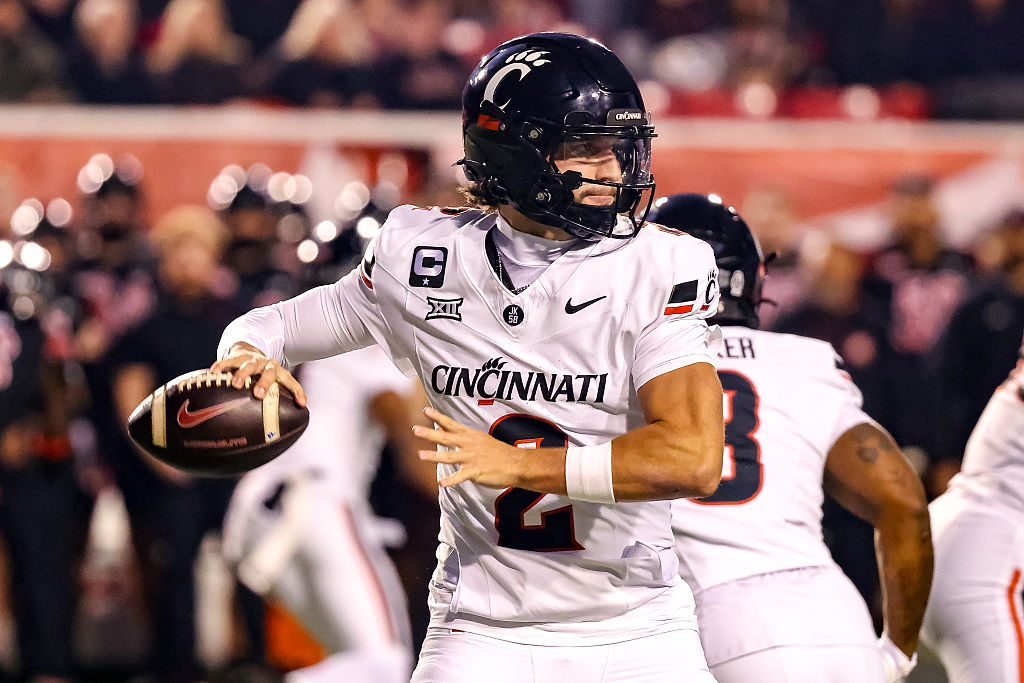
The Red Raiders are all in on Cincinnati quarterback Brendan Sorsby, inking the former Bearcat to a $5 million payday.
I mean absolutely no disrespect to Sorsby, but is he worth more money than most NFL players on rookie contracts?
The answer is actually more complicated than that, though, as there isn’t a salary cap (yet) in college sports, so Sorsby is technically worth whatever a team is willing to pay for him.
The problem is that for every Texas Tech (oil money) or Michigan (Larry Ellison), there are several other programs that won’t be able to keep up in the arms race.
I’m not even talking about the Tulanes and James Madisons of the world. Even blue-bloods like Georgia and Ohio State don’t have the booster base to keep up with any of the Texas schools.
That means teams like Tech, A&M, and even Houston can theoretically price out everyone for almost any player they want.
READ: College Footbal Is SIck – Transfer Portal, NIL, And More
Unqualified quarterbacks commanding top dollar in college football isn’t a new phenomenon, either.
Miami reportedly paid Carson Beck somewhere in the vicinity of $4 million to forgo his final season at Georgia and skip the NFL Draft to come down to Coral Gables, and while the Hurricanes are in the College Football Playoff semifinals, most of that is thanks to their dominance on the offensive and defensive lines of scrimmage.
The Canes probably could have gotten a similar result this season if they had cut that quarterback budget in half or, God forbid, actually developed a quarterback that was already on their roster for a fourth of Beck’s price tag.
Even non-traditional powers are upping the ante for quarterbacks.
A team like Duke paid their QB, Darian Mensah, $8 million over multiple years to leave Tulane after a stellar true freshman season.
Giving $8 million to a Group of 5 freshman feels risky, and while it paid off for the Blue Devils, it also robs a team like the Green Wave of the ability to develop a special talent like Mensah.
I don’t have a solution to any of this, and I doubt the NCAA does either.
They let this genie out of the bottle and have no desire nor power to put it back, so we as fans are now forced to deal with the consequences.
Regardless of what ends up happening, this is just another example of college football following in the footsteps of its older brother, the NFL, and being all the worse for it.
I’ve said it before, and I will say it again: I want my college football back.
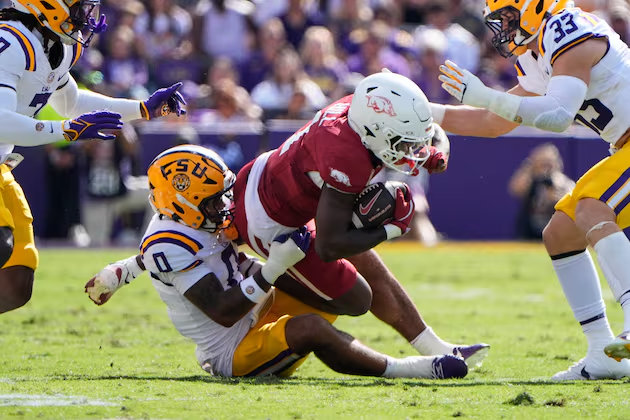
As another college football season winds to a close, it’s difficult to imagine that the game could be a bigger mess. Not even Congress could’ve conceived of a plan that would produce the anything-goes state of affairs.
Everyone knows this. Everyone from fans to coaches to journalists talk about it and complain about it. Its flaws and excesses are obvious, and some of college football’s smartest have offered sensible ways to fix it. It’s not that difficult.
But no one is doing anything about it. And the reason no one is doing anything about it is simple: The people in charge are the people who are making money and they have ZERO incentive to change anything.
They have the money and the revenues to continue the status quo. Who’s in charge, you ask? Not the NCAA, that’s for sure. There is no central government to oversee the overall good of sports; the NCAA ceded control of football to the SEC and the Big Ten and ESPN a long time ago. They are the de facto commissioners of college football, their very own cash cow.
“We’ve created a mess. Point blank,” Arizona State coach Kenny Dillingham said last month. “The whole industry is a mess. The only thing that’s not a mess is the dollar signs. Those are still pointing up. The dollar signs, the business of it, that’s skyrocketing. Everything else is a mess. That’s just being transparent and honest.”
“It’s broken; college football is broken,” says Scott Frost, the Central Florida football coach. “Everyone would agree if they were honest.”
“College football is messed up,” former coach Nick Saban said on “The Pat McAfee Show” last month. “The playoffs have created tremendous interest in college football. … There’s more interest than ever, higher TV ratings and all that. But the underbelly underneath, that is not really good. It’s not really good for the development of players. It’s not really good for all the sports that we try to sponsor in college. …
“We’ve got to decide (if) we want to be a professional developmental league, or are we really going to have college athletes who go get an education and develop value for their future as they’re playing and making money?”
Every aspect of college football is messed up. NIL. The transfer portal. The scheduling. The uneven playing field. The lack of central leadership. Disruptive and frequent conference realignment. The constant player turnover. The playoff selection process. The length of the season. The bowl system.
The biggest problem is the combined effect of the transfer portal and NIL. The transfer portal enables players to transfer at will — it has created annual free agency for all — and NIL money has been used as the carrot to lure players into the portal and to other schools. Rosters are turned upside down every season. Players have more freedom than professional and high school players.
So far, more than 4,000 players have entered the portal, which opened Jan. 2 and closes Jan. 16. That’s about one-third of all DI scholarship players. That’s more than double the total number of players in the NFL.
In 2025, The Athletic examined the top 50 prospects at every position in the Class of 2021, which was the first to begin their careers with the ability to transfer and play immediately. In all, The Athletic followed the collegiate careers of 600 prospects. Result: 60.3% of the players transferred at least once, and one-third of that group transferred multiple times. College football allows annual free agency.
“I don’t think that’s really good for college football,” then-Ole Miss coach Lane Kiffin told ESPN in 2023. “These massive overhauls of rosters every year really is not in the best interest of college football.”
(For the moment, let’s ignore the abject hypocrisy of a coach who abandoned his playoff-bound Ole Miss team to take the head coaching job at LSU.)
Players are chasing the NIL money. They (or their agents) are telling their current coaches, “Pay me or else.” They sell themselves off to the highest bidder. Boosters, rival coaches and agents encourage it. They are poaching players from other schools, offering endorsements, appearance fees and cash as a lure.
It’s the holiday shopping season for coaches, and it’s expensive. CBS posted a position-by-position price list for players on sale in the portal. The average price of a quarterback is $1.5 million to $2.5 million. An elite quarterback goes for $3.5 million. A running back averages $400,000 to $700,000. An offensive tackle: $500,000 to $1 million. A safety is on the low end of the hire-for-pay scale, $350,000 to $500,000.
It’s an easy fix. Limit players to one entry into the transfer portal, period. And/or make them sign contracts with a school, like the professionals they are. Let’s end the charade that this is anything but a professional football league and require contracts and a salary cap.
When a school makes a financial commitment to a player, he should make a commitment to the school. Big schools have turned Group of Five and FCS schools into farm clubs. These schools invest a year or two in developing a player, and then when he’s a finished product, the big schools swoop in and take him.
All that money and time is wasted. James Madison, which won one of the 12 spots in the College Football Playoff, has reportedly lost 11 starters to the transfer portal. At the very least, a school should be able to protect 80 players, and if one of them wants to transfer, he must sit out a year.
“I think (players) should make money, but there should be some restrictions on how they go about doing it,” says Saban. “And the movement is as big an issue, to me, a bigger issue than even the money. I mean, everybody being able to transfer all the time … that’s not a good thing.”
The lawless landscape has fomented other problems. Tampering is probably much more rampant than anyone realizes. Last spring, Colorado self-reported 11 tampering violations, which consisted of interactions with players from other schools who had not entered the portal.
The portal is bad enough, but now coaches are ignoring an NCAA bylaw that requires that players must actually enter the portal before they can have contact with another school. The irony is that Colorado coach Deion Sanders had accused Virginia’s coaching staff of tampering with Colorado players.
Florida State accused Oregon of tampering with running back Rodney Hill before he entered the transfer portal, while the player was practicing for the Orange Bowl. He eventually transferred to Miami.
Jeff Traylor, the head coach at Texas-San Antonio, says a school used an NIL offer to lure two of his players to leave his team before they were in the portal.
Agents also play a huge, underrated role in college football by facilitating, if not urging, transfers. NIL agent Noah Reisenfeld once claimed that “pretty much every NIL agency charges 20%” compared to the NFL/NBA standard of 3-5%.
They have every incentive to encourage players to leave for another school, annually.
Rodney Hill blames a bad agent for his much-traveled career. He says his agent pretended to be Hill and texted various schools attempting to get more money. When Florida State learned of these texts, Hill was shown the door. Hill went to Florida A&M, then decommitted after a coaching change, then committed to Miami, decommitted again, returned to Florida A&M, then entered the transfer portal again and landed at Arkansas.
“I wasn’t trying to leave (Florida State),” Hill told ESPN. “I didn’t want to leave, so I just had to, and the portal was closing up.”
He was fortunate, in a way. It has been widely reported that a high percentage of players in the transfer portal (40%, according to some reports) never find another school.
No matter how you cut it, college football is a mess for everyone except for a few very elite schools and players.

Jan. 5, 2026, 12:30 p.m. ET
As it sits just two wins from a national championship, Ole Miss could be set to return its star quarterback in 2026.
On Monday, Rebels quarterback Trinidad Chambliss reportedly agreed to a new NIL deal with Ole Miss, according to Yahoo Sports’ Ross Dellenger. The deal is contingent on Chambliss being granted an additional year of eligibility by the NCAA.
A transfer from Division II Ferris State, Chambliss began the year as the backup to Austin Simmons but took over the starting job due to injury and never gave it back. He has started the last 12 games, leading Ole Miss to an 11-1 record and a spot in the CFP semis.
Dellinger added that the school is hoping for a resolution to his eligibility waiver in the next week, with his father being “confident” it will go through.
Chambliss spent four seasons at Ferris State before transferring to Oxford, and he’s seeking a medical redshirt for the 2022 season. After redshirting in 2021, Chambliss didn’t play in any games as a redshirt freshman as he dealt with health issues that ultimately led to tonsil surgery.
The SEC Newcomer of the Year, Chambliss threw for 3,660 yards, 21 touchdowns and three interceptions while rushing for 520 yards and eight touchdowns. There was speculation he could follow his head coach, Lane Kiffin, to LSU, but instead, he’ll return to Ole Miss for one final season, provided he’s granted eligibility in 2026.
Contact/Follow@College_Wire on X and@College_Wires on Threads. Like our page on Facebook to follow ongoing coverage of college sports news, notes, and opinions.
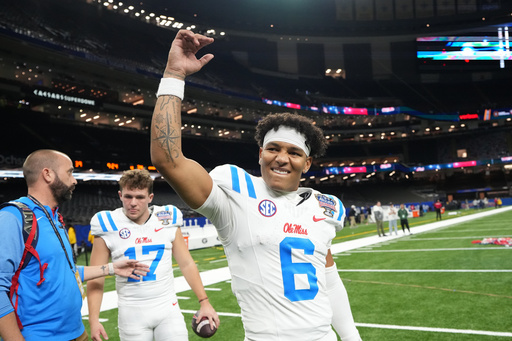
By JOHN MARSHALL
SCOTTSDALE, Ariz. (AP) — Miami’s Carson Beck is the prototypical power-program quarterback, a former four-star prospect with a massive NIL portfolio who knows what it’s like to play on the big stage.
Mississippi’s Trinidad Chambliss nearly gave up football, won a Division II national championship and has shined since being unexpectedly thrust into the spotlight.
Their paths will converge in the desert at Thursday’s Fiesta Bowl, with a spot in the national championship game on the line.
“Only four teams have the opportunity to go play this week,” Beck said. “I’m super grateful for that.”
Beck has been building toward this since starring as a high schooler in Jacksonville, Florida.
The 6-foot-4, 225-pound pro-style passer won a national championship in 2022 — the Bulldogs’ second straight — as a backup to Stetson Bennett IV, learning as he went. Beck took those lessons onto the field, throwing for more than 7,000 yards and 52 touchdowns in the next two seasons while leading Georgia to 24 wins.
A knee injury kept Beck out of the Bulldogs’ College Football Playoff loss against Notre Dame in early 2025 and, after initially declaring for the NFL draft, he opted to transfer to Miami, a school with a potent offense and plenty of NIL cash to throw around.
He’s been a perfect fit.
Poised and steady, Beck has thrown for 3,313 yards and 27 touchdowns on 74% passing with 10 interceptions. He led the Hurricanes (12-2, CFP No. 10 seed) to wins over Texas A&M and Ohio State in the playoffs and is 36-5 as a starter as he winds down his college career.
“He’s very experienced, he’s been successful everywhere he’s been,” Ole Miss coach Pete Golding said. “He’s always had his teams competing at a championship level and being in the playoffs.”
Chambliss’ career took a different trajectory.
With no Division I offers out of high school, the quarterback from Grand Rapids, Michigan, opted to play at Ferris State, where he redshirted the first two seasons — the second due to respiratory issues. He considered transferring to a Division III school to give college basketball a try, but chose to give football one more shot.
Good decision.
Chambliss led the Bulldogs to the Division II national championship in 2024, leading to offers from numerous Division I programs. He chose to play at Ole Miss, figuring he would be a backup but at least have the DI experience.
Chambliss’ fate changed when starter Austin Simmons went down with an ankle injury during the second game of the season. Chambliss took off and kept going, throwing for 353 yards against Arkansas in his first start and playing so well he kept the starting job once Simmons was healthy.
The dual-threat quarterback put pressure on defenses all season, rocketing passes into tight windows with his strong arm while extending plays with his legs.
Chambliss has thrown for 3,660 yards and 21 touchdowns with just three interceptions on 66% passing, adding 520 yards and eight more scores rushing. He led the Rebels (13-1, CFP No. 6 seed) to a win over Tulane in the CFP opening round and picked apart Georgia in the quarterfinals with 362 yards and two touchdowns in a 39-34 win.
“He’s a limitless football player,” Miami coach Mario Cristobal said. “Certainly, you could see on the sideline and watching some of the stuff on TV, his leadership skills and the way people gravitate to him. He’s had a tremendous impact on the program and plenty of respect for him.”
So has Beck, setting up a showdown in the desert.
___
Get poll alerts and updates on the AP Top 25 throughout the season. Sign up here. AP college football: https://apnews.com/hub/ap-top-25-college-football-poll and https://apnews.com/hub/college-football

Sports10 minutes ago
East Texans land on TSWA 4A All-State volleyball team

Sports27 minutes ago
Tritons Open 2026 Season with Three Home Matches

NIL30 minutes ago
Paul Finebaum names SEC coach who is ‘badly losing the PR battle’
Sports1 hour ago
Here are the 2025 TSWA high school all-state TSSAA volleyball teams
NIL1 hour ago
FSU football Mike Norvell, Michael Alford addressing new structure

Sports2 hours ago
12 Chattanooga area volleyball standouts earn TSWA all-state honors

NIL2 hours ago
Quarterback Market In College Football Has Become As Bloated As The NFL

NIL3 hours ago
Is it too late to save college football?

Motorsports3 hours ago
‘Duels at Daytona’ receive patriotic new name ahead of US celebration – Motorsport – Sports

Rec Sports3 hours ago
Rookie of the Year MLB front office selections 2026

Motorsports3 hours ago
Carson Hocevar makes announcement with $2.4B NASCAR backer – Motorsport – Sports

Rec Sports4 hours ago
Meeting to focus on youth sports’ future | Archives

Rec Sports4 hours ago
Registration opens for 2026 flag football season on Kauai

Motorsports4 hours ago
Carson Hocevar Signs Contract Extension With $2.2 Billion Worth Sponsor

Rec Sports4 hours ago
University of Washington Launches Free Legislative Tracker for Youth Sports Policy Across All 50 States

Motorsports4 weeks ago
SoundGear Named Entitlement Sponsor of Spears CARS Tour Southwest Opener

Motorsports4 weeks ago
Donny Schatz finds new home for 2026, inks full-time deal with CJB Motorsports – InForum

Rec Sports4 weeks ago
David Blitzer, Harris Blitzer Sports & Entertainment

NIL4 weeks ago
DeSantis Talks College Football, Calls for Reforms to NIL and Transfer Portal · The Floridian
Sports4 weeks ago
Elliot and Thuotte Highlight Men’s Indoor Track and Field Season Opener

Sports3 weeks ago
#11 Volleyball Practices, Then Meets Media Prior to #2 Kentucky Match

Motorsports4 weeks ago
Rick Ware Racing switching to Chevrolet for 2026
Sports4 weeks ago
West Fargo volleyball coach Kelsey Titus resigns after four seasons – InForum

Motorsports3 weeks ago
Nascar legal saga ends as 23XI, Front Row secure settlement

Sports3 weeks ago
Maine wraps up Fall Semester with a win in Black Bear Invitational

Motorsports3 weeks ago
Ross Brawn to receive Autosport Gold Medal Award at 2026 Autosport Awards, Honouring a Lifetime Shaping Modern F1

Rec Sports3 weeks ago
Stempien to seek opening for Branch County Circuit Court Judge | WTVB | 1590 AM · 95.5 FM

Motorsports3 weeks ago
Sunoco to sponsor No. 8 Ganassi Honda IndyCar in multi-year deal

Sports4 weeks ago
Women’s track and field athletes win three events at Utica Holiday Classic

Motorsports4 weeks ago
North Florida Motorsports Park led by Indy 500 Champion and motorsports legend Bobby Rahal Nassau County, FL





-
 Motorsports3 weeks ago
Ross Brawn to receive Autosport Gold Medal Award at 2026 Autosport Awards, Honouring a Lifetime Shaping Modern F1
-

 Rec Sports3 weeks ago
Princeton Area Community Foundation awards more than $1.3 million to 40 local nonprofits ⋆ Princeton, NJ local news %
-
 NIL3 weeks ago
Kentucky AD explains NIL, JMI partnership and cap rules
-

 Sports3 weeks ago
Beach Volleyball Unveils 2026 Spring Schedule – University of South Carolina Athletics
-

 Sports2 weeks ago
Badgers news: Wisconsin lands 2nd commitment from transfer portal
-

 Sports2 weeks ago
Is women’s volleyball the SEC’s next big sport? How Kentucky, Texas A&M broke through
-

 Rec Sports4 days ago
Five Youth Sports Trends We’re Watching in 2026
-
 NIL3 weeks ago
College football program loses 25 players to transfer portal
-
Rec Sports2 weeks ago
Inside the NWSL’s first combine: Can the league create a more robust pathway for American talent development?
-
 Sports3 weeks ago
Badgers news: Final Four Game Thread vs. No. 1 Kentucky Wildcats