
Connect with us
https://yoursportsnation.com/wp-content/uploads/2025/07/call-to-1.png

Rec Sports

New Art Exhibit Reimagines Warren through youth and adult perspectives | News, Sports, Jobs

Published

on


Photo submitted to the Times Observer
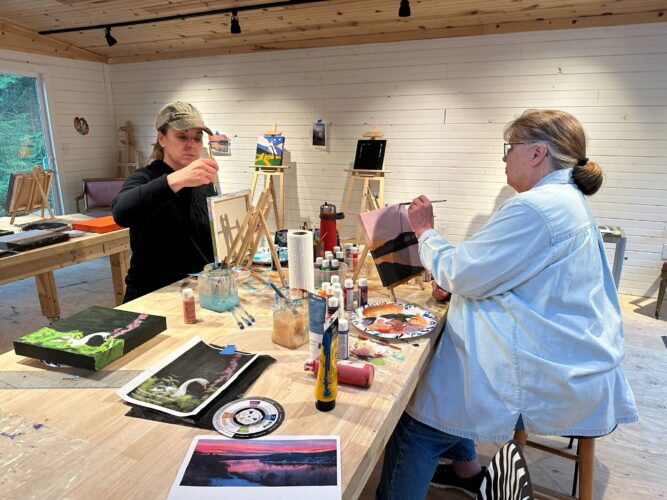
Shown are some of the artists participating in the Lens to Canvas: Warren Reimagined exhibit that opens Friday at the Liberty Street Marketplace.

From Lens to Canvas: Warren Reimagined will debut Friday, June 6, at Liberty Street Marketplace, blending photography and painting in a heartfelt tribute to the region’s landscapes, landmarks, and everyday life.

Created by artists from Kimberly Slocum’s Creekside Art Studios, the exhibit features original paintings by both youth and adult students. Each work is inspired by photographs originally captured and shared on social media by the Warren County Visitors Bureau. The artists, some new to painting and others more experienced, selected images that personally resonated with them–transforming them into vivid, one-of-a-kind works of art.

“When Kim approached us a while back asking if her students could use our photos as inspiration, we were honored and excited at the opportunity,” said Casey Ferry, executive director of the WCVB. “Seeing an artist begin with something from our perspective and reimagine it through their unique vision is exciting. I found it very interesting to see the variety of photos selected.”

Opening night for the exhibition coincides with Warren’s First Friday Art Walk. The public is invited to the Liberty Street Lunch from 5 to 8 p.m. to explore the art on display at Creekside Gallery, meet the artists, enjoy local food, and celebrate the creative energy that continues to flourish in downtown Warren.

The full From Lens to Canvas exhibit will remain on view throughout June at the Liberty Street Marketplace. In July, a special rotating series called Warren Through Our Eyes–featuring three selected works–will be displayed monthly at the Warren County Visitors Bureau, giving locals and visitors alike the opportunity to enjoy the artwork throughout the summer.

Slocum, owner and instructor at Creekside Art Studios, emphasized how deeply the collaboration reflects the spirit of the Warren community.

“The constant barrage of beautiful photographs from the Warren County Visitors Bureau is what sparked the idea of doing paintings. The WCVB staff do a remarkable job of capturing Warren County. And then it makes it even easier to have somebody like Casey Ferry as the director who’s open to the community and ideas that foster events like this,” she said. “Then we got a connector likeMichelle Peterson who connected me with First Friday and Liberty Street Marketplace and Liberty Street Lunch. It’s this type of connection with the community that makes Warren County great.”

According to Slocum, the project was about more than painting–it was a learning experience that deepened the artists’ relationships with their home.

“What makes this project really special is how much the artists have learned throughout the entire experience. It wasn’t just about painting a picture,” she said. “They spent time looking through local photography, choosing scenes that meant something to them, and in the process, they connected more deeply with the place they live. They also worked on technical painting skills, learned to look at things creatively, and discovered what goes into presenting their work in a professional way. I think a lot of them were surprised by how much is involved, and they’ve all really stepped up.”

The show includes work from about 17 to 18 artists, with a mix of experience levels–from first-time painters to more seasoned artists who have studied with Slocum for years. Visitors will also be able to purchase notecards featuring the artwork, printed by Moments in Time Studio.

“This has been a true community collaboration,” Slocum added. “The Warren County Visitors Bureau helped us source the photography. Liberty Street Marketplace offered their space. Liberty Street Lunch is staying open for the reception. And Moments in Time Studio helped us print the artists’ note cards. Being able to tie it all into Warren’s First Friday event just brought everything together. It feels like a celebration of art, community, and local pride.”

For more information, contact Casey Ferry at the Warren County Visitors Bureau at 814-726-1222 or email director@wcvb.net. Slocum can be reached at 814-730-2490.


Link

Continue Reading
Click to comment

Leave a Reply

Your email address will not be published. Required fields are marked *

Rec Sports

NFL Flag Football youth league coming to Amarillo this summer

Published

on


AMARILLO, Texas (KFDA) – A NFL Flag Football youth initiative is coming to Amarillo. This league catered toward youth is bringing new, non-contact sports for kids to get involved and learn the game of football in a different way while still having fun.

The Texas Panhandle is expanding the opportunity for youth to get more involved this summer through the NFL Flag Football program. This league gives boys and girls in Amarillo the chance to play with an NFL name.

Amarillo native, Tascosa High School alum and program owner and operator for this new initiative Mark Jackson explained why he wanted to bring this opportunity to Amarillo to give youth in the Panhandle the chance to be part of a growing sport and put an emphasis on the importance of inclusivity for the sport.

National reach and local opportunity

“When I had the opportunity to bring it up here because they’re playing all across the nation. Over 500,000 youth across the United States are playing right now. So I said, why not Amarillo? Why not, the kids up here have a chance to play like the kids across the United States and have a chance to, you know, maybe be national champions and go to the Pro Bowl and go to other countries and play,” Jackson said. “So, yeah, that’s why I did it.”

Jackson emphasized the NFL’s commitment to inclusivity.

“Well, that’s one of the NFL’s initiative is to have everybody included. Girls, boys, it doesn’t matter. They want everybody who wants to play to play. That’s what we’re gonna, in Amarillo, we’re gonna give. If you’re a girl, it don’t matter. If you think you can play football or you want to tell your dad or mom, look, I want to play, get out there,” he said.

Registration and schedule

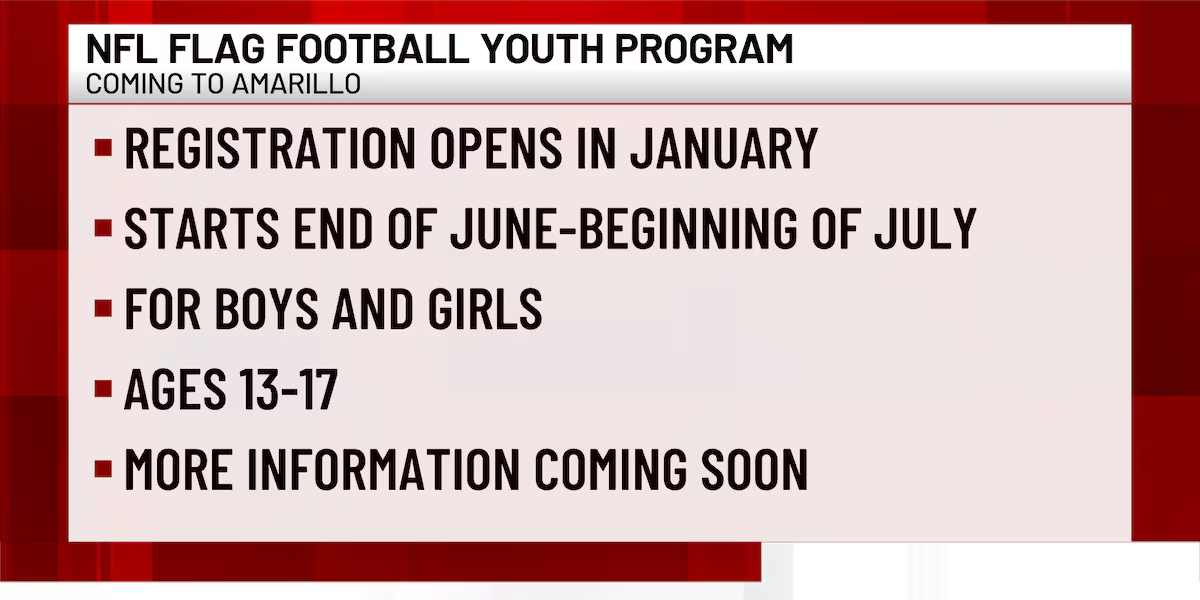
Registration will open in January. Games will start at the end of June and beginning of July.

This league is for boys and girls and open to ages 13 through 17. There is still time to get involved as an athlete or a coach as well.

An official website for this initiative and where people can donate to help this grow will be announced at a later time.


Link

Continue Reading

Rec Sports

Girls’ basketball: Brown, Hawks plunder Pirates to reach Berea final | Sports

Published

on


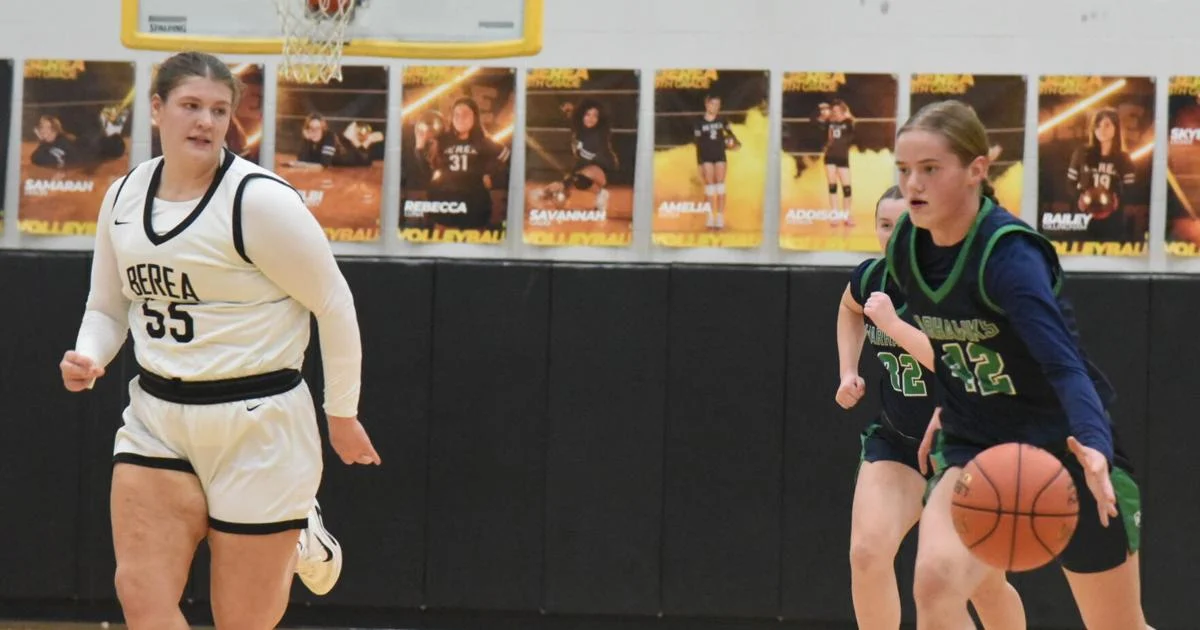
BEREA – “Human Nature” couldn’t have been on louder display Sunday afternoon at Conkin Gym if the decades-old Michael Jackson song by that title had been blaring over the speakers.

One of the toughest challenges of coaching youth sports is keeping your troops focused when they’re beating the opponent like a drum. Matt Walls has seen it up-close two days in a row, and at least a half dozen times already this season with his Great Crossing girls’ basketball team.


Link

Continue Reading

Rec Sports

Egyptian Swimming Federation Under Scrutiny After Swimmer’s Death

Published

on


Egyptian Swimming Federation Under Scrutiny After Swimmer’s Death

The Egyptian Swimming Federation is facing major changes in the wake the death of a swimmer at the national under-12 championships in December in Cairo.

According to Reuters, the federation has been forced to appoint an interim committee to run the organization after the head of the federation and its board were removed last week. The Egyptian Ministry of Youth and Sports has reached out to World Aquatics for interim guidance of the federation.

A swimmer named Youssef Mohamed Abdel Malek drowned during a meet on Dec. 2 at Cairo’s International Stadium swimming complex. Per reports from within the country, Malek’s body was not found until the start of the following race.

Yasser Idris, the head of the swimming federation and a member of the Egyptian Olympic Committee, has been ordered by public prosecutors to stand trial. Also referred for prosecution are the executive director of the swimming federation, its board, the director of the meet, its chief referee, other officials from the Al-Zohour Sporting Club and several lifeguards. All are accused of failure to do their duty in keeping Malek and other swimmers safe.

The Ministry of Youth Sports referred the matter to public prosecution following an investigation that included interviews with witnesses present and reviewing video footage of the incident.

In a statement, the swimming federation said it was halting all activities, “out of respect for public opinion and the family of Youssef Mohamed, pledging full compliance with court rulings and accountability for anyone found negligent.”


Link

Continue Reading

Rec Sports

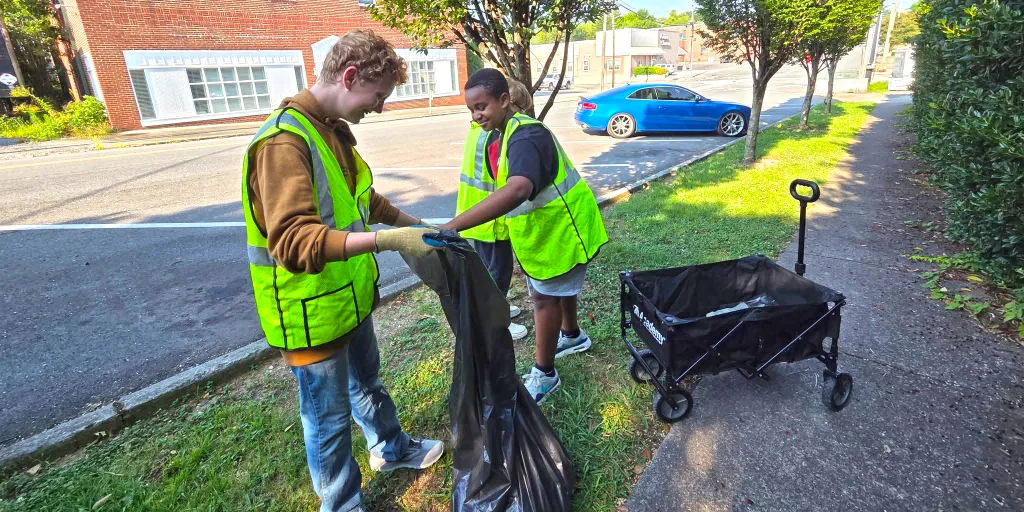
Teaching Generosity: How 4H youth turn the holiday season into a time of service

Published

on


Teaching Generosity: How 4H youth turn the holiday season into a time of service

Published 1:09 am Monday, December 29, 2025

“I pledge my head to clearer thinking, my heart to greater loyalty, my hands to larger service, and my health to better living….” Every meeting for 4-H members across the country begins with these familiar words, helping them connect to the values that nurture their growth as young leaders. The phrase “my hands to larger service” goes beyond mere words; it acts as a call to action and a reminder that genuine leadership begins with generosity, compassion, and a readiness to serve others.

The holiday season provides a meaningful opportunity to teach young people the value of generosity. Across the country, 4-H highlights that generosity is a key component of positive youth development, alongside belonging, mastery, and independence. Each element is crucial in fostering confident and compassionate young people. The University of Georgia Extension has long emphasized that learning about generosity helps youth understand how to give back to their communities in meaningful ways, and that 4-H members are committed to improving their “club, community, country, and world.” Research from Tufts University reinforces this message, stating that 4-H youth are four times more likely to make positive contributions to their communities than their peers. During the holiday season, acts of giving, such as volunteering, making cards for seniors, or collecting winter clothing, highlight generosity and help young people develop empathy, leadership, and resilience by teaching them to look beyond themselves. These experiences strengthen communities while instilling confidence and responsibility in youth.

This season is an ideal time to promote generosity. Communities recognize more needs, families are more open to giving, and young people participate in acts of kindness. The holidays emphasize service naturally, and volunteering encourages youth to develop lifelong giving habits. When young people serve together with neighbors, local leaders, and peers, they form meaningful community bonds. These shared experiences foster a sense of belonging and purpose, helping youth see themselves as important members of their community.

Generosity in 4-H isn’t limited to the holidays. It’s a year-round practice that encourages youth to give their time, talents, and energy to meaningful causes. Still, the holiday season provides a unique opportunity to emphasize and celebrate this vital aspect of positive youth development and foster lifelong habits. Ultimately, teaching youth to give during the holidays is more than just a festive activity; it’s an investment in the future. When young people see that generosity can be shown through simple acts of kindness or larger service projects, they carry those lessons into adulthood. The season becomes not just a time of receiving, but a time of shaping caring leaders who will continue to serve and engage their communities.

Meghan Corvin is the County Extension Coordinator and 4-H Youth Development Agent for the University of Georgia Extension, Whitfield County. Contact her at 706.278.8207 or meghan.corvin@uga.edu.


Link

Continue Reading

Rec Sports

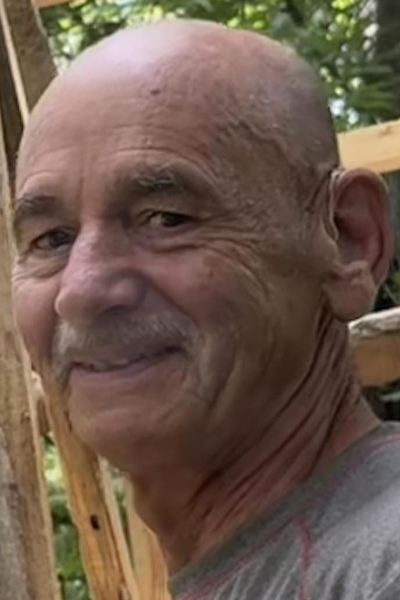
James ‘Big Jim’ Hanigosky 1958-2025 | News, Sports, Jobs

Published

on


AUSTINTOWN — James Stephen “Big Jim” Hanigosky, 67, departed this world on Monday, Dec. 22, 2025, at home after a courageous bout with cancer. Every step of the journey was taken with stoicism and a never-ending love and appreciation for life, nature, family, friends and faith.

Jim was born Oct. 6, 1958, to Anthony and Margaret Oleksa Hanigosky. He was a lifelong member of St. Mary Byzantine Catholic Church in Youngstown, where he was very active and giving of his time in the maintenance of church properties. Whether at church or with friends and family, Jim was known to put others’ needs first, selflessly offering his support or efforts in any way he could.

Jim worked for over 30 years at Northside Hospital in Youngstown in various capacities, where he was well-respected by his coworkers.

Jim was a dependable father, brother, uncle and friend, with a characteristic sense of humor and wit that brought laughter wherever he went. He approached life with creativity, ingenuity and humility, particularly in his love of woodworking and furniture restoration. He was passionate about sports, from rooting for his favorite Ohio State Buckeyes and Cleveland professional teams to playing and instilling a love of baseball in young people. In his youth, Jim excelled in baseball and basketball, and in his adulthood, he enjoyed playing and coaching baseball and softball leagues with friends.

To cherish his memory forever, Jim leaves his brother, John Hanigosky, and sister-in-law, Becky Hanigosky; his sister, Susan Hanigosky-Teter, and brother-in-law, Rick Teter; his daughter, Taylor Hanigosky; his “brother from another mother,” Willie Rosa, and his wife, Delia Rosa; his niece, Christine (Andrew) Kitchens; his nephew, John Hanigosky Jr.; and great-niece and nephews, Katie, James and Joshua; along with countless cousins, relatives and friends.

Jim was preceded in death by his parents.

Family and friends may gather to pay respects 10 to 11 a.m. Tuesday, Dec. 30, 2025, at St. Mary Byzantine Catholic Church, 356 S. Belle Vista Ave., Youngstown, where a funeral liturgy will take place at 11 a.m.

Interment will follow at St. Mary’s Parish Cemetery in Youngstown.

In lieu of flowers, Jim’s family suggests memorial contributions be made to St. Mary Byzantine Catholic Church.

Arrangements have been entrusted to Kinnick Funeral Home in Girard. Visit kinnickfuneralhome.com to send condolences to Jim’s family.


Link

Continue Reading

Rec Sports

Sure, the newspaper informed. But as it fades, those who used it for other things must adjust, too – Butler Eagle

Published

on


This photo shows a completed Montana Standard crossword sitting on a chair in Colleen Elliott’s home on Oct. 18 in Butte, Mont. Colleen Elliott via AP

The sun would rise over the Rockies in Butte, Mont., and Robin Gammons would run to the front porch to grab the morning paper before school.

She wanted the comics and her dad wanted sports, but the Montana Standard meant more than their daily race to grab “Calvin and Hobbes” or baseball scores. When one of the three kids made honor roll, won a basketball game or dressed a freshly slain bison for the History Club, appearing in the Standard’s pages made the achievement feel more real. Robin became an artist with a one-woman show at a downtown gallery and the front-page article went on the fridge, too. Five years later, the yellowing article is still there.

The Montana Standard slashed print circulation to three days a week two years ago, cutting back the expense of printing like 1,200 U.S. newspapers over the past two decades. About 3,500 papers closed over the same time. An average of two a week have shut this year.

That slow fade, it turns out, means more than changing news habits. It speaks directly to the newspaper’s presence in our lives — not just in terms of the information printed upon it, but in its identity as a physical object with many other uses.

“You can pass it on. You can keep it. And then, of course, there’s all the fun things,” says Diane DeBlois, one of the founders of the Ephemera Society of America, a group of scholars, researchers, dealers and collectors who focus on what they call “precious primary source information.”

“Newspapers wrapped fish. They washed windows. They appeared in outhouses,” she says. “And — free toilet paper.”

The downward lurch in the media business has changed American democracy over the last two decades — some think for better, many for worse. What’s indisputable: The gradual dwindling of the printed paper — the item that so many millions read to inform themselves and then repurposed into household workflows — has quietly altered the texture of daily life.

American democracy and pet cages

People used to catch up on the world, then save their precious memories, protect their floors and furniture, wrap gifts, line pet cages and light fires. In Butte, in San Antonio, Texas, in much of New Jersey and worldwide, lives without the printed paper are just a tiny bit different.

For newspaper publishers, the expense of printing is just too high in an industry that’s under strain in an online society. For ordinary people, the physical paper is joining the pay phone, the cassette tape, the answering machine, the bank check, the sound of the internal combustion engine and the ivory-white pair of women’s gloves as objects whose disappearance marks the passage of time.

“Very hard to see it while it’s happening, much easier to see things like that in even modest retrospect,” says Marilyn Nissenson, co-author of “Going Going Gone: Vanishing Americana.” “Young women were going to work and they wore them for a while and then one day they looked at them and thought, ‘This is ludicrous.’ That was a small but telling icon for a much larger social change.”

Nick Mathews thinks a lot about newspapers. Both of his parents worked at the Pekin (Illinois) Daily Times. He went on to become sports editor of the Houston Chronicle and, now, an assistant professor at the University of Missouri’s School of Journalism.

“I have fond memories of my parents using newspapers to wrap presents,” he says. “In my family, you always knew that the gift was from my parents because of what it was wrapped in.”

In Houston, he recently recalled, the Chronicle reliably sold out when the Astros, Rockets or Texas won a championship because so many people wanted the paper as a keepsake.

Four years ago, Mathews interviewed 19 people in Caroline County, Virginia, about the 2018 shuttering of the Caroline Progress, a 99-year-old weekly paper that was shuttered months before its 100th anniversary.

In “Print Imprint: The Connection Between the Physical Newspaper and the Self,” published in the Journal of Communication Inquiry, wistful Virginians remember their senior high school portrait and their daughter’s picture in a wedding dress appearing in the Progress. Plus, one told Mathews, “My fingers are too clean now. I feel sad without ink smudges.”

The many and varied uses

Flush with cash from Omahans who invested years ago with local boy Warren Buffett, Nebraska Wildlife Rehab is a well-equipped center for migratory waterfowl, wading birds, reptiles, foxes, bobcats, coyotes, mink and beaver.

“We get over 8,000 animals every year and we use that newspaper for almost all of those animals,” Executive Director Laura Stastny says.

Getting old newspapers has never been a problem in this neighborly Midwestern city. Yet Stastny frets about the electronic future.

“We do pretty well now,” she says. “If we lost that source and had to use something else or had to purchase something, that, with the available options that we have now, would cost us more than $10,000 a year easily.”

That would be nearly 1% of the budget, Stastny says, but “I’ve never been in a position to be without them, so I might be shocked with a higher dollar figure.”

Until 1974, the Omaha World-Herald printed a morning edition and two afternoon ones, including a late-afternoon Wall Street Edition with closing prices.

“Afternoon major league baseball was still standard then, so I got to gorge on both baseball and stock market facts,” an 85-year-old Buffett told the World-Herald in 2013, By then, he had become the world’s most famous investor and the paper’s owner.

The World-Herald ended its second afternoon edition in 2016 and Buffett left the newspaper business five years ago. Fewer than 60,000 households take the paper today, according to Northwestern University’s Medill School of Journalism, down from nearly more than 190,000 in 2005, or about one per household.

Time marches on

Few places symbolize the move from print to digital more than Akalla, a district of Stockholm where the ST01 data center sits at a site once occupied by the factory that prints Sweden main newspaper, Kaun says.

“They have less and less machines, and instead the building is taken over more and more by this colocation data center,” she says.

Data centers use huge amounts of energy, of course, and the environmental benefit of using less printing paper is also offset by the enormous popularity of online shopping.

“You will see a decline in printed papers, but there is a huge increase in packaging,” says Cecilia Alcoreza, manager, of forest sector transformation for the World Wildlife Fund.

The Atlanta Journal-Constitution announced in August that it would stop providing a print edition at year’s end and go completely digital, making Atlanta the largest U.S. metro area without a printed daily newspaper.

The habit of following the news — of being informed about the world — can’t be divorced from the existence of print, says Anne Kaun, professor of media and communication studies at Södertörn University in Stockholm.

Children who grew up in homes with printed newspapers and magazines randomly came across news and socialized into a news-reading habit, Kaun observed. With cellphones, that doesn’t happen.

“I do think it meaningfully changes how we relate to each other, how we relate to things like the news. It is reshaping attention spans and communications,” says Sarah Wasserman, a cultural critic and assistant dean at Dartmouth College in New Hampshire who specializes in changing forms of communication.

“These things will always continue to exist in certain spheres and certain pockets and certain class niches,” she says. “But I do think they’re fading.”

This photo shows the Montana Standard lying on Colleen Elliot’s doorstep on Oct. 18 in Butte, Mont. Colleen Elliott via AP

This photo shows a Montana Standard article about Colleen Elliot’s daughter, Robin Gammons, that was cut out of the paper and put on Elliott’s refrigerator, on Oct. 18 in Butte, Mont. Colleen Elliott via AP

This photo shows a Montana Standard article about Colleen Elliot’s daughter, Robin Gammons, that was cut out of the paper and put on Elliott’s refrigerator, on Oct. 18 in Butte, Mont. Colleen Elliott via AP


Link

Continue Reading

Most Viewed Posts

Trending