FAYETTEVILLE — The June 6 approval of the House v. NCAA settlement by Judge Claudia Wilken will give college athletics some structure regarding athlete compensation after several years of basically no rules since the NCAA implemented its name, image and likeness policy in 2021.
Schools, through collectives, had been able to spend an unlimited amount of money inciting athletes to attend their school. The settlement is expected to allow roughly $20.5 million that a school can pay athletes directly in 2025-26 for all sports, according to ESPN.
The pool of money is expected to grow every year during the decade-long deal. These new payments are in addition to scholarships and other benefits the athletes already receive.
Football is expected to receive the majority of money, followed by men’s basketball. Each school’s athletic director will decide the breakdown of money to each sport.
Hot Springs-based sports agent Chris Turnage, who represents NFL and college athletes, said he believes the settlement is good thing for the University of Arkansas football team.
“I think it helps Arkansas ultimately because again, theoretically it puts us on the same page as an Alabama and Ole Miss of what we can offer,” Turnage said.
Some schools with less-than-competitive men’s sports could shift more money to one or two sports. Meanwhile, Arkansas and others that have strong support for their football, basketball and baseball programs are presented with a challenge of divvying up the funds.
“Arkansas has three men’s sports that are very, very competitive (and) have fan buy-in,” Turnage said. “Not every school has that. That could hurt Arkansas a little bit because all three of those programs are so good.”
The $20.5 million available to be distributed by schools will be much less than some schools’ NIL budgets for football, which reportedly was as high as $30 million to $40 million last year.
Top football transfers during the 2025 cycle were reportedly commanding $1 million or more. The House settlement will mean less revenue to be shared, which could result in pay cuts in the future for some athletes currently on campus.
Arkansas Gov. Sarah Huckabee Sanders recently signed into law House Bill 1917, which exempts NIL deals from state income taxes.
“Something to watch is some states like Arkansas, it’s not going to be taxed,” Turnage said. “Some states it is, so that’s going to be a big, big factor, too. If you’re recruiting and you say, ‘Hey, if you go to UCLA, I’m letting you know this revenue money is going to be taxed at 33%. Where you can come to another state, it may not be.’ “
College coaches have complained that in the current NIL climate athletes focus so much on money that relationships have become secondary. The relationship part of recruiting could see a comeback with less money being distributed.
“Now you can try and win (at recruiting) on relationships and you can try and win on other things again, as opposed to a conversation of, ‘OK, how much are you going to pay me?’ ” Turnage said.
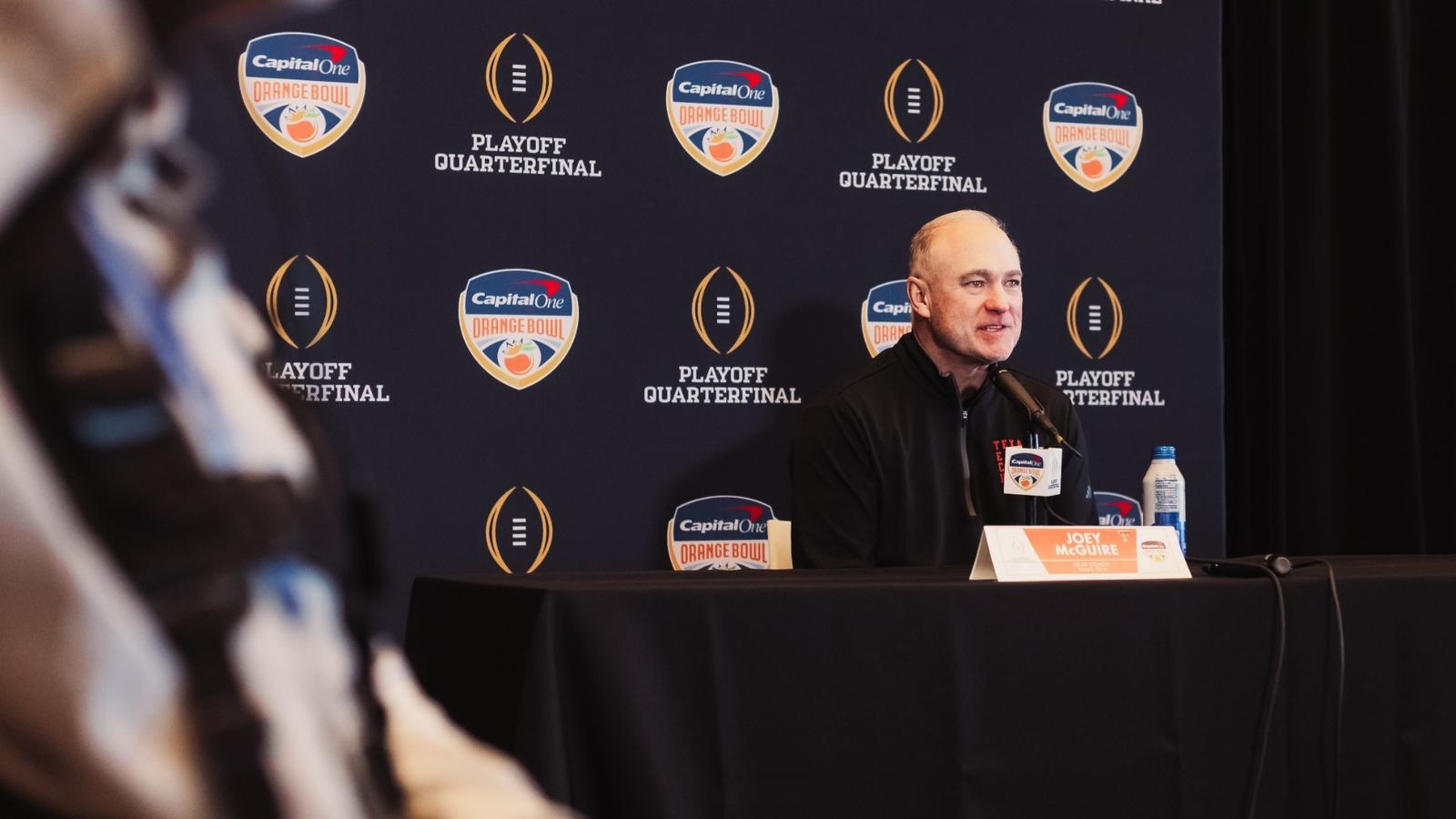
Texas Tech is one of the few schools that has mentioned plans to distribute the $20.5 million. Red Raider Athletic Director Kirby Hocutt said in December the school will distribute about 74% to football players, 17-18% to men’s basketball, 2% to women’s basketball, 1.9% to baseball and smaller percentages to other sports. That breakdown is about $15.1 million to football, $3.6 million to men’s basketball and less than $500,000 each to the other sports.
Former Major League Baseball executive Bryan Seeley was named chief executive officer of the new College Sports Commission, which will replace the NCAA in enforcing the new rules around revenue sharing, third-party NIL deals and roster limits.
With schools having relatively the same amount of money to spend, national recruiting analyst Tom Lemming of CBS Sports Network said he foresees under-the-table money coming back into recruiting as a way for schools to lure top prospects.
Lemming also said he believes the top 100 prospects in the nation could be offered additional money beyond what schools can pay from revenue sharing. He added coaches will be selective as to who receives the extra money.
“You want to do it with the top 100 players, but after that why risk your job for a guy that’s maybe ranked 150?” Lemming said. “There’s no set number, but I would imagine there will be a cutoff somewhere between 50 and 100 where you really don’t want take a chance in losing your job.”
Turnage also predicted schools will go back to the days where athletes were paid much more covertly.
“Now, you’re going to see that happening again,” Turnage said. “They’re all splitting $20 million. You’re going to see schools that are going to go under the table and say, ‘Hey, we have to get an advantage so we’re going to have to do the 20 million-plus the extra 500,000 or whatever.’ “
ESPN national recruiting director Paul Biancardi said some basketball programs will likely be doing business with less NIL money because of the House settlement.
“It’s not unlimited anymore,” Biancardi said. “The last couple of years it’s been like an auction. Most kids going to the highest bidder and there’s been no cap, there’s been no limit. There’s been very little transparency.”
Athletes will still be able to have NIL deals with businesses. Deals of $600 or more will have to be approved by the firm Deloitte’s NIL clearinghouse — called “NIL Go” — to ensure they are of fair market value.
Email Richard Davenport at [email protected]
9