Demond Williams Jr. finds Denzel Boston for a 23-yard TD


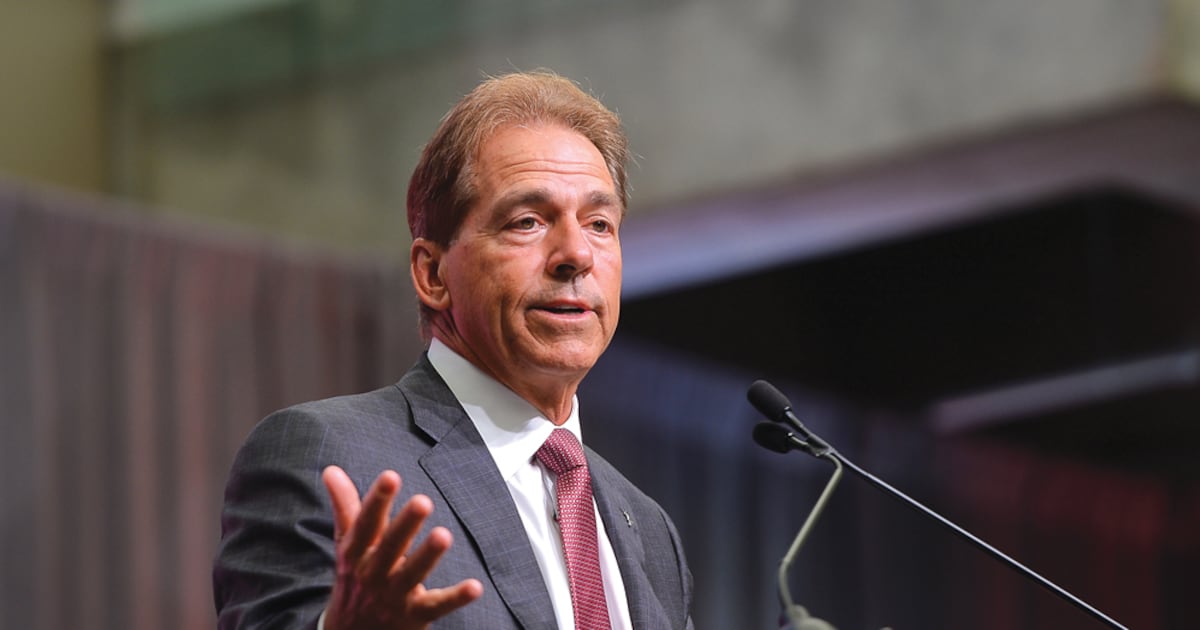
During an appearance on the SEC Network’s “Paul Finebaum Show” yesterday, former college football coach Nick Saban said that he “doesn’t believe there needs to be a commission to resolve the issues of college athletics,” which President Donald Trump reportedly “wants him to co-chair,” according to John Leuzzi of USA TODAY. Saban noted, “I don’t know a lot about the commission. Secondly, I’m not sure we really need a commission … the key to the drill is getting people together so that we can move it forward.” Saban: “I’m not opposed to players making money. I don’t want anybody to think that. I just think the way it’s going right now, it’s not sustainable and probably not in the best interest of the student athletes across the board or the game itself. So I think we need to protect the brand and the competitive advantages and disadvantages that are being created right now. And I think we can fix all that” (USA TODAY, 5/14). THE ATHLETIC’s Khan Jr., Vannini and Williams write while Saban’s comments “raised doubts,” sources said plans for the commission are “still moving forward.” The commission “is not official and still in the preliminary planning stages” (THE ATHLETIC, 5/15).
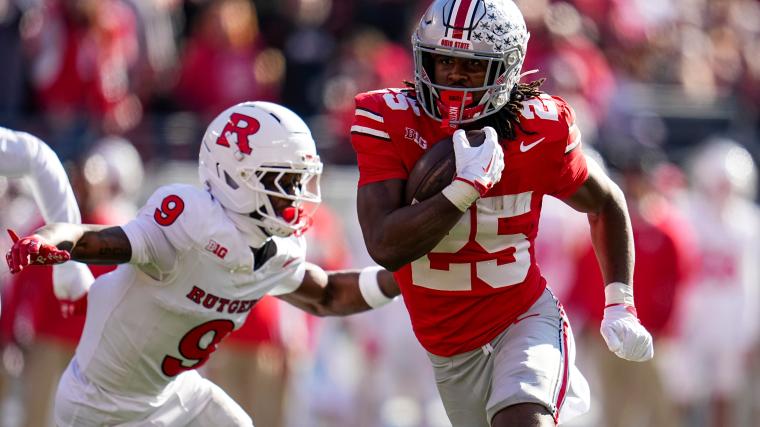
Bo Jackson’s NIL cost rumors create Ohio State transfer portal concern originally appeared on The Sporting News. Add The Sporting News as a Preferred Source by clicking here.
Bo Jackson had a great freshman season for the Ohio State Buckeyes.
Advertisement
He was frequently featured, and everyone got to learn that his real name is Lamar Jackson, and that he’s not related either to NFL/MLB legend Bo Jackson or to NFL superstar Lamar Jackson.
This is just Bo Jackson, the Ohio State true freshman running back.
And after a great year, there are rumors that he’s asking for a serious bag.
In fact, the dollars suggested would be more than former Ohio State RB TreVeyon Henderson is earning with the Patriots in the NFL. Henderson’s rookie deal as a second-round pick was for four years and more than $11 million total.
Here’s one trending rumor:
MORE: Jeremiah Smith breaks silence on entering transfer portal rumors
Advertisement
The NIL marketplace is a fuzzy one. It’s hard to know what intel is reliable or not.
And so this isn’t to say that Jackson is being greedy, or that he has plans to transfer away, or anything like that.
It just captures the moment that college football is in. Jackson, a Cleveland native, heads down to Columbus to star for the Buckeyes.
And then one season in, there’s the expectation that a new contract can be negotiated, and it’s pretty much free agency all the time all throughout college football.
It’s a tough place for the sport to find itself. And if the Buckeyes want to keep Jackson, they’ll have to navigate whatever the reality here actually is.
Advertisement
MORE: Dylan Raiola’s transfer saga is getting weirder and weirder

A quarterback reportedly reneging on a lucrative deal to hit the transfer portal, only to return to his original school. Another starting QB, this one in the College Football Playoff, awaiting approval from the NCAA to play next season, an expensive NIL deal apparently hanging in the balance. A defensive star, sued by his former school after transferring, filing a lawsuit of his own.
It is easy to see why many observers say things are a mess in college football even amid a highly compelling postseason.
“It gets crazier and crazier. It really, really does,” said Sam Ehrlich, a Boise State legal studies professor who tracks litigation against the NCAA. He said he might have to add a new section for litigation against the NCAA stemming just from transfer portal issues.
“I think a guy signing a contract and then immediately deciding he wants to go to another school, that’s a kind of a new thing,” he said. “Not new kind of historically when you think about all the contract jumping that was going on in the ’60s and ’70s with the NBA. But it’s a new thing for college sports, that’s for sure.”
Washington quarterback Demond Williams Jr. said late Thursday he will return to school for the 2026 season rather than enter the transfer portal, avoiding a potentially messy dispute amid reports the Huskers were prepared to pursue legal options to enforce Williams’ name, image and likeness contract.
Edge rusher Damon Wilson is looking to transfer after one season at Missouri, having been sued for damages by Georgia over his decision to leave the Bulldogs. He has countersued.
Then there is Ole Miss quarterback Trinidad Chambliss, who reportedly has a new NIL deal signed but is awaiting an NCAA waiver allowing him to play another season as he and the Rebels played Thursday night’s Collge Football Playoff semifinal against Miami. On the Hurricanes roster: Defensive back Xavier Lucas, whose transfer from Wisconsin led to a lawsuit against the Hurricanes last year with the Badgers claiming he was improperly lured by NIL money. Lucas has played all season for Miami. The case is pending.

Mississippi quarterback Trinidad Chambliss (6) runs the ball during the second half of the Fiesta Bowl NCAA college football playoff semifinal game against Miami, Thursday, Jan. 8, 2026, in Glendale, Ariz. Credit: AP/Rick Scuteri
Court rulings have favored athletes of late, winning them not just millions in compensation but the ability to play immediately after transferring rather than have to sit out a year as once was the case. They can also discuss specific NIL compensation with schools and boosters before enrolling and current court battles include players seeking to play longer without lower-college seasons counting against their eligibility and ability to land NIL money while doing it.
Ehrlich compared the situation to the labor upheaval professional leagues went through before finally settling on collective bargaining, which has been looked at as a potential solution by some in college sports over the past year. Athletes.org, a players association for college athletes, recently offered a 38-page proposal of what a labor deal could look like.
“I think NCAA is concerned, and rightfully so, that anything they try to do to tamp down this on their end is going to get shut down,” Ehrlich said. “Which is why really the only two solutions at this point are an act of Congress, which feels like an act of God at this point, or potentially collective bargaining, which has its own major, major challenges and roadblocks.”
The NCAA has been lobbying for years for limited antitrust protection to keep some kind of control over the new landscape — and to avoid more crippling lawsuits — but bills have gone nowhere in Congress.

Texas A&M wide receiver Mario Craver has a ball knocked away by Miami defensive back Xavier Lucas during the fourth quarter in the first round of the NCAA College Football Playoff, Saturday, Dec. 20, 2025, in College Station, Texas. Credit: AP/Sam Craft
Collective bargaining is complicated and universities have long balked at the idea that their athletes are employees in some way. Schools would become responsible for paying wages, benefits, and workers’ compensation. And while private institutions fall under the National Labor Relations Board, public universities must follow labor laws that vary from state to state; virtually every state in the South has “right to work” laws that present challenges for unions.
Ehrlich noted the short careers for college athletes and wondered whether a union for collective bargaining is even possible.
To sports attorney Mit Winter, employment contracts may be the simplest solution.
“This isn’t something that’s novel to college sports,” said Winter, a former college basketball player who is now a sports attorney with Kennyhertz Perry. “Employment contracts are a huge part of college sports, it’s just novel for the athletes.”
Employment contracts for players could be written like those for coaches, he suggested, which would offer buyouts and prevent players from using the portal as a revolving door.
“The contracts that schools are entering into with athletes now, they can be enforced, but they cannot keep an athlete out of school because they’re not signing employment contracts where the school is getting the right to have the athlete play football for their school or basketball or whatever sport it is,” Winter said. “They’re just acquiring the right to be able to use the athlete’s NIL rights in various ways. So, a NIL agreement is not going to stop an athlete from transferring or going to play whatever sport it is that he or she plays at another school.”
There are challenges here, too, of course: Should all college athletes be treated as employees or just those in revenue-producing sports? Can all injured athletes seek workers’ compensation and insurance protection? Could states start taxing athlete NIL earnings?
Winter noted a pending federal case against the NCAA could allow for athletes to be treated as employees more than they currently are.
“What’s going on in college athletics now is trying to create this new novel system where the athletes are basically treated like employees, look like employees, but we don’t want to call them employees,” Winter said. “We want to call them something else and say they’re not being paid for athletic services. They’re being paid for use of their NIL. So, then it creates new legal issues that have to be hashed out and addressed, which results in a bumpy and chaotic system when you’re trying to kind of create it from scratch.”
He said employment contracts would allow for uniform rules, including how many schools an athlete can go to or if the athlete can go to another school when the deal is up. That could also lead to the need for collective bargaining.
“If the goal is to keep someone at a school for a certain defined period of time, it’s got to be employment contracts,” Winter said.

Trent Dilfer is back to coaching high school football after his failed foray into the college game. After being fired as UAB’s head coach last October, the former Super Bowl winner has returned to Lipscomb Academy, where he will oversee a program he previously led to a pair of Tennessee state titles.
Hours after news of Dilfer’s new job was announced on Thursday, OutKick’s Jonathan Hutton released part of an interview he had with the head coach, reflecting on his time with UAB.
Dilfer was fired midway through his third season in Birmingham. During that time, he led the Blazers to a 9-21 record, including a 2-4 mark through six games last year.
“I’ve got some scars, I really do,” Dilfer said when addressing his return to Libscomb from UAB. “I’m a much better man than I was when I left. I think I got truly broken by college football in a great way. Everybody goes, ‘Why would you say that?’ Well, because that’s part of growth. I mean, you’ve got to be broken and reshaped and molded.
“College football broke me. Just the losing, developing players. Like we had 14 players that we recruited, I recruited, we developed … you play them, and then they go to Ole Miss and Arkansas and Alabama and everywhere else.”
Dilfer failed to retain several of his stars at UAB due to the transfer portal, including the three departures he alluded to in his interview — offensive lineman Delano Townsend (Ole Miss), wide receiver Kam Shanks (Arkansas) and safety Jalen Key (Alabama).
During his time in charge of the Blazers spoke out on the inequities UAB dealt with in terms of NIL deals, referring to the program’s resources as “chicken scratch.”
“In our conference … we have two teams that will go to our roster and sign double or triple what these guys can make on our roster and make them backups on their roster so that we can’t have them,” Dilfer said during an interview with “McElroy and Cubelic in the Morning” on Birmingham’s WJOX-FM 94.5 last year. “That’s happening in our conference.”
During the interview released on Thursday, Dilfer reflected on the difficulties he had retaining his roster at UAB while also questioning the program’s emphasis on remaining competitive.
“It was so hard to maintain the relationships working with people that didn’t see winning like I did,” Dilfer said. “You know the one thing that’s great about Lipscomb is that they care about winning as much as I do. They are invested. I cannot say that about the last place that I was at. It was just really hard.”
Alex Mortensen will serve as UAB’s next head coach after leading the Blazers to a 2-4 record while filling in as the interim coach following Dilfer’s firing last season. Mortensen has expressed optimism about the UAB administration’s willingness to extend more resources to the football program moving forward.
“I can just tell you that the institution, the administration, the university, they want to make a commitment to help as much as they can, to adapt in this era,” Mortensen said during an appearance on WBRC’s Good Day Alabama last month. “And then also you have people in the community that want to donate to our Excellence Fund and help that grow so we can go compete.”

The Athletic has live coverage of Miami vs. Ole Miss in the College Football Playoff Fiesta Bowl game.
For all the angst caused by the tumultuous evolution of college football into something that is not quite professional sports but definitely not what it used to be, the effects on what happens on the field have been all kinds of fun.
The new rules — or maybe the lack of rules — permitting players to be paid and leaving them free to move from team to team have produced a final four like never before.
This week’s College Football Playoff semifinals matching Ole Miss against Miami and Oregon against Indiana provide a fitting conclusion to what can comfortably be described as the most unpredictable season of the Playoff era. For the first time, the final four includes no recent national title winners and no preseason top-five teams.
The main criticism of the CFP’s four-team era was that the national title race had become too predictable. By expanding the field to 12, the hope was to bring some new blood beyond just the blue bloods into the spotlight.
Two years in, mission accomplished. In last week’s quarterfinals, Ohio State, Georgia and Alabama — combined 11 national titles since 2002 — were all eliminated.
The bigger field, though, is not so much the reason for the power shift as the vehicle for showcasing how much name, image and likeness compensation and unrestricted transfers have flattened the talent curve.
“Teams are built differently today than they were five years ago,” former Big 12 commissioner Bob Bowlsby said. “There’s no question about that. I don’t know if it’s leveled the playing field, but it’s moved talent around, following money.”
The margins between top teams have shrunk, intangibles such as fit, culture and identity are more impactful than ever and the number of teams that can aspire to win a national championship seems to have expanded, fortuitously, along with the CFP.
“Well, it is the new normal,” said former Notre Dame athletic director Jack Swarbrick, who along with Bowlsby was one of the architects of the 12-team format. “Indiana, they are a new powerhouse. I would argue that some traditional powerhouses aren’t flourishing as much. You’re changing out who’s in that position but are there really more (national title contenders)? I don’t know?
“It feels like there are more teams with an opportunity to be in the top echelon.”
This newfound unpredictability comes on the heels of maybe the most predictable period in modern college football history as it relates to the national championship race: the super-team era, dominated by Nick Saban’s Alabama dynasty and a small group of challengers.
Preseason rankings of CFP semifinalists
| Season | Champion | Runner-up | Semifinalist | Semifinalist |
|---|---|---|---|---|
|
2014 |
Oregon (3) |
Alabama (2) |
Florida State (1) |
|
|
2015 |
Clemson (12) |
Michigan State (5) |
Oklahoma (19) |
|
|
2016 |
Alabama (1) |
Ohio State (6) |
Washington (14) |
|
|
2017 |
Georgia (15) |
Clemson (5) |
Oklahoma (7) |
|
|
2018 |
Alabama (1) |
Notre Dame (12) |
Oklahoma (7) |
|
|
2019 |
Clemson (1) |
Ohio State (2) |
Oklahoma (4) |
|
|
2020 |
Ohio State (2) |
Clemson (1) |
Notre Dame (10) |
|
|
2021 |
Alabama (1) |
Michigan (NR) |
Cincinnati (8) |
|
|
2022 |
TCU (NR) |
Michigan (8) |
Ohio State (2) |
|
|
2023 |
Washington (10) |
Texas (11) |
Alabama (4) |
|
|
2024 |
Notre Dame (7) |
Texas (4) |
Penn State (8) |
|
|
Semifinalists |
||||
|
2025 |
Oregon (7) |
Ole Miss (21) |
Miami (10) |
From 2009 to 2022, the Crimson Tide won six national titles and lost three championship games in the Bowl Championship Series and the four-team CFP. Clemson broke up Bama’s run by winning two CFP championships. There was a streak of four consecutive seasons in which Dabo Swinney’s Tigers and Saban’s Tide played in the CFP (they split those games). Kirby Smart and Georgia finally displaced Alabama and won two straight titles in 2021 and ‘22.
Sprinkle in titles for loaded Florida State (2013), Ohio State (2014) and LSU (2019), and the only national champion that could be viewed as legitimately surprising during Saban’s 17 seasons at Alabama was Auburn in 2010. The Tigers were ranked No. 22 in the AP poll to start the season and went undefeated behind the force of nature that was Heisman Trophy winner Cam Newton.
Since the CFP started in 2014, the lowest preseason ranking of any national champion is No. 6 by LSU and Joe Burrow in 2019.
Every previous CFP semifinal has had at least two preseason top-five teams. All but one CFP semifinal (2015) had at least three preseason top-10 teams. Last year, the 12-team CFP debuted with four preseason top-10 teams in the semifinals.
This year’s CFP final four has no team that was ranked better than No. 7 (Oregon) in the preseason AP poll. Miami started 10th; Indiana was No. 20 and Ole Miss was No. 21. Meanwhile, three of the preseason AP top five (Texas, Penn State and Clemson) did not even make the CFP. The Tigers and Nittany Lions will finish the season unranked.
The combined average ranking of the semifinal teams is 12.6, the second-highest of any final four — with a caveat.
TCU in 2022 was one of two teams during the four-team CFP to make the field after starting the season unranked, along with Michigan in 2021. The Horned Frogs were not even among the others receiving votes in the preseason poll, so counting their ranking as 49th (48 teams received votes) skews the number for a group that otherwise included three preseason top-eight teams.
Every previous CFP semifinal has also included at least three teams that claim at least one national title from a major poll (AP or coaches), BCS or CFP. Miami is the only program among the four still remaining that has even one of those. The Hurricanes stacked five titles from 1983 to 2001 but haven’t sniffed one since.
It has been well-established that the very best teams now are not as good as the juggernauts that typically won national titles during the four-team CFP. The difference is especially noticeable in the SEC, which could be looking at three straight seasons without a team in the title game if Ole Miss loses.
In lieu of stacked teams that overwhelm opponents with talent, and with rosters turning over quicker than ever, everything else that helps determine success is amplified.
“Vibes is probably as good a way to go about describing it as any,” ESPN analyst and former Georgia Tech running back Roddy Jones said. “What’s the motivation? What’s the culture? How well coached are you?”
Stacking highly ranked high school recruiting classes remains the best way to get good and stay good in college football, but it is no longer the only way to compete for a national championship.
All of the remaining CFP teams have a starting lineup of at least 42 percent transfers. The four CFP teams with the most homegrown starters (Georgia, Ohio State, Oklahoma and Alabama) were knocked out in the first two rounds.
An Indiana-Ole Miss national title game would match the teams in the field with the highest percentage of transfer starters. The Hoosiers check in at 65.4 percent, and the Rebels lead the pack at 66.3 percent.
“If you look at the four teams that are remaining, they all know exactly who they are,” ESPN analyst Greg McElroy said. “That’s really helpful, and they all know how to recruit exactly to what they need. So I think that it allows them to be hyper-focused on the players in the portal that can help them win.”
Players getting paid can also affect locker room chemistry and become another variable to be managed.
“I think it is all of the intangible things that become more important,” Jones said. “That’s not to say one school just because they have it one year will have it the next. I think it is so team dependent. Leadership dependent. It is circumstance dependent.”
So this is a good thing for college football, right?
Prepare for TV ratings to possibly say otherwise. The lack of traditional powers in this year’s semifinals — unlike last year, when Texas played Ohio State and Penn State played Notre Dame — might not draw in as many casual fans.
“I think it’s always helpful to have, like, the Death Star,” said McElroy, who was the quarterback of Saban’s first championship Alabama team in 2009. “It’s always helpful to have the team that everybody hates for just the sport’s consumability.”
Still, it might be a trade-off worth making in the long run.
“The engagement of fan bases and believing that they have a legitimate shot to win a championship is greater than ever,” Jones said.
Of course, Indiana’s meteoric and unprecedented rise under coach Curt Cignetti might just lead to more frustration among fans as schools unsuccessfully chase a Hoosier-esque turnaround.
“I think the trend is that there will be more schools among the willing to throw money at NIL, and in doing so, attract good players,” Bowlsby said. “And if you can more broadly distribute the best players, you will have more upsets and more of the (previously) downtrodden playing deep into the tournament.”
On the flip side, many schools are likely to get priced out as the ante to get in the game goes up. And the current administration and oversight of college football has never been more discombobulated. The current structure is tenuous, and the future is uncertain.
“It’s a little crazy right now, but you know, the college football fan that wants to watch whatever’s on and be dazzled by what happens in the end of the game, I don’t know that it could be any better than it is right now,” Bowlsby said.
The modern landscape of college football often focuses on Name, Image and Likeness valuations or immediate playing time when top prospects enter the transfer portal. Yet for the nation’s highest-ranked available quarterback, the recruitment process has taken a clinical turn, prioritizing long-term health over immediate impact. Programs chasing the most coveted arm on the market are pausing to ensure his physical durability matches his statistical production.
Recruiting visits typically revolve around photo shoots, steak dinners and campus tours designed to woo elite talent. In this specific high-stakes recruitment, however, the itinerary includes mandatory stops with team physicians and athletic trainers.
Coaching staffs are exercising caution as they attempt to secure a commitment from a player who could redefine their offense if he can stay on the field.
A new report indicates that every university hosting this prospect is conducting thorough physicals to gauge a recovery timeline. The concern centers on availability for spring practice, a crucial period for any transfer trying to learn a new playbook and build chemistry with receivers. While the talent is undeniable, the medical reality has added a layer of complexity to a frenzied race for his signature.
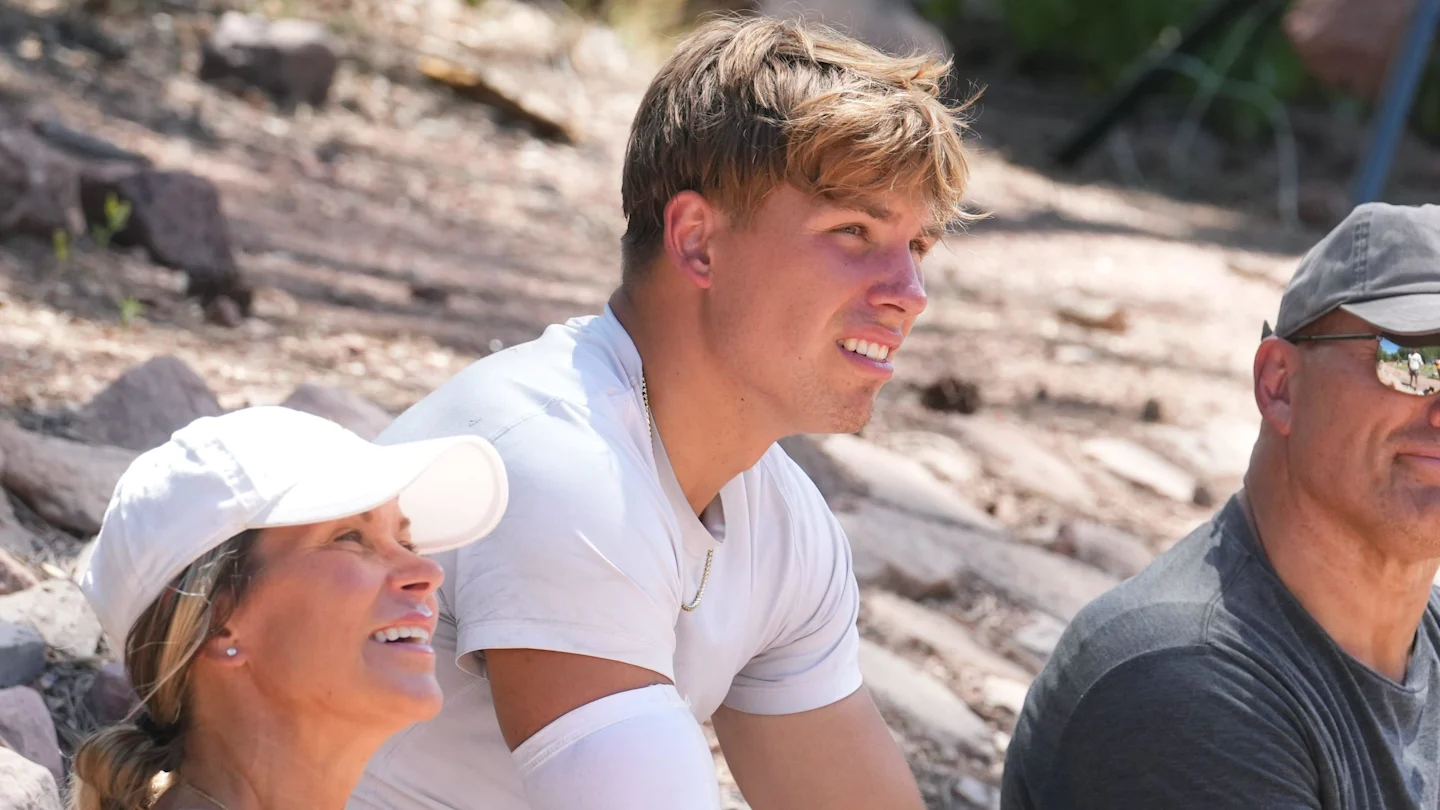
Sam Leavitt, the former Arizona State standout and the top-ranked quarterback in the transfer portal according to On3, is undergoing medical evaluations at each of his campus visits. The scrutiny stems from a foot injury that ended his 2025 season prematurely.
During an appearance on the Crain & Company Podcast, Pete Nakos of On3 emphasized the uncertainty surrounding the timeline, stating that “every school that’s bringing him in on a visit is doing a medical evaluation to understand what his timeline looks like for recovery.”

The timeline for Leavitt remains murky following surgery for a Lisfranc ligament tear he suffered in October. While schools are eager to sign the talented passer, Nakos added that “it is unclear if he’d be available for spring football” after missing the back half of the season. It is currently unclear if Leavitt will be ready to take snaps when spring camps open across the country.
This medical uncertainty hovered over his recent trip to Baton Rouge. Leavitt visited LSU earlier this week and was spotted at a basketball game with head coach Lane Kiffin.

Despite the hospitality, the Tigers’ medical staff likely spent significant time assessing his surgically repaired right foot. The evaluation process is standard protocol, but carries greater weight given the severity of Lisfranc injuries.
The rigorous testing continues as Leavitt heads to Knoxville. Tennessee is the latest program to host the quarterback, hoping to add his experience to its roster. The Volunteers are in the market for a proven starter, but, like LSU, they must weigh his rehabilitation schedule against their need for immediate competition at quarterback. Kentucky also shared a visit with Leavitt.
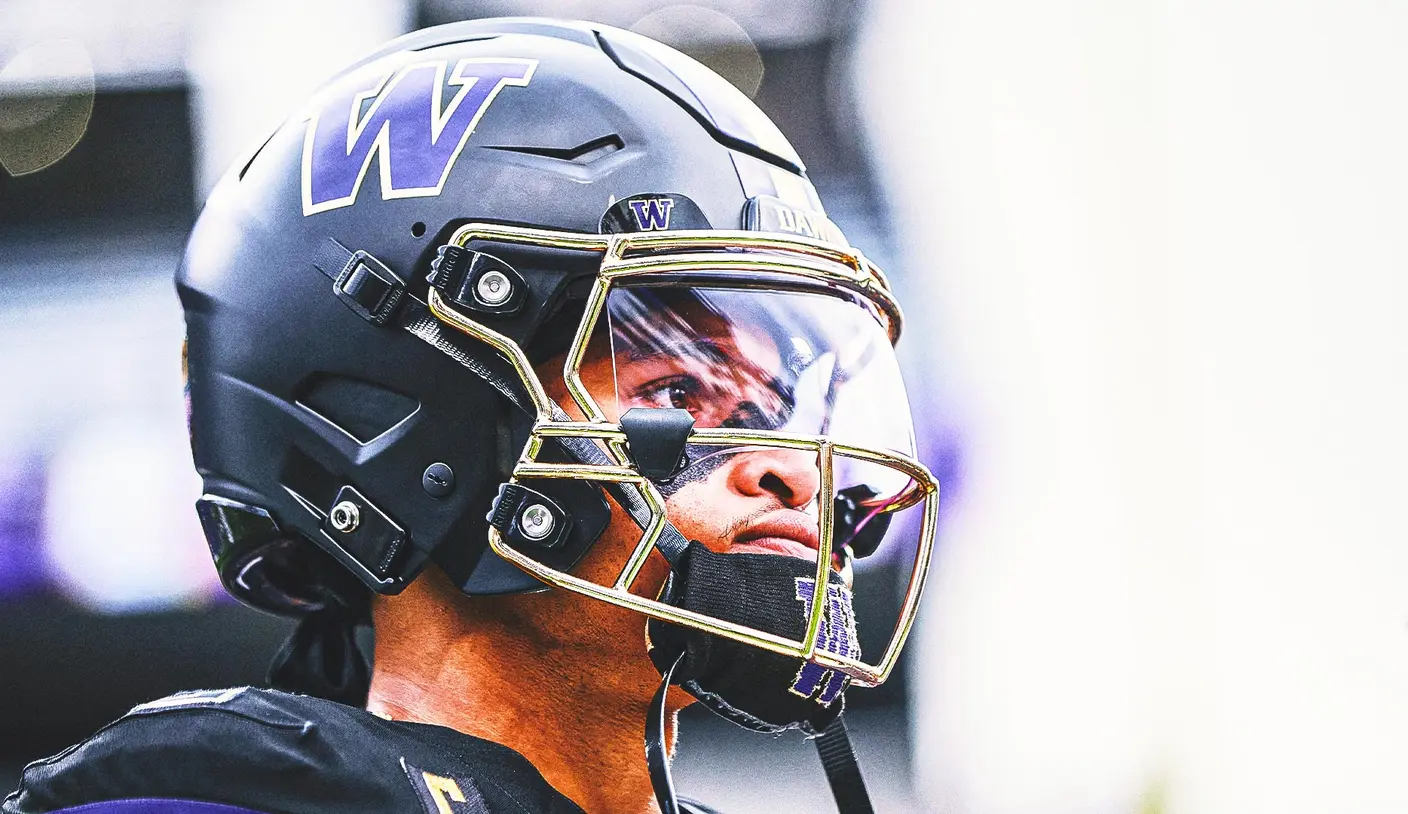
After a hectic 48 hours, quarterback Demond Williams Jr. is staying put at Washington.
Williams announced Tuesday that he intended to enter the transfer portal, but reversed course Thursday night, revealing on social media that he will remain with the Huskies.
“After thoughtful reflection with my family, I am excited to announce that I will continue my football journey at the University of Washington,” Williams wrote. “I am fully committed and focused on contributing to what we are building.”
The standout quarterback became the latest face of the debate surrounding name, image and likeness (NIL) and its enforcement when he announced that he was entering the transfer portal. Williams’ announcement came just four days after he signed an NIL deal to remain at Washington that was reportedly worth $4 million for one season.
It was reported shortly after that Washington planned to pursue legal action against Williams for breach of contract. Williams’ agent, Doug Hendrickson, dropped him as a client on Thursday.
“I have made the decision to end my representation of Demond Williams Jr. effective immediately due to philosophical differences,” Hendrickson wrote in a social media post. “Demond is an incredible talent and we wish him and his family the best in their future endeavors.”
Hendrickson is also the agent for Washington head coach Jedd Fisch.
Williams just completed his sophomore season at Washington, which was his first as the Huskies’ full-time starter. He helped Washington go 9-4, completing 69.5% of his passes for 3,065 yards, 25 touchdowns and eight interceptions. He also proved to be one of the top dual-threat quarterbacks in the country, rushing for 611 yards and six touchdowns.
Following a strong first season as a starter, Williams has been viewed as a potential Heisman candidate for the 2026 season. FOX Sports lead college football analyst Joel Klatt placed Williams fifth in his initial Heisman rankings for next season.
Want great stories delivered right to your inbox? Create or log in to your FOX Sports account, follow leagues, teams and players to receive a personalized newsletter daily!


Five Youth Sports Trends We’re Watching in 2026


Badgers news: Wisconsin lands 2nd commitment from transfer portal


Is women’s volleyball the SEC’s next big sport? How Kentucky, Texas A&M broke through

Kentucky VB adds an All-American honorable mention, loses Brooke Bultema to portal


NBA, Global Basketball Community Unite for World Basketball Day Celebration

$2.1 million transfer portal QB predicted to join College Football Playoff team


Dr. Patrick Staropoli Lands Full-Time O’Reilly Ride with Big Machine Racing


BangShift.com IHRA Acquires Historic Memphis Motorsports Park In Millington Tennessee. Big Race Weekend’s Planned For 2026!


NASCAR, IndyCar, and F1 Share These Race Days in 2026


Texas A&M volleyball’s sweep of Kentucky attracts record viewership