
NIL
NIL Alert: $2.8 Billion Athlete Revenue Settlement Approved – Sport

To print this article, all you need is to be registered or login on Mondaq.com.
On June 6, 2025, U.S. Northern District of California Judge
Claudia Wilken approved the National Collegiate Athletic
Association’s (NCAA’s) $2.8 billion athlete revenue
settlement (Settlement) in the consolidated case, In re College
Athlete NIL Litigation.1 The Settlement will
reimburse a class of former college athletes for their previously
withheld name, image, and likeness (NIL) compensation going back to
2016, with the majority of the Settlement funds going to college
football and men’s basketball scholarship players, and lesser
amounts to women’s basketball players and student athletes from
other sports. The Settlement also creates a system for the
NCAA’s Division I (D-I) institutions to share billions of
dollars of revenue with their student-athletes over the next ten
years, beginning July 1, 2025, through revenue-sharing NIL
agreements.
Background
Following the U.S. Supreme Court’s 2021 decision in NCAA v.
Alston, 594 U.S. 69, student-athletes gained the opportunity to
receive compensation from third parties using their NIL. Although
hundreds of thousands of student-athletes have since profited, two
issues persisted: (1) the rules restricted NCAA member conferences
and schools from directly sharing revenue derived from the
commercial use of student-athletes’ NIL with
the student-athletes and (2) studentathletes who finished
playing before the Supreme Court’s decision lost the
opportunity to earn revenue from their college’s commercial
exploitation of their NIL.
The In re: College Athlete NIL Litigation
Settlement
Subjects of the Settlement & Voluntary Opt-In /
Opt-Out
The NCAA and the “Power Five” conferences (Conference
Defendants)—Atlantic Coast Conference (ACC), the Big Ten
Conference, Inc. (Big Ten), the Big 12 Conference, Inc. (Big 12),
the Pac-12 Conference (Pac-12), and the Southeastern Conference
(SEC) (collectively, the Defendants)—and their “Member
Institutions” (meaning, any college, school, or university
that is a member in any sport of the North Carolina –
that was until a lawsuit was filed against the state’s Board of
Education compelling them to do otherwise.
That lawsuit, brought by Rolanda Brandon, on behalf of her minor
son Faizon Brandon (a highly rated 5-star quarterback), was filed
on August 23, 2024, in North Carolina’s General Court of
Justice, Superior Court Division against the North Carolina State
Board of Education and North Carolina Department of Public
Instruction. Per the complaint, the Brandons asserted that although
the state of North Carolina’s legislature did direct the North
Carolina State Board of Education to regulate how high school
athletes could monetize their NIL, that the Board, in lieu of
regulating, prohibited it outright.2 Because the Board
of Education exceeded their delegated statutory authority, the
Brandons’ claimed, its NIL prohibition was arbitrary and
capricious and therefore invalid pursuant to N.C. State Stat.
Section 1-253 and the North Carolina Rule of Civil Procedure 57.
The Brandons’ sought a preliminary injunction against the
Board’s NIL ban due to the fact that Faizon and his family
would be irreparably harmed financially because it precluded them
from entering into a formal licensing and endorsement agreement
with NIL Sponsor 1, while also foreclosing any
additional opportunities with other businesses in the
future.3
By way of background, in September of 2023, the North Carolina
state legislature adopted a bill directing the Board of Education
to “adopt rules governing high school interscholastic athletic
activities conducted by public school units” including
“student amateur status requirements, and rules related to use
of a student’s name, image, and likeness.”4 On
July 1, 2024, the North Carolina State Board of Education, in lieu
of adopting a set of regulatory rules, instead outright banned
every public high school athlete from using his or her name, image
or likeness for commercial purposes.5 That outright
prohibition, however, apparently was an overreach by the Board of
Education because on October 1, 2024, Superior Court Judge Graham
Shirley granted the Brandons’ motion for preliminary injunction
and enjoined the Board from prohibiting any athlete attending a
public school in the state of North Carolina from exercising his or
her right to monetize their NIL.
Although the state of North Carolina’s ruling is not legal
precedent for the other remaining states currently foreclosing high
school athletes from monetizing their NIL, those states should
take notice and understand that their prohibition may be vulnerable
to a legal challenge. That being said, with no national standards
regarding NIL, most of the forty states that do allow for
monetization rest upon their high school athletics governing body
to formulate any and all rules and regulations. This leads to a
variation of standards between states, but there are a few key
restrictions present in most of these rules that high school
athletes should be aware of:
- High school athletes typically may not refer to or include
their school’s uniforms, logos, colors or facilities of the
state’s high school athletic association in their NIL
activities. - High school athletes are typically prohibited from partnering
with gambling, alcohol, tobacco, weapons, firearms, ammunition, and
other adult categories brands. In those states where NIL op
portunities are allowed, high school athletes have a chance for
a significant financial windfall. However, athletes, their parents
and those advising them must ensure that any NIL agreement is in
accordance with the applicable rules of their state, since
noncompliance could lead to loss of eligibility to participate in
athletic competition, which will certainly jeopardize any future
athletic and financial opportunities.
NCAA D-I and/or a Conference Defendant)—plus Notre
Dame—are automatically bound to the Settlement and must
comply with its terms and requirements. Non–Power Five D-I
schools are not automatically covered by the revenue-sharing
component of the Settlement; however, they did have the opportunity
to opt in to the Settlement by June 15, 2025, to share NIL-related
revenue with athletes and join the enforcement and reporting
framework.
Notably, the Ivy League decided not to opt in. Ivy League
schools do not offer athletic scholarships, using need and
merit-based financial aid instead. The Ivy League views the
Settlement’s revenue-sharing model as a departure from its
principles of no athletic scholarships and avoidance of
pay-for-play. Although Ivy League athletes will not have the
opportunity to share revenue derived from their schools’
exploitation of their NIL, they can still pursue third-party NIL
deals.
Further, athletes who did not want to be part of the class (and
therefore want to preserve the right to sue the NCAA and Power Five
conferences for antitrust-related claims) had the opportunity to
opt out, which would exclude them from all aspects of the
Settlement.
Future Institutional RevenueSharing Framework
Beginning July 1, 2025, NCAA D-I and Power Five Member
Institutions may enter into exclusive or non-exclusive NIL licenses
and/or endorsement agreements with athletes to share revenue
for athletes’ NIL and institutional brand promotion, excluding
broadcast rights for a term not to exceed the student-athlete’s
eligibility to participate in NCAA sports. Member Institutions may
act as the marketing agent for studentathletes with respect to
third-party NIL contracts.
Although Ivy League athletes will not have the
opportunity to share revenue derived from their schools’
exploitation of their NIL, they can still pursue third-party NIL
deals.
Further, Member Institutions, and Notre Dame, can provide
studentathletes with additional direct payments and/or benefits
over and above annual existing scholarships and all other benefits,
capped at $20.5 million per school for 2025–2026, increasing
~4% annually for the following ten years; however, the increase
will be reevaluated every three years based on increases in certain
sports-related revenue among the Conference Defendants and Notre
Dame.
Enforcement & Oversight
All D-I student-athletes must report to their school and/or the
“Designated Reporting Entity” (managed by Deloitte) any
and all third-party NIL contracts or payments with a total value of
$600 or more on a schedule to be determined by the Defendants.
The College Sports Commission (CSC), an independent regulatory
body established by the Power Five, is the central enforcement
authority for the Settlement’s new compensation model and will
oversee all enforcement of the Settlement terms including
“Revenue Sharing,” “Name, Image, and Likeness
Deals,” and “Roster Limits.” The CSC states that the
NCAA “remains responsible for enforcement of rules not created
in connection with the settlement.”
Retroactive Benefits Pool
Under the Settlement, a total of approximately $2.8 billion in
backdamages will be distributed over ten years (~$280 million per
year) to eligible D-I athletes for past NIL restrictions
(2016–2024). This consists of a $1.976 billion NIL fund plus
$600 million for pay-for-play claims. Approximately 90% of the
Settlement will be paid to former football and men’s basketball
players because the payout formula is based on historical media
revenue and licensing data, with the remaining funds reserved for
other men’s sports and women’s sports.
Roster & Scholarship Policies
All NCAA D-I athletic scholarship limits are eliminated;
instead, the NCAA may adopt D-I roster limits, capping the
total number of athletes who can participate on a team. The new
roster caps are largely modeled on existing scholarship limits.
This shift gives schools greater flexibility on how they can
allocate aid and compensation and not affect athletes who were
already enrolled or who had signed letters of intent before April
7, 2024—this ensures no current student-athlete loses a spot
due to the new limits during their eligibility. Each school must
submit its list of exempt/grandfathered athletes by July 6,
2025.
Still, Member Institutions will have the option of making
incremental athletic scholarships available to student-athletes
above the number currently permitted by NCAA D-I rules for a
particular sport, subject to the roster limits. However, the full
cost-of-attendance dollar value of any new or incremental athletic
scholarships—that were not previously permitted by NCAA D-I
rules—up to $2.5 million (the Athletic Scholarship Cap) will
count against the pool of funds each Member Institution may
allocate to student-athletes.
Title IX Objections on Appeal to the Ninth Circuit
Before approving the Settlement, Judge Wilken held a hearing on
April 7, 2025, where she addressed objections raised by several
female student-athletes. The objectors argued that the proposed
$2.8 billion in backpay would disproportionately benefit male
athletes—particularly those in football and men’s
basketball—due to historic and systemic disparities in media
exposure and revenue generation.
Judge Wilken rejected these Title IX objections, reasoning that
the instant antitrust case had nothing to do with Title IX, a
federal law that prohibits sex-based discrimination in education
programs and activities that receive federal financial assistance.
While the court declined to consider Title IX arguments in the
context of this Settlement, Judge Wilken did leave the door open
for future Title IX lawsuits based on how schools make future
payments to athletes.
Almost immediately after Judge Wilken’s final judgment,
approximately twelve female athletes filed a notice of appeal to
the Ninth Circuit, arguing that the $2.8 billion settlement
violates Title IX based on inequalities in compensation. While
injunctive reform under the Settlement is already in effect, damage
payments are stayed pending the outcome of the appeal.
Impacts of the Settlement
Student-Athlete Transfers, Eligibility, and Poaching
On April 22, 2024, the NCAA adopted legislation removing limits
on the number of times an academically eligible student-athlete may
transfer during their collegiate career. This change allows
athletes to transfer multiple times without penalty, provided they
are in good academic standing.
This Settlement is expected to significantly increase transfer
activity. In particular, student-athletes at Ivy League
institutions and non–Power Five or non-NCAA schools may be
incentivized to transfer to schools that participate in
revenue-sharing, offer larger athletics budgets, and actively
support third-party NIL opportunities. With no threat of losing
eligibility, transferring becomes an attractive avenue for athletes
seeking both competitive and financial advancement.
However, transferring raises concerns about schools poaching
studentathletes who have already signed NIL contracts with other
programs. This exact issue was raised on June 20, 2025, when the
University of Wisconsin (UW) and its NIL collective filed a
complaint against the University of Miami (UM) over alleged
tortious interference with a two-year binding revenue-sharing
contract that was set to begin July 1, 2025. UW claims that UM
communicated with a UW defensive back, Xavier Lucas, who had not
entered the transfer portal, “knowingly inducing” him to
breach his contract with UW. The studentathlete had reportedly
requested to enter the portal, but UW refused, based on their
agreement.
This case is the first of its kind and may set a critical
precedent on whether schools can legally recruit student-athletes
already under binding revenue-sharing contracts tied to the
Settlement. The Big Ten is supporting UW with the lawsuit against
UM.
Questions on Employee Status
While the Settlement allows schools to directly pay their
athletes and share revenue, it does not redefine the
student-athletes as employees. However, student-athlete
compensation creates ambiguity regarding whether they are
“employees” under federal or state law, allowing
student-athletes to collect benefits and unionize. The question of
whether student-athletes are considered employees under
the Fair Labor Standards Act is currently being litigated in
the Third Circuit in Johnson v. NCAA. If a court
eventually does rule that student-athletes are employees, the
Settlement has provided that the NCAA or Power Five conferences may
modify or terminate their agreements, accordingly.
Potential Federal Legislation
There is currently no NIL federal legislation in place, but
prior to the Settlement, many state legislatures were actively
enacting NIL laws. Although the Settlement fundamentally reshapes
the national college sports landscape, it does not override or
preempt existing state laws. Instead, it operates alongside state
legislation, creating a layered legal environment where schools
must comply with both the Settlement terms and their state’s
NIL statutes. Where conflicts exist, states are prompted to revise
their laws to harmonize with the Settlement and avoid competitive
disadvantages in recruiting.
Because the Settlement does not have federal preemption power,
there is growing pressure for federal legislation. The NCAA has
asked Congress for legislation that would grant it an antitrust
exemption, preempt all state laws related to NIL, and restrict
student-athletes from being considered employees.
Congress is not alone in examining the impact the Settlement has
on college athletics, and the disparity it creates among sports and
athletes. President Donald Trump is reportedly considering an
executive order to regulate NIL deals in college athletics. He has
instructed White House aides to begin studying what an order would
look like. Other government officials, such as Rep. Michael
Baumgartner (R. WA.), may propose legislation to replace the NCAA
with a new body headed by a presidential appointee to ensure that
NIL funds and revenues are shared with schools and distributed
“equally among all student athletes of such
institutions.” This Bill, H.R. 2663, the Restore College
Sports Act, has been assigned to the House Committee on Education
and Workforce.
Conclusion
The Settlement represents a transformative moment in the legal,
financial, and regulatory framework of college athletics. It not
only compensates thousands of former student-athletes for years of
denied NIL revenue but also creates a forward-looking
revenue-sharing model that provides substantial compensation to
certain student-athletes. While the Settlement brings long-overdue
benefits, it also introduces a host of unresolved legal and policy
challenges, such as Title IX concerns, transfer/poaching disputes,
questions surrounding employment status, and conflicting state
legislation. As these issues continue to unfold, it will be
interesting to see how schools, athletes, and lawmakers respond to
this new era in college sports.
Footnotes
1. This consolidated litigation began as two separate
actions: (1) House v. National Collegiate Athletic
Association, 4:20-cv-03919 (N.D. Cal) and (2) Oliver v.
National Collegiate Athletic Association, 4:20-cv-04527 (N.D.
Cal). ). The litigation was further consolidated with two similar
actions: (3) Hubbard v. National Collegiate Athletic
Association, 4:23-cv-01593 (N.D. Cal) and (4) Carter v.
National Collegiate Athletic Association, 23-cv-06325, (N.D.
Cal.).
2. Brandon v North Carolina Board of Education, et al,
24CV026975-910
3. 24CV026975-910 Complaint at page 20.
4. 2023 N.C. Sess. L. 133 Section 17. (a) (N.C. Gen Stat.
Section 115C-407.55(1)(h))
5. ATHL-008 (NIL Prohibition).
Originally Published by The NIL Institutional
Report
The content of this article is intended to provide a general
guide to the subject matter. Specialist advice should be sought
about your specific circumstances.


Julian Sayin is steering Ohio State toward a national championship run with one of the most loaded rosters in college football. The Buckeyes secured the No. 2 seed in the College Football Playoff despite stumbling against Indiana in the Big Ten title game.
That loss stung, but it did not derail their season. Ohio State still earned a first-round bye alongside Indiana, Texas Tech, and Georgia.
MORE: Florida quarterback DJ Lagway announces transfer portal decision
While the team enjoyed some extra rest before the postseason grind begins, Sayin grabbed attention off the field. He announced a new NIL partnership with Wingstop and Dr Pepper, posting the news himself.
“Postseason calls for big plays with @drpepper and @wingstop, had to get the play card out,” Sayin wrote.
The deal adds to an already impressive NIL portfolio. Sayin previously signed with The Foundation, Dick’s Sporting Goods, and JLab Audio. His current NIL valuation sits at $2.5 million, according to On3.

Ohio State Buckeyes quarterback Julian Sayin talks to media following the NCAA football game against the Michigan Wolverines at Michigan Stadium in Ann Arbor, Mich. on Nov. 29, 2025. Ohio State won 27-9.
Sayin’s path to Columbus took a detour through Tuscaloosa first. After a brief stint with Alabama, he flipped his commitment to Ohio State and headed to the Big Ten. That decision paid off immediately.
In his first season as the Buckeyes’ starting quarterback, Sayin led the team to a 12-1 record and a Heisman Trophy finalist nod. The former five-star recruit has lived up to the hype.

Ohio State Buckeyes quarterback Julian Sayin (10) motions during the Big Ten Conference championship game against the Indiana Hoosiers at Lucas Oil Stadium in Indianapolis on Dec. 6, 2025. Ohio State lost 13-10.
His numbers back it up. Sayin has thrown for 3,323 yards and 31 touchdowns this season, showing both control and efficiency under center.
He is playing alongside elite talent like wide receiver Jeremiah Smith, Carnell Tate, Caleb Downs, and Arvell Reese. With that kind of firepower around him, Ohio State looks built for a deep playoff run.
— Enjoy free coverage of the top news & trending stories on The Big Lead —
NFL: Head coaches on hot seat entering Week 16 of NFL season
NFL DRAFT: Texas star Arch Manning reveals shocking 2026 NFL Draft status
CFB: Florida quarterback DJ Lagway announces transfer portal decision
NBA: Victor Wembanyama gives ultimate compliment to Oklahoma City Thunder amid rivalry talks
SPORTS MEDIA: ESPN analysts bash Dallas Cowboys defense for slim NFL playoff odds
VIRAL: DeAndre Ayton’s mom cooks incredible Jamaican holiday meal for Lakers

NEWYou can now listen to Fox News articles!
It has been less than half a decade since Ed Orgeron was last on a football sideline, but the sport has had a generational shakeup in the NIL era.
Coach O won a national championship at LSU with, in his words, “the best transfer ever” in Joe Burrow on a team he said is “up there” among the greatest college football teams ever. But the landscape has changed so much that even President Donald Trump signed a “Saving College Sports” executive order.
What remains of Trump’s executive order is a bit of a mystery, but Orgeron wants Trump to be “more involved.”
CLICK HERE FOR MORE SPORTS COVERAGE ON FOXNEWS.COM
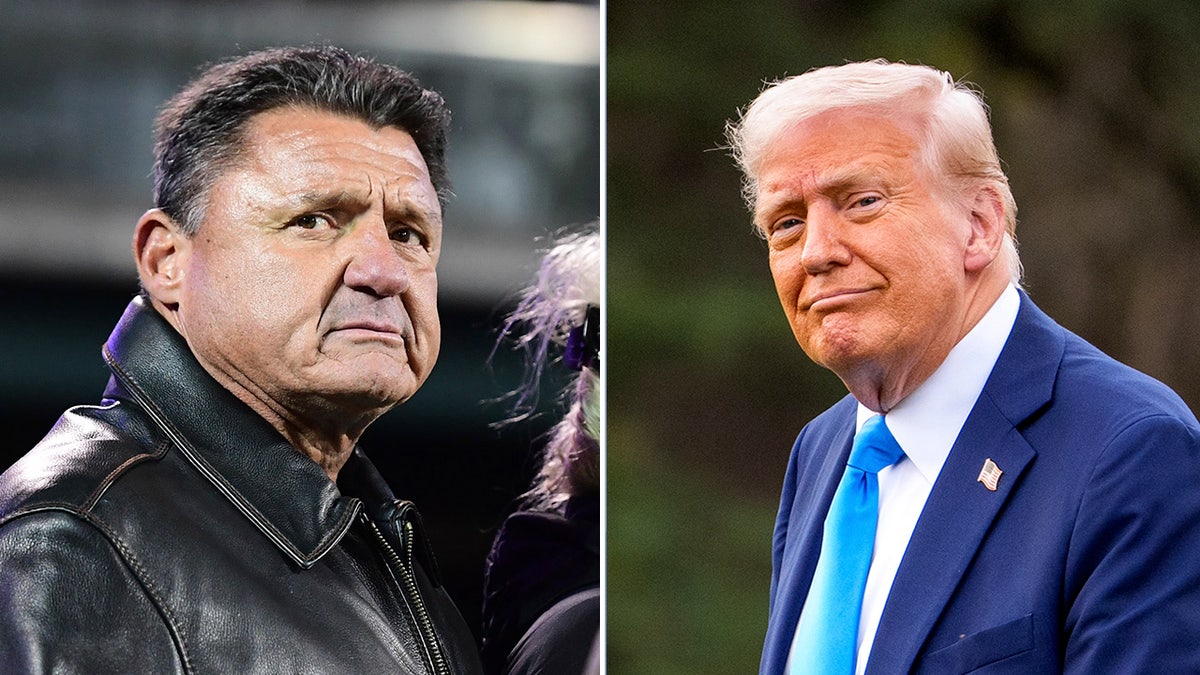
Ed Orgeron wants President Trump “more involved” in NIL regulation after the president called college sports a “disaster.” (Rebecca Warren/Imagn Images, Andrew Harnik/Getty Images)
“I think he should be more involved. Something has to happen. Our sport is getting killed, man,” Orgeron said in a recent interview with Fox News Digital.
“I love players getting paid. I think it’s fair. But I think there ought to be a cap, and the transfer portal, there’s got to be rules on it. It’s kind of like the Wild Wild West. I’m talking to coaches, it’s like, ‘Hey man, we’re working 24/7, 12 months a year. It’s crazy when guys are coming, when they’re going.’ But you know what? It’s got to be give and take. Players have got to get a lot, but the schools have got to get some guarantee in return…
“I think the president, he loves football, he’s a friend of mine, the more he can step in and stop what’s going on in college football, the better off it’s going to be.”
Trump recently ripped the supposed “disaster” that is NIL.
“I think that it’s a disaster for college sports. I think it’s a disaster for the Olympics, because, you know, we’re losing a lot of teams. The colleges are cutting a lot of their — they would call them sort of the ‘lesser’ sports, and they’re losing them like at numbers nobody can believe. They were really training grounds, beautiful training grounds, hard-working, wonderful young people. They were training grounds for the Olympics,” Trump said in the Oval Office last Thursday.
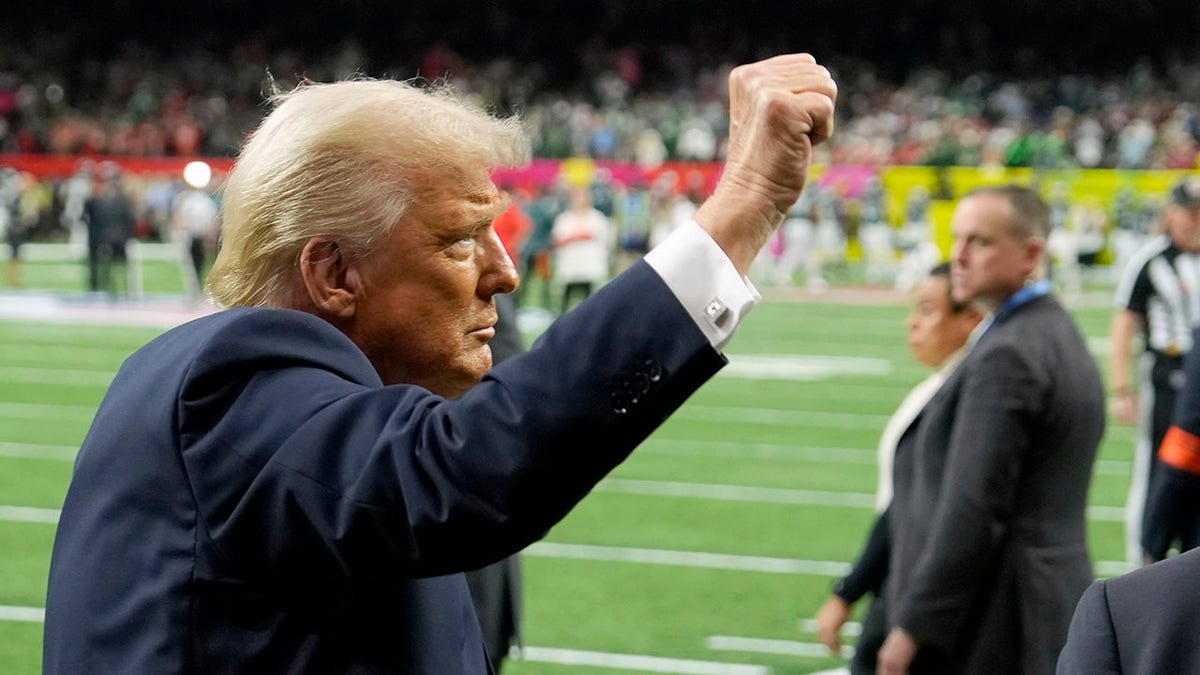
President Donald Trump gestures to the crowd before the start of the NFL Super Bowl LIX football game between the Philadelphia Eagles and the Kansas City Chiefs, Sunday, Feb. 9, 2025, in New Orleans. (AP Photo/Ben Curtis)
ARCH MANNING TO RETURN TO TEXAS FOR 2026 SEASON: REPORTS
“And a lot of these sports that were training so well would win gold medals because of it. Those sports don’t exist, because they’re putting all their money into football. And by the way, they’re putting too much money into it, into football.”
Orgeron has teamed up with player agent Tzvi Grossman to tap into the new NIL era and has learned a great deal as he tries to find his next stop in college football. But despite all the money being passed around, Orgeron still believes that one aspect of recruiting trumps all.
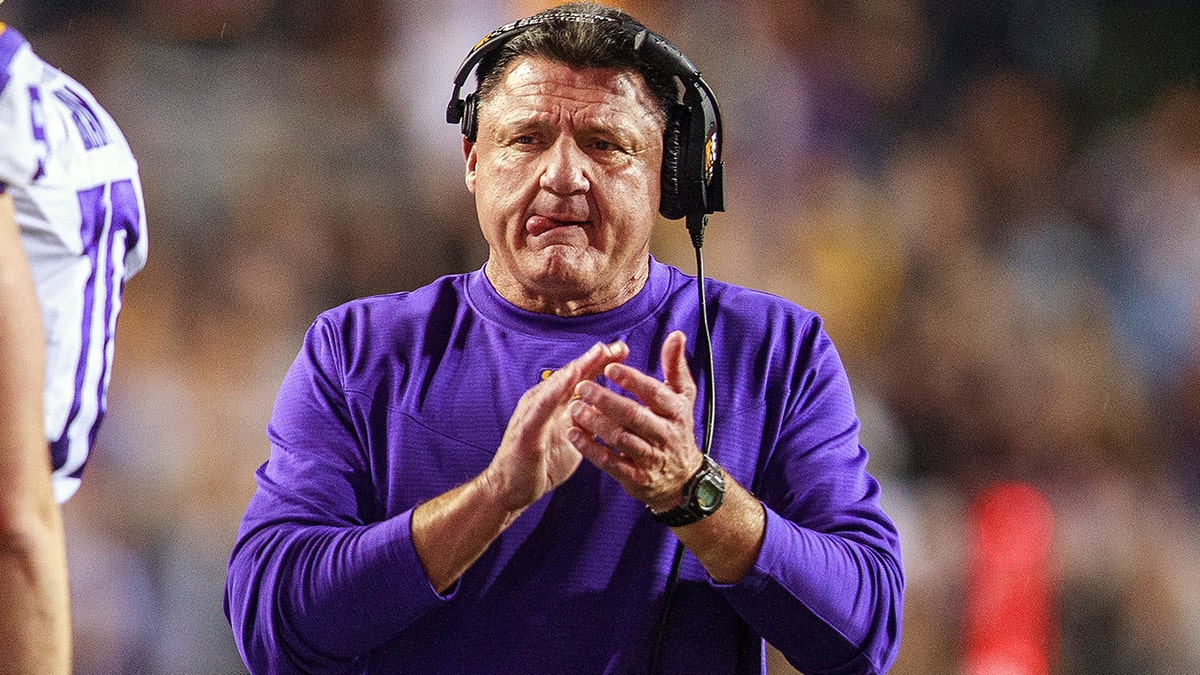
LSU Tigers head coach Ed Orgeron during a game between the Texas A&M Aggies and the LSU Tigers, in Tiger Stadium in Baton Rouge, Louisiana, on Nov. 27, 2021. (John Korduner/Icon Sportswire via Getty Images)
CLICK HERE TO GET THE FOX NEWS APP
“You still have to recruit, you still have to evaluate, you still have to get the mamas, the champions, all that to have a championship football team, and then the (key) word develop,” Orgeron said. “Just because you’re paying the guys — I believe all our players should be paid, I’m with that — but the money that they get right now is not the money that Joe Burrow’s making. It’s not the money that Ja’Marr Chase is making, Derek Stingley’s making. So in other words, to develop at the school you’re going to go to is still important.”
Follow Fox News Digital’s sports coverage on X, and subscribe to the Fox News Sports Huddle newsletter.

Julian Sayin is looking to lead the Ohio State Buckeyes to the national title alongside several other stars like wide receiver Jeremiah Smith.
Ohio State heads into the College Football Playoff with one of the best rosters in the country, starring Sayin and Smith along with Carnell Tate, Caleb Downs and Arvell Reese.
They’re heading into the playoffs as the No. 2 seed after losing to Indiana in the Big Ten title game. The Buckeyes will have a bye week to begin the CFP.
Other teams that will benefit from the bye week include Indiana, Texas Tech and Georgia.
During his time off, Sayin shared some exciting news off the field. The Ohio State Buckeyes quarterback has partnered with Wingstop and Dr Pepper in his latest NIL deal.
“Postseason calls for big plays with @drpepper and @wingstop, had to get the play card out,” Sayin posted.
Julian Sayin committed to Ohio State after spending some time with the Alabama Crimson Tide.
While he was planning his college football career at Alabama, he made the move to the Big Ten and finished his first season as the starting quarterback as a Heisman Trophy finalist.
Sayin was ranked as the No. 1 quarterback and the No. 6 overall player in the 2024 recruiting class, per 247Sports.
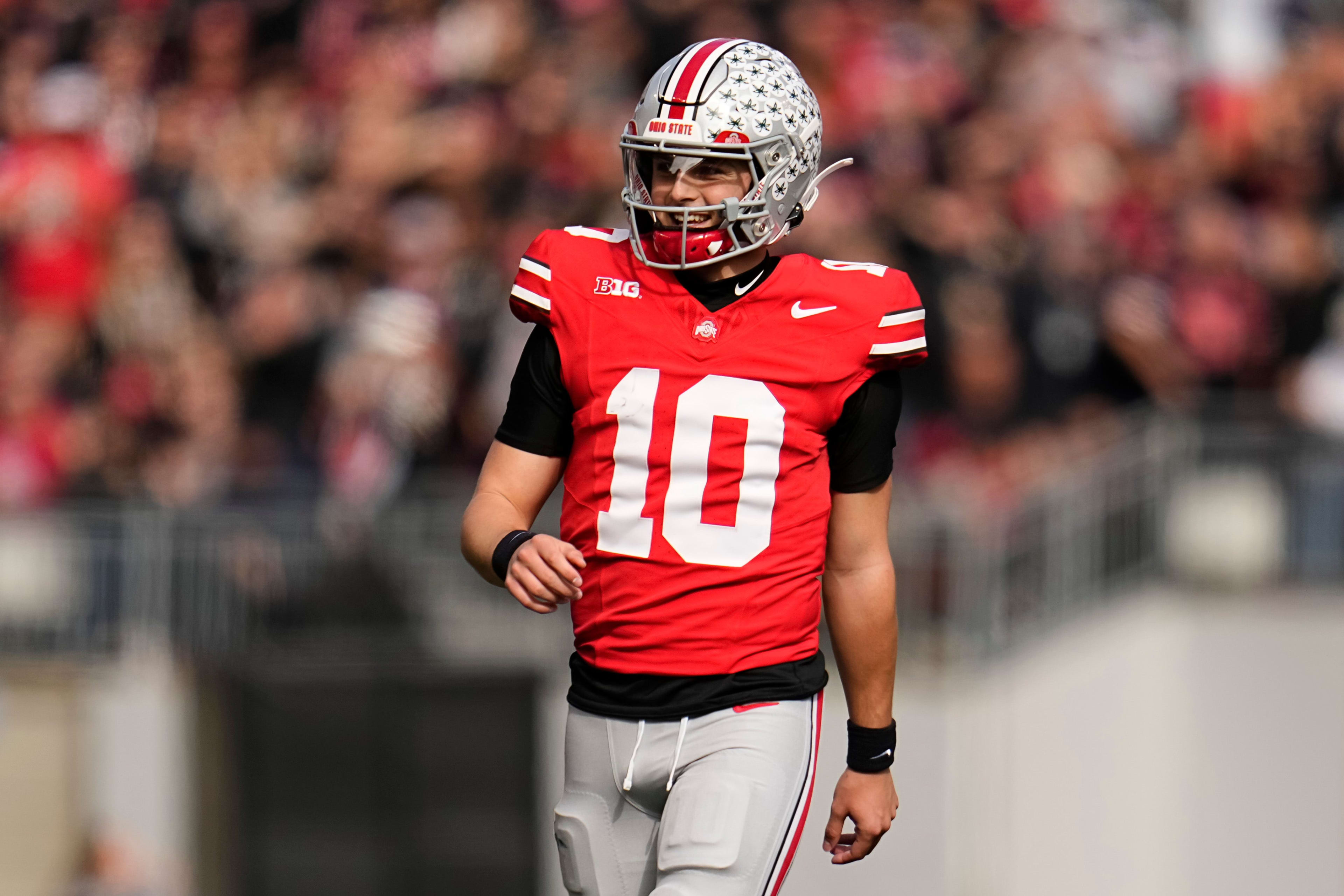
Before signing his latest NIL deal and sharing the news with fans online, Julian Sayin had inked deals with The Foundation, Dick’s Sporting Goods and JLab Audio.
About the author
Trending News Writer, Athlon Sports
Max Escarpio is one of Athlon Sports’ most prolific writers, having written over 5,000 posts across NBA, NFL, WNBA, college football, and college basketball. A 2023 Florida State University graduate with a BA in Sports Communication, he delivers fast-paced, wide-ranging coverage as part of the site’s breaking and trending news team.

When NIL first became the way of the land in college athletics, it was meant to be a way for athletes to get a slice of the money that already existed. Coaches, administrators, and other executives were making big money, so why couldn’t the athletes who were the ones actually playing the sport?
In that regard, nobody is going to fault players like DJ Lagway for making millions during his time with the Florida Gators.
But it is how that money had to be raised and what fans were gaslit into believing that also highlight the folly of how the NIL Era in college football has been going.
DJ Lagway set to hit the transfer portal
Lagway’s camp wanted to make it clear that his departure from Gainsville isn’t over money. Whether or not that is actually true, there is a good chance that in the pre-NIL Era, Lagway would still be a Gator heading into next season. If all Lagway cost was a scholarship spot, Jon Sumrall would probably be more apt to keep Lagway around. After a poor 2025 season, we can also understand why Florida’s new staff would be hesitant to invest real resources in Lagway that could go toward other parts of the roster.
But this tale isn’t just about the money that will be spent going forward; it is also about the money already spent and what happens when one doesn’t get a return on investment.
There are no official NIL numbers publicly available, but it is believed Lagway made between $3 and $4 million in 2025.
Some of that came from sponsorship deals like Jordan Brand, Gatorade, Epic Games, and others. But another chunk of money came from whatever deal he signed with Florida Victorious, the NIL arm of the Gators, and this is where the college system is broken compared to the professional system.
If Lagway were an NFL QB and flamed out, it would be annoying, but it wouldn’t be the fans left feeling empty-handed. The money spent on NFL contracts is coming from the natural revenues the league collects, and fans aren’t asked to donate extra money that goes directly to contracts.
But in this first phase of the NIL Era, when teams couldn’t directly share revenue with players, it was the fans who were constantly bombarded with messages to give extra money to Florida to acquire and retain players. The underlying message was “Hey now, if you don’t give more money, some other fanbase will, and they will take DJ Lagway from Florida.”
Some fans might have signed up for the $10 a month plan. Others may have felt compelled to give more. Nobody, however, probably feels like their money was money well spent after this 2025 season.
And that really is the frustration for most fans, where they are gaslighted to believe things won’t get better without giving even more money, but aren’t given any kind of solace when that money gets covered in gasoline and burns up in flames.
So as Florida fans await the next QB to come to town on whatever NIL deal he will be on, Lagway’s journey is a reminder that there is no such thing as a sure investment in the world of college football.

Florida Gators quarterback DJ Lagway is officially set to enter the transfer portal following a tumultuous 4-8 season in Gainesville. The former five-star recruit announced his intentions on Monday, just days after the university parted ways with head coach Billy Napier. Lagway, who will likely be the top transfer portal player in the country, departs with two years of eligibility remaining and a desire to join a program that can better utilize his skill set.
The decision comes amid a significant transition for the Florida program. The Gators recently hired Tulane Green Wave head coach Jon Sumrall to lead the team, along with Georgia Tech Yellow Jackets offensive coordinator Buster Faulkner.
Despite the fresh leadership, Lagway informed the new staff of his departure before publicly announcing his move. His exit marks the end of a two-year stint where he threw for over 4,000 yards but struggled with consistency, recording 14 interceptions in his sophomore campaign.
Recruiting analysts have already begun identifying potential destinations for the talented signal-caller. On the Wiltfong Whiparound, On3 analyst Steve Wiltfong and host Josh Newberg discussed the Lagway sweepstakes.
While Lagway’s high school suitors, such as Texas A&M Aggies and USC Trojans, were once heavily involved, the landscape has shifted. The focus now turns to programs with a proven history of developing transfer quarterbacks into NFL prospects.
Steve Wiltfong Identifies LSU And Miami As Top Contenders
According to Wiltfong, the recruitment battle may center on two premier programs with offensive-minded head coaches: the LSU Tigers and Miami Hurricanes. These schools, along with the Baylor Bears, have emerged as the primary teams to watch.
“Our colleague Pete Nakos reported three schools to keep an eye on for DJ Lagway: LSU, Miami and Baylor,” Wiltfong said.
“Lagway’s father played his college football at Baylor. It’s a home-state school. But if you look at DJ Lagway’s high school recruitment, he bet on Florida, bet on himself to help turn the Gators around. I think this time around he makes a decision based on the situation that’s going to put him in the best position to blossom as a player.”

The connection to LSU is driven by head coach Lane Kiffin. Kiffin has a reputation for revitalizing quarterback careers, most notably with Jaxson Dart at the Ole Miss Rebels.
“You look at Lane Kiffin and what he was able to do at Ole Miss, developing a transfer in Jaxson Dart to a first-round draft pick out of USC,” Wiltfong said. “That is something that would be very exciting for DJ Lagway to look at.”
Miami offers a similar appeal under its current leadership. The Hurricanes have successfully integrated high-profile transfers like Cam Ward and Carson Beck, turning them into top-tier passers.

“In Miami, similar track record,” Wiltfong said. “You take a guy like Cam Ward, transferred multiple times, finished his career at Miami, plug-and-play, ultimately develops into the number one pick in the NFL Draft. Carson Beck, this year coming over from Georgia, tops the ACC in many categories, including quarterback rating. Both of those situations are advantageous to me if you’re any transfer quarterback.”
Lagway will officially be eligible to sign with a new program when the transfer portal window opens on Jan. 2.
Read more on College Football HQ

Before Kentucky tipped off against Indiana on Saturday night, Mitch Barnhart addressed the growing conversation surrounding NIL at UK Athletics, with much of the focus centered on basketball and the program’s lack of commitment in the 2026 recruiting class.
Barnhart emphasized that Kentucky’s NIL model is built around long-standing partnerships that help fund everything from travel to daily operational costs, noting that those relationships matter when opportunities are presented to student-athletes.
“We’ve got some incredibly strong Kentucky partners in our network,” Barnhart said. “We do ask that we look at that and say, hey, is there a space for them to be able to work with our partners first?”
At the same time, Barnhart pushed back on the idea that athletes are restricted. He made it clear that while UK encourages players to work with in-house partners, they are free to pursue outside opportunities if those relationships don’t fit.
“There is no one-size-fits-all,” Barnhart said. “If that doesn’t work and they want to go do some other things, they absolutely have the opportunity to do that.”
Barnhart also addressed criticism tied to JMI and Kentucky’s NIL structure, saying it provides no incentive to limit competitiveness.
“Why in the world would we do anything other than give ourselves the best chance to win?” he said, adding that many programs nationwide operate in similar ways.
Late in the interview, Barnhart acknowledged the outside noise surrounding UK basketball and admitted results matter.
“We’ve got some teams doing that incredibly well,” he said. “We’ve got a couple that are struggling, and we’ve got to get them going.”
Let’s hope they can get things going and see an uptick in basketball recruiting.
A year in, Kristen Kelsay believes in the direction of MSU volleyball

Red Bull New York Completes Transfer of Defender Justin Che from Brøndby IF

NE10 Men’s Indoor Track & Field Report: Week 2

Prime Video Returns to Chase Elliott For Three-Race Sponsorship in 2026

Should ESAs prevent kids from playing public school sports?
Volleyball Has Four CSC Academic All-District Selections

Ex-Crankbrothers CEO leads group to acquire suspension company EXT

Hearing Recap: “Benched: The Crisis in American Youth Sports and Its Cost to Our Future”

NASCAR Cup Series star has simple response to nepotism claims he faces – Motorsport – Sports

Young People Are Driving a Surge in Triathlon Sign-Ups

Ohio State QB Julian Sayin makes NIL announcement before College Football Playoff

Warehouse update draws unexpected audience

Volleyball Adds Ocampo to 2026 Roster

NHRA National Event to Debut at US 131 Motorsports Park in 2026Performance Racing Industry

For Black Youth, Public Golf Courses Are Entry Points

First Tee Winter Registration is open

Fargo girl, 13, dies after collapsing during school basketball game – Grand Forks Herald

CPG Brands Like Allegra Are Betting on F1 for the First Time

F1 Las Vegas: Verstappen win, Norris and Piastri DQ tighten 2025 title fight

Volleyball Recaps – November 18

Two Pro Volleyball Leagues Serve Up Plans for Minnesota Teams

Utah State Announces 2025-26 Indoor Track & Field Schedule

Sycamores unveil 2026 track and field schedule

Redemption Means First Pro Stock World Championship for Dallas Glenn

Texas volleyball vs Kentucky game score: Live SEC tournament updates

Jo Shimoda Undergoes Back Surgery

Bowl Projections: ESPN predicts 12-team College Football Playoff bracket, full bowl slate after Week 14

How this startup (and a KC sports icon) turned young players into card-carrying legends overnight

SoundGear Named Entitlement Sponsor of Spears CARS Tour Southwest Opener

Robert “Bobby” Lewis Hardin, 56

 NBA Legend Michael Jordan to Join NBC Sports as Special Contributor
 Why a rising mid-major power with an NCAA Tournament team opted out of revenue-sharing — and advertised it
 Falcons mailbag
 Portal Update – Basketball and Gymnastics Take Hits
 has always dreamed in Mercurial. Now his initials are on the boots.
The new Kyl…
has always dreamed in Mercurial. Now his initials are on the boots.
The new Kyl…
-
 Rec Sports3 weeks ago
Fargo girl, 13, dies after collapsing during school basketball game – Grand Forks Herald
-
 Motorsports3 weeks ago
Redemption Means First Pro Stock World Championship for Dallas Glenn
-
 Motorsports2 weeks ago
Jo Shimoda Undergoes Back Surgery
-
 NIL2 weeks ago
Bowl Projections: ESPN predicts 12-team College Football Playoff bracket, full bowl slate after Week 14
-
 Rec Sports3 weeks ago
How this startup (and a KC sports icon) turned young players into card-carrying legends overnight
-
 Motorsports6 days ago
SoundGear Named Entitlement Sponsor of Spears CARS Tour Southwest Opener
-
 Rec Sports2 weeks ago
Robert “Bobby” Lewis Hardin, 56
-
Sports2 weeks ago
Wisconsin volleyball sweeps Minnesota with ease in ranked rivalry win
-
 NIL3 weeks ago
Indiana’s rapid ascent and its impact across college football
-

 Motorsports3 weeks ago
Pohlman admits ‘there might be some spats’ as he pushes to get Kyle Busch winning again