
NIL
NIL Alert: $2.8 Billion Athlete Revenue Settlement Approved – Sport

To print this article, all you need is to be registered or login on Mondaq.com.
On June 6, 2025, U.S. Northern District of California Judge
Claudia Wilken approved the National Collegiate Athletic
Association’s (NCAA’s) $2.8 billion athlete revenue
settlement (Settlement) in the consolidated case, In re College
Athlete NIL Litigation.1 The Settlement will
reimburse a class of former college athletes for their previously
withheld name, image, and likeness (NIL) compensation going back to
2016, with the majority of the Settlement funds going to college
football and men’s basketball scholarship players, and lesser
amounts to women’s basketball players and student athletes from
other sports. The Settlement also creates a system for the
NCAA’s Division I (D-I) institutions to share billions of
dollars of revenue with their student-athletes over the next ten
years, beginning July 1, 2025, through revenue-sharing NIL
agreements.
Background
Following the U.S. Supreme Court’s 2021 decision in NCAA v.
Alston, 594 U.S. 69, student-athletes gained the opportunity to
receive compensation from third parties using their NIL. Although
hundreds of thousands of student-athletes have since profited, two
issues persisted: (1) the rules restricted NCAA member conferences
and schools from directly sharing revenue derived from the
commercial use of student-athletes’ NIL with
the student-athletes and (2) studentathletes who finished
playing before the Supreme Court’s decision lost the
opportunity to earn revenue from their college’s commercial
exploitation of their NIL.
The In re: College Athlete NIL Litigation
Settlement
Subjects of the Settlement & Voluntary Opt-In /
Opt-Out
The NCAA and the “Power Five” conferences (Conference
Defendants)—Atlantic Coast Conference (ACC), the Big Ten
Conference, Inc. (Big Ten), the Big 12 Conference, Inc. (Big 12),
the Pac-12 Conference (Pac-12), and the Southeastern Conference
(SEC) (collectively, the Defendants)—and their “Member
Institutions” (meaning, any college, school, or university
that is a member in any sport of the North Carolina –
that was until a lawsuit was filed against the state’s Board of
Education compelling them to do otherwise.
That lawsuit, brought by Rolanda Brandon, on behalf of her minor
son Faizon Brandon (a highly rated 5-star quarterback), was filed
on August 23, 2024, in North Carolina’s General Court of
Justice, Superior Court Division against the North Carolina State
Board of Education and North Carolina Department of Public
Instruction. Per the complaint, the Brandons asserted that although
the state of North Carolina’s legislature did direct the North
Carolina State Board of Education to regulate how high school
athletes could monetize their NIL, that the Board, in lieu of
regulating, prohibited it outright.2 Because the Board
of Education exceeded their delegated statutory authority, the
Brandons’ claimed, its NIL prohibition was arbitrary and
capricious and therefore invalid pursuant to N.C. State Stat.
Section 1-253 and the North Carolina Rule of Civil Procedure 57.
The Brandons’ sought a preliminary injunction against the
Board’s NIL ban due to the fact that Faizon and his family
would be irreparably harmed financially because it precluded them
from entering into a formal licensing and endorsement agreement
with NIL Sponsor 1, while also foreclosing any
additional opportunities with other businesses in the
future.3
By way of background, in September of 2023, the North Carolina
state legislature adopted a bill directing the Board of Education
to “adopt rules governing high school interscholastic athletic
activities conducted by public school units” including
“student amateur status requirements, and rules related to use
of a student’s name, image, and likeness.”4 On
July 1, 2024, the North Carolina State Board of Education, in lieu
of adopting a set of regulatory rules, instead outright banned
every public high school athlete from using his or her name, image
or likeness for commercial purposes.5 That outright
prohibition, however, apparently was an overreach by the Board of
Education because on October 1, 2024, Superior Court Judge Graham
Shirley granted the Brandons’ motion for preliminary injunction
and enjoined the Board from prohibiting any athlete attending a
public school in the state of North Carolina from exercising his or
her right to monetize their NIL.
Although the state of North Carolina’s ruling is not legal
precedent for the other remaining states currently foreclosing high
school athletes from monetizing their NIL, those states should
take notice and understand that their prohibition may be vulnerable
to a legal challenge. That being said, with no national standards
regarding NIL, most of the forty states that do allow for
monetization rest upon their high school athletics governing body
to formulate any and all rules and regulations. This leads to a
variation of standards between states, but there are a few key
restrictions present in most of these rules that high school
athletes should be aware of:
- High school athletes typically may not refer to or include
their school’s uniforms, logos, colors or facilities of the
state’s high school athletic association in their NIL
activities. - High school athletes are typically prohibited from partnering
with gambling, alcohol, tobacco, weapons, firearms, ammunition, and
other adult categories brands. In those states where NIL op
portunities are allowed, high school athletes have a chance for
a significant financial windfall. However, athletes, their parents
and those advising them must ensure that any NIL agreement is in
accordance with the applicable rules of their state, since
noncompliance could lead to loss of eligibility to participate in
athletic competition, which will certainly jeopardize any future
athletic and financial opportunities.
NCAA D-I and/or a Conference Defendant)—plus Notre
Dame—are automatically bound to the Settlement and must
comply with its terms and requirements. Non–Power Five D-I
schools are not automatically covered by the revenue-sharing
component of the Settlement; however, they did have the opportunity
to opt in to the Settlement by June 15, 2025, to share NIL-related
revenue with athletes and join the enforcement and reporting
framework.
Notably, the Ivy League decided not to opt in. Ivy League
schools do not offer athletic scholarships, using need and
merit-based financial aid instead. The Ivy League views the
Settlement’s revenue-sharing model as a departure from its
principles of no athletic scholarships and avoidance of
pay-for-play. Although Ivy League athletes will not have the
opportunity to share revenue derived from their schools’
exploitation of their NIL, they can still pursue third-party NIL
deals.
Further, athletes who did not want to be part of the class (and
therefore want to preserve the right to sue the NCAA and Power Five
conferences for antitrust-related claims) had the opportunity to
opt out, which would exclude them from all aspects of the
Settlement.
Future Institutional RevenueSharing Framework
Beginning July 1, 2025, NCAA D-I and Power Five Member
Institutions may enter into exclusive or non-exclusive NIL licenses
and/or endorsement agreements with athletes to share revenue
for athletes’ NIL and institutional brand promotion, excluding
broadcast rights for a term not to exceed the student-athlete’s
eligibility to participate in NCAA sports. Member Institutions may
act as the marketing agent for studentathletes with respect to
third-party NIL contracts.
Although Ivy League athletes will not have the
opportunity to share revenue derived from their schools’
exploitation of their NIL, they can still pursue third-party NIL
deals.
Further, Member Institutions, and Notre Dame, can provide
studentathletes with additional direct payments and/or benefits
over and above annual existing scholarships and all other benefits,
capped at $20.5 million per school for 2025–2026, increasing
~4% annually for the following ten years; however, the increase
will be reevaluated every three years based on increases in certain
sports-related revenue among the Conference Defendants and Notre
Dame.
Enforcement & Oversight
All D-I student-athletes must report to their school and/or the
“Designated Reporting Entity” (managed by Deloitte) any
and all third-party NIL contracts or payments with a total value of
$600 or more on a schedule to be determined by the Defendants.
The College Sports Commission (CSC), an independent regulatory
body established by the Power Five, is the central enforcement
authority for the Settlement’s new compensation model and will
oversee all enforcement of the Settlement terms including
“Revenue Sharing,” “Name, Image, and Likeness
Deals,” and “Roster Limits.” The CSC states that the
NCAA “remains responsible for enforcement of rules not created
in connection with the settlement.”
Retroactive Benefits Pool
Under the Settlement, a total of approximately $2.8 billion in
backdamages will be distributed over ten years (~$280 million per
year) to eligible D-I athletes for past NIL restrictions
(2016–2024). This consists of a $1.976 billion NIL fund plus
$600 million for pay-for-play claims. Approximately 90% of the
Settlement will be paid to former football and men’s basketball
players because the payout formula is based on historical media
revenue and licensing data, with the remaining funds reserved for
other men’s sports and women’s sports.
Roster & Scholarship Policies
All NCAA D-I athletic scholarship limits are eliminated;
instead, the NCAA may adopt D-I roster limits, capping the
total number of athletes who can participate on a team. The new
roster caps are largely modeled on existing scholarship limits.
This shift gives schools greater flexibility on how they can
allocate aid and compensation and not affect athletes who were
already enrolled or who had signed letters of intent before April
7, 2024—this ensures no current student-athlete loses a spot
due to the new limits during their eligibility. Each school must
submit its list of exempt/grandfathered athletes by July 6,
2025.
Still, Member Institutions will have the option of making
incremental athletic scholarships available to student-athletes
above the number currently permitted by NCAA D-I rules for a
particular sport, subject to the roster limits. However, the full
cost-of-attendance dollar value of any new or incremental athletic
scholarships—that were not previously permitted by NCAA D-I
rules—up to $2.5 million (the Athletic Scholarship Cap) will
count against the pool of funds each Member Institution may
allocate to student-athletes.
Title IX Objections on Appeal to the Ninth Circuit
Before approving the Settlement, Judge Wilken held a hearing on
April 7, 2025, where she addressed objections raised by several
female student-athletes. The objectors argued that the proposed
$2.8 billion in backpay would disproportionately benefit male
athletes—particularly those in football and men’s
basketball—due to historic and systemic disparities in media
exposure and revenue generation.
Judge Wilken rejected these Title IX objections, reasoning that
the instant antitrust case had nothing to do with Title IX, a
federal law that prohibits sex-based discrimination in education
programs and activities that receive federal financial assistance.
While the court declined to consider Title IX arguments in the
context of this Settlement, Judge Wilken did leave the door open
for future Title IX lawsuits based on how schools make future
payments to athletes.
Almost immediately after Judge Wilken’s final judgment,
approximately twelve female athletes filed a notice of appeal to
the Ninth Circuit, arguing that the $2.8 billion settlement
violates Title IX based on inequalities in compensation. While
injunctive reform under the Settlement is already in effect, damage
payments are stayed pending the outcome of the appeal.
Impacts of the Settlement
Student-Athlete Transfers, Eligibility, and Poaching
On April 22, 2024, the NCAA adopted legislation removing limits
on the number of times an academically eligible student-athlete may
transfer during their collegiate career. This change allows
athletes to transfer multiple times without penalty, provided they
are in good academic standing.
This Settlement is expected to significantly increase transfer
activity. In particular, student-athletes at Ivy League
institutions and non–Power Five or non-NCAA schools may be
incentivized to transfer to schools that participate in
revenue-sharing, offer larger athletics budgets, and actively
support third-party NIL opportunities. With no threat of losing
eligibility, transferring becomes an attractive avenue for athletes
seeking both competitive and financial advancement.
However, transferring raises concerns about schools poaching
studentathletes who have already signed NIL contracts with other
programs. This exact issue was raised on June 20, 2025, when the
University of Wisconsin (UW) and its NIL collective filed a
complaint against the University of Miami (UM) over alleged
tortious interference with a two-year binding revenue-sharing
contract that was set to begin July 1, 2025. UW claims that UM
communicated with a UW defensive back, Xavier Lucas, who had not
entered the transfer portal, “knowingly inducing” him to
breach his contract with UW. The studentathlete had reportedly
requested to enter the portal, but UW refused, based on their
agreement.
This case is the first of its kind and may set a critical
precedent on whether schools can legally recruit student-athletes
already under binding revenue-sharing contracts tied to the
Settlement. The Big Ten is supporting UW with the lawsuit against
UM.
Questions on Employee Status
While the Settlement allows schools to directly pay their
athletes and share revenue, it does not redefine the
student-athletes as employees. However, student-athlete
compensation creates ambiguity regarding whether they are
“employees” under federal or state law, allowing
student-athletes to collect benefits and unionize. The question of
whether student-athletes are considered employees under
the Fair Labor Standards Act is currently being litigated in
the Third Circuit in Johnson v. NCAA. If a court
eventually does rule that student-athletes are employees, the
Settlement has provided that the NCAA or Power Five conferences may
modify or terminate their agreements, accordingly.
Potential Federal Legislation
There is currently no NIL federal legislation in place, but
prior to the Settlement, many state legislatures were actively
enacting NIL laws. Although the Settlement fundamentally reshapes
the national college sports landscape, it does not override or
preempt existing state laws. Instead, it operates alongside state
legislation, creating a layered legal environment where schools
must comply with both the Settlement terms and their state’s
NIL statutes. Where conflicts exist, states are prompted to revise
their laws to harmonize with the Settlement and avoid competitive
disadvantages in recruiting.
Because the Settlement does not have federal preemption power,
there is growing pressure for federal legislation. The NCAA has
asked Congress for legislation that would grant it an antitrust
exemption, preempt all state laws related to NIL, and restrict
student-athletes from being considered employees.
Congress is not alone in examining the impact the Settlement has
on college athletics, and the disparity it creates among sports and
athletes. President Donald Trump is reportedly considering an
executive order to regulate NIL deals in college athletics. He has
instructed White House aides to begin studying what an order would
look like. Other government officials, such as Rep. Michael
Baumgartner (R. WA.), may propose legislation to replace the NCAA
with a new body headed by a presidential appointee to ensure that
NIL funds and revenues are shared with schools and distributed
“equally among all student athletes of such
institutions.” This Bill, H.R. 2663, the Restore College
Sports Act, has been assigned to the House Committee on Education
and Workforce.
Conclusion
The Settlement represents a transformative moment in the legal,
financial, and regulatory framework of college athletics. It not
only compensates thousands of former student-athletes for years of
denied NIL revenue but also creates a forward-looking
revenue-sharing model that provides substantial compensation to
certain student-athletes. While the Settlement brings long-overdue
benefits, it also introduces a host of unresolved legal and policy
challenges, such as Title IX concerns, transfer/poaching disputes,
questions surrounding employment status, and conflicting state
legislation. As these issues continue to unfold, it will be
interesting to see how schools, athletes, and lawmakers respond to
this new era in college sports.
Footnotes
1. This consolidated litigation began as two separate
actions: (1) House v. National Collegiate Athletic
Association, 4:20-cv-03919 (N.D. Cal) and (2) Oliver v.
National Collegiate Athletic Association, 4:20-cv-04527 (N.D.
Cal). ). The litigation was further consolidated with two similar
actions: (3) Hubbard v. National Collegiate Athletic
Association, 4:23-cv-01593 (N.D. Cal) and (4) Carter v.
National Collegiate Athletic Association, 23-cv-06325, (N.D.
Cal.).
2. Brandon v North Carolina Board of Education, et al,
24CV026975-910
3. 24CV026975-910 Complaint at page 20.
4. 2023 N.C. Sess. L. 133 Section 17. (a) (N.C. Gen Stat.
Section 115C-407.55(1)(h))
5. ATHL-008 (NIL Prohibition).
Originally Published by The NIL Institutional
Report
The content of this article is intended to provide a general
guide to the subject matter. Specialist advice should be sought
about your specific circumstances.

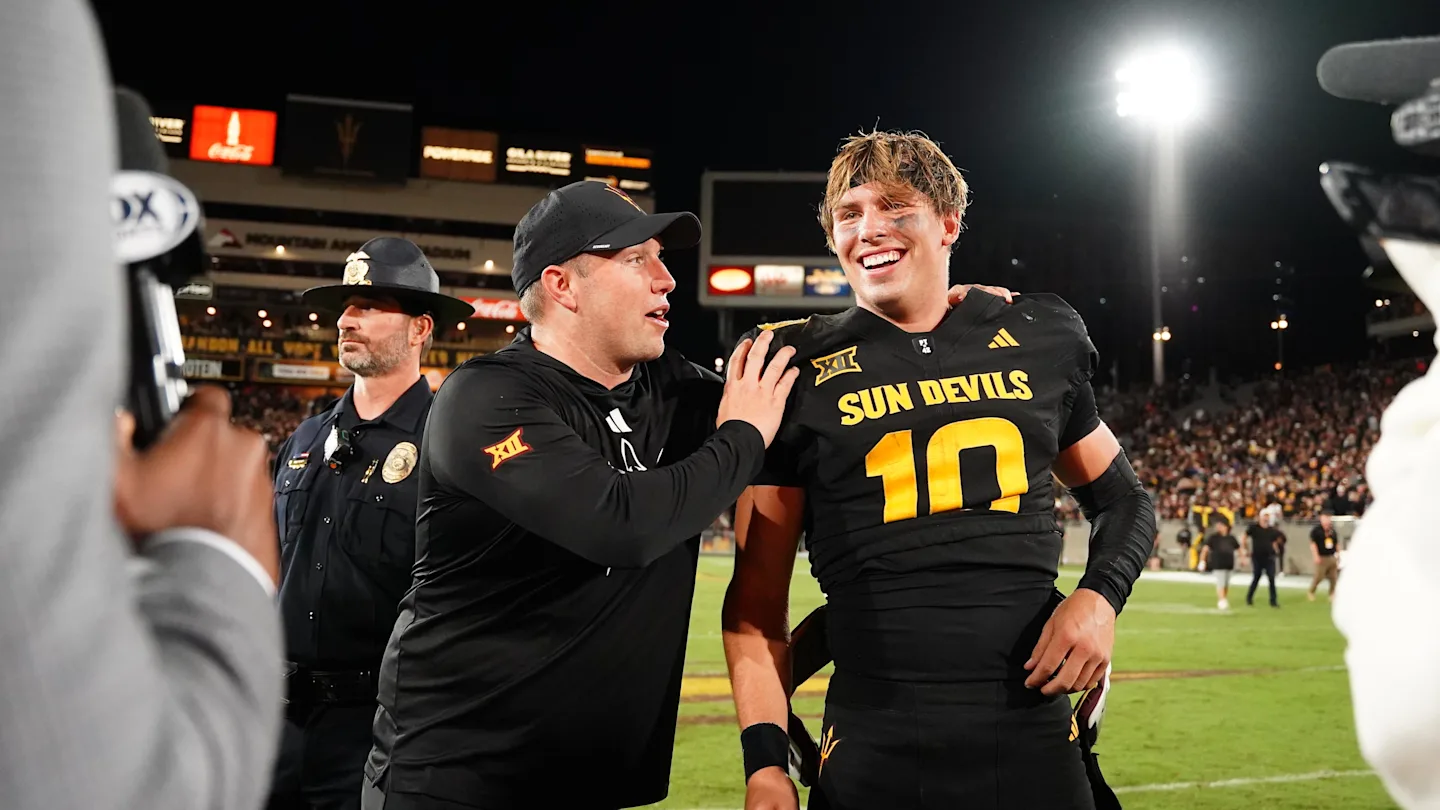
Aftter helping propel Arizona State to its first College Football Playoff run in 2024, quarterback Sam Leavitt is officially preparing to test the transfer market.
Multiple outlets report Leavitt intends to enter the portal when the window opens in January, and early lists of suitors already include Oregon, Indiana, LSU, and Miami.
Leavitt’s 2025 season was cut short by a persistent foot injury that required surgery and ended his year after seven appearances.
Despite limited time, he finished the campaign with 1,628 passing yards, 10 touchdowns and three interceptions, and leaves Tempe with a two-year body of work that includes a 2024 breakout season (2,885 passing yards, 443 rushing yards, 29 total TDs).
ASU closed 2025 at 8–4 under coach Kenny Dillingham, going 6-3 in Big 12 play.
On Wednesday, Mike Golic Jr. weighed in on potential transfer portal destinations, explicitly linking Leavitt to Miami as a natural schematic fit.
“Sam Leavitt, to me, would be a fascinating fit at the University of Miami. We reckon Carson Beck is going to be out after this playoff run, and when I look at Sam Leavitt’s game, I think about the Miami offense they ran with Cam Ward, an offense predicated on the quarterback’s ability to drop back, create, and make plays with both his arm and his legs. That feels like a very easy comparison.”

The Hurricanes went 10-2 this season and enter the postseason with a quarterback (Beck) who posted 3,072 passing yards and 25 passing touchdowns with a 74.7% completion rate.
However, despite Beck’s productive year as the starter and Miami’s CFP berth, the senior quarterback is widely expected to move on after the season, opening a potential vacancy at one of college football’s biggest brands.
Leavitt combines a CFP start, redshirt-sophomore eligibility, mobility, and a nationally ranked NIL valuation (estimated at $2.1 million), positioning him as one of the portal’s most attractive quarterbacks.
Read More at College Football HQ
- $2.1 million QB ranked as top quarterback in college football transfer portal
- $87 million college football coach predicted to accept Michigan head coaching job
- Top transfer portal QB reportedly receives ‘multiple offers’ over $4 million
- Kirby Smart sends strong message on Nick Saban before College Football Playoff
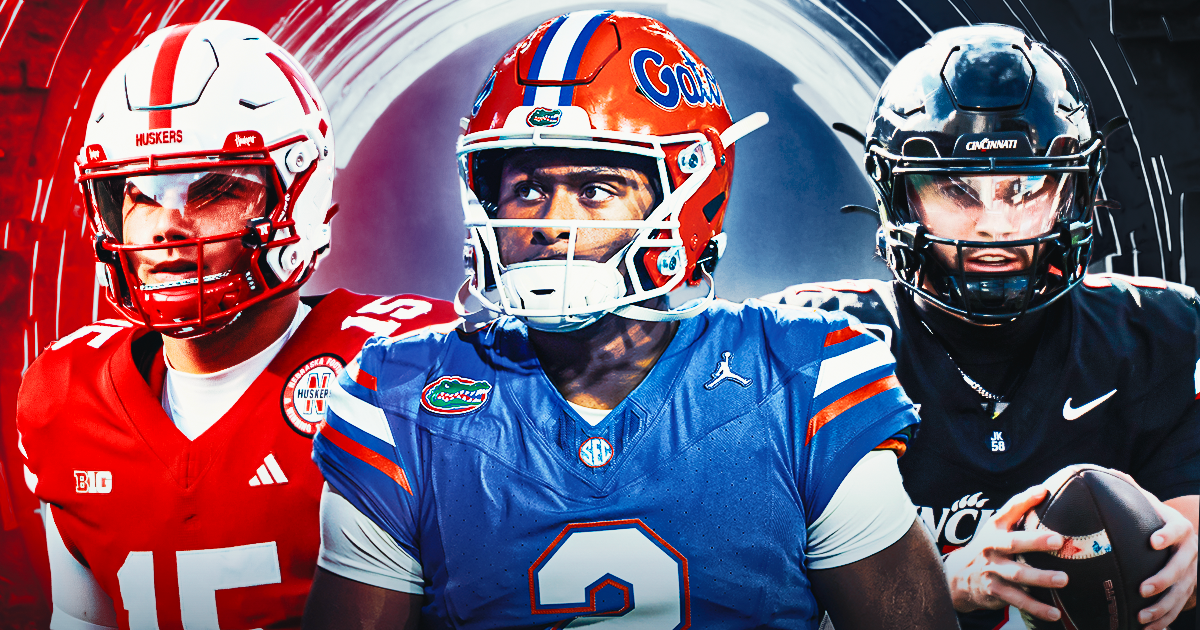
Although the transfer portal doesn’t open until Jan. 2, the quarterback market is starting to take shape. Multiple high-profile signal-callers announced their plans to hit the portal, and ESPN’s Pete Thamel reported how much the top QBs could make.
Thamel reported the “tip-top” of the quarterback market could reach $5 million. For comparison, Duke quarterback Darian Mensah was one of the highest-paid players in the country this past season at $4 million, On3’s Pete Nakos previously reported.
SUBSCRIBE to the On3 NIL and Sports Business Newsletter
Multiple big-name schools are expected to be looking for a quarterback in the portal this year, and names such as Brendan Sorsby, Dylan Raiola and Josh Hoover are already front-and-center. As a result, the market could surge, Thamel said.
“This market looks robust already, guys. … I made some calls today. Sources told me the tip-top of this quarterback market, financially, could reach $5 million for one season,” Thamel said Friday on ESPN College GameDay. “Look, it’s supply and demand. You have all those guys. Sorsby’s been linked early to Texas Tech. Dylan Raiola, there’s some smoke to Louisville, although maybe a playoff team jumps in late there. There’s been early links between Indiana and Hoover, assuming that [Fernando] Mendoza goes pro.
“Look, this is what’s going to drive the market. Oregon may lose Dante Moore, Miami’ll be in the quarterback market, so will LSU. So when you really take a look at what’s going to drive this quarterback market, it’s going to be the most expensive in the history of college football.”
Quarterback remains one of the biggest positions in the transfer portal, especially considering the recent success. Seven of the last nine Heisman Trophy winners have been transfers, including Mendoza this year. DeVonta Smith and Bryce Young are the only ones to stay with their own program at Alabama and win the award during that time.
Last year’s transfer quarterbacks were also among the highest-paid players in college football, On3 previously reported. Mensah’s $4 million payday was part of a two-year, $8 million deal at Duke. At Miami, Carson Beck inked a deal worth between $3 and $3.2 million, but up to $6 million with incentives.
The NCAA transfer portal window officially opens Jan. 2, meaning that’s when players’ names will start to appear. It will stay open for two weeks, closing Jan. 16.

The perception of bowl games and their significance to college football programs and players has undergone a rapid shift over the last decade.
In the current age of the sport, teams are turning down postseason bids while the transfer portal is filling up before most bowl games even kick off.
That’s just the reality of the situation. Normally, it’s the needy who are hit the hardest as G6 schools and poorly constructed FBS programs have their rosters raided.
Just take a look at what’s happening at UTSA.
UTSA’s Jeff Traylor: ‘I Hate What’s Going On In College Football’
Since transitioning to the FBS over a decade ago, UTSA has established itself in the Conference USA and the American Conference.
Head coach Jeff Traylor has led the program to six consecutive bowl games. That includes an up-and-down campaign in 2025, when the Roadrunners started 0-2 and won two of their final three games to finish 6-6.
UTSA is a week away from taking on FIU in the First Responder Bowl on December 26.
Going into the matchup, the Roadrunners could be without as many as 20 players. Many of those losses are due to the portal.
“We’ll be a shell of ourselves, but whoever we got out there, we’re going to go out there and play the best we can,” Traylor said, according to KENS 5’s Vinnie Vinzetta. “It’s just the numbers are so big with all the tampering. All the agents, it’s coaches too, it’s all of them. Our kids are being promised such incredible numbers, they’re getting lured into the portal.
“I just hope all the things those coaches and agents are promising they’re going to do for my kids. I hate it because I really want to coach them in a bowl game, but they’re getting leveraged out of it,” Traylor continued. “Their agents are telling them, they’ve got to not play in the bowl, they’ll get this number, they don’t play in the bowl [they’ll get this number].”
“I hate what’s going on in college football. I just think the numbers have gotten so large. You’re talking about teams that have $26 million to $40 million, and the number’s just too big, and who knows if they’re being told the truth? It’s sad, it really is sad,” Traylor added. “I never thought we’d be punished for making a bowl game by being leveraged, that if you don’t give them a certain number, they’re not going to play in a bowl.

Traylor is focused on the players still with the team, but he couldn’t help but recognize that college football looks a lot different than it did in his first season on the job.
“I’m going to celebrate the kids we have left, whoever that is, we’re going to go out there and play our tails off, and I’m very grateful for them,” Traylor said. “Again, I hate we’re talking about the 10 to 15 that probably are not going to play in the game, or 20, whatever that number ends up being. We should be talking about the 90 to 85 that are going to play with their teammates.”
“It’s like I just woke in another world as compared to where we were six years ago,” Traylor added.
Is there a way to combat what’s going on? Not really. There have been calls for coaches to report instances of tampering.
Most of the time, it’s hard for the people in charge to get the specifics of whose saying what.
“There’s no such thing as tampering. Coaches talk to players, agents talk to players,” Traylor said. “Oh, then turn them in, coach. You think those players are going to give me the coach that’s actually talking to them? Why? It’s driving the price up. The more they get driven up, the price goes up higher and higher.
“As long as there’s people gonna pay it, who’s going to stop it? What’s going to stop this? What’s going to stop it? Only the freedom of process is going to stop because when there’s no money left, what are we going to all do?”
As of December 19, four players who started multiple games for UTSA have announced plans to enter the transfer portal, including cornerbacks Davin Martin and KK Meier, defensive end Kenny Ozowalu, and defensive tackle Chidera Otutu.
More attrition is possible in the next seven days.
Read more on College Football HQ
• $45 million college football head coach reportedly offers Lane Kiffin unexpected role
• Paul Finebaum believes one SEC school is sticking by an ‘average’ head coach
• SEC football coach predicts major change after missing College Football Playoff
• Predicting landing spots for the Top 5 college football transfers (Dec. 17)
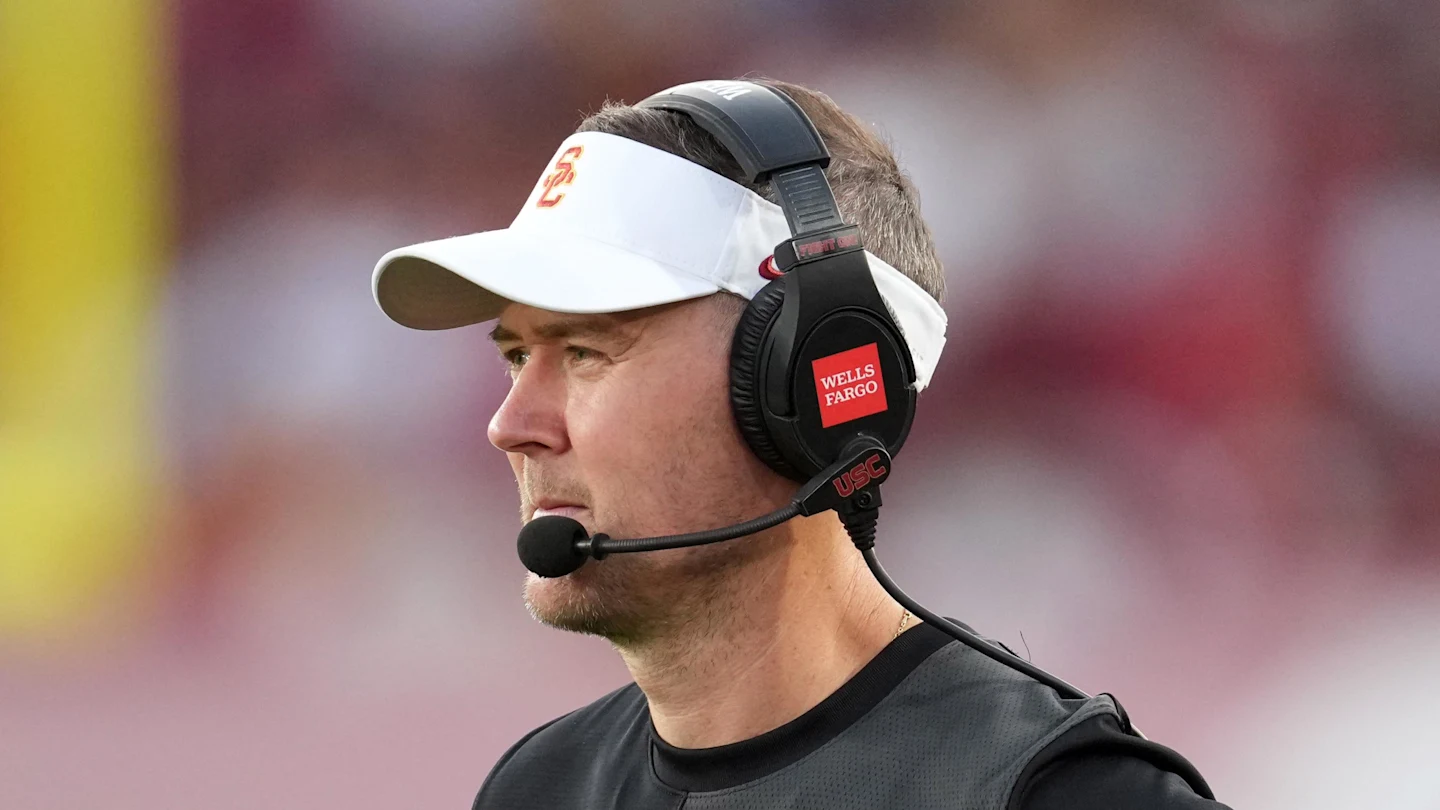
Since the introduction of name, image and likeness (NIL) in July 2021 and the transfer portal turning every offseason into free agency with no guidelines, college football has never been the same. It’s an unprecedented era but the current state of the sport.
NIL effects recruiting, it factors into a player’s decision to enter the draft or return to school and can determine whether someone decides to return to their current school or explore other options in the portal. Revenue-sharing was also instituted this summer.
It’s a battle to retain players on your own roster. The portal allows student-athletes to transfer as many as they want with no restrictions and player movement has become rampant, seven of the last nine Heisman winners were transfers.

It’s all part of the new norm of college football and the USC Trojans have embraced it. Re-signing players is nothing new, it has always been happening at the end of every semester with scholarships.
It’s the same idea with NIL and revenue-sharing, but the Trojans are just approaching it in a different way than the rest of the country and it has gone viral.
Southern Cal has been making official re-signing announcements and posting them on social media. Players are making video messages for the fans. It’s all reflective of the NFL model when a player signs an extension with their current team or sign with a different team in free agency.
Everything USC general Chad Bowden does is with purpose. In just first season with the Trojans, Bowden reeled in the No. 1 ranked recruiting class. It’s a strategic personnel and creative department in Los Angeles that could be on their way to starting a new trend in college football.
Returning Star Players

All eyes have been on what will redshirt junior quarterback Jayden Maiava do in 2026. The lure of entering the NFL Draft was tempting, especially considering it’s a particularly weak quarterback class that he could take advantage of.
Well, the re-signing of Maiava made it official that he would be returning to USC. So will the team’s two leading scorers in Waymond Jordan and King Miller. Freshman standout receiver Tanook Hines, also made his official.
Tobias Raymond’s versatility was massive for the Trojans. The local product started all 12 games at either guard or left tackle.
MORE: USC Quarterback Husan Longstreet Faces a Transfer Question
MORE: USC Faces Uncertainty As Penn State Turns Up Heat On Coach D’Anton Lynn
MORE: USC Trojans Receive Brutal Injury Update Involving Star Transfer Guard
Jahkeem Stewart arrived last winter as a highly touted five-star defensive lineman. The New Orleans native played all 11 games this season with a stress fracture in his foot. It limited his practice reps, but still, Stewart made his presence known in the Big Ten.
He is joined by starting defensive ends Kameryn Crawford and Braylan Shelby, and fellow freshman defensive lineman Floyd Boucard.
Redshirt freshman Marcelles Williams quietly became one of the top cornerbacks in the Big Ten the second half of the season. With a season under his belt and the guidance of cornerback coach Trovon Reed, sky is the limit for Williams.
Jadyn Walker started any time USC went with a 4-3 defense, rather than its traditional 4-2-5 defense. Walker will get the start in the bowl game in its traditional defense, with Eric Gentry opting out of the bowl game and is prime candidate to become a full-time starter next season.
Underrated USC Re-Signings

Redshirt freshman offensive tackle Justin Tauanuu started all 12 games this season. In a year where the Trojans had to shuffle around its offensive line on almost a weekly basis, the 6-foot-6, 315-pound Huntington Beach (Calif.) product was a constant at right tackle with Raymond playing on the left side.
Prophet Brown has missed the entirety of the 2025 season after suffering a hip injury during the second week of fall camp. Brown was projected to start at nickel and then it was freshman Alex Graham, who missed the first half of the season with an injury himself. Those injuries caused a ripple effect in the secondary.
The redshirt senior is able to use a medical redshirt. Brown dressed for practice this week for the first time since fall camp. Whether he plays is the bowl game in some capacity or not, Brown will be back in 2026.
One of the more intriguing players come this spring will be freshman cornerback RJ Sermons. The local product reclassified to the 2025 class in May and did not enroll on campus until just before the start of fall camp.

Originally the No. 1 rated cornerback in the 2026 class, Sermons spent his first season working with the Trojans staff and getting acclimated to college football. Although he didn’t take a single snap this season, USC brought Sermons with the team on every road trip he was healthy for.
Sermons will be part of a young, but incredibly talented cornerback room for Southern Cal in 2026 and a position battle that will carry well into fall camp, if not the season.
When Kamari Ramsey and Bishop Fitzgerald went down with injuries in the first half against Iowa on Nov. 15 that cost them the rest of the season, safety Kennedy Urlacher stepped into the lineup opposite of Christian Pierce.
With Ramsey primarily playing nickel this season and occasionally moving back to safety, Pierce has started almost every game this season. Now, he becomes the vocal presence on the backend of the defense.
But for Urlacher, when the injuries happened, he had not taken a defensive snap since week 2. The Notre Dame transfer played well in the second half the Trojans big time win over Iowa, and started the final two games.
Urlacher and Pierce project as the starting safeties next season. Redshirt freshman Marquis Gallegos, who also resigned, will serve as the third safety and get a head start on that competition.
Recommended Articles
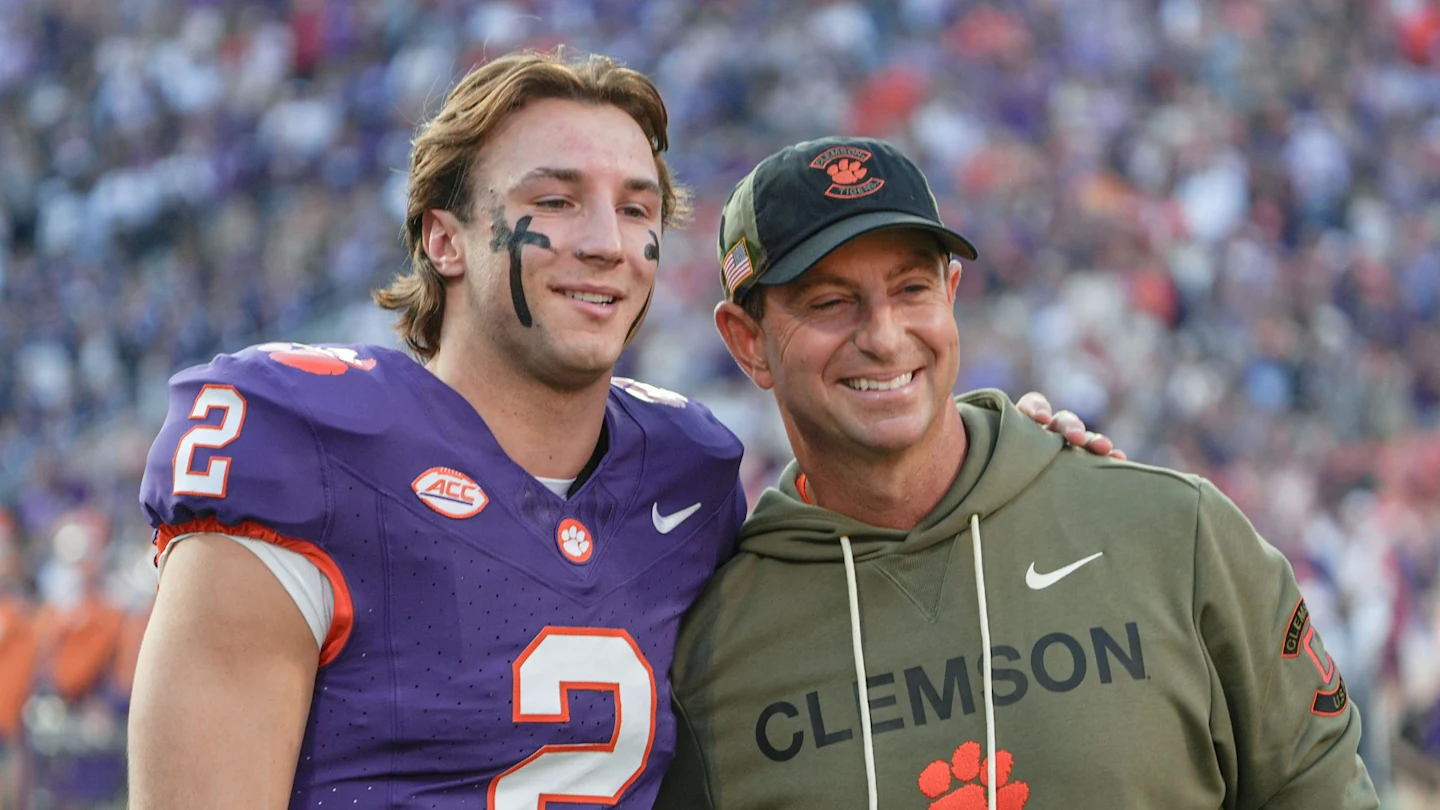
The Pinstripe Bowl was meant to serve as a bridge year moment for Clemson, a chance to reset expectations and evaluate younger talent with an eye toward 2026.
Instead, Dabo Swinney’s Monday media session revealed that 26 scholarship players won’t be available for the Tigers’ Dec. 27 Pinstripe Bowl against Penn State.
That tally, largely injuries, a cluster of transfer departures and a handful of early NFL opt-outs, compounds a season that started with top-five expectations and ended 7-5.
Swinney said 17 absences are injury-related, five players opted to transfer, and four declared for the NFL Draft; among those not playing are defensive stalwarts such as linebacker Wade Woodaz, defensive end T.J. Parker, and cornerback Avieon Terrell.
Offensively, Clemson still has quarterback Cade Klubnik, who threw for 2,750 yards and 16 touchdowns this season, but the Tigers will be without several key offensive linemen and skill-position contributors, including Antonio Williams and Bryant Wesco Jr., the team’s second- and third-leading receivers.

The 2025 campaign itself was already a disappointment by Clemson standards.
A series of close losses to LSU, Georgia Tech, and Duke left Clemson 7–5 and out of playoff contention despite opening the season ranked No. 4 in the preseason AP Top 25.
Those results eliminated any margin for error, and the loss of more than two dozen scholarship players now makes the bowl a significant test of depth.
Penn State enters at 6–6 amid a coaching transition, with roster questions of its own but fewer high-profile opt-outs reported so far.
Penn State will be coached by interim Terry Smith after James Franklin was fired midseason and later took the Virginia Tech job.
For Clemson, the situation has immediate implications for its bowl competitiveness and longer-term questions about roster depth, retention, and development.
The Pinstripe Bowl will be played at Yankee Stadium on Dec. 27 (Noon ET, ABC).
Read More at College Football HQ
- $2.1 million QB ranked as top quarterback in college football transfer portal
- $87 million college football coach predicted to accept Michigan head coaching job
- Top transfer portal QB reportedly receives ‘multiple offers’ over $4 million
- Kirby Smart sends strong message on Nick Saban before College Football Playoff
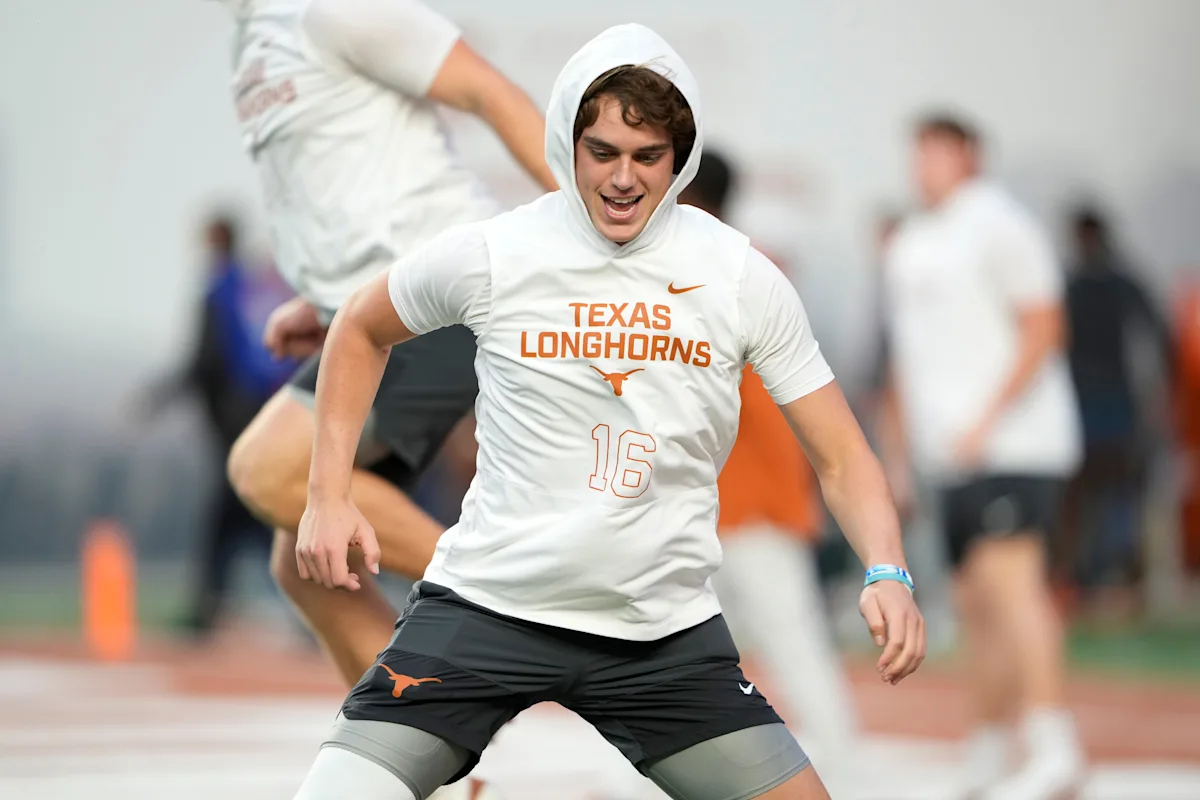
There are plenty of examples of a star in pro sports taking less money in order to help the overall roster. But it isn’t something that’s hit college football yet … until now, thanks to Arch Manning. Manning has asked to take a reduced portion of the Longhorns’ direct payout pool.
Manning’s aim at taking less NIL funds is to help improve the roster around him. Just like Patrick Mahomes, who regularly gives up millions to help the Kansas City Chief’s roster. Tom Brady did it with New England. Dirk Nowitzki, Tim Duncan, LeBron James, Kevin Durant, Jalen Brunson, Aaron Rodgers and Ben Roethlisberger have all helped the rosters around them by taking less.
Advertisement
In the pros, there are salary caps to negotiate. While college has no salary cap (yet), there is a finite amount in the NIL house pool. Texas can only spend what it has available. And while that pool is one of the biggest in the nation, Texas still follows a budget.
No doubt, Manning will be hoping the Texas coaching staff uses some of the freed up football revenue sharing funds on the offensive line. The line struggled in front of Manning all season and certainly inhibited his development early in the season.
Two offensive linemen are gone after the Citrus Bowl and Texas might lose a third. Left tackle Trevor Goosby was named first-team All-SEC is now contemplating going pro. Running back Jadan Baugh from Florida is also on Texas’ radar. The talented RB won’t be cheap.
Of course, it’s not like Manning will starve. The redshirt sophomore has one of the highest NIL valuations in nation. Manning has NIL deals with Red Bull, Panani, Uber and Warby Parker. Manning made north of $3.5 million in NIL deals in 2025, according to the Houston Chronicle.
Advertisement
With a big name that attracts major brands, Manning doesn’t need his big deals supplemented. But most college athletes are paid by the common pool of funds. Manning frees up some of that money for transfers.
This article originally appeared on Longhorns Wire: Manning Pay Cut: Texas QB asks for less NIL money to help boost roster

At the AVCA Major League Volleyball All-America / Players of the Year Banquet presented by Nike, Brooklyn DeLeye was recognized as a 2025 AVCA All-American First Team selection. Reflecting on the honor, DeLeye shared: “This is such a high honor. We talk about grit, competitiveness, and joy all the time. Playing alongside my teammates this year has been amazing—I wouldn’t be here without them, our staff, and my family.” DeLeye’s season was marked by resilience, connection, and a shared commitment to excellence. Congratulations to Brooklyn DeLeye on her First Team All-American recognition.

Page Not Available – Woodlands Online

$2.1 million transfer portal QB predicted to join College Football Playoff team

Accessible Hockey Ventures : Montreal Canadiens Children’s Foundation
Wisconsin’s Aniya Warren, Addy Horner to enter transfer portal

Youth Basketball Teams Crowned Tip-Off Tourney Champs – The Newtown Bee
ESPN recognizes North Salem High for commitment to Unified Sports

BEA has four players earn LHAC volleyball all-star honors | News, Sports, Jobs

Angels Settle Lawsuit with Family of Tyler Skaggs Over His Fatal Drug Overdose

Brad Keselowski breaks his leg in skiing accident

Regional Youth Assessment Center leadership believe programs have positively impacted Grand Forks and region – Grand Forks Herald

Wisconsin setter Addy Horner to enter transfer portal

12th Annual Imagine Little Tokyo Short Story Contest — Youth: My Time With You

Ferrari consider changing Hamilton’s race engineer

ESPN’s Pete Thamel: ‘Tip-top’ of transfer portal quarterback market could reach $5 million

First Tee Winter Registration is open

Fargo girl, 13, dies after collapsing during school basketball game – Grand Forks Herald

CPG Brands Like Allegra Are Betting on F1 for the First Time

F1 Las Vegas: Verstappen win, Norris and Piastri DQ tighten 2025 title fight

Sycamores unveil 2026 track and field schedule

Two Pro Volleyball Leagues Serve Up Plans for Minnesota Teams

Utah State Announces 2025-26 Indoor Track & Field Schedule

SoundGear Named Entitlement Sponsor of Spears CARS Tour Southwest Opener

Redemption Means First Pro Stock World Championship for Dallas Glenn

Jo Shimoda Undergoes Back Surgery

Texas volleyball vs Kentucky game score: Live SEC tournament updates

Bowl Projections: ESPN predicts 12-team College Football Playoff bracket, full bowl slate after Week 14

Robert “Bobby” Lewis Hardin, 56

How this startup (and a KC sports icon) turned young players into card-carrying legends overnight

Indiana’s rapid ascent and its impact across college football




-
 Motorsports1 week ago
SoundGear Named Entitlement Sponsor of Spears CARS Tour Southwest Opener
-
 NIL3 weeks ago
Bowl Projections: ESPN predicts 12-team College Football Playoff bracket, full bowl slate after Week 14
-
 Motorsports2 weeks ago
Donny Schatz finds new home for 2026, inks full-time deal with CJB Motorsports – InForum
-
 Rec Sports2 weeks ago
How Donald Trump became FIFA’s ‘soccer president’ long before World Cup draw
-
 Rec Sports2 weeks ago
Black Bear Revises Recording Policies After Rulebook Language Surfaces via Lever
-
 Sports3 weeks ago
Men’s and Women’s Track and Field Release 2026 Indoor Schedule with Opener Slated for December 6 at Home
-

 Motorsports3 weeks ago
Michael Jordan’s fight against NASCAR heads to court, could shake up motorsports
-
 Rec Sports2 weeks ago
David Blitzer, Harris Blitzer Sports & Entertainment
-

 Motorsports2 weeks ago
JR Motorsports Confirms Death Of NASCAR Veteran Michael Annett At Age 39
-
 Motorsports2 weeks ago
Rick Ware Racing switching to Chevrolet for 2026