Connect with us
https://yoursportsnation.com/wp-content/uploads/2025/07/call-to-1.png

NIL

NIL money keeps more players out of NBA Draft

Published

on


Will Wade’s work building NC State into an immediate winner included the pursuit of an entrant in the NBA Draft, just in case he returned to college.

It wasn’t a huge risk: With all the cash flowing in college, the number of early entrants to the NBA Draft has continued to shrink. This year’s draft starts Wednesday night with its lowest total of those prospects in at least 10 years.

“Now you can play the long game a little bit more,” Wade told The Associated Press, referring to how college players can look at their futures. “Look, I can get paid the same I would get paid in the G League, the same I would get paid on a two-way (contract), some guys are getting first-round money.”

And more money is on the way.

It’s been four years since college athletes were permitted to profit off the use of their name, image and likeness, opening the door for athlete compensation that was once forbidden by NCAA rules. Next week, on July 1, marks the official start of revenue sharing where schools can begin directly paying athletes following the $2.8 billion House v. NCAA antitrust settlement.

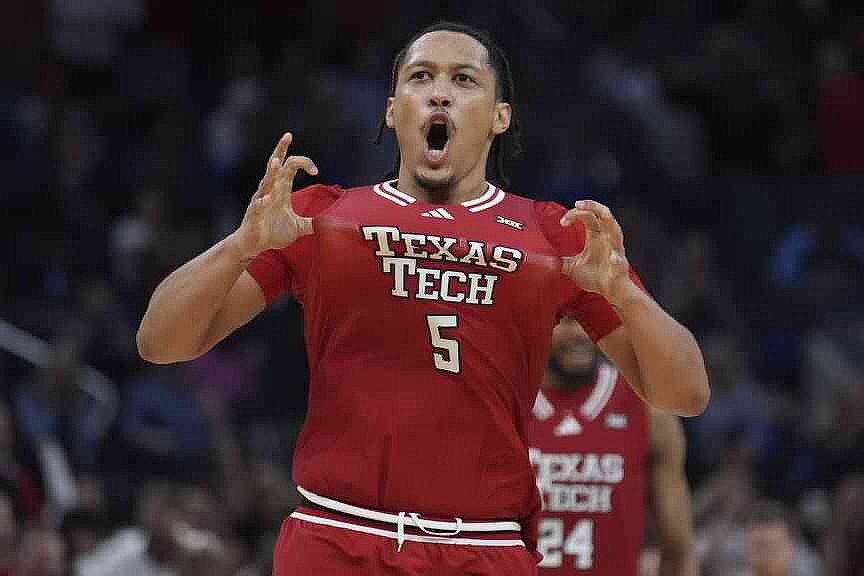
For Wade, that led to signing Texas Tech forward Darrion Williams after 247Sports’ fifth-ranked transfer withdrew from the draft.

“Basically now if you’re an early entry and you’re not a top-20, top-22 pick — where the money slots — you can pretty much make that in college,” the new Wolfpack coach said.

It’s all part of a seismic change that has rippled through college athletics since covid-19, its impact touching the NBA. Players willing to “test the waters” in the draft before returning to school now have a lucrative option to consider against uncertain pro prospects.

And it shows in the numbers.

“With all the money that’s being thrown around in NIL, you’re having a lot less players put their names in,” Detroit Pistons President of Basketball Operations Trajan Langdon said. “You’re having pretty good players pulling their names out.”

This year’s drop in early entrants is significant when compared to the years before anyone had heard of covid-19. There was a spike of college players jumping into the draft in the pandemic’s aftermath, when they were granted a free eligibility year to temporarily make even a fourth-year senior an “early” entrant.

But those numbers had fallen as those five-year players cycled out of college basketball, and they’re now below pre-pandemic levels. That decline coincides with NIL’s July 2021 arrival, from athletes doing paid appearances or social-media endorsements to boosters forming collectives offering NIL packages amounting to de facto salaries.

As a result:

Eighty-two players appeared on the NBA’s list of early entrants primarily from American colleges with a smattering of other teams, down 49% from 2024 (162) and nearly 47% compared to the four-year average from 2016-19 (153.5);

Thirty-two remained after withdrawal deadlines, down from 62 last year and 72.0 from 2016-19;

Adding international prospects, 109 players declared for the draft, down from 201 last year and 205.0 from 2016-19;

And only 46 remained, down from 77 in 2024 and 83.8 from 2016-19.

Duke Coach Jon Scheyer understands draft dynamics, both for no-doubt headliners and prospects facing less clarity. He sees college athlete compensation as a “legitimate gamechanger.”

“Hopefully it allows players to decide what’s truly best for their game,” Scheyer told the AP. “It allows them to analyze: ‘Am I actually ready for this or not?’ Where money doesn’t have to be the deciding factor. Because if money’s the deciding factor, that’s why you see kids not stick. The NBA’s cutthroat. It just is.”

The Blue Devils are expected to have three players selected in the first round Wednesday, including presumptive No. 1 pick Cooper Flagg alongside top-10 prospects Khaman Maluach and Kon Knueppel. They also had players sorting through draft decisions.

Isaiah Evans — a freshman wing with explosive scoring potential — withdrew instead of chasing first-round status through the draft process. Incoming transfer Cedric Coward from Washington State rapidly rose draft boards after the combine and remained in the draft.

“There’s no substituting the money you’re going to make if you’re a top-15, top-20 pick,” said Scheyer, entering his fourth season as successor to retired Hall of Famer Mike Krzyzewski. “But if you’re not solidified as a first-round pick, why risk it when you can have a solid year and a chance to go up or be in the same position the following season?”

Langdon, himself a former Duke first-rounder, sees that evolution, too.

His Pistons had their first playoff appearance since 2019, but lack a first-round selection and own a single pick in Thursday’s second round. Fewer candidates could make the already imperfect science of drafting even trickier in this new reality.

According to the NBA’s 2024-25 rookie scale, a player going midway through the first round would make roughly $3.5 million in first-year salary. That figure would drop to about $2.8 million at pick No. 20, $2.3 million at No. 25 and $2.1 million with the 30th and final first-round draftee.

A minimum first-year NBA salary? Roughly $1.2 million.

“These NIL packages are starting to get up to $3 to $4 to $5 to $6 million dollars,” Langdon said. “These guys are not going to put their name in to be the 25th pick, or even the 18th pick. They are going to go back to school in hopes of being a lottery pick next year. With that pool of players decreasing, it kind of decreases the odds of the level of player we get at No. 37, just the pure mathematics.”

Indiana Pacers big man Thomas Bryant and Oklahoma City Thunder counterpart Isaiah Hartenstein, who both played in the seven-game NBA Finals that ended Sunday, illustrate Langdon’s point.

They were back-to-back second-rounders in 2017 — Bryant at 42, Hartenstein at 43 — pushed down a draft board featuring early entry college players in 33 of the 41 picks before them.

Bryant played two college seasons at Indiana before stints with five NBA teams, including Denver’s 2023 championship squad. Would the ability to make college money have changed his journey?

“To be honest, I see it from both sides,” Bryant said. “If you’re not going to get drafted, you understand that a kid needs money to live in college and everything. So, I understand where they’re coming from on that end.

“But for me, I took the chance. I bet on myself, and I believed in myself, and I worked to the very end. And the thing about me is that if I went down, I was going down swinging. I hang my hat on that. For some, it might not be the same case.”

The American-born Hartenstein moved to Germany at 11 and played in Lithuania before being drafted. As he put it: “I think everyone’s journey is different.”

“I think you should have the right people around you to kind of guide you,” said Hartenstein, a newly minted NBA champion. “I mean, I was lucky that my dad, who was a professional before, kind of guided me. Depending on your circumstances, it’s hard to turn down guaranteed money. If there’s an opportunity to get in a good situation in the NBA, you do that. But it’s a hard decision.”

At NC State, Wade’s pitch to Williams included a leading role and a shot at boosting his draft stock.

The 6-6 junior averaged 15.1 points with multiple big NCAA Tournament performances as the Red Raiders reached the Elite Eight, nearly beating eventual champion Florida.

“He was most likely going to be a second-round draft pick, and his package here is better than probably he would’ve gotten as a second-round pick,” Wade said, adding: “We certainly talked about that. We went over that. We went over the math of everything. We went over the plan on how to accomplish that.”

That’s not to say it’s easy at the college level in this new landscape. Roster management is tricky, including a balancing act of maintaining financial resources to potentially land one player while risking missing out on others.

“It’s the way life works, it’s the way it should work,” Wade said. “If there’s no risk, there’s no reward. The riskiest players, in terms of waiting on the money and waiting them out, are the best players. That’s why they’re in the draft process. We’re not going to be scared of that.”

Nor should he, not with the allure of campus life these days.
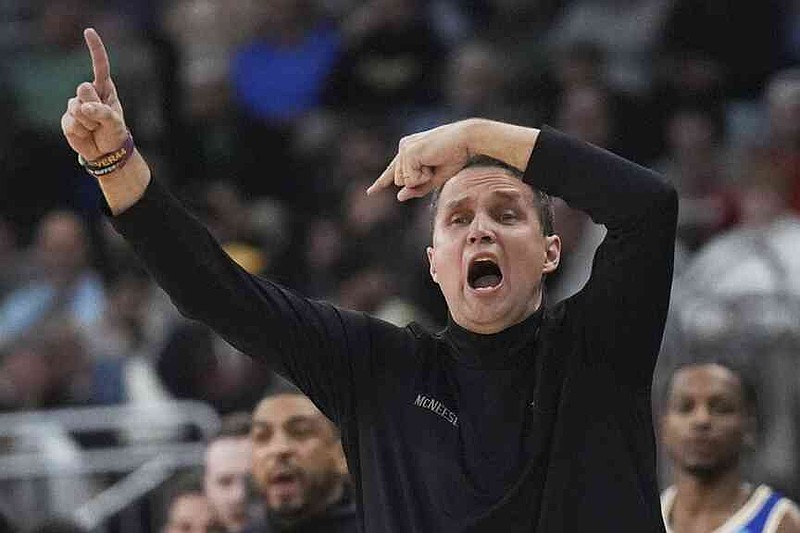
FILE - McNeese State head coach Will Wade calls to his players during the first half in the first round of the NCAA college basketball tournament, Thursday, March 20, 2025, in Providence, R.I. (AP Photo/Charles Krupa, file)
FILE – McNeese State head coach Will Wade calls to his players during the first half in the first round of the NCAA college basketball tournament, Thursday, March 20, 2025, in Providence, R.I. (AP Photo/Charles Krupa, file)
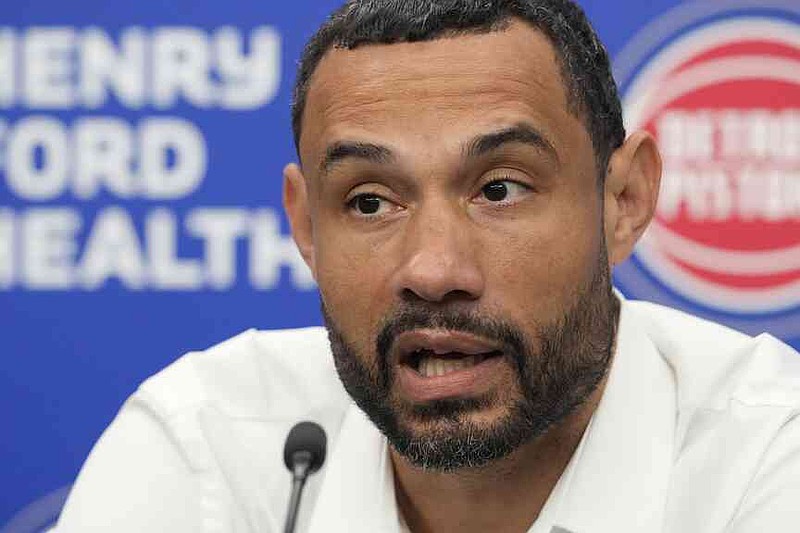
FILE - Detroit Pistons president of basketball operations Trajan Langdon addresses the media before introducing J.B. Bickerstaff as the new head coach of the NBA basketball team, Wednesday, July 10, 2024, in Detroit. (AP Photo/Carlos Osorio, file)
FILE – Detroit Pistons president of basketball operations Trajan Langdon addresses the media before introducing J.B. Bickerstaff as the new head coach of the NBA basketball team, Wednesday, July 10, 2024, in Detroit. (AP Photo/Carlos Osorio, file)
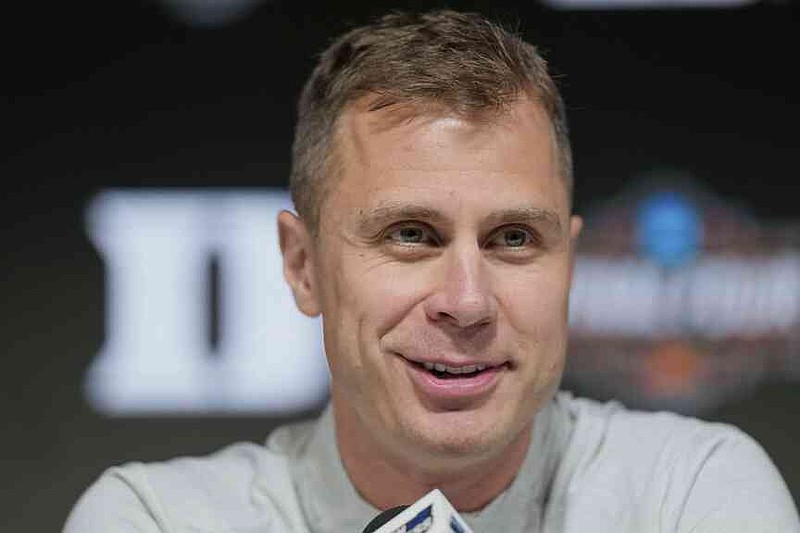
FILE - Duke head coach Jon Scheyer answers a question during media day at the Final Four of the NCAA college basketball tournament, Thursday, April 3, 2025, in San Antonio. (AP Photo/Eric Gay, file)
FILE – Duke head coach Jon Scheyer answers a question during media day at the Final Four of the NCAA college basketball tournament, Thursday, April 3, 2025, in San Antonio. (AP Photo/Eric Gay, file)
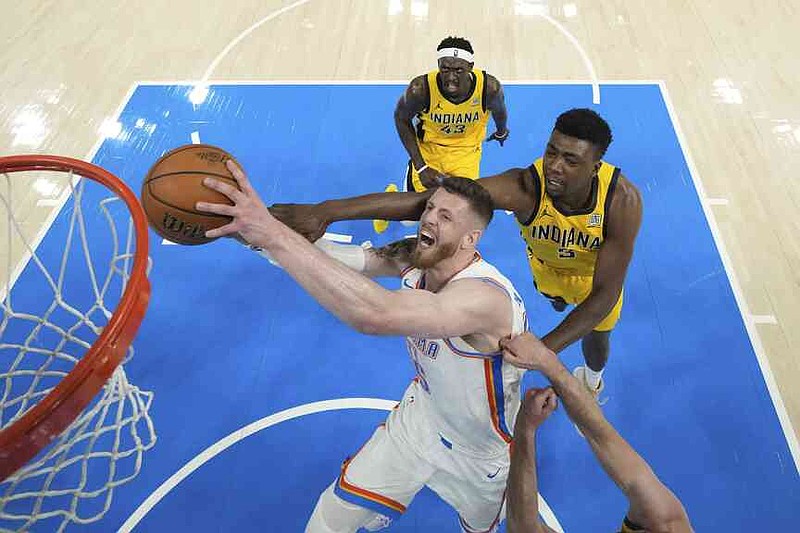
Oklahoma City Thunder center Isaiah Hartenstein, center, drives to the basket against Indiana Pacers center Thomas Bryant (3) during the first half in Game 1 of the NBA Finals basketball series Thursday, June 5, 2025, in Oklahoma City. (Kyle Terada/Pool Photo via AP)


Link

Continue Reading
Click to comment

Leave a Reply

Your email address will not be published. Required fields are marked *

NIL

Bankruptcy trustee presses case against Deion Sanders’ son Shilo

Published

on


Dec. 17, 2025, 10:04 p.m. ET


Link

Continue Reading

NIL

$45 million college football head coach reportedly offers Lane Kiffin unexpected role

Published

on


The College Football Playoff travels to Oxford on Saturday with an unusual subplot: an 11-win Ole Miss team entering the postseason without the coach who compiled that record, Lane Kiffin.

Meanwhile, Tulane, which Ole Miss faces Saturday at 3:30 p.m. ET at Vaught-Hemingway Stadium, also has an outgoing coach, as Jon Sumrall has opted to finish the season in New Orleans before taking over at Florida.

Kiffin’s 2025 Rebels closed the regular season at 11–1, securing a CFP berth behind a high-powered offense that averaged 498.1 total yards per game, the third-most in college football.

Within days of the Egg Bowl, Kiffin accepted LSU’s offer, a reported seven-year contract worth roughly $91 million, and announced he would not coach Ole Miss in the playoff. 

Ole Miss promptly elevated defensive coordinator Pete Golding to lead the program into the bracket.

On Wednesday, Sumrall broke down the matchup and joked that he had offered Kiffin a spot in Tulane’s coaches’ box.

“They’ve got a lot more stability for the game than people realize. They’re going to be who they’ve been; they’re just not going to have Lane on the sideline,” Sumrall said. “I’ve reached out to Lane to see if he wants to sit in our coaches’ box for the game, but he hasn’t given me an answer yet.”

Florida Gators head coach Jon Sumrall.

Gainesville, FL, USA; Florida Gators head coach Jon Sumrall smiles during the press conference at the Heavener Football Training Center at the University of Florida. | Matt Pendleton-Imagn Images

Tulane arrives after winning the American Athletic Conference and finishing 11–2. 

The Green Wave boasts one of the nation’s best turnover margins (+10) and a defense that has tightened steadily since an early setback in Oxford on Sept. 20, a 45–10 loss.

Adding to the narrative, Sumrall, who signed a reported six-year, roughly $45 million deal to become Florida’s next head coach, has said he will remain with Tulane through the postseason before joining the Gators full-time.

Tulane has already designated passing-game coordinator Will Hall as Sumrall’s successor once the playoff run concludes.

This moment reflects a new normal in college football’s accelerated coaching market, with major hires unfolding as teams prepare for postseason play.

Read More at College Football HQ

  • $3.7 million college football head coach named clear candidate for Michigan vacancy

  • College football program signs $1.2 million deal with NFL legend

  • College Football Playoff team losing all-conference player to transfer portal

  • $2.1 million college football QB announces return to Big Ten program


Link

Continue Reading

NIL

$36 million college football coach reportedly out of race for Michigan vacancy

Published

on


Michigan is the last remaining Power Four college football program to find a new head coach in the 2026 cycle.

The Wolverines fired head coach Sherrone Moore on Dec. 10 with cause and are now one week into the coaching search. Alabama head coach Kalen DeBoer, Arizona State head coach Kenny Dillingham, and Missouri head coach Eli Drinkwitz are among those being floated as potential replacements.

One name that previously received attention for the vacancy was Washington head coach Jedd Fisch. On3 and ESPN college football insider Josh Pate reported Fisch’s interest in the Michigan head coaching vacancy has declined in the last few days.

“There’s been some sentiment today that maybe Jedd Fisch’s name has cooled,” Pate said. “I think that’s accurate. The critical take-home points are that I don’t know if Jedd Fisch is going to be a factor in the Michigan search moving forward… I don’t think Jedd Fisch is going to be an option for them.”

Washington Huskies head coach Jedd Fisch

Washington Huskies head coach Jedd Fisch holds the LA Bowl championship belt | Jayne Kamin-Oncea-Imagn Images

Fisch’s waning interest is a relief to Washington, as it is all too familiar with head coaches leaving for other jobs. The Huskies lost Kalen DeBoer to Alabama in the 2024 offseason when Nick Saban announced his retirement from the Crimson Tide.

The Florida alumnus spent the first 24 seasons in the coaching ranks as an assistant at a high school, in the Arena Football League, at six different NFL franchises and five different college football programs. He served as Michigan’s passing game coordinator in 2015 and 2016 under Jim Harbaugh, part of the reason he is linked to the Wolverines’ current opening.

The only head-coaching capacity Fisch had served in before he took the Arizona vacancy was as UCLA’s interim coach in the 2017 Cactus Bowl against Kansas State.

Arizona finished 1-11 in 2021, the lone win against California (10-3) in November. The Wildcats improved to 5-7 in 2022, a record that included an upset victory over a ranked UCLA team. Fisch followed up a 3-3 start in 2023 with seven consecutive wins, including an Alamo Bowl win over Oklahoma (38-24).

Fisch filled the Washington vacancy left by DeBoer in the 2024 offseason. An up-and-down first season led to a 6-7 season, capped by a Sun Bowl loss to Louisville (35-34).

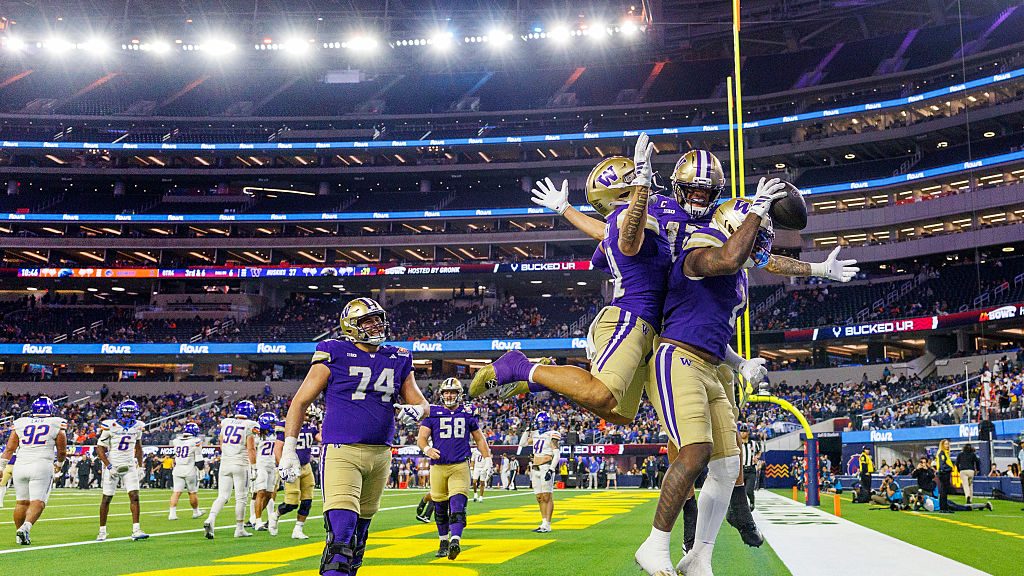
The Huskies put together a stronger effort in 2025. Washington concluded the regular season at 8-4 and defeated Boise State (38-10) in the LA Bowl in SoFi Stadium.


Link

Continue Reading

NIL

Eli Drinkwitz: NIL Buyouts And Tampering Are Making ‘College Football Sick’

Published

on


Just two weeks away from the transfer portal opening in college football, coaches across the country are trying to maintain a roster while opposing schools look for any possible way to steal a player, no matter if it comes with paying a buyout. 

On Monday, we all witnessed multiple starting quarterbacks decide to declare their intentions to enter the portal. This included DJ Lagway, Dylan Raiola, Brendan Sorsby and Sam Leavitt. 

All of these guys would have had the opportunity to play next season at their current schools, with maybe Lagway being an outlier because of the new staff in Gainesville. But, we are certainly in a drastically different era of college athletics. 

Transfer Portal Carousel: Quarterbacks, NIL Deals And The Rise Of A WILD College Football Free Agency Market

“There’s a warning that the system that we’re in is really sick right now, and college football is sick,” Eli Drinkwitz said. “There’s showing signs of this thing really cracking moving forward, and we need to get something under control.”

Contracts: How ‘Buyouts’ Are Handled, Or Trying To Be 

At the moment, there are players deciding that entering the transfer portal is the best route to take when it comes to cashing in, with chances of making it to the NFL not guaranteed. This also means that certain players are deciding to enter the transfer portal while still under contract with a school like Missouri. 

In reality, there are no rules at the moment. Some might think the new College Sports Commission is setting guidelines for future enforcement, but there is still no agreement signed that would have them running the show. 

After Sherrone Moore Scandal, Michigan Board Orders Investigation Into Athletic Department

We have seen players re-signing with schools, while others are being shopped around to others. So, what happens if an athlete has signed an agreement with one school, but is looking at the opportunity of transferring? 

Here’s the best way to explain what we’re seeing right now in college athletics when it comes to a player leaving one school after already being paid through a “front-loaded” deal before new rules were put into place over the summer. 

Let Me Try To Summarize It

“Hey, College Player, you’re being paid $4 million. Here’s $3.8 million before the house settlement is passed. Once you hit the portal, we can terminate the deal, but if it’s terminated because you left, you owe us the money. If another collective cuts the check at the new school, the player would then have that taken out of their new school’s contract. 

“And, if the player decides to balk at paying their previous school back, this is where lawsuits could continue. The athletes have already taken this money, but they still owe their previous school for the contract that has not been fulfilled. Somebody has to pay back that money, or what they agreed to under the particular contract.”

I hope that explains it, for the folks still trying to grasp all this.

As we’ve reported before, this is where certain contract language will have “buyout” clauses. But, who is enforcing this? This is what Eli Drinkwitz was trying to emphasize on Tuesday. 

“I don’t know, some of the players that have entered the portal were under two-year contracts, and their anticipation is that another school will pay their buyout, or they’ll pay it back themselves,” Drinkwitz told reporters. “So, you know, contracts are contracts. I think there’s been an assumption that, not gonna go there. So we’ll see, we’ll see, you know. Right now, there are perceived rules, and then we’ll figure out what are the real rules moving forward.” 

As you can tell, there is no clarity, and as much as some of these coaches would have loved the help of Congress, they might end up waiting a while before enforcement can actually take place.

It’s No Longer Tampering. College Athletes Are Being Shopped

Most coaches in this era would rather handle situations behind the scenes, rather than calling out an opposing school during a press conference setting. 

Why? Because there is “tampering” going on at every school. Now, it might not be as rampant at some compared to others, but it’s happening. This could come in the form of a grad-assistant reaching out to the high school coach of a player enrolled at another school. 

It happens when the player is not directly contacted, but goes through a third party. Agents are so prevalent in college athletics that they are also shopping players around to the highest bidder. And, we’re not talking about well-run companies that have made a name for themselves over the past six years.

The term “street agent” is used a lot in the industry, which is essentially a person who is working on a campus, acting as if they are running the business affairs of a particular athlete. They have zero training, besides being able to operate a social media account. 

But, some of these athletes know no better, and will trust their futures with someone who acts as though they have their best interest at heart. I’m sorry, but having your buddy handle your business affairs, and most importantly life decisions, is not the smartest move. 

“You know, tampering is at, I mean, the highest level. There is no such thing as tampering. It’s just, because there’s nobody that’s been punished for tampering. And so everybody on my roster is being called,” Drinkwitz said. “I had a dad call me and say that, and I called the head coaches at their schools, that this school and this school, and this school called, they are offering this much money. 

“And, you know, you’re putting a lot of pressure on young men. You know, we’re paying them as 1099 employees, a lot of money, not offering any type of retirement, not offering any type of health benefits.”

I think it’s fair to say we have a long way to go, as schools are still trying to navigate this era of college athletics. 


Link

Continue Reading

NIL

Bowl Season Attendance Plummets As Star Players Opt Out, Teams Decline Invites

Published

on


Fighting Irish choose to forgo postseason play after being left out of College Football Playoff, as LA Bowl attendance drops

Remember the good old days of college football bowl season? 

Almost every day throughout December, there were good, fun bowl games pitting quality teams against each other. There was no debate over whether star players would be involved, no “opt outs,” no teams turning down invitations. Lesser games still had big attendance figures, as fans built winter vacations around warmer destinations. It built up throughout the month, culminating in the key bowl games around New Year’s Day. The Rose Bowl served as a de facto end of the season, with the biggest and most historic stage.

Now? That’s all a distant relic of a difficult-to-remember past. And it’s only going to get worse. 

The start to the 2025 bowl season has been a strong reminder that the old days of college football are never coming back. In some respects, that’s for the better. In some, it’s for the worse. For example, in the days after the end of the conference championship games, discussion focused primarily on the Notre Dame Fighting Irish. 

The Irish were left out of the College Football Playoff in favor of the Alabama Crimson Tide and Miami Hurricanes. The committee, as it so often does, simply made up its criteria on the fly, engaged in its usual lack of logical consistency, and predetermined the outcomes it wanted. In short, Notre Dame was treated unfairly. Instead of accepting that, however, the Irish took their ball and went home.

RELATED: Would This Proposal Fix College Football And Broken Playoff Committee?

They announced on social media they would decline any bowl invitation, choosing to forgo important postgame practices and more development time as a team. And while it’s easy to criticize, that type of decision is only going to become more common. Because there’s simply no point to most bowls anymore.

College Football Playoff, NIL, NFL, Ending Bowl Season For Good

It wasn’t just Notre Dame. One of the first higher-profile bowl games of the season was the LA Bowl pitting the Washington Huskies against the Boise State Broncos at SoFi Stadium. Warm weather destination, two schools with large, dedicated fan bases, a gigantic brand-new state-of-the-art venue, and…nobody showed up.

The official announced attendance was just more than 23,000, but it sure seemed like less than that. Crowd shots before kickoff showed dozens of fans sprinkled around the lower bowl, with the middle and upper sections virtually empty.

It filled in more as the game started, but just barely. 

Then there’s the Alamo Bowl, with 9-3 USC taking on 8-4 TCU in San Antonio. In prior decades, it wouldn’t be a point of discussion how many big-name players for SC would be available. Yet sure enough, head coach Lincoln Riley announced over the weekend that several starters would not be participating.

Safety Kamari Ramsey is out after declaring for the NFL Draft. So is Biletnikoff Award winner Makai Lemon. And circus catch specialist Ja’kobi Lane. Starting tight end Lake McRee won’t play, neither will starting linebacker Eric Gentry. This isn’t an outlier, it’s become common practice across the sport. Starting players heading for the NFL sitting out instead of playing in a relatively decent bowl game. And the reasons make sense; why jeopardize your health for an exhibition game that isn’t the College Football Playoff?

It’s the same for fans too. Why buy tickets for an exhibition bowl game where half the starters from the regular season aren’t playing? These are valid questions, and it raises the more important overarching one: what is the future of bowl games? 

Notre Dame, one of the game’s biggest brand names isn’t going to play in a bowl game at all. Star players left and right won’t be playing. Nobody’s buying tickets to half these games anymore to see backups taking on backups. NIL and the transfer portal makes it so that many players will avoid bowls, since they’re halfway out the door already anyway.

It’s just not sustainable, and with the game trending in the direction it’s going, there’s little to suggest it’s ever going to go back to the way it was. 

Expanding the College Football Playoff isn’t a popular choice, for good reason. But it might be the only path forward to allow more teams, players and fanbases to continue after the regular season. Home playoff games in a 16-team or 20-team or whatever it is field would sell out stadiums and keep players engaged. Bowls could be revived in importance. Ratings would be huge. And most importantly, more money would get infused into the sport. 

Like it or not, that’s what college football runs on these days. And the current bowl system isn’t printing enough of it.


Link

Continue Reading

NIL

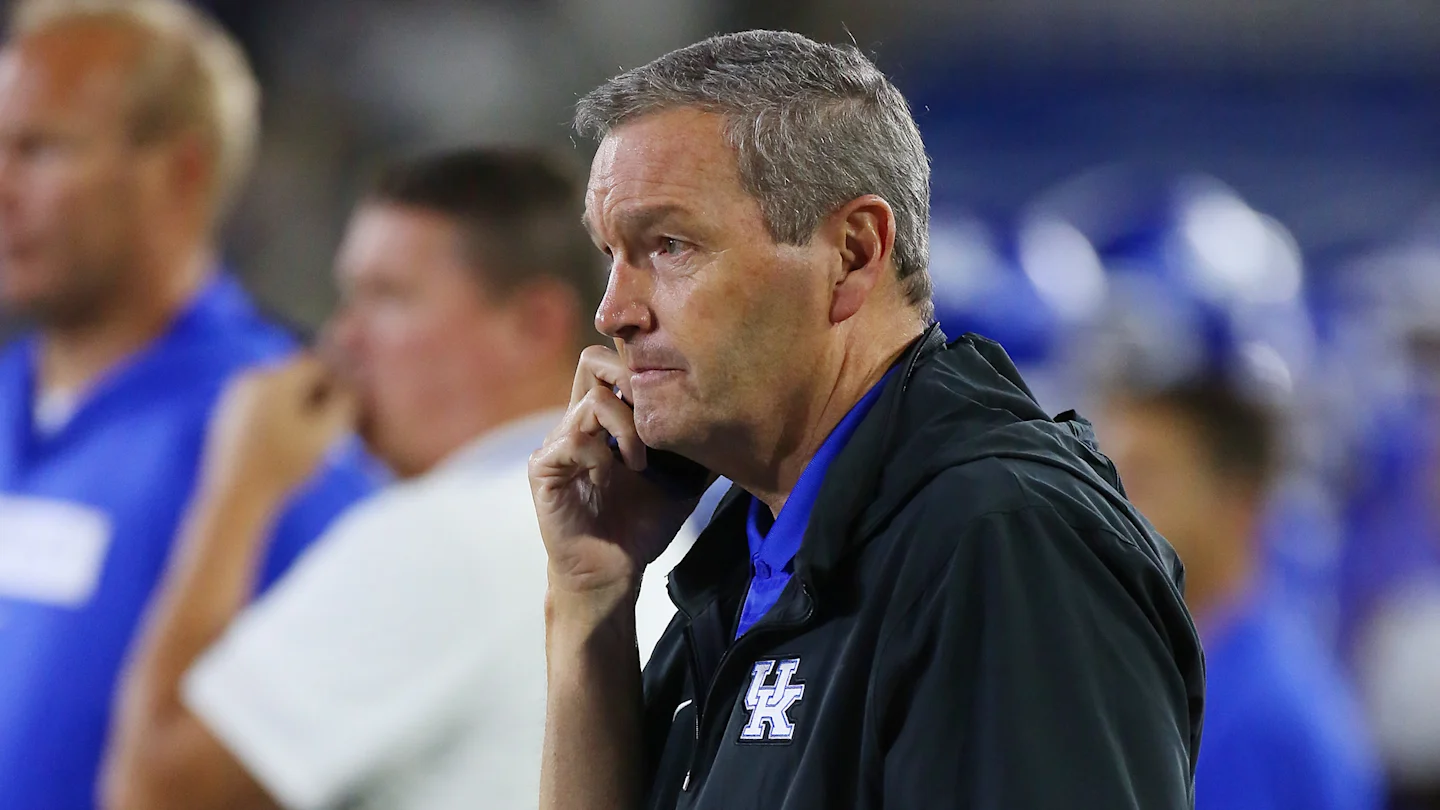
Mitch Barnhart says the NIL money is there but he refuses to show the receipt

Published

on


If you’re a Kentucky fan trying to make sense of NIL, revenue sharing and JMI, you’re not alone. The athletic director running the whole thing admits it’s “clunky” right now.

From losing ground with high school basketball recruits like Tyran Stokes and Christian Collins, BBN is at all-time high in recruiting anxiety.

In a long sit-down with the Lexington Herald-Leader, Mitch Barnhart tried to explain how Kentucky is operating in this new College Sports Commission / NILGo world. The message was basically this: yes, it’s confusing; no, Kentucky isn’t freelancing; and he believes the structure he’s put in place is actually a strength, not a handicap.

Convincing the fanbase of that isn’t going to be easy without recruits showing up.

‘Clunky’ rules, moving caps and a promise to stay in the guardrails at Kentucky

Barnhart said the current landscape is really two different eras smashed together: what was done before July 1, and everything that’s been built since the House settlement, the College Sports Commission and NILGo went live.

Different schools had different pre-July 1 spending patterns. That history impacts how much cap space they have now. Some have more room. Some have less. That’s part of why it looks like schools are operating under different rulebooks.

Barnhart’s word for the rollout was “clunky.” There are participation agreements that not every school has signed yet, rules that have to go through courts and attorneys general, and separate 30-day windows for both the House plaintiffs and state AGs before some policies can even be implemented. Some rules are in effect. Others are still in line.

In the middle of all that, Barnhart keeps coming back to the same idea: Kentucky is trying to be “steady,” stay within the “guardrails,” and trust that “progress is being made” as the national framework catches up.

That might not satisfy fans who look around and see other schools clearly pushing those guardrails, but it’s the lane he’s chosen. Pope backed that up by saying they will always “err” on the side of caution when it comes to NIL.

NILGo, averages and a ‘hot market’ in Lexington

On the actual NIL payouts, Barnhart said all deals now flow through NILGo, and Kentucky has already had “several hundred” go through the system. At the Champions Blue meeting in October, he pegged the average deal around $3,000, with the biggest near $50,000. He said those numbers are still “trending in the same way.”

He pointed to Kentucky volleyball as a prime example of what a “hot market” looks like. A Final Four run has made that roster more visible in Lexington, and as their “notoriety” has grown, so has their NIL value. Barnhart sounded genuinely excited talking about watching those opportunities grow for non-revenue athletes.

For fans who worry Kentucky isn’t doing anything, that’s the counter: NIL deals are happening, they’re in seven figures across the department, and not just in football and men’s basketball.

The question, of course, is whether that level of activity is enough to land and keep the kind of top-end basketball talent BBN expects. So far, the answer to that question seems to be no.

Why Mitch Barnhart is all-in on JMI

A huge chunk of the interview was essentially a defense of the JMI model that fans hate.

Barnhart’s pitch goes like this: JMI arrives with more than 200 corporate partners already on board and a seasoned sales force generating $35–40 million a year in advertising and sponsorships. That group is now tasked with not just selling Kentucky athletics, but also matching student-athletes with those brands.

From his perspective, that’s an enormous head start. You’ve got a big, experienced sales staff already embedded on campus, already working with companies that “are very, very interested in your program,” and now they can turn that machine toward NIL.

He also made a key point that’s been blurry for fans: JMI isn’t skimming a cut off those NILGo deals. “There’s no fee,” Barnhart said. “We’re fee-free.”

So what’s the trade-off? Marks and flexibility.

If a student-athlete wants to use Kentucky logos and IP in their deals, that path runs through JMI. If they sign with a company that competes with an existing UK sponsor, Barnhart said they’re “certainly” encouraged to give Kentucky partners first crack, but athletes can still go ahead with outside deals they just can’t use the marks.

That is a huge deal. Being able to use the UK brand, and the notoriety that comes with Kentucky basketball is a huge draw for NIL-minded athletes. Not being able to use those can be a deal breaker.

He pointed to cases like Trent Noah, who has hometown relationships he wants to honor, and players who arrive with pre-existing high school NIL deals. The message there was, “We work through it,” even if it’s messy. Noah decided to not opt-in with JMI and has deals all through the commonwealth, you just won’t see the UK logo anywhere.

The flip side is obvious: if you don’t like or trust JMI, you’re going to see this entire structure as restrictive, even if the AD keeps calling it a “really cool” family.

Barnhart speaks on conflicts of interest and long relationships

Barnhart didn’t dodge the question about perceived conflicts between UK staff and JMI personnel. He just doesn’t see a problem.

To him, the long-standing ties that span from the Jim Host era to IMG to now 11 years with JMI and a new extension through year 25, are a feature, not a bug. He framed it as a tight-knit group of people who love Kentucky and know the market, not as an insider network that needs to be broken up.

A lot of fan angst comes from the Rachel Newman Baker-Brandon Baker relationship. Rachel is an assistant AD at UK while Brandon is Vice President Partnerships at JMI with the title UK Sports & Campus Marketing. According to JMI, “Brandon’s role is focused on aligning key partners’ marketing objectives with the goals and vision of the university. He directs the team that oversees all key partnerships and renewal business, as well as gameday activations, partner hospitality, and stadium/arena signage.”

“If it was a conflict,” Barnhart essentially argued, why have revenues and rights deals grown so aggressively?

That answer is unlikely to quiet any critics of the relationship between UK and JMI. Some fans hear “family” and “long-term relationships” and immediately think of a closed ecosystem that’s hard to challenge. But Barnhart is clearly not backing away from that model. If anything, he’s doubling down on it as a competitive advantage.

Why Barnhart won’t show his revenue-sharing cards at Kentucky

Maybe the most interesting part of the interview was his insistence on keeping revenue-sharing numbers private.

Barnhart pushed back on the idea that it’s about secrecy. He called it “flexibility.”

In his view, there are two separate buckets: revenue sharing and NIL. He thinks fans and some schools have blurred those lines by bragging about a big “NIL” number that’s really a mix of both.

He wants the freedom to slide resources between those buckets depending on the sport, the year and the player. Maybe a high-profile recruit is better served taking more in rev share and less in NIL, or vice versa. Maybe football needs a bigger push one offseason to address a critical position, while basketball doesn’t. Maybe in another year it’s the opposite.

If he puts hard public numbers on what each program gets, he worries he’ll lock himself into boxes that hurt Kentucky competitively and create a circus of fans comparing individual payouts.

He also says there’s a protective piece: he doesn’t want each athlete “pegged” publicly by a dollar figure or constantly compared to teammates.

You can debate whether that explanation is satisfying, or whether transparency would actually help calm the waters, but it’s at least a clear window into his thinking.

For fans it is just Mitch Barnhart saying they have the money, but won’t show a receipt.

Balancing Kentucky football, Kentucky basketball and the rest of the athletics department

Kentucky’s situation is unusual. Both football and men’s basketball are profitable. Most schools can’t say that.

Barnhart admitted that balancing those two in this new world is tricky. Pre-July 1, he says everyone loved the rosters. Post-July 1, the math is just harder across the board, not only at Kentucky.

His bigger picture vision is to use the power of the Kentucky basketball brand to lift everything. If NIL and rev-share decisions are made wisely, he believes success in men’s hoops and football can raise the tide for baseball, women’s basketball, volleyball and everyone else.

That’s the optimistic version. The pessimistic version is what some fans are already feeling: if basketball misses on elite recruits and football falls behind the SEC arms race, nobody gets lifted and everything falls apart.

On general managers, Mark Pope and ‘talent evaluation’

Barnhart also weighed in on the “general manager” debate that’s hovered over Kentucky basketball.

Will Stein came in and immediately wanted a GM for football. Barnhart was fine with that. For a first-time head coach juggling a new staff, a playoff run and a roster rebuild, he called it “probably a pretty smart decision.”

With Mark Pope, he’s not forcing the issue. Barnhart said he’s going to “lean into” Pope’s preference and give him the flexibility to decide whether he wants that role or not down the line.

Then he slipped in a line that will jump out to fans: “Our talent assessment was fine until we lost a couple games, and then everybody started wondering about our talent assessment, correct?” Well, Mitch that is usually how it works.

In other words: he doesn’t think one rough stretch means the eval process is broken, and he doesn’t believe a GM is some magic fix. But he did leave the door open to adjustments later if Pope decides he wants to structure things differently.

Will Mitch Barnhart still be the one steering this or will he retire?

Finally, the obvious question: how much longer does he want to do this?

Barnhart acknowledged the ambassador clause in his contract that would allow him to step aside after December 31 and shift roles. He didn’t commit one way or the other.

He talked instead about loving competition, loving Kentucky and the fact that he and his family came planning to stay 6–8 years and never left. He admitted the job has changed, where it used to be 75% competition and 25% “other stuff,” he thinks those numbers have flipped. Now it’s more about sustaining the enterprise of college sports than just trying to win Saturday.

He also admitted the personal connection piece is harder in an era where 35–40% of the roster turns over every year. Meeting every recruit, knowing every family? That’s tougher now.

But the thrill of competition is still there for him. “The day that changes,” he said, is probably the day someone else should take over.

That’s the backdrop to everything he just laid out: a clunky system, a controversial partnership model, a fanbase demanding top-tier results, and an athletic director who insists Kentucky has “a good plan” for all of it, and says he still wants to be the one fighting to make it work.


Link

Continue Reading

Most Viewed Posts

Trending