
NIL
Notre Dame Baseball

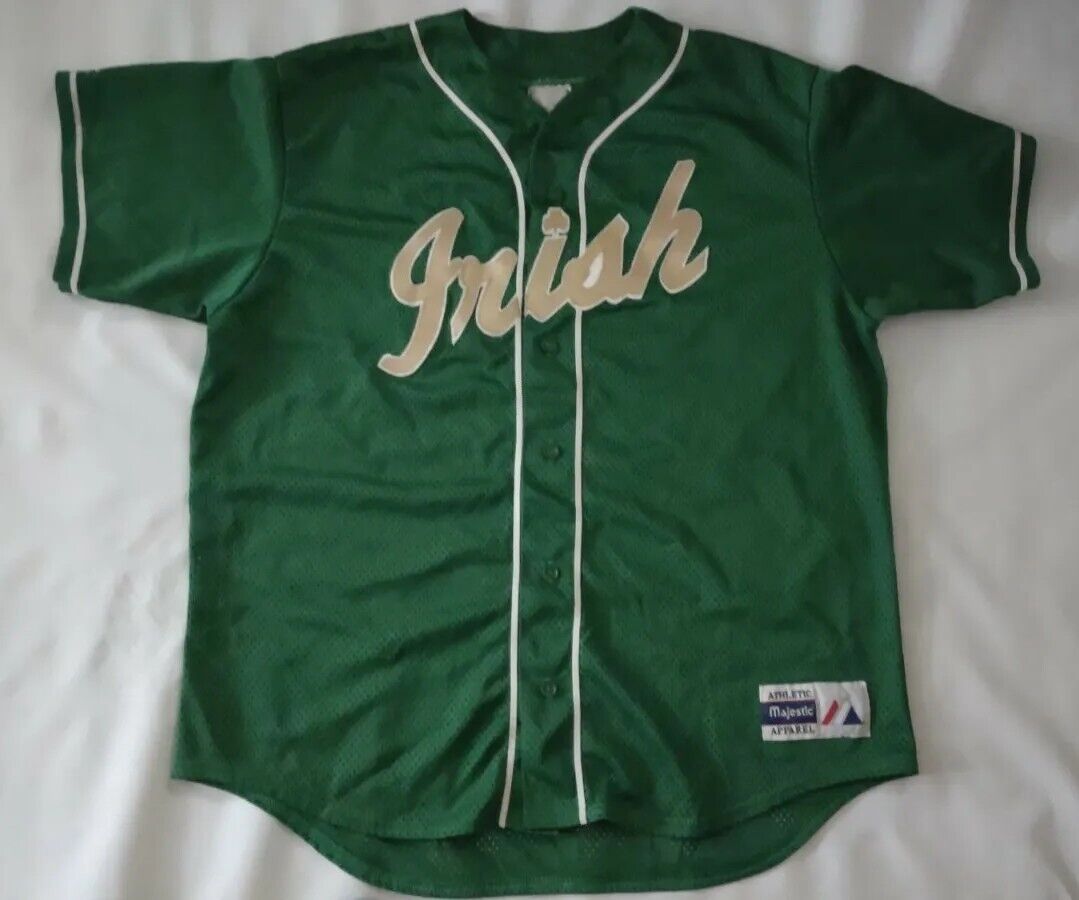


We’re all at home watching the NCAA Baseball Tournament — including the Notre Dame Fighting Irish baseball prgram. They would like to get back to making a regional appearance next season for the first time in 4 years, and it will likely be the transfer portal that will help decided that fate.
This past weekend, Notre Dame added two new pitchers from the transfer portal.
Garrett Stratton, a right-handed pitcher from the Rice Owls, is coming to South Bend next year.
The next day it was Ty Uber from the Stanford Cardinal, another right handed pitcher, that also announced his decision to transfer to Notre Dame.
The Irish will still need more help for the 2026 season, but adding quality pitching to the staff is a great start.


The great debate regarding which conference — the Big Ten or the SEC — reigns over college football might not be much of a debate anymore. Especially given the SEC’s dismal 4-10 bowl record this offseason.
That bowl record looks even worse in games between the SEC and other Power Four teams, with the Southeastern Conference finishing the 2025-26 bowl season a combined 1-8 versus the ACC, Big Ten and Big 12. That includes a winless 0-4 mark against the ACC and a 1-3 record vs. the Big Ten, which has won the last two CFP national championships and will play for a third when No. 1 Indiana takes on No. 10 Miami in next Monday’s College Football Playoff national title game.
In fact, following No. 6 Ole Miss‘ 31-27 loss to the Hurricanes in last Thursday’s Fiesta Bowl CFP semifinal, the SEC — winners of 13 national titles in 17 years between 2006-22 — was shut out of playing for a third consecutive national championship game, something it hasn’t experienced since 2000-02.
Those struggles have led college football fans and pundits alike to effectively dance on the grave of the once-dominant conference. College football analyst Josh Pate joined the fray on Sunday’s episode of Josh Pate’s College Football Show, making it clear he’s been off the SEC gravy train for awhile now.
“The SEC is lagging behind the Big Ten, at the top, (and) I would even venture to suggest the middle-tier now is at least comparable if not slightly lagging behind,” Pate said Sunday night. “That’s probably where my perception has changed of late, moreso than at the top. So I’m not beating that drum.”
Pate then preceeded to break down all the ways the SEC ultimately lost its crown as King of College Football to the Big Ten, including his perception Big Ten “culture” is just more focused on football, as opposed to SEC’s perceived focus on the pomp and circumstance of the sport.
“Maybe the average Big Ten player is wired a little bit differently, maybe they focus a little more on the football aspect, the mean-and-potatoes aspect of football, instead of the more highlight-ish, branding aspect of football,” Pate added. “I think there’s something to that.”
From there, Pate addressed how the advent of NIL and the NCAA Transfer Portal has leveled the playing field from a talent perspective. In fact, Pate suggested the SEC became so spoiled by its multi-decade talent advantage, effectively drunk off its own supply, that it didn’t do what was necessary to maintain it. That ultimately resulted in what Pate described as “lazy practices” like prioritizing recruiting over coaching and player development, including a tendency to fill out their football staffs based on the agency they were associated with rather than the most-qualified candidates.
“If you think that’s ridiculous, it’s because it is,” Pate concluded. “But that’s been standard practice in the SEC for awhile. And I don’t find it to be the case in the Big Ten.”
And while the SEC could certainly return to glory by this time next year, at least for forseable future, college football fans in the South will suffer through more gloating from their neighbors to the North.

Indiana (No. 1) crushed No. 5 Oregon 56–22 in the Peach Bowl semifinal, forcing multiple first-half turnovers, dominating in all three phases, and improving to 15–0.
Miami (No. 10) survived a 31–27 Fiesta Bowl win over No. 6 Ole Miss, with quarterback Carson Beck’s late 3-yard scramble sealing the outcome after earlier College Football Playoff victories over Texas A&M and defending national champion Ohio State.
Miami’s College Football Playoff berth carried nearly as much drama as its postseason run.
Both the Hurricanes and Notre Dame finished the regular season 10–2, but despite ranking ahead of Miami for much of the year, the Irish were left out of the field, in large part because of Miami’s head-to-head win earlier in the season.
The decision sparked national debate about CFP criteria and the weight of head-to-head results.
Since then, Miami has done nothing but validate the committee’s call, advancing to the national title game, now just one win away.
The CFP national championship is set for January 19 at Hard Rock Stadium in Miami Gardens, pitting Indiana against Miami.
On Monday’s episode of “The Triple Option” podcast, former head coach Urban Meyer praised Indiana’s coaching, offensive line, and efficiency on film, ultimately picking the Hoosiers to win the title.
“I think Indiana wins by 9,” Meyer said. “I think Vegas is right on the point spread, but I think Miami plays their [expletive] off at home.”

Indiana powered an unblemished run under second-year head coach Curt Cignetti, transforming a 3–9 program into Big Ten champions.
The Hoosiers stacked signature road wins over Iowa, Oregon, and Penn State, dismantled Alabama 38–3 in the quarterfinals, and overwhelmed the Ducks again in the Peach Bowl semifinal.
Heisman-winning quarterback Fernando Mendoza has driven a balanced, physical attack that has dominated all season, throwing for 3,349 yards and 41 touchdowns while adding 284 rushing yards, six scores, and a 73% completion rate across 15 games.
Miami’s path has been far different, as the No. 10 seed fought through adversity to reach 13–2, upsetting Ohio State, beating Texas A&M, and edging Ole Miss 31–27 behind an elite scoring defense allowing just 14.0 points per game, the fifth-fewest nationally.
Indiana enters as the consensus favorite, listed by most sportsbooks as 8.5-point favorites with a 48.5-point total.
With Indiana’s balanced attack facing Miami’s opportunistic defense, the matchup likely hinges on tempo: the Hoosiers aim to dictate the pace while the Hurricanes seek pressure and takeaways.
Game odds refresh periodically and are subject to change. If you or someone you know has a gambling problem and wants help, call 1-800-GAMBLER.
Read More at College Football HQ
- $2 million QB has yet to take any transfer portal visits amid uncertainty
- College football team loses 29 players to transfer portal
- First-team All-conference player announces transfer portal decision
- No. 1 transfer portal player visits fourth college football program

Beau Pribula, the former Penn State transfer who started the 2025 season at Missouri, announced his decision to re-enter the NCAA transfer portal on December 18 and has been conducting an active visit cycle since.
Over the last week, On3’s Pete Nakos has tracked visits to Nebraska, Virginia Tech, and Georgia Tech, along with a stop at Washington amid uncertainty within the Huskies’ quarterback room, followed by a visit to Tennessee.
However, on Sunday, Nakos reported that Pribula is now expected to visit Virginia next.
“The former Penn State transfer has made visits to Virginia Tech, Nebraska, Washington, Georgia Tech, and Tennessee over the last week. He’s expected to visit Virginia next,” Nakos wrote.
“The Cavaliers could offer to come in and be the starter for Tony Elliott’s program. Tennessee is expected to wait for a decision on Joey Aguilar’s court ruling on Monday, regarding his eligibility under NCAA JUCO rules.”
After spending his first three college seasons as a backup at Penn State, Pribula started at Missouri for the 2025 season, finishing the year with 1,941 passing yards, 11 passing touchdowns, and nine interceptions, while adding 297 rushing yards, six rushing scores, and a 67.4% completion rate.
A native of York, Pennsylvania, Pribula signed with Penn State in December 2021 as a three-star recruit and the No. 27 quarterback in the 2022 class per 247Sports, drawing more than a dozen additional offers, including Nebraska, Northwestern, Rutgers, and Syracuse.
After redshirting as a freshman and seeing limited game action over the following two seasons behind Drew Allar, Pribula sought a change of scenery, and now, after proving his dual-threat capability in the SEC, Pribula is seeking another opportunity to further elevate his profile.
For prospective programs, it is also worth noting that Pribula is among the more marketable players currently in the portal, carrying an NIL valuation of approximately $1.8 million according to On3, a factor that could influence where he ultimately lands.

All of the programs Pribula has visited present distinct opportunities and varying levels of appeal.
Virginia Tech and Georgia Tech both face recent turnover at quarterback and are seeking experienced portal options who can operate their systems and provide immediate competition.
Nebraska, under Matt Rhule, has also been active in the portal as it looks to add veteran depth and competition following the departure of starter Dylan Raiola to Oregon.
Pribula visited Washington amid uncertainty within the Huskies’ quarterback room surrounding Demond Williams, a situation that has created a potential opening for an experienced transfer.
Tennessee, meanwhile, has been monitoring eligibility developments involving other candidates, including Joey Aguilar, while keeping Pribula firmly on its radar.
Virginia, however, may offer one of the more intriguing fits as the Cavaliers have reportedly been targeting a veteran, pro-style, dual-threat quarterback who can compete for a Day 1 starting role under fourth-year head coach Tony Elliott.
The opportunity for immediate playing time, combined with proximity to Pribula’s Mid-Atlantic recruiting footprint, adds to Virginia’s appeal.
Read More at College Football HQ
- $2 million QB has yet to take any transfer portal visits amid uncertainty
- College football team loses 29 players to transfer portal
- First-team All-conference player announces transfer portal decision
- No. 1 transfer portal player visits fourth college football program
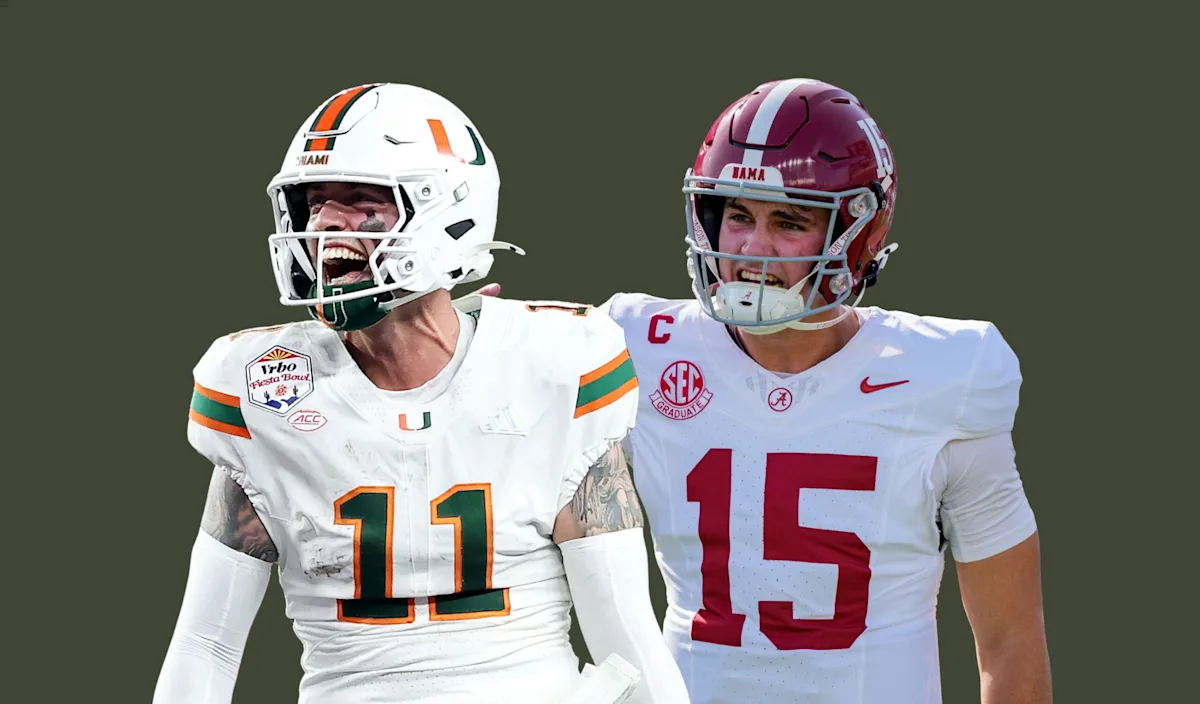
College football is in its semi-pro era, reshaping the NFL Draft calculus as quarterbacks weigh guaranteed NIL money against rookie contracts.
After four years at Georgia, quarterback Carson Beck declared for the NFL Draft on Dec. 28, 2024, slated to make millions as a mid-round pick. But instead of taking that route, Beck entered the transfer portal on Jan. 9 and inked a $4 million deal to play out his final season of college eligibility at Miami, where he succeeded Heisman Trophy winner and eventual top pick Cam Ward. Now, Beck will play next week for a national championship as he’s still in line to make good NFL money at age 23, but now with a guaranteed $4 million in his pocket.
Advertisement
The passing of the House Settlement and the introduction of revenue sharing in Division I athletics have only enhanced this trend and the appeal of college football quarterbacks staying in school an extra year rather than try their luck in the NFL Draft. Alabama‘s Ty Simpson may be the perfect example of that. Despite declaring for the NFL Draft, at least three SEC teams reportedly have interest, with another school offering him up to $6.5 million to stay in college next season and enter the transfer portal prior to Friday’s deadline.
Despite ESPN grading Simpson as a late first-round or early second-round pick, $6.5 million is extremely appealing. NFL quarterback Tyler Shough, who the New Orleans Saints selected 40th overall in last year’s draft, got a four-year, $10.8 million contract, including a $4.5 million signing bonus. We seem to be approaching the point that, unless you’re guaranteed to be drafted in the first round, it might pay to stay in school an extra year, essentially making major college football a semi-pro outfit right now.
College basketball has experiencing a similar trend for years now. With the introduction of NIL, NCAA hoops stars like Kentucky’s Oscar Tshiebwe, Gonzaga’s Drew Timme, and North Carolina’s Armando Bacot made far more money by staying in school than they would have as an NBA second-round pick or G-Leaguer. Bacot signed a deal worth more than $1 million to play this year in Turkey with Fenerbahce, Timme is on a two-way contract with the Los Angeles Lakers worth just over $500,000, and Tsiebwe has a similar arrangement with the Utah Jazz.
Advertisement
Were they still college eligible, they would’ve made more money. It’s why, as we reported, more EuroLeague-caliber talent are electing to come from overseas to college basketball teams. It’s why some players with G-League experience who are still college eligible are electing to go back to school. The money right now is just better.
Right now, schools can directly spend up to $20.5 million on their student-athletes, with the vast majority of that total allocated to football, their largest revenue-generating sport. But that $20.5 million number is expected to rise, and with it the amount that teams will likely offer to quarterbacks like Simpson and new Texas Tech starter Brendan Sorsby, whose record-breaking NIL deal we discussed last week. How long will it take until quarterbacks can make more money in college than they would as first-round NFL Draft picks?
Jaxson Dart, the 25th overall pick last year from Ole Miss, earned a signing bonus of just under $9 million as part of a four-year rookie contract worth just under $17 million. We may get to a point where these QBs get a larger guarantee to stay in school than a first-rounder would receive as a signing bonus, making it worth risking an injury in college that could wipe out potential future NFL earnings. It will take longer for players at other positions like running back and wide receiver, where second-round picks like Houston Texans wideout Jayden Higgins and Cleveland Browns running back Quinshon Judkins still got roughly $5 million to sign, still way more than they’d earn for a year in college.
Yet the fact that we’re even having this conversation at all indicates the direction college football is going in. It’s how wide receiver Cam Coleman, who doesn’t turn 20 until August, can leave Auburn for a transfer portal NIL deal at Texas of at least $2 million. We’re talking free agency for hundreds of college kids every year to make upwards of seven figures at their new destinations. If that’s not at least semi-professional sports, I’m not sure what is.
Advertisement
Now, all we can do is wait and see how far things go before the next wave of substantial changes hits college football in this ever-changing landscape that made it possible for Beck to accept, and Simpson to consider, an offer that made it more financially prudent to keep the NFL waiting for one more year.
Read More:

Film & TV January 12, 2026
Sinners’ Golden Globes Snub Is a Reminder of Why the Industry Is So Exhausting

Film & TV January 9, 2026
Boardroom’s Picks: The 25 Most Anticipated Movies of 2026

Entertainment January 9, 2026
Why Daniel Lopatin’s ‘Marty Supreme’ Score Is One of the Year’s Most Unexpected Releases

Sports January 9, 2026
Advertisement
Winner Takes Millions: The 2026 FIFA World Cup’s $727M Jackpot

Sports January 9, 2026
Why the SEC Lost Its Dominant Position Over College Football

Sneakers January 8, 2026
Predator or F50? Adidas Reopens Football’s Oldest Debate

The College Sports Commission has rejected nearly $15 million in name, image and likeness agreements since it started evaluating them over the summer, representing more than 10% of the value of all the deals it has analyzed and closed.
The CSC released its latest statistics Monday, saying it did not clear 524 deals worth $14.94 million, while clearing 17,321 worth $127.21 million. All the data was current as of Jan. 1.
The numbers came against the backdrop of a “reminder” memo the commission sent to athletic directors last week, citing “serious concerns” about contracts being offered to athletes before they had been cleared through the commission’s NIL Go platform.
The CSC is in charge of evaluating all deals worth more than $600 that are offered by third-party businesses that are often affiliated with the schools recruiting the players.
“Without prejudging any particular deal, the CSC has serious concerns about some of the deal terms being contemplated and the consequences of those deals for the parties involved,” the Friday night memo said.
The CSC said primary reasons for deals not being cleared were that they lacked a valid business purpose; they didn’t directly activate a player’s NIL rights, instead “warehousing” them for future use; and that players were being paid at levels that weren’t “commensurate with similarly situated individuals.”
The memo reminded ADs that signing players to deals that hadn’t been cleared by the CSC left the players “vulnerable to deals not being cleared, promises not being able to be kept, and eligibility being placed at risk.”
Other statistics from the latest report:
There were 10 deals in arbitration as of Dec. 31, eight of which have since been withdrawn. All involved a resolved administrative issue at one school not named by the CSC.
• 52% of deals submitted to NIL Go were resolved within 24 hours.
• 73% of deals reached resolution within seven days following submission of all required information.
• 56% of the 10,848 athletes who have at least one cleared deal play football or men’s basketball.

As the 2025 college football season comes to a close, programs across the country are in an all-out arms race to prepare to make title runs for next season.
While just about every program in college football is spending money on its roster, there are only a select few programs that are able to outspend anyone in their path. One of those programs is the Texas Longhorns, who, according to On3’s Rusty Mansell, are set to spend an unheard-of amount for next season.
Mansell, who runs On3’s DawgsHQ, revealed in a social media post on X that just one season after starting the year as the No. 1 team in college football and finishing with a 10-4 record, the Longhorns are expected to field a roster worth $40 million.
“Texas will have the first 40 million dollar roster, no doubt in my mind they are close to that in real salary,” wrote Mansell. “This is an ALL IN season for Sark, literally.”
The Longhorns have made notable transfer portal additions, such as the No. 1 wide receiver in Cam Coleman, No. 3 running back Hollywood Smothers and No. 1 linebacker Rasheem Biles. In addition to the top transfers joining the fold, the Longhorns also brought in the No. 10 recruiting class, which features three five-star recruits.
The roster, which is centered on former No. 1 overall recruit and nephew of NFL greats Peyton and Eli Manning, Arch Manning, is built to contend for a title. As Mansell alluded to, the Longhorns are fully equipped to contend for a championship, which means anything short of that would be a disappointment.
While Texas is reportedly set to become the first $40 million roster in college football, it isn’t the only program in college football spending the big bucks. It’s worth noting that there is a revenue-sharing cap of $20.5 million, but there isn’t necessarily a way to enforce it yet.
Other major NIL spenders in the college football transfer portal

Texas Tech Red Raiders
Thanks to the financial backing of a former player-turned-oil tycoon in Cody Campbell, the Red Raiders assembled a roster that led to their first-ever Big 12 Championship in program history. They were also able to make the program’s first-ever College Football Playoff appearance. In a report by ESPN, it was revealed that Texas Tech spent $7 million alone on the defensive line, which led by David Bailey’s 14.5 sacks, was one of the most feared in the country.
The Red Raiders lost in the quarterfinal round of the College Football Playoff to Oregon in a lopsided 23-0 loss, prompting many to say the Red Raiders need to spend big at quarterback to take the next step. Well, they did just that. Headlining their transfer class, which On3 ranks as its No. 2 portal class, is Cincinnati quarterback transfer, Brendan Sorsby, who reportedly cost them $5 million.
On3 reported that they spent around $28 million for this past season, and it appears they will spend as much, if not more, in 2026.
Ohio State Buckeyes
The Ohio State Buckeyes spent a reported $20 million to win their 2024 title, and while they aren’t going crazy this transfer portal cycle, they very well could be spending most of their money on roster retention and high school recruits. The Buckeyes have brought in just six transfers, but they did land the No. 1 wide receiver recruit in Chris Henry Jr.
According to Rivals, Ohio State’s 28-man recruiting class has an average NIL Valuation of $136,000. In addition to the costly new faces, they likely also had to restructure deals for notable players such as quarterback Julian Sayin and star wide receiver Jeremiah Smith.
Oregon Ducks
Since players were allowed to profit from their NIL, the Oregon Ducks have been among the biggest players in this category. The program’s connection with Nike co-founder Phil Knight has certainly not gone unnoticed by top recruits, as Rivals reported that their No. 3 recruiting class, which features five five-star recruits, has the highest average NIL at $236,000.
If the Ducks haven’t hit that $40 million threshold yet, they will soon. Front Office Sports reported that their 2024 roster cost $23 million, while former Oklahoma State head coach Mike Gundy revealed that their 2025 roster cost $40 million before the Ducks beat his Cowboys 69-3.
Other Notable Big-Spending Programs:

Cryst, Pazanti Earn Big West Player Of The Week Honors In Collegiate Debuts

Big Ten vs. SEC: Josh Pate explains where college football supremacy currently sits

Cubs announce schedule for 2026 Cubs Convention this weekend

Somerville names Ohemeng Kyeremateng as New Parks Director

Youth, experience winning combination for Auburndale girls

NASCAR returns to 10-race Chase format to decide national series champions – Speedway Digest

Governor Morrisey appoints Brian Cochran as Mercer County circuit court judge
Pride Collect Three GNAC Weekly Awards After Wesleyan Winter Invitational

Ella Parker to Join Milwaukee Volleyball as Newest Addition to Roster

Urban Meyer predicts winner of college football national championship

NASCAR restores 10-race ‘Chase’ championship format – Press Telegram

T&F trio earn GNAC honors
Shank Named GNAC Setter of the Week After Facilitating Offense in Season Opener

UC Davis Athletics Concludes Fall With Competitive Success, National Honors and Facilities Investment

Fabela, Tavita named to Softball America Freshman Watch List – BYU Athletics – Official Athletics Website

Stempien to seek opening for Branch County Circuit Court Judge | WTVB | 1590 AM · 95.5 FM

Ross Brawn to receive Autosport Gold Medal Award at 2026 Autosport Awards, Honouring a Lifetime Shaping Modern F1

Princeton Area Community Foundation awards more than $1.3 million to 40 local nonprofits ⋆ Princeton, NJ local news %

Downtown Athletic Club of Hawaiʻi gives $300K to Boost the ’Bows NIL fund

Badgers news: Wisconsin lands 2nd commitment from transfer portal

Five Youth Sports Trends We’re Watching in 2026

Nike Signs 10 LSU Athletes to NIL deals

Beach Volleyball Unveils 2026 Spring Schedule – University of South Carolina Athletics

Three Clarkson Volleyball Players Named to CSC Academic All-District List

Badgers news: Final Four Game Thread vs. No. 1 Kentucky Wildcats

Kentucky VB adds an All-American honorable mention, loses Brooke Bultema to portal

Kentucky AD explains NIL, JMI partnership and cap rules

Central’s Meyer earns weekly USTFCCCA national honor

PRI Show revs through Indy, sets tone for 2026 racing season

Teesside youth discovers more than a sport

 NBA Legend Michael Jordan to Join NBC Sports as Special Contributor
 Why a rising mid-major power with an NCAA Tournament team opted out of revenue-sharing — and advertised it
 Trackhouse to pair Chastain with McSwain
 Volleyball Falls to SEMO – Tennessee State University
 Kennewick School Board backs changes to gender inclusion in sports | News
-
 Rec Sports1 week ago
Five Youth Sports Trends We’re Watching in 2026
-
 Sports3 weeks ago
Kentucky VB adds an All-American honorable mention, loses Brooke Bultema to portal
-

 Motorsports2 weeks ago
BangShift.com IHRA Acquires Historic Memphis Motorsports Park In Millington Tennessee. Big Race Weekend’s Planned For 2026!
-
NIL2 weeks ago
Fifty years after IU’s undefeated champs … a Rose Bowl
-
 Sports2 weeks ago
H.S. INDOOR TRACK & FIELD: GLOW region athletes face off at Nazareth University | Sports
-
 Sports3 weeks ago
Colorado volleyball poised to repeat success
-
 Sports3 weeks ago
2025 Volleyball Player of the Year: Witherow makes big impact on Central program | Nvdaily
-

 Motorsports3 weeks ago
NJ Motorsports Park Announces 2026 Event Schedule
-

 Sports3 weeks ago
Texas A&M volleyball’s sweep of Kentucky attracts record viewership
-

 Motorsports3 weeks ago
Kyle Larson opens door to 24 Hours of Daytona comeback – Motorsport – Sports