
Connect with us
https://yoursportsnation.com/wp-content/uploads/2025/07/call-to-1.png

Rec Sports

Openings remain for 2025 Kirby Cup youth soccer camp

Published

on


A few spots remain for youth soccer players interested in taking part in the 18th Kirby Cup in June at Polk County High School.

The Kirby Cup is a soccer camp for boys and girls ages 8-13 (rising 3rd-8th graders). This year’s camp will run June 10-13, with a session daily from 8:30-11:30 a.m. A picnic will be held in the PCHS cafeteria on June 13.

A one-day tournament will then be held June 14 from 8:30 a.m.-12:30 p.m. All sessions will be held on the PCHS practice soccer field.

Funded through a Kirby Harmon Field Fund grant from the Polk County Community Foundation, the camp focuses on soccer skill development while promoting cultural awareness. There is no cost for players, and each participant receives a T-shirt and soccer ball.

Participants are organized into four teams representing different continents, receiving daily instruction in fundamental techniques followed by scrimmages and educational sessions about various countries.


Link

Continue Reading
Click to comment

Leave a Reply

Your email address will not be published. Required fields are marked *

Rec Sports

Why I Shoot JPEG for Youth Sports (And Don’t Miss Raw)

Published

on


By the time I pack up my monopod and walk off the field on a Saturday, my memory cards are loaded with a thousand frames. By Sunday morning, parents are already texting to ask when the gallery goes up. That’s the job: move fast, stay consistent, and tell the story of the game without spending the rest of the week dragging sliders. That’s why I shoot JPEG—on purpose, not by accident, not because I don’t know what Raw can do, but because the work I do doesn’t require me to excavate shadows five stops deep. It requires timing, clear color, and a fast delivery.

This isn’t a manifesto against Raw. Raw is wonderful for the right work: fashion, commercial, studio, high-end composites, or those once-in-a-lifetime artistic projects where you’ll live inside a file for hours. My reality is different. I’m sideline-to-sideline, shooting youth football, baseball, and school events, where the pictures live on phones, in yearbooks, and as prints no bigger than a poster. I need clean color, crisp detail, and quick turnaround. JPEG gives me all three with fewer steps and fewer surprises.

The Speed That Matters When Everything Is Moving

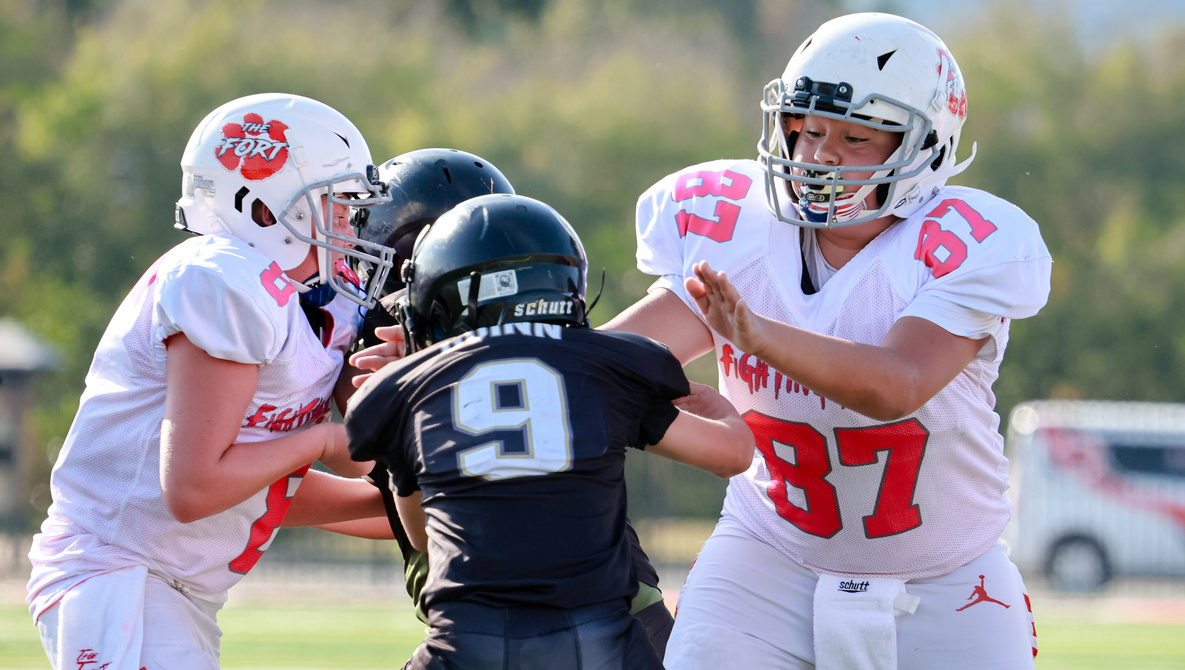
A football drive can flip in seconds. If your camera chokes because the buffer is stuffed with giant Raw files, you’ll feel it. JPEG’s smaller file size lets the camera write to the card faster and keeps the buffer clearing. I can stay on the action without babysitting the top plate to see if I’ve outrun my camera. That matters on third-and-short when the quarterback sneaks, the pile surges, and the ball pops loose to the weak side where nobody expected it.

Speed isn’t just at capture; it’s at the desk. Importing a thousand Raw files is like asking every photo to show up with a lawyer. JPEGs slide in, render previews fast, and let me start culling immediately. If I’m editing around a hundred keepers per game, every second shaved off each step adds up to hours saved across a season. That’s time I can spend at another game, with my family, or actually sleeping.

Color I Like Straight Out of the Camera

This is the part raw shooters never want to hear, but it’s the truth: modern cameras make really good JPEGs. Skin tones look right. Team colors pop without turning radioactive. With a little care up front—consistent white balance, a tuned picture profile, sensible in-camera sharpening—I get files that are eighty-five to ninety-five percent of the way there before I ever open the computer.

My routine is simple. Before kickoff I take thirty seconds to set a custom white balance off a gray card or a neutral surface near the field. If the light is stable, that one habit keeps a whole game’s worth of frames consistent. I keep contrast modest in-camera so helmets and jerseys don’t clip, and I set sharpening to a middle value that holds edges without chewing them. The result is a file that wants only the lightest finishing: a crop, a tiny nudge to exposure, maybe a touch of clarity for turf texture or eyes under a facemask. That’s it.

The Right Constraints Make Better Pictures

Shooting JPEG makes me more careful at the moment of exposure. I protect my highlights. I watch my histogram. I’ll underexpose by a third on harsh noon games to save the whites on helmets and shoulder pads. I set a fast floor for shutter speed so I don’t get greedy with ISO. Those constraints aren’t handcuffs; they’re a discipline. The pictures are cleaner because I made them right at the field instead of trusting future-me to fix my laziness.

There’s also something freeing about not chasing infinite latitude. If I’m not trying to make a 10 p.m. stadium look like golden hour, I’m less tempted to turn a documentary assignment into a digital special-effects project. Sports are about tempo and truth. JPEG encourages me to honor both.

Culling a Thousand, Delivering a Hundred

Anyone who shoots youth sports knows the real grind begins after the whistle. A typical game leaves me with somewhere between eight hundred and twelve hundred frames. JPEG lets me move through them like a film editor scanning for scenes. In Photo Mechanic or Lightroom, I can play the sequence almost like a flip book: pre-snap, push, contact, burst, celebration. Because the previews render on the fly, I’m not waiting for every file to build. I star the keepers, color-tag the stories I want to highlight—rivalry moments, a coach’s sideline talk, the joy after a goal—and move on.

Editing those hundred selects is intentionally light. Crops for composition and emphasis. A consistent exposure trim so the set feels like one game, not ten different shoots. A little local adjustment to brighten eyes under face masks if I need it, and a subtle curve to keep the whites clean. That’s it. If I’m doing my job on the field, ninety percent of my time is culling and sequencing, not rescuing.

The Deliverables Decide the Format

Who is this work for? Parents, coaches, yearbook editors, local papers, booster clubs. They need images that look great on phones, on social, in slideshows, and in print at sane sizes. A high-quality JPEG is perfect for that. If a photo graduates from “game gallery” to “hero print”—a banner for the gym, a large canvas for the senior banquet—I have two solutions: I either shot Raw+JPEG for that sequence, or I re-shoot it next time with that destination in mind. Ninety-nine times out of a hundred, the JPEG I delivered was already the right answer.

Storage, Backup, and Sanity

There’s a hidden economy to shooting JPEG. Smaller files mean faster offloads to SSD, quicker cloud backups, and less storage rented from a service every month. On a busy fall schedule, that isn’t a rounding error; that’s real money and fewer spinning beach balls. It also means my laptop fan isn’t auditioning for takeoff while I’m trying to edit at the kitchen table.

What About Dynamic Range and “Insurance”?

Raw shines when the light is ugly or the stakes are unusual. Inside a dim, mixed-light gym? Raw can be a lifesaver. Sunset games with a sideline in deep shadow and the field still bright? Raw gives you headroom. If your client is a brand or a publication that wants the option to radically re-grade later, shoot Raw. I’m not allergic to it. I just don’t need it for the majority of what I deliver, and it would absolutely slow me down on the jobs that pay my bills.

There’s a myth that shooting Raw is professional and shooting JPEG is amateur. The truth is professional means choosing the right tool for the assignment. I’d rather give a team a finished gallery tonight than promise wizardry and send it next week. For my work, speed and consistency are a feature, not a compromise.

Practical Setup That Works for Me

Here’s the setup that keeps me honest and fast:

  • I shoot manual exposure with a fixed shutter speed—usually 1/1600 to 1/2000 for football—and an aperture around f/2.8 to f/4 depending on the lens and distance.
  • I let Auto ISO roam within a ceiling I trust for my camera, and I ride exposure compensation when the light changes.
  • I keep highlight alert on and use the histogram after each new lighting situation, not after every play.
  • Before the game I dial in a custom white balance and a picture style that treats skin kindly and keeps bright uniforms from clipping.

If your camera offers highlight tone priority or similar settings, test them in daylight to see if they protect whites without muddying midtones. I keep in-camera noise reduction on low at high ISO and avoid the strong setting because it trades detail for smoothness I don’t want. The whole point is to make a file that holds together with a light touch.

A Real Example From the Sideline

Middle of September. Heat coming off the field. I’m on the visitor sideline because the sun is at my back there, and the end zone I want is opening into clean light. Kickoff return comes straight at me. I’m already at 1/2000, f/4, Auto ISO capped at 6400. I track the returner, grab a five-frame burst at the cutback, and immediately swing to catch the blocks sealing the lane. A linebacker’s hand outstretched; I get the moment his fingers grab the jersey and the runner slips away. The whole sequence is sharp, exposed cleanly, and color-true. I cull that series in seconds, crop two frames, add a tiny exposure bump to one, and move on.

Could I have wrung more micro-contrast or feathered a luminance mask on a Raw file? Maybe. Would any parent notice, or would the story be better? No. What they notice is their kid’s face, the hole that opened because the left tackle did his job, and the fact that the gallery is live before dinner.

When I Still Flip the Raw Switch

I keep my raw lever available for margin cases. Playoff night with mixed stadium lighting I’ve never seen? Raw+JPEG. Senior portraits on the fifty with the sun kissing the bleachers? Raw because I want maximum latitude for skin and sky. Team banner composites where I know I’ll be masking hair and decals? Raw, gladly. But I’m not dragging that workflow into every Saturday because I don’t need to, and neither do most working sports shooters covering youth and schools.

JPEG Is a Creative Choice, Not a Shortcut

What I love about this workflow is that it forces intention. JPEG rewards you for reading light, for exposing with care, for trusting color at capture rather than repainting it later. It frees your week without cheapening your work. It’s not lesser; it’s lean. And in a season where you might shoot eight to ten games, lean is exactly what keeps you hungry and able to say yes to the next assignment.

If you’re on the fence, try it for a month. Set your camera to make the best JPEGs it can and give yourself permission to edit like a photojournalist, not a VFX artist. Protect highlights, choose a stable white balance, and let the pictures breathe. You might find what I did: that your clients are happier, your galleries arrive sooner, and your love for the work grows because you’re spending your time on the field, not in a war with a histogram.

Color Consistency Without the Headache

One of the hidden taxes of Raw is color management. Every camera sensor has its own secret sauce, and every converter interprets that sauce a little differently. If your week takes you from a Saturday game to a Tuesday pep rally in a different gym with different lights, your Raws can wander in hue and tint unless you’re vigilant with profiles and camera matching. My JPEG workflow cuts that drift down to almost nothing because the camera bakes in its own profile—the one I’ve tested against jerseys, skin, grass, and the painted lines. I’m choosing the look up front, at the scene, instead of chasing it later.

This doesn’t mean I accept whatever the camera gives me. I built my own picture style starting from a neutral base to avoid crunchy contrast, nudged saturation so red jerseys don’t scream, and set the sharpening where helmets hold detail without ringing. Once it’s dialed, it’s repeatable. My September games look like my October games, which is exactly what a season recap or a team poster needs.

Night Games and Noise

Night football tempts every shooter to go spelunking for detail that isn’t there. Raw can tease out a bit more shadow information, sure, but the trade-off is time, and sometimes a waxy look after heavy noise reduction. With JPEG I accept the physics: I keep shutter speed honest for motion, brace my stance, and trust my camera’s high-ISO behavior. I set in-camera high-ISO noise reduction to low or standard—never strong—because I’d rather have a little grain-like noise than smeared detail. In post I’ll add only the gentlest detail work. The reward is a file that still looks like a photograph, not a plastic doll.

Buffer Behavior and Card Strategy

If you shoot older bodies—or even some current ones with modest buffers—file size isn’t a theory, it’s the difference between catching the second effort at the goal line and staring at a blinking BUSY. I run fast cards, keep them freshly formatted in-camera, and avoid mixing raw+JPEG unless I know I’ll need raw for a specific sequence. For long drives I’ll occasionally feather my cadence—short bursts with half-second breaths—to help the buffer clear while the play develops. JPEG makes that whole dance easier.

A Word on “Fix It Later” Culture

Somewhere along the way we convinced ourselves that the real photograph happens on a computer. I love editing when the job calls for it, but youth sports is journalism with whistles. The best frames are made with footwork, anticipation, and timing. JPEG rewards those habits. It puts the emphasis back on the craft you do with your eyes and hands, not the brush pack you buy after.

File Integrity and Revisions

Clients sometimes ask whether a JPEG locks them into a look forever. The answer is that a high-quality JPEG stands up to sensible edits just fine: exposure trims, white balance tweaks within a reasonable range, gentle curves, selective dodging and burning. What I avoid are the extreme rescues—hauling a file up two or three stops, rebuilding skies, or color-swapping uniforms. That kind of surgery belongs to Raw and advertising. For youth sports storytelling, the JPEG’s print-ready nature is a feature.

Two Games, Two Timelines

Here’s what my weekend looks like in real numbers. Saturday noon kickoff, 1,100 frames, daylight with some clouds. JPEG import and cull: about forty-five minutes. Edits on 120 selects: another sixty to seventy-five minutes. Gallery up before dinner. The following week, a 7 p.m. game under uneven lights: 950 frames. Slightly slower cull because I’m checking for motion blur a little more carefully: fifty-five minutes. Edits on 100 selects: eighty to ninety minutes because I’ll touch local contrast and eyes under masks a bit more. Still live that night. Could I spend longer massaging Raw files? Of course. Would anyone prefer a slower gallery to microscopic improvements? In this space, no.

Prints and Real-World Output

I sell prints from these JPEGs every season—8×10s, 11×14s, and the occasional poster. They hold up because the exposure is right, focus is solid, and the color is honest. I soft-proof for the lab, keep an eye on saturation clipping in reds and greens, and let the file go. Nobody has ever brought a print back because it wasn’t shot Raw. They come back because they want more.

What You Gain When You Let Go

The biggest gift JPEG has given me is attention. I watch the game more. I learn tendencies, notice light pockets, and place myself a step earlier. I spend my energy where photographs are born, not where they’re rescued. That shift has made my work better—and my life outside of it saner.

The Bottom Line

Raw is a powerful negative. JPEG is a finished print you can still refine. In youth sports and school coverage, the finished print wins. I’m not here to win an internet argument; I’m here to make pictures families will keep—and to deliver them while the grass stains are still fresh.

All photos belong to the author, Steven Van Worth.


Link

Continue Reading

Rec Sports

What Makes an Athlete Successful? Don’t Forget About Luck

Published

on


Chief among the burdens weighing upon the weary sports parent—worse than the endless commutes, the exorbitant fees, the obnoxious parents on the other team—is the sense that your every decision has the power to make or break your child’s future. Should your 11-year-old show up to her elementary-school holiday concert, even if it means missing a practice with the elite soccer team to which you’ve pledged 100 percent attendance? What if this turns out to be the fork in the road that consigns her to the athletic scrap heap?

These are heavy decisions—at least they are for me, a soccer dad who happens to have spent years writing about the science of athletic success. Making it to the pros, the conventional wisdom says, is a consequence of talent and hard work. Best-selling books have bickered over the precise ratio—whether, say, 10,000 hours of practice trumps having the so-called sports gene. But the bottom line is that you need a sufficient combination of both. If you’re talented enough and do the work, you’ll make it. If not—well, decisions (and holiday concerts) have consequences.

Rationally, stressing out over missing a single practice is ridiculous. Believing that it matters, though, can be strangely reassuring, because of the suggestion that the future is under your control. Forecasting athletic careers is an imperfect science: Not every top draft pick pans out; not every star was a top draft pick. Unexpected injuries aside, the imprecision of our predictions is usually seen as a measurement problem. If we could only figure out which factors mattered most—how to quantify talent, which types of practice best develop it—we would be able to plot athletic trajectories with confidence.

Unless, of course, this tidy relationship between cause and effect is an illusion. What if the real prerequisite for athletic stardom is that you have to get lucky?

Joseph Baker, a scientist at the University of Toronto’s Sport Insight Lab, thinks that the way talent development is usually framed leaves out this crucial ingredient. Baker is a prominent figure in the academic world of “optimal human development,” who moonlights as a consultant for organizations such as the Texas Rangers. He’s also a longtime skeptic of the usual stories we tell ourselves about athletic talent. The most prominent is that early performance is the best predictor of later performance. In reality,  many cases of early success just mean an athlete was born in the first months of the year, went through puberty at a young age, or had rich and highly enthusiastic parents.

This critique of talent is not entirely new. It’s been almost two decades since Malcolm Gladwell’s Outliers spurred a cohort of hyper-ambitious soon-to-be parents to begin plotting January birth dates (or at least to tell people they were considering it). Over time, the debate about what factors actually matter has devolved into a game of whack-a-mole. If physical development isn’t the best predictor of long-term success, then it must be reaction time, or visual acuity, or hours of deliberate practice. The default assumption is that there must be something that reveals the presence of future athletic greatness.

Baker’s perspective changed, he told me, when he read Success and Luck, a 2016 book by the former Cornell University economics professor Robert H. Frank. Frank describes a hypothetical sports tournament whose outcome depends 49 percent on talent, 49 percent on effort, and 2 percent on luck. In mathematical simulations where as many as 100,000 competitors are randomly assigned values for each of these traits, it turns out that the winner is rarely the person with the highest combination of talent and effort. Instead, it will be someone who ranks relatively highly on those measures and also gets lucky.

This turns out to be something like a law of nature: It has been replicated and extended by others since Frank’s book came out. Among the most influential models is “Talent Versus Luck,” created by the Italian theoretical physicist Andrea Rapisarda and his colleagues, which simulates career trajectories over dozens of years and reaches the same conclusion. This model earned a 2022 Ig Nobel Prize “for explaining, mathematically, why success most often goes not to the most talented people, but instead to the luckiest.”

To Baker, these models suggest that it’s not just hard to reliably predict athletic futures; it’s impossible. He cites examples including a youth-soccer player for Northampton Town who missed a text message from the team’s manager telling him that he’d been dropped from the roster for an upcoming game. He showed up for the bus, went along for the ride, subbed in when another player got injured, impressed the manager, earned a spot for the rest of the season, and went on to play in the Premier League. Luck takes many forms, such as genetics, family resources, and what sports happen to be popular at a given place at a given time. But sometimes, it’s simply random chance: a gust of wind or an errant bounce or a missed text.

It’s easy to see how luck shapes individual moments in sport—how it changes the course of a game, a series, even an entire season. But what’s harder to accept is that luck might also play a role in longer arcs—not just what happens in games but who appears on the court in the first place. The more you reckon with this, the more disorienting it can be, as things start to feel ever more arbitrary and unfair. As Michael Mauboussin, an investor who writes about luck in his 2012 book, The Success Equation, put it to me: “Talking about luck really quickly spills into the philosophical stuff.”

You might think that the growing professionalization of youth sports offers an escape from this randomness—that by driving to this many practices and paying for that many coaches, you’re ensuring the cream will rise to the top. But the opposite is actually true, according to Mauboussin. In The Success Equation, he describes what he calls the “paradox of skill.” Now that every soccer hopeful is exhaustively trained from a young age, an army of relatively homogeneous talent is vying for the same prizes. “Everyone’s so good that luck becomes more important in determining outcomes,” Mauboussin said.

Baker and one of his colleagues at the University of Toronto, Kathryn Johnston, recently published a paper on the role of luck in athletic development in the journal Sports Medicine–Open. I felt a curious sense of relief when I read it. My daughters, who are 9 and 11, both play competitive soccer on teams requiring a level of commitment that I had naively thought went out of style with the fall of the Soviet Union. Seeing the evidence that future athletic success is not entirely predictable felt like a license for parents to loosen up a bit—to choose the holiday concert over the soccer practice without worrying about the long-term ramifications.

Linda Flanagan, the author of the 2022 book Take Back the Game and a frequent critic of today’s youth-sports culture, doesn’t share my optimism. She has no trouble believing that luck is involved with athletic success, but she doesn’t think that acknowledging this fact will change parental behavior. “Hell, they might double down on the investment in time and money, thinking that they need to give their child more chances to get lucky and impress the right coach,” she told me.

But that sort of luck—getting a job on your hundredth interview because the interviewer went to the same high school as you did, say—arguably is more about hustle than it is about serendipity. So is showing up to every soccer practice. Mauboussin’s definition of luck is narrower: It’s the factors you can’t control. No matter how much luck you try to “create” for yourself or your kids, some irreducible randomness might still make or break you.

To Baker, the takeaways from recognizing the role of luck are less about individual parents and more about how sports are organized. His advice to teams and governing bodies: “If there’s any way possible for you to avoid a selection, don’t select.” Keep as many athletes as you can in the system for as long as you can, and don’t allocate all of your resources to a chosen (and presumably lucky) few. When real-world constraints eventually and inevitably do require you to select—when you’re anointing these lucky few as your future stars, and casting out those who perhaps sang in one too many holiday concerts—try to leave the door open for future decisions and revisions. After all, Baker says, no matter how carefully you’ve weighed your predictions, “you’re probably wrong.”


Link

Continue Reading

Rec Sports

PERFECT GAME AND FIRST COMMUNITY CREDIT UNION ANNOUNCE CHESTERFIELD ATHLETIC COMPLEX

Published

on


Landmark Partnership to Center on Community, Inclusion and Youth Sports

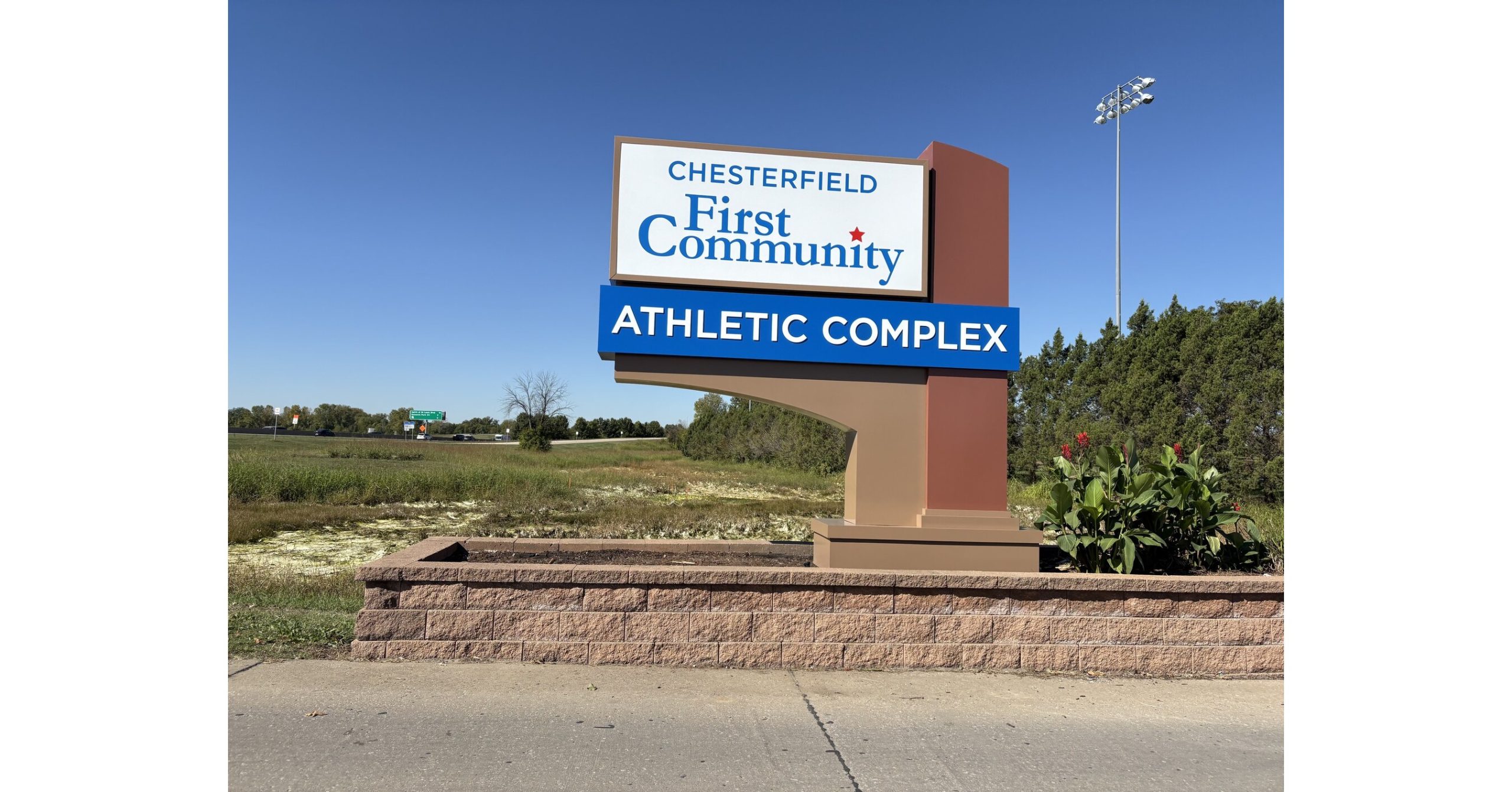
CHESTERFIELD, Mo., Jan. 7, 2026 /PRNewswire/ — Perfect Game, the world’s largest youth baseball and softball platform and scouting service, along with the City of Chesterfield, today announced an exclusive naming rights partnership with First Community Credit Union (FCCU) for the Chesterfield Valley Athletic Complex. Effective immediately, the venue will be known as the “Chesterfield First Community Athletic Complex.”

The partnership represents a landmark collaboration between three community-focused organizations committed to youth development, family engagement and inclusive opportunities. As part of the agreement, the newly established First Community Children & Family Foundation will also be formally introduced. The Foundation will serve as a major sponsor of the Miracle Field, an adaptive, fully accessible field located within the complex that provides athletes of all abilities the opportunity to participate and thrive in baseball and softball.

The First Community Children & Family Foundation’s sponsorship will directly support inclusive programming, facility enhancements and family-centered initiatives designed to benefit youth and families across the greater Chesterfield region.

“Perfect Game is honored to join forces with First Community Credit Union and the City of Chesterfield to elevate the impact of this remarkable facility,” said Rob Ponger, CEO of Perfect Game. “Together, we’re not only creating a home for elite youth baseball and softball competition but also strengthening the connection between sports, community, and opportunity. The Chesterfield First Community Athletic Complex will stand as a model for how public-private partnerships can shape meaningful legacies.”

Perfect Game operates the Chesterfield Valley Athletic Complex under a 10-year agreement with the City of Chesterfield. The facility has quickly become one of the premier youth sports destinations in the Midwest, hosting hundreds of Perfect Game events annually, including the PG BCS World Series, 2026 PG St. Louis Super Regional NIT, 2025 PG Softball World Series (Nationals) and many more.

“This partnership reflects our shared belief that investing in families and communities today builds a brighter tomorrow,” said Glenn D. Barks, President and CEO of First Community Credit Union. “We’re thrilled to help expand access to sports, recreation and support programs that bring people together and inspire the next generation.”

City officials also celebrated the partnership as a milestone for Chesterfield’s ongoing growth as a regional hub for youth sports and family recreation.

“We believe this partnership represents our shared commitment to creating first rate facilities that inspire performance and community,” said Wayne Dunker, Director of Parks, Recreation, and Arts. “We’re proud to partner with Perfect Game and First Community Credit Union to make this facility a place where athletes, families and neighbors can come together for years to come.”

The Chesterfield First Community Athletic Complex will feature updated signage, branding and community activation events over the coming months as part of the rebranding initiative.

Media contact:
Greg Casterioto / [email protected] / (267) 246-5709

About Perfect Game

Perfect Game is the world’s largest elite youth baseball and softball platform and scouting service, producing nearly 10,000 events, hundreds of thousands of games and showcases each year across the country. Perfect Game is dedicated to giving amateur players exposure to take their game to the next level, whether that be in college or in the professional ranks. At Perfect Game events, players perform with top-level competition in front of college recruiters and professional scouts from all over the country. Because of this, these events prove to be invaluable to college coaches as well as Major League Baseball, as they can scout a large population of talented ballplayers in one location. To date, more than 2,383 players that have played in a Perfect Game event have also played in Major League Baseball. Since 2003, 15,797 Perfect Game alumni have been selected in the MLB First-Year Amateur Player Draft. In the 2025 Draft, for example, 92 percent of all players selected had played in Perfect Game events, and every player selected on the Draft’s first day had previously attended Perfect Game events.

About First Community Credit Union

First Community Credit Union has been in business for over 90 years and serves over 410,000 members. It is the largest credit union headquartered in St. Louis. First Community’s mission is to provide quality products and affordable financial services. It serves all persons living and working in the communities of St. Louis County, St. Louis City, Franklin County, Jefferson County, St. Charles County, Warren County, and the Illinois counties of Madison, Monroe, and St. Clair.

SOURCE Perfect Game USA


Link

Continue Reading

Rec Sports

FORECAST 2026: 407Basketball built the training hub for young athletes

Published

on


Inside of 407Sports LLC’s walls, the sounds of basketballs bouncing on the freshly polished hardwood, echoes of volleyballs bouncing on state-of-the-art courts and the hum of strength training equipment fill the facility on any afternoon. 

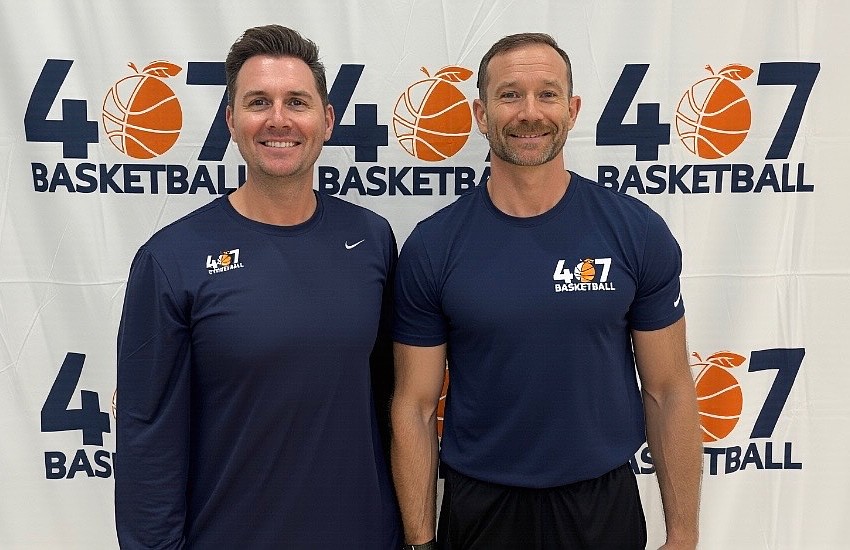
As the youth sports organization prepares for its first full year of operation in 2026, founders Ryan Trimbee and Nik Winkleman are focused not only on opening doors but also redefining what athlete development can look like in Central Florida. 

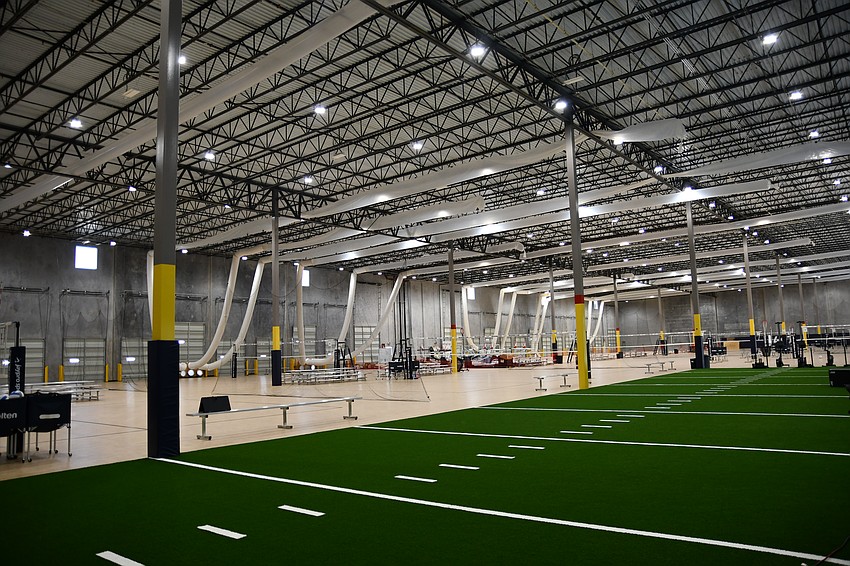
The 71,000-square-foot facility already feels alive. The energy the facility creates represents the completion of a big picture that’s been years in the making.

After nearly two decades in education and eight years in a corporate leadership role, Trimbee walked away from stability to chase a vision that began in 2018 as Windermere Basketball Academy. What started as a part-time training program a few days per week has evolved into 407Basketball, a full-scale athlete development hub designed to serve basketball, volleyball and beyond.

“It was hard, but it feels like I’m fulfilling a purpose in my life,” he said. 

Looking back, it’s been incredible for him to see the evolution of their small basketball academy over the years and now, eight years later, start the new year with partnership with a volleyball club. Both are centered around the same goals. 

“Conditioning, strength training are all focused around (athletes’) goals,” Trimbee said. “The kids need to have something to strive for, something to do, something to work for and so the purpose is to challenge them, help them become the best version of themselves.”

That programming will begin with a holistic approach to development. Young athletes will train on the court, in the weight room and learn how to recover.

In the center of the facility, separating the volleyball and basketball courts, cold plunges, saunas and Hyperice recovery equipment are integrated into daily routines. It reflects the philosophy that athletes must recover as hard as they train. 

“When we train as hard as we do, we have to recover the same way,” Trimbee said. “That’s how athletes can do it again and again and again.” 

The result is a system designed to build what Trimbee calls the “total athlete.” They will be mentally, physically and emotionally prepared to compete at the highest level. Trimbee said the facility expects to host athletes for strength training from all sports, rather than only volleyball and basketball. 

“Athletes that want to train and compete at a high level,” he said. “We’re looking for 407Sports to become that hub.” 

Strength training is applicable to any sport. It’s a key element to grow athletes’ strength, which in turn translates to their on-court or on-field performance through higher verticals and faster reaction times. The application across the board is what will allow the youth sports facility to expand its arms to those sports that might not have a physical court inside of the building and even open its doors to professional athletes residing in the area.  

The training field encompasses brand new, top-of-the-line equipment ranging from squat racks to indoor rowing machines, free weights, stationary bikes and a turf area. All of the machinery is in place to develop the athletes into high level competitors and it is all kicking off in the 2026 year. 

NEW FORM OF STUDENT-ATHLETE 

One of the initiatives 407Basketball is launching a new daytime academic and basketball training program, approved by the Florida Department of Education as a Step Up scholarship provider. 

The program is designed for homeschool and Florida Virtual School students, and it will allow families to use state education funds to combine academics with structured athletic training during the day. Students grades six through 12 will arrive at 9 a.m. and remain at the facility until 3 p.m. Mondays through Thursdays.

During their school hours, they will rotate through coursework, strength training and basketball development. The program’s priority will focus on the “student” in student athlete first.

“Most of these kids are playing for the next level,” he said. “They’re playing for college opportunities, scholarships and whatnot, they will be in school,” he said. “So academics have to be there. Training is there but we’ve combined them both.”   

An on-site education administrator will help the student-athletes with their studies. A trainer also will take students through their strength training programs and basketball practices. 

The academy’s model reflects the changing landscape of education in Florida, where school choice and virtual learning are becoming increasingly common, Trimbee said. Rather than waiting for evening practices that typically stretch late into the night after a long school day, student-athletes can complete their training during traditional school hours and leave the evening free for family time and recovery. 

“Not only will they get a scholarship, but then they can enroll their child into homeschool, and then they can find a place for them to train,” Trimbee said. 

The 71,000-square-foot facility opened this week with the goal of developing the area’s next generation of top athletes.

The 71,000-square-foot facility opened this week with the goal of developing the area’s next generation of top athletes.

Photo by Megan Bruinsma

The facility already has created an entire curriculum built around the program. Students will come in and conduct their morning stretches, warm ups and a small lift. Then they will head to the desks and start their school work before closing the laptops and doing work on the court. 

To foster the ideal study area for the youth, 407Basketball  has built an area with tables and chairs to lay the groundwork for academic success. 

It’s expected to become a highly successful program for 407Sports, Trimbee said. 

Parents already have expressed their strong interest, and a waitlist has formed prior to the program’s Tuesday, Jan. 13, launch. Starting the program is a large growth area for the facility and they hope to have a successful first-year running it, which will foster the ability to sustain it for years to come and offer it throughout the West Orange community. 

With the Florida Virtual School platform, high school students already have begun to graduate at a higher rate than public schools, Trimbee said. The program will emphasize continuing the accelerated rates and prepare the athletes for the college level when they will have to balance constant training with the higher level of academics. 

It will be 407Basketball’s  biggest program the facility will offer to the community, but the “sports” aspect of their title won’t be forgotten. Following the morning programs, the facility will transition into its evening training groups. 

BASKETBALL EXPANSION

The evening will consist of group and individual training sessions for children at the middle school to high school levels, Trimbee said. Basketball remains at the core of 407Basketball’s identity for its future endeavors, and the programming planned for 2026 is extensive. 

The organization will offer training camps and college scouting camps in its first year of operation.

The organization will offer training camps and college scouting camps in its first year of operation.

Courtesy photo

Evening training sessions will serve more than 100 athletes across age groups and there are options for group skills training, private instruction and team-based development. The facility also will host holiday camps, a three-week summer camp for young children and adult men’s and women’s leagues. 

Outside of hosting training sessions, 407Basketball will focus on developing AAU basketball leagues. On the boys’ side, it will have teams from 10U through varsity age groups, and for the girls, the facility will start from the ground and build up, creating a 12U and 13U team. 

“As a girl dad, I feel this deeply,” Trimbee said. “There’s a gap in opportunities for female athletes and I want to help fill it.” 

It’s important to him to close the gap and become a place that fosters the growth of all youth athletes. The AAU leagues will begin in March and practice in the afternoons once the other programs clear the facility.

BRINGING THE NEXT LEVEL 

The ultimate goal is not only to compete but also prepare young athletes by granting them the training space and exposure they need to make middle school, high school and, down the road, college rosters. 

From a parent’s perspective, Trimbee understands the challenges with paving the way for their children to make it to the collegiate level. His daughter is a high level softball player at Windermere High and already has begun the recruitment process for the next level. It’s caused the family to travel across the country for exposure and showcases. 

The time, travel and cost that has gone into recruitment has been immense, but now he realizes even deeper how a college showcase facility can impact locals to Central Florida. For families, it means they will have to book fewer flights, fewer hotels and, overall, have easier access. 

Parents’ experiences with recruitment has shaped one of 407Basketball’s most important goals in its inaugural year: becoming a regional hub for college exposure camps. Trimbee said the camps will range in exposure to Division I, Division II, Division III and junior colleges, and any coaches are welcome. 

Trimbee envisions the showcases as full-day events that will bring college coaches and scouts directly to Central Florida. Athletes would be evaluated using measurable metrics — their vertical jump, speed, strength and shooting efficiency — while also participating in on-court drills and live play. 

“We have the space,” Trimbee said. “We have the equipment. We can give coaches a real look at these athletes.” 

NEW SENSE OF PURPOSE

The facility was built with the intention of shaping young athletes, meaning it will not serve as a large-scale host for national tournaments. Down the road, Trimbee said the organization might decide to host smaller tournaments, but it won’t be decided upon in the near future. 

The focus is to test the waters in their first year and develop the school program, AAU leagues and camps to a level with which they are happy. If those internal programs do well, then possibly they will open the facility to rental opportunities or tournaments, but for now, they are sticking with the plan of developing athletes. 

It’s a mission that has given Trimbee a new sense of life. 

“If I could help one kid at least feel good about it and just have that (college) chance, there’s a lot of pressure that comes with it,” Trimbee said. “You have to train, you have to perform. You have all these things that you have to do but if that’s the dream, let’s get the dream accomplished.” 

After a long three years in the making, the facility now is up and running. The process to get to the point where they are at now has been a psychological battle, requiring them to channel their deepest needs. But it’s an exciting step. 

“The perseverance me and Nik have gone through, it’s unmatched and we want everybody to experience what we’ve been able to experience,” he said.


Link

Continue Reading

Rec Sports

The Good Game connects young athletes with on-demand sports experts

Published

on


Editor’s note: Startland News editors selected 10 high-growth, scaling Kansas City companies to spotlight for its annual Startups to Watch project. Now in its 11th year, this feature recognizes founders and startups that editors believe will make some of the biggest, most compelling news in the coming 12 months. The following is one of 2026’s picks.

Click here to view the full list of Startups to Watch and see how the companies (including this one) were selected.

The Good Game grew out of a practical challenge many parents face, said Zarif Haque. The startup’s founder and CEO was navigating youth sports with his own children and found the process of finding and hiring sports experts inefficient. This is true for families and businesses.

“I have three kids. They all played youth sports,” said Haque. “As I worked through their development, I realized there was a gap in finding somebody for them to work with. Nothing felt trusted or easy.”

Haque saw an opportunity to simplify access to qualified trainers while also opening income opportunities for athletes. The Good Game operates as an on-demand marketplace where parents, businesses, and organizations can find and book sports experts in one mobile experience.

“With the emergence of NIL and student athletes earning money at universities, I said, why can’t we connect to a university student,” said Haque, a veteran startup founder whose company Draiver was named one of Startland News’ Kansas City Startups to Watch in 2020 before exiting in 2021. “We created an on-demand platform for sports experts so they can be accessed quickly and their services can be purchased.”

Elevator pitch: The Good Game is the universal, compliant sports marketplace—powered by a single verified passport that clears families, athletes, coaches, and communities to join, work, and fund youth sports on demand.



  • Founder: Zarif Haque
  • Headquarters: Lawrence, Kansas
  • Founding year: 2023

Parents have responded positively, he said, especially to the opportunity for their kids to learn directly from athletes they admire.

Ryan AufDerHeide, Chief Product Officer; Zarif Haque, Founder; and Nicole Burke, Chief Operating Officer at The Good Game; photo by Haines Eason

“We’ve seen a lot of excitement from parents who have done training or attended clinics,” said Nicole Burke, CSO and COO at The Good Game. “They talk about sitting in the stands watching these athletes. ‘My daughter looks up to this player.’ There’s excitement in having access to these heroes.”

The platform focuses on K-12 athlete users, with service providers that include current college athletes and former players. Interest has also come from businesses seeking athletes for camps, clinics, and events.

To navigate NIL rules, the company emphasizes employment based opportunities rather than endorsements, allowing transactions to occur within a compliant structure.

“The NCAA allows income for student athletes through name, image, and likeness or employment,” said Haque. “We doubled down on employment and leveraging their skills in a compliant and safe way.”

The parent experience guided every product decision, he emphasized, from scheduling to location to trainer selection.

“The real customer is the buyer, the parent,” said Haque. “We wanted everything centralized in one app so parents can find what fits their lifestyle and schedule.”

The company has gained traction through several high profile partnerships and multi-year contracts.

“The Good Game is the exclusive lessons, camps, and clinics provider for the University of Kansas, the official on-demand sports experts platform for the NAIA, and will be the platform powering ProCamps.com,” said Haque.

As the platform continues to roll out pilots and partnerships, Haque said the focus remains on growth and execution.

“It’s going very well,” said Haque. “There’s strong momentum and good product market fit.”

10 Kansas City Startups to Watch in 2026

  • Authentiya puts ethical AI to the test as students embrace controversial classroom tech
  • CarePilot prescribes more patient time, fewer clicks for doctors as product line grows
  • Cyphra Autonomy pairs robotics with heavy labor (and a light lift for job site users)
  • dScribe tracks early momentum with West Coast-Midwest funding combinator
  • LAN Party gains steam with nostalgia as a hook, gaming enterprise potential as the real play
  • LODAS Markets unlocks liquidity as timing pays off for founder’s investment
  • Resonus wants local government to hear you — not just the loudest voices
  • Roz uncovers dynamic momentum amid audit of its own shifting opportunities
  • Sova Dating builds emotional matches with vibes, logistics and an unexpected viral moment


Link

Continue Reading

Rec Sports

Catch up with Trevor Johnson, AISD Press Conference and Iron Plains Youth Football League

Published

on


AMARILLO, Texas (KFDA) – If you missed today’s interviews with Trevor Johnson, AISD Press Conference and Iron Plains Youth Football League on the Sports Drive, you can watch it all here.

Trevor Johnson, Randall Boys Basketball Head Coach:

Randall Raiders Boys Basketball Head Coach Trevor Johnson walks us through the emotions of the rivalry game against Canyon Tuesday night, leveling it up for district games, and more.

Sports Drive

AISD Sports Press Conference:

We hear from Amarillo High Girls Basketball Head Coach Jeff Williams, Tascosa Girls Basketball Head Coach Zac Tabor, Palo Duro Girls Basketball Head Coach AJ Johnson and Caprock Girls Basketball Head Coach Bill Long.

Sports Drive
Sports Drive

New in Town: Iron Plains Youth Football League

Zach Woodard talks to CJ Johnson, founder and president of the new Iron Plains Youth Football League along with VP Elijah Baccus about how the league was formed and what it means to the area.


Link

Continue Reading
Motorsports4 weeks ago

SoundGear Named Entitlement Sponsor of Spears CARS Tour Southwest Opener

NIL4 weeks ago

DeSantis Talks College Football, Calls for Reforms to NIL and Transfer Portal · The Floridian

Sports4 weeks ago

#11 Volleyball Practices, Then Meets Media Prior to #2 Kentucky Match

Rec Sports3 weeks ago

Stempien to seek opening for Branch County Circuit Court Judge | WTVB | 1590 AM · 95.5 FM

Sports4 weeks ago

Maine wraps up Fall Semester with a win in Black Bear Invitational

Motorsports4 weeks ago

Nascar legal saga ends as 23XI, Front Row secure settlement

Motorsports3 weeks ago

Ross Brawn to receive Autosport Gold Medal Award at 2026 Autosport Awards, Honouring a Lifetime Shaping Modern F1

Rec Sports3 weeks ago

Princeton Area Community Foundation awards more than $1.3 million to 40 local nonprofits ⋆ Princeton, NJ local news %

NIL3 weeks ago

Downtown Athletic Club of Hawaiʻi gives $300K to Boost the ’Bows NIL fund

Motorsports4 weeks ago

Sunoco to sponsor No. 8 Ganassi Honda IndyCar in multi-year deal

Rec Sports4 weeks ago

WNBA’s Caitlin Clark, Angel Reese and Paige Bueckers in NC, making debut for national team at USA camp at Duke

Motorsports4 weeks ago

North Florida Motorsports Park led by Indy 500 Champion and motorsports legend Bobby Rahal Nassau County, FL

Motorsports4 weeks ago

NASCAR, 23XI Racing, Front Row Motorsports announce settlement of US monopoly suit | MLex

Sports4 weeks ago

Hope College Tops MIAA Commissioner’s Cup Fall Update

Sports4 weeks ago

Woods, Ogunribido Named CCIW Women’s Indoor Track & Field Student-Athletes of the Week

Most Viewed Posts

Trending