
Rec Sports
Opinion | America’s best sports city: nine compete for the crown

The World Series begins Friday between the Los Angeles Dodgers and the Toronto Blue Jays. Oh, not a big baseball fan you say? No worries. The NBA tipped off its season this week, so you’ve got 12 games to pick from. Eight NHL teams face off, too. Saturday promises to be a huge day for college football (especially if you’re in Michigan, home of the annual grudge match between the Wolverines and Spartans). And on Sunday it’s week eight of the NFL season — we’re all wondering if the New York Jets can finally win a game.
The smorgasbord of sports and the passion it will incite among fans led us to wonder: What is America’s best sports city? We asked nine writers to make their case.
Seattle

It’s the most scenic sports city in America. From the open end of Husky Stadium, Lake Washington gleams and Mount Rainier towers. Some fans arrive for Washington Huskies home football games via boat — after, yes, sailgating, sometimes even on the Montlake Cut, where the University of Washington’s rowing crew trained to win Olympic gold in 1936, before their story became a book and a movie, “The Boys in the Boat.” Six miles away, in downtown Seattle, the green, tree-lined Railroad Way connects the city’s waterfront to its stadium district. Those who traverse it can settle into seats above left field at T-Mobile Park and take in Major League Baseball and Puget Sound simultaneously.
Start there to understand why Seattle is America’s best sports city. Add this: an emphasis on women’s sports and inclusivity no other metropolis can match. Seattle’s WNBA team, the Storm, is owned and operated by three local businesswomen. Women have held or hold high-level positions for the Storm, Seattle Reign FC (National Women’s Soccer League), the Sounders (MLS), the Mariners (MLB), UW and Seattle University. Fans here show up for women’s sports. The Storm always rank among league leaders in attendance.
If titles matter, Seattle has those, too. The Storm won four between 2004 and 2020. The Seahawks triumphed in the Super Bowl in 2014. The Sounders seized MLS Cups in ‘16 and ’19. We have an NBA championship (Supersonics, sigh, 1979). And the Seawolves, of Major League Rugby, snagged back-to-back shields in ’18 and ’19. UW, in 1991, claimed a share of college football’s national championship. The 2025 Mariners reached the American League Championship Series for only the fourth time in 49 years. Even losing Game 7 against Toronto felt like the beginning of much more — a golden age of sports here, perhaps.
In the Seattle sports scene, there’s variety: rugby, cricket, cheerleading, roller derby, ultimate Frisbee, Australian football and arena football. Just don’t mistake breadth for a lack of star power. Seattle sports was: Lenny Wilkens, Gus Williams, Shawn Kemp, Gary Payton, Ken Griffey Jr., Edgar Martinez, Ichiro, Felix Hernandez, Steve Largent, Cortez Kennedy, Walter Jones and Marshawn Lynch. Seattle sports is: Cal Raleigh, Julio Rodriguez and Nneka Ogwumike.
Our fans are loyal; our venues, sustainable. Climate Pledge Arena, home to the NHL’s Kraken and the Storm, is the world’s first zero-carbon certified sports space, complete with electric Zambonis and powered by 100 percent renewable energy.
We loved and supported soccer before the rest of America came around. We loved and supported the WNBA long before its widespread popularity ballooned. We register decibel-quakes in our football stadium just through our roars and stomping.
If “best” sports city in America is defined, simply, as most teams and most titles, then Seattle is not that. But if fans want to feel sports and experience sports and live sports, there’s simply no better, nor more distinct, place.
Greg Bishop is a senior writer for Sports Illustrated and lives in the Seattle area.
Los Angeles

Los Angeles is not the tinseltown caricature of superficiality. Those of us who call it home know better. L.A. is the Diaspora Capital of America, the Creative Capital of America, the Fitness Capital of America.
And yes, the Sports Capital of America, a rich mixture of excitement and longing, vulnerability and swagger.
It has 11 major professional sports teams and the most culturally and globally relevant teams anywhere. The Dodgers consistently have the highest regular season home attendance in Major League Baseball, averaging nearly 50,000 fans a game, with big followings in Mexico and Japan. The Los Angeles Clippers play in the new Intuit Dome, the most innovative fan-experience arena in professional sports. Powerhouse rivals UCLA and USC have won more NCAA Division I team championships combined, 239, than any other two universities in a single city. The owner of the Los Angeles Lakers agreed to sell a majority stake in the franchise in June; the agreement valued the Lakers at a record $10 billion.
L.A. is a sprawling, alluring destination that attracts every significant sporting event. The city will host the World Cup next year, followed by the 2028 Summer Olympics. Athletes flock to train here in the offseason, build their brands, buy or rent second homes. They all believe they can become great here.
On any given summer Sunday, you can go to Venice Beach and watch street ball sensation Ryan “Hezi god” Carter drop 39 points in the Veniceball League by the ocean. Professional beach volleyball took off in Manhattan Beach. L.A. is a youth sports mecca, where just two years ago Louis Lappe hit a walk-off homer that lifted El Segundo’s Little League All-Stars to Little League World Series champs. Sports Business Journal named L.A. the No. 1 soccer market — one that includes the upstart Angel City FC, one of the most valuable teams in women’s sports.
L.A. is not just the city where the greatest collection of superstar athletes performed — Koufax, Magic, Kareem, Kobe, Shaq, Serena, Leslie, Kershaw, Kwan, Valenzuela, Ohtani, LeBron, etc. It’s where Wayne Gretzky, playing for the Los Angeles Kings, popularized hockey in California. It’s where David Beckham transformed Major League Soccer. Venus and Serena Williams left the courts of Compton and dominated women’s tennis for a quarter century, winning a combined 48 titles.

Where else will you find LeBron James doing a cameo in Tyler the Creator’s latest music video, or see college hoops phenom JuJu Watkins on a billboard and then watch her L.A.-filmed documentary series? Many years ago, I ran into the great James Earl Jones (may he rest in peace) at a backyard cookout in L.A. I sat next to him at a picnic table while he ate his ribs, and we talked about “Field of Dreams,” the sports-movie classic about the spiritual power of baseball.
L.A. is that city.
Kevin Merida is the former executive editor of the Los Angeles Times, a former senior vice president of ESPN and a former managing editor of The Post.
Kansas City

It’s easy to argue for a major metropolis as America’s best sports city. New York, Los Angeles and Chicago have so many big-time franchises they can’t keep them straight. The Jets used to play in Queens and the Nets used to play in New Jersey, but now the Nets are in Brooklyn and the Jets are in Jersey.
Dizzying.
Good for them, I guess. I prefer a town where the folks share sporting passions unanimously, not neighborhood by neighborhood. Where new sports find a warm welcome, and sports history has a place of honor. I speak of Kansas City.
Start with this: The NFL rules the nation, and the Kansas City Chiefs rule the NFL. Kansas City — ranked No. 31 in metro-area population but punching way above its weight — has played in five of the last six Super Bowls. Won three. Finished second in the others.
Kansas City also has a baseball team with a couple of World Series trophies and history’s best third baseman: George Brett. He is one of only five players with 3,000 hits, 300 home runs and a .300 lifetime batting average.
As for stars of newer vintage: In Patrick Mahomes, a rare three-time Super Bowl MVP, and all-star shortstop Bobby Witt Jr., Kansas City boasts a dazzling still-in-their-prime sports duo.
Wanna ding K.C. for lacking an NBA franchise? The city has something better: University of Kansas basketball. KU is the cradle of the sport. An overtime game in the historic Phog Allen Fieldhouse is the best college athletic vibe in America.
Speaking of college athletics: Kansas City is rekindling one of the oldest and fiercest college rivalries in America. That stuff about harmonious neighborhoods does not apply to Kansas versus the University of Missouri, a tradition busted up by conference realignments but coming back to life.
Kansas City cherishes the Negro Leagues Baseball Museum. Nowhere is the role of athletes as engines of culture and social progress so delightfully explained and celebrated. As for the future of sport, Kansas City is the first place on the planet to build a stadium just for women’s professional soccer.
K.C. is Soccer City. Has been for decades: The same Lamar Hunt who conceived of what is now the American Football Conference and its dominant Chiefs was also the visionary behind European football in the U.S. Next year, the World Cup will pay homage to Kansas City’s long history at the forefront of North American soccer by staging multiple matches here.
The entire World Cup tournament will have Kansas City fingerprints. Games in Georgia, Massachusetts, Texas, Florida, New Jersey, California and Washington will all be played in stadiums designed by architects in Kansas City — the world capital of sports stadium design.
David Von Drehle is a former Washington Post columnist and editor.
Chicago

Before I was born, it was made clear to my brothers and hence me upon my birth that North Side, South Side, West Side or the suburbs, we could all agree on one thing in Chicago: You rooted for the Bears, the Bulls, the Blackhawks and whichever baseball team your family forced you to support because your grandfather did.
That is one of the many things that makes Chicago special. You would be hard-pressed to find a native who didn’t weep over the World Series titles of the 2016 Cubs or the 2005 White Sox; who couldn’t tick off multiple reasons Michael Jordan is the greatest of all time; and those of a certain age who can’t still close their eyes and envision the “Super Bowl Shuffle” without the slightest whiff of embarrassment.
I once almost made a friend of my then-7-year-old son cry when he got into our car wearing a Red Sox hat. “Brandon, what are you doing?” I chided him. “We have TWO baseball teams. Pick one.”

We didn’t see much of Brandon after that and my son Alec, now 27, still blames me. But I contend I saved his friend from much worse abuse had he worn the Red Sox hat in a less-charitable mother’s car.
To be defined by our blind loyalty, however, doesn’t fully capture our passion. We are a smart group. We can, for example, quickly calculate how many offensive coordinators helped doom Bears quarterback Jay Cutler in his eight seasons with the team (six).
We are also smart enough to know that his 251 sacks during that period, which vaulted him to first place on the list of most-sacked quarterbacks in franchise history, probably contributed to his general disposition.
Earlier this year, an actual study calculated the number of tweets, Google searches and Reddit posts containing “heartbroken language” made by each NFL fan base the previous season. The survey dubbed us No. 1 on its list of most heartbroken fans in the league.
I’m not sure that’s altogether fair. Makes us sound soft. But we’ll take a No. 1 ranking.
The truth is, we are a reasonable people. We know who we are and that means we do not adopt more successful teams from other cities, no matter how young and impressionable we may be. Rather, we stick by our own, root them on passionately and every 100 years or so, if we’re lucky, we are rewarded for our loyalty.
Melissa Isaacson is an assistant professor at Northwestern University’s Medill School of Journalism and was a longtime Chicago Tribune sportswriter.
Detroit

Sports fans across the country laughed when Detroit Lions coach Dan Campbell talked about kicking opponents in the teeth and biting kneecaps during his opening news conference in 2021. But most missed Campbell’s point in the seconds before he made that comment: his promise that the Lions would take on their city’s identity.
“This city has been down, and it found a way to get up. It’s found a way to overcome adversity,” Campbell said.
The Lions, who have never reached a Super Bowl and went 0-16 in 2008, resembled the city. Just seven years before Campbell’s arrival, Detroit emerged from a historic municipal bankruptcy.
Many Detroit fans have been knocked down and found a way to get back up. Lions hats emblazoned with “Grit” embody the hard work and dirty hands Detroiters display on auto factory lines. The ubiquitous “Bless you boys” catchphrase during the 1984 Tigers World Series championship season reflected an entire city’s underdog spirit and hope during that improbable year. We loved both the “Bad Boys” and the “Goin’ to Work” Pistons championship teams for their toughness and blue-collar swagger.
We’ve also watched Red Wings greats such as Gordie Howe retire at 52, and Chris Chelios play until he was 48. It reminded us of our fathers or uncles at the plant.

Now, Campbell has turned the Lions into championship contenders. The players found a way to pair their style of play with the city’s fierce work ethic. The Tigers and Pistons have also added to Detroit’s culture of resilience with their unexpected runs to the playoffs in 2024.
We’re not Los Angeles, New York or Chicago. We don’t try to be. We’re too busy surviving hard times and making things better.
That’s what makes Detroit’s bonds with our sports legends special.
Consider how Pistons great Dave Bing left his steel company to become mayor during the most difficult economic times. He tackled a roughly $300 million deficit when he entered office. Jalen Rose of the University of Michigan Fab 5 faithfully visits his Jalen Rose Leadership Academy to help our educational system. Roger Penske runs his billion dollar company here.
Then there’s Isiah Thomas, former Piston and NBA Hall of Famer, who spoke during a recent visit with the University of Detroit-Mercy basketball team.
“There’s two rules: How bad do you want it and how hard are you going to fight for it … . ” Thomas said. “Either you’re fighting to keep it or you’re fighting to get it.”
Darren A. Nichols is a freelance writer in Detroit.
Cleveland

Scott Entsminger was from Mansfield, Ohio, about 80 miles southwest of Cleveland. He worked for General Motors for 32 years before retiring; he loved to garden, and to fish and to play guitar in a band with friends called the Old Fogies Band. He had a wife, a teenage son and three dogs. And he died on July 4, 2013, at the far-too-young age of 55.
His obituary is a standard one. Except for two sentences:
A lifelong Cleveland Browns fan and season ticket holder, he also wrote a song each year and sent it to the Cleveland Browns as well as offering other advice on how to run the team. He respectfully requests six Cleveland Browns pallbearers so the Browns can let him down one last time.
On Legacy.com, you’re allowed to comment on obituaries in a separate Guest Book section. (Note to my children: Please do not attach a comment section to my obituary.) Entsminger’s page goes on and on, hundreds of entries, almost all of them Browns fans, laughing with this dead man they never met, sharing their own memories of this franchise that’s determined to follow and haunt them into the grave and beyond. You can kinda tell reading all the entries: This is how they think they’re gonna go, too. This is what it’s like to be a Browns fan. It’s what it was like to be a Browns fan when Entsminger died 12 years ago. It’s what it’s like to be a Browns fan now.
I’m not sure there would be a bigger story in sports than the Cleveland Browns winning the Super Bowl. Other teams and cities have known pain: the Bills, the Vikings, everything Detroit. But no one knows pain like Cleveland does, from The Fumble to The Drive to The Decision to The Shot to The Curse (take your pick from Game Seven World Series heartbreaks, 1997 or 2016). Even the one title the city did win, the LeBron title in 2016, ended with LeBron leaving two years later and the Cavaliers sinking into irrelevance immediately afterward. (Followed by their recent uptick to postseason face-planters.)
But the Browns — who have never reached a Super Bowl and haven’t been close in nearly 40 years — represent the pain most stoically and resolutely. They’re the sad sack losers who don’t deserve this city’s love — who once, in fact, abandoned this city — but will have it forever nonetheless. To love the Cleveland Browns — the team, after building a new stadium in suburban Brook Park in 2029, will be abandoning the city once more — is to give your soul to something that will cause you nothing but heartache and pain, willingly, happily, unreservedly, for the rest of your life. And even, as the late Scott Entsminger could tell you, after that. Nothing could be more futile. Nothing could be more noble.
Will Leitch is a Washington Post columnist.
Buffalo

Last year, a massive winter storm dumped four feet of snow on western New York, as massive winter storms are wont to do.
Thousands of Buffalo Bills fans, anticipating a home playoff showdown against the Pittsburgh Steelers, piloted their SUVs, ATVs and snowmobiles to roofless Highmark Stadium. And then, they began shoveling, with the team fueling them with food, coffee and a $20-an-hour wage.
Seats, aisles and playing field sufficiently cleared, quarterback Josh Allen threw two touchdowns and rushed for another as the capacity crowd heaved heaps of snow skyward celebrating a victory they personally labored into existence.

Buffalo sports fandom is uniquely vocational. A skilled trade. Proud, often punishing work mastered through participation, repetition and solidarity.
Our fandom certainly isn’t great because of what our teams have accomplished. New York City boasts a combined 54 major sports championships. Our blue-collar brethren in Detroit enjoy 22 titles, Pittsburgh 16. Buffalo? Zero — our teams have gone zero-for-six in Super Bowls and Stanley Cup finals.
No, Buffalo fandom is great because of a lesson I learned in the late 1980s, as the Bills’ Super Bowl era dawned. Then 10 years old, I begged my parents for season tickets we couldn’t quite afford. My assembly-line worker father and church-musician mother, who wanted them as badly as me, agreed — if I paid for my own. Soon, I had a route’s worth of newspaper customers, a seat in Section 127, and each autumn and winter, 80,000 of the most outrageously wonderful friends a kid could ever want.
Rooting for Buffalo means backing a postindustrial, half-frozen metropolitan area with fewer people than Fresno, California; Birmingham, Alabama; or Richmond, Virginia. We buy in, show up and hitch our teams’ hard times to our own in pursuit of a better place together.
The “Bills Mafia” phenomenon has turned Bills fans into a Bills family in which the team itself is fully engrossed. This is a Bills family, worth noting, that does great good when its adherents aren’t, say, gleefully flinging themselves through folding tables during epic tailgating sessions, as has become madcap tradition.
So enjoy your championships and trophies, America. Even if Buffalo must wait another year or decade or century — please, God, no — we’ve built something from the collective ashes of “wide right” and “no goal” and “13 seconds” that is as unduplicated as it is priceless.
Dave Levinthal, a Buffalo native, is a journalist in Washington.
New York

New Yorkers are, to say the least, a complacent bunch. Our city is the best in the country, according to us, so it follows that it is certainly the best sports city in the country. With at least one team to root for across every league, fandom here is a Choose Your Own Adventure easily accessible via public transit. We deserve no less, considering all we pay in rent.
Say you want to root for a spendy clubhouse with a storied history of 27 World Series titles. The Yankees will be happy to have you. Do you prefer instead to suffer endlessly watching a charming band of misfits? The also spendy (post-Bernie Madoff) Mets have you covered. And right next door, you can annually drown your sorrows in honey deuces at the U.S. Open.
Meanwhile, the WNBA is the hottest it’s ever been, and no one in the league is hotter than Ellie, the Liberty’s prancing pachyderm. A chic icon fit for a fashion capital. On the NBA side, the surging Knicks are obviously your best bet, and you’ll be in good company at Madison Square Garden with the likes of Spike Lee, Jack Nicholson and Timothée Chalamet. But true sickos like myself can, for some reason, support the Nets. (It’s not my fault that I grew up in Jersey during the Jason Kidd era.)
Fans in New York are demanding, which means we have little patience for our problem children, currently including the Jets and Giants. As of the time of writing, they were sitting a combined 2-12 on the NFL season. Part of the beauty of the city, though, is that it’s constantly changing. People move in and out (bye, Aaron Rodgers!); storefronts turn over (hello, new women’s sports bar!). And it all happens faster than Carrie Bradshaw can type “I couldn’t help but wonder.” New York has moved on from players and even, in the case of the Dodgers and Giants, entire franchises. But the next big trade or championship run always seems close on the horizon.
Is your team not meeting your high standards? No sweat. Turn off the TV, lose yourself dancing like Elaine at the high-A Cyclones’ “Seinfeld Night” on Brooklyn’s Coney Island, and wait a year or two. Your squad will make a … brand-new start of it, which I recently heard bellowed from the water feature at the gorgeous, revamped LaGuardia Airport.
Julie Kliegman is a writer and editor in Queens.
Boston

I’ve been to Boston numerous times, but I was neither raised in nor live in the Northeast. I have been to Fenway Park once, but never the Boston Garden or Gillette Stadium.
But when I thought about the top sports town in America, Boston jumped out as the obvious answer. Russell. Bird. Clemens. Pedro. Manny. Big Papi. Brady. Pierce. Those are icons in basketball, football and baseball — full names aren’t necessary.
Boston is one of two cities whose teams have won a championship in all four major U.S. sports (baseball, basketball, football, hockey) since 2011. And Los Angeles, the other city that has won all four in the last 15 years, has a major advantage — it has eight teams in those major sports. Boston only has four.

The Red Sox won perhaps the most memorable baseball playoff series ever — coming from 0-3 down to defeat the New York Yankees in 2004. The Patriots’ six titles between 2001 and 2018 add up to the rare dynasty that lasted for almost two decades. The Celtics have 18 titles — more than any other NBA franchise. The Lakers have 17, and several of them were won while the team was in Minnesota.
Fenway is probably the best stadium in baseball. The city also has Bill Simmons, who is one of the most influential sports journalists in America, particularly for a Gen X-er like myself. Simmons lives in the L.A. area, but grew up in Boston and is still a superfan of his hometown teams. I vacillate between loving and being annoyed by Simmons, but his articles and now podcasts have shaped my sports fandom and appreciation for the Boston sports scene.
I don’t want to be a complete Boston booster. Back in the 1970s, Bill Russell described the city as a “flea market of racism.” I assume things have improved since then, but Boston still has a reputation for not being tolerant of African Americans in sports and otherwise. For such a big city, its college sport teams aren’t making much impact. And it’s not known for major events in golf, tennis or other sports — other than the Boston Marathon.
The Boston area is the 11th largest metro in the country. Perhaps New York and Los Angeles, the two largest, are the most important for sports. But just as you couldn’t tell the story of America’s founding without talking about the Cradle of Liberty, you can’t tell the story of American sports without featuring Boston.
Perry Bacon is a staff writer at The New Republic and a former Washington Post columnist.
Post Opinions wants to know: What’s the best sports city in America? Convince us why.
Illustrations by Chiqui Esteban/The Washington Post; iStock

Rec Sports
Russia may return to international football after four-year absence in new FIFA youth tournament
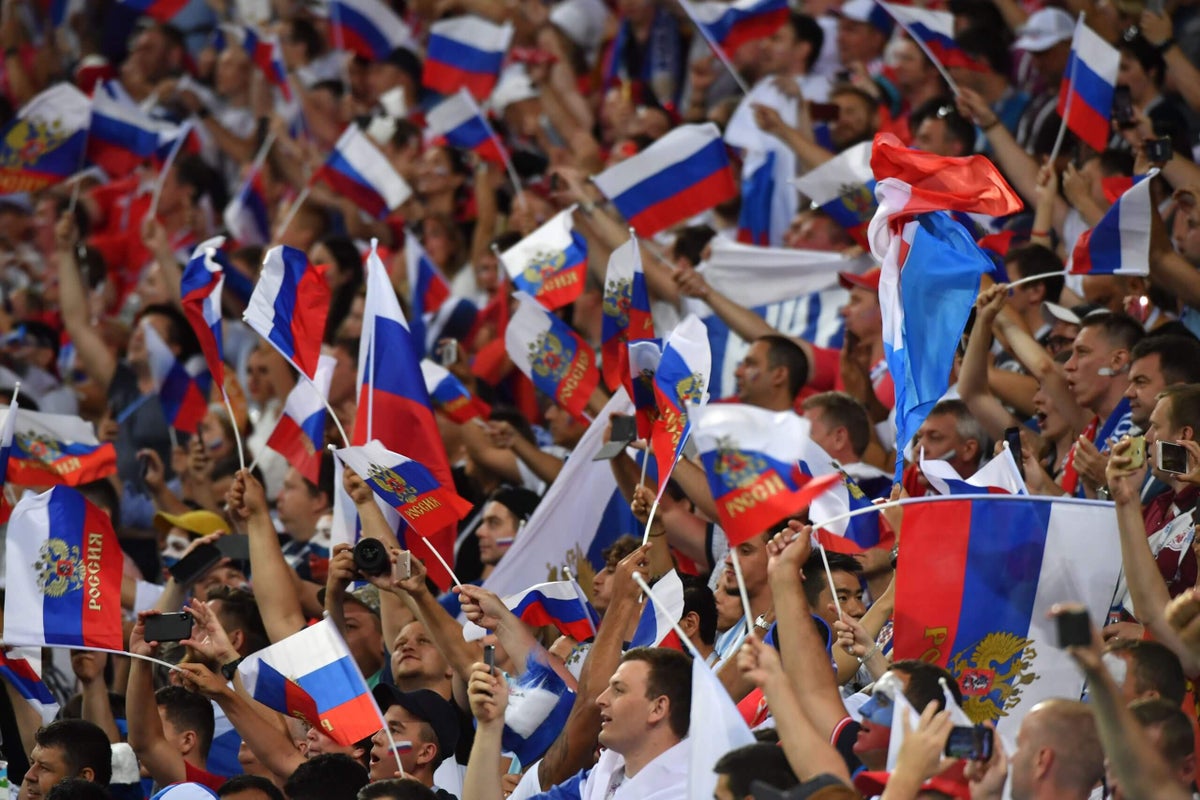
Russia may return to international football after a four-year absence from FIFA-sanctioned competitions after world soccer’s governing body announced a new under-15 competition which will be “open to all member associations”.
Russia’s national teams and domestic clubs have been suspended from participating in FIFA and UEFA (the governing body of European football) competitions since the nation’s illegal, full-scale invasion of Ukraine in February 2022.
The Russian Football Union (RFU) appealed against the bans, but the Court of Arbitration of Sport upheld the decisions.
The RFU, however, is not suspended — they are still a member nation of both UEFA and FIFA. It is the country’s football teams, rather than its governing body, that have been suspended.
On Wednesday, FIFA’s Council announced the creation of an “under-15 festival-style tournament…that will be open to all 211 FIFA member associations”.
The first boys’ tournament will be held in 2026, with an edition for girls to be staged in 2027.
The governing body said each member association, which includes Russia, would be invited to participate in the tournaments.
Any readmittance of Russia, however, is likely to be dependent on the ongoing war in Ukraine.
In April, FIFA’s president Gianni Infantino spoke of his hope that Russia could be reintroduced to the football fold “soon” – adding that any return would signify that “everything was solved” in relation to events in Ukraine.
Last week, Infantino said in an Instagram post that he “supported” participation of athletes, and “especially young athletes”, in events regardless of the political situation of their country”.
He added: “Sport provides an access to hope, and a way to show that all athletes can respect the same rules and one another.”
Since February 2022, Russia have been excluded from the qualification process for the men’s World Cup in 2022, and the nation did not take part in the qualifiers for either the European Championship in 2024, governed by UEFA, or the 2026 World Cup.
The nation’s club sides have not participated in the Champions League, Europa League or Conference League — all overseen by UEFA.
When approached by The Athletic, a UEFA spokesperson said the organisation’s stance on Russia would not change until the conflict in Ukraine had ended.
UEFA’s Executive Committee (EXCO), its decision-making body — responsible for making decisions and overseeing competitions — will next meet in February 2026.
In 2023, UEFA reversed plans to reinstate Russia’s under-17 side in the relevant youth European Championship in 2024 following significant pushback from member associations, including England’s Football Association.
UEFA had initially said in their reasoning for reinstating under-17 teams that “children should not be punished” for the conflict and that football “should never give up sending messages of peace and hope”. Under UEFA’s initial plan, proposed matches would have been conducted without the Russian flag, anthem, or kit, and would not take place on Russian territory.
Last week, the International Olympic Committee (IOC) recommended athletes from Russia and Belarus should be allowed to compete under their national flags and emblems at youth level.
Russian and Belarusian competitors have been banned from competing under their countries’ flags at Olympic and Paralympic events since 2022.
At the 2024 Paris Olympics, the IOC permitted some Russian and Belarusian athletes to compete under the “Individual Neutral Athletes (AIN)” team, which had no symbolism of national anthems, badges or flags.
The IOC also said that Belarus, which has diplomatically supported Russia’s invasion of Ukraine, should no longer be restricted from hosting international events, although Russia should remain barred from doing so.
Belarus most recently competed in European qualifiers for the 2026 men’s World Cup, finishing bottom of Group C behind Scotland, Denmark and Greece, but the nation is not allowed to host UEFA or FIFA matches.

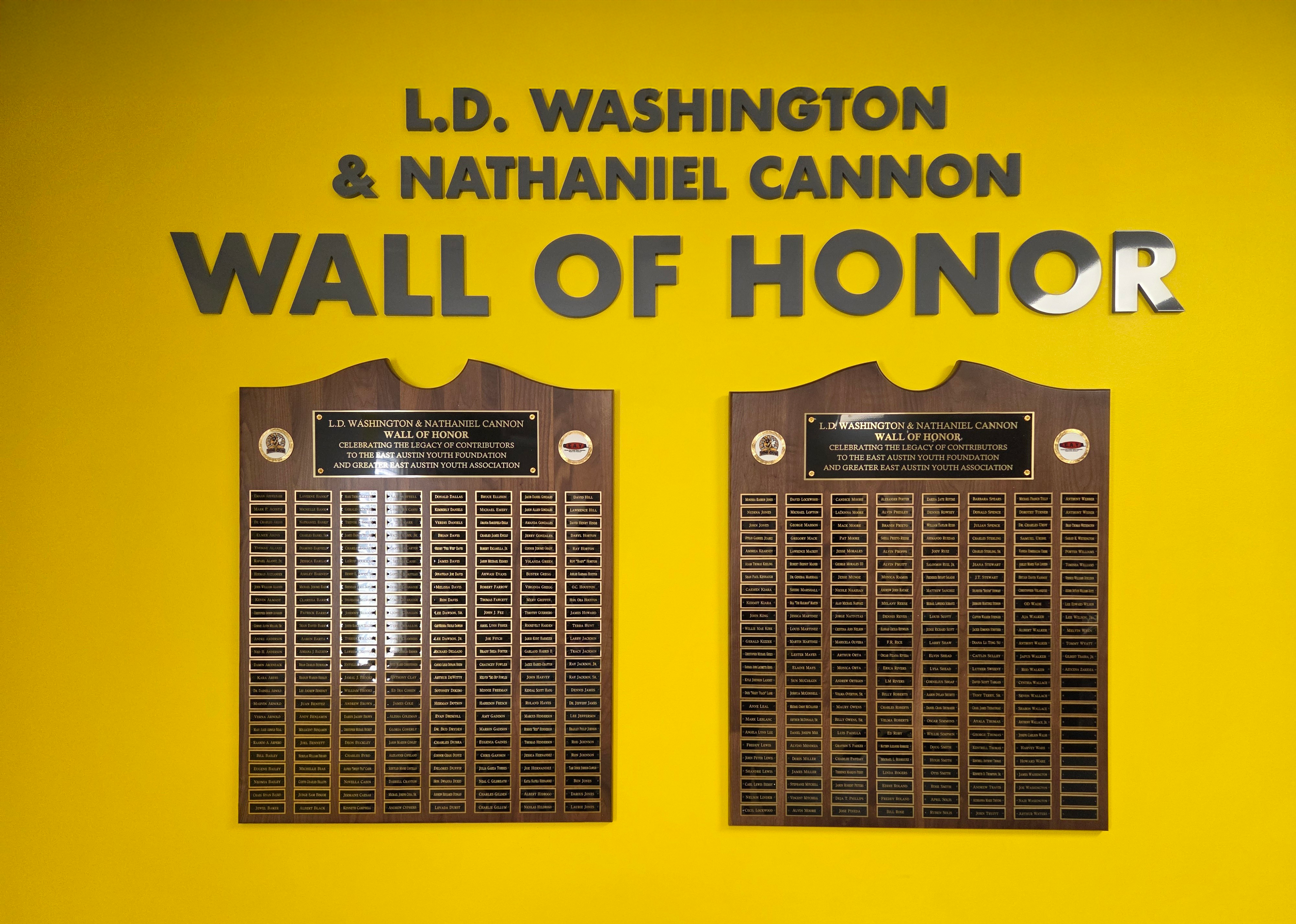
The L.D. Washington and Nathaniel Cannon Wall of Honor celebrates the legacy of youth sports and the leaders who built and sustained the East Austin Youth Foundation and the Greater East Austin Youth Association – organizations that have created vital opportunities for Black youth during and after segregation.
The wall is housed in the Britton, Durst, Howard and Spence Building at 1183 Chestnut Ave. in Rosewood Neighborhood Park, a historic center for Black youth sports. The building was renamed in 2011 to honor four community leaders, including Lawrence M. Britton, Sr. and James Howard, who helped found the East Austin Youth Foundation. Their work provided a safe and empowering space for young athletes at a time when Black children were excluded from white leagues.
James Howard later partnered with Nathaniel Cannon to co-found the Greater East Austin Youth Association, continuing the mission of community uplift. Cannon has served as the association’s treasurer since its founding in 1975 and has been a key organizer of the group’s annual Juneteenth celebration for over 25 years.
L.D. Washington, a beloved coach and mentor, also played a pivotal role in the East Austin Youth Foundation. His influence extended beyond sports, and he was honored with the Al Edwards Juneteenth Un-Sung Hero Award in 2001 and inducted into the Prairie View Interscholastic Coaches Association Hall of Fame in 2016.
The idea for the Wall of Honor came from Kenneth D. Thompson, Sr., a former player and parent in the East Austin Youth Foundation. He partnered with Lee Dawson, Jr., president of the Greater East Austin Youth Association and a former player himself, to bring the vision to life. The project was made possible through funding from the Austin Parks Foundation’s Austin City Limits Music Festival Grants Program.
Watch and share the unveiling video on:
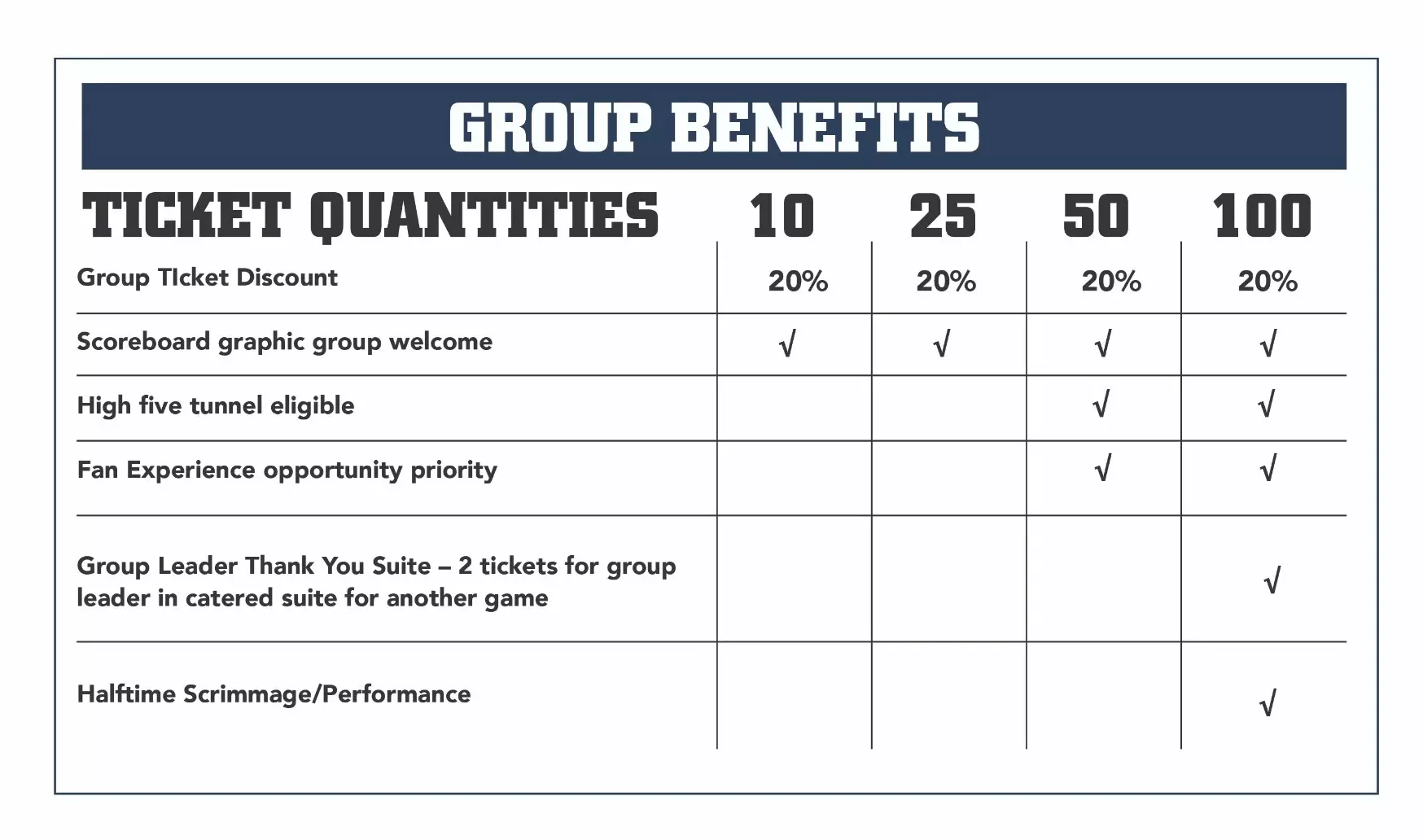
Make your next outing unforgettable with a Georgetown Men’s Basketball group experience. Whether you’re organizing a school field trip, celebrating with your scout troop, motivating your youth sports team, or planning a fun night out with friends or colleagues, a Hoya game delivers fast-paced BIG EAST action and a truly electric atmosphere.
No two groups are the same, and neither are their goals. That’s why our dedicated group sales team works with you one-on-one to craft an outing that fits your vision — from creating memorable fan experiences to helping you take advantage of exclusive group savings.
Group outings start at just 10 tickets and unlock a variety of special perks, discounts, and unique game-day opportunities.
Ready to bring your group to Capital One Arena?
Call 202-687-4692, email hoyatickets@georgetown.edu, or complete this interest form, and a member of our Ticket Office will reach out.

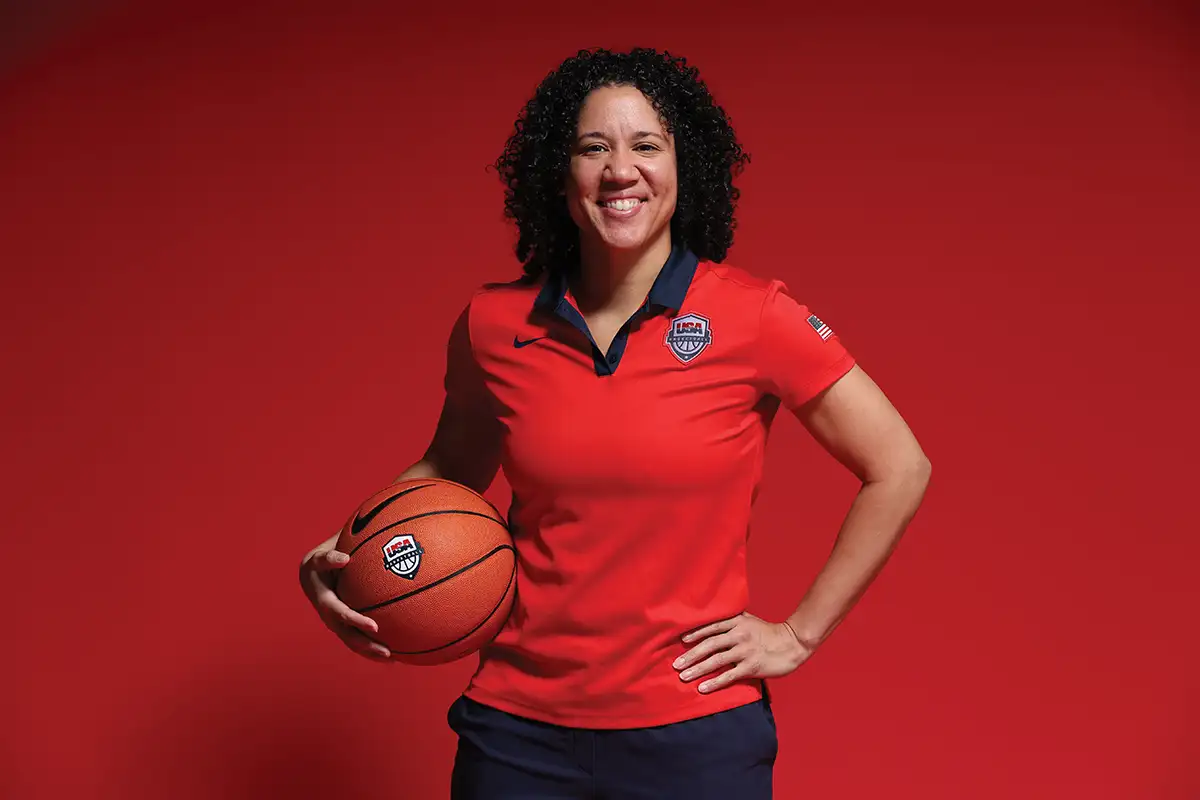
Before she was a WNBA champion, Olympic gold medalist, and head coach of the Duke University women’s basketball team, Kara Lawson was a star in NoVA. Lawson, now 44, led the West Springfield High School Spartans to state championships in 1997 and 1999. She was recently tapped to coach the USA Basketball Women’s National Team at the 2028 Los Angeles Olympics, and we asked her how her NoVA roots have helped shape her impressive career.
What do you like to do when you visit NoVA?
I’m from Alexandria. And my mom still lives in Alexandria. I come home a lot … more during the off-season. Mostly, I like to just spend time with my family and my friends.
What do you love about the area?
Northern Virginia is great because you have everything. You have sports, you have theater, you have culture, you have sightseeing, you have outdoors. You basically have everything that you need.
The NoVA youth sports culture can be hyper-competitive. What’s your advice for young athletes with dreams of going pro?
Going to school in the area really prepares you for success, because you play a lot of good competition. You have a lot of good coaching in the area, a lot of good players. While college was certainly a step up, I felt very prepared when I got there. So, in our area, if you can rise to be one of the best, then that usually means you’re pretty good. It’s a good barometer for the rest of the country.
What did you learn from your coaches at West Springfield?
I learned about teamwork. I knew about teamwork from when I was young, but we had very good team chemistry at West Springfield, and everyone had a great understanding of their roles and what they needed to do for the team to be successful. We only lost two games in three years, and we have a close group — six of my high school teammates came to the press conference [announcing my Olympic coaching appointment]. I’m still good friends with a lot of my teammates from high school.
Was coaching something you’ve always wanted to do?
Yeah, I have wanted to be a coach since I was 7 years old.
What did being selected as the Olympic team’s head coach mean to you?
It represents the journey that it takes to do that. It makes me smile, because I think it symbolizes that I dedicated myself from when I was young to a goal. And I stayed with it over 10 years, 20 years, and was able to reach it. So it was very fulfilling.
This interview has been edited for length and clarity.
Feature image of Kara Lawson courtesy USA Basketball
This story originally ran in our December issue. For more stories like this, subscribe to Northern Virginia Magazine.
NEED TO KNOW
- A beloved youth sports referee has died after collapsing during a high school basketball game on Friday night
- The Central Indiana youth sports community mourned Jeff Tamarri’s death this week
- Tamarri, known as “Jeff the Ref” to many Indiana sports families, officiated youth sporting events for more than 30 years
A beloved youth sports referee who worked games across Central Indiana for more than three decades has died after collapsing on the court during a girls’ high school basketball game.
Jeff Tamarri, who was known among families as “Jeff the Ref,” was 63 years old.
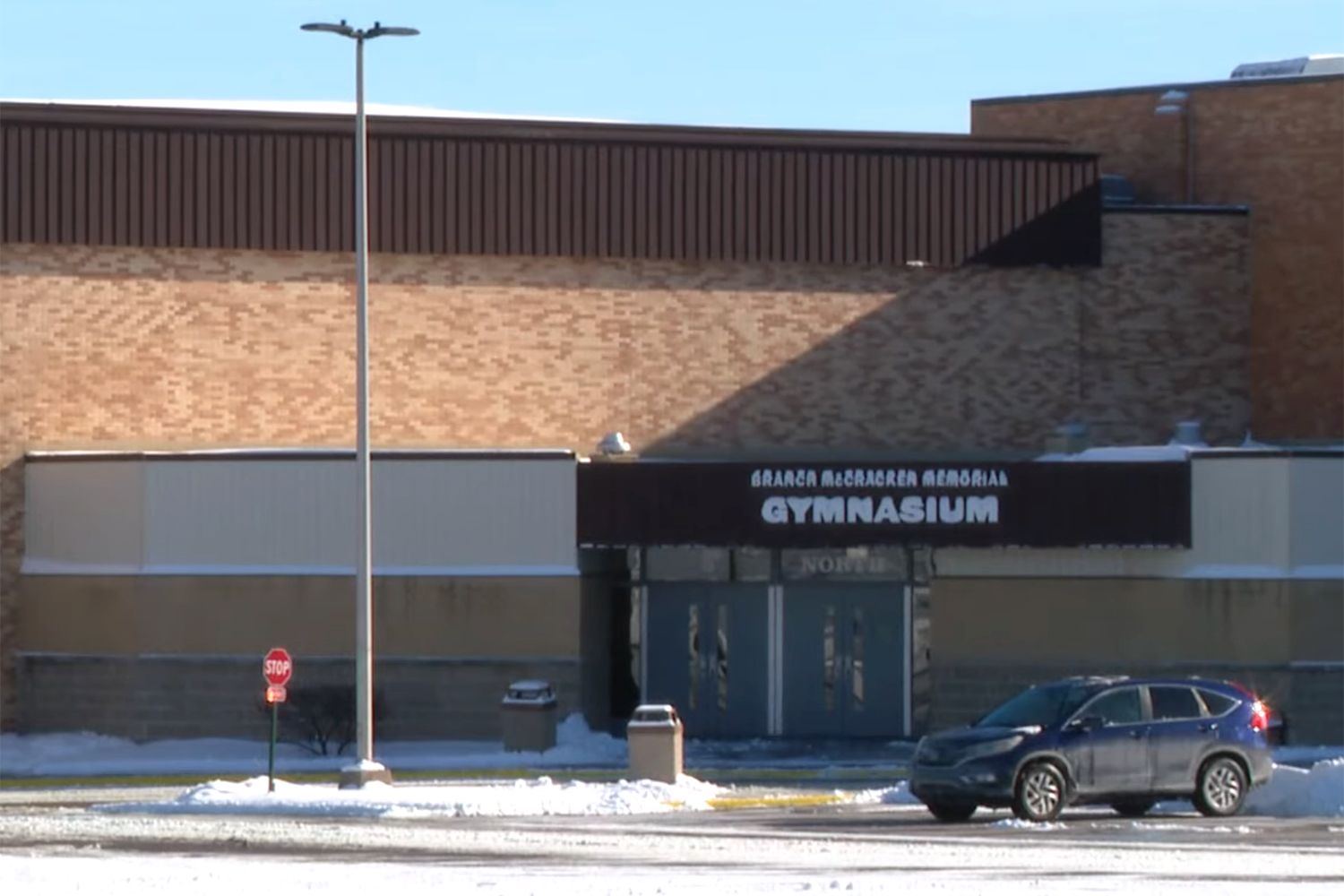
Tamarri collapsed during a game at Monrovia High School on Friday, Dec. 12, according to NBC affiliate WTHR and the IndyStar.
WTHR reported that Tamarri’s collapse prompted fans to clear the gym so bystanders with medical backgrounds could work on saving him until first responders arrived.
“I have no doubt in my mind that they did all they could,” fellow youth sports referee Kevin Brown told WTHR. “Unfortunately, I just don’t think there was much to be done.”
Brown mourned Tamarri as a sports referee who enjoyed his job and “was always out there for the right reasons.”
“He truly died doing what I know he loved,” Brown said.
“He had a calming presence, and I always said officials need to lower the temperature in the room,” Brown told WTHR. “Some people are really gifted at it. He was really gifted at it.”
Tamarri’s fellow referee told the outlet that his late colleague appeared to have “some sort of cardiac event” before collapsing on the court. “It was a simple offensive rebound right in the middle of the second quarter, and he turned around to get position on it” before collapsing, Brown told WTHR.
The outlet estimated that Tamarri officiated thousands of youth sports games across his 30-plus year career.
Fellow referee Derek Whitfield announced Tamarri’s death in a post on a local youth umpiring social media page, saying although it “leaves an immense void in our hearts, there is a quiet comfort in knowing he left us pursuing his passion, surrounded by sports that defined so much of his life.”
“Jeff was more than an outstanding official who graced countless games across many sports; he was a mentor, a friend, and a guiding light to young athletes, coaches, and fellow umpires alike,” Whitfield wrote, adding, “Those who knew Jeff will forever remember his warm, infectious smile and the deep, authentic love he showed to players, coaches, colleagues, friends, and his family.”
Referee Terry Taylor, who Whitfield described as Tamarri’s best friend and longtime roommate, told WTHR that Tamarri “was such a great guy.”
“We’d see a lot of faces, the same faces in different sports,” Taylor said. “So from Grand Park to Zionsville to Danville, where we worked a lot in the last few years, there were a lot of upset kids Saturday when they found out.”
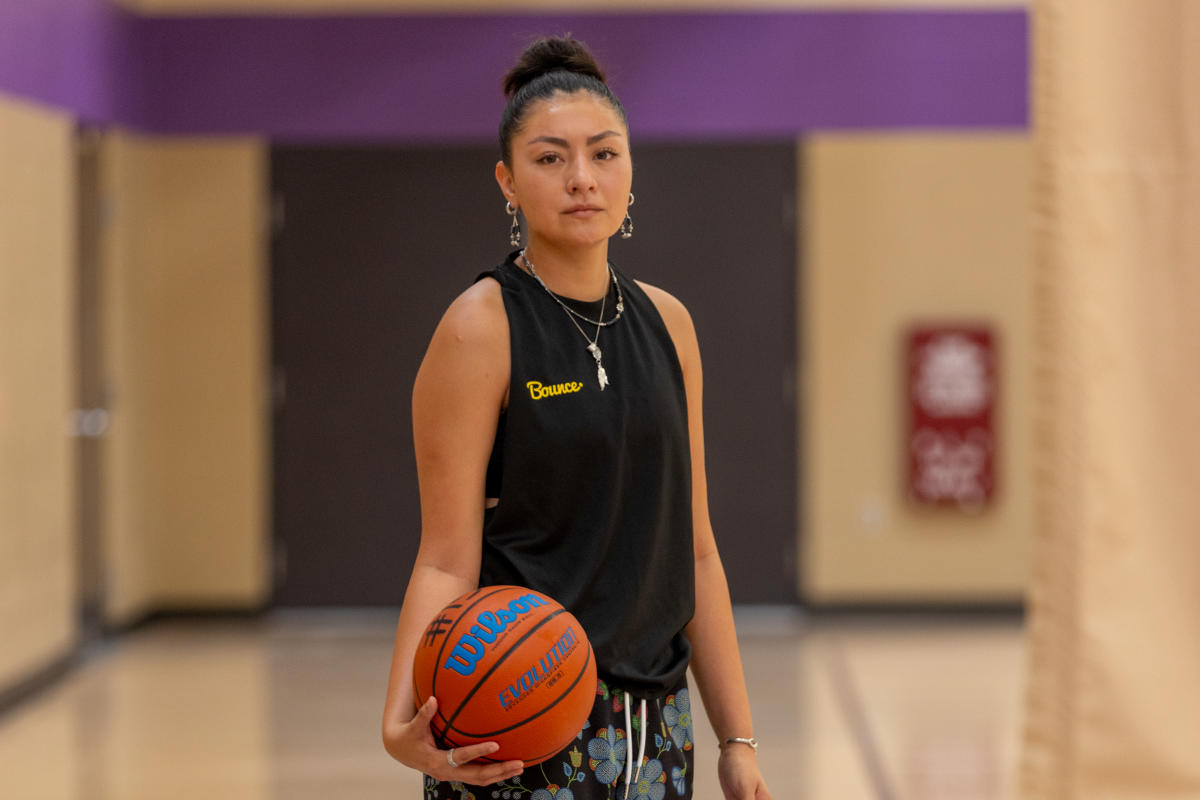
ONE OF ANALYSS BENALLY’S most memorable basketball moments didn’t happen during a game. In fact, the Shiprock native didn’t even have a ball in her hands.
Benally, who plays professionally in Europe, was hosting a camp last year on the Havasupai reservation, in Arizona. The 20 or so campers had gathered to watch Rez Ball, the Netflix film about a Navajo basketball team attempting to win a New Mexico state championship after the death of its star player, in which Benally had a small role. As the (spoiler alert) game-winning shot dropped through the net, a young camper sitting next to Benally tapped her on the shoulder and said, “Look, just imagine that could be me.”
“It did something to my heart,” Benally says, her voice warm with emotion. “I never had a moment like that in my life. I really got to witness that moment of a kid being inspired, seeing himself being represented, where he’s from, the people he’s from.”
Benally understands this better than most. She grew up on the Navajo Nation before moving to Wichita, Kansas, with her family at the age of 12 to support her older sister’s basketball dreams at Kansas Wesleyan University. A star in high school who scored more than 1,000 points in her career, Benally played at San Jose State before turning pro. Her career has taken her to leagues in Albania, Kosovo, Romania, and Croatia. “It’s been my goal since I was five,” says the 5-foot-7-inch guard. “It honestly feels like it’s what I am meant to do.”
Over the past four years, Benally and her father, Brian Benally, a varsity assistant basketball coach at Bloomfield High School, have held around 25 ABFive camps in New Mexico and across the country. “We try to get to the smaller communities,” Brian says from their home in Farmington. “Growing up on the rez can be hard, but [achieving success] can be done.”
More than 200 kids signed up for Benally’s ABFive camp in Shiprock over the summer. “They want to touch her, they want to talk to her, they want pictures,” Brian says. “She enjoys being around the kids.”
While the camps teach fundamentals like stretching, footwork, agility, and shooting mechanics, there’s a broader message at work as well. “She goes overseas, she learns new cultures, a new way to do things, she comes home, and she doesn’t keep that stuff to herself,” Brian says. “She wants everyone to learn from her and achieve more than she has.”
Inducted into the North American Indigenous Athletics Hall of Fame earlier this year, Benally serves as inspiration both on and off the court. “Basketball isn’t who I am,” she says. “It’s simply the thing that’s given me so much. If you were to take it from me, I know exactly who I am and what I need to continue to do.” That’s why the camps are so important each summer. “If I couldn’t do basketball at all, I would definitely be working with the youth.”

NTDP/WNT Athletes Ready to Shine in 2025 NCAA Women’s Volleyball Semifinals

Kentucky Basketball loses recruiting prediction for Christian Collins as NIL looms large

Jimmie Johnson confirms Daytona 500 decision as schedule takes shape – Motorsport – Sports

Three Husker volleyball players make first-team All-America

Motorsports journalist Matt Weaver talks NASCAR lawsuit | Racing Report | Ep. 042

LEGACY MOTOR CLUB Takes NASCAR Spirit to Japan with Toyota, Jimmie Johnson, and John Hunter Nemechek – Speedway Digest

Utah State Volleyball’s Kaylie Kofe Earns AVCA All-American Honorable Mention

Why William Byron Leaned on Chase Elliott When He Was Starting At Hendrick Motorsports

More Sports on the Way: Volleyball joins the Roster of Premier Sport Offerings

Front Row Motorsports Confirms No. 38 Driver for 2026 Truck Series

Kentucky loses recruiting prediction for 5-star forward Christian Collins as NIL looms large

Russia may return to international football after four-year absence in new FIFA youth tournament

2025 AVCA Women’s NAIA All-America Teams

Nissan and NISMO Announce Plans for Expansion

Wall Honors Black Leadership in Sports

First Tee Winter Registration is open

Fargo girl, 13, dies after collapsing during school basketball game – Grand Forks Herald

CPG Brands Like Allegra Are Betting on F1 for the First Time

F1 Las Vegas: Verstappen win, Norris and Piastri DQ tighten 2025 title fight

Volleyball Recaps – November 18

Sycamores unveil 2026 track and field schedule

Two Pro Volleyball Leagues Serve Up Plans for Minnesota Teams

Utah State Announces 2025-26 Indoor Track & Field Schedule

Redemption Means First Pro Stock World Championship for Dallas Glenn

Texas volleyball vs Kentucky game score: Live SEC tournament updates

Jo Shimoda Undergoes Back Surgery

Bowl Projections: ESPN predicts 12-team College Football Playoff bracket, full bowl slate after Week 14

SoundGear Named Entitlement Sponsor of Spears CARS Tour Southwest Opener

How this startup (and a KC sports icon) turned young players into card-carrying legends overnight

Robert “Bobby” Lewis Hardin, 56

 NBA Legend Michael Jordan to Join NBC Sports as Special Contributor
 Why a rising mid-major power with an NCAA Tournament team opted out of revenue-sharing — and advertised it
 Falcons mailbag
 Portal Update – Basketball and Gymnastics Take Hits
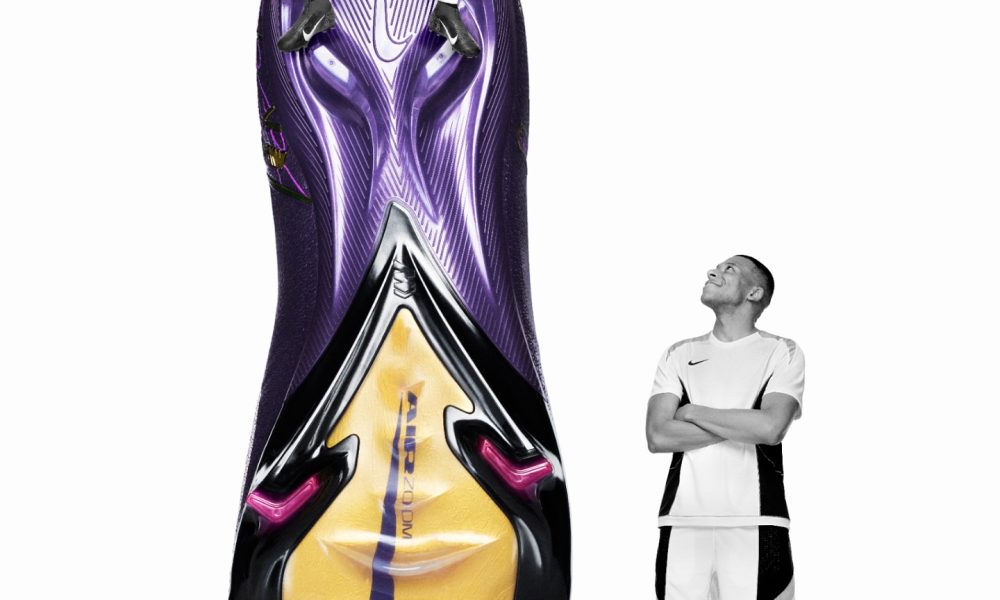 has always dreamed in Mercurial. Now his initials are on the boots.
The new Kyl…
has always dreamed in Mercurial. Now his initials are on the boots.
The new Kyl…
-
 Motorsports3 weeks ago
Jo Shimoda Undergoes Back Surgery
-
 Motorsports1 week ago
SoundGear Named Entitlement Sponsor of Spears CARS Tour Southwest Opener
-
 NIL2 weeks ago
Bowl Projections: ESPN predicts 12-team College Football Playoff bracket, full bowl slate after Week 14
-
 Rec Sports3 weeks ago
How this startup (and a KC sports icon) turned young players into card-carrying legends overnight
-
 Rec Sports3 weeks ago
Robert “Bobby” Lewis Hardin, 56
-
 NIL3 weeks ago
Indiana’s rapid ascent and its impact across college football
-

 Motorsports3 weeks ago
Pohlman admits ‘there might be some spats’ as he pushes to get Kyle Busch winning again
-
Sports3 weeks ago
Wisconsin volleyball sweeps Minnesota with ease in ranked rivalry win
-

 Motorsports1 week ago
Donny Schatz finds new home for 2026, inks full-time deal with CJB Motorsports – InForum
-
 Motorsports3 weeks ago
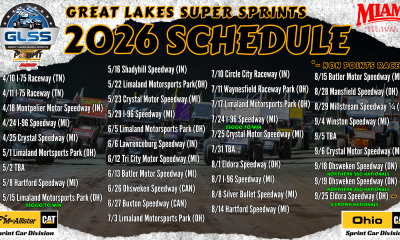
Increased Purses, 19 Different Tracks Highlight 2026 Great Lakes Super Sprints Schedule – Speedway Digest