The World Series begins Friday between the Los Angeles Dodgers and the Toronto Blue Jays. Oh, not a big baseball fan you say? No worries. The NBA tipped off its season this week, so you’ve got 12 games to pick from. Eight NHL teams face off, too. Saturday promises to be a huge day for college football (especially if you’re in Michigan, home of the annual grudge match between the Wolverines and Spartans). And on Sunday it’s week eight of the NFL season— we’re all wondering if the New York Jets can finally win a game.
The smorgasbord of sports and the passion it will incite among fans led us to wonder: What is America’s best sports city? We asked nine writers to make their case.
Seattle
It’s the most scenic sports city in America. From the open end of Husky Stadium, Lake Washington gleams and Mount Rainier towers. Some fans arrive for Washington Huskies home football games via boat — after, yes, sailgating, sometimes even on the Montlake Cut, where the University of Washington’s rowing crew trained to win Olympic gold in 1936, before their story became a book and a movie, “The Boys in the Boat.” Sixmiles away, in downtown Seattle, the green, tree-lined Railroad Way connects the city’s waterfront to its stadium district. Those who traverse it can settle into seats above left field at T-Mobile Park and take in Major League Baseball and Puget Sound simultaneously.
Start there to understand why Seattle is America’s best sports city. Add this: an emphasis on women’s sports and inclusivity no other metropolis can match. Seattle’s WNBA team, the Storm, is owned and operated by three local businesswomen. Women have heldor hold high-level positions for the Storm, Seattle Reign FC(National Women’s Soccer League), the Sounders (MLS), the Mariners (MLB), UW and Seattle University. Fans here show up for women’s sports. The Storm always rank among league leaders in attendance.
If titles matter, Seattle has those, too. The Storm won four between 2004 and 2020. The Seahawks triumphed in the Super Bowl in 2014. The Sounders seized MLS Cups in ‘16 and ’19. We have an NBA championship (Supersonics, sigh, 1979). And the Seawolves, of Major League Rugby, snagged back-to-back shields in ’18 and ’19. UW, in 1991, claimed a share of college football’s national championship. The 2025 Mariners reached the American League Championship Series for only the fourth time in 49 years. Even losing Game 7 against Toronto felt like the beginning of much more — a golden age of sports here, perhaps.
In the Seattle sports scene, there’s variety: rugby, cricket, cheerleading, roller derby, ultimate Frisbee, Australian football and arena football. Just don’t mistake breadth for a lack of star power. Seattle sports was: Lenny Wilkens, Gus Williams, Shawn Kemp, Gary Payton, Ken Griffey Jr., Edgar Martinez, Ichiro, Felix Hernandez, Steve Largent, Cortez Kennedy, Walter Jones and Marshawn Lynch. Seattle sports is: Cal Raleigh, Julio Rodriguez and Nneka Ogwumike.
Story continues below advertisement
Our fans are loyal; our venues, sustainable. Climate Pledge Arena, home to the NHL’s Kraken and the Storm, is the world’s first zero-carbon certified sports space, complete with electric Zambonis and powered by100 percent renewable energy.
We loved and supported soccer before the rest of America came around. We loved and supported the WNBA long before its widespread popularity ballooned. We register decibel-quakes in our football stadium just through our roars and stomping.
If “best” sports city in America is defined, simply, as most teams and most titles, then Seattle is not that. But if fans want to feel sports and experience sports and live sports, there’s simply no better, nor more distinct, place.
Greg Bishop is a senior writer for Sports Illustrated and lives in the Seattle area.
Los Angeles
Los Angeles is not the tinseltown caricature of superficiality. Those of us who call it home know better. L.A. is the Diaspora Capital of America, the Creative Capital of America, the Fitness Capital of America.
And yes, the Sports Capital of America, a rich mixture of excitement and longing, vulnerability and swagger.
It has 11 major professional sports teams and the most culturally and globally relevant teams anywhere. The Dodgers consistently have the highest regular season home attendance in Major League Baseball, averaging nearly 50,000 fans a game, with big followings in Mexico and Japan. The Los Angeles Clippers play in the new Intuit Dome, the most innovative fan-experience arena in professional sports. Powerhouse rivals UCLA and USC have won more NCAA Division I teamchampionships combined, 239, than any other two universities in a single city. The owner of the Los Angeles Lakers agreed to sell a majority stake in the franchise in June; the agreement valued the Lakers at a record $10 billion.
L.A. is a sprawling, alluring destination that attracts every significant sporting event. The city will host the World Cup next year, followed by the 2028 Summer Olympics. Athletes flock to train here in the offseason, build their brands, buy or rent second homes. They all believe they can become great here.
Story continues below advertisement
On any given summer Sunday, you can go to Venice Beach and watch street ball sensation Ryan “Hezi god” Carter drop 39 points in the Veniceball League by the ocean. Professional beach volleyball took off in Manhattan Beach. L.A. is a youth sports mecca, where just two years ago Louis Lappe hit a walk-off homer that lifted El Segundo’s Little League All-Stars to Little League World Series champs. Sports Business Journal named L.A. the No. 1 soccer market — one that includes the upstart Angel City FC, one of the most valuable teams in women’s sports.
L.A. is not just the city where the greatest collection of superstar athletes performed — Koufax, Magic, Kareem, Kobe, Shaq, Serena, Leslie, Kershaw, Kwan, Valenzuela, Ohtani, LeBron, etc. It’s where Wayne Gretzky, playing for the Los Angeles Kings, popularized hockey in California. It’s where David Beckham transformed Major League Soccer. Venus and Serena Williams left the courts of Compton and dominated women’s tennis for a quarter century, winning a combined 48 titles.
A mural depicting NBA star Kobe Bryant, painted by Isaac Pelayo, is displayed on a building on Feb. 16, 2020 in Burbank, California. (Mario Tama/Getty Images)
Where else will you find LeBron James doing a cameo in Tyler the Creator’s latest music video, or see college hoops phenom JuJu Watkins on a billboard and then watch her L.A.-filmed documentary series? Many years ago, I ran into the great James Earl Jones (may he rest in peace) at a backyard cookout in L.A. I sat next to him at a picnic table while he ate his ribs, and we talked about “Field of Dreams,” the sports-movie classic about the spiritual power of baseball.
L.A. is that city.
Kevin Merida is the former executive editor of the Los Angeles Times, a former senior vice president of ESPN and a former managing editor of The Post.
Kansas City
It’s easy to argue for a major metropolis as America’s best sports city. New York, Los Angeles and Chicago have so many big-time franchises they can’t keep them straight. The Jets used to play in Queens and the Nets used to play in New Jersey, but now the Nets are in Brooklyn and the Jets are in Jersey.
Dizzying.
Good for them, I guess. I prefer a town where the folks share sporting passions unanimously, not neighborhood by neighborhood. Where new sports find a warm welcome, and sports history has a place of honor. I speak of Kansas City.
Start with this: The NFL rules the nation, and the Kansas City Chiefs rule the NFL. Kansas City — ranked No. 31 in metro-area population but punching way above its weight — has played in five of the last six Super Bowls. Won three. Finished second in the others.
Kansas City also has a baseball team with a couple of World Series trophies and history’s best third baseman: George Brett. He is one of only five players with 3,000 hits, 300 home runs and a .300 lifetime batting average.
As for stars of newer vintage: In Patrick Mahomes, a rare three-time Super Bowl MVP, and all-star shortstop Bobby Witt Jr., Kansas City boasts a dazzling still-in-their-prime sports duo.
Wanna ding K.C. for lacking an NBA franchise? The city has something better: University of Kansas basketball. KU is the cradle of the sport. An overtime game in the historic Phog Allen Fieldhouse is the best college athletic vibe in America.
Speaking of college athletics: Kansas City is rekindling one of the oldest and fiercest college rivalries in America. That stuff about harmonious neighborhoods does not apply to Kansas versus the University of Missouri, a tradition busted up by conference realignments but coming back to life.
Story continues below advertisement
Kansas City cherishes the Negro Leagues Baseball Museum. Nowhere is the role of athletes as engines of culture and social progress so delightfully explained and celebrated. As for the future of sport, Kansas City is the first place on the planet to build a stadium just for women’s professional soccer.
K.C. is Soccer City. Has been for decades: The same Lamar Hunt who conceived of what is now the American Football Conference and its dominant Chiefs was also the visionary behind European football in the U.S. Next year, the World Cup will pay homage to Kansas City’s long history at the forefront of North American soccer by staging multiple matches here.
The entire World Cup tournament will have Kansas City fingerprints. Games in Georgia, Massachusetts, Texas, Florida, New Jersey, California and Washington will all be played in stadiums designed by architects in Kansas City — the world capital of sports stadium design.
David Von Drehle is a former Washington Post columnist and editor.
Chicago
Before I was born, it was made clear to my brothers and hence me upon my birth that North Side, South Side, West Side or the suburbs, we could all agree on one thing in Chicago: You rooted for the Bears, the Bulls, the Blackhawks and whichever baseball team your family forced you to support because your grandfather did.
That is one of the many things that makes Chicago special. You would be hard-pressed to find a native who didn’t weep over the World Series titles of the 2016 Cubs or the 2005 White Sox; who couldn’t tick off multiple reasons Michael Jordan is the greatest of all time; and those of a certain age who can’t still close their eyes and envision the “Super Bowl Shuffle” without the slightest whiff of embarrassment.
I once almost made a friend of my then-7-year-old son cry when he got into our car wearing a Red Sox hat. “Brandon, what are you doing?” I chided him. “We have TWO baseball teams. Pick one.”
Wrigley Field in Chicago on Oct. 9, 2025. (Michael Reaves/Getty Images)
We didn’t see much of Brandon after that and my son Alec, now 27, still blames me. But I contend I saved his friend from much worse abuse had he worn the Red Sox hat in a less-charitable mother’s car.
To be defined by our blind loyalty, however, doesn’t fully capture our passion. We are a smart group. We can, for example, quickly calculate how many offensive coordinators helped doom Bears quarterback Jay Cutler in his eight seasons with the team (six).
Story continues below advertisement
We are also smart enough to know that his 251 sacks during that period, which vaulted him to first place on the list of most-sacked quarterbacks in franchise history, probably contributed to his general disposition.
Earlier this year, an actual study calculated the number of tweets, Google searches and Reddit posts containing “heartbroken language” made by each NFL fan base the previous season. The survey dubbed us No. 1 on its list of most heartbroken fans in the league.
I’m not sure that’s altogether fair. Makes us sound soft. But we’ll take a No. 1 ranking.
The truth is, we are a reasonable people. We know who we are and that means we do not adopt more successful teams from other cities, no matter how young and impressionable we may be. Rather, we stick by our own, root them on passionately and every 100 years or so, if we’re lucky, we are rewarded for our loyalty.
Melissa Isaacson is an assistant professor at Northwestern University’s Medill School of Journalism and was a longtime Chicago Tribune sportswriter.
Detroit
Sports fans across the country laughed when Detroit Lions coach Dan Campbell talked about kicking opponents in the teeth and biting kneecaps during his opening news conference in 2021. But most missed Campbell’s point in the seconds before he made that comment: his promise that the Lions would take on their city’s identity.
“This city has been down, and it found a way to get up. It’s found a way to overcome adversity,” Campbell said.
The Lions, who have never reached a Super Bowl and went 0-16 in 2008, resembled the city. Just seven years before Campbell’s arrival, Detroit emerged from a historic municipal bankruptcy.
Story continues below advertisement
Many Detroit fans have been knocked down and found a way to get back up. Lions hats emblazoned with “Grit” embody the hard work and dirty hands Detroiters display on auto factory lines. The ubiquitous “Bless you boys” catchphrase during the 1984 Tigers World Series championship season reflected an entire city’s underdog spirit and hope during that improbable year. We loved both the “Bad Boys” and the “Goin’ to Work” Pistons championship teams for their toughness and blue-collar swagger.
We’ve also watched Red Wings greats such as Gordie Howe retire at 52, and Chris Chelios play until he was 48. It reminded us of our fathers or uncles at the plant.
Former Detroit Red Wings player Gordie Howe waves to crowd during his 80th birthday celebration at Joe Louis Arena on March 30, 2008, in Detroit. (Jerry S. Mendoza/AP)
Now, Campbell has turned the Lions into championship contenders. The players found a way to pair their style of play with the city’s fierce work ethic. The Tigers and Pistons have also added to Detroit’s culture of resilience with their unexpected runs to the playoffs in 2024.
We’re not Los Angeles, New York or Chicago. We don’t try to be. We’re too busy surviving hard times and making things better.
That’s what makes Detroit’s bonds with our sports legends special.
Consider how Pistons great Dave Bing left his steel company to become mayor during the most difficult economic times. He tackled a roughly $300 million deficit when he entered office. Jalen Rose of the University of Michigan Fab 5 faithfully visits his Jalen Rose Leadership Academy to help our educational system. Roger Penske runs his billion dollar company here.
Then there’s Isiah Thomas, former Piston and NBA Hall of Famer, who spoke during a recent visit with the University of Detroit-Mercy basketball team.
“There’s two rules: How bad do you want it and how hard are you going to fight for it … . ” Thomas said. “Either you’re fighting to keep it or you’re fighting to get it.”
Darren A. Nichols is a freelance writer in Detroit.
Cleveland
Scott Entsminger was from Mansfield, Ohio, about 80 miles southwest of Cleveland. He worked for General Motors for 32 years before retiring; he loved to garden, and to fish and to play guitar in a band with friends called the Old Fogies Band. He had a wife, a teenage son and three dogs. And he died on July 4, 2013, at the far-too-young age of 55.
His obituary is a standard one. Except for two sentences:
A lifelong Cleveland Browns fan and season ticket holder, he also wrote a song each year and sent it to the Cleveland Browns as well as offering other advice on how to run the team. He respectfully requests six Cleveland Browns pallbearers so the Browns can let him down one last time.
On Legacy.com, you’re allowed to comment on obituaries in a separate Guest Book section. (Note to my children: Please do not attach a comment section to my obituary.) Entsminger’s page goes on and on, hundreds of entries, almost all of them Browns fans, laughing with this dead man they never met, sharing their own memories of this franchise that’s determined to follow and haunt them into the grave and beyond. You can kinda tell reading all the entries: This is how they think they’re gonna go, too. This is what it’s like to be a Browns fan. It’s what it was like to be a Browns fan when Entsminger died 12 years ago. It’s what it’s like to be a Browns fan now.
Story continues below advertisement
I’m not sure there would be a bigger story in sports than the Cleveland Browns winning the Super Bowl. Other teams and cities have known pain: the Bills, the Vikings, everything Detroit. But no one knows pain like Cleveland does, from The Fumble to The Drive to The Decision to The Shot to The Curse (take your pick from Game Seven World Series heartbreaks, 1997 or 2016). Even the one title the city did win, the LeBron title in 2016, ended with LeBron leaving two years later and the Cavaliers sinking into irrelevance immediately afterward. (Followed by their recent uptick to postseason face-planters.)
But the Browns — who have never reached a Super Bowl and haven’t been close in nearly 40 years — represent the pain most stoically and resolutely. They’re the sad sack losers who don’t deserve this city’s love — who once, in fact, abandoned this city — but will have it forever nonetheless. To love the Cleveland Browns — theteam, after building a new stadium in suburban Brook Park in 2029, will be abandoning the city once more — is to give your soul to something that will cause you nothing but heartache and pain, willingly, happily, unreservedly, for the rest of your life. And even, as the late Scott Entsminger could tell you, after that. Nothing could be more futile. Nothing could be more noble.
Will Leitch is a Washington Post columnist.
Buffalo
Last year, a massive winter storm dumped fourfeet of snow on western New York, as massive winter storms are wont to do.
Thousands of Buffalo Bills fans, anticipating a home playoff showdown against the Pittsburgh Steelers, piloted their SUVs, ATVs and snowmobiles to roofless Highmark Stadium. And then, they began shoveling, with the team fueling them with food, coffee and a $20-an-hour wage.
Seats, aisles and playing field sufficiently cleared, quarterback Josh Allen threw two touchdowns and rushed for another as the capacity crowd heaved heaps of snow skyward celebrating a victory they personally labored into existence.
Fans take their seats in the snow before the game between the Buffalo Bills and the Pittsburgh Steelers at Highmark Stadium on Jan. 15, 2024 in Orchard Park, New York. (Sarah Stier/Getty Images)
Buffalo sports fandom is uniquely vocational. A skilled trade. Proud, often punishing work mastered through participation, repetition and solidarity.
Our fandom certainly isn’t great because of what our teams have accomplished. New York City boasts a combined 54 major sports championships. Our blue-collar brethren in Detroit enjoy 22 titles, Pittsburgh 16. Buffalo? Zero — our teams have gone zero-for-six in Super Bowls and Stanley Cup finals.
Story continues below advertisement
No, Buffalo fandom is great because of a lesson I learned in the late 1980s, as the Bills’ Super Bowl era dawned. Then 10 years old, I begged my parents for season tickets we couldn’t quite afford. My assembly-line worker father and church-musician mother, who wanted them as badly as me, agreed — if I paid for my own. Soon, I had a route’s worth of newspaper customers, a seat in Section 127, and each autumn and winter, 80,000 of the most outrageously wonderful friends a kid could ever want.
Rooting for Buffalo means backing a postindustrial, half-frozen metropolitan area with fewer people than Fresno, California; Birmingham, Alabama; or Richmond, Virginia. We buy in, show up and hitch our teams’ hard times to our own in pursuit of a better place together.
The “Bills Mafia” phenomenon has turned Bills fans into a Bills family inwhich the team itself is fully engrossed. This is a Bills family, worth noting, that does great good when its adherents aren’t, say, gleefully flinging themselves through folding tables during epic tailgating sessions, as has become madcap tradition.
So enjoy your championships and trophies, America. Even if Buffalo must wait another year or decade or century — please, God, no — we’ve built something from the collective ashes of “wide right” and “no goal” and “13 seconds” that is as unduplicated as it is priceless.
Dave Levinthal, a Buffalo native, is a journalist in Washington.
New York
New Yorkers are, to say the least, a complacent bunch. Our city is the best in the country, according to us, so it follows that it is certainly the best sports city in the country. With at least one team to root for across every league, fandom here is a Choose Your Own Adventure easily accessible via public transit. We deserve no less, considering all we pay in rent.
Say you want to root for a spendy clubhouse with a storied history of 27 World Series titles. The Yankees will be happy to have you. Do you prefer instead to suffer endlessly watching a charming band of misfits? The also spendy (post-Bernie Madoff) Mets have you covered. And right next door, you can annually drown your sorrows in honey deuces at the U.S. Open.
Meanwhile, the WNBA is the hottest it’s ever been, and no one in the league is hotter than Ellie, the Liberty’s prancing pachyderm. A chic icon fit for a fashion capital. On the NBA side, the surging Knicks are obviously your best bet, and you’ll be in good company at Madison Square Garden with the likes of Spike Lee, Jack Nicholson and Timothée Chalamet. But true sickos like myself can, for some reason, support the Nets. (It’s not my fault that I grew up in Jersey during the Jason Kidd era.)
Fans in New York are demanding, which means we have little patience for our problem children, currently including the Jets and Giants. As of the time of writing, they were sitting a combined 2-12 on the NFL season. Part of the beauty of the city, though, is that it’s constantly changing. People move in and out (bye, Aaron Rodgers!); storefronts turn over (hello, new women’s sports bar!). And it all happens faster than Carrie Bradshaw can type “I couldn’t help but wonder.” New York has moved on from players and even, in the case of the Dodgers and Giants, entire franchises. But the next big trade or championship run always seems close on the horizon.
Is your team not meeting your high standards? No sweat. Turn off the TV, lose yourself dancing like Elaine at the high-A Cyclones’ “Seinfeld Night” on Brooklyn’s Coney Island, and wait a year or two. Your squad will make a … brand-new start of it, which I recently heard bellowed from the water feature at the gorgeous, revamped LaGuardia Airport.
Julie Kliegman is a writer and editor in Queens.
Boston
I’ve been to Boston numerous times, but I was neither raised in nor live in the Northeast. I have been to Fenway Park once, but never the Boston Garden or Gillette Stadium.
But when I thought about the top sports town in America, Boston jumped out as the obvious answer. Russell. Bird. Clemens. Pedro. Manny. Big Papi. Brady. Pierce. Those are icons in basketball, football and baseball — full names aren’t necessary.
Boston is one of two cities whose teams have won a championship in all four major U.S. sports (baseball, basketball, football, hockey) since 2011. And Los Angeles, the other city that has won all four in the last 15 years, has a major advantage — it has eight teams in those major sports. Boston only has four.
David Ortiz of the Boston Red Sox speaks during a pregame ceremony to honor victims of the Boston Marathon bombing at Fenway Park on April 20, 2013. (Jim Rogash/Getty Images)
The Red Sox won perhaps the most memorable baseball playoff series ever — coming from 0-3 down to defeat the New York Yankees in 2004. The Patriots’ six titles between 2001 and 2018 add up to the rare dynasty that lasted for almost two decades. The Celtics have 18 titles — more than any other NBA franchise. The Lakers have 17, and several of them were won while the team was in Minnesota.
Story continues below advertisement
Fenway is probably the best stadium in baseball. The city also has Bill Simmons, who is one of the most influential sports journalists in America, particularly for a Gen X-er like myself. Simmons lives in the L.A. area, but grew up in Boston and is still a superfan of his hometown teams. I vacillate between loving and being annoyed by Simmons, but his articles and now podcasts have shaped my sports fandom and appreciation for the Boston sports scene.
I don’t want to be a complete Boston booster. Back in the 1970s, Bill Russell described the city as a “flea market of racism.” I assume things have improved since then, but Boston still has a reputation for not being tolerant of African Americans in sports and otherwise. For such a big city, its college sport teams aren’t making much impact. And it’s not known for major events in golf, tennis or other sports — other than the Boston Marathon.
The Boston area is the 11th largest metro in the country. Perhaps New York and Los Angeles, the two largest, are the most important for sports. But just asyou couldn’t tell the story of America’s founding without talking about the Cradle of Liberty, you can’t tell the story of American sports without featuring Boston.
Perry Bacon is a staff writer at The New Republic and a former Washington Post columnist.
Post Opinions wants to know: What’s the best sports city in America? Convince us why.
Illustrations by Chiqui Esteban/The Washington Post; iStock
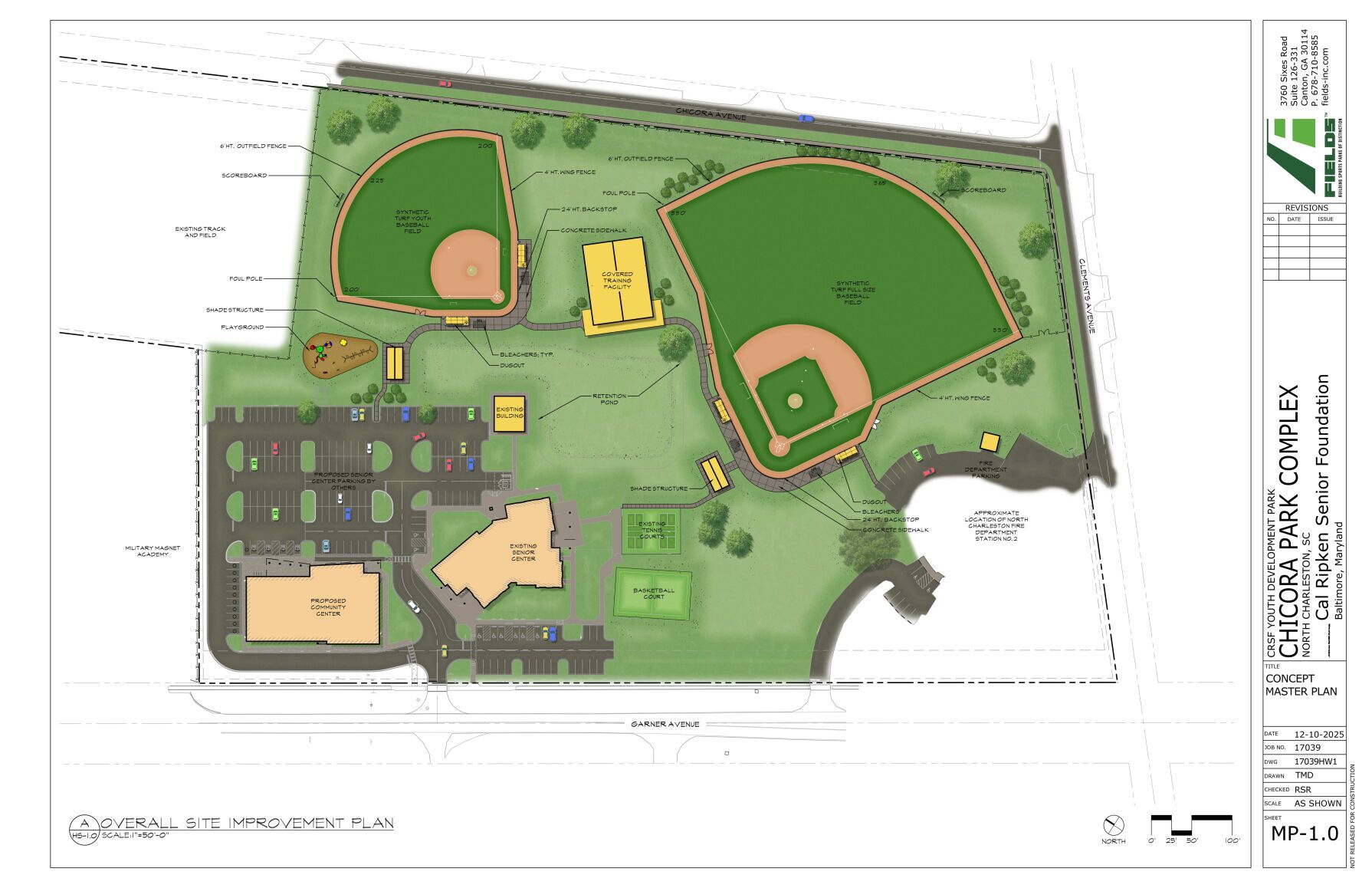
NORTH CHARLESTON — Plans for new recreation fields in the Chicora neighborhood are in the works to provide more opportunities for young athletes in an underserved part of the city.
A lighted regulation-sized baseball field, 12-U softball field and open-air training center will be built on Carner Avenue through a partnership between the city, The Sandlot Initiative and Cal Ripken, Sr. Foundation.
The partners are in the process of fundraising the $4.5 million project. The city has committed more than $1.25 million.
While the southern end of the city has traditionally lacked investment, recent community-focused projects have bolstered the area. The fields will be located next to the North Charleston Senior Center that opened in December 2024 and the soon-to-open North Charleston Community Wellness Center, which is being built by SC Ports as a mitigation effort for the nearby Navy Base Intermodal Facility.
The fields will also be in the backyard of Military Magnet Academy. The magnet high school currently does not have baseball or softball fields.
Andy Brusman, founder of The Sandlot Initiative, said he wanted to find a location in an underserved community that was in need of baseball fields and is easily accessible to youth. This site is within walking and biking distance from several schools and close to residential streets.
The city of North Charleston unveiled plans for new baseball and softball fields in North Charleston’s Chicora neighborhood.
Provided/Cal Ripken, Sr. Foundation
One priority of The Sandlot Initiative is removing socioeconomic barriers that prevent youth from playing sports. Brusman said programming at the fields will be offered for free to youth in the community, including equipment and coaching. He plans to bring on experienced coaches so the players will have resources to pursue the sport at a high level.
“This is our way of bridging that gap,” he said.
Beyond providing a space for youth to play sports, the park plans to offer opportunities to develop the players off the fields.
Through a model created by the Cal Ripken, Sr. Foundation that has been replicated in more than 100 parks, the Youth Development Park will provide mentorship opportunities, said Scott Swinson, the director of development with the Ripken Foundation. The organization has a National Youth Mentoring Initiative that focuses on character development, teamwork and communication, he said.
“It’s not just the sports,” he said. “We’re about developing these kids from the inside out and offering them opportunities to grow with their peers.”
Brusman said this is the first Sandlot Initiative project. He hopes it offers a blueprint that can be replicated in other communities in the area.
The timeline for the project’s completion is dependent on when the money is fundraised, he said.
Brothers Bill and Cal Ripken Jr., a member of the National Baseball Hall of Fame, started the foundation named after their father in 2001. In 1987, the elder Ripken became the only father to manage two sons on the same team (Baltimore Orioles) in Major League Baseball history. The brothers also founded Ripken Baseball, a business that offers camps, tournaments and training at five locations including one inMyrtle Beach.
A longtime Maryland Stadium Authority official updated the board in early December on upcoming sports tourism events, just as he had dozens of times over the years. There were bowl games and conferences to discuss.
But it would be Terry Hasseltine’s final report. The 17-year veteran of the state’s sports tourism arm is no longer employed by the authority as of late December, said executive director Michael Frenz.
Hasseltine was the face of Maryland’s efforts to attract world cups, matches between European soccer clubs and other top-flight international sporting events, and his departure was abrupt. In that final December meeting held at the authority’s offices within the B&O Warehouse, he discussed plans to review grant applications in January.
The reason for his exit is opaque. Hasseltine directed requests for comment to the authority, as did Gov. Wes Moore’s office. Both Frenz and authority chair Craig Thompson declined to share what prompted it.
“It’s a personnel matter,” each said.
Public documents filed to the Internal Revenue Service show that events Hasseltine helped host operated at a significant financial loss. That does not explain what led to his departure, but could offer clues.
Hasseltine became the executive director of the Maryland Sports Commission in 2008 after holding a similar role in Kentucky. For nearly two decades, he spearheaded efforts to recruit college basketball tournaments and football games to Maryland, as well as award grants for youth sports. The commission even organizes a spelling bee.
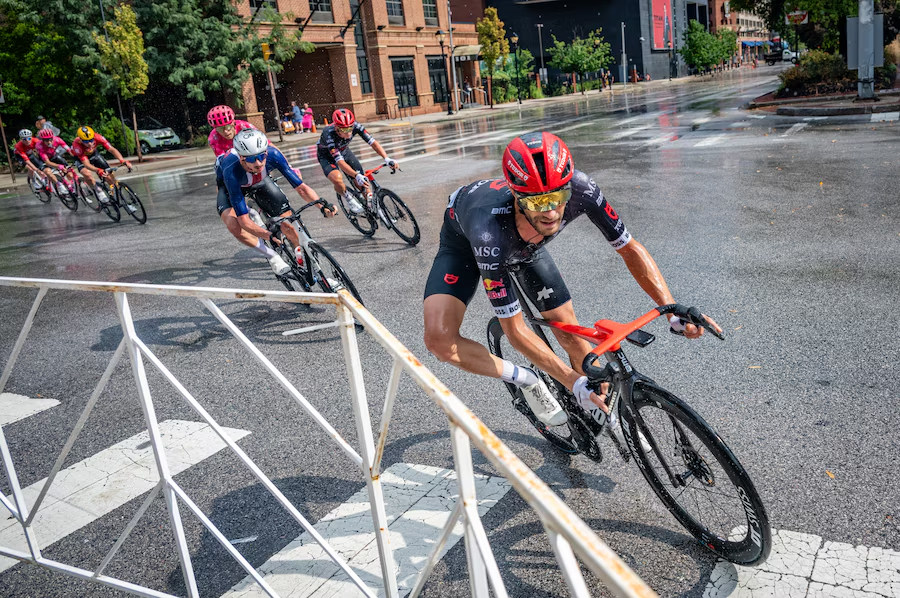
He also served as the head of the commission’s nonprofit arm, the Sport and Entertainment Corporation of Maryland, since its creation in 2019. The nonprofit has helped host multiday annual events such as the Maryland Cycling Classic in the Baltimore area and the Maryland 5 Star equestrian competition in Cecil County.
The future of that nonprofit, however, is unclear. Since the authority is separate from the nonprofit, Frenz was hesitant to provide specific information, but said the nonprofit, which formerly had six employees, now has zero.
Employees did not receive their final paychecks in late December, around Christmas.
“We’re doing what we can, within the limits of our authority, to see that they get paid,” Frenz said.
The Fair Hill Training Center track in Elkton. The 5 Star, an equestrian event, has attracted Olympic equestrian athletes to the venue in Cecil County each October since 2021. (Kylie Cooper/The Banner)
The futures of the cycling and equestrian competitions are murky. A fiscal snapshot of each event shows they struggled financially.
The 5 Star has attracted Olympic equestrian athletes to the Fair Hill venue in Cecil County each October since 2021. It is one of only seven major events in the world that features the highest level of eventing, a type of equestrian competition.
In 2023, the five-day event generated about $1.4 million in revenue — but had $7.5 million in expenses for a roughly $6 million loss, according to a Form 990 filed to the IRS and available via ProPublica.
“It’s an expensive event to put on and it was always a concern if the revenues generated were enough to cover the expenses,” said Ross Peddicord, the former executive director of the Maryland Horse Industry Board.
That same year, the Cycling Classic had $2.6 million in expenses and only $37,000 in revenue, the document shows, but the nonprofit overall broke even due to significant grants and gifts.
The Form 990 does not appear to include key revenue streams, such as corporate sponsorships, for each event. For example, the Cycling Classic received well over $1 million in sponsorships in 2023, said Steve Brunner, one of its organizers.
The most recent Form 990 for the Sport and Entertainment Corporation of Maryland is not available on the IRS website, but in 2022, the nonprofit lost about $3 million.
It was scheduled to receive $550,000 a year from Cecil County to continue hosting the 5 Star — and thoroughbred races at the same Fair Hill facility — through 2029.
But the future of the county’s annual investment could be in jeopardy.
Cecil County Executive Adam Streight said Tuesday that recent developments “have raised serious questions” and that it would be “irresponsible to commit to any course of action” until the county meets with the commission.
Streight was “taken by surprise by the sudden departures” of Hasseltine as well as Jeff Newman, the former head of the 5 Star, after learning about it via social media.
“My administration is committed to working with future leadership to ensure both events remain in Cecil County, where they belong,” Streight said in a statement.
The 5 Star received about $3 million a year from a state fund created by the General Assembly in 2022. That fund allots $10 million annually in state lottery money for sports and entertainment events.
The Banner requested a list of such events from Hasseltine in Dec. 2024, which showed that the 5 Star had received $8.7 million over the prior three years, more than any other event. That fund, controlled by the commission, also awarded money to college football and soccer games at M&T Bank Stadium, music festivals, PGA tournaments and last year’s Preakness Festival, among others.
A legislative analyst last January proposed slashing that $10 million annual fund during meetings with members of the General Assembly, as Annapolis faced a budget shortage, but Hasseltine emphasized the economic impact that such events create.
Instead, he argued, the state should “double down” on sports tourism.
The future of the Cycling Classic is unclear. Its chair, John Kelly, said Tuesday that his company, Kelly Benefits, “has been a proud supporter of the Maryland Cycling Classic and hope to be again in the future.”
Frenz said there is interest in continuing the 5 Star.
Will Phipps, an equine consultant based in southern Pennsylvania, is among those who wants to make sure the event has a future. He raised funds for the 5 Star during its early days, a half-decade ago, but worried about its financial model.
Emulating the Preakness Stakes with high-end catering and “grandiose infrastructure,” Phipps said, was not a recipe for sustainability.
In recent days, he sent a letter to the stadium authority, he said, and hopes to pitch them on a viable plan. For one, the event could be run on a budget one-half or one-third the size, he said.
“We have put together a model of success that shows how this could run in the black and not be a burden on the taxpayer and contribute heavily to the local economy,” he said.
Reporter Lee Sanderlin contributed to this article.
Craig Butler was known for far more than the bass heard in the words he spoke. He also helped many Lawrence youths find their own voices.
Thomas Afful remembers Butler substituting in several classes when he was in middle school.
Afful, a Lawrence High Class of 2014 graduate, said other teachers would call on Butler to “kind of get some of us in order.” He described Butler as a disciplinarian but said his calm and assertive approach was effective, and he made learning fun.
“He commanded his respect indeed with his deep voice,” Afful said. “But he always brought some type of a lesson to be learned in those circumstances.”
Don’t miss a beat … Click here to sign up for our email newsletters
Click here to learn more about our newsletters first
Butler, 79, died the evening of Jan. 1 at the University of Kansas hospital. The longtime Lawrence resident had battled with a brief illness related to heart issues and diabetes, according to his daughter, Julia Butler.
His final request was fried catfish, barbecue and a Bud Light. Second to the sound of Butler’s voice – and of the TV inside his home blaring MSNBC – Julia said she’ll most miss her dad’s love for food.
Contributed photo Julia and Craig Butler at a restaurant
“When he would eat something good, you would know it,” she said, laughing.
The bulk of Butler’s career was in social work, Julia said, as he previously worked for the Kansas Department of Social and Rehabilitation Services. He then pivoted to substitute teaching for Lawrence Public Schools in the early 2000s before retiring around a decade ago.
Butler launched “Can We Talk?” in 2007 with a group of fellow Black men in Lawrence, including Willie Amison, Ed Brunt and Bud Stallworth.
Initially designed as mentorship for Black boys attending Lawrence and Free State high schools, the after-school club quickly expanded its reach to more students.
Afful said when he attended “Can We Talk?” meetings, the room was often packed with both students and staff, some standing in the doorway. Participants would discuss race and culture and work through their school and home life struggles. They’d mull over their futures.
“He brought unity amongst the students, especially minority students,” Afful said.
The club remains active today, largely focused on social justice, according to a Free State Free Press article. Free State security officer Dee Kemp took over for the former staff adviser, Charles Thomas, who died in 2021.
‘That way of connecting with people’
“Can We Talk?” served as a safe space as much as Butler himself did.
Jermaine Jackson, who graduated from Lawrence High in 1991, was an eighth grader at West Middle School when he met Butler. He played on Butler’s AAU (Amateur Athletic Union) basketball team and said Butler provided the representation he needed as a kid.
“He just always took me under his wing like a son,” Jackson said. “I grew up in the South and I came up here, and, you know, he gave me the confidence. That’s the guy that looked like me, dark skin like me, and he’s doing his big thing.”
Eventually, Butler became a client of Jackson’s. A barber who operates mostly out of Watson’s Barbershop inside the South Lawrence Walmart, Jackson pivoted to in-home cuts for Butler seven or eight years ago when it started to get harder for Butler to get around.
Contributed photo Craig Butler (left) and Jermaine Jackson
“He talked to me about life, or if he saw I needed some direction or something, he would always give me advice,” Jackson said.
Kim Moore, Lawrence High Class of ‘94, said Butler was her first basketball coach. She played under his instruction through a Lawrence Parks and Recreation program when she was in fifth and sixth grades.
Moore said Butler’s coaching style influenced her now 18-year coaching career in youth baseball. Butler coached youth basketball for more than 25 years, up until around 2006.
“I don’t remember him being harsh, but very positive, very encouraging, and pushed me, but not in a harsh way,” Moore said. “It made me want to just keep trying, keep trying. Even when I messed up, he was never discouraging.”
Growing up, Julia said she felt like her dad knew everyone everywhere they went. He cheered at his own children’s activities and supported other kids at theirs, helped students with their financial aid applications, connected folks with employment, and simply conversed.
Julia said she’s not sure how he was able to maintain so many relationships, but he appeared to do it with ease, as if it was second nature.
“He just had that way of connecting with people,” Julia said. “If you wanted to better yourself, he was going to find a way to help you do that.”
Please support The Lawrence Times! Subscribe here.
Butler was born in 1946 and grew up in Chicago. He obtained his undergraduate degree in history from Bethel College in 1972 and his graduate degree in education from the University of Kansas in 1990.
Lawrence Public Schools presented the “Can We Talk?” founders with its annual Outstanding Citizen Award for 2010-11. Free State recognized Butler and Amison in 2013 with the Friends of Education Award, another annual award thanking community volunteers in the district.
No formal service is scheduled for him at this time, but his family plans to hold a celebration of his life sometime in the near future. His obituary is online at this link.
Contributed photo Craig Butler (center) with his parents, Curtis and Hettie
Contributed photo Craig Butler (center) with his grandson Noah and son Aaron
Contributed photo Craig Butler and his grandson, CadenContributed photo Craig Butler (right) and his two grandchildren, Caden (left) and Noah (center)
Contributed photo Craig Butler
Contributed photo Craig Butler
If local news matters to you, please help us keep doing this work.
Don’t miss a beat — get the latest news from the Times delivered to your inbox:
Click here to learn more about our newsletters first
Maya Hodison (she/her), equity reporter, can be reached at mhodison@lawrencekstimes.com. Read more of her work for the Times here. Check out her staff bio here.
Latest Lawrence news:
Cuyler Dunn/Lawrence Times
Share this post or save for later
Months after the building began to tease those passing by, the Olive Garden in Lawrence will finally open on Feb. 2.
Share this post or save for later
Don’t let Fritz’s regal appearance fool you. He’s demonstrated that he’ll take a pup cup over a Douglas County staff meeting any day.
byJodi Fortino, Kansas News Service
Share this post or save for later
Lawrence and Kansas City are eagerly waiting to learn where teams will set up their base camps for the 2026 World Cup. The locations would serve as a place where teams can practice and train.
Share this post or save for later
Here’s the general public comment for the Lawrence City Commission’s Tuesday meeting, as public comment is no longer being broadcast.
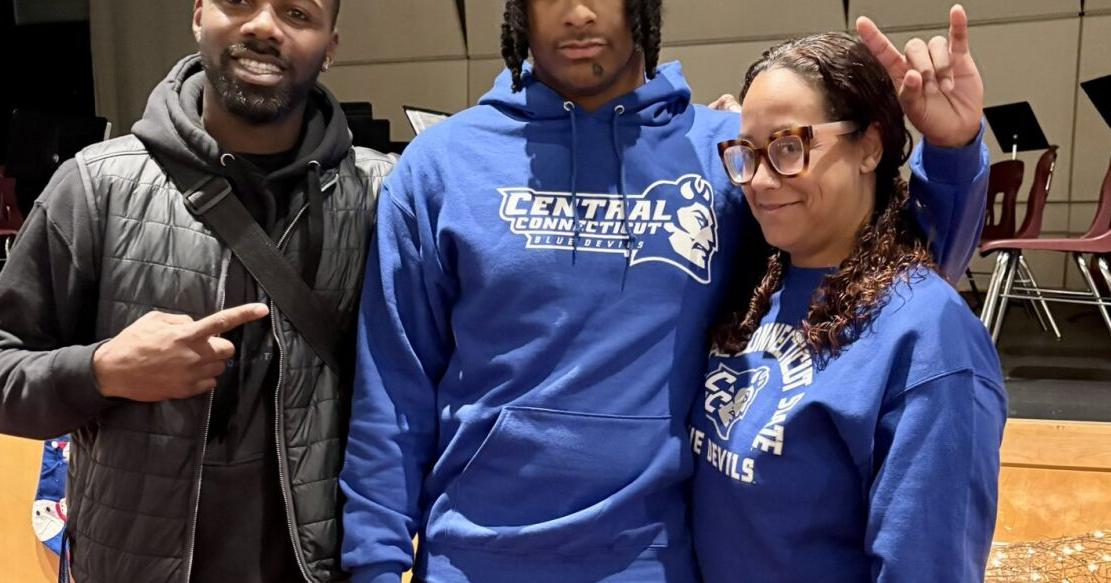
WINDSOR — Windsor High School quarterback and Central Connecticut State University football commit AJ Robinson is just as much of a leader off the field than he is on the football field.
Robinson led the Windsor Warriors to a 2025 Class MM football state title after finishing last season as runner-ups and along the way was named the Connecticut Gatorade Player of the Year. Upon being named the Gatorade Player of the Year in the state, Robinson received a $1,000 grant as part of the accomplishment.
Instead of using the money on himself and/or family and friends, Robinson chose to reinvest it into mentoring and training opportunities for younger student athletes by awarding the grant to Air Norris Sports Mentorship Inc., a Connecticut-based youth athlete development nonprofit.
Robinson, the selfless leader that he is, said there was no hesitation to donate his money back into the Air Norris Academy because of how impactful the program is to not only him, but many youth athletes in the area.
“There was absolutely no hesitation to donate my $1,000 grant to Air Norris Academy,” said Robinson. “What made me want to donate my grant to Aubrey’s program is because of the impact that he has had on not just me, but so many kids around the state. He provides a safe place for kids to come and learn the game of football and become better young men.”
Robinson, just a senior in high school, understands the importance of giving back. He thinks anyone in a position that is able to should give back to the community and help others out and that’s another reason why he wanted to donate his grant to Air Norris Academy.
“I think it is extremely important for not just athletes, but anyone, to give back to the community because it is our responsibility to help those in need,” said Robinson. “We have all been given opportunities in our lives, and it is important to pay it forward and help others achieve their goals.”
The Air Norris Sports Mentorship is run by Aubrey Norris, a former CCSU quarterback from 2005-2009 and a two-time NEC champion. Air Norris Sports is also based in Robinson’s hometown in Windsor.
The mentorship program develops on field skills, position training, football IQ, and preparation but puts just as much emphasis on life skills. That includes accountability, discipline, communication, leadership, academic responsibility, and personal growth. Norris’ goal is to have his athletes prepared for college, careers, and life beyond sports.
Robinson said Norris has helped teach him how to work hard and be dedicated. He has also taught me Robinson how to be a leader and how to handle adversity.
Having trained Robinson on and off the field for several years, Norris wasn’t surprised that Robinson donated his hard-earned money back into his community for local youth athletes.
“I’ve trained AJ for several years now, and I’ve watched him grow not just as a quarterback, but as a young man… honestly, I wasn’t surprised by the donation,” said Norris. “That’s who AJ is. From day one, he’s been selfless, coachable, and community-minded. The talent gets attention, but the character is what consistently shows up.”
Robinson set the CIAC state record for most passing touchdowns in a career with 120. He led Windsor to back-to-back state title appearances while helping the Warriors win its second state title in program history and threw for 50 touchdowns and 3,647 yards.
For his accomplishments, the 6-foot-3, 215-pound quarterback earned a scholarship to play at CCSU and will play on the field where he played his final high school football game, winning the 2025 state title on Arute Field. Robinson said he’s now shifted his focus in the weight room and on the field as he embarks his college football career.
Norris, a former CCSU football player, called it a full circle moment to see his protégé earn a scholarship to where he played football collegiately. He’s looking forward to seeing Robinson in the blue and white and continuing his football career.
“What separates AJ is his consistency and mindset,” said Norris. “He shows up every day willing to work, learn, and lead whether anyone is watching or not. Seeing him continue his football journey at CCSU is incredibly special for me. As an alumnus, it’s full circle. But more importantly, it’s a testament to his dedication, resilience, and belief in the process. He earned that opportunity.”
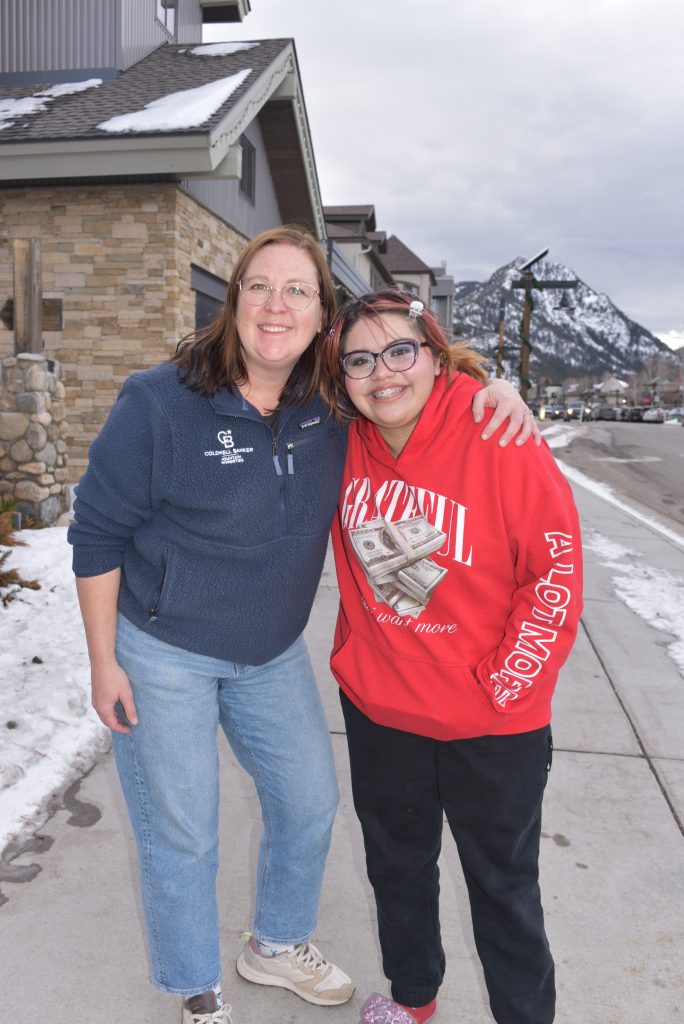
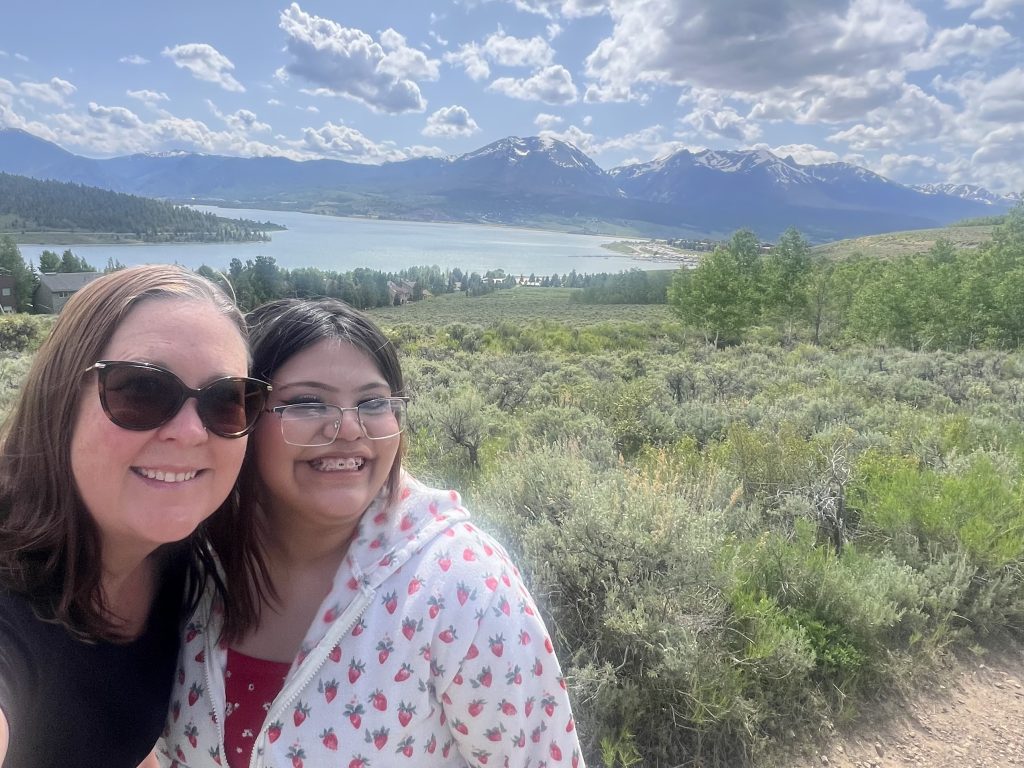
Annie Markuson, from left, smiles for the camera with her Mountain Mentors mentee, Ruby Valenceuela, after spending the afternoon together. The two say they’ve developed a wonderful friendship in the six years since being paired together through Summit County’s Mountain Mentors program. Community support for the program allows pairs like them to experience all the great activities Summit County has to offer. Nicole Lantz/Summit Daily News
Fifteen-year-old Ruby Valenceuela sits next to her friend Annie Markuson, a Coldwell Banking real estate agent based in Frisco, at Summit Spa and Nails one dry December day for a pedicure. Their conversation is easy and constant. Valenceuela is a bubbly teenager full of smiles. Markuson is kind and straightforward with her thoughts, which all seem bent on encouraging her young friend. They’re headed to an optometry office afterwards so Markuson can help negotiate getting the girl’s frames fixed. “I told her, ‘you don’t have to walk around with tape on your glasses for six weeks,’” said Markuson.
Valenceuela and Markuson have been meeting almost weekly for years thanks to Summit County’s Mountain Mentors program. This branch of the public health department has worked for 38 years to match local youth between the ages of 8 and 16 with an adult in the community for at least one year of one-on-one mentorship. The pairs are encouraged to connect regularly and participate in either group activities arranged through the program or pursue interests in the county that suit them. For Valenceuela and Markuson, hitting the trails occupied most of their summer.
“She’s the one who got me into hiking,” says Valenceuela, who admits she hated doing it, or any sport, for years. Her family is “not the most active,” she said, so all those outdoor activities felt intimidating. She often skipped the outdoor adventure days at Silverthorne Elementary School when she was younger.
Ruby Valenceuela, from right, and her mentor, Annie Markuson, hit the trails together after being matched by Summit County Mountain Mentors program.Annie Markuson/courtesy photo
That’s all changing thanks to her mentor who, Valenceuela said, showed her how to have fun outside. When Markuson took her to Oro Grande trail in May 2025, it “sparked a hiking bug,” said Markuson. Valenceuela enjoyed the outing so much, she started asking to go on longer and harder hikes. “[It] helped that I wasn’t too embarrassed any more,” said Valenceuela. By the end of the summer, the teen pushed herself, with Markuson’s help and encouragement, to hike 1,500 feet up the Gore Range trail to Wheeler Lake. Valenceuela described feeling “so accomplished,” when she made it to the top, and Markuson added that her mentee ran almost all the way back down the trail from excitement.
Now Valenceuela says she wants to try all the outdoor activities she skipped or disliked in elementary school like ice skating, snowshoeing and maybe Nordic skiing.
Bringing this positive outlook to new experiences is the biggest sign of growth Markuson has seen in her young friend since they were paired six years ago when Valenzuela was in fourth grade.
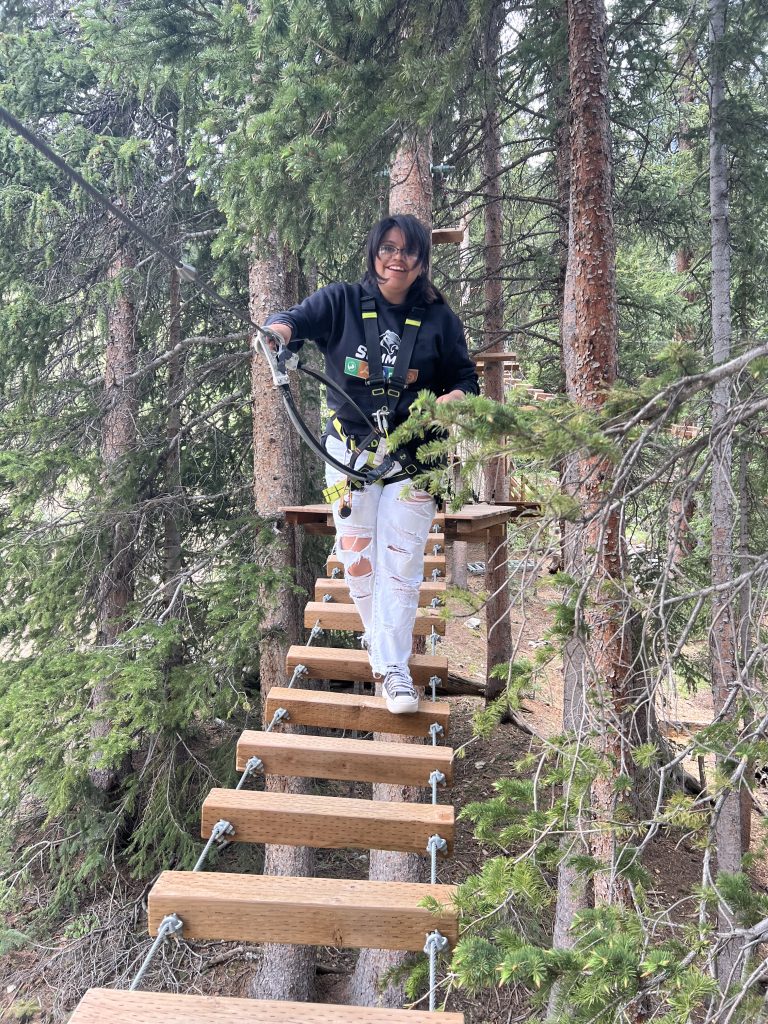
Markuson taught Valenceuela how to ride her bike, how to swim. They’ve gone kayaking together. They love doing crafts and cooking projects. They remember going to Arapahoe Basin Ski Area’s aerial adventure park one summer where Valenceuela was too terrified to try climbing up the ropes and ladders for the first 30 minutes. The teen was convinced she’d hate it. Once she began, however, Markuson said it was only a short time before she’d transitioned from the low-lying, beginner course to the most advanced course where she flew down the zip line.
Ruby Valenceuela conquers her fears on Arapahoe Basin Ski Area’s aerial ropes course. Valenceuela credits the community partners for the Mountain Mentor’s program with allowing her to adventure to places in the county she didn’t even know existed.Annie Markuson/courtesy photo
It’s the generous community partners that make the program invaluable for local families, said Markuson. It opens up the world to them. “Everyone who lives here deserves to experience all Summit has to offer,” she said. “Half the places we’ve gone to, I didn’t even know existed,” added Valenceuela.
There’s a lengthy list of discounts and free passes for participants in the Mountain Mentors program thanks to its community partners, said Helen Thompson, the director of the program. Partners include Breckenridge Outdoor Education Center, Rotary Club, 4H, The Summit Foundation, Vail Resorts, Breckenridge History, Friends of the Dillon Rangers District, and both the Breckenridge and Silverthorne Recreation Centers.
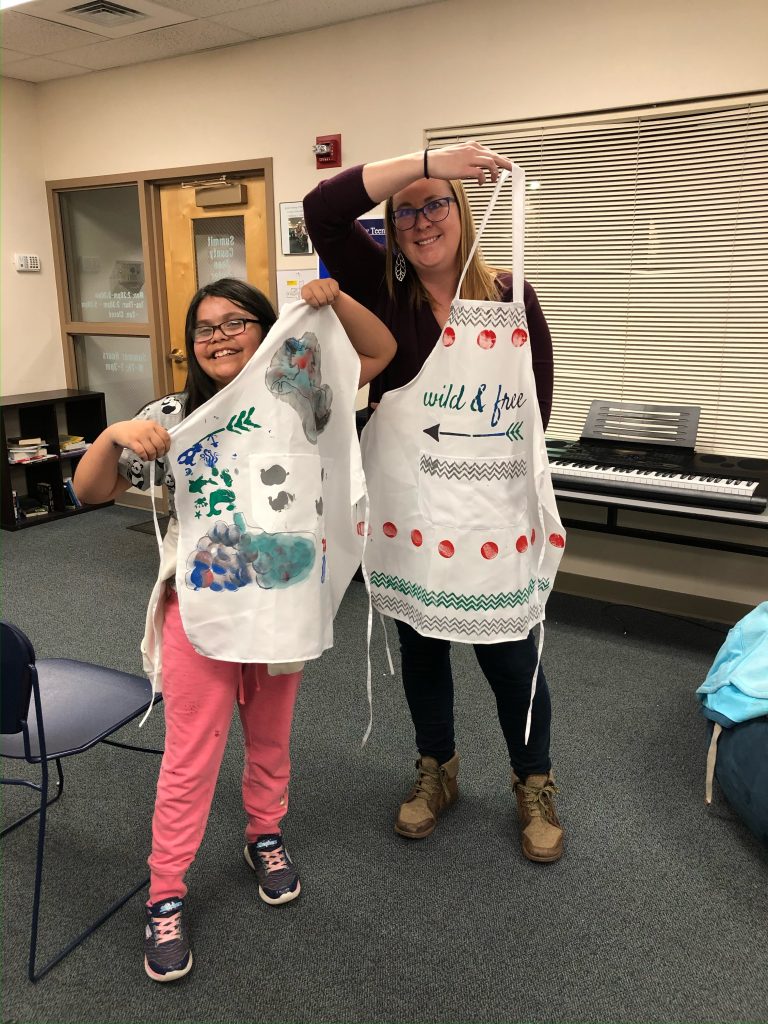
Mountain Mentors also organizes monthly group events in which members can participate. These include activities, like bowling and tubing, craft and science projects, like making slime or painting aprons with The Frosted Flamingo, and volunteering, for example serving at the Elk’s Lodge community dinners.
Ruby Valenceuela, left, with her Mountain Mentor, Annie Markuson, decorate aprons at a program sponsored event with the Frosted Flamingo. The mentorship program matched Valenceuela with Markuson in 2018 when Valenceuela was in fourth grade.Annie Markuson/courtesy photo
“It’s a really good way to connect with the community and the people in it,” said Thompson.
Thompson says there’s a great deal of research that’s been done that shows the benefits of mentoring youth. According to Mountain Mentor’s website, “Youth in a consistent mentoring relationship do better in school and are less likely to begin using drugs or alcohol. They are also more likely to have a higher self-esteem.” MENTOR, a national nonprofit that advocates for mentorship, has published a study with data showing youth with mentors are 92% more likely to volunteer regularly in their communities and 75% more likely to have held a leadership position in a club or sports team. According to a study by Big Brothers Big Sisters of America, mentorship can have significant economic impacts seeing youth with mentors are 20% more likely to attend college and earn 15% more over their lifetimes.
Summit County’s Mountain Mentors currently has 45 one-on-one pairs of youth and adults like Valenceuela and Markuson, plus 35 youth who are involved in the programming without a current mentor. There are 30 youth currently on the waitlist. The program is so popular that it cannot accept any more applications from youth until they have more mentors. Thompson says she is also working with a consultant from National Mentoring Resource Center to help figure out ways the program can support waitlisted youth.
Markuson remembers Valenceuela’s younger sister wanted to have a mentor relationship just like her big sister, Ruby, had with Markuson, but she had to wait a few years before she got off the waitlist. It was hard for the girl to wait seeing how much fun Valenceuela and Markuson were having together.
Adult volunteers go through a lengthy vetting process that aligns with best practices from the National Quality Mentoring System, says Thompson. The process includes a background check, an in-home interview, five references, a driving record check and training. Volunteers include people from many different walks of life: young and old, retirees and local business owners. For both the mentors and mentees, Thompson says the hope is an increased community connection, a feeling that you belong here. You’ll see the pairs almost anywhere in the county, says Thompson: skiing down the slopes, attending a cooking class, meeting at the library, walking along the recreation path, crocheting together.
Markuson encourages any adults interested to, at the very least, investigate the program. “What do you have to lose?” she asks. “You don’t have to be perfect.” Mountain Mentors does a great job assessing kids to match them with the right adult, added Markuson.
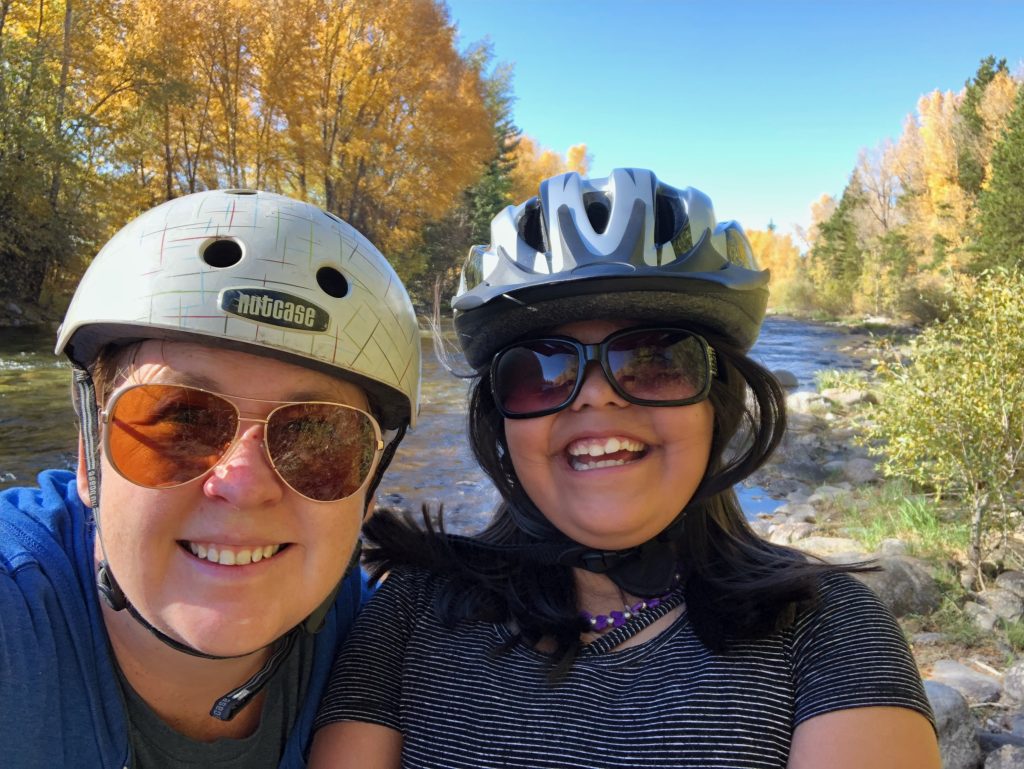
Annie Markuson, from left, with her mentee, Ruby Valenceuela, pause their bike ride to take a selfie. The two have enjoyed outdoor adventures together since being paired through Summit County’s Mountain Mentor program in 2018.Annie Markuson/courtesy photo
Six years after being paired, Valenceuela sends Markuson her work schedule every week to get on her calendar. “She’s a really bright, conscientious young woman,” says Markuson, “fabulous to hang out with.” When asked what her favorite thing to do with her mentor is, Valenceuela says, “Honestly, everything.”
Thompson wants people to know the program aligns itself with best practices from the National Quality Mentoring System and that they’re established in the community. “We’re on year 38,” said Thompson.
January is National Mentoring Month. To become a Mountain Mentor, visit the program’s website: SummitCountyCo.gov/services/health_human_services/youth_family/mountain_mentors/index.php, read the Mentor Position Description, and fill out an application. If interested readers wish to support the program in another way, donations go a long way, said Thompson, since all the activities organized for the youth are funded by grants and donations.
The Prescott Cardinals boys basketball team entered 2026 in grand fashion with a pair of impressive non-conference wins. Head Coach Nick Johnson and his charges easily disposed of La Crosse Logan last Friday by a score of 62-30 and followed with a convincing 71-47 road victory over Northwestern on Saturday. The Cardinals will host the Altoona Railroaders this Thursday who feature the dynamic junior guard combo of Grayson Becker and Owen Gunderson. Tipoff is scheduled for 7 p.m.
There is a lot of regular season basketball to be played, but for my money some Cardinal cager fans have begun to follow the results of other teams in Prescott’s WIAA Division 3 tournament bracket. Undefeated Osceola (8-0) looms in the northern part of the bracket and the south, Gale-Ettrick-Trempealeau also heads into the new year at 8-0. Other teams to watch include Stanley-Boyd and Mosinee.
The Prescott girls basketball team rebounded from a loss to Colfax on Friday with a 57-48 victory over Wausau Newman Catholic on Saturday. Violet Otto led the Cardinals with 27 points and senior Nora Boles also scored in double figures in the victory. Otto, a St. Cloud State recruit, is approaching 1,500 points for her career.
When it comes to the girls basketball tournament sectional, Wittenberg-Birnamwood is the only team in the sectional bracket with an undefeated record at 10-0. Earlier this season the school defeated Shiocton by a score of 56-3. Add the Arcadia Raiders (9-2) as another team to watch in the bottom part of the bracket. In the north it’s familiar foe St. Croix Central (8-2), along with Northwestern (7-1) who enter 2026 with solid records. The conventional wisdom is there is no clear favorite in the Division 3 Region I sectional.
The Prescott Cardinal wrestling team finished fourth in the 12-team New Richmond Invitational on Saturday. Ninth graders Bryce Feran and Gunnar Doyle both finished atop the podium as did senior Addy Allsop. Trevor Lansing, also a ninth grader, finished second as did junior Emma Schmitz. Feran and Allsop finished third at the Northern Badger Invitational at River Falls late last month.
Hundreds of area fans were glued to ESPN Sunday night as the University of Wisconsin-River Falls football won their first NCAA Division III National Championship, defeating deafening national champion North Central (Naperville, Ill.) The cheering of the Prescott Cardinal fans undoubtedly reached a crescendo when 2022 Prescott alumnus Jack Olson intercepted a North Central pass midway through the fourth quarter and all but guaranteed a national title for the Falcons. Olson finished the game with five tackles and most importantly wrapped up a very successful college career as a national champion. Bravo!
Congratulations to Kansas Jayhawk Reese Ptacek on being named American Volleyball Coaches Association (AVCA) Honorable Mention All-American. A 2023 Prescott alumnus, Ptacek was earlier named First Team All-Big 12, leading one of the league’s most efficient and balanced offenses. A sophomore, Ptacek earns her first career All-America honors after hitting .314 with 331 kills, 136 blocks and 27 service aces during the 2025 season. Ptacek was recently named to the AVCA All-Region Team and was named to the AVCA Player of the Year Watch List during the 2025 season. Ptacek became the 14th Jayhawk volleyball player in university history to be named All-American.
Minnesota State distance runner Madison Matzek and the rest of her Maverick indoor track and field teammates are picked to win the Northern Sun Intercollegiate Conference this year. A senior, Matzek is expected to once again be a major contributor to both Minnesota State’s indoor and outdoor track and field’s seasons.
Headshaker of the Week. The number of podcasts available is seemingly endless. From True Crime to Pop Culture, and Personal Finance to Sports, podcasts aim to educate, entertain, or inspire audiences through the on-demand audio platform. Recently I came across a particular podcast regarding the increase in poor behavior of fans, in particular parents, at youth sports events. One of the suggestions made was for high schools around the country to build “timeout boxes” to punish fans for unruly behavior, much like the penalty box in hockey. Offending fans would receive two minutes for typical tomfoolery like yelling at officials but would receive five-to-ten-minute major timeouts for using profanity or making threatening statements. It was quite comical. But then again, I thought, perhaps the WIAA should implement this rule as a way to mitigate the behaviors of today’s fans? I agree. It’s sad for me to consider such an action. It’s a headshaker.