Rutgers University Athletic Director Keli Zinn has now been on the job for 26 days and is already hard to work, as she is working towards building her team to help take the Scarlet Knights to the next level.
On Monday afternoon, Zinn met with several of the local media to discuss the latest on name, image & likeness, revenue sharing, facilities and much more. Check out the full Q&A with Zinn below!
Q: You have a lot of roles to fill on your staff, where are you as far as doing that since you’ve begun?
ZINN: “Yeah it’s been a focal point the past couple of week. Obviously coming in and you all kind of heard me say that there is opportunity to identify and attract a certain type of team. The first order of business was to see who we had. What areas were they working in? Were there things that I thought we were doing really well? And were there some areas where we were deficient, right? I feel like I’ve gotten a good grasp on both of those. And so, right now, I’m actively in the midst of working with HR and the General Counsel’s office to address all things personnel.
You’ll probably see at least one or two jobs post here in the near future. And structurally, I know where I’m headed. I’m going to hold for just a moment today on exactly what that looks like because there are still some pieces coming together. But my goal was always, within the first month, to be locked up on that structure and if I didn’t physically have everyone here at that time, to get them here shortly thereafter.”
Q: Are you looking at people you’ve worked with in the past of these roles?
ZINN: “Yeah, you’ll rarely see me go put any job out there where I don’t have some level of recruitment.
Whether it’s through myself or my staff, certainly. Even when it’s an open search, there’s so much talent out there. And one of the things that I’ve tried to pride myself on over the years is making really good hires.
And so in that regard, everything that is open right now, I do have at least one person that has or will get a phone call on that job. And then for those that need to be posted, you’ll see likely some talent come to the table. I’ve been really pleased with the number of people who have reached out to me that candidly weren’t on my radar.
But have said, hey, we see what you’re doing there. They’re thrilled with the hire in President Tate. And seems like it’s getting some pretty good attention of the two of us coming together and what we’re capable of and I’ll look at a few of those as well, just based up on what they bring to the table.”
Q: Is there an area that you’re prioritizing in term of the department?
ZINN: “Yeah, the two main areas live in our revenue space and then more specifically to name, image and likeness opportunities. And so a chief revenue officer, which we have not had technically within that type of role, is one area.
And then the other piece, again, the third party NIL, which will be likely baked in somewhat of a chief strategy type officer position. Understanding that that person not only is going to be a big focal point, particularly initially and early on, on NIL opportunities and working with SAMCO (Scarlet Asset Management Company) and some of our corporate side of the house, but also our brand advancement. And so the reality is for us, and you see this in some of our contractual agreements right now, I think we actually have a really good brand.
And when you look at the fact that we’re in the Big Ten alone, there’s value in that. Pair it within the market and all that, you have some real opportunity there. Our strategy on our brand and how that relates to all the areas that are both revenue driven and even to a certain degree non-revenue driven, is going to be really important moving forward.”
Q: Do you have a grasp on facilities? I know there’s a master plan that was made up a couple of years ago. Do you have an idea of where things are headed? Have you had any thoughts on how you want to make your imprint on that strategy?
ZINN: “Yeah, that too, obviously a big piece. And again, a lot of opportunity.
I’ve had the opportunity to review the whole master plan. Certainly there’s a lot of attention and I’ve spent some time on Jersey Mike’s arena in particular. I will say one of the things that’s been really encouraging are the pieces that we have here, that from an infrastructure standpoint are truly elite when you look at where we’re at across the country.
Take the practice facilities for men’s and women’s basketball, wrestling and gymnastics. That facility alone is on par with the best in the country and exceeds what a number of people have from brick and mortar. You then pair that with an arena that’s also on par with where things are from what we can be competitive in, the fan experience and all that.
You’ve got something really, really special over there relative to those programs. And then here, you’re sitting in a building where obviously our support for men’s and women’s soccer and men’s and women’s lacrosse. I’m really impressed there and what I see.
Football has an incredible outdoor as you all have been able to visit and be a part of. The health center, I was pleasantly surprised as to the depth and extent of that building. Our recovery area is on par with what I’ve seen across the country is the best.
And you’ve got everything that you need there from a development and what usually exists within a performance center. Would it be great if it were a little bigger? Of course it would. Do we need a couple of the amenities that young men are attracted to in today’s world? They’re on par with where they need to be headed.
There’s a couple of things that particularly if we could pick up some real estate would be great for football. Our premium over at SHI Stadium, right, that’s going to be a focal point because one, there’s revenue in that and fans and donors deserve an experience there that’s more on par with a Big Ten institution. But the other one that’s going to be a focal point as well is an indoor practice facility for football.
I think when folks hear that, you know, out the gate, you can have some parties who say, right, football, football, football. When in reality here, it actually helps a lot of our other programs. There’s just way too much congestion, particularly within that bubble.
We need to be in a place if we’re going to recruit the best talent for them to not have interruptions in their training and development. And right now there’s just so much that goes into that bubble that getting an indoor practice facility for football would help all of them. So a lot of brick and mortar, right, which takes lots of money, but you can accomplish anything with time and money.
So that’s what we’re going to do. It’s easy for me to spend my time on it because that’s completely within my control as it relates to the financial piece. I’ve had, you know, great conversations with so many donors up to this point, thrilled with the amount of passion that they’ve shown for the future of Rutgers athletics and we’re going to get after it with one order of business being, and as I noted for you, to get a chief revenue officer in here.”
Q: Just a quick follow up on the RAC. Is the priority renovating Jersey Mike’s Arena or like your predecessor had the idea of a new arena?
ZINN: “Is that a possibility? Yeah, I think they’re both a possibility, right? We need to spend a little bit of time on that.
And there are, you know, two plans there, admittedly and very quickly. Now we’ll see if I shift in my opinion as I get more information on what would be a private developer and some of those things that you’re seeing across the country, which certainly is an incredible opportunity. But to go there, you’ve got some movement in our other programs, which again, you’ve got an investment piece.
And personally, when I looked at Jersey Mike’s, you have some great opportunity there just based up on that footprint. A lot of times schools will bail out of a renovation because they’re landlocked and there’s only so much you can do there. That’s really promising because of just the land that exists around it.
The way the current structure of the building is, as you guys know, you could phase in some things there and very quickly make a big difference in it and do so in a way where you start bringing online, you know, the revenue and the cost standpoint without having to go all in with, you know, 300 million dollars plus out the gate that would start to probably cause, you know, some folks to have some discomfort. So so I like right now and admittedly probably preferential towards what would be a renovation on that building. But we need to gain a real clear understanding of what it looks like and some of the guts, if you will, that exists there.
I’m told that the HVAC is in a really good place and plumbing and all those things that you want to avoid in a renovation, dumping a bunch of money into that nobody ever sees or gets to feel the luxuries of. But but it sounds like initially they’ve done some really good work over there to get a good deep dive into it. Now it’s making a decision on where we’re headed. Because otherwise we’re just going to spin our wheels looking at two different plans versus making some movement to bring them to closure.”
Q: Do you feel like you have a good grasp now after a couple of weeks in? I mean, you’ve done the listening, you’ve done the tours, you’ve done everything where you’re able to say, here’s where my plan meets reality.
ZINN: “I do. Yeah. I feel like and I try to be intentional on giving my time in a way to get a really broad based understanding.
And so if you were to have looked at my schedule, you would have seen a focal point on our senior team and executive administration, coupled with our coaches and then time with in our student athlete community as much as I can be with not all of them being here, certainly. And then the donor side of the house as well. Obviously, some some good conversations and really constructive conversations with our university administration.
And the folks who are on that side of the house, again, with the intention that we’re going to be collaborative and work together on a lot of these things. And so it’s been a really good balance of those all of those focal points to come together to get a good understanding of it.”
Q: Keli, there’s really been no secret here at Rutgers that Greg Schiano hasn’t really felt like he’s had a partner in this job. I’m curious how your conversations have gone with him to start with. And what have you heard from him about what he’s doing?
ZINN: “I would say our relationship could not be better right now. Very quickly and having the opportunity to sit down with him one on one, we established just a really good chemistry.
Obviously, I came into it impressed with what he had done here from a historical standpoint. But then getting an understanding of what’s transpired since he’s been back and how he’s worked through things. Coach had to do a lot on his own.
And and I think he fought incredibly hard to put that program in the best place it possibly could. But it’s my job and my team’s job to be supportive of that and to work with him and to help take some of that burden off of he and his support staff. And he was thrilled, you know, with the vision that very quickly, you know, he and I worked through and laid out.
And I think he saw really quickly in me someone who was going to be super supportive of him, but not just being supportive and hoping that they win, but instead rolling up my sleeves and getting it out, getting after it with he and his team in order to get them the resources that they need in order to be successful. And so. So, yeah, I can’t say enough good things about him.
Candidly, with what I’ve seen that he had and what he was working with based up on what he’s accomplished competitively, I think he’s exceeded a lot of the expectations because I think he’s done a lot with less and now having the capability to give him more, which is what he needs and deserves. I think his potential here is pretty incredible.”
Q: What’s your vision for that program? What would Rutgers football success mean?
ZINN: “Yeah, well, I said it at my press conference, right? Competing for championships.
And I recognize we’re in a league where you’ve got some real powerhouse programs, but that’s the beauty of sports, right? When you take young men and have people around them who have so much pride, energy and passion and ability to punch above their weight. And you just need to beat those programs once, right? That’s it. And so have your best day when you’re in front of them, whether it’s here or their home.
And me being in a position, seeing what I’ve seen, I believe we have a ton of capability to move the needle in that program. Because, again, you’ve got some really good pieces and a lot of what they need is completely within our control. Oh, by the way, within our control, if we have people who love and support Rutgers, right? And so take our corporate relationships.
That’s the biggest thing right now that’s likely to move the needle on that program and not just that one, right? You’ve got some of the others as well who will benefit from those. If this community can get behind me and my team and these coaches and these athletes, we can accomplish success that’s beyond anything that probably many thought we were able to achieve.”
Q: How do you break through? Because this is such a unique place because you’ve already got Philly, you’ve got so many pro sports teams. It’s just always, Rutgers has always struggled to kind of break through that crowded marketplace. I guess how do you kind of, what’s your vision?
ZINN: “Yeah, well, the first one is getting the right people in the right spots to be able to go out there and cultivate those relationships, right? Because that’s where it starts. But I also think having a really clear plan of what we’re capable of and having people react to that in a way where they believe we can get there is most important.
I don’t know that we’ve done a great job of telling that story up to this point. And you’re looking at someone who genuinely believes in it, right? Again, and we’ve all talked about it before, I recognize the history here. But the history is not going to be a determining factor of our future.
It’s just not. It’s not the way I’m wired. It’s not the way President Tate’s wired.
And now I’ve had the opportunity to spend the past couple weeks and recognize that it’s not the way a lot of our people are wired. And so I feel really good about how folks are coming together on it. But we’ve got to get out there.
We’ve got to be really aggressive in our community. We’ve got to capitalize locally and regionally as much as we possibly can and do so in a way where people start investing and then they start seeing a return. And therein lies some of the strategy.
The reality is, and we’re no different from anyone else, but certain programs here have the likelihood of being successful as compared to the others. And we need to lean into those programs and have a strategy to support them in a way where people can feel good about their investment.”
Q: In your conversations with coaches, I’m not sure how many you’ve been able to meet with extensively, but in those conversations, is there a common thread that you’re hearing from them and what they’re looking for from you or even the rest of the department in general?
ZINN: “Yes and the common thread is they’re seeking decision-making, decisiveness. They’re seeking awareness of what’s going on across the country. And they’re seeking support.
I’ve asked very clear questions from them of what is it that you need to move your program from where you’re at now to that next juncture. And I’m trying not to set unrealistic expectations on them. They’ve heard me say I came here to win.
Well, they came here to win, too. It’s now how do we continue to, every year, move them forward in a way where our rankings get better, our talent gets better, and then with time, you find yourself in a really solid place. But they’re all saying similar things.
But something that I’ve also been pleased about is I’m taking an approach right now where it’s a lot of individual meetings as early as next month. They’re going to start coming together as a group because oftentimes some of the things that are a problem for one can be a problem for many. And I think there’s something to be said when you have a lot of head coaches pulling for one another, working together, same thing with the assistants and on down and so we’re going to be intentional in that. And they’re excited for it.”
Q: As AD, it’s inevitable you’re going to have to make a coaching change at some point.What does your process for evaluating these coaches kind of look like?
ZINN: “Yeah, I take a look at the historicals. Usually the past three to four years are the biggest focal point. But then also looking at where they were and are as compared to the competitors and within the conference.
I’ll look a lot within the conference for our rankings. I take a look at compensation. I’m a big believer that where you’re compensated, you should be performing at that.
And if you’re below it, that’s a real problem. And if you’re really below in compensation, but you’re performing better, then I also need to make sure we’re not in a position to lose someone based upon the fact that they’re probably attractive to someone else. So there’s a number of things that go into that.
There are various benchmarks. Again, the good thing is when it comes to statistics and win-loss records and all that, Hasim and his team will be among those who draw the short straw to where they have to give me a whole lot of information and work through that. But I’ve also already and having the opportunity to visit with our sport administrators in some cases individually, but also as a group now twice, I’ve shared with them that that’s going to be a big expectation for them too.
As a sport administrator, you should have a really, really strong pulse on that program from everything from recruiting to current student athlete experience. And then, of course, where you’re at as far as your competitors, both across the country within the league. And so their awareness to what’s going on with those programs when I’m evaluating them is going to be important in that relationship.”
Q: You were asked about geography between New York and Philadelphia. How heavily are you going to lean into the New York angle? Because you often times heard Rutgers as New York’s Big Ten team. But I mean Wall Street, how much are you going to look into that connection and further that? Or is that not attractive to you?
ZINN: “Yeah, it is attractive and I’ve already been communicating with a couple of folks, particularly within the city, not so much Philadelphia. And we’ve got some guys there from a potential donor perspective that have the capability to be helpful. And as they said, you know, I’m going to be supportive of you.
What do you need from me? It’s not just what they can do for me. But as I’ve said to all of them, it’s their network and who they can open me up to. Right.
And so so we’ll continue to do that. I’ll admit when I came in, you know, in my mind, I kept going New York, New York and that market and capitalize on it and all that. That’s certainly still going to be kind of one of those things that we look at from a strategy standpoint.
But I’ve probably started to take more of a focal point of local and here within the state. I think as we look at and again, being the the state institution of New Jersey, there’s some opportunity to capitalize on that and and probably secure some of those areas more quickly. Right.
Until we start to then branch out more. But you’ll see a focal point on both right now, the state of New Jersey and getting everybody here really passionate and supportive for it.”
Q: You look at it like a hundred day plan or some people do that. But for your first hundred days to be successful, what will happen?
ZINN: “Yeah, that’s a good question. To be honest with you right now, I’m kind of in a week to week. I joked with my dad last week I was built for an 80 hour work week as he was checking in to make sure I was eating and sleeping at night. And there’s so much to be done right now that I’m literally looking at it and saying, what do we need to see happen to win the week? Right.
And then it’ll move to what do we need to see happen in order to win that month? And then it’s going to be season year. Right. Totality.
But the first hundred days of one, I’ve got to have my staff here and locked up and everybody knowing who they’re going to work with and what those expectations are. We need to be in a situation where we have a really solid infrastructure on third party name, image and likeness. And so that people can see that, feel that, know exactly what’s going to happen.
Our athletes need to know what they can expect in that space. And also importantly, recruits need to be able to hear it. And so when they’re on campus, that’s got to be a focal point as to how that’s going to work.
The other area surrounds the house settlement and our revenue share and our scholarship expectations. We’ve got to have that plan locked up and ready to go for them within the next hundred days. I think one of the things that may have been a little bit challenging for them this past year is some of that.
Again, those decisions being made a little later in the game, certainly when you’re dealing with attrition and not having an AD present, that can create some challenges. But that’s not the case anymore. And so I’ve made a commitment to our coaches, knowing that recruiting is up on us for the upcoming year, that they will know where they’re at and know what they have to work with so that they can be most effective in recruiting and closing out the first semester here in a really good place for what that future looks like.”
Q: Safe assumption, you guys are going to go 100 percent on the 20 and a half mil for rev sharing. And would you be open to telling us what the percentages are? I know some ADs have, some haven’t.
ZINN: “Yeah, we’re going to hold on those and right now, just based upon how we’re working through that and some of the strategy, I’m not going to share the percentages. What I will tell you is that you’re going to see us push, and I expect this to happen as early as next year, to where some of our programs who have an opportunity to be competitive beyond football and basketball find themselves in a place where they get some of that. And the way to do that most effectively is by having third party NIL opportunities that are above that 20 and a half million.
Right now, I think we went into the settlement and the new model in a way where the goal was to get to 20.5 mill. Day one, that goal shifted and so I’ve both challenged and empowered some of our sales team to really get out there. And already we’re working through that. And so the third party NIL piece is really important.
But then the other piece are the extra scholarships. Right. And so at a time when there’s unlimited opportunities and scholarship support, true donor dollars and those who are driven more by the philanthropic support of a university and young men and women and the opportunity that they can bring to them, that piece is going to be critical.
So we’ve established an initial goal to go above that 20.5 mill, both in third party revenue and scholarship support. And that’s only going to grow every single year.”
Q: Just follow up on that. How do you make those decisions? Have you already made the decisions about which programs are in the best position to succeed?
ZINN: “I do have an initial opinion, but I’m two weeks on the job. So, as I’ve said to many of them, you’re going to hear my opinion. But I expect those who are here and have really good historical knowledge or can recognize some blind spots that it may be just looking at when loss records and the past three or four years of history. Don’t tell me.
And so I’ve told them, you know, be be very honest if you say, I don’t know about that one. Right. Which already I’ve been really impressed with the internal conversations.
But to your to your question and specifically, I’ve already established a team of folks that’s made up of a number of sport administrators and those who sit in a position where they’re most closely connected to the performance side of it and the investment piece. And we’ve gotten around this table a couple of times already to start looking at that and saying, okay here’s where we were for 2025, 2026. Where are we going to be for twenty six, twenty seven? And and as Hasim can attest to from the first meeting to the second meeting, it shifted a little bit.
But I think it shifted in a good way. It’ll probably continue to again over the next month or so. But we’ve got to make a decision here within the next month or two is to exactly where we are there so that we can effectively turn them loose for the next recruiting cycle.
And then what the coaches have already heard me say and will continue to. The great thing about that revenue share in the house settlement is every year the pot’s going to grow probably by that four percent. As you all know, then there’s a period of time to look at it and potentially completely reset it.
But from the scholarship and third party piece, it’s within our control to go out and make those numbers better. And so if a program, say, for example, is showing some real promise and we happen to miss it in one year, we’re not going to miss it the following year. And now we’ve got to work to get them what they need to so they can capitalize on that.”
Q: It sounds like setting priorities is any place but here.
ZINN: “Well, and it’s also, you know, having coaches understand that there’s a new day that you can be really successful in. And so, for example, you know, we had one of our Olympic programs who had an absolute stud recruit in here last week.
And they asked me to visit with that young lady. And I’m looking at all the full scholarship, you know, opportunities that she had and going, wow, this kid’s a stud. And so the night before I sat down with her, I called the coach and I said, what do you offer her beyond a full scholarship? And she said, well, I don’t have anything else to offer.
And I said, well, what would it take? And she gave me a figure that candidly, if I can’t come up with that money, President Tate needs to send me back to the Bayou tomorrow. And I said, that’s easy, right? And she said, well, we were told that we weren’t going to be able to do that. And I said, you are now, right, because the young lady’s not coming in for another two years.
And we now have a plan to be able to put something, you know, in that program to go do that. And so that’s how it happens that quickly. And so here you’ve got a coach with a premier elite talent who has decided to come here and visit.
And she got to leave that visit now with something that was beyond what maybe some of our big competitors was offering her. Now, are they now going to go back after she says Rutgers was able to give me X, Y, and Z? And then they’ll go, well, then we’re going to, and therein lies your war among recruiting and coaches. But that’s where we have to be, right? We have to be in a spot.
And I’m not going to get sick of a coach knocking on my door and saying, well, here’s what happened, right? He or she has gone back. And now here’s the number. Or now here’s what’s being offered.
What a great spot to be in. Whereas my concern up to this point is they’ve just done the best that they possibly could with what they had, but didn’t really have a mechanism to seek a little bit more to be able to go get that kid.”
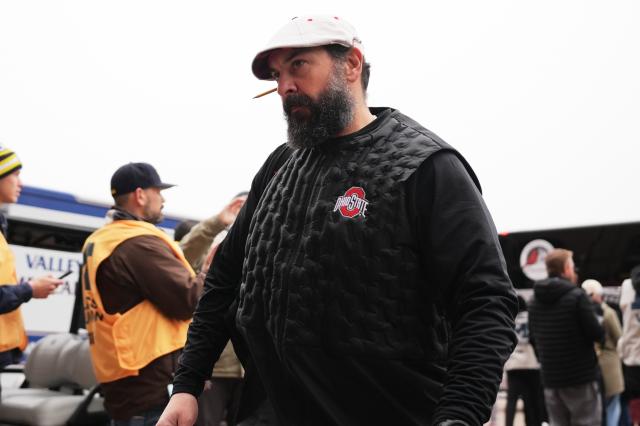
Matt Patricia is used to postseason runs from his days as the defensive coordinator of the New England Patriots.
However, Patricia acknowledges that the preparation for the College Football Playoff is different than the NFL. Patricia is in his first season as Ohio State’s defensive coordinator as the second-seeded Buckeyes (12-1) get ready to face 10th-seeded Miami (11-2) in a CFP quarterfinal at the Cotton Bowl on Dec. 31.
“It’s a learning (process) for me. We’d have bye-week kind of moments in the NFL, but this is a really long layover and break,” Patricia said. “Right now, I’m trying to trust the expertise in the building. Some of the things we did transfer, you know, because we have some different kind of scheduling and when everybody is in school and that stuff.”
Ohio State was off for two weeks after its 13-10 loss to Indiana in the Big Ten championship game on Dec. 6. Players were mostly occupied with final exams while waiting to see who they would face in the Cotton Bowl.
With the Buckeyes going for consecutive national championships for the first time in school history, Patricia’s first season in Columbus has exceeded expectations. He was hired after Jim Knowles left for Penn State, tasked with leading a unit that returned only three starters, none on the defensive line.
Patricia and Ohio State made an emphatic opening statement in their Aug. 30 14-7 victory over Texas and continued the momentum throughout the season.
The Buckeyes are ranked either first or second nationally in nine different categories. They lead the nation in scoring defense (8.2 points per game), passing yards (129.1), red zone scores (66.7%) and fewest plays of 10 or more yards (90).
Ohio State had three AP All-America first-team selections on the defense — defensive tackle Kayden McDonald, linebacker Arvell Reese and safety Caleb Downs. All three plus linebacker Sonny Styles are projected to be first-round picks in April’s NFL draft.
Patricia, who returned to coaching in college for the first time since 2002, is a finalist for the Broyles Award, which is given to the top assistant coach in college football.
“The players have done an unbelievable job. Again, give them all the credit. I think they’ve played so hard and aggressive and flying around on the field. And it is a lot of fun. I tell them all the time, it’s such a privilege to be up there in front of the group and talk to the group,” Patricia said. “And just for me, personally, it has been so much fun to come back to college and have that little bit of a youthful energy with the players that we have here and their excitement to go out and play.”
When Patricia was hired, many lauded his ability to adjust his personnel by running multiple fronts and coverages. He also has shown the ability to relate to players.
“When he first stepped on campus here, it was like a long-lost family member that just came back from whatever he came from, but he came back home,” defensive end Kenyatta Jackson said. “And I mean, all the guys love him. Even offensive guys. He don’t just talk to the starters or whatever the case may be, but he talks to everybody. And I think that’s why everybody loves him.”
One person who hasn’t been surprised with Patricia’s success is the guy who hired him.
“His background speaks for itself and putting guys into a situation to be successful. And every player just wants someone that’s going to be there to get them better but also wants someone to care about them. He’s done both of those things,” coach Ryan Day said. “It’s great to have somebody in the building who has been through some of the games he’s been through, the Super Bowls and a lot of playoff games, so there’s a confidence level the guys have in him. So, I think all of that adds up to what you’re seeing.”
___
Get poll alerts and updates on the AP Top 25 throughout the season. Sign up here and here (AP News mobile app). AP college football: https://apnews.com/hub/ap-top-25-college-football-poll and https://apnews.com/hub/college-football
If I were given $25 million to build the 105-man Arkansas football roster, how would I do it? All schools on the Power Four level have $22.5 million allotted for revenue sharing across all sports. SEC programs have pledged to donate $2.5 million of that to scholarships. For most schools, football is expected to receive approximately 75% of the remaining balance.
That comes out to $13.5 million in revenue sharing for football. That means we need to raise an additional $11.5 million in NIL to get to $25 million, which is probably the amount of money a program would need to be considered to be in the upper-half of NIL among SEC programs. And that’s an educated guess. Arkansas is likely working somewhere between $20 million and $25 million, I would assume.
That’s probably what it takes to bump someone out among programs like Georgia, Alabama, Texas, Texas A&M, Florida, Tennessee, Oklahoma, Auburn and Ole Miss. Let’s suppose the breakdown below is for Arkansas. It has always been said Arkansas must do more with less. I’ve got a formula that should stretch that $25 million in Monopoly Money I’m playing with today…
In case you missed it, Mizzou defensive end Damon Wilson II got sued by Georgia in regards to breached agreement by transferring and owes $390,000, the unpaid portion of the deal, under a liquidated damages clause.
The Missouri defensive end challenges whether or not that agreement was ever legally binding.
Wilson is suing for defamation after spokesman Steven Drummond told ESPN that Georgia “expects student athletes to honor commitments.” The complaint alleges the comment damaged Wilson’s character by falsely implying he breached a contract.
This is definitely an ongoing subject so the best way to stay updated is the Rock M+ forums!
Yesterday at Rock M and Rock M+
Let’s shift our focus to Mizzou Football as Missouri plays in the TaxSlayer Gator Bowl vs Virginia on Saturday night. For the final time this season, it’s game week.
Hey… Missouri Football is playing! Should be an exciting matchup to wrap up Christmas festivities!
MU has seen its three-point field goal percentage drop from 45 percent to 31 percent since Stone, who shot 41.7 percent from beyond the arc in his six games this season, left the rotation. Gates used the analogy of his team as a puzzle in the postgame press conference, pointing to Pierce and Stone as key (missing) pieces.
Key players missing leads to major impact. Mizzou needs to get healthy if it wants a chance to compete in the SEC.
From Rock M Radio: Dive Cuts
In this episode, what turned into a slaughter fest of the Braggin’ Rights matchup is previewed. More to come soon on Rock M Radio!
If you like Rock M Radio drop us a Review and be sure to subscribe on your preferred podcasting platform. Follow @RockMRadio on Twitter and if you haven’t already head over to our YouTube channel and click that subscribe button!
(** RockMNation has affiliate partnerships. These do not influence editorial content, though RockMNation may earn commissions for products purchased via affiliate links.**)
ATHENS — Collectively, the Georgia football program is focused on its Sugar Bowl showdown with Ole Miss that’s rapidly approaching.
But behind the scenes next season’s roster is being determined, as Kirby Smart has met with players about their football futures.
Smart — arguably the master of modern-day roster management with the most NFL draft picks (46) and national titles (2) in college football the previous four years — has held private meetings with players about their football futures.
It’s fair to say retention, as much as recruiting, has been key to the Bulldogs’ championship runs going back to Jordan Davis and Devonte Wyatt deciding together to return for the 2021 season.
Georgia, with 54% of its roster made up of first- or second-year players, figures to have several key contributors returning to a team Smart has enjoyed coaching this season.
“A couple of them just told me they want to go back and practice tonight, they said they want to get out there tonight and get on a Bloody Tuesday when we get back home,” Smart said in his postgame on-field interview after the 28-7 SEC title game win over Alabama.
“That’s the kind of mentality this team has — they want to practice some more, they want to practice some more, they love contact, and we love them.”
Settling up
If there is a silver lining to Georgia missing out on 2026 quarterback recruit Jared Curtis — whose signing would have cost in excess of $700,000 — it’s that Smart has more funds to spread around on returning players.
The Bulldogs, like many other programs, front-loaded investing in the 2025 class with the settlement of the landmark House vs. NCAA case pending, as it brought about a $20.5 million cap that schools could directly pay student-athletes for usage of their Name, Image and Likeness.
Smart noted the challenge some of the front-loaded deals would bring when discussing last year’s signing classes.
“ … What’s going to happen when those people expect that same money the next year and it’s not there because you’re in a cap?” Smart said last April. “There’s going to be a correction eventually, and I don’t think any of us know what’s going to happen.”
What has happened is that Georgia, like other schools, is working to help secure NIL deals for student-athletes that meet the standard for approval required by the College Sports Commission’s “NIL Go” platform.
“We can now help our athletes really serve as a marketing agency to go out and source opportunities, whether it’s corporate opportunities, whether it’s local opportunities, whether it’s social media opportunities,” Ohio State athletic director Ross Bjork said on Front Office Sports Today. “That’s going to be the next race.”
Per ESPN, more than 8,300 NIL deals worth approximately $80 million were approved between June 11 and Aug. 31 alone.
Keeping the culture
Name Image and Likeness deals, though not intended to be an incentive for recruiting talent or inducing transfers, certainly have had an effect.
But in a college football world dominated by high-profile transfers — including seven of the 10 Heisman Trophy finalists — Smart’s program continues to feature a culture built from within.
Indeed, the difference between Georgia and Ole Miss — its CFP Sugar Bowl quarterfinal opponent (8 p.m. Jan. 1) — is no less than stunning.
UGA recruits have made 90% of the starts for the Bulldogs this season, while nearly two-thirds (66.3%) of the starts made in the Rebels’ program have been made by transfers.
Perhaps it’s fitting that Lane Kiffin, the architect of the Ole Miss roster, has himself transferred in the sense of leaving his team for what’s perceived to be a better job as LSU’s head coach.
Building blocks
Indiana and Texas Tech — the next two most transfer-heavy teams in the 12-team College Football Playoff — took different approaches to free agency.
Hoosiers coach Curt Cignetti has brought 13 transfers with him from his previous job as James Madison head coach, effectively replanting a team culture in Bloomington, Indiana.
Cignetti, like Kiffin a former Nick Saban assistant, was not like Kiffin when it came to cashing in on his success in pursuit of a better job, even while his name was among the hottest for the most high-profile jobs.
Cignetti, whose most recent portal haul included 23 players (including Heisman Trophy-winner Fernando Mendoza and veteran Notre Dame starting center Pat Coogan), re-signed an 8-year contract with Indiana that will pay him $11.6 million annually — this, after more than doubling his salary at Indiana with an extension worth more than $8 million annually signed the year before.
Texas Tech, meanwhile, has a roster reportedly worth some $25 million reportedly funded by prominent Texas Tech booster and billionaire oilman Cody Campbell, a former Red Raiders offensive lineman (2001-04).
Campbell, who founded the Double Eagle Energy oil and gas company, leads the school’s “Matador Club” NIL collective and he is the school’s Chairman of the Board of Regents.
The Red Raiders brought in seven of the top 75 players in ESPN’s transfer rankings.
It’s worth noting five of the top 10 ESPN transfers helped lead their respective new programs into the 12-team College Football Playoff:
• John Mateer (Oklahoma, ranked No. 1)
• Carson Beck (Miami, ranked No. 2)
• Fernando Mendoza (Indiana, ranked No. 5)
• Makhi Hughes (Oregon, ranked No. 7)
• Zachariah Branch (Georgia, ranked No. 10).
The Red Raiders will next face Oregon in the CFP Orange Bowl quarterfinal at noon on Jan. 1.
The Ducks’ roster is widely believed to benefit from the school’s well-known association with Nike co-founder and billionaire booster Phil Knight.
Smart said at the 2024 SEC Media Days: “(I) wish I could get some of that NIL money (Knight is) sharing with Dan Lanning.”
Campaigning for dollars
Arizona State coach Kenny Dillingham openly campaigned on Saturday for $20 million in NIL money from someone — anyone — in the Phoenix community.
“We need to find one of these really rich people in this city to step up and stroke a check,” said Dillingham, whose Sun Devils missed making this year’s CFP field after winning the Big 12 last season.
“We live in Phoenix, Arizona. You’re telling me there’s not one person who could stroke a $20 million check right now? There is somebody out there who can.”
The funding required to compete for championships doesn’t stop with NIL dollars.
Per a recent story in “The Athletic,” this year’s College Football Playoff field reflected the four schools with the highest football budgets — not all calculated the same, the story notes — each made the field.
Total expenses submitted by the schools for 2023-24:
• Alabama: $112.2 million
• Texas A&M: $82.2 million
• Ohio State: $78.6 million
• Miami: $78.1 million
• Georgia: $68.9 million
• Oklahoma: $65.8 million
• Indiana: $61.3 million
• Ole Miss: $57.1 million
• Oregon: $53.9 million
• Texas Tech: $34.3 million
• James Madison: $15.9 million
• Tulane: $13 million
At Georgia, Smart works closely with athletics director Josh Brooks to stay within the proposed budget, while maintaining the necessary relationships with players, eschewing the trend of hiring a general manager.
“It’s still a relationship business for us,” Smart said last spring. “We find our niche in our culture, which is relational, and trying to have a relationship with somebody.”
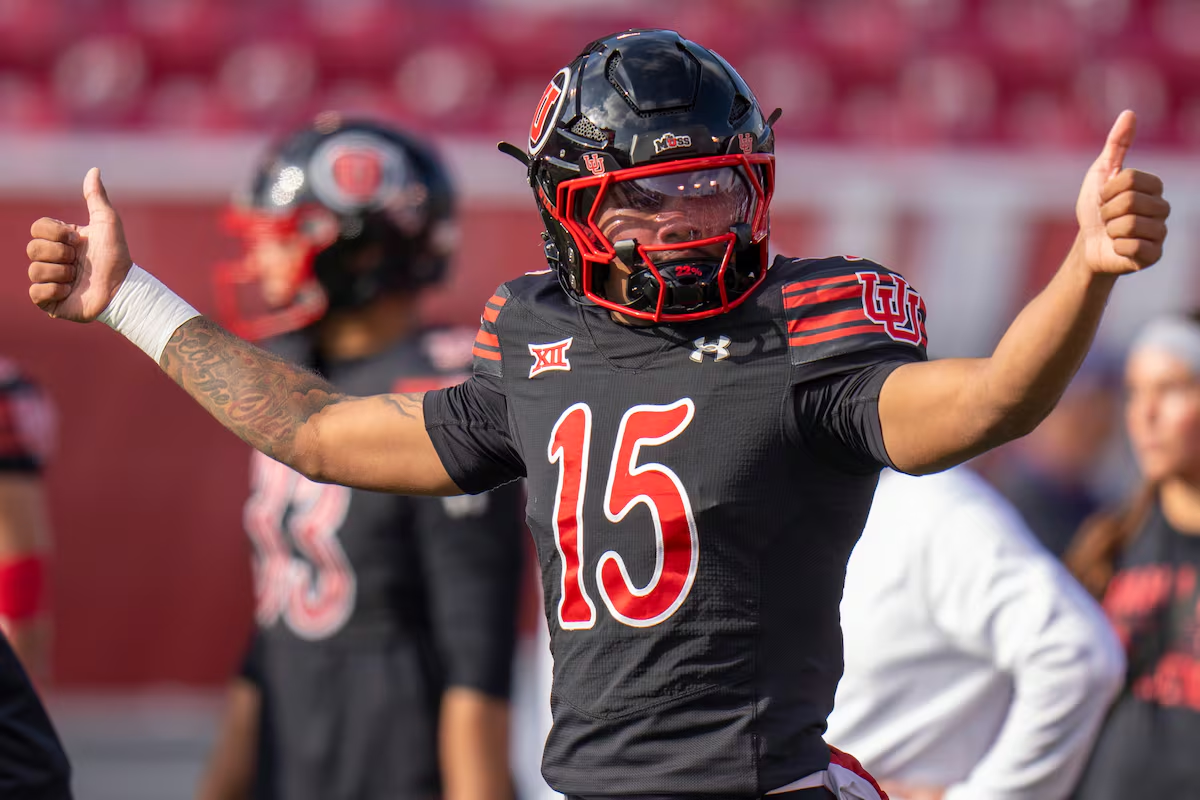
(Rick Egan | The Salt Lake Tribune) Utah Utes quarterback Byrd Ficklin (15) warms up on the field before Big-12 Football action between the Utah Utes and the Kansas State Wildcats at Rice-Eccles Stadium, on Saturday, Nov. 22, 2025.
I enjoy college football, but the College Football Playoff Selection Committee just killed my postseason viewing. I’ll only watch the Utah Utes in the Las Vegas Bowl, but I’m supporting Notre Dame’s bowl boycott after it was cheated out of a spot in the College Football Playoff. The University of Alabama was chosen instead, despite having poorer performance stats and losing big in its conference championship game. The University of Miami was also elevated above Notre Dame despite its less impressive stats — with the exception of having narrowly beaten The Fighting Irish in the season opener.
In recent years, the National Collegiate Athletics Association has made a mess of college football, but if the NCAA wants to redeem itself, it could:
1. Expand the playoff to 16 teams with no byes which would have eliminated this year’s fiasco.
2. Realign conferences to have no more than ten teams. The conference champion would be the team with the best record in nine conference games. No conference championship game needed.
3. Eliminate publishing CFP rankings before the end of the season. The committee embarrasses itself when it reorders those without cause.
4. Put income limits on Name Image Likeness as it grossly enriches some players. NIL has turned college football into the NFL Lite.
5. Fix the transfer portal. Allow players only one transfer and perhaps a second if a coach moves on.
6. Convince the Heisman Trophy Trust to award its statue at the end of the playoffs eliminating the embarrassment when an awardee fizzles in postseason play.
7. Consider eliminating conferences altogether. Create leagues of 60 or so teams in upper and lower divisions like European sports are structured with fluidity between the divisions based on teams’ previous year’s performance.
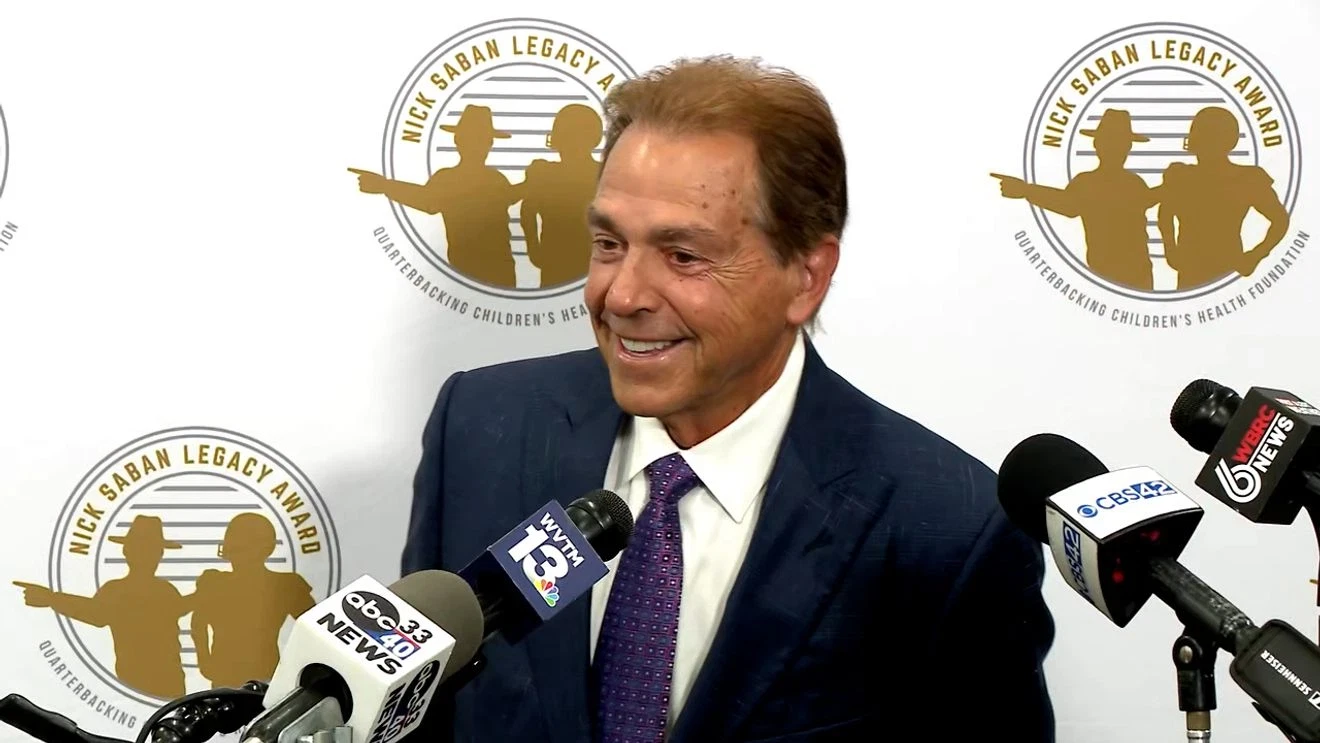
NASHVILLE, Tenn. (AP) — Nick Saban knows his strengths with seven national championships as a college football coach. He also understands how to put coaches and athletes in the best position to succeed.
That’s what he hopes to bring to the NHL’s Nashville Predators after joining the franchise as a minority owner.
“I’m no expert in hockey, so don’t look at me like I’m going to make some huge impact coaching around here because that’s not going to happen,” Saban said Monday. “But I do have a pretty good idea of what it takes to have successful organizations.”
Saban made his first appearance Monday in his new role as a minority owner alongside Predators chairman Bill Haslam.
The Predators announced Saban’s purchase Dec. 16 through Dream Sports Ventures LLC, an entity controlled by Saban and business partner Joe Agresti. That business group features 10 car dealerships, including two in Nashville.
Haslam, a former Tennessee governor, was working on a possible WNBA expansion franchise when Saban told the Predators controlling owner that he also might be interested in hockey.
“I thought, ‘Well, that’s the greatest no brainer of all time,’” Haslam said. “You have somebody who understands building a championship culture, who understands, I think, better than almost anybody in sports the process that’s needed to get to where you can compete as a champion.”
Saban grew up in West Virginia with no hockey around. He became interested in hockey when coaching at Michigan State and became friends and shared ideas with that team’s coach. Saban called this an opportunity to be involved with a team for the first time since he announced his retirement Jan. 10, 2024.
So what will Saban bring to the NHL and the Predators in his newest role?
His experience building programs both in college football and six seasons in the NFL working for Bill Belichick in Cleveland and as head coach of Miami. A “transformational leader” as Saban put it. Once college football season ends, Saban said he will be involved as much as Haslam wants.
Saban already has spoken to coaches and some players during what he called a minicamp. Saban also has met a couple times with general manager Barry Trotz, saying his goal is to support Trotz and everyone else with the Predators.
Nashville won the Western Conference before losing the Stanley Cup Final in 2017 to Pittsburgh in six games. The Predators won the Presidents’ Trophy for the 2017-18 season but ranked 26th out of 32 NHL teams Monday five points back of the second wild-card spot in the West.
“To be a part of the hockey team here is something special, and we’d love to build it into a championship,” Saban said. “We’d love to partner with Mr. Haslam to do anything that we can do to help this organization be successful.”