
NIL
Ranking All 18 ACC Transfer Classes

1. Louisville
Incoming transfers: Ryan Conwell, 6-foot-4 senior guard (Xavier); Isaac McKneely, 6-foot-4 senior guard (Virginia); Adrian Wooley, 6-foot-5 sophomore guard (Kennesaw State).
The skinny: Coach Pat Kelsey has added high-level scoring and experience. The hope is Wooley, who scored at least 20 points 15 times, can replace the explosiveness of Chucky Hepburn, who signed a two-way deal with the Toronto Raptors on Thursday. In McKneely and Conwell, the Cardinals added a pair of lights-out three-point shooters, with each converting better than 40 percent from deep in 2024-25. Expect Kelsey and the Cardinals to be near the top of the ACC once again next season.
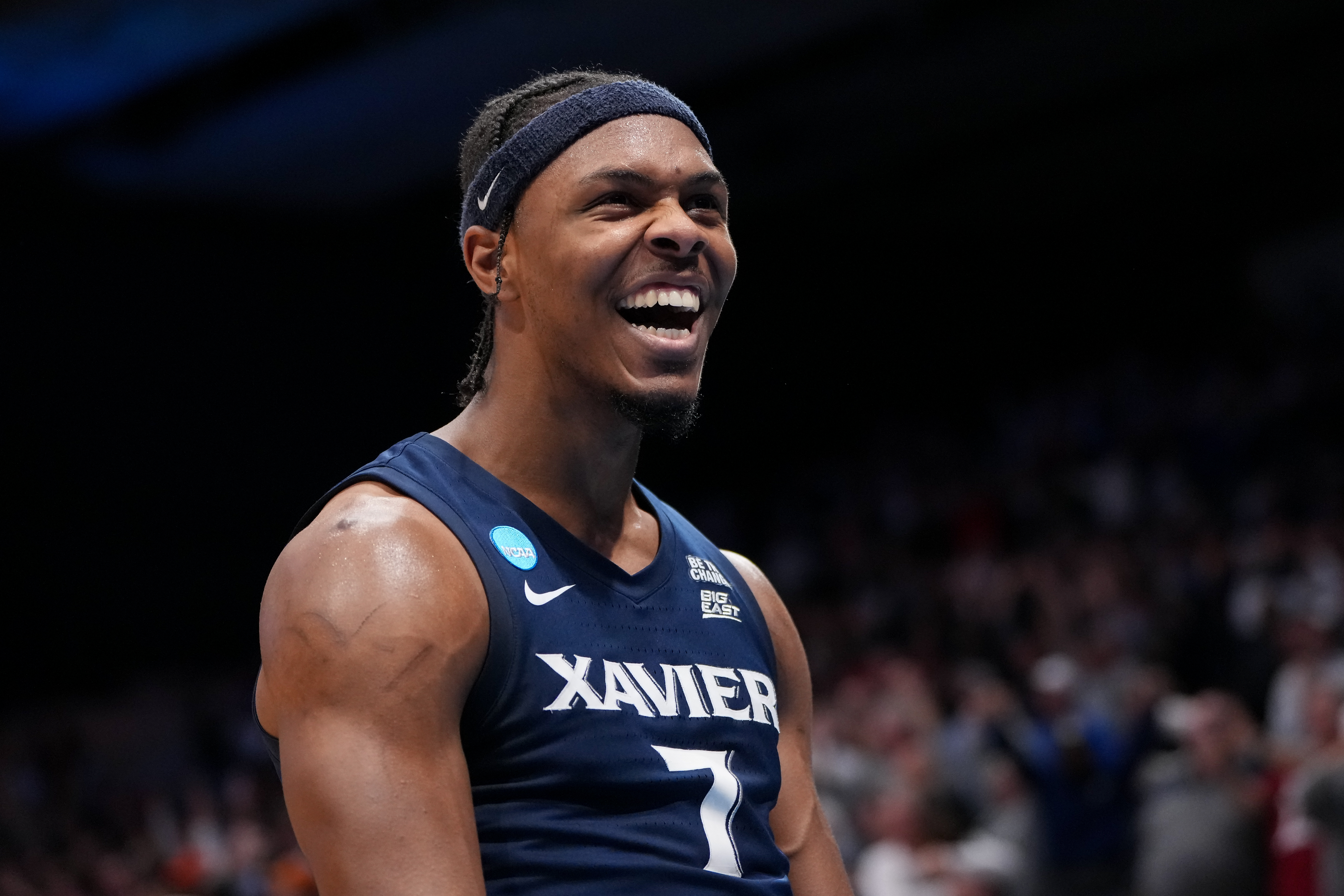
Ryan Conwell will look to help Lousiville maintain positive momentum
Getty Images
2. Wake Forest
Incoming transfers: Sebastian Akins, 6-foot-2 sophomore guard (Denver); Nate Calmese, 6-foot-2 junior guard (Washington State); Myles Colvin, 6-foot-5 junior guard (Purdue); Mekhi Mason, 6-foot-5 senior guard (Washington); Cooper Schwieger, 6-foot-10 junior forward (Valparaiso).
The skinny: The Demon Deacons found themselves on the wrong side of the bubble when the bracket was announced in March, a trend that Wake fans now have endured for four consecutive seasons. Coach Steve Forbes brought in a trio of double-digit scorers in Schwieger, Calmese and Akins (Mason finished just shy at 9.9 points per game). Colvin, a former four-star recruit whose dad (Rosevelt) was an NFL defensive end, may have the highest upside. He played a sparkplug role off the bench and was a solid wing defender at Purdue. Look for Colvin to unleash his potential as a full-time starter.
3. SMU
Incoming transfers: Jaron Pierre Jr., 6-foot-5 senior guard (Jacksonville State); Sam Walters, 6-foot-10 sophomore forward (Michigan); Corey Washington, 6-foot-5 senior forward (Wichita State).
The skinny: Following Andy Enfield’s first season at the helm in which the Mustangs finished 24-11, SMU reloaded in the portal. Pierre was the nation’s fourth-leading scorer at 21.6 points per contest and started all 36 games for Jacksonville State. The Mustangs gained high-major upside with Walters, who began his career at Alabama before spending this past season at Michigan. Washington brings scoring and experience; he averaged 13.7 points per game this past season and 15.9 points as a sophomore at St. Peters in 2023-24.
4. North Carolina State
Incoming transfers: Terrance Arceneaux, 6-foot-6 junior guard (Houston); Alyn Breed, 6-foot-3 senior guard (McNeese); Quadir Copeland, 6-foot-6 senior guard (McNeese); Jerry Deng, 6-foot-9 junior forward (Florida State); Tre Holloman, 6-foot-2 senior guard (Michigan State); Colt Langdon, 6-foot-7 redshirt freshman forward (Butler); Ven-Allen Lubin, 6-foot-8 junior forward (North Carolina); Darrion Williams, 6-foot-6 senior forward (Texas Tech).
The skinny: With just two returning players, it’s no surprise that the Wolfpack lead the conference in transfer commitments. Thanks to new coach Will Wade, whose recruiting prowess is well-known, the roster was rebuilt with a variety of high-major talent. Atop the list is Williams, who became one of the most sought-after transfers following his decision to enter the portal. Williams averaged 15.1 points per contest this past season and carries big-game experience. In Holloman, Arceneaux and Lubin, Wade landed a trio of talented players from premier programs who are hoping for their chance to shine. Finally, with the additions of Copeland and Breed, Wade brought some familiarity with his system from McNeese. Wade wants a rapid turnaround, and he let the nation know it.
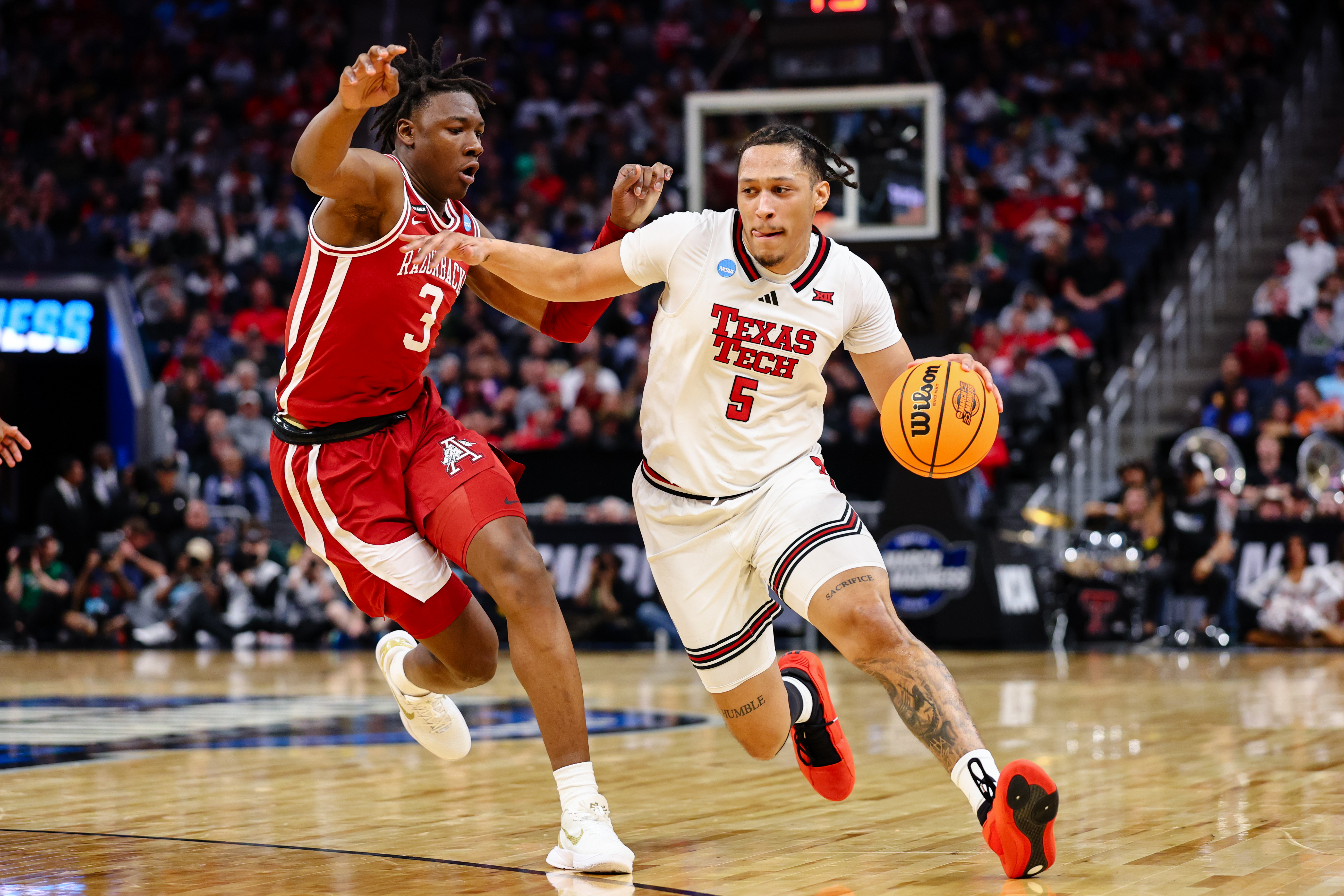
Darrion Williams was vital in getting Texas Tech in the Sweet Sixteen. Now he’s on his way to NC State.
Getty
5. California
Incoming transfers: Dai Dai Ames, 6-foot-1 junior guard (Virginia); Chris Bell, 6-foot-7 senior forward (Syracuse); John Camden, 6-foot-8 senior forward (Delaware); Nolan Dorsey, 6-foot-5 senior guard (Campbell); Milos Ilic, 6-foot-10 senior forward (Loyola Maryland); Justin Pippen, 6-foot-3 sophomore guard (Michigan); Sammie Yeanay, 6-foot-8 sophomore forward (Grand Canyon).
The skinny: Headlined by the son of NBA legend Scottie Pippen, the Golden Bears secured seven transfer commitments. Pippen received an offer from Cal as a four-star recruit out of Sierra Canyon in the L.A. suburb of Chatsworth, but ultimately landed with the Wolverines. But after averaging under seven minutes per game at Michigan, Pippen picked the Golden Bears out of the portal. Camden is a player with high-major experience (Memphis and Virginia Tech) who averaged 16.8 points per contest this past season. Cal also reeled in two intraconference transfers in Bell, who played a key role off the bench for Syracuse, and Ames, who averaged 9.8 points per game for Virginia.
6. Clemson
Incoming transfers: Nick Davidson, 6-foot-10 senior forward (Nevada); RJ Godfrey, 6-foot-8 senior forward (Georgia); Efrem Johnson, 6-foot-4 senior guard (UAB); Jestin Porter, 6-foot-1 senior guard (Middle Tennessee); Jake Wahlin, 6-foot-10 junior forward (Utah); Carter Welling, 6-foot-10 junior forward (Utah Valley).
The skinny: After an offensive collapse ended the Tigers’ season in the first round of the NCAA Tournament, coach Brad Brownell attacked the portal in search of scoring. With the additions of Davidson and Porter, who averaged 15.8 and 15.0 points, respectively, Brownell helped fill the void left by seniors Chase Hunter and Ian Schieffelin, who led Clemson in scoring this season. Godfrey became the latest “Marfo”: He has returned to the school where he started his career.
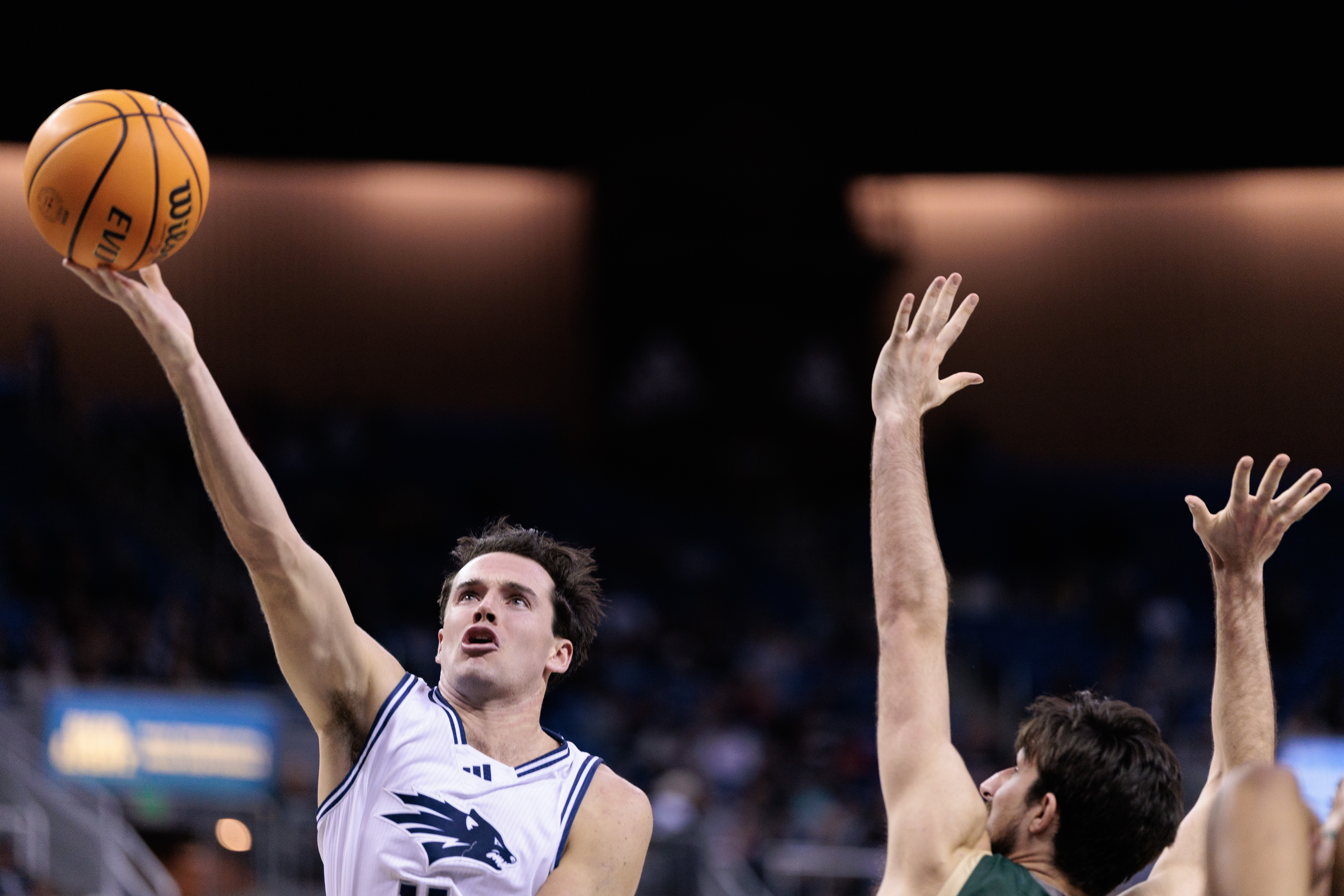
Big man Nick Davidson was one of Clemson’s key portal acquisitions.
Getty
7. Virginia Tech
Incoming transfers: Jailen Bedford, 6-foot-8 senior guard (UNLV); Amani Hansberry, 6-foot-8 junior forward (West Virginia); Izaiah Pasha, 6-foot-4 sophomore guard (Delaware).
The skinny: The Hokies made the NCAA Tournament in two of Mike Young’s first three seasons as coach. But with misses in each of the past three, Young and his staff need to get impactful performances from a trio of transfer commitments. Hansberry played sparingly as a freshman at Illinois in 2023-24 before averaging just under 10 points per game for West Virginia this past season. Hansberry took an official visit to Blacksburg as a four-star recruit out of high school; Hokies assistant Christian Webster originally recruited Hansberry and ultimately landed his guy. Pasha started all but one game for Delaware, averaging 11.9 points per game. Bedford, who began his career with two JUCO seasons at Trinidad (Colo.) State before one at Oral Roberts, played a key role off the bench for UNLV, averaging 10.2 points.
8. Boston College
Incoming transfers: Jason Asemota, 6-foot-8 sophomore forward (Baylor); Chase Forte, 6-foot-4 senior guard (South Dakota); Boden Kapke, 6-foot-11 junior forward (Butler); Aidan Shaw, 6-foot-9 senior guard (Missouri).
The skinny: Coach Earl Grant and his staff acquired a mix of untapped potential and proven scoring from the portal. Forte will be playing for his fifth school in as many seasons; he averaged 17.9 points per game for South Dakota in 2024-25, including a 24-point performance in the team’s semifinal loss in the Summit League Tournament. Shaw and Asemota, both four-star recruits out of high school, will look to take advantage of increased opportunities at BC.
9. Miami
Incoming transfers: Marcus Allen, 6-foot-7 sophomore wing (Missouri); Tre Donaldson, 6-foot-3 senior guard (Michigan); Malik Reneau, 6-foot-9 senior forward (Indiana); Ernest Udeh Jr., 6-foot-11 senior center (TCU); Tru Washington, 6-foot-4 junior guard (New Mexico).
The skinny: Keep an eye on the Hurricanes in their first season under Jai Lucas. Lucas, who replaces the retired Jim Larrañaga, landed a transfer at each position following nine departures from the 2024-25 team. Reneau and Donaldson, a pair of Big Ten starters this past season, should form a formidable pick-and-roll duo. With the size of Udeh and athleticism of Washington and Allen, Miami could be in position to contend in the ACC next season. Four of the five transfers (all but Washington) played high school ball in Florida, including two in South Florida: Allen in Miami and Reneau in Fort Lauderdale.
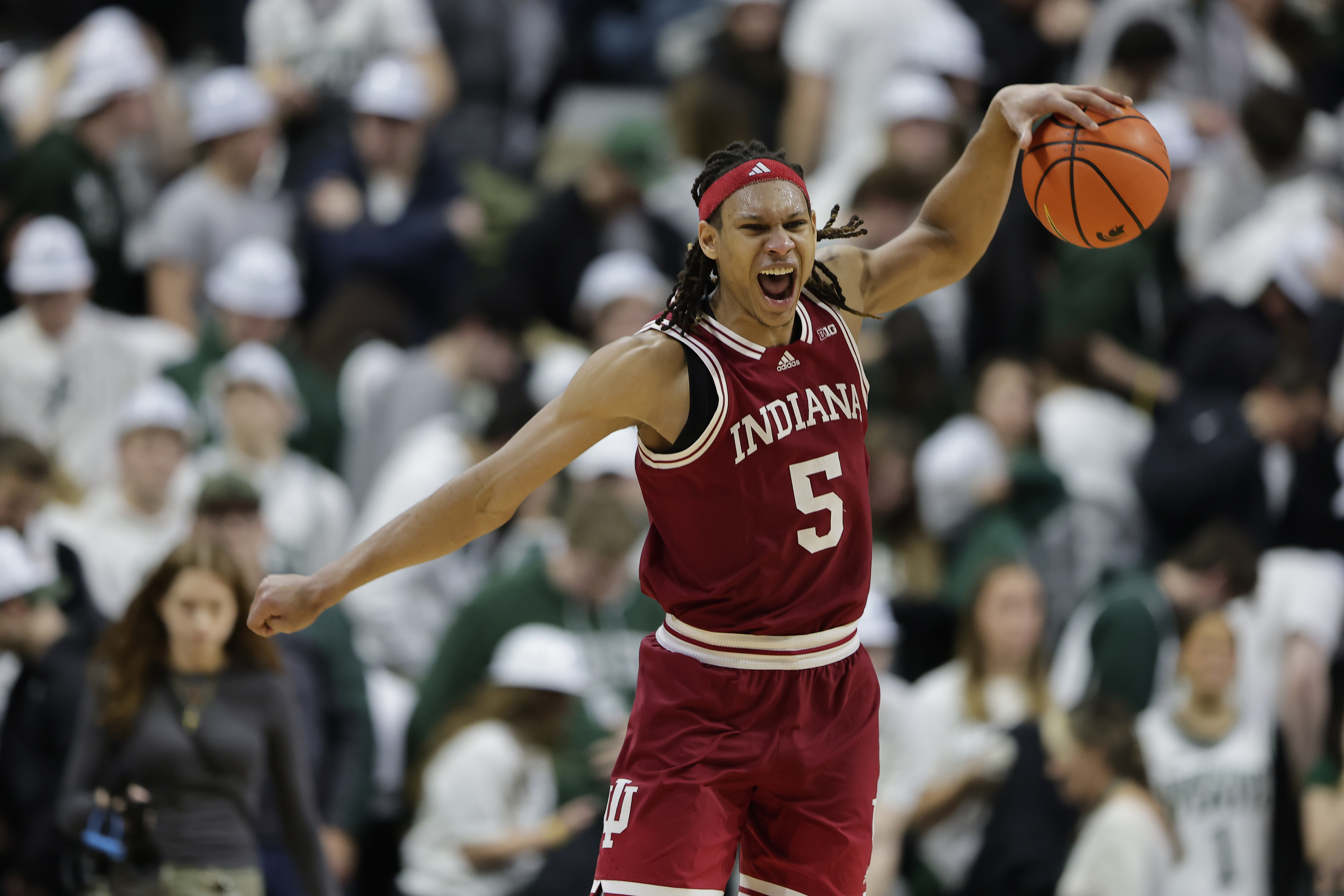
Malik Reneau entered the portal hours after Indiana named Darian DeVries its new head coach. He’s headed to Miami.
Getty
10. Notre Dame
Incoming transfer: Carson Towt, 6-foot-8 senior forward (Northern Arizona).
The skinny: Although the Irish landed just one transfer, they picked up an instant contributor in Towt. He led the nation in rebounds at 12.4 per contest to go along with 13.3 points per game. Towt had a whopping 19 double-doubles this past season for the Lumberjacks.
11. Georgia Tech
Incoming transfers: Kam Craft, 6-foot-6 junior forward (Miami, Ohio); Chas Kelley III, 6-foot-3 senior guard (Boston College); Peyton Marshall, 7-foot sophomore center (Missouri); Lamar Washington, 6-foot-4 senior guard (Pacific).
The skinny: Craft and Washington, who each spent time at the high-major level (Craft at Xavier, Washington at Texas Tech), averaged career-high scoring numbers in their first seasons on new squads – Craft at 13.6 per game and Washington at 13.5. And each had a 40-point outing: Washington scored 40 against Washington State and Kraft poured in 40 against Toledo. Marshall and Kelley lack a similar scoring pedigree, but will need to bring some juice to a Yellow Jackets team looking to make its first trip to the Big Dance since 2020-21.
12. North Carolina
Incoming transfers: Kyan Evans, 6-foot-2 junior guard (Colorado State); Jonathan Powell, 6-foot-6 sophomore guard (West Virginia); Jarin Stevenson, 6-foot-11 junior forward (Alabama); Henri Veesaar, 7-foot junior forward (Arizona); Jaydon Young, 6-foot-4 junior guard (Virginia Tech).
The skinny: Despite undergoing heavy losses this offseason, coach Hubert Davis and his staff rebounded with a solid portal class. Young, Evans and Powell, a trio of guards with starting experience, will try to fill in for RJ Davis (who signed with the Lakers as an undrafted free agent) and Elliot Cadeau, who transferred to Michigan. Stevenson, a Chapel Hill native, started 22 games for the Tide this past season. Veesaar is a talented big who averaged just under 10 points per game off the bench for Arizona.
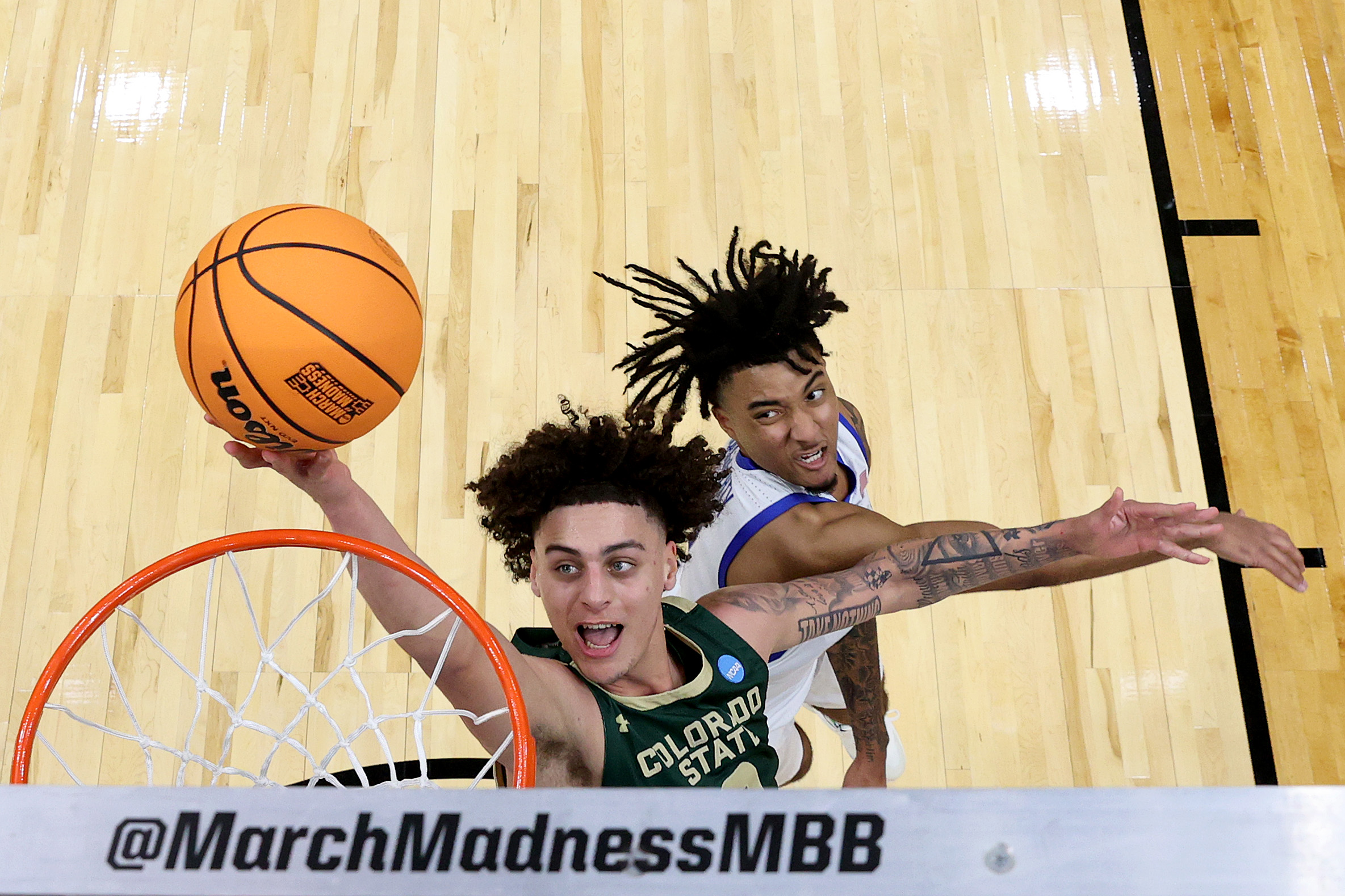
Kyan Evans is headed to the University of North Carolina.
Getty
13. Virginia
Incoming transfers: Martin Carrere, 6-foot-8 redshirt freshman wing (VCU); Dallin Hall, 6-foot-4 senior guard (BYU); Sam Lewis, 6-foot-6 junior guard (Toledo); Ugonna Onyenso, 7-foot senior center (Kansas State); Malik Thomas, 6-foot-5 graduate senior guard (San Francisco); Devin Tillis, 6-foot-7 graduate senior forward (UC Irvine); Jacari White, 6-foot-3 graduate senior guard (North Dakota State).
The skinny: Under the leadership of new coach Ryan Odom, Virginia invested heavily in the portal to rebuild a roster that lost all its top talent. Hall arrives as one of the nation’s best pure point guards and will be tasked with creating opportunities for prolific scorers White (17.1 points per game in 2024-25) and Thomas (19.9 in 2024-25). Filling out the rest of the rotation will be the veteran experience of Tillis, developmental pieces in Carrere and Onyenso and a 2024-25 All-MAC second-team selection in Lewis.
14. Pitt
Incoming transfers: Barry Dunning Jr., 6-foot-6 senior wing (South Alabama); Nojus Indrusaitis, 6-foot-5 sophomore guard (Iowa State); Dishon Jackson, 6-foot-11 graduate senior center (Iowa State); Damarco Minor, 6-foot graduate senior guard (Oregon State).
The skinny: After finishing tied for ninth in the league and bowing out in the first round of the conference tourney, Pitt doesn’t look to have done enough in the portal to improve. Dunning will provide much-needed veteran scoring for an offense that’s returning just 24.5 percent of its production. Minor can bring stability to the backcourt after averaging 5.1 assists in 2024-25. Though Jackson looks primed to be featured in the frontcourt alongside returnee Cameron Corhen, he has struggled to be a consistent contributor at the high-major level. Indrusaitis, a former top-100 prospect per ESPN, made just 15 appearances for the Cyclones this past season and likely does little to help the Panthers improve drastically right away.
15. Florida State
Incoming transfers: Lajae Jones, 6-foot-7 senior wing (St. Bonaventure); Kobe MaGee, 6-foot-6 senior wing (Drexel); Robert McCray V, 6-foot-4 junior guard (Jacksonville); Shahid Muhammad, 6-foot-11 senior center (UMass); Martin Somerville, 6-foot-3 sophomore guard (UMass-Lowell); Chauncey Wiggins, 6-foot-10 senior forward (Clemson).
The skinny: Looking to restock a roster that missed the NCAA Tournament for the fourth consecutive season and returned just 6.8 percent of its scoring, new coach Luke Loucks brought in Wiggins along with a quintet of mid-major additions. Wiggins, who started 44 games in three seasons at Clemson, will look to blossom as a primary option. MaGee, Jones, Somerville and McCray averaged in double figures this past season, with McCray, who played sparingly as a freshman at Wake Forest in 2021-22, leading the group at 16.2 points per game. Loucks and FSU will need major contributions from this portal class to climb the conference standings.
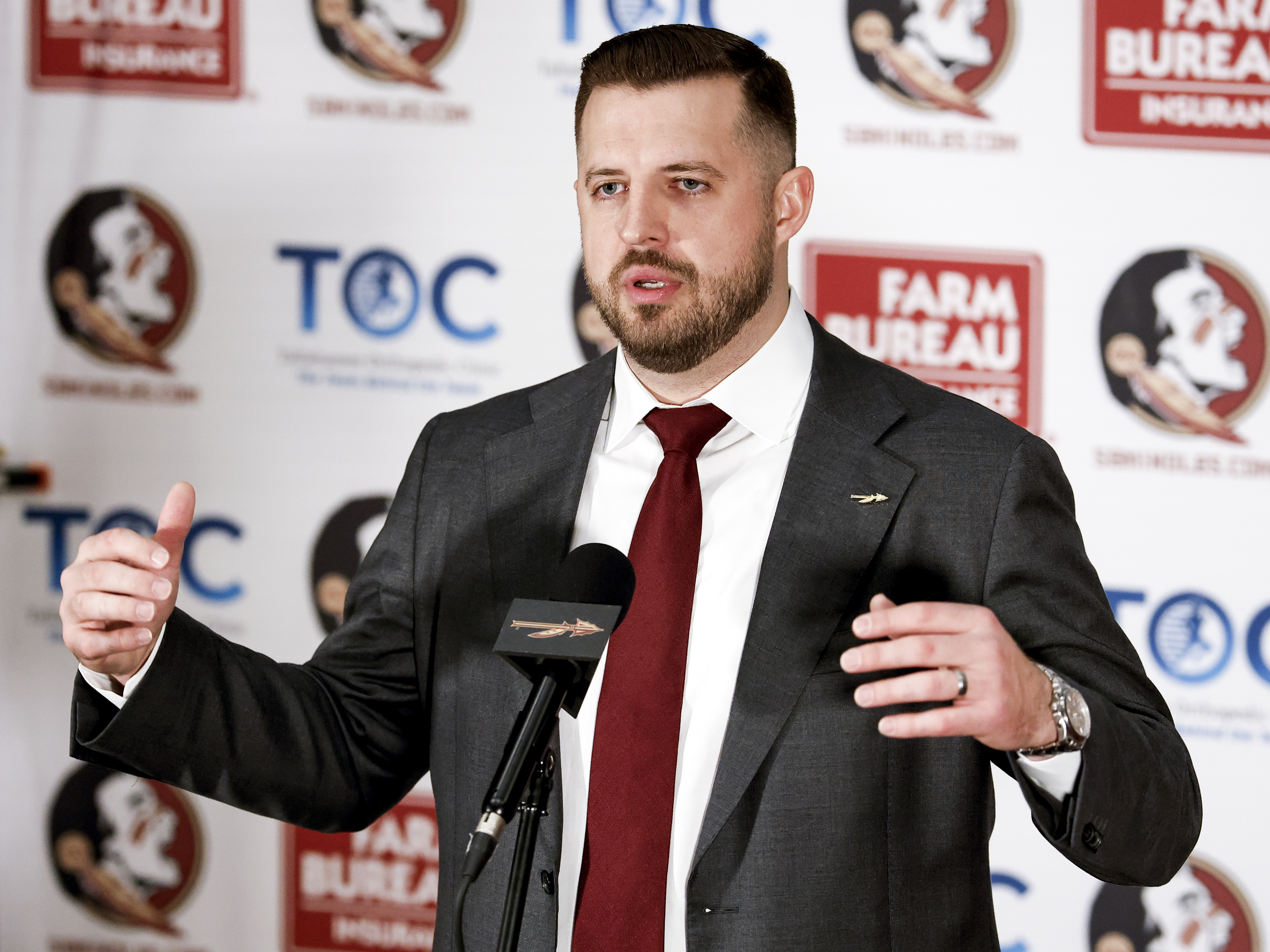
New Florida State coach Luke Loucks at his introductory press conference.
Getty
16. Syracuse
Incoming transfers: Tyler Betsey, 6-foot-8 sophomore forward (Cincinnati); Naithan George, 6-foot-3 junior guard (Georgia Tech); Nate Kingz, 6-foot-5 redshirt senior guard (Oregon State); William Kyle III, 6-foot-9 senior forward (UCLA); Ibrahim Souare, 6-foot-9 redshirt sophomore forward (Georgia Tech), Bryce Zephir, 6-foot-4 graduate senior guard (Montana State).
The skinny: Syracuse was beat down this past season, crawling to just seven wins in the ACC and finishing 14th before losing numerous veteran contributors. While the additions of George and Kingz will help to offset some of that lost production, the rest of this Orange contingent remains unproven. Betsey, a former top-100 prospect, played sparingly as a freshman with Cincinnati, and Souare had a similar story at Georgia Tech. Kyle was the 2023-24 Summit League Defensive Player of the Year at South Dakota State, but struggled with his transition to the high-major ranks. Zephir seems just a veteran depth piece.
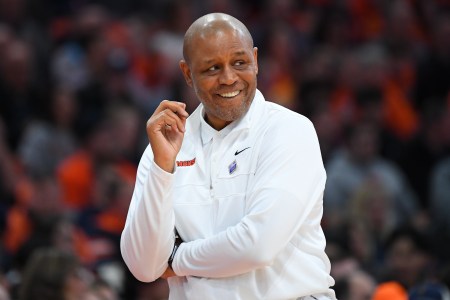
17. Stanford
Incoming transfers: Jeremy Dent-Smith, 6-foot-1 graduate senior guard (D-II Cal State Dominguez Hills); AJ Rohosy, 6-foot-9 graduate senior forward (D-III Claremont-Mudd-Scripps).
The skinny: Stanford always has struggled to acquire transfer talent because of its stringent academic requirements, but still managed to land two of the portal’s most coveted non-Division I players. Dent-Smith spent the past three seasons as a steady double-figure scorer at Cal State-Dominguez Hills, which lost in the D-II national title game this past season. He was a two-time NABC Division II first-team All-American. Rohosy’s career started at Washington State but after making just 10 appearances over two seasons, he moved to Division III Claremont-Mudd-Scripps last offseason. He averaged 21.3 points and 10.5 rebounds and shot 65 percent from the floor, which caught the attention of the always meticulous Kyle Smith.
18. Duke
Incoming transfers: Jack Scott, 6-foot-6 senior guard (Princeton); Ifeanyi Ufochukwu, 6-foot-10 senior center (Rice).
The skinny: Early in the offseason, Duke received a commitment from one of the nation’s most coveted transfers in 6-foot-6 senior guard Cedric Coward, previously of Washington State. But when he opted to remain in the NBA Draft (he went in the first round to Memphis), the Blue Devils were left empty-handed. Ufochukwu and Scott are likely walk-ons.

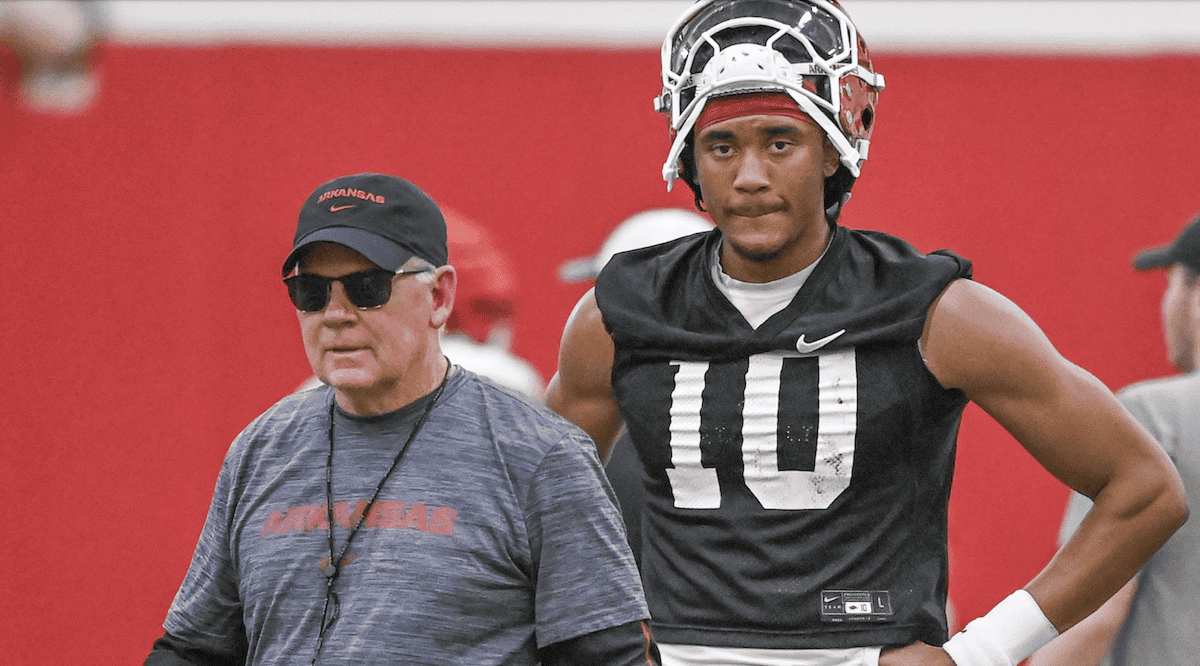


When Bobby Petrino returned to Arkansas after the 2023 season, his first task was finding a new quarterback.
In this era of college football, that also meant funding a new quarterback. For that, the former head coach leaned on his old friend Frank Fletcher.
The Little Rock-based businessman stepped up and footed a large chunk of the bill for Taylen Green, the talented signal caller Petrino identified to run his offense for the Razorbacks.
It hasn’t only been a transactional relationship, though. Over the last two years, Fletcher has been mindful of Green’s life after sports. Rather than simply handing the star quarterback a boatload of cash, he offered something few college athletes receive: personal relationship and mentorship.
“I had a wonderful two years with Taylen Green,” Fletcher said during Monday’s edition of Morning Mayhem on 103.7 The Buzz. “I was lucky that I happened to back a player that was that nice a kid and [had] great parents. I’ve learned a lot from him. I’m teaching him everything I know, and he wants to learn.”
Fletcher helped Green navigate the financial market by giving the QB1 homework, making him chart a series of stocks over a few months – something that could prove even more important after his subpar finish to the 2025 season likely impacted his pro prospects.
But it wasn’t just financial exercises. Fletcher turned the lessons into on-the-job training – especially when it comes to creative thinking.
After dealing with complicated, 15-page NIL contracts from the university, Fletcher found a way to work around the red tape.
“We had a one-page deal that Taylen’s dad looked at, that we paid him quarterly,” Fletcher said. “He was a direct employee of Fletcher Auto Group, and he advertised for our Honda store in Northwest Arkansas.”
Such arrangements, which align with the original spirit of NIL, allowed boosters to effectively pay student-athletes whatever they deemed the market value of the service provided. That changed with the House settlement that went into effect this summer.
Among other things, it introduced a centralized clearinghouse through which all NIL deals over $600 must be approved. Now, Fletcher can no longer bypass the red tape and unilaterally make deals with players like Green. His contract with the quarterback would still be subject to the “fair market value” requirement, hence why the original agreement ended in April.
The settlement also ushered in a new era of rev-share payrolls alongside NIL agreements that was supposed to cap football roster spending and effectively level the playing field. Boosters of many Power Four programs, however, have found loopholes of their own.
Creative maneuvering remains alive and well.
Peeling Back the Curtain
During his now infamous appearance at the Little Rock Touchdown Club in September, Arkansas athletics director Hunter Yurachek referenced a shady “third lane” in which other schools are operating.
He was confident in how the UA has adapted to the two primary “lanes” — revenue sharing and “legitimate” NIL deals — on the financial front, but the eighth-year AD has long been a vocal opponent of pay-for-play deals that were supposed to be eliminated when the House settlement went into effect over the summer.
Of course, that hasn’t happened.
Despite the revenue sharing “cap” being set at $20.5 million, which is distributed amongst all sports on campus, there have been numerous reports this offseason of new coaches being promised roster “salaries” well over that number — even before factoring out the portion going to men’s and women’s basketball, baseball and other sports.
According to The Advocate, Lane Kiffin will get $25-30 million to build his roster at LSU. After flirting with Arkansas, Alex Golesh will instead have close to $30 million to spend on players at Auburn, according to 247Sports’ Auburn Undercover.
Related Articles
The above-the-cap difference comes from third-party NIL deals, which must be submitted to NIL Go and approved by the clearinghouse to keep everyone in the good graces of the College Sports Commission.
While people like Frank Fletcher used to do it simply for convenience, schools have been forced to get creative when finding workarounds to navigate Yurachek’s so-called “third lane” — which The Athletic’s Stewart Mandel and Ralph Russo pulled the curtain back on over the weekend.
Their reporting found that some have simply not reported deals, especially since the Power Four schools have yet to agree on enforcement rules, but there are also some seemingly above-board ways to fudge the cap with the help of collectives.
One such way, according to The Athletic, is by paying agents separately. In this scenario, a $100,000 deal negotiated by an agent taking a 10% cut would come out to $90,000 from the school to the player, which counts against the rev-share cap, and $10,000 from the collective to the agent, which doesn’t and also isn’t subject to the clearinghouse.
When collective employees are worried about a large deal being approved by the CSC, they have reportedly been known to verbally agree to a certain amount, only to split it up into smaller deals submitted throughout the year that ultimately equal the agreed upon total.
The Athletic also reported that at least one school’s collective is believed to have paid the entire incoming freshman class to avoid having to count it against the rev-share limit.
It’s worth noting that the UA doesn’t have an active NIL collective at the moment, as it cut ties with the Blueprint Sports-run Arkansas Edge in October. Sources have indicated to Best of Arkansas Sports that the UA has something else in the works, but no such announcements have been made.
Still, like Fletcher and its fellow SEC programs, Arkansas has room to be creative. Yurachek must be willing to navigate that “third lane” or risk the Razorbacks being left in the dust.
***
Frank Fletcher talks about his NIL agreement with Taylen Green beginning at the 2:16:55 mark below:

***
More coverage of Arkansas football from BoAS…


Related
College football free agency does not officially kick off until the transfer portal opens on Jan. 2, but planning for the eventful two-week period is well underway. Players are announcing their intentions as coaching staffs prepare a plan of attack. It’s a busy time for every college football program, but the intensity is amplified even more for first-year head coaches, like Kentucky’s Will Stein.
With every coaching change, there is significant roster turnover. You can expect some schools to change more than half of their roster as a coach tells the old players to kick rocks as he brings in new ones from the transfer portal.
Lane Kiffin was called the “Portal King” during his time at Ole Miss. The man has frequent flyer miles in college football free agency. One of his first hires in Baton Rouge was Eric Wolford. The former Kentucky assistant coach did not fix the Wildcats’ high school recruiting woes on the offensive line, but his intense style actually might help Kentucky this offseason.
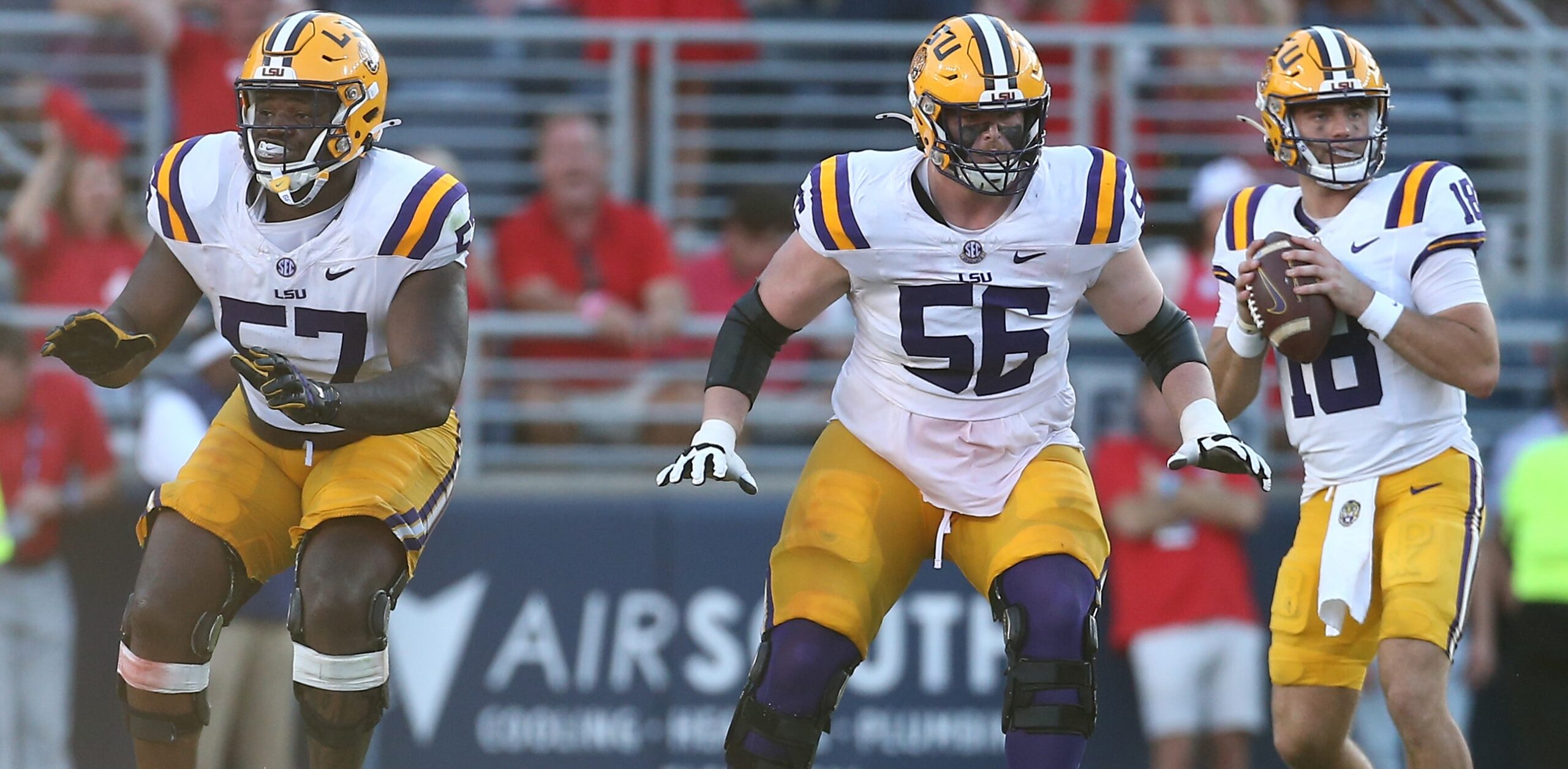
You have to be a certain type of person to play for Eric Wolford. Not every LSU offensive lineman is gonna sign up for that. Kentucky needs offensive linemen. You know who is well acquainted with those LSU players who need a new home? Joe Sloan.
Kentucky needs five new starters on the offensive line. There are a few reserves from last year’s squad that may be ready to emerge as starters, but the Cats need players in the trenches. Plenty of Joe Sloan’s former LSU players will be available in free agency.
Lock in for a pivotal Kentucky Football offseason KSR Plus! We’re giving you behind-the-scenes intel you won’t find anywhere else. Join now for 50% off an annual subscription.
LSU Offensive Linemen hitting the Transfer Portal
OT Carius Curne — A top 15 overall talent in the 2025 recruiting class who was evaluated as a guard, the Arkansas native started five games as a true freshman, splitting time at both left and right tackle. He showed plenty of potential and will be a hot commodity in the transfer portal. He has three years of eligibility remaining.
OT Tyree Adams — Adams earned a starting role at left tackle ahead of the 2025 season before an injury forced him to undergo season-ending surgery in November. The New Orleans native has two years of eligibility remaining.
IOL Coen Echols — Started the last eight games at left guard and played the third-most snaps on the offense. The former Texas A&M commit will be a true junior with two years of eligibility remaining.
C DJ Chester — LSU’s starting center in 2024 led the team in snaps, but was replaced by a Virginia Tech transfer this fall. He enters the transfer portal with two years of eligibility remaining.
OT Ory Williams — The redshirt freshman earned two starts at left tackle at the end of the season. He appeared in four games total and logged 150 snaps.
The LSU offensive line was far from a juggernaut for Sloan last fall. PFF gave the Tigers the worst run-blocking grade in the SEC after finishing at the bottom of the league in rushing yards per game (104). Even though the unit had plenty of imperfections, there are still players with plenty of upside and SEC experience who could find a second wind by following their old offensive coordinator to Kentucky via the transfer portal.

Texas Tech will begin its first full day in South Florida on Tuesday with a morning practice followed by College Football Playoff quarterfinal media day at Hard Rock Stadium, site of Thursday’s game against Oregon.
No. 4 Texas Tech (12-1, 8-1 Big 12) meets No. 5 Oregon (12-1, 8-1 Big Ten) at noon ET on New Year’s Day. ESPN will televise the game, with Joe Tessitore and Jesse Palmer in the booth and Stormy Buonantony and Katie George on the sidelines.
This will be the first time the programs have met in the Capital One Orange Bowl and the fourth meeting overall dating to 1991. It is also the first College Football Playoff quarterfinal in Orange Bowl history.
– TECH –
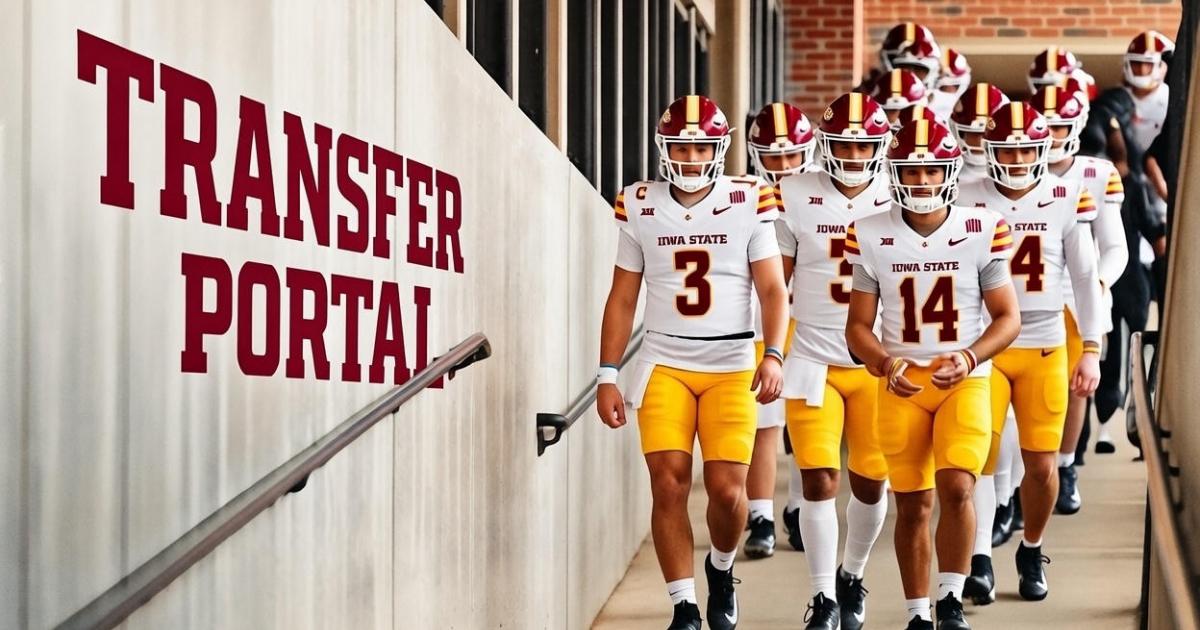
This isn’t isolated to mid-tier teams like Iowa State. Even former powerhouses are reeling from portal raids. USC, under Lincoln Riley, hemorrhaged 15 players after a disappointing 2025 season, including backups and starters seeking better NIL opportunities elsewhere. The Trojans’ losses exacerbate roster instability in a program once synonymous with West Coast dominance. Similarly, Florida State shed 25 athletes, UNC lost 15, and over 10 programs nationwide saw 20 or more departures, highlighting how NIL bidding wars amplify turnover at underperforming or underfunded schools. These exits often follow coaching changes or subpar seasons, with athletes prioritizing financial incentives over rebuilding efforts.
The fallout extends beyond regular-season rosters, contributing to a palpable lack of interest in the multitude of bowl games not tied to the College Football Playoff (CFP). With the transfer portal overlapping bowl season and NIL deals luring players away, non-playoff bowls have become exhibitions of depleted teams, rife with opt-outs and makeshift lineups. Players, now professionalized through NIL earnings, increasingly skip these games to avoid injury risks ahead of the NFL draft or to chase better opportunities via the portal, rendering many matchups unwatchable and irrelevant. This year alone, several 5-7 teams declined bowl invitations outright, including Iowa State and Notre Dame that also had a 10-2 winning record in 2025, signaling diminished prestige, while opt-outs have turned storied bowls into shadow versions of themselves. Viewership for non-playoff bowls remains robust in aggregate—Disney’s 33 such games averaged 2.7 million viewers last season, up from prior years—but fan sentiment and expert analysis point to growing apathy, with complaints that NIL and the portal have “demolished bowl season” by eroding competitive integrity. As one observer noted, these games hold “no interest” for teams anymore, fueling calls for reforms like paying players to participate or shifting the portal window post-bowls.
As the 2025 calendar winds down, the NCAA’s revamped transfer portal is poised to swing open on January 2, 2026, ushering in a condensed 15-day frenzy that closes on January 16, 2026, for most football programs. This single-window structure, a shift from previous dual periods to curb ongoing tampering and streamline chaos, includes extensions: Players from teams in the College Football Playoff national championship (set for January 19, 2026) get an extra five days from January 20-24, while coaching changes trigger separate 15-day windows starting five days after a new hire. Amid NIL’s financial allure, this upcoming portal period could accelerate roster volatility, with programs like Iowa State still reeling from pre-window announcements and others bracing for bidding wars.
Yet, in Texas—the epicenter of NIL spending—some programs thrive amid the chaos, leveraging deep-pocketed boosters to build fortresses against portal losses. The University of Texas (UT) boasts the nation’s top football NIL budget at $35-40 million for 2025, enabling net gains like edge rusher Colin Simmons from LSU and wideout Isaiah Bond from Alabama while minimizing outflows. Texas A&M follows closely with $51.4 million in total NIL revenue (football-dominant), adding 12 transfers like quarterback Marcel Reed despite some exits tied to NIL dissatisfaction. Texas Tech, spending nearly $30 million, turned the portal into a weapon with 15 additions, including quarterback Brendan Sorsby on a rumored $4 million deal, fueling a playoff push. SMU, raising $65 million for all sports via its Mustang Club, focused on retention bonuses to limit departures to just five, adding talents like edge Braden Carter and earning ACC buzz.
Contrast this with in-state rivals Baylor, TCU, and the University of Houston, where modest NIL resources expose vulnerabilities. Baylor ramped up to $15 million in NIL spending, adding 24 transfers to flip its roster, but still suffered heavy losses post-2025, prompting coach Dave Aranda to fight for key retentions like four critical players amid portal risks. TCU, also allocating around $15 million to football under Big 12 revenue sharing, balanced gains (e.g., experienced quarterbacks) with lumps from departures, reflecting the portal’s double-edged sword in a new era of $20.5 million caps. Houston, with unspecified but lower NIL figures, bolstered its roster with 15 transfers and 30 overall additions, yet faces ongoing portal needs after a 4-8 season, lacking the financial firepower to consistently outbid elites.
This Texas divide underscores NIL’s inequality: Wealthy programs like UT and A&M buy stability and stars, while others like Baylor and TCU scramble to plug holes, often becoming feeder systems. As the transfer portal window in 2026 looms, college football’s soul hangs in the balance and talk of reform is already in the air.
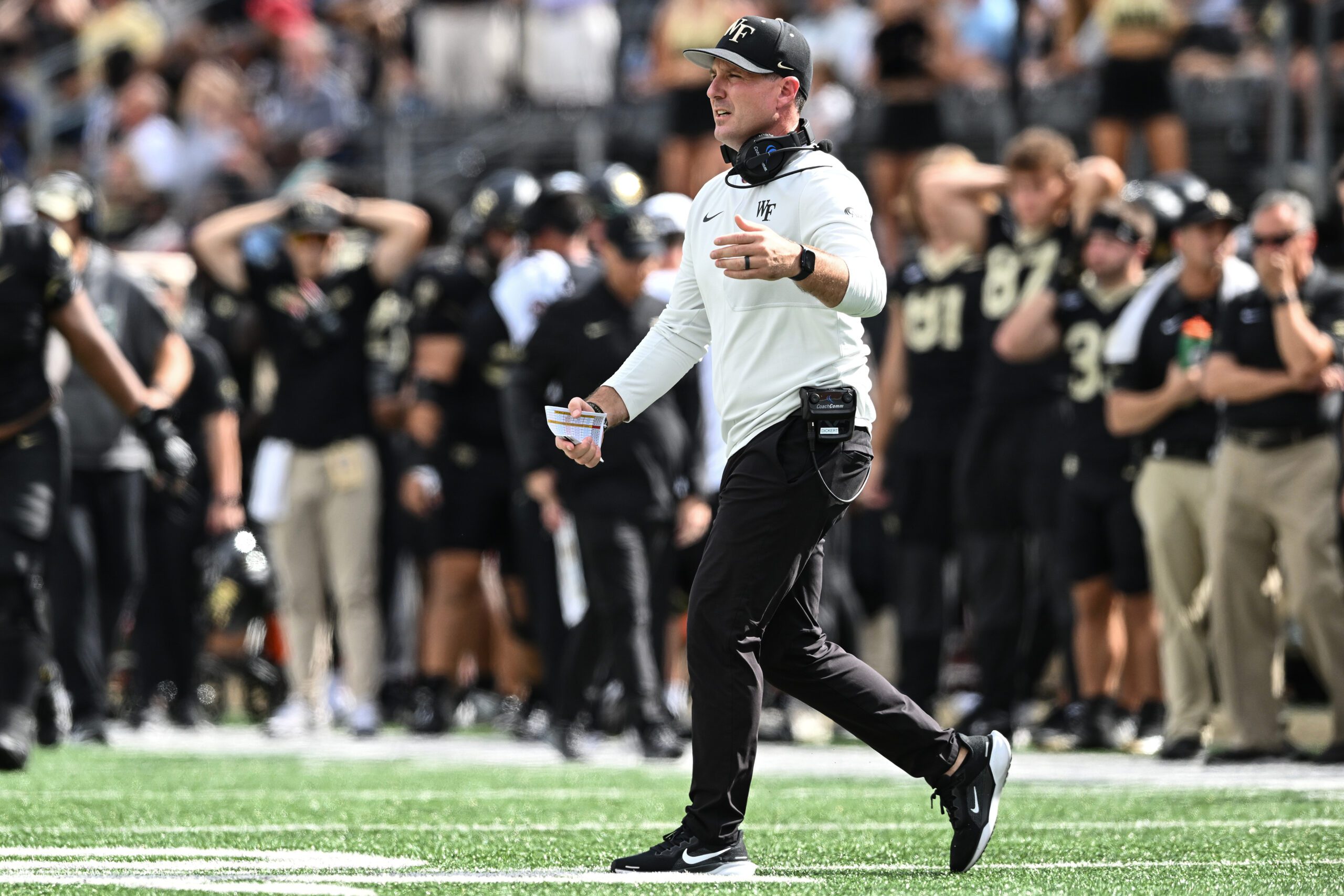
For over a decade, Dave Clawson built Wake Forest into one of the steadiest football programs in the Atlantic Coast Conference, crafting a developmental model that produced seven consecutive bowl appearances.
Clawson’s approach to making the Demon Deacons a fixture in North Carolina’s college football landscape was deliberate: recruit under-the-radar prospects, develop them patiently for two or three seasons, then rely on experienced upperclassmen to carry the program.
As the transfer portal and NIL opportunities reshaped college football, that model became harder to sustain. After back-to-back 4-8 seasons, Clawson resigned, citing a rapidly changing landscape and acknowledging he could no longer give the job everything it required.
Wake Forest suddenly faced a reset as a coaching change, roster turnover and evolving expectations left the program searching for direction. When Jake Dickert, former coach at Washington State, arrived in Winston-Salem ahead of the 2025 season, optimism was cautious at best.
What followed was one of the ACC’s most striking turnarounds.
In his first season, Dickert — the North State Journal’s 2025 Coach of the Year — restored stability and belief, guiding Wake to an 8-4 record and a return to bowl eligibility.
Capping off Dickert’s debut season, the Demon Deacons (8-4) will face SEC representative Mississippi State Bulldogs (5-7) in the Duke’s Mayo Bowl on Jan. 2 at Bank of America Stadium in Charlotte.
In their 2025 campaign, the Deacs tied for the most victories among all FBS programs in the Carolinas, underscoring the program’s rapid rebound. Wake Forest defeated two teams ranked at the time, including a road victory at Virginia (the Cavaliers’ only home loss of the season) and a home win that snapped SMU’s 20-game regular-season conference winning streak.
After back-to-back losses in September, Wake responded by winning six of seven games before closing the regular season with a loss at Duke; the Deacs finished 4-4 in ACC play.
On the field, Dickert leaned on a blend of experience and toughness. Graduate transfer quarterback Robby Ashford brought leadership to an offense that had struggled for consistency in recent seasons, while senior running back Demond Claiborne anchored the ground game and emerged as a physical focal point in key moments.
Defense again proved to be the program’s backbone. The Demon Deacons ranked sixth in the ACC and 38th nationally in scoring defense, finished top five in the league in total and passing defense, and did not allow a touchdown against either Virginia or North Carolina.
Dickert’s impact extended well beyond Saturdays.
Before the season, he overhauled Wake Forest’s recruiting and scouting infrastructure, assembling a 10-person staff dedicated to identifying talent and building depth in a new era of college football. The early returns have been promising.
During the recent National Signing Day, Wake Forest announced a 30-player 2026 recruiting class — the highest-ranked in program history — currently inside the national top 50. The class includes one four-star and 29 three-star recruits, signaling a shift toward broader talent acquisition and immediate competitiveness.
Dickert’s efforts were rewarded following the regular season. On Dec. 2, Wake Forest Vice President and Athletics Director John Currie announced that Dickert had signed a long-term contract extension.
“Jake Dickert has proven himself to be one of college football’s rising head coaches and one of the truly special leaders in the ACC,” Currie said. “He has galvanized our locker room, our campus, and our community. Coach Dickert is exactly the type of leader who inspires players, and he and his family fit seamlessly into the Wake Forest and Winston-Salem community.”
Dickert echoed that sentiment, pointing to long-term investment as central to Wake Forest’s direction.
“Our family could not be more grateful to call Wake Forest and Winston-Salem home,” he said. “Over the last 11-plus months, our staff and student-athletes have embraced a new process of being ‘Built in the Dark.’ When John approached me a few weeks ago about the university’s desire to further invest in our program, I was both humbled and energized.”
“This commitment ensures that our staff has the stability, resources and support necessary to continue elevating Wake Forest football,” Dickert added. “I’m proud of this team, our staff and our seniors who built the foundation for this new era, and excited for what’s ahead. There has never been a better time to be a Demon Deacon.”
While roster turnover remains a reality, Wake Forest’s trajectory is still heading upward. With a retooled staff, a revamped recruiting approach and renewed confidence throughout the program, Dickert has revived the Demon Deacons and positioned them for sustained relevance for years to come.
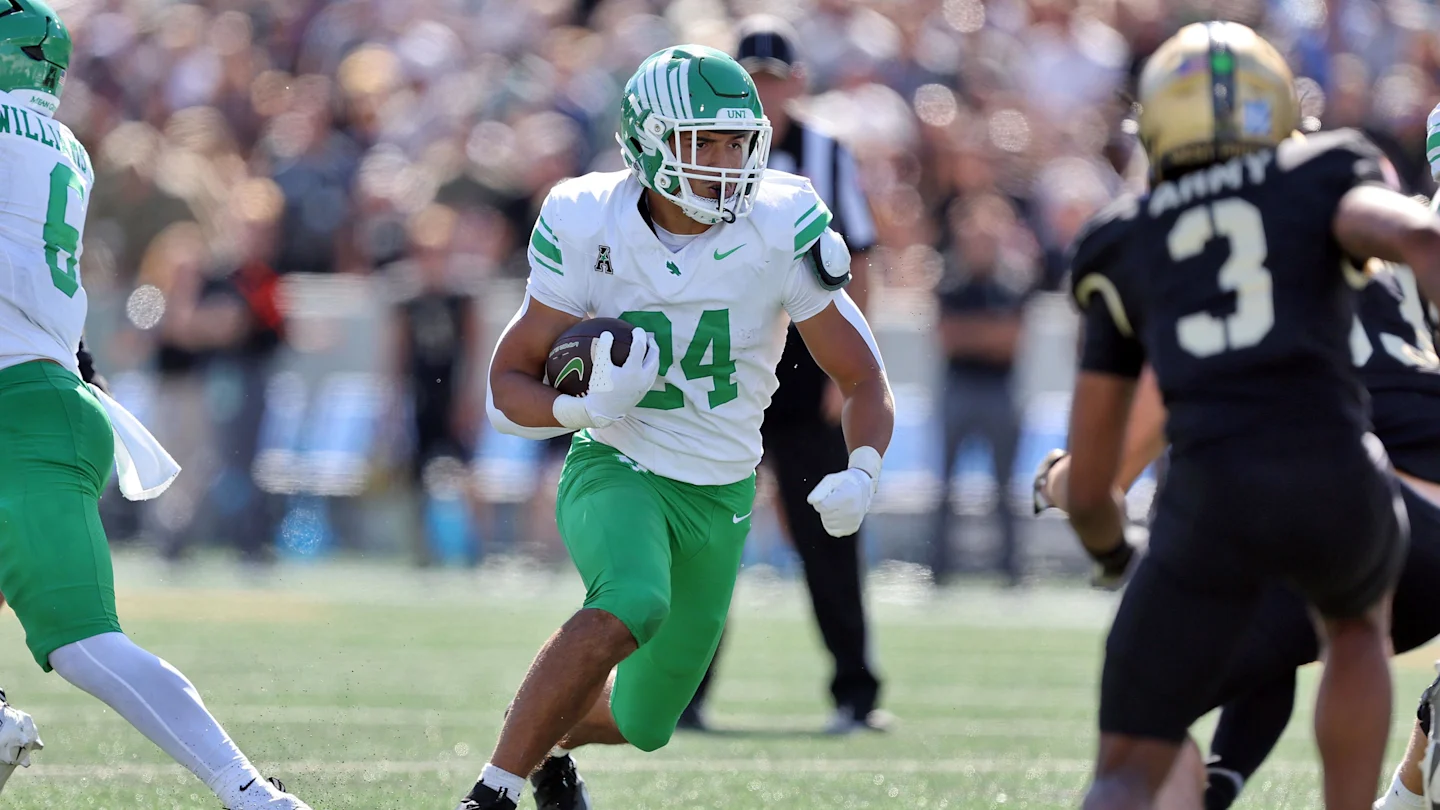
North Texas enjoyed a historic 2025 season, finishing 12–2 overall (7–1 in the American Conference) and cracking the AP Top 25.
The Mean Green posted the nation’s top offense (45.1 points per game), reached the AAC Championship Game, and capped the year with a thrilling 49–47 New Mexico Bowl win over San Diego State, the most wins in program history.
A key driver behind that success was true freshman running back Caleb Hawkins, who posted 1,434 rushing yards on 230 carries (6.2 yards per carry) with 25 rushing touchdowns, plus 32 catches for 370 receiving yards and four receiving TDs, 1,804 scrimmage yards and 29 total touchdowns.
He earned All-America and All-Conference freshman honors, national freshman awards recognition, and MVP honors in North Texas’ bowl victory.
However, shortly after, he announced his decision to enter the NCAA transfer portal, positioning himself as one of the highest-profile running backs available when the portal opens Friday.
On Monday, On3’s Pete Nakos specifically listed Hawkins among portal names being tracked and identified Texas as one of the programs showing early interest or appearing as a logical landing spot in that early intel.

Hawkins was a lightly-recruited three-star prospect out of North Rock Creek High School (Shawnee, Oklahoma) who signed with North Texas over offers from Emporia State and Central Oklahoma.
Texas finished the 2025 season ranked No. 13 in the final AP poll but failed to reach the College Football Playoff despite entering the year as the preseason No. 1 team in the AP Top 25.
Sophomore quarterback Arch Manning has publicly confirmed he will return to Texas for 2026, but the Longhorns face significant attrition at running back, with Quintrevion Wisner, Jerrick Gibson, and CJ Baxter all set to enter the transfer portal.
Texas has a clear need at running back, Hawkins’ proximity to Austin, and the program’s proven history of developing NFL-level backs, such as Bijan Robinson, Jonathan Brooks, Roschon Johnson, and Jaydon Blue, all point to Texas as a logical landing spot for Hawkins.
Read More at College Football HQ
- $2.6 million QB ranked as No. 1 transfer in college football
- 25-touchdown RB shares farewell note after entering college football transfer portal
- College Football Playoff team loses All-Conference player to transfer portal
- College football team loses three All-Americans to transfer portal

Petrino’s Friend Found a Workaround to Pay Taylen Green That’s Now Prohibited by NCAA

Mass Exodus at LSU could be big opportunity for Kentucky

Red Raiders arrive for CFP Quarterfinal at the Orange Bowl

Marblehead sports moments of 2025

NIL’s Mercenary March of College Football Athletes

Nevada youth rank last in sports participation. Will rising costs make it worse?

Nevada youth rank last in sports participation

Victims scammed by people posing as members of youth sports team at West Town Mall: KPD

Shoot 360 Franchisees Take Over Two Dallas-Fort Worth Units

Families weigh costs and benefits as year-round youth sports industry grows in Wisconsin

Wake Forest’s Jake Dickert revives the Demon Deacons in debut season

Major college football program linked to 1,800 yard RB in transfer portal

Saint Peter’s visits Fairfield after Sparks’ 26-point game

Spencer McLachlin Named Head Coach at UC San Diego

Defending Big West Regular Season And National Champion Long Beach State Chosen As 2026 Preseason Coaches’ Poll Favorite

SoundGear Named Entitlement Sponsor of Spears CARS Tour Southwest Opener

Donny Schatz finds new home for 2026, inks full-time deal with CJB Motorsports – InForum

Black Bear Revises Recording Policies After Rulebook Language Surfaces via Lever

Bowl Projections: ESPN predicts 12-team College Football Playoff bracket, full bowl slate after Week 14

Men’s and Women’s Track and Field Release 2026 Indoor Schedule with Opener Slated for December 6 at Home

David Blitzer, Harris Blitzer Sports & Entertainment

How Donald Trump became FIFA’s ‘soccer president’ long before World Cup draw

Michael Jordan’s fight against NASCAR heads to court, could shake up motorsports

DeSantis Talks College Football, Calls for Reforms to NIL and Transfer Portal · The Floridian
Elliot and Thuotte Highlight Men’s Indoor Track and Field Season Opener

Rick Ware Racing switching to Chevrolet for 2026

JR Motorsports Confirms Death Of NASCAR Veteran Michael Annett At Age 39

Colleges ponying up in support of football coaches, programs

#11 Volleyball Practices, Then Meets Media Prior to #2 Kentucky Match
West Fargo volleyball coach Kelsey Titus resigns after four seasons – InForum





-
 Motorsports3 weeks ago
SoundGear Named Entitlement Sponsor of Spears CARS Tour Southwest Opener
-
 NIL3 weeks ago
DeSantis Talks College Football, Calls for Reforms to NIL and Transfer Portal · The Floridian
-
 Sports2 weeks ago
#11 Volleyball Practices, Then Meets Media Prior to #2 Kentucky Match
-
 Motorsports2 weeks ago
Nascar legal saga ends as 23XI, Front Row secure settlement
-

 Motorsports2 weeks ago
Sunoco to sponsor No. 8 Ganassi Honda IndyCar in multi-year deal
-
 Sports2 weeks ago
Maine wraps up Fall Semester with a win in Black Bear Invitational
-
 NIL3 weeks ago
Ed Orgeron: Paying players via NIL would only require a ‘minor adjustment’
-
 Rec Sports2 weeks ago
WNBA’s Caitlin Clark, Angel Reese and Paige Bueckers in NC, making debut for national team at USA camp at Duke
-
Motorsports3 weeks ago
NASCAR, 23XI Racing, Front Row Motorsports announce settlement of US monopoly suit | MLex
-

 Sports3 weeks ago
Woods, Ogunribido Named CCIW Women’s Indoor Track & Field Student-Athletes of the Week