
Technology
Registration now open for 17 July event in London



Registration is now open for The TranSPORT Forum 2025, sponsored by Haivision, taking place at Kings Place in London on the afternoon of 17 July.
The half-day event will examine the latest developments in transmission technology, exploring live sports media workflows including terrestrial and satellite backhaul, IP and cloud-based transport solutions, the evolution of 5G and bonded cellular technologies, the latest compression standards and transport protocols, 4K and HDR delivery, the role of AI and more.
Why attend?
Hear as industry leaders share insights, strategies, and innovations shaping the future of sports broadcasting and discover the latest advancements in live sports transmission technology, while exploring emerging technologies and next-generation compression standards.
Sessions will include a deep dive into the shift to IP-based transmission, a look at how Low Earth Orbit (LEO) satellites will impact sports broadcasting, and the latest advances and best practices in transmission and connectivity enabling seamless remote productions in live sports coverage. Speakers will be announced soon.
To find out more and to register, click here.

Technology
Sultan Almasoud on the Top Trends in Technology and Esports in Saudi Arabia – Tech & Sourcing @ Morgan Lewis

Dr. Sultan Almasoud, managing partner of Morgan Lewis’s Riyadh office, has been closely involved in the Kingdom of Saudi Arabia’s rapid evolution into a global hub for innovation. His insights on the questions below shed light on the trends reshaping technology and esports—and the opportunities they unlock for investors and operators entering the market.
Q&A: SULTAN ALMASOUD
1. What are the most significant technology trends currently driving growth in Saudi Arabia?
Saudi Arabia is undergoing one of the most ambitious digital transformation journeys in the world. The most significant trend is the rapid adoption of AI across government, financial services, healthcare, and industrial sectors. Vision 2030 has accelerated investment in AI-ready infrastructure, digital identity, automation, and data platforms that support new digital services at scale.
We also are seeing strong momentum in cloud migration, driven by hyperscaler expansions, data localization policies, and new solutions that make it easier for public and private entities to adopt cloud-native technologies. In parallel, fintech innovation, digital payments, and open banking are creating a dynamic ecosystem of startups, investors, and regulators working together to modernize the financial landscape.
In addition, Saudi Arabia’s giga projects are acting as large-scale accelerators for advanced technologies, while strong regulatory frameworks around data, cloud, and cybersecurity are providing international investors with clarity and confidence. Combined with significant investment in digital talent and localization, this is enabling sustainable, long-term technology-driven growth across the Kingdom.
2. How is Saudi Arabia positioning itself as a global hub for esports?
Saudi Arabia has made esports a national priority, fundamentally reshaping the sector. The launch of the Saudi Esports Federation (SEF) and the Esports World Cup, supported by major public investment commitments, has placed the Kingdom at the center of global competitive gaming.
But the strategy extends beyond events. The country is developing training academies, production studios, esports arenas, and digital platforms that sustain year-round player and audience engagement. This ecosystem-driven approach is drawing global publishers, teams, and content creators who now view Saudi Arabia as a foundational market for long-term esports growth.
3. What opportunities do you see emerging for investors and companies entering the Saudi tech and esports market?
There is tremendous opportunity at the intersection of technology, entertainment, and digital infrastructure. For technology companies, opportunities are especially strong in AI solutions, cybersecurity, cloud services, digital identity, and smart city platforms.
In esports, the most compelling opportunities lie in content creation, talent development, gaming studios, tournament production, and technologies supporting broadcasting, analytics, and community engagement. Investors who understand the regulatory environment and align with the Kingdom’s long-term vision will find a market eager for strategic partnerships.
4. What challenges should companies keep in mind when operating in these fast-evolving sectors?
These sectors are evolving quickly, which makes regulatory navigation an important challenge. Companies need to stay aligned with requirements around licensing, content regulation, data protection, and foreign investment—areas that are developing alongside the industry itself.
Another key challenge is specialized talent. Whether it”s game design, AI engineering, or esports event management, building local capability is essential. Companies that invest early in training programs, knowledge transfer, and local partnerships will be best positioned for sustainable growth.
Ultimately, success requires a long-term commitment to the market, strong local relationships, and an understanding of national priorities as the Kingdom advances its digital transformation goals.
KEY TAKEAWAYS
Saudi Arabia is positioning itself at the forefront of global innovation, with technology and esports playing central roles in the nation’s economic transformation. As investment accelerates and new digital ecosystems emerge, companies that build strategic partnerships and engage deeply with local priorities will be poised to lead. Morgan Lewis is committed to helping clients navigate this dynamic landscape and capture the opportunities shaping the Kingdom’s digital future.
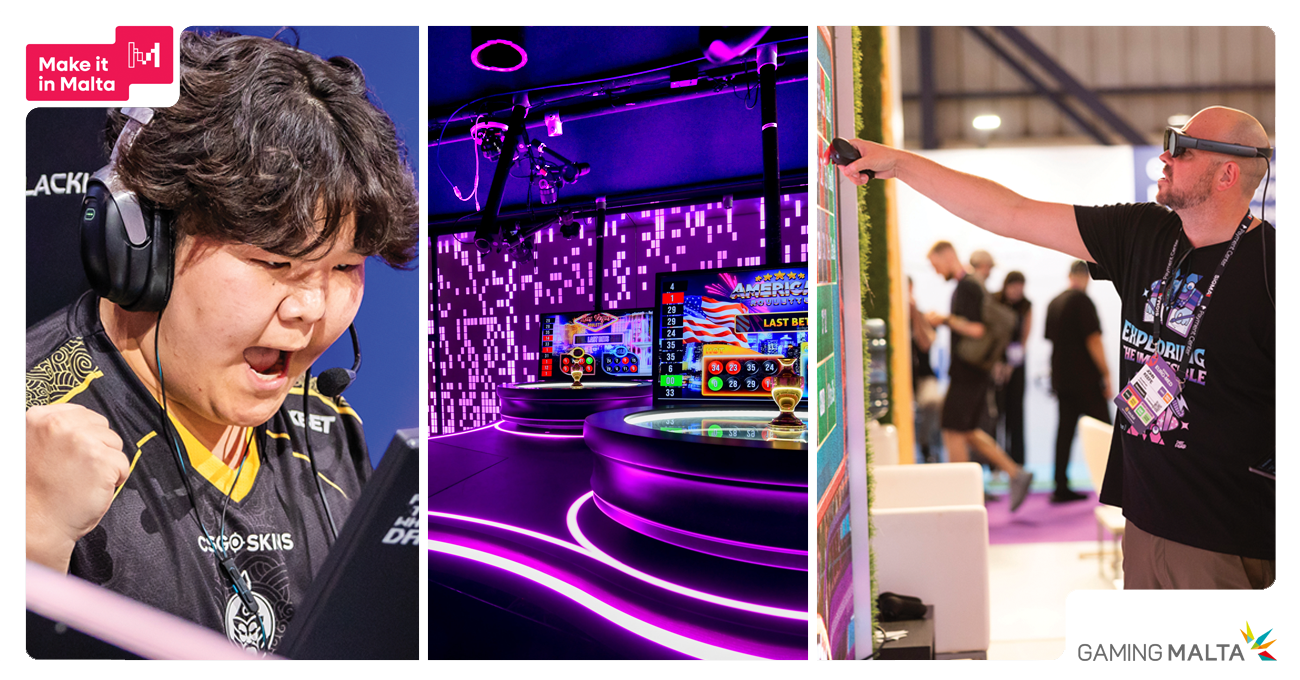
From regulatory certainty and talent depth to immersive innovation, Malta will showcase its full iGaming ecosystem at ICE Barcelona 2026. The Malta experiential showcase booth promises a unified national presence highlighting why the island remains the home of gaming excellence.
Given the sweeping reforms proposed and passed in iGaming jurisdictions worldwide in recent times, it is hardly surprising that ‘regulation’ has remained the most pressing issue for operators over the past two years.
In a turbulent landscape though, Malta has nurtured a long-established reputation for regulatory stability that has enabled the picturesque Mediterranean republic, with a population of just over half a million people, to punch well above its weight.
At ICE Barcelona 2026 in January, the island’s qualities as an iGaming jurisdiction will be showcased to the sector like never before at the Malta booth.
Designed to promote the destination as the world’s online igaming jurisdiction and the home of gaming excellence, the Malta space will be a hub of activity throughout gaming’s biggest show, with a virtual reality roulette experience created by Malta-based Draw & Code offering a compelling centrepiece.
“We have built the world’s iGaming Silicon Valley in Malta, and the expo space will be testament to our relentless approach in this regard,” says GamingMalta CEO Ivan Filletti. GamingMalta is an independent non-profit foundation jointly established by the Government of Malta and the Malta Gaming Authority (MGA).
A coordinated national presence
The Malta booth will serve as a live ecosystem, bringing together leading industry voices, including founders, operators, service-providers and regulators, with visitors able to discover first-hand how businesses scale from Malta.
Notably, a coordinated national presence will be on show at gaming’s most influential annual gathering. For the first time, GamingMalta and the Malta Gaming Authority (MGA) will be joined by government’s economic development agency Malta Enterprise, Malta’s largest bank, Bank of Valletta (BOV) and Identita responsible for citizens’ identity management and the implementation of migration processes will come together to present a united front.
This collaborative representation is not only designed to amplify Malta’s credibility – by enabling questions to be answered on a range of topics in the same place, from licensing and banking to staffing. It also signals unity in action.
“Going as a unified front communicates government and ecosystem alignment; that Malta isn’t a loose cluster but a coherent jurisdiction that supports long-term business,” GamingMalta explains. “This is especially persuasive to institutional investors and regulated operators.”
Such alignment is illustrated by Malta’s relatively predictable regulatory outlook. With GamingMalta’s ongoing R.E.S.P.E.C.T. campaign spear heading reputation management for the industry through the pillars of responsible gambling, entertainment, speed, professionalism, enhanced due diligence, consistency and talent, the focus is now on cementing Malta’s status as the home of gaming excellence.
Embracing the sector
According to GamingMalta, though, the attraction of Malta is “a sum of all the parts rather than one silver bullet”.
Regulatory certainty, international recognition and reducing market entry friction are important factors, while the ecosystem density on the island ensures experienced suppliers are plentiful.
Additionally, as a springboard to the European Economic Area, with English in use as the language of business, and with substantial talent and immigration pathways, there are a multitude of reasons for gambling businesses to land in Malta.
Above all, GamingMalta believes the island has established a jurisdiction that has fully embraced the sector, from cross-political support to initiatives like the iGaming Council – a GamingMalta-led initiative that brings together operators and policy-makers.
A cornerstone of the Maltese economy
Underpinning Malta’s presence at ICE will be the government’s recently published Envision 2050 long-term strategy, which sets out clear and measurable targets for the nation’s development.
At the heart of this, Malta is targeting a more sustainable average annual GDP growth rate of 5% by 2035 driven by strategic investment in seven priority sectors – one of which is gaming.
Moreover, gaming has already proven itself to be a cornerstone of the Maltese economy. According to Envision 2050 projections, the sector’s contribution is expected to rise from €1.5bn (£1.31bn/$1.76bn) to between €2.3-€2.8bn, making up 6-7% of the nation’s projected GVA by 2035.
With a focus on strengthening leadership in the gaming industry, ensuring transparency, player protection and fair competition, Envision 2050 will ensure the sector continues to be a major contributor towards the national economy.
According to GamingMalta, this blueprint signals a clear north star, showing how Malta is “a safe and resilient nation, inspired by heritage and driven by progress, fostering a healthy quality of life for all”.
‘Make It In Malta’ campaign
The creative thread which will support this drive at ICE is the ‘Make It In Malta’ campaign, highlighting success stories and case studies from a mature and practical ecosystem for growth.
“This approach reinforces the ‘home of gaming excellence’ brand by showing evidence – such as deals, hires, regulatory clarity and investment – rather than simply asserting it,” adds GamingMalta, which underscored the strength of “operator-led storytelling”.
GamingMalta adds, “Nobody promotes a jurisdiction better than the companies who have grown there. They supply credibility, concrete metrics and relatable roadmaps for peers. Success breeds success and Malta is the perfect stage for your global ambitions.”
A talented workforce
There is solid evidence to back up such claims. At a recent iGaming Council meeting, new investments totalling €60m by different operators were confirmed.
Furthermore, Malta’s 14,000-strong gaming industry workforce, as well as its safe and stable work environment, is widely recognised as a key growth driver. According to an MGA survey last year, 85% of gaming operators based in Malta were satisfied or highly satisfied with the availability of skilled personnel and the quality and cost-effectiveness of local training opportunities versus other leading jurisdictions.
Similarly, around 80% of respondents were satisfied or highly satisfied with the ease of labour mobility, with favourable perceptions regarding workforce ethics even higher at 87%. Malta also offers an appealing quality of life attracting top tier talent to the island many working in the igaming industry.
From a gaming workforce perspective, GamingMalta stresses that Malta’s pool of talent will be the key differentiator in the next phase of growth.
“Talent scales businesses,” says GamingMalta, who added that institutions like the Malta College of Arts, Science and Technology (MCAST) offer courses targeted at individuals who aim to progress in the gaming industry.
“Without a pipeline of developers, ops staff and compliance specialists, operators stall. That’s why migration policy and skills programmes – including Identità and Malta Enterprise initiatives – are critical. Business-friendliness remains the accelerant, but stable regulation and accessible talent are the engine.”
“Nobody promotes a jurisdiction better than the companies who have grown there… Success breeds success and Malta is the perfect stage for your global ambitions”
A technological convergence
Malta is also benefiting from a timely convergence of technology through the simultaneous growth of esports, game development and immersive innovations.
“The respective ecosystems can feed into and collaborate with each other, albeit as different animals,” GamingMalta says. “Ultimately, it all boils down to entertainment and how consumers are attracted or relate to entertainment platforms.
“We will be consolidating the gambling sector by focusing on a strong regulatory framework ensuring transparency and fair competition and simultaneously accelerate interactive entertainment sectors through fiscal initiatives, technological innovation and talent development.
“Malta’s long-term strategy is to build a resilient, innovation-driven, high-value economy. The gaming, esports and interactive media sectors align perfectly with this national direction because they represent the type of future-proofed, knowledge-intensive industries Malta aims to anchor over the next 25 years.”
GamingMalta’s own ‘Manifesto’ builds on this drive with a blueprint designed to build on 20 years of success to secure the future of Malta as an in-demand destination for operators.
Among the key pillars of the Manifesto’s 10-point plan are a focus on keeping corporate tax competitive, maintaining political support, improving sector skills and developing off-island relations, as well as driving up responsible gaming standards and encouraging innovation.
Attracting and retaining operators
With a strong regulatory framework, competitive gaming tax structure and strategic position as a gateway to European gambling, casino and lottery markets, over 350 operators are already based on the island.
However, Malta’s gaming industry stakeholders are laser-focused on providing a framework that encourages further growth – and, like the operators it hosts, the desire is to attract, as well as retain.
Some of the industry’s biggest names have relocated to the republic. Meanwhile, at the end of 2023, across Malta’s largest 100 operators by turnover, the average period of operation on the island was 13 years -illustrating that once major players arrive, they tend to stay.
As GamingMalta CEO Filletti says following ICE earlier this year: “Malta may be small in size, but our impact on the iGaming industry continues to be immense.”
Now, as a small nation with a big reputation, Maltese stakeholders are aligning to harness opportunities at major events like ICE, so the island can build on its status as the gold-standard of iGaming industry destinations.
Book your meeting today with GamingMalta, MGA or any of the co-participants at ICE on: https://www.gamingmalta.org/make-it-in-malta/ and visit the Make it in Malta booth Hall 4 Booth 4C40.

Ivan Filletti, GamingMalta CEO
Our website uses cookies, as almost all websites do, to help provide you with the best experience we can.
Cookies are small text files that are placed on your computer or mobile phone when you browse websites.
Our cookies help us:
– Make our website work as you’d expect
– Remember your settings during and between visits
– Offer you free services/content (thanks to advertising)
– Improve the speed/security of the site
– Allow you to share pages with social networks like Facebook
– Continuously improve our website for you
– Make our marketing more efficient (ultimately helping us to offer the service we do at the price we do)
We do not use cookies to:
– Collect any personally identifiable information (without your express permission)
– Collect any sensitive information (without your express permission)
– Pass personally identifiable data to third parties
– Pay sales commissions

Smart technology has quietly reshaped nearly every part of modern life, from how we manage our homes to how we consume entertainment. One area seeing particularly rapid innovation is online gaming. Advances in artificial intelligence, cloud computing, and mobile connectivity are not just improving visuals or speed — they’re fundamentally changing how users interact with digital gaming platforms. For tech-savvy audiences, this evolution represents a fascinating case study in how intelligent systems enhance user experience at scale.
Online gaming platforms today are built on sophisticated technology stacks designed to personalize content, streamline performance, and improve security. This shift is especially visible in online casino gaming, where algorithms analyze player behavior to deliver tailored game recommendations and seamless performance across devices. For example, players looking to explore modern gaming platforms can Experience the thrill of top-rated casino games at Winna while seeing firsthand how smart systems elevate engagement and usability.
As entertainment increasingly converges with technology, the online gaming sector offers valuable insight into how innovation drives adoption, retention, and trust.
AI and Machine Learning Powering Smarter Gameplay
 AI and Machine Learning Powering Smarter GameplayiStock
Artificial intelligence plays a central role in today’s online gaming experiences. Machine learning models continuously analyze gameplay data to understand user preferences, playing patterns, and engagement habits. This allows platforms to create more intuitive interfaces and personalized recommendations without requiring users to manually search for content.
In casino-style gaming, AI helps recommend games based on past behavior, optimize load times, and ensure smooth performance during high-traffic periods. Beyond user experience, AI is also critical for maintaining fair play. Behavioral analysis tools can detect unusual activity, flag potential fraud, and help operators maintain secure, trustworthy environments — an essential factor for platforms handling real-money transactions.
From a broader technology perspective, these systems demonstrate how real-time data processing and adaptive learning models are becoming essential components of modern digital services.
Cloud Computing and the Shift to Device-Agnostic Gaming
 Cloud Computing on the rise iStock
Cloud technology has removed many traditional barriers to entry for online gaming. Instead of relying on powerful local hardware, games can now be rendered and processed remotely, with gameplay streamed directly to users’ devices. This shift allows complex, graphics-rich experiences to run smoothly on smartphones, tablets, and laptops.
For consumers, this means flexibility — gaming is no longer tied to a single device or location. For developers and operators, cloud infrastructure enables faster updates, scalable performance, and reduced downtime. These benefits are especially important for online platforms that must remain accessible around the clock while supporting thousands of simultaneous users.
As cloud adoption accelerates across industries, online gaming stands out as one of the clearest examples of how distributed computing enhances both performance and accessibility.
Mobile Connectivity and Market Growth
Mobile technology has been one of the biggest drivers of growth in the online gaming sector. Improvements in smartphone processing power, combined with faster networks like 5G, have made mobile gaming experiences nearly indistinguishable from desktop or console play.
Industry data highlights just how significant this shift has been. According to Statista’s research on mobile gaming market trends, mobile games account for a substantial share of global gaming revenue, driven by ease of access and growing consumer demand.
For online gaming platforms, optimizing for mobile is no longer optional. Responsive interfaces, fast-loading content, and secure mobile payment systems are now baseline expectations. Platforms that successfully integrate these elements benefit from higher engagement and broader audience reach.
Security Innovations Building User Trust
Security remains a top concern for users engaging with online gaming platforms, particularly those involving financial transactions. Smart technology has enabled several major advancements in this area, helping build confidence and credibility across the industry.
Modern platforms rely on encryption protocols to protect personal and financial data, while AI-powered monitoring systems analyze activity in real time to identify irregular behavior. Some platforms are also experimenting with biometric authentication and blockchain-based transaction verification to further strengthen transparency and security.
These technologies not only protect users but also demonstrate how advanced security solutions can be deployed at scale without sacrificing user convenience — a balance many digital industries continue to pursue.
Social Features and Interactive Experiences
 Social Features and Interactive Experiences iStock
Gaming has evolved from a solitary activity into a highly social experience. Smart technology has enabled real-time chat, live multiplayer interaction, and integrated streaming features that allow users to share gameplay instantly.
Live gaming and streaming platforms have blurred the line between player and audience, creating communities built around shared interests and experiences. As virtual and augmented reality technologies continue to mature, these social elements are expected to become even more immersive, allowing users to interact in fully realized digital environments.
This shift reflects a broader trend in tech-driven entertainment: experiences are no longer just consumed — they’re shared.
What the Future Holds for Smart Gaming
The next wave of innovation in online gaming will likely focus on deeper AI integration, enhanced immersion, and cross-platform compatibility. AI-generated content, adaptive storytelling, and predictive personalization will allow platforms to deliver experiences that evolve with each user.
Virtual reality, augmented reality, and spatial computing are also poised to redefine how players interact with digital worlds. Combined with cloud infrastructure and intelligent analytics, these technologies will continue pushing online gaming toward more immersive, responsive, and inclusive experiences.
Conclusion
Online gaming has become a powerful showcase for how smart technology can transform digital experiences. Through AI-driven personalization, cloud-based performance, mobile optimization, and advanced security, modern platforms are delivering entertainment that is more accessible, engaging, and secure than ever before.
For tech-focused audiences, this evolution highlights the practical impact of intelligent systems operating behind the scenes. As innovation continues, online gaming will remain at the forefront of demonstrating how technology enhances not just how we play — but how we connect, interact, and experience digital entertainment.
From Your Site Articles
Related Articles Around the Web

Launching for the Spring 2026 semester, the TLTC Innovation Hub will expand hands-on discovery, immersive learning and high-quality content creation
for the Seton Hall community. The Hub supports academic inquiry and creative exploration
across disciplines by bringing together fabrication tools, XR and AI technologies
and production studios, plus open collaboration spaces and consultation rooms.
“We built the Innovation Hub so that learning does not stop at the classroom door,”
said Michael Soupios, executive director of the Teaching, Learning and Technology Center. “It is a creative space where students and faculty can experiment with new tools,
turn ideas into prototypes and explore projects beyond traditional assignments. The
Innovation Hub helps transform how we teach and learn by giving our community room
to explore, make and imagine what is possible.”
The Innovation Hub includes an open lounge and collaboration space with comfortable
seating, flexible work areas, ambient lighting and easy power access. The Hub also
features several dedicated studios, each designed for a different kind of making,
creating and problem-solving. Here is what students, faculty and staff can expect
in each area.
Maker Studio
 A hands-on space for designing, prototyping and building. Users can work with 3D printing,
laser engraving and desktop CNC machining, plus sublimation printing, vinyl cutting
and robotics or microcontroller kits. Completed 3D prints can be retrieved through
secure project pickup lockers.
Learn more about the Maker Studio and available equipment.
XR/AI Studio
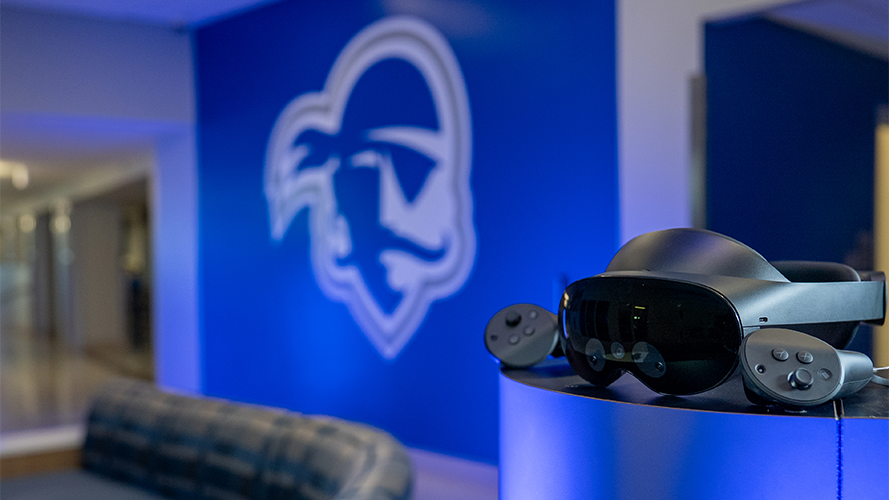 A dedicated space for extended reality, mixed reality and AI exploration. Users can
work with Meta Quest Pro headsets, immersive applications and simulations, along with
workshops and training to support XR integration in courses and projects.
Explore the XR and AI Studio.
Content Creation Studios
 Four spaces for creating high-quality audio and video, including a four-microphone podcast studio, a one-button video studio, a lightboard studio and a production
studio supported by the TLTC’s Digital Media Team.
Learn more about the Content Creation Studios.
Solutions Studio
 The Solutions Studio is the Innovation Hub’s walk-up support desk and first stop for
technology assistance. Beginning in Spring 2026, select Information Technology services
currently located in Corrigan Hall will operate from the Innovation Hub, providing
support for technology questions and laptop or mobile device issues. Located in the
open-style seating area next to the elevator, the Solutions Studio is designed to
be approachable and make it easy to get the help you need.
“By relocating the Solutions Studio to a central location in the Innovation Hub, we
are ensuring that every member of the University community has easy access to the
technology support they need,” said John Fernandes, senior director of IT Service
Management. “From assistance with SHU network login issues such as Wi-Fi and account
access to hardware and software support, our goal is to deliver a premier experience.
Whether you are troubleshooting an issue or learning something new, we invite everyone
to stop by. We are here to help.”
Visit the Solutions Studio.
The Hub will officially open in the Spring 2026 semester, with a grand opening celebration
and a blessing of the new Walsh Library entrance planned later in the semester. The
TLTC Innovation Hub is designed to make innovation more accessible for students, faculty
and staff. Whether you are studying, meeting with classmates, brainstorming a project
or exploring emerging technologies, the Innovation Hub is a place where learning becomes
interactive, content is created and ideas come to life.
Updates on services and access will be shared in the coming weeks. Visit the TLTC Innovation Hub webpage for additional information.
Categories:
Science and Technology
Purely digital games lack tactile, social play, while classic board games can’t adapt probabilities, stream competition, or evolve with live data. Base on Board 2.0 delivers the best of both with dynamic E-ink smart dice that shift probabilities in real time using MLB stats, plus AI commentary and visual effects. Altogether, Base on Board 2.0 delivers authentic baseball drama and supports competitions in a physical-digital gaming hybrid experience.

Visit Eau Claire and Sonnentag Center host 2026 Flag Football tournament

Previewing Kentucky Volleyball vs. Wisconsin Badgers in the Final Four

Midweek Matinee A Celebration for Community’s Kids

Sultan Almasoud on the Top Trends in Technology and Esports in Saudi Arabia – Tech & Sourcing @ Morgan Lewis

Joel Klatt can’t stand NIL re-signing announcements

More Than 550 Boys Volleyball Teams Gather in Los Angeles for SoCal Cup ‘Winter Formal’ Event and College Combine

From student-athlete to entrepreneur, Liberal Arts graduate charts next chapter

What to expect from Gaming Malta at ICE Barcelona

Texas Tech Linked to $2.4 Million College Football Transfer Quarterback

Live updates as Aggies take 2-0 lead

Q-Collar to make NCAA volleyball appearance in Final Four Pitt-A&M match

Trump administration moves to cut off transgender care for children
LEIFRAS Co., Ltd. Reports Financial Results for the Nine Months Ended September 30, 2025

Season Review: 2025 Michigan Volleyball

Upcoming events: Lights, shows and Christmas dinner | News, Sports, Jobs

First Tee Winter Registration is open

Fargo girl, 13, dies after collapsing during school basketball game – Grand Forks Herald

CPG Brands Like Allegra Are Betting on F1 for the First Time

F1 Las Vegas: Verstappen win, Norris and Piastri DQ tighten 2025 title fight

Volleyball Recaps – November 18

Sycamores unveil 2026 track and field schedule

Two Pro Volleyball Leagues Serve Up Plans for Minnesota Teams

Utah State Announces 2025-26 Indoor Track & Field Schedule

SoundGear Named Entitlement Sponsor of Spears CARS Tour Southwest Opener

Redemption Means First Pro Stock World Championship for Dallas Glenn

Jo Shimoda Undergoes Back Surgery

Texas volleyball vs Kentucky game score: Live SEC tournament updates

Bowl Projections: ESPN predicts 12-team College Football Playoff bracket, full bowl slate after Week 14

How this startup (and a KC sports icon) turned young players into card-carrying legends overnight

Robert “Bobby” Lewis Hardin, 56






-
 Motorsports1 week ago
SoundGear Named Entitlement Sponsor of Spears CARS Tour Southwest Opener
-
 Motorsports3 weeks ago
Jo Shimoda Undergoes Back Surgery
-
 NIL3 weeks ago
Bowl Projections: ESPN predicts 12-team College Football Playoff bracket, full bowl slate after Week 14
-
 Rec Sports3 weeks ago
How this startup (and a KC sports icon) turned young players into card-carrying legends overnight
-
 Rec Sports3 weeks ago
Robert “Bobby” Lewis Hardin, 56
-
Sports3 weeks ago
Wisconsin volleyball sweeps Minnesota with ease in ranked rivalry win
-

 Motorsports1 week ago
Donny Schatz finds new home for 2026, inks full-time deal with CJB Motorsports – InForum
-

 Motorsports3 weeks ago
Increased Purses, 19 Different Tracks Highlight 2026 Great Lakes Super Sprints Schedule – Speedway Digest
-

 Rec Sports2 weeks ago
How Donald Trump became FIFA’s ‘soccer president’ long before World Cup draw
-

 Sports2 weeks ago
Men’s and Women’s Track and Field Release 2026 Indoor Schedule with Opener Slated for December 6 at Home