
Sports
Rivals to Roommates




On May 15, the NCAA’s committee on women’s athletics recommended granting full championship status to two cheer-adjacent disciplines: acrobatics & tumbling and stunt.
Set to take effect across all three divisions by spring 2027, the decision capped years of parallel—and often adversarial—campaigns for acceptance by college sports’ governing body. The announcement of their joint endorsement came just weeks before the final court approval of the House v. NCAA settlement and was made through simultaneous press releases, each highlighting the milestone in slightly different terms. Acrobatics & tumbling was described as having “made significant progress,” while stunt was credited with taking “a major leap forward.”
As part of the House settlement’s new participation parameters, stunt programs may now field up to 65 athletes, compared to 55 for A&T—an important allowance for institutions looking to meet gender equity targets through large, cost-effective rosters. The NCAA has welcomed both as important pathways to expand opportunities for women in sport.
Yet for those who spent the past two decades pushing their disciplines toward legitimacy, the idea of arriving at the finish line together feels more than a little surreal.
For much of their history, acrobatics & tumbling—a gymnastics-inspired outgrowth of early competitive cheer—and stunt—Varsity Brands’ effort to retool its all-star cheer model into an NCAA-friendly format—saw each other as direct competitors in a heads-up, zero-sum race for college admission.
“The sentiment we received so often from administrators and experienced people within college athletics is that only one will make it,” Janell Cook, executive director of the National Collegiate Acrobatics & Tumbling Association (NCATA), said.
“Both sports were building, and when you’re building something, you want to take care of that thing,” added Kentucky head stunt coach Blair Bergmann.
Their rivalry also served as a kind-of proxy battle over Varsity Brands’ longstanding (and legally scrutinized) grip on the entire cheerleading industry. The multibillion-dollar company—acquired last summer by private equity giant KKR—had regarded the NCAA’s involvement in the cheer space as a potential threat to its tightly controlled empire of camps, competitions and branding deals.
For those who saw Varsity’s dominance as a troubling concentration of power—if not an outright antitrust issue—the collegiate space offered a rare opportunity: a chance to build something outside the reach of a deeply entrenched corporate force.
“The first 10 years felt like you were straddling the line between proactive and reactive,” said Quinnipiac head A&T coach Mary Ann Powers, a trailblazer of her sport who has expressed concern about Varsity’s sway over the cheer world. “On one hand, I work at a university that was truly supporting it, not just with smoke and mirrors. But the reactive part is seeing the same sport—or what looks like the same sport—making progress and knowing that [Varsity] had all the antitrust [issues].”
Meanwhile, the uneasy launch of what was then called college competitive cheer—first introduced at the University of Maryland in 2003—rekindled concerns among Title IX advocates committed to ensuring that new women’s sports offered legitimate, equitable opportunities.
That tension would soon erupt into one of the most consequential gender equity battles in modern NCAA history.
In 2009, Powers’ Quinnipiac program joined forces with those at five other universities—Maryland, Oregon, Baylor, Azusa Pacific and Fairmont State—to formalize a new varsity sport blending elements of gymnastics and cheerleading. Their collective effort led to the creation of the NCATA in early 2010. Initially named the Collegiate Stunts and Tumbling Association, the group elected Oregon’s senior woman administrator Renee Baumgartner—a former collegiate golf coach—as its first president.
“Acro and tumbling was built on a strong foundation by administrators and coaches in the NCAA that wanted to provide opportunities to young girls,” Baumgartner said. “And we did it. We created the first NCAA female sport.”
At Quinnipiac, however, the rollout of this new sport quickly became embroiled in legal controversy. In an effort to save money, the university attempted to simultaneously cut women’s volleyball. That decision prompted a Title IX lawsuit filed by five volleyball players and the team’s head coach, alleging the school was disguising a club activity as a legitimate varsity sport to artificially inflate its female participation numbers.
The trial, which unfolded in spring 2009, featured testimony from both Powers and Varsity founder and CEO Jeff Webb—each making the case for or against competitive cheer’s (or Acrobatics & Tumbling’s) legitimacy as an NCAA-caliber sport.
“It continues to call itself cheer—which they don’t cheer and they don’t lead—which creates confusion with the classical cheerleader team,” Webb argued. “And they perform the same type of routine that classical cheerleaders have provided as part of their entertainment component for 25 years, which further confuses things.”
Despite Varsity’s previous admissions to the SEC, Webb insisted he had no issue with the formation of a new varsity sport so long as it didn’t undermine or compete with what he called “classical cheerleading.”
Powers countered on the witness stand, challenging whose rhetoric was the real threat.
“I think what offends [cheerleaders] more than anything is other women degrading them and knocking what they do,” she testified.
But Webb was not alone calling into question this new, cheer-like activity. The plaintiffs also drew on the expert testimony of Donna Lopiano, a prominent Title IX authority, college athletic administrator and former CEO of the Women’s Sports Foundation. Years earlier, Lopiano had played a key role in shaping the Department of Education’s 1979 guidelines on Title IX compliance in athletics and had since remained a vigilant observer of how educational institutions applied the law in practice.
In her expert report, Lopiano wrote, “QU should not be eliminating viable, existing women’s varsity sports and replacing them with an activity that has not been approved as a sport.” She pointed out the hastily assembled nature of the Quinnipiac cheer team, which lacked formal recruiting and coaching protocols, as evidence that the move was more strategic than substantive.
The court ruled in favor of the volleyball players, halting the planned elimination of the sport. In the verdict’s wake, the National Collegiate Acrobatics and Tumbling Association (NCATA) solidified an alliance with USA Gymnastics to officially sanction its competitions. Just days later, USA Cheer—a nonprofit supported by Varsity—put forward “STUNT,” in demonstrative all-caps, kicking off a decade-long battle for formal NCAA acceptance.
In 2011, the NCAA committee on women’s athletics (CWA) urged both organizations to collaborate on a unified sport proposal. However, each declined, opting instead to forge rival paths.
Acrobatics & tumbling was the first to advance. In 2018, the NCATA submitted its initial proposal for emerging sport status. The CWA endorsed it in 2019, followed by formal approval from the Division I Council in June 2020. That decision was conceivably influenced by the presence of Baumgartner, then NCATA president and athletic director at Santa Clara University, who held a seat on the D-I council at the time.
“I think it was pretty clear to everybody in the room that I advocated for acrobatics & tumbling,” Baumgartner admitted. “But you follow the rules and know exactly what benchmarks need to be met.”
By contrast, USA Cheer’s 2018 proposal to establish stunt as an emerging sport failed to secure initial approval from either the CWA or the NCAA’s strategic vision and planning committee. Reviewers determined the application lacked a clear explanation of how stunt was “philosophically and operationally separate” from traditional cheerleading, and how it would deliver a student-athlete experience comparable to other NCAA sports.
Undeterred, USA Cheer resubmitted its proposal for stunt in 2019 and received CWA approval in 2020. However, the process was paused for two years due to the COVID-19 pandemic. The effort regained momentum in 2022 when the CWA re-endorsed the sport.
Ahead of the 2023–24 academic year, stunt finally secured emerging status across all three NCAA divisions—drawing level with acrobatics & tumbling in the race toward full championship designation.
If, as expected, both disciplines receive that at the upcoming 2026 NCAA Convention, they will become the sixth and seventh women’s sports to do so under the emerging sports program, joining join rowing (1996), ice hockey (2000), water polo (2000), bowling (2003), beach volleyball (2015) and wrestling (2025).
Though their competition for NCAA recognition may be over, stunt and acrobatics & tumbling are now trying to secure institutional sponsorship from many of the same schools.
“I think most will pick one [sport] or the other for the fact that they aren’t in the position to add multiple programs,” said the NCATA’s Cook.
In making its case, stunt hails its direct lineage to the popular world of all-star cheerleading.
“Our whole entire sport was built from cheerleading skills,” noted USA Cheer CEO Lauri Harris, who estimates that approximately 95% of collegiate stunt athletes come from traditional cheerleading backgrounds.
Acrobatics & tumbling asserts its athletic diversity, drawing on a wide range of strengths from its participants.
According to NCATA survey data from the 2023–24 season, the largest share of collegiate acrobatics & tumbling athletes (approximately 43%) came from artistic gymnastics. Another 27% previously participated in competitive cheer, while 11% had backgrounds in spirit or sideline cheer.
In terms of format, the two emerging sports feature some key distinctions. Stunt is structured around head-to-head matchups, with two teams simultaneously performing the same compulsory routines across four quarters: partner stunts, pyramids and tosses, jumps and tumbling, and a final team routine. A&T, by contrast, resembles a gymnastics meet, with two or three teams competing in six categories—compulsory, acro, pyramid, toss, tumbling and team—separated by a halftime break.
Despite their differences, stunt and A&T are perhaps as closely related as any two college team sports.
“If someone walked into a gym, I don’t think the average person could tell whether they were watching acrobatics & tumbling or stunt,” Powers said.
For the upcoming 2025–26 season, there will be 66 varsity stunt programs at the collegiate level, including seven in Division I, compared to 49 acrobatics & tumbling teams—11 of which compete in D-I. Following the House settlement, one D-I institution, the University of West Georgia, chose to postpone launching its stunt program from 2026 to 2027.
According to USA Cheer, two other Division I schools that had been exploring stunt put those plans on hold after House, while two additional institutions have since begun seriously considering the sport in light of the ruling. (USA Cheer declined to name these four schools.)
In terms of athlete participation, the University of Kentucky boasts the largest stunt roster in the country, with 61 athletes on its team last season. That number far exceeds any other program nationwide. Kentucky—whose traditional cheerleading squad is a perennial powerhouse at Varsity’s UCA College Nationals—finished second to Cal Baptist at the 2025 USA Cheer College Stunt National Championship. Cal Baptist, by comparison, fielded a roster of 28 athletes.
Kentucky launched its stunt program during the 2021–22 academic year, amid a Title IX lawsuit filed in 2019 by two former students who alleged that the university failed to offer proportional athletic opportunities for women.
Why stunt instead acrobatics & tumbling?
“Cheerleading is very big in [the] state of Kentucky,” said Bergmann, the Wildcats’ head coach. “Stunt spoke more to that heritage.”
Prior to the House settlement, the NCAA had capped the number of scholarships for both stunt and acrobatics at 14. Although schools are now allowed to exceed that figure significantly for stunt, Bergmann said he expects Kentucky to remain at 14 scholarships for the upcoming year in order to keep the program cost-effective.
“We are at a point where the sport is so new and it is such at the ground level that basically what we do the next couple years is going to set the sport up for success in the next 20 years,” Bergmann said.
To be sure, schools are not required to choose between the two sports. Missouri State, for example, added both stunt and A&T last season, becoming only the second university to adopt both programs. (Hawaii Pacific, which previously sponsored A&T, also added stunt in the same year.)
Currently transitioning from FCS to FBS, Missouri State has acknowledged ongoing challenges in maintaining Title IX compliance—particularly as the female share of its student body has risen from 55% in 2008 to 61% in fall 2024. In an interview, Missouri State senior associate athletic director Casey Hunt made no bones about the fact that the stunt/A&T twofer was a gender-equity play, noting the relatively low cost and high roster capacity of both sports, especially post-House.
Both MSU teams now share the Hammons Student Center with MSU’s volleyball and swimming & diving programs, following a $2.7 million renovation that added a new weight room and dedicated locker rooms for stunt and A&T.
In their first spring season, Missouri State’s stunt team included 28 athletes, while its A&T team fielded 23. Both used the NCAA-allowed maximum of 14 scholarships. Hunt said the goal for the upcoming year is to grow each roster to between 30 and 35 athletes, with plans for continued expansion.
“We really could grow those to what, 120 [roster spots]?” Hunt said. “That becomes very significant for us, where maybe we don’t have to explore adding another sport program down the road, or we could just add individuals to one of those two programs, if not both.”
Since both sports compete in the spring, Missouri State has not experienced any athlete crossover—and likely won’t. Still, Hunt noted that the coaching staffs actively collaborate on recruiting.
The skill overlap between stunt and sideline cheerleading means that schools can feasibly transition existing cheer squads into varsity stunt teams. Hunt predicted that traditional sideline squads could increasingly lose ground to both sports, a shift she says is already evident on MSU’s campus.
“I think part of that is [A&T and stunt] get scholarships, there is a competitive aspect, you get the travel, you get the gear,” Hunt said.
USA Cheer’s Harris, however, downplays the fear of that kind of cannibalization.
“There’s such a small number of opportunities at the college level for cheer that we really haven’t seen a lot of athletes have to make a choice,” Harris said. “This has just kind of expanded more opportunities for high school cheerleaders to actually do something in college.”
To that end, the battle-wearied advocates of acrobatics & tumbling and stunt say they’re ready to embrace a future of co-existence.
“Since the NCAA has chosen to [have] them both, who am I to say it should be one or the other?” said Powers. “I don’t feel that way anymore.”

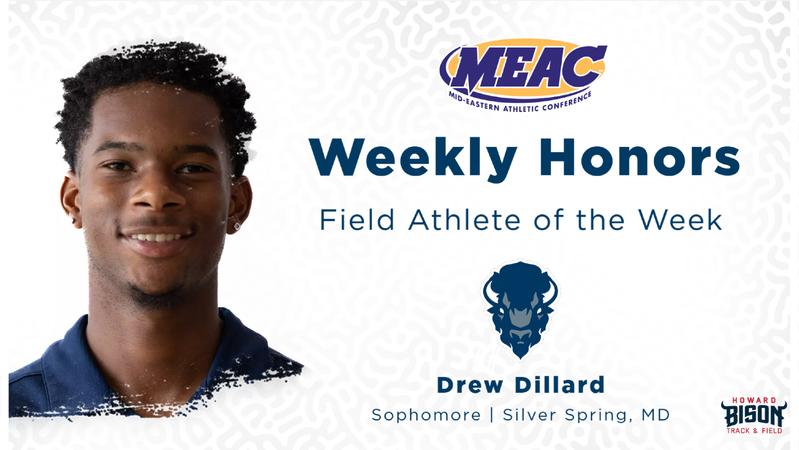
NORFOLK, Va. (December 10, 2025) – The Mid-Eastern Athletic Conference (MEAC) uncovered its men’s track & field weekly awards where Howard University sophomore Drew Dillard (Silver Spring, Md.) claimed the league’s Field Athlete of the Week. The announcement came Wednesday afternoon.
At the HBCU & Ivy Challenge (Dec. 5), Dillard won the high jump with a MEAC-best mark of 2.07 meters, which currently ranks 21st nationally.
Senior sprinter Dylan Gaines (Houston) received honorable mention after winning the 200-meter dash a time of 21.52.
North Carolina Central sophomore Zion Amadi was named MEAC Track Athlete of the Week.
On Dec. 13, HU returns to the Northeast for the Seahawk Shootout, hosted by Wagner College.
For more information, visit the Bison Athletics website at www.HUBison.com or the MEAC website at www.MEACSports.com.

Ahead of regionals, Michella Chester re-ranked the 16 teams still standing. Here are her top five before regional action tips off on Thursday:
1. Nebraska (No. 1 seed)
This one seems obvious. The Cornhuskers are the team to beat as the only undefeated squad in DI.
2. Kentucky (No. 1 seed)
With just two losses all season, it’d be hard to move the Wildcats any lower even though they were the only No. 1 seed to drop a set in the first two rounds.
3. Texas (No. 1 seed)
The Longhorns had one of the toughest second round matchups with No. 8 Penn State, but they posted an impressive sweep, holding the Nittany Lions to just nine points in the second set.
4. Pitt (No. 1 seed)
The Panthers swept Michigan in the second round, but maybe not as easily as they would’ve liked. Sets one and two were each just two-point wins, but with the reigning AVCA Player of the Year Olivia Babcock on their side, it’s hard to count out Pitt.
5. SMU (No. 2 seed)
The Mustangs are the first 2-seed to crack the re-rankings after setting an NCAA tournament record with a .618 hitting percentage in the first round. This team is hot right now heading into regionals.
👉 Click or tap here to find all 16 teams re-ranked
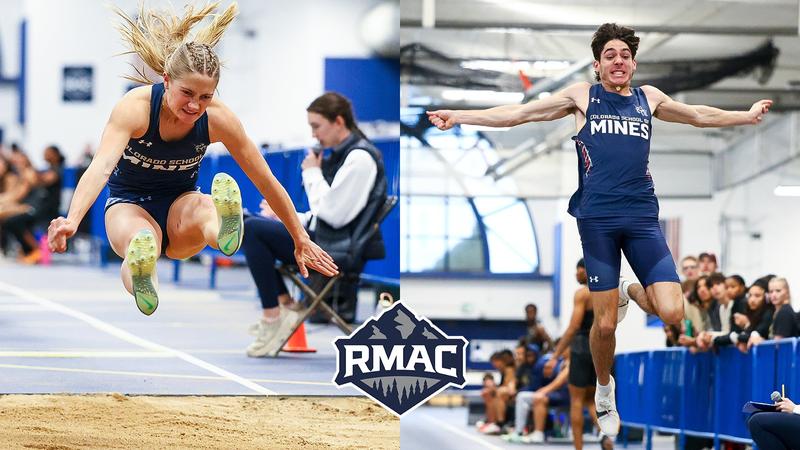
COLORADO SPRINGS – Colorado School of Mines freshmen long jumpers Alejandro Philippart and Violet Williams have earned the RMAC’s Field Athlete of the Week awards to open the indoor track & field season.
The duo had debuts to remember on Dec. 5 at the Mines Alumni Classic as each won their respective long jump competitions. Philippart turned in Mines’ best long jump mark in a decade – 7.38m (24-2.5) – to take the early RMAC lead and tie for third on the NCAA Division II national performance list. Meanwhile, Williams smashed the Mines record with her mark of 6.21m (20-4.5), the best in the RMAC since 2021 and second on the national list after the opening weekend. Williams also ran an impressive 7.70-second 60m dash on Saturday, becoming the #3 performer all-time at Mines in the sprint event.
The Orediggers return to action this weekend at the Colorado Running Company Pre-Holiday Invite at UCCS.
RMAC Indoor Track & Field Athletes of the Week, Dec. 10
Men’s Track Athlete of the Week: Kidus Begashaw, Adams State
Men’s Field Athlete of the Week: Alejandro Philippart, Colorado School of Mines
Women’s Track Athlete of the Week: Helen Braybrook, CSU Pueblo
Women’s Field Athlete of the Week: Violet Williams, Colorado School of Mines
Mustangs Riding High
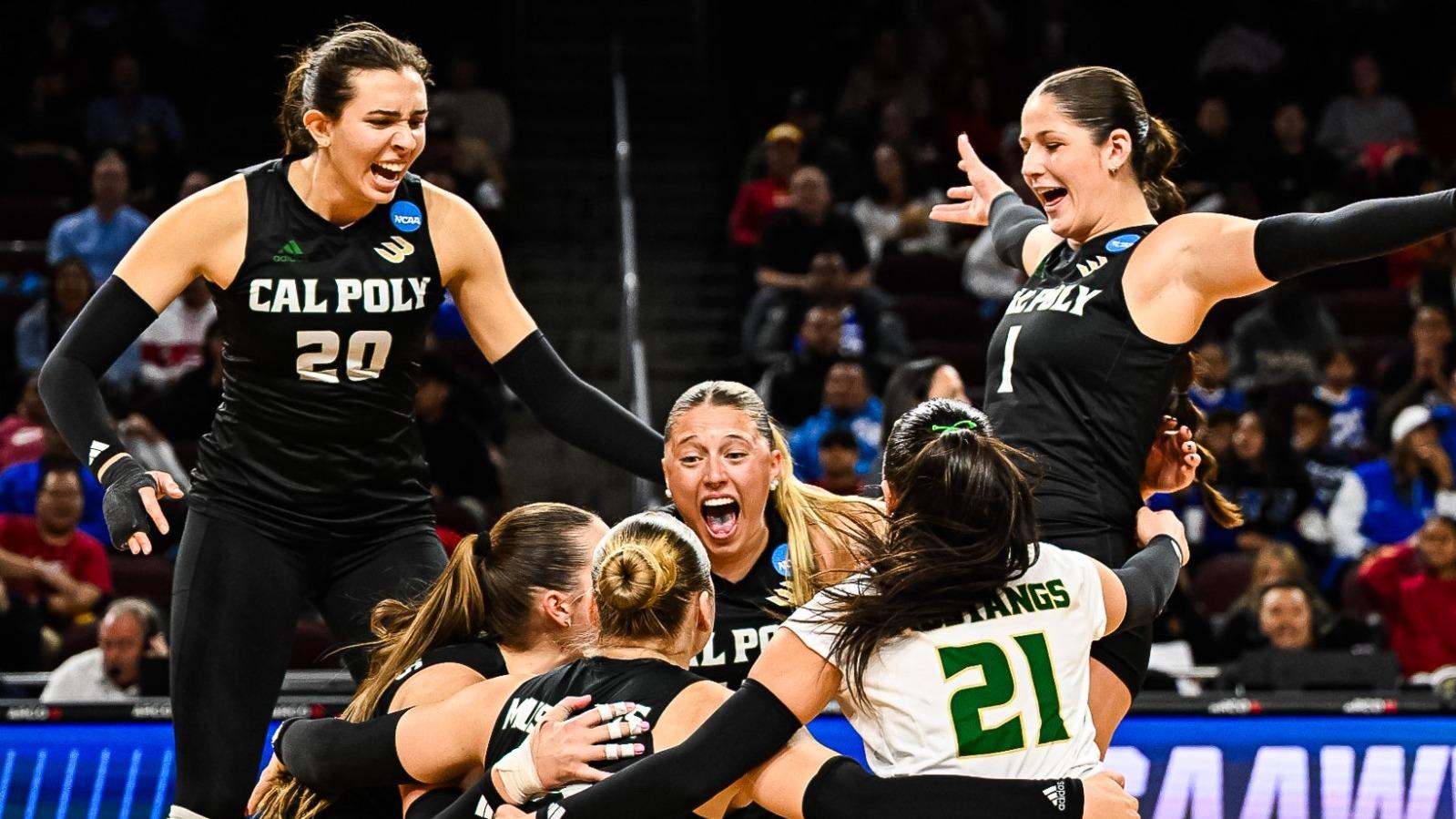
Cal Poly boasts one of the nation’s most efficient offenses, ranking 18th in hitting percentage (.278) after 13 consecutive weeks in the top 25. A key contributor is AVCA All-Pacific Region Honorable Mention Chloe Leluge, who ranks second in the Big West and 36th nationally with a .383 hitting percentage.
Leluge’s .372 career hitting percentage would lead the program’s Division I era by 17 points, and her current season rate places her in the top 10 in program history. A true two-way middle blocker, she co-leads the team and the conference with 130 total blocks. After committing just one error on 57 attacks in the Big West Championship, she was named tournament MVP and later to Michella Chester’s NCAA Rotation of the Week.
Other essential contributors include Emme Bullis, Kendall Beshear, Emma Fredrick, Annabelle Thalken, Charlotte Kelly, and Elif Hurriyet.
The redshirt senior captain Bullis set a Big West Championship single-match record with 51 assists against Long Beach State. She recently moved to #2 on Cal Poly’s career assists list (over 4,000) and set a new personal single-season high against BYU. Her 1,184 assists this season rank 17th nationally.
The lethal hitter trio of Fredrick, Beshear, and Thalken has helped propel the Mustangs to 23rd nationally in team kills. Fredrick leads the team in total kills (411) and digs (339). Beshear follows in kills (369) and digs (281) and possesses one of the nation’s most formidable jump serves, tallying 49 aces (32nd in Division I). Thalken has quietly been the team’s most efficient on the outside, leading the trio for hitting percentage (.296)
True freshman middle Kelly stepped up after a preseason injury to 2024 All-Big West First Team selection Breklyn Pulling. Thriving alongside Leluge, Kelly co-leads the team and conference in blocks (130).
An athletic and intelligent defender at libero, Hurriyet leads the team in digs per set (3.35) and has expanded her role this season, providing 91 assists as a second-touch attacker.
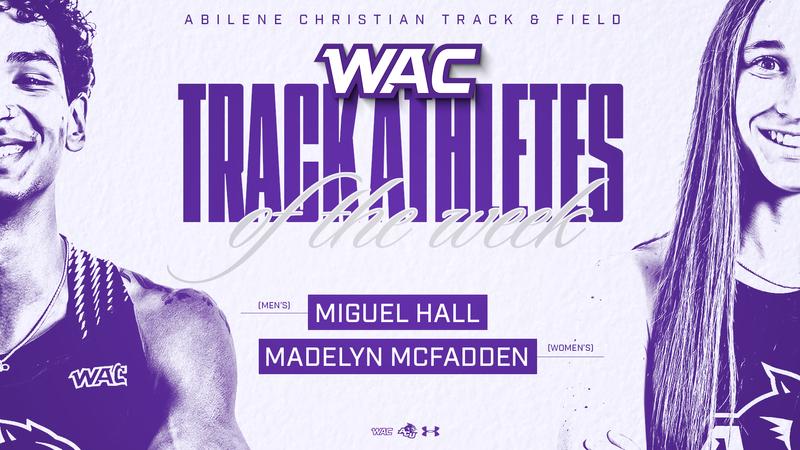
ARLINGTON, Texas – Abilene Christian swept the first Western Athletic Conference weekly track honors of the indoor season, the conference announced on Wednesday. Miguel Hall was named the University Credit Union Men’s Track Athlete of the Week, while Madelyn McFadden earned Jersey Mike’s A Sub Above Women’s Track Athlete of the Week accolades.
It’s the first conference recognition of both student-athletes’ careers after they competed at Texas A&M’s McFerrin 12 Degree Invitational last week. The Wildcats got their season started with two victories and eight top-three placements at the Fasken Indoor Track & Field in College Station, Texas.
Hall began his junior campaign with a third-place performance in the men’s 60-meter hurdles, clocking in with a time of 8.03 seconds, only a few fractions off his personal best. He completed the event just five hundredths of a second off of first place. Hall’s performance ranked 37th in the nation through the first week of action.
McFadden, a freshman competing in her first collegiate meet, landed in the top three in both events she participated in. The Franklin, Texas product finished in second place amongst 12 student-athletes in the women’s 600-meter, recording a time of one minute and 35.12 seconds. McFadden was one of two Wildcats in the top three, as Jalyn Childers came in at 1:36.23.
McFadden later capped ACU’s 4×400 relay that placed second in 3:50.94. She completed her split in 58.24 while teaming up with Anna Vyn, Emma Santoro and Gracee Whiteaker. The relay’s time is the 40th-best in the country.
The Wildcats return to action in 2026 at the Corky Classic, hosted by Texas Tech in Lubbock, Texas on Jan. 16-17, 2026.
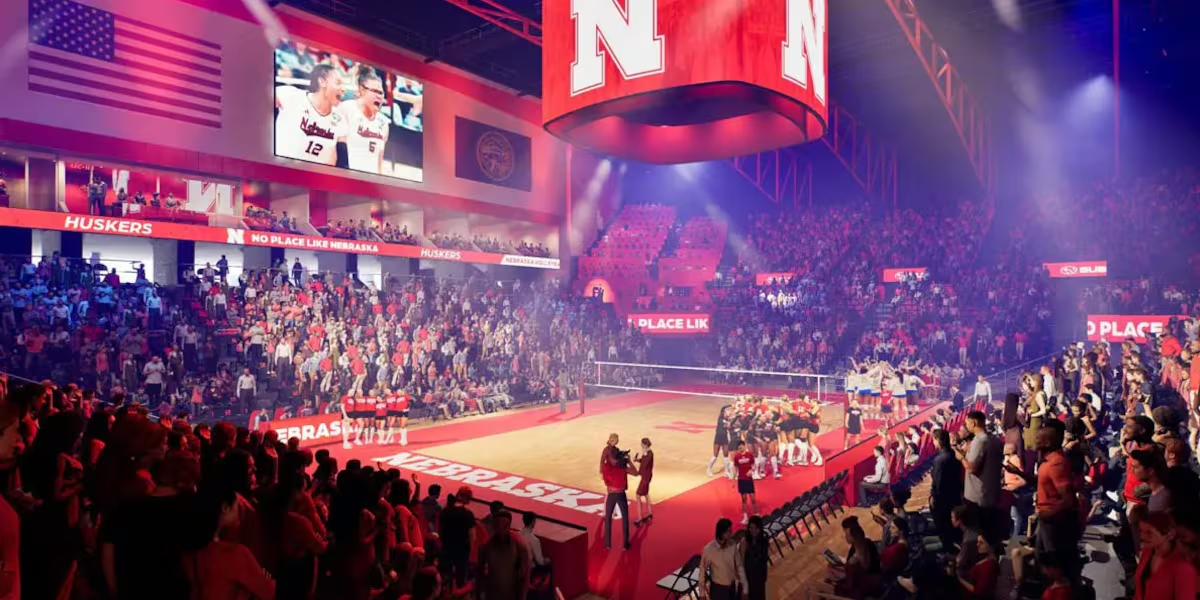
LINCOLN, Neb. (KOLN) – The Husker Athletic Fund released renderings and additional details Wednesday ahead of the planned expansion of the John Cook Arena in the Bob Devaney Sports Center.
The arena will undergo its first-ever full reseating and parking process in Nebraska Volleyball program history in 2026. It is timed to coincide with a renovation of the arena to increase overall capacity to 10,000.
According to the athletic fund, the renovation will enhance Nebraska’s home-court advantage, modernize amenities and provide new premium and general seating options. This includes adding:
- New and improved seats with cupholders in each seat.
- A new centralized student section.
- New and improved courtside seating with both end court and side court locations available. The Courtside Lounge offers access pre-game and during intermission and includes private restrooms, televisions, and all-inclusive gourmet food, beverage and alcohol.
- New Loge Box seating with hospitality lounge with access pre-game and during intermission, including access to private restrooms, televisions and all-inclusive gourmet food and beverage with a cash bar.
- Libero Club seating replaces the VIP seats. Located in the back row of the 100 level, seats include access to the Libero Club Lounge pre-game and during intermission complete with televisions and all-inclusive gourmet food and soft drinks with a cash bar.
- Additional ADA seating with new vantage points and easier access from around the concourse.
Reseating and parking process
The Husker Athletic Fund announced the first-ever reseating and parking process in October.
The selection position will be determined through donation and Nebraska Athletics’ five levels of giving.
2025 Nebraska volleyball season ticket holders, including those who are Husker Athletic Fund members, can upgrade their membership level up until the March 18, 2026, lock date.
Fans will be notified in April of their 2026 volleyball reseat selection date and time. During the selection process, fans will have a five-minute window to view a 3D map and choose their seats.
Nebraska Athletics noted some changes for certain membership levels, such as limiting the ticket maximum for the Nebraska Leadership Society to six tickets.
Nebraska Athletics believes the new process will bring an estimated $8 million in revenue, compared to a projected $4.5 million for the 2025 season.
For more information about the reseating process, click here.
Click here to subscribe to our 10/11 NOW daily digest and breaking news alerts delivered straight to your email inbox.
Copyright 2025 KOLN. All rights reserved.

Dillard Claims MEAC Weekly Award

NCAA women’s volleyball regionals: Live updates, scores, schedule, highlights

Athletic Directors Head to Tampa, Florida, to Continue Focus on Education-based Programs

‘Careful what you wish for’

Van Ho expands community ski programs | News, Sports, Jobs

Philippart, Williams Win RMAC Honors For Debuts

Cal Poly Volleyball Enters NCAA Regional Semifinals Versus One-Seed Kentucky

Parks, Recreation & Culture Financial Assistance

Racing Legends Honored at Vermont Motorsports Hall | Local News

Rick Hendrick makes $1 billion admission as NASCAR losses emerge – Motorsport – Sports

Hall, McFadden Garner WAC Track Athlete of the Week Accolades

John Cook Arena renderings reveal game-changing amenities for Nebraska volleyball fans

Urban Meyer Enshrined into the College Football Hall of Fame

Rowan Women’s Indoor Track and Field opens season in New York – The Whit

Kerrigan Habing Named AVCA DII All-Americans Honorable Mention

First Tee Winter Registration is open

Fargo girl, 13, dies after collapsing during school basketball game – Grand Forks Herald

CPG Brands Like Allegra Are Betting on F1 for the First Time

Volleyball Recaps – November 18

F1 Las Vegas: Verstappen win, Norris and Piastri DQ tighten 2025 title fight

Two Pro Volleyball Leagues Serve Up Plans for Minnesota Teams

Sycamores unveil 2026 track and field schedule

Utah State Announces 2025-26 Indoor Track & Field Schedule

Redemption Means First Pro Stock World Championship for Dallas Glenn

Texas volleyball vs Kentucky game score: Live SEC tournament updates

Bowl Projections: ESPN predicts 12-team College Football Playoff bracket, full bowl slate after Week 14

How this startup (and a KC sports icon) turned young players into card-carrying legends overnight

Jo Shimoda Undergoes Back Surgery

Robert “Bobby” Lewis Hardin, 56

Indiana’s rapid ascent and its impact across college football

 Why a rising mid-major power with an NCAA Tournament team opted out of revenue-sharing — and advertised it
 NBA Legend Michael Jordan to Join NBC Sports as Special Contributor
 Falcons mailbag
 Portal Update – Basketball and Gymnastics Take Hits
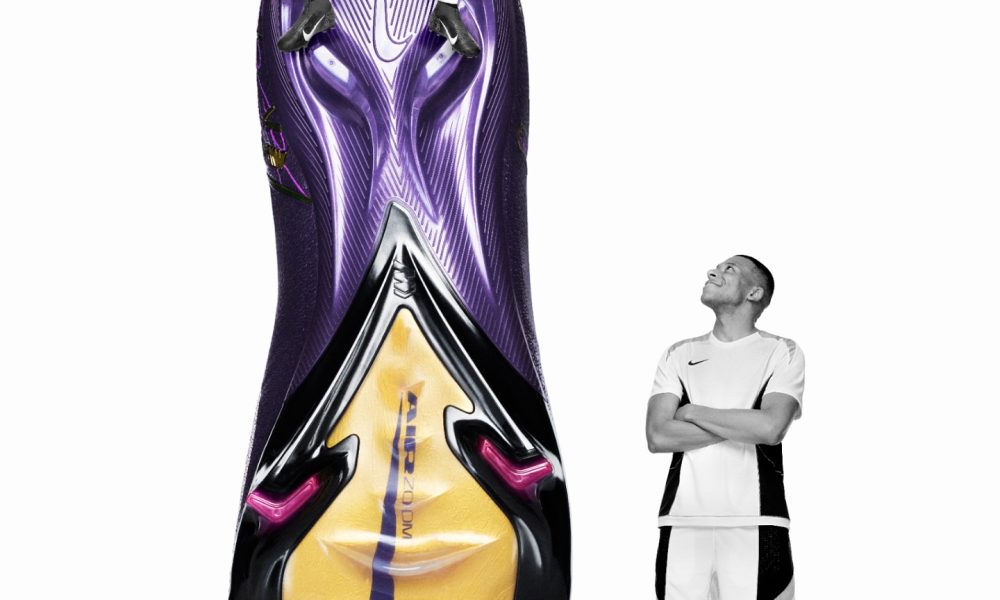 has always dreamed in Mercurial. Now his initials are on the boots.
The new Kyl…
has always dreamed in Mercurial. Now his initials are on the boots.
The new Kyl…
-
 Rec Sports2 weeks ago
First Tee Winter Registration is open
-
 Rec Sports2 weeks ago
Fargo girl, 13, dies after collapsing during school basketball game – Grand Forks Herald
-
 Motorsports2 weeks ago
CPG Brands Like Allegra Are Betting on F1 for the First Time
-
 Motorsports2 weeks ago
F1 Las Vegas: Verstappen win, Norris and Piastri DQ tighten 2025 title fight
-
 Sports2 weeks ago
Two Pro Volleyball Leagues Serve Up Plans for Minnesota Teams
-
 Sports2 weeks ago
Sycamores unveil 2026 track and field schedule
-
 Sports2 weeks ago
Utah State Announces 2025-26 Indoor Track & Field Schedule
-
 Motorsports2 weeks ago
Redemption Means First Pro Stock World Championship for Dallas Glenn
-
 Sports2 weeks ago
Texas volleyball vs Kentucky game score: Live SEC tournament updates
-
 NIL1 week ago
Bowl Projections: ESPN predicts 12-team College Football Playoff bracket, full bowl slate after Week 14