
Sports
Roanoke Valley




Editor’s Note: Enjoy this look back at minor league sports in the region from our July 1995 issue.
Hey, all of a sudden we have four pro sports teams here. The Salem baseball franchise — now called the Avalanche — has flourished for many seasons, and the Express for the last two. Now the soccer RiverDawgs and football Rush are entering the market, looking to tap into the same good-family-fun audience base.
The baseball Avalanche holds the pro baseball record for consecutive years of attendance increase. The hockey Express pulls ’em into the Roanoke Civic Center even on weeknights. And with the soccer RiverDawgs and the football Rush getting into gear, we might just be in for a new era in sports.
In a way, it’s a natural for the Roanoke Valley. Our reputation is for being a family kind of town. a wholesome place with strong traditional values. And if you ask the area’s minor league sports general managers what it is that gives their products appeal-what puts the feet under the seats-they talk about those very things.
Sam Lazzaro, GM of baseball’s Salem Avalanche, a Class A team whose editions have increased their attendance for a pro-baseball-record 12 consecutive years: “People are looking for good, clean, wholesome family fun at affordable prices.”
Pierre Paiement, GM of the Roanoke Express, an East Coast Hockey League team that this season averaged 5,600 fans per game: “Everything we did addressed affordability and family entertainment. Our objective is to make everyone feel ownership in the Roanoke Express.” With the semi-pro Roanoke RiverDawgs underway with a pay-to-get-in soccer season at Cave Spring Junior High and the Roanoke Rush football team about to kick off a sixgame season (plus potential playoffs) at Victory Stadium, you begin to wonder:
- Has the Roanoke Valley at last awakened to sports?
- ls this the same market that has had a hard time filling the Roanoke Civic Center when Virginia Tech and Virginia come to town to play basketball?
- ls this the same market that has let die or slip away a baseball franchise, a semipro football team and for several years held onto a hockey team only by a thread from Henry Brabham’s pants pocket?
“Our minor league sports people are doing a great job,” says Mac Macadden, a Roanoke City councilman and sports enthusiast who helps to bring athletics to the valley. “They’ve shown how the valley is a draw area. They can put people in the seats when it’s marketed properly.”
Indeed. Minor league baseball has been in the valley since the 1890s and in Salem since 1939. Although the games were not so well attended in the ’60s through the early ’80s due to other entertainment diversions, such as the shopping mall boom and televised major league games, the Salem franchise’s attendance records have been set against the backdrop of generally losing teams.
“Winning is nice, but it’s not everything in minor league baseball,” says Lazzaro. What is everything, however, is that family atmosphere that surrounds every Avalanche game. Plus affordability. General admission tickets are $3 each, and the best seats in the house go for $6. For those prices, fans have a chance to win a multitude of prizes, from T-shins and caps, to lunch at Mac ‘n’ Bob’s to an airline ticket to Denver to see the Colorado Rockies.
“Marketing is important,” Macadden stresses. “And it’s great to have many fans supporting a team who are just happy to see a team there. This is where season ticket holders develop loyalty.”
The Express is another example of smart marketing. In their first year, 1, LOO season tickets were sold; last season, 1,500 season tickets sold; for the upcoming season, Paiement hopes to sell 2,000 season tickets.
“We’re providing entertainment,” explains Paiement, who played for the ’72- ’74 Roanoke Rebels. “People are willing to come night after night to see something different and commit for the season. They’re assured of seeing a good show every night and don’t mind investing their money way ahead of time.”
Of course, there are other advantages to holding a season ticket: you don’t have to wait in line for tickets, you’ll sit in the same seat each time, and special privileges, such as invitations to penalty box parties, await those who commit for the entire season. In addition to increased season ticket sales, the overall average attendance rose from the Express’ first season: 5,591 compared to 4,632.
Many factors figure in for why the rExpress has enjoyed a successful fist two seasons. For one, the move to the more centrally located Roanoke Civic Center from the LancerLot in Vinton has played to the Express’ advantage. Secondly, it goes back to keen marketing strategy. “We’re getting rid of the image that hockey is a violent sport,” Paiement says. “And we’ re recruiting players to abolish the number of fights so we can provide good hockey without violence.
“We’ve made hockey appealing to families. We have a great security system, and we don’t allow profanity or fighting in the stands. This provides a good comfort level for parents.”
Concerning affordability, Express management did its homework on what someone would be willing to spend to go to a minor league hockey game in the valley. College students, for example, said they’d spend the same amount it would take to see a movie on the weekend, roughly $5. Tickets this past season were $4 for age 12 and under; $5 for students; $6, $7 .50 and $8.50 for adults.
Naturally, having a competitive team su·engthens both fan loyalty and the quality of the overall product. Placing fifth out of 18 teams in the East Coast Hockey League, the Express finished second in its division last season, behind Richmond, which won the league championship.
Promotions, giveaways and special events between periods contribute to the family fun outside the game itself. These range from souvenir prizes (key chains, mugs, scrapers, etc.) to mini-hockey games with the media to autograph sessions after the game.
That is the team “ownership” Paiement talks about.
The valley has two new teams they can feel like owning-if they’re marketed in the same vein as the Avalanche and the Express, according to Macadden. At presstime, the Roanoke RiverDawgs just kicked off their first season (with a win) in the United Systems of Independent Soccer Leagues (USISL).
A little background on soccer in the United States: Although soccer is the largest participation sport in the world, there is no true professional soccer league in the country, in the same sense as there is the National Football League, the National Basketball Association, etc. An agreement involving the United States as the site of the World Cup changed that, however, and by next summer, Major League Soccer will be underway, with 12 cities participating initially. The largest organization for soccer in the country, the USISL, started in 1986 with 89 professional and amateur teams. With major league soccer on the imminent horizon, players now have a higher goal of playing professionally in the country-just as a player for the Avalanche, for example, hopes to play one day for the Rockies or another major league team.
The RiverDawgs are an amateur team, but they do compete against professional USISL teams. Although there’s no paycheck, players-many of them local stars-play for the sheer love of the game and for the hope of one day playing in major league soccer. “Before we bought the franchise, we did a lot of research and called about 30 teams in the league,” says Doug Fonder, one of nine members of the board of directors. “We asked them, ‘Are you making it?’ ‘How are you doing?'”
Fonder learned that the successful teams were just that due to three reasons: 1) they were funded by backers with a tremendous amount of money; 2) they ran successful soccer camp programs; and 3) they put forth aggressive advertising.
Strong financial backing was not available, but Fonder and the other owners decided to set up Top Dawg Soccer Camps run by RiverDawg players and do some advertising in order to meet their goal of 1,000 spectators per game paying $6 and $4 for admission.
“Youth is our market,” Fonder explains, “that’s the group that knows about soccer.”
The geographical market for the RiverDawgs, Fonder says, reaches Martinsville to the south, the New River Valley to the west, the western half of Lynchburg to the east and up north to Lexington.
Back to the youth factor, the Roanoke Valley Youth Soccer organization should prove to be instrumental in the RiverDawgs’ success on the field, as it is a direct link to kids who are actively pursuing soccer. Because of their amateur status, the RiverDawgs must carry at least three developmental players under 19 on the league roster, which gives the top kids in the valley an opportunity to practice with the top team in southwestern Virginia, according to Fonder.
“It’s something for all kids who play soccer to strive for,” Fonder says. “In the valley, there are about 4,000 kids who play soccer on some level.”
Some of the finest collegiate soccer teams can be found along the East Coast from Maryland to South Carolina, a winning situation for the RiverDawgs, which is conveniently located right smack in the middle of them. The University of Virginia, for example, is a four-time national soccer champion.
The RiverDawgs current roster. by the way, includes five All-American players and one Olympian. “Roanoke, itself, has a history of having really good players, great players through college, which adds a tremendous local flavor to our team,” he says. A few of those players include Grayson Prillaman, an AllAmerican at Roanoke College and Old Dominion University Player of the Year; Dustin Fonder, an All-American at Roanoke College and National Division Ill Player of the Year; Lang Wedemyer, most valuable defensive player at Virginia Tech; and Aaron Ewert, first team All-American at Roanoke College.
Finally, a little background on the RiverDawgs’ name itself: the River is after the Roanoke River as the team, in the beginning, planned to play at River’s Edge Sports Complex, which is situated next to the Roanoke River. Although the team’s home games were moved to Cave Spring Junior High School, team owners decided not to change the River part of the name. However, they soon learned of the Charleston Riverdogs, so they changed dogs to dawgs.
“It’s not named after me,” says Nick Rush, Montgomery County Supervisor and an owner of the Roanoke Rush, the valley’s new football team. “We like the way it sounded. You can do a lot of things with it, such as a Rush Hour Tailgate Party. Our cheerleaders are the Gold Rush.”
The Roanoke Rush starts its first season-as one of 28 teams in National Minor League Football, a developmental league designed to give up-and-coming players another chance to make it in the professional ranks. Players-many of whom were overlooked in the NFL draft or attended a small school and were thus not picked up by a pro team-will have the chance to improve their skills, showcase their talents and mature a bit overall. Other players may have been injured and can’t quite pass the NFL physical. Although not affiliated with the National Football League, National Minor League Football teams play by NFL rules.
“Roanoke is the perfect area for a football team,” says Rush. “We’re going to offer family entertainment at an affordable price. It’s an opportunity to come out and enjoy yourself in a family atmosphere to watch a good show.”
That good show will appear at Victory Stadium, which has a seating capacity of 22,000. Rush, along with co-owner and former Virginia Tech standout Donald Wayne Snell, hopes to fill up about one-fourth of the stadium-5,000-6,000 fans-per game. Tickets are $8 for adults, $4/$5 for children, $40 for season ticket (six home games) and $82 for a family package (two adults and up to three kids for six home games).
“Victory Stadium is adequate to play in,” Rush says. “It’s not state-of-the-art, but I personally believe it has a lot of class.”
Macadden says routine spruce-ups will be made during the summer to ready the stadium for the fall, and a study conducted by the city was underway at presstime to determine what should be done to improve the 50-plus-year-old stadium. The Rush practice at Addison Middle School.
“Minor league sports in general, in a city the size of Roanoke, is good for economic development and the quality of life,” Rush says, adding that the Rush will not play a home game when Virginia Tech has a home game. “The city increases its visibility and tax base as it brings people in from outlying areas to spend their money there.”
In early June, the Rush held tryouts for its roster of 45. Some of the players who make the team will be paid; others will not. The league, headquartered in Charlotte, hopes to develop into a fully paid league in a few years. Denny Marie, most recently assistant coach and recruiting coordinator at Kent State, is the Rush’s coach.
“The important thing is to put out a good product, the whole product, from putting on a good program to having a good football team to being a class act,” Rush says.
Salem Stadium: Build It and They Will Come
If pouring millions of dollars into top notch baseball and softball facilities isn’t evidence enough that Salem is striving to become the sports center of southwestern Virginia, then perhaps the high-quality tournaments and athletic events that come to Salem are.
Take, for example, the Stagg Bowl, scheduled this year for December 9 at Salem Stadium. Or the NCAA Division III men’s baseball championship at Salem Municipal Field and the NCAA Division II women’s softball championship at Salem’s James I. Moyer Sports Complex, both held in May. Ifs only fitting that the $9 million baseball stadium, which was scheduled to open for the Avalanche’s home games in mid-June, is named Salem Baseball Stadium.
“Salem doesn’t get involved in anything unless it’s first class,” says Avalanche General Manager Sam Lazzaro, who back in May was receiving phone calls from fans as far as I 00 miles away who wanted to know when the new stadium would be open.
“It’s a phenomenal facility, which will not only bring out more local people to the games, but also will make the Roanoke Valley and Salem a much more regional attraction for baseball.”
Now in its fourth season, the $2 million Moyer Sports Complex is quickly earning that same reputation for softball, from collegiate competition to church leagues. Last year, some 1,500 games of all levels were played on the complex’s four diamonds.
“We all feed off the mayor’s attitude and leadership, which is to keep the ball bouncing and to keep the kids playing,” says Bob Ayersman, Moyer Sports Complex manager. “It’s our job to provide them with the facilities because sports are very beneficial to kids.”
Salem recognizes the economic impact on the city when out-of-towners come there to play ball. “We actively pursue them to come here,” says Ayersman, citing Carey Harveycutter’s and others’ efforts to bring the Stagg Bowl to Salem, which won out over Bradenton, Fla., and explaining the same is true for baseball and softball.
“If you build a field, they’II come, and here they are.” -KLN
How Do We Compare?
If you look in “Places Rated Almanac” for population figures and the metropolitan statistical areas closest to Roanoke (229,186 people) in size, you find:
- Lubbock, Texas. 228,584.
- Fayetteville, Ark. 228,335.
- Portland, Maine. 226,296.
- Boulder, Colo. 232,137.
Check with the chambers of commerce and you find out those MSAs are a mixed bag when it comes to minor league sports, but that none has the pro-sports diversity of Roanoke right now, with its pro or semi-pro teams in baseball, hockey, football and soccer.
Fayetteville and Boulder have no pro teams at all, though the presence of the Colorado Buffaloes undoubtedly does lots to fill the sports niche in Boulder.
Lubbock has a Class AA baseball team just starting its first season. The Lubbock Crickets, by the way, take their name from some famous Lubbock natives-Buddy Holly and the Crickets.
Portland boasts the AA-level baseball Seadogs, now in their second year and drawing about 5,000 fans a game; and the hockey Pirates of the American Hockey League, who also draw well. A spokesperson for the Seadogs makes the point that attendance for both teams is aided by the relative isolation of the town: no baseball from there to Boston and “not much else to do here in the winter.”
So Roanoke stacks up pretty well to its size peers. Unless, of course, you want to compare it to one market that’s even a bit smaller. Green Bay, Wisc. is listed at 201,263 for population, and they have this pro football team that plays in a league several steps up from the one the Rush is in. -KR

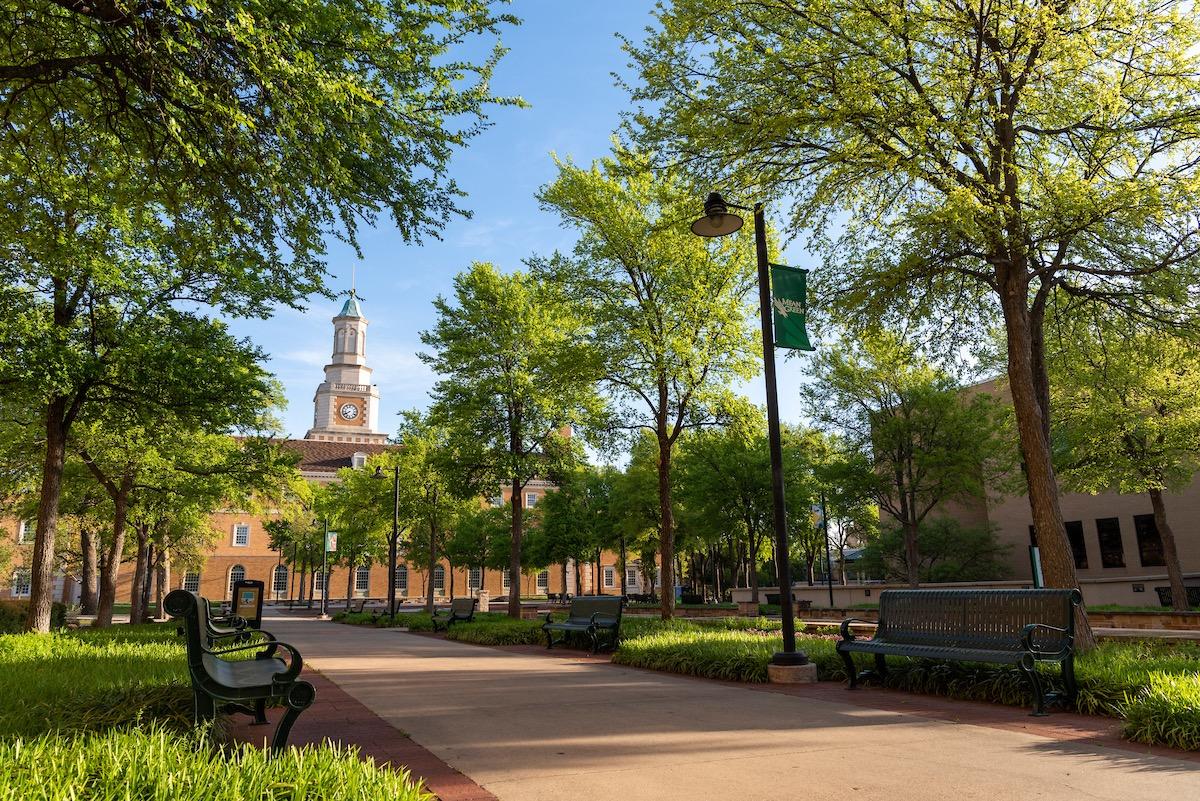
For the first time ever all 14 athletic programs earned a semester G.P.A. above a 3.150. Six teams earned their highest semester G.P.A. in their respective program’s history and four others achieved their second highest semester G.P.A. in their program’s history.
This marked the 13th consecutive semester of a 3.0 or better department wide grade point average and the seventh consecutive semester that UNT improved on the previous semester’s departmental G.P.A.
“The Fall 2025 semester was an outstanding one for Mean Green Athletics in the classroom,” said UNT VP/Director of Athletics Jared Mosley. “Our student-athletes continue to demonstrate a commitment to academic excellence, and their success is a direct reflection of the support and expectations we have in place. I want to thank our academic services team, led by Suzanne Dickenson, for their leadership and dedication in supporting our student-athletes and helping them reach their full potential both on the field and in the classroom.”
For the sixth consecutive semester the UNT women’s golf team led the way for the department as they earned a 3.907 fall semester G.P.A.
The Mean Green tennis team has now recorded a team G.P.A. of 3.0 or better for 28 consecutive semesters. The UNT soccer team and swim and dive team have both also maintained streaks of 20-plus consecutive semesters with a team G.P.A. above a 3.0.
Fifty-two UNT student-athletes this past fall earned a 4.0 grade point average. The Mean Green women’s track team led the way as they had 11 student-athletes named to the prestigious 2025 Fall President’s List. The tennis team had the highest percentage of student-athletes earning President’s List honors as 72% of its roster had a 4.0 G.P.A.
The UNT men’s basketball, men’s cross country, men’s track and field, women’s basketball, women’s cross country and women’s track and field teams all earned their highest semester G.P.A.s in program history.
Lastly, 47 UNT student-athletes earned their diplomas this past fall.
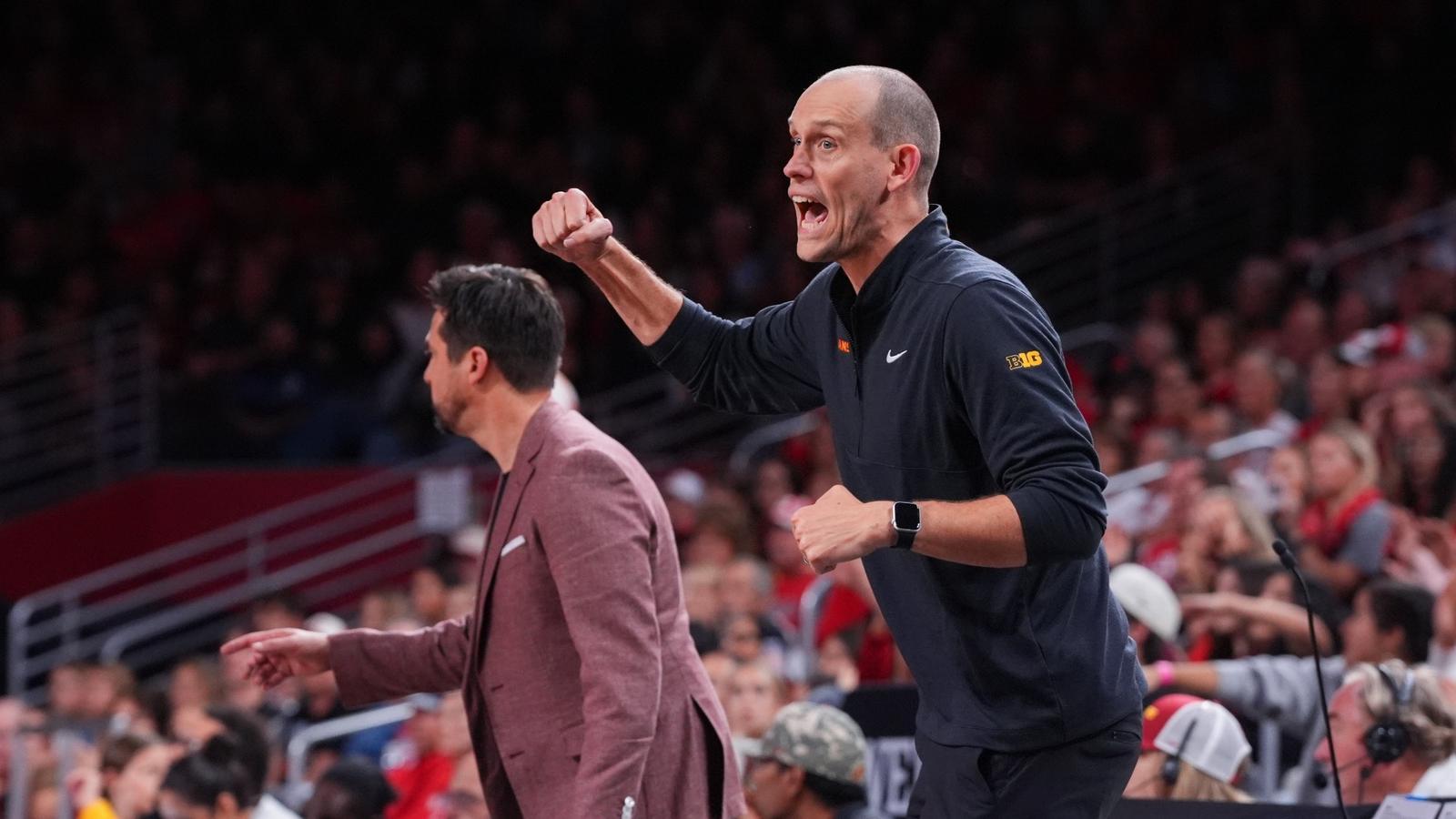
McLachlin becomes the eighth head coach in UCSD program history and will coach the Tritons in their final season as members of the Big West (2026) before the program transitions to the West Coast Conference ahead of the 2027 campaign. He joins JJ Van Niel (Arizona State), Tyler Hildebrand (Saint Mary’s College), and Amy Pauly (Orlando Valkyries) as former USC assistants under Brad Keller who have moved into head coaching positions.
“This opportunity is no surprise and has been a long time coming for Spencer,” said Keller. “UCSD is getting one of the best coaches in the game. Spencer and I have worked together in many different phases of our careers, and I know USC is in a better place with a brighter future for everything he has done here. Spencer is an innovator, a creator, and most importantly, a dreamer. Our game needs more leaders like him. I couldn’t be prouder of what he has done and for this new opportunity for him and his family.”
In his three seasons at USC, McLachlin helped lead the Women of Troy to three straight NCAA tournament appearances. The Trojans advanced to the second round in each of their three postseason berths. Most recently, McLachlin helped USC reach 25 wins and finish in a tie for third place in the Big Ten. Six Trojans received awards on all-conference teams and USC led the league in blocking (2.76 bps). The Trojans also ranked second (12th in the NCAA) in total blocks (322.5) and were second for opponent hitting percentage (.184). OH London Wijay earned AVCA All-America honorable mention.
With McLachlin on staff in 2024, USC advanced to the second round of the NCAA tournament for the third straight year and finished 22-10 overall with a 13-7 mark in the Big Ten (tied for sixth). Setter Mia Tuaniga was named to the AVCA All-America third team. In his first season with the Women of Troy, McLachlin helped USC go 19-13 with a 12-8 mark in the Pac-12 for a fifth-place finish. That season, OH Skylar Fields was honored with AVCA All-America first-team recognition.
McLachlin is married to former USC volleyball standout opposite hitter Diane Copenhagen (2004-07), a 2004 Pac-10 All-Freshman Team selection. The McLachlins are parents to two daughters, Leila and Malia, and a son named Koa.
The 14th-ranked Trojans (25-7, 15-5 Big Ten) finished the regular season tied for third in the Big Ten and were awarded one of 33 at-large berths—and a hosting bid—into the 2025 NCAA tournament. USC made its fourth straight appearance in the tourney under sixth-year head coach Brad Keller (41st all-time) and moved into the second round for the fourth consecutive year with a 3-0 sweep of Princeton. The Women of Troy were eliminated from postseason play in a hard-fought five-set loss to Cal Poly in the second round.
For more information on the USC women’s volleyball team, please visit USCTrojans.com/WVB. Fans of the Women of Troy can follow @USCWomensVolley on X, Facebook, Instagram, and TikTok.
Sports
Defending Big West Regular Season And National Champion Long Beach State Chosen As 2026 Preseason Coaches’ Poll Favorite
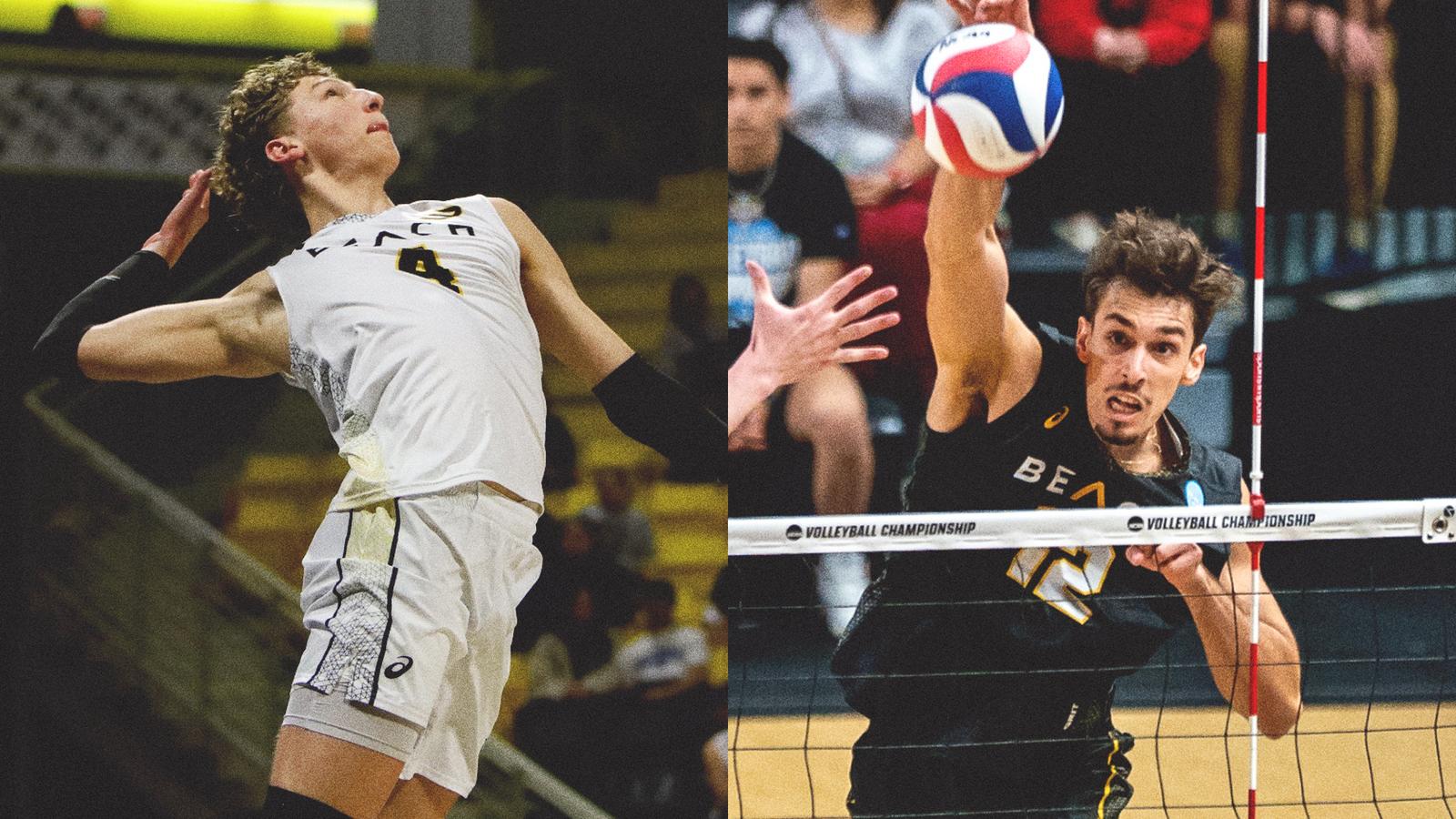
Long Beach State’s status as a national powerhouse was further reinforced in the 2026 AVCA National Collegiate Men’s Volleyball Preseason Poll (Dec. 23), where the Beach were ranked No. 3 nationally behind UCLA and Hawai’i.
The Beach also placed multiple student-athletes on the 2026 Big West Preseason Coaches’ Team, as Skyler Varga and Alex Kandev earned preseason recognition following standout performances during Long Beach State’s championship 2025 season.
Varga returns as one of the nation’s premier attackers. During the 2025 season he played a central role in Long Beach State’s run to the NCAA National Championship, earning NCAA All-Tournament Team honors for his performance in the title match. He finished the year with 270 kills (2.73 per set) on a .368 attack percentage, while adding 33 service aces, 70 total blocks, and 341 points across 99 sets. In addition to his on-court excellence, Varga also received CSC Academic All-America recognition, underscoring his impact as a scholar-athlete.
Kandev, now a sophomore outside hitter, made his mark on the national stage during the 2025 NCAA Championship match. In the title match victory over UCLA, Kandev helped the Beach secure their fourth national title and earned NCAA All-Tournament Team honors in the process. He concluded his freshman season with 210 kills (3.23 per set) while hitting .458, ranking among the team leaders in efficiency, and added 21 aces, 36 blocks, and 250 points in 65 sets.
Following Long Beach State atop the Big West preseason poll, Hawai’i was chosen second with 22 points and two first-place votes, and UC Irvine was tabbed third with 17 points. CSUN, UC San Diego, and UC Santa Barbara rounded out the poll, each earning nine points.
With proven postseason performers and returning national contenders, Long Beach State enters 2026 as both the team to beat in the Big West and one of the top programs in the nation.
2026 Big West Men’s Volleyball Preseason Coaches’ Poll
- Long Beach State – 24 points (4)
- Hawai’i – 22 points (2)
- UC Irvine – 17 points
- T-4. CSUN – 9 points
T-4. UC San Diego – 9 points
T-4. UC Santa Barbara – 9 points
First-place votes in parentheses
2026 Big West Men’s Volleyball Preseason Coaches’ Team
George Bruening, UC Santa Barbara
Alex Kandev, Long Beach State
Jalen Phillips, CSUN
Tread Rosenthal, Hawai’i
Adrien Roure, Hawai’i
Kristian Titriyski, Hawai’i
Skyler Varga, Long Beach State
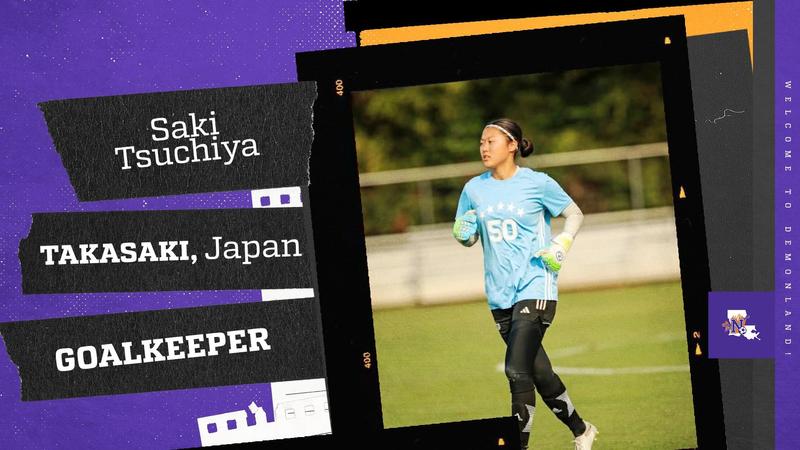
NATCHITOCHES—After dipping into the transfer portal for a midfielder and defender, Northwestern State soccer head coach Ian Brophy now picks up a goalkeeper in the form of transfer Saki Tsuchiya.
Tsuchiya, a native of Takasaki, Japan, comes to NSU following a season at Valparaiso.
“We are very excited to add an experienced goalkeeper who really fits our style of play,” Brophy said. “Her ability with the ball at her feet is something that definitely suits us and should help us as a team. She will instantly provide competition in an already very competitive group and certainly makes us better.”
She played in three games for the Crusaders, sporting a save percentage of .708 and goals against average of 3.36 in just under 134 minutes. She recorded 12 saves this past season, seven coming against Drake and then posting five saves against Illinois.
Prior to her season at Valpo, Tsuchiya started her collegiate career at Tyler JC, where she competed for two seasons.
For Tyler JC, she appeared in 30 matches during the two years, where she posted a 1.18 GAA and a .780 save percentage.
She recorded three solo shutouts and five combined shutouts among her 13 wins as a sophomore in 2024. That season also earned her a Second Team All-Region selection, as her team captured the Region XIV championship and played in the NJCAA National Tournament 2023 and 2024.
As a freshman, she was named to the NJCAA Second Team All-Academic Team for 2023-24.
She played summer soccer in 2024 for TLH Reckoning of the USLW and in 2025 for Peoria City of the WPSL.
In high school at Kaishigakuen JAPAN Soccer College koutoubu, she was a three-year starter in net.
She joins an already impressive goalkeeper room that includes Second Team All-Southland Conference selection Kennedy Rist and rising sophomore Audrey Marfia, who recorded a goals against average of 0.39, surrendering just one goal in 230:32.
Tsuchiya will be the first Japan native to play for the Demons and joins Hosane Soukou, Ravina Sandhu and Anika Sproxton as players on the team not from the United States.

SAN DIEGO — Defender Lauren Watson became the first player in USD beach volleyball history on Monday afternoon when she signed a grant-in-aid agreement to play for the Toreros.
Watson, who hails from Phoenix, Arizona, attends Notre Dame Preparatory High School, where she was twice named the Arizona Beach Volleyball Player of the Year by the Arizona Republic. She will join San Diego for its inaugural beach volleyball season in the spring of 2027.
“Lauren is a really good all-around talent,” said USD beach volleyball head coach Derek Olson. “As a defender that can sit in the pocket and run shots down, she has good defensive instincts and covers a lot of sand.”
Her high school career thus far has seen her earn two Arizona Beach Volleyball Pairs State Championships, three All-League First-Team honors, and her league’s Defensive Player of the Year award.
“She also knows how to win and that’s very apparent by her results in tournaments,” Olson added. “But what I appreciate most about Lauren is her ability to play with anyone and make them better. She adds value to the environment that she is in.”

On Tuesday, Dec. 23, UC San Diego Athletics announced that USC associate head coach Spencer McLachlin will be the next head coach of Triton women’s volleyball. He replaces Melanie Greene, who stepped down on Dec. 6 after two seasons as head coach.
The coaching change comes after a tumultuous 6-24 season where a promising Triton team never found its rhythm. The Tritons were eliminated from postseason contention with three games left in the season following a loss to UC Riverside on Nov. 17. Assistant coach Kara Barkdoll Coy was named interim head coach for the final six games of the season after Greene’s departure.
“Spencer brings exactly what we need at this moment,” athletic director Andy Fee said in a press release. “He’s helped build winning programs, developed All-Americans, and knows how to compete at the highest level.”
McLachlin played collegiately at Stanford, winning a national championship with the Cardinal in 2010 and ending his four years in Palo Alto ranked third in career kills. McLachlin then served as an assistant coach at Hawai’i, California, UCLA, and Indiana before joining USC as associate head coach in 2023. This past season, the Trojans went 25-7 but fell in the second round of the NCAA Championship in a five-set upset loss against Cal Poly. McLachlin’s new position at UCSD will be his first head coaching role.
“I am thrilled to join UC San Diego as the Head Coach of the women’s volleyball program,” McLachlin said. “This is an incredible opportunity for my family and me to be part of an historic and beautiful university and build a program with great potential.”

Philly Athletes That Gave Back Big in 2025

Oak Ridge police investigating death of 2-year-old boy

FOX 11 Storm Chaser checks out road conditions in Winter Storm Diego

Youth Soccer | News, Sports, Jobs

Built for the moment: Sienna Betts’ rise with USA in 2025

UNT Student-Athletes Boast Record Setting G.P.A.

College Basketball Rankings: Coaches Poll Top 25 updated after Week 8

Petrino’s Friend Found a Workaround to Pay Taylen Green That’s Now Prohibited by NCAA

Mass Exodus at LSU could be big opportunity for Kentucky

Red Raiders arrive for CFP Quarterfinal at the Orange Bowl

Marblehead sports moments of 2025

NIL’s Mercenary March of College Football Athletes

Nevada youth rank last in sports participation. Will rising costs make it worse?

Nevada youth rank last in sports participation

Victims scammed by people posing as members of youth sports team at West Town Mall: KPD

SoundGear Named Entitlement Sponsor of Spears CARS Tour Southwest Opener

Donny Schatz finds new home for 2026, inks full-time deal with CJB Motorsports – InForum

Black Bear Revises Recording Policies After Rulebook Language Surfaces via Lever

Bowl Projections: ESPN predicts 12-team College Football Playoff bracket, full bowl slate after Week 14

Men’s and Women’s Track and Field Release 2026 Indoor Schedule with Opener Slated for December 6 at Home

David Blitzer, Harris Blitzer Sports & Entertainment

How Donald Trump became FIFA’s ‘soccer president’ long before World Cup draw

Michael Jordan’s fight against NASCAR heads to court, could shake up motorsports

Rick Ware Racing switching to Chevrolet for 2026

DeSantis Talks College Football, Calls for Reforms to NIL and Transfer Portal · The Floridian
Elliot and Thuotte Highlight Men’s Indoor Track and Field Season Opener

JR Motorsports Confirms Death Of NASCAR Veteran Michael Annett At Age 39

23 عاما من الفضائح السياسية والجنسية منذ انقلاب حمد بن خليفة.. استغلال الفتيات الصغيرات في الدعارة.. ضبط ابنة رئيس وزراء قطر خلال ممارستها لجنس الجماعي.. ملامح الحكم تتخبط بين المنفي وتدخلات النساء

#11 Volleyball Practices, Then Meets Media Prior to #2 Kentucky Match

Colleges ponying up in support of football coaches, programs






-
 Motorsports3 weeks ago
SoundGear Named Entitlement Sponsor of Spears CARS Tour Southwest Opener
-
 NIL3 weeks ago
DeSantis Talks College Football, Calls for Reforms to NIL and Transfer Portal · The Floridian
-
 Sports2 weeks ago
#11 Volleyball Practices, Then Meets Media Prior to #2 Kentucky Match
-
 Motorsports2 weeks ago
Nascar legal saga ends as 23XI, Front Row secure settlement
-

 Motorsports2 weeks ago
Sunoco to sponsor No. 8 Ganassi Honda IndyCar in multi-year deal
-
 Sports2 weeks ago
Maine wraps up Fall Semester with a win in Black Bear Invitational
-
 NIL3 weeks ago
Ed Orgeron: Paying players via NIL would only require a ‘minor adjustment’
-
 Rec Sports2 weeks ago
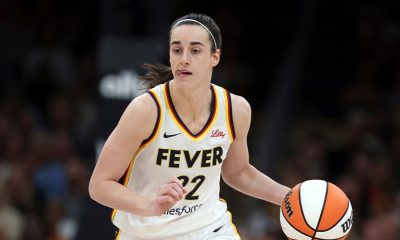
WNBA’s Caitlin Clark, Angel Reese and Paige Bueckers in NC, making debut for national team at USA camp at Duke
-
Motorsports3 weeks ago
NASCAR, 23XI Racing, Front Row Motorsports announce settlement of US monopoly suit | MLex
-

 Motorsports2 weeks ago
Rick Hendrick comments after the NASCAR lawsuit settlement