
Connect with us
https://yoursportsnation.com/wp-content/uploads/2025/07/call-to-1.png

Rec Sports

Sliding mitts are baseball’s ‘must-have,’ even if at youth levels

Published

on


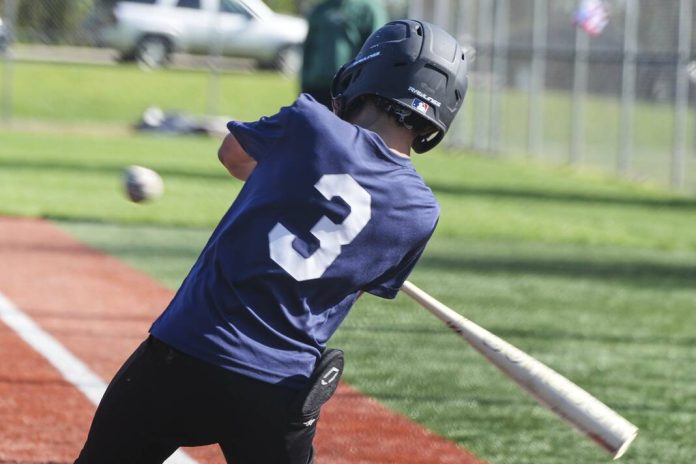
Youth ballplayer Josiah Jones bats during a youth baseball game in Monroeville, Pa., with his sliding mitt in his back pocket on April 27, 2025.

AP Photo | Gene J. Puskar

PITTSBURGH — Andrew McCutchen hasn’t had the conversation with 7-year-old son Steel yet, but the Pittsburgh Pirates star knows it’s probably coming at some point.

Steel, already playing in a youth baseball league, will probably come home at one point and ask his five-time All-Star father if he can have whatever hot item his teammates might be wearing during a given spring.

McCutchen plans to accommodate Steel up to a point. The oldest of McCutchen’s four children is already rocking an arm sleeve, just the way dad does.

Yet if Steel is hoping his father will spring for a sliding mitt — a padded glove a player can slip over one of their hands to protect it should the hand get stepped on while diving headfirst for a base — he probably shouldn’t get his hopes up.

McCutchen, who has stolen 220 bases at the major league level, has never worn one. And he’s quick to point out the next time the cleat of a fielder mashes his hand will also be the first.

Still, the 38-year-old understands. Once upon a time, he was a 20-something who epitomized baseball cool, from his dreadlocks (long since shorn) to his goatee to his rope chain to the occasional skull cap he wore underneath his batting helmet, all of it designed to accentuate McCutchen’s innate blend of talent and charisma.

“It’s all about the drip,” McCutchen said with a smile.

Even if the “drip” (Gen Z slang for stylish clothes and their accessories) emphasizes fashion over function, particularly when it comes to the gloves — which look a bit like oven mitts — that are becoming just as ubiquitous in the Little Leagues as they are in the major leagues.

Safety and self-expression

Former major leaguer Scott Podsednik (career stolen base total: 309) is credited with “inventing” the sliding mitt during the late stages of his 11-year career.

Tired of having his hand stepped on, Podsednik worked with a hand therapist for a solution. The initial mitts were relatively simple. A 2009 picture of Podsednik sliding into second base shows his left hand covered in what looks like a padded modified batting glove, all wrapped in black to match the trim on his Chicago White Sox uniform.

Things have gotten considerably more intricate over the years. Google “sliding mitt designs” and you’ll find themes ranging from the American flag to an ice cream cone to aliens to a poop emoji ( yes, really ).

Scott McMillen, a lawyer in the Chicago area, had no plans to get into the baseball accessory business. He first took notice of sliding mitts when his son Braydon, then 10, pointed out one of his teammates had one and said basically, “Oh hey dad, wouldn’t it be nice if I had one, too.”

They headed to a local sporting goods store, where McMillen was surprised at the variety available.

That was around 2021. By early 2024, McMillen had launched “ Goat’d,” a specialty baseball accessory company with everything from sliding mitts to batting gloves to arm sleeves to headbands and more, many of them religiously inspired.

Sales during their first full year? Over 1 million units.

“We were surprised at how large the marketplace is,” McMillen said.

Maybe he shouldn’t have been.

Youth sports have bounced back from the COVID-19 pandemic. The Aspen Institute’s 2024 State of Play report noted that the participation levels in sports among children ages 6-17 were the highest they’ve been since 2015. Baseball’s numbers have steadied following a decline. Little League International told The Associated Press last fall that more than 2 million kids played baseball or softball under its umbrella across the world, an uptick over 2019.

Many of those kids are also fans of the game, some of whom may have noticed their favorite major leaguer sporting a mitt when they’re on the bases. Yes, that was San Diego Padres star Fernando Tatis Jr. sliding across home plate ( feetfirst, by the way ) with a bright yellow mitt on his left hand in the ninth inning of a 2-1 win over Pittsburgh last weekend.

It’s one of the many ways in which the game has evolved over the years. When McMillen grew up, there wasn’t much swag to go around.

“We had our baseball uniform and our glove (and) everyone looked the same, everyone was the same,” he said. “Now, everyone wants to express themselves individually. The best way to do that without acting like a clown is to wear something that shows people who you are.”

Self-expression, however, doesn’t exactly come cheap, particularly in an era when top-of-the-line bats are $400 or more. What amounts to an entry-level sliding mitt can go for $40, but Goat’d and others have versions that can fetch double that.

That hasn’t stopped sales from being brisk, and McMillen points out it’s not merely a luxury item.

“We don’t play football with 1940s safety equipment,” he said. “You feel better in the (batter’s) box when you have something that protects you, right? With a sliding mitt, it’s also like, ‘Hey this is fun. It’s cool. I want to be like my fave high school player, like my favorite college player.’”

It’s becoming increasingly common for McMillen and other members of the company’s staff to spot Goat’d gear at the field. In recent months, they’ve popped up in youth tournaments from Georgia to Las Vegas, sometimes in the back pockets of players as young as 6 or 7. McMillen can’t help but shake his head to see his product become part of the time-honored tradition of kids imitating their heroes.

Which is good for business and, oh by the way, probably unnecessary.

The pressure to keep up

Here’s the thing: In most — if not all — youth baseball leagues, headfirst slides that would require a player to stretch out their hand to secure the bag are illegal.

In Little League, for example, stealing bases for players 12 and under is rare because the player can take off only after the ball has reached the batter. And even if they do bolt for the next base, they have to slide feetfirst. The only times in Little League that a baserunner can dive headfirst toward a base is when they are returning to it while in a rundown or during a pickoff attempt, both of which are also rare.

That doesn’t stop the players from wanting a sliding mitt. It also doesn’t stop their parents from buying them, all part of the pressure to “keep up with the Jones” that has practically been a part of youth sports culture since the first time somebody came to practice with a batting glove or wristbands.

It’s a phenomenon Chelsea Cahill and her family has known for years. The longtime educator who lives just east of Columbus, Ohio, has spent most of the last decade shuttling her three boys from practice to games to tournaments.

What she and her husband have learned over the years is that some trends come and go, but the pressure to have the right stuff remains.

“There’s always that feeling of ‘This is the next new thing’ or ‘This is what you’ve got to get,’” Cahill said.

They appeased their sons up to a point, but only up to a point.

Last summer their youngest son Braxton, then 11, and the rest of the kids on his travel team kept pestering their parents to buy sliding mitts. Entering the final tournament, the team moms decided to give in.

Sort of.

Rather than plop down that kind of money for something they didn’t actually need, the moms headed to a local dollar store and bought them actual oven mitts — the kind used to pull tonight’s dinner from out of the oven. Average retail price? Less than a cup of coffee at the gas station.

Oh, and the kids loved them, and wore them during the game. Cahill posted video of them playing with the mitts stuck in their back pocket to her TikTok account. The video is now at 12 million views and counting.

“They thought it was hilarious, but we didn’t really think they would wear them for the rest of the tournament,” Cahill said. “We were wrong. They really embraced it!”

Among viewers of that TikTok, by the way, were the people at Goat’d, who sent Braxton a couple of mitts as a result.

The good news is, Cahill now won’t have to buy one for Braxton this spring. Yet there’s also something else she has learned through the years: This time in her boys’ lives is fleeting.

For proof, just look at her calendar. Her two older sons — the ones who played travel baseball just like Braxton, and asked for all the cool stuff their teammates had, just like Braxton has — gave up baseball by the time they got to high school.

Her advice to parents who might be feeling the financial pinch of what it takes to play these days: Relax.

“We’ve learned as parents is to stop taking it so seriously,” she said. “They’re kids. Let them have fun.”

The reality

A day after hundreds of members of the Monroeville Baseball and Softball Association marched through the Pittsburgh suburb’s well-appointed community park, the regular season is in full swing.

All four fields are alive with the chatter of coaches, parents and boys and girls aged anywhere from 5-12.

Over on Field 1, the Rays are in the middle of their season opener. Playing first base, Josiah Jones has his glove at the ready, with a black sliding mitt noticeably sticking out of his left back pocket.

Per the league rules, the Rays and the other players at the “Bronco” level (ages 11-12), play actual full-on baseball. They can take leads and steal bases whenever they like, though headfirst slides are only allowed when returning to a base, just like in Little League.

Longtime MBSA executive commissioner Josh Plassmeyer is milling about, trying to keep tabs on everything. Plassmeyer outlawed sliding mitts on his son Grant’s 10-and-under tournament team, calling them a “distraction” because players would spend so much time fiddling with them once they got to first base, they would miss signs from the third-base coach.

About 50 feet away, Jones settles into the box and rips a ball to left-center field. His long legs carry him past first base, and he cruises into second with an easy double.

As his teammates erupted in the dugout, Jones beamed for a brief moment. Then, as the opposing pitcher stepped onto the rubber, he took an aggressive lead off second and eyed third.

His back pocket, the one where his sliding mitt had been 30 minutes before, was empty.


Link

Continue Reading
Click to comment

Leave a Reply

Your email address will not be published. Required fields are marked *

Rec Sports

More than just a game: how rugby competitions help integrate young athletes into society

Published

on


The All-Russian rugby competition among students is used not only to identify the strongest but also to help integrate sportsmen into the society.

Top student teams from the districts

The Student Rugby League competition took place at the Yessentuki Arena stadium from November 30 to December 5. Six teams from Moscow, Tatarstan, Dagestan, Volgograd Oblast, Krasnodar Krai, and Krasnoyarsk Krai participated in the event. All teams won their respective regional competitions.

But not only amateurs participated in the tournament. There were also some experienced athletes: silver medalists of the Russian championship, as well as players who have contracts with professional clubs.

Rugby teams had to play group stage matches, followed by playoffs: the four best ones played in the semifinals, where the finalists were determined. The game format was 15×15 with 25 for each half.

Sports student events as a bridge between a school and a career

A competition was held to make rugby more popular. The progress is now getting noticeable. In five years, the number of rugby players in Russia has doubled—80,000 people compared to 40,000 in 2020, said Emil Aslanov, president of the Student Rugby League.

He noted that this sport originated in universities. At the same time, rugby helps high school graduates, who have been accepted into universities, to stay involved in sports until they figure out their career paths.

Student sports are an important bridge that ensures the transition from school to amateur or professional sports. It is a platform where you can fulfill your potential and not be afraid of being left with nothing.

— said Emil Aslanov.

So, for the first time, in 2025 the organizers decided to add an educational module to the competition. It was developed with the support of the Ministry of Education and Science of the Russian Federation. Educational events are held between tournaments. Students engage in conversation with speakers and discover options for employment in various fields. 

Particular attention is devoted to the opportunities in the sports sector. Players also attend lectures on different topics: artificial intelligence in sports, anti-doping, psychology, sports management, and modern trends in training.

We do not view our league solely as a platform for competitions. The educational and developmental components are just as important to us. We want to help players after they finish their sports careers. We know not everyone will become a professional athlete, and that is not our goal. But we must help young people socialize—this is just as important as their physical development.

— explained Emil Aslanov.

Long-term path

On the final day, December 5, the fate of the student championship was decided by a match between teams from Krasnoyarsk and from Moscow, which the latter one won by 23:17.

The winners and best players of the tournament received their trophies at the awards ceremony. Delighted with their success, the athletes gave interviews—it won’t be long before some of them head off to compete in professional tournaments.

Emil Aslanov, in turn, thanked the student teams for participating in the competition. He announced that educational programs and social support for students are planned to be further developed in the upcoming years.


Link

Continue Reading

Rec Sports

Personal Finance: What is umbrella insurance?

Published

on


It’s the holiday season, and you are throwing a festive party to celebrate the occasion. As the evening winds down, Cousin Ralph, who had a bit too much eggnog, misses the last step and slides down the driveway on the ice. Always looking for a payday, Ralph sues you for injuries, pain and suffering — and for serving him that last toddy.

Your homeowners’ liability policy may cover up to $300,000, but Ralph saw a billboard ad for an attorney wielding a hammer who believes the case is worth half a million. What happens if he prevails?

The answer in many cases is: You pay. A plaintiff who receives a legal award in excess of your insurance limits may generally go after your other assets. Today, $300,000 in coverage may not be enough. That is where a supplemental insurance product called an umbrella policy becomes invaluable.

Umbrella coverage is an additional policy laid on top of your other coverage that can pick up the difference if you experience a liability loss that is greater than your standard limits. This type of supplemental coverage is cheap for the protection it offers, starting at around $200 per year for $1 million in additional protection, and anyone with significant property or financial assets should have it.

The concept of liability insurance in the U.S. began in the late 19th century to address potential hazards faced by employers. Policies were narrowly tailored to cover specific risks like fire, work accidents, vehicle crashes and maritime incidents. As the magnitude of losses increased, a secondary market developed to tack on additional protection, known as excess liability coverage, also covering narrowly defined risks.

The first generalized add-on policy to cover multiple exposures above the standard coverage was written by Lloyd’s of London and sold to Gulf Oil in 1949. Originally called “broad form third-party excess liability” coverage, this unwieldy moniker was quickly changed to the more efficient and descriptive “umbrella” insurance. U.S. companies began offering umbrella policies to wealthier individual households around 1959, and ultimately the industry developed a standardized contract in 1997 that made supplemental coverage widely available to a broader customer base.

Some risks that homeowners face are fairly obvious, like a fall down the stairs by a visitor (or even by an Amazon porch pirate) on your property. Policies can also extend beyond the limits of coverage on your vehicles and are especially important if there are young drivers in the house. Other types of vehicles can also be included or added, like boats or RVs, although you must verify with your agent that the specific policy covers additional vehicles.

Household workers like babysitters, landscapers, contractors and housekeepers can also pose a risk when they are on your property if their company does not carry its own liability coverage.

Other risks may not be so obvious until you face one of them. Volunteering with nonprofit organizations can present liability risks if the organization does not carry its own insurance. For instance, around 2 million emergency room visits occur each year due to youth sports injuries. Coaches can be held responsible for failing to supervise properly or providing adequate instruction, and accusations of improper behavior are not unheard of. Adults who take part in potentially dangerous physical activities like hunting or skiing may be liable if they injure another party.

Do you own a dog? Fido could be just one mail carrier away from costing you your home. According to State Farm, $1.5 billion in liability claims were filed last year alleging injuries from dog bites. Do your kids have a trampoline in the back yard? Better cover it with an umbrella. Got a pool? Imagine the possibilities.

If you happen to be a social media troll, you may think you are safe. Think again. If you are found guilty of defamation including libel or slander, you can be sued. Same goes for harassment or cyberstalking, as well as invasion of privacy (exposing personal information). Damages are admittedly difficult to prove, but in any event, you would likely need to engage counsel.

And if you are a renter, you may still be exposed to substantial liability for damage and injuries that occur within your home. Renter’s policies typically cover up to $100,000 in liability. A fire caused by leaving a burner unattended could easily cost you more than that if you are found negligent.

Umbrella policies typically pay expenses that exceed your regular limits including bodily injury, damage to another person’s property, legal expenses in litigation and liability arising from personal behavior against another. They do not provide protection from criminal acts or intentional damage.

Given their relatively low cost and the peace of mind they provide, umbrella policies should be considered by pretty much anyone who owns more stuff that their various individual policies may not fully cover. Some insurance companies may not sell an umbrella policy to you unless you carry other coverage with them, but by all means shop around. Ask your agent for a recommendation. There are also many carriers who offer excellent coverage online. You should investigate the financial strength and claims history of any potential insurer, starting with AM Best. You can also check customer reviews (as you would with a new toaster from Walmart).

Litigation is a way of life in modern society. and the cost of being underinsured could be catastrophic in a worst case scenario. A modest investment in an umbrella policy can put your mind at ease and let you enjoy the party, even if Ralph is in his cups again.

Christopher A. Hopkins, CFA, is a co-founder of Apogee Wealth Partners in Chattanooga.


Link

Continue Reading

Rec Sports

Durango boys basketball splits first two games at Marv Sanders, girls lose

Published

on


Demons girls still looking for first win this year

Durango’s Jaelyn Alston drives to the basket and attempts a 5-foot jumper against Aztec’s Alisia Valerio (21) and Grace Villarrial-Owens (4) in the first quarter of the Marv Sanders Invitational second round play on Friday at Scorpion Auxiliary Gym. (Curtis Ray Benally/Special to the Tri-City Record)

Curtis Ray Benally

The Durango High School basketball teams headed south for some great competition in Farmington at the Marv Sanders Invitational to mixed success.

Durango’s boys split their first two games, while the girls continued their streak of close losses to open the season.

Here’s how each team did in their first two games of the tournament:

Navajo Prep girls hold off Durango rally for 34-31 win in first round

The Navajo Prep girls basketball team led by as many as eight points in the third quarter before holding off a late rally, topping Durango 34-31 in an opening-round game of the Marv Sanders Memorial Girls Basketball Tournament on Thursday at Farmington High.

The win advanced the Eagles (2-1) into a second-round winner’s bracket match Friday against Volcano Vista, who routed Aztec in a first round game by a score of 55-21.

Senior Kameron Dale led the way with 10 points for Navajo Prep, and junior Leilani Wood had a strong outing, scoring all six of her points in the second quarter. Navajo Prep has now won two straight games.

The two-time defending Class 3A state champions took advantage of poor Durango shooting in the first half; the Demons converted only four of 14 field goal attempts before halftime.

The Eagles’ defense forced seven turnovers in the second half, even as the Demons closed the gap in the fourth quarter to tie the game at 31-31 with 3:30 remaining.

Led by Claire Goodwin’s game-high 15 points, Durango had several chances to claim the lead in the final minutes but missed a pair of jump shots and then resorted to fouling to stop the clock. Durango committed eight personal fouls in the fourth quarter, four of which sent Navajo Prep to the free-throw line.

Dale connected on a pair of free throws with 19.3 seconds left to seal the victory for the Eagles. Durango had a chance to tie the game on the final possession, but Navajo Prep junior Nataya Serrano intercepted a cross-court pass just before the final buzzer sounded.

Durango (0-3) looked to win its first game of the Sanders Invitational when it faced Aztec in a consolation-round clash Friday at 11 a.m.

Durango boys surge past Window Rock 52-41 in opening round

Durango held off a Window Rock push in the second half and advanced to the second round with a 52-41 win Thursday inside Scorpion Arena.

The Demons (1-1) leaned again on junior standout Kingston Kerlin, who poured in 29 points. Senior Jaylen Brown led the Fighting Scouts (3-4) with 15.

Both squads opened cold. Durango hit only one of nine shots yet stayed in front through strong free-throw shooting, knocking down six of eight. The Demons’ pressure forced stops, and they closed the quarter ahead 11-7.

Window Rock kept charging after the break, trading baskets until they pulled within 33-31 — the tightest margin of the contest. Durango’s pace then swung the game. The Demons found lanes, beat defenders downcourt, and went on a 7-0 run for a 44-35 lead entering the fourth.

Kerlin controlled the finish, grabbing his own miss for a putback and directing a patient offense that chewed clock. Durango closed strong, sealing the 52-41 victory.

“Everybody knows [Kerlin] on this side of the track, especially on the Western Slope and New Mexico-Colorado border, so everybody’s going to be looking for him,” Durango head coach Alan Batiste said. “So, it’s just going to be another guy that has to step up. We have to have someone help him out.”

Aztec girls edge Durango in consolation game

Senior Jazzlyn Gomez scored 15 points to lead the Aztec High School girls basketball team to a 31-26 win over Durango in another second-round consolation game at the tournament.

The win, coming after a tough loss to Volcano Vista in the opening round, improves the Tigers’ record to 3-1. Aztec will face Newcomb on Saturday at 12:45 p.m.

Both teams struggled offensively. The game featured a number of turnovers in the opening half, and the Tigers were held to only three points in the opening quarter.

Aztec trailed 14-13 at halftime but found more success shooting the ball in the third. Gomez connected on a 3-pointer and made a pair of free throws, while Camila Dominguez also helped put the Tigers’ offense in a better rhythm.

Gomez hit another 3-pointer to give the Tigers the lead in the third quarter, then Khloe Schmidt extended that advantage to 20-16. The Durango Demons (0-4) rallied and reclaimed the lead after Jaelyn Alston connected on back-to-back possessions.

As the third quarter was ending, Gomez put the Tigers back in front, converting a free throw attempt after driving to the lane and drawing a foul.

“She’s been so special to this team, and she really shouldered a load for us today,” Aztec head coach Bill McLaughlin said of Gomez.

The game was sealed midway through the final quarter with Aztec leading 26-23. Schmidt grabbed a turnover in the backcourt and sank a 3-pointer to lift Aztec’s lead to 29-23.

“That was really the shot of the game,” McLaughlin said. “[Durango] was starting to press a bit, and she came up with that shot that gave us a little separation.”

Durango (0-4) wrapped up its bracket play Saturday against Shiprock at 11 a.m.

Farmington boys dominate Durango in second round

Farmington senior Sataurus Griego pulls up and attempts a 6-foot jumper against Durango’s Jude Alderton in the first quarter of the Marv Sanders Memorial Invitational semifinal game on Friday at Scorpion Arena. (Curtis Ray Benally/Special to the Tri-City Record)

Curtis Ray Benally

In the other semifinal, Farmington dominated the boards and capitalized on clean execution to cruise to a commanding 68-38 win over Durango.

The Scorpions (6-1) pulled away with a 21-point fourth quarter. Senior Sataurus Griego finished with 11 points, while classmate Donathan Tracy added nine with smooth moves under the basket.

The Demons (1-2) were sparked by 11 early points from senior King Kerlin and sophomore Taj Batiste, who stepped in as a key scorer in the second half.

Farmington took a 21-13 lead at the end of the opening frame, helped by a triple from senior Conner Neff and a basket from Griego.

Tracy began flashing his moves and footwork in the second quarter, providing a boost as the Scorpions’ offense stalled briefly.

“When (Tracy) is driving down to the basket, he’s just so crafty down there and they think they’ve got him,” said Farmington head coach Larry Don-Chitty. “I thought he was sort of our saving grace in the first half.”

Farmington led 36-24 at the break and held a 47-33 lead after three quarters, despite posting its lowest scoring quarter of the night with 11 points.

The Scorpions opened the final quarter strong on defense, forcing a five-second inbound violation. Neff fed Isaac Dinning for a score, and senior Derrick Jaramillo Jr. added six fast-break points, powering the 21-point fourth quarter and sealing the 68-38 victory.

“I’m so pleased with (Jaramillo),” Chitty said. “When he comes in, he plays so hard every time. It’s cool that he can come off the bench like that and be ready to go.”


Link

Continue Reading

Rec Sports

Lady Vikings basketball off to dominant 9-0 start behind young core, ‘Whatever It Takes’ mentality

Published

on


Coming off a Sweet 16 loss last season, Fort Walton Beach High’s girls basketball has roared back with a 9-0 start that has the Lady Vikings looking like the gold standard the area has come to expect.

  • It’s not just that they’re winning — it’s how they’re winning. 

Through nine games, Fort Walton Beach has won by an average margin of 27 points, including a 60-point victory over Rutherford. The dominant stretch also includes wins over teams with winning records: an 11-point margin over Pine Forest, a 24-point margin over Chipley and a 21-point margin over Rickards.

Coach Mercedez Clayborne points to resilience as the driving force behind this hot start, staying true to the “Whatever It Takes” mantra that has become synonymous with Lady Vikings basketball.

  • “It’s just the resilience of our team,” Clayborne said. “It doesn’t matter who we’re playing, we show up, and we remember that the standard must be the standard.”
Photo courtesy of Holly Howard Photography
Photo courtesy of Willie Smith/Panhandle Photography

The success appears to be the product of a young core that could push Fort Walton Beach to its first Final Four since 2017 — or possibly its first state title since 1999.

Junior Alexis Smith anchors the group as a versatile post player who scores, rebounds and blocks shots. Freshman Harmony Lee has already made her mark as a reliable scorer and shooter who has filled the shoes of departed senior Alyx Hall. Anecia Stallworth has emerged as a lockdown wing, averaging 2.5 steals per game while shooting 75% from the field. Aniyah Boyd runs the floor as a point guard who also contributes on the boards, and Abria Jackson has developed into the team’s third-leading scorer behind Smith and Lee.

“What’s impressed me the most is how they’re coming together as a team and really using each other,” Clayborne said.

Photo courtesy of Willie Smith/Panhandle Photography

Even with an undefeated record and dominant margins, Clayborne sees room for growth. Limiting turnovers and maintaining discipline within the game plan remain areas of focus.

  • “We need to do a better job of taking care of the basketball, and we need to do a better job of sticking to the gameplan,” Clayborne said. “We had times where we broke down and freestyled a bit. We took some shots we probably shouldn’t have taken, but then, ultimately, we got it back on the defensive end.”

If the Lady Vikings continue playing at this level, a state championship run is well within reach.

“I think the sky is the limit for this team and that’s the thing that we’ve been preaching to them since the beginning,” Clayborne said. “We’ve got pieces at every position and the biggest thing is trusting the process and doing what we do well.”


Link

Continue Reading

Rec Sports

JuJu Watkins attends USA Basketball camp and focuses on leadership during ACL rehab

Published

on


JuJu Watkins made the most of her brief trip to the USA Basketball senior national team camp. While she wasn’t able to participate in the on-court activities…

DURHAM, N.C.(AP) — JuJu Watkins made the most of her brief trip to the USA Basketball senior national team camp.

While she wasn’t able to participate in the on-court activities because the Southern California star is still recovering from an ACL injury she suffered last March, Watkins saw the invitation as an opportunity to grow her leadership abilities.

“It’s enough just being (here) and feeling the energy, that’s mostly what I’ve picked up on,” the reigning AP Player of the Year said. “Hearing everyone’s voices, the communications, the leadership, it’s something that you can see automatically. It brings up your standards, so I’ll definitely be taking some of these lessons back to USC to continue to grow as a leader and a player.”

Watkins was able to get up a few stationary shots with coaches after practice was over, which was a positive step in her rehab.

“Whatever I can do, I am trying to maximize that,” she said.

Watkins had announced in September that she would miss the entire college season to give her full attention to rehab. She said Friday that she had tried to put off the decision whether to play for as long as possible, but in the end she “had to come to terms with where I was at. Getting over that mental curve has been the biggest thing.”

U.S. coach Kara Lawson said it was important that Watkins, who will be a vital part of the team in the future, to attend the camp.

“We wanted her here … I think you can see that there’s a great deal of talent there, and that’s somebody that is going to be in the conversation, obviously, in the future,” Lawson said. “We were really intentional about inviting her here and having her be a part of it. I think there’s great value in having her observe and be around the group, and then just the connectivity.”

Watkins was around only on Thursday and Friday because she returned to Los Angeles for the 16th-ranked Trojans’ game against No. 1 UConn on Saturday. She was on their bench slapping hands with her teammates after the pregame warmups ended.

Being at camp gave her a chance to connect in person with Paige Bueckers. Watkins said Bueckers has been great in helping her with her ACL rehab. Bueckers missed the 2022-23 season with her own ACL tear.

“She’s been checking on me every couple months. Great person,” Watkins said. “So to be here with her, and see her kill it, and see her on the other side of it, it’s very inspiring. She’s just helped me throughout the process of sending the texts, checking in on me, that’s meant a great deal.”

Watkins said she had always wanted to be part of the senior team. The Olympics are in her hometown of Los Angeles in 2028.

“It’s always been a dream of mine to be in this atmosphere, so to live out those dreams, even though it looks different, I’m still blessed to be here,” she said.

Get poll alerts and updates on the AP Top 25 throughout the season. Sign up here and here (AP mobile app). AP college basketball: https://apnews.com/hub/ap-top-25-college-basketball-poll and https://apnews.com/hub/college-basketball


Link

Continue Reading

Rec Sports

Football club to offer young women college pathway

Published

on


A football team is working with a college to offer young women a pathway into the sport.

Middlesbrough has paired with Middlesbrough College to invite up to 20 players to study full-time in Year 12, with a route into professional football.

Advertisement

The Middlesbrough College MFC Women’s U19 team will be entered into the National Youth Football League for the 2026/2027 season.

The college’s sport academy director and England Women’s Blind Team coach Sammie Leigh said the course would give “girls on Teesside the chance to progress their football while building skills, discipline and confidence”.

View over Middlesbrough College grounds. The college has bright blue and red modern modular shaped buildings, to the right of a waterlogged green stretch of land. The college has three small football pitches attached to the site. There is a large carpark to the north of the site too.

Up to 20 players will be offered the chance to study full-time in Year 12 [Commission Air]

A spokeswoman for Middlesbrough College said the scheme would “combine academic or vocational study with elite-level training”.

The college’s women’s football academy coach, Dan Wilson, said the scheme would ensure young women on Teesside could “succeed both on the pitch and in the classroom”.

Advertisement

Mr Wilson said the scheme – which will be led by UEFA-licensed coaches – would give players “a professional environment to develop their skills and fitness, while also supporting their academic progress”.

General manager of Middlesbrough FC Women, Ben Fisher, said the club’s aim was to “retain and develop local talent to strengthen women’s football across the region”.

Ms Leigh, who helped to forge the programme, said: “Having worked in women’s football for nearly two decades, I’ve seen first-hand how vital structured pathways and high-quality coaching are for young talent.”

She added that those who were interested could apply through the college, with trials and friendly games held in January.

Advertisement

Follow BBC Tees on X, Facebook, Nextdoor and Instagram.

More on this story

Related internet links


Link

Continue Reading

Most Viewed Posts

Trending