
Technology
Sports App Market Size, Share, Trends

Report Overview
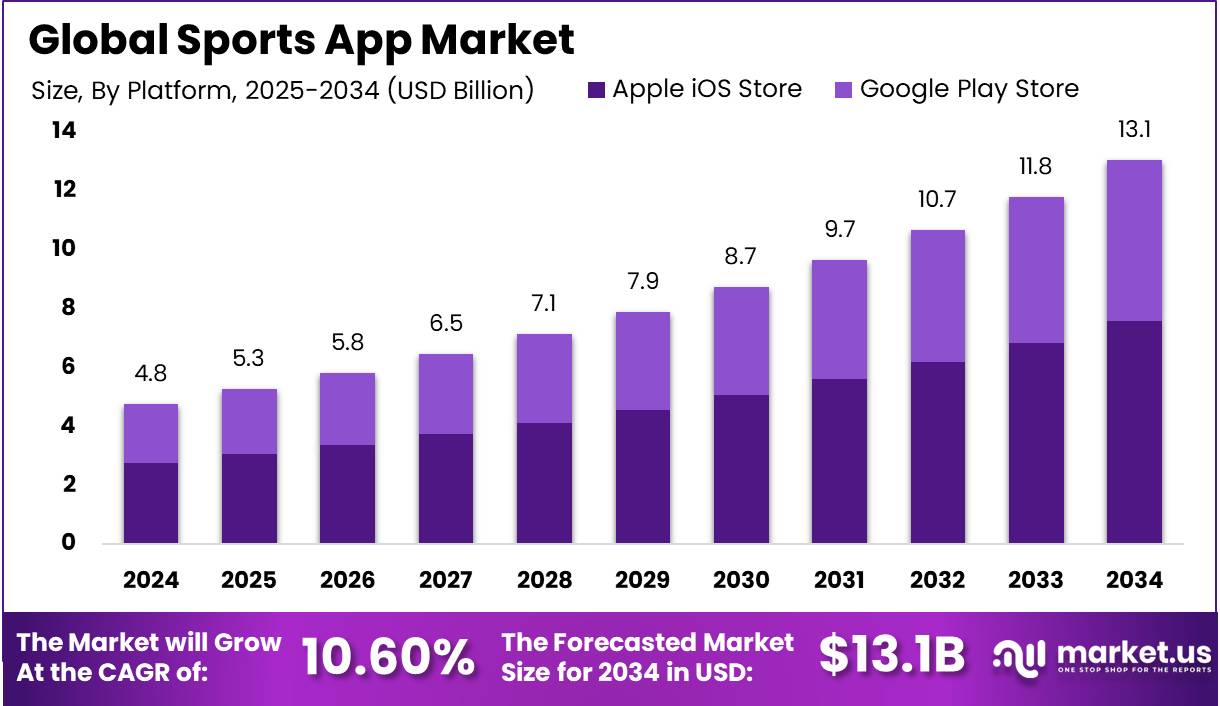
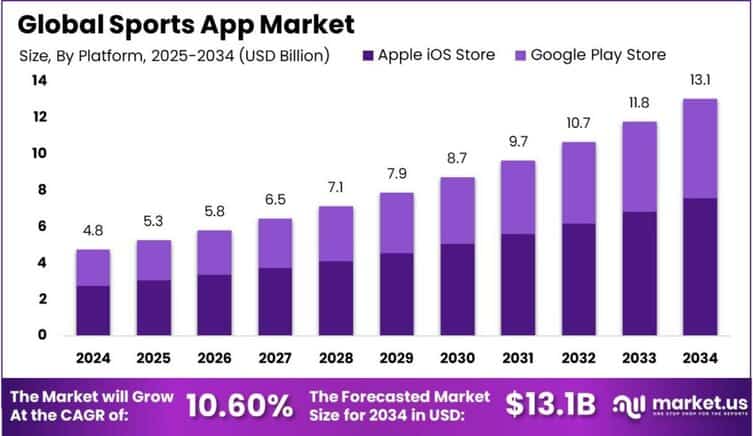
The global sports app market is undergoing a robust transformation, with its size projected to reach approximately USD 13.1 billion by 2034, rising from USD 4.77 billion in 2024. This promising growth reflects a steady compound annual growth rate (CAGR) of 10.6% between 2025 and 2034.
In 2024, North America remained the leading regional contributor, accounting for more than 36% of the global market share, with revenue generation of around USD 1.71 billion. Within this region, the United States alone was valued at approximately USD 1.62 billion, and the market is forecasted to advance at a CAGR of 8.4% over the coming decade.
Key factors propelling this market include the rising focus on health and wellness, the integration of artificial intelligence (AI) and machine learning for personalized workout plans, and the growing popularity of live sports streaming and real-time score tracking. The demand for sports apps is further bolstered by the increasing use of wearable fitness technology, which allows for real-time performance monitoring and enhanced user engagement.
Sports apps provide several benefits, including personalized fitness plans, real-time game updates, and community interaction. These features help users manage health goals, stay updated on their favorite teams, and connect with others. By offering expert advice and structured programs, these apps democratize fitness and sports knowledge, making it accessible to a wider audience.
The intersection of sports and technology offers opportunities for innovation, including virtual reality, gamification, and social media integration to boost engagement. Expanding into underserved markets and developing niche apps can drive growth, while collaborations with sports organizations and influencers can enhance reach and credibility.
Developers and companies are undertaking various initiatives to enhance the functionality and appeal of sports apps. These efforts include advanced performance analytics, multilingual support, and strong data privacy. There’s also a focus on creating inclusive platforms for users of all abilities and fitness levels, fostering a more equitable sports environment.
As reported by Market.us, The global Esports market is poised for substantial expansion, with its value projected to reach approximately USD 16.7 billion by 2033, up sharply from USD 2.3 billion in 2023. This growth reflects a strong CAGR of 21.9% over the forecast period from 2024 to 2033, driven by the increasing global acceptance of competitive gaming, rising investments from sponsors and media, and the growing popularity of esports as mainstream entertainment.
The sports app market is poised for continued expansion, fueled by technological advancements and increasing global interest in health and fitness. Strategic partnerships, R&D investment, and user feedback are key to sustaining growth. As the market evolves, sports apps are set to become essential tools in shaping the future of sports consumption and participation in the digital age.
Key Takeaways
- The Global Sports App Market size is projected to reach USD 13.1 Billion by 2034, growing from USD 4.77 Billion in 2024, at a CAGR of 10.60% during the forecast period from 2025 to 2034.
- In 2024, the Apple iOS Store segment held a dominant market position, accounting for more than 58% of the global sports app market share.
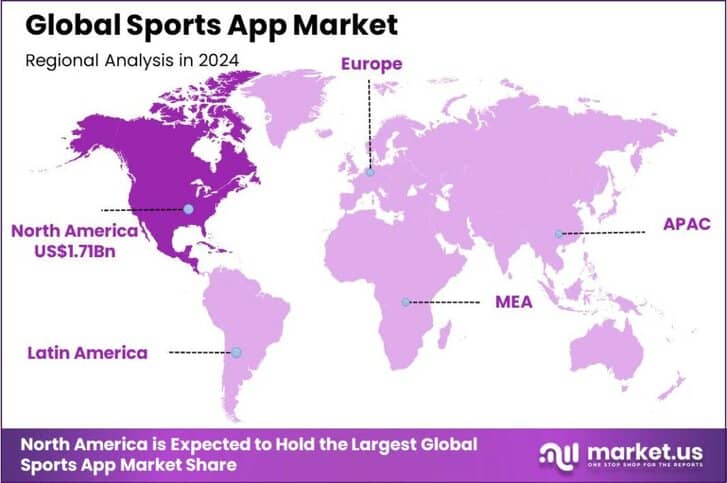
- In 2024, North America held a dominant market position, with over 36% of the global sports app market share, generating approximately USD 1.71 billion in revenue.
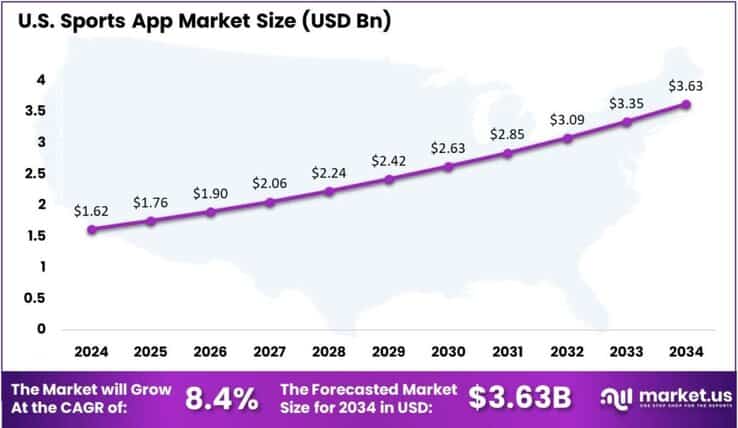
- The U.S. Sports App market was valued at USD 1.62 billion in 2024 and is expected to grow at a CAGR of 8.4%, driven by the increasing popularity of mobile platforms for sports content.
Analysts’ Viewpoint
Investment opportunities in the sports app market are abundant, particularly in areas focusing on AI integration, wearable technology, and immersive user experiences. The market’s growth potential is attracting significant venture capital, with investments in sports startups reaching $880 million in 2024, highlighting the sector’s appeal to investors.
Businesses operating in the sports app market can reap numerous benefits, including increased user engagement, diversified revenue streams through subscription models and in-app purchases, and enhanced brand loyalty. The ability to offer personalized and interactive experiences positions these businesses to capitalize on the growing consumer demand for digital fitness solutions.
The regulatory environment for sports apps, particularly those involving betting functionalities, is becoming increasingly stringent. Compliance with Know Your Customer (KYC) and Anti-Money Laundering (AML) regulations is mandatory, ensuring secure and responsible usage. Additionally, data protection laws require apps to safeguard user information, emphasizing the importance of privacy and security in app development.
Business Benefits
Sports apps streamline communication and administrative tasks within sports organizations. Coaches and team members can coordinate schedules, share updates, and manage logistics seamlessly through the app. According to the Mobile Sports Apps Survey, user satisfaction soars when social features are in play, 65% of active users say they enjoy the app more when they can connect and interact with peers directly within it.
In a saturated market, having a dedicated sports app sets an organization apart from competitors. It demonstrates a commitment to innovation and meeting fan expectations in the digital age. This technological edge can attract new users and retain existing ones, solidifying the organization’s position in the industry.
According to the MoldStud article, Sports apps that integrate live score updates, gamification, and social sharing see significant increases in user activity. Incorporating gamified elements can lead to up to a 30% increase in user participation. This ongoing engagement builds emotional bonds and loyalty through personalized and immersive experiences.
Impact Of AI
- Personalized Fan Experiences: AI allows sports apps to personalize content, offering tailored clips and narratives based on user preferences. This strategy targets younger audiences who prefer streaming and customized experiences.
- Enhanced Athlete Performance and Injury Prevention: AI analyzes data from wearables and other sources to monitor athletes’ physical conditions. This analysis helps in optimizing training programs and preventing injuries.
- Strategic Game Planning: AI helps coaches create effective game strategies by analyzing large datasets. For example, an AI system can recommend optimal player positioning during corner kicks.
- Automated Content Creation:AI automates sports content creation, such as game recaps and highlight reels. It can automatically generate game summaries from box scores, streamlining content production for college sports.
- Enhanced Fantasy Sports Engagement: AI enhances fantasy sports platforms by providing real-time analytics and predictions. Deep learning models analyze player performance data to offer insights, helping users make informed decisions in fantasy leagues.
U.S. Sports App Market
In 2024, the U.S. Sports App market reached a valuation of USD 1.62 billion, reflecting the increasing popularity of mobile platforms as key channels for engaging with sports content. Growth is fueled by digital transformation in sports and entertainment, as consumers increasingly use mobile apps for live scores, fantasy sports, stats, tickets, merchandise, and fan engagement.
The market is projected to expand at a Compound Annual Growth Rate (CAGR) of 8.4% during the forecast period, indicating a robust and steady demand trajectory. Momentum is driven by smartphone growth, fast internet, and demand for mobile sports updates and streaming. Fantasy leagues, betting, and gamified features boost engagement, while leagues invest in apps for direct fan interaction and exclusive content.
Moreover, the growth of the U.S. Sports App market is being supported by collaborations between tech developers, media companies, and sports organizations. These partnerships have introduced advanced mobile features like AR stadium tours and voice assistants, transforming sports apps from simple scoreboards into all-in-one digital fan companions reshaping how Americans engage with sports.
In 2024, North America held a dominant market position, capturing more than a 36% share of the global Sports App market and generating approximately USD 1.71 billion in revenue. This leadership is largely attributed to the region’s deeply rooted sports culture, widespread smartphone adoption, and the increasing reliance on digital platforms for real-time sports engagement.
North America’s sports app dominance is fueled by strong consumer demand for premium content and the rapid growth of in-app betting, enabled by legal reforms. Industry leaders like ESPN and FanDuel are redefining fan engagement through integrated data, betting, and tech-driven features like AI content, AR visuals, and voice updates.
Another major factor contributing to North America’s lead is the highly developed digital infrastructure and robust investments in sports tech innovation. The presence of top-tier mobile app developers, advanced analytics providers, and a growing ecosystem of startups focused on sports engagement have fostered a favorable environment for continuous app evolution.
North America’s technological maturity, consumer readiness, and strong support from sports leagues maintain its leadership in the global sports app market. The region is expected to retain its dominance in the coming years, driven by 5G connectivity and the rise of cross-platform media consumption, which will further enhance mobile sports interactions.
Platform Analysis
In 2024, Apple iOS Store segment held a dominant market position, capturing more than a 58% share in the global sports app market. This leadership can be attributed to the high concentration of premium users on the iOS ecosystem, who are more inclined to spend on app subscriptions, fitness plans, and in-app purchases.
A major strength of the Apple iOS Store is its seamless integration with Apple’s hardware ecosystem, particularly the Apple Watch and HealthKit. This allows iOS sports apps to offer effective fitness tracking, performance monitoring, and real-time health insights, with smooth syncing across iPhone, Apple Watch, and other devices for enhanced workout logging, step tracking, and heart rate analysis.
Moreover, iOS users are typically more engaged in wellness and fitness activities, with a higher likelihood of adopting personalized workout apps, live sports streaming platforms, and gamified training apps. This behavior provides a fertile ground for sports app developers targeting a health-conscious and tech-savvy audience.
Additionally, Apple continues to invest in developer tools, subscription monetization models, and health-focused innovations that further support the growth of sports applications. With the launch of new APIs and features related to augmented reality, fitness tracking, and biometric data, iOS apps can continue to differentiate themselves and offer immersive experiences.
Key Market Segments
By Platform
- Apple iOS Store
- Google Play Store
Key Regions and Countries
- North America
- Europe
- Germany
- France
- The UK
- Spain
- Italy
- Rest of Europe
- Asia Pacific
- China
- Japan
- South Korea
- India
- Australia
- Singapore
- Rest of Asia Pacific
- Latin America
- Brazil
- Mexico
- Rest of Latin America
- Middle East & Africa
- South Africa
- Saudi Arabia
- UAE
- Rest of MEA
Driver
Rising Smartphone Penetration and Digital Engagement
The global rise of smartphones has significantly boosted the adoption of sports apps, especially in North America. As mobile device use becomes more widespread, sports fans increasingly turn to apps for real-time updates, live streaming, fitness tracking, and interactive features.
High-speed internet and advanced mobile technologies have further improved the user experience, driving higher app downloads and engagement. The rise of esports and virtual sports has expanded sports apps to attract gamers and non-traditional sports fans.
Additionally, digital payment systems have simplified in-app transactions, boosting user retention. The growing smartphone penetration, along with advances in mobile technology and digital payments, has fueled the sports app market’s growth, a trend expected to continue as technology evolves and user preferences shift towards more interactive experiences.
Restraint
Data Privacy Concerns and Regulatory Challenges
The growth of the sports app market faces challenges from data privacy concerns. Users and regulators are wary of personal data collection, with incidents of breaches and unauthorized sharing eroding trust. The increasing use of biometric data through wearables adds further privacy risks, prompting regulators to call for stronger data protection measures.
Navigating overlapping privacy laws, like HIPAA and state regulations, complicates compliance for app developers. Non-compliance can lead to legal issues and harm brand reputation. In conclusion, data privacy concerns and regulatory challenges are key restraints on the sports app market, making transparent data practices and strong security measures essential for maintaining user trust and growth.
Opportunity
Integration with Wearable Technology
The integration of sports apps with wearable technology presents significant market growth opportunities. Wearables like fitness trackers and smartwatches enable real-time data collection, enhancing user engagement with features such as heart rate monitoring, sleep tracking, and personalized workout plans. This integration improves user experience and provides valuable data for ongoing app enhancement.
The fusion of fitness apps, wearables, and AI is creating a more connected and personalized wellness experience. This synergy enables innovative features like biometric nutrition plans and virtual fitness communities, broadening the scope of sports apps. As technology continues to evolve, the integration of wearable technology with sports apps is set to play a crucial role in shaping the future of the market, driving innovation and enhancing user engagement.
Challenge
User Retention and Engagement
Despite a growing user base, sports app developers face challenges in user retention and engagement. High churn rates suggest users abandon apps quickly, often due to factors like lack of engaging content, poor user experience, and aggressive monetization. To retain users, apps must offer immersive, personalized experiences and consistently fresh content.
To address retention challenges, some apps have introduced loyalty programs and gamification, like CBS Sports, which has optimized user acquisition channels to boost retention. These strategies enhance engagement by offering incentives and a sense of achievement. However, implementing such tactics demands significant resources, ongoing innovation, and careful balance between personalization and privacy to ensure user comfort.
Emerging Trends
Several key trends are shaping the development of sports apps, with AI playing a central role. It is being integrated to provide personalized content, real-time statistics, and predictive analytics, offering users tailored updates and insights. These features enhance engagement and satisfaction by delivering detailed performance metrics and game predictions, enriching fans’ understanding of the sport.
Sports apps are increasingly compatible with wearable devices, allowing users to track their fitness metrics and receive health insights. This integration supports users in monitoring their physical activities, setting goals, and maintaining a healthy lifestyle, thereby extending the app’s utility beyond mere entertainment.
Gamified elements, such as leaderboards, achievements, and fantasy leagues, are being incorporated to boost user engagement. These features encourage regular interaction with the app, fostering a sense of competition and community among users.
Key Player Analysis
NBC Universal stands out as a key player in the sports app market, primarily due to its robust media portfolio, including the Olympic Games, NFL, and Premier League broadcasts. Their sports app, Peacock, allows users to access live sports events, exclusive content, and on-demand features. NBC’s established reputation in broadcasting, combined with its powerful streaming platform, makes it a formidable force.
Warner Media, now part of the newly formed Warner Bros. Discovery, has made significant strides in sports streaming with its platform, Max. Warner Media holds exclusive broadcasting rights to major leagues like the NBA, MLB, and NCAA. Their sports app offers live broadcasts, replays, and original content, leveraging strong league relationships and global reach to attract a wide user base.
PENN Entertainment has recently become a major player in sports streaming, largely thanks to its acquisition of Barstool Sports. PENN integrates sports betting with live streaming through its app, creating a unique offering. With partnerships with major sports leagues, it taps into the growing demand for interactive experiences, positioning itself as a distinct player in the market.
Top Key Players in the Market
- NBC Universal
- Warner Media
- PENN Entertainment
- ESPN
- Viacom18 (JioCinema)
- Sky UK
- SuperSport
- LiveScore
- beIN SPORTS
- DAZN
- Fubo TV
- Others
Top Opportunities for Players
- Personalized User Experiences Through AI: Artificial Intelligence (AI) is enabling sports apps to offer tailored content, enhancing user engagement. By analyzing user behavior and preferences, apps can provide customized notifications, content recommendations, and interactive features. This personalization fosters deeper user involvement and loyalty.
- Integration of Wearable Technology: The adoption of wearable devices is transforming how users interact with sports apps. Integration with wearables allows for real-time health and performance tracking, offering users insights into their physical activities. This synergy between hardware and software enhances the utility and appeal of sports applications.
- Expansion into Emerging Markets: Emerging economies are witnessing a surge in smartphone penetration and internet accessibility, creating fertile ground for sports app growth. Localized content and language support can help apps resonate with diverse user bases, tapping into previously underrepresented markets.
- Diversification into E-sports and Fantasy Leagues: The rising popularity of e-sports and fantasy sports leagues offers avenues for sports apps to diversify their offerings. By incorporating features that cater to these segments, apps can attract a broader audience and create additional revenue streams through in-app purchases and advertising.
- Enhanced Fan Engagement Through Interactive Features: Interactive elements such as live polls, quizzes, and social sharing options are becoming integral to sports apps. These features not only increase user engagement during live events but also foster a sense of community among users, encouraging repeat usage and brand loyalty.
Recent Developments
- In February 2024, ESPN, FOX, and Warner Bros. Discovery announced plans to form a joint venture to launch a new streaming sports service in the U.S. This service is scheduled to debut in the fall of 2024 and will be available directly to consumers via a new app.
- In December 2024, DAZN announced the acquisition of Foxtel Group, a leading Australian sports and entertainment media company, for $3.4 billion. This deal aims to leverage DAZN’s global scale and technology to enhance Foxtel’s offerings.
Report Scope

Technology
Abu Dhabi to Showcase Its Esports and Motorsports Excellence: Gran Turismo World Series 2026 Kicks Off in the UAE
Published on
December 22, 2025

In a historic first for the Middle East, Abu Dhabi, the vibrant capital of the United Arab Emirates, will host the opening event of the Gran Turismo World Series 2026 on March 28, 2026. This prestigious event will take place at the Space42 Arena, showcasing Abu Dhabi’s growing influence in esports and motorsports. As the world’s most exciting digital racing series kicks off its new season in the heart of the UAE, the city’s status as a global hub for innovation, entertainment, and technology is further solidified.
This announcement was made during the Gran Turismo World Series 2025 Finals held in Fukuoka, Japan, by S.E. Saeed Al Fazari, the Executive Director of Strategic Affairs at the Department of Culture and Tourism – Abu Dhabi (DCT Abu Dhabi), and Kazunori Yamauchi, the producer of the Gran Turismo series. Their collaboration highlights Abu Dhabi’s readiness to host an event that will attract millions of esports fans and motorsport enthusiasts from around the world.
Abu Dhabi: The Perfect Location for the Gran Turismo World Series 2026
Abu Dhabi, already known for its world-class motorsport events such as the Formula 1 Abu Dhabi Grand Prix, is now expanding its footprint in the esports industry by welcoming the Gran Turismo World Series. This high-profile event, which brings together the best virtual drivers from around the globe, will elevate the UAE’s presence in the digital gaming and motorsport communities.
The Gran Turismo World Series: A Global Racing Championship
The Gran Turismo World Series is an annual competition that aims to crown the best Gran Turismo player in the world. The competition begins with online qualifiers, where players from across the globe compete to earn their spots in the live events. The series then moves to major international venues, where the top drivers from each region meet to race for the title. The 2026 series opener in Abu Dhabi will mark a monumental step in the history of the event, as it’s the first time the series has taken place in the Middle East.
Yas Marina Circuit in Gran Turismo 7: A Digital Tribute to Abu Dhabi’s Motorsports Legacy
Adding to the excitement, the Yas Marina Circuit, one of the most iconic motorsport venues in the world, will be featured in Gran Turismo 7. This addition allows players to virtually race on the very track that has hosted the Formula 1 Grand Prix since 2009. With this integration, Gran Turismo 7 connects real-world motorsports with virtual racing, offering players the chance to experience the thrill of Yas Marina from the comfort of their homes.
Key Highlights of the Gran Turismo World Series 2026 in Abu Dhabi
- Event Date: March 28, 2026
- Venue: Space42 Arena, Abu Dhabi, UAE
- Region’s First: This marks the first time the Gran Turismo World Series will take place in the Middle East.
- Key Features: The event will showcase the best virtual drivers, live competitions, and interactive experiences for fans.
- Inclusion of Yas Marina Circuit: The iconic Yas Marina Circuit will be featured in Gran Turismo 7, bringing a unique virtual motorsports experience to players globally.
Abu Dhabi’s Growing Role in Esports and Digital Innovation
Abu Dhabi has rapidly become a global leader in the esports sector, thanks to its investments in cutting-edge technology, entertainment infrastructure, and strategic partnerships. The opening of the Gran Turismo World Series 2026 marks a milestone in Abu Dhabi’s growing presence in the world of competitive gaming and motorsports. The event also supports the UAE’s Vision 2021, which aims to position the country as a leader in innovation, technology, and global partnerships.
The Role of Abu Dhabi Gaming
The event is organized by Abu Dhabi Gaming, an initiative led by the Department of Culture and Tourism – Abu Dhabi. Abu Dhabi Gaming is dedicated to transforming the emirate into a world-class esports and gaming hub, attracting global talent, investors, and partnerships that will help develop and expand the gaming ecosystem. With Gran Turismo World Series 2026, Abu Dhabi continues to build on its reputation as a city that hosts world-class events and provides a platform for esports growth.
Abu Dhabi’s Vision for Esports and Motorsports
S.E. Saeed Al Fazari expressed the importance of this event for both Abu Dhabi and the Middle East. He stated, “Hosting the opening of the Gran Turismo World Series is a moment of pride for Abu Dhabi and the entire MENA region, reflecting our ambition to be a destination with limitless possibilities. This marks a significant step for our esports and motorsport sectors, bringing the world’s elite competitors to the emirate and showcasing Abu Dhabi’s proven capacity to deliver world-class experiences in these fields.”
The Gran Turismo World Series 2026 will also contribute to Abu Dhabi’s broader vision of becoming a global center for innovation, entertainment, gaming, and motorsports. The emirate continues to offer a safe, future-ready environment for businesses, investors, and talent, providing opportunities for growth in emerging industries such as esports.
Kazunori Yamauchi on the Middle East’s Growing Impact on Esports
Kazunori Yamauchi, the producer of the Gran Turismo series, also expressed excitement about this landmark event. He said, “We are excited that Abu Dhabi will host the opening of the Gran Turismo World Series in March 2026, marking the first time the event will be held in the Middle East. This is a historic milestone for our championship and a testament to the region’s growing presence in esports and motorsports worldwide. We are also thrilled that the Yas Marina Circuit is now available in Gran Turismo 7, offering players an authentic experience of one of the world’s most remarkable motorsport venues.”
The Road Ahead: Esports and Abu Dhabi’s Future in the Digital Age
The Gran Turismo World Series will continue to evolve, and Abu Dhabi’s role in the esports and digital gaming industry will only continue to grow. Events like this serve as catalysts for the city’s vision to become a global leader in the sectors of esports, technology, and digital innovation. For Abu Dhabi, hosting the Gran Turismo World Series 2026 is just the beginning of its journey to build an esports ecosystem that connects global talents with world-class facilities.
How to Attend the Gran Turismo World Series 2026 in Abu Dhabi
Tickets for the Gran Turismo World Series 2026 opening event in Abu Dhabi will be available through Ticketmaster at website. Fans from around the world can look forward to witnessing this exciting event live, making it a must-attend for all esports and motorsports enthusiasts.



Playstation Market
The global PlayStation Market continues to be a cornerstone of the interactive entertainment industry, driven by technological innovation, immersive gameplay, and a rapidly expanding gaming ecosystem. Valued at USD 34.12 billion in 2025, the market is projected to reach USD 54.12 billion by 2035, growing at a steady CAGR of 4.72% between 2024 and 2035. This sustained expansion reflects the increasing popularity of console gaming, digital distribution, and evolving consumer engagement models across the world.
With 2024 as the base year and historical data spanning 2019 to 2024, the market outlook for 2025-2035 highlights long-term stability supported by loyal user bases and continuous innovation. The PlayStation brand has evolved beyond hardware into a comprehensive entertainment platform, integrating online services, exclusive titles, cloud gaming, and virtual reality experiences that redefine modern gaming.
The competitive landscape of the PlayStation Market is highly dynamic and innovation-driven. Sony Interactive Entertainment (JP) remains the dominant force with its PlayStation console ecosystem, while competitors and partners such as Microsoft Corporation (US), Nintendo Co., Ltd. (JP), Electronic Arts Inc. (US), Activision Blizzard, Inc. (US), Take-Two Interactive Software, Inc. (US), Ubisoft Entertainment S.A. (FR), and Bandai Namco Entertainment Inc. (JP) play critical roles in shaping content, technology, and user engagement. These companies compete through exclusive titles, cross-platform compatibility, subscription services, and cutting-edge gaming engines.
“Access Full Report Now” – Gain Comprehensive Insights into the Market with Our Detailed Research Report
https://www.marketresearchfuture.com/reports/playstation-market-22446
One of the most influential growth drivers in the PlayStation Market is the continuous advancement of gaming technology. High-performance consoles, ultra-realistic graphics, faster load times, and enhanced processing capabilities have significantly elevated user experiences. Additionally, the growing popularity of online multiplayer gaming and esports has further strengthened platform engagement, particularly among younger demographics.
Market segmentation reveals a diverse and evolving ecosystem. The market is segmented by platform, game genre, revenue source, age group, gaming style, and region, enabling companies to tailor offerings to specific consumer segments. Action-adventure, role-playing, and sports games continue to dominate demand, while digital downloads, in-game purchases, and subscription-based services generate a growing share of overall revenue.
“Free Sample Copy” – Access A Complimentary Copy of Our Report to Explore Its Content and Insights
https://www.marketresearchfuture.com/sample_request/22446
A key market opportunity lies in the integration of virtual reality (VR) to enhance player immersion. PlayStation VR technologies are reshaping how users interact with games, offering deeper engagement and new gameplay formats. As VR hardware becomes more affordable and content libraries expand, adoption rates are expected to rise, opening new revenue streams and redefining console gaming experiences.
Geographically, the PlayStation Market spans North America, Europe, Asia-Pacific (APAC), South America, and the Middle East & Africa (MEA). North America remains a leading market due to strong console adoption, high disposable income, and a well-established gaming culture. Europe follows closely, supported by a robust player base and strong presence of global publishers. APAC, particularly Japan, South Korea, and emerging Southeast Asian markets, continues to demonstrate rapid growth driven by technological advancements and a digitally native population.
The market is also influenced by shifting consumer preferences toward digital ecosystems. Physical game sales are increasingly replaced by digital downloads, cloud gaming services, and subscription models. This transition not only enhances convenience but also allows companies to maintain continuous engagement with users through regular updates, downloadable content (DLC), and live-service games.
“Proceed To Buy” – Move Forward with Your Purchase and Gain Instant Access to the Complete Report
https://www.marketresearchfuture.com/checkout?currency=one_user-USD&report_id=22446
Intensifying competition remains a defining market dynamic. Companies are investing heavily in exclusive franchises, strategic acquisitions, and cross-platform compatibility to maintain competitive advantage. Strategic partnerships with game developers and technology providers are also playing a crucial role in expanding content libraries and enhancing user retention.
Another critical trend shaping the market is the growing emphasis on social and community-driven gaming. Features such as live streaming, social sharing, and interactive online communities have transformed gaming into a social experience. This evolution has strengthened brand loyalty and expanded PlayStation’s reach beyond traditional gaming audiences.
The report provides comprehensive coverage, including revenue forecasts, growth drivers, competitive analysis, and emerging trends, offering valuable insights for stakeholders across the gaming ecosystem. As segmentation analysis deepens, opportunities continue to emerge across age groups, gaming styles, and monetization models.
Looking ahead, the PlayStation Market is well-positioned for sustained growth through 2035, supported by innovation, immersive technologies, and evolving consumer expectations. As gaming continues to converge with entertainment, social interaction, and digital lifestyles, PlayStation remains a key force shaping the future of global interactive entertainment.
Discover More Research Reports on Consumer and Retail By Market Research Future:
Residential Food Waste Disposer Market Size, Share, Growth | Report, 2035 – https://www.marketresearchfuture.com/reports/residential-food-waste-disposer-market-37125
Residential Hob Market Size, Trends, Analysis By 2035 – https://www.marketresearchfuture.com/reports/residential-hob-market-37057
Residential Induction Cooktop Market Size, Trends, Growth, 2035 – https://www.marketresearchfuture.com/reports/residential-induction-cooktop-market-41404
Residential Outdoor Gas Fire Pit Market Size, Growth, 2035 – https://www.marketresearchfuture.com/reports/residential-outdoor-gas-fire-pit-market-37242
Residential Outdoor Storage Product Market Size, Share, Outlook, Demand – https://www.marketresearchfuture.com/reports/residential-outdoor-storage-product-market-34934
Contact us:
Market Research Future (part of Wantstats Research and Media Private Limited),
99 Hudson Street,5Th Floor, New York, New York 10013, United States of America
Contact Number:
+1 (855) 661-4441 (US)
+44 1720 412 167 (UK)
+91 2269738890 (APAC)
Email: info@marketresearchfuture.com
About Market Research Future:
At Market Research Future (MRFR), we enable our customers to unravel the complexity of various industries through our Cooked Research Report (CRR), Half-Cooked Research Reports (HCRR), Raw Research Reports (3R), Continuous-Feed Research (CFR), and Market Research & Consulting Services.
MRFR team have supreme objective to provide the optimum quality market research and intelligence services to our clients. Our market research studies by products, services, technologies, applications, end users, and market players for global, regional, and country level market segments, enable our clients to see more, know more, and do more, which help to answer all their most important questions.
This release was published on openPR.
Technology
How eSports Is Shaping Competitive Mindsets in Miami and Beyond – Five Reasons Sports Network

The Rise of eSports Culture
In recent years, eSports has surged from niche communities to mainstream entertainment, capturing the attention of fans across Miami and South Florida. Competitive gaming now mirrors traditional sports in intensity, strategy, and fan engagement. Players and spectators alike are drawn to the thrill of high-stakes competition, the precision required in gameplay, and the communal energy that surrounds tournaments and streaming events.
As eSports grows, so does the sophistication of its audience. Fans analyze strategies, follow performance metrics, and engage with personalities just as they do with local sports teams. This analytical mindset is becoming a defining feature of modern competitive culture.
Strategy, Skill, and Community
Successful eSports athletes rely on more than reflexes—they depend on strategy, preparation, and teamwork. Understanding the meta, predicting opponents’ moves, and adapting to real-time scenarios are all crucial skills. Fans develop similar abilities, honing their analytical thinking by following tournaments, studying player performances, and discussing tactics in online communities.
For those looking to explore competitive gaming beyond spectating, platforms like spacehills.nl offer immersive experiences where fans can engage directly with games. These platforms combine accessibility, real-time updates, and strategic challenges, allowing users to test their skills while enjoying the thrill of eSports.
Why Miami Is a Hotspot for eSports Engagement
Miami’s sports culture has always been vibrant, energetic, and fiercely loyal. These traits translate naturally to eSports, where fans are eager to cheer, analyze, and participate. Several factors make the region a prime hub for competitive gaming:
- Diverse audience: A mix of cultural influences contributes to a rich eSports fan base.
- Tech-savvy population: Familiarity with digital platforms and streaming technology facilitates engagement.
- Community-driven events: Local tournaments and fan meetups foster interaction and competition.
- Proximity to international markets: Miami’s global connectivity attracts players and content creators worldwide.
These elements combine to create a thriving ecosystem where both professional and amateur gamers can flourish.
Table: eSports vs Traditional Sports Skills
| Skill | Application in eSports | Application in Traditional Sports |
| Strategic Thinking | Planning moves, predicting opponents | Game strategy, tactical plays |
| Teamwork | Coordinating with teammates online | On-field collaboration and communication |
| Adaptability | Reacting to dynamic in-game scenarios | Adjusting to opponent strategies |
| Focus & Concentration | Multi-tasking, split-second decisions | Maintaining performance under pressure |
| Analytics | Tracking stats, meta trends | Performance metrics, player analytics |
This comparison shows how eSports demands similar cognitive and social skills as traditional sports, further bridging the gap between the two worlds.
Technology Driving eSports Innovation
Platforms and tools have revolutionized the way fans interact with eSports. Live streaming, predictive analytics, and interactive dashboards make gaming more engaging and accessible. Players can study opponent tendencies, track personal performance, and participate in global tournaments—all from their homes.
Key technological features that enhance the experience include:
- Real-time performance tracking and statistics
- Interactive leaderboards and rankings
- Multi-platform streaming for convenience
- Gamification elements such as achievements and badges
- Community forums and chat integration
These innovations keep fans invested, ensuring that competitive gaming continues to grow at a rapid pace.
The Psychology of Competitive Play
Just as sports fans experience adrenaline and anticipation during live events, eSports participants experience similar psychological engagement. Competitive gaming taps into natural drives for achievement, mastery, and social recognition.
- Adrenaline and excitement: High-stakes matches create intense emotional investment.
- Skill development: Continuous improvement fosters personal growth.
- Community recognition: Rankings, leaderboards, and tournaments provide status and validation.
- Strategic satisfaction: Applying analytical thinking to achieve victory delivers mental rewards.
Platforms like spacehills.nl leverage these psychological aspects to create compelling experiences that resonate with both casual and dedicated players.
Bridging Sports Fandom and eSports Participation
Miami’s sports enthusiasts are naturally inclined to embrace eSports. Their experience following teams, analyzing plays, and engaging with communities translates seamlessly into competitive gaming. The crossover between sports fandom and gaming participation represents a new frontier for entertainment, blending strategy, skill, and social engagement.
Fans now have the opportunity to expand their competitive horizons, applying knowledge of traditional sports to virtual arenas where skill, adaptability, and teamwork are just as critical.
Building a Thriving Digital Ecosystem
The success of platforms like spacehills.nl demonstrates the potential for digital gaming to capture fan engagement on multiple levels. By providing accessible, interactive, and strategic experiences, these platforms create spaces where community, competition, and technology intersect.
Miami’s unique sports culture—energetic, analytical, and community-focused—positions it as a natural hub for this type of digital innovation. Fans are not merely spectators; they are active participants, shaping the eSports landscape through engagement, analysis, and competition.
The growth of competitive gaming highlights a cultural shift where traditional sports enthusiasm merges with digital innovation, creating new arenas for interaction, learning, and excitement.
Technology
How Miami’s Sports Mindset is Fueling Innovation in Online Casinos and Startups – Five Reasons Sports Network

Competitive Energy: From the Court to the Screen
Miami sports fans thrive on intensity, strategy, and split-second decision-making. Whether analyzing the Heat’s fast breaks, predicting Dolphins’ next offensive play, or tracking Marlins’ pitching stats, fans are constantly evaluating risks, probabilities, and momentum. This same drive and analytical thinking is now making waves in the online casino and tech startup world, where strategy and timing can define success.
Both arenas—sports and digital gaming—demand sharp instincts, adaptability, and the ability to respond to evolving circumstances. Fans who excel at reading the field often translate those skills into online environments, spotting opportunities, managing risks, and making informed decisions.
Analytics and Strategy in Modern Gaming
Today’s sports landscape is fueled by analytics. Player efficiency ratings, win probabilities, advanced metrics, and in-game stats allow fans to make data-driven predictions. Online casinos and tech startups have embraced a similar model, offering platforms that use real-time analytics, predictive insights, and interactive interfaces to engage users strategically.
For sports-savvy users looking for a tech-driven challenge, Shakebet casino provides an immersive platform that blends strategy, entertainment, and real-time engagement. Users can interact with live games, monitor outcomes, and apply critical thinking skills, extending the competitive mindset from the sports arena to digital play.
Core Elements of Success: Sports Principles Applied to Digital Casinos
Data-Driven Decisions
Like evaluating opponents or analyzing game footage, successful players in online casinos leverage analytics and patterns. Platforms that provide clear and accessible data enable smarter, more strategic choices.
Risk Management
Athletes understand when to take risks and when to play it safe. Online gaming requires similar discipline:
- Set personal betting limits
- Track wins and losses carefully
- Avoid chasing high-risk outcomes
- Adjust strategies based on ongoing results
Community and Competition
Sports are social, and digital platforms encourage collaboration and competition. Leaderboards, discussion forums, and community challenges create an environment reminiscent of stadium energy, where fans celebrate victories and analyze strategies together.
Table: Translating Sports Skills into Online Casino Strategy
| Sports Skill | Casino Application | Benefit |
| Analyze Opponents | Study odds and trends | Better predictions |
| Manage Energy | Manage bankroll and sessions | Long-term sustainability |
| React to Momentum | Adjust strategies during play | Maximize gains |
| Team Collaboration | Community and forums | Collective insight |
| Long-Term Planning | Strategic betting | Consistent performance |
This table demonstrates how skills developed in sports directly enhance performance in digital gaming environments.
Technology Elevates Engagement
Modern online casinos combine analytics, live updates, and gamified experiences to maintain excitement. Fans can watch, analyze, and engage in real-time, creating a sense of immediacy similar to watching a live sporting event.
Key features driving engagement include:
- Live odds and performance tracking
- Predictive algorithms and analytics
- Interactive leaderboards and rewards
- Mobile-friendly interfaces for on-the-go play
- Historical trend analysis for informed decisions
These tools provide a dynamic, interactive experience that keeps fans engaged and invested.
Psychology of the Competitive Player
Successful sports fans and online players share similar traits:
- Thrill of competition
- Satisfaction from correct predictions
- Motivation from challenges
- Engagement through social interactions
Digital platforms harness these psychological drivers, offering experiences that combine strategy, entertainment, and rewards in a single interface.
Miami as a Hub for Tech-Driven Gaming
Miami’s sports culture—energetic, analytical, and community-focused—creates an ideal environment for the growth of online casinos and tech platforms. Fans accustomed to evaluating games, predicting outcomes, and debating strategies are quick to adopt digital platforms that replicate and enhance the competitive experience.
Key regional advantages include:
- Tech-savvy and engaged sports audience
- Passionate, interactive fan communities
- Overlap of sports, entertainment, and digital innovation
- Rapid adoption of cutting-edge platforms
This synergy positions Miami as a growing hub for gaming technology and innovative digital experiences.
Bridging Sports, Tech, and Digital Casinos
The same mindset that fuels sports fandom—strategic thinking, risk assessment, and pattern recognition—translates seamlessly into digital gaming. Platforms provide the structure and technology for fans to apply their knowledge, experiment with strategies, and engage competitively.
Fans are no longer passive observers—they actively participate, analyze, and make calculated decisions, mirroring the intensity and analytical focus they exhibit in traditional sports. This integration of sports intelligence, digital innovation, and online casino strategy highlights the evolving landscape where Miami’s sports culture meets tech-driven gaming, offering fans a new arena to compete, learn, and win.
Technology
From Virtual Racing to Luxury Travel: Explore Abu Dhabi as the First Middle East Host of Gran Turismo World Series 2026
Published on
December 23, 2025

Abu Dhabi is set to welcome the world’s top gamers as it hosts the opening event of the Gran Turismo World Series 2026. Scheduled for March 28, 2026, at the state-of-the-art Space42 Arena, the event marks a historic first for the Middle East. For travelers, this is an opportunity to combine the thrill of esports with exploring one of the region’s most luxurious and culturally rich destinations.
The announcement of Abu Dhabi as the opening venue highlights the emirate’s growing status as a center for international events. Visitors from around the globe can look forward to witnessing live gaming competitions while enjoying world-class amenities and a diverse travel experience.
A Milestone in Esports Tourism
Abu Dhabi has long invested in sports and entertainment infrastructure, and hosting the Gran Turismo World Series adds esports to its growing portfolio. Officials see this as a way to attract global tourists interested in gaming, technology, and modern entertainment experiences.
Travelers attending the event can expect high-energy competition featuring top-ranked players. Beyond the games, the city offers opportunities to explore luxury accommodations, fine dining, and immersive cultural experiences. This event is not just for gaming fans; it is an invitation for tourists to experience Abu Dhabi’s vibrant lifestyle and innovative attractions.
Yas Marina Circuit: From Virtual to Real-Life Thrills
One of the most exciting elements of the 2026 series is the inclusion of Abu Dhabi’s Yas Marina Circuit in Gran Turismo 7. Known worldwide as the venue for the Formula 1 Abu Dhabi Grand Prix, Yas Marina offers gamers a chance to experience the circuit virtually before visiting it in person.
Tourists can enjoy guided tours of the track, drive high-performance vehicles, or simply take in the impressive architecture and facilities. Combining the virtual thrill of racing with the real-life excitement of Yas Marina creates a unique travel experience, appealing to both gamers and motorsport enthusiasts.
Travel-Friendly Attractions in Abu Dhabi
While the Gran Turismo World Series is the main draw, Abu Dhabi has much more to offer travelers. Iconic landmarks such as the Sheikh Zayed Grand Mosque and the Louvre Abu Dhabi showcase the emirate’s rich cultural heritage. The Corniche waterfront provides scenic walks and leisure activities, while desert safaris offer a taste of adventure beyond the city limits.
Luxury hotels, world-class shopping, and exquisite dining experiences ensure visitors can enjoy the city in style. With modern transport infrastructure and a welcoming environment, Abu Dhabi is easy to navigate for international travelers.
Esports Meets Global Tourism
Hosting a high-profile esports event positions Abu Dhabi as a destination for a new type of global tourism. Fans of Gran Turismo and competitive gaming have a reason to explore the city beyond digital screens. The event also promotes engagement with local gaming culture and technological innovation, appealing to tech-savvy travelers seeking unique experiences.
In addition, the collaboration between local authorities and international gaming organizers demonstrates Abu Dhabi’s ability to blend entertainment, tourism, and innovation. Visitors can attend interactive fan experiences, meet top players, and participate in community events designed to make the trip memorable.
Planning Your Visit
Travelers planning to attend the 2026 Gran Turismo World Series should book tickets and accommodations early, as the event is expected to attract a large international audience. Beyond the tournament, Abu Dhabi offers opportunities for exploration, from cultural tours to adventure activities and leisure experiences.
Whether visitors are staying for a few days or a week, they can enjoy a mix of esports excitement, luxury lifestyle, and cultural immersion. With a variety of family-friendly and solo activities, Abu Dhabi caters to all types of travelers attending the event.
Conclusion: Abu Dhabi, a Must-Visit Destination for Gamers and Travelers
Abu Dhabi’s hosting of the Gran Turismo World Series 2026 is a landmark moment for both esports and tourism. For global travelers, it is an invitation to experience a city that blends cutting-edge entertainment with cultural richness, luxury, and adventure.
From virtual racing thrills to real-world exploration, Abu Dhabi promises a unique travel journey. Gamers, motorsport fans, and curious travelers alike will find the city ready to offer a memorable, high-energy, and culturally immersive experience in 2026.

Shanghai has unveiled a citywide plan to boost its gaming and esports industry, including a 50 million yuan ($7.1 million) annual support fund, as it seeks to help homegrown game developers expand overseas.
The plan was announced at the 2025 China Game Industry Annual Conference, held from Dec. 17 to 19, where city officials outlined 10 measures aimed at building a gaming and esports ecosystem with international reach.
The measures place particular emphasis on original games in driving industry growth, encouraging the development of games that promote traditional Chinese culture and Shanghai’s urban identity. It also invites gaming collaborations with education and healthcare entities, among others.
To support overseas expansion, city authorities said they would establish a service platform to help local game developers navigate copyright, payment settlements, and overseas advertisements.
The city also pledged to boost its esports sector by attracting major international esports competitions and offering incentives to successful Shanghai-based esports clubs. The city is home to 34 esports clubs — more than any other Chinese city.
The policy shift underscores a major regional push to tap China’s booming gaming sector, which grew nearly 10% from last year to a record revenue of 350.8 billion yuan in 2025. The total number of gamers also climbed to a record 683 million.
Chinese game studios are increasingly pushing overseas, buoyed by hits such as “Black Myth: Wukong” and “Where Winds Meet,” though piracy, unauthorized private servers and trademark disputes continue to complicate international expansion.
Beyond game development, gaming has also become a broader economic driver, with sales of game-related merchandise, known as guzi, reaching nearly 170 billion yuan last year.
Shanghai’s initiative aligns with a broader national push to position gaming as a pillar of economic and cultural growth. In April, the central government rolled out a plan to promote gaming as a new driver of technological innovation and cultural exports.
Several provinces have followed with their own policies. In May, the southern Guangdong province announced measures to support esports clubs and hotels, industrial parks, and streaming hubs. In June, the eastern Zhejiang province launched a similar initiative focused on helping Chinese games expand overseas.
Editor: Marianne Gunnarsson.
(Header image: A Chinese team competes during the 2025 Shanghai Esports Masters, Dec. 4, 2025. VCG)

“I Felt the Pressure for Him”: Julia Piquet Opens Up on Daniel Suárez’s Dream Win in Mexico City

The Clemson Insider

Why Bear Alexander and Poncho Laloulu Pass on NFL Draft is a Quiet Win for Oregon’s NIL Strategy

Major college football QB expected to ‘command’ up to $5 million in transfer portal

Northern Tool + Equipment Launches TV Show Highlighting Young Tradespeople

Major football coach predicted to stay in college amid NFL rumors

NASCAR team names 2026 driver after Dale Earnhardt Jr left unhappy – Motorsport – Sports
910Preps Fayetteville’s high school volleyball all-stars 2025

NASCAR veteran enters Daytona 500 for first time since 2019 – Motorsport – Sports

St. Olaf records second-highest fall finish in Learfield Directors’ Cup

Dylan Stewart, top 2027 NFL prospect, stays with Gamecocks, lands major NIL deal

Spencer McLachlin Named Women’s Volleyball Head Coach

Hawaii men’s volleyball ranked No. 2 to start season

Minnesota Football: Kerry Brown and three other Gophers to return for 2026

Wisconsin lands at No. 8 in Fall Learfield Directors’ Cup

First Tee Winter Registration is open

Fargo girl, 13, dies after collapsing during school basketball game – Grand Forks Herald

CPG Brands Like Allegra Are Betting on F1 for the First Time

F1 Las Vegas: Verstappen win, Norris and Piastri DQ tighten 2025 title fight

Sycamores unveil 2026 track and field schedule

Utah State Announces 2025-26 Indoor Track & Field Schedule

Two Pro Volleyball Leagues Serve Up Plans for Minnesota Teams

SoundGear Named Entitlement Sponsor of Spears CARS Tour Southwest Opener

Jo Shimoda Undergoes Back Surgery

Redemption Means First Pro Stock World Championship for Dallas Glenn

Texas volleyball vs Kentucky game score: Live SEC tournament updates

Bowl Projections: ESPN predicts 12-team College Football Playoff bracket, full bowl slate after Week 14

Black Bear Revises Recording Policies After Rulebook Language Surfaces via Lever

How this startup (and a KC sports icon) turned young players into card-carrying legends overnight

Robert “Bobby” Lewis Hardin, 56






-
 Motorsports2 weeks ago
SoundGear Named Entitlement Sponsor of Spears CARS Tour Southwest Opener
-
 Rec Sports3 weeks ago
Black Bear Revises Recording Policies After Rulebook Language Surfaces via Lever
-

 Motorsports2 weeks ago
Donny Schatz finds new home for 2026, inks full-time deal with CJB Motorsports – InForum
-

 Rec Sports3 weeks ago
How Donald Trump became FIFA’s ‘soccer president’ long before World Cup draw
-

 Rec Sports2 weeks ago
David Blitzer, Harris Blitzer Sports & Entertainment
-

 Motorsports2 weeks ago
JR Motorsports Confirms Death Of NASCAR Veteran Michael Annett At Age 39
-
Sports2 weeks ago
Elliot and Thuotte Highlight Men’s Indoor Track and Field Season Opener
-

 Motorsports2 weeks ago
Rick Ware Racing switching to Chevrolet for 2026
-
Sports2 weeks ago
West Fargo volleyball coach Kelsey Titus resigns after four seasons – InForum
-

 Sports2 weeks ago
#11 Volleyball Practices, Then Meets Media Prior to #2 Kentucky Match